CNESA Releases 2026 H1 Energy Storage Data: New Installations Down 18%, Sending New Signals for the Industry
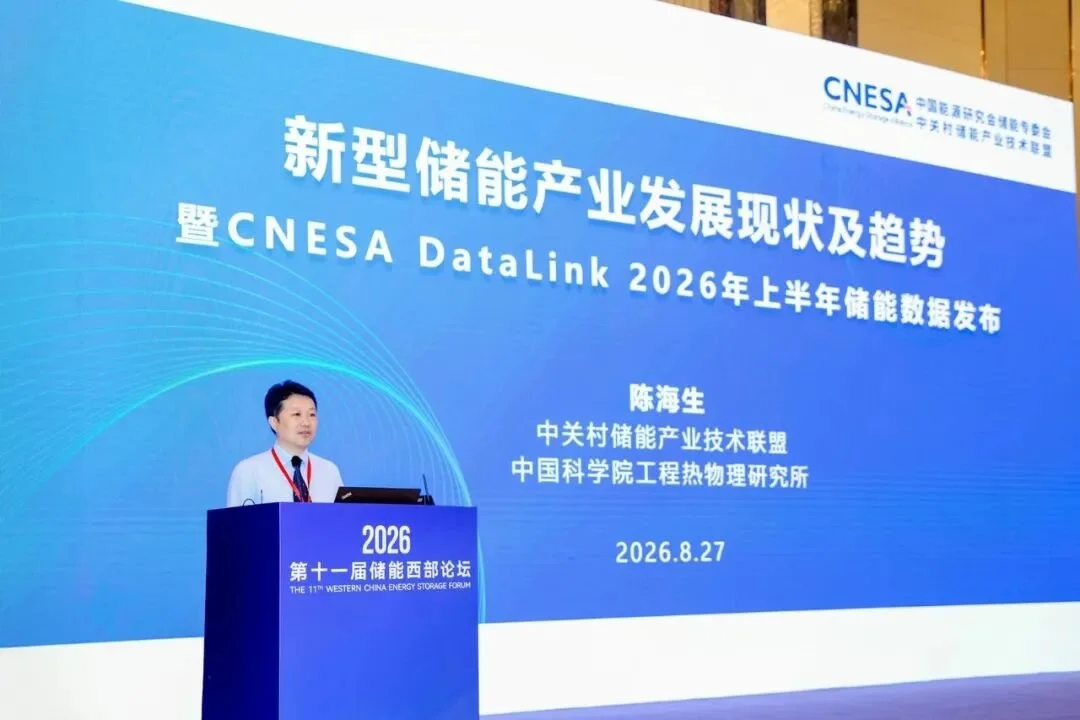
On August 27, 2026, the 11th Western Energy Storage Forum opened in Lanzhou, Gansu Province. The forum is hosted by the China Energy Research Society, Lanzhou University, and the China Energy Storage Alliance (CNESA). At the opening ceremony, Chen Haisheng, Chairman of CNESA and Director of the Institute of Engineering Thermophysics, Chinese Academy of Sciences, delivered a keynote speech titled “Current Status and Development Trends of the New Energy Storage Industry.” During the session, CNESA officially released its CNESA DataLink 2026 H1 energy storage industry data, providing a systematic review of China’s energy storage development in the first half of 2026 and an outlook on industry trends during the 15th Five-Year Plan period.
According to incomplete statistics from the CNESA DataLink Global Energy Storage Database, by the end of June 2026, China’s cumulative installed capacity of power storage reached 237.7 GW, up 41.7% year-on-year. Of this total, cumulative installed capacity of new energy storage reached 168.3 GW / 448.7 GWh, up 59% / 71% year-on-year and 15% higher than the end of 2025.
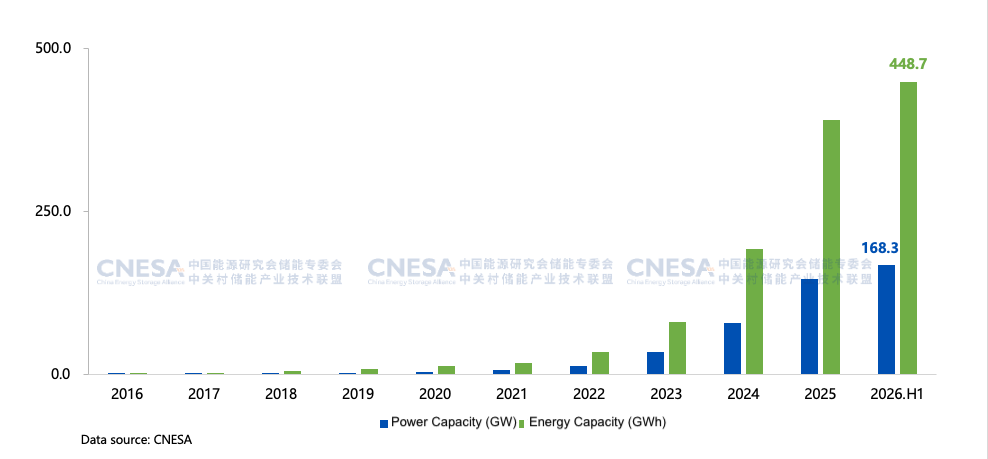
Figure 1: Cumulative installed capacity of China’s new energy storage market as of 2026 H1 (Source: CNESA)
At the same time, newly commissioned new energy storage capacity in the first half of 2026 reached 21.81 GW / 58.60 GWh, down 18% in power terms and 16% in energy terms year-on-year. With cumulative capacity continuing to grow while new additions experience a temporary decline, China’s energy storage industry is moving from the previous stage of “scale expansion” into a critical period of “value restructuring,” showing several new development characteristics.
1-Installation Landscape: Growth Pace Adjusts as Projects Become Larger and Longer-Duration
In the first half of 2026, the number of newly commissioned energy storage projects declined year-on-year, while the average size of individual projects increased significantly. The number of newly commissioned projects fell by 51% year-on-year, while the share of projects above 100 MW increased by 8 percentage points.
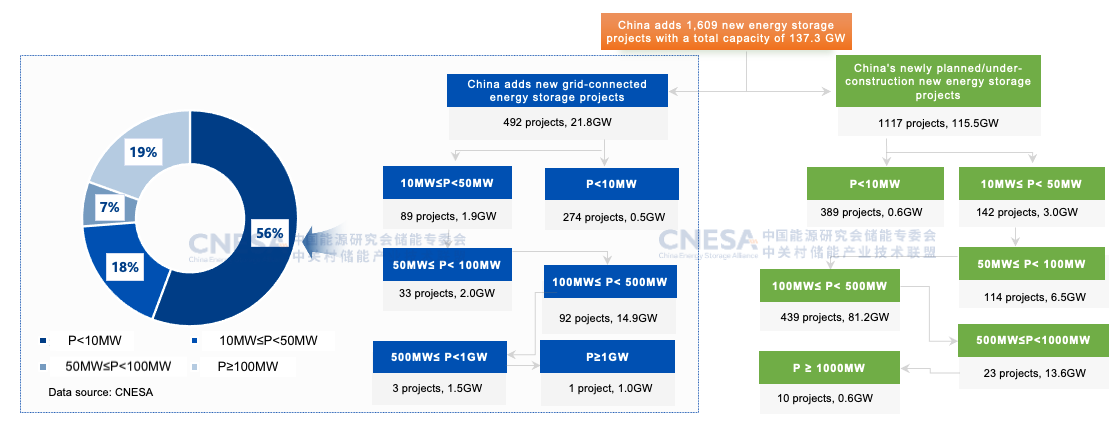
Figure 2: Distribution of newly commissioned new energy storage projects in China by power capacity in 2026 H1 (Source: CNESA)
Meanwhile, the average storage duration of newly commissioned projects reached 2.69 hours, up 2.3% year-on-year. The share of projects with durations of four hours or more also increased further, up 4.8 percentage points year-on-year.
This indicates that the incremental energy storage market is shifting from “quantity expansion” toward “scale and structural optimization.” Large-scale energy storage stations are becoming an increasingly important part of the new-build market, while the trend toward longer-duration storage is becoming more visible.
However, the decline in new installations does not mean market demand is weakening. Rather, the pace of energy storage construction is returning to a more normalized rhythm, while project formats and market structures are changing.
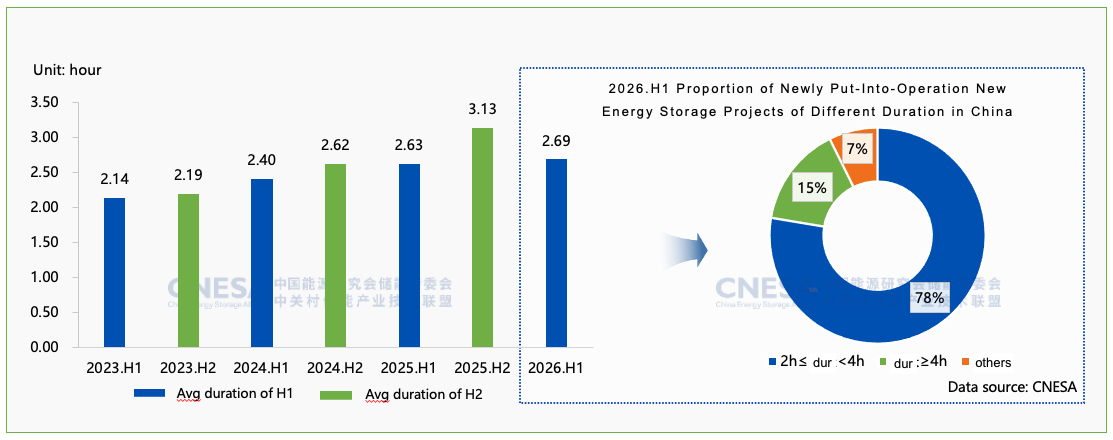
Figure 3: Average storage duration of newly commissioned new energy storage projects in China over the past three years (Source: CNESA)
2-Business Models: A Complete Revenue Framework Takes Shape, Making Operational Capability Critical
In the first half of 2026, newly installed independent energy storage capacity reached 15.1 GW, accounting for 69.3% of all newly installed capacity, an increase of 13.9 percentage points. Independent energy storage has become the dominant form in the new-build market.
At the same time, a complete revenue framework for independent energy storage is taking shape. The industry is officially moving from a policy-driven model based on mandatory storage allocation toward a new stage of three-dimensional revenue operations: capacity payments, electricity energy markets, and ancillary services markets.
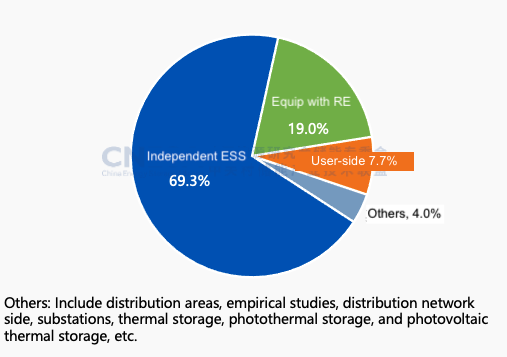
Figure 4: Application distribution of newly commissioned new energy storage projects in China in 2026 H1 by power capacity (Source: CNESA)
At the beginning of 2026, Document No. 114 clarified that after continuous operation of power spot markets, a generation-side reliable capacity compensation mechanism should be established in an orderly manner. This marks the first time the capacity value of new energy storage has been clarified at the national institutional level.
So far, Gansu, Jilin, Shaanxi, Xinjiang, Hubei, Ningxia, Qinghai, and other provinces have introduced detailed capacity compensation rules, though compensation standards vary significantly across regions. As capacity compensation mechanisms are implemented, the capacity value of energy storage is being unlocked. However, duration-based capacity conversion still has a significant impact on project returns, and business models require further refinement.
In terms of energy storage participation in power markets, spot markets and frequency regulation remain the main channels, while new ancillary service products such as ramping, reserves, and black start are also being developed.
At the same time, the market-oriented transition of energy storage still faces many challenges. In the first half of this year, peak-valley spreads narrowed in some regions, while system operation costs increased, further raising charging costs for energy storage and compressing electricity market revenues.
In the future, the value of energy storage projects will depend not only on equipment investment costs, but also on market trading capabilities, operational strategies, and full-lifecycle O&M performance.
3- Distribution of global shipments of energy storage lithium battery cells by Chinese enterprises in 2026 H1 (Unit: GWh)
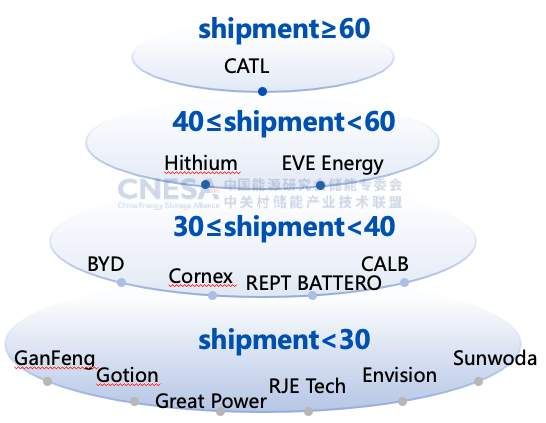
Figure 7: Distribution of global shipments of energy storage lithium battery cells by Chinese enterprises in 2026 H1
Unit: GWh
Note: Enterprises in each shipment range are listed alphabetically by the pinyin initials of their Chinese abbreviated names.
Scope: Global shipments in 2026 H1 of self-produced energy storage cells by enterprises, excluding cells for base stations and data centers. Shipments are counted when cells have left the factory and been delivered to customers or project sites.
Source: CNESA
4-Technologies and Applications: Multiple Technology Pathways Advance, While Emerging Demand from AIDC Is Released
In the first half of 2026, energy storage technology continued to evolve actively. Large-capacity lithium battery products continued to develop, with products above 500 Ah entering mass production. The share of long-duration energy storage technologies such as flow batteries and compressed air energy storage increased by 0.2 percentage points. Sodium-ion, semi-solid-state, flywheel, and other technologies also accelerated deployment.
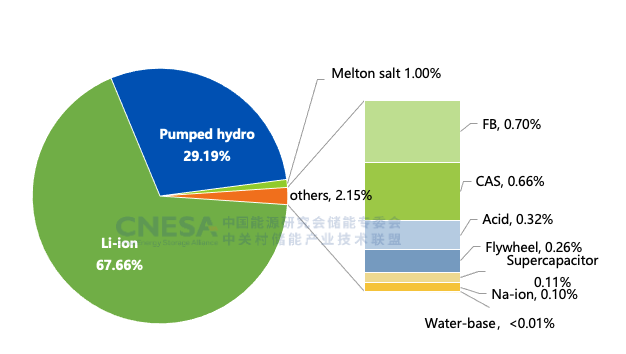
Figure 8: Distribution of cumulative installed power storage capacity in China by technology as of 2026 H1
Source: CNESA
At the same time, PCS, grid-forming energy storage, digital O&M, and safety technologies continued to advance. Looking ahead, lithium batteries will continue to meet the majority of demand, while multiple technology pathways will develop differentiated roles around specific application scenarios.
From the perspective of emerging applications, AIDC is creating clear demand for energy storage. On one hand, energy storage provides reliable and green energy support for AI data centers. On the other hand, AI is being integrated into energy storage operation, safety management, and business decision-making.
In the first half of 2026, new products targeting AIDC applications emerged intensively, covering high-rate cells, solid-state transformers, backup power systems, and integrated solutions. In the future, energy storage products will become increasingly customized for specific scenarios, while product competition will move beyond single devices toward integrated solutions combining energy storage, power electronics, energy management, and comprehensive energy services.
5-Global Expansion: Overseas Orders Reach 298 GWh as Chinese Companies Move from Product Export to Integrated Solutions
As the domestic market structure changes, Chinese energy storage companies are continuing to accelerate global expansion.
In the first half of 2026, overseas energy storage orders signed by Chinese enterprises reached 298 GWh, up 83% year-on-year. Europe remained an important market, while markets such as the Middle East, India, and Chile grew rapidly.
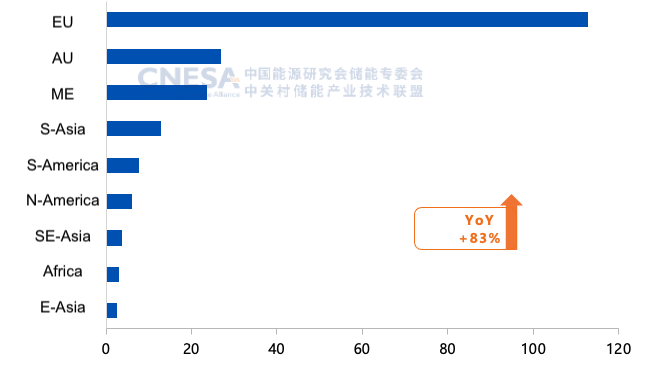
Figure 9: Regional distribution of overseas energy storage orders signed by Chinese enterprises in 2026 H1
Unit: GWh
Source: CNESA
Notably, Chinese energy storage companies are moving beyond simple product exports toward overseas manufacturing, localized services, technology cooperation, and integrated solution delivery.
The global energy storage market remains in a growth stage, but trade barriers, supply chain security, and localization compliance are also reshaping the global competitive landscape. In the future, global competition for Chinese enterprises will increasingly test their comprehensive capabilities.
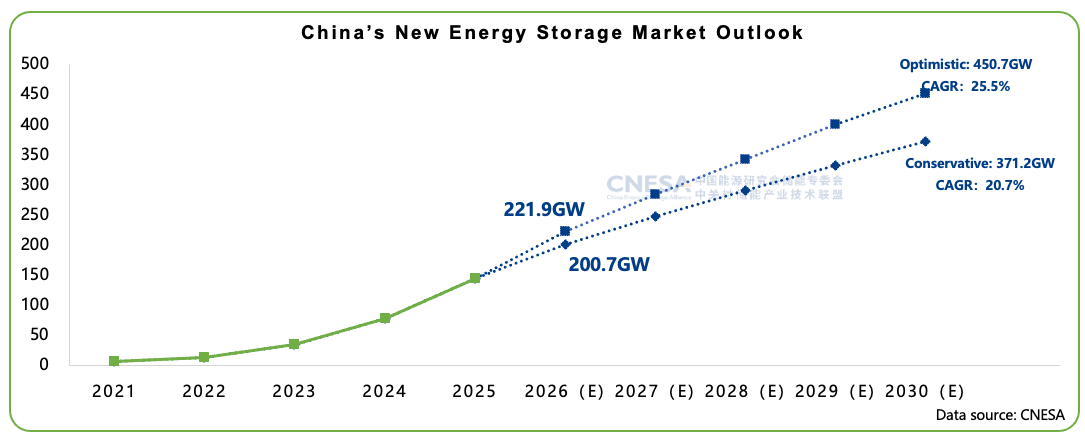
6- Outlook
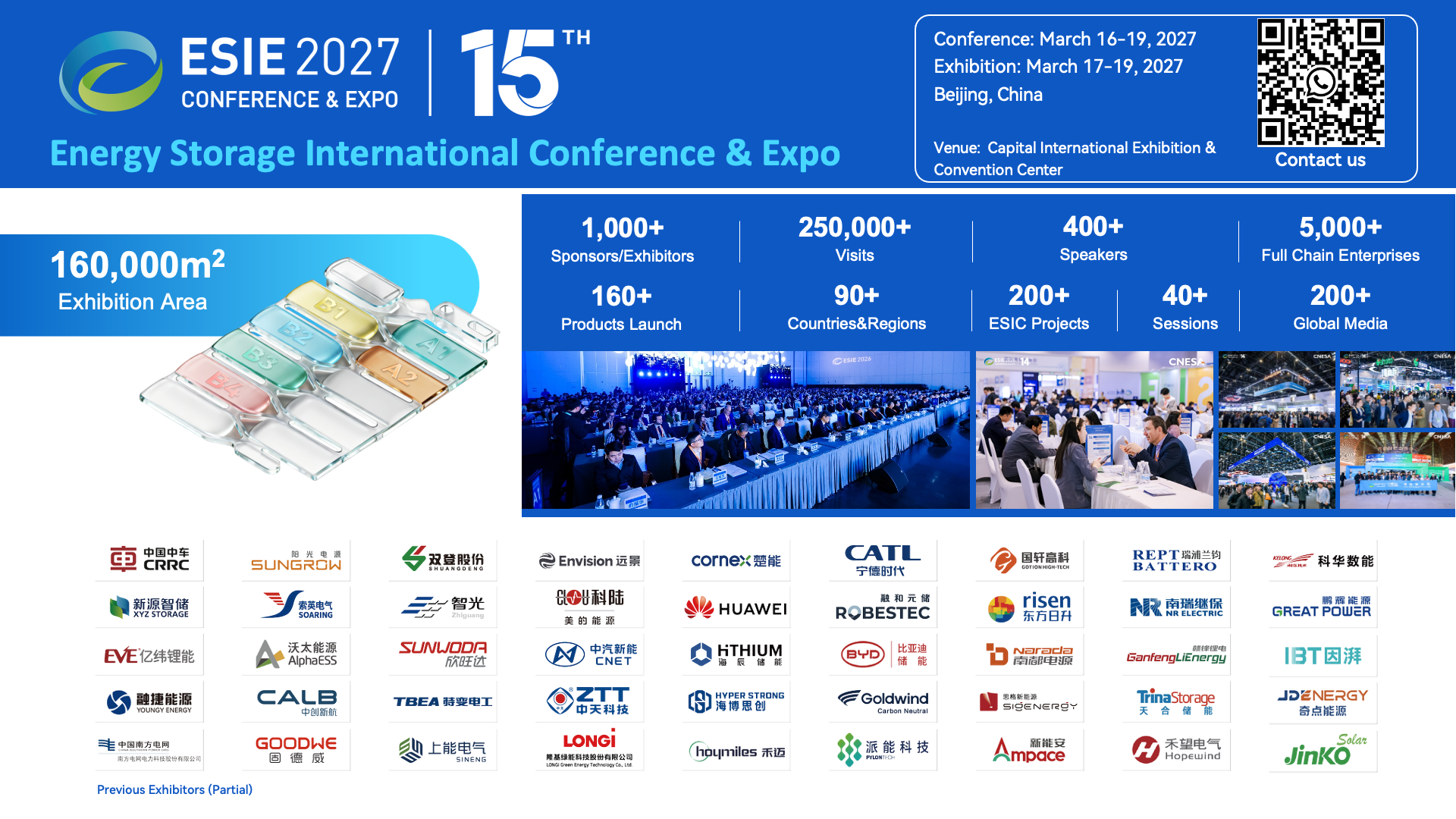
Connect with Chinese energy storage industry at ESIE 2027, March 16-19, 2027, Beijing China!
Event website: esie.net