
Latest News
293.7 GWh Planned Capacity + 100 GWh Orders! Sodium-Ion Battery Storage Enters Large-Scale Growth Phase
With abundant resources and long cycle life, complemented by distinctive strengths such as excellent low-temperature performance and outstanding rate capability, sodium-ion batteries are accelerating their penetration into scenarios including new energy storage, electric two-wheelers, start-stop batteries, commercial vehicle battery swapping and backup power. In 2026, the industry achieved key breakthroughs in capacity planning, signed orders and investment & financing, with large-scale application clearly accelerating.
Capacity Layout
1. Overall: 293.7 GWh of Planned Sodium-Ion Cell Capacity
According to incomplete statistics from the CNESA DataLink Global Energy Storage Database, as of July 2026, 34 enterprises across China have laid out 45 sodium-ion cell capacity bases in 20 provinces (autonomous regions and municipalities), with total planned capacity of 293.7 GWh. Of this, 25.2 GWh is already operational, accounting for about 8.6%, while capacity under construction and planned totals 268.5 GWh, about 91.4%. The industry as a whole is transitioning from demonstration application toward large-scale construction.
Figure 1 | Sodium-ion cell capacity structure
Source: CNESA Global Energy Storage Database
2. Regional Distribution: Eastern Coastal Areas Account for Nearly Half
From the perspective of regional distribution and construction progress, sodium-ion battery capacity is mainly laid out in central and eastern China, with Fujian, Jiangsu, Sichuan, Qinghai, Anhui and Guangdong among the top provinces by planned scale. Leveraging a mature lithium battery industrial base, eastern coastal regions were the first to form clusters, accounting for nearly half of national capacity. The western regions, benefiting from abundant new energy resources and lower electricity costs, are accelerating their layout and becoming an important source of new capacity. Overall, sodium-ion battery capacity is highly concentrated in lithium battery industrial clusters, while gradually extending toward new-energy-rich and low-temperature regions in the west.
3. Enterprise Distribution: Three Types of Investors Competing
From the perspective of enterprise composition, there are mainly three types of investors in sodium-ion batteries:
First, lithium battery companies such as CATL, BYD, EVE Energy, Gotion High-tech and Great Power. Relying on mature lithium battery production lines, well-established supply chains and stable downstream customer channels, these companies are rapidly extending into the sodium-ion field. Their production lines are highly compatible with the lithium battery system, enabling flexible production switching according to market orders. With outstanding mass production capability, delivery stability and cost advantages at scale, they are the core players that first achieved GWh-level deliveries in the industry.
Second, emerging and start-up companies such as HiNa Battery, Zoolnasm, Jinna Technology and Namei Technology, whose core business is sodium-ion batteries. Most originate from technology incubation at universities and research institutes, with core strengths in deep technological accumulation and focus on niche tracks. Backed by specialized technical advantages, they deliver projects quickly and demonstrate notable lean operations.
Third, materials and cross-sector companies such as Do-Fluoride, Jiana Energy, Na Innovation Energy and Tongxing Environmental Protection. Building on their foundations in the materials segment, these companies build their own cell production bases along an integrated materials-to-cells path. Their core advantage lies in strong industrial chain synergy: they can locally supply their own sodium-ion battery materials, verify and optimize material systems while iterating product technology, and efficiently connect with downstream application scenarios, creating differentiated integrated competitiveness.
4. Technology Route Distribution: Polyanion Accounts for Over 70%
From the perspective of cathode technology routes, sodium-ion batteries fall into three main categories: the polyanion route has 23 bases with planned capacity of 212.5 GWh, accounting for 72.4%; the layered oxide route has 10 bases with planned capacity of 30.2 GWh, 10.3%; the dual route (layered oxide + polyanion) has 10 bases with planned capacity of 42.5 GWh, 14.5%; and the Prussian blue category has 2 bases with planned capacity of 8.5 GWh, 2.9%. Measured by operational and under-construction capacity, polyanion accounts for 49.6% and 74.5% respectively, ranking first in both; layered oxide accounts for 32.5% of operational capacity but only 8.2% of under-construction/planned capacity.
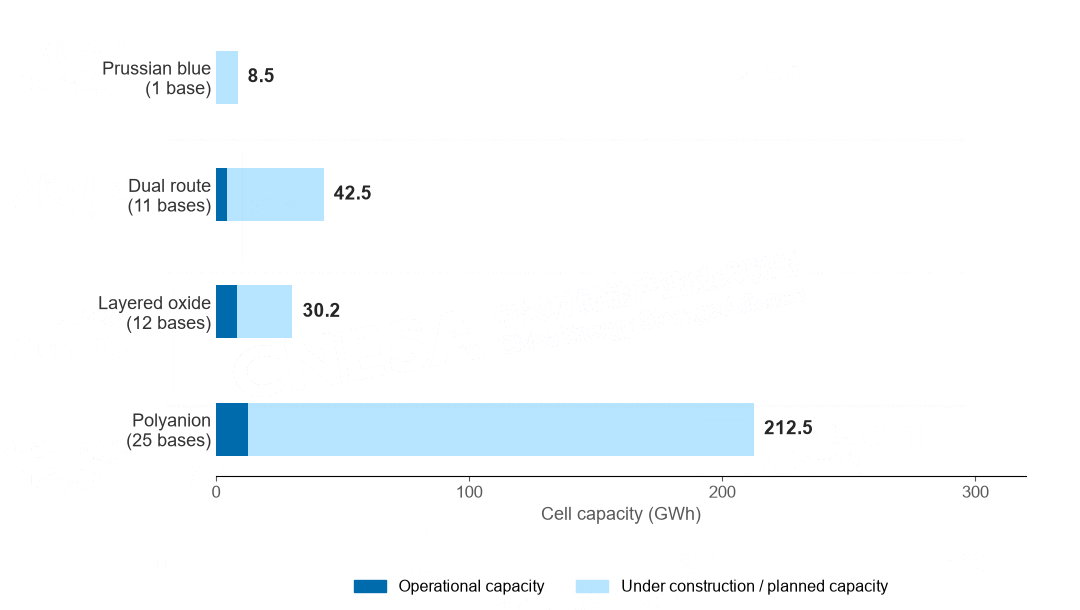
Figure 2 | Cell capacity and number of bases by technology route
Source: CNESA Global Energy Storage Database
The differences in capacity layout between the layered oxide and polyanion routes mainly stem from differences in material performance, application scenarios and industrialization conditions.
Polyanion cathodes feature stable structures and long cycle life, with abundant main raw materials. Some of their production processes are similar to those of the LFP system, offering relatively clear paths for capacity expansion and cost reduction. They suit scenarios sensitive to lifetime and cost but less sensitive to volume, such as utility-scale storage, backup power, start-stop systems and two-wheelers.
Layered oxides hold advantages in energy density and rate performance, but their cycle life still needs improvement and their cost needs to fall, suiting scenarios with high energy and power demands. Sodium batteries have already achieved scale application in start-stop batteries, and future incremental demand will be dominated by energy storage. As polyanion shows significant advantages across diverse application scenarios, enterprises concentrate their expansion on the polyanion route, while layered oxide focuses on differentiated power applications. In addition, 11 bases adopt a dual-route layout of layered oxide and polyanion to cover both storage and power scenarios; the Prussian blue route remains in the early industrialization stage with no operational capacity yet.
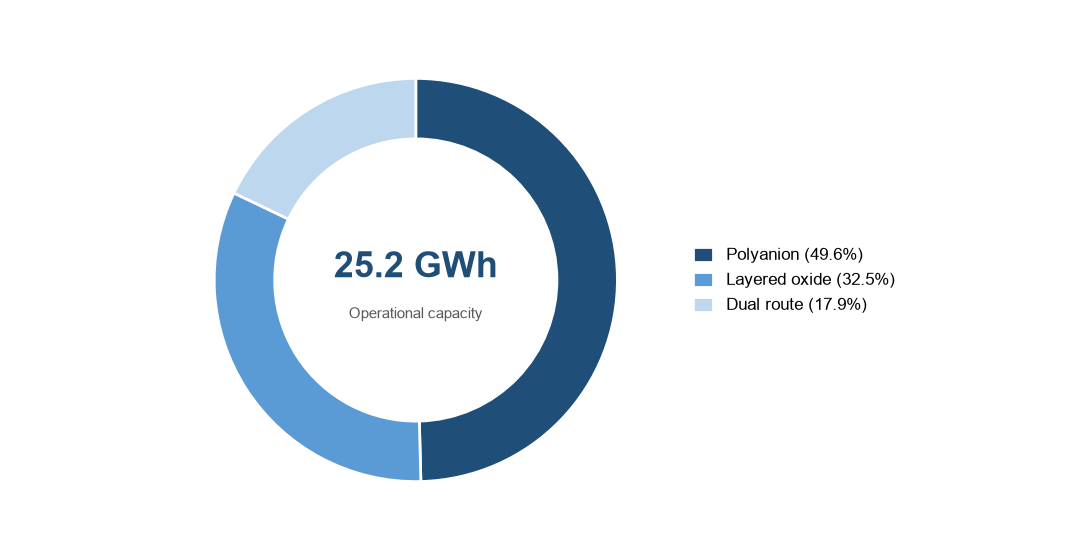
Figure 3 | Distribution of operational capacity by technology route
Source: CNESA Database
Sodium-ion Battery Orders: Over 100 GWh of Global Storage Orders Signed
In H1 2026, domestic sodium-ion battery orders officially moved from the demonstration phase into the commercial scale-up phase, with steady growth in industry production and sales.
CATL and HyperStrong reached a three-year 60 GWh strategic cooperation order for energy storage sodium-ion batteries, setting a global record for a single sodium-ion battery order.
According to statistics, energy storage applications will be the largest source of future sodium battery orders, accounting for 40%. Eight storage tenders were awarded during the year, totaling 170 MW / 512 MWh, with sodium-ion batteries entering the utility-scale storage market mainly through mixed LFP-plus-sodium configurations. In addition, sodium-ion batteries achieved commercial deployment in multiple scenarios: the China Tower Tibet telecom backup power project was awarded to Veken and Shuangdeng, and the telecom backup power and new energy heavy truck markets continue to open up.
In overseas markets, according to incomplete statistics from the CNESA DataLink Global Energy Storage Database, as of July 2026, overseas sodium-ion battery storage orders were signed in a concentrated manner, with commercialization clearly accelerating.
Overseas local manufacturer Alsym Energy has successively signed 8.5 GWh and 9.0 GWh sodium battery storage projects, and Peak Energy has secured a 4.5 GWh storage order, focusing on the US commercial & industrial and utility-scale storage markets. Chinese companies have also made breakthroughs overseas: CATL signed 5 GWh and 2 GWh sodium battery storage cooperation projects with European integrator Alfen and Eastern European energy company Solarpro respectively; on September 2, HiNa Battery signed a five-year 10 GWh long-term sodium battery supply agreement with Korea's VOLTA Corporation.
In terms of order characteristics, new sodium battery orders are currently highly concentrated in the storage segment, and most large projects are medium- to long-term framework cooperation agreements rather than orders for immediate delivery. The actual delivery pace is constrained by multiple factors, including capacity ramp-up, grid connection certification and policy subsidy implementation.
Investment and Financing
Early-Stage Financing Accounts for Over 60%
In H1 2026, China's sodium-ion battery financing market showed distinct stage characteristics: early-stage financing, including angel, Series A and Series B rounds, accounted for more than 60%, with Series A companies the most concentrated and industry entry enthusiasm running high, while only a very few companies completed mature-stage financing.
In terms of financing segments, cell production lines and cathode/anode materials are the core areas, with upstream material financing rising sharply. It can be judged that material scale-up is currently the most critical factor driving sodium-ion battery cost reduction.
In terms of investors, funding sources show a diversified pattern, with industrial capital, local state-owned capital, market-oriented venture capital and overseas capital coordinating their deployment.
In terms of track layout, investment and financing cover the entire sodium-ion battery industry chain, with the three core segments of cathodes, anodes and cells seeing the most concentrated financing.
In terms of technology preference, capital investment closely follows the industry's technology convergence trend, with polyanion cathodes and hard carbon anodes as the mainstream layout directions, alongside diversified technology reserves.
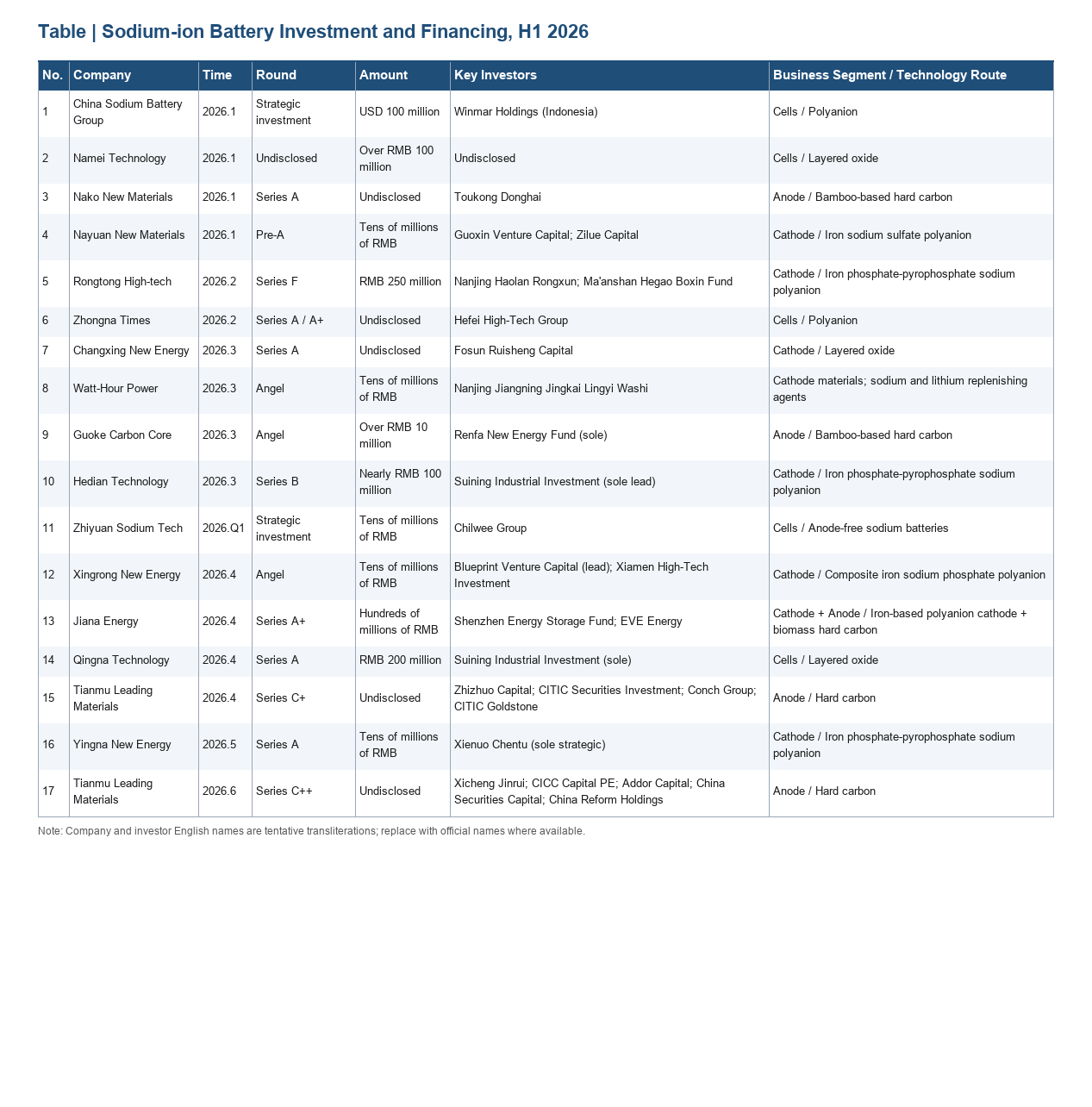
Note: The English names of companies and investors in the table are tentative transliterations; please replace them with official registered names where available.
Industry Outlook
Overall, China's sodium-ion battery industry has left the technical validation stage and entered a key window of development from technology deployment to scale ramp-up. Over the next 2-3 years, with steadily rising capacity utilization, continuously falling core material costs and expanding application scenarios, the industry is expected to bid farewell to the early planning phase and fully enter a new stage of efficient implementation and effective output. Going forward, sodium-ion batteries are expected to continuously replace lead-acid batteries in scenarios such as new energy storage, light-duty power and backup power, while gradually penetrating parts of the lithium battery application market, truly crossing the threshold of large-scale growth and achieving stable commercial, scaled development.
Upcoming sodium-ion battery events:
Contact us: overseas@cnesa.org
Sign up for our free monthly newsletter to stay informed about the Chinese energy storage market.