
Latest News
10.9 GWh! Newly Added New-Type Energy Storage Capacity in January Doubled Year-on-Year
China’s new-type energy storage market witnessed a strong start in January 2026. Newly commissioned capacity in January increased by over 60% year-on-year, while the market’s underlying structure showed notable adjustments compared with the same period last year.
China’s new-type energy storage market witnessed a strong start in January 2026. Newly commissioned capacity in January increased by over 60% year-on-year, while the market’s underlying structure showed notable adjustments compared with the same period last year.
A Strong Start to the Year: Newly added capacity: 3.8 GW / 10.9 GWh in January, representing a
year-on-year increase of 62% / 106%, marking a positive opening for the new-type energy storage
market.
Accelerated Deployment of Independent Energy Storage: In January, independent energy
storage accounted for nearly 90% of newly added capacity, up 41 percentage points year-on-
year. Newly added power and energy capacity of independent energy storage grew by over 240% /
290% year-on-year. Xinjiang ranked first nationwide in both power and energy capacity, with 1 GW
of newly commissioned independent energy storage.
Rise of Third-Party Enterprises: Third-party enterprises accounted for 45% of newly added
installed capacity, once again surpassing local energy groups and the “Big Five and Small Six”
state-owned power generation groups. The trend toward a diversified investment landscape has
become increasingly evident.
Accelerated Deployment of Diverse Technologies: Beyond mainstream lithium-ion batteries,
alternative technologies such as compressed air energy storage (CAES), flow batteries, and
flywheels are being deployed at a faster pace, supporting the industry’s long-term development.
Overall Analysis of New-Type Energy Storage Projects in January
According to incomplete statistics from the CNESA DataLink, in January 2026, newly commissioned new-type energy storage projects in China reached a total installed capacity of 3.78 GW / 10.90 GWh, representing year-on-year increases of 62% and 106%, respectively, and month-on-month declines of 84% and 86%. Monthly new added capacity growth exceeded 60% year-on-year, underscoring a positive market outlook at the beginning of the year.
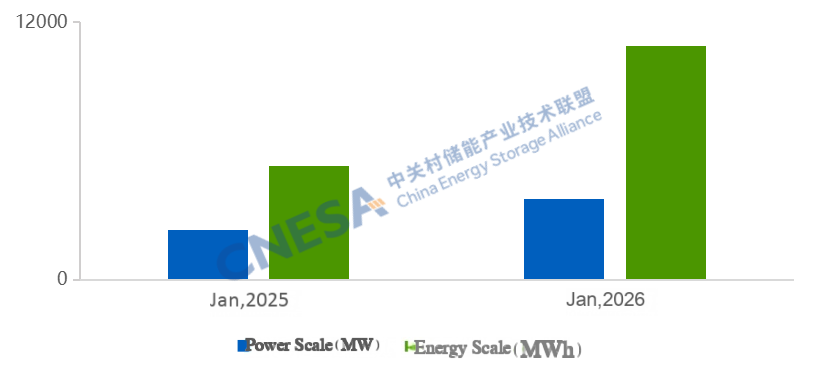
Figure 1: Installed Capacity of Newly Commissioned New-Type Energy Storage Projects in China, January 2026
Source: CNESA DataLink
Note: Year-on-year (YoY) comparisons are based on the same period of the previous year; month-on-month (MoM) comparisons are based on the immediately preceding statistical period.
Analysis of Generation- and Grid-Side New-Type Energy Storage Projects in January
In January, newly added generation- and grid-side new-type energy storage capacity reached 3.62 GW / 10.44 GWh, up 87% / 130% year-on-year, and down 84% / 87% month-on-month. Key characteristics include:
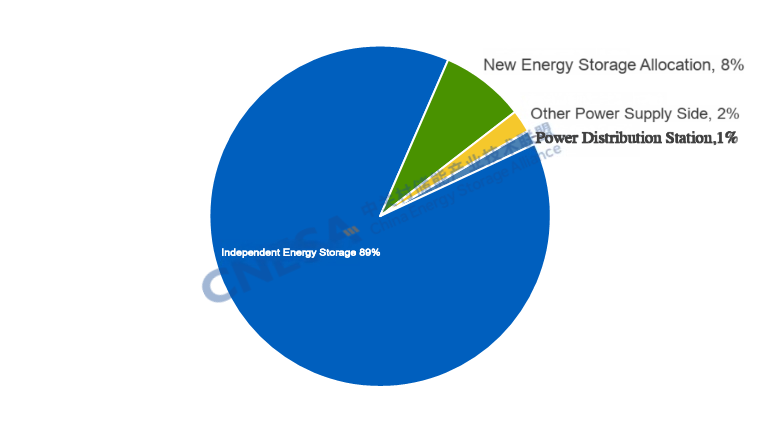
1.Independent energy storage accounted for 89% of new installations, up 41 percentage
points year-on-year and 12 percentage points month-on-month.
Newly added independent energy storage reached 3.2 GW / 9.6 GWh, up 249% / 298% year-on-year, and down 84%/87% month-on-month. The number of projects with capacities of 100 MW and above increased by 122% year-on-year, accounting for 85% of total projects—29 percentage points higher than the same period last year. By contrast, power-generation-side new-type energy storage additions were 366.5 MW / 740.3 MWh, down 64% / 65% year-on-year and 92% / 95% month-on-month. Among these, renewable-plus-storage projects accounted for 79% of power capacity, spanning diversified application scenarios such as desertification control, thermal–renewable–storage multi-energy integration, and hydro–solar–pumped storage integration.
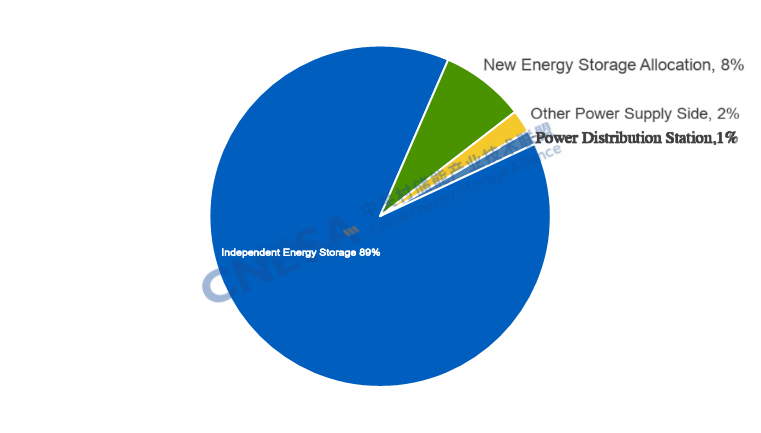
Figure 2: Application Distribution of Newly Commissioned Generation- and Grid-Side New-Type Energy Storage Projects in January 2026 (MW%)
Source: CNESA DataLink
Note: “Others” include substations, emergency power supplies, etc.
2. Northwest China Accounted for Over 35% of New Capacity, with Xinjiang Leading
In January, the Northwest region ranked first nationwide, accounting for 35% of newly added capacity. Combined, the Northwest and North China regions contributed more than half of the national total. By province, Xinjiang recorded newly added capacity of 1.2 GW / 4.3 GWh, ranking first nationwide in both power and energy capacity.
By the end of January, Xinjiang’s installed renewable energy capacity exceeded 160 GW, accounting for 64% of the region’s total power capacity. Due to its distance from eastern and central load centers, Xinjiang has historically faced wind and solar curtailment challenges. In 2025, wind and solar utilization rates in Xinjiang were 91.0% and 86.3%, respectively—both below the national average. Growing pressure for renewable energy consumption and the need to mitigate grid fluctuations have driven large-scale deployment of new-type energy storage in the region. At the start of the year, several major projects were commissioned in quick succession, including the 500 MW / 2,000 MWh Ruoqiang energy storage project by Xinjiang Green Development Power, the 200 MW / 800 MWh grid-forming energy storage project by Huaneng Jingshun, and the 200 MW / 800 MWh energy storage project by LiXin Energy, demonstrating strong pilot and demonstration effects.
In terms of revenue mechanisms, Xinjiang has formed a relatively mature model combining capacity compensation, electricity energy trading, and ancillary services. On May 19, 2023, the Xinjiang Development and Reform Commission issued the Notice on Establishing and Improving Supporting Policies for the Healthy and Orderly Development of New-Type Energy Storage, introducing capacity compensation for grid-connected independent energy storage projectsand specified the implementation standards for 2023, 2024, and 2025, providing predictable early-stage policy support for independent energy storage projects in Xinjiang. . Although the original policy expired at the end of 2025, the clarification at the national level regarding capacity pricing mechanisms for grid-side independent energy storage is expected to lead to new local policies in Xinjiang, further improving long-term revenue certainty. With the rollout of ancillary service market rules in July 2025 and the transition of Xinjiang’s power spot market to continuous settlement trial operation, independent energy storage is expected to increasingly generate revenue through spot market arbitrage.
Moreover, Xinjiang has established a complete energy storage industry chain, covering batteries, PCS, BMS, and system integration. Large-scale manufacturing bases established by leading energy storage companies, together with local supply chains, have significantly reduced logistics and system integration costs, enhancing project economics. As grid upgrades and transmission channel construction progress, energy storage demand in Xinjiang is expected to be further released.
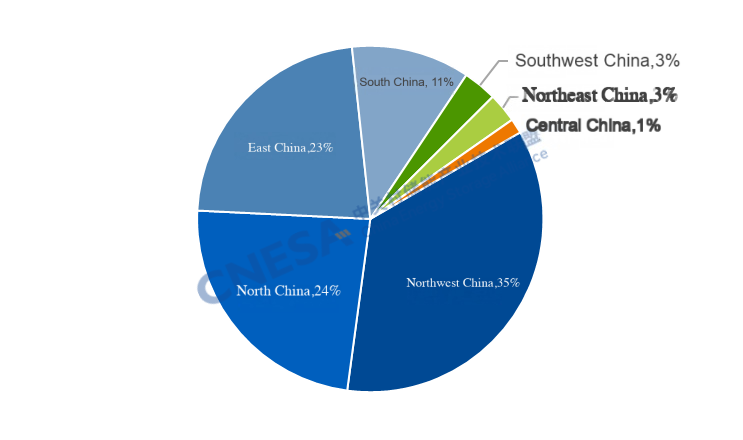
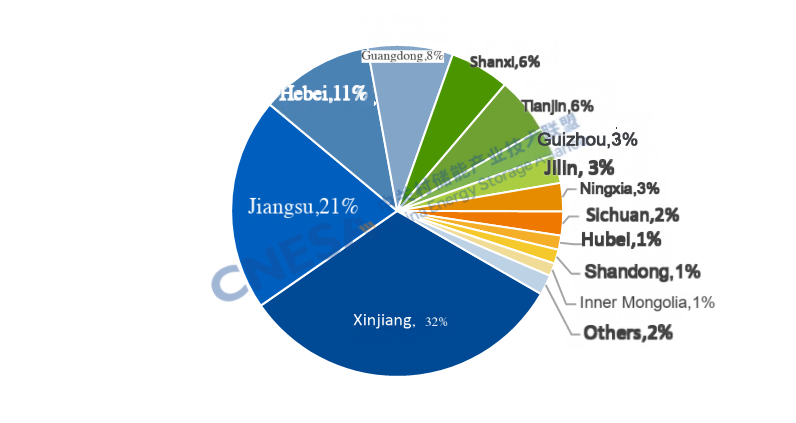
Figure 3: Regional Distribution of Newly Commissioned Generation- and Grid-Side New-Type Energy Storage Projects in January 2026 (MW%)
Figure 4: Provincial Distribution of Newly Commissioned Generation- and Grid-Side New-Type Energy Storage Projects in January 2026 (MW%)
Source: CNESA DataLink
3. Faster Deployment of Projects Invested by Third-Party Enterprises, the trend toward
diversification of energy storage investment entities has become increasingly evident.
In January, projects invested and developed by third-party enterprises—including China Green Development Group, Aerospace Hongji Energy Storage, and Daowei Energy Storage Group—were commissioned one after another. Third-party enterprises accounted for 45% of newly added installed power capacity, ranking first among all investor categories. Driven by rising market demand, supportive national policies, diversified technology pathways, and declining technology costs, the investment entity diversification trend became more pronounced in the first month of 2026.
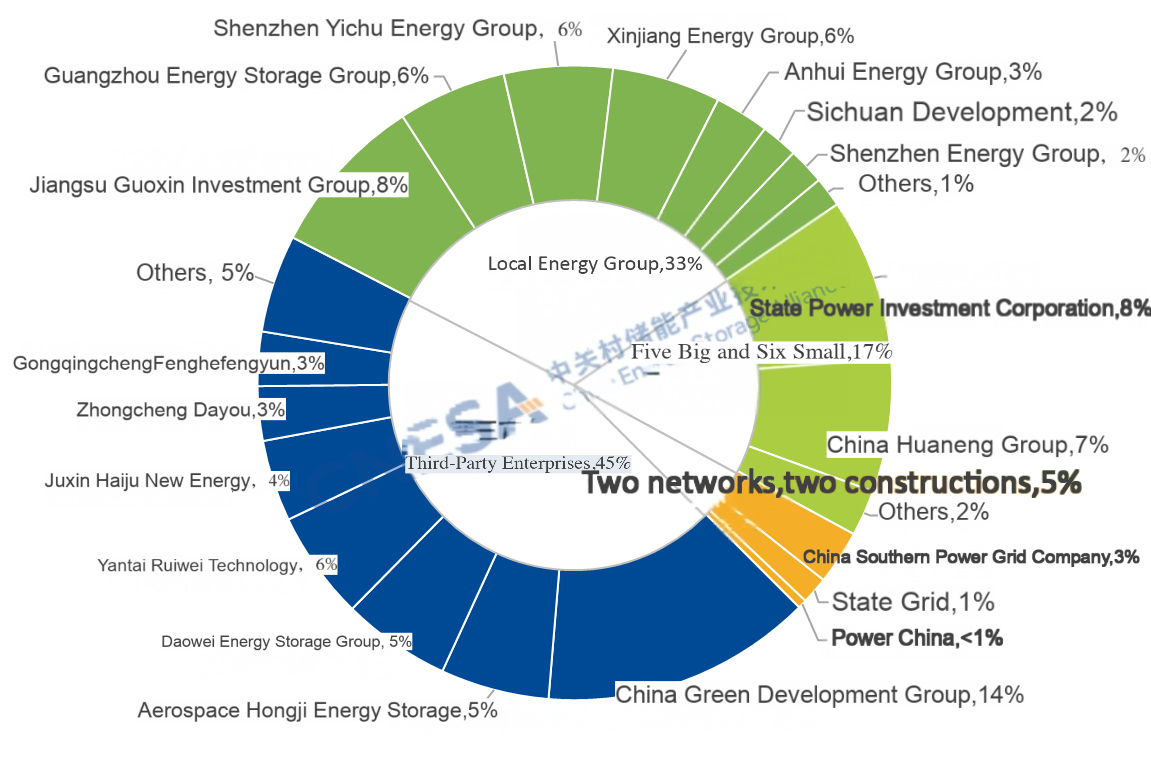
Figure 5: Owner Distribution of Newly Commissioned Generation- and Grid-Side New-Type Energy Storage Projects in January 2026 (MW%)
Source: CNESA DataLink Global Energy Storage Database
Note: Third-party enterprises refer to companies other than large state-owned power generation groups, the two major grid companies, their construction subsidiaries, and local energy groups.
4. Accelerated Deployment of Long-Duration Energy Storage Technologies
From a technology perspective, newly commissioned generation- and grid-side projects were dominated by lithium iron phosphate (LFP) batteries, accounting for 89% of installed power capacity, followed by compressed air energy storage (8%) and flow batteries (3%). Long-duration energy storage technologies—represented by CAES and flow batteries—as well as hybrid frequency regulation systems, are being deployed at an accelerating pace. Notable projects include the 300 MW Jiangsu Huai’an salt cavern CAES demonstration project, the Phase I Baicheng vanadium redox flow battery energy storage power station, and the Changyang Longzhouping vanadium redox flow battery energy storage project. In addition, a lithium battery + flywheel frequency regulation project by Shaanxi Energy was commissioned.
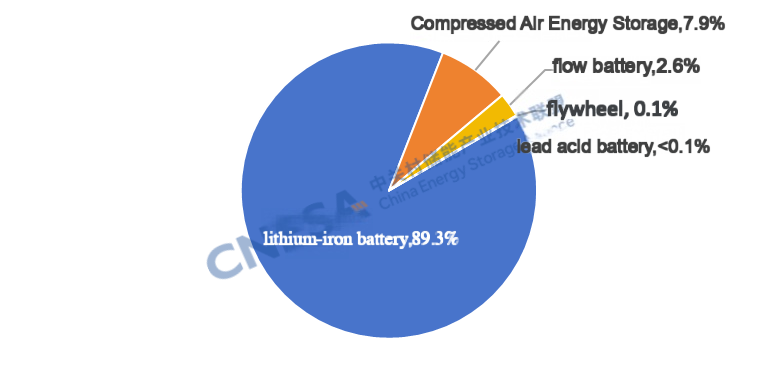
Figure 6: Technology Distribution of Newly Commissioned Generation- and Grid-Side New-Type Energy Storage Projects in January 2026 (MW%)
Source: CNESA DataLink
China Energy Storage Alliance (CNESA) continues to track energy storage project developments based on standardized, timely, and comprehensive data collection criteria. Leveraging long-term data accumulation and in-depth professional analysis, CNESA regularly publishes objective market analyses of energy storage installations, providing valuable references for industry decision-making. Since June 2025, CNESA’s monthly energy storage project analysis has been divided into generation- and grid-side and user-side market reports. This edition focuses on an in-depth interpretation of the generation- and grid-side market in January 2026.
For more comprehensive project information, authoritative data, and in-depth market analysis, please visit www.esresearch.com.cn or access the CNESA DataLink via the mini-program. For customized data consulting services, please contact CNESA through the official QR code. CNESA is committed to providing full-cycle, high-quality energy storage data services to industry stakeholders.

Register now to attend Asia’s Largest Energy Storage Trade Show for free:
What: The 14th Energy Storage International Conference & Expo
When: Conferences: March 31 - April 2, 2026
Exhibitions: April 1-3, 2026
Where: CIECC Beijing, China
Address: No. 55 Yudong road, Shunyi District, Beijing China


Year-End Review 2025 | Chen Haisheng: China's New-Type Energy Storage Installed Capacity Surpasses 100 GW - How to Move from “Scale Expansion” to “High-Quality Development”?
Source: Economic View

Chen Haisheng
Director, Energy Storage Specialized Committee, China Energy Research Society
Chairman, China Energy Storage Alliance (CNESA)
Director, Institute of Engineering Thermophysics, Chinese Academy of Sciences
According to data from the National Development and Reform Commission (NDRC), China's nationwide installed capacity of new-type energy storage has exceeded 100 GW, more than 30 times the level at the end of the 13th Five-Year Plan period.
Driven by Three Forces, the Energy Storage Market Reaches
a New Milestone
This development is the result of the combined effects of multiple key factors, including market demand, technological breakthroughs, and policy support.
First, rigid demand from the energy transition. Driven by China's “dual carbon” goals, installed capacity of renewable energy such as wind and solar has grown rapidly. Due to the intermittency and instability of renewables, their high penetration has significantly increased pressure on grid integration. As a key solution for renewable energy grid connection, energy storage has therefore seen a sharp rise in market demand.
Second, continuous breakthroughs in energy storage technologies. After a long period of accumulation, decisive breakthroughs have been achieved over the past five years. Lithium-ion battery technologies have continued to advance, enabling large-scale production of storage batteries. System performance has improved significantly while costs have continued to decline. At the same time, other technology pathways such as compressed air energy storage and flow batteries are gradually being commercialized, laying a solid foundation for large-scale deployment.
Third, strong support from the policy framework. At the national level, a series of major policies have been introduced to support industry development. These include the Guiding Opinions on Accelerating the Development of New Energy Storage issued by the NDRC and the National Energy Administration, and the Opinions on Improving the Price Governance Mechanism issued by the General Office of the CPC Central Committee and the State Council. By advancing and refining pricing mechanisms and market rules, these policies provide a clearer market environment for energy storage projects. Local governments have also introduced specific market and pricing policies tailored to their development characteristics, greatly stimulating the enthusiasm of market participants.
Based on current trends, the author believes that over the next three to five years, both the pace and scale of development of the new-type energy storage market will continue to increase significantly.
First, demand for energy storage will continue to rise. As renewable energy installations keep expanding, the role of energy storage will become increasingly prominent, driving rapid growth in demand.
Second, policy support will remain strong. A series of national policies have been introduced to promote the development of the energy storage industry. The Action Plan for the Large-Scale Construction of New-Type Energy Storage (2025-2027) proposes that by 2027, China's installed capacity of new-type energy storage will exceed 180 GW, driving approximately RMB 250 billion in direct project investment. This has effectively boosted market expectations. In addition, in September this year, China announced a new round of Nationally Determined Contribution (NDC) targets, clearly stating that by 2035, total installed capacity of wind and solar power will exceed six times the 2020 level, with a target of reaching 3.6 TW. To meet these goals, strong national support for energy storage is expected to continue.
Third, technological progress and cost reductions will continue. With ongoing innovation and scaling-up of energy storage technologies, new technologies and products will continue to emerge, while there remains room for further cost reductions at the system level.
Fourth, business models will gradually mature, with diversified revenue streams including capacity payments, spot market arbitrage, and ancillary services.
Fifth, overseas market demand remains strong. As the share of renewable energy generation continues to increase globally and supportive policies are introduced in many regions, further improvements in the economics of energy storage are expected to drive continued expansion of overseas markets.
According to forecasts by the Zhongguancun Energy Storage Industry Technology Alliance, new-type energy storage will reach the next “100 GW” milestone in 2027-2028, with China's installed capacity reaching 200 GW. Around 2030, China is expected to reach the third “100 GW” milestone, with cumulative installed capacity reaching 300 GW.
How to Shift from “Scaled Deployment” to “High-Quality Operation”?
However, to achieve a transition to high-quality operation over the next one to two years, concentrated breakthroughs are still needed in key areas such as market mechanisms, technological optimization, safety risk prevention, and full life-cycle management.
In terms of market mechanisms, it is necessary to gradually improve market and pricing mechanisms for new-type energy storage, promote the business model of “capacity payments + energy arbitrage + ancillary services,” appropriately expand spot price spreads, incorporate new types of ancillary services-such as ramping, inertia, reserves, and black start-into the pricing mechanism, and promote linkage between green power trading and energy storage discharge volumes to realize explicit monetization of environmental attributes.
In terms of safety risk prevention, a solid safety defense must be built from three aspects: monitoring and early warning, protection mechanisms, and standards and regulations. A unified system of safety technical standards should be established rapidly, clearly defining safety indicators for equipment selection, installation and commissioning, operation, and maintenance of energy storage power stations. Research should also be conducted on implementing a battery traceability system to ensure accountability for safety responsibilities.
In terms of technological R&D, first, continued strong development of lithium batteries is needed, with further optimization of the operation and application of existing lithium-based energy storage systems. Second, priority should be given to promoting demonstration and application of long-duration energy storage technologies such as variable-speed pumped storage, compressed air energy storage, and flow batteries. Greater efforts should also be made to advance R&D and validation of new technologies such as solid-state batteries, sodium-ion batteries, and grid-forming energy storage, fostering a development pattern in which multiple storage technologies progress in coordination.
In terms of industrial coordination, efforts should be made to enhance self-sufficiency in key materials. Targeting weak links such as core materials for energy storage cells and key equipment for long-duration storage, breakthroughs should be pursued through industry-university-research innovation consortia. Industrial development order should be standardized by curbing inefficient and repetitive construction through dynamic monitoring of project filings, and guiding capital toward projects with high utilization rates and high safety performance.
To promote the healthy and sustainable development of the industry, the author believes that further policy efforts are needed. First, market-based revenue policies should be improved by further refining energy storage pricing mechanisms, clarifying pricing calculation rules for different regions and application scenarios, expanding revenue channels from ancillary services, and smoothing cost-sharing mechanisms for such services, while continuing to promote business models involving capacity prices, energy prices, and ancillary services.
Second, full-chain safety policies should be strengthened by improving safety standards and regulations, refining safety supervision processes, implementing regular safety inspection systems, and clearly defining safety acceptance standards for all stages of energy storage power stations, from design and construction to operation and maintenance.
Third, research on energy storage pricing should be conducted by promoting cost tracking for major mainstream energy storage technologies, studying cost structures across key segments of energy storage systems, and guiding the industry toward rational assessments of energy storage costs.
Finally, industry self-regulation should be promoted by strengthening dynamic monitoring of data such as energy storage output, continuously paying attention to industry development issues, advancing technological iteration and safety performance upgrades of energy storage products, supporting industry-led self-regulatory initiatives, and guiding the sector toward a virtuous development path that emphasizes safety performance and value creation.
CENSA Upcoming Events:
Apr. 1-3, 2026 | The 14th Energy Storage International Conference & Expo
Register Now to attend, free before Dec 31, 2025.

Sign up for our free monthly newsletter to stay informed about the Chinese energy storage market.