
Latest News
Two Japan AI Compute Deals in One Day: Osaka's KIX15 Breaks Ground, Tokyo's TOK1 Adds USD 1 Billion
On October 7, Japan's AI compute market saw two investments land in a single day: MC Digital Realty started construction of the KIX15 data center in Osaka, and AirTrunk added USD 1 billion to the TOK1 campus east of Tokyo for liquid cooling deployment. The two projects differ in scale and route, yet both treat liquid cooling as the foundational solution for high-density AI workloads. Energy storage is becoming part of the supporting infrastructure of AIDC.
1. KIX15: Liquid Cooling Reserved at the Design Stage of a New Campus
On October 7, MC Digital Realty, a 50/50 joint venture between Digital Realty and Mitsubishi Corporation, officially started construction of the KIX15 data center at its KIX campus in Ibaraki City, Osaka Prefecture. With an IT capacity of 24 MW, the project is scheduled for commissioning in Q4 2028. As the fifth data center at the KIX campus, KIX15 will bring the joint venture's data centers operating in Japan to ten, with a combined IT capacity of about 220 MW. The project adopts a hybrid air- and liquid-cooling scheme, with liquid cooling reserved at the design stage to accommodate mid- and long-term AI compute expansion. Included in the "Kansai AI Infrastructure Co-Creation Project", it serves hyperscale cloud providers, cloud service providers, and enterprises building their own AI compute capacity. With relatively ample land and power resources, the Kansai region has become the main landing point for foreign capital building compute clusters in western Japan.

2. TOK1: Liquid Cooling Retrofit for an Existing Hyperscale Campus
On the same day, AirTrunk, backed by Blackstone, announced an additional investment of USD 1 billion in its TOK1 campus in Inzai City, Chiba Prefecture, to deploy liquid cooling systems supporting high-density AI compute loads. TOK1 has a total capacity of more than 300 MW. The investment is matched by a USD 1 billion green loan led by Sumitomo Mitsui Banking Corporation, MUFG Bank, and United Overseas Bank. AirTrunk CEO Robin Khuda said TOK1 aims to become Japan's first large-scale AI compute campus; driven by geopolitical factors, a growing number of North Asian customers are choosing to locate their compute capacity in Japan.
3. Two Construction Routes, One Shared Signal
The two projects represent two approaches to building compute capacity in Japan. KIX15 is a greenfield campus with liquid cooling reserved from the design stage for long-term expansion; TOK1 is a retrofit of an existing campus, where liquid cooling upgrades will convert data halls originally serving general cloud business into AIDC, putting built assets to use and shortening the time to service. Different routes, one shared signal: as rack power density keeps rising, traditional air cooling can no longer support large-scale GPU clusters, and liquid cooling is shifting from an optional extra to a threshold requirement for high-density AIDC.
4. Japan as a North Asian Compute Node: Opportunities and Constraints
Japan is fast becoming an important alternative node for compute in North Asia. In the past, overseas cloud providers and compute service providers expanding in Asia preferred Singapore and Malaysia; today, geopolitics, compliance, and low seismic risk are steadily raising Japan's appeal. But the flip side of capital inflows is real constraint: Japan faces its own pressures on power supply, energy consumption approvals, and land costs. New AI compute projects generally need more than two years of construction; when this batch of projects comes online around 2028, the market's supply-demand landscape will change markedly.
5. CNESA Observation: Beyond Cooling, Power Supply and Backup Needs Rise in Tandem
Liquid cooling addresses thermal management, but high-density AI data halls are raising requirements for power supply reliability, emergency backup, and green power support at the same time, needs that energy storage is positioned to serve. UPS-integrated storage, data center backup power, and battery energy storage systems that participate in grid regulation are gradually becoming part of the supporting infrastructure of AIDC; with power supply tight in Japan, the urgency is even greater. For China's industries, both the liquid cooling and energy storage supply chains stand to win follow-on orders from the wave of overseas compute construction.
LG Electronics Wins 5 GW Chiller Framework Deal in North America: Data Center Cooling Enters Full-Chain Competition
On October 5, LG Electronics announced a long-term chiller supply framework agreement with North American infrastructure platform AIR Control Concepts, covering large AI data center projects in the United States and Canada with a combined capacity of more than 5 GW. This is not a single-site equipment order but a supply arrangement spanning multiple projects and multiple years. The China Energy Storage Alliance (CNESA) notes that rapid GPU power iterations are turning data center cooling from a supporting function into a capacity constraint for AI infrastructure, and thermal management and energy storage are rising in tandem within AIDC infrastructure.
1. What 5 GW Means
Measured against the 50-100 MW IT loads of medium-sized AI data centers in China, 5 GW equates to the cooling capacity of fifty to sixty, or even over a hundred, medium-sized data halls, close to the cooling volume of a core-city compute cluster. The partner, AIR Control Concepts, is a North American infrastructure platform spanning HVAC, electrical, and controls businesses, integrating more than 50 operating companies and over 3,500 technical staff, with long-standing involvement in North America's core data center clusters and top-tier global operators among its customers. A long-term framework agreement with such a platform marks the formal entry of LG chillers into North America's mainstream AI data center supply chain. The order momentum is backed by figures: in the first half of 2026, LG's data center cooling solution orders reached USD 428 million, and the company expects total orders for the year to reach the "billions of dollars" level; the earlier target of KRW 1 trillion (about USD 680 million) in chiller revenue for 2027 is likely to be met ahead of schedule at the current pace.

2. Where the Heat Comes From: Chip Power Pushes Air Cooling to Its Limit
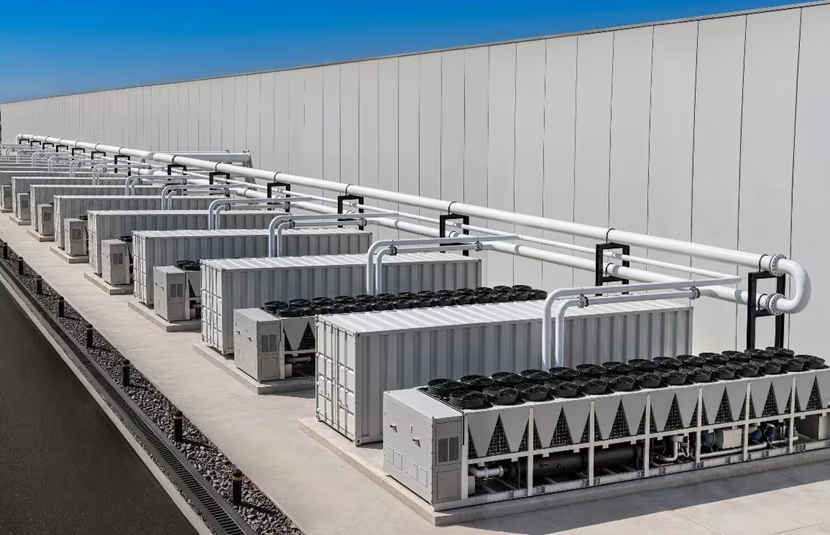
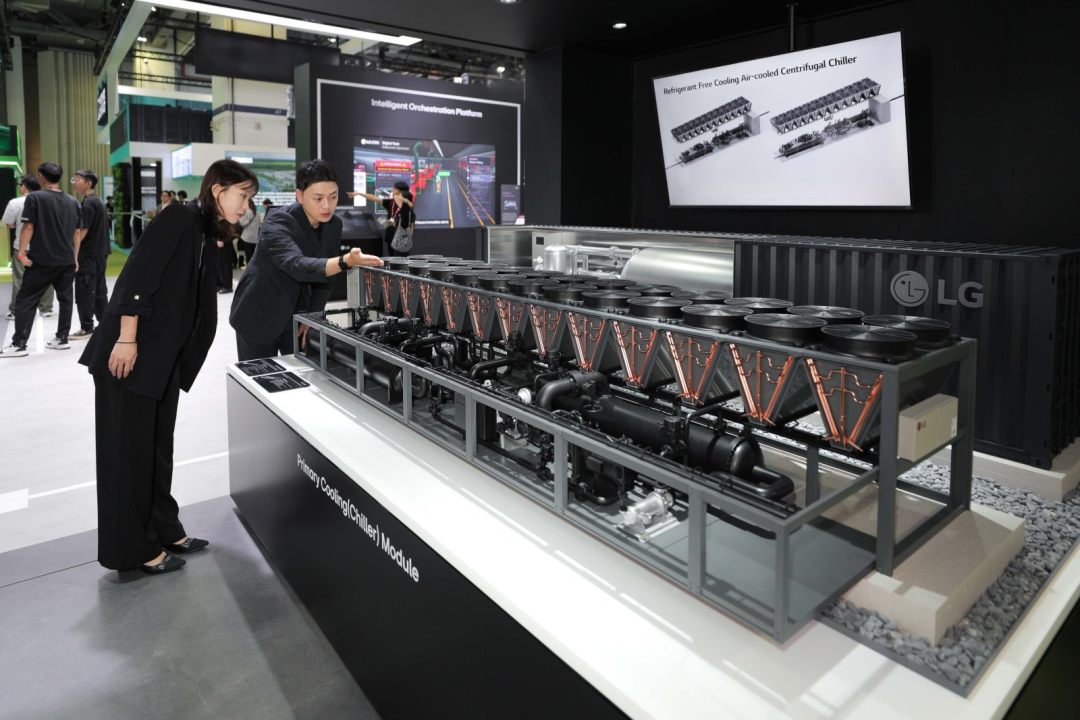
The North American data center cooling market is about USD 9.35 billion in 2026, close to 40% of the global total; within it, the AI thermal management segment is growing at a compound annual rate of about 22%, among the fastest in the data center industry. The root cause is chip power: a single Blackwell-architecture GPU now has a thermal design power (TDP) of 1,000 W, and the next generation could approach 1,400 W. Once rack power density exceeds 200 kW, traditional air cooling can no longer hold, and liquid cooling moves from an option to a must. For liquid cooling to scale, retrofitting campus chiller plants is an unavoidable prerequisite: of the roughly USD 725 billion in combined 2026 capital expenditure by the four major North American cloud providers, about 75% is going to AI infrastructure, and cooling is a hard requirement within it. The division of labor is clear: chillers are the campus-level source of cooling, producing chilled water and ultimately rejecting heat outdoors, while CDUs (coolant distribution units) are the rack-level hub, connecting the chiller's chilled-water loop on one side and server cold plates on the other, precisely controlling the temperature, pressure, and flow of the coolant on the chip side.
3. LG's Three Steps
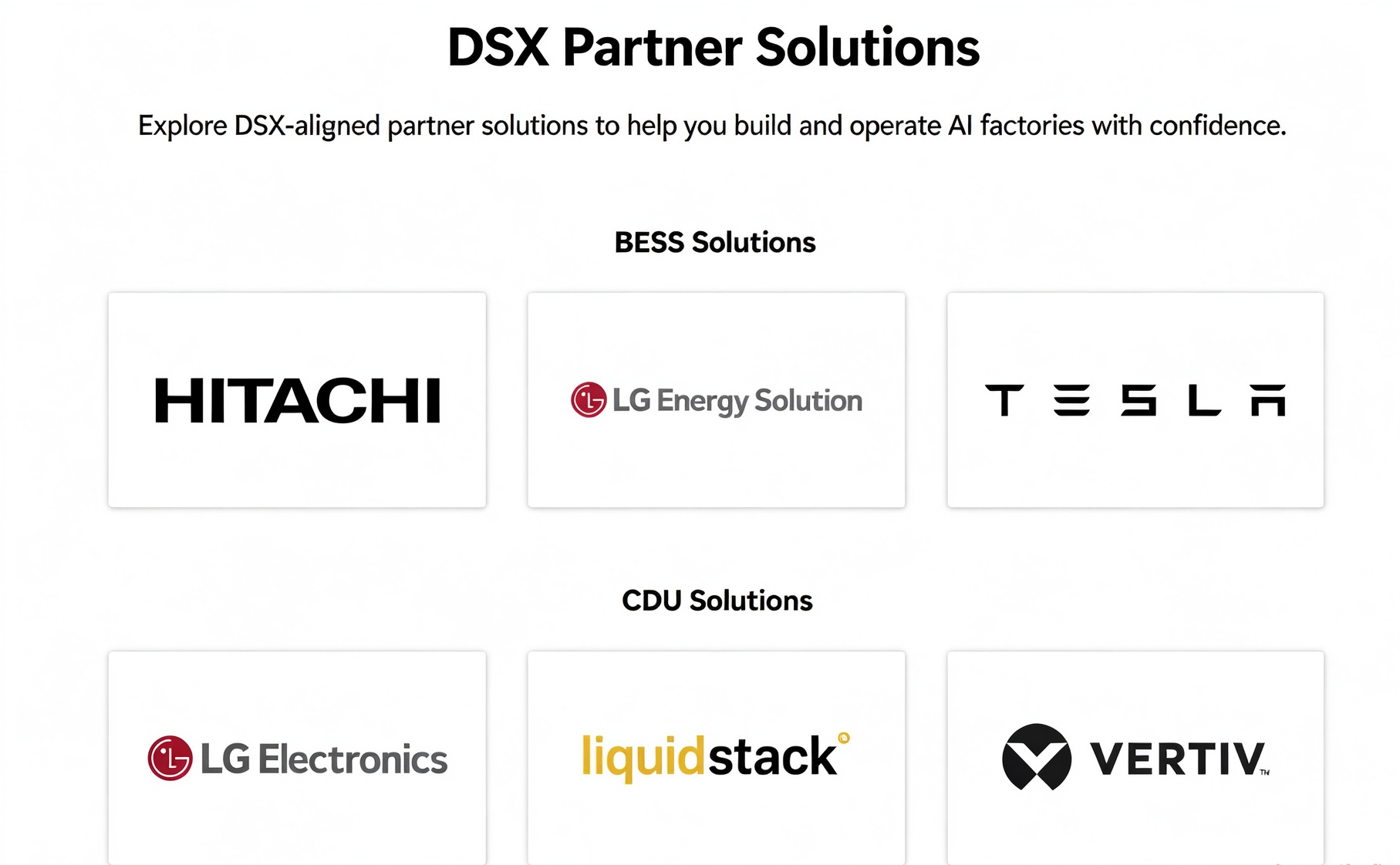
First, aligning with chipmakers' standards. This year, LG's 600 kW, 1 MW, and 2.6 MW CDUs successively passed NVIDIA infrastructure qualification, and the 2.6 MW CDU entered the first batch of the NVIDIA DSX Ready list, effectively NVIDIA's official entry threshold for AI factory infrastructure, granting seamless integration with NVIDIA compute cluster reference architectures. Verification of the 4 MW CDU is underway, and LG has also become a preferred partner for NVIDIA power and cooling solutions.
Second, moving capacity forward. On October 1, LG announced a new chiller and CDU production base in Virginia, USA, alongside capacity expansion at its Changwon and Pyeongtaek plants in Korea, forming a three-base layout across the US and Korea to shorten delivery cycles for North American projects and meet local supply chain requirements.
Third, expanding its footprint. Beyond North America, data center cooling projects in the Middle East and Indonesia are advancing in parallel; drawing on synergies across the group's electronics, HVAC, and energy divisions, LG aims to move from a single-product supplier to an end-to-end data center thermal management solution provider.
4. The Logic of the Cooling Business Has Changed: From Support to Capacity (CNESA Observation)
A few years ago, data center cooling was a supporting business where vendors competed on energy efficiency ratio, price, and delivery time. That logic is being rewritten: whether a vendor can keep pace with GPU power iterations, align with chipmakers' standards, and withstand heat densities of several hundred kilowatts per rack is now the ticket to entry. Customers no longer ask for single products but for complete solutions from chip cold plates to campus chiller plants, making full-chain integration the dividing line. Notably, LG appears in both the energy storage and CDU columns of the NVIDIA DSX Ready partner list: power supply and cooling are equally hard requirements for high-density AIDC, and cooling and energy storage are both becoming capacity constraints in AI infrastructure. Only vendors whose capacity and service networks span the global market can capture this wave of demand.
Sign up for our free monthly newsletter to stay informed about the Chinese energy storage market.