
China’s New Energy Storage Installations Catch Up With 2025 Levels In First Three Quarters; Long-Duration Non-Lithium Storage Projects See Concentrated Commissioning
BEIJING, October 14, 2026
China Energy Storage Alliance (CNESA) has released its latest monthly market assessment for China’s new energy storage sector, showing total newly-commissioned capacity hit 35.30 GW / 102.31 GWh across the first nine months of 2026, broadly matching full-year prior-year performance. After a market correction in H1 2026, the third quarter delivered a strong rebound, driven primarily by stand-alone grid-side energy storage and large-scale long-duration storage assets entering commercial operation.
September marked a turning-point month: newly commissioned new energy storage reached 4.33 GW / 14.08 GWh, rising 42 % year-on-year on power capacity and 69 % on energy capacity, alongside 8 % and 14 % sequential month-over-month growth for power and energy respectively. Q3 total installations surpassed 10 GW for the first time on a quarterly basis, landing at 13.4 GW / 43.0 GWh. While power capacity for the January-September period dipped 3 % year-on-year, energy capacity advanced 6 % versus 2025, signalling larger-duration systems gaining market share.
“Stand-alone energy storage has become the core engine for China’s storage market recovery, as provincial power market reforms open viable revenue pathways for grid-connected storage assets,” said a senior analyst at CNESA. “We are observing an inflection point: long-duration non-lithium technologies are moving beyond demonstration projects toward real-world deployment, even as lithium-iron-phosphate batteries remain the workhorse of the industry. Market expansion will continue to hinge on the roll-out of local electricity market rules and capacity compensation frameworks.”
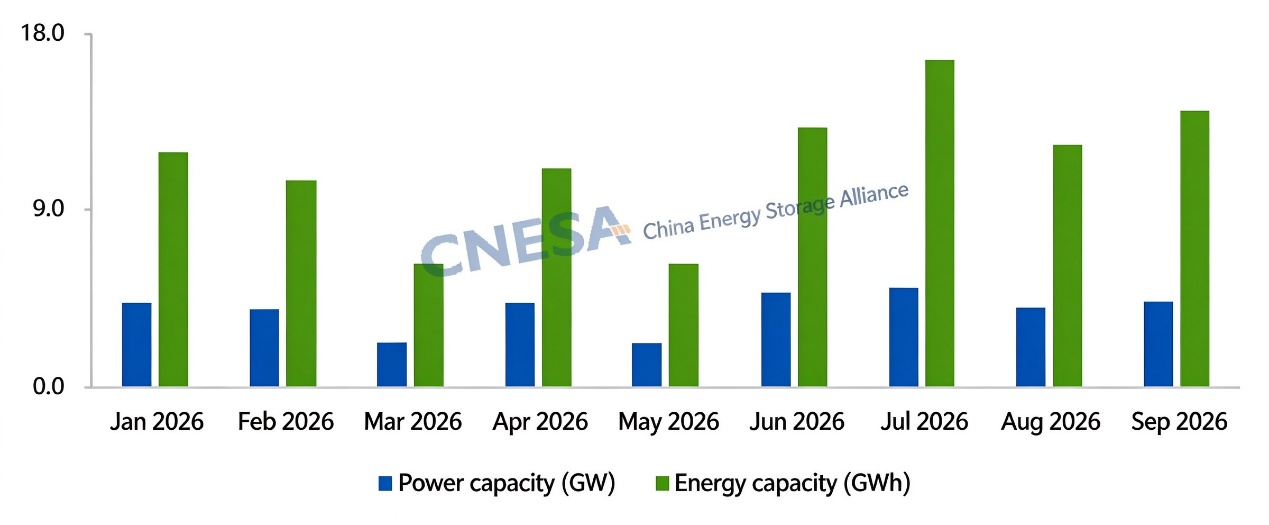
Figure 1 Newly Commissioned Capacity of New Energy Storage Projects in China, September 2026
Data source: CNESA DataLink Global Energy Storage Database
Note: Year-on-year comparison contrasts figures with the same period of the previous year; month-on-month comparison contrasts figures with the immediately preceding statistical period.
Grid-side stand-alone storage accounted for 85.3 % of September’s newly added power capacity at 3.70 GW /12.29 GWh, with power-capacity growth of 112 % year-on-year. Market reforms across multiple provinces are enabling multi-market participation for stand-alone storage assets. Southern China allows stand-alone storage to take part in both frequency-regulation and spot electricity markets; Zhejiang has implemented a breakthrough mechanism allowing daily switching between energy and frequency-regulation market participation, progressively closing the market-oriented profitability loop for stand-alone storage.
Power-side new-energy paired storage saw slower growth, while customer-side deployments continued a downward trend, with industrial-and-commercial storage making up 95.7 % of customer-side additions.
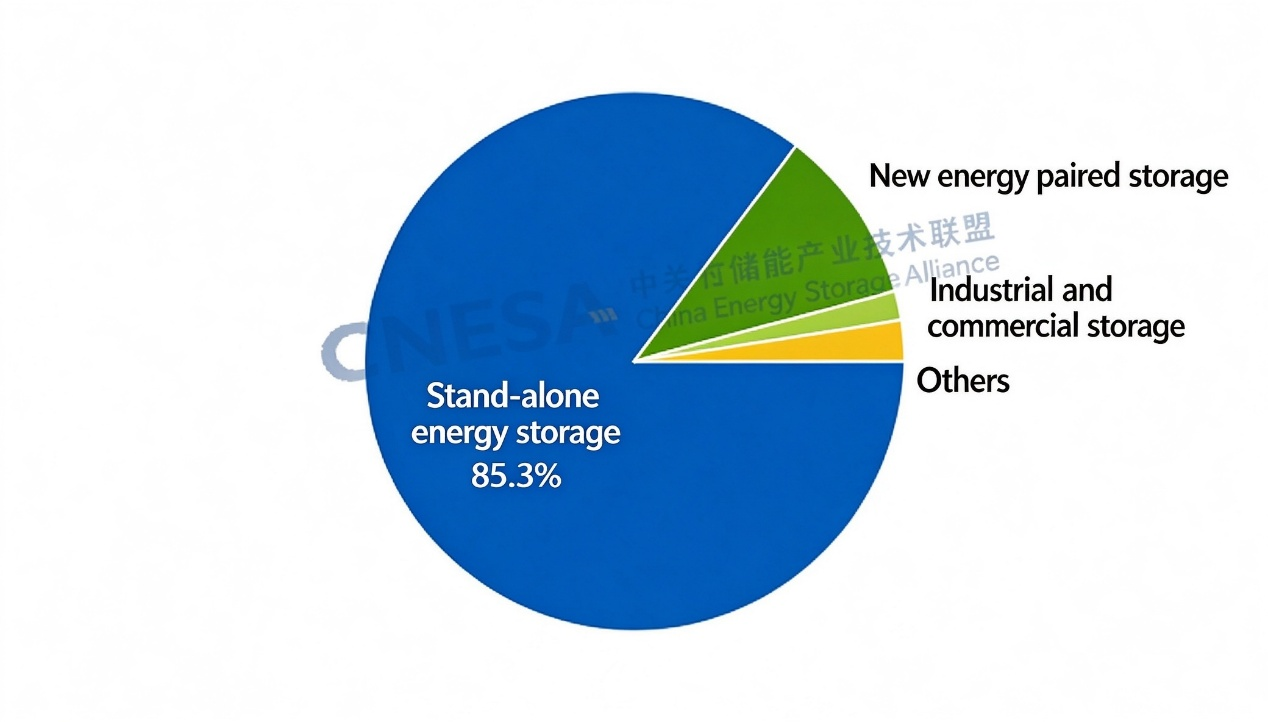
Figure 2 Application Distribution of Newly Commissioned New Energy Storage Projects in September 2026 (Share by Power Capacity)
Data source: CNESA DataLink Global Energy Storage Database
Note: Others include distribution network side, transformer districts, demonstration & research projects, thermal power coupled storage, EV charging stations, rail transit, port shore power, municipal authorities / critical facilities, data centers, etc.
Regional deployment has grown more balanced. North China led September additions with 1.46 GW power capacity, representing 34 % of national volume, followed by East China at 28 %. Guangdong ranked No. 1 for newly-added power capacity (0.83 GW), and Jiangsu topped national energy-capacity rankings (2.86 GWh), boosted by commissioning of the Jintan Salt Cavern Compressed-Air Energy Storage Phase II project. Analysts note that despite strong local demand, Jiangsu still awaits formal launch of its provincial electricity spot market and finalised capacity-compensation provisions for energy storage, creating uncertainty for future project returns.
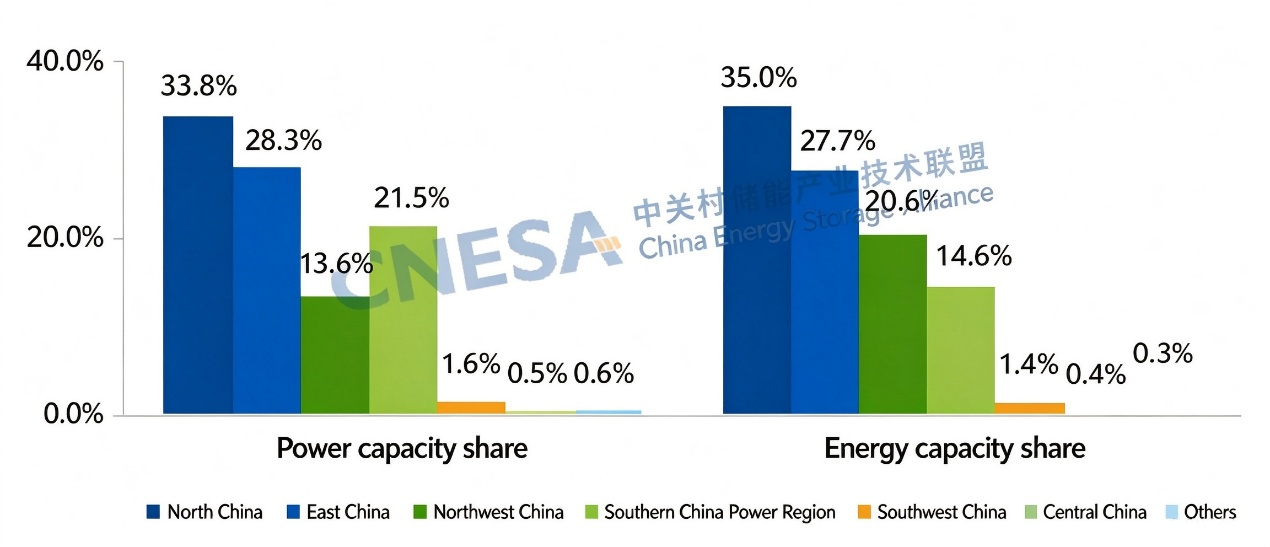
Figure 3 Regional Distribution of Newly Commissioned New Energy Storage Projects in China, September 2026
Data source: CNESA DataLink Global Energy Storage Database
Note: Southern China Power Region covers Guangdong, Guangxi, Guizhou, Hainan and Yunnan; Others include Jilin and Taiwan.
At provincial level, significant gaps exist in project scale among provinces.
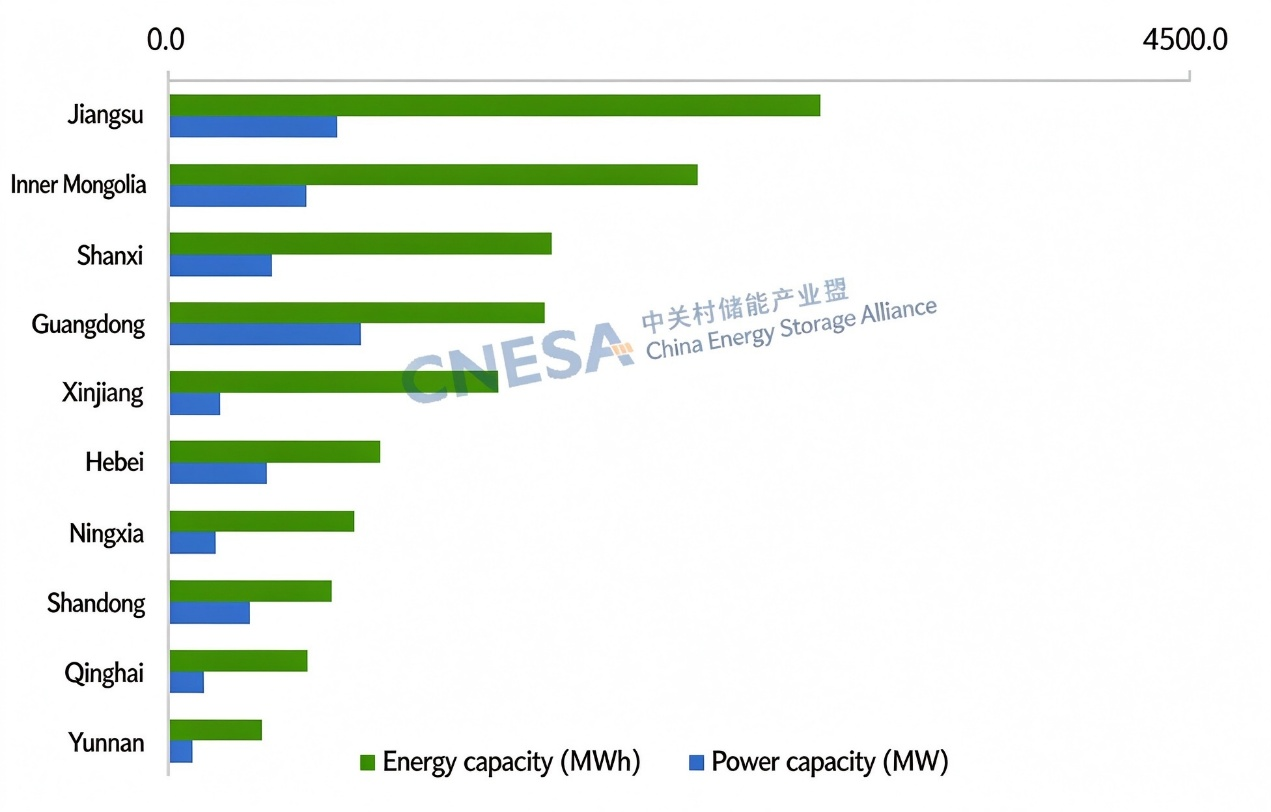
Figure 4 Top 10 Provinces for Newly Commissioned New Energy Storage Projects in China, September 2026 (Ranked by Energy Capacity)
Data source: CNESA DataLink Global Energy Storage Database
Technically, lithium-iron-phosphate batteries still represented 73.08 % of September’s commissioned power capacity. Non-lithium long-duration energy storage captured 23.6 % of monthly power additions, with landmark assets coming online including large-scale compressed-air energy storage facilities, vanadium-redox and iron-chromium flow-battery parks, and multi-technology hybrid demonstration sites. The data confirms a complementary multi-technology landscape is emerging, without near-term full replacement of lithium-based systems.
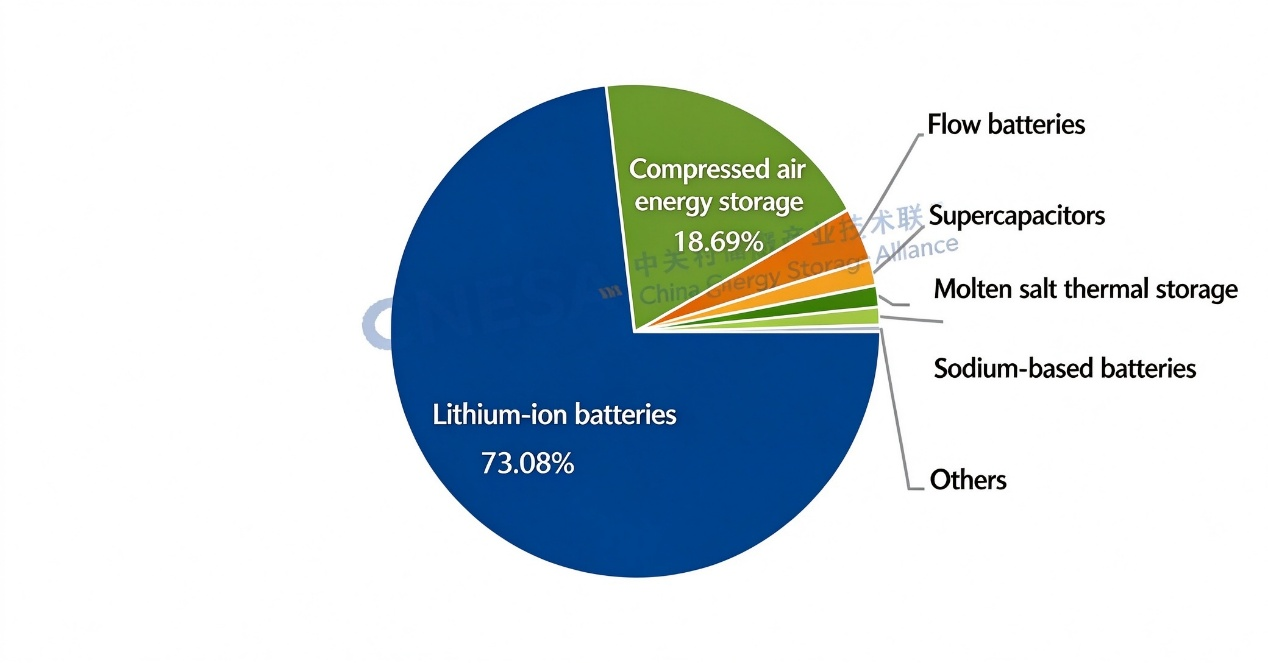
Figure 5 Technology Distribution of Newly Commissioned New Energy Storage Projects in China, September 2026 (Share by Power Capacity)
Data source: CNESA DataLink Global Energy Storage Database
Note: Others include lead-acid batteries and fuel cells.
Key take-aways from CNESA analysis
1. Q3 reversed H1 market softness; stand-alone storage business-model maturity is the primary growth driver, subject to provincial electricity-market rule implementation timelines.
2. Long-duration storage is transitioning from demonstration to early commercial deployment; LFP remains the mainstream baseline technology, with complementary multi-technology mix taking hold.
3. Regional policy divergence creates market variance: high-demand provinces such as Jiangsu depend on completed market-mechanism roll-out to unlock full project revenue potential.
Data cited is sourced from CNESA DataLink Global Energy Storage Database. Figures represent incomplete statistics of newly-commissioned new-energy-storage projects within mainland China.