
As AIDC (AI data centers) gradually become a key application scenario for energy storage, a sharp contradiction has surfaced: does the storage logic designed for power systems fit the power consumption characteristics of computing centers?
At the “Storage-Computing Integration” roundtable of the Computing-Electricity Synergy Sub-forum at the 11th Energy Storage Western Forum, frontline guests from data center operators and energy storage companies pointed out that AIDC energy storage must shift from the logic of utility-scale storage to the logic of critical infrastructure.
The forum was hosted by the China Energy Research Society, Lanzhou University and the China Energy Storage Alliance (CNESA). The dialogue was moderated by Tang Liang, Deputy Secretary-General of CNESA, with Chen Shengjun, Senior Vice President of Chindata Group; Qi Yebai, Senior Vice President and Head of Energy Planning of VNET Group (21Vianet); Ma Jiaxin, Director of Energy Storage Solutions of Shuangdeng Group; and Zhang Kexin, Senior Manager of Policy Research of HyperStrong.
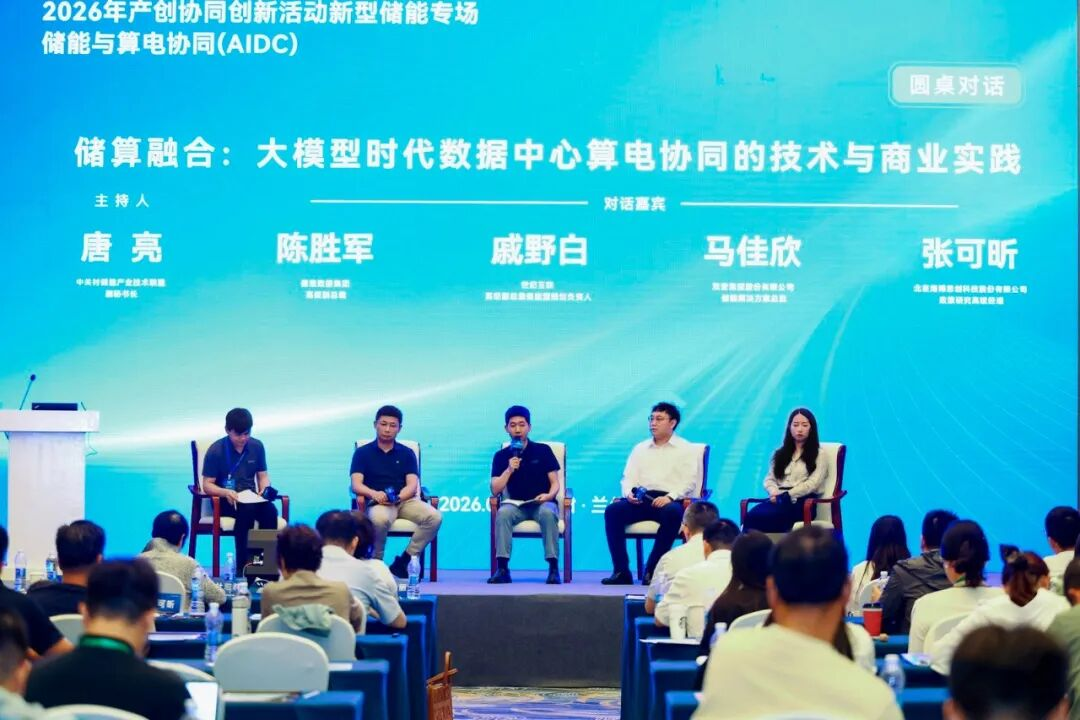
How Are AIDC’s Ultra-Large DC Loads Changing the Power System?
At this year’s National Two Sessions, computing-electricity synergy was written into the Report on the Work of the Government for the first time and explicitly listed as a new infrastructure program, elevating it from industry exploration to a national strategy.
AIDC is becoming a major electricity consumer on the grid: over the next five years, its newly added annual electricity consumption will reach 100 billion kWh, equivalent to the annual output of the Three Gorges Hydropower Station. Qi Yebai, Senior Vice President and Head of Energy Planning of VNET Group (21Vianet), noted that AI brings not only growth in total electricity consumption but, more importantly, a change in load structure.
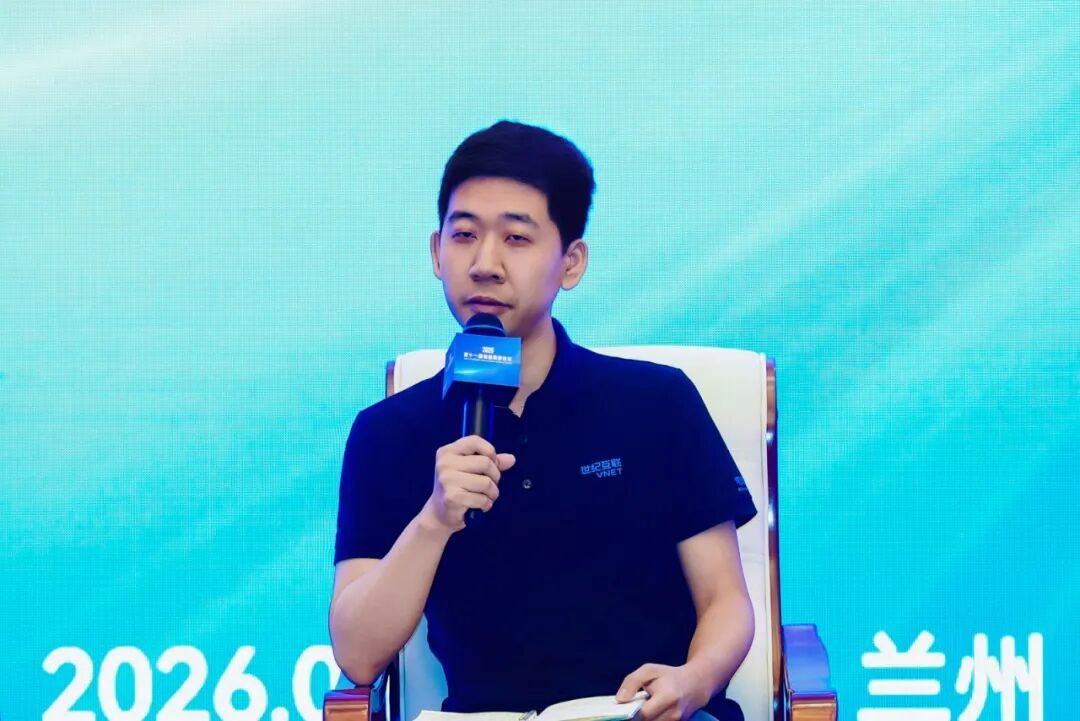
Qi Yebai, Senior Vice President and Head of Energy Planning, VNET Group
It is understood that China’s power supply and load are currently dominated by the AC grid, but AIDC represents an ultra-large DC load that constantly switches between communication and computing, with the drawback of poor adjustability. This means computing centers cannot be treated as ordinary industrial loads.
In terms of development, Qi Yebai divides computing-electricity synergy into three phases: the parasitic phase, the symbiotic phase and the regenerative phase. In the early stage, the computing side proactively adapts to power conditions, typically locating in regions with advantages in electricity prices, supply capacity or green power resources. In the middle stage, power and computing begin to exchange information and collaborate on dispatch, load forecasting and operations. The longer-term goal of computing-electricity synergy is for the two systems to perceive each other’s state and participate in more refined energy optimization while safeguarding computing services — with energy storage playing a key connecting role throughout this process.
AIDC Projects’ Landing: Power Availability Alone is Not Enough
From the perspective of AIDC project deployment, China has two models: “build after securing customers” and “build first, find customers later.” How should the two models be viewed? This is a hot topic in the industry today.
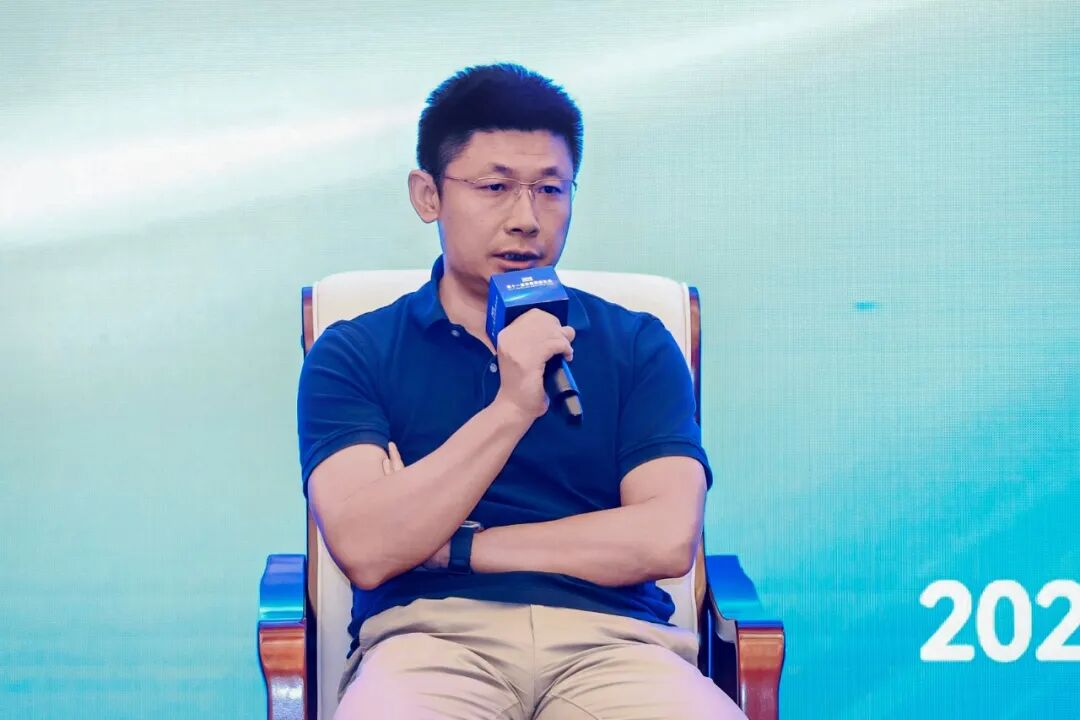
Chen Shengjun, Senior Vice President, Chindata Group
Chen Shengjun, Senior Vice President of Chindata Group, pointed out that computing center construction requires comprehensive consideration of factors such as chips, land, electricity and water, and that no matter how fast demand grows, grid connection remains the precondition. Without power, large-scale construction is simply out of the question.
According to Chen Shengjun, premium nodes are also areas of concentrated load: they offer good network conditions and strong business demand, but grid connection capacity is tighter. Regions with better renewable resources may fall short on networks, industrial support or construction conditions. Therefore, computing center siting cannot consider electricity prices or total energy alone; it must strike a comprehensive balance among chips, land, electricity and water.
In the short term, projects need to resolve reliable grid access and construction sequencing; in the long term, green power procurement, supply reliability and economics must all be incorporated into planning.
New Requirements AIDC Load Characteristics Place on Energy Storage
Faced with AIDC as a brand-new application scenario, the role and development logic of energy storage are changing.
The positioning of energy storage has changed. As Ma Jiaxin, Director of Energy Storage Solutions of Shuangdeng Group Co., Ltd., put it: “Energy storage is now closer to the infrastructure of computing centers — the product design logic, service model and system positioning have all changed.” In power systems, energy storage appears as a regulating resource, with the core tasks of peak shaving and valley filling, dispatch participation or improving renewable energy consumption. In AIDC scenarios, storage must first serve the continuous power supply and power quality assurance of high-value loads, and its system value can no longer be measured by single-cycle charging and discharging revenue alone. Under these new characteristics, energy storage in computing centers must participate in energy optimization while also providing support during power fluctuations, short-term disturbances and even emergency scenarios.

Ma Jiaxin, Director of Energy Storage Solutions, Shuangdeng Group Co., Ltd.
Operating conditions have changed. Ma Jiaxin noted that grid energy storage products are typically defined by 2-hour, 4-hour or even longer durations, and their operation approximates low-frequency, periodic dispatch scenarios. AIDC energy storage, however, cannot simply wait for one charge-discharge opportunity per day: it may need to respond to power disturbances at millisecond speeds, balancing multiple objectives — backup, power assurance, green power utilization and economic operation — while smoothing load variations. This means storage system design can no longer stop at a “capacity + duration” configuration approach, but must build coordinated capabilities spanning cells, BMS, PCS, PMS and EMS.
Customers and delivery models have changed. Grid storage customers are mostly renewable power plants, power generation groups or grid-related entities with relatively mature and standardized needs, while computing center end customers are diverse — ranging from technology companies to managed service providers — and impose different requirements on vendors.
Zhang Kexin, Senior Manager of Policy Research at Beijing HyperStrong Technology Co., Ltd., believes that storage applications in computing center scenarios must first clarify which side they are positioned on — campus-level and machine-room scenarios call for different overall storage design schemes. For campus-level AIDC with storage, the role of storage remains energy regulation: smoothing peaks and valleys and reducing comprehensive electricity prices, in which the advantages of traditional source-grid-side storage products can carry over. On the machine-room side, storage applications need new design approaches, such as coupling with sodium-ion batteries.

Zhang Kexin, Senior Manager of Policy Research, Beijing HyperStrong Technology Co., Ltd.
Conclusion
This roundtable clearly reveals that computing centers are bringing energy storage into a new application scenario. Faced with computing loads that are high-density, high-frequency, poorly adjustable and extremely sensitive to supply continuity, the value of energy storage will increasingly lie in system reliability, fast response, green power coordination and refined operations.
For the storage industry, this is both a new incremental market and an upgrade of capabilities. Future competition will not be limited to battery capacity or equipment prices, but will hinge on whether players understand the power consumption logic of computing businesses and can turn energy storage into dispatchable, verifiable and long-term operable power supply capability.
The 15th Energy Storage International Conference and Expo (ESIE 2027) will be held on March 16-19, 2027, at the Beijing Capital International Exhibition & Convention Center (CIECC). For the first time, the event will feature an AIDC energy storage section showcasing the complete AIDC storage industry chain, from high-rate cells, BBU backup power, UPS and HVDC to solid-state transformers (SST) and integrated system solutions.
China’s three major telecom operators, cloud service providers such as Tencent Cloud, third-party IDC operators such as Chindata Group and VNET Group (21Vianet), and leading overseas computing and cloud companies such as Amazon, Google and Meta will gather at the event to share data center storage deployment practices.
The expo will also set up an AIDC energy storage new product launch zone, supporting companies to debut innovative products and technical solutions in the AIDC storage field. Whether expanding into the new AIDC storage track, launching annual innovative products, or connecting with upstream and downstream industry chain resources, ESIE 2027 is a key platform for the industry.
