
Latest News
Sungrow EnerNeo SST Becomes the World’s First SST with Dual EU-US System-Level Certification: cTUVus + EMC + 13.8kV Reinforced Insulation
The surge in AI computing demand is pushing data center power architectures toward the 800V DC era. The China Energy Storage Alliance (CNESA) has noted that Sungrow’s EnerNeo solid-state transformer (SST) received system-level certification from TÜV Rheinland at the 2026 OCP Global Summit, becoming the world’s first SST to pass both European (IEC/EN) and American (UL) system-level certification and the first to secure a ticket to large-scale commercial deployment in the European and American data center markets. This article examines the substance of the certification, the technology route and the cost calculus behind the milestone.
At the 2026 OCP Global Summit, Zhang Di, President of Sungrow Source Intelligence, received a set of certificates from Sean Tilley, Vice President of the Product Services Business Unit of TÜV Rheinland Americas. The EnerNeo SST became the world’s first SST product to pass both European (IEC/EN) and American (UL) system-level certification, with the complete set of cTUVus, EMC and 13.8kV reinforced insulation certificates.
Not One Certificate, but a Stack
During the days of the OCP Global Summit, the convention center in San Jose, Silicon Valley, was packed with data center professionals. It was there that Sean Tilley handed Zhang Di the system-level and key-component certification certificates based on the UL, IEC, EN and 2 PfG series standards.
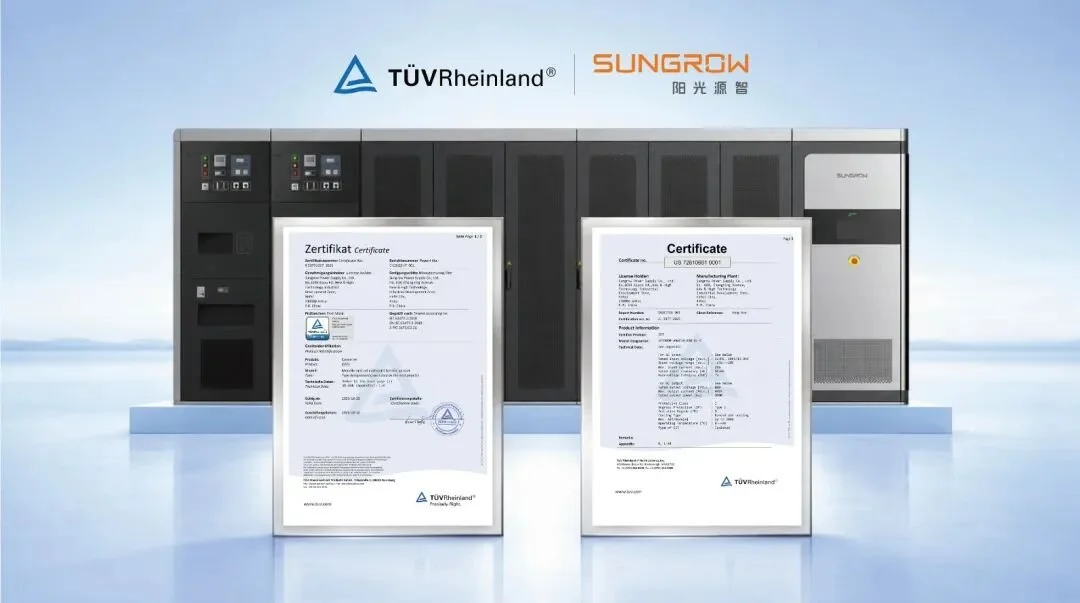
This certification covers the complete SST system. TÜV Rheinland conducted a system-level assessment of the EnerNeo against safety standards including UL 2877, IEC/EN 62477-1, IEC/EN 62477-2 and 2 PfG 3175, as well as EMC standards including EN 61000-6-2, EN 61000-6-4 and FCC Part 15. The core component, the high-frequency isolation transformer, additionally passed the dedicated 2 PfG 3179 certification, meeting the 13.8kV reinforced insulation requirement.
The outcome: the EnerNeo obtained the TÜV Rheinland certification mark, the cTUVus and EMC certificates, and the corresponding test reports. For Chinese equipment makers aiming to enter the European and American data center supply chains, completing this full set is far more difficult than passing any single test.
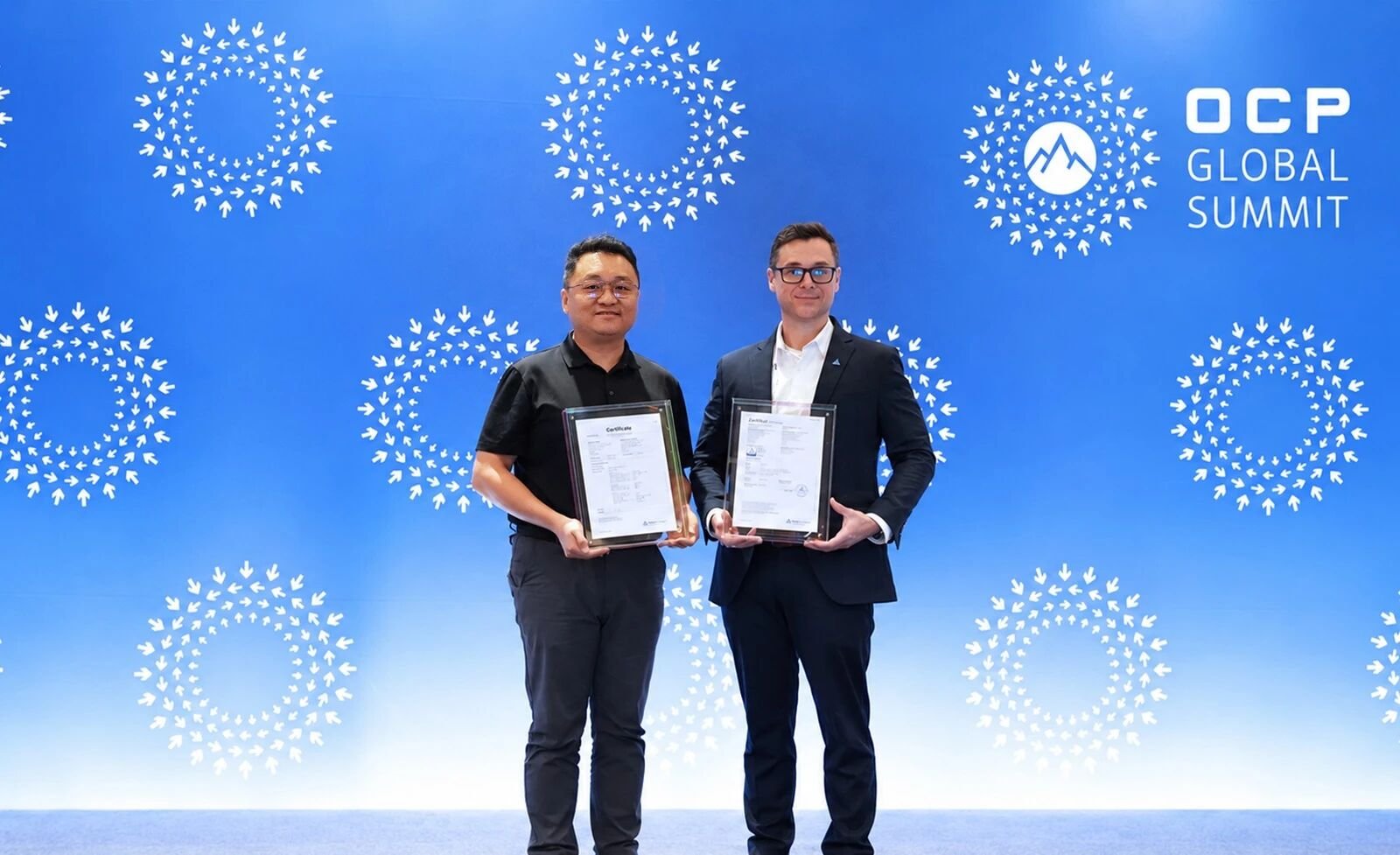
Sean Tilley (right), Vice President of the Product Services Business Unit of TÜV Rheinland Americas, presents the certification certificates to Zhang Di (left), President of Sungrow Source Intelligence.
Why System-Level Certification Is the Real Barrier
Some may ask: SST certification is not news, given that Eaton passed TÜV SÜD’s IEC 62477-2 certification in August. What is the difference?
The key lies in “system-level” and “dual-standard”.
The Solid State Transformer Specification v0.3, effective from June this year under the Open Compute Project (OCP) and jointly developed by Google, Microsoft and NVIDIA, defines the SST as a megawatt-class power electronics converter: a 13.8kV or 34.5kV medium-voltage AC input and an 800V DC output, with a power range corresponding to 5MW or 10MW. The specification covers not only power conversion but also medium-voltage input, low-voltage DC output, auxiliary power, firmware, control and communication, all within the scope of the SST product.
In other words, an SST is no longer just the “transformer” component; it is a complete power electronics system comprising power semiconductors, magnetics, control systems and communication systems. To pass system-level certification, insulation, efficiency, power density and thermal management must all meet the requirements simultaneously, rather than passing part by part.
Certification Dimension
Standards Indicators Involved
US Safety Standards UL 2877
EU Safety Standards IEC/EN 62477-1, IEC/EN 62477-2
Key Component 2 PfG 3175, 2 PfG 3179 (high-frequency isolation transformer,
13.8kV reinforced insulation)
EMC EN 61000-6-2, EN 61000-6-4, FCC Part 15
Certification Marks TÜV Rheinland certification mark, cTUVus, EMC certificates
The European and American markets are particularly strict on this point – UL and cTUVus on the US side, and the IEC/EN series on the European side. For entry into European and American data center procurement lists, system-level dual certification is close to a hard threshold. By securing both at once, the EnerNeo can now compete on equal footing with overseas players such as Delta, Eaton and Vertiv in terms of certification compliance.
800V DC: NVIDIA Sets the Course, Sungrow Delivers First
Why focus on 800V DC? The answer lies in power density.
The white paper “800VDC Architecture for Next-Generation AI Infrastructure”, released by NVIDIA at last October’s OCP Global Summit, has established 800V DC as the standard power architecture for next-generation AI infrastructure, with the SST positioned as the ultimate power supply device in the medium to long term. Sungrow’s 800V solution is also listed in the white paper as a recommended technology route.
The traditional data center power chain is: AC from the grid → step-down via a power-frequency transformer → multi-stage UPS/AC-DC conversion → server racks. Each stage incurs losses, with end-to-end efficiency of about 90%–92%. For megawatt-class racks, hundred-megawatt buildings and gigawatt-scale campuses, these few percentage points of loss translate into enormous electricity bills and thermal loads.
What the EnerNeo does is convert 10–13.8kV medium-voltage AC directly to 800V DC, using SiC power devices and an optimized series-connected H-bridge architecture, eliminating the power-frequency transformer and multi-stage conversion. Published parameters: 98.5% efficiency, 99.999% availability, 312 kW/m² power density, zero partial discharge at rack level (within 21kV), meeting the 42kV power-frequency withstand voltage and 95kV lightning impulse indicators.
According to Sungrow’s own calculation, for a 1GW computing project, the 800V DC architecture can save 400 million kWh of electricity per year. In terms of efficiency difference, 98.5% versus the 90%–92% of the full chain leaves a gap of 6–8 percentage points – no small figure at gigawatt scale.
The EnerNeo SST system and the TÜV Rheinland certificates
Evolution of the power architecture for AI supernode full racks: single-rack power leaps from the 100kW class to the megawatt class, making 800V HVDC an inevitable choice.
The Cost Calculus: SST and Traditional Solutions Are Now on the Same Level
Technology, however good, must pass the cost test. The most-cited criticism of the SST used to be its price; that anchor is now beginning to shift.
In August 2026, the SST procurement budget for the data center of the “Zhiyun Changjingkai” platform was RMB 2 million for 2.5MW of capacity, equivalent to a budgeted unit price of about RMB 0.8/W. In the same year, China Mobile Jiangsu purchased four sets of 2500kVA medium-voltage integrated power systems for its Nanjing Jiangbei Data Center at a winning price of about RMB 1.77 million per set excluding tax, or about RMB 2 million including 13% VAT. 2500kVA is AC apparent power; with the data center load power factor close to 1, the two can be compared at similar capacity levels.
Comparison Item SST Solution Traditional Medium-Voltage Integrated Power
Project Sample Zhiyun Changjingkai 2.5MW SST China Mobile Jiangsu 2500kVA integrated power
Procurement Budget / About RMB 2 million (budget) About RMB 2 million per set (incl. 13% VAT)
Winning Price
Unit Price About RMB 0.8/W About RMB 0.8/W (equivalent at similar capacity)
Capacity Class 2.5MW 2500kVA(≈2.5MW, power factor close to 1)
The comparison is noteworthy: the procurement budget of a 2.5MW-class SST is broadly on par with the winning price of a comparable 2500kVA integrated power system. Once costs reach the same level, the advantages in efficiency, footprint and response speed become decisive factors in procurement decisions.
Certification Is a Ticket, Not the Destination
Back to the OCP Summit. Experts from Google, Microsoft and NVIDIA stood in the audience as Zhang Di received the certificates – a scene carrying more information than the certificates themselves: the core initiators of the OCP SST working group are casting a vote of confidence in a Chinese manufacturer’s technology route.
But this vote is only an entry ticket. The industry is still in the stage of small-batch delivery and customer site validation. Between “certification passed” and “large-scale commercialization” lie multiple tests: engineering reliability, O&M systems, supply chain responsiveness, and acceptance by financing and insurance institutions.
What deserves even closer observation is whether Sungrow Source Intelligence can secure its first large-scale order in Europe and America after obtaining dual-standard certification. Eaton and Delta still hold first-mover advantages in overseas data center O&M and brand recognition; the next challenge for Chinese manufacturers is not laboratory parameters, but the long-term trust of overseas customers.
Amazon Locks In Backup Power Capacity with USD 8 Billion Framework: AI Infrastructure Investment Extends from Computing to Power
On September 16 local time, generator maker Generac filed with the U.S. Securities and Exchange Commission (SEC), disclosing a seven-year backup generator supply agreement with Amazon: initial deliveries are expected in 2027-2028, worth about USD 2.4 billion, and if all subsequent purchases are executed the agreement could be worth up to USD 8 billion. The deal's significance goes beyond its size: the warrant-linked, tranche-vesting purchase structure and the market's response, with Generac shares once surging over 34% in pre-market trading, point to the same signal - the competitive focus of AI infrastructure is extending from computing to power.
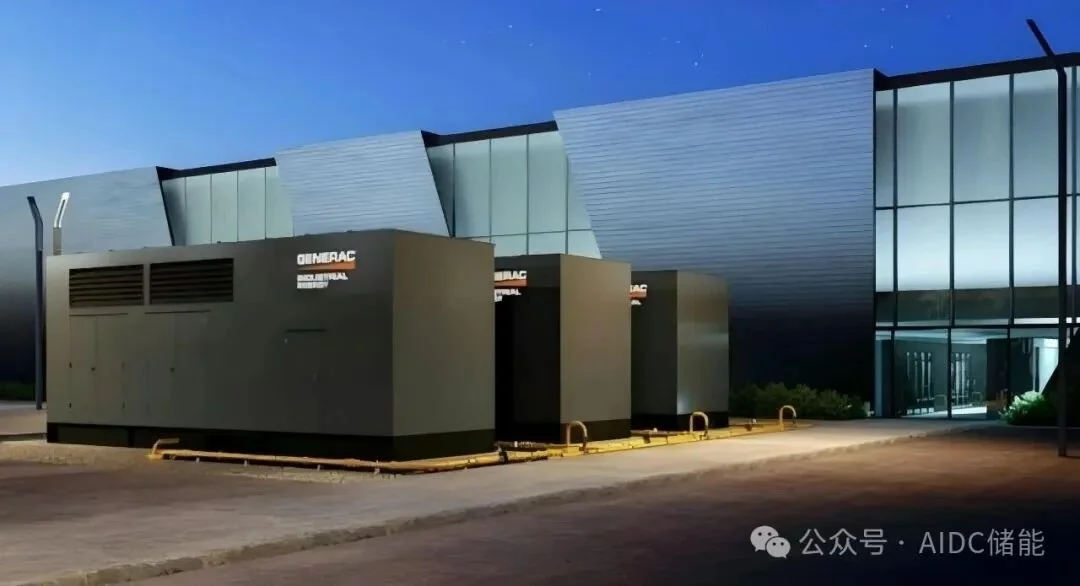
1. Deal Structure: USD 8 Billion Is a Ceiling, Not a One-Time Commitment
On the day of disclosure, Generac shares surged more than 34% in pre-market trading, the biggest single-day gain since 2010. What underpins the market is not an ordinary equipment order but the structure of the agreement: Generac issued a warrant to a wholly owned Amazon subsidiary, allowing it to purchase up to about 1.69 million Generac common shares at about USD 200.93 per share, roughly 3% of the company's outstanding shares if fully exercised. About 308,000 shares vested immediately upon signing, with the rest vesting in batches as Amazon's cumulative purchases grow; the warrant vests in full only when Amazon's cumulative backup generator purchases ultimately reach USD 8 billion. In other words, USD 8 billion is a potential ceiling tied to purchase progress. The warrant runs until September 2033, extending the partnership beyond seven years. Wells Fargo analysts view the arrangement as a sign that Amazon aims to cover longer delivery cycles rather than merely lock in the first orders.
2. Why Backup Power Suddenly Takes Center Stage
Backup generators have long played an "insurance" role in data centers - silent when grid power is normal, active only during outages. AI data centers are changing that supporting role: training and inference clusters show large, fast power fluctuations, and the cost of a grid interruption is no longer just a service pause but potentially the loss of expensive training jobs in progress. Meanwhile, grid interconnection wait times in major markets have stretched to four to seven years, and some projects need on-site generation to start before grid capacity arrives. Amazon's deal echoes Oracle's similar investment in fuel cell maker Bloom Energy in April 2026 - two hyperscalers are both locking in the long-term capacity of key power equipment suppliers through equity ties. The reliability and availability of power are gaining strategic importance equal to GPUs in the AI infrastructure race.
3. Generac's Capacity and Earnings Outlook
The order did not come out of nowhere. Over the past two years, Generac has been preparing to enter the hyperscale data center market, expanding manufacturing capacity to more than USD 1.25 billion per year. William Blair analyst Brian Drab called the agreement a "major win" for Generac, estimating it will lift the company's 2028 EBITDA by more than 20%; against a backdrop of investor concern over the durability of data center capex, the long-term agreement improves earnings visibility and helps reduce the market's risk discount on its capacity expansion. Still, the full picture remains a puzzle: Generac has not disclosed the generator models, unit capacities, or deployment sites for the order, and Amazon has not specified its technical route for backup power; the USD 2.4 billion initial deliveries are only the starting point, and the remaining USD 5.6 billion depends on Amazon's data center construction pace and Generac's delivery capability.
4. CNESA Observation: Backup Power Is Being Repriced, and the Window for Storage-Based Backup Is Opening
Amazon's capital expenditure for 2026 has been raised to about USD 220 billion, a large share of it directed at data centers, which explains why hyperscalers are willing to bind power equipment suppliers with equity: power is becoming a hard constraint of AI infrastructure. For the storage industry, the deal sends two signals. First, backup power is shifting from an "accessory" to a "foundation", expanding AIDC backup demand overall; beyond diesel, storage-based backup (BESS, BBUs, etc.), with its low-carbon compliance advantage, is becoming an alternative and complement to diesel, and Amazon's long-term decarbonization path still leaves room for storage. Second, the "warrant plus tranche vesting" long-term locking model deserves attention: the means by which hyperscale customers secure supply chain stability may likewise be replicated in the storage supply chain. Moreover, interconnection waits of four to seven years mean AIDC's power anxiety is structural; fast deployment and modular delivery are the entry tickets for storage companies to capture such demand.
Source material: Generac's SEC filing and public media reports
How Is AIDC Energy Storage Different from Utility-Scale and C&I Storage?
As AIDC (AI data centers) gradually become a key application scenario for energy storage, a sharp contradiction has surfaced: does the storage logic designed for power systems fit the power consumption characteristics of computing centers?
At the “Storage-Computing Integration” roundtable of the Computing-Electricity Synergy Sub-forum at the 11th Energy Storage Western Forum, frontline guests from data center operators and energy storage companies pointed out that AIDC energy storage must shift from the logic of utility-scale storage to the logic of critical infrastructure.
The forum was hosted by the China Energy Research Society, Lanzhou University and the China Energy Storage Alliance (CNESA). The dialogue was moderated by Tang Liang, Deputy Secretary-General of CNESA, with Chen Shengjun, Senior Vice President of Chindata Group; Qi Yebai, Senior Vice President and Head of Energy Planning of VNET Group (21Vianet); Ma Jiaxin, Director of Energy Storage Solutions of Shuangdeng Group; and Zhang Kexin, Senior Manager of Policy Research of HyperStrong.
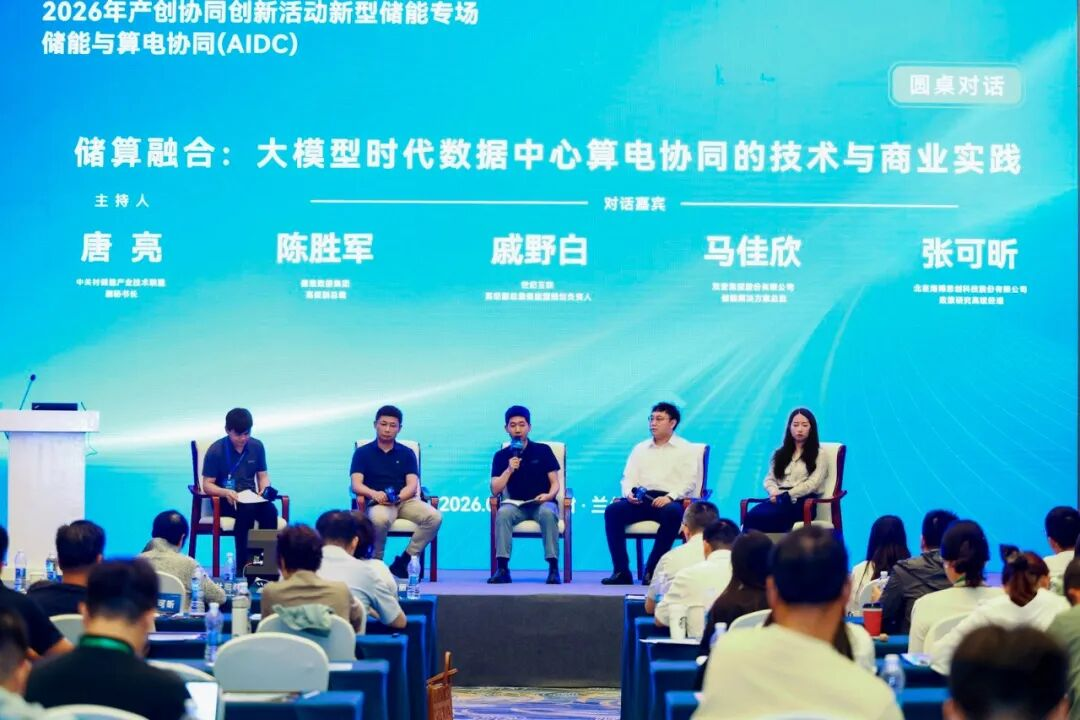
How Are AIDC’s Ultra-Large DC Loads Changing the Power System?
At this year’s National Two Sessions, computing-electricity synergy was written into the Report on the Work of the Government for the first time and explicitly listed as a new infrastructure program, elevating it from industry exploration to a national strategy.
AIDC is becoming a major electricity consumer on the grid: over the next five years, its newly added annual electricity consumption will reach 100 billion kWh, equivalent to the annual output of the Three Gorges Hydropower Station. Qi Yebai, Senior Vice President and Head of Energy Planning of VNET Group (21Vianet), noted that AI brings not only growth in total electricity consumption but, more importantly, a change in load structure.
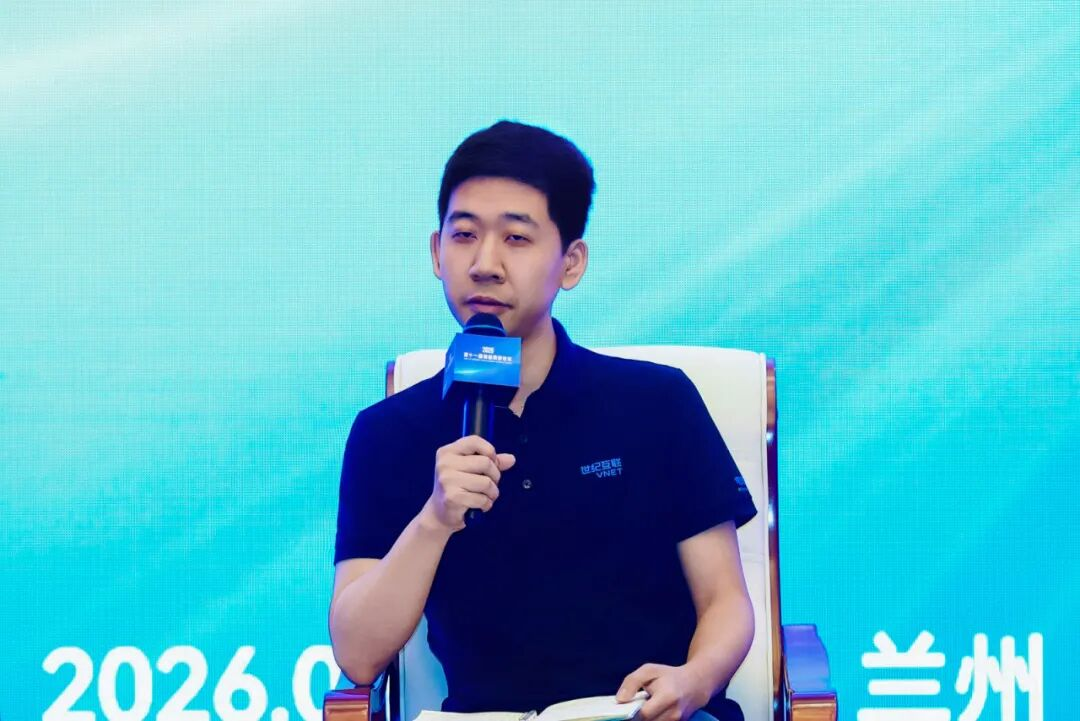
Qi Yebai, Senior Vice President and Head of Energy Planning, VNET Group
It is understood that China’s power supply and load are currently dominated by the AC grid, but AIDC represents an ultra-large DC load that constantly switches between communication and computing, with the drawback of poor adjustability. This means computing centers cannot be treated as ordinary industrial loads.
In terms of development, Qi Yebai divides computing-electricity synergy into three phases: the parasitic phase, the symbiotic phase and the regenerative phase. In the early stage, the computing side proactively adapts to power conditions, typically locating in regions with advantages in electricity prices, supply capacity or green power resources. In the middle stage, power and computing begin to exchange information and collaborate on dispatch, load forecasting and operations. The longer-term goal of computing-electricity synergy is for the two systems to perceive each other’s state and participate in more refined energy optimization while safeguarding computing services — with energy storage playing a key connecting role throughout this process.
AIDC Projects’ Landing: Power Availability Alone is Not Enough
From the perspective of AIDC project deployment, China has two models: “build after securing customers” and “build first, find customers later.” How should the two models be viewed? This is a hot topic in the industry today.

Chen Shengjun, Senior Vice President, Chindata Group
Chen Shengjun, Senior Vice President of Chindata Group, pointed out that computing center construction requires comprehensive consideration of factors such as chips, land, electricity and water, and that no matter how fast demand grows, grid connection remains the precondition. Without power, large-scale construction is simply out of the question.
According to Chen Shengjun, premium nodes are also areas of concentrated load: they offer good network conditions and strong business demand, but grid connection capacity is tighter. Regions with better renewable resources may fall short on networks, industrial support or construction conditions. Therefore, computing center siting cannot consider electricity prices or total energy alone; it must strike a comprehensive balance among chips, land, electricity and water.
In the short term, projects need to resolve reliable grid access and construction sequencing; in the long term, green power procurement, supply reliability and economics must all be incorporated into planning.
New Requirements AIDC Load Characteristics Place on Energy Storage
Faced with AIDC as a brand-new application scenario, the role and development logic of energy storage are changing.
The positioning of energy storage has changed. As Ma Jiaxin, Director of Energy Storage Solutions of Shuangdeng Group Co., Ltd., put it: “Energy storage is now closer to the infrastructure of computing centers — the product design logic, service model and system positioning have all changed.” In power systems, energy storage appears as a regulating resource, with the core tasks of peak shaving and valley filling, dispatch participation or improving renewable energy consumption. In AIDC scenarios, storage must first serve the continuous power supply and power quality assurance of high-value loads, and its system value can no longer be measured by single-cycle charging and discharging revenue alone. Under these new characteristics, energy storage in computing centers must participate in energy optimization while also providing support during power fluctuations, short-term disturbances and even emergency scenarios.

Ma Jiaxin, Director of Energy Storage Solutions, Shuangdeng Group Co., Ltd.
Operating conditions have changed. Ma Jiaxin noted that grid energy storage products are typically defined by 2-hour, 4-hour or even longer durations, and their operation approximates low-frequency, periodic dispatch scenarios. AIDC energy storage, however, cannot simply wait for one charge-discharge opportunity per day: it may need to respond to power disturbances at millisecond speeds, balancing multiple objectives — backup, power assurance, green power utilization and economic operation — while smoothing load variations. This means storage system design can no longer stop at a “capacity + duration” configuration approach, but must build coordinated capabilities spanning cells, BMS, PCS, PMS and EMS.
Customers and delivery models have changed. Grid storage customers are mostly renewable power plants, power generation groups or grid-related entities with relatively mature and standardized needs, while computing center end customers are diverse — ranging from technology companies to managed service providers — and impose different requirements on vendors.
Zhang Kexin, Senior Manager of Policy Research at Beijing HyperStrong Technology Co., Ltd., believes that storage applications in computing center scenarios must first clarify which side they are positioned on — campus-level and machine-room scenarios call for different overall storage design schemes. For campus-level AIDC with storage, the role of storage remains energy regulation: smoothing peaks and valleys and reducing comprehensive electricity prices, in which the advantages of traditional source-grid-side storage products can carry over. On the machine-room side, storage applications need new design approaches, such as coupling with sodium-ion batteries.

Zhang Kexin, Senior Manager of Policy Research, Beijing HyperStrong Technology Co., Ltd.
Conclusion
This roundtable clearly reveals that computing centers are bringing energy storage into a new application scenario. Faced with computing loads that are high-density, high-frequency, poorly adjustable and extremely sensitive to supply continuity, the value of energy storage will increasingly lie in system reliability, fast response, green power coordination and refined operations.
For the storage industry, this is both a new incremental market and an upgrade of capabilities. Future competition will not be limited to battery capacity or equipment prices, but will hinge on whether players understand the power consumption logic of computing businesses and can turn energy storage into dispatchable, verifiable and long-term operable power supply capability.
The 15th Energy Storage International Conference and Expo (ESIE 2027) will be held on March 16-19, 2027, at the Beijing Capital International Exhibition & Convention Center (CIECC). For the first time, the event will feature an AIDC energy storage section showcasing the complete AIDC storage industry chain, from high-rate cells, BBU backup power, UPS and HVDC to solid-state transformers (SST) and integrated system solutions.
China’s three major telecom operators, cloud service providers such as Tencent Cloud, third-party IDC operators such as Chindata Group and VNET Group (21Vianet), and leading overseas computing and cloud companies such as Amazon, Google and Meta will gather at the event to share data center storage deployment practices.
The expo will also set up an AIDC energy storage new product launch zone, supporting companies to debut innovative products and technical solutions in the AIDC storage field. Whether expanding into the new AIDC storage track, launching annual innovative products, or connecting with upstream and downstream industry chain resources, ESIE 2027 is a key platform for the industry.
Sign up for our free monthly newsletter to stay informed about the Chinese energy storage market.