
Latest News
Amazon Locks In Backup Power Capacity with USD 8 Billion Framework: AI Infrastructure Investment Extends from Computing to Power
On September 16 local time, generator maker Generac filed with the U.S. Securities and Exchange Commission (SEC), disclosing a seven-year backup generator supply agreement with Amazon: initial deliveries are expected in 2027-2028, worth about USD 2.4 billion, and if all subsequent purchases are executed the agreement could be worth up to USD 8 billion. The deal's significance goes beyond its size: the warrant-linked, tranche-vesting purchase structure and the market's response, with Generac shares once surging over 34% in pre-market trading, point to the same signal - the competitive focus of AI infrastructure is extending from computing to power.
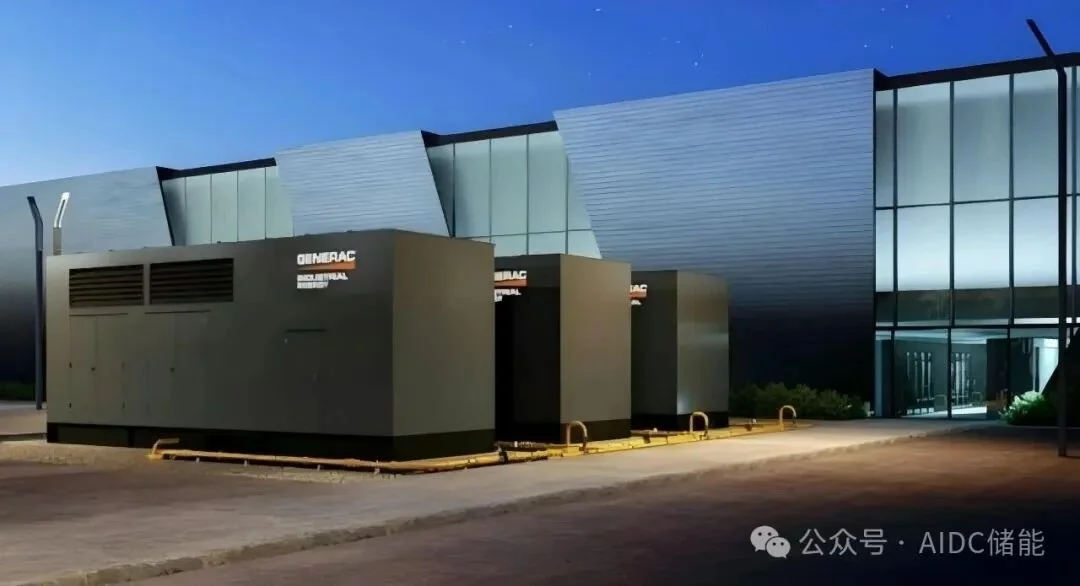
1. Deal Structure: USD 8 Billion Is a Ceiling, Not a One-Time Commitment
On the day of disclosure, Generac shares surged more than 34% in pre-market trading, the biggest single-day gain since 2010. What underpins the market is not an ordinary equipment order but the structure of the agreement: Generac issued a warrant to a wholly owned Amazon subsidiary, allowing it to purchase up to about 1.69 million Generac common shares at about USD 200.93 per share, roughly 3% of the company's outstanding shares if fully exercised. About 308,000 shares vested immediately upon signing, with the rest vesting in batches as Amazon's cumulative purchases grow; the warrant vests in full only when Amazon's cumulative backup generator purchases ultimately reach USD 8 billion. In other words, USD 8 billion is a potential ceiling tied to purchase progress. The warrant runs until September 2033, extending the partnership beyond seven years. Wells Fargo analysts view the arrangement as a sign that Amazon aims to cover longer delivery cycles rather than merely lock in the first orders.
2. Why Backup Power Suddenly Takes Center Stage
Backup generators have long played an "insurance" role in data centers - silent when grid power is normal, active only during outages. AI data centers are changing that supporting role: training and inference clusters show large, fast power fluctuations, and the cost of a grid interruption is no longer just a service pause but potentially the loss of expensive training jobs in progress. Meanwhile, grid interconnection wait times in major markets have stretched to four to seven years, and some projects need on-site generation to start before grid capacity arrives. Amazon's deal echoes Oracle's similar investment in fuel cell maker Bloom Energy in April 2026 - two hyperscalers are both locking in the long-term capacity of key power equipment suppliers through equity ties. The reliability and availability of power are gaining strategic importance equal to GPUs in the AI infrastructure race.
3. Generac's Capacity and Earnings Outlook
The order did not come out of nowhere. Over the past two years, Generac has been preparing to enter the hyperscale data center market, expanding manufacturing capacity to more than USD 1.25 billion per year. William Blair analyst Brian Drab called the agreement a "major win" for Generac, estimating it will lift the company's 2028 EBITDA by more than 20%; against a backdrop of investor concern over the durability of data center capex, the long-term agreement improves earnings visibility and helps reduce the market's risk discount on its capacity expansion. Still, the full picture remains a puzzle: Generac has not disclosed the generator models, unit capacities, or deployment sites for the order, and Amazon has not specified its technical route for backup power; the USD 2.4 billion initial deliveries are only the starting point, and the remaining USD 5.6 billion depends on Amazon's data center construction pace and Generac's delivery capability.
4. CNESA Observation: Backup Power Is Being Repriced, and the Window for Storage-Based Backup Is Opening
Amazon's capital expenditure for 2026 has been raised to about USD 220 billion, a large share of it directed at data centers, which explains why hyperscalers are willing to bind power equipment suppliers with equity: power is becoming a hard constraint of AI infrastructure. For the storage industry, the deal sends two signals. First, backup power is shifting from an "accessory" to a "foundation", expanding AIDC backup demand overall; beyond diesel, storage-based backup (BESS, BBUs, etc.), with its low-carbon compliance advantage, is becoming an alternative and complement to diesel, and Amazon's long-term decarbonization path still leaves room for storage. Second, the "warrant plus tranche vesting" long-term locking model deserves attention: the means by which hyperscale customers secure supply chain stability may likewise be replicated in the storage supply chain. Moreover, interconnection waits of four to seven years mean AIDC's power anxiety is structural; fast deployment and modular delivery are the entry tickets for storage companies to capture such demand.
Source material: Generac's SEC filing and public media reports

Amazon buys 1.2GW Sunstone solar-plus-storage project from bankrupt Pine Gate
Global tech giant Amazon has been approved as the buyer of the 1.2GW Sunstone solar project in Oregon, one of the largest solar PV projects in the US.
Global tech giant Amazon has been approved as the buyer of the 1.2GW Sunstone solar project in Oregon, one of the largest solar PV projects in the US.
The Sunstone site was developed and previously owned by Pine Gate Renewables, the US independent power producer (IPP), which filed for bankruptcy in November 2025. It includes 1.2GW of solar PV and 1.2GW of battery energy storage system (BESS) capacity, which is ready to build, having received permitting and approvals from the Oregon Energy Facility Siting Council (EFSC).
Amazon’s acquisition was approved by the Bankruptcy Court for the Southern District of Texas, which granted its offer of US$83 million in cash via its specific project subsidiary, Oregon Solar I.
The move follows Amazon’s complaints back in November that an Oregon utility was not supplying sufficient power to its data centre projects in the state, where it has built numerous cloud computing data centres close to the banks of the Columbia River. Once fully operational, the Sunstone solar-plus-storage project will be one of the most significant renewable energy generation projects in the US.
To date, most of Amazon’s energy procurement has been via power purchase agreements (PPAs), and along with fellow Big Tech leviathans Meta and Google, Amazon led US solar power procurement deals in 2024. But the scale of Sunstone, and the fact that it is ready to be built with approvals and permits in place, makes it an attractive proposition for a company whose growing energy demand will be a significant story in the industry over the coming years.
As the power demands of these data centre hyperscalers continue to grow, owning their own power sources might become more common. Last month, Google’s parent company Alphabet announced the acquisition of Intersect Power, an energy project developer, with a view to developing more energy capacity “in lockstep with new data centre load”, Sundar Pichai, CEO of Google and Alphabet, said at the time.
Since declaring bankruptcy, Pine Gate’s roughly 10GW of project assets have been offered to the market, though the company says it has sufficient liquidity to continue operating in the meantime. Earlier this month, Israel-based project developer Nofar Energy bought 1GW worth of Pine Gate’s utility-scale solar assets across the Carolinas, Alabama and Texas for US$285 million.
Source: Energy Storage News
By Will Norman
______________________________________________
Register now to attend Asia’s Largest Energy Storage Trade Show for free:
What: The 14th Energy Storage International Conference & Expo
When: Conferences: March 31 - April 2, 2026
Exhibitions: April 1-3, 2026
Where: CIECC Beijing, China
Address: No. 55 Yudong road, Shunyi District, Beijing China

Sign up for our free monthly newsletter to stay informed about the Chinese energy storage market.