
Latest News
The 6th Energy Storage Safety Forum Successfully Held in Hefei
With the diversification of energy storage technologies, application scenarios are rapidly expanding beyond traditional power systems into emerging fields such as industrial manufacturing, data centers, and zero-carbon parks. However, these emerging applications have much lower tolerance for fire risks, presenting unprecedented challenges to the safe development of the energy storage industry. At this critical stage, the 6th Energy Storage Safety Forum, themed “AI Empowering Energy Storage Risk Management and Control, Safety Building a Sustainable Future”, aimed to build industry consensus, address key safety challenges, and promote the stable and sustainable growth of the energy storage sector.
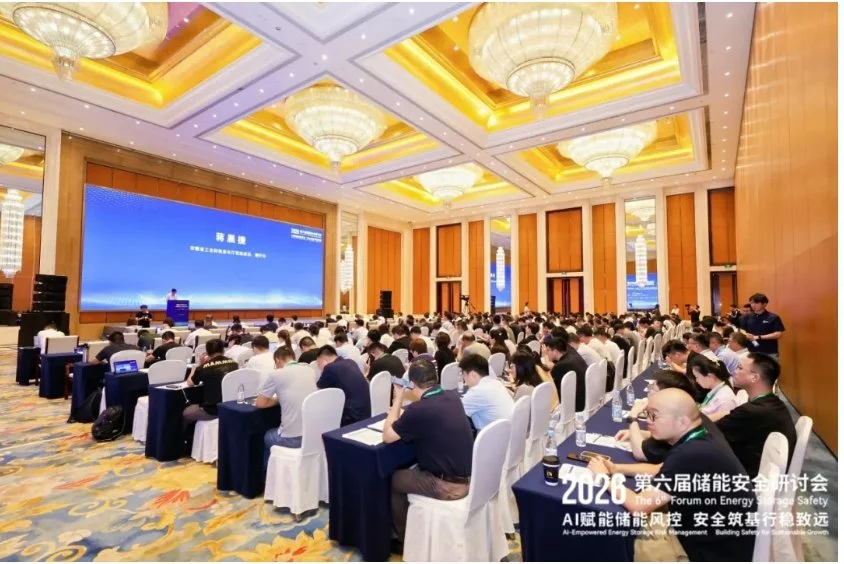
On July 17, 2026, the 6th Energy Storage Safety Forum was successfully held in Hefei, Anhui Province. The event was organized by the China Energy Storage Alliance (CNESA), and co-organized by the National Energy Storage Technology Industry-Education Integration Innovation Platform of Tianjin University, the CNESA Energy Storage Safety Committee, and Gotion High-tech. The forum brought together government officials, industry leaders, academic experts, and research institutions to jointly explore pathways toward safer and more sustainable energy storage development.
The opening ceremony gathered representatives from government authorities, leading research institutions, and enterprises. Attendees included Wang Shijiang, Deputy Director of the Department of Electronic Information of the Ministry of Industry and Information Technology (MIIT); Xu Ziming, Deputy Director of the Electricity Safety Supervision Department of the National Energy Administration (NEA); Jiang Chenyue, Member of the Party Leadership Group and Deputy Director of the Anhui Provincial Department of Industry and Information Technology; Zeng Xiaoming, Member of the Party Leadership Group and Deputy Director of the Anhui Energy Bureau; Sun Jinhua, Academician of the European Academy of Sciences and Professor at the University of Science and Technology of China; Chen Zhongwei, Fellow of the Royal Society of Canada and the Canadian Academy of Engineering; Chen Haisheng, Director of the Institute of Engineering Thermophysics at the Chinese Academy of Sciences; Yang Quanhong, Chair Professor at Tianjin University; Zhuo Ping, Director of the Fourth Research Division of Tianjin Fire Research Institute under the Ministry of Emergency Management; Wang Qisui, Executive President of Gotion High-tech; and Yu Zhenhua, Executive Vice Chairman of CNESA.
The forum also received strong support from organizations and companies including the School of Energy and Power Engineering at Tianjin University, Sungrow, Envision Energy, Honeywell China, Xien Technology, Pengcheng Infinite, Benji Electric, Yangyi Technology, and Huachu Technology. The opening ceremony was hosted by Liu Wei, Secretary General of CNESA.
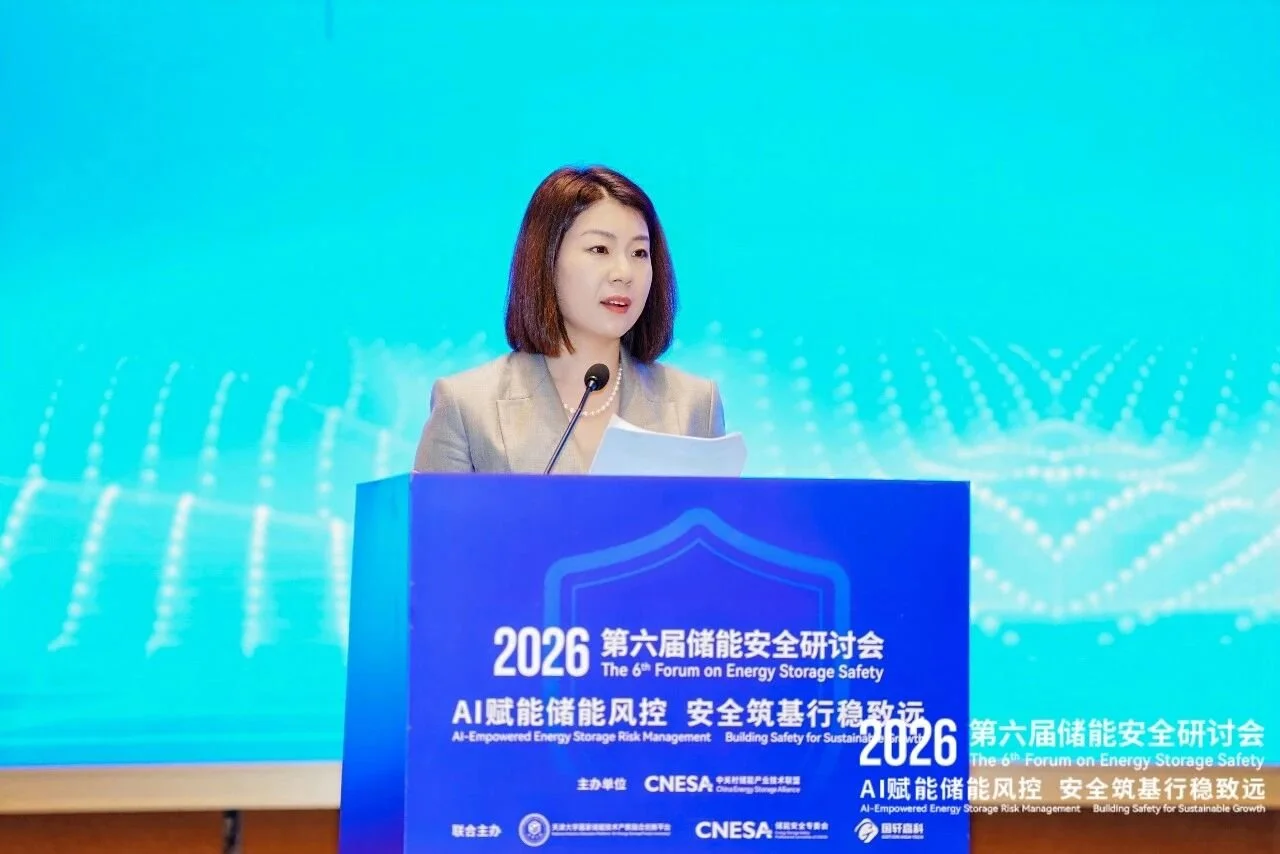
Opening Remarks: Balancing Energy Storage Safety and Development
In his opening speech, Wang Shijiang stated that energy storage is a key driver for achieving China’s dual-carbon goals. The country’s energy storage industry is currently developing rapidly, with strong momentum. In the first quarter of 2026, China’s energy storage lithium battery output reached 185GWh, representing year-on-year growth of more than 100%. Meanwhile, technological innovation continues to accelerate, with applications expanding across power systems, industrial sectors, and zero-carbon parks.
However, safety risks have become a major bottleneck restricting high-quality industry development. Wang emphasized that MIIT’s Department of Electronic Information will coordinate both development and safety, focusing on four key areas:
Strengthening top-level planning and guiding the industry’s transition from scale expansion toward quality improvement and enhanced safety;
Regulating market competition and fostering a healthy industrial ecosystem;
Establishing a strong safety foundation by accelerating the development of national standards, including safety grading evaluation standards for energy storage batteries;
Enhancing technological innovation to prevent and mitigate safety risks at the source.
He called for deeper collaboration across the industry to jointly promote safe, healthy, and sustainable development of energy storage.
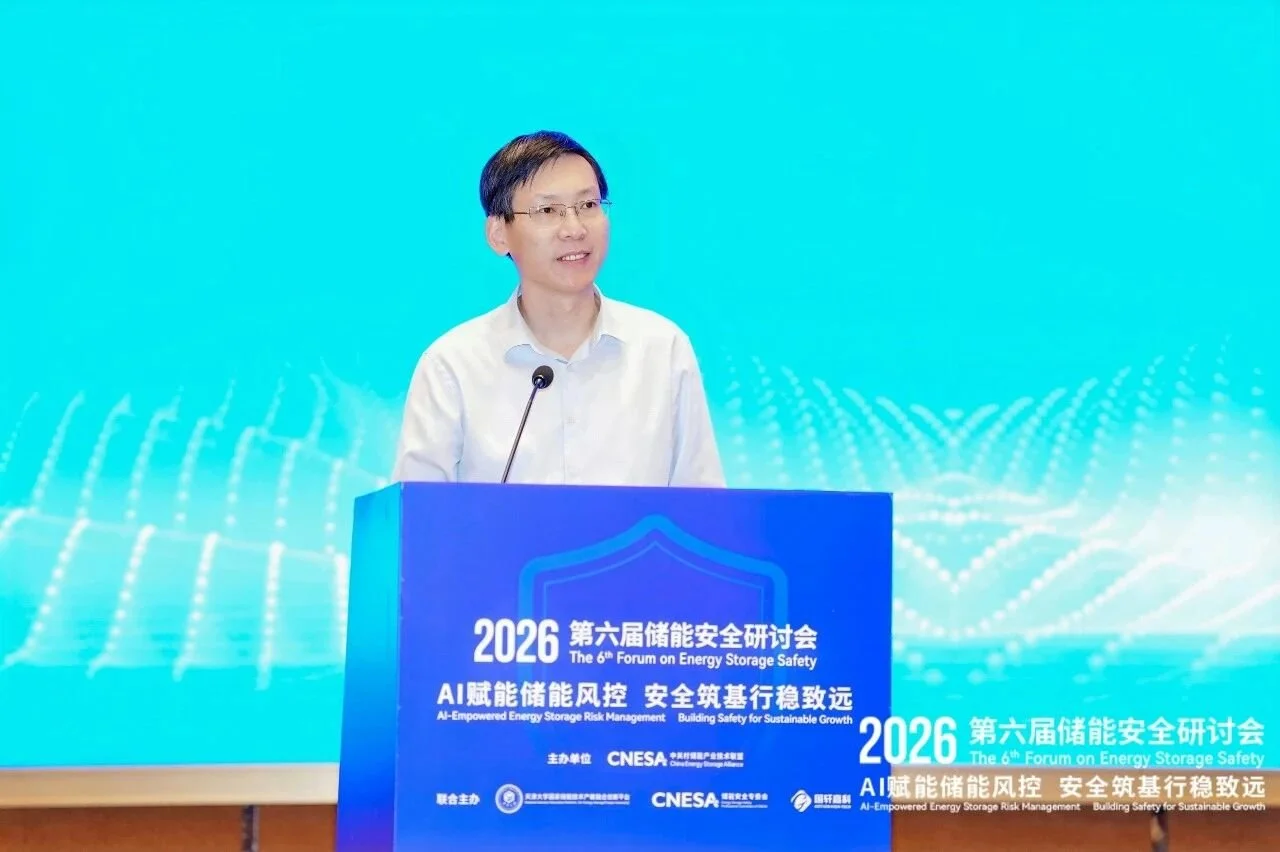
Jiang Chenyue
Deputy Director, Anhui Provincial Department of Industry and Information Technology
Jiang Chenyue highlighted Anhui’s strong industrial growth, noting that the province’s industrial output value has increased from RMB 3.8 trillion at the beginning of the 14th Five-Year Plan period to RMB 5.5 trillion, with its national ranking rising from 12th to 6th place.
In the energy storage sector, Anhui has established a complete industrial chain covering materials, batteries, and systems. Multiple technology routes are developing in parallel, and the industry scale has grown sixfold since the beginning of the 14th Five-Year Plan period, surpassing RMB 1 trillion last year. Leading companies such as Gotion High-tech and Sungrow have emerged as globally competitive enterprises, with energy storage battery cells and system shipments ranking among the world’s leading levels.
Looking ahead to the 15th Five-Year Plan period, Anhui will prioritize new energy storage as a key sector within its “1188” modern industrial system. The province will further integrate industrial development with technological innovation, strengthen market players, accelerate commercialization of new technologies and products, and build an ecosystem integrating government, industry, academia, research, finance, services, and applications.
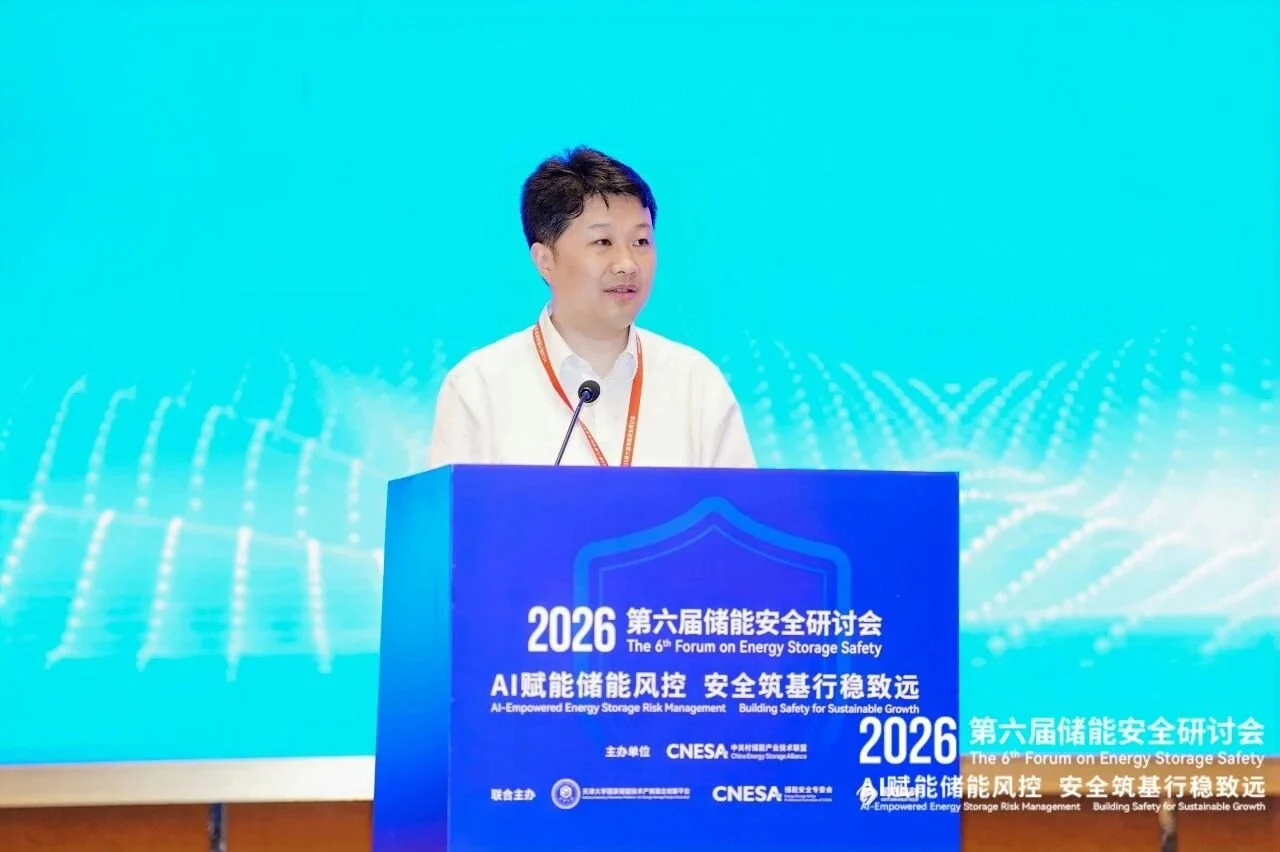
Chen Haisheng
Chairman of CNESA; Director of the Institute of Engineering Thermophysics, Chinese Academy of Sciences
Chen Haisheng stated that 2026 marks a critical year for China’s new energy storage industry as it transitions from large-scale expansion toward high-quality growth.
By the end of June 2026, China’s cumulative installed capacity of energy storage projects reached 237.2GW, representing year-on-year growth of 41.4%. Among this, new energy storage accounted for 168.2GW, exceeding 70% of total capacity. Newly installed capacity reached 21.64GW/58.20GWh, while storage duration continued to increase and technology pathways rapidly evolved.
Despite rapid industry expansion, safety challenges remain the most critical issue facing the sector. Chen emphasized that CNESA will continue strengthening international cooperation, building a global energy storage safety platform, developing comprehensive safety systems, and supporting the global transition toward green and low-carbon energy.
Emerging Insights: Tackling Energy Storage Safety Challenges Across the Entire Value Chain
A clear trend is emerging: energy storage safety innovation is moving beyond battery cell-level protection toward a comprehensive approach integrating battery innovation, system architecture, intelligent operation and maintenance, safety standards, and application scenarios.
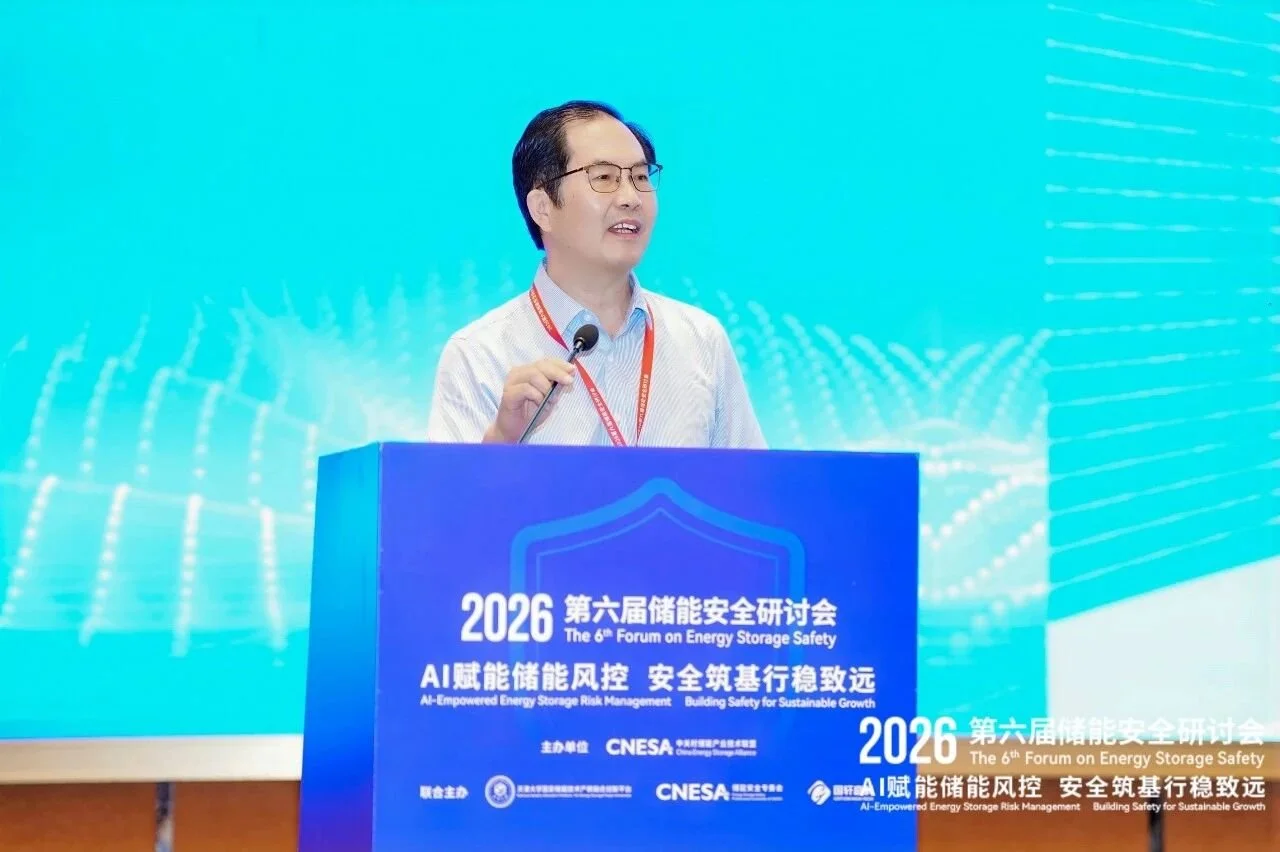
Sun Jinhua
Academician of the European Academy of Sciences; Professor, University of Science and Technology of China
In his presentation titled “Fire Risks and Prevention Strategies for Energy Storage in Computing Power and Data Centers,” Sun Jinhua highlighted the rapid growth of electricity demand from artificial intelligence computing and data centers.
Electricity consumption by computing and data centers approached 200 billion kWh in 2025 and is expected to reach 526–700 billion kWh by 2030. With China requiring newly built data centers in national computing hubs to achieve at least 80% renewable electricity consumption, energy storage will become increasingly essential.
However, fire risks remain a major concern. Global energy storage fire probability is estimated at approximately 0.3%–0.4%, while data centers face higher potential losses due to concentrated assets and personnel, requiring much stricter safety standards.
Sun proposed three layers of safety protection:
Improving intrinsic battery safety through interdisciplinary research and AI technologies to reduce thermal runaway probability below 10⁻⁸;
Enhancing process safety through intelligent thermal management materials, fiber-optic in-situ monitoring, and integrated thermal management and early-warning technologies;
Optimizing firefighting solutions through technologies such as liquid nitrogen extinguishing and multiple-stage suppression.
He emphasized the need to develop intelligent safety management platforms integrating remote monitoring, predictive analysis, multi-level warnings, and dynamic response capabilities.
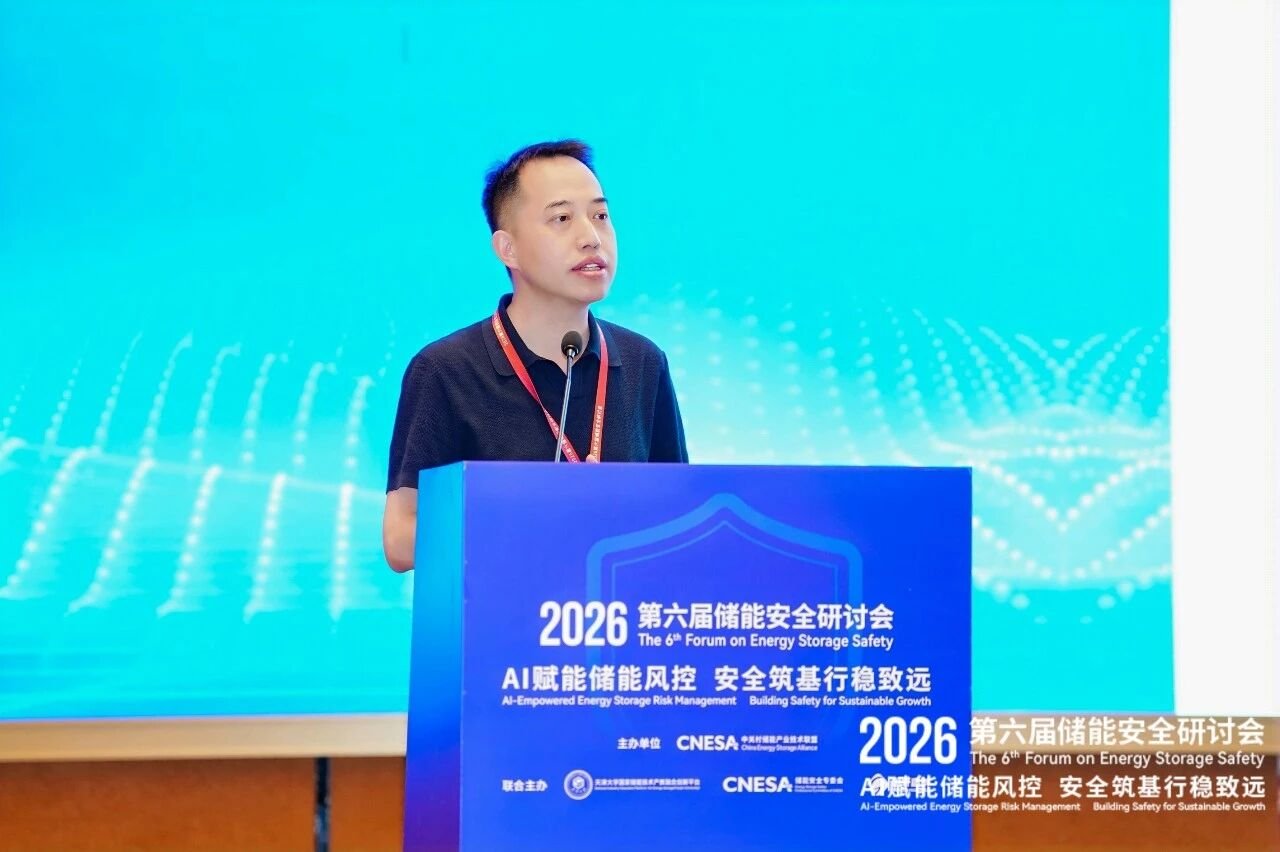
Chen Zhongwei, Fellow of the Royal Society of Canada and the Canadian Academy of Engineering; Researcher and PhD Supervisor at the Dalian Institute of Chemical Physics, Chinese Academy of Sciences.
Chen Zhongwei delivered a keynote speech titled “Building an Intelligent Management System for the Full Life Cycle of Electrochemical Energy Storage.”
He identified five major challenges in the energy storage industry: design, manufacturing, management, operation and maintenance, and electricity market participation. AI-based full life-cycle management provides a key solution.
Since 2015, Chen’s team has focused on integrating electrochemistry and artificial intelligence, achieving breakthroughs in:
Building battery industrial databases covering design, manufacturing, management, and operation;
Developing AI-assisted battery design based on electrochemical simulation;
Creating electrochemistry-AI coupled models for battery health evaluation;
Establishing closed-loop manufacturing optimization through production data and performance feedback;
Applying AI algorithms and robotics for retired battery sorting and second-life utilization;
Developing high-precision algorithms for RUL, SOC, and SOH estimation.
Based on these technologies, the team developed the Energy Storage AI Intelligent Monitoring System, establishing a three-level health diagnosis framework covering cells, battery containers, and entire energy storage stations.
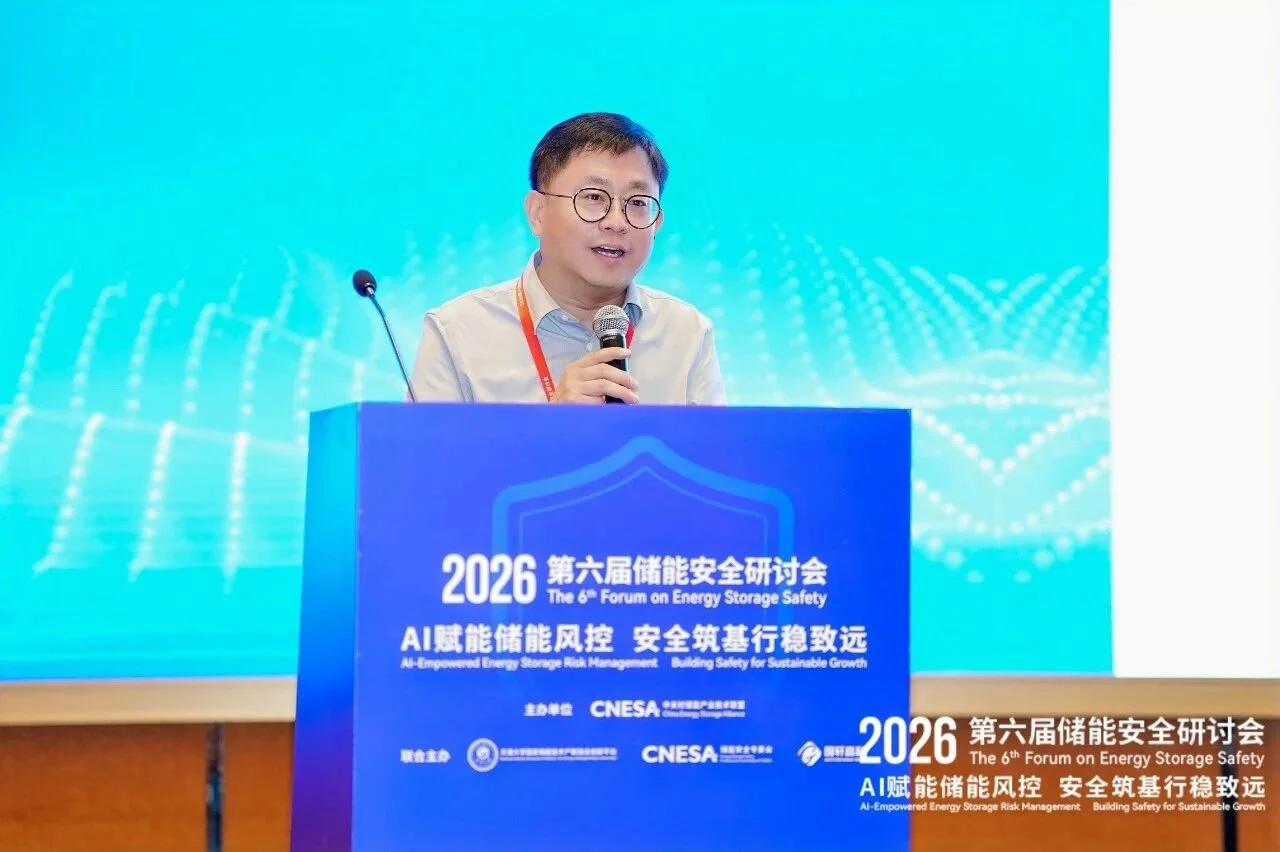
Yang Quanhong
Chair Professor, Tianjin University
Yang Quanhong discussed “Water Management in Intrinsically Safe Aqueous Zinc Batteries: Fundamental Principles and Solutions.”
He emphasized that future energy storage technologies must achieve high safety, low cost, and resource sustainability. Aqueous zinc batteries represent a promising pathway due to their intrinsic safety and resource availability.
However, commercialization faces challenges caused by water-related reactions, including hydrogen evolution, corrosion, dendrite growth, cathode structural degradation, and limited cycle life.
The key solution lies in precise “water management,” including:
Water reaction management;
Water demand management;
Water state management;
Advanced conversion-type cathode technologies.
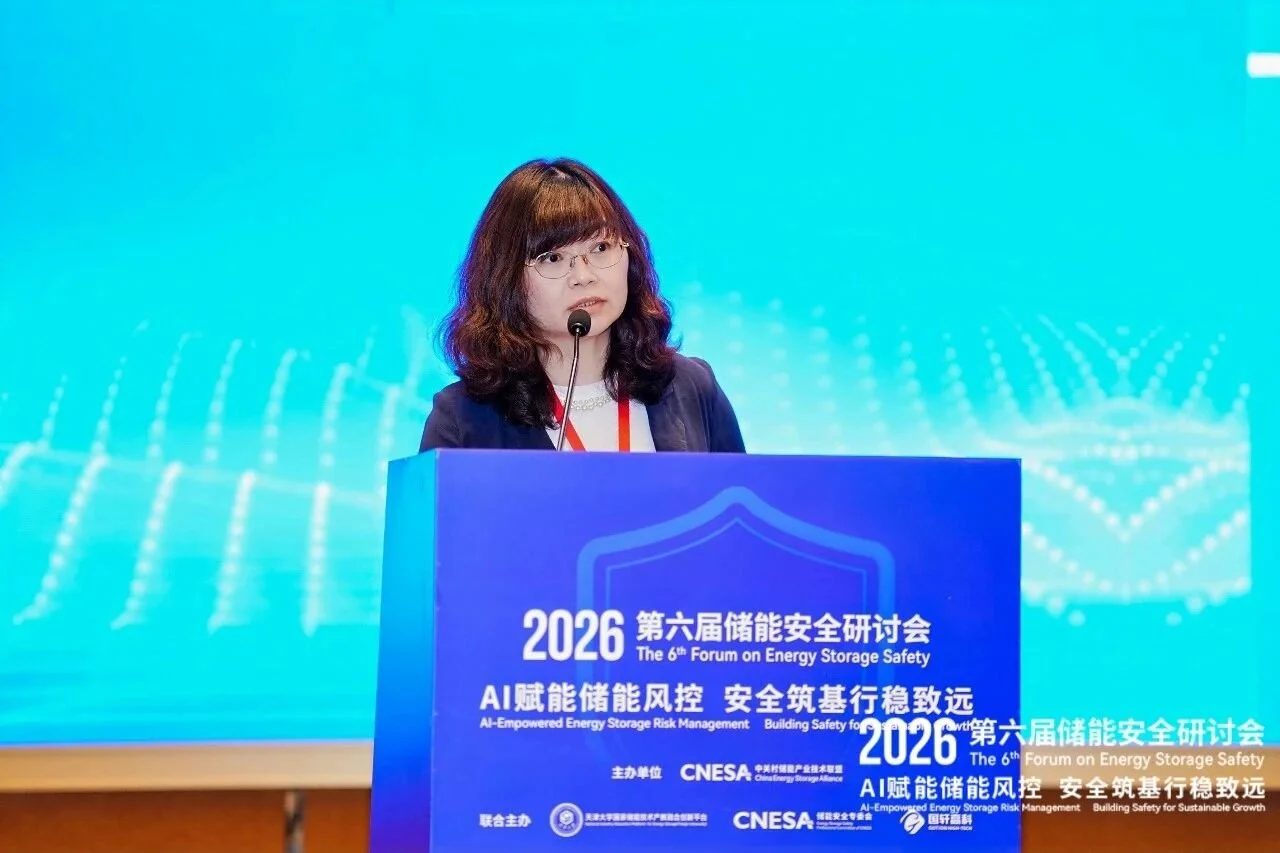
Zhuo Ping
Director, Fourth Research Division, Tianjin Fire Research Institute, Ministry of Emergency Management
Zhuo Ping introduced China-led international standards research on energy storage fire safety.
She explained that energy storage fire scenarios should consider four major safety objectives:
Life safety;
Property protection;
Environmental protection;
Cultural heritage protection.
Fire scenarios should incorporate different application characteristics, ignition sources, fire types, firefighting systems, and human behaviors.
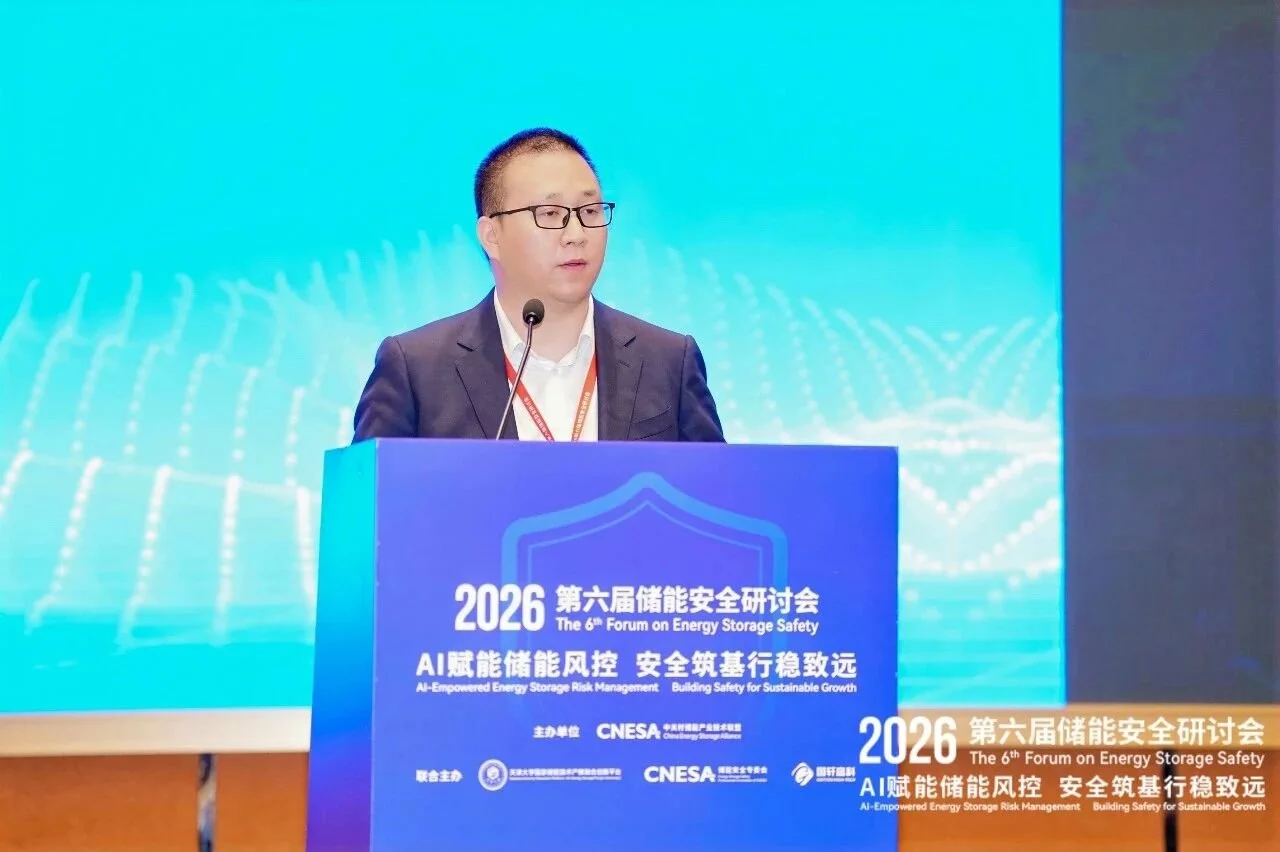
Zhang Peidao
Solution Director, Energy Storage Business Division, Gotion High-tech
Zhang Peidao shared industrial practices under the theme “Architectural Innovation of Energy Storage Systems in New Power Systems.”
He noted that energy storage faces challenges including efficiency improvement, safety risks, high availability requirements, and life-cycle cost optimization.
Gotion High-tech addresses these challenges through architectural innovation:
The Qianyuan Intelligent Energy Storage 2.0 grid-forming high-voltage cascade storage system directly connects to 6–35kV grids without transformers;
System efficiency exceeds 92%;
AI-based predictive maintenance improves operational efficiency by 50%;
Multi-dimensional sensing and fire protection systems create layered safety protection;
Modular design reduces land occupation by 38%.
The solutions have already been applied in projects including user-side storage in Jinzhai and grid-side storage in Lujiang.
Roundtable Discussion: AI Empowering Energy Storage Safety from Passive Protection to Active Intelligence
The roundtable focused on how AI can transform energy storage safety from passive prevention to proactive intelligence.
Hosted by Wang Qingsong, Researcher at the University of Science and Technology of China and Chairman of the CNESA Energy Storage Safety Committee, the discussion gathered experts from grid operators, equipment manufacturers, industrial software providers, sensor companies, and AI technology companies.
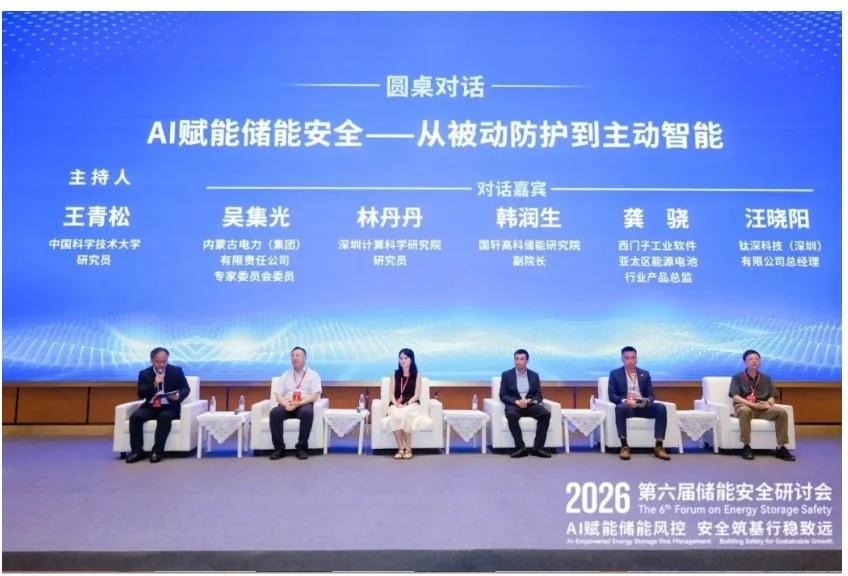
Participants agreed on three major conclusions:
The transition from passive protection to active intelligence is inevitable.
AI will not replace intrinsic battery safety, hardware protection, or human operation, but will serve as an enabling technology connecting sensing, simulation, and decision-making.AI adoption should follow a gradual human-machine collaboration approach.
Challenges remain, including data silos, limited algorithm generalization, incomplete standards, and hardware adaptation issues.Full industrial collaboration is essential.
Energy storage intelligent safety requires cooperation among grid operators, battery manufacturers, research institutions, software companies, and sensor providers.
Launch of the New Intelligent Safety Ecosystem for Energy Storage
During the opening ceremony, Gotion High-tech initiated the establishment of the New Energy Storage Digital Intelligence Safety Ecosystem, bringing together universities, research institutions, and industry leaders.
Representatives from organizations including Beijing University of Science and Technology, University of Science and Technology of China, Hefei University of Technology, Gotion High-tech, Siemens Digital Industries Software, iFlytek, Tishen Technology, Inovance Technology, and CNESA participated in the launch ceremony.
Special Forums: Exploring the Future Path of Energy Storage Safety Technologies
Two parallel forums were held in the afternoon:
“Safety of Energy Storage Power Stations and Commercial & Industrial Storage Systems”
This forum focused on:
Implementation of safety standards;
Fire monitoring and early-warning technologies;
Fire risk assessment of large-scale lithium iron phosphate systems;
Immersion cooling technologies;
Full-chain safety solutions for sodium-ion batteries.
“AI and Energy Storage Safety”
This forum explored:
National-level energy storage operation data platforms;
Intelligent operation and maintenance technologies;
Big data platforms for power generation companies;
AI-driven life-cycle management of large-scale energy storage.
The 6th Energy Storage Safety Forum brought together government authorities, industry players, academic experts, and research institutions to explore the future of energy storage safety.
Participants agreed that safety is the foundation for high-quality energy storage development, and AI-driven technologies are accelerating the transformation from passive protection toward proactive intelligent safety management.
Looking ahead, only through collaboration across the entire value chain and continuous strengthening of safety foundations can the energy storage industry achieve sustainable growth and contribute Chinese solutions to the global green energy transition.
The Fourth China-Europe Energy Technology Innovation Cooperation Forum:Energy Storage Sub-Forum Successfully Held in Chengdu
China's installed capacity of new-type energy storage has reached 157 GW, ranking first globally for four consecutive years. Germany has received grid connection applications exceeding 720 GW for large-scale storage, signaling an explosion in the European energy storage market.
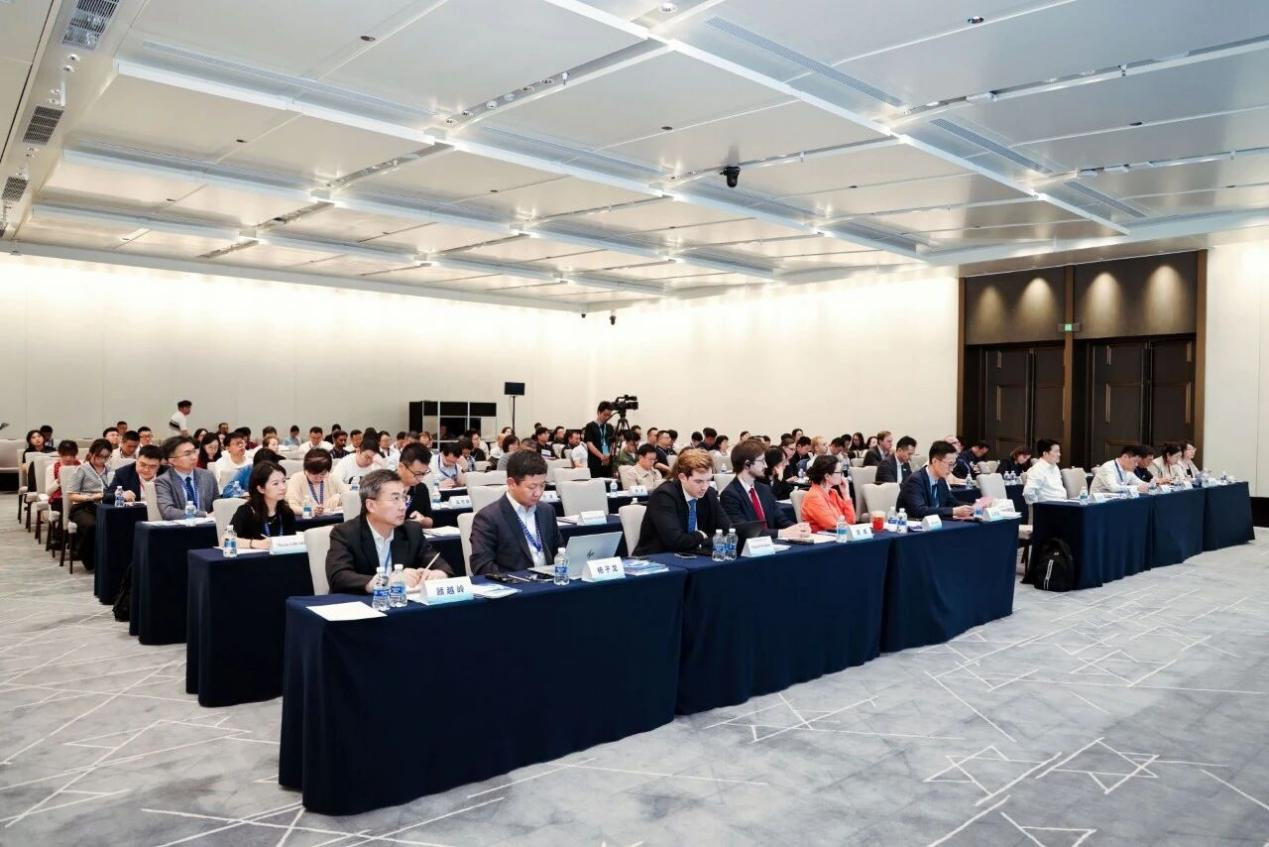
On June 25, the Fourth China-Europe Energy Technology Innovation Cooperation Forum: Energy Storage Sub-forum was held in Chengdu, Sichuan, unfolding a panoramic view of China-Europe energy storage collaborative innovation. The sub-forum was co-hosted by the China-Europe Energy Innovation Cooperation Office and the China Energy Storage Alliance (CNESA).
Representatives from government agencies, industry associations, research institutions, and leading enterprises from China, the UK, France, Germany, Denmark, the Netherlands, Switzerland, and other countries gathered at the event, forming a high-end multi-national lineup spanning government, industry, academia, and research. The session was moderated by Li Zhen, Deputy Secretary-General of CNESA.
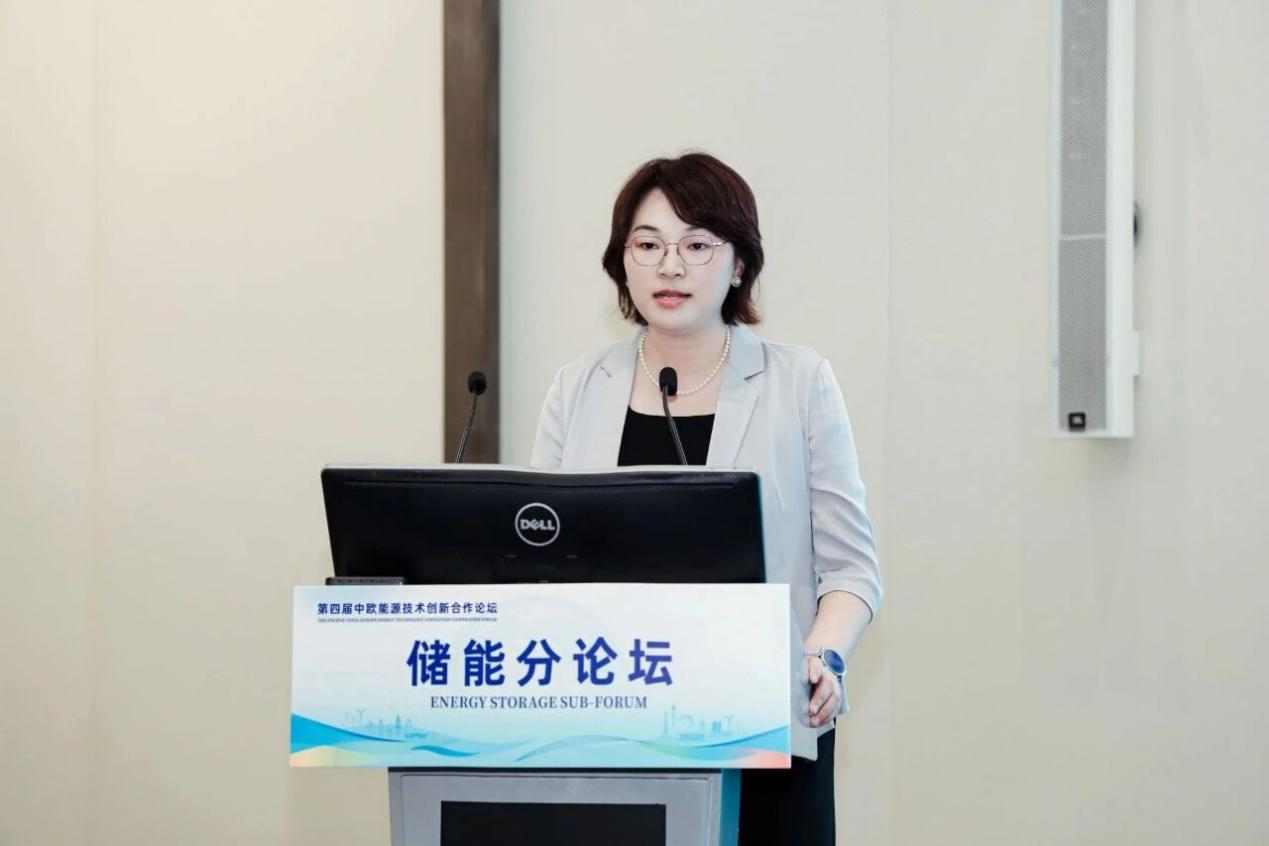
Concurrent events included Country Days for the UK, Iceland, and Finland, as well as thematic sub-forums on hydrogen energy, smart energy, wind power, and biomass energy, establishing a premier China-Europe exchange platform covering diverse new energy sectors.
【Key Highlights】
① China Leads Global Storage: As of May 2026, China's cumulative installed capacity of new-type energy storage reached 157 GW, a surge of over 45 times compared to the end of the 13th Five-Year Plan period, maintaining the global top spot for new additions for four straight years.
② European Large-Scale Storage Poised for Takeoff: Germany has over 720 GW of grid connection applications for large-scale storage, with authorities initially approving 78 GW. The UK plans to deploy no less than 23 GW of grid-scale battery storage and over 4 GW of long-duration storage by 2030.
③ Chinese Enterprises Enter New Phase of Globalization: CALB has broken ground on a 100 GWh industrial base in Portugal, marking a shift from product export to full value-chain localization.
④ New Consensus on China-Europe Cooperation: Lithium-ion batteries and hydrogen energy are complementary; AI is deeply empowering storage; and standards mutual recognition has become an industry imperative—China-Europe cooperation is evolving from "complementary strengths" to "symbiotic prosperity."
Policy Direction:
New-Type Energy Storage: A Critical Pillar of the New Energy System
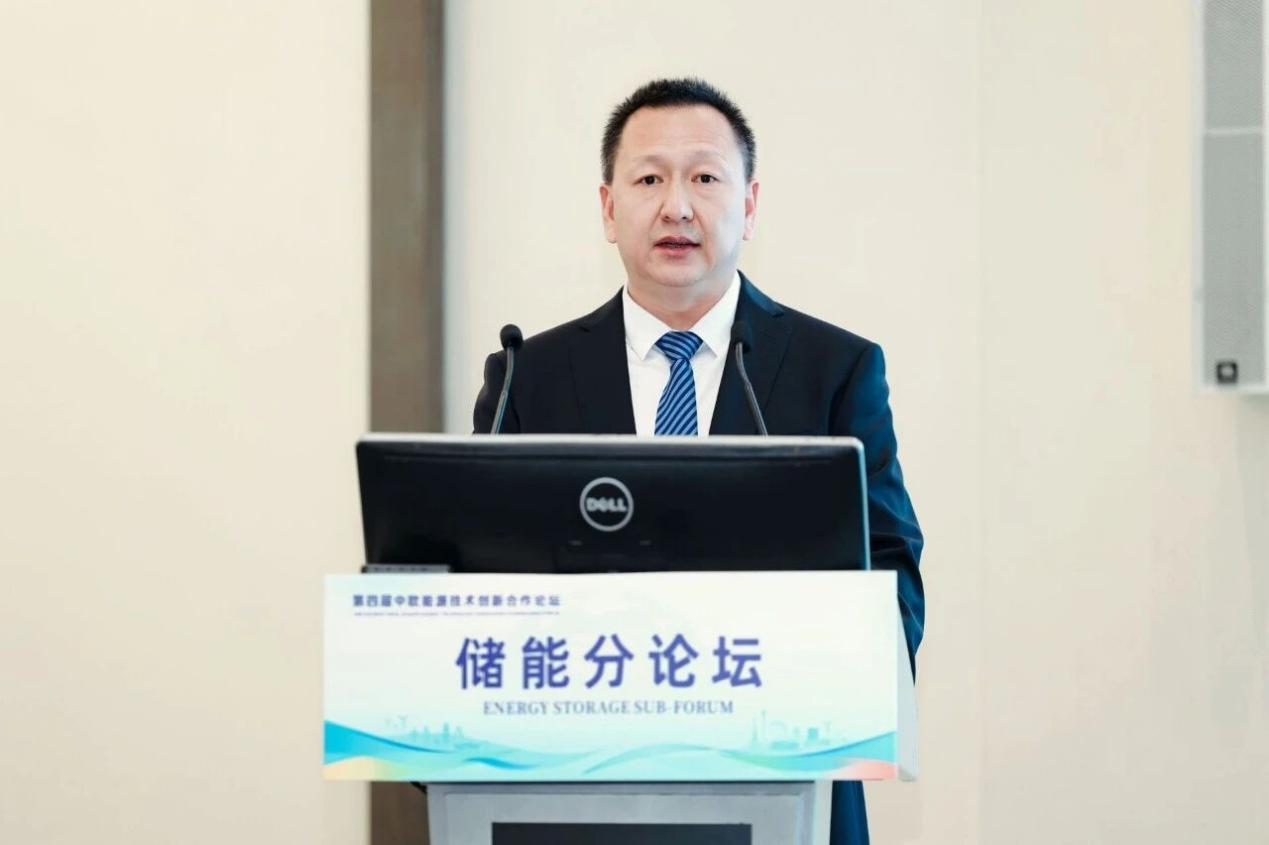
Zhang Jianwei
First-Level Researcher, Department of Science, Technology and Equipment, National Energy Administration (NEA)
Zhang Jianwei, First-Level Researcher, Department of Science, Technology and Equipment, National Energy Administration (NEA), stated in his opening remarks that the Chinese government attaches great importance to energy storage development. The NEA coordinates an "effective market" with a "proactive government," promoting high-quality development in the sector through four key measures:
First, strengthening planning guidance.Jointly issuing multiple supportive policies with relevant departments to clarify development directions and tasks.
Second, persisting in innovation-driven development. Organizing pilot projects to explore over ten technological routes and continuously improving the standards system, having released over 50 national standards.
Third, refining market mechanisms.Clarifying market entity roles, improving pricing mechanisms, electricity spot markets, capacity compensation, and other market-based mechanisms to expand revenue streams.
Fourth, deepening international cooperation.Actively supporting Chinese enterprises going global. He noted that the 15th Five-Year Plan period presents both opportunities and challenges.Considering demands such as renewable energy integration and power system security, as well as the evolving role of coal power, the NEA will continue to target high-quality development to comprehensively support carbon peaking goals and contribute Chinese strength to the global energy transition.
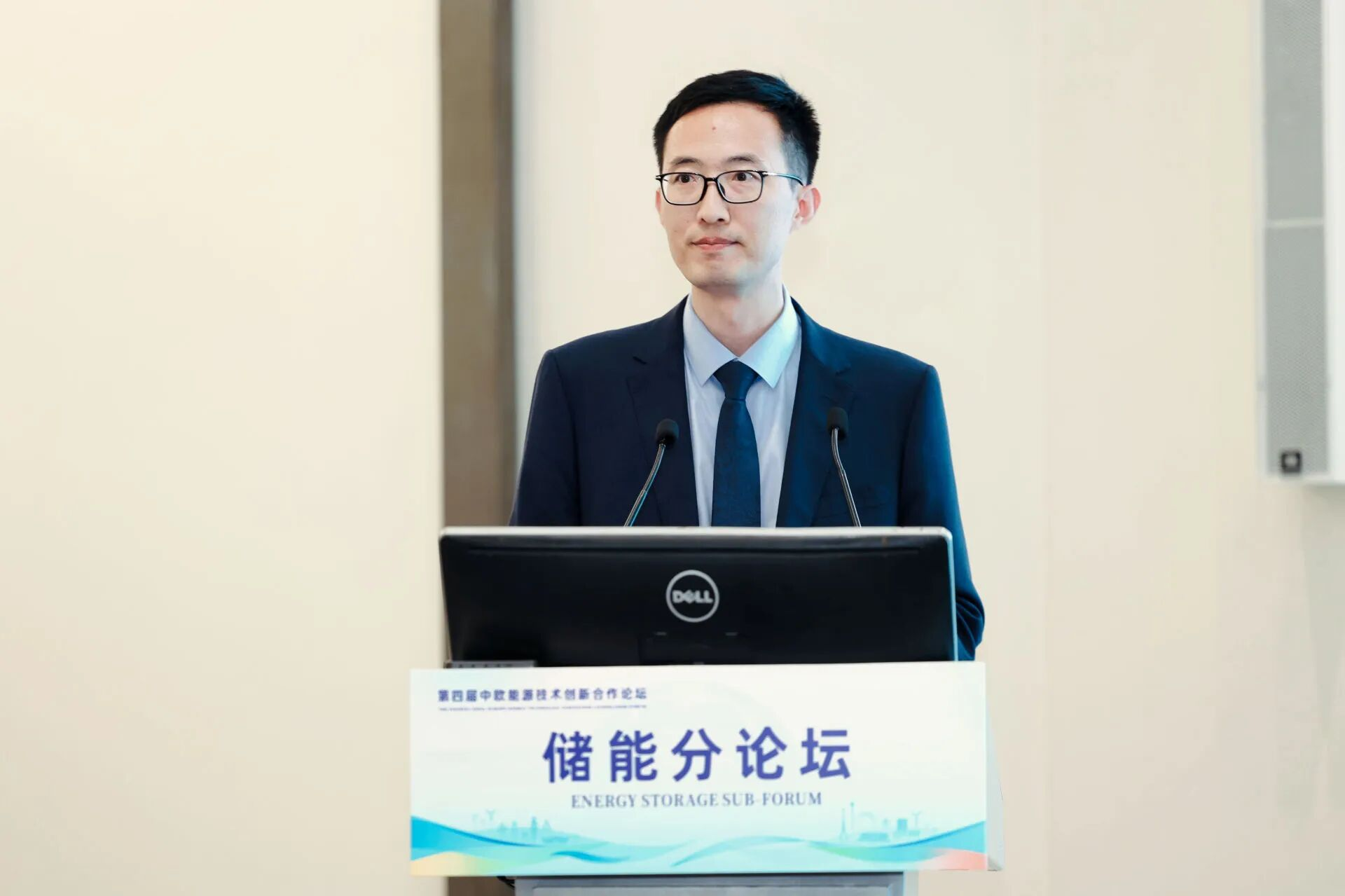
Wang Shunchao
Vice President, International Energy Consulting Department,
China Electric Power Planning & Engineering Institute (EPPEI)
Wang Shunchao, Vice President, International Energy Consulting Department, China Electric Power Planning & Engineering Institute (EPPEI) ,emphasized in his address that energy storage is transforming from a traditional "shifting role" in power regulation to a critical technology for new power systems, undertaking diversified system service functions.
Both China and Europe prioritize energy storage development. China's 15th Five-Year Plan has positioned new-type energy storage as a crucial support for the new energy system. Advanced technologies like grid-forming storage have been validated in diverse domestic scenarios and are gradually entering commercial application. Europe, meanwhile, has accumulated rich experience in market mechanism design and business model innovation while actively promoting cutting-edge R&D. The two sides boast complementary advantages, providing a global (demonstration) for energy transition. Against this backdrop, the sub-forum is timely and will strongly propel deep bilateral cooperation.
The Chinese Market:
157 GW! New-Type Storage Installations Rank First Globally for Four Years
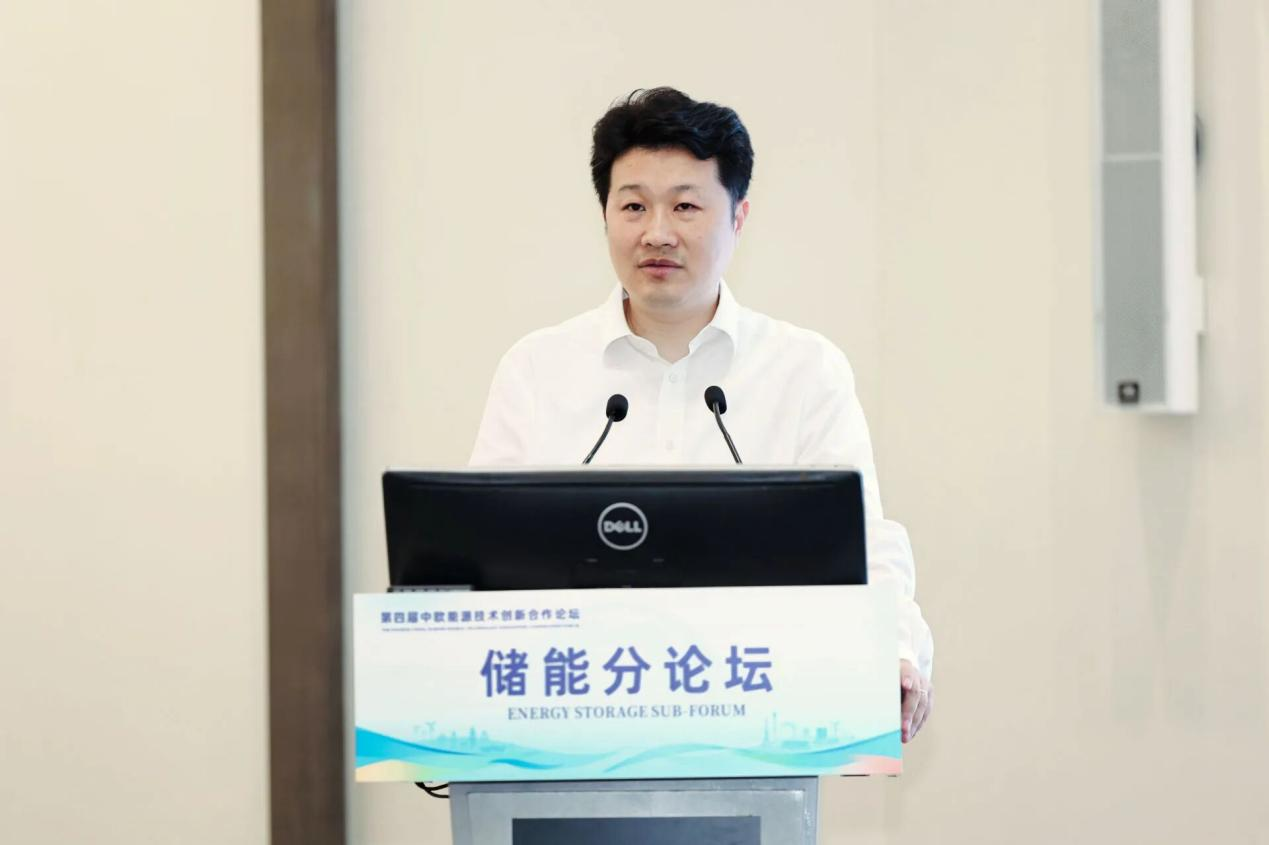
Chen Haisheng
Chairman of CNESA and Director of the Institute of Engineering Thermophysics, Chinese Academy of Sciences (CAS)
Chen Haisheng, Chairman of CNESA and Director of the Institute of Engineering Thermophysics, Chinese Academy of Sciences (CAS),provided a systematic overview of China's latest progress and outlook in energy storage technology and industry. He noted that China's storage sector is on par with international levels, transitioning from policy-driven to market-driven growth, moving from scale expansion to comprehensive commercialization, with storage emerging as a core entity in the new power system. Currently, multiple technology routes are breaking through in parallel, with long-duration storage, grid-forming storage, solid-state batteries, and AI-integrated storage becoming R&D hotspots.China has led the world in new installations for four consecutive years. As of May 2026, cumulative installed capacity of new-type storage reached 157 GW, a surge of over 45 times since the end of the 13th Five-Year Plan. The compound annual growth rate for the next five years is projected at 20.7–25.5%, with total installed capacity expected to reach 371.2–450.7 GW by 2030.
The European Market:
Large-Scale Storage Explosion & Policy Breakthroughs for Long-Duration Storage
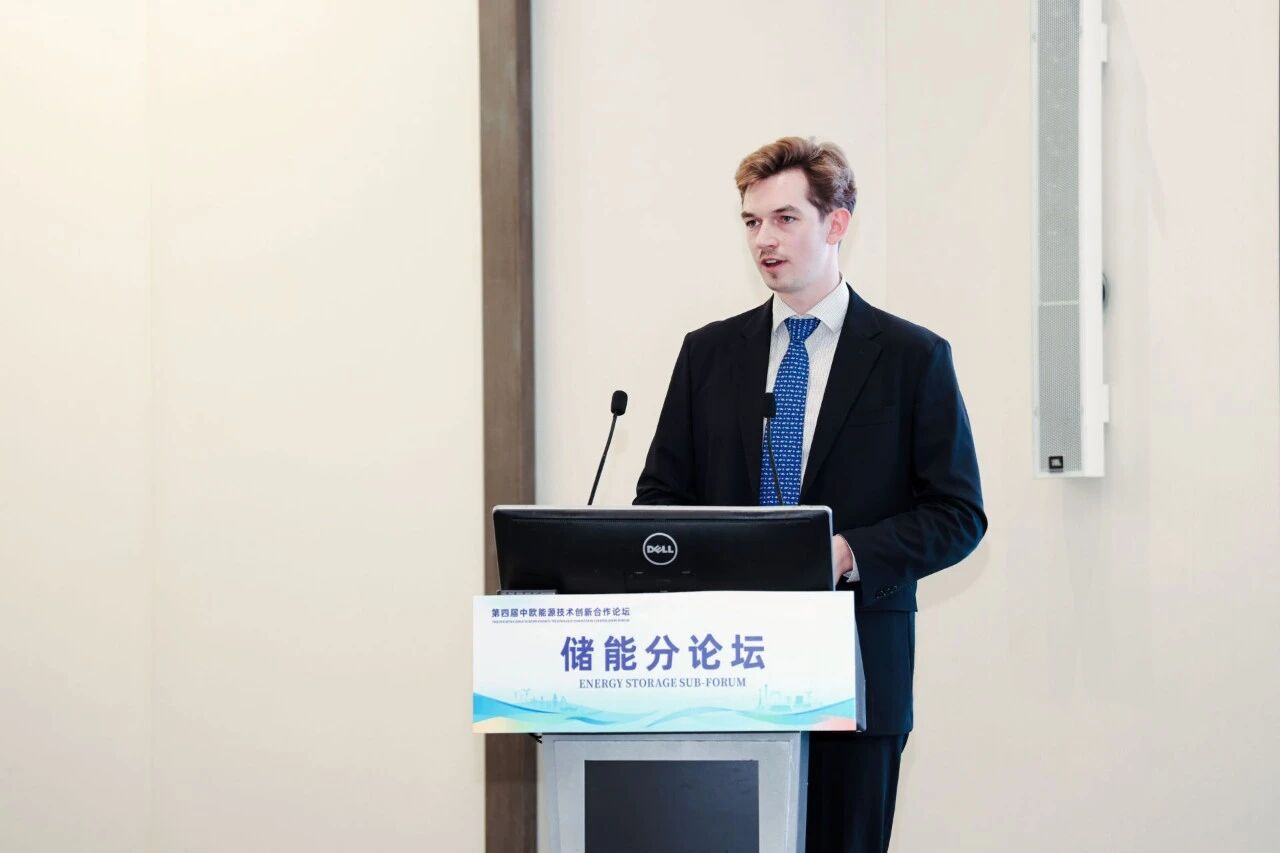
Vincent Fremery
Energy Advisor, Deutsche Gesellschaft für Internationale Zusammenarbeit (GIZ)
Vincent Fremery, Energy Advisor, Deutsche Gesellschaft für Internationale Zusammenarbeit (GIZ),presented a keynote report titled "German Energy Storage Policy and Market." Mr. Fremery highlighted Germany's significant progress in energy transition, with renewables accounting for over 60% of power generation. Germany aims for net-zero by 2045 and 80% renewable share by 2030, planning to phase out coal by 2038. Regarding the storage market, Germany exhibits a pattern of "household storage dominance, steady growth in C&I storage, and accelerated explosion in utility-scale storage": Household storage remains dominant but growth is slowing; the C&I storage market is steadily expanding; large-scale storage (including pumped hydro) is rapidly rising, with market revenues expected to increase 2–3 times between 2025–2026. Notably, grid operators report over 720 GW of grid connection applications for large-scale storage, with 78 GW initially approved by grid companies, indicating vast development space in the next five years.
Vincent specifically mentioned that the entry of Chinese manufacturers has significantly reduced storage costs, facilitating the implementation of large-scale German projects. He noted that the new German government has yet to issue specific storage policies, leaving broad potential for Sino-German cooperation.
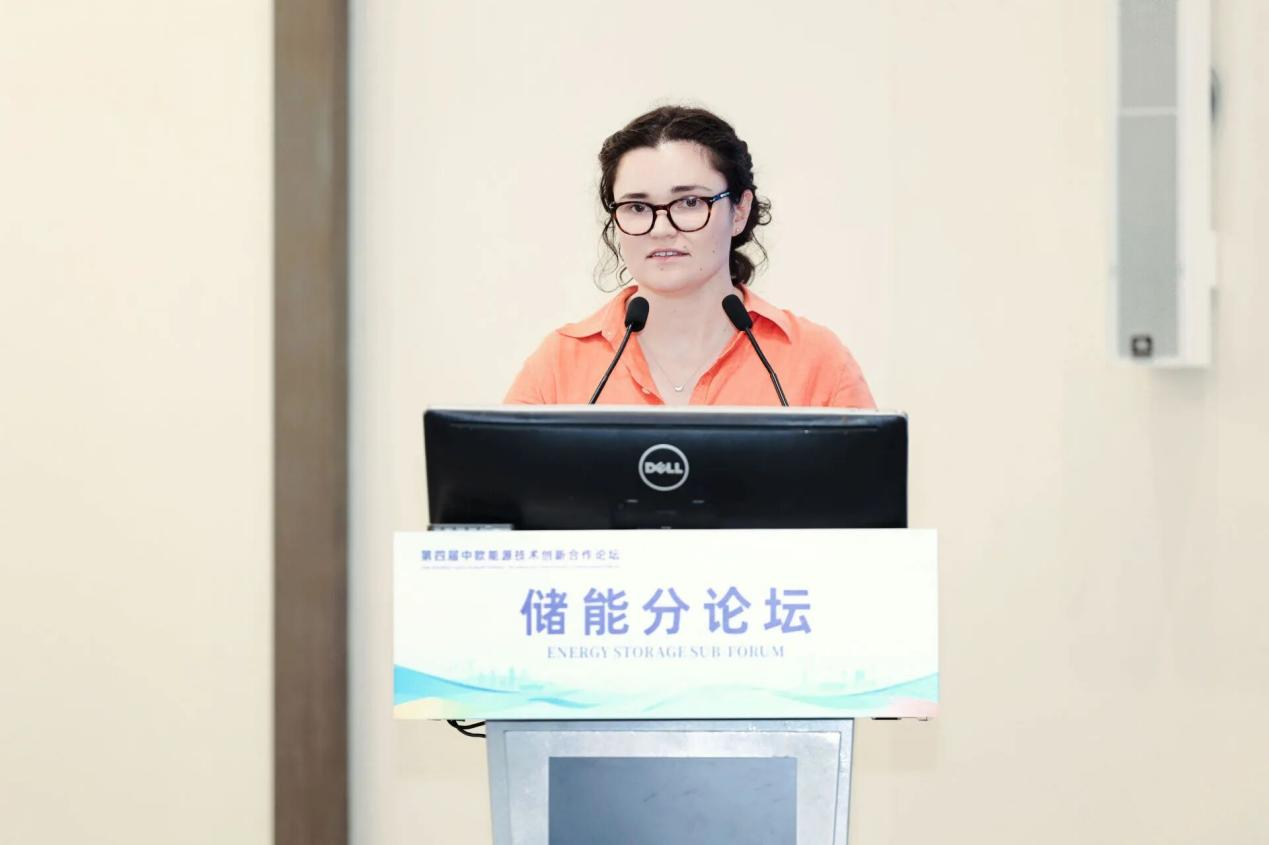
Bea Swords
Senior Policy Advisor, Industrial Policy & Supply Chain Strategy, Clean Energy Investment Directorate, Department for Energy Security and Net Zero (DESNZ), UK
Bea Swords, Senior Policy Advisor, Industrial Policy & Supply Chain Strategy, Clean Energy Investment Directorate, Department for Energy Security and Net Zero (DESNZ), UK,shared insights on UK storage policies, industry status, and medium-to-long-term plans. She stated that the UK targets power sector decarbonization by 2030 and net-zero emissions by 2050, where flexible power systems are key, with storage playing a central supporting role. Currently, the UK operates 7.3 GW of grid-scale battery storage and 2.8 GW of pumped hydro. It plans to deploy no less than 23 GW of grid-scale battery storage and over 4 GW of long-duration storage by 2030.The government is removing barriers through measures like eliminating "double charging" of grid fees, lowering market entry thresholds, and reducing taxes on residential storage. Crucially, it has introduced a revenue floor and cap investment support mechanism for long-duration storage exceeding 8 hours to address high upfront costs and long payback periods.
Corporate Practices:
From Product Export to Full Value-Chain Localization
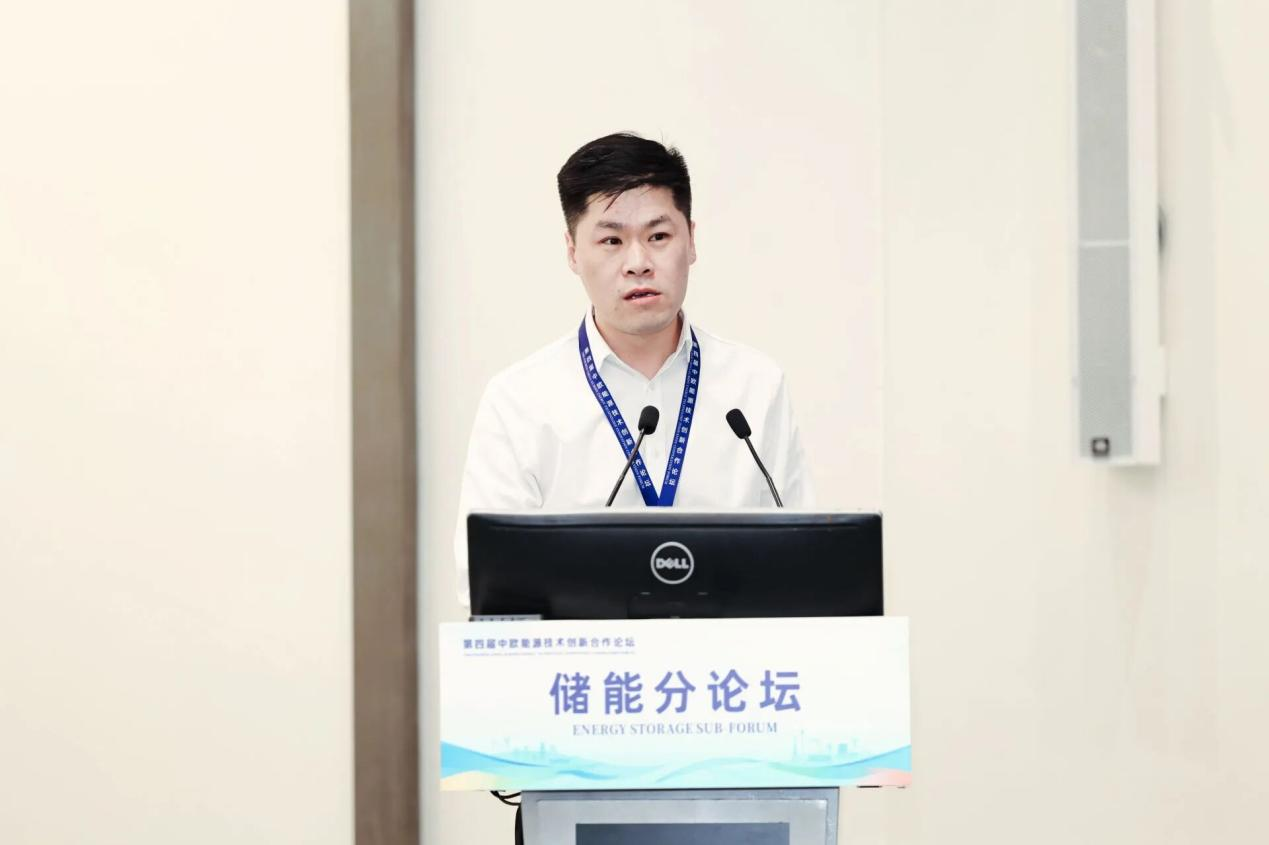
Pei Yang
VP of Sales ESS, CALB Group Co., Ltd.,
Pei Yang , VP of Sales ESS, CALB Group Co., Ltd.,presented a report titled "The Energy Revolution in Zero-Carbon Cities." He emphasized that developing storage is essential for zero-carbon urban transitions in China and Europe, with the industry shifting from scale competition to market deepening and technological empowerment. CALB is undergoing a strategic transformation, upgrading from a single equipment provider to a zero-carbon solution provider, covering three major sectors: storage equipment supply, power station investment & O&M, and zero-carbon business development & operation. Leveraging deep AI-energy integration, the company proposes a "Zero-Carbon Smart City" vision, centered on a zero-carbon platform linking power trading, carbon asset management, and microgrid dispatch, aiming to convert the levelized cost of storage advantage directly into competitive Token pricing for AI data centers. On core products, its long-cycle cells achieve "zero degradation in three years, 15,000+ cycles," and storage system products have been upgraded to 6.9 MWh. Regarding European footprint, the Portugal industrial base involves an investment of approximately €2 billion (~CNY ¥15.2 billion), with Phase I annual capacity reaching 15 GWh. Multiple landmark projects have been deployed in the UK, Hungary, and other markets. Yang Pei expressed CALB's willingness to deepen all-round collaboration with European partners to build an open, win-win China-Europe new energy ecosystem.
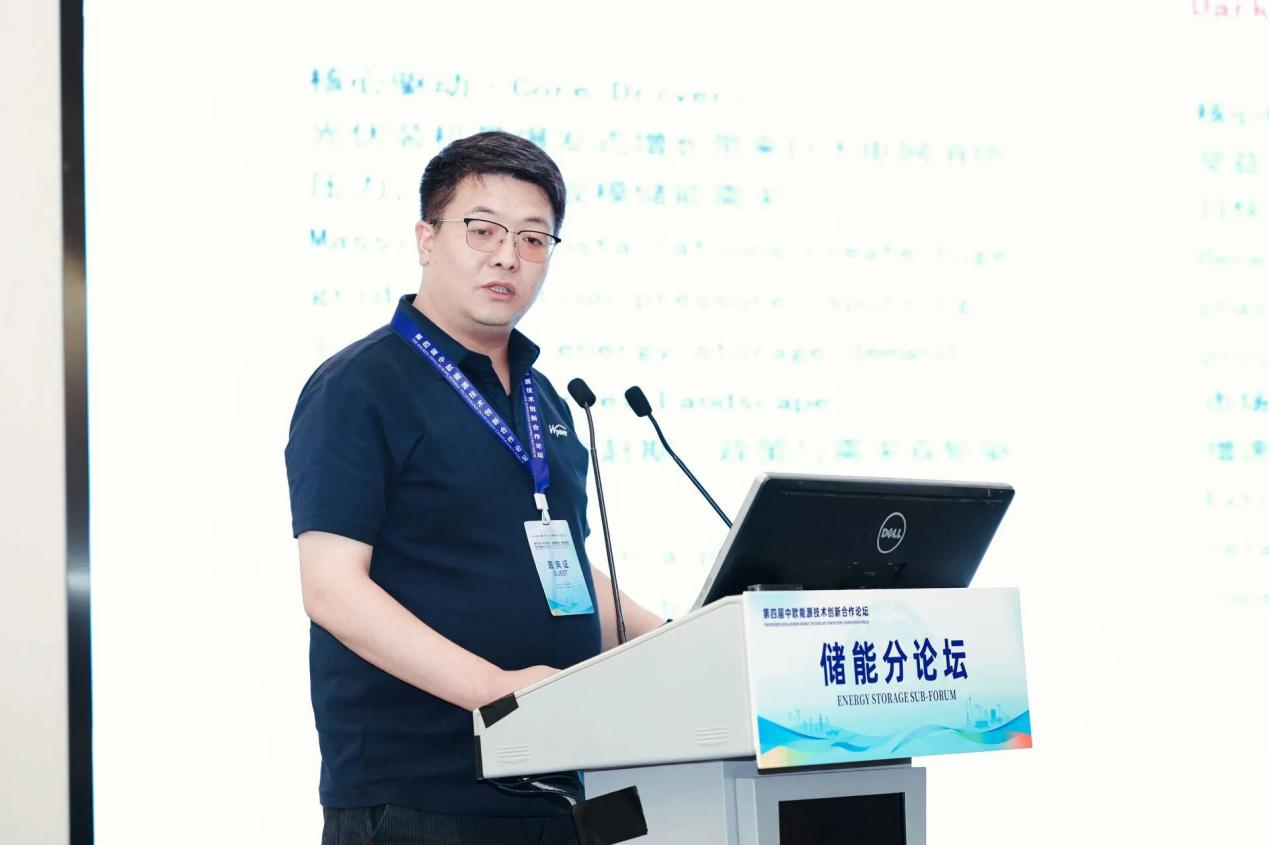
Dongping Li
General Manager, Energy Storage Business Unit, ZHEJIANG INPOWER ENERGY Co., Ltd.
Dongping Li, General Manager, Energy Storage Business Unit, ZHEJIANG INPOWER ENERGY Co., Ltd.,analyzed the current status, regional landscape, and market opportunities in Europe. He pointed out that the European storage market is in a phase of high-speed growth, with a projected CAGR exceeding 25% from 2026 to 2030. In 2025, Europe added 27.1 GWh of new storage capacity, bringing cumulative installations to 77.3 GWh. Notably, utility-scale storage accounted for over 50% of new additions for the first time, marking a dual-driven development pattern of centralized and distributed storage. Regionally, the UK, Germany, and Italy form the first tier: the UK boasts the largest and most mature market (>16 GWh); Germany is Europe's largest household storage market (penetration >86%); Italy sees rapid large-scale storage growth fueled by capacity and frequency regulation market incentives. Meanwhile, emerging regions like Eastern Europe, Spain, and the Netherlands are releasing sustained demand, showing outstanding growth potential. Inpower ESS offers full-power-range PCS products adaptable to diverse overseas scenarios and has successfully deployed multiple projects abroad.
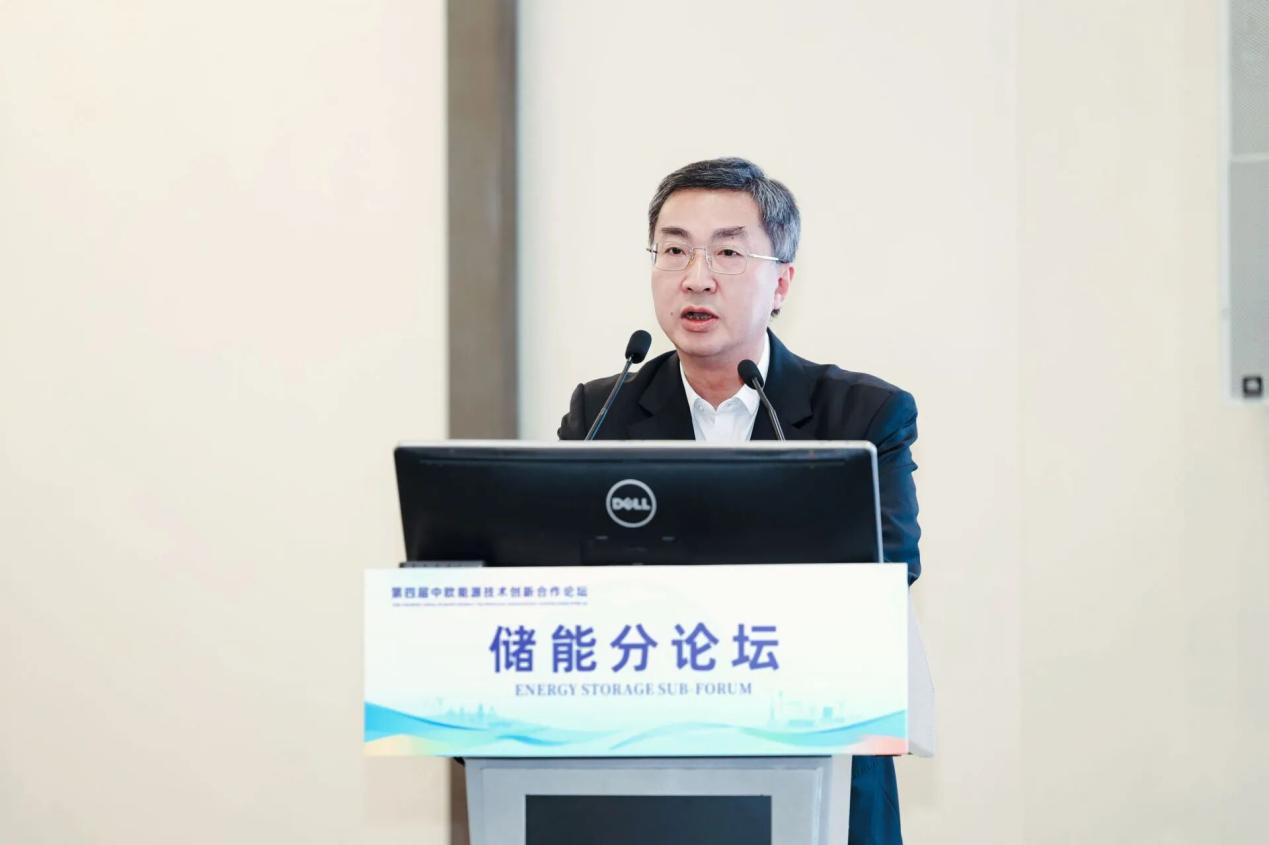
Deputy General Manager, Professorate Senior Engineer, Energy Storage Technology Institute Co., Ltd. (affiliated with CEEC Times)
Yueling Gu, Deputy General Manager, Professorate Senior Engineer, Energy Storage Technology Institute Co., Ltd. (affiliated with CEEC Times), shared insights on the development background, design philosophy, and China-Europe synergy prospects for storage supporting large-scale wind and solar bases. He noted that these bases are cornerstones of national energy security, with new-type storage being indispensable. Given their massive scale and diverse generation types, storage planning must follow an integrated development approach. Calculations indicate that a 10 GW-class base typically requires 1–2 GW of storage with a duration of 2–4 hours to optimize multiple objectives. Currently, lithium-ion batteries dominate base storage, but future diversification will create complementarity. Furthermore, he highlighted immense potential for China-Europe energy transition cooperation, suggesting joint R&D on frontier storage technologies and deeper industrial chain synergy to drive global energy transformation.
Roundtable Dialogue:
Accelerating the Pace of China-Europe Energy Storage Cooperation
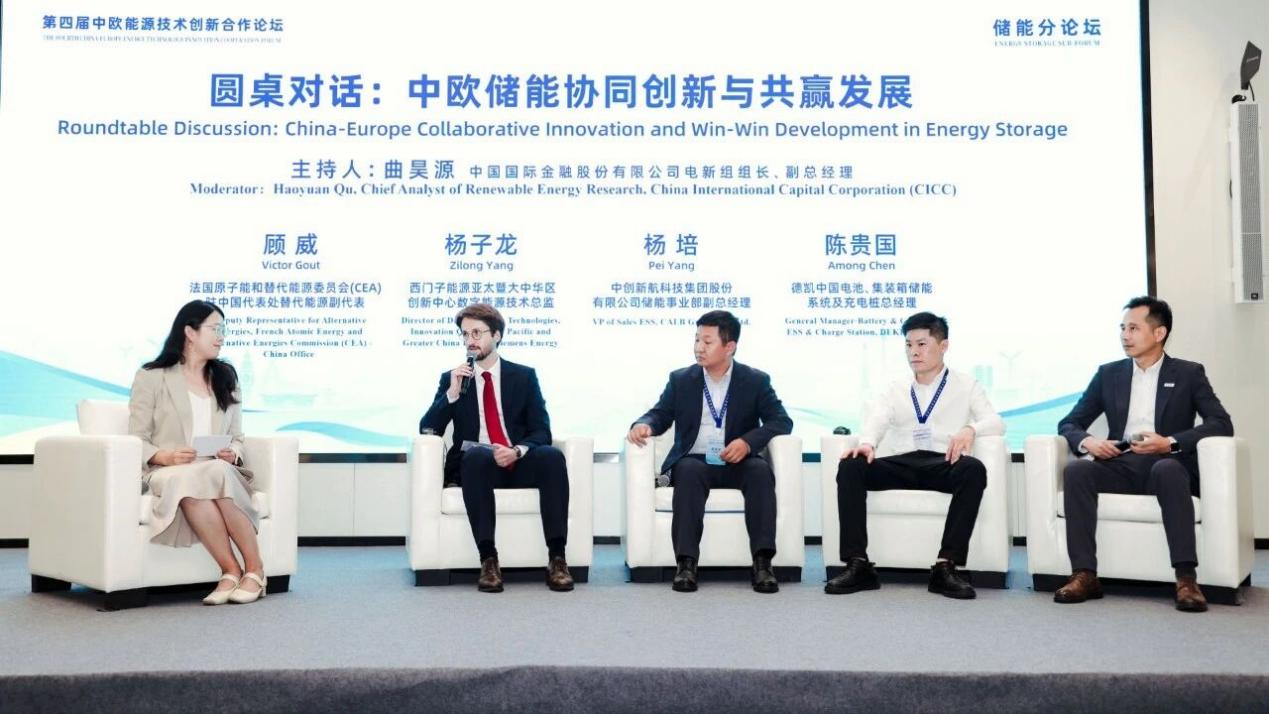
In the roundtable discussion themed "China-Europe Collaborative Innovation and Win-Win Development in Energy Storage," Qu Haoyuan, Chief Analyst of Renewable Energy Research at CICC,engaged in deep dialogue with four experts. The panelists covered Sino-European technological complementarity, computing-power-electricity synergy trends, industrial investment strategies, and standards/certification mutual recognition.
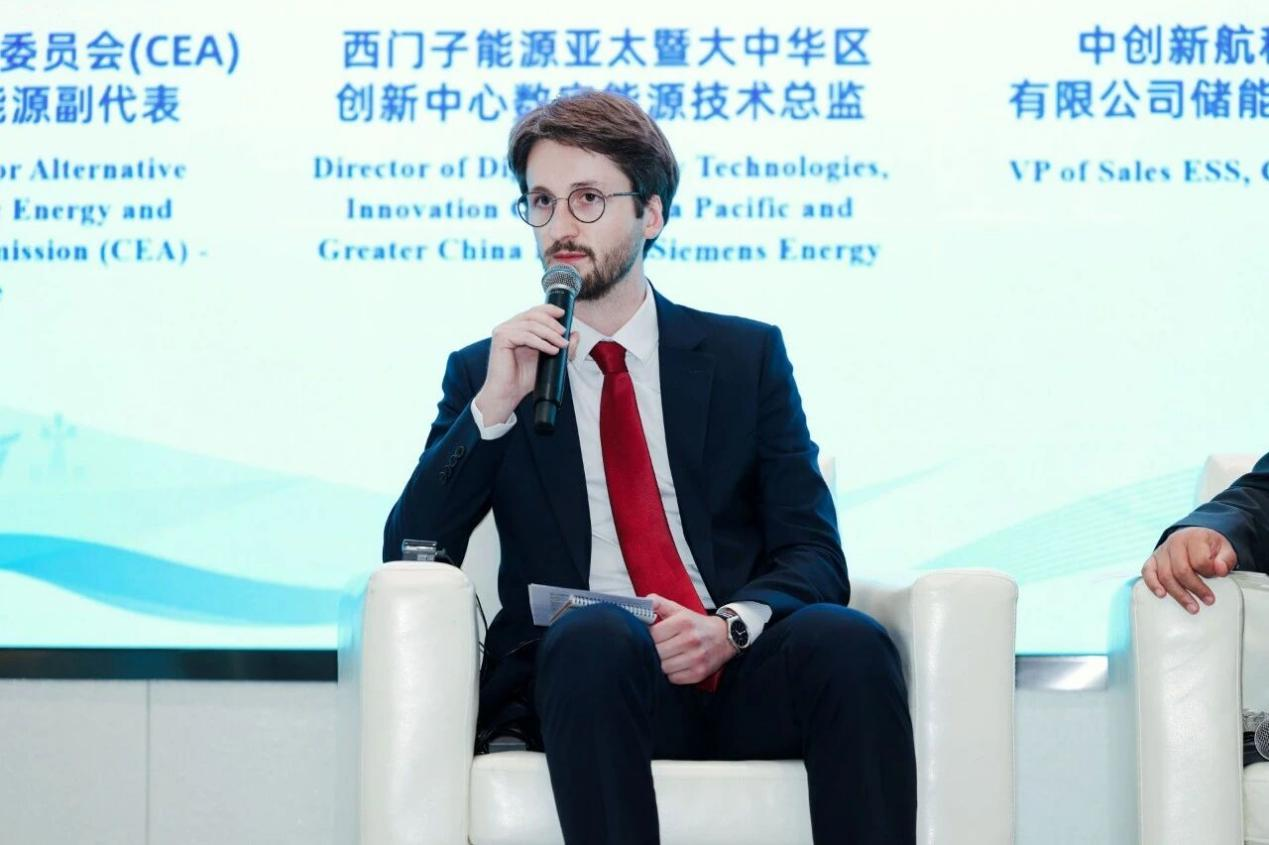
Victor Gout
Deputy Representative for Alternative Energies, French Atomic Energy and Alternative EnergiesCommission (CEA) -China Office
Victor Gout, Deputy Representative for Alternative Energies, French Alternative Energies and Atomic Energy Commission (CEA) -China Office,argued that lithium-ion batteries and hydrogen energy are not adversarial but complementary, each suited to different scenarios and economic models. Li-ion batteries offer fast charging, high efficiency, and millisecond-level response, ideal for short-term frequency regulation and 2–4 hour power shifting. Thanks to China's large-scale industrialization, Li-ion costs have plummeted, with durations potentially extending to 8 hours or more. Hydrogen, conversely, suits regions unsuitable for pumped hydro and long-duration storage scenarios, while also serving hard-to-abate sectors like industrial decarbonization and fuel replacement, though hindered by lower conversion efficiency and insufficient infrastructure. He stressed that basic research is the most suitable entry point for Sino-French collaboration,with vast potential in solid oxide fuel cells, battery chemistry materials, grid modeling/testing, and standards systems. Both technology paths require continuous breakthroughs to support grids with high renewable penetration.
Zilong Yang
Director of Digital Energy Technologies, Innovation Center, Asia Pacific & Greater China Region, Siemens Energy
Zilong Yang , Director of Digital Energy Technologies, Innovation Center, Asia Pacific & Greater China Region, Siemens Energy, focused on computing-power-electricity synergy. He noted that national data center power consumption reached 170 billion kWh in 2025 and is projected to quadruple by 2030, coinciding with soaring renewable capacity. Storage becomes the critical link balancing fluctuations on both sides. Regarding implementation pathways, he outlined three green power consumption models: green power trading, direct green power connections, and green certificate trading. He emphasized that the internal shift in data centers from AC to 800V DC power supply itself creates new demands for storage.On "computing driving electricity," he highlighted how AI can deeply empower storage system planning/simulation, operational dispatch, and power trading decisions, enabling optimal scheduling amid real-time electricity prices and load fluctuations. Consequently, storage becomes a vital pillar for the safe and stable operation of new power systems.
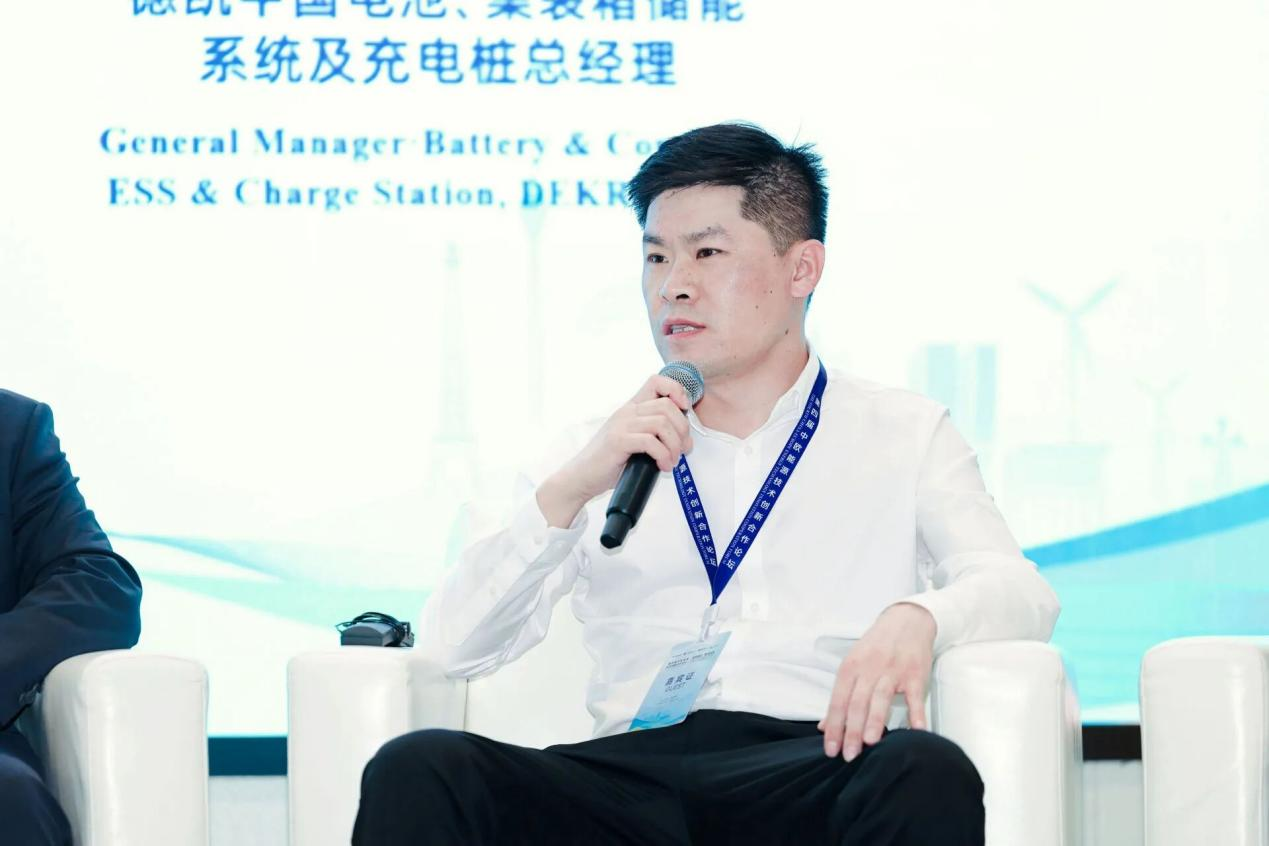
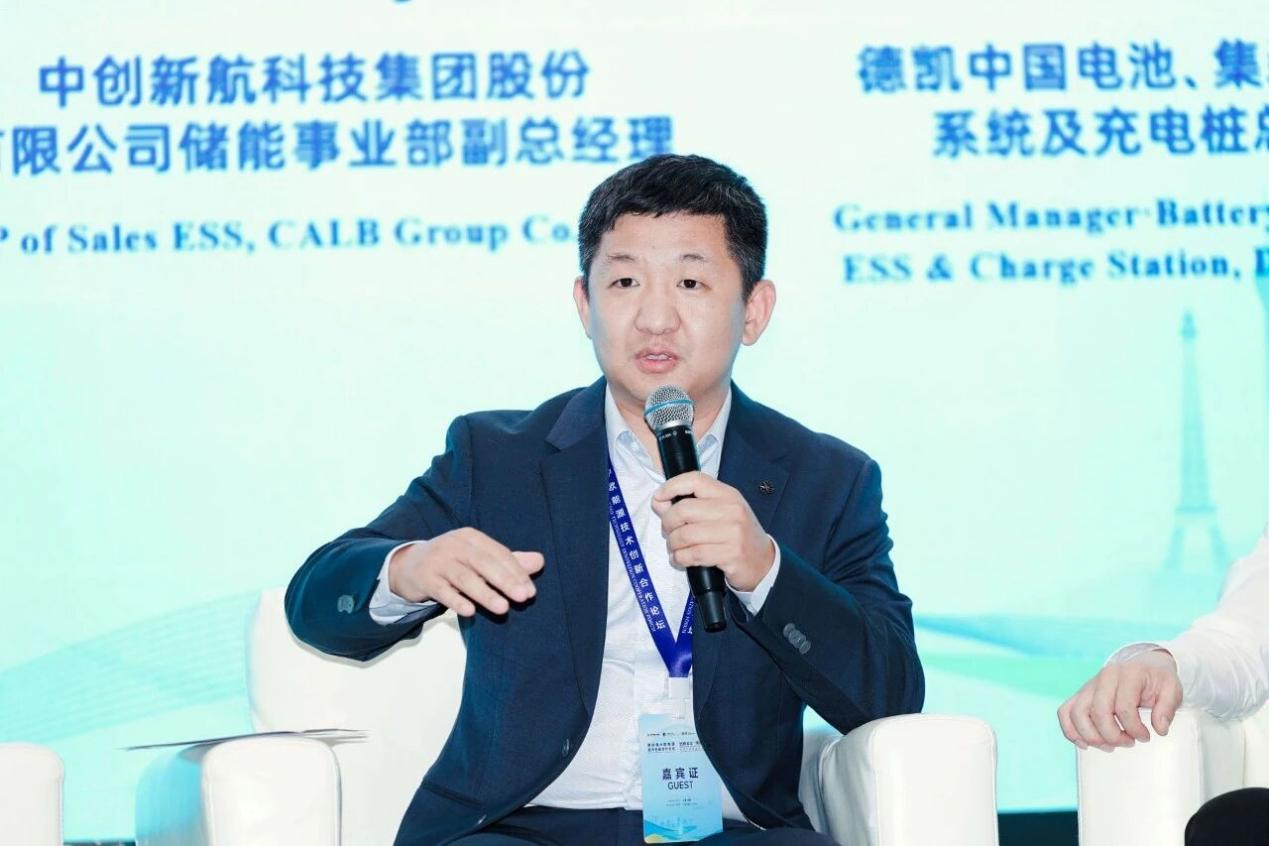
Pei Yang
VP of Sales ESS, CALB Group Co., Ltd.,
Pei Yang , VP of Sales ESS, CALB Group Co., Ltd.,elaborated on practical pathways and win-win scenarios based on CALB's overseas footprint. Currently, the company's 100 GWh industrial base in Portugal is under construction, and its battery pack facility in Thailand is operational.To navigate the EU Carbon Border Adjustment Mechanism (CBAM) and varying national standards, CALB is making synchronized efforts in industry, standards, and technology: On standards, it proactively engages in aligning with European regulations from early project planning stages to meet diverse certification requirements for grid characteristics and functional specifications. On technology, it operates R&D centers in Europe to enhance localized technical synergy. Pei Yang asserted that global deployment is an inevitable trend, and vast cooperation space exists between China and Europe across industrial investment, standards mutual recognition, and joint R&D.Enterprises should proactively integrate into local systems to foster deep industrial chain integration through co-development.
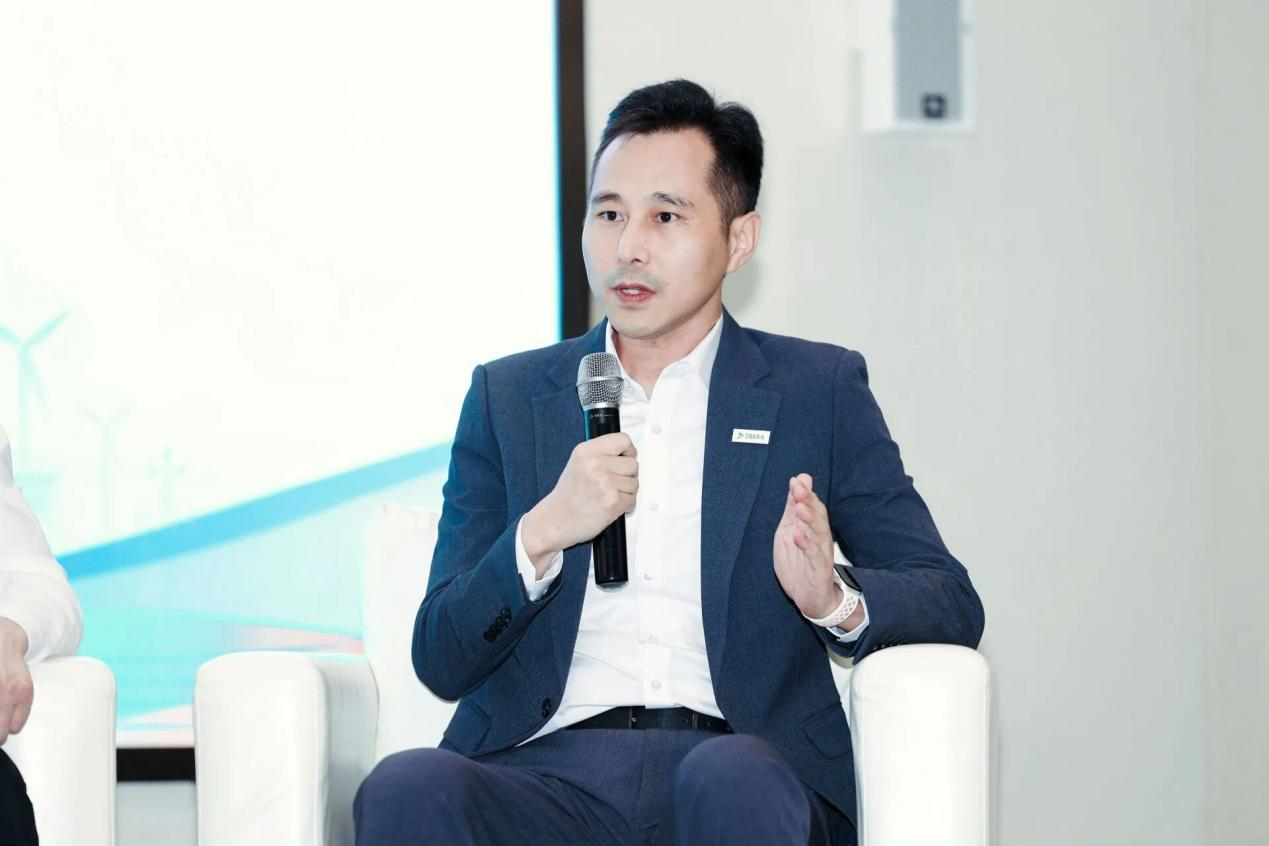
Among Chen
General Manager – Battery & Container ESS & Charge Station, DEKRA China
Among Chen ,General Manager -Battery & Container ESS & Charge Station, DEKRA China, first systematically outlined differences between Chinese and European storage standards/certification systems regarding regulatory frameworks, standard granularity, and management mechanisms.
Addressing Chinese enterprises going global, he proposed four adaptation pathways: Proactively aligning product designs with EU standards during the design phase; engaging qualified testing laboratories for oversight; preparing bilingual technical documentation; and establishing R&D capabilities with China-Europe linkages. Regarding AIDC (AI Data Center) + Storage, Chen noted that the explosive growth of data centers has spawned new integrated storage demands encompassing "backup power + peak shaving + grid-forming capabilities." China holds distinct manufacturing and technological advantages in high-rate LFP batteries, liquid cooling integration, and grid-forming PCS. Europe excels in data center O&M management, energy efficiency optimization, AI-driven peak load forecasting, and grid-side interconnection. The two sides are highly complementary, enabling a commercial model of "Chinese smart-manufactured products + European management/O&M systems."
Energy Storage
The Most Solid "Technological Foundation" for China-Europe Green Cooperation
As pivotal participants and drivers of the global energy transition, China and Europe exhibit strong complementarity and vast cooperation potential in energy storage. Europe has accumulated advanced experience in power market mechanisms, standards systems, and system O&M management. China possesses a complete industrial system, economies of scale in manufacturing, and rich, diverse application scenarios.
Amid accelerating global energy transformation and technological iteration, deepening China-Europe technical exchanges and industrial synergy in energy storage is both an intrinsic need to advance respective energy transitions and a crucial measure to jointly address global energy security challenges and promote sustainable energy development.
Outcomes from this sub-forum demonstrate that dialogue between China and Europe on storage policy, technology, standards, and markets has entered deep waters. The two sides are transitioning from simple trade relations to a new stage of comprehensive cooperation featuring industrial chain synergy, standards system co-construction, and joint basic research.
It is anticipated that this forum serves as a new starting point for China-Europe energy storage collaboration, continuously injecting robust momentum into the global green, low-carbon energy transition.

New Installations Surge Over 120% YoY — February Analysis of China’s New Energy Storage Projects
In February 2026, China’s new energy storage market sustained its rapid growth momentum, with newly installed capacity increasing by over 120% year-on-year (YoY). Meanwhile, the application structure of the market has undergone adjustments compared with the same period last year.
In February 2026, China’s new energy storage market sustained its rapid growth momentum, with newly installed capacity increasing by over 120% year-on-year (YoY). Meanwhile, the application structure of the market has undergone adjustments compared with the same period last year.
Short-term fluctuations do not alter long-term growth trend: In February, newly installed capacity reached 3.6 GW, representing a YoY increase of over 120% and a month-on-month (MoM) decline of 31%. Despite the short-term slowdown, the long-term growth trajectory of the energy storage market remains strong.
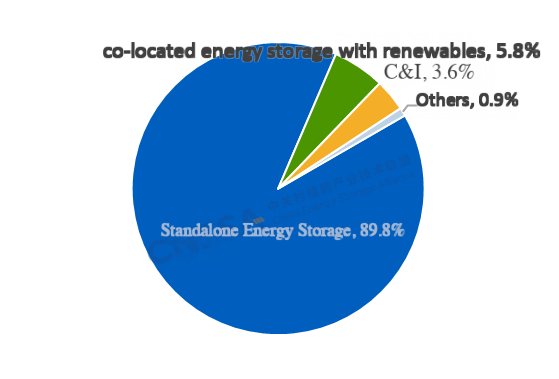
Front-of-the-meter standalone storage drives growth: Standalone energy storage on the generation and grid side became the primary growth driver. In February, standalone storage accounted for 90% of newly added capacity, up 42 percentage points YoY. Newly installed power and energy capacity of standalone storage increased by more than 310% and 270% YoY, respectively.
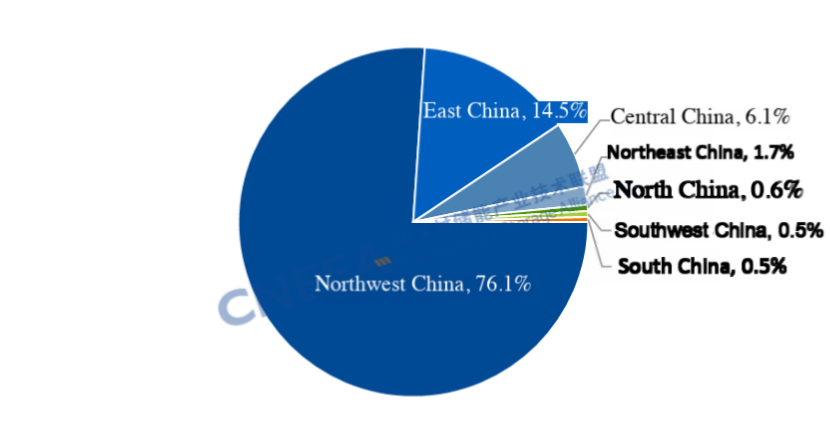
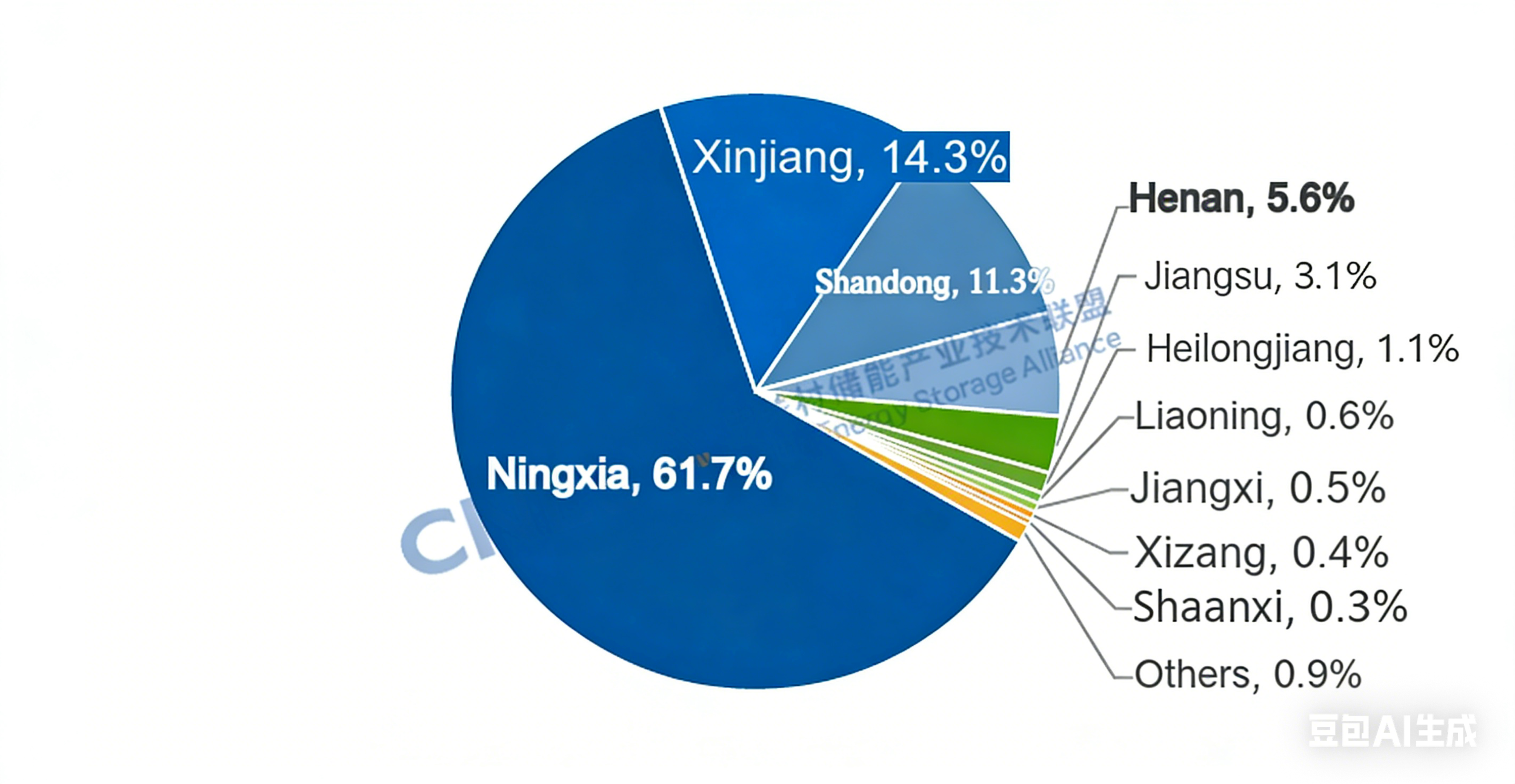
Highly concentrated regional deployment: The Northwest region accounted for over 75% of total additions, with Ningxia alone exceeding 2 GW, contributing more than 60% of the national total.
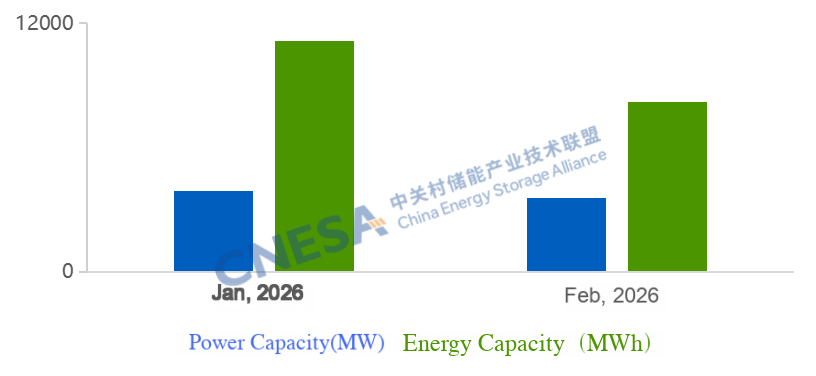
According to incomplete statistics from China Energy Storage Alliance(CNESA), China commissioned 3.56 GW / 8.19 GWh of new energy storage capacity in February 2026, representing YoY increases of +120% / +95% and MoM declines of -31% / -21%.
The MoM decline was mainly due to project construction cycles and the impact of the Spring Festival holiday. However, the YoY growth exceeding 120% indicates a fundamentally positive market outlook. Notably, front-of-the-meter (FTM) installations reached 3.4 GW, up 147% YoY, effectively doubling the total monthly additions.
Key Market Characteristics in February
1. Standalone Storage Surges Over 270%, Driving Market Expansion
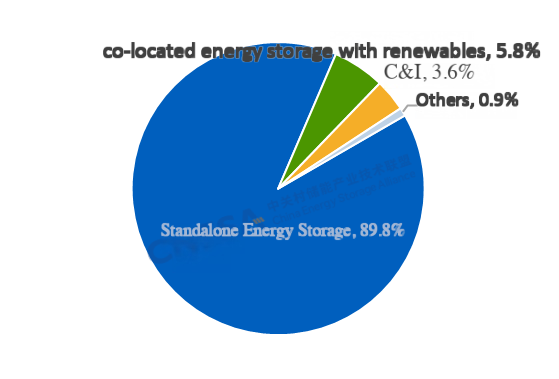
In terms of application structure, standalone energy storage dominated the market. It accounted for 90% of total newly installed power capacity, up 42 percentage points YoY and 8 percentage points MoM. Newly added capacity reached 3.2 GW / 7.4 GWh, with YoY growth of +313% / +274%, becoming the main driving point of energy storage market. All newly commissioned standalone energy storage projects reached at least the 100 MW level, with the number of such projects rising by 29% year-on-year, alongside the commissioning of two gigawatt-scale projects.
Installations on the generation side and behind-the-meter (BTM) user side experienced a temporary decline. Newly installed capacity on the generation side reached 217.3 MW / 474.3 MWh, down 65% / 72% year-on-year and 41% / 36% month-on-month. Co-located storage with renewable energy remained the dominant model, covering a range of application scenarios such as aquaculture, solar hybrid projects and desertification control initiatives.
New user-side installations totaled 135.2 MW / 292.7 MWh, down 41% / 42% year-on-year and 51% / 58% month-on-month. The market was highly concentrated, with Jiangsu, Guangdong, and Zhejiang accounting for 90% of total user-side energy storage capacity, while Jiangsu ranked first nationwide in both installed capacity and project count.
On the technology front, lithium-ion batteries continued to scale rapidly, supporting the commissioning of gigawatt-level standalone storage plants. Meanwhile, hybrid systems combining lithium-ion and sodium-ion batteries at the 100 MW level were deployed, and aqueous organic flow batteries were implemented on the user side, providing more diversified technological pathways for long-term development.
2. Regional Concentration Intensifies, Northwest China Dominates
In February, regional concentration of new installations was pronounced. The Northwest region added 2.7 GW, accounting for 76% of the national total. The combined share of the Northwest and North China regions exceeded 90%. Ningxia added 2.2 GW / 4.4 GWh of new capacity, ranking first nationwide in both power and energy scale and setting a new monthly record for the region. This surge was driven by the grid connection of several gigawatt-scale shared energy storage projects and storage systems paired with large renewable energy bases.
By the end of 2025, Ningxia’s renewable energy capacity reached 57.32 GW, accounting for 65.5% of total grid capacity under centralized dispatch. Solar power has surpassed coal-fired generation to become the largest power source in the region. Due to the intermittency of renewables—characterized by surplus generation during the day and shortages at night—demand for grid services such as peak shaving and frequency regulation has surged. A coordinated development model integrating wind, solar, thermal power, and energy storage is rapidly taking shape. Looking ahead, energy storage is expected to generate revenue through multiple channels, including capacity compensation, spot market trading, frequency regulation services, ramp rate support and so on.
In addition, Ningxia has introduced policies encouraging private capital participation in energy storage investment. In February, a gigawatt-scale storage project developed by Jiayang Energy was commissioned, demonstrating strong investor confidence in the region. At the end of February, the region released its first batch of 2026 private investment promotion projects, including 22 energy storage projects with a total scale of 4.15 GW / 14.4 GWh, providing a solid pipeline for continued market growth.
Register now to attend Asia’s Largest Energy Storage Trade Show for free:
What: The 14th Energy Storage International Conference & Expo
When: Conferences: March 31 - April 2, 2026
Exhibitions: April 1-3, 2026
Where: CIECC Beijing, China
Address: No. 55 Yudong road, Shunyi District, Beijing China

2.1GW+7.75GWh! China Power Construction Group Signed One of the Largest Solar-Plus-Storage Projects in the UAE
Recently, China Power Construction Group officially signed the EPC contract for the 2.1GW + 7.75GWh RTC solar-plus-storage project in Abu Dhabi, United Arab Emirates (UAE), with a contract value of approximately RMB 13.962 billion. As one of the largest integrated solar-plus-storage projects in the Middle East and even the world, the signing of the contract marks the project’s transition into the full implementation phase, which is projected to be delivered in 2027.
Recently, China Power Construction Group officially signed the EPC contract for the 2.1GW + 7.75GWh RTC solar-plus-storage project in Abu Dhabi, United Arab Emirates (UAE), with a contract value of approximately RMB 13.962 billion. As one of the largest integrated solar-plus-storage projects in the Middle East and even the world, the signing of the contract marks the project’s transition into the full implementation phase, which is projected to be delivered in 2027.
Amid the accelerating global energy transition and the impact of geopolitical on energy supply, solar-plus-storage systems, as independent and controllable energy solutions, is witnessing an explosive growth in demand. Industry forecasts suggest that large-scale solar-plus-storage projects are being tendered in rapid succession worldwide, with the Middle East emerging as a key engine of market demand, providing significant growth opportunities for the energy storage sector.
Notably, the overseas business of China Power Construction Group has demonstrated strong performance this year. Data indicates a significant increase in the share of overseas operations. According to the company’s operational report of January-February 2026 released on March 12, China Power Construction Group signed RMB 147.893 billion in new contracts during the first two months of the year. Among them, overseas contracts reached RMB 40.888 billion, representing a year-on-year increase of 19.92%. Despite broader market pressures, overseas business continued to expand, with its share of newly signed contracts rising from around 21% in the same period last year to approximately 27%.
Register now to attend Asia’s Largest Energy Storage Trade Show for free:
What: The 14th Energy Storage International Conference & Expo
When: Conferences: March 31 - April 2, 2026
Exhibitions: April 1-3, 2026
Where: CIECC Beijing, China
Address: No. 55 Yudong road, Shunyi District, Beijing China

DOE now requires energy storage for large-scale renewable energy projects
To improve national grid stability, the Department of Energy (DOE) has issued a new directive requiring all large-scale renewable energy projects to integrate energy storage systems (ESS).
To improve national grid stability, the Department of Energy (DOE) has issued a new directive requiring all large-scale renewable energy projects to integrate energy storage systems (ESS).
Under Department Circular No. DC2026-02-0008, issued Thursday, all prospective variable renewable energy (VRE) power plants with a capacity of 10 megawatts (MW) or higher must now include energy storage. The storage component must represent at least 20% of the plant’s total installed capacity.
The policy marks a significant shift in how the Philippines manages the inherent intermittency of solar and wind power. By mandating “batteries” or other storage technologies, the DOE aims to mitigate sudden generation losses and ensure a more dependable electricity supply.
“Energy storage is not only about storing surplus energy, it is about strengthening the grid’s capability to absorb more renewables while maintaining reliability,” said Energy Secretary Sharon S. Garin. “This policy ensures that ESS integration becomes part of system planning and project development, supporting better outcomes for consumers”.
The circular also encourages developers to use advanced technologies, such as grid-forming (GFM) inverters. These tools provide “virtual inertia,” helping to stabilize the grid’s voltage and frequency during fluctuations—functions traditionally provided by fossil fuel-based plants.
Beyond private power plants, the DOE has instructed the Transmission Network Provider (TNP) and distribution utilities to incorporate energy storage into their long-term infrastructure strategies. This includes treating storage as a critical resource for grid reinforcement, frequency control, and as an alternative supply for “islanding” scenarios where areas are temporarily cut off from the main grid.
The government plans to institutionalize these requirements by reflecting them in upcoming updates to the Philippine Energy Plan (PEP) and the Transmission Development Plan (TDP). According to the DOE, the updated framework is intended to create stronger signals for investors while accelerating the country’s clean energy targets. (JLN/PIA-NCR)
Source: Philippine Information Agency
_________________________________________________________________
Register now to attend Asia’s Largest Energy Storage Trade Show for free:
What: The 14th Energy Storage International Conference & Expo
When: Conferences: March 31 - April 2, 2026
Exhibitions: April 1-3, 2026
Where: CIECC Beijing, China
Address: No. 55 Yudong road, Shunyi District, Beijing China

Jinko ESS SunTera 5MWh Passes Stringent Large-Scale Fire Test, Validating Safety Boundaries
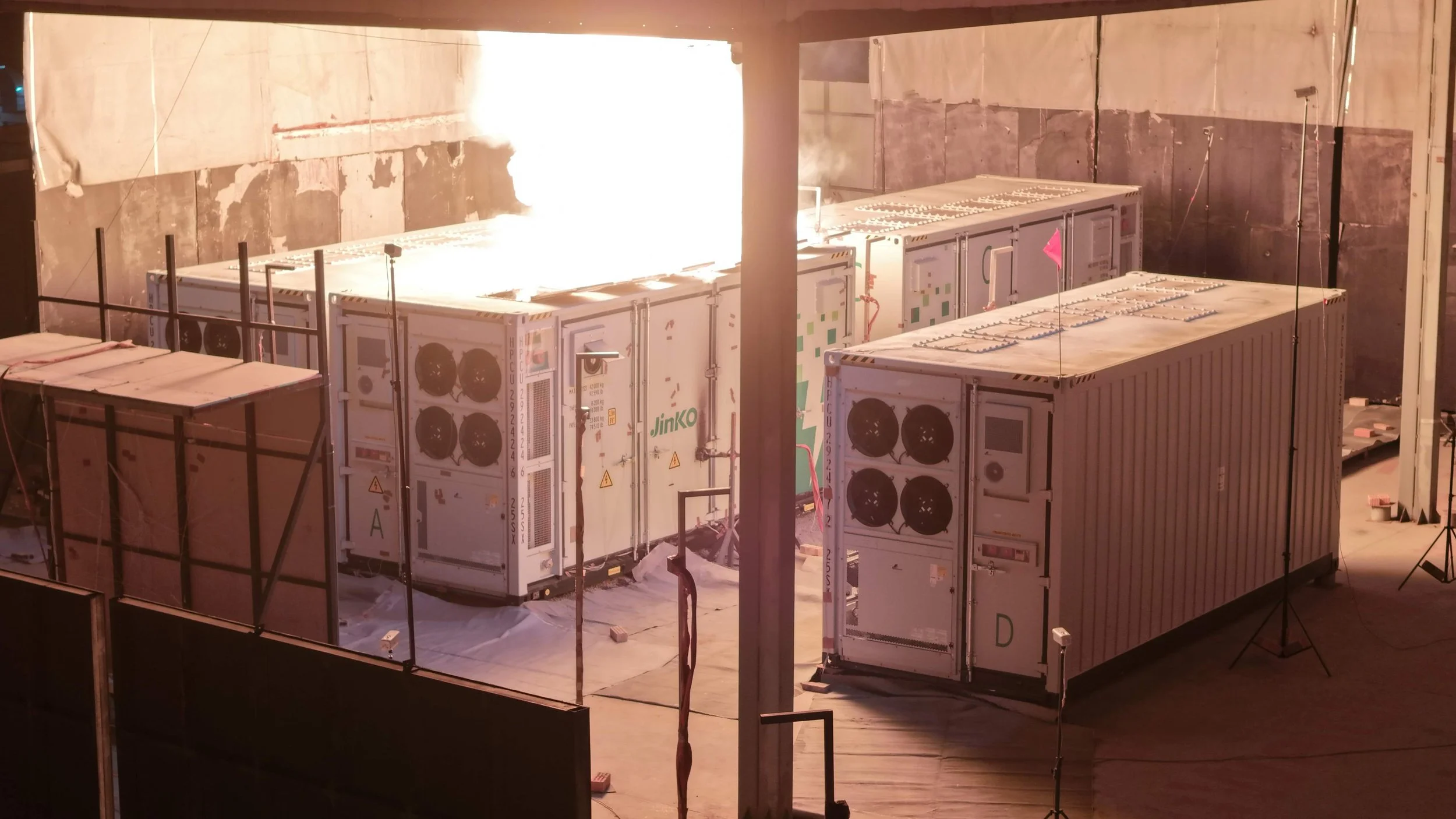
Jinko ESS, a global leading energy storage solution provider and a subsidiary of Jinko Solar Co., Ltd., recently announced the successful completion of a large-scale fire test for SunTera 5MWh Liquid-Cooling Energy Storage System. Conducted at a specialized testing facility in Suzhou City, Anhui Province, the test followed the CSA C800 standard and the November 2025 draft of UL 9540A and was witnessed on-site by CSA Group representatives and North American fire protection engineers.
Jinko ESS, a global leading energy storage solution provider and a subsidiary of Jinko Solar Co., Ltd., recently announced the successful completion of a large-scale fire test for SunTera 5MWh Liquid-Cooling Energy Storage System. Conducted at a specialized testing facility in Suzhou City, Anhui Province, the test followed the CSA C800 standard and the November 2025 draft of UL 9540A and was witnessed on-site by CSA Group representatives and North American fire protection engineers.
By simulating fire scenarios under real-world utility-scale deployment conditions, the evaluation assessed fire behavior, thermal runaway propagation potential, enclosure integrity, and the impact on adjacent units. These results provide measured data under the Large-Scale Fire Testing (LSFT) framework referenced in the forthcoming NFPA 855:2026 provisions, supporting the industry’s transition from compliance-driven safety toward performance-validated safety.
Engineering Performance Under Conservative Conditions
The SunTera 5MWh system is Jinko ESS’s flagship product, built on a high-capacity 314Ah cell platform. The system features advanced liquid-cooling thermal management, a nominal energy capacity of 5.015MWh, and supports 0.5P continuous charge and discharge. With an IP55 protection rating and C4/C5 corrosion resistance, it is designed for a 20-year operational life.
For this evaluation, four SunTera containers were deployed in a high-density configuration to replicate practical project spacing:
l Unit A (Initiating Unit): Target unit for forced ignition.
l Unit B: Back-to-back with Unit A at a 15cm spacing.
l Unit C: Side-by-side with Unit A at a 1m spacing.
l Unit D: Face-to-face with Unit A at a 3.5m spacing.
To evaluate passive protection performance under conservative conditions, all units were charged to 100% State of Charge (SOC), active fire suppression systems were disabled, and no manual intervention occurred during the test.
Measured Results: Effective Propagation Containment
On February 10, 2026, forced heating of Unit A commenced at 17:00. At approximately 18:10, cells reached ignition conditions, resulting in sustained combustion. During the event, the internal temperature of Unit A peaked at 1296°C.
Despite the intensity of the initiating fire, adjacent units remained stable. Maximum recorded internal cell temperatures were significantly below thermal runaway thresholds (Unit B: 51.3°C, Unit C: 38.3°C, Unit D: 41.2°C)。
Although external surface temperatures of adjacent enclosures reached elevated levels—up to 404°C on Unit D due to direct flame exposure—internal battery module temperatures remained within safe limits. This demonstrates effective enclosure-level thermal insulation and fire containment performance.
The fire self-extinguished at 07:50 on February 11, with a total combustion duration of approximately 13 hours and 40 minutes. Post-test inspections confirmed:
l Structural Integrity: Unit A maintained its structure with localized surface soot and no enclosure collapse. Units B, C, and D remained structurally intact.
l Functional Continuity: Functional testing verified that adjacent units (B, C, and D) retained full electrical functionality, with no observable impact on charge and discharge performance.
l Environmental Responsibility: The test incorporated controlled flue gas capture and treatment measures to minimize environmental impact.
Leadership Perspectives
“Large-scale fire test allows us to better quantify fire propagation limits,” said Carl Yang, Product General Manager of Jinko ESS. “The SunTera 5MWh system demonstrated thermal runaway containment within a single enclosure under challenging conditions. These data support more precise installation spacing guidance and contribute to reducing multi-unit propagation risk.”
Dora Zhao, Senior Product Management Engineer, said: “SunTera’s safety architecture is built on a three-level design philosophy: cell-level stability, pack-level insulation with engineered pressure relief, and system-level fire barriers. Even when insulation materials in the initiating pack were intentionally modified to accelerate ignition, adjacent packs maintained electrical functionality.”
Patrick Rimel, North America Product Manager, highlighted the market implications: “As regulatory frameworks evolve toward risk quantification, empirical data from LSFT becomes essential. These results provide AHJs, insurers, and project owners with performance-based insights that can inform permitting decisions and risk evaluations, especially in high-density deployments.”
Independent Expert Validation
Todd LaBerge, Fire Protection Engineer from ATAR FIRE, commented: “The test was conducted in accordance with CSA C800 and the latest UL 9540A draft. The system incorporates deflagration protection principles aligned with NFPA 68 and NFPA 69. With enclosure doors closed and venting mechanisms engaged, the initiating fire remained contained within the originating enclosure. The test execution and data integrity meet internationally recognized best-practice standards.”
The Significance Beyond Validation
The impact of large-scale fire testing extends far beyond mere technical validation. It serves as a mirror, reflecting the true safety boundaries of product design, and a yardstick, measuring a company’s fundamental commitment to risk responsibility.
For Jinko ESS, this test marks a new beginning. We remain committed to transforming "extreme conditions" into "standard configurations," working alongside global partners to build a more resilient power system grounded in data-driven trust and safety-first principles.
_________________________________________________________________________________________
Register now to attend Asia’s Largest Energy Storage Trade Show for free:
What: The 14th Energy Storage International Conference & Expo
When: Conferences: March 31 - April 2, 2026
Exhibitions: April 1-3, 2026
Where: CIECC Beijing, China
Address: No. 55 Yudong road, Shunyi District, Beijing China
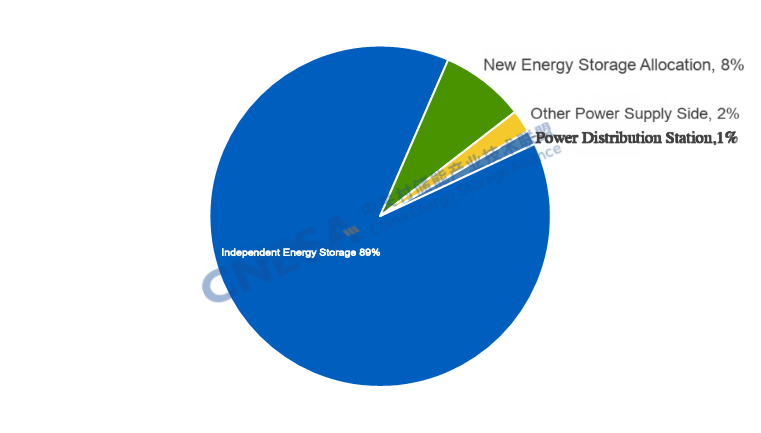
10.9 GWh! Newly Added New-Type Energy Storage Capacity in January Doubled Year-on-Year
China’s new-type energy storage market witnessed a strong start in January 2026. Newly commissioned capacity in January increased by over 60% year-on-year, while the market’s underlying structure showed notable adjustments compared with the same period last year.
China’s new-type energy storage market witnessed a strong start in January 2026. Newly commissioned capacity in January increased by over 60% year-on-year, while the market’s underlying structure showed notable adjustments compared with the same period last year.
A Strong Start to the Year: Newly added capacity: 3.8 GW / 10.9 GWh in January, representing a
year-on-year increase of 62% / 106%, marking a positive opening for the new-type energy storage
market.
Accelerated Deployment of Independent Energy Storage: In January, independent energy
storage accounted for nearly 90% of newly added capacity, up 41 percentage points year-on-
year. Newly added power and energy capacity of independent energy storage grew by over 240% /
290% year-on-year. Xinjiang ranked first nationwide in both power and energy capacity, with 1 GW
of newly commissioned independent energy storage.
Rise of Third-Party Enterprises: Third-party enterprises accounted for 45% of newly added
installed capacity, once again surpassing local energy groups and the “Big Five and Small Six”
state-owned power generation groups. The trend toward a diversified investment landscape has
become increasingly evident.
Accelerated Deployment of Diverse Technologies: Beyond mainstream lithium-ion batteries,
alternative technologies such as compressed air energy storage (CAES), flow batteries, and
flywheels are being deployed at a faster pace, supporting the industry’s long-term development.
Overall Analysis of New-Type Energy Storage Projects in January
According to incomplete statistics from the CNESA DataLink, in January 2026, newly commissioned new-type energy storage projects in China reached a total installed capacity of 3.78 GW / 10.90 GWh, representing year-on-year increases of 62% and 106%, respectively, and month-on-month declines of 84% and 86%. Monthly new added capacity growth exceeded 60% year-on-year, underscoring a positive market outlook at the beginning of the year.
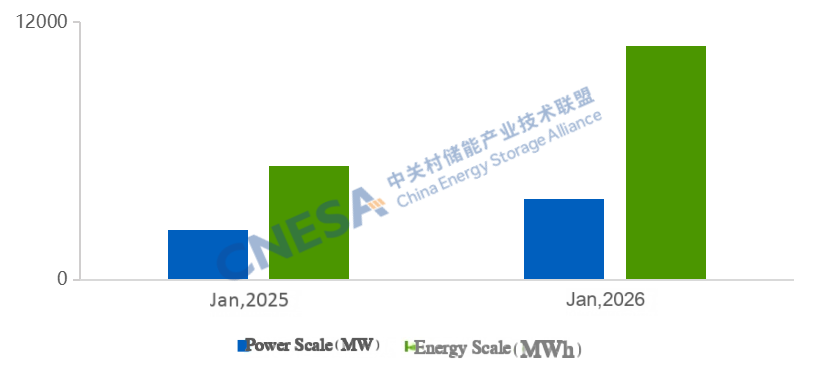
Figure 1: Installed Capacity of Newly Commissioned New-Type Energy Storage Projects in China, January 2026
Source: CNESA DataLink
Note: Year-on-year (YoY) comparisons are based on the same period of the previous year; month-on-month (MoM) comparisons are based on the immediately preceding statistical period.
Analysis of Generation- and Grid-Side New-Type Energy Storage Projects in January
In January, newly added generation- and grid-side new-type energy storage capacity reached 3.62 GW / 10.44 GWh, up 87% / 130% year-on-year, and down 84% / 87% month-on-month. Key characteristics include:
1.Independent energy storage accounted for 89% of new installations, up 41 percentage
points year-on-year and 12 percentage points month-on-month.
Newly added independent energy storage reached 3.2 GW / 9.6 GWh, up 249% / 298% year-on-year, and down 84%/87% month-on-month. The number of projects with capacities of 100 MW and above increased by 122% year-on-year, accounting for 85% of total projects—29 percentage points higher than the same period last year. By contrast, power-generation-side new-type energy storage additions were 366.5 MW / 740.3 MWh, down 64% / 65% year-on-year and 92% / 95% month-on-month. Among these, renewable-plus-storage projects accounted for 79% of power capacity, spanning diversified application scenarios such as desertification control, thermal–renewable–storage multi-energy integration, and hydro–solar–pumped storage integration.
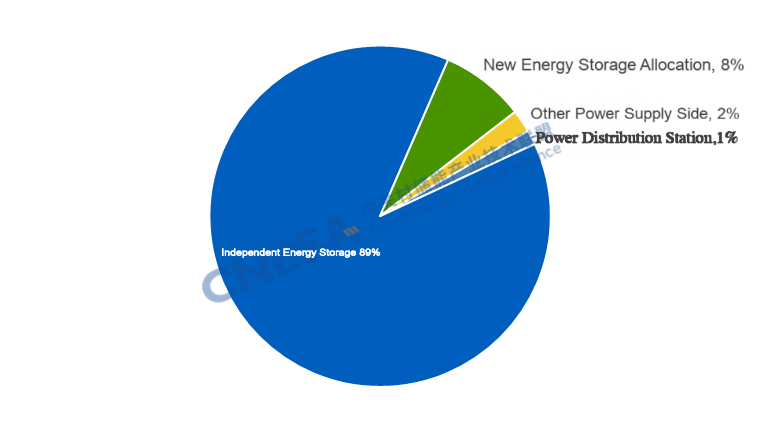
Figure 2: Application Distribution of Newly Commissioned Generation- and Grid-Side New-Type Energy Storage Projects in January 2026 (MW%)
Source: CNESA DataLink
Note: “Others” include substations, emergency power supplies, etc.
2. Northwest China Accounted for Over 35% of New Capacity, with Xinjiang Leading
In January, the Northwest region ranked first nationwide, accounting for 35% of newly added capacity. Combined, the Northwest and North China regions contributed more than half of the national total. By province, Xinjiang recorded newly added capacity of 1.2 GW / 4.3 GWh, ranking first nationwide in both power and energy capacity.
By the end of January, Xinjiang’s installed renewable energy capacity exceeded 160 GW, accounting for 64% of the region’s total power capacity. Due to its distance from eastern and central load centers, Xinjiang has historically faced wind and solar curtailment challenges. In 2025, wind and solar utilization rates in Xinjiang were 91.0% and 86.3%, respectively—both below the national average. Growing pressure for renewable energy consumption and the need to mitigate grid fluctuations have driven large-scale deployment of new-type energy storage in the region. At the start of the year, several major projects were commissioned in quick succession, including the 500 MW / 2,000 MWh Ruoqiang energy storage project by Xinjiang Green Development Power, the 200 MW / 800 MWh grid-forming energy storage project by Huaneng Jingshun, and the 200 MW / 800 MWh energy storage project by LiXin Energy, demonstrating strong pilot and demonstration effects.
In terms of revenue mechanisms, Xinjiang has formed a relatively mature model combining capacity compensation, electricity energy trading, and ancillary services. On May 19, 2023, the Xinjiang Development and Reform Commission issued the Notice on Establishing and Improving Supporting Policies for the Healthy and Orderly Development of New-Type Energy Storage, introducing capacity compensation for grid-connected independent energy storage projectsand specified the implementation standards for 2023, 2024, and 2025, providing predictable early-stage policy support for independent energy storage projects in Xinjiang. . Although the original policy expired at the end of 2025, the clarification at the national level regarding capacity pricing mechanisms for grid-side independent energy storage is expected to lead to new local policies in Xinjiang, further improving long-term revenue certainty. With the rollout of ancillary service market rules in July 2025 and the transition of Xinjiang’s power spot market to continuous settlement trial operation, independent energy storage is expected to increasingly generate revenue through spot market arbitrage.
Moreover, Xinjiang has established a complete energy storage industry chain, covering batteries, PCS, BMS, and system integration. Large-scale manufacturing bases established by leading energy storage companies, together with local supply chains, have significantly reduced logistics and system integration costs, enhancing project economics. As grid upgrades and transmission channel construction progress, energy storage demand in Xinjiang is expected to be further released.
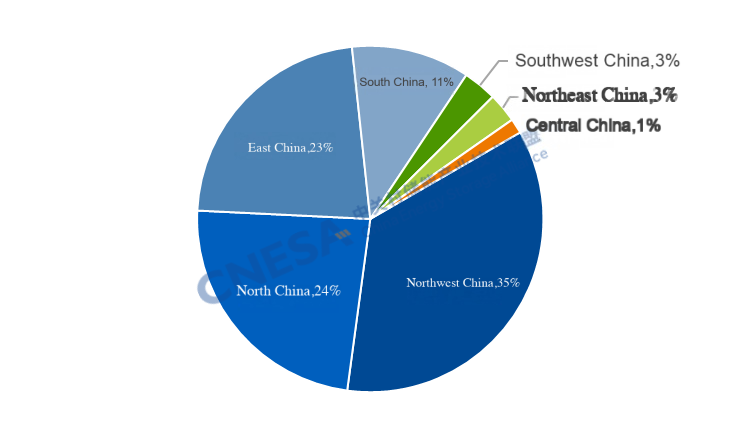
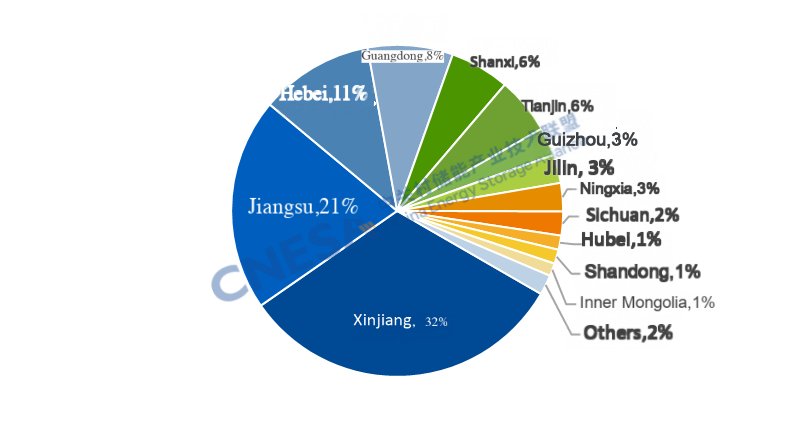
Figure 3: Regional Distribution of Newly Commissioned Generation- and Grid-Side New-Type Energy Storage Projects in January 2026 (MW%)
Figure 4: Provincial Distribution of Newly Commissioned Generation- and Grid-Side New-Type Energy Storage Projects in January 2026 (MW%)
Source: CNESA DataLink
3. Faster Deployment of Projects Invested by Third-Party Enterprises, the trend toward
diversification of energy storage investment entities has become increasingly evident.
In January, projects invested and developed by third-party enterprises—including China Green Development Group, Aerospace Hongji Energy Storage, and Daowei Energy Storage Group—were commissioned one after another. Third-party enterprises accounted for 45% of newly added installed power capacity, ranking first among all investor categories. Driven by rising market demand, supportive national policies, diversified technology pathways, and declining technology costs, the investment entity diversification trend became more pronounced in the first month of 2026.
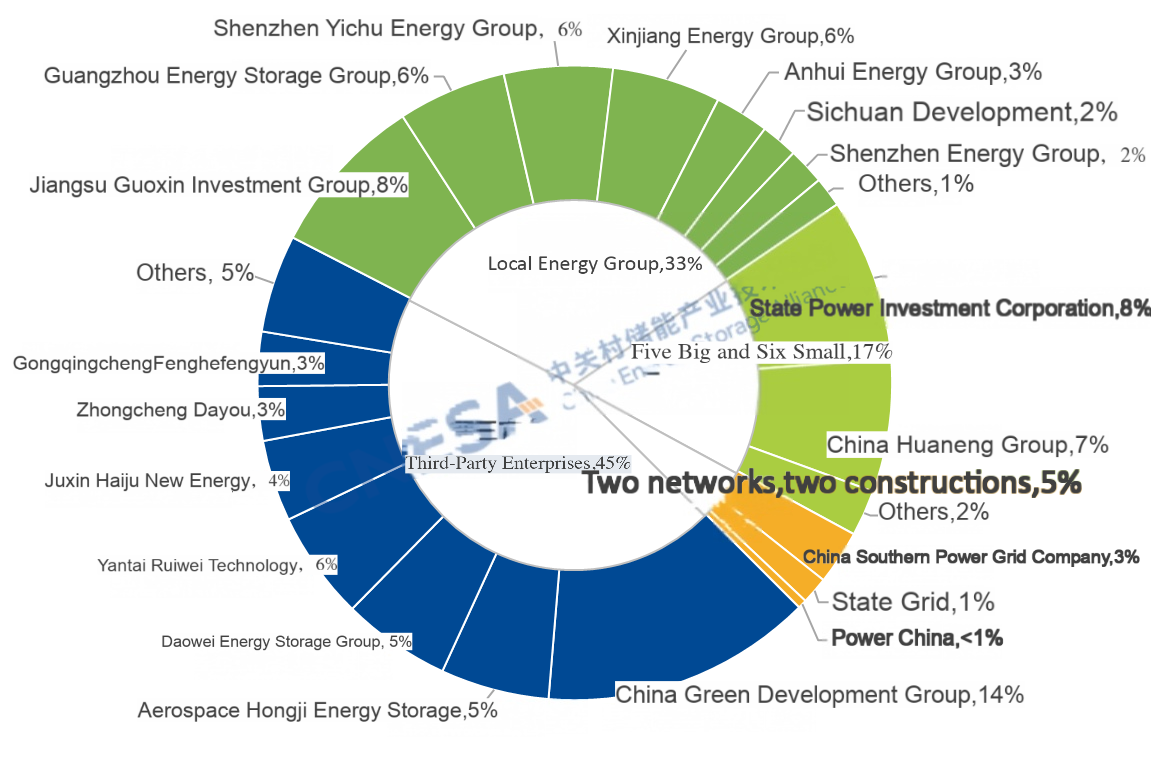
Figure 5: Owner Distribution of Newly Commissioned Generation- and Grid-Side New-Type Energy Storage Projects in January 2026 (MW%)
Source: CNESA DataLink Global Energy Storage Database
Note: Third-party enterprises refer to companies other than large state-owned power generation groups, the two major grid companies, their construction subsidiaries, and local energy groups.
4. Accelerated Deployment of Long-Duration Energy Storage Technologies
From a technology perspective, newly commissioned generation- and grid-side projects were dominated by lithium iron phosphate (LFP) batteries, accounting for 89% of installed power capacity, followed by compressed air energy storage (8%) and flow batteries (3%). Long-duration energy storage technologies—represented by CAES and flow batteries—as well as hybrid frequency regulation systems, are being deployed at an accelerating pace. Notable projects include the 300 MW Jiangsu Huai’an salt cavern CAES demonstration project, the Phase I Baicheng vanadium redox flow battery energy storage power station, and the Changyang Longzhouping vanadium redox flow battery energy storage project. In addition, a lithium battery + flywheel frequency regulation project by Shaanxi Energy was commissioned.
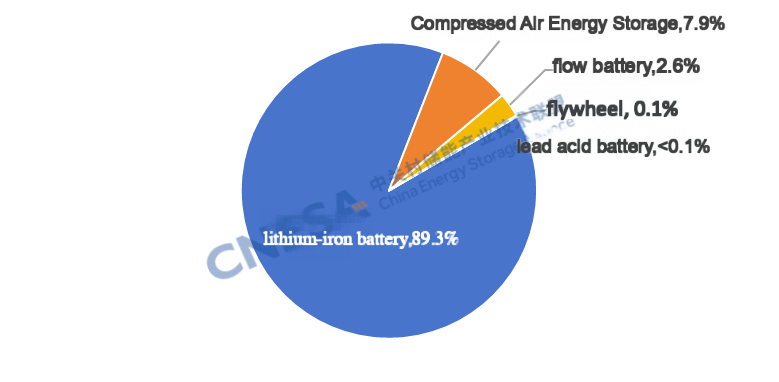
Figure 6: Technology Distribution of Newly Commissioned Generation- and Grid-Side New-Type Energy Storage Projects in January 2026 (MW%)
Source: CNESA DataLink
China Energy Storage Alliance (CNESA) continues to track energy storage project developments based on standardized, timely, and comprehensive data collection criteria. Leveraging long-term data accumulation and in-depth professional analysis, CNESA regularly publishes objective market analyses of energy storage installations, providing valuable references for industry decision-making. Since June 2025, CNESA’s monthly energy storage project analysis has been divided into generation- and grid-side and user-side market reports. This edition focuses on an in-depth interpretation of the generation- and grid-side market in January 2026.
For more comprehensive project information, authoritative data, and in-depth market analysis, please visit www.esresearch.com.cn or access the CNESA DataLink via the mini-program. For customized data consulting services, please contact CNESA through the official QR code. CNESA is committed to providing full-cycle, high-quality energy storage data services to industry stakeholders.

Register now to attend Asia’s Largest Energy Storage Trade Show for free:
What: The 14th Energy Storage International Conference & Expo
When: Conferences: March 31 - April 2, 2026
Exhibitions: April 1-3, 2026
Where: CIECC Beijing, China
Address: No. 55 Yudong road, Shunyi District, Beijing China

Key Energy Storage Standards to Watch in 2026 Highly Recommended for Industry Reference
During the 14th Five-Year Plan period, China’s energy storage technology mix witnessed noticeable changes where pumped hydro storage accounted for less than 40% for the first time while the new-type energy storage represented by lithium batteries saw explosive growth.
During the 14th Five-Year Plan period, China’s energy storage technology mix witnessed noticeable changes where pumped hydro storage accounted for less than 40% for the first time while the new-type energy storage represented by lithium batteries saw explosive growth.
According to incomplete statistic from China Energy Storage Alliance (CNESA), by the end of 2025, China’s cumulative installed capacity of power storage reached 213.3GW among which pumped hydro storage shared 31.3% while the new-type cumulative energy installations represented by lithium battery accounted for over two thirds.
Against the backdrop of robust industry expansion, it is significant to improve energy storage standardization system especially enhancing safety standard.
Through the incomplete statistic, in 2025, China released over 40 national, industry and local standards on energy storage. These standards cover energy storage planning and designing, equipment testing, grid connection and operation, safety management and emergency response, providing important support to guide high-quality industry development, guarantee the safety of energy storage power stations, and promote the energy structure transformation and the green and low-carbon development across industrial value chain.
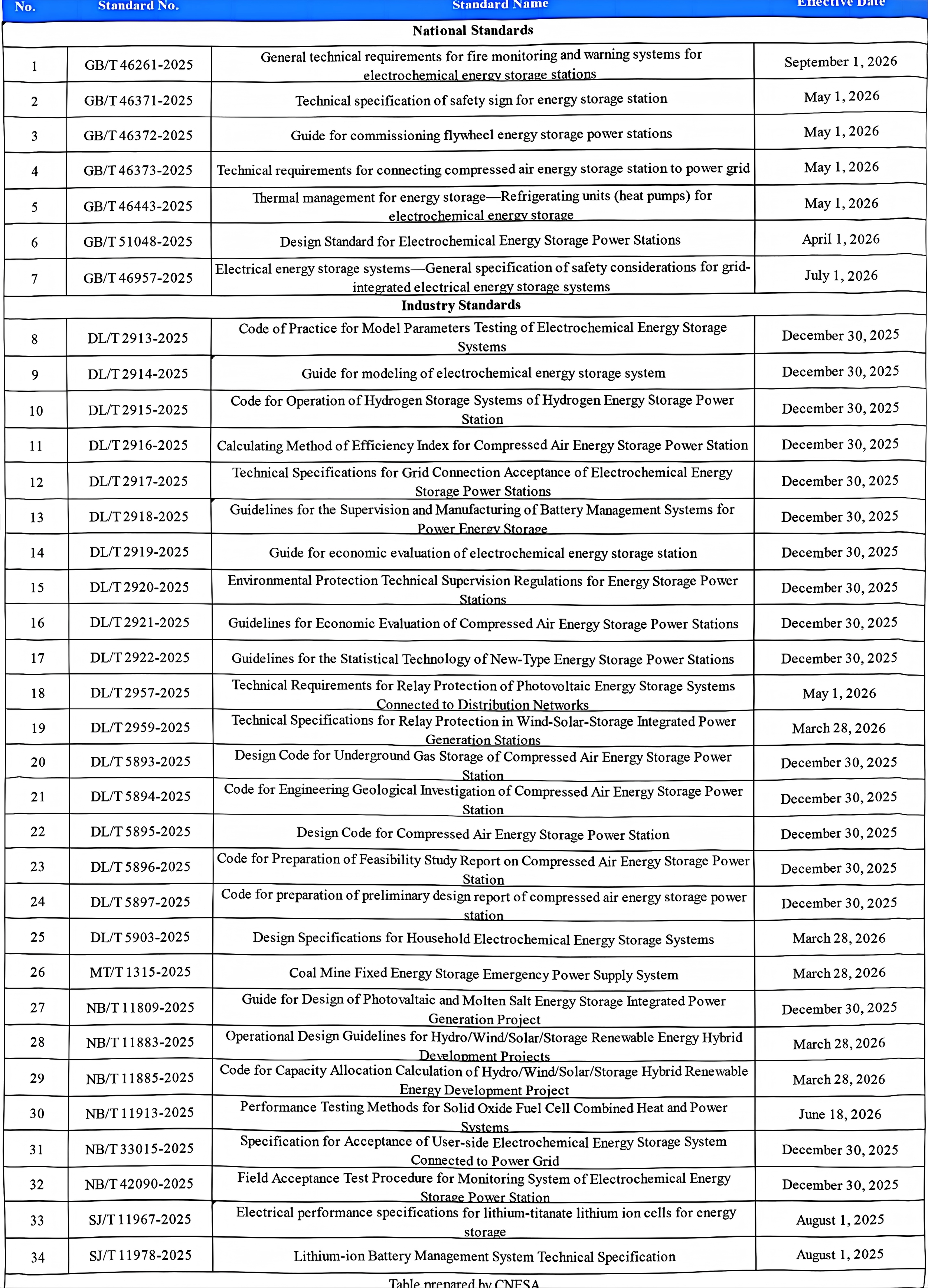
This article aims to clarify major energy storage standards released in 2025 and their influence. It will also list the key standards that have already come into force or will be implemented in 2026, helping industry stakeholder stay aligned with regulatory developments, mitigate compliance risks, and ensure the safe and efficient advancement of projects.
Strengthening the Energy Storage Safety Standards System From “Recommended” to “Mandatory”
Electrochemical Energy Storage represented by lithium battery has developed in a breakneck speed where installed capacity continued to expand, with safety being a core concern for the industry. In accordance with the incomplete statistic, 2025 alone saw about 30 energy storage safety accidents across the world. Two fires happened consecutively in American Moss Landing energy storage plant with huge loss, drawing widespread attention.
In order to ensure the safe and stable operation of lithium battery energy storage systems, cut down accident incidences and improve emergency response capabilities, the mandatory national standard GB 44240 Secondary lithium cells and batteries used in electrical energy storage systems—Safety requirements officially came into effect on August 1, 2025, which is recognized as the highest-level national standard on energy storage safety to date. It upgrades the safety requirements of energy storage lithium battery from “recommended” to “mandatory” for the first time, covering more than 20 rigorous testings from cell vibration, acceleration shock, shallow puncture, and compulsory discharge. Several leading companies’ battery products like those of CATL have passed third-party testings which is a sign that the standard’s entry into substantive implementation, setting a new benchmark for energy storage industry.
China’s Ministry of Housing and Urban-Rural Development released the revised national standard GB/T 51048- 2025 Design Standard for Electrochemical Energy Storage Power Station. Issued on December 31, 2025 and effective on April 1, 2026, this standard represents the first revision in a decade. Through revision across ten years, it introduces new technology pathways of sodium batteries, hydrogen fuel cells and so on. Based on practical challenges encountered during the application of electrochemical energy storage pathways over the past ten years, it established differentiated design requirements and addressing the potential safety risks serves as a core technical reference for the design of electrochemical energy storage power stations.
Shifting the Focus of Safety Protection from “Post-Incident Response” to “Pre-Incident Prevention”
With the continuous breakthroughs of safety protection technologies, shifting from “post-incident response” to “pre-incidence prevention” gradually become one of the major strategies.
China’s first national electrochemical energy storage fire warning standard GB/T 46261- 2025 General technical requirements for fire monitoring and warning systems for electrochemical energy storage stations was issued on August 29, 2025 and will take effect on September 1, 2026. This standard established a systematic and standardized framework for fire monitoring and early warning systems for the first time, covering several performances and technology requirements like multi-parameter monitoring, coordinated control and environmental adaptability and filling the long-standing gap in standards for early fire monitoring and warning product, which holds important reference for accident monitoring and safety warning system design in energy storage power stations.
CNESA standard Technical Specification for Liquid Nitrogen Fire Extinguishing Systems in Electrochemical Energy Storage Power Stations is currently under public consultation. Developed based on national key R&D program outcomes, the standard consolidates technical achievements in liquid nitrogen fire suppression systems and their application in protecting lithium-ion battery energy storage systems.
Internationally, the 2026 edition of NFPA 855 has also placed pre-incident prevention at the center of safety management. Systematic risk identification and mitigation analysis have been upgraded from conditional to routine requirements. It firstly introduced large-scale fire testings on the assessment of thermal runaway propagation. CSA/ANSI C800-2025 and the fifth edition of UL 9540A came as follows, which update large-scale fire testings requirements and significantly improve the proactive safety protection requirements of energy storage products.
Initial Progress Energy Storage Footprint Accounting Standards Supporting the “Dual Carbon” Goals
As the GB/T 24067- 2024 Greenhouse gases—Quantification methods and requirements for carbon footprint of product—Lithium-ion battery for electrical energy storage systems releases, China has built the foundational framework of carbon footprint accounting. Subsequently, the Ministry of Ecology and Environment together with National Development and Reform Commission and other authorities jointly issued the Guidelines for Developing Product Carbon Footprint Accounting Standards, encouraging broad participation in the design and amendment of product carbon footprint accounting standards. The guidelines target the formulation of 100 product carbon footprint standards by 2027 and 200 by 2030. Building on this framework, sector-specific carbon footprint standards are now gradually being developed.
In 2025, draft standards such as Greenhouse Gases—Product Carbon Footprint Quantification Requirements for Lithium-Ion Batteries Used in Electrical Energy Storage Systems, led by the China Electronics Standardization Institute, and Greenhouse Gases—Product Carbon Footprint Quantification Methods and Requirements for Lithium Battery Energy Storage Systems, jointly led by Shanghai Envision KES Technology Co., Ltd. and CNESA, entered the public consultation phase. Once released, these standards will provide clear and consistent methodologies for carbon footprint accounting for lithium-ion batteries and energy storage systems.
Conclusion
2025 marked an important year in the standardization of China’s energy storage sector with a set of critical safety standards releasing and implementing, providing essential guidance for the safe development of the industry. As energy storage technologies continue to develop and innovate, sustained collaboration among stakeholders and active participation in standardization efforts will remain critical to fostering a healthy energy ecosystem, supporting China;s energy transition, and advancing green and low-carbon development.
Appendix: Key Energy Storage Standards for 2026
Register now to attend Asia’s Largest Energy Storage Trade Show for free:
What: The 14th Energy Storage International Conference & Expo
When: Conferences: March 31 - April 2, 2026
Exhibitions: April 1-3, 2026
Where: CIECC Beijing, China
Address: No. 55 Yudong road, Shunyi District, Beijing China

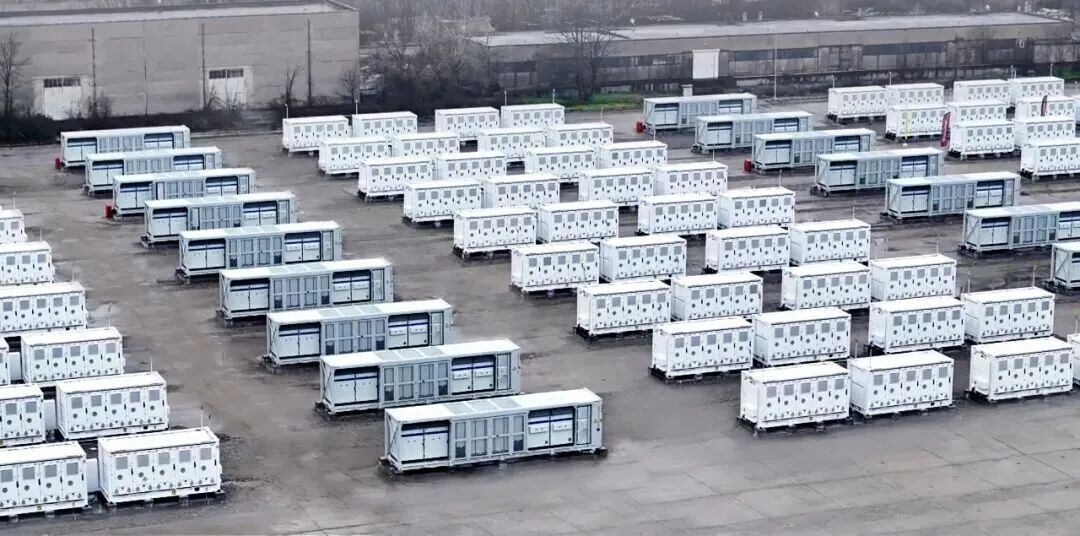
500MWh!BYD Energy Storage Has Commissioned Its Largest Energy Storage Project in East Europe
On January 8, 2026, a 500MWh standalone Battery Energy Storage System(BESS) project located at Maritsa East 3 in Bulgaria was officially commissioned. The project was the jointly developed by BYD Energy Storage and ContourGlobal under their strategic collaboration which is one of the largest standalone energy storage projects in East Europe.
On January 8, 2026, a 500MWh standalone Battery Energy Storage System(BESS) project located at Maritsa East 3 in Bulgaria was officially commissioned.
The project was the jointly developed by BYD Energy Storage and ContourGlobal under their strategic collaboration which is one of the largest standalone energy storage projects in East Europe. It is also BYD Energy Storage’s largest energy storage project in East Europe so far, fully demonstrating its technological capabilities and continued expansion of its global footprint. Since the cooperation agreement was signed in December, 2024, leveraging BYD Energy Storage’s own technological advantage together with CountourGlobal’s strong industry influence, the two parties have worked together to promote project deployment, laying solid foundation for long-term partnership, deeper penetration of the European market and enhanced brand presence in the Eastern European renewable energy sector.
BYD Energy Storage has confirmed its participation in the 14th Energy Storage International Conference and Expo(ESIE 2026), register now to attend Asia’s Largest Energy Storage Trade Show for free:
What: The 14th Energy Storage International Conference & Expo
When: Conferences: March 31 - April 2, 2026
Exhibitions: April 1-3, 2026
Where: CIECC Beijing, China
Address: No. 55 Yudong road, Shunyi District, Beijing China

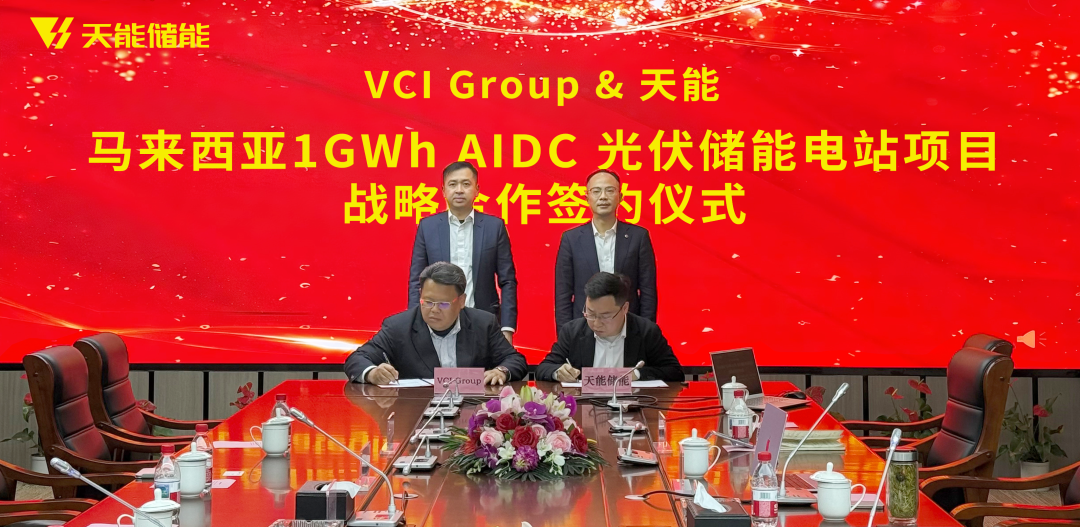
Tianneng Signs a 1GWh Project in Malaysia, Build a benchmark for Integrated “Solar- Storage- Computing”Solutions
Recently, Tianneng Group signed a strategic agreement with NASDAQ-listed company VCIG Group. The two parties will build a 1GWh AIDC solar energy storage power station in Malacca, Malaysia. The project aims to address the high-energy-consumption challenge of AIDC and will be developed under an “EPC+F” model.
Recently, Tianneng Group signed a strategic agreement with NASDAQ-listed company VCIG Group. The two parties will build a 1GWh AIDC solar energy storage power station in Malacca, Malaysia. The project aims to address the high-energy-consumption challenge of AIDC and will be developed under an “EPC+F” model.
It is said that phase I of the project plans to build a 250MW solar infrastructure together with Tianneng’s independently developed liquid cooing energy storage system. Leveraging Malaysia’s “CRESS” programme, the project will provide zero-carbon electricity to local AI computing infrastructure through signing direct power purchase agreement(PPA). The move marks an important breakthrough for Tianneng Group’s energy storage business in large-scale infrastructure development in Southeast Asia.
Register now to attend Asia’s Largest Energy Storage Trade Show for free:
What: The 14th Energy Storage International Conference & Expo
When: Conferences: March 31 - April 2, 2026
Exhibitions: April 1-3, 2026
Where: CIECC Beijing, China
Address: No. 55 Yudong road, Shunyi District, Beijing China

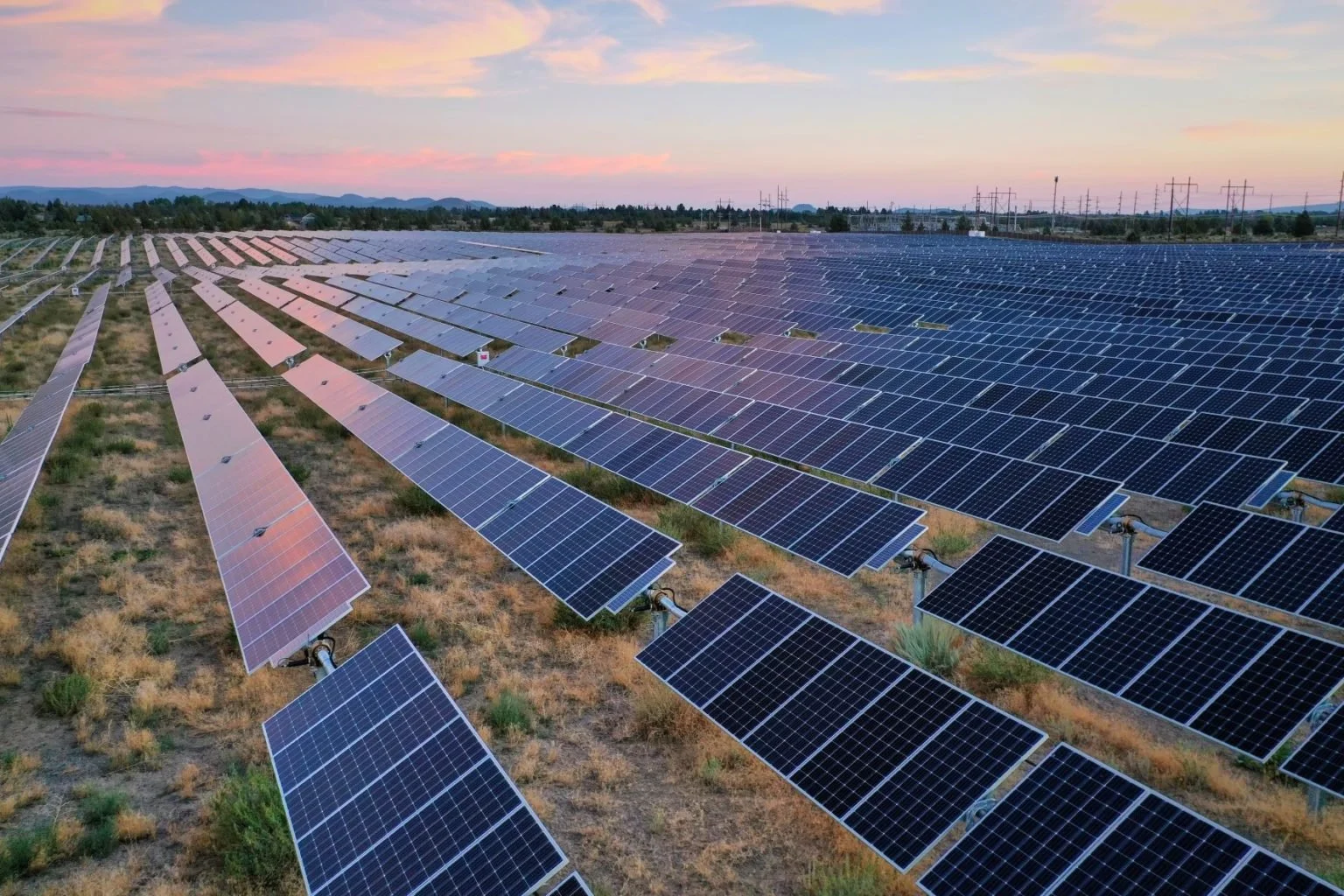
Amazon buys 1.2GW Sunstone solar-plus-storage project from bankrupt Pine Gate
Global tech giant Amazon has been approved as the buyer of the 1.2GW Sunstone solar project in Oregon, one of the largest solar PV projects in the US.
Global tech giant Amazon has been approved as the buyer of the 1.2GW Sunstone solar project in Oregon, one of the largest solar PV projects in the US.
The Sunstone site was developed and previously owned by Pine Gate Renewables, the US independent power producer (IPP), which filed for bankruptcy in November 2025. It includes 1.2GW of solar PV and 1.2GW of battery energy storage system (BESS) capacity, which is ready to build, having received permitting and approvals from the Oregon Energy Facility Siting Council (EFSC).
Amazon’s acquisition was approved by the Bankruptcy Court for the Southern District of Texas, which granted its offer of US$83 million in cash via its specific project subsidiary, Oregon Solar I.
The move follows Amazon’s complaints back in November that an Oregon utility was not supplying sufficient power to its data centre projects in the state, where it has built numerous cloud computing data centres close to the banks of the Columbia River. Once fully operational, the Sunstone solar-plus-storage project will be one of the most significant renewable energy generation projects in the US.
To date, most of Amazon’s energy procurement has been via power purchase agreements (PPAs), and along with fellow Big Tech leviathans Meta and Google, Amazon led US solar power procurement deals in 2024. But the scale of Sunstone, and the fact that it is ready to be built with approvals and permits in place, makes it an attractive proposition for a company whose growing energy demand will be a significant story in the industry over the coming years.
As the power demands of these data centre hyperscalers continue to grow, owning their own power sources might become more common. Last month, Google’s parent company Alphabet announced the acquisition of Intersect Power, an energy project developer, with a view to developing more energy capacity “in lockstep with new data centre load”, Sundar Pichai, CEO of Google and Alphabet, said at the time.
Since declaring bankruptcy, Pine Gate’s roughly 10GW of project assets have been offered to the market, though the company says it has sufficient liquidity to continue operating in the meantime. Earlier this month, Israel-based project developer Nofar Energy bought 1GW worth of Pine Gate’s utility-scale solar assets across the Carolinas, Alabama and Texas for US$285 million.
Source: Energy Storage News
By Will Norman
______________________________________________
Register now to attend Asia’s Largest Energy Storage Trade Show for free:
What: The 14th Energy Storage International Conference & Expo
When: Conferences: March 31 - April 2, 2026
Exhibitions: April 1-3, 2026
Where: CIECC Beijing, China
Address: No. 55 Yudong road, Shunyi District, Beijing China

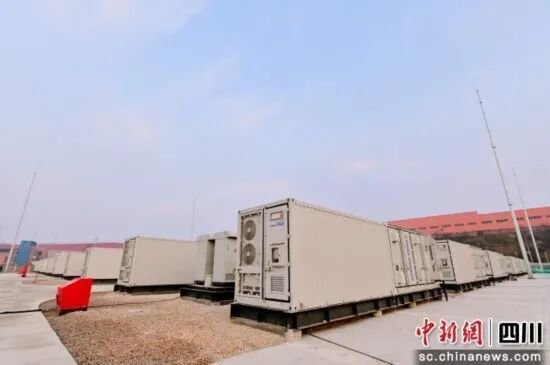
Annual Power Cost Savings Exceed RMB 60 Million ! Great Power’s 107MW/428MWh Hydropower-based Aluminium User-side Energy Storage Project is Commissioned
On January 16th, a 107.12MW/428.48MWh green hydropower-based aluminium user-side energy storage project jointly developed by Great Power and Henan Zhongfu Industry was officially commissioned in Guangyuan, Sichuan Province.
On January 16th, a 107.12MW/428.48MWh green hydropower-based aluminium user-side energy storage project jointly developed by Great Power and Henan Zhongfu Industry was officially commissioned in Guangyuan, Sichuan Province.
Designed and delivered under an EPC contract by Sichuan Zefeng Electric Power Design, the project achieved full-capacity grid connection by the end of 2025 after just five months of construction. It stands as a landmark project for green energy transformation in northern Sichuan and a benchmark case for energy-extensive industry implementing “source-grid-load-storage” integration.
Electricity stored at the facility is directly supplied to the electrolytic aluminium production system, primarily leveraging peak-valley electricity price arbitrage to reduce operating cost. According to estimates, the project is expected to lower electricity costs for electrolytic aluminum by approximately RMB 140 per tonne, delivering annual power cost savings of over RMB 60 million. Meanwhile, it will cut 52,000 tons carbon commission per year, providing a commercially viable solution to address high electricity costs and decarbonization pressures faced by energy-extensive industries.
Building on this project, the two partners will be committed to advance the development of a “zero-carbon aluminum industrial park” in Guangyuan. It plans to introduce advanced intelligent technology to build a virtual power plant (VPP) capable of engaging in power trading and grid dispatch. During the 15th Five-Year Plan period, the project developers will further expand the deployment of solar PV, wind power, green power direct supply and intelligent microgrids, ultimately establishing a safe and controllable regional intelligent micro-grid dominated by new energy, providing a practical model for developing a national new-type power system.
_______________________________________________
The Great Power has confirmed its participation in the 14th Energy Storage International Conference and Expo, register now to attend Asia’s Largest Energy Storage Trade Show for free:
What: The 14th Energy Storage International Conference & Expo
When: Conferences: March 31 - April 2, 2026
Exhibitions: April 1-3, 2026
Where: CIECC Beijing, China
Address: No. 55 Yudong road, Shunyi District, Beijing China

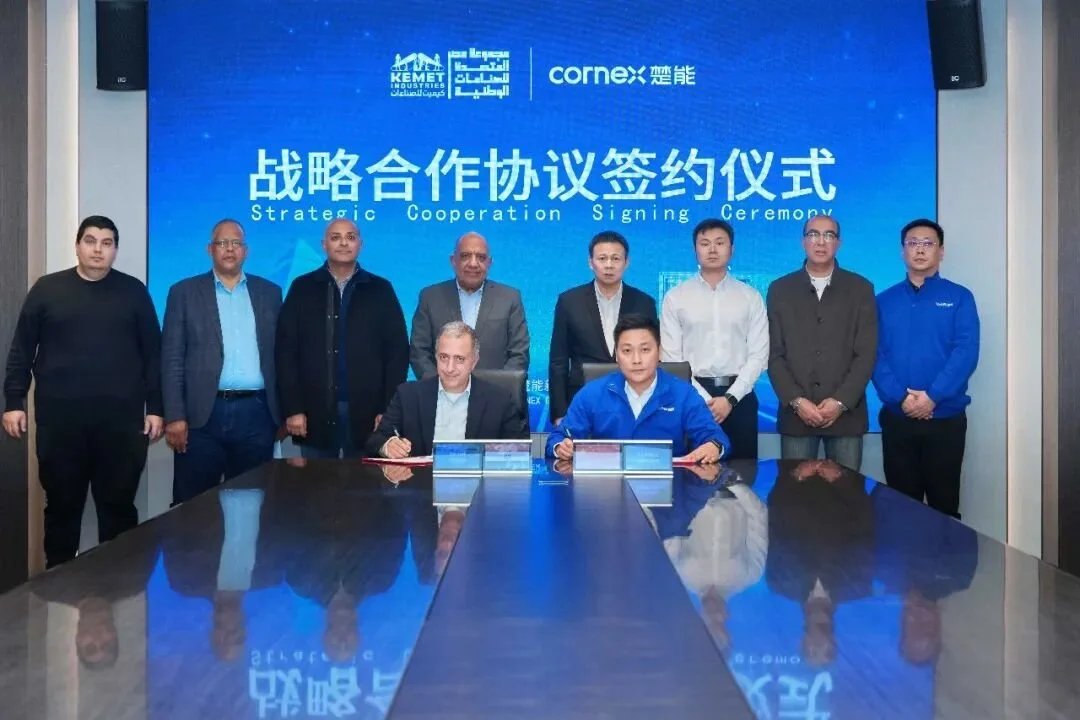
CORNEX Secures a 6GWh Energy Storage Order in Egypt, Successfully Expanding Into the North African Market
On January 16th, Cornex New Energy signed a strategic cooperation agreement with Egypt-based partners WeaCan and Kemet.
The agreement was signed by Dai Deming, chairman of Cornex New Energy and Ahmed Salaheldin Abdelwahab Elabd, Chiarman of the Board of Kemet. The signing ceremony was witnessed by Moustafa Kamal Esmat Mahmoud, minister of Egypt’s Ministry of Electricity and Renewable Energy, along with other government officials and senior executives from relevent enterprises.
On January 16th, Cornex New Energy signed a strategic cooperation agreement with Egypt-based partners WeaCan and Kemet.
The agreement was signed by Dai Deming, chairman of Cornex New Energy and Ahmed Salaheldin Abdelwahab Elabd, Chiarman of the Board of Kemet. The signing ceremony was witnessed by Moustafa Kamal Esmat Mahmoud, minister of Egypt’s Ministry of Electricity and Renewable Energy, along with other government officials and senior executives from relevent enterprises.
Under the agreement, Weacan and Kemet will serve as the core facilitator for project implementation. Leveraging their extensive local industrial resources and proven project execution experience in Egypt, the two partners will take full charge of services including scenario alignment, coordination of government approvals, grid connection support, and localized operation and service delivery, providing solid guarantee for the large-scale implementation of Cornex’s energy storage products. As the core technology and product supplier, Cornex will deliver high-quality energy storage systems in phases, with a total supply capacity of up to 6GWh, ensuring the safe and stable operation of its products in Egypt’s power system and providing full life-cycle technical support services.
Located on the eastern edge of the Sahara Desert, Egypt is endowed with abundant solar and wind resources, offering uniquely favourable conditions for the development of “solar power, wind power+energy storage” solutions. In recent years, Egypt has actively advanced its energy transition, setting a clear target to raise the share of renewable energy generation to 42% by 2030. The country has commissioned several hundred-megawatt-scale energy storage demonstration projects and plans to add over 10GWh energy storage capacity on the grid side to date. As market demand continues to accelerate, Egypt’s energy storage industry is entering a phase of rapid growth.
The 6GWh cooperation on energy storage procurement marks not only an important breakthrough for Cornex in the North African market but a concrete example of green energy cooperation between China and Egypt within the framework of the Belt and Road Initiative. Once commissioned, the project will effectively increase the local grid’s peak-shaving and frequency-regulation capability, facilitate the large-scale grid connection and integration of clean energy like solar power so as to help Egypt built a more flexible, reliable and low-carbon new-type power system.
At present, Cornex has built four major regional service centers with China, Europe, North America and Australia as a core, forming a globalized service network. This system enables full life-cycle services from product delivery to technical consulting, installment and operation and maintenance support. Backed by its independently developed core technologies, high-safety system designs and accurate response to diverse market demand, Cornex has achieved mass commission and landmark projects deployment in more than 60 countries and regions with its brand influence and customer recognition continuing to grow.
Looking ahead, Cornex will continue to uphold an open and win-win cooperation, deepen collaborations with international strategic partners across technology, channels, and ecosystem resources, and accelerate the expansion of its global business footprint through complementary strengths and localized integration.
Cornex New Energy has confirmed ins participation in the 14th Energy Storage International Conference and Expo (ESIE 2026), register now to attend Asia’s Largest Energy Storage Trade Show for free:
What: The 14th Energy Storage International Conference & Expo
When: Conferences: March 31 - April 2, 2026
Exhibitions: April 1-3, 2026
Where: CIECC Beijing, China
Address: No. 55 Yudong road, Shunyi District, Beijing China

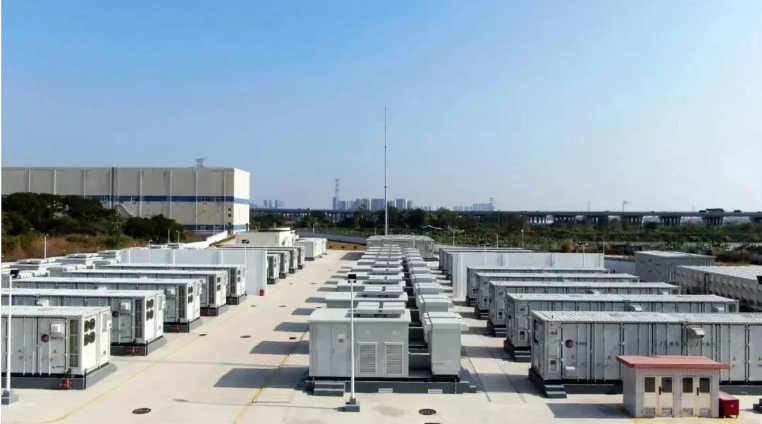
100MW/200MWh! Sineng Electric Supports Commissioning of Phase I of Nanlang Energy Storage Power Station
The Phase I 100MW/200MWh Nanlang energy storage power station, supplied by Sineng Electric, has now been successfully commissioned and put into operation. As the first large-scale standalone energy storage project on the grid side to be completed and commissioned in Zhongshan, China, the facility not only injects enhanced flexibility into the regional power grid, but establishes efficient and reliable revenue mechanism through an innovative frequency regulation service model.
The Phase I 100MW/200MWh Nanlang energy storage power station, supplied by Sineng Electric, has now been successfully commissioned and put into operation. As the first large-scale standalone energy storage project on the grid side to be completed and commissioned in Zhongshan, China, the facility not only injects enhanced flexibility into the regional power grid, but establishes efficient and reliable revenue mechanism through an innovative frequency regulation service model.
Grid-Forming Foundation, Intelligent Frequency Regulation
The project was invested in and developed by Shennan Dianxiwan (Zhongshan) Company, with Sineng Electric providing the core equipment, 1,250 kW centralized energy storage PCS units. The system is equipped with Sineng Electric’s second-generation enhanced hybrid grid-forming technology, incorporating globally leading IGBT drive technology and advanced intelligent control algorithms. As a result, the solution demonstrates significant advantages in three critical areas including response speed, command latency, and control accuracy, with its comprehensive frequency regulation performance index (K value) ranking among the best in the industry.
Since entering commercial operation six months ago, the power station has become an indispensable “gold-standard auxiliary service provider” for the regional grid. Supported by Sineng Electric’s energy storage PCS as the core equipment, the station has repeatedly delivered high-quality secondary frequency regulation services, effectively smoothing grid frequency fluctuations. The PCS offers flexible, on-demand adjustable ramp rates, reaching up to 50Pn/s, with a response time of ≤5 ms and a control accuracy error of no more than 0.5%. Much like a “speed stabilizer” for a high-speed power system, the solution significantly enhances the stability and reliability of electricity supply for thousands of households.
Sineng Electric has also confirmed its participation in the 14th Energy Storage International Conference and Expo (ESIE 2026), register now to attend Asia’s Largest Energy Storage Trade Show for free:
What: The 14th Energy Storage International Conference & Expo
When: Conferences: March 31 - April 2, 2026
Exhibitions: April 1-3, 2026
Where: CIECC Beijing, China
Address: No. 55 Yudong road, Shunyi District, Beijing China

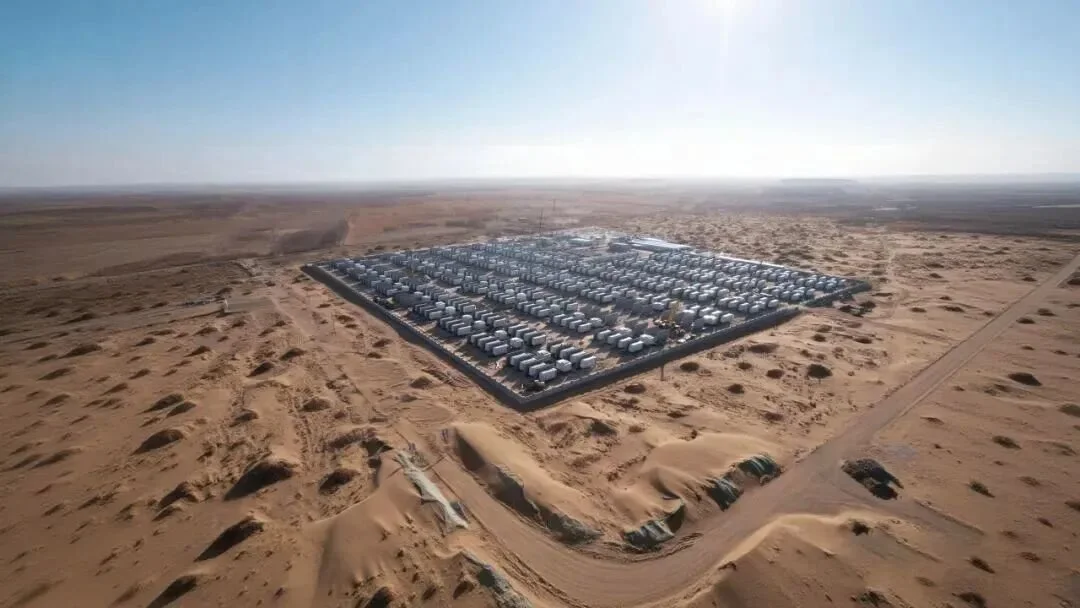
500MW/200MWh! JD Energy’s First GWh-Level Project Successfully Grid-Connected
In December 2025, the 500MW/2000MWh energy storage project was successfully grid-connected in Dengkou, Inner Mongolia. The energy storage station, standing proudly under the winter sun, is the first GWh-level project delivered by JD Energy. It not only set a new record for the scale of a single project but marked a significant milestone in the company’s development with its outstanding construction achievements.
In December 2025, the 500MW/2000MWh energy storage project was successfully grid-connected in Dengkou, Inner Mongolia. The energy storage station, standing proudly under the winter sun, is the first GWh-level project delivered by JD Energy. It not only set a new record for the scale of a single project but marked a significant milestone in the company’s development with its outstanding construction achievements.
01. 500MW/2000MWh: JD Energy enters the GWh-level project delivery
The 500MW/2000MWh energy storage project in Dengkou, Inner Mongolia, the first GWh-level project of JD Energy, utilized the company’s newly developed string-type prefabricated cabin, Galaxy-1. The project has an installed capacity of 500MW/2000MWh, deploying 400 units of Galaxy-1-4G and 100 units of eLink-HV35, a combined inverter and transformer.
In the harsh environment of sandstorms and cold temperatures, Galaxy-1 was used for the first time in a large-scale application on the grid-side. Despite the swirling yellow sands and biting winds, Galaxy-1 has laid a solid foundation for the new energy paradigm of Inner Mongolia with its exceptional environmental adaptability and operational stability.
02. Innovation empowerment: String-type prefabricated cabin Galaxy-1’s successful debut
The successful implementation of the 500MW/2000MWh energy storage project in Dengkou is driven by the flagship new product of JD Energy, the string-type prefabricated cabin Galaxy-1. This product adopts “All In One” design concept, integrating systems including 314Ah lithium iron phosphate (LiFePO4) batteries, BMS, string-type PCS, fire protection system, thermal management system, power distribution and communication system into a standard 20-foot container. It boasts key advantages of high efficiency, high safety and high integration. Through the successful practice of Dengkou project, Galaxy-1 made its debut on the grid-side, verifying its reliability and excellency in large-scale application.
With eMind-Trader as its core software system, JD Energy played a central role in supporting Dengkou power station’s operations from grid connection, market entry to autonomous participation in power trading, realizing a full value chain from system integration and project delivery to smart operation. This comprehensive technological advantage covering both hardware and software can not only significantly enhances the regional integration of new energy but also maximizes the project’s full lifecycle returns, achieving both stability and economic benefits.
03. Energizing the desert: green power driving regional development
At the turn of the year, Inner Mongolia has witnessed a surge in the grid connection of energy storage projects with energy constantly flowing. The successful grid connection of the 500MW/2000MWh energy storage project in Dengkou can effectively mitigate the fluctuations of intermittent renewable energy power generation of wind and solar power and significantly improve the grid’s adjustment capabilities and operational safety, providing more stable and higher-quality green electricity for Inner Mongolia and the North China region.
Meanwhile, the project will greatly increase the region’s ability to absorb renewable energy, reducing wind and solar curtailment. It will reinforce the energy transformation in Inner Mongolia and advance the national strategic goals of carbon peaking and carbon neutrality.
The successful grid connection of the 500MW/2000MWh energy storage project in Dengkou, Inner Mongolia marks JD Energy’s successful breakthrough in delivering a GWh-level single-project. It embodies the power of JD Energy with the debut of its flagship new product Galaxy-1. Moving forward, JD Energy will continue to innovate and explore energy storage sector, leaving a solid mark on the vast energy landscape while accelerating the progress of China’s energy revolution.
_______________________________________________________________
JD Energy has confirmed its participation of the 14th Energy Storage International Conference And Expo(ESIE 2026), register now to attend Asia’s Largest Energy Storage Trade Show for free:
What: The 14th Energy Storage International Conference & Expo
When: Conferences: March 31 - April 2, 2026
Exhibitions: April 1-3, 2026
Where: CIECC Beijing, China
Address: No. 55 Yudong road, Shunyi District, Beijing China

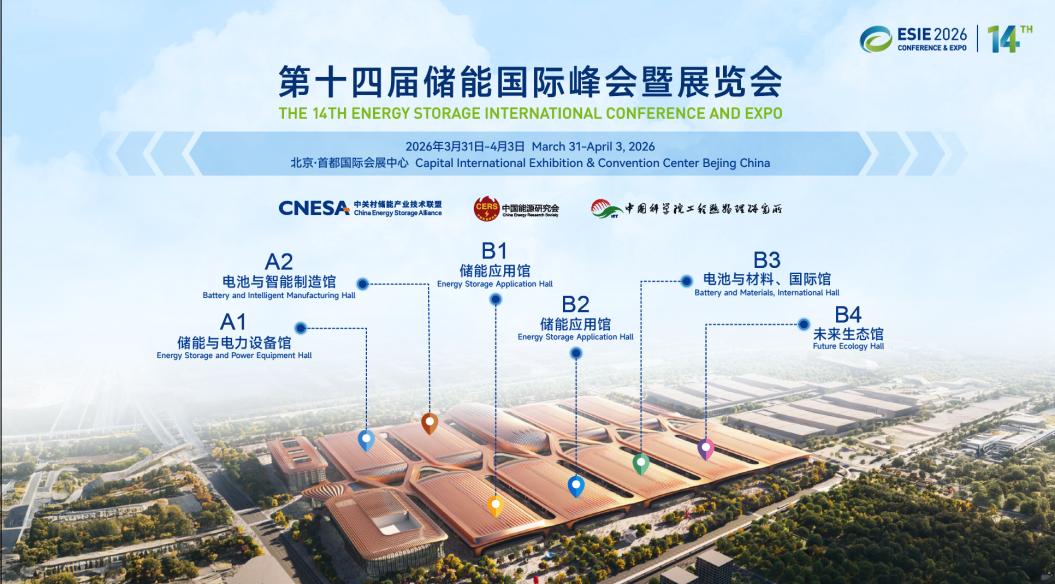
2025 Marks the First Year of Mass Production for Large Energy Storage Cells! 500Ah+ Mass Deliveries, ESIE 2026 Energy Storage Expo Invites Global Buyers to Explore New Opportunities
2025 marks a pivotal year for the energy storage industry. The large energy storage cells, which were once limited to “theoretical parameters”, will officially bid farewell to the technical competition phase and enter the practical testing stage of capacity release, yield improvement, and project implementation. Leading enterprises like CATL, EVE, Envision, HTHIUM, and SUNWODA have successively achieved mass production and delivery, and with the intensive landing of GWh-level strategic cooperation and accelerated expansion into overseas markets, this marks the transition of large-capacity cells from lab prototypes to commercial applications. The speed at which energy storage systems are evolving to higher energy density and lower cost has far exceeded industry expectations.
2025 marks a pivotal year for the energy storage industry. The large energy storage cells, which were once limited to “theoretical parameters”, will officially bid farewell to the technical competition phase and enter the practical testing stage of capacity release, yield improvement, and project implementation. Leading enterprises like CATL, EVE, Envision, HTHIUM, and SUNWODA have successively achieved mass production and delivery, and with the intensive landing of GWh-level strategic cooperation and accelerated expansion into overseas markets, this marks the transition of large-capacity cells from lab prototypes to commercial applications. The speed at which energy storage systems are evolving to higher energy density and lower cost has far exceeded industry expectations.
1. The Race for 500Ah+ Cell Mass Production Intensifies: Leading Enterprises Show Impressive Results
2025 is the “explosive year” for the mass production and delivery of large energy storage cells, with many battery companies accelerating capacity ramp-up, and products of 500Ah and above being extensively landed, demonstrating strong commercialization capabilities:
CATL: The 587Ah energy-specific storage cell began mass production in
June, with a daily output of over 220,000 units from its Jining base. By December, it had shipped 2GWh, with an expected annual output of 3GWh, taking the lead in entering into GWh-level commercial-scale applications;
EVE: The 628Ah cell, mass-produced at the end of 2024, achieved the production of 750,000 cells in 2025, and in September, it was successfully used in the world’s first 100MWh-level project--200MW/400MWh independent energy storage station in Ling Shou, Hebei with overseas shipments proceeding in parallel;
Envision: The 500+Ah cell, produced at its Cangzhou plant, has already been exported immediately after mass production, and next-generation 700Ah+ products are also in the mass production preparation phase;
HTHIUM: The world’s first 1,175Ah ∞Cell was launched and mass-produced, while the 587Ah cells were simultaneously delivered in Xiamen base. In October, a 6.25MWh energy storage system, equipped with the 1,175Ah cells, was successfully shipped to Europe;
SUNWODA: The 684Ah stacked cell began mass production in September, and by the end of December, 1 million cells had been produced, highlighting its fast mass production capability.
Additionally, companies such as cornex, GREAT POWER, CALB, RJE, Narada, GOTION HIGH-TECH, REPT BATTERO, and AC New Energy have announced mass production schedules for 500Ah+ and 600Ah+ products. The competition in the large energy storage cell market is expected to fully intensify in 2026.
2. GWh-level strategic partnerships become the mainstream, supply chain synchronization trend emerges
As cell technology gradually converges, supply chain stability and cost control have become the core of market competition. The collaboration model between system integrators and battery companies is evolving toward long-term, large-scale, and deep integration. By the end of 2025, heavy GWh-level orders have emerged, reshaping the industry’s collaboration landscape:
CATL and HYPER STRONG signed a procurement agreement for no less than 200GWh from 2026 to 2028, with the 587Ah cell already being used in the 400MW/2400MWh energy storage project in Baotou;
HTHIUM and CRRC Zhuzhou Institute reached collaboration for 120GWh of energy storage products supply during the 15th Five-Year Plan period, covering the full range products from 314Ah to 1,175Ah;
EVE and Rochenergy signed a three-year 20GWh collaboration agreement, with 10GWh dedicated to the 628Ah/588Ah large-capacity cells;
Sungrow and Sunwoda have deepened their collaboration, with their Powertitan 3.0 energy storage system set to apply the 684Ah large-capacity cell.
These long-term strategic partnerships not only ensure mutual capacity demand but also drive early-stage collaborative development between systems and cells, becoming an industry trend, deeply integrating product performance and safety systems to reduce costs and improve efficiency for energy storage projects.
3. Accelerating overseas expansion! China’s large energy storage cells lead the global long-duration storage market
Leveraging the advantage of complete industry chain, China’s large energy storage cells are rapidly expanding globally. The results of overseas market expansion in 2025 are significant, evolving from single-product exports to system solutions and standards:
CATL’s 530Ah cells, coupled with a 4GWh energy storage system, will supply Vena Energy in Singapore.
EVE Energy’s 628Ah cells successfully secured a 2.2GWh order from Australia’s EVO Power and signed a 1GWh energy storage system project with TSL Assembly.
The global expansion of China’s large energy storage cells not only opens up the long-duration storage market overseas but also enables Chinese energy storage technology standards and solutions to gain global recognition, showcasing China’s core competitiveness in global energy storage industry. Currently, while the 500Ah+ cells are still in a period of rapid development with diverse sizes and specifications, industry consensus is clear: 6MWh+ energy storage systems will accelerate the replacement of the previous 5MWh+ solutions, continuously driving down the cost per unit of energy storage. From mass production and deliveries and strategic partnerships to global project implementation, 2025 undoubtedly marks the “first practical year” for large energy storage cells transitioning from laboratory prototypes to station applications.
4. Focus on ESIE 2026! The vane of global energy storage industry , connecting professional buyers with core resources
As large-capacity cell technology rapidly evolves and global markets continues to expand, the industry urgently needs an efficient platform to connect cutting-edge technology, market dynamics, and supply chain resources. As a “vane” for the energy storage industry, the 14th Energy Storage International Conference & Expo (ESIE 2026) will be grandly held from March 31 to April 3, 2026, at the Capital International Exhibition & Convention Center Beijing China.
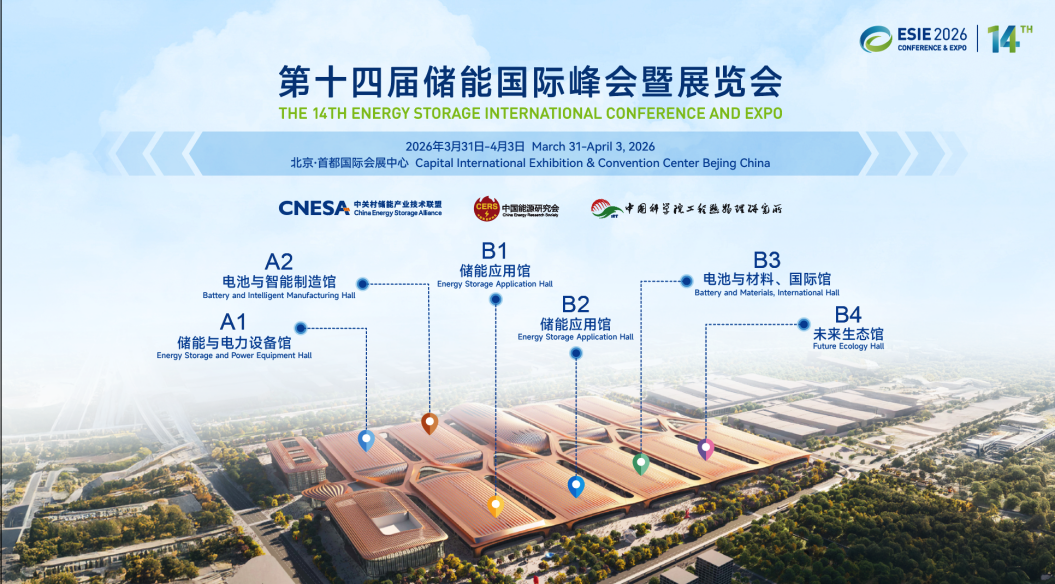
So far, leading industry enterprises including CATL, EVE, Envision, HTHIUM , SUNWODA, Cornex, GREAT POWER, CALB, RJE, Narada, GOTION HIGH-TECH, REPT BATTERO, and AC NewEnergy have confirmed their participation. This year’s exhibition will focus on key areas such as large energy storage cells, long-duration storage, energy storage system integration, and integrated solar+storage+charging solutions. It will serve as a high-end platform for new product launches, technical exchanges, and business negotiations, offering global energy storage professional buyers a precise matchmaking channel.
Whether seeking cutting-edge technology collaborations, exploring quality supply chain resources, or planning global energy storage projects, ESIE 2026 will be an unmissable annual event for industry professionals. We sincerely invite global energy storage professional buyers and upstream and downstream enterprises to gather in Beijing to explore new trends in the industry and seize new opportunities for industrial upgrading.
Address: Capital International Exhibition & ConventionCenter Beijing China
When: March 31 – April 3, 2026
Highlights: Leading enterprises gathering, new product launches, precise supply-demand matchmaking, authoritative trend interpretations
Exhibition and Visitor Inquiries: Mr. Cao: +86 135 5271 2189, Mr. Wang: +86 135 8188 5520, Mr. Li: +86 135 8174 1680, Mr. Zhao: +86 182 1018 8771, Ms. Bai: +86 180 3145 1007

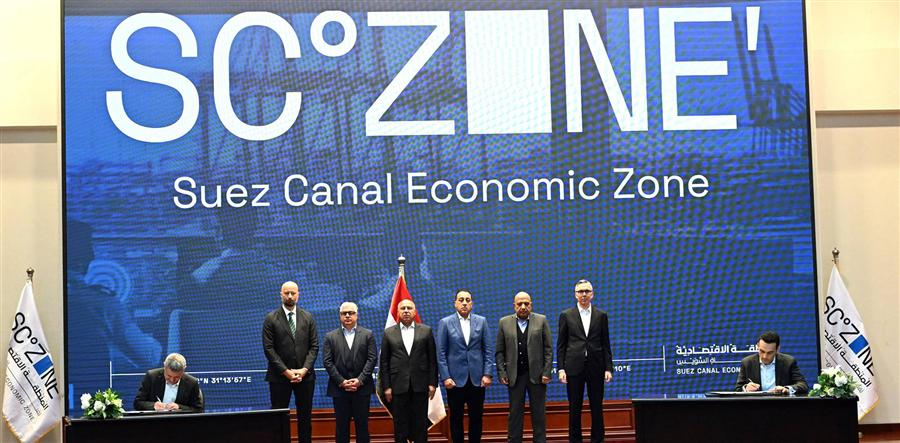
Sungrow’s First Energy Storage Plant in the Middle East Launched,with an Annual Capacity of 10 GWh
Egypt has taken a major step toward accelerating its clean energy transition, as Chinese energy storage leader Sungrow and Norwegian renewable developer Scatec partner with the Egyptian government to deliver large-scale solar+storage projects and establish the Middle East’s first battery energy storage manufacturing base, with a planned annual capacity of 10 GWh.
According to foreign media reports, the Egyptian government recently announced that it has signed a series of agreements worth over 1.8 billion USD with Norwegian renewable energy developer Scatec and Chinese energy storage company Sungrow. These agreements aim to build large-scale solar+storage projects and promote local manufacturing of battery energy storage systems. This series of agreements is a key initiative for Egypt to expand its clean energy installed capacity and improve its new energy industry chain.
Scatec will develop the “Energy Valley” project in Minya, which will include the construction of a large-scale integrated solar power and energy storage plant. Meanwhile, Sungrow will build a battery energy storage system manufacturing plant in the Suez Canal Economic Zone (SCZONE) to support energy storage equipment for the project and the regional market.
Both projects are being advanced with the coordination of Egyptian Ministry of Electricity and Renewable Energy and the Suez Canal Economic Zone Authority. Egyptian Prime Minister Mostafa Madbouly stated that these projects highly align with the country’s strategy of localizing new energy industries, and that localizing energy storage and renewable energy manufacturing will be key pillars for enhancing Egypt’s energy security and driving its green transformation.
As part of the project arrangements, the Egyptian Electricity Transmission Company (EETC) has signed a Power Purchase Agreement (PPA) with Scatec, while the New and Renewable Energy Authority (NREA) has signed a land use agreement for the Energy Valley project. Additionally, Sungrow has secured the land use rights for building the battery energy storage manufacturing plant in the TEDA Industrial Zone in SCZONE.
Furthermore, Scatec and Sungrow Energy have signed a battery supply contract, under which Sungrow Energy will provide the battery energy storage systems for the Energy Valley project in Minya.
According to the introduction, the Energy Valley project is positioned as one of the largest integrated clean energy projects in the world, and the first solar+storage project in the region capable of providing stable power supply around the clock. The project will build a 1.7 GW (AC) solar photovoltaic capacity, along with a total of 4 GWh of battery storage systems, distributed across Minya, Qena, and Alexandria. The project will also build new substations and dedicated transmission lines to provide clean electricity to the Wadi El-Sereiriya Industrial Zone in Minya.
On the manufacturing side, Sungrow Energy’s factory in Egypt will become the first battery energy storage system manufacturing base in the Middle East and Africa. Located in the TEDA-Egypt Industrial Zone in Ain Sokhna, the factory will cover an area of about 50,000 square meters and is expected to create around 150 direct jobs. Once operational, the factory will have an annual capacity of 10 GWh, with production expected to begin in April 2027.
Regarding financing, the Egyptian Prime Minister also witnessed the signing of preliminary financing agreements for the Energy Valley project between Scatec and the European Investment Bank (EIB), the European Bank for Reconstruction and Development (EBRD), and the African Development Bank (AfDB), marking the project’s support from multilateral development financial institutions.
__________________________________________________________________
Sungrow Energy has confirmed its sponsorship of the 14th Energy Storage International Conference and Expo (ESIE 2026), register now to attend Asia’s Largest Energy Storage Trade Show for free:
What: The 14th Energy Storage International Conference & Expo
When: Conferences: March 31 - April 2, 2026
Exhibitions: April 1-3, 2026
Where: CIECC Beijing, China
Address: No. 55 Yudong road, Shunyi District, Beijing China

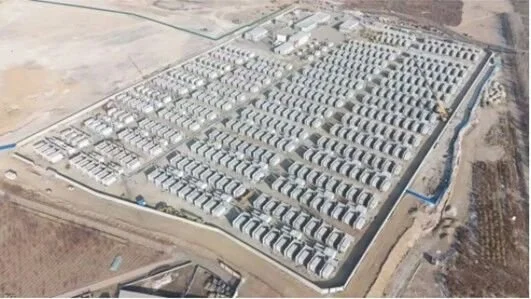
4.8 GWh Installed: Beijing KeRui Supports the Grid Connection of Two Major Grid-Side Energy Storage Projects in Inner Mongolia, Chi
In December 2025, two large-scale grid-side independent energy storage projects supported by Beijing KeRui were successfully connected to the grid in Inner Mongolia and put into operation: the 500 MW / 2,000 MWh Gushanliang project in Ordos and the 400 MW / 2,400 MWh Bu’erhantu project in Baotou.
In December 2025, two large-scale grid-side independent energy storage projects supported by Beijing KeRui were successfully connected to the grid in Inner Mongolia and put into operation: the 500 MW / 2,000 MWh Gushanliang project in Ordos and the 400 MW / 2,400 MWh Bu’erhantu project in Baotou.
Leveraging outstanding engineering execution capabilities, Beijing KeRui’s service team completed the entire process from installation to power delivery in just 50 days—an industry miracle that provided strong assurance for the high-quality and rapid commissioning of both projects. With a combined capacity of 4.8 GWh, the two projects set a new benchmark for the development of China’s independent energy storage sector in terms of large scale, high quality, and accelerated delivery. They inject strong momentum into regional energy structure transformation and provide critical support for building a stable and reliable new-type power system.
In these two flagship projects, Beijing KeRui’s integrated energy storage power conversion and step-up units served as the primary AC-side equipment and played a central role in successful commissioning. Several innovative technologies proved critical to project delivery:
Energy-Efficiency-Oriented Intelligent Thermal Management
The system adopts an innovative multi-tier thermal management strategy centered on “on-demand activation and load matching.” By dynamically aligning transformer cooling requirements with fan operating conditions, the design achieves optimal coordination between auxiliary power consumption and heat dissipation efficiency, significantly reducing unnecessary energy use. In addition, an intelligent heat-exchange buffering design adjusts fresh-air temperature seasonally—mitigating cold shock in winter to protect equipment and pre-cooling intake air in summer to enhance heat dissipation—thereby ensuring long-term stable operation while further refining overall energy efficiency.
Reinforced Structural Design with Integrated Drainage
Through optimization of the converter platform layout, the system enhances overall structural strength while naturally forming efficient drainage channels. This eliminates the need for additional drainage components, achieving dual functionality within a single structure and balancing structural safety with environmental adaptability. The design reflects a philosophy of simplicity, reliability, and efficiency.
Verified Transport Reliability
The equipment underwent rigorous transportation testing, including over 3,000 kilometers of highway transport and 450 kilometers of reinforced standard-condition road testing. These trials fully validated the system’s ability to withstand complex overland transportation challenges, ensuring structural integrity and stable performance throughout delivery and meeting the stringent requirements of real-world engineering logistics.
One notable highlight of the projects is the application of HyperStrong’s flagship large-capacity liquid-cooled energy storage system, representing the latest advancements in electrochemical energy storage technology. HyperStrong’s independently developed second-generation power conversion system (PCS) features advanced technology with fully independent and controllable core technologies. It can accurately respond to grid dispatch requirements and, through customized design, adapts effectively to complex operating conditions to ensure safe and stable year-round operation. This PCS has been successfully integrated into Beijing KeRui’s integrated unit solution.
Another key highlight is the adoption of CATL’s advanced 587 Ah energy storage cells, which achieve an energy density of 434 Wh/L, a cycle efficiency of up to 96.5%, and further optimized cycle life and degradation performance. This marks the first time Beijing KeRui’s integrated power conversion and step-up system has been deployed in combination with this cell model, demonstrating the company’s rapid response capability in adopting cutting-edge technologies and integrating high-performance components. Beijing KeRui’s integrated design deeply combines core modules—including the power conversion system, step-up transformer, power distribution switchgear, intelligent control, fire protection and security, and thermal management—into a single solution. Through optimized structural topology and layered spatial design, the capacity of a single box-type dry transformer can be increased to over 8,250 kVA, unlocking substantial energy output within limited space. This approach reduces land-use costs while enabling flexible deployment across diverse application scenarios.
The commissioning of the two energy storage power stations will significantly enhance the Inner Mongolia power grid’s ability to accommodate variable renewable energy sources such as wind and photovoltaic power. The projects will effectively smooth peak–valley load differences, improve grid flexibility, and strengthen overall system security and stability. Looking ahead, leveraging the comprehensive advantages of its integrated energy storage power conversion and step-up units—spanning energy efficiency, structural optimization, reliability, and adaptability—Beijing KeRui will continue to provide high-performance, high-reliability energy storage system solutions. The company aims to help customers achieve lower operating costs, higher full life-cycle discharge returns, and improved investment performance.
As an active participant and key driver in the development of new-type power systems, Beijing KeRui remains committed to advancing clean and low-carbon energy transition through technological innovation and superior service, contributing to a safer, more efficient, and greener modern energy system.
Register now to attend Asia’s Largest Energy Storage Trade Show for free:
What: The 14th Energy Storage International Conference & Expo
When: Conferences: March 31 - April 2, 2026
Exhibitions: April 1-3, 2026
Where: CIECC Beijing, China
Address: No. 55 Yudong road, Shunyi District, Beijing China

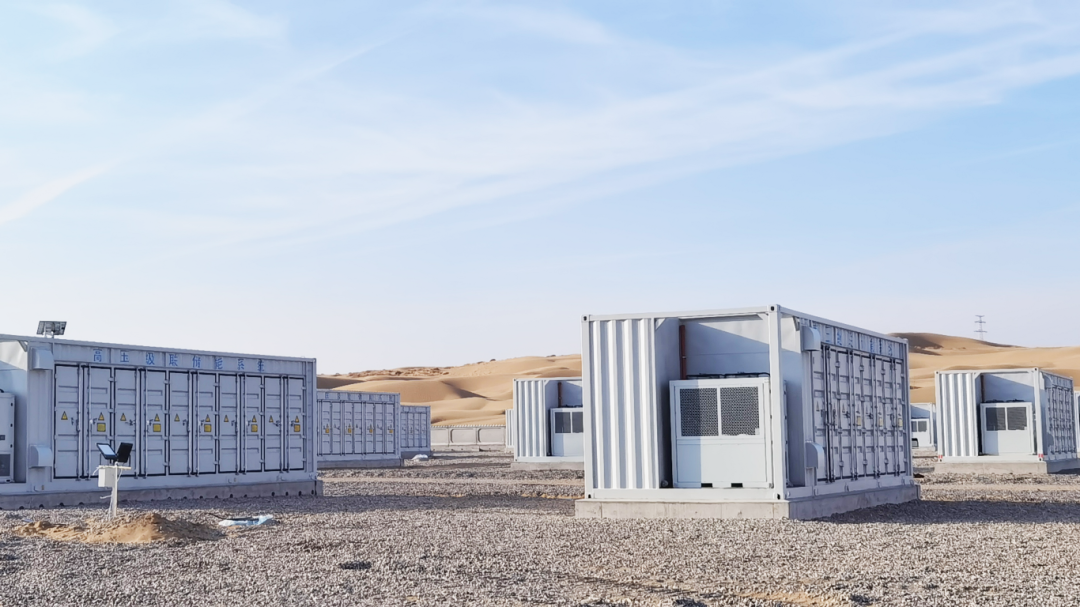
China Mingyang Longyuan’s First 100MW/400MWh High-Voltage Cascade Independent Energy Storage Project Achieves Full-Capacity Grid Connection
Mingyang Longyuan has built a major milestone in China’s energy storage sector with the successful full-capacity grid connection of its first 100MW/400MWh high-voltage cascade independent energy storage project in Ordos, Inner Mongolia. The project’s commissioning highlights the company’s technological strength in large-scale, high-efficiency, and highly reliable energy storage solutions, while reinforcing the critical role of advanced storage systems in supporting grid stability and renewable energy integration.
On December 28, Mingyang Longyuan’s first 100MW/400MWh high-voltage cascade independent energy storage project, the Yashitu Power Station, successfully achieved full-capacity grid connection at the Gushanliang site in Ordos, China. The project also passed the “three charge and three discharge” test of the West Inner Mongolia Power Grid and has officially entered commercial operation.
As an optimal solution for large-scale energy storage power stations, Mingyang Longyuan’s high-voltage cascade energy storage system demonstrates significant advantages, including large unit capacity, high energy conversion efficiency, enhanced safety performance, lower overall system cost, simplified coordinated control, and extended battery lifespan. The system also provides strong grid-support capabilities, enabling reliable performance under complex conditions such as extreme temperature variations and high humidity, while effectively supporting peak shaving, frequency regulation, and large-scale integration of renewable energy.
The project has achieved a long-duration cycle efficiency exceeding 90 percent, marking a substantial breakthrough in key performance indicators. This achievement reflects the sustained efforts of Mingyang Longyuan’s R&D and service teams. Despite harsh construction conditions characterized by strong winds, heavy snowfall, and extremely low temperatures in Ordos, the team overcame multiple technical challenges through continuous on-site work, ensuring the project’s timely commissioning. The experience gained has further strengthened the company’s capabilities in operating energy storage systems under extreme environmental conditions, laying a solid foundation for long-term stable and reliable performance.
The successful commissioning of the Gushanliang energy storage power station in Ordos underscores Mingyang Longyuan’s technical strength and product reliability, representing an important milestone in the company’s continued expansion in the energy storage sector. Looking ahead, Mingyang Longyuan will remain driven by technological innovation, advancing the upgrading of the energy storage industry and contributing to the development of a clean, low-carbon, safe, and efficient energy system.
——————————————————————————————————————————————————
Register now to attend Asia's Largest Energy Storage Trade Show for free:
What: The 14th Energy Storage International Conference & Expo
When: Conferences: March 31 - April 2, 2026
Exhibitions: April 1-3, 2026
Where: CIECC Beijing, China
Address: No. 55 Yudong road, Shunyi District, Beijing China

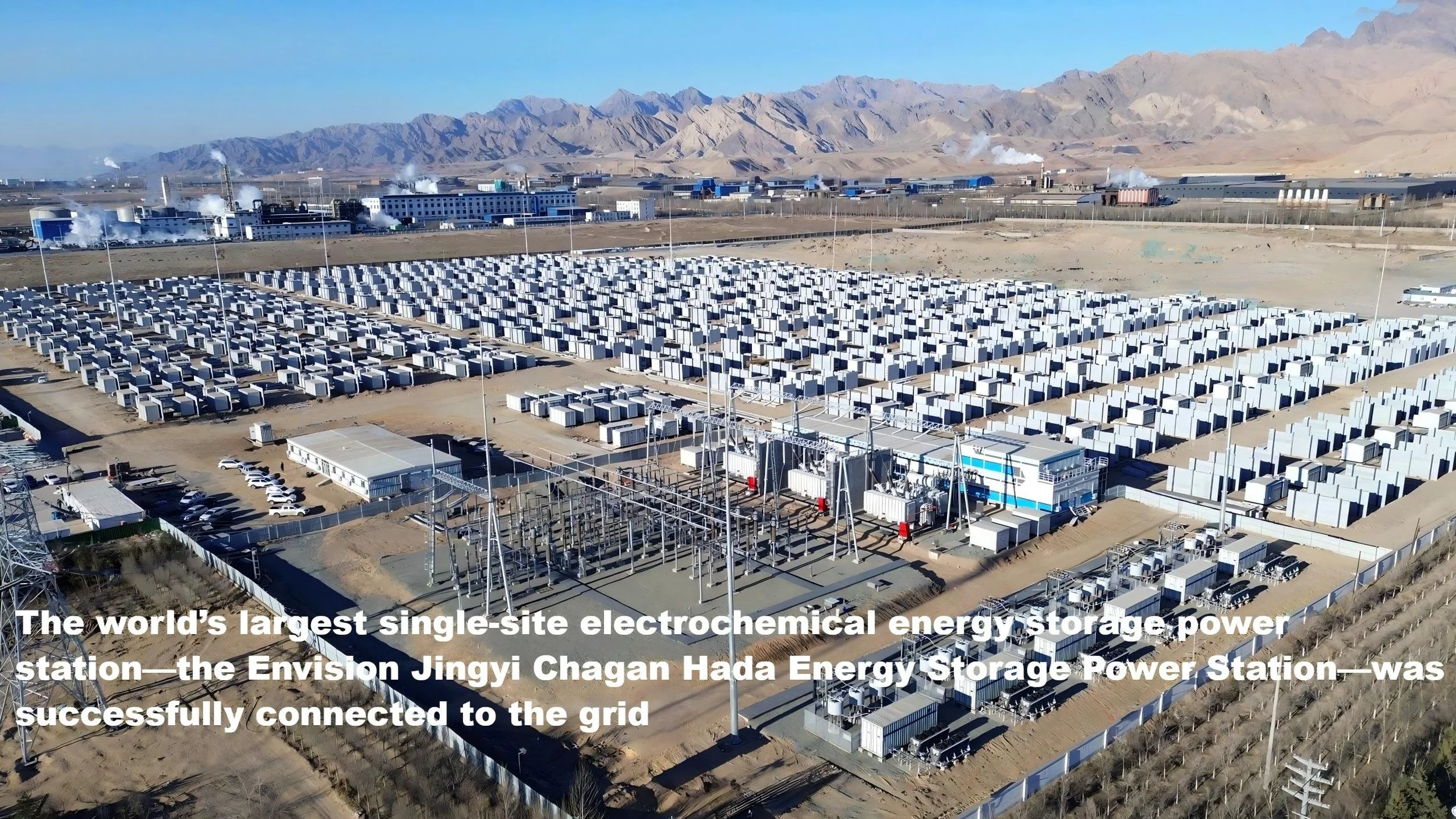
12.8 GWh Energy Storage Cluster Connected to the Grid AI-Powered Energy Storage Reshapes the Future of New Power Systems
The world’s largest single-site electrochemical energy storage power station—the Envision Jingyi Chagan Hada Energy Storage Power Station—was successfully connected to the grid, completing a 12.8 GWh AI-powered energy storage cluster in Inner Mongolia. The project sets new global benchmarks for scale, grid-connection speed, and system reliability, while demonstrating advanced grid-forming capabilities that enable rapid commissioning, deep grid interaction, and large-scale renewable integration.
Recently, the world’s largest single-site electrochemical energy storage power station—the Envision Jingyi Chagan Hada Energy Storage Power Station—was successfully connected to the grid. With a total capacity of 4 GWh, the project is fully equipped with Envision’s AI-powered energy storage system. This milestone marks the completion and grid connection of Envision’s 12.8 GWh energy storage cluster deployed across Bayannur, Ordos, Hohhot, Ulanqab, Xilingol League, and Alxa League. To date, Envision-led energy storage projects in Inner Mongolia exceed 14 GWh in total capacity.
The project passed grid verification at rated power through “three charge and three discharge” and a 72-hour continuous trial operation at one time, becoming the largest energy storage project in China to complete such testing. This achievement not only sets new global records for energy storage cluster scale and grid-connection speed, but also demonstrates Envision’s capabilities in ultra-large-scale system integration, extreme-environment adaptability, deep grid interaction, and large-scale project delivery.
Notably, the project’s grid connection coincided with the release of China’s Guidelines on Promoting High-Quality Power Grid Development by the National Development and Reform Commission (NDRC) and the National Energy Administration (NEA), highlighting strong alignment between national policy direction and industrial practice. Together, they signal that AI-centered energy storage technologies are reshaping the future of new power system from technological, market, and application perspectives.
Technology: From “Optional” to “Essential”
The Guidelines clearly state that power system regulation capabilities should be upgraded toward greater diversity and massive-scale coordination. They call for accelerated development of regulation capabilities for new grid-connected entities, including distributed renewable energy and new-type energy storage, to enable the coordinated and optimized dispatch of diverse and large-scale resources. The Guidelines also emphasize strengthening R&D in critical power grid technologies, targeting application scenarios such as deserts, Gobi and barren regions, integrated wind–solar–hydro systems, high-altitude areas, and deep and far-offshore environments. They propose piloting long-distance transmission from large-scale 100% renewable energy bases, and accelerating the engineering validation and deployment of grid-forming technologies.
It is said that Envision’s AI energy storage system deployed in Inner Mongolia integrates advanced capabilities from “grid-following” to “grid-forming”, enabled by a full-time-scale simulation platform and a three-layer grid-forming architecture spanning equipment, system, and site levels. This allows GW-scale stations to connect to the grid immediately upon energization, significantly reducing commissioning time, mitigating oscillation risks, and enhancing system support strength. As a result, energy storage evolves from a “grid follower” to a “grid builder,” providing a solid technical foundation for power systems with high shares of renewable energy.
Market: From Grid Connection to Market Participation
The Guidelines emphasize deep integration between market mechanisms and dispatch systems, and encourage exploration of new pricing mechanisms. This creates clear and predictable revenue pathways for AI-powered energy storage through participation in electricity spot markets, provision of ancillary services such as frequency and peak regulation, and access to capacity compensation and price arbitrage.
The 12.8 GWh energy storage cluster will be fully integrated into the electricity spot market. Leveraging Envision’s AI system—where trading agents and grid-forming agents operate in coordination—the project enables a closed-loop lifecycle operation covering forecasting, dispatch, trading, and self-learning. This approach not only enhances the intelligence, efficiency, and execution of power trading decisions, but also provides a replicable and scalable model for the large-scale participation of new-type energy storage in electricity markets. At the same time, it significantly improves regional renewable energy consumption and strengthens the operational resilience of the power grid. In previous deployments, Envision’s AI energy storage system has ranked first in trading forecast accuracy at several sites in Inner Mongolia for consecutive months. Based on measured operational data, the project is expected to increase total lifecycle returns by more than 20%.
Applications: From Single Use to Broad Scenarios
The Guidelines elevate smart microgrids as a key component of new-type power systems, unlocking vast opportunities for AI energy storage in industrial parks, zero-carbon parks, and remote areas. In these scenarios, AI-powered energy storage functions as a local energy brain, optimizing the coordination of generation, grid, load, and storage to maximize renewable self-consumption, enhance supply reliability, and enable higher-level grid interaction.
As power systems become increasingly clean and market-oriented, simple equipment aggregation is no longer sufficient. In high-renewable scenarios, AI-driven energy storage that balances grid stability with revenue optimization has become indispensable. The successful grid connection of the Inner Mongolia cluster underscores Envision’s leadership in physical AI and AI-enabled renewable energy solutions.
Envision has established a full industrial chain in Inner Mongolia, from battery cells and system integration to project delivery and intelligent operation. Leveraging its integrated capabilities, the project drives industrial clustering, injects new momentum into the local economy, supports the development of a new-type power system, and underpins the region’s efforts to accelerate the construction of a nationally important energy and strategic resources base.
This milestone delivery marks a successful conclusion to Envision’s energy storage business expansion in 2025. Empowered by physical artificial intelligence, Envision has secured a series of major contracts both at home and abroad this year. Building on its established global footprint, the company has successfully expanded into ten strategic overseas markets, including Australia, Chile, Italy, and Poland. Looking ahead, Envision will continue to strengthen the foundational support for next-generation power systems through innovative products and world-class project execution, accelerating the global transition toward zero-carbon and driving a new era of shared prosperity powered by Chinese renewable energy technologies.
____________________________________________________________________
Envision Energy Storage has confirmed its participation in the 14th Energy Storage International Conference and Expo (ESIE 2026). Register now to attend Asia's Largest Energy Storage Trade Show for free:
What: The 14th Energy Storage International Conference & Expo
When: Conferences: March 31 - April 2, 2026
Exhibitions: April 1-3, 2026
Where: CIECC Beijing, China
Address: No. 55 Yudong road, Shunyi District, Beijing China

Sign up for our free monthly newsletter to stay informed about the Chinese energy storage market.