
Latest News
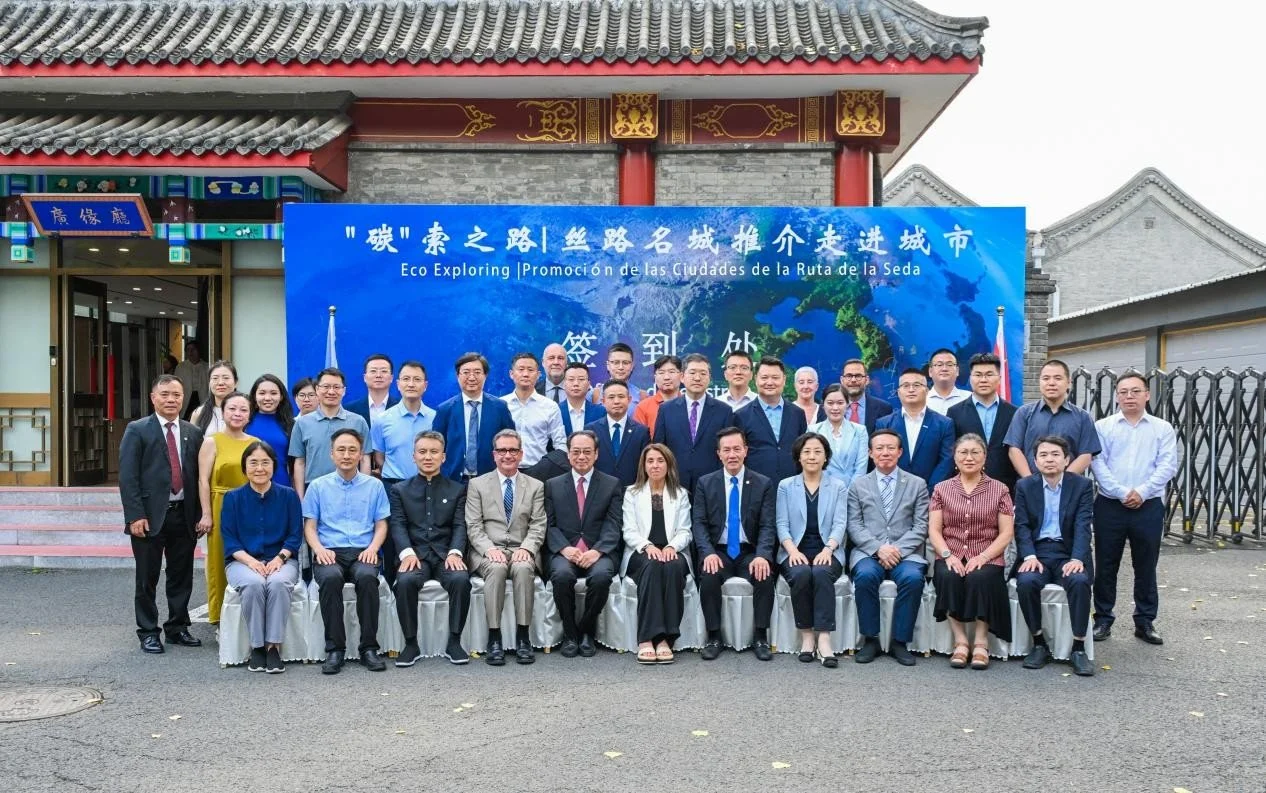
Spain-China Energy Storage Business Exchange Conference Successfully Held
Recently, a major nationwide power outage in Spain has drawn attention from all sectors of society. This incident has highlighted the stability issues in the country’s power system and intensified Spain’s urgent need for energy storage solutions. Against this backdrop, on the afternoon of June 29, 2025, the Spain-China Energy Storage Business Exchange Conference, jointly hosted by the Eco Exploring Organizing Committee, the Silk Road International Think Tank, and the China Energy Storage Alliance (CNESA), as well as the Beijing leg of the Eco Exploring & Silk Road Cities Promotion Event, was successfully held. As a key participant in the event, CNESA played a pivotal role in promoting international exchange and business development for energy storage enterprises.

Wang Zhisheng, Vice Chairman of the China Chamber of Commerce to the EU, Director of the China-EU Association, and Co-Chairman of the Eco Exploring Organizing Committee, presided over the meeting, during which several distinguished guests delivered speeches. Chinese attendees included Shang Yong, Member of the Standing Committee of the CPPCC National Committee, Deputy Director of the Committee for Education, Science, Health and Sports, and former Party Secretary of the China Association for Science and Technology; Du Xiangwan, Academician of the Chinese Academy of Engineering, former Vice President of the Chinese Academy of Engineering, and Chairman of the Expert Committee of the Eco Exploring; Song Jingwu, Executive Vice President and Secretary-General of the China-EU Association, Member of the 13th CPPCC National Committee, and former Vice President of the Chinese People’s Association for Friendship with Foreign Countries; and Yu Zhenhua, Executive Vice Chairman of CNESA. International guests included Meritxell Budó, President of the Association of Municipalities of Catalonia (ACM), Mayor of La Garriga, and former First Vice President of the Government of Catalonia. These speakers brought high-level, multifaceted, and international perspectives to the conference.

For this exchange meeting, CNESA meticulously organized and invited Chinese companies from the energy storage industry to participate. Yu Zhenhua, Executive Vice Chairman of CNESA, delivered a speech on behalf of Chinese institutions. During the exchange, the Alliance shared its achievements and experiences in energy storage technology R&D and industry advancement, building a bridge for inter-company communication. Representatives from Chinese companies HyperStrong, Risen Energy, and Ray Power also took the stage one after another, sharing their insights into cutting-edge innovation in energy storage technologies and valuable practical experience and outcomes from project implementation. On this platform that brought together diverse expertise and resources, companies demonstrated their technical strength and innovation capabilities, while also gaining in-depth insights into international market demand and development trends through exchanges with global peers, laying a solid foundation for future international expansion efforts.
Yu Zhenhua, Executive Vice Chairman of CNESA, stated that this conference provided a rare opportunity for member enterprises to engage in international exchange. The Alliance has always been committed to integrating industry resources and helping enterprises connect with overseas markets through organizing and participating in various international exchange activities, addressing technical, market, and policy challenges faced by companies going abroad. Moving forward, the Alliance will continue to serve as a vital link, strengthening cooperation with international organizations and enterprises, providing more targeted services for companies, supporting more energy storage enterprises to shine on the global stage, and advancing the internationalization of China’s energy storage industry to a new level.

Conference Announcement | The 4th Sodium-Ion Battery Industry Chain and Standards Development Forum
June 26, 2025 | Beijing
To advance China’s dual-carbon goals and accelerate the energy transition, the 2023 Guiding Opinions of the Ministry of Industry and Information Technology and Other Five Departments on Promoting the Development of the Energy Electronics Industry (No. 181 [2022] of the Ministry of Industry and Information Technology), called for intensified efforts in industrializing new energy storage battery technologies, scaling up advanced energy storage products, and accelerating the development of emerging technologies such as sodium-ion batteries—along with corresponding standardization efforts.
To further strengthen new growth engines through integration of next-generation information technology and new energy and deepen supply-side structural reform of new energy storage, eight government departments including the Ministry of Industry and Information Technology (MIIT) and the National Development and Reform Commission released the Action Plan for Promoting High-Quality Development of the New-type Energy Storage Manufacturing Industry (No. 7 [2025] of the Ministry of Industry and Information Technology) in February 2025. The plan outlines efforts to optimize the industrial system, cultivate 3–5 ecosystem-leading enterprises, enhance product performance, expand application fields, and guide the industry toward high-end, intelligent, and green development. Sodium-ion batteries are a key focus area under the “New-Type Energy Storage Products and Technology” category of the action plan, highlighting the development of anode materials including high-performance hard carbon, and sieved carbon, and high-capacity cathode materials, as well as breakthroughs in system integration and application technologies for large-scale sodium battery energy storage systems.
The 4th Sodium-Ion Battery Industry Chain and Standards Development Forum
In recent years, sodium-ion batteries have gained momentum due to their abundant raw materials, low cost, strong temperature adaptability, and high safety profile. More than 200 companies have already entered the sodium-ion battery industrial chain.
To accelerate industrialization and promote standards development, the China Electronics Standardization Institute (CESI) and the China Energy Storage Alliance (CNESA) will jointly host the 4th Sodium-Ion Battery Industry Chain and Standards Development Forum in September 16-18, 2025 in Weihai, Shandong Province. The forum will focus on sodium-ion battery standards, technology R&D, and industry trends. Key leaders from the Department of Standards Technology Regulation of State Administration for Market Regulation (SAMR), MIIT, and senior experts and academicians are expected to attend.
At the forum, the sixth batch of certified sodium-ion battery units, the second batch of batteries that have passed 1000-cycle life testing, the first batch of low-temperature performance evaluation participants (tentative) will be released. CESI Laboratory is responsible for the testing, conducted in accordance with the T/CNESA 1006—2025: General Specification for Sodium-Ion Batteries, a CNESA group standard.
Over 50 companies and 70 battery models have participated, including:
HiNa Battery, Huana New Energy, Phylion Battery Co., Ltd., Huayu New Energy, Transimage Sodium-ion Battery, Huzhou Horizontal Na Energy, Jiasheng New Energy, DESAY Battery, ZTE Pylontech, Li-fun Technology, Hanxing Tech, DICP CAS, Highstar, FinDreams Battery, Great Power, Higee Energy, Paragonage, Cospower, SVOLT, Veken Tech, Guona Energy, COSMX, Jana Energy, Topband, CHAM New Energy, Hona New Energy, NTEL, Rongke Energy, Jianeng Na Energy, Jufeng New Energy, Huana New Energy, Zoolnasm, Zonergy, CSIT, Puna Times New Energy, Huayu Sodium Energy, Chaona New Energy, Yongkang Jiasheng New Energy, Weifang Energy, Windey Energy, Tech Sodium, Sacred Sun, Greenway, and Puna Energy.
This forum will feature the following highlights: interpretation and dissemination of latest standards, policy analysis and regulatory trends, keynote presentations, authoritative certification, parallel forums on the supply chain and application sectors, product showcases
I. Organizers
China Electronics Standardization Institute (CESI)
China Energy Storage Alliance (CNESA)
II. Date
September 16-18, 2025
III. Location
Weihai, Shandong Province, China
IV. Scale
500 attendees (tentative)
V. Invited Stakeholders (tentative)
Government authorities:
State Administration for Market Regulation
Ministry of Industry and Information Technology
Local governments
Local industry and information technology departments
Industry players:
Research institutes and universities
Leading sodium-ion battery manufacturers
Industrial chain companies
Electric bicycle and low-speed vehicle manufacturers
Automotive OEMs
Energy storage solution providers
VI. Agenda
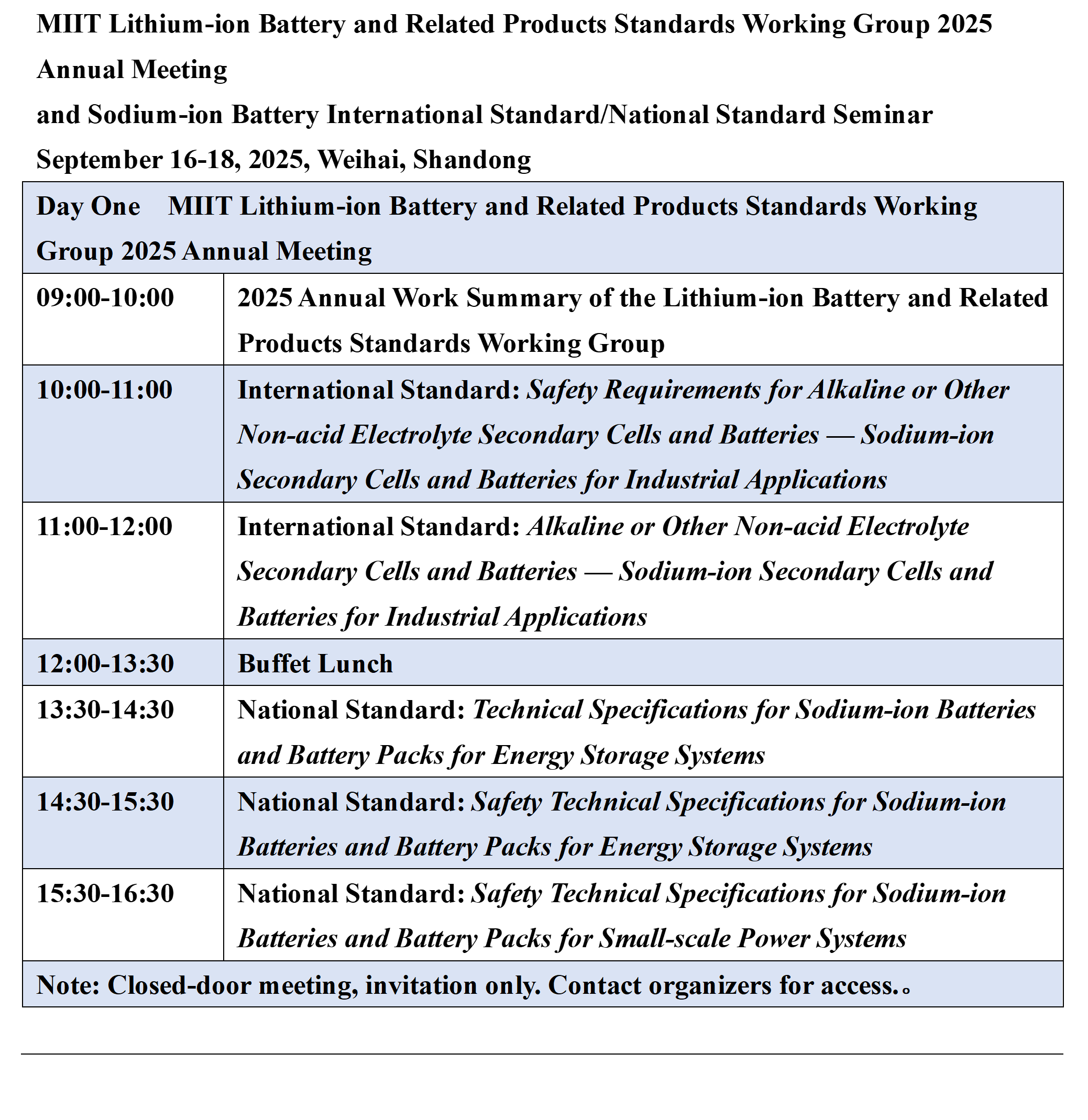
4th Sodium-ion Battery Industry Chain and Standards Development Forum
September 16-18, 2025, Weihai, Shandong


About Wendeng District, Weihai City, Shandong Province
Wendeng District, located in Weihai City, derives its name from the phrase “summoning scholars to ascend the mountain,” a reference to Emperor Qin Shi Huang’s eastward expedition. Covering a total area of 1,616 square kilometers, the district is home to a population of 548,000. Strategically positioned at the eastern tip of the Shandong Peninsula, Wendeng borders the Yellow Sea to the south and sits at the heart of the Qingdao–Yantai–Weihai economic triangle. Facing Korea and Japan across the sea, it serves as a core area of China’s national development strategy for the Shandong Peninsula Oceanic Economic Zone and the China–ROK Free Trade Zone Local Economic Cooperation Demonstration Area. Wendeng boasts a comprehensive multimodal transport network across land, sea, and air. Major highways such as the Weiqing Expressway, Wenrong Expressway, Wenlai Expressway, and National Highway 206 run through the district. It is also served by the Wendeng East Station on the Qingdao–Rongcheng intercity railway, Wendeng Station on the Jinan–Weihai railway, Wendeng South Station on the Laixi–Rongcheng high-speed railway, and Weihai Nanhai Station. Within a two-hour drive are five national Class I open ports and three international airports. Weihai International Airport, located in Dashuipo Town within the district, is a dual-use military and civilian airport operating over 590 flights weekly, with more than 20 domestic and international routes. A flight to South Korea takes just 45 minutes. Wendeng offers a first-class business environment. All administrative approvals can be processed through a single service window. Its innovative “Four Lists” service mechanism for supporting high-quality enterprise development has been recognized and promoted by the State Council’s inter-ministerial office for easing enterprise burdens. The district’s initiatives in business registration reform and enhanced regulatory oversight have also received commendation from State Council supervision efforts. The district has a solid industrial foundation, anchored by four key sectors: automotive and electromechanical equipment, new energy and new materials, pharmaceuticals and health foods, and electronic information. It is home to 250 industrial enterprises above the designated size and 143 enterprises that have been recognized at the provincial or national level as “Specialized, Refined, Differential, and Innovative” (SRDI), single-product champions, or high-growth “gazelle” companies.
The new energy and new materials sector focuses on niche areas such as battery electrolytes and electrode materials, photovoltaic power generation and equipment manufacturing, and pumped-storage hydropower. Wendeng has launched a diversified energy storage industrial base. The Wendeng Pumped Storage Power Station, the largest of its kind in the province by installed capacity, is now in operation. Wendeng is also Shandong’s only national pilot county for rural energy transformation. The automotive and electromechanical industry emphasizes critical components for commercial vehicles, new energy vehicles, special-purpose vehicles, and RVs. Its commercial vehicle parts cluster has been recognized as a national-level distinctive industrial cluster for small and medium-sized enterprises.
Its pharmaceutical and health food industry targets the development of medical materials, aesthetic medicine, modern Chinese medicine, innovative pharmaceuticals, and green, nutritious, and functional food products. The electronic information sector focuses on fiber optic cables and electronic components. The Nanhai New Area is a model eco-industrial zone that has won the UN-Habitat Award for Excellence in China. It has also been designated as a provincial-level eco-industrial park and a near-zero carbon zone.
Wendeng’s leading new energy and new materials sector is clustered around a one-square-kilometer industrial park, which has attracted more than ten major projects including Hanxing sodium-ion batteries, Nanhai New Energy anode materials, and Hengsheng lithium batteries. The district is building a multi-energy complementary system integrating wind, solar, energy storage and hydrogen production, alongside a source-grid-load-storage industrial ecosystem. In particular, a complete sodium-ion battery industry chain has been established, supported by supporting projects such as the Sinotrans Chemical Logistics Park, aiming to create an industry cluster with an output value exceeding RMB 10 billion. The Nanhai Port is planned to support a 300,000-ton main channel, with two 10,000-ton berths already completed. In the near term, the district will promote the construction of 50,000-ton general-purpose berths and port-rail links, providing efficient logistics support for raw material transport and product export in the sodium-ion battery sector.
VII. Registration & Contact
For inquiries regarding testing, forum reports, or product displays, please email us at conference@cnesa.org.
Past Forum Highlights
The 1st Sodium-Ion Battery Industry Chain and Standards Development Forum

The inaugural Sodium-Ion Battery Industry Chain and Standards Development Forum, jointly organized by the China Electronics Standardization Institute and the China Energy Storage Alliance, was successfully held online from November 28 to 29, 2022, with active participation from enterprises and institutions across the sodium-ion battery industry chain. The forum consisted of two sections: the Sodium-Ion Battery Standards Seminar and the Industry Chain Summit Forum. Due to the impact of the COVID-19 pandemic, the event was conducted virtually. It was livestreamed by media outlets including chongdiantou.com, Yicai, and CNESA, attracting tens of thousands of online viewers.
The 2nd Sodium-Ion Battery Industry Chain and Standards Development Forum


The second forum convened on July 14, 2023, in Wuxi, Jiangsu Province, drawing nearly 1,000 in-person attendees and attracting close to 300,000 online viewers during the live-streamed opening ceremony. Discussions focused on the development of sodium-ion battery standards, technological innovation, and industry landscape. The forum also featured the official release of the 2023 Sodium-Ion Battery Industry Research Report and the announcement of the first batch of nationally certified sodium-ion battery evaluation list.
The opening ceremony was chaired by Mr. Gu Wenhao, District Mayor of Xishan, Wuxi. Distinguished government attendees included: Mr. Jin Lei, Director of Electronic Information Department, MIIT; Mr. Liu Dashan, Director of Standards Technical Management Department, SAMR; Mr. Tai Feng, Director of Civil Aviation Dangerous Goods Transport Management Center; Mr. Zhang Jinguo, Second-level Inspector, Jiangsu Provincial Department of Industry and Information Technology; Mr. Jiang Min, Member of the Standing Committee of the Wuxi Municipal Party Committee and Executive Vice Mayor; Mr. Fang Li, Secretary of Xishan District Party Committee. Prominent scholars in attendance included: Academician Li Jinghong, Professor at Tsinghua University and CPPCC National Committee Member; Professor Yang Quanhong, Tianjin University and CPPCC National Committee Member; Dr. Hu Yongsheng, Researcher, Institute of Physics, Chinese Academy of Sciences. Key organizers and supporting leaders included: Mr. Liu Xiangang, Deputy Director of China Electronics Standardization Institute; Mr. Yu Zhenhua, Executive Vice Chairman, CNESA.
Also present were industry executives such as: Mr. Yin Xiaoqiang, General Manager, BYD Energy Storage and Advanced Battery Division; Mr. Li Shujun, General Manager, HiNa Battery; Mr. Bu Yanfeng, Party Committee Member and Deputy GM, Huayang New Material Technology Group. Government officials from over 15 cities and districts—Shenzhen, Changsha, Yangzhou, Nantong, Yangquan, Zhuzhou, Weihai, Quzhou, Fuyang, Suining, Binzhou, Xuzhou, Haining, Yiwu, Yixing, and Wangcheng District of Changsha—attended the forum, along with local departments and key enterprises in Xishan District. The event also received extensive media coverage from Xinhua News Agency, China News Service, Huanqiu.com, China Electronics News, and dozens of other mainstream outlets.
The 3rd Sodium-Ion Battery Industry Chain and Standards Development Forum


On June 13, 2024, the third edition of the forum was held in Yangquan, Shanxi Province, co-hosted by the China Electronics Standardization Institute and the China Energy Storage Alliance, with support from Shanxi Huayang Group New Energy Co., Ltd. More than 1,000 participants attended, including representatives from government agencies, research institutions, academic communities, and enterprises across the battery industry chain.
The forum featured a diverse program, including: Opening ceremony, sodium-ion battery industry chain sub-forum, application-focused sub-forum, sodium-ion standards seminar, new energy storage station development & operation seminar, site visits to sodium-ion battery production lines and storage projects. The 2024 Annual Meeting of the MIIT Working Group on Lithium-Ion and Similar Products Standards was also held a day prior to the forum, focusing on the development of national and industry standards for sodium-ion batteries.
CNESA Delegation Visits Vietnam: China–Vietnam Energy Storage Industry Seminar Successfully Held in Hanoi
On June 24, the China–Vietnam Energy Storage Industry Seminar, co-hosted by the Ministry of Industry and Trade of Vietnam (MOIT) and the China Energy Storage Alliance (CNESA), was successfully held in Hanoi, the capital of Vietnam. The event aimed to establish a bilateral exchange platform to promote deeper collaboration between China and Vietnam in areas such as policy alignment, technological cooperation, and project investment, jointly accelerating the region’s green energy transition.

The seminar attracted significant attention from Vietnamese government and industry stakeholders. Distinguished guests in attendance included: Dr. Đào Việt Anh, Director of International Relations, Vietnam Trade Promotion Agency (VIETRADE), MOIT; Nguyễn Bá Hải, Deputy Director of the Center for Trade and Investment Promotion Support; Ho Duc Linh, Representative of the Electricity Regulatory Authority of Vietnam (ERAV), MOIT; Nguyễn Văn Dương, Research Fellow, Electric Power System Development Department, Institute of Energy, Vietnam; Vũ Thị Vân Hoa, Office Director, Viet Nam Environmentally Friendly Products Manufacturers Association (EPMA). Also present were representatives from leading companies and organizations such as Hanaka, Gilimex, Trade Analytics, EPMA, Seco-Solar, CCIC, An Phat 1 Industrial Park, Liangtian-Yulian, Viglacera, WHA, Soil Build, Anshou Investment, SHINEC, Giza, and others engaged in energy storage technology, renewable energy development, and project investment & operations.
At the opening ceremony, Dr. Đào Việt Anh affirmed the seminar’s strategic importance for bilateral industrial cooperation. Tang Liang, Deputy Secretary-General of CNESA, expressed hopes to build a long-term communication mechanism with relevant Vietnamese departments to jointly address global challenges such as energy transition and climate change.

Tang Liang, Deputy Secretary-General of CNESA
As a leading player in the global energy storage market, China has led the world in new installations for three consecutive years, nurturing a group of globally competitive enterprises. This time, CNESA is joined by industry leaders such as HyperStrong, NARADA, Ganfeng Lithium, and Sicon Chat Union Electric to share insights into China’s cutting-edge practices while exploring strategic opportunities in Vietnam’s growing energy storage sector.
During the seminar, the Vietnam Institute of Energy (IE) provided a comprehensive analysis of Vietnam’s energy storage technology trends, policy frameworks, business models, battery project planning, and key challenges. According to the revised Power Development Plan VIII (PDP VIII) issued by MOIT, Vietnam’s demand for battery energy storage is projected to exceed 20 GW by 2035. The speaker emphasized that the Vietnamese market remains largely policy-driven and that unlocking the commercial potential of energy storage will require a reform of the power market.

To enable in-depth collaboration, the seminar featured a China–Vietnam business matchmaking session. Vietnamese companies hosted dedicated negotiations, facilitating focused discussions with Chinese counterparts on topics such as net-zero industrial parks. The lively and productive exchange underscored the strategic complementarity and vast cooperation potential between both countries in building an energy storage ecosystem.
In the afternoon, the CNESA delegation visited a local commercial & industrial (C&I) energy storage development and operations company, engaging in discussions on the Vietnamese power market and the current status of C&I storage deployment. Chinese enterprises conducted field research on key issues such as electricity pricing mechanisms, storage operation models (e.g., daily charge/discharge cycles), and investment return periods. Both sides will further explore cooperation opportunities in project matchmaking and joint development. Participants noted that the visit provided valuable local insights and data for navigating Vietnam’s C&I storage segments.

In the coming days, the delegation will continue field visits to Vietnam Electricity (EVN), industry associations, EPC firms, and renewable energy developers, as well as conduct on-site assessments of benchmark energy storage projects to further identify local market opportunities.
Looking ahead, the CNESA Global Energy Storage Market Tour will focus on in-depth exploration of Southeast Asia, Central and Eastern Europe, and Latin America, supporting Chinese companies in going global and facilitating the cooperation and deployment of international energy storage projects. In parallel, the 14th Energy Storage International Conference & Expo (ESIE 2026)—scheduled for April 2026 in Beijing—will continue offering Chinese companies broader international perspectives and cooperation opportunities.
As one of the most influential global events in the energy storage sector, ESIE remains committed to building bridges for international cooperation. Moving forward, CNESA will leverage the insights from its global market tour to strategically invite storage project owners and buyers from key countries, driving precise matchmaking between Chinese enterprises and global partners and enabling them to jointly lead the green energy transition.


5,000 Units of Integrated Charging and Storage Systems! HyperStrong Partners with Singaporean Developer to Expand Energy Storage Applications in Charging Market
Source: HyperStrong
On June 29, HyperStrong signed a Framework Cooperation Memorandum of Understanding with Singaporean energy infrastructure developer Alpina. HyperStrong will provide 5,000 units of integrated charging and storage systems to Alpina during 2025–2027. The collaboration aims to jointly develop energy storage applications for the rapidly growing electric vehicle charging market in Singapore and the Asia-Pacific region, injecting strong momentum into integrated energy storage and charging development across the region.

The product offered by HyperStrong in this cooperation features significant highlights. As a fully upgraded, fully liquid-cooled integrated charging and storage system, it incorporates semi-solid-state batteries and AI-powered early warning functionality. It enables comprehensive three-dimensional fire protection, achieving multi-layered safeguards including detection, prevention, venting, and suppression, thus realizing intrinsic safety for charging piles. The system supports whole-station energy sharing and both DC/AC coupling, integrating photovoltaic, wind power, and other energy conversions to achieve 100% green electricity for the entire station. Under the same transformer capacity, charging piles can be over-provisioned by 2–5 times. By utilizing energy storage for power support, station charging capacity increases by 40%–80%, while delaying the need for transformer capacity expansion. Additionally, the product supports six application scenarios: peak shaving and valley filling, demand control, station capacity expansion, virtual power plants, reactive power regulation, and backup power, enabling diversified revenue streams.
The signing ceremony was held at HyperStrong’s Beijing Fangshan Intelligent Manufacturing Base. Attendees included Dr. Zhang Jianhui, Chairman and CEO of HyperStrong; Gao Wujun, Deputy District Mayor of Beijing’s Fangshan District; Chen Xiaodong, Executive Deputy Director of Zhongguancun Fangshan Park Administrative Committee and District Science and Technology Commission; Alpina’s management team; and multiple partners. Following the ceremony, attendees toured HyperStrong’s Beijing Fangshan Intelligent Manufacturing Base, gaining in-depth understanding of HyperStrong’s advanced production processes and technical capabilities. They also conducted comprehensive, in-depth technical exchanges covering project deployment, product certification, localized production and sales, and market promotion, laying a solid foundation for subsequent cooperation.
Low Siong Yong, Executive Chairman and CEO of Alpina, stated: “With the rapid adoption of electric vehicles in Singapore and Southeast Asia, market demand for efficient, intelligent, and compliant energy storage charging solutions is increasingly urgent. We are delighted to partner with an industry leader like HyperStrong to explore greater value for energy storage in urban energy systems.”
Qiu Changbin, Senior Vice President of HyperStrong International, expressed confidence in the collaboration: "HyperStrong possesses profound technical expertise and core advantages in energy storage system integration, intelligent manufacturing, and full lifecycle services. Moving forward, we will fully leverage these strengths to collaborate closely with the Alpina team in building future-oriented smart energy infrastructure, contributing to the energy transition in the Asia-Pacific region."
This cooperation holds significant strategic importance for HyperStrong. On one hand, it marks HyperStrong’s formal entry into the Singapore market, using Singapore as a strategic pivot to deepen its energy storage business expansion across the Asia-Pacific region. On the other hand, as a key implementation of its "Energy Storage Plus X" strategy, HyperStrong’s self-developed integrated charging and storage systems will be deployed in Singapore, demonstrating their flexibility and advancement in diverse scenarios while providing an innovative model for industry development.
Furthermore, this collaboration actively addresses the growing demand for fast-charging infrastructure across Asia-Pacific nations, providing robust support for regional clean energy development and green mobility.
Looking ahead, HyperStrong will continue to leverage "technological innovation + global collaboration" as its core driving force, advancing the implementation of its "Energy Storage Plus X" strategy across more global application scenarios, and contributing to the achievement of the "Dual Carbon" goals and the vision of global energy transition.

Major Breakthrough in Spain’s Energy Storage Policy: Energy Storage Explicitly Classified as “Public Utility”
The Spanish government approved Royal Decree 7/2025 on June 24, resolving several long-standing obstacles hindering the secure and lawful deployment of energy storage projects. This move responds to the large-scale blackout incident experienced by the country in April this year. The Spanish Battery Energy Storage Association (AEPIBAL) stated that the new regulation marks a major breakthrough for energy storage development in Spain.
To accelerate energy storage industry growth, the decree stipulates: Energy storage facilities located within the scope of renewable energy power stations that have passed environmental impact assessments are exempt from environmental evaluation procedures. This measure addresses long-standing industry demands and is expected to significantly shorten project approval cycles.
The decree explicitly classifies energy storage facilities and their associated grid connection infrastructure as “public utility” for the first time. This grants them legal support equivalent to power generation facilities in land acquisition and permitting processes, marking a major breakthrough in Spain’s energy storage policy.
The new regulation finally implements the following core elements promoted for years by AEPIBAL and the Ministry of Energy:
• The Declaration of Public Utility (DUP) is formally established for energy storage facilities and their associated infrastructure—used for injecting and withdrawing electricity between transmission and distribution networks—mirroring the existing legal status of power generation facilities. "Declaration of Public Utility" means the government recognizes such projects as serving public interest, granting rights to legally acquire land and simplify approval procedures.
• For hybrid power generation projects with battery storage, approval processes will be substantially streamlined provided the energy storage facilities are within the project’s planned boundaries. Crucially, such projects are exempt from environmental impact assessments.
• "Installed capacity" is explicitly defined as the maximum output power of inverters. This adjustment fundamentally changes the approval authority threshold for hybrid projects (>50 MW projects require central government approval; ≤50 MW projects require local government approval). Henceforth, capacity calculations for hybrid project components will no longer be cumulative.
• A breakthrough is achieved in the key area of contention between the Ministry of Energy and the National Markets and Competition Commission (CNMC)—new rules abolish discriminatory treatment of hybrid generation projects under technical curtailment orders. Per the updated regulation, all renewable energy power stations (regardless of energy storage configuration) will receive priority protection during grid congestion, becoming the last to be curtailed.
• Another major breakthrough: Energy storage facilities will gain demand-side flexible access permits and will no longer be classified as electricity consumers. Simultaneously, the regulation standardizes grid connection guarantee requirements: relevant matters are now exclusively handled by project file management agencies, and guarantee releases will only be tied to generation warranties, decoupled from supply contracts.
• Finally, for Behind-the-Meter (BTM) energy storage, the regulation explicitly defines the functions of independent aggregators for the first time—this innovative institutional arrangement requires further specialized discussion and refinement.
It must be specifically noted that this Royal Decree (RDL) has a 30-day provisional validity period. It must obtain approval from the Congress of Deputies within this timeframe to be permanently incorporated into the legal system. If parliamentary approval fails, all provisions of the decree will automatically lapse, at which point the original regulatory framework will be reinstated.

On April 28 this year, Spain experienced a widespread blackout. According to the Spanish Ministry of Energy, grid power supply dropped by approximately 60% within five seconds, equivalent to 15 GW. Portugal, interconnected with Spain’s grid, also suffered extensive power outages. Both countries faced transportation paralysis, communication blackouts, and public life descended into chaos. Electricity supply was largely restored the following day. This stands as one of Europe’s most severe power failure incidents in recent years.
On June 17, the Spanish government released a report attributing the root cause of the blackout to an instantaneous voltage spike—a voltage surge. However, Spain’s power system exhibited "insufficient voltage control capability," stemming from inadequate planning and ineffective response. Due to misjudgment, the surge was not promptly absorbed, triggering a series of "uncontrollable chain reactions." Theoretically, Spain’s grid was robust enough to handle such situations, but the entire system lacked coordination, transparency, and clear division of responsibilities. The government believes enhanced regulation of power operators and grid reinforcement are necessary moving forward.

Narada Power Secures Major 1.4GWh Energy Storage Order in India
Source | Narada Power
Recently, Narada Power signed an energy storage order with a renowned large-scale independent power producer in India to supply a 1.4GWh energy storage system for a major new energy photovoltaic project in India. This project ranks among India’s largest standalone energy storage projects.
Driven by global energy transition and policy incentives, India’s renewable energy sector is rapidly expanding, with its corresponding energy storage market experiencing accelerated growth. Located in a tropical climate zone characterized by extreme summer heat, the project demands exceptionally high heat dissipation performance and long-term stability from the energy storage system.

To address these requirements, Narada’s liquid-cooled energy storage system employs a multi-stage variable-diameter liquid cooling pipeline design that ensures uniform temperature distribution and significantly enhances heat dissipation efficiency. Simultaneously, its dual liquid cooling system backup technology guarantees continuous operation when one cooling unit fails, maintaining stable battery performance.
For the project’s high-temperature environment, Narada optimized the electrochemical architecture, structure, and manufacturing processes of battery cells. Through innovative application of SNS low heat generation technology, the system substantially reduces operational temperature rise and achieves systematic internal heat control—particularly suited for high-rate charging/discharging scenarios.
The system integrates Narada’s self-developed and manufactured energy storage BMS. Its critical components meet automotive-grade reliability standards, delivering high precision and superior high-temperature performance. This enables effective active balancing during operation, significantly improving system consistency.

Furthermore, key components achieve IP67 protection rating. Combined with multi-layered safety designs, the system withstands high temperatures and sandstorms, ensuring long-term secure and reliable operation.
Upon completion, the project will substantially enhance local renewable energy output stability and grid regulation capabilities. It will further solidify Narada’s leadership in the global advanced energy storage sector and positively impact the company’s future operational performance.

Globally, Narada’s liquid-cooled energy storage systems have demonstrated exceptional reliability and high availability across multiple operational projects. They meet long-duration, high-intensity application demands, accelerating the global energy transition.

India Launches 4GWh Solar-Storage Project Tender! Opportunities and Strategies for Chinese Enterprises Under New Mandatory Storage Policy
According to foreign media reports on June 16, the Solar Energy Corporation of India (SECI) has launched a tender for 2GW of grid-connected solar projects, coupled with 1GW/4GWh of energy storage systems. Projects will adopt the "Build-Own-Operate" (BOO) model and can be constructed anywhere in India.
Key terms:
Storage ratio: For every 1MW of solar capacity contracted, developers must configure at least 500kW/2MWh of storage capacity. Storage facilities may be self-owned by developers or secured through third-party agreements to guarantee power supply.
Power Purchase Agreement: SECI will sign a 25-year Power Purchase Agreement (PPA) with winning bidders.
Bid scale: Individual solar project developers must bid for a minimum of 50MW and a maximum of 1GW, with increments in multiples of 10MW.
Supply requirements: Developers must deliver 2MWh of AC electricity per MW of rated capacity daily during grid peak hours specified by the power purchaser (e.g., a 100MW project must supply 200MWh during peak periods).
New Indian Power Ministry Policy: Mandatory Storage for Solar Projects
Earlier this year, India’s Power Ministry issued regulations requiring all relevant renewable energy implementing agencies and state power companies to equip solar projects with energy storage systems at a ratio of 10%/2h during tenders.
The regulation aims to address solar power intermittency and provide support during peak electricity demand periods. Distribution companies may also consider introducing 2h storage systems in rooftop solar installations.
The Power Ministry noted that falling battery costs could further reduce solar curtailment and save on expensive nighttime power purchases.
Under this policy, the Indian government expects to add approximately 14GW/28GWh of energy storage capacity by 2030. India’s renewable energy tenders surged in 2024, with nearly 70GW tendered and 40GW allocated. Nearly half of these tenders were for solar projects. With this new regulation, future tenders will integrate storage systems alongside solar projects.
As of December 31, 2024, India’s total installed energy storage capacity stands at 4.86GW, including 4.75GW from pumped hydro and 0.11GW from new energy storage projects.
Business Model Innovation Accelerates Storage Deployment
India aims to achieve energy independence by 2047 and net-zero emissions by 2070, with battery storage playing a critical role. Consequently, India has introduced a series of storage policies, including defining the legal status of energy storage systems, proposing a Viability Gap Funding (VGF) scheme, exempting storage systems from transmission and distribution charges, replacing diesel generators with storage backup systems, and integrating storage into the High-Price Day-Ahead Market (HP-DAM).
Innovative business models such as “Battery-as-a-Service” (BaaS) and “Storage-as-a-Service” (SaaS) are emerging. BaaS allows companies to lease storage equipment without upfront investment, paying usage fees while service providers handle maintenance and management. SaaS offers similar flexibility, enabling businesses to pay only for consumed storage capacity. These models lower entry barriers and provide scalable, sustainable solutions for commercial and industrial users. Current revenue streams for front-of-meter storage in India include ancillary services, energy arbitrage, long-term PPAs bundled with renewables, demand-side response, and storage services.
Under SECI’s February 2025 energy storage tender, developers can receive 30% funding or ₹2,700/kWh subsidy via the VGF mechanism, whichever is lower. To encourage early commissioning, projects completed ahead of schedule qualify for a 12% investment incentive and may sell capacity to third parties in advance, subject to SECI approval.
India’s Solar Potential Reassessed at 10.8TW
A new study by The Energy and Resources Institute (TERI) reveals India’s total solar potential reaches 10,830GW—a magnitude higher than the Ministry of New and Renewable Energy’s (MNRE) 2014 estimate of 748GW. The study not only recalculates traditional deployment areas like wasteland but also explores multidimensional development pathways.

Sector-Specific Potential Breakdown:
• Wasteland-based ground-mounted solar: 4,909GW (45% of total)
• Floating solar: 100GW (based on 2.5% coverage of artificial water bodies)
• Urban and rural rooftop solar: 960GW (calculated at 9m²/household in rural areas; 10m²/household in urban areas)
• Agrivoltaics: 4,177GW (suitable for horticulture, tea gardens, etc.)
• Transport infrastructure and building-integrated PV: 684GW (including railways/highways, BIPV)
By comparison, MNRE’s 2014 estimate of 748GW solar potential relied solely on 3% wasteland utilization. TERI’s updated data coincides with a critical phase in India’s energy transition—as the nation updates its Nationally Determined Contributions (NDCs) under the Paris Agreement and pursues its 2070 net-zero emissions goal, it is comprehensively upgrading its clean energy development plans.
Under India’s revised 2022 NDCs, the country commits to reducing emissions intensity by 45% from 2005 levels by 2030 while ensuring non-fossil energy accounts for 50% of installed capacity. TERI projects India’s electricity demand will surge to 9,362TWh by 2070, underscoring solar power’s irreplaceable role in deep decarbonization of the power sector.
Chinese Energy Storage Enterprises Enter Indian Market
Amid the global energy transition, India is rapidly building its storage market ecosystem through mandatory storage policies, innovative business models, and subsidies. Chinese storage companies have taken early action in this emerging market. With India’s growing solar and storage demand, Chinese enterprises offering mature solutions stand to expand their competitive advantage under dual policy and market drivers.
• Envision Energy: In 2025, Envision Energy India signed a landmark agreement with India’s JGE to supply 1GW wind turbines and 320MWh storage systems, marking a major step forward for India’s renewable sector.
• Narada Power: Awarded a 242.5MW/245.26MWh solar-storage procurement project from an Indian EPC company in 2024.
• Trina Storage: Signed a 5GWh storage system cooperation agreement with an Indian partner in 2024, focusing on the CORNEX M5 5MWh battery-cabin solution, marking Trina’s formal entry into India.
• Zhiguang Electric: Hosted a delegation from India’s Adani Group in 2025, reaching consensus on energy storage cooperation for Indian market expansion.
• LISHEN Energy: Delivered India’s first government-led 48MWh liquid-cooled storage project in 2024, achieving a breakthrough in the Indian market.
• Jinko Storage: Signed India’s first large-scale textile industry storage project (10MWh) in January 2025; secured India’s largest grid-side storage project (722MWh) with Adani Group in June.
• Wincle Digital Energy: Signed an energy management cooperation agreement with India’s GE Energy in June 2024 to innovate public fuel station energy management; entered a framework agreement with MMI in September to develop storage projects across India, Maldives, and other potential markets.

3.5GWh! BYD Energy Storage Signs Latin America’s Largest Energy Storage Supply Agreement
Source | BYD Energy Storage

Recently, BYD Energy Storage signed an energy storage supply agreement with globally renowned renewable energy company Grenergy to provide 3.5GWh of energy storage systems for Phase VI of Grenergy’s Oasis de Atacama Project in northern Chile. Previously, BYD Energy Storage supplied 3GWh of energy storage systems for the project’s first three phases, bringing the total cooperation volume to 6.5GWh.
This agreement represents Latin America’s largest energy storage supply contract, marking the deepening partnership between BYD Energy Storage and Grenergy. It also demonstrates renewed global recognition of BYD Energy Storage’s leading technology, exceptional delivery capabilities, comprehensive after-sales support system, and integrated strengths.
Under the agreement, BYD Energy Storage will supply Grenergy with 624 units of MC Cube-T BESS for the Elena Solar-plus-Storage Power Plant. As a critical component of the Oasis de Atacama Project, the Elena facility features 446MW photovoltaic capacity and 3.5GWh energy storage capacity. The MC Cube-T BESS utilizes CTS (Cell-to-System) ultra-integration technology, directly integrating Blade Batteries into the storage system. This achieves a 98% improvement in space utilization and a Vcts (Volume Ratio of Cell to System) exceeding 33%. Its advantages—easy layout, installation, maintenance, expansion, and transportation—deliver a high-safety, high-protection, durable, and high-efficiency solution for the large-scale, engineering-complex Oasis de Atacama Project. The MC Cube-T BESS also adopts compartmentalized modular design, cluster-level safety protection, and precision thermal management, adapting to extreme “desert-Gobi-wasteland” environments with wide temperature ranges and severe sandstorms. BYD Energy Storage overcomes geographical limits through technological innovation, providing a “desert solution” for global energy transition.
The Atacama Desert, leveraging the world’s strongest solar radiation resources and innovative energy storage technology, is transforming from a geographical extreme into an energy hub. The Oasis de Atacama Project ranks among the world’s largest electrochemical energy storage projects, with total storage capacity reaching 11GWh. Grenergy CEO David Ruiz de Andrés stated at the signing ceremony: “This agreement solidifies our leadership in energy storage. The project’s total installed capacity already exceeds that of countries like the UK and Germany, setting a benchmark for 24/7 clean energy supply.”
Yin Xiaoqiang, General Manager of BYD Energy Storage and Advanced Battery Division, emphasized: “BYD remains committed to advancing global clean energy. This renewed collaboration with Grenergy marks a significant step forward in energy storage. Through innovative technology and dedicated service, we will deliver safe, reliable energy storage solutions to ensure continuous clean energy supply for the Oasis de Atacama Project.”
This agreement signifies BYD Energy Storage and Grenergy jointly illuminating a green future for Chile’s Atacama Desert—the world’s driest region. BYD Energy Storage will deepen global partnerships, empowering green low-carbon development with innovative technology to advance global sustainable progress.
Energy Storage Export Boom: Nearly 100GWh Orders in Q1, Surging 756% YoY! Weekly Orders Exceed 10GWh in May
In May, within just one week, energy storage companies including Sineng Electric, Inovance Technology, CMSTD, CORNEX New Energy, Trina Storage, Sigenery, SVOLT, and Wincle Digital Energy secured cumulative orders exceeding 10GWh, drawing widespread industry attention. This demonstrates that the global energy transition continues to drive sustained demand for energy storage.
On May 14, Sineng Electric’s official WeChat account reported the formal signing of a framework cooperation agreement with Turkey’s renowned renewable energy company Europower. The agreement covers a 750MW energy storage product supply framework, accelerating Sungrow’s expansion into Turkey and the Eurasian energy storage market.
On May 13, Inovance Technology’s official WeChat account announced that CMSTD, Inovance Technology, and Australia’s Genaspi Energy have established in-depth cooperation for the Bundey Project (1.2GW/3.9GWh) in Australia – the Southern Hemisphere’s largest energy storage power station. CMSTD will provide full lifecycle solutions, Inovance Technology will lead core equipment R&D and energy efficiency optimization, while Genaspi Energy will drive project implementation and regional energy network integration. The tripartite technical proposal has been formally submitted to the Australian National Grid for certification, marking the project’s entry into substantive development.
On May 7 local time, CORNEX New Energy signed a 2.5GWh strategic cooperation agreement with UK’s Immersa. Both parties will deepen collaboration around CORNEX New Energy’s self-developed 5MWh battery prefabricated cabin CORNEX M5. The agreement outlines plans to deliver 1.25GWh–2.5GWh of energy storage projects over the next five years, establishing a global strategic partnership covering product supply, after-sales service, and project development.
Recently, Trina Storage announced a collaboration with U.S. energy storage systems and energy management software leader FlexGen. The partners will jointly deliver a grid-scale battery energy storage system in Houston, Texas. Developed by independent power developer SMT Energy, this 371MWh project utilizes Trina Storage’s Elementa Jingang 2 solution. Trina Solar plans to achieve 8-10GWh energy storage system shipments in 2024.
Concurrently, Sigenery signed a 1GWh energy storage framework agreement with Aprilice, Northern Europe’s largest PV equipment distributor, covering residential and commercial-industrial storage projects. Additionally, Sigenery formalized strategic cooperation with Bulgaria’s leading renewable energy company Global Solar Bulgaria, signing a 200MWh energy storage agreement. The project will deploy Sigenery’s SigenStack modular system for efficient large-scale storage applications.
SVOLT recently signed four strategic agreements covering supply chain security, risk management, and client development, with cumulative project scale exceeding 2GWh:
A 769MWh project with an Indian partner covering Mumbai pilot storage plants and Gujarat’s large-scale systems;
A strategic MOU with Hopewind for joint expansion in Europe, Southeast Asia, Middle East, and Americas markets;
A 450MWh large-scale storage project with an exclusive Eastern European distributor;
A 700MWh utility-scale and commercial-industrial storage project launched with a German innovative developer and industrial capital, establishing an end-to-end “development-capital-equipment” cooperation model.
Wincle Digital Energy achieved breakthroughs in European localization, securing over 1.3GWh of intent orders across Germany, France, Switzerland, Romania, Bulgaria, Netherlands, Turkey, Austria, Czech Republic, and others.
In 2024, Chinese energy storage enterprises demonstrated robust competitiveness overseas. According to CNESA Datalink’s global energy storage database (incomplete statistics), overseas orders exceeded 150GWh, primarily from Americas, Europe, Australia, Southeast Asia, and Middle East markets.
In 2025, Chinese energy storage companies accelerated global expansion, maintaining rapid order growth momentum. CNESA Datalink statistics indicate Q1 2025 overseas orders approached 100GWh, representing a 756.72% year-on-year increase.

ESIE 2025 Concluded with Great Success (post show report included)
We're excited to share the post-show report of ESIE 2025! Click this link, or visit: https://my.31huiyi.com/fileviewer/pdf/0e9e0dd7-e5f8-49c9-b256-c3c5273e7f29?name=ESIE2025_Post_Show_Report_EN
The 13th Energy Storage International Conference and Expo (ESIE 2025) concluded successfully on April 12th at the CIECC center in Beijing, China. With over 800 exhibitors, this record-breaking event brought together global policymakers, scientists, and industrial leaders to discuss the future of power systems.
Themed "Empowering Industry Transformation through Digital Intelligence, Reshaping the Energy Landscape through Storage," the summit featured exhibitors from the entire energy storage value chain and attracted nearly 100,000 professionals from around the world. The exhibition covered 160,000 sqm, with online viewership surpassing 2.3 million.
Save the date for ESIE 2026 on April 1st-3rd in Beijing! Registration will open soon. Join us for another impactful event!
Call for Speakers is now OPEN!
Thank you for your interest in presenting at ESIE 2026, click here to register as speaker or feel free to contact us at conference@cnesa.org for an UNMISSABLE chance to get connected with over 800 exhibitors, 400+ global industry leaders, and over 100,000 daily professional visitors!

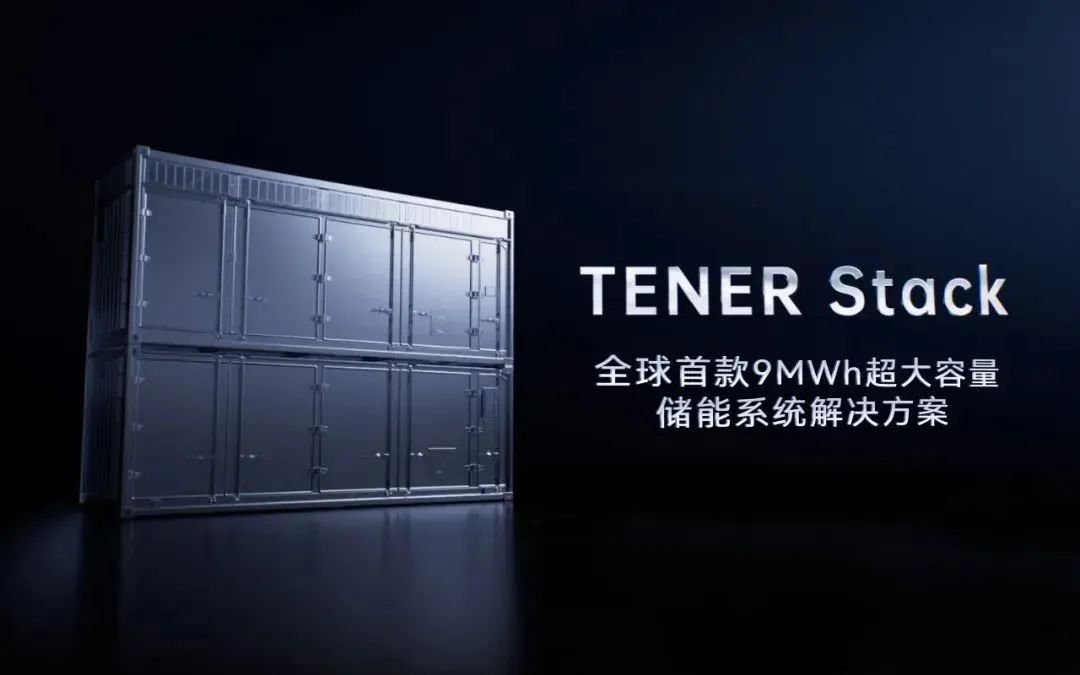
World’s First Mass-Producible! CATL Launches 9MWh Ultra-Large-Capacity Energy Storage System Solution
On May 7th, 2025, CATL has unveiled the world’s first mass-producible 9MWh ultra-large-capacity energy storage system solution, TENER Stack, setting a new industry benchmark with its groundbreaking technology. This innovation marks another milestone for CATL in the energy storage sector, following the launch of its 6.25MWh Tianheng ESS in 2024. Compared to its predecessor, TENER Stack not only achieves a significant increase in system energy density but also advances transportation efficiency and safety performance, establishing a new technical standard for the industry.
TENER Stack 9MWh Energy Storage System

Capacity Breakthrough: 20% Reduction in Overall Station Costs
TENER Stack utilizes CATL’s high-energy-density cells, featuring zero degradation over five years. Compared to traditional 20-foot container systems, TENER Stack improves volume utilization by 45% and energy density by 50%, with a single-unit capacity of 9MWh.
The system’s large capacity also delivers substantial economic benefits. Deploying 800MWh of storage capacity with TENER Stack reduces the number of containers required by nearly one-third compared to traditional 6MWh systems, while increasing land-use efficiency by 40%, ultimately cutting total station construction costs by 20%.
Breaking Transportation Limits: Compliant with 99% of Global Market Regulations
To meet the 36-ton road transport weight limits in many countries, CATL developed a "Two in One" modular design, keeping each half-height container’s weight strictly below 36 tons—ensuring compliance with 99% of global transport regulations.
Additionally, its innovative split design adapts to multiple standard transport methods, reducing wait times and cutting special transport costs by 35%. With a lower center of gravity and enhanced flexibility, TENER Stack can easily navigate bridges, rural roads, and other challenging transport scenarios, showcasing its structural advantages.
Upgraded Safety Standards: 2-Hour Fire Resistance
As safety becomes increasingly critical for energy storage plants, TENER Stack enhances gas sensor sensitivity by 40%, improving suppression system response speed by 35%.
Furthermore, its new 3-layer insulation design extends fire resistance to 2 hours, while the system complies with IEEE693 seismic standards, withstanding magnitude-9 earthquakes and Category-5 hurricanes.
Strong Performance in Energy Storage Business
According to the China Energy Storage Alliance (CNESA), CATL ranked No.1 globally in energy storage battery shipments in 2024. The company’s energy storage battery revenue reached 57.3 billion yuan, accounting for 15.83% of total revenue, with a gross margin of 26.84%—up 8.19% YoY and surpassing its power battery business margin (23.94%), solidifying energy storage as CATL’s second growth driver.
6~9MWh Energy Storage Systems: Who Will Lead the Future?
As market demand evolves, large-capacity energy storage systems continue to advance. In 2024, 20-foot 5MWh+ systems were widely released and commercialized in H2. By 2025, 6~9MWh+ systems took center stage at ESIE 2025.
Leading companies, including CRRC Zhuzhou Institute, CATL, BYD Energy Storage, Hithium, EVE Energy, CALB, Cornex, Narada Power, Sunwoda, REPT, CEEG, NR Electric, Resource Electric, Goldwind, TBEA, Ganfeng Lithium, Bull Electric, Higee Energy, and JinkoSolar, have all entered the 6MWh+ large-capacity storage market, making it the next-gen commercialization focus.
CRRC Zhuzhou Institute: New 6.X battery cabin (6.9MWh), mass production in Q4 2025.
Hithium: ∞Power 6.25MWh 2h system, featuring ∞ Cell 587Ah battery, mass production in H2 2025.
EVE Energy: Next-gen 6.9MWh system, CTP-integrated design, 20% higher energy density per unit area.
CALB: 6.25MWh liquid-cooled container, 2-in-1 HV design, 14.9% smaller footprint.
Cornex: Upgraded CORNEX M6 DC prefab solution (6.28MWh & 6.91MWh variants).
Narada Power: Center L Ultra 6.25MWh system, "AC/DC integrated" design, for 2-8h scenarios.
REPT: 6.26MWh system, 12,000+ cycles, 20-year lifespan.
Sunwoda: 6720kWh liquid-cooled container.
Further breakthroughs in 7MWh+ systems:
ZTT: "ENERGRID NA7" 7.58MWh liquid-cooled system (2000V DC, AC/DC integrated).
Gotion High-Tech: 7MWh battery cabin, with AI analytics, smart thermal control, and 3D protection.
8MWh+ systems entering the market:
HyperStrong, Envision Energy, Narada Power, Lishen Battery have launched 8MWh+ solutions
Narada Power: 8.338MWh system, self-developed solid-state battery, enhancing capacity & safety.
Envision Energy: 8MWh+ EN 8 Pro, world’s first AI-empowered ESS, lowering LCOE.
AC New Energy has introduced a 9MWh+ energy storage system, pushing boundaries further.
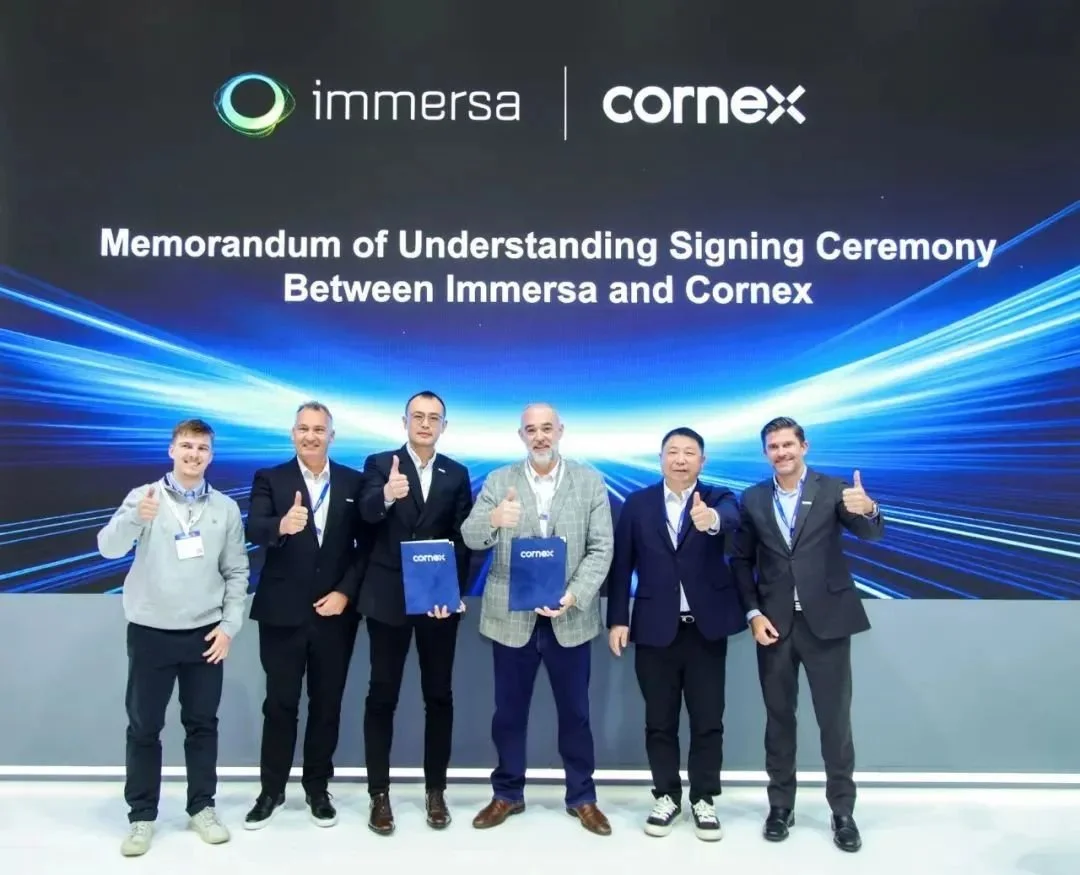
5-Year 2.5GWh Deal! Cornex Signs Major Agreement with UK’s Immersa
On May 7th, Coenex has entered into a strategic cooperation agreement with UK-based Immersa for 2.5GWh, marking a significant step in global energy storage collaboration. The partnership will focus on Cornex’s self-developed 5MWh battery prefabricated cabin, CORNEX M5, with attendance from Coenex President Huang Feng and Immersa CEO Robert Miles LLB at the signing ceremony.

Under the agreement, the two companies will collaborate on 1.25GWh to 2.5GWh of energy storage projects over the next five years, establishing a global strategic partnership in product supply, after-sales services, and project development. This alliance aims to accelerate technological innovation and enhance the market value of diversified energy storage solutions worldwide.

Over the past two years, Cornex has rapidly expanded its global footprint, securing strategic partnerships with leading overseas renewable energy firms, including Ever Energy, Bison Energy, YN Energy, Star Energy Technologies, and Cestari. By leveraging cutting-edge R&D and an evolving product portfolio, Cornex continues to strengthen its competitive edge in the international new energy market.
With the global solar + storage industry booming, Cornex remains committed to advancing product innovation and application scenarios. By fostering resource sharing and complementary strengths with industry partners, the company is poised to drive the global transition to zero-carbon energy ecosystems.

Haisida Sodium Star Secures Landmark 1GWh Overseas Sodium-Ion Battery Order for Residential/Commercial/Telecom Applications
Shanghai Pret (May 5 Evening Announcement) – The company’s subsidiary, Guangdong Haistar Sodium Star Technology Co., Ltd., has recently secured a major sodium-ion battery procurement order from an overseas client. The two parties have entered into a strategic supply agreement for Haistar Sodium Star’s sodium-ion battery product line. The customer has committed to purchasing no less than 1GWh of sodium-ion battery modules over the next four years, primarily for residential, commercial & industrial (C&I), and telecom applications. Deliveries are scheduled to take place in batches between July 2025 and December 2029.
Amid the rapid growth of the new energy sector, the development and industrialization of next-generation batteries have become a critical pathway. Sodium-ion batteries, with advantages such as abundant resources, enhanced safety, wide temperature tolerance, and cost competitiveness, are poised for broad adoption in energy storage systems, start-stop power supplies, data centers, functional vehicles, and base station backup power.
Haistar Sodium Star is a leading manufacturer of sodium-ion cells and battery packs, while the client is a specialized provider of energy solutions for overseas residential, C&I, and telecom markets. The two parties aim to establish a long-term strategic partnership in sodium-ion battery supply.
The sodium-ion batteries covered under this order adopt Haistar’s polyanion cathode system, which offers structural stability, high safety, low cost, extreme temperature resistance, high-rate capability, and environmental friendliness.
This strategic supply agreement marks Haistar Sodium Star’s entry into a phase of sustained large-scale order acquisition and product deployment. The client also represents one of many downstream sectors for the company’s sodium-ion battery business. As validation processes accelerate among other customers, the company expects a continued increase in sodium-ion battery orders. This deal is set to significantly strengthen Haistar’s market position in the sodium-ion battery industry while delivering a positive impact on Pret’s new energy segment performance.

CNESA and NRDC Sign Memorandum of Understanding to Advance Energy Storage Collaboration
The China Energy Storage Alliance (CNESA) and the Natural Resources Defense Council (NRDC) recently signed a Memorandum of Understanding (MOU) in Beijing to strengthen cooperation in the energy storage sector. The signing ceremony was attended by CNESA Chairman Chen Haisheng and NRDC President and CEO Manish Bapna, with CNESA Secretary-General Liu Wei and NRDC Beijing Chief Representative Zhang Jieqing formally executing the agreement on behalf of their respective organizations.

Prior to the signing, Chairman Chen Haisheng provided the NRDC delegation with an in-depth overview of the working principles and technological advancements of compressed air energy storage systems.
During the signing ceremony, Chairman Chen extended a warm welcome to the NRDC delegation, emphasizing CNESA’s role as China’s first nonprofit industry organization dedicated to advancing energy storage policies and technological applications. Since initiating collaboration with NRDC in 2022, the two organizations have achieved significant progress in researching business models and policy mechanisms for energy storage across diverse application scenarios. Joint studies, such as High-Quality Energy Storage Development: Market Mechanisms and Business Model Innovation, have provided valuable insights for policymakers.
The newly signed MOU marks the beginning of a deeper partnership, with both parties committing to address emerging challenges and opportunities in energy storage as renewable energy integration accelerates. Key focus areas include energy storage’s role in supporting the energy transition and enhancing grid resilience.

Manish Bapna highlighted NRDC’s longstanding commitment to supporting China’s low-carbon transformation, added that energy storage technology is pivotal to achieving global energy transition goals and meeting the targets of the Paris Agreement. He also stated that building on strong foundation with CNESA, this agreement will further deepen collaboration in technological innovation and policy alignment, accelerating the development of a robust energy storage ecosystem and advancing power sector decarbonization.
Both organizations affirmed their intent to leverage this partnership to foster international knowledge exchange, support the development of next-generation power systems, and contribute to China’s dual-carbon goals while promoting global clean energy progress.

The event was also attended by NRDC Chief Program Officer Susan Casey-Lefkowitz, Energy Transition Program Director Lin Mingche, Senior Energy Transition Manager Huang Hui, and Energy Transition Officer Wang Yang, alongside CNESA Deputy Secretary-General Yue Fen and International Affairs Manager Wen Mingyuan.
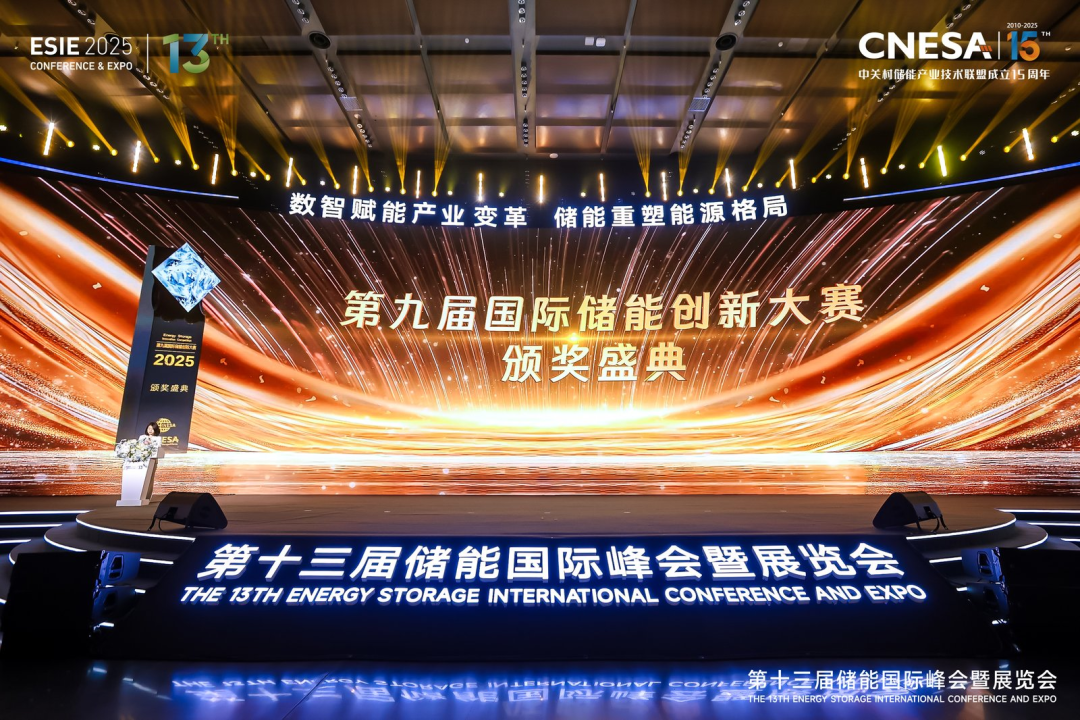
Winners Announced for Remaining Four Categories of the 9th International Energy Storage Innovation Competition - Industry Leaders Honored!
At the awards ceremony of the "9th International Energy Storage Innovation Competition" held on April 10, in addition to the four previously announced awards, the following four awards were also unveiled:
2025 Energy Storage Young Enterprise Award
2025 Energy Storage Unicorn of Tomorrow Award
Energy Storage Person of the Year 2025
2025 Award for Lifetime Contribution to Energy Storage



Group photo of the above winners are as follows:

Group Photo of the Winners of “2025 Energy Storage Young Enterprise Award”
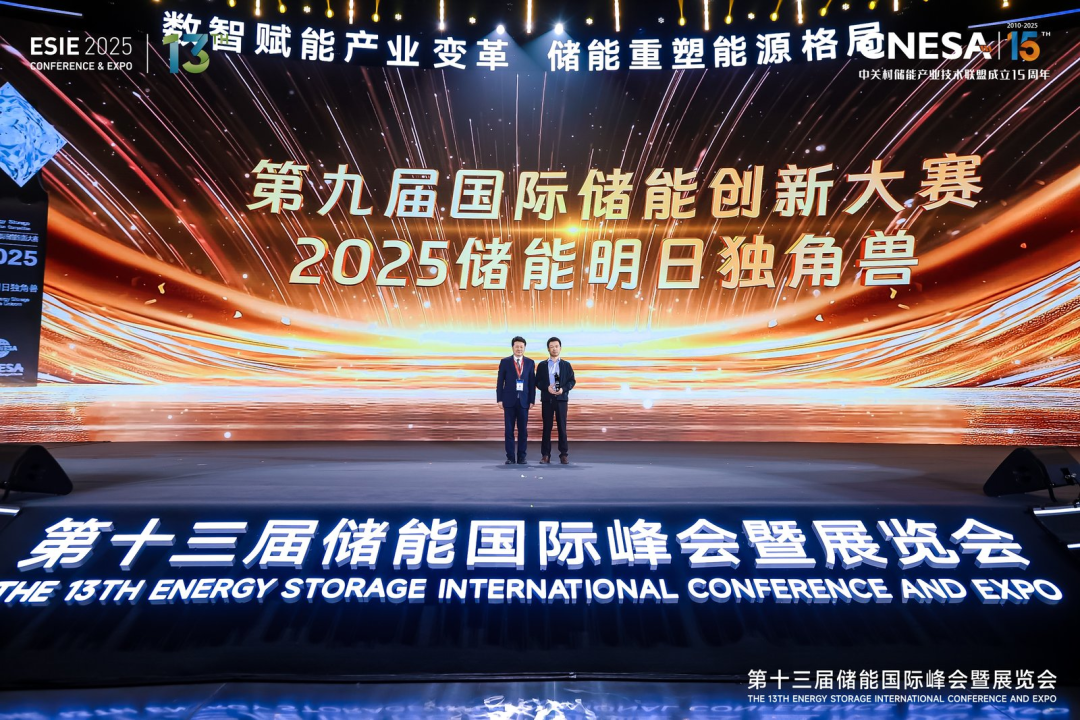
Group Photo of the Winner of “2025 Energy Storage Unicorn of Tomorrow Award”

Group Photo of the Winners of “Energy Storage Person of the Year 2025”
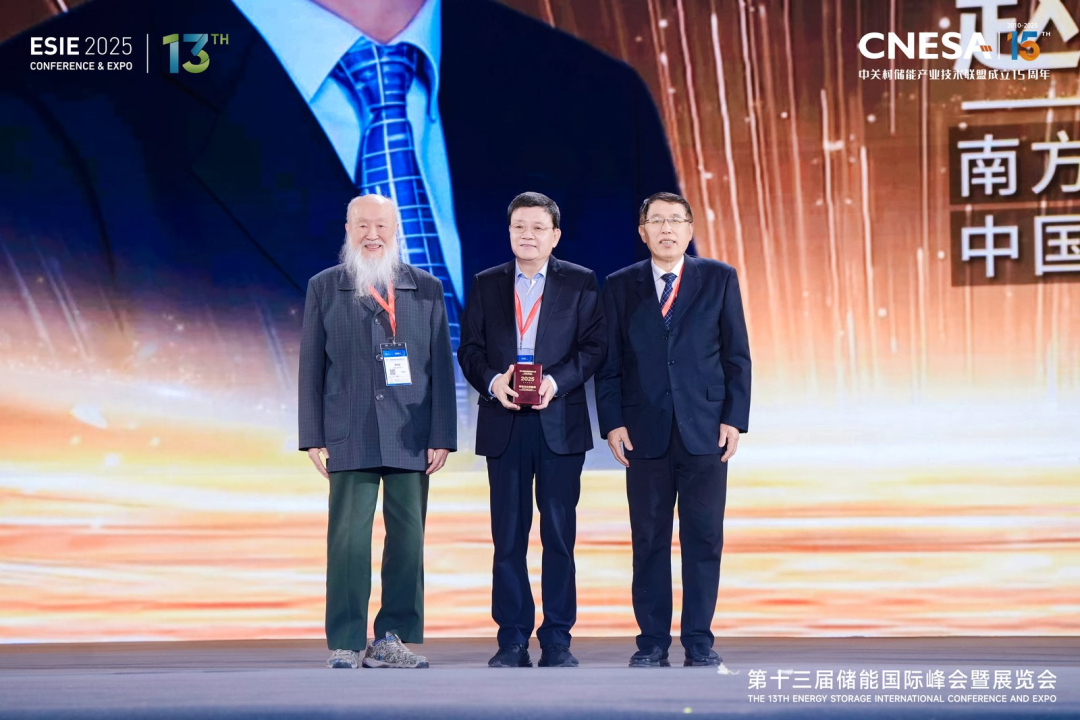
Group Photo of the Winner of “2025 Award for Lifetime Contribution to Energy Storage”
With this, all awards of the 9th International Energy Storage Innovation Competition (ESIC) have been announced. We extend our warmest congratulations to all the winning companies and individuals and look forward to their continued leadership in the future of energy storage, contributing more wisdom and strength to the advancement of the industry.

Europe's Worst Blackout in Years! Just 6 Days After Grid Ran on 100% Renewables
According to a CCTV News report on April 29, Spain and Portugal experienced a massive power outage on the 28th, affecting over 50 million people across the Iberian Peninsula. Critical services—including transportation, communications, and healthcare—were temporarily paralyzed, with brief disruptions also reported in southern France and neighboring regions.
European Commission Executive Vice President Teresa Ribera stated that there is currently no evidence linking the blackout to a cyberattack. The incident ranks among Europe’s most severe power failures in recent years.
Authorities have yet to confirm the official cause, with investigations ongoing.
Eduardo Prieto, head of Spanish grid operator Red Eléctrica, said on April 28 that the outage was triggered by a "violent oscillation in the grid," which disconnected Spain’s power system from the European network. This aligns with Prime Minister Pedro Sánchez’s reference to a "major technical fluctuation."
Grid oscillations—often caused by rapid shifts in power generation or demand—can lead to cascading failures. For instance, sudden large-scale load changes disrupt the balance between supply and consumption, destabilizing the system.
Portuguese grid operator REN suggested the abnormal oscillation may be linked to extreme temperature swings in Spain. Experts noted that such fluctuations can destabilize ultra-high-voltage networks above 400 kV.
Renewable energy’s role is also under scrutiny. Data from Red Eléctrica shows renewables accounted for 56% of Spain’s electricity in 2024. Just days earlier, on April 16, 2025, the country’s grid achieved a historic milestone by operating entirely on renewables (wind, solar, and hydro) for a full day. The blackout has reignited debates about grid stability amid rising renewable penetration. Europe’s power systems increasingly face challenges in balancing supply and demand, with large-scale renewable integration raising oscillation risks.
The Iberian grid—highly interconnected but linked to Europe via limited cross-border lines—exposed the vulnerabilities of energy isolation. While Ribera ruled out cyberattacks, the event underscores Europe’s struggle to adapt to renewable volatility.
Analysts urge accelerated grid modernization and cross-border capacity upgrades to tackle renewable intermittency and extreme weather. The blackout may prompt the EU to fast-track energy security reforms and enhance grid resilience.
Energy analysts note that outages of this scale are rare in wealthy nations. Given Iberia’s heavy renewable reliance, the incident will serve as a “case study on renewables’ reliability and post-blackout recovery.”

UK Media: Surging Demand in Grid Energy Storage Market Opens New Front in China-South Korea Battery Rivalry
"Chinese and Korean firms are extending their battery battle from EVs to grid storage”, reported the Financial Times on April 28th. The surging global demand for renewable energy and data centers is driving rapid growth in the grid-scale battery storage market, creating a new battleground for Chinese and Korean battery giants—who have already been locked in fierce competition in the EV battery sector.
The report noted that Chinese battery manufacturers now account for nearly 90% of global energy storage system (ESS) production capacity, holding over 80% and 75% market shares in the U.S. and Europe, respectively. However, with rising U.S. tariffs, Korean firms are seeking to regain ground in Western markets.
Energy storage systems use battery modules managed by software to help grids—as well as homes, businesses, and factories—handle fluctuations in wind and solar power supply. For the next decade, as electricity demand surges from AI hardware, EVs, and other clean technologies, ESS will also provide critical backup support for power grids.
A International Energy Agency (IEA) report of this month predicts that global electricity demand from AI data centers will double in the next five years, accounting for nearly half of U.S. power demand growth by 2030."Energy storage is often seen as the least glamorous part of renewables, but it’s actually the core technology ensuring grid stability in the future." said Iola Hughes, research director at battery consultancy Rho Motion.
According to Statistics from Rho Motion, ESS batteries’ market share has risen from 5% in 2020 to 20% today. Global storage capacity grew 52% between 2023 and 2024 and is projected to jump from 340 gigawatt-hours (GWh) last year to 760 GWh by 2030—equivalent to 7.6 million EV batteries. The booming market has even helped Tesla offset sluggish EV sales, with soaring demand for its Powerwall home batteries and Megapack grid-scale storage systems. CEO Elon Musk described the business as "spreading like wildfire."
Hughes told the FT that Korean battery makers once led the industry with their high-nickel batteries. However, a series of fires linked to these batteries over the past decade—combined with the rise of cheaper, increasingly efficient lithium iron phosphate (LFP) batteries—has led the energy sector to shift away from high-nickel chemistries. "The diverging fortunes of Chinese and Korean storage firms tell the story of two battery markets," said Neil Beveridge, head of energy research at Bernstein in Hong Kong.
China’s dominance in energy storage has raised concerns among Western policymakers, with the U.S. banning Chinese battery systems in military facilities. This has given hope to Korean firms transitioning to LFP production—or even repurposing EV battery lines. LG Energy Solution, the world’s largest non-Chinese battery producer, said tariffs make "non-Chinese companies with U.S. production bases more competitive."
Data from the Atlantic Council shows that China exported $15.3 billion worth of lithium-ion batteries to the U.S. last year, widening its lead over Korean rivals. "Chinese LFP batteries are popular in the U.S. due to their price competitiveness. Plus, they can use more battery cells, making them cost-effective for data centers," said an industry insider.
UBS analyst Tim Bush noted that while Korean firms like LG and Samsung SDI may gain "a bigger share of a smaller market" due to tariffs, their mass-production capabilities and cost competitiveness in LFP batteries remain unproven. The future landscape is still highly uncertain.
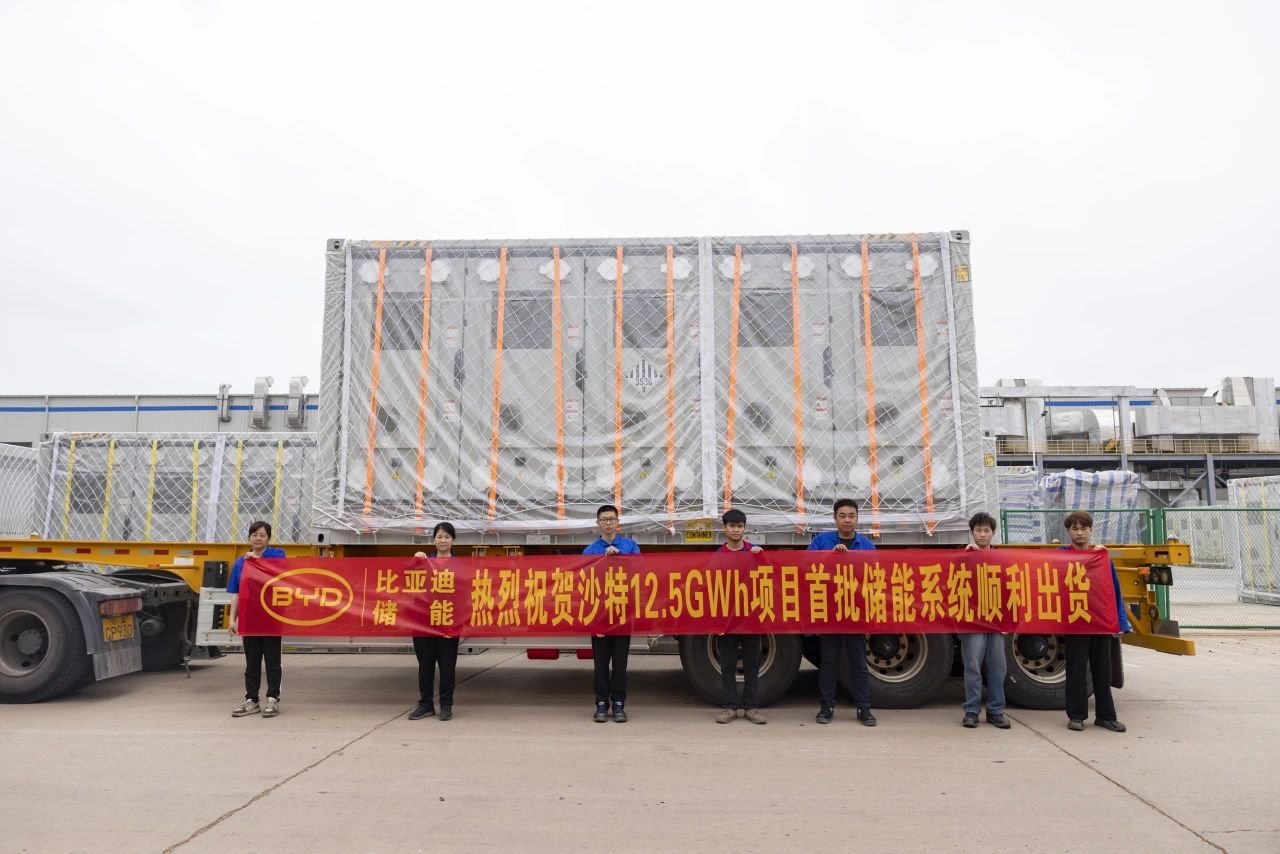
12.5GWh – World's Largest Grid-Side Energy Storage Project Begins Shipment
On April 27, the resonant sound of ship horns pierced the sky as BYD Energy Storage successfully loaded 120 MC Cube-T energy storage system cabinets onto vessels at the Beibu Gulf Port in Guangxi. As the vanguard of the 12.5GWh project—the world’s largest grid-side energy storage initiative—these systems have embarked on a transoceanic journey to Saudi Arabia, supporting the nation’s energy transition.

Following the landmark agreement with Saudi Electricity Company (SEC) in early 2025 for the world's largest 12.5GWh grid-side energy storage project, BYD Energy Storage has launched its delivery campaign with unprecedented momentum. A total of 2,364 modular MC Cube units are now being transported to Saudi Arabia in highly efficient, well-coordinated batches, setting a new industry record for deployment speed and redefining global execution standards for utility-scale storage projects.
Vertical Integration & Full-Stack Innovation: A Complete Lifecycle Management System
The successful execution of global utility-scale energy storage projects stems from BYD Energy Storage's forward-looking strategic positioning. With end-to-end in-house R&D spanning core competencies—from material development, manufacturing processes, and intelligent battery cell design to BMS, EMS, and the modular MC Cube system—the company maintains full industrial chain innovation and deep vertical integration. From customized energy storage solutions and logistics to O&M and after-sales services, BYD has established a mature, standardized, and process-driven full lifecycle management system. Faced with Saudi Arabia's record-breaking 12.5GWh project, BYD Energy Storage can rapidly coordinate production, shipment, and transportation through its robust resource allocation and high-efficiency execution capabilities. This ensures professional project delivery and operational management, providing unwavering support for the project's timely advancement through proven technical expertise.

Integrated Innovation & Mutual Empowerment, Enhancing Full Lifecycle Economics
BYD Energy Storage and its automotive division mutually empower each other in scaled production and supply chains, sharing ecosystem resources. Leveraging large-scale manufacturing capabilities, this synergy supports rapid delivery of utility-scale energy storage projects worldwide, including in Saudi Arabia, Europe, and Latin America. The MC Cube-T energy storage system adopts BYD Energy Storage’s globally pioneering CTS (Cell-to-System) ultra-integrated technology, achieving a Vcts (cell-to-system volume ratio) exceeding 33%. This significantly increases the proportion of core equipment in energy storage stations, improving full lifecycle cost efficiency. Featuring a modular, compartmentalized design, the system offers multiple advantages: easy deployment, effortless transportation, simplified installation, seamless capacity expansion, convenient maintenance. These innovations reduce logistical complexities during transit and enable rapid on-site commissioning, further streamlining construction processes to ensure on-schedule project deployment.

Global Presence & Sustained Dedication, Empowering the Worldwide Energy Transition
For 17 years, BYD Energy Storage has been deeply rooted in the energy storage sector, expanding globally with unwavering commitment and accumulating profound expertise. By the end of 2024, BYD Energy Storage has established a comprehensive worldwide network encompassing sales, delivery, operations, and after-sales services. With over 75GWh of commercial operation experience and more than 360 successfully delivered energy storage projects, its solutions have been deployed across 110+ countries and regions.
"A time will come to ride the wind and cleave the waves, I’ll set my cloud-like sail to cross the sea which raves." BYD Energy Storage has proven its capabilities through tangible project achievements, demonstrating resilience in the face of diverse challenges. Moving forward, BYD Energy Storage will continue to drive progress through technological innovation, contributing more "Chinese Energy Solutions" to the global energy transition and leading the industry to new heights of development.
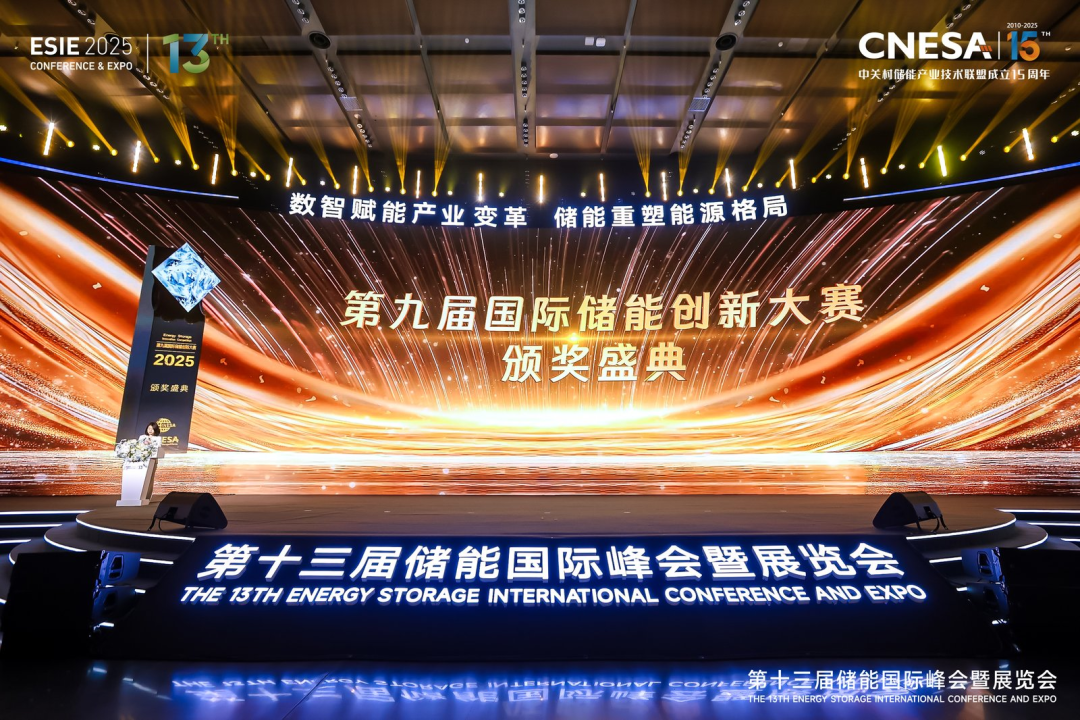
The Power of Benchmarking! 9th International Energy Storage Innovation Competition Awards Ceremony Held in Beijing
Beijing, April 10, 2025 – The grand awards ceremony of the 9th International Energy Storage Innovation Competition (ESIC), hosted by the International Energy Storage Alliance (INESA) and co-organized by the China Energy Storage Alliance (CNESA), was held at the Capital International Exhibition & Conference Center, Beijing.
As a non-profit industry competition, the International Energy Storage Innovation Competition has established a comprehensive evaluation system for energy storage technologies and projects, supported by a panel of dozens of top experts in the field. Over the past eight years, the number of participating companies has reached record highs, solidifying its reputation as a prestigious authority in the global energy storage sector.
The competition adheres to the principles of fairness, transparency, and openness, consistently setting benchmarks for innovation in energy storage technologies and applications. It honors outstanding individuals who have made significant contributions to the industry, promotes cutting-edge technologies, showcases exemplary business models, and highlights pioneering application cases. By fostering connections between high-potential projects, capital markets, and global application markets, the competition serves as a vital platform for industry collaboration and drives dynamic growth in the energy storage sector.
The ceremony firstly unveiled the following four awards, recognizing exceptional achievements in technological innovation and business model development over the past year:
2025 Energy Storage Technology Innovations Award Top 10
2025 Energy Storage Application Innovations Award Top 10
2025 Energy Storage Product Excellence Award Top 10
2025 Energy Storage Soft Science Innovation Exemplar


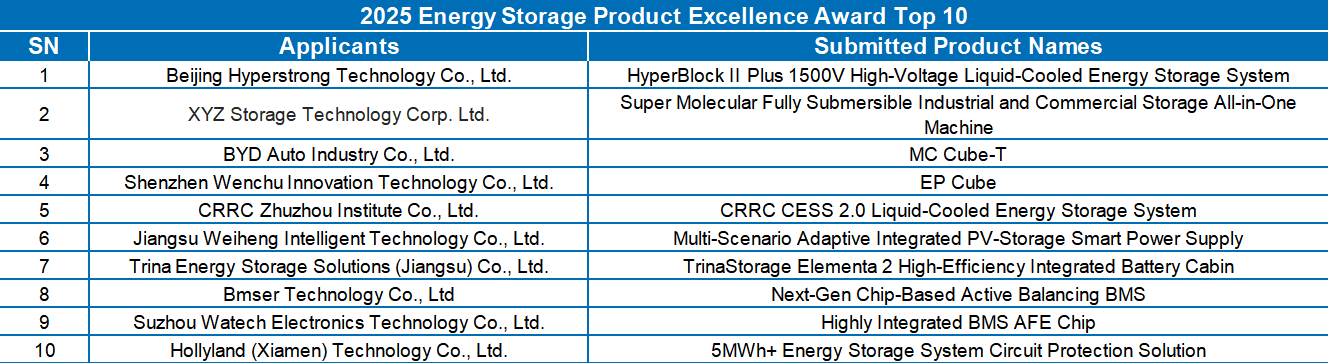

Group photos of the winners of above awards are as follows:

Group Photo of the Winners of “ 2025 Energy Storage Technology Innovations Award Top 10 ”

Group Photo of the Winners of “2025 Energy Storage Application Innovations Award Top 10”

Group Photo of the Winners of “ 2025 Energy Storage Product Excellence Award Top 10”

Group Photo of the Winners of “2025 Energy Storage Soft Science Innovation Exemplar”
The other four awards will be unveiled later, please stay tuned for future updates.

Narada Initiates Hong Kong IPO Process, Accelerating Global Expansion
Narada has officially commenced its Hong Kong IPO, marking a significant stride toward becoming a dual-listed (A+H) global industry leader.
As an international financial hub, Hong Kong offers access to global capital and resources. Narada’s decision to pursue a Hong Kong listing carries profound strategic significance—not only as a breakthrough in capital operations but also as a pivotal step toward global expansion and leapfrog development.
The Hong Kong listing will further advance the company’s globalization strategy, elevate its brand profile and visibility, and enhance overall competitiveness. Simultaneously, it will establish an international capital operations platform, improving corporate governance transparency and standardization.
With over two decades of commitment to globalization, Narada’s energy storage business now spans 160 countries and regions. The company has established localized sales and service centers across Europe, North America, Australia, Japan & South Korea, the Middle East, and other key markets, enabling end-to-end support for global energy storage project deployment.
In expanding its overseas footprint, Narada has deepened vertical and horizontal industry collaboration, building multidimensional competitive advantages in technology, capital, and partnerships. The company has forged strong ties with international energy groups, design institutes, EPC firms, financial institutions, and supply chain partners worldwide.
The primary objectives of this Hong Kong IPO are threefold: deepening overseas market penetration, expanding international business operations, and strengthening global working capital reserves. With the dual engines of capital empowerment and technological innovation, Narada will maintain its leadership in driving the energy storage revolution while contributing China's solutions to achieving global carbon neutrality goals.
Sign up for our free monthly newsletter to stay informed about the Chinese energy storage market.