
Latest News
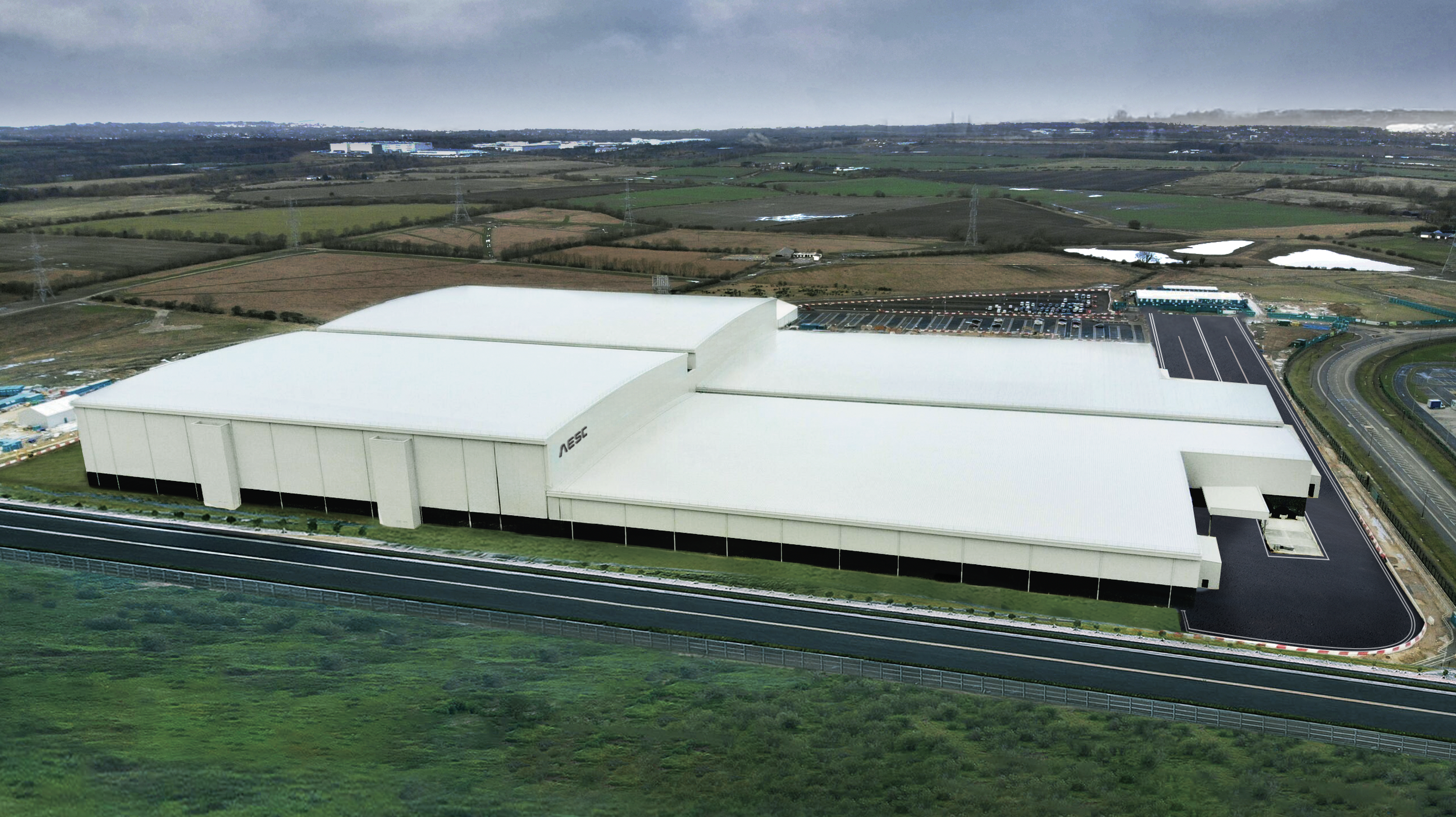
Envision AESC’s Sunderland Gigafactory Commences Operations, Accelerating Europe’s Green Energy Transition
On December 16 (local time), Envision AESC, a global leader in battery technology, announced the commencement of operations at its Sunderland battery gigafactory in the United Kingdom.
With an initial planned capacity of 15.8 GWh, the facility is expected to supply high-quality battery products for over 200,000 electric vehicles annually, serving leading automakers such as Nissan. The plant is now the largest operational battery manufacturing facility in the UK.
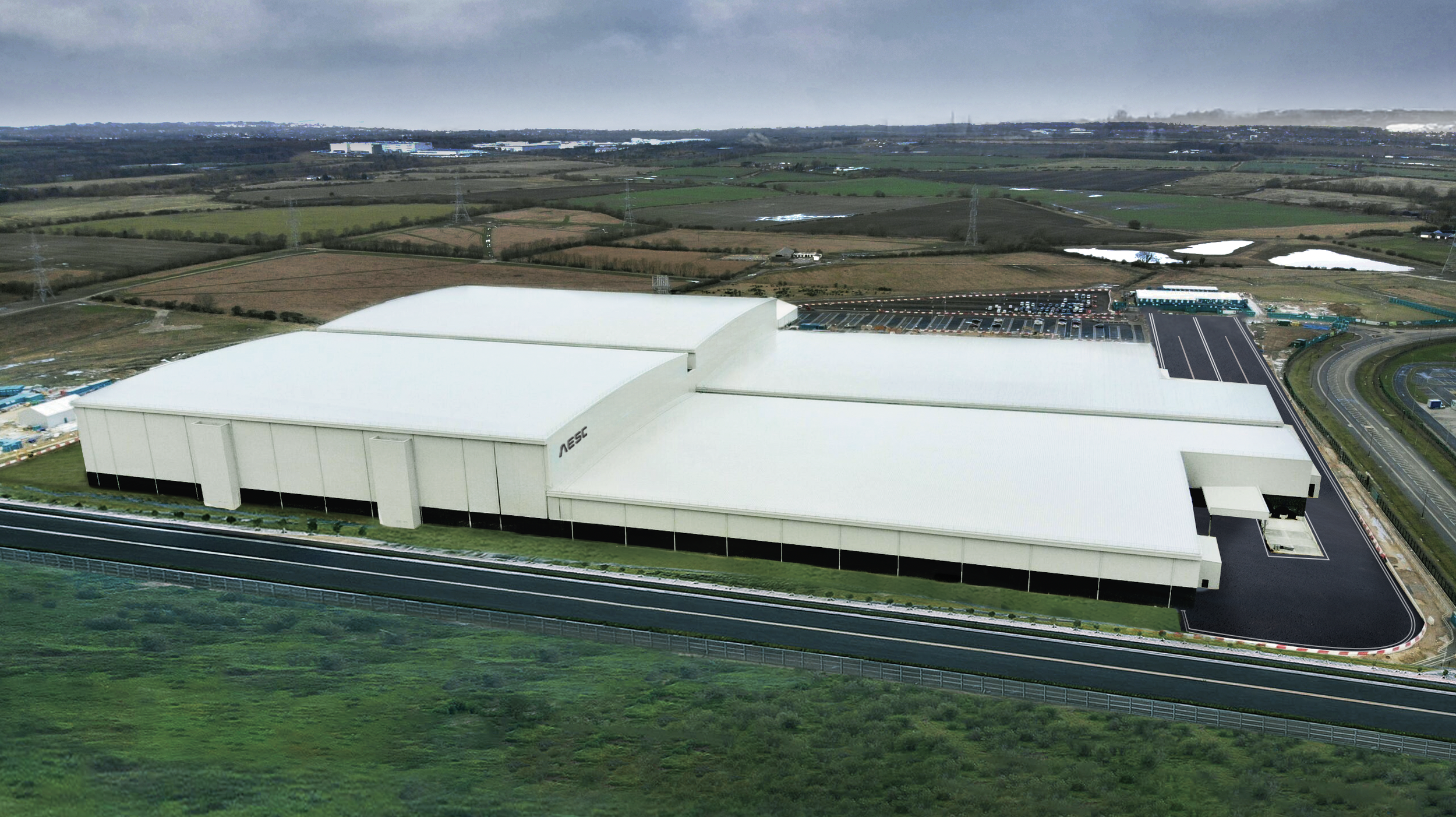
Public information shows that Envision AESC has been operating in the UK for more than a decade. In 2012, the company’s first Sunderland battery plant began production, becoming one of the earliest large-scale power battery manufacturing facilities in Europe.
The launch of the new gigafactory marks a further deepening of Envision AESC’s strategic presence in the UK. It will not only strongly support the rapidly growing demand for electric vehicles in the UK and across Europe, but also provide a solid foundation for the localized expansion and market leadership of Envision’s energy storage business, injecting strong momentum into the UK’s 2030 Clean Power Action Plan.
As one of the leading players in the UK energy storage market in terms of both order volume and project delivery, Envision has successfully deployed multiple energy storage projects locally. Leveraging its strengths in AI-driven power system solutions, AI-enabled energy storage systems, and deep insight into the UK electricity market, the company has secured several major energy storage contracts this year.
Among them, the Carrington Energy Storage Project, developed in partnership with Statera Energy, with a capacity of 680 MW / 1,360 MWh, is the largest single energy storage project in the UK and is widely regarded as a cornerstone of the country’s next-generation power system.
In addition, Envision has partnered with UK clean energy company Field to supply energy storage systems for two projects in Scotland. Its Welkin Road energy storage project has also successfully passed the UK’s stringent G99 grid connection tests, achieving full grid connection and delivery—further demonstrating Envision’s strong grid-integration capabilities and technological leadership.
As one of the earliest and most globally integrated battery technology companies, Envision AESC has established 14 battery manufacturing facilities across six countries worldwide.
In 2025 alone, the company has brought into operation three overseas facilities: the Douai plant in France, an energy storage production line in Tennessee, USA, and the new Sunderland gigafactory in the UK. These milestones highlight Envision AESC’s exceptional global operations and large-scale delivery capabilities, contributing significantly to the global transition toward a zero-carbon future.
CENSA Upcoming Events:
Apr. 1-3, 2026 | The 14th Energy Storage International Conference & Expo
Register Now to attend, free before Dec 31, 2025.

MoM Surge of 90%! Grid&Source-Side Energy Storage Rebounds Sharply in November, with Full-Year Scale Expected to Exceed Last Year
Source: CNESA
After a phase adjustment in China's new-type energy storage market in October 2025, the commissioning scale of new-type energy storage in November declined slightly year on year but rebounded markedly month on month. Meanwhile, the market's deeper structure adjusted compared with October:
Market recovery with a positive long-term outlook: Although installed capacity in November declined year on year, the month-on-month increase was significant. Newly added installations in the first 11 months reached nearly 40 GW, up more than 25% year on year, and full-year additions are expected to exceed last year.
Accelerated deployment of independent storage: In November, independent energy storage accounted for over 70%, with month-on-month growth rates exceeding 80% in power capacity and 200% in energy capacity. Inner Mongolia recorded more than 1.1 GW of newly commissioned independent storage, ranking first nationwide in both power and energy capacity.
Rise of local energy groups: Newly added installations by local energy groups reached a 45% share, surpassing for the first time the “Five Major and Six Minor” power generation groups and the “third-party enterprises”, highlighting a further diversification of market investors.
Faster rollout of diversified technologies: Beyond mainstream lithium batteries, technologies such as compressed air, flow batteries, and flywheels are being deployed at an accelerated pace, supporting the industry's long-term development.
Overall Analysis of New-Type Energy Storage Projects in November
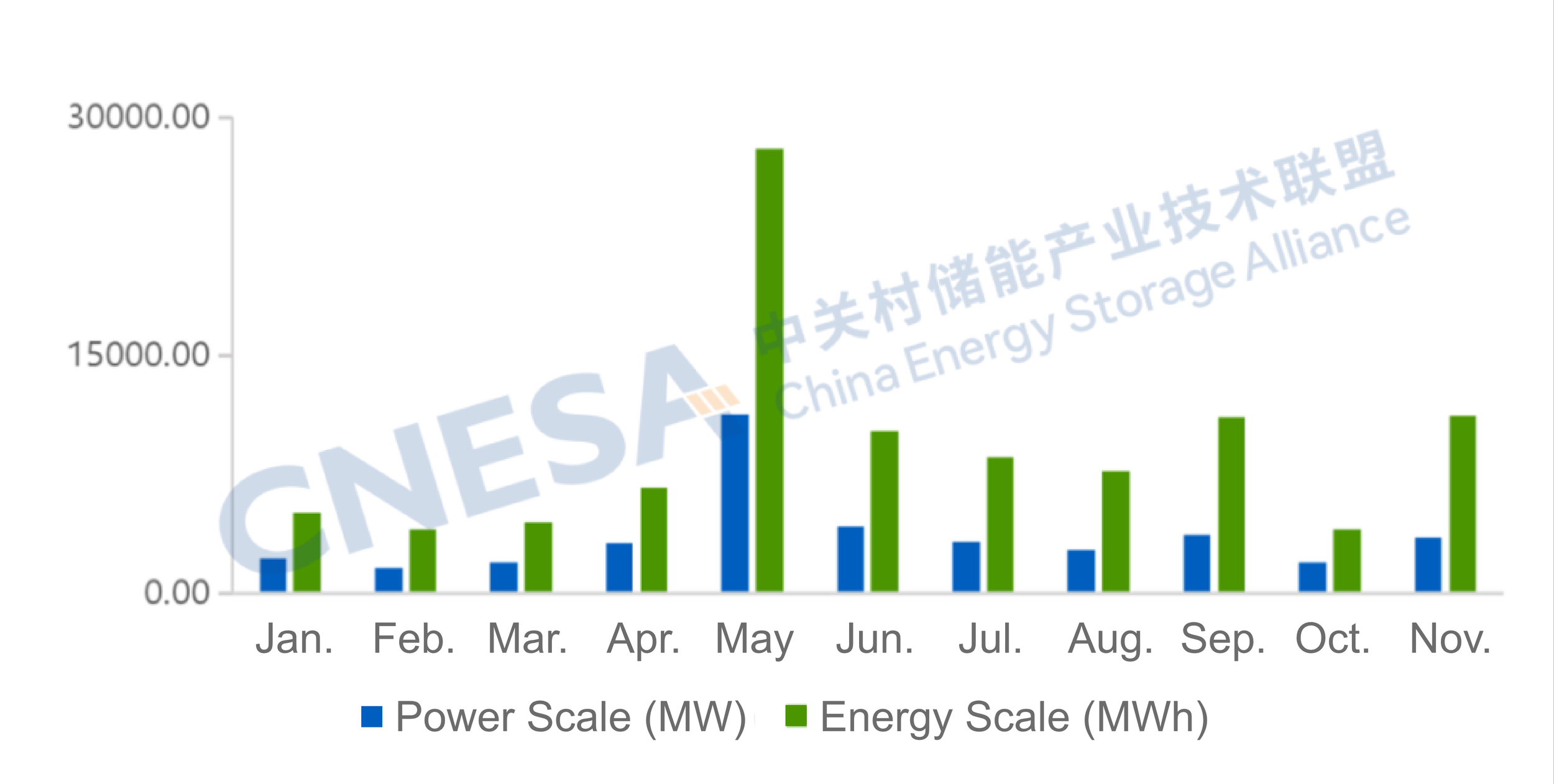
According to incomplete statistics from CNESA, in November 2025 China commissioned a total of 3.51 GW / 11.18 GWh of new-type energy storage projects, representing -22% / -7% year on year and +81% / +180% month on month. While monthly additions continued to decline year on year in November, cumulative additions in the first 11 months reached 39.5 GW, up 28% year on year. Considering potential concentrated grid connections ahead of the “12.30” commissioning deadline, total additions for the year are expected to exceed last year.
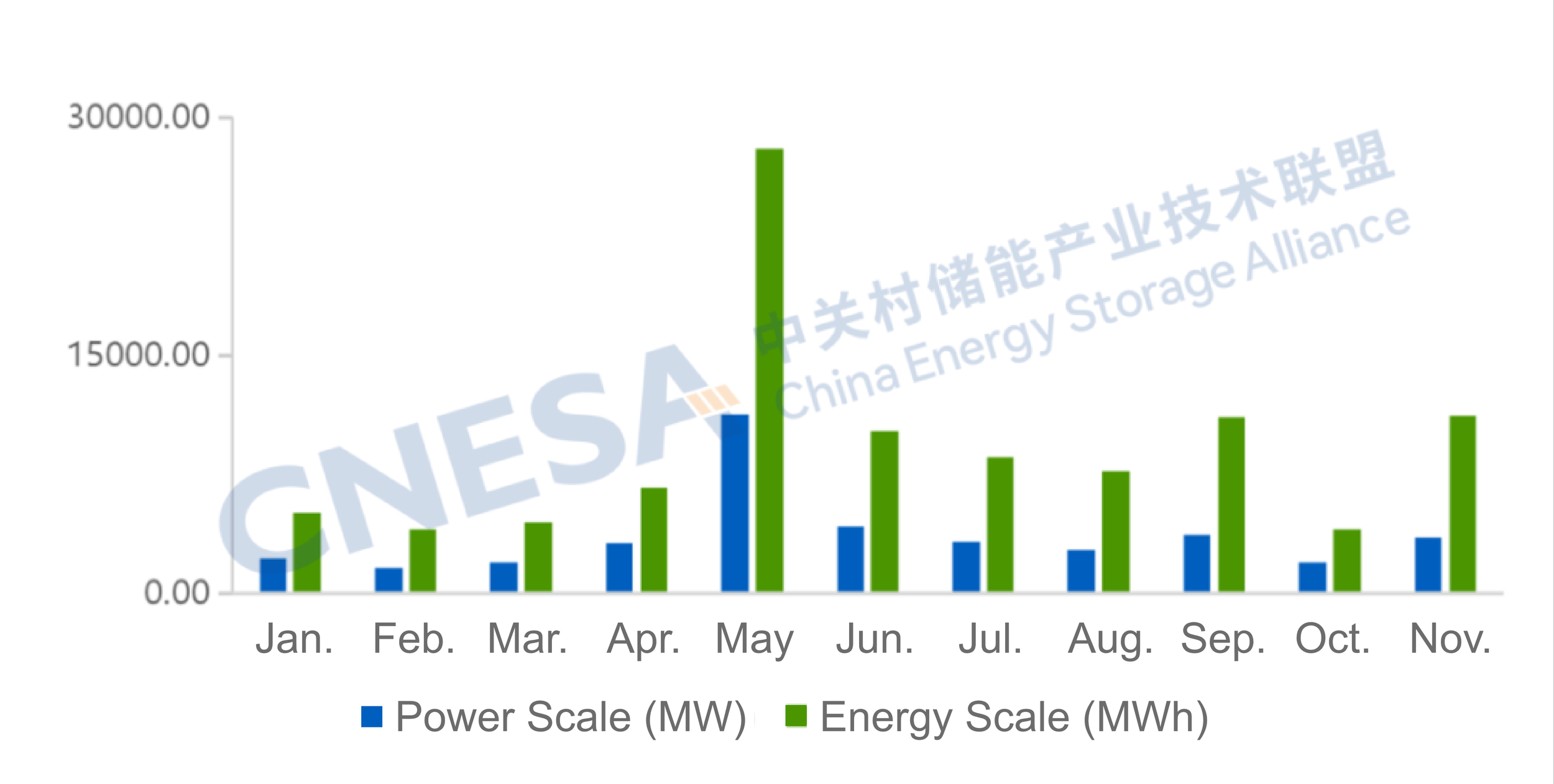
Figure 1. Installed Capacity of Newly Commissioned New-Type Energy Storage Projects in China, Jan-Nov 2025
Data source: CNESA DataLink Global Energy Storage Database
https://www.esresearch.com.cn/
Note: Year-on-year (YoY) compares the same period last year; month-on-month (MoM) compares the previous statistical period.
Analysis of Grid&Source-Side New-Type Energy Storage Projects in November
In November, newly added grid&source-side installations totaled 3.32 GW / 10.62 GWh, -15% / -1% year on year and +90% / +202% month on month.
Key characteristics include:
Newly added Independent storage accounted for 72%, down 6 percentage points from October.
Independent storage additions reached 2.41 GW / 8.19 GWh, -9% / +11% year on year and +82% / +217% month on month, with projects of 100 MW or above accounting for 79% by number.
Power-generation-side additions were 853.3 MW / 2,322.1 MWh, -33% / -31% year on year and +99% / +148% month on month. Renewable-plus-storage projects accounted for 98% of power capacity, covering multiple application scenarios such as UHV DC projects, agrivoltaics, and pastoral-solar hybrid systems.
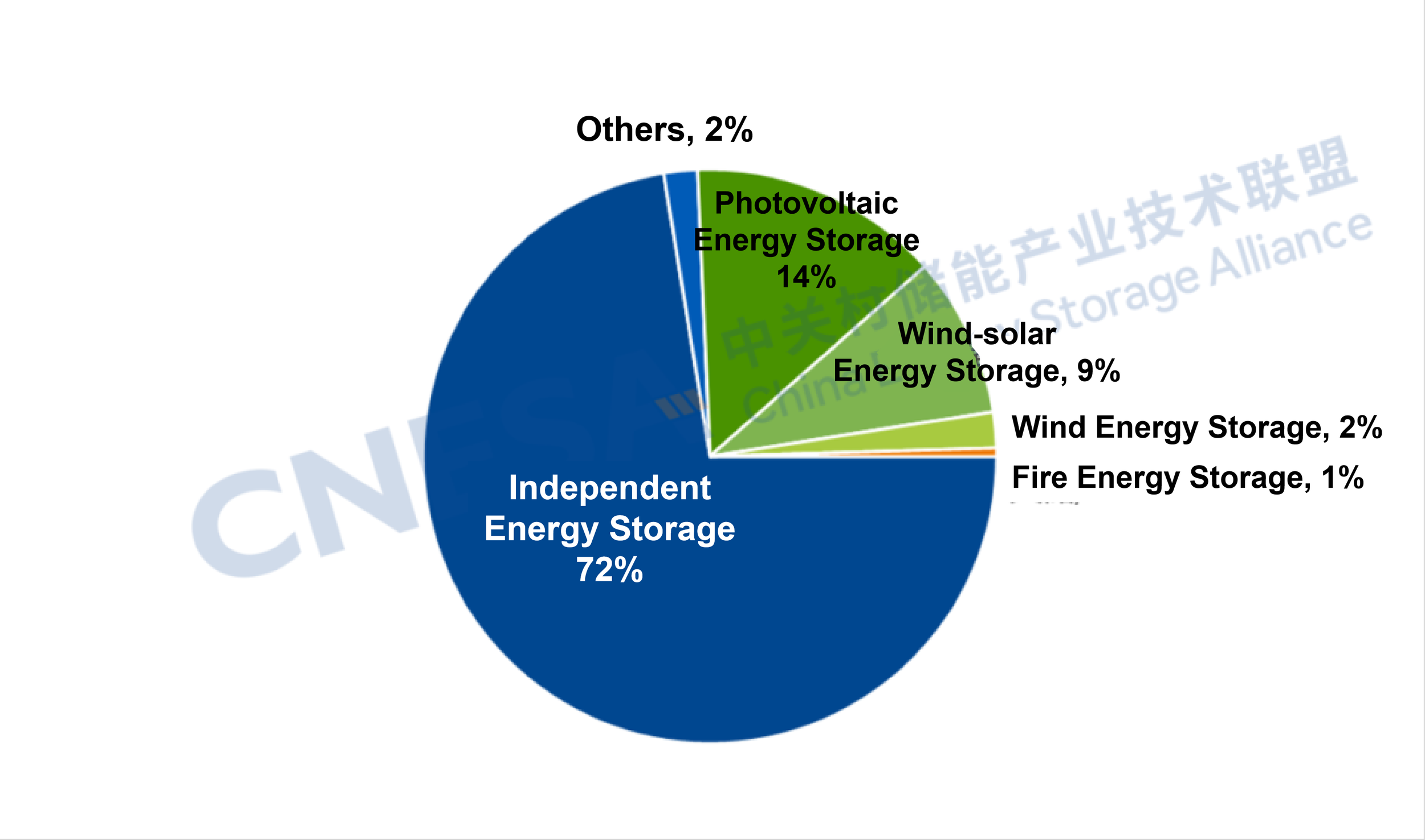
Figure 2. Application Breakdown of Newly Commissioned Grid&Source-Side Energy Storage Projects in Nov. 2025 (MW%)
Data source: CNESA DataLink Global Energy Storage Database
https://www.esresearch.com.cn/
Note: “Others” include substations, emergency power supply, etc.
Northwest Leads with Over 40% Share; Inner Mongolia Ranks First
In November, the Northwest region accounted for 43% of newly added capacity, ranking first nationwide. Combined additions in the Northwest and Southwest exceeded half of the national total.
By province, the Inner Mongolia Autonomous Region saw multiple Independent grid-side demonstration projects commissioned - such as those included in the 2025 New-Type Energy Storage Special Action Implementation Project List and the first batch of Independent storage construction projects - totaling over 1.1 GW with an average storage duration of 4 hours, ranking first nationwide in both power and energy capacity. Xinjiang, Gansu, and Ningxia followed closely.
As a key national energy and strategic resource base in China, Inner Mongolia had surpassed 150 GW of installed renewable capacity by the end of October 2025, ranking first nationwide. Wind and solar accounted for over 80% of new installed capacity, further solidifying their dominant role (data source: Inner Mongolia Autonomous Region Energy Bureau). From the perspective of consumption, approximately 80% of renewable generation is consumed locally, with around 20% exported. The combined pressure of local consumption and grid stabilization continues to drive demand for new-type energy storage.
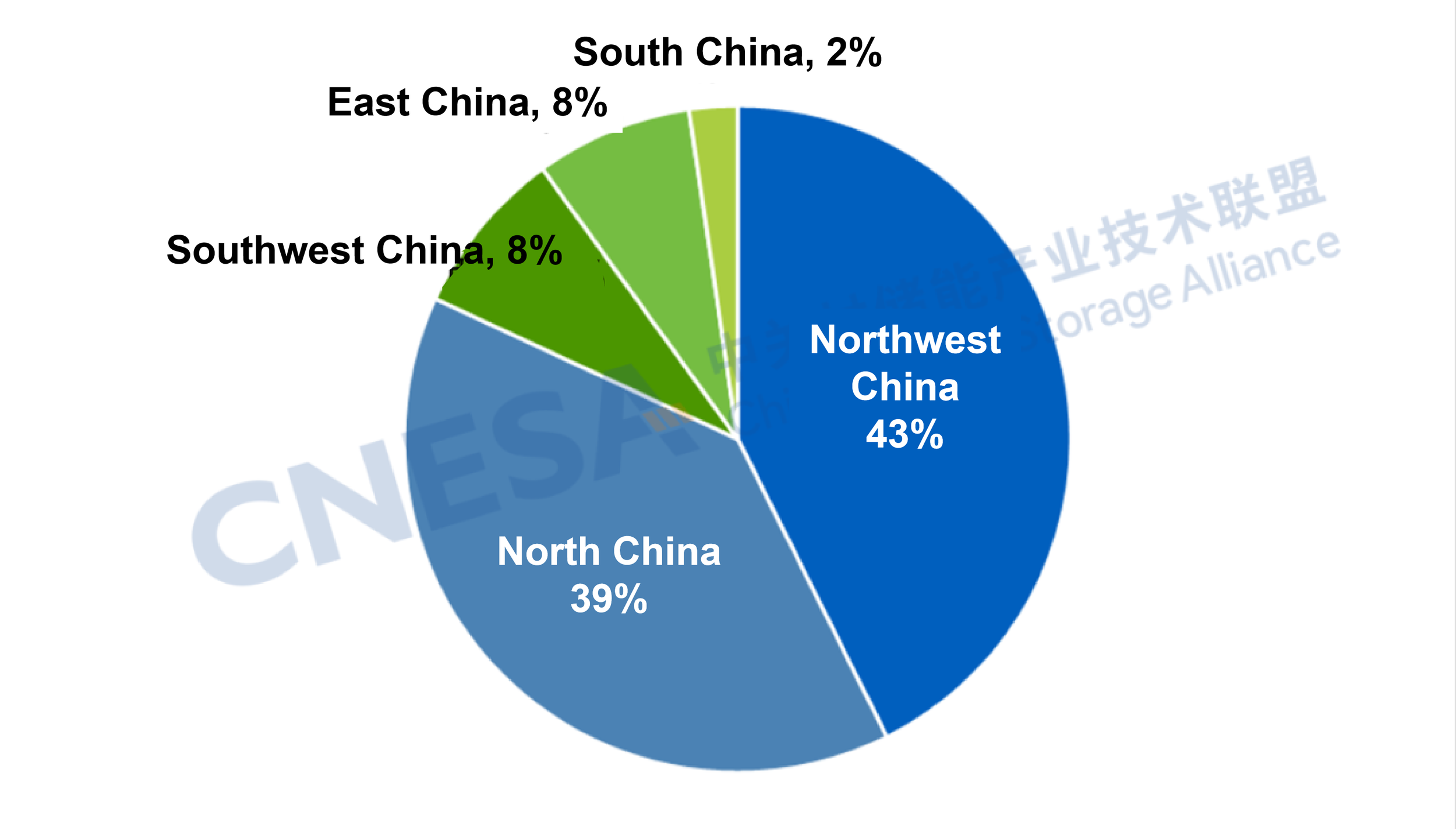
Figure 3. Regional Distribution of Newly Commissioned Grid&Source-Side Energy Storage Projects in China, November 2025 (MW%)
Source: CNESA Datalink Global Energy Storage Database
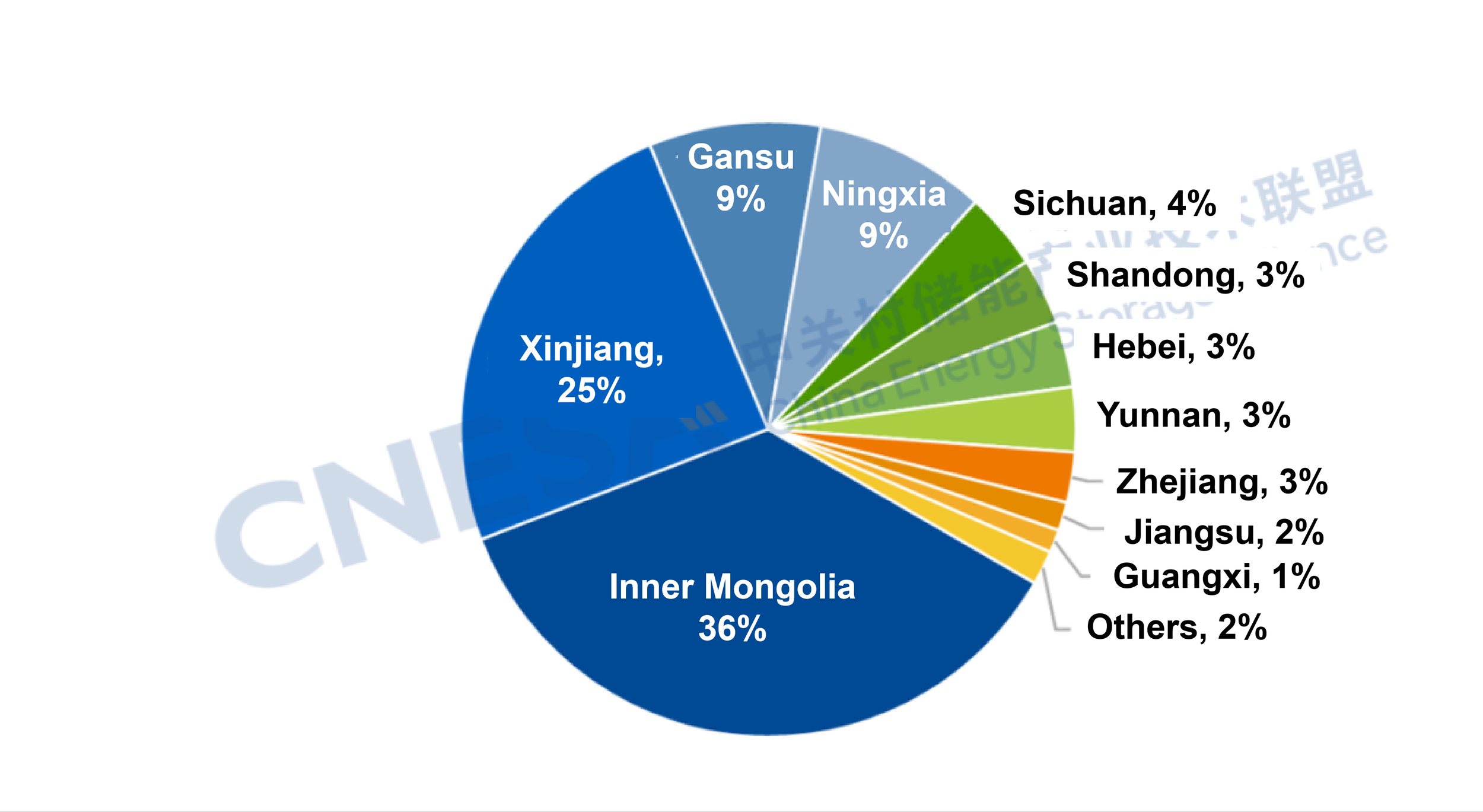
Figure 4. Provincial Distribution of Newly Commissioned Grid&Source-Side Energy Storage Projects in China, November 2025 (MW%)
Source: CNESA Datalink Global Energy Storage Database
https://www.esresearch.com.cn/
Faster Deployment by Local Energy Groups Highlights Investor Diversification
Driven by rising market demand, supportive national policies, diversified technology pathways, and declining costs, the market potential of energy storage is being fully released, with increasing investor diversification.
In November, projects invested in and built by local energy groups such as Xinjiang Energy Group, Xinjiang Zhongyuan Power Group, and Shenergy Group were commissioned in succession. Local energy groups accounted for 45% of newly added power capacity - the highest among all enterprise types - contrasting sharply with September and October, when third-party enterprises and the “Five Major and Six Minor” power generation groups dominated.
Leveraging advantages in policy coordination and approvals, resource integration and location, business linkage and industrial chain synergy, capital strength and decision-making efficiency, and operations, local energy groups have become a key pillar of the new-type energy storage market. Meanwhile, third-party enterprises - such as joint entities involving Conch New Energy and CATL, and Inner Mongolia Zhongdian Energy Storage - maintained a high level of participation, accounting for over 30% of monthly additions. The “Five Major and Six Minor” power generation groups (including China Huaneng, SPIC, and China Huadian) accounted for 22%, down 9 percentage points from October, continuing the decline seen since August.
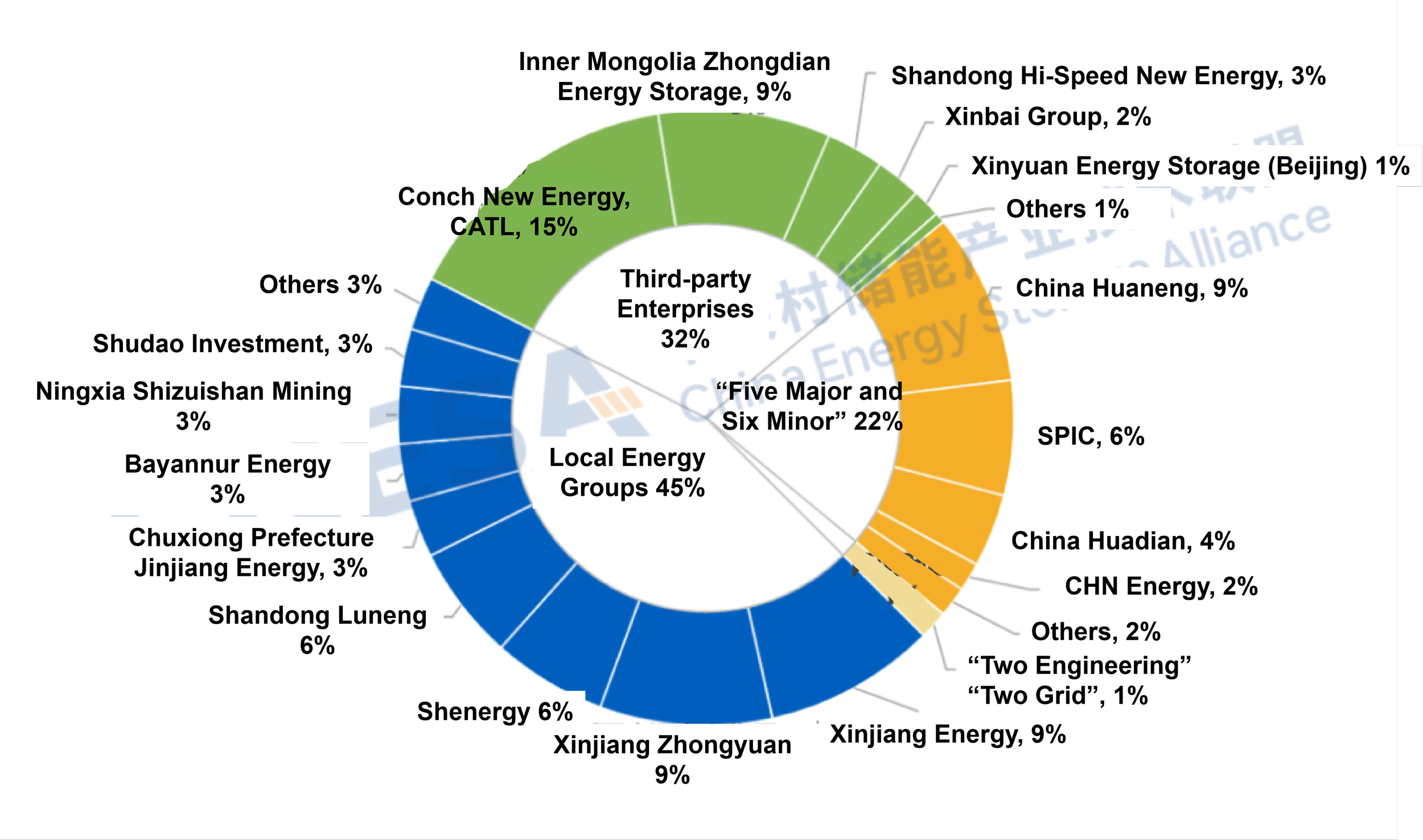
Figure 5. Owner Distribution of Newly Commissioned Grid&Source-Side Energy Storage Projects in China, November 2025 (MW%)
Data source: CNESA DataLink Global Energy Storage Database
https://www.esresearch.com.cn/
Note: “Third-party enterprises” refer to entities other than large state-owned generation groups, the two grid companies, two construction groups and local energy companies.
Accelerated Deployment of Non-Lithium Technologies
Technologically, newly commissioned grid&source-side projects were dominated by lithium iron phosphate (LFP) batteries, accounting for 91% of power capacity, followed by lead-carbon batteries (6%) and flow batteries (3%).
From a project development perspective, non-lithium technologies such as compressed air energy storage and hybrid systems are accelerating, highlighting a trend toward diversified technology pathways.
In compressed air storage, multiple 300 MW-class projects have completed filings and entered the planning stage; the Golmud 60 MW liquid air energy storage demonstration project and the Yumen 300 MW compressed air energy storage demonstration project have entered commissioning.
For hybrid storage, multiple 100 MW-class demonstration projects have launched or completed tenders, with some under construction or advancing, involving combinations such as lithium + sodium-ion batteries, lithium + flow batteries, lithium + flywheels, and lithium + nickel-metal hydride batteries.
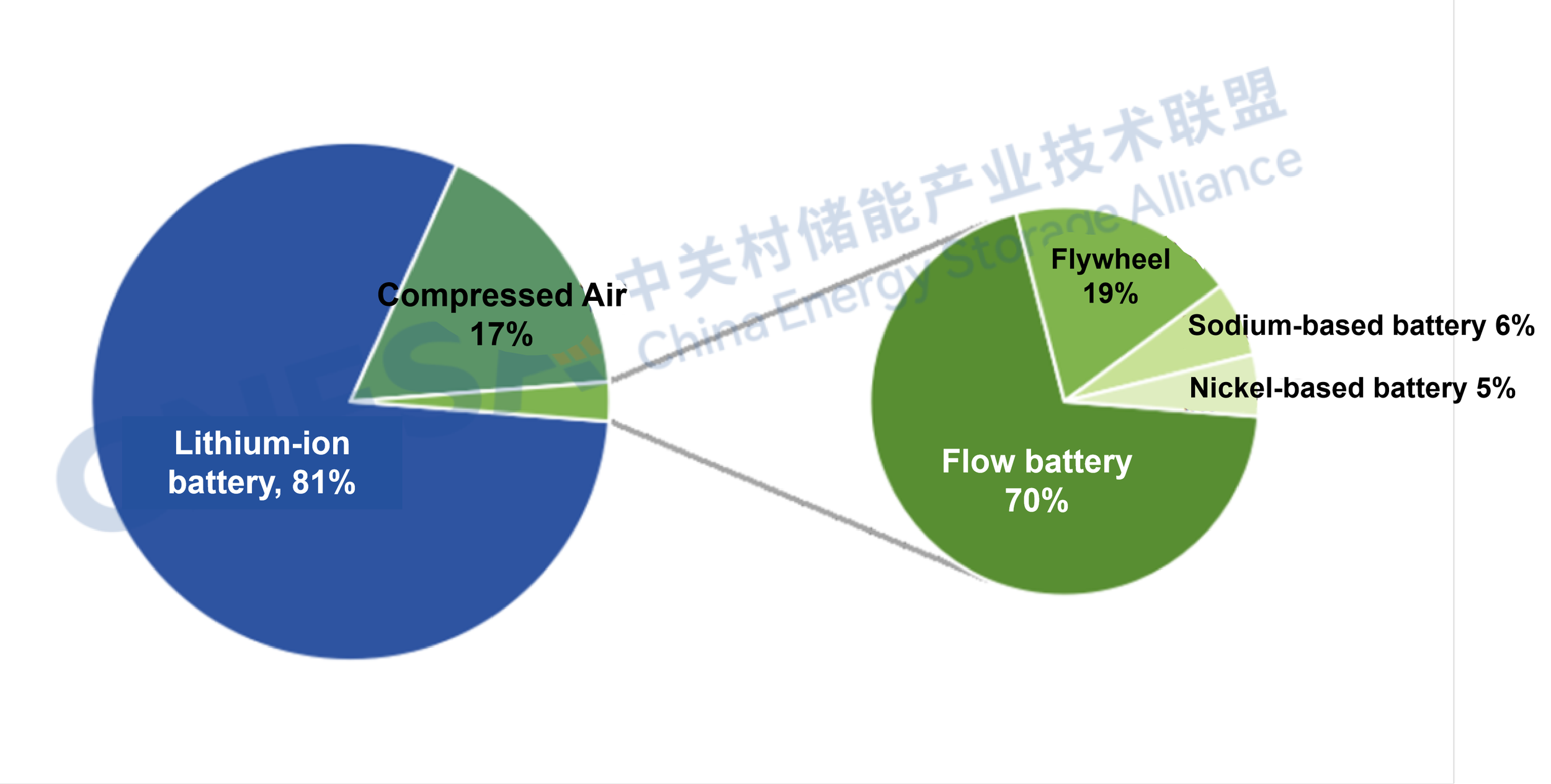
Figure 6. Technology Distribution of Newly Planned and Under-Construction Grid&Source-Side Energy Storage Projects in China, November 2025 (MW%)
Source: CNESA Datalink Global Energy Storage Database
https://www.esresearch.com.cn/
The China Energy Storage Alliance (CNESA) has consistently adhered to standardized, timely, and comprehensive information collection practices to continuously track developments in energy storage projects. Leveraging its long-term data accumulation and in-depth professional analysis, CNESA regularly publishes objective market analyses on installed energy storage capacity, providing valuable references for industry decision-making. Since June 2025, the monthly energy storage project analysis has been divided into two sections: “Grid&Source-Side Market” and “User-Side Market”. This issue focuses on interpreting the grid&source-side market in November.
CENSA Upcoming Events:
Apr. 1-3, 2026 | The 14th Energy Storage International Conference & Expo
Register Now to attend, free before Dec 31, 2025.


Year-End Review 2025 | Chen Haisheng: China's New-Type Energy Storage Installed Capacity Surpasses 100 GW - How to Move from “Scale Expansion” to “High-Quality Development”?
Source: Economic View

Chen Haisheng
Director, Energy Storage Specialized Committee, China Energy Research Society
Chairman, China Energy Storage Alliance (CNESA)
Director, Institute of Engineering Thermophysics, Chinese Academy of Sciences
According to data from the National Development and Reform Commission (NDRC), China's nationwide installed capacity of new-type energy storage has exceeded 100 GW, more than 30 times the level at the end of the 13th Five-Year Plan period.
Driven by Three Forces, the Energy Storage Market Reaches
a New Milestone
This development is the result of the combined effects of multiple key factors, including market demand, technological breakthroughs, and policy support.
First, rigid demand from the energy transition. Driven by China's “dual carbon” goals, installed capacity of renewable energy such as wind and solar has grown rapidly. Due to the intermittency and instability of renewables, their high penetration has significantly increased pressure on grid integration. As a key solution for renewable energy grid connection, energy storage has therefore seen a sharp rise in market demand.
Second, continuous breakthroughs in energy storage technologies. After a long period of accumulation, decisive breakthroughs have been achieved over the past five years. Lithium-ion battery technologies have continued to advance, enabling large-scale production of storage batteries. System performance has improved significantly while costs have continued to decline. At the same time, other technology pathways such as compressed air energy storage and flow batteries are gradually being commercialized, laying a solid foundation for large-scale deployment.
Third, strong support from the policy framework. At the national level, a series of major policies have been introduced to support industry development. These include the Guiding Opinions on Accelerating the Development of New Energy Storage issued by the NDRC and the National Energy Administration, and the Opinions on Improving the Price Governance Mechanism issued by the General Office of the CPC Central Committee and the State Council. By advancing and refining pricing mechanisms and market rules, these policies provide a clearer market environment for energy storage projects. Local governments have also introduced specific market and pricing policies tailored to their development characteristics, greatly stimulating the enthusiasm of market participants.
Based on current trends, the author believes that over the next three to five years, both the pace and scale of development of the new-type energy storage market will continue to increase significantly.
First, demand for energy storage will continue to rise. As renewable energy installations keep expanding, the role of energy storage will become increasingly prominent, driving rapid growth in demand.
Second, policy support will remain strong. A series of national policies have been introduced to promote the development of the energy storage industry. The Action Plan for the Large-Scale Construction of New-Type Energy Storage (2025-2027) proposes that by 2027, China's installed capacity of new-type energy storage will exceed 180 GW, driving approximately RMB 250 billion in direct project investment. This has effectively boosted market expectations. In addition, in September this year, China announced a new round of Nationally Determined Contribution (NDC) targets, clearly stating that by 2035, total installed capacity of wind and solar power will exceed six times the 2020 level, with a target of reaching 3.6 TW. To meet these goals, strong national support for energy storage is expected to continue.
Third, technological progress and cost reductions will continue. With ongoing innovation and scaling-up of energy storage technologies, new technologies and products will continue to emerge, while there remains room for further cost reductions at the system level.
Fourth, business models will gradually mature, with diversified revenue streams including capacity payments, spot market arbitrage, and ancillary services.
Fifth, overseas market demand remains strong. As the share of renewable energy generation continues to increase globally and supportive policies are introduced in many regions, further improvements in the economics of energy storage are expected to drive continued expansion of overseas markets.
According to forecasts by the Zhongguancun Energy Storage Industry Technology Alliance, new-type energy storage will reach the next “100 GW” milestone in 2027-2028, with China's installed capacity reaching 200 GW. Around 2030, China is expected to reach the third “100 GW” milestone, with cumulative installed capacity reaching 300 GW.
How to Shift from “Scaled Deployment” to “High-Quality Operation”?
However, to achieve a transition to high-quality operation over the next one to two years, concentrated breakthroughs are still needed in key areas such as market mechanisms, technological optimization, safety risk prevention, and full life-cycle management.
In terms of market mechanisms, it is necessary to gradually improve market and pricing mechanisms for new-type energy storage, promote the business model of “capacity payments + energy arbitrage + ancillary services,” appropriately expand spot price spreads, incorporate new types of ancillary services-such as ramping, inertia, reserves, and black start-into the pricing mechanism, and promote linkage between green power trading and energy storage discharge volumes to realize explicit monetization of environmental attributes.
In terms of safety risk prevention, a solid safety defense must be built from three aspects: monitoring and early warning, protection mechanisms, and standards and regulations. A unified system of safety technical standards should be established rapidly, clearly defining safety indicators for equipment selection, installation and commissioning, operation, and maintenance of energy storage power stations. Research should also be conducted on implementing a battery traceability system to ensure accountability for safety responsibilities.
In terms of technological R&D, first, continued strong development of lithium batteries is needed, with further optimization of the operation and application of existing lithium-based energy storage systems. Second, priority should be given to promoting demonstration and application of long-duration energy storage technologies such as variable-speed pumped storage, compressed air energy storage, and flow batteries. Greater efforts should also be made to advance R&D and validation of new technologies such as solid-state batteries, sodium-ion batteries, and grid-forming energy storage, fostering a development pattern in which multiple storage technologies progress in coordination.
In terms of industrial coordination, efforts should be made to enhance self-sufficiency in key materials. Targeting weak links such as core materials for energy storage cells and key equipment for long-duration storage, breakthroughs should be pursued through industry-university-research innovation consortia. Industrial development order should be standardized by curbing inefficient and repetitive construction through dynamic monitoring of project filings, and guiding capital toward projects with high utilization rates and high safety performance.
To promote the healthy and sustainable development of the industry, the author believes that further policy efforts are needed. First, market-based revenue policies should be improved by further refining energy storage pricing mechanisms, clarifying pricing calculation rules for different regions and application scenarios, expanding revenue channels from ancillary services, and smoothing cost-sharing mechanisms for such services, while continuing to promote business models involving capacity prices, energy prices, and ancillary services.
Second, full-chain safety policies should be strengthened by improving safety standards and regulations, refining safety supervision processes, implementing regular safety inspection systems, and clearly defining safety acceptance standards for all stages of energy storage power stations, from design and construction to operation and maintenance.
Third, research on energy storage pricing should be conducted by promoting cost tracking for major mainstream energy storage technologies, studying cost structures across key segments of energy storage systems, and guiding the industry toward rational assessments of energy storage costs.
Finally, industry self-regulation should be promoted by strengthening dynamic monitoring of data such as energy storage output, continuously paying attention to industry development issues, advancing technological iteration and safety performance upgrades of energy storage products, supporting industry-led self-regulatory initiatives, and guiding the sector toward a virtuous development path that emphasizes safety performance and value creation.
CENSA Upcoming Events:
Apr. 1-3, 2026 | The 14th Energy Storage International Conference & Expo
Register Now to attend, free before Dec 31, 2025.

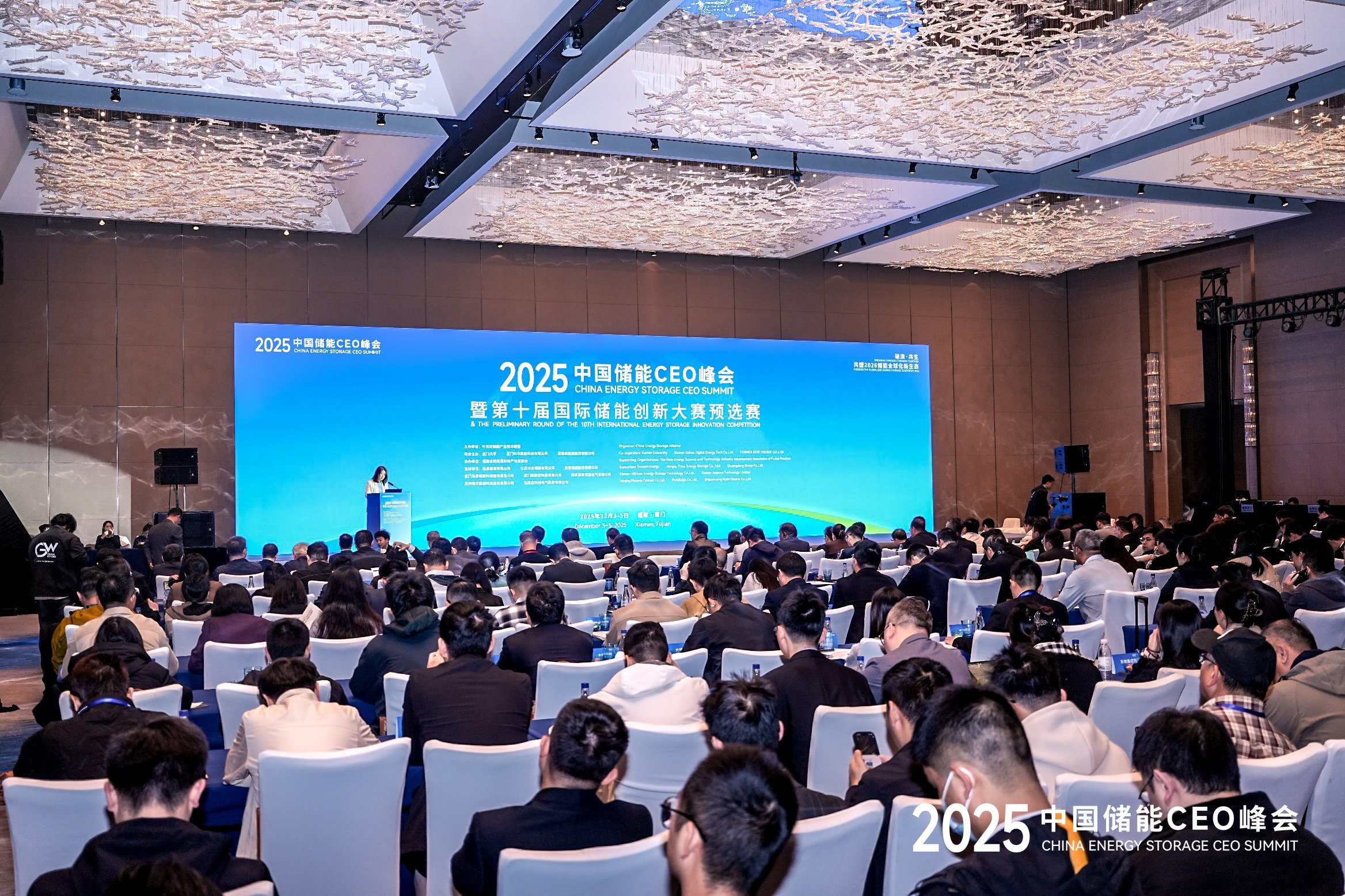
2025 China Energy Storage CEO Summit & Preliminary Round of the 10th International Energy Storage Innovation Competition Successfully Held in Xiamen
Source: CNESA
On December 4, 2025, the 2025 China Energy Storage CEO Summit & Preliminary Round of the 10th International Energy Storage Innovation Competition, hosted by the China Energy Storage Alliance (CNESA) and co-organized by Xiamen University, Kehua Digital Energy, and Cornex New Energy, was successfully held in Xiamen, China.
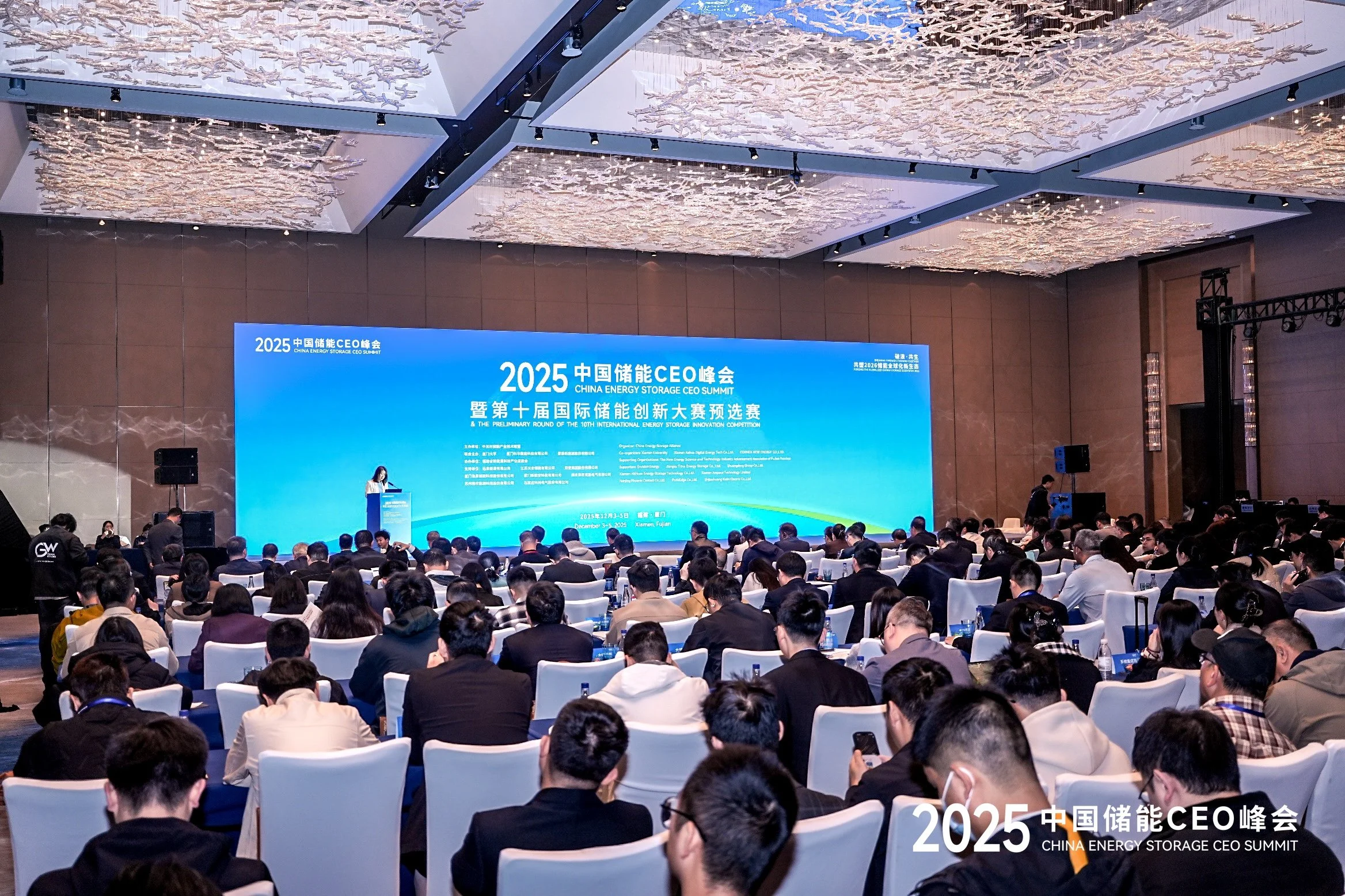
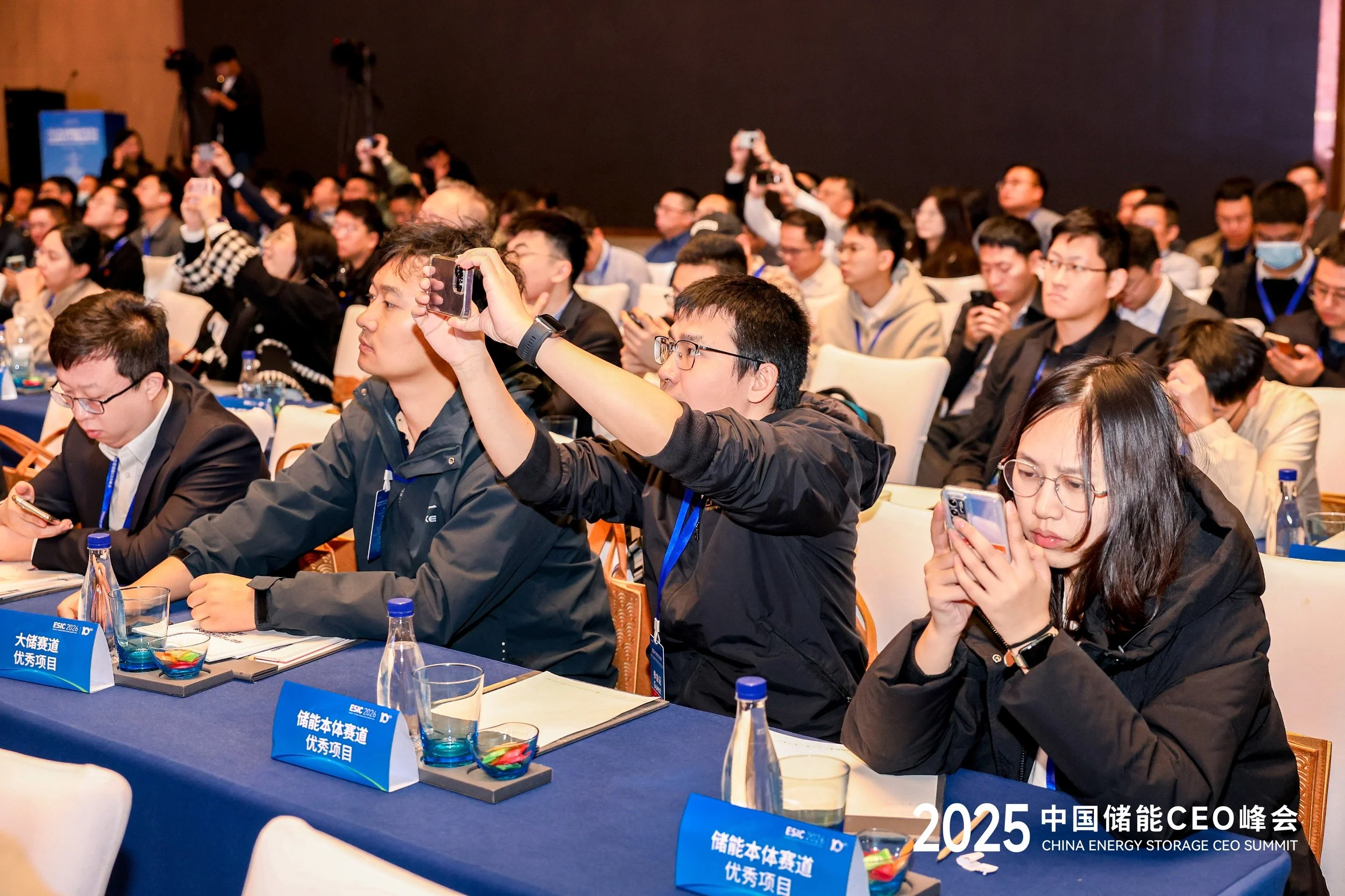
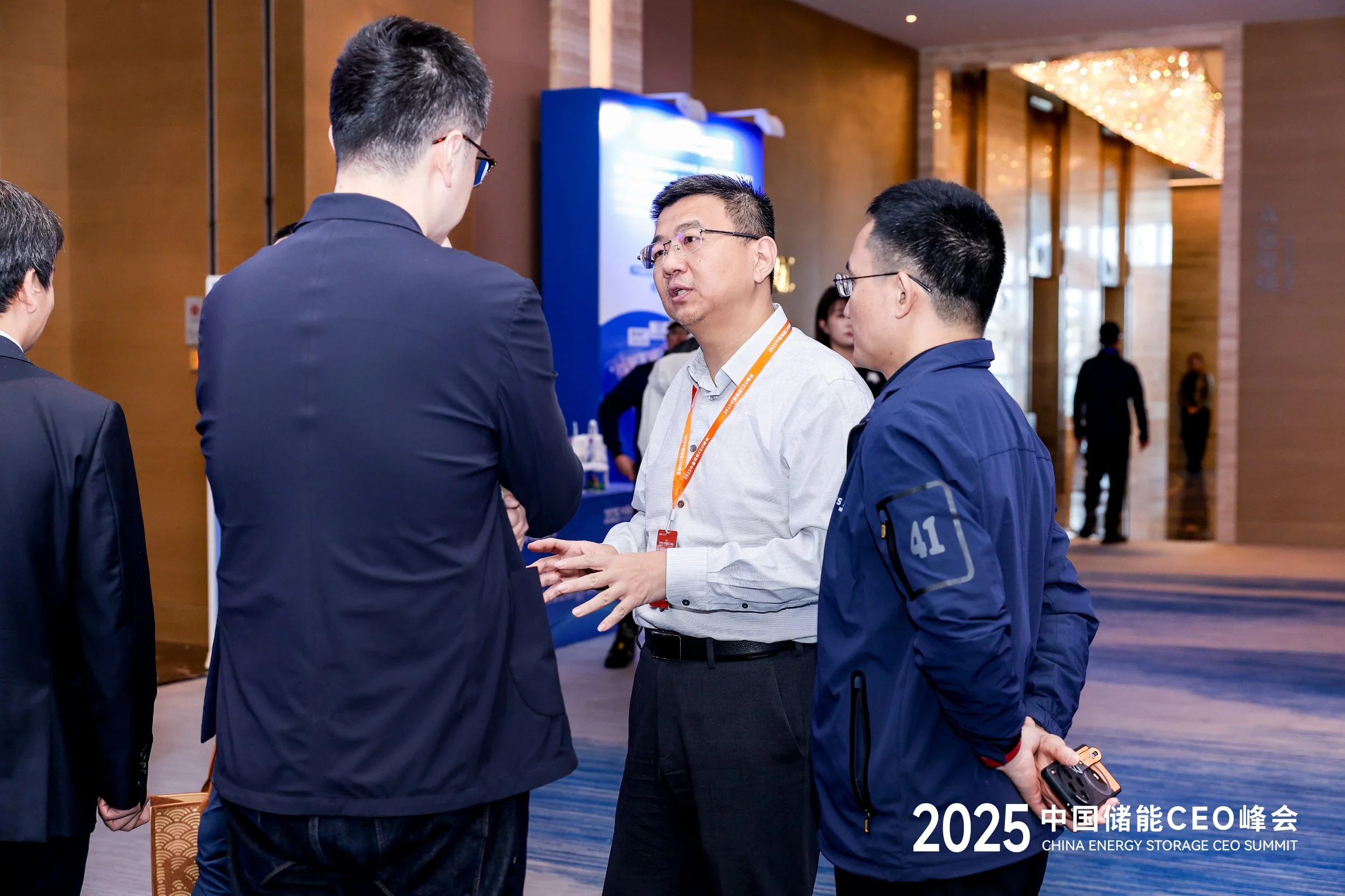
As CNESA's final flagship event of the year, the Summit took Southeast China - an important strategic gateway to global markets - as its anchor and adopted the theme “Breaking Waves · Coexistence - Co-Creating a New Globalized Ecosystem for Energy Storage 2026.” The event gathered government officials, academicians, industry leaders, and corporate executives to review China's industry landscape in 2025, explore the development path toward 2026 and the longer-term 15th Five-Year Plan period, and jointly seek new pathways for the high-quality and global advancement of energy storage.
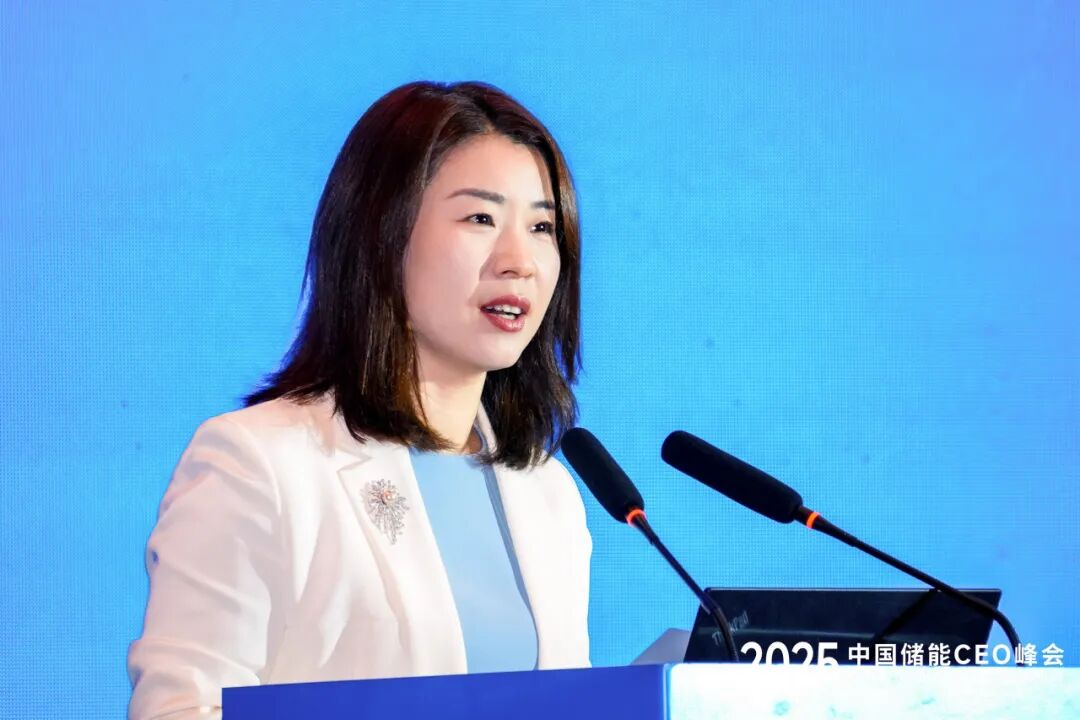
The opening ceremony was hosted by Liu Wei, Secretary-General of CNESA.
Distinguished speakers and guests included:
Prof. Zheng Nanfeng of Xiamen University; leaders from Xiamen Municipal Bureau of Commerce, Xiamen Municipal Bureau of Science and Technology, and Xiamen Municipal Development and Reform Commission; Chen Haisheng, Chairman of CNESA and Director of the Institute of Engineering Thermophysics, Chinese Academy of Sciences; Chen Chenghui, Chairman of Kehua Data; Huang Feng, President of Cornex New Energy; Wang Shunchao, Deputy Director of the International Consulting & Design Institute of the China Electric Power Planning and Engineering Institute; Zheng Yaodong, Honorary Chairman of the Energy Storage Team of China Southern Power Grid; Wen Zhaoyin, Researcher of the Shanghai Institute of Ceramics, Chinese Academy of Sciences; Prof. Yang Yong of Xiamen University; Huang Junhui, former Deputy Director of the Jiangsu Institute of Economic Research, State Grid, and senior technical expert, among others.
Also present were CNESA Vice Chairs and representatives: Yu Zhenhua, Executive Vice Chairman of CNESA; Yang Bao, President of Trina Storage; Gao Xinhua, Chief Engineer of China Southern Power Grid Technology; Yang Rui, Chairman of Shuangdeng Group; Cui Jian, President of Kehua Digital Energy; Tian Qingjun, Senior VP of Envision Energy & President of Envision Storage; Lian Zanwei, Chairman of XYZ Storage; Liu Mingyi, Director of Energy Storage Technology, Huaneng Clean Energy Research Institute; Yu Jianhua, VP of Narada; Lv Lin, GM of TBEA Xi'an, and many other industry leaders.
The Summit also received strong support from co-organizer Fujian New Energy Technology Industry Promotion Association and supporting partners including Envision Energy, Trina Storage, Shuangdeng, HyperStrong, Ampace, Phoenix Contact, Potisegde, and KE Electric, jointly presenting a high-level industry event.
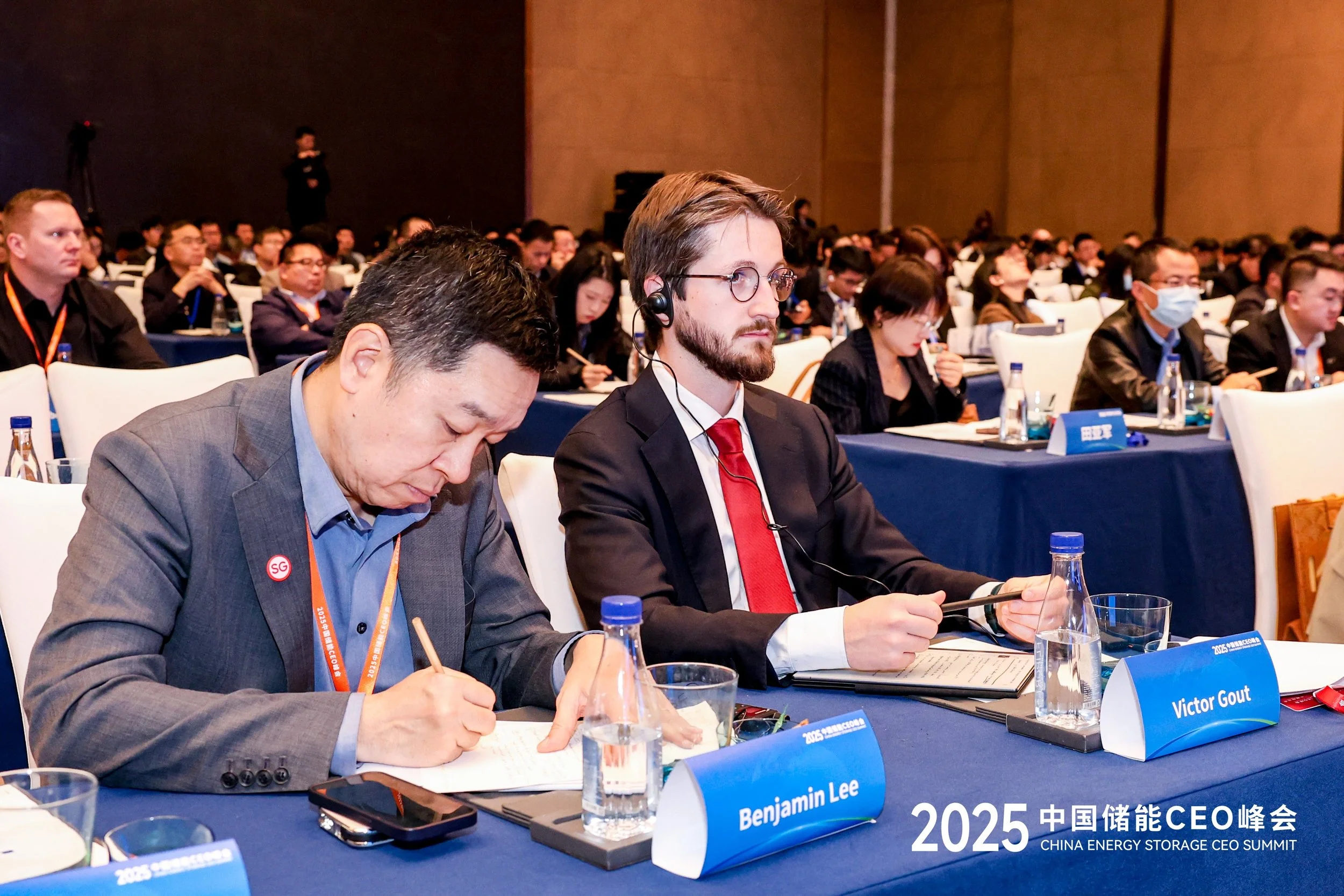
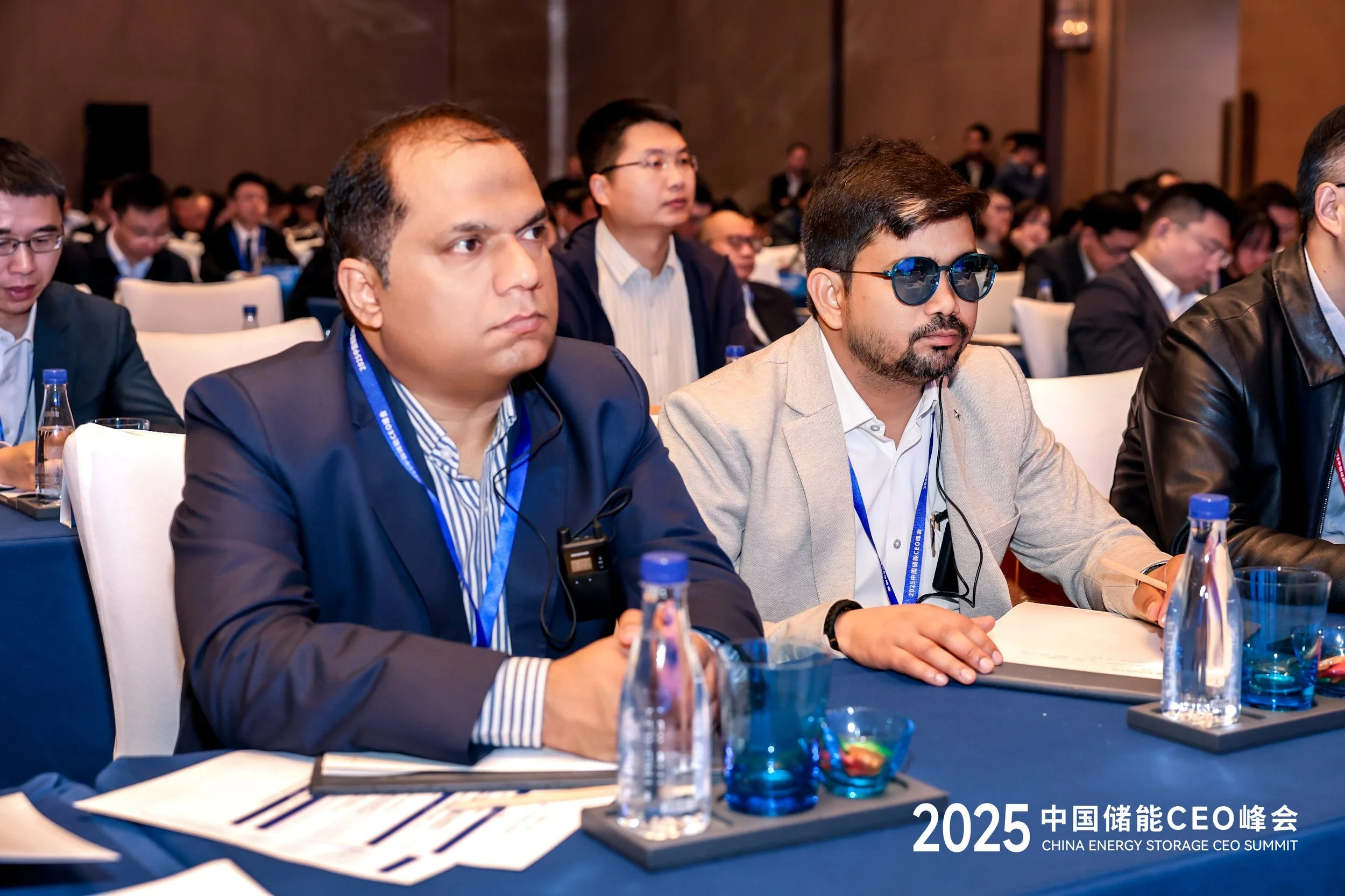
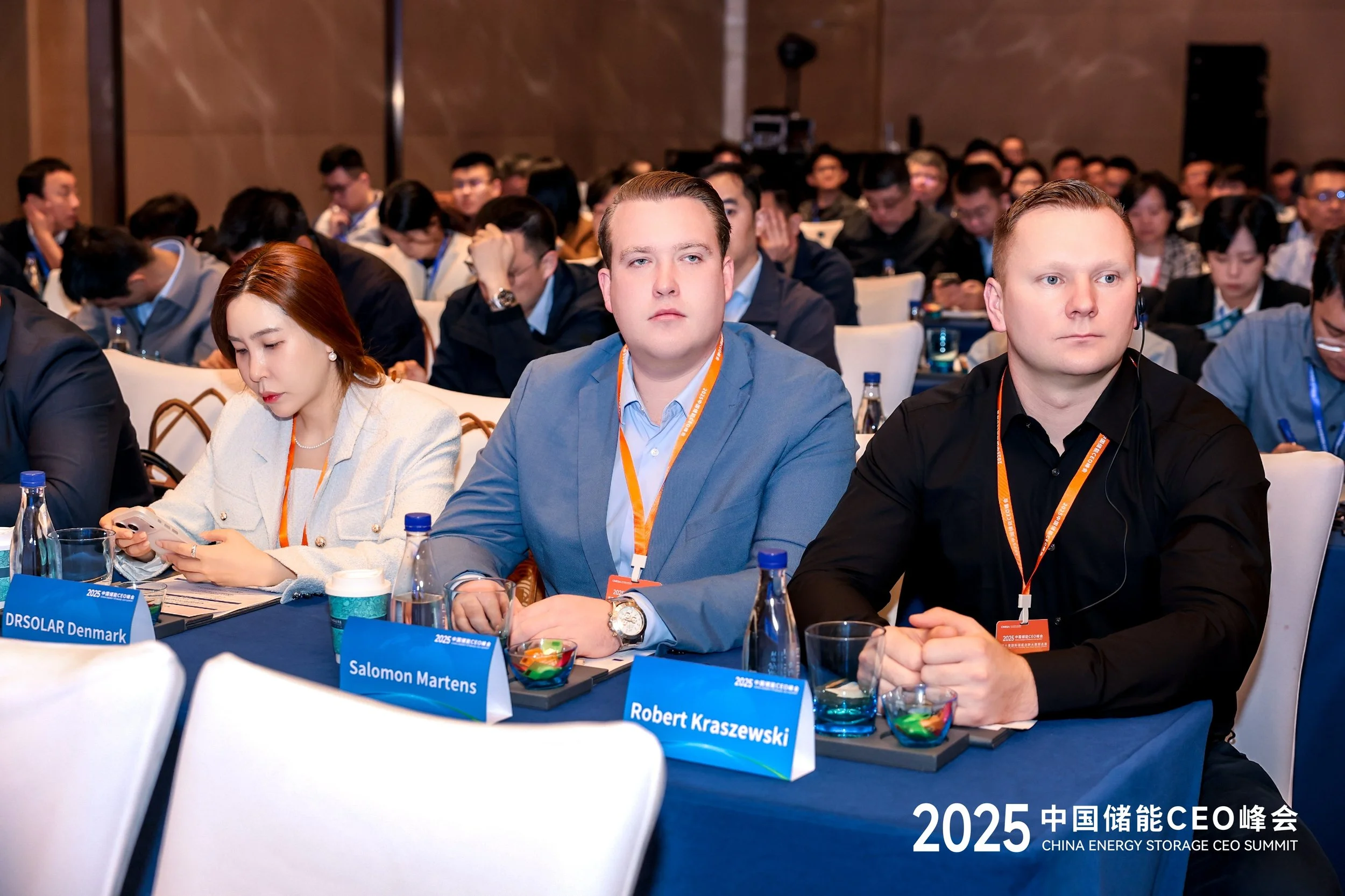
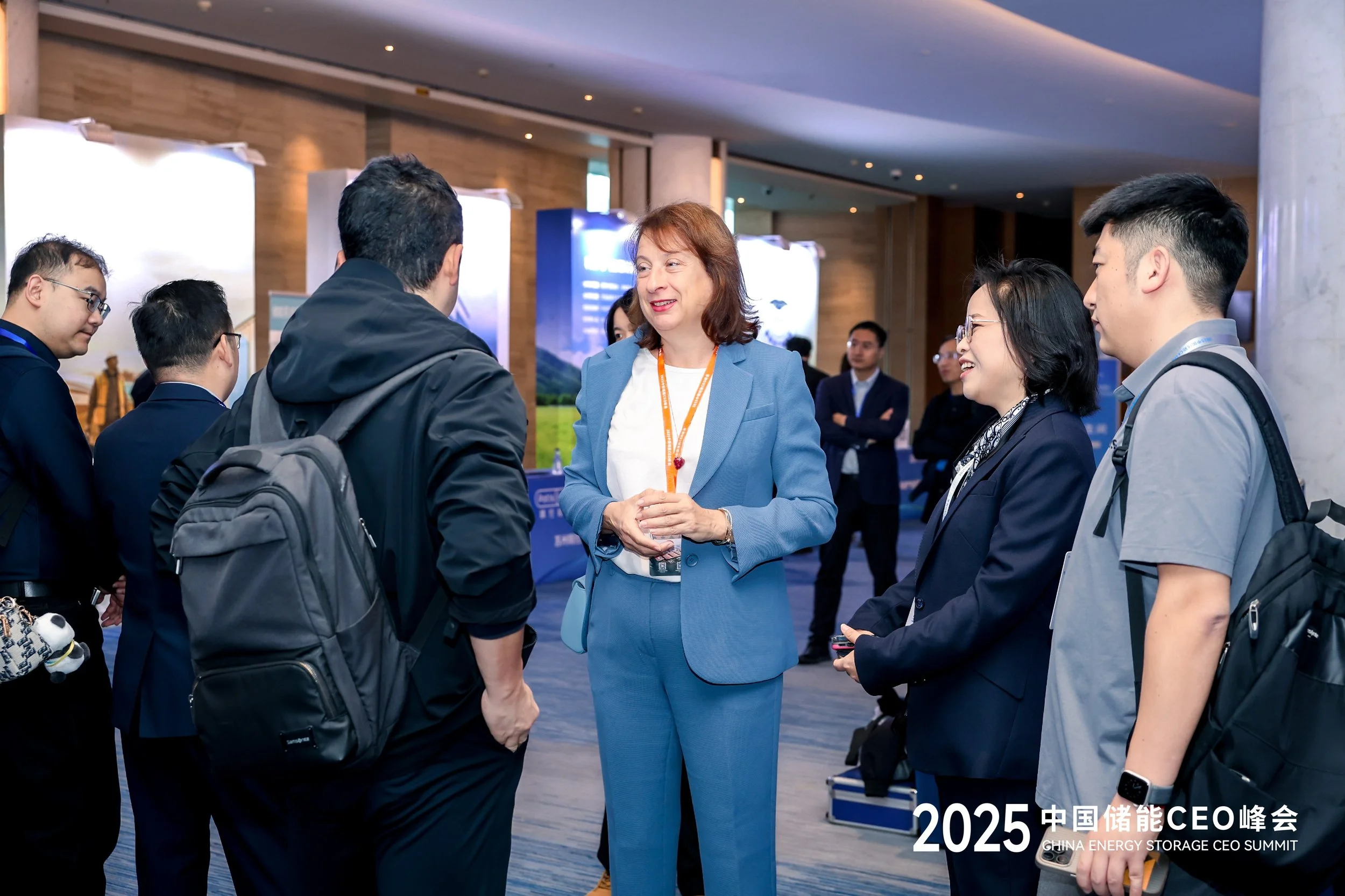
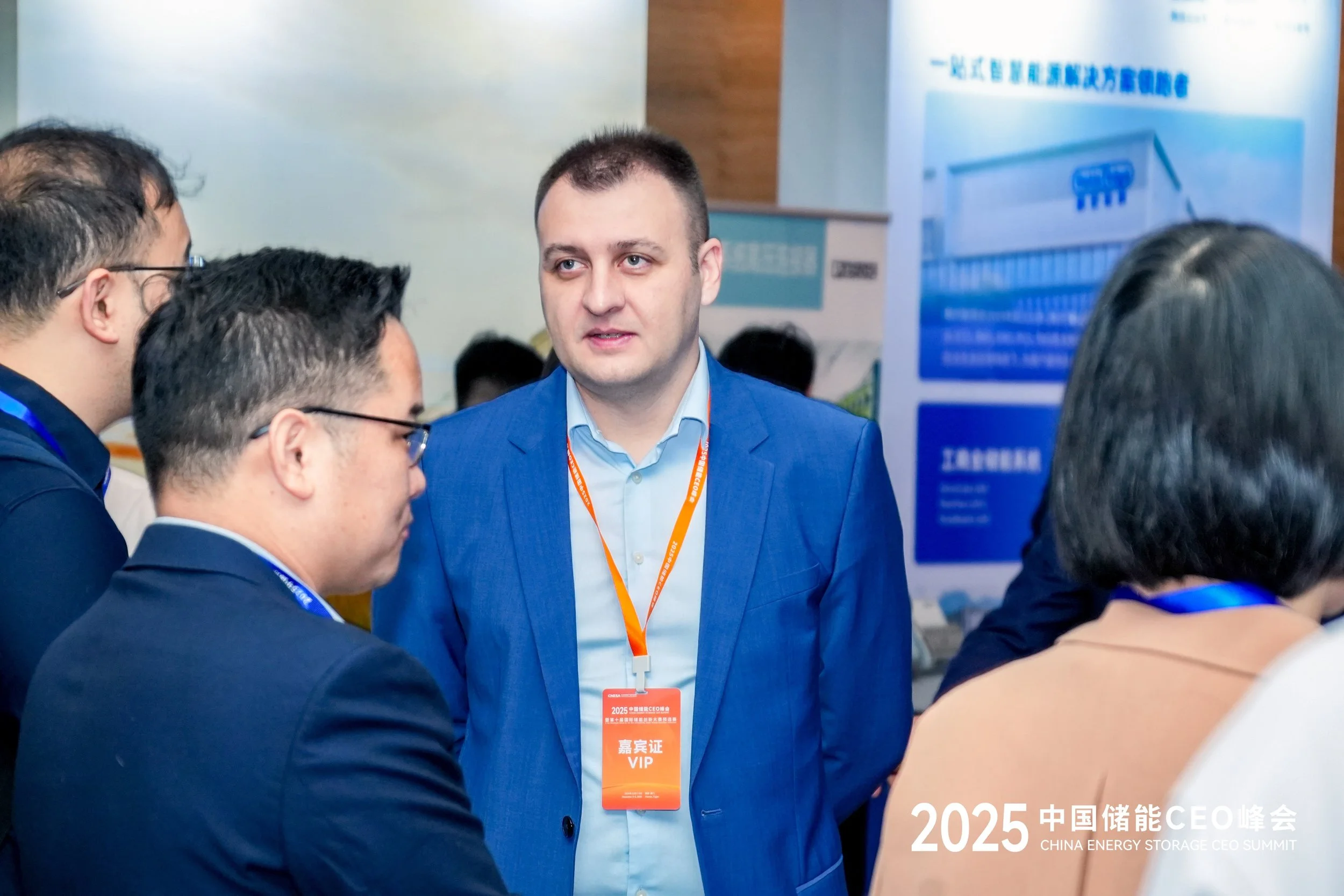
This year's Summit featured an impressive international lineup, gathering energy asset owners and project developers from key global regions including Denmark, Austria, Bulgaria, India, Saudi Arabia, Singapore, Australia, Malaysia, and France. Special invited foreign guests included Li Yilin, Deputy Director of Enterprise Singapore (South China), and Victor Gout, Deputy Representative for Alternative Energy, French Atomic Energy and Alternative Energies Commission (CEA)-Representative Office in China.
This strong participation across the entire value chain created an efficient and pragmatic bridge connecting Chinese and international enterprises.
High-Level Speeches
Driving High-Quality Development and Co-Shaping a New
Global Energy Storage Ecosystem
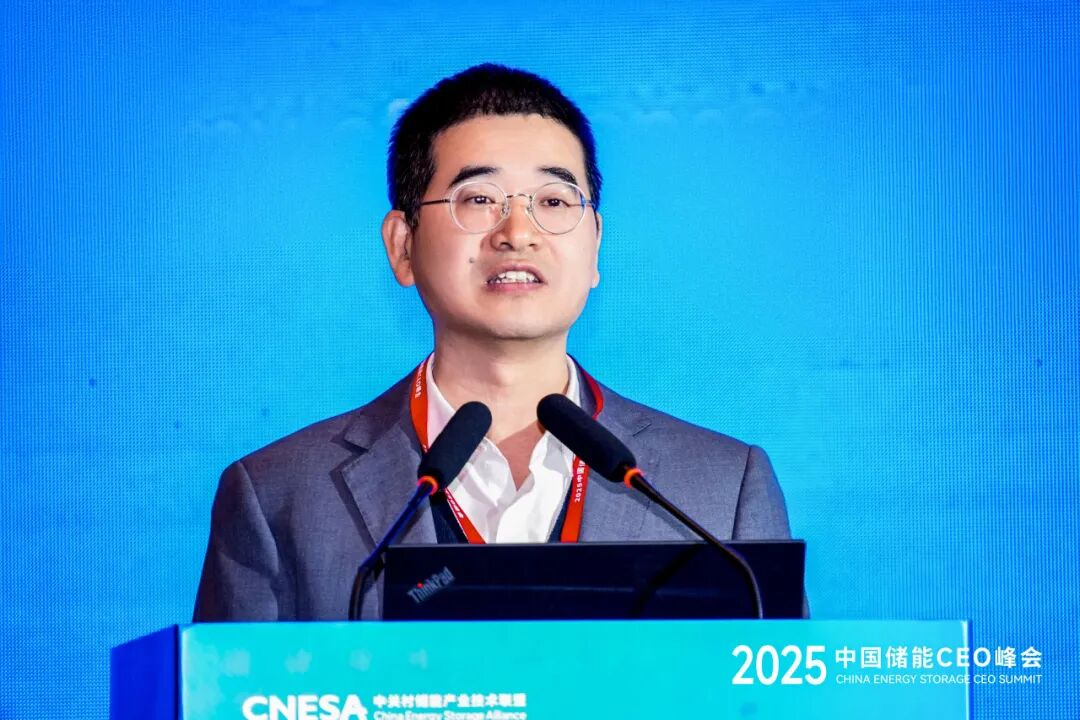
Zheng Nanfeng - Professor, Xiamen University
Prof. Zheng Nanfeng, Dean of the School of Energy, Xiamen University, and Director of the Jiageng Innovation Laboratory, emphasized China's remarkable progress in renewable energy, with total installed capacity exceeding 1,700 GW. Despite challenges such as higher curtailment rates in western regions, the new 2035 targets indicate vast application opportunities for energy storage.
He stressed that Xiamen University, as a “Double First-Class” institution, is committed to breaking barriers between scientific research and industrial innovation, exploring new models for integrating education, research, and industry. The university will continue working with all sectors to focus on technological breakthroughs, talent development, and solutions for scaling up and commercializing energy storage, strengthening the foundation for global energy transition.
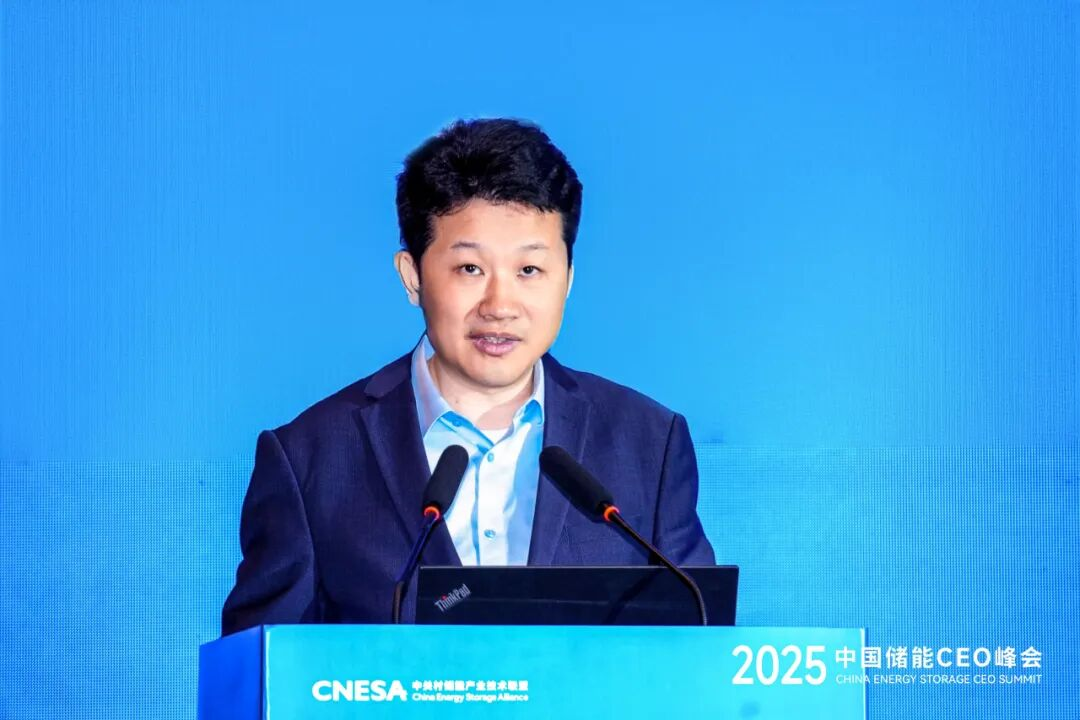
Chen Haisheng - Chairman, CNESA
Chairman Chen Haisheng noted that China's energy storage industry is undergoing a profound shift from rapid expansion to high-quality development. This is reflected in China's global leadership in installed capacity, significant improvement in application performance, diversified technological pathways, and a shift in market mechanisms from mandatory allocation to market-driven deployment.
He highlighted globalization as a key agenda, with Chinese companies accelerating their overseas strategy based on strong technological and supply chain advantages. CNESA will continue building platforms to support global deployment, promote technological ecosystem restructuring, and strengthen China's high-quality “going global” process.
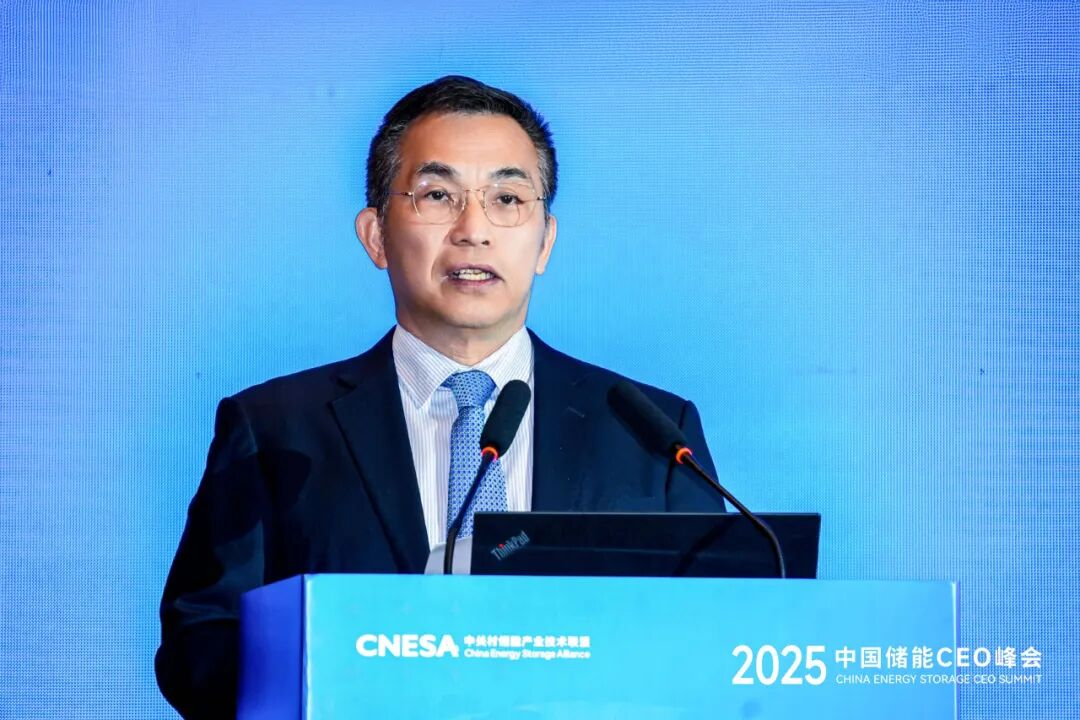
Chen Chenghui - Chairman, Kehua Data
Chairman Chen Chenghui emphasized that energy storage is the “accelerator” of the new power system and a key enabler of the global low-carbon transition, with China increasingly providing “Chinese approach” to the world.
He introduced Kehua's innovation-driven approach, focusing on grid-forming energy storage and full-scenario solutions, and noted the company's collaboration with central SOEs on world-first projects. Internationally, Kehua follows a strong localization strategy, with business presence in over 100 countries. He called for building resilient global supply chains and advancing open collaboration to accelerate global energy transformation.
Keynote Reports
Deepening Industry-Research Integration and Jointly Planing
Global Deployment
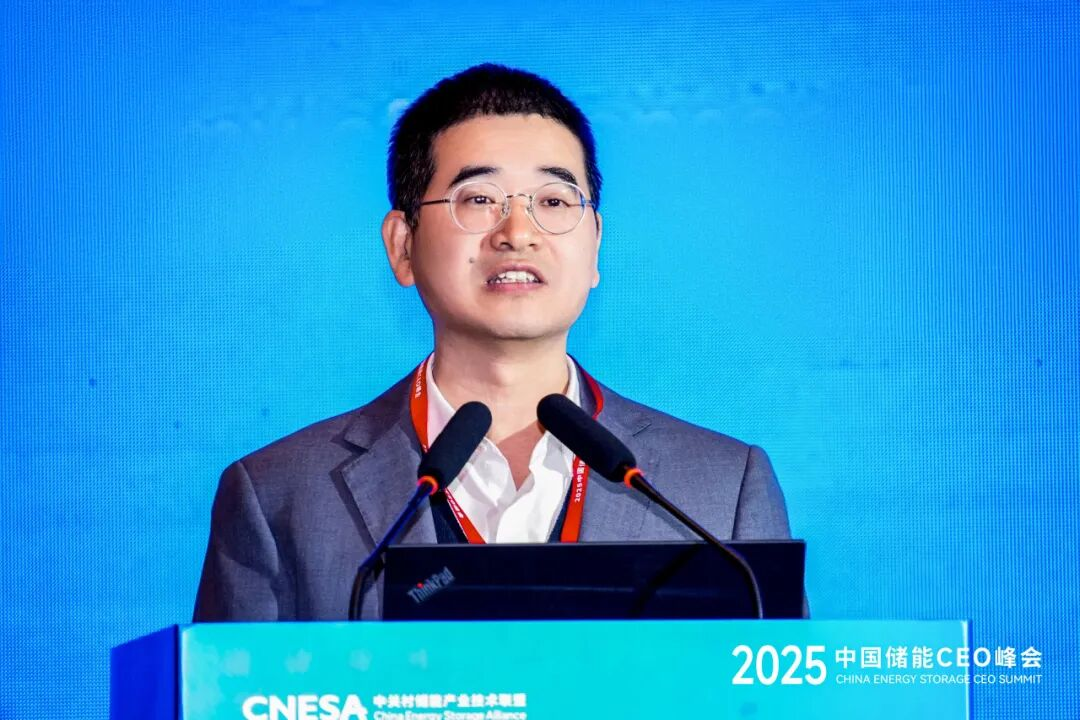
Zheng Nanfeng - Professor, Xiamen University
In his keynote “From Free Exploration to Dual Empowerment: Integrating Basic Research with Industrial Innovation,” Prof. Zheng outlined the two-way empowerment mechanism of “research serving industry” and “industry boosting research”: Relying on the Jiageng Innovation Laboratory, actively explore a new system of "combination of allocation and investment" and "fiscal funds + market-oriented operation", and achieve the deep integration of technology and industry by breaking the single academic evaluation orientation.
The Jiageng Lab focuses on low-carbon energy, high-efficiency storage, and next-generation displays, establishing public validation platforms to accelerate commercialization. He advocated integrated development of university campuses, science parks, and industrial parks to transform the high-failure-rate path of innovation into a new norm of high-quality industrial growth.
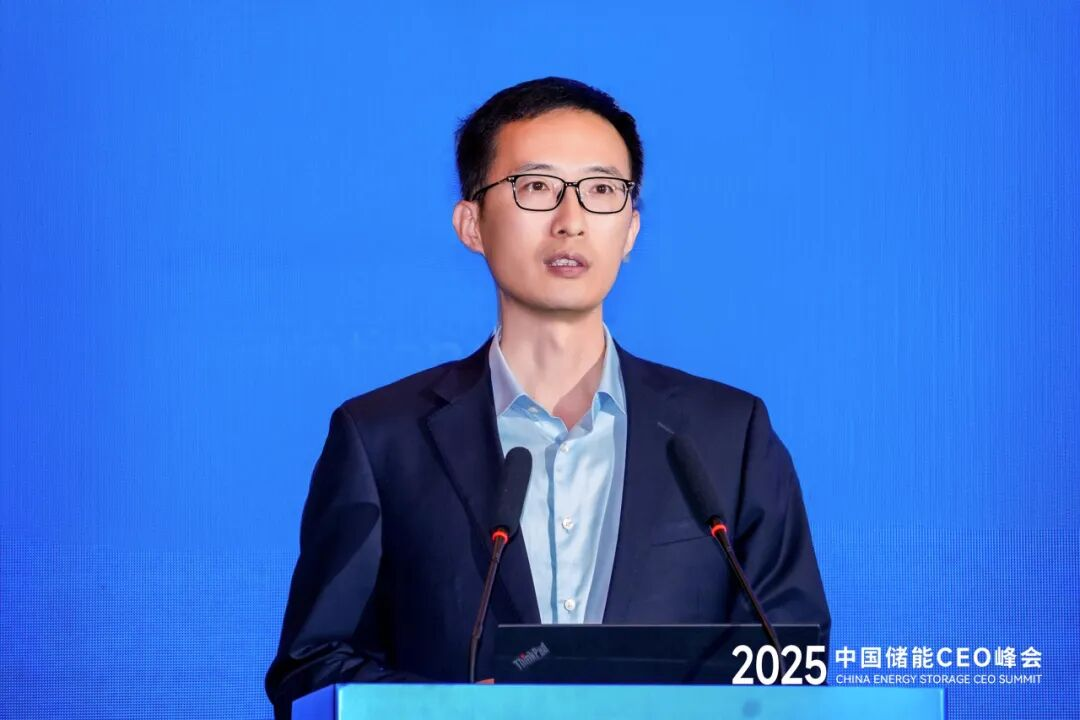
Wang Shunchao - Deputy Director, International Energy Consulting Institute, EPPEI
Dr. Wang Shunchao delivered a keynote titled “Green Power Planning for Overseas Markets.”
He emphasized the rapid growth of clean energy demand along the Belt and Road, contrasted with weaker power system foundations, making power system planning increasingly critical. He introduced EPPEI's modeling and simulation experience as well as insights from international power system planning projects.
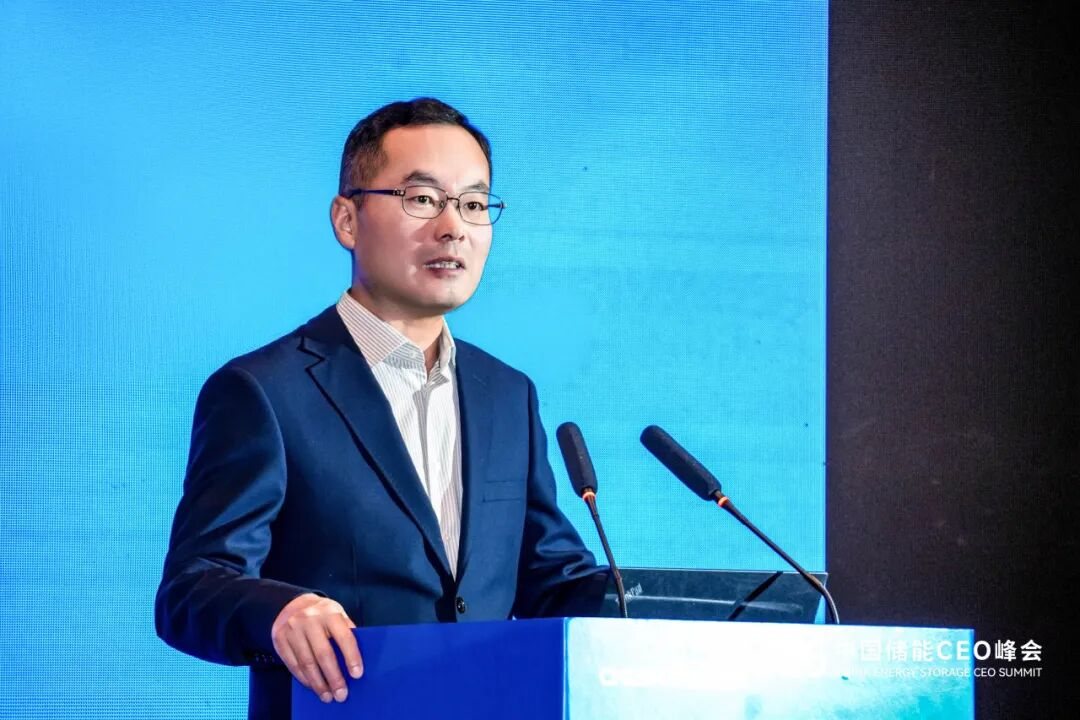
Tian Qingjun - Senior VP, Envision Energy
Tian Qingjun highlighted that Chinese energy storage companies are “born global,” and internationalization has become an imperative.
He stressed the need to move from simply “going out” to deeply “integrating in,” with local operations, local talent, and long-term value creation. He called for ecosystem collaboration, avoidance of harmful price competition, and positioning Chinese companies as global enablers and ecosystem co-builders.
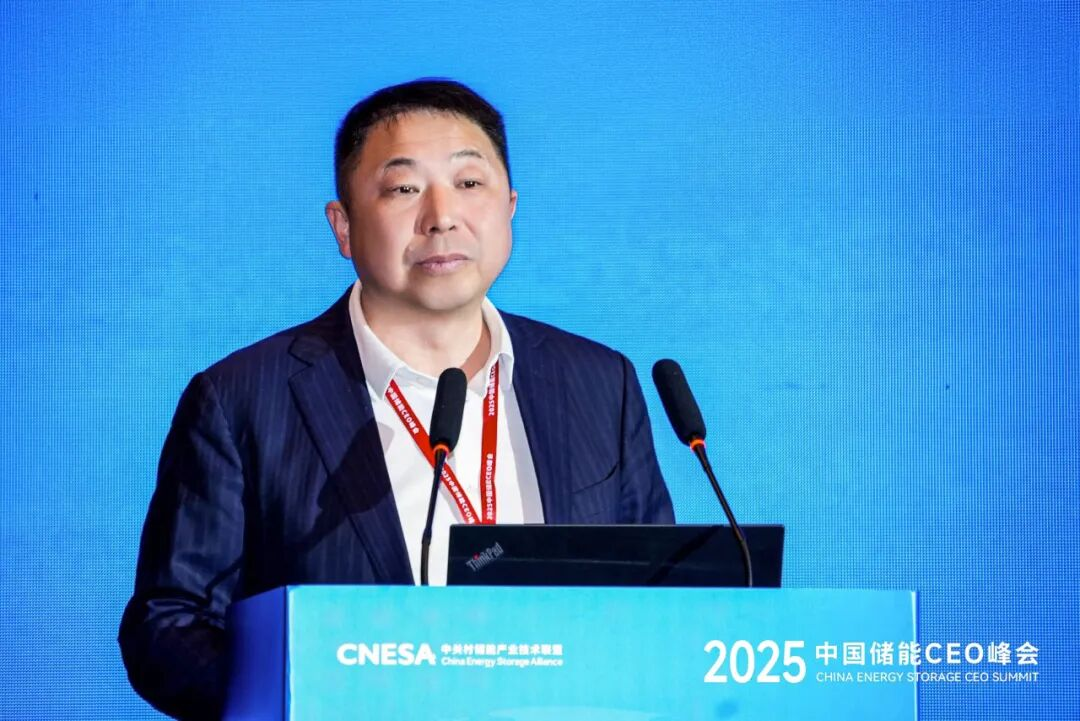
Huang Feng - President, Cornex New Energy
President Huang Feng noted that the industry faces both fierce competition and supply shortfalls, yet remains in a golden period of rapid growth. He forecasted global energy storage installations reaching 550-600 GWh in 2025, with overseas markets surpassing China for the first time.
He explained the company's “four-circle growth model,” evolving from market entry to customer trust, and then to domestic-global parallel expansion, positioning Cornex as a rising force shaping future industry ecosystems.
10th International Energy Storage Innovation Competition
A Decade of Excellence: Recognizing Industry Benchmarks
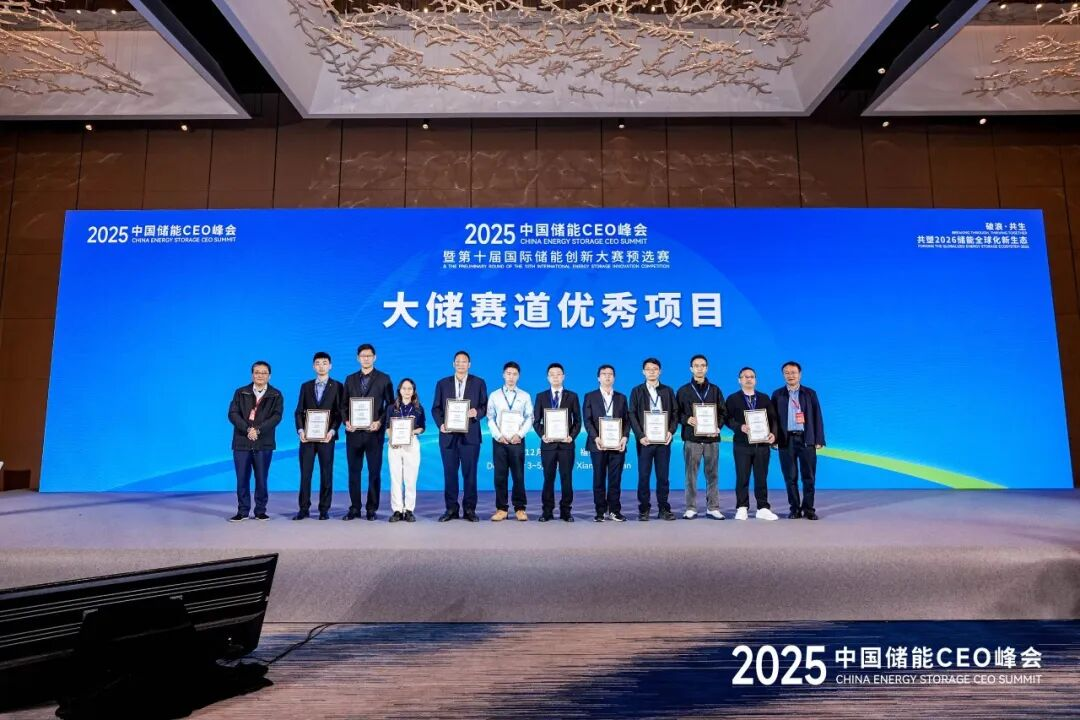
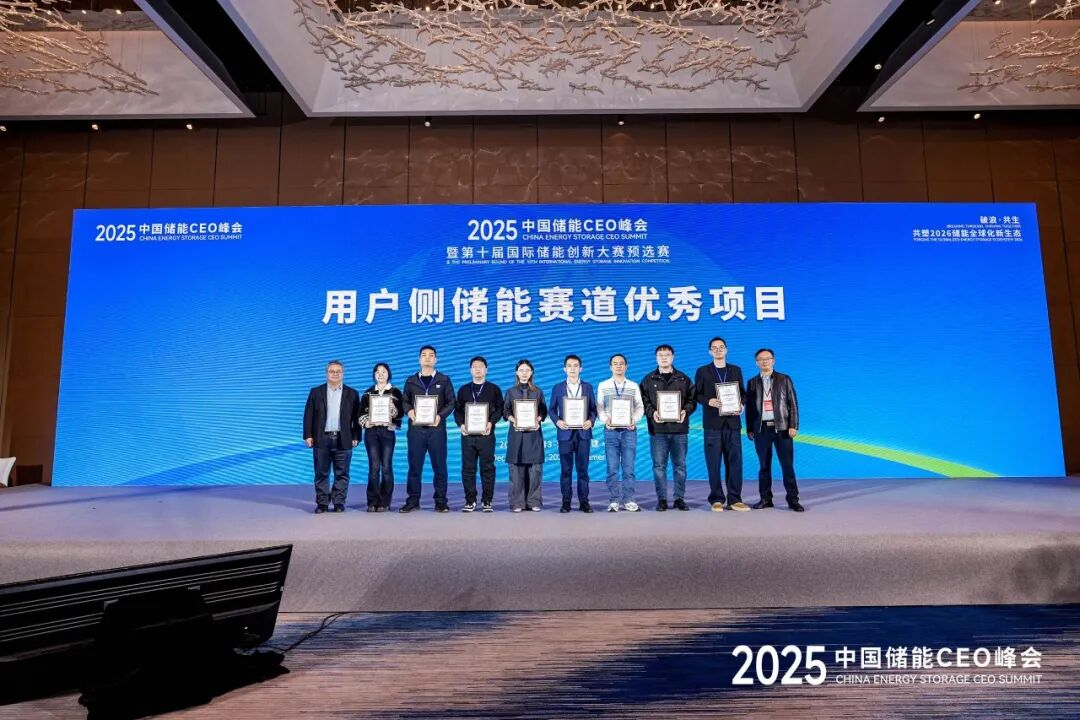
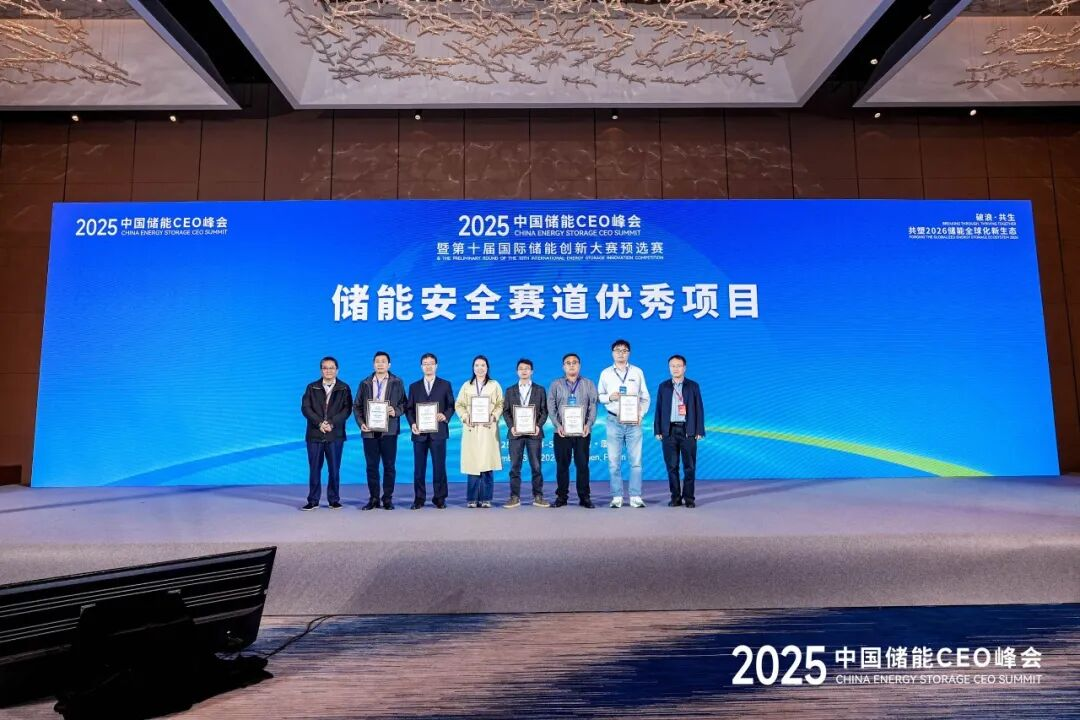
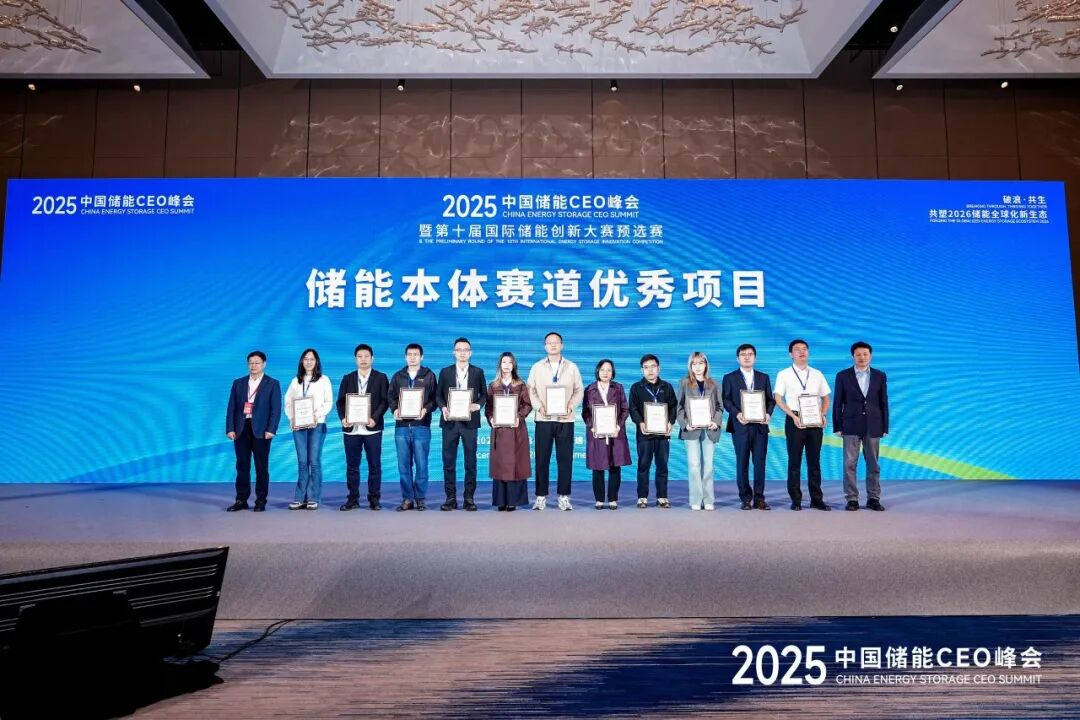
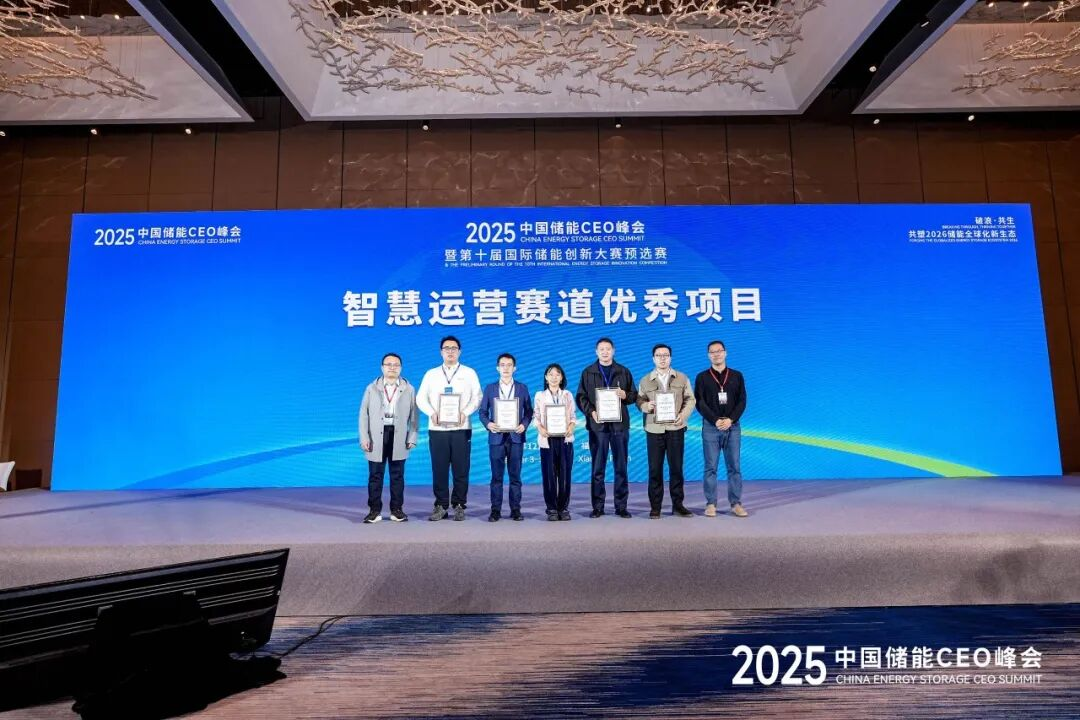
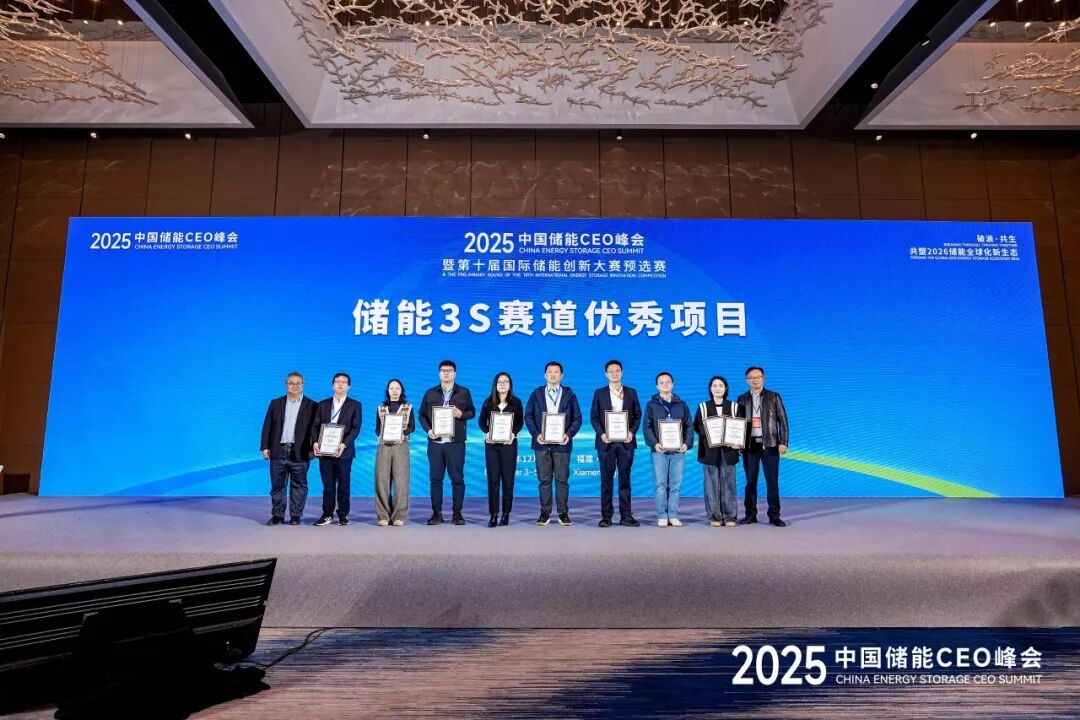
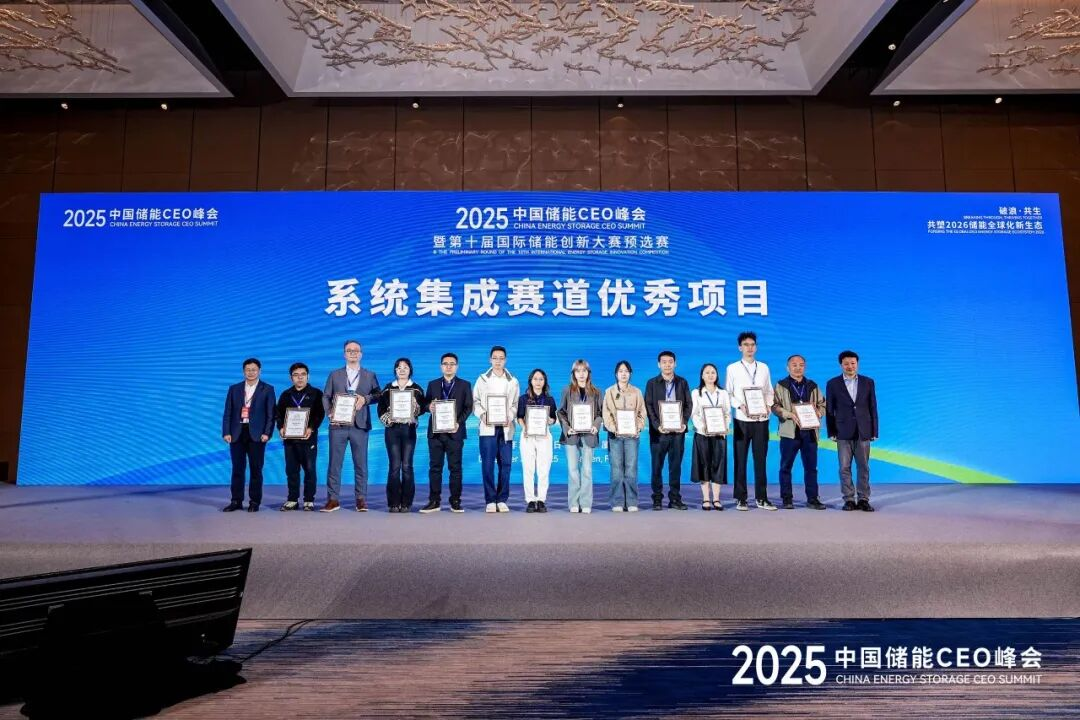
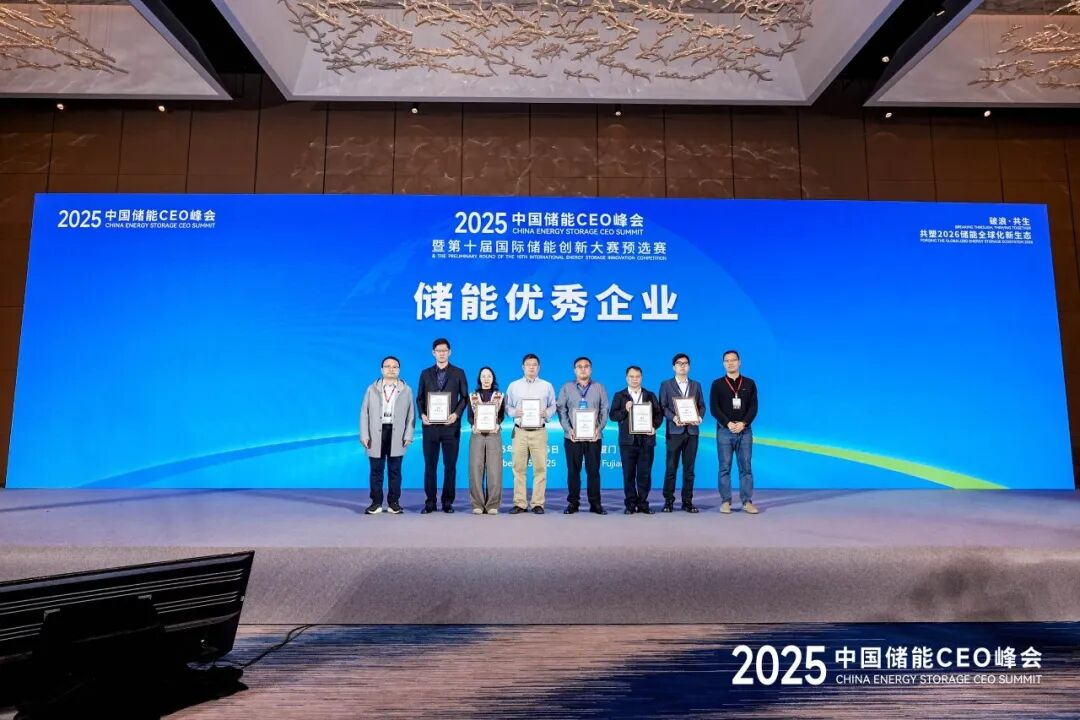
The preliminary awards ceremony of the 10th International Energy Storage Innovation Competition was held during the opening ceremony. Out of 183 project applications, 129 advanced to the preliminary round, and after rigorous review, 77 projects won the Outstanding Project Award.
Over the past decade, the competition has witnessed every major technological iteration and set recognized benchmarks for the industry. The winning projects will advance to the annual finals to compete for the highest honors.
CEO Roundtable
Toward 2030: Reshaping the Global Energy Storage Ecosystem
In 2025, industry reshuffling intensified amid complex global trade dynamics. The CEO roundtable - “Toward 2030: Synergy & Prospect Between China's Energy Storage and the Global Industrial Ecosystem” - became a highlight of the Summit.
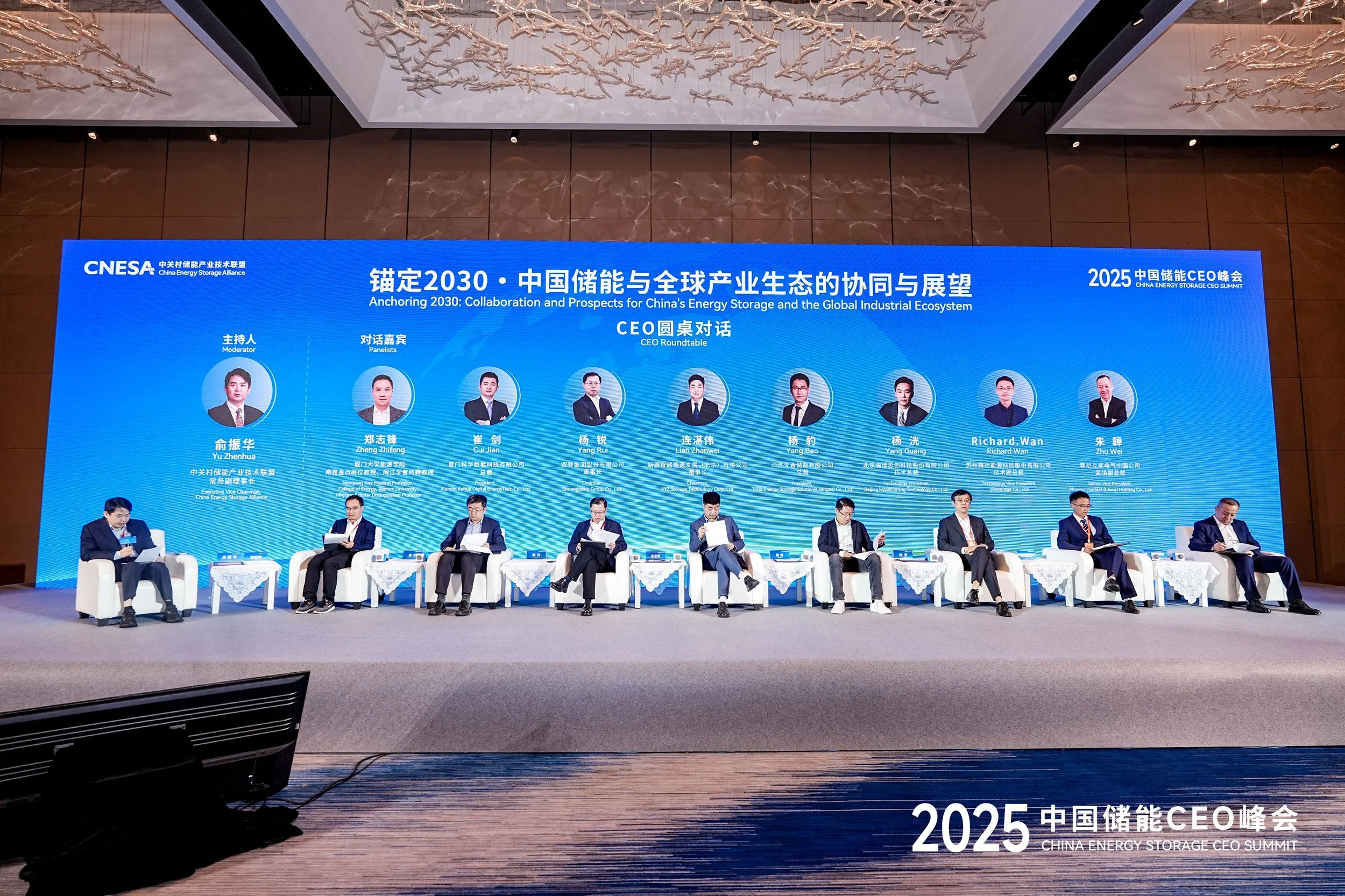
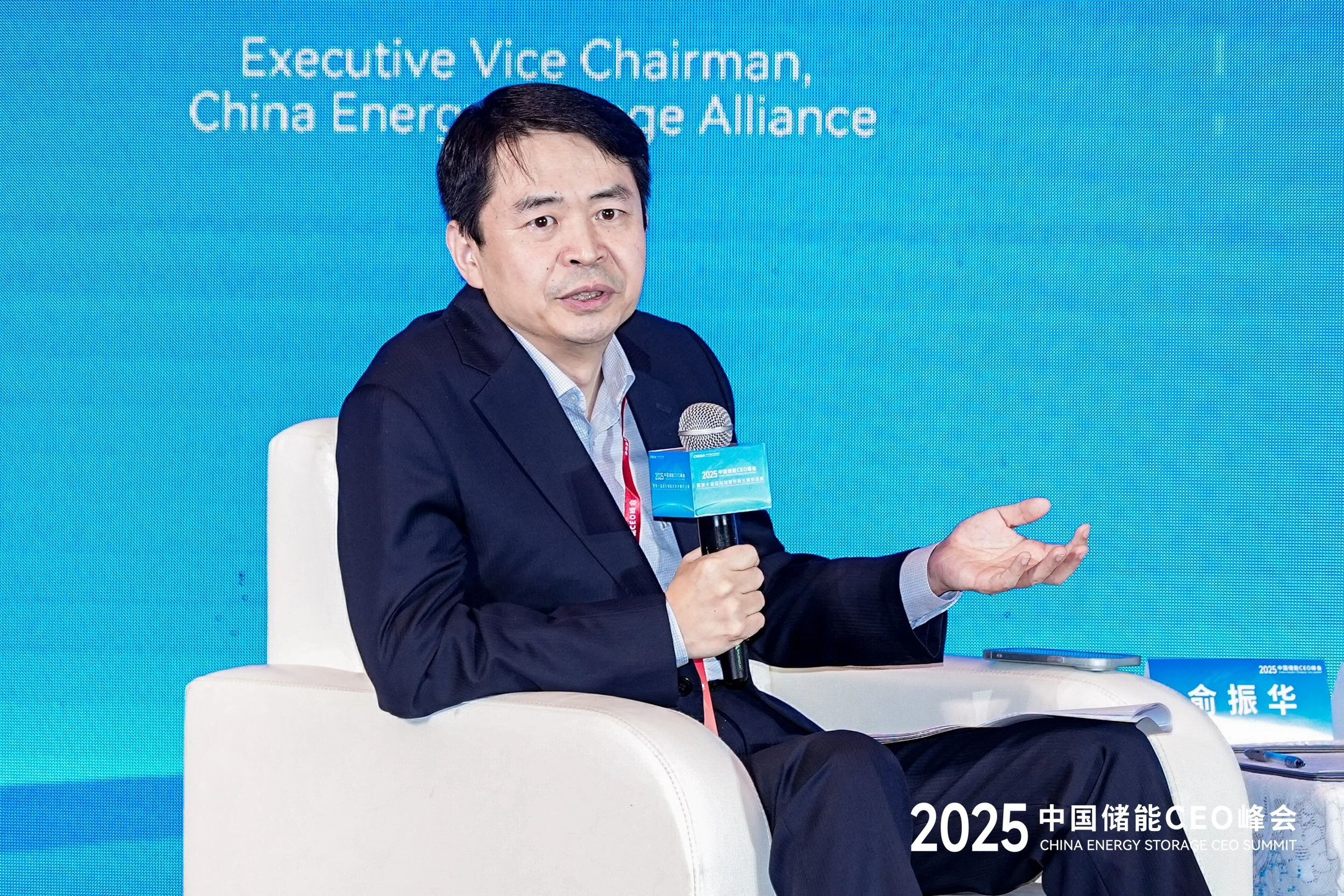
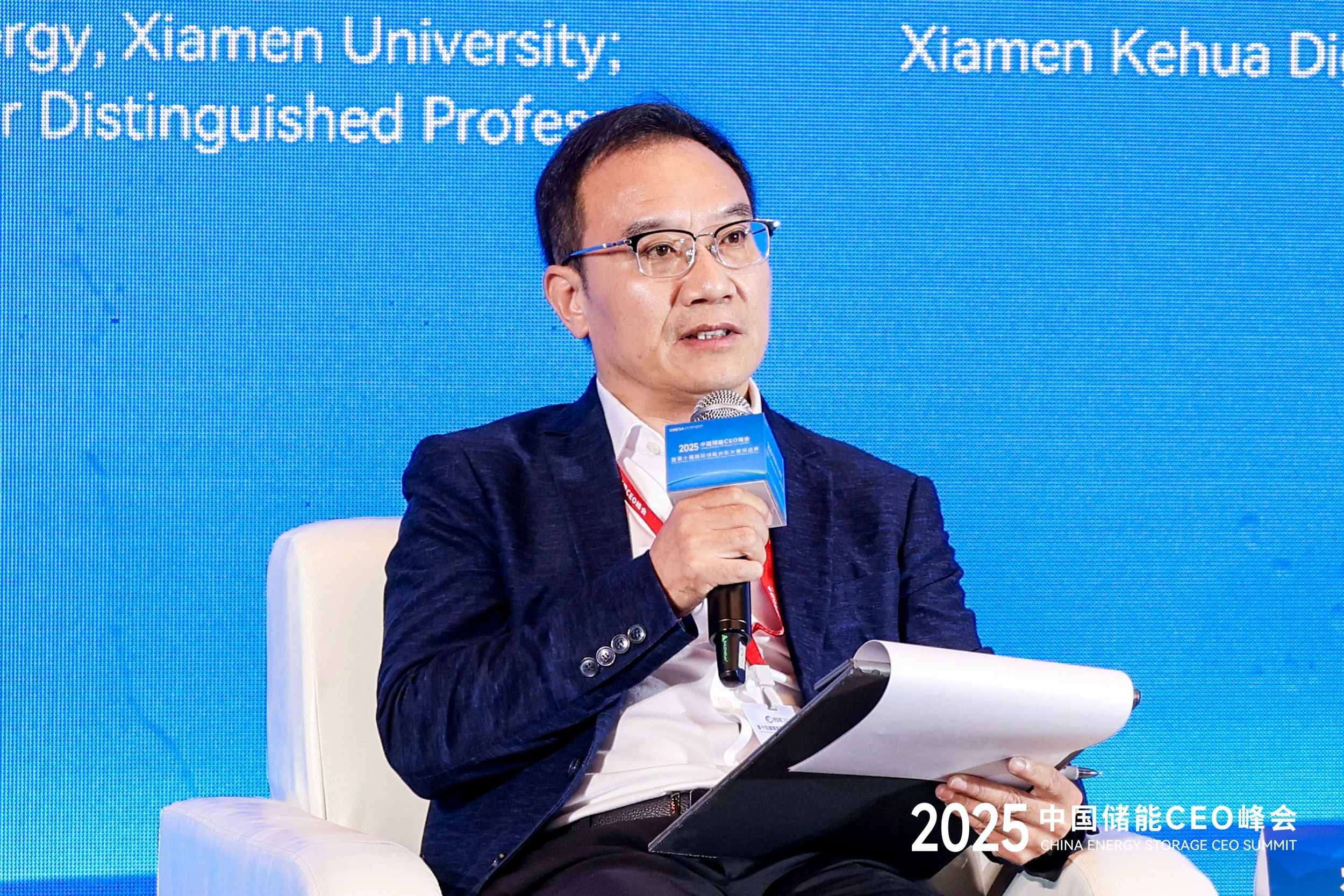
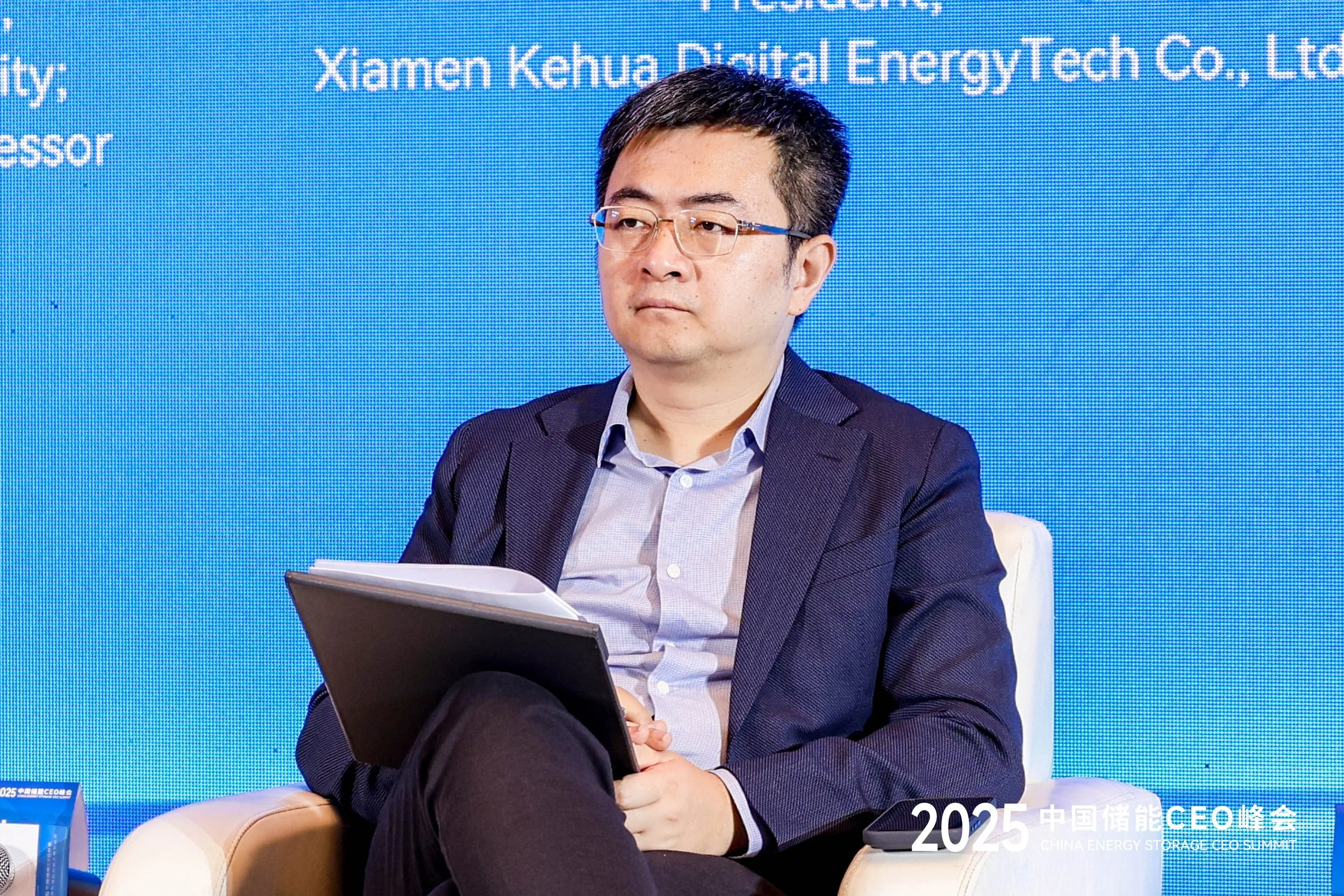
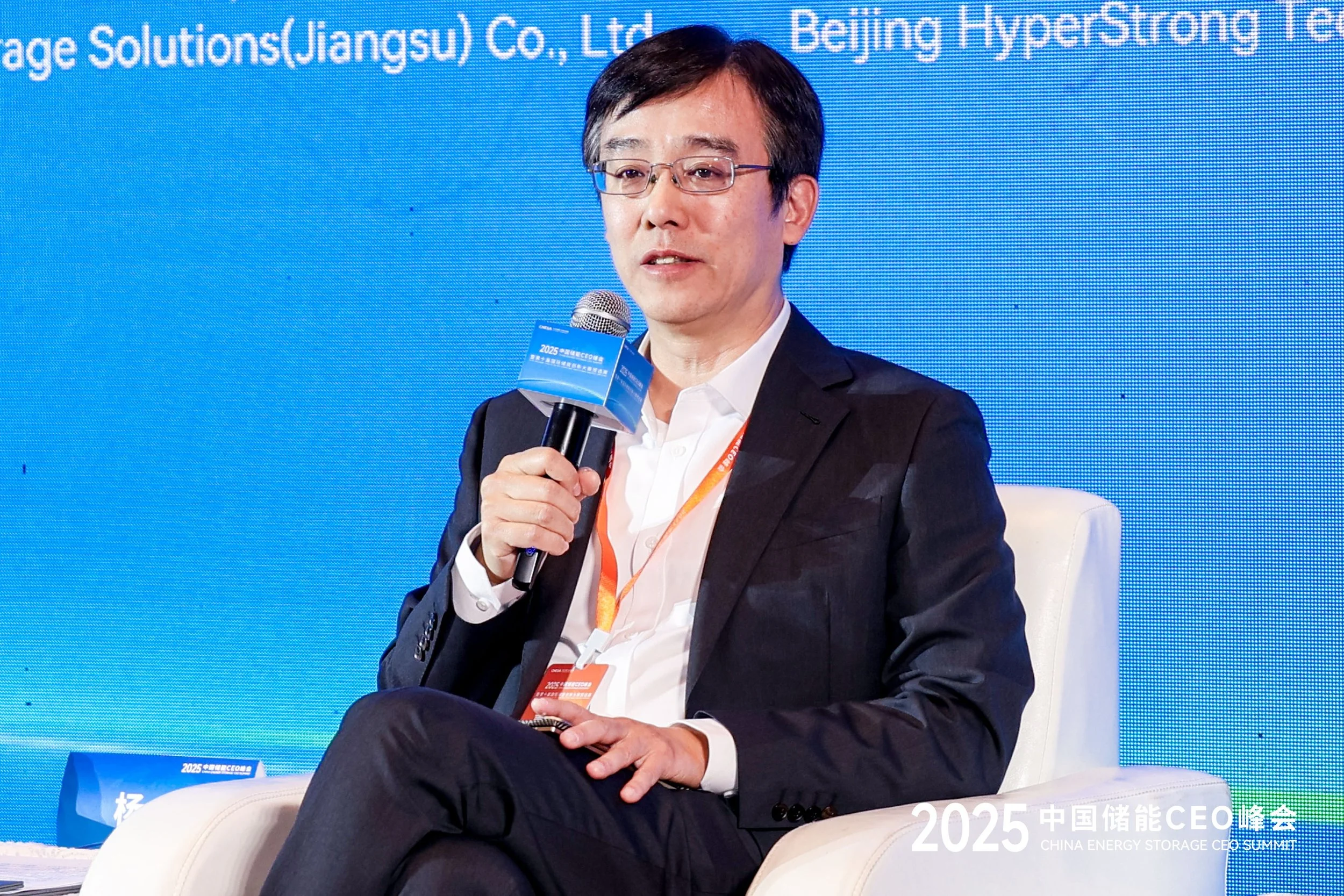
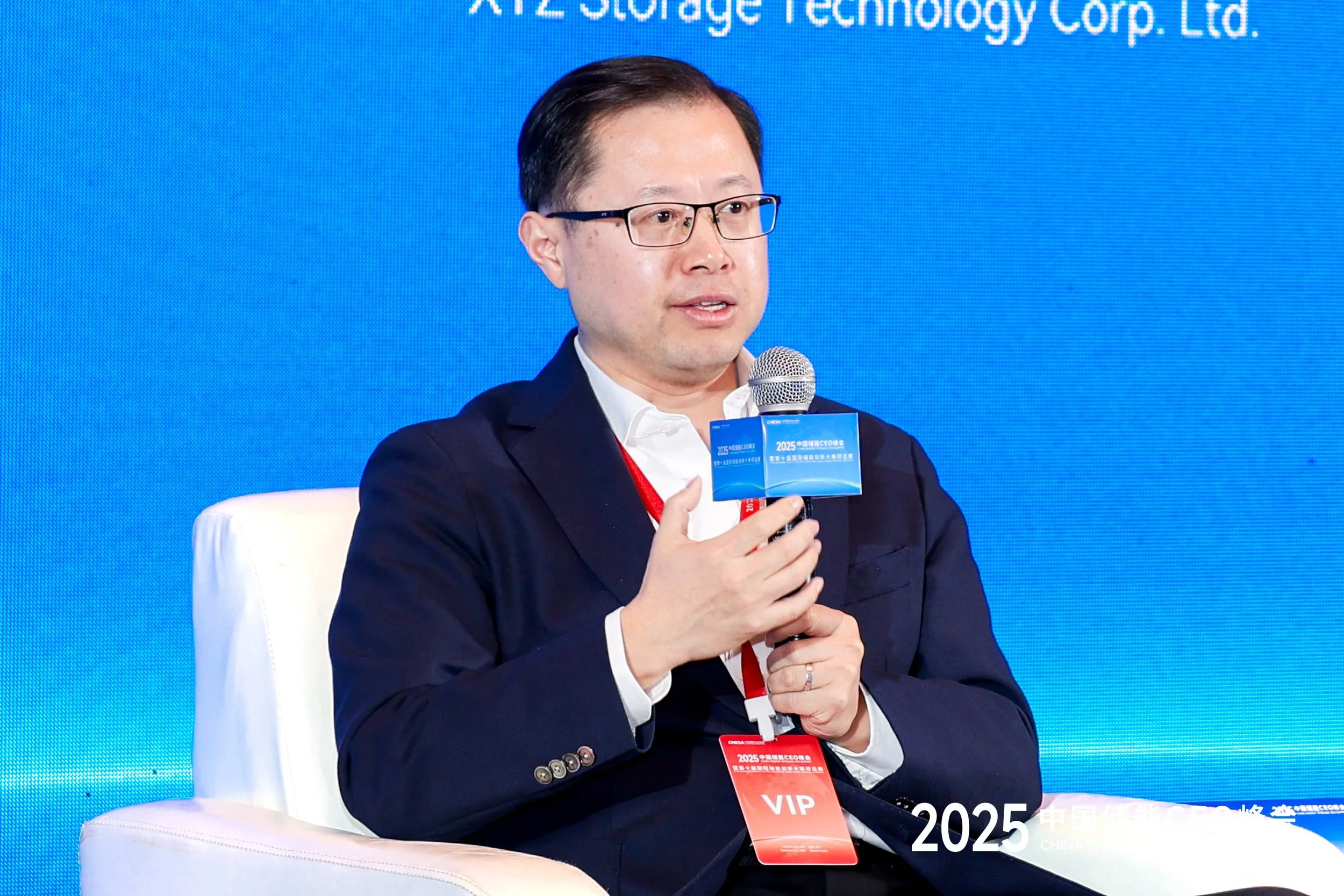
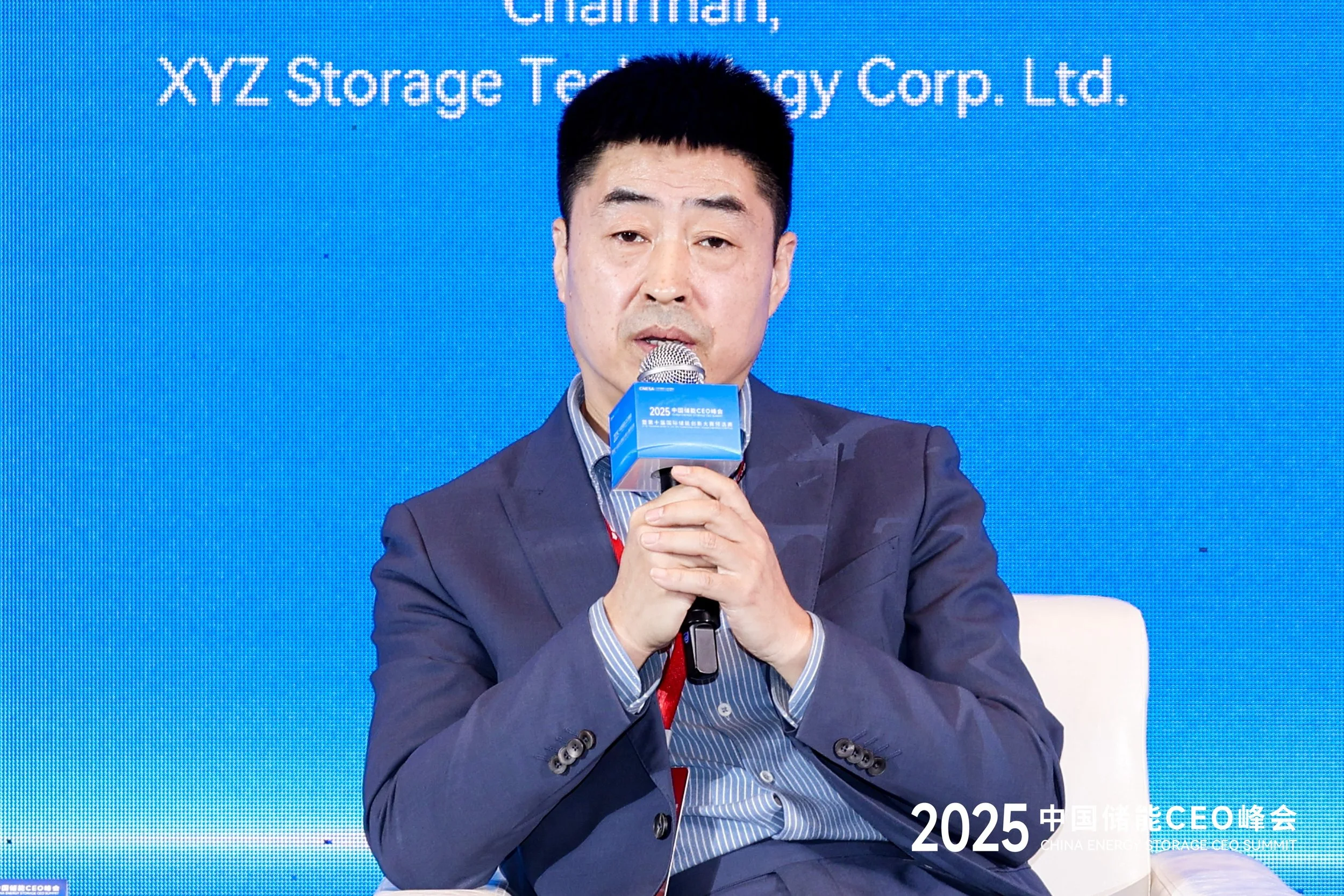
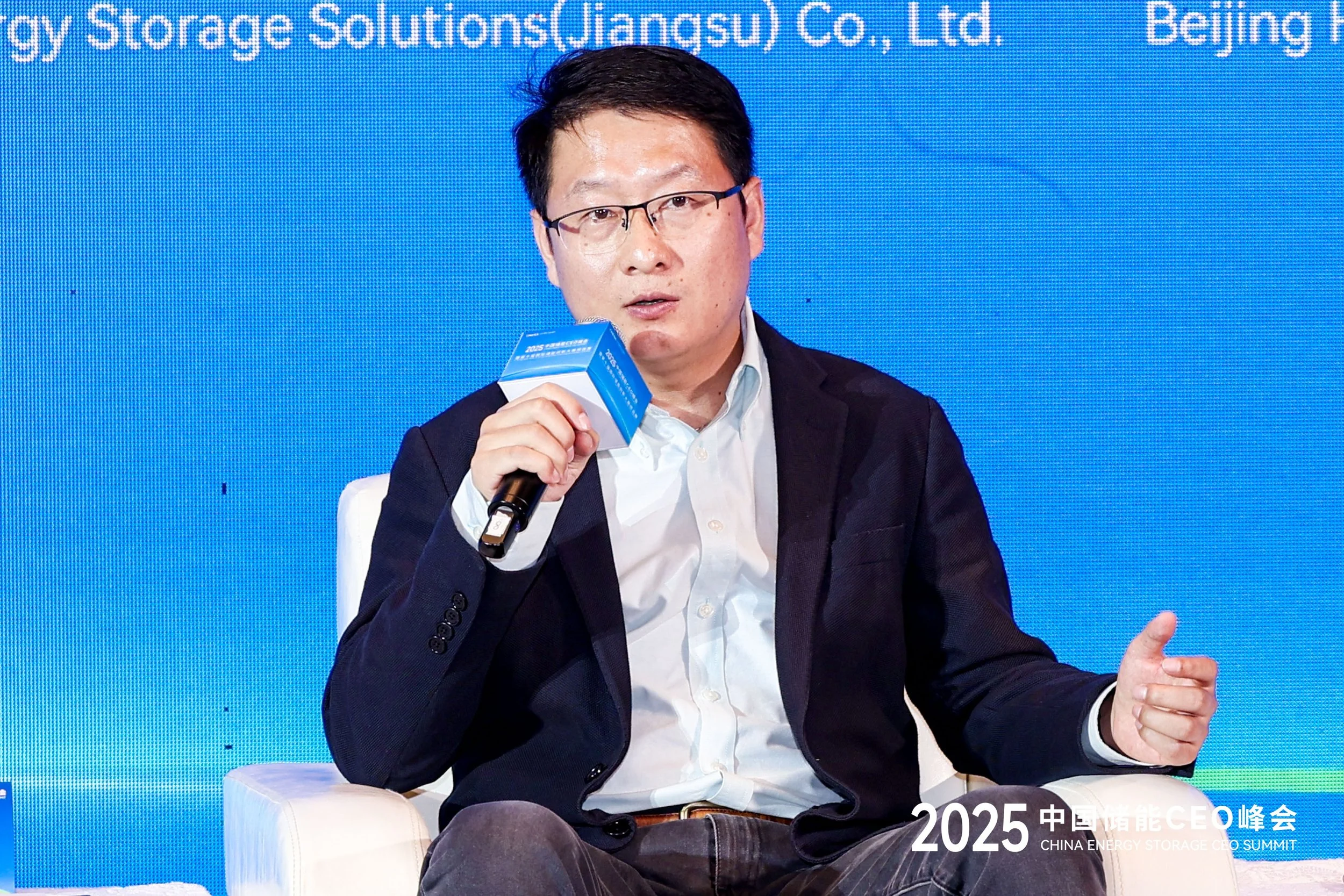
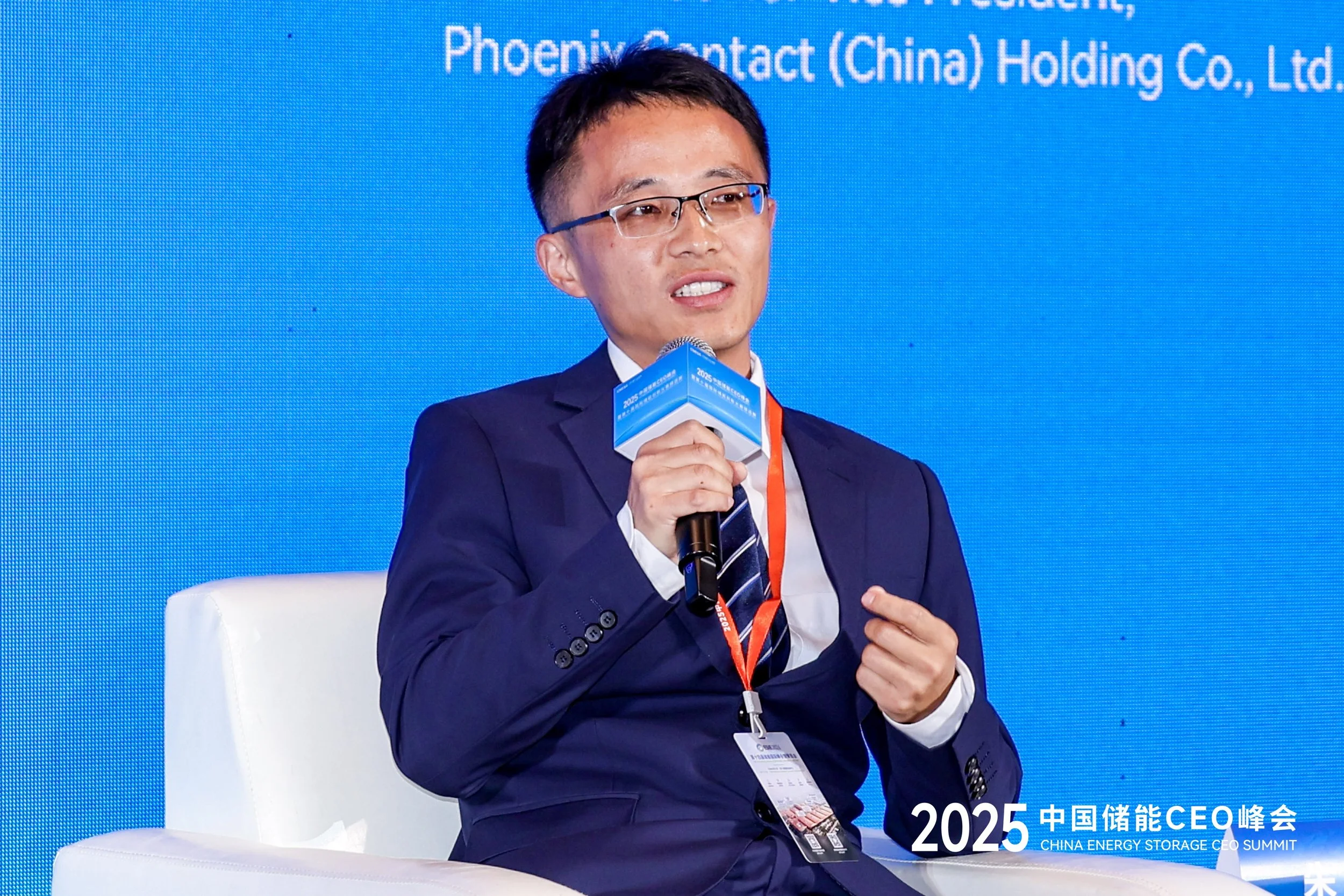
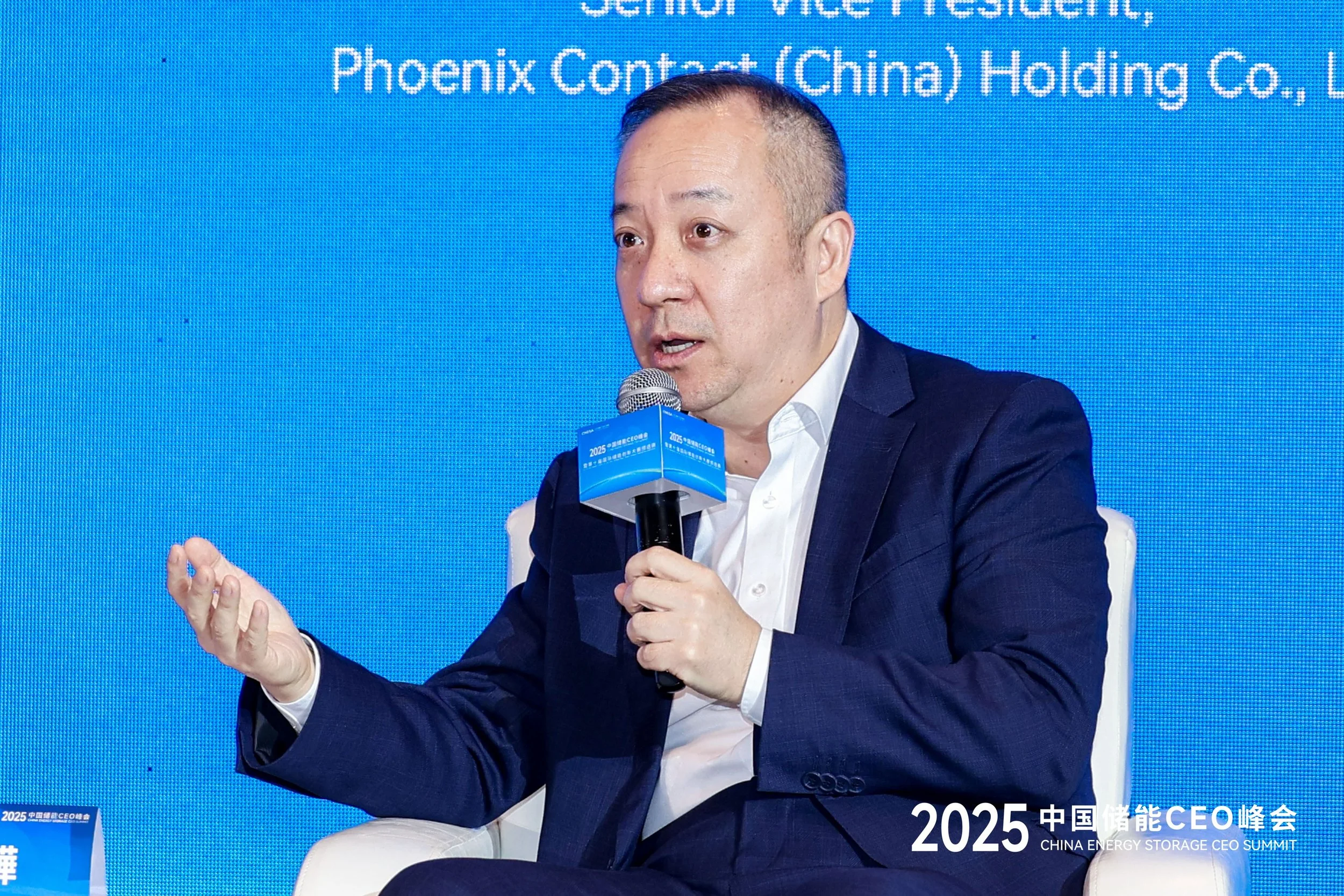
The CEO roundtable was hosted by Yu Zhenhua, Executive Vice Chairman of CNESA, participants included: Prof. Zheng Zhifeng (College of Energy, Xiamen University), Cui Jian (President of Kehua Digital Energy), Yang Guang (CTO, HyperStrong), Yang Rui (Chairman, Shuangdeng Group), Lian Zhanwei (Chairman, XYZ Storage), Yang Bao (President, Trina Storage), Richard Wan (VP, Potisegde), Zhu Wei (SVP, Phoenix Contact China), etc.
Discussions centered on global strategy, supply-chain collaboration, ecosystem development, and technology innovation as the core driving engine for 2030 competitiveness.
Three Parallel Sessions
Overseas Markets • Technology Innovation • Computing Power
+ Energy Storage
Session 1: Overseas Energy Storage Opportunities & Business Models
Hosted by Richard Wan (VP, Potisegde), experts from academia and industry - including Prof. Chen Haoyong (South China University of Technology), Liu Yudong (Senior Solutions Director, Kehua Digital Energy Overseas), Li Zhongli (VP, HyperStrong Europe),Richard Wan (VP, Potisegde), Alessandro Wei (Engineering Director, Green Gold Energy), Salomon Martens (CEO, DRSOLAR Denmark ApS) and others - shared insights on grid-forming storage, battery intelligence, grid-structured energy storage technology, ultra-safety systems, and commercial opportunities across Europe and Australia.
The International Roundtable 1 focused on “Overseas Energy Storage Opportunities and Ecosystem Collaboration.” Under the moderation of Prof. Chen Haoyong, South China University of Technology (part-time professor, Universiti Tunku Abdul Rahman), the discussion brought together Sun Rongtao, President of Strategic Investments, China, Saudi Aramco; Salomon Martens, CEO of DRSOLAR Denmark; Alessandro Wei (Wei Xiaowei), Engineering Director of Green Gold Energy; Wang Yichao, Deputy General Manager of XYZ Storage; and Shi Wenbo, President of the Hisense Network Energy and Vice Chairman of KE Electric. They engaged in an in-depth exchange on strategies for overseas market expansion and ecosystem collaboration.
Session 2: Advanced Energy Storage Technology & Solutions
Hosted by Huang Junhui, former Deputy Director of SGCC Jiangsu Institute of Economic Research, Lin Jinshui, senior expert in energy storage solutions of Kehua Digital Energy; Li Ming, global product management head of Trina Storage; Yang Xinyu, market development manager of Ampace; Li Bingzhang, director of energy storage technology of Zhuzhou CRRC Times Electric; Tan Cheng, industry manager of Phoenix Contact; Wu Junjie, marketing manager of Prima Power Sheet Metal Equipment (Suzhou); Kalina Pelovska, chief investment officer of Renalfa IPP; Robert Kraszewski, CEO of RJS Construction; and Fu Chungui, industry director of Hymson Laser Technology shared insights on grid-forming storage, AIDC applications, full life cycle safety protection and intelligent upgrade of production lines under Document 136, and BESS commercial applications in Eastern Europe.
The International Roundtable 2 focused on “the demand distribution and potential of emerging energy storage markets”. Under the moderation of Wendy Wen (Wen Mingyuan), the discussion brought together Kalina Pelovska, chief investment officer of Renalfa IPP GmbH (Austria/Bulgaria); Gabriel Nenov, head of the energy storage division (eastern Europe) of Solarpro Technology AD; Robert Kraszewski, COO (Denmark) of RJS construction ApS; andLi Fengzhi, general manager of overseas marketing team of SAV Digital Power. They engaged in an in-depth exchange on opportunities and challenges in the global energy storage market.
Session 3: Energy Storage + Data Centers (AIDC)
Hosted by Zhang Jianing, senior policy research manager of CNESA, Zhong Yihua, VP of Shuangdeng Group; Li Yusheng, deputy director of the information energy innovation center of China Mobile Group Design Institute; Peng Huana, deputy chief engineer of Fujian Yongfu Power Engineering; Li Xu, technical expert of the power solutions department of Vertiv; Luo Guirong, former technical director of Kehua Data; Lu Zongshuo, product marketing manager of Ampace; Ding Changfu, senior product manager of Hithium Energy Storage; Zhang Wenjian, director of TAOS Data; Yang Qian, senior solution expert in the energy industry of Inspur KaiwuDB. They engaged in an in-depth exchange on the deep integration of "energy storage + computing power", high-rate and high-safety lithium battery solution empowering AIDC and green construction practice under the synergy of computing and electricity, and further explored how time series data and multimodal AI unlock the value of data assets in the energy industry.
The 2025 CEO Summit brought together the core strengths of the energy storage ecosystem to envision new scenarios, new landscapes, and new growth paths. Standing at the year's end and looking toward the future, we firmly believe that energy storage is not only a support technology for power systems but also a key engine driving global green transformation.
Toward 2030, let us take this Summit as a new starting point - strengthening collaboration, embracing open innovation, accelerating global supply-chain development, and co-building a win-win ecosystem.
With joint efforts across domestic and international markets, the industry will shift from rapid expansion to high-quality growth and inject strong, certain “Chinese contribution” into global energy security and a net-zero future.
A new journey begins - let us advance together, break the waves, and co-create a zero-carbon future.
CENSA Upcoming Events:
Apr. 1-3, 2026 | The 14th Energy Storage International Conference & Expo
Register Now to attend, free before Dec 31, 2025.

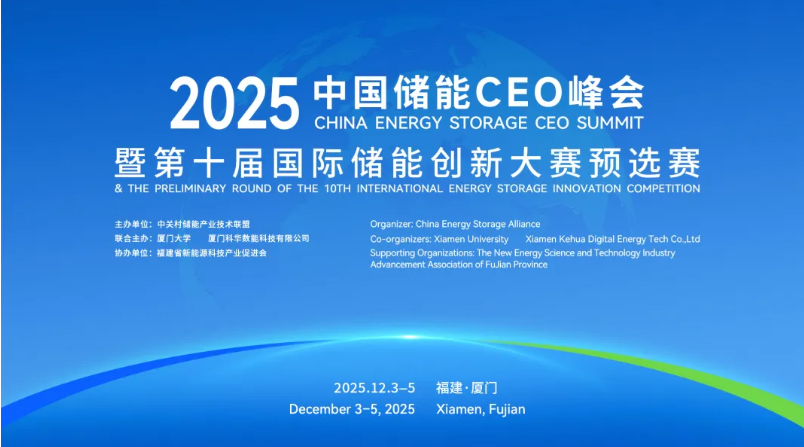
Energy Storage Leaders Converge in Xiamen: Executives from Ten Industry Giants Share Insights at the 2025 China Energy Storage CEO Summit
Source: CNESA
On December 4, 2025, the “2025 China Energy Storage CEO Summit & the 10th International Energy Storage Innovation Competition - Preliminary Round,” hosted by the China Energy Storage Alliance (CNESA) and co-hosted by Xiamen University, Kehua Digital Energy, and Cornex New Energy, was successfully held in Xiamen.
The summit brought together top leaders from the most influential companies in the energy storage sector - Kehua Data, Envision Energy, Cornex New Energy, Shuangdeng Group, XYZ Storage, Trina Storage, HyperStrong, Potisegde, and Phoenix Contact. Chairmen, presidents, and key executives gathered to explore breakthroughs in energy storage technology, global strategies, and the construction of a robust industrial ecosystem. Their insights not only represent the direction of their companies but also reflect the core trajectory and future momentum of China's energy storage industry.
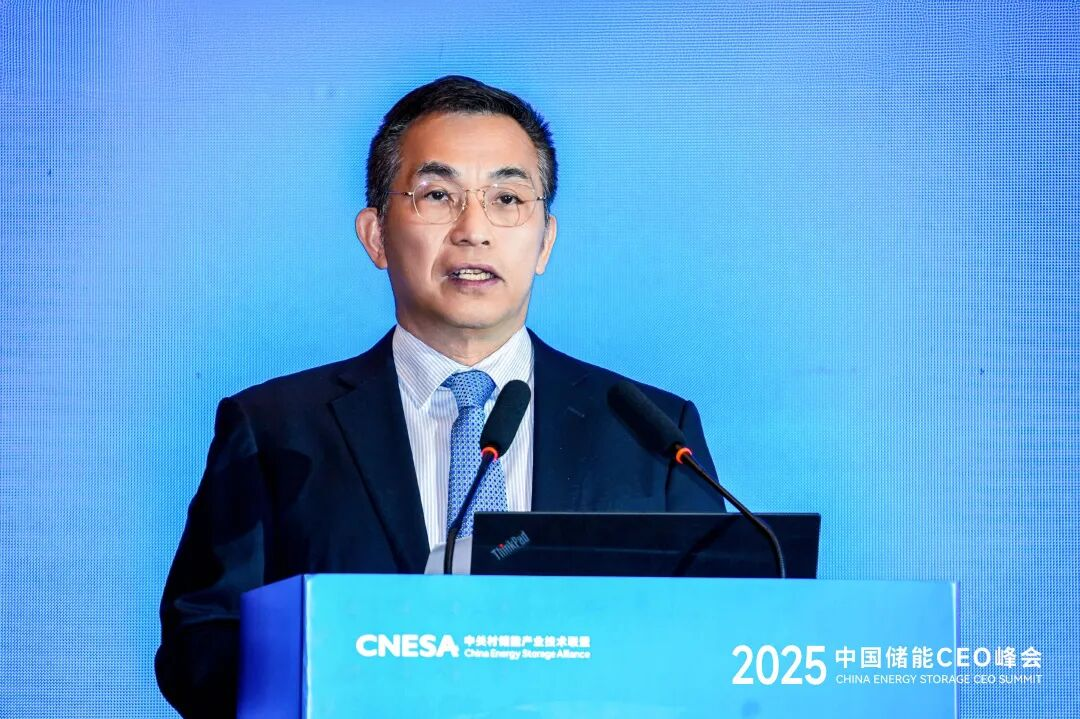
Chen Chenghui
Chairman, Kehua Data
“Charting the course forward means not only seizing opportunities but anchoring growth in technological innovation and safeguarding it through coordinated standards. Going fast alone is not enough - only through openness, cooperation, and ecosystem-wide collaboration can we enhance the quality and sustainability of global energy transition.”
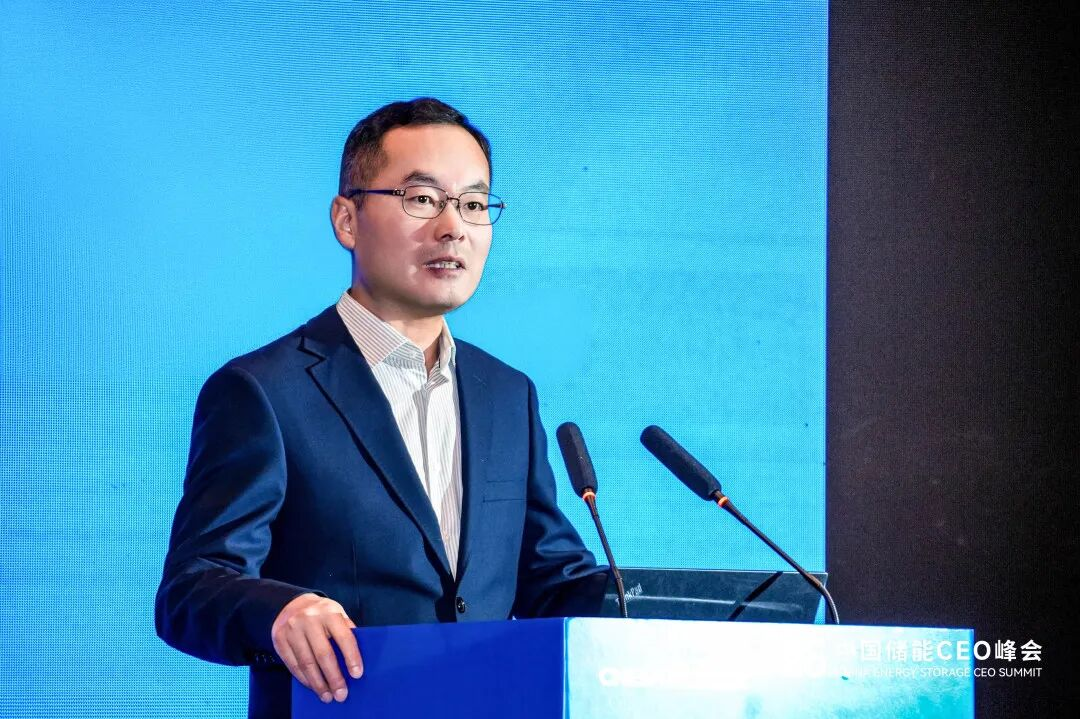
Tian Qingjun
Senior Vice President, Envision; President, Envision Energy
“Chinese energy storage enterprises are born global. Going overseas has shifted from being an option to a matter of survival. In the face of inevitable globalization and its risks, the industry must evolve from simply going out to truly integrating in. Deep local operations and international talent development are key to long-term presence. At the same time, companies should foster competitive collaboration across the value chain, avoid vicious price wars, and win global respect through long-term value and quality.”
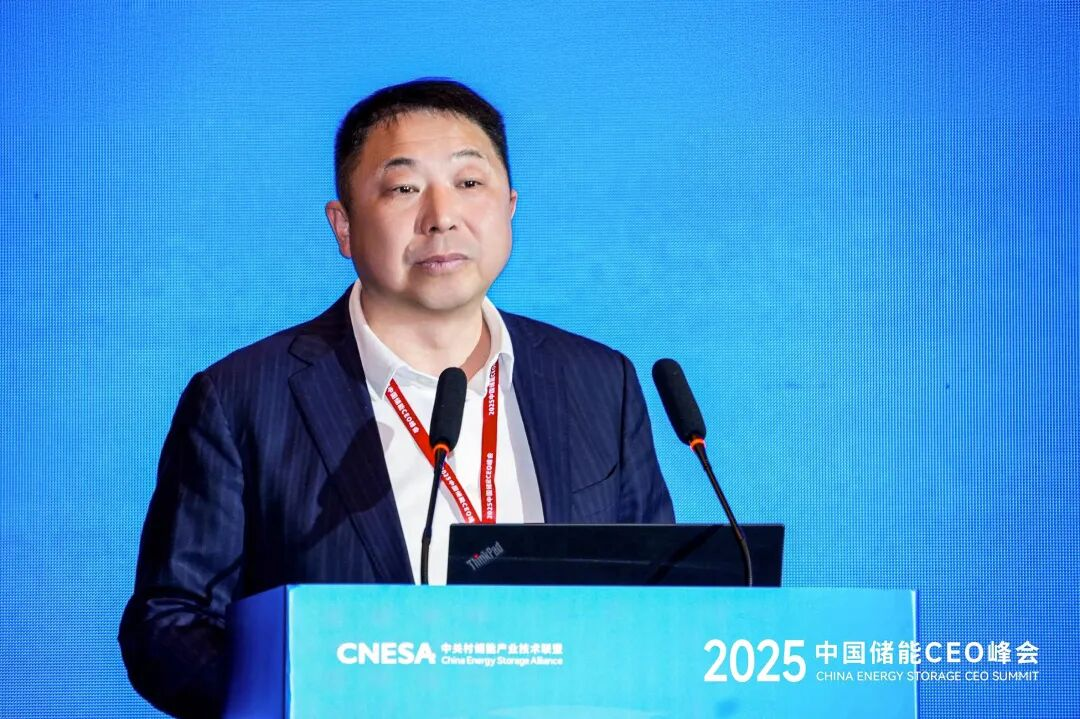
Huang Feng
President, Cornex New Energy
“We respect technology, respect safety, and respect quality - technology is the key to improve performance and cost challenges, and quality is the foundation of market confidence. In a race defined by both speed and endurance, only continuous innovation and customer alignment can lead to shared value.”
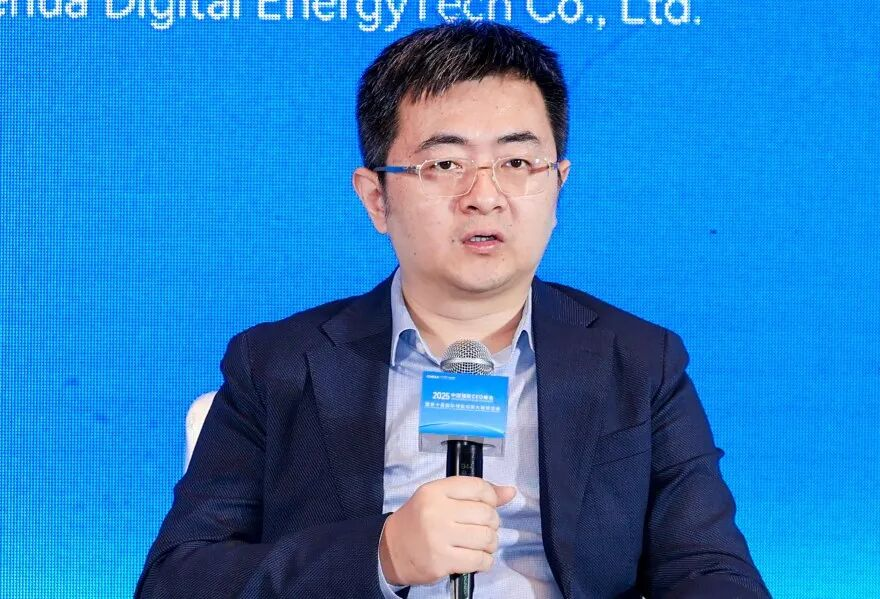
Cui Jian
President, Kehua Digital Energy
“Grid-forming technology has become a fundamental necessity for energy storage. In the future, PCS will no longer distinguish between ‘grid-following’ and ‘grid-forming’; the technologies will converge. Through deep technical refinement and intelligent upgrades, we will support the stable operation of new power systems and enable diverse value creation.”
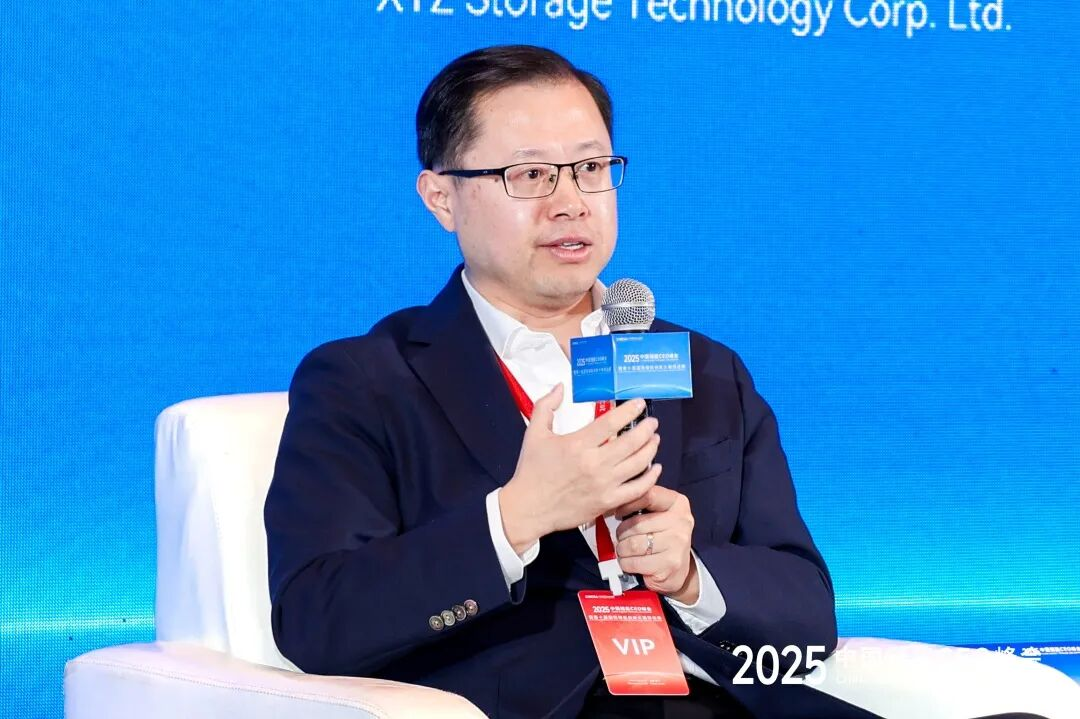
Yang Rui
Chairman, Shuangdeng Group
“Energy storage companies must be ‘born global’ and capable of ‘deep globalization’. In certain high-certainty tracks such as AIDC, the real challenge lies in whether an organization can truly capture and sustain explosive market opportunities. By prioritizing talent and building a ‘carrier-class architecture’, we aim to lead with products and efficiency, establishing a resilient moat for long-term survival in fast-paced cycles.”
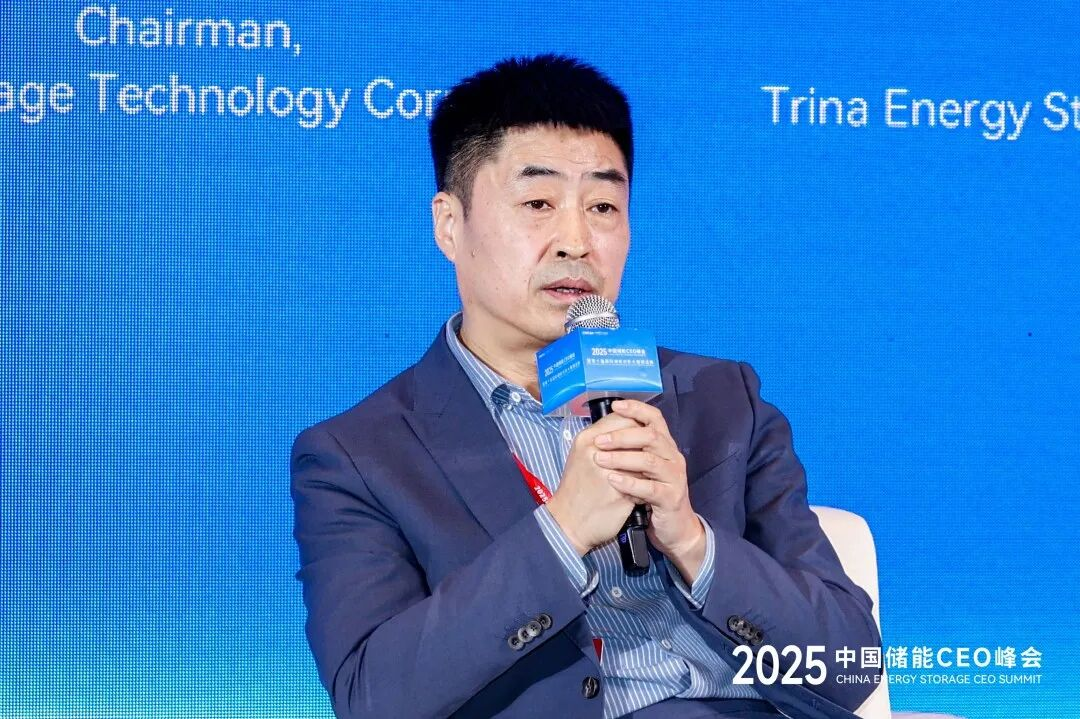
Lian Zhanwei
Chairman, XYZ Storage
“Safety is the lifeline of the energy storage industry. Innovative technologies such as immersion liquid cooling represent proactive breakthroughs for high-safety application scenarios. We look forward to working with the industry to advance energy storage toward higher safety, efficiency, and reliability.”
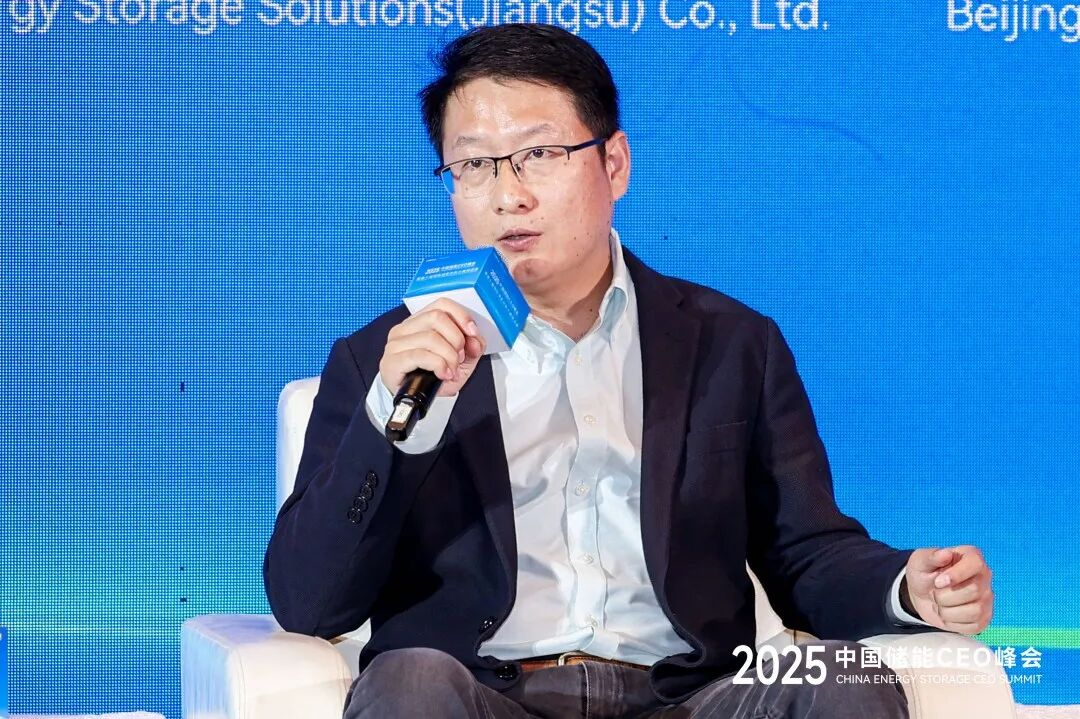
Yang Bao
President, Trina Storage
“Global experience in solar has paved the way for storage going overseas. With global networks and localized teams, we are accelerating the deep integration of solar and storage, enabling technology and markets to evolve together, and delivering value across regions and cultures in the global energy transition.”
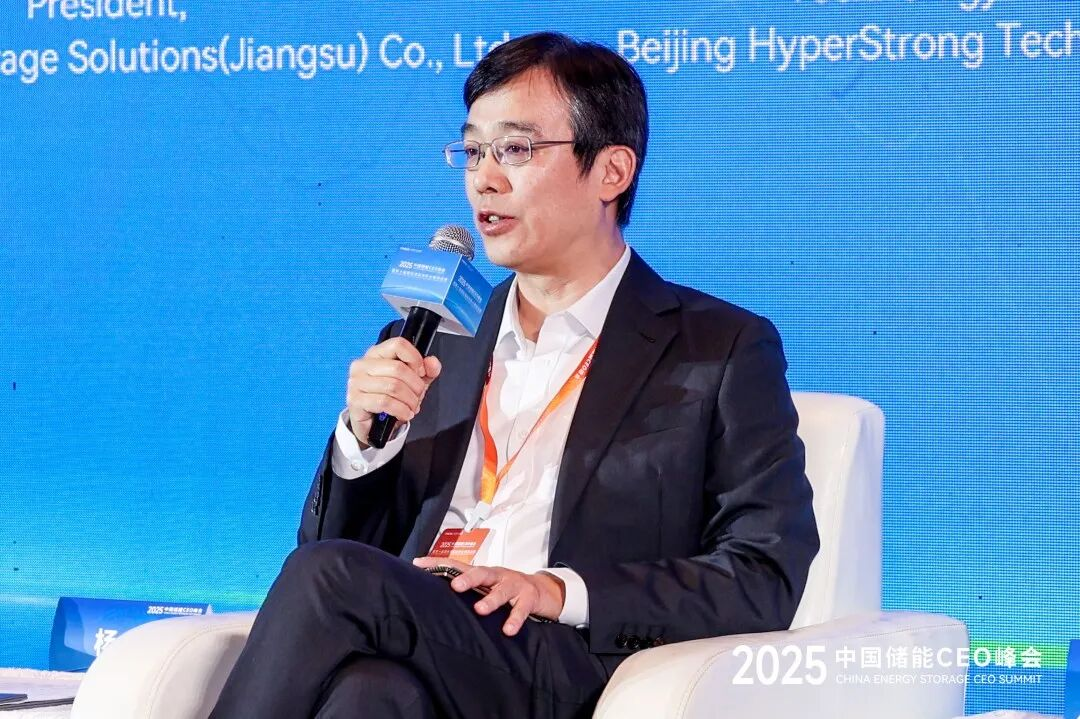
Yang Guang
Chief Technology Officer, HyperStrong
“Strong partnerships and complementary strengths are vital to ensuring stable industrial delivery. Facing diverse global application scenarios, we are advancing platform-based products and AI-driven strategies to deeply integrate ‘Energy Storage + X’ and provide customized solutions for different markets.”
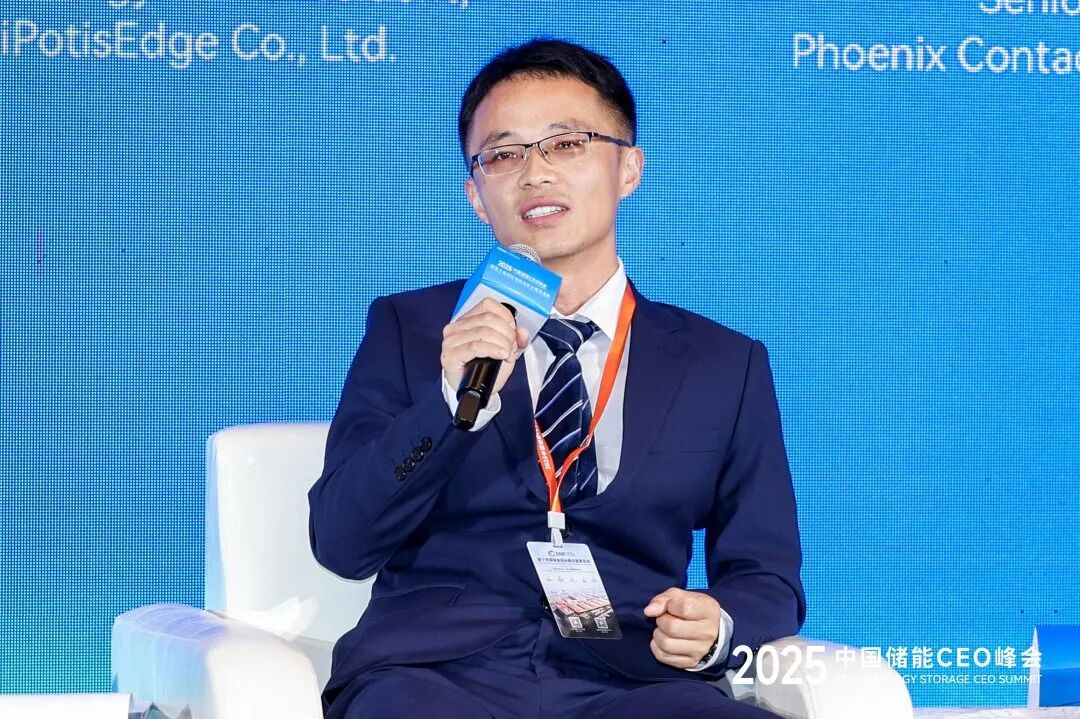
Richard Wan
Vice President of Technology, Potisegde
“Full-stack independent development is the foundation of quality, and global-localized delivery is the guarantee of stability. We adopt EV-grade standards for energy storage and build a closed-loop technology chain with intelligent manufacturing, reinforcing safety and efficiency amid intensifying competition.”
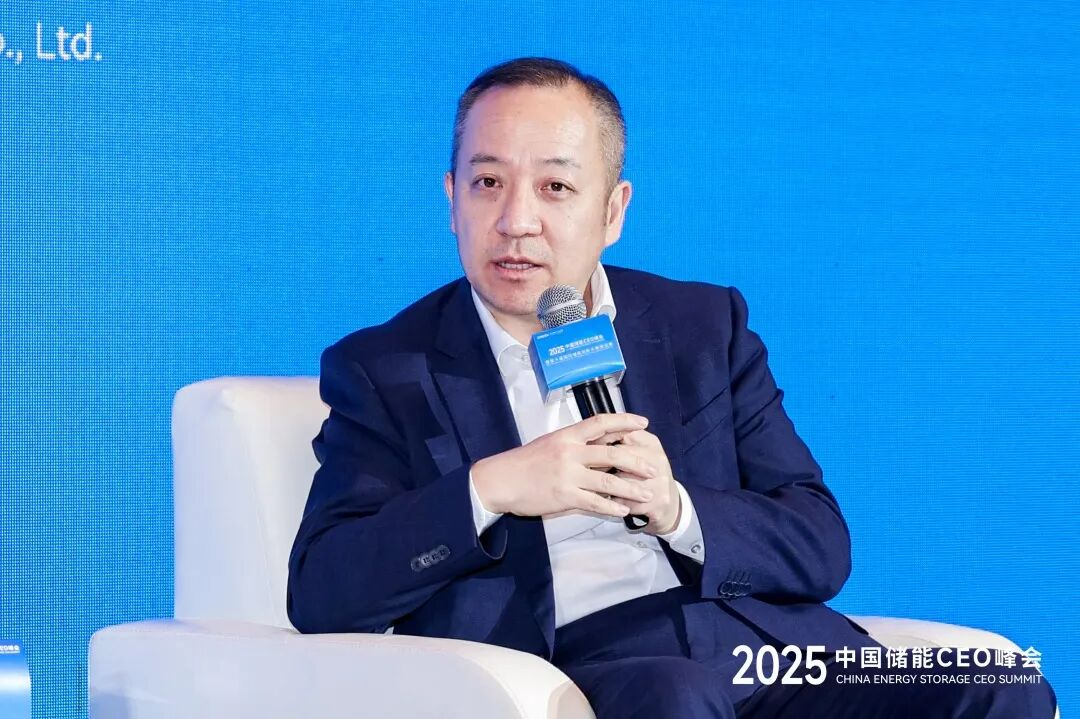
Zhu Wei
Senior Vice President, Phoenix Contact China
“Rooted in China, serving the world. We combine a century of electrical engineering experience with local R&D and manufacturing, providing secure and efficient system-level support for complex, multi-scenario energy storage applications through advanced connectivity and industrial automation technologies.”
As a key prelude to the 14th Energy Storage International Conference and Expo (ESIE 2026), the 2025 China Energy Storage CEO Summit served not only as a platform for high-level intellectual exchange but also as a catalyst for deeper industry collaboration. Leading companies including Kehua Digital Energy, Envision Energy, Cornex New Energy, Shuangdeng Group, XYZ Storage, Trina Storage, HyperStrong, Potisegde, and Phoenix Contact have confirmed participation in ESIE 2026 and will showcase their latest technologies and solutions at this global energy storage event.
We sincerely invite industry colleagues to join us next year as we work together to advance the energy storage industry toward higher quality and greater sustainability.
CENSA Upcoming Events:
Apr. 1-3, 2026 | The 14th Energy Storage International Conference & Expo
Register Now to attend, free before Dec 31, 2025.

Germany Roundup: 500MW BESS and Data Centre Transaction, Seven-Year Toll and 370MW Pipeline Secured
Source: Energy Storage News
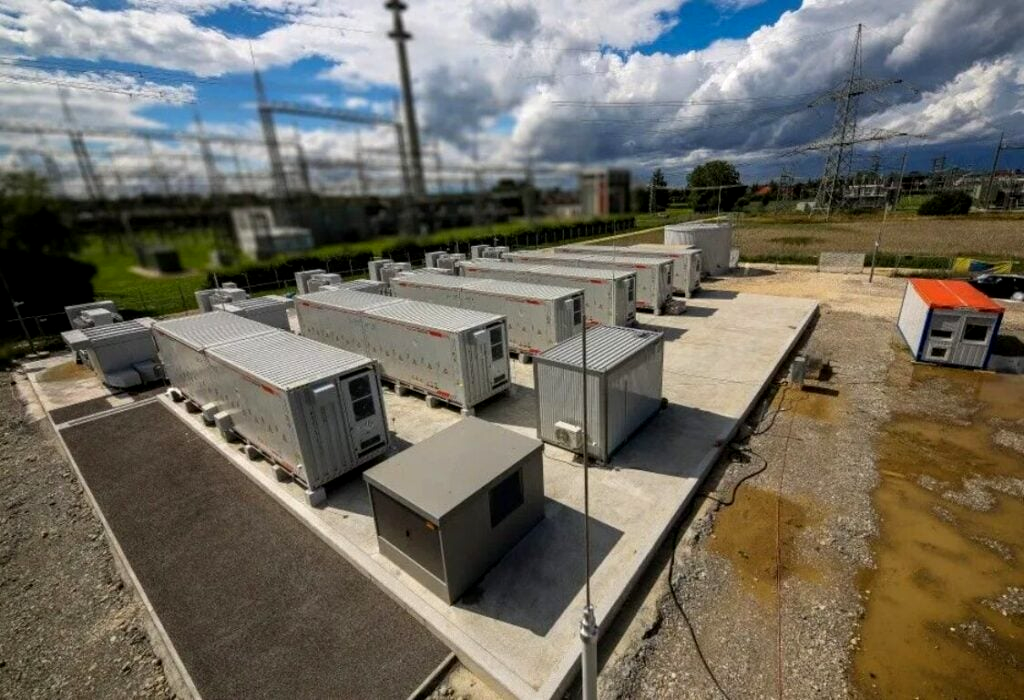
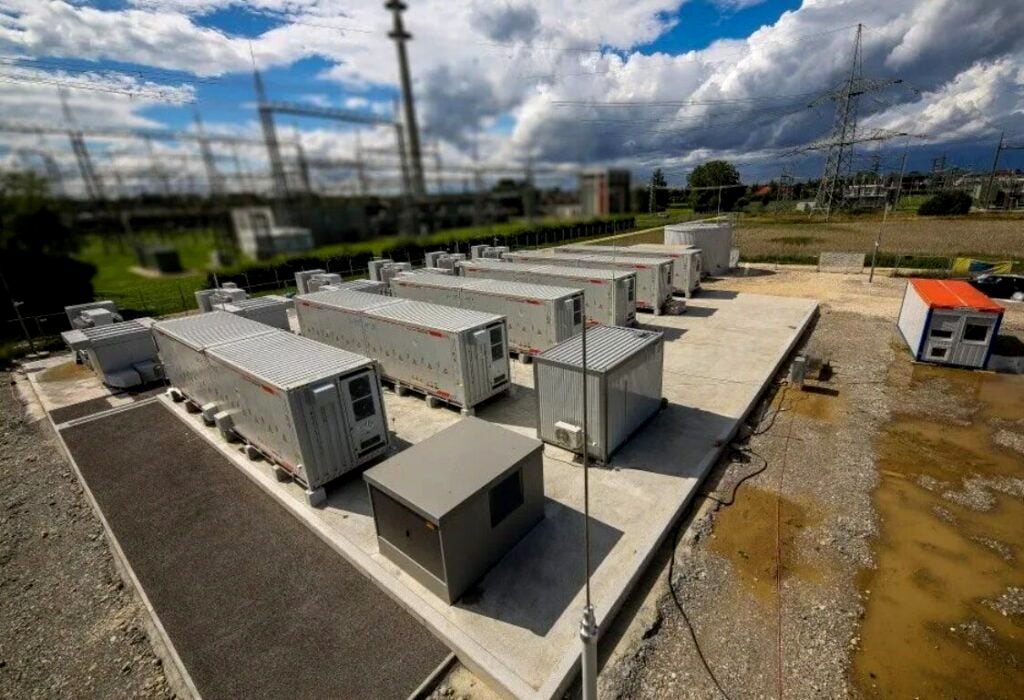
The BESS with which ju:niz Energy will enter into a toll with Next Kraftwerke. Image: ju:niz Energy
A trio of German grid-scale BESS news items, with Next Kraftwerke and ju:niz Energy agreeing a seven-year toll, Alpiq announcing a 370MW pipeline, and WBS Power selling the country’s largest solar-plus-storage project and planning a data centre on the same site.
Germany has this year become a hotbed of battery energy storage system (BESS) project announcements and deal-making, driven by its substantial revenue opportunities as Europe’s largest electricity market and a looming August 2029 deadline for getting projects operational to avoid charge-discharge grid fees. See all recent coverage here.
WBS Power sells solar-plus-storage project, plans data centre
Developer WBS Power has sold the 150MW solar, 500MW/2,000MWh BESS Project Jupiter in Brandenburg, Germany, to investor Prime Capital.
WBS acquired the site for the clean energy project in 2022, and the project will require €500 million (US$583 million), with construction expected in late 2026/early 2027. Both technologies will share a 380kV grid connection in the area of TSO 50Hertz. The acquisition is subject to Project Jupiter reaching ready-to-build (RTB) status.
The transaction also establishes a joint venture to co-locate a hyperscale data centre of up to 500MW in power demand in the same area.
WBS Power said there is growing demand for data centres in Germany, which are highly energy-intensive and benefit significantly from direct access to renewable power and grid stability.
“By integrating Germany’s largest co-located BESS and Solar PV project with a hyperscale data center, we are creating a unique platform that supports both the energy transition and digital transformation,” said Maciej Marcjanik, CEO of WBS Power Group.
Alpiq secures 370MW Germany pipeline
Switzerland-based energy firm Alpiq has expanded in Germany with a 370MW BESS pipeline the company has ‘secured’, in partnership with developer SPP Development. The projects in Brandenburg and Saxony-Anhalt are expected to reach RTB status in 2026.
Lukas Gresnigt, Head International and member of the Executive Board of Alpiq said that Germany is a competitive and complex market for BESS, with many projects are queuing for grid access and permits, and the partnership combined Alpiq’s financial strength and SPP’s local expertise.
Last week, Energy-Storage.news reported on Alpiq entering into a long-term toll for a BESS in Germany owned and operated by Eco Stor. Alpiq has acquired projects in France and Finland, where it recently commissioned a 30MW/36MW project.
Shell and EQT companies agree Germany BESS toll
VPP operator Next Kraftwerke, acquired by Shell in 2021, has concluded a Germany BESS toll with BESS platform ju:niz Energy, acquired by investor EQT in 2024.
The seven-year toll is for a 20MW/40MWh project in Vöhringen, Bavaria, and Next said it is one of the first operational contracts of its kind in Germany, live since 1 November.
Next Kraftwerke will pay ju:niz Energy a fixed monthly fee per installed MW for the use of the BESS capacity. The model offers stable revenues for the operator (ju:niz) and flexibility for the optimiser (Next Kraftwerke). The toll is 80% fixed remuneration and 20% merchant, Next said.
(By Cameron Murray)
CENSA Upcoming Events:
Apr. 1-3, 2026 | The 14th Energy Storage International Conference & Expo
Register Now to attend, free before Dec 31, 2025.

“15th Five-Year Plan” Proposal Mentions for the First Time: Building an “Strong Energy Power”
Source: People's Daily
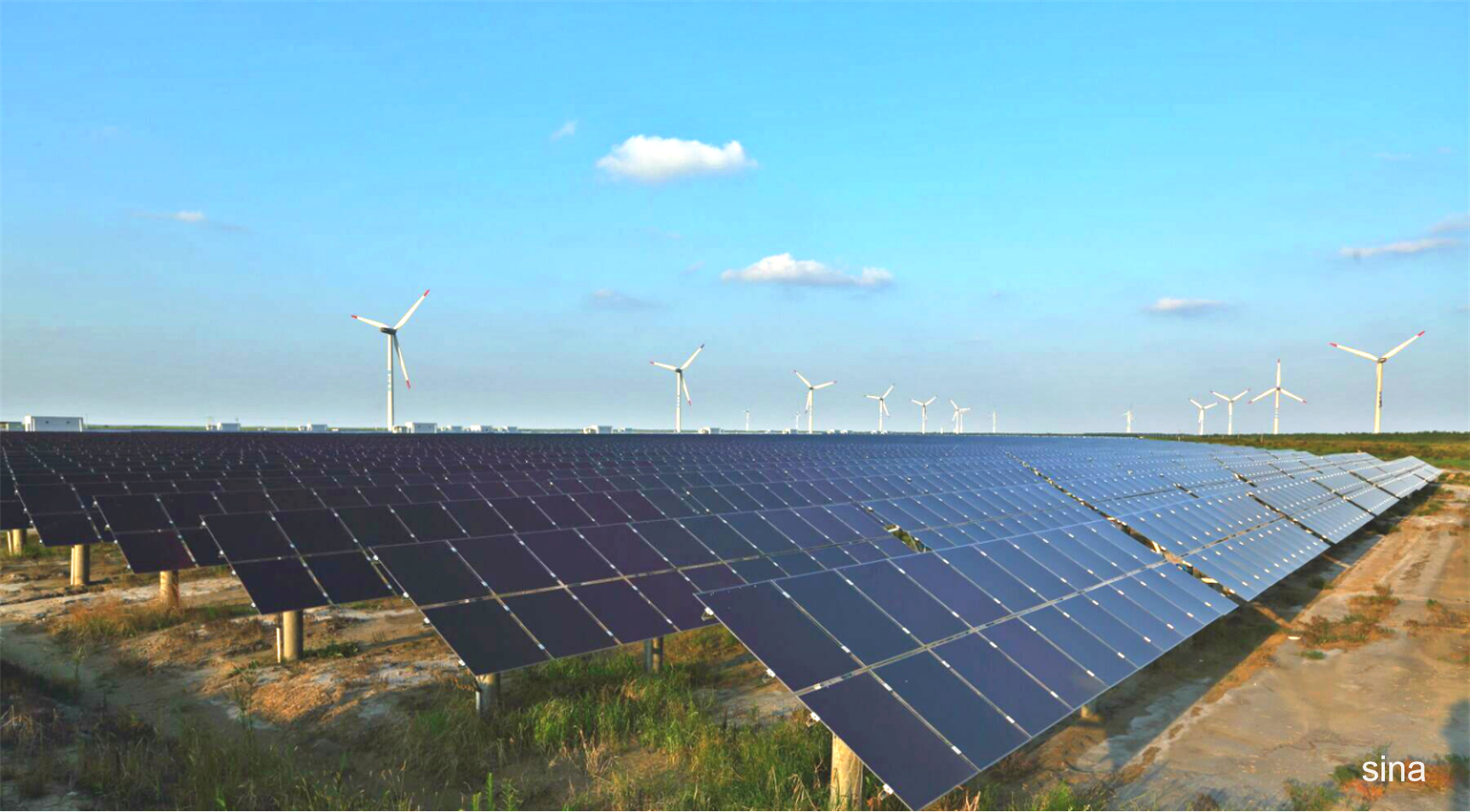
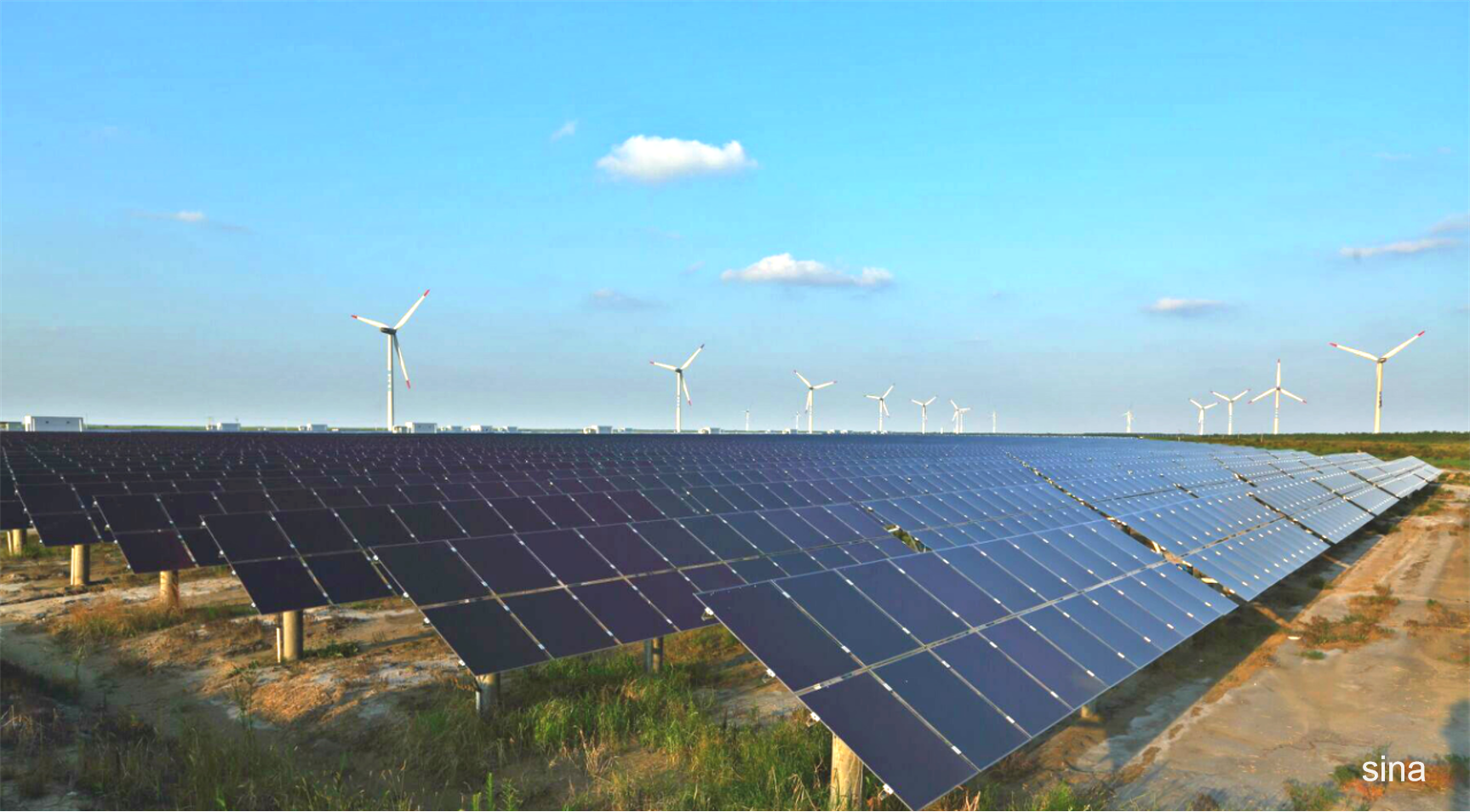
Building a strong energy power is essential for balancing domestic and international factors, development and security, and advancing Chinese-style modernization. It is a systematic project that requires adhering to the principle of establishing the new before phasing out the old and making progress while ensuring stability.
A close reading of the “15th Five-Year Plan” proposal reveals 16 national “strength-building” goals. Among them, the term “Strong Energy Power” appears in the plan proposal for the first time - what is the significance behind this?
Building a strong energy power is a practical necessity for coordinating domestic and international dynamics, harmonizing development and security, and advancing Chinese-style modernization.
Looking outward, the global energy supply-demand landscape is undergoing profound adjustments. Geopolitics, climate change, and energy transition are interacting with each other, making energy issues a top priority in national security for countries around the world.
Looking inward, during the “15th Five-Year Plan” period, China's energy consumption will continue to grow rigidly, with an estimated annual increase of about 600 billion kWh in electricity demand - representing considerable pressure. As a major country with over 1.4 billion people, China cannot repeat the high-consumption, high-emission path taken by developed nations. Instead, it must move onto a green and low-carbon development trajectory.
Therefore, building a strong energy nation means constructing a robust energy industrial chain, supply chain, and innovation system; upholding a diversified energy mix across wind, solar, hydro, nuclear and more; continuously increasing the share of new energy supply; safely and orderly replacing fossil energy; and transforming energy production and consumption patterns. Only by strengthening such foundational capabilities and enhancing self-reliant development capacity can China build greater confidence and advantage in international competition.
China already possesses many favorable conditions for becoming a strong energy nation. During the “14th Five-Year Plan” period (2021-2025), China consolidated its position as the world's largest energy producer, with an energy self-sufficiency rate above 80%. As fossil energy consumption peaks sequentially, dependence on imported oil and gas will gradually fall to a reasonable level. China has also built the world's largest and most complete new energy industry chain, supplying over 80% of global solar PV modules and 70% of wind power equipment. Many energy technologies and equipment lead globally, with new breakthroughs in million-kilowatt-class hydropower, advanced nuclear power, heavy-duty gas turbines, smart grids, and more.
As the world's largest developing country, China still faces heavy tasks in economic development and improving people's livelihoods, and its energy development is subject to many hard constraints. During the “15th Five-Year Plan” period (2026-2030), building a strong energy nation will remain a systematic endeavor that requires adhering to establishing the new before phasing out the old, advancing steadily, and carefully balancing several key relationships.
The relationship between energy security and energy transition.
The green transition cannot be achieved overnight. It must proceed steadily based on national conditions. Traditional energy must be phased out in an orderly manner, while new energy must be established first, early, and rapidly to enable safe and reliable substitution.
The relationship between energy development and energy conservation.
Building a strong energy nation requires strengthening the supply side by promoting green energy development; however, the demand side must not be overlooked. Improving energy efficiency and promoting green, low-carbon production and lifestyles are also essential. For example, through large-scale equipment renewal campaigns, China replaced over 20 million units (sets) of equipment in key sectors in 2024, achieving approximately 25 million tonnes of standard coal in energy savings - reducing carbon emissions at the source.
The relationship between government and market.
China will deepen market-oriented reforms in competitive segments of the energy sector, continuously improve the energy pricing mechanism, and stimulate endogenous motivation and innovation vitality.
During the “15th Five-Year Plan” period, China will accelerate the development of a clean, low-carbon, safe, and efficient modern energy system. More wind, sunshine, and water will be transformed into green development power, and fossil energy will be used more cleanly and efficiently, strengthening the stable and healthy development of China’s energy.
(By Ding Yiting)
CENSA Upcoming Events:
Apr. 1-3, 2026 | The 14th Energy Storage International Conference & Expo
Register Now to attend, free before Dec 31, 2025.

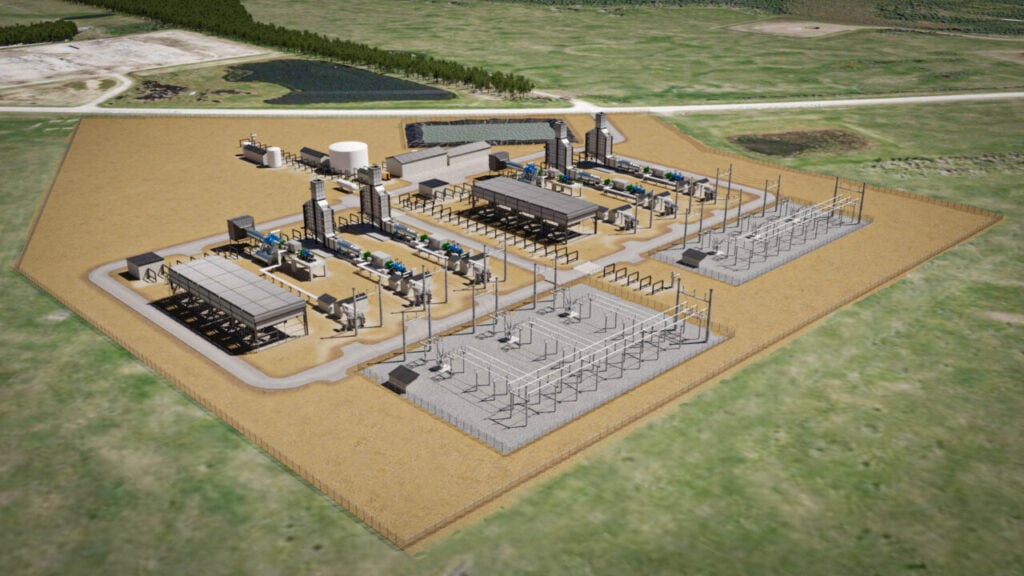
Cache Power Plans ‘Canada’s First’ Commercial-Scale Compressed Air Energy Storage Facility
Source: Energy Storage News
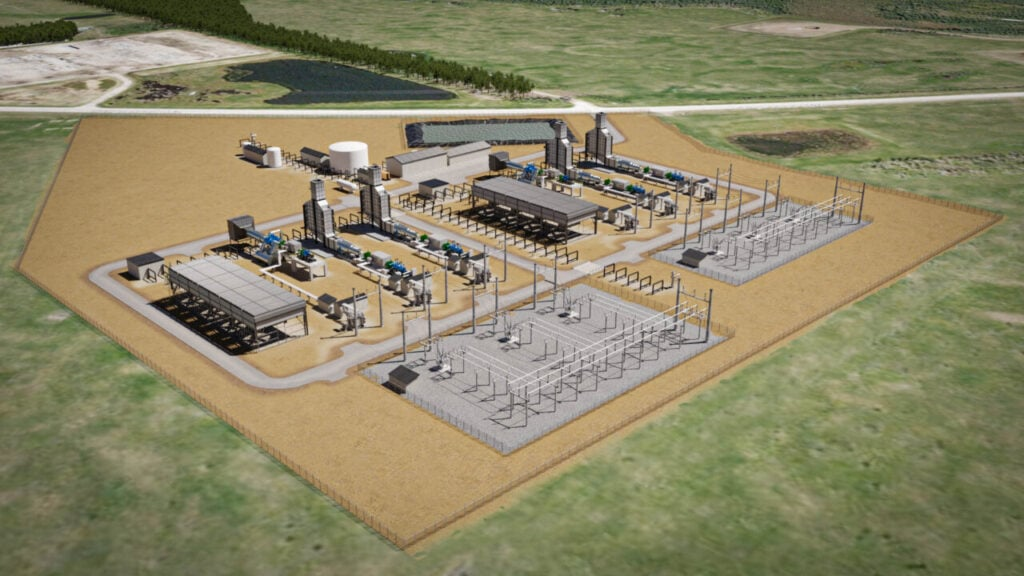
The facility will be constructed in two phases and located next to the Marguerite Lake substation to enhance efficiency and facilitate grid integration. Image: EllisDon
Compressed air energy storage (CAES) developer Cache Power is partnering with construction company EllisDon to deliver a CAES facility in Northeast Alberta, Canada.
The facility will be constructed in two phases and located next to the Marguerite Lake substation to enhance efficiency and facilitate grid integration.
Cache Power does not have any information on its website, but appears to be a special purpose vehicle (SPV) for Federation Engineering.
On Federation’s website, the company clarifies that the Marguerite Lake facility will have a 250MW load capacity and 640MW generation capacity. Energy storage capacity or planned duration were not referred to in publicly available materials.
The companies assert that the technology will be essential in stabilising Alberta’s grid and supporting both provincial and national efforts toward a net-zero electricity future. The project has secured all key regulatory approvals, with early construction scheduled to start soon.
CAES technology operates by pressurising and directing air into a storage medium to load the system. When discharging, the stored air is released through a heating system to expand, driving a turbine generator.
Notably, the companies claim the project will be the first commercial scale CAES facility in Canada.
Ontario-headquartered Hydrostor is known for its advanced compressed air energy storage (A-CAES) projects.
A-CAES operates similarly to traditional CAES but captures heat from the compressor and passes it through heat exchangers to store in pressurised water. This water is kept in a reservoir and then released into a cavern to displace air during discharging, a process known as hydrostatic compensation.
In conventional CAES, less than 50% of the energy can typically be recovered. The thermal energy produced during compression is often wasted, and the power output varies depending on the residual underground air pressure.
Hydrostor has two small operational projects in Canada, one a pilot and the other a commercial demonstrator, with the larger one being a 2.2MW/10MWh commercial system in Goderich, Ontario.
Hydrostor noted the Goderich Energy Storage Centre as the world’s first commercially contracted A-CAES facility. In addition to its role as technology provider, the A-CAES company is also developing large-scale projects around the world, including its 1.6GWh Silver City project in New South Wales, Australia, and 4GWh Willow Rock project in California, US. The company has secured some funding and offtake agreements for both, including a recent renegotiation of contracts for Willow Rock (ESN Premium article).
It has also proposed a 500MW/8,000MWh project in Ontario (ESN Premium), adjacent to Ontario Power Generation’s Lennox Generating Station in Greater Napanee.
Speaking with Energy-Storage.news, a representative from Federation clarified that the distinction between the CAES system titles for itself and Hydrostor came down to scale and usage.
Cache Power’s facility can store up to 48 hours of energy by compressing air with excess grid electricity and sequestering it in underground salt caverns formed through solution mining.
It can also blend up to 75% hydrogen with natural gas, with a future plan for complete hydrogen utilisation, aligning with Canada’s net-zero ambitions.
Power plant equipment supplier Babcock & Wilcox are collaborating on engineering the possible hydrogen facility expansion, employing the company’s BrightLoop technology.
Babcock & Wilcox claim that BrightLoop can produce hydrogen while isolating carbon dioxide for capture and storage.
Additionally, Cache Power states it will deliver economic and social advantages to the local community and Indigenous Partners. Cold Lake First Nations has actively engaged in the project’s development and is anticipated to collaborate as a partner with Cache Power in both the project and its operations.
Update: Jordan Costley, Director of Sustainability Projects at Federation Engineering, and President of Cache Power has clarified that the project will be 30.72GWh. Costley also added about CAES energy recovery:
“(The 50% recovery statistic) may have been true for the original D-CAES projects such as Huntorf (Germany 1978) and McIntosh (USA 1991) but our project is utilizing the latest D-CAES technology from Siemens Energy.“
“Today’s compression technology utilising multi-stage integrally geared and intercooled compressors is very efficient resulting in the heat of compression being low grade not valuable for thermal energy storage and reuse in the expansion process. The expander trains also include 90% effective dual-reheat recuperators again significantly increasing the overall efficiency. The technology we are utilizing is not “conventional CAES” as defined by Huntorf and McIntosh.
(By April Bonner)
CENSA Upcoming Events:
Apr. 1-3, 2026 | The 14th Energy Storage International Conference & Expo
Register Now to attend, free before Dec 31, 2025.

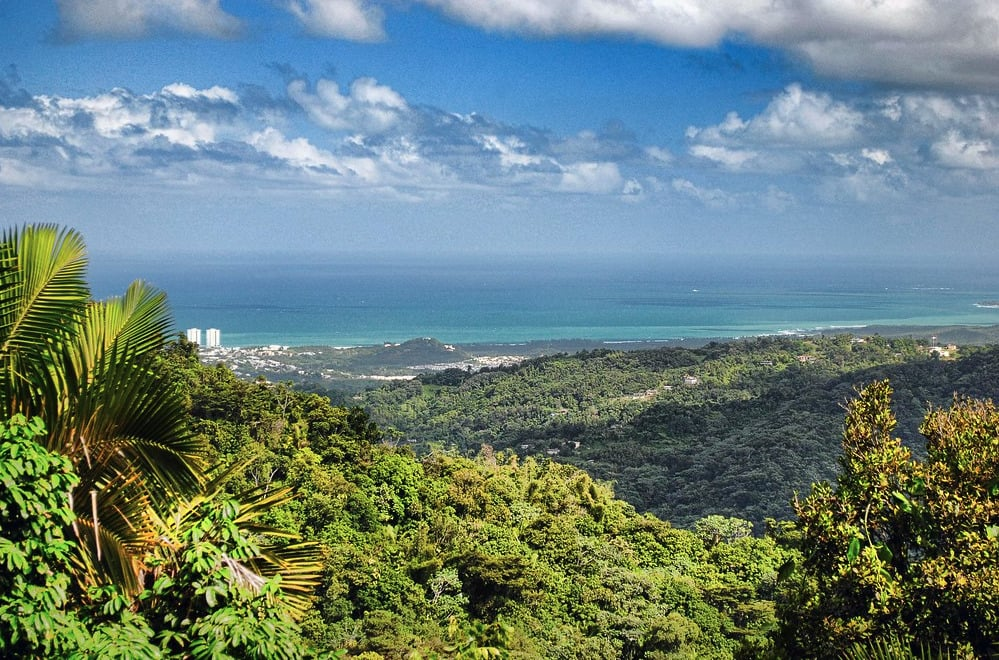
Puerto Rico Advances on Its Delayed Accelerated BESS Deployment Programme
Source: Energy Storage News
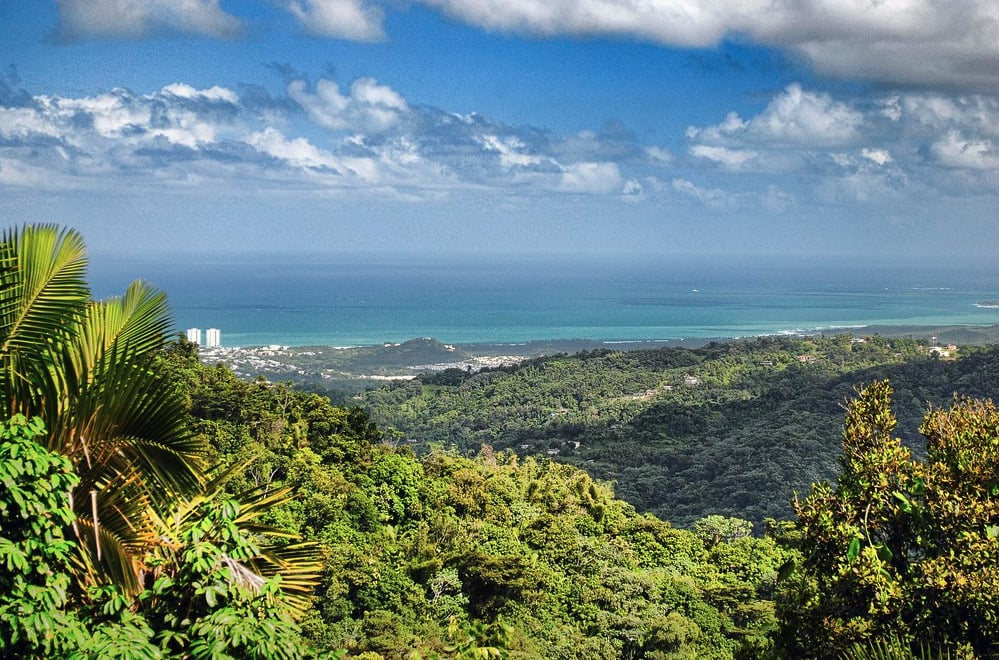
In Puerto Rico, the electric generation, transmission, and distribution facilities managed by PREPA are operated privately by Luma Energy. Both entities are overseen by the Puerto Rico Energy Bureau (PREB). Image: Trish Hartmann.
The Puerto Rico Energy Bureau (PREB) has issued a resolution and order requiring the Puerto Rico Electric Power Authority (PREPA) to complete the Accelerated Battery Energy Storage Addition Programme (ASAP).
The resolution and order require PREPA to finish the necessary review process with the Financial Oversight and Management Board (FOMB) concerning the four final agreements of the ASAP.
Implementation and delay of ASAP
In Puerto Rico, the electric generation, transmission, and distribution facilities managed by PREPA are operated privately by Luma Energy. Both entities are overseen by the Puerto Rico Energy Bureau (PREB).
ASAP aims to enhance grid reliability across the island by deploying utility-scale battery energy storage systems (BESS) alongside existing generation facilities.
Under the programme, independent power producers (IPPs) with existing power purchase and operating agreements (PPOAs) with PREPA will install BESS at their sites, “on an accelerated basis,” as stated in PREB documents available on the regulator’s website.
In 2024, PREB informed Luma Energy that its plan to contract with IPPs for BESS resources was consistent with public power policy.
In April 2024, Luma identified Phase 1 projects that could start immediately with minimal costs and no network upgrades, with some developers claiming they could be operational in less than 12 months and contracts expected to be executed by April 2025.
However, in August 2025, the projects remained stalled, with only one developer (Ecoeléctrica) responding to PREPA’s communications to say it was working to complete documentation by September, while three others (San Fermín, Horizon, and Oriana) did not respond at all.
PREB called the delays “extremely concerning” and required all four developers to provide detailed explanations for the lack of responsiveness, emphasising that these projects are crucial for addressing Puerto Rico’s electricity generation shortfall and warning that fines will be imposed if developers don’t comply with the information requests.
PREB issues resolution and order to PREPA
PREB concluded that Luma’s four final agreement terms for ASAP align with the island’s Energy Public Policy and the Integrated Resource Plan (IRP).
As a result, the Bureau approved the four drafts and directed Luma to finalise the contracts, submit them to PREPA’s Governing Board for approval, and demonstrate this process. Furthermore, PREPA was instructed to obtain approval from the FOMB.
On 20 November, Luma submitted final agreements to PREPA’s Board. The private operator asked for these documents to be confidential due to critical infrastructure, sensitive data, and personal information. PREB confirmed Luma’s compliance and granted confidentiality.
PREB clarified that the 1,500MW of battery storage listed in the IRP is a guideline, not a strict cap.
The resolution and order confirmed that this figure is not fixed and can be exceeded; battery projects in development will be assessed regardless of whether they propose more than 1,500MW of storage capacity. PREB also highlighted that any decision to increase or decrease this limit is solely at its discretion.
Because PREB has granted confidentiality to Luma, it is unclear for which participants the agreements have been submitted.
Developers Ecoeléctrica, San Fermín, Horizon, and Oriana have had ongoing communications with Luma. Though, as noted above, San Fermin, Horizon, and Oriana have previously failed to respond to PREPA’s communications.
Additionally, in August, Polaris Renewable Energy submitted a BESS standard offer (SO1) agreement on behalf of PREPA to PREB.
The SO1 agreement is included in the ASAP scheme. When submitted, Polaris appeared to distinguish itself from the other developers who had not delivered BESS projects on the island.
Included in the resolution and order, Commissioner Mateo Santos dissented in part and concurred in part, and stated:
“As I have previously expressed, I do not agree with the pass-through concepts included in the contracts under the ASAP programme, and therefore I dissent on that aspect. However, I concur with the Energy Bureau’s determination regarding the integration of battery energy storage resources.”
Santos continued, “Specifically, I agree with the Energy Bureau’s clarification that the approximately 1,500MW of Battery Energy Storage Resources identified in the Approved IRP’s Modified Action Plan constitutes a guideline rather than a fixed limit. Any final determination on the appropriate level of integration will be made by the Energy Bureau.”
(By April Bonner)
CENSA Upcoming Events:
Apr. 1-3, 2026 | The 14th Energy Storage International Conference & Expo
Register Now to attend, free before Oct 31, 2025.

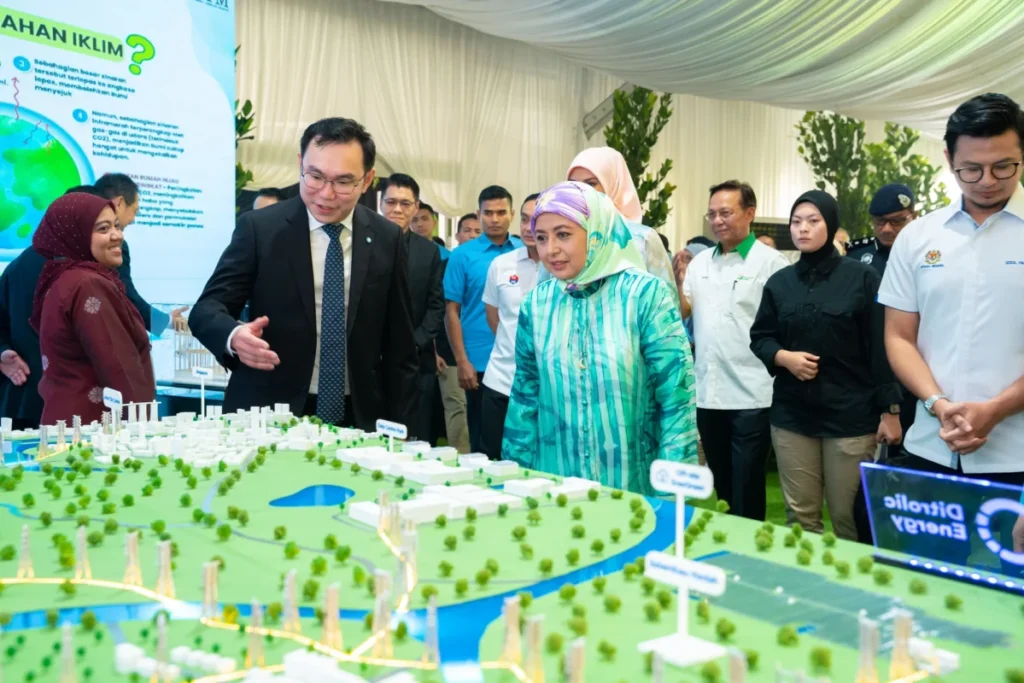
4GW/5.12GWh Malaysia Solar-Plus-Storage Hub Receives World Bank Funding
Source: PV Tech
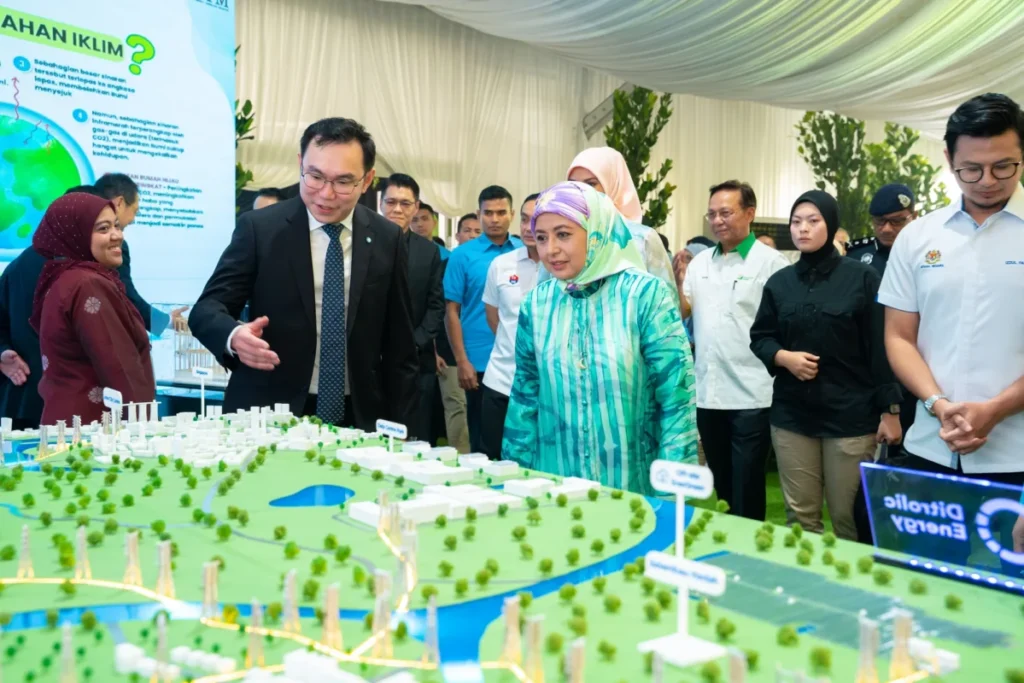
The agreement was signed this week, in the presence of the Queen of Malaysia (pictured). Image: IFC
The World Bank will invest in a huge 4GW, 5.12GWh solar-plus-storage complex in Malaysia, which will form part of a pan-Southeast Asian power grid initiative.
The Southern Johor Renewable Energy Corridor (SJREC) will be a roughly 2,000sqKm area dedicated to solar PV and energy storage capacity. The US$6 billion project is backed by the World Bank’s private investment arm, the Iternational Finance Corporation (IFC), alongside the state investment firm of Johor, Permodalan Darul Ta’zim (PDT), and Ditrolic Energy, a Malaysian integrated energy company.
The project is part of a number of larger schemes, chiefly the ASEAN Power Grid Initiative, a plan to integrate power grids and energy supply across Southeast Asian nations. In this vein, the SJREC will be part of the Johor–Singapore Special Economic Zone (JS-SEZ) “masterplan”, able to transmit clean energy to Singapore, which sits on Johor’s southern border.
As a densely populated city state, Singapore relies heavily on energy imports and has made significant plans for cross-border renewables transmission, perhaps most notably the mammoth AA PowerLink project in Northern Australia, which aims to deploy almost 20GW of solar capacity when fully operational and supply power to Singapore via undersea cables.
The site is also part of the Johor Green Development Policy 2030, which the state government introduced to expand its green industries and renewable energy developments.
“As the state agency entrusted to formulate the Johor Green Development Policy 2030, PDT is proud to witness our strategic framework transition into tangible reality today,” said Dato’ Ramlee bin A Rahman, president and group chief executive of Permodalan Darul Ta’zim.
“The Southern Johor Renewable Energy Corridor was conceived as the cornerstone of this policy, specifically Strategy one, to unlock the immense solar potential of the Kota Tinggi and Mersing districts.”
Tham Chee Aun, CEO of Ditrolic Energy, said the SJREC hub would “Anchor Johor’s clean energy export potential and provide a foundation for industries seeking renewable, low-cost power in the region.”
In an announcement, the IFC said the project would supply renewable energy to “local and multinational corporations, including hyperscale data centre operators, manufacturers, and other businesses in Johor”.
Renewables development is a major driver for meeting data centre power demand, primarily because of the affordability of solar projects and solar energy and the stability offered by coupling the technology with energy storage. In its most recent report, the International Energy Agency (IEA) said the world would become “thirsty for energy” in the coming years and that data centres were an “Important driver” of growing power demand.
(By Will Norman)
CENSA Upcoming Events:
Apr. 1-3, 2026 | The 14th Energy Storage International Conference & Expo
Register Now to attend, free before Oct 31, 2025.

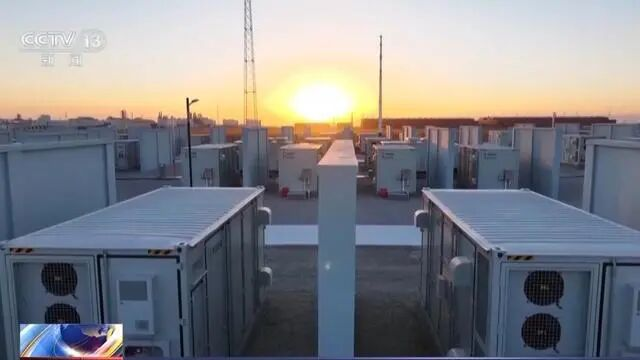
200MW/800MWh! China's Largest Semi-Solid-State Energy Storage Project Connected to the Grid
Source: CCTV News
According to a report by CCTV News on December 1, China Green Development Group announced that a 200MW/800MWh semi-solid-state battery energy storage project located in Wuhai, Inner Mongolia, has been successfully connected to the grid. The project not only sets a new record for the installed capacity of grid-connected semi-solid-state lithium battery energy storage in China, but also marks a crucial step for China's semi-solid-state energy storage technology from pilot demonstration to large-scale commercial operation.
As a major new energy hub in northwest China, Wuhai city in the Inner Mongolia Autonomous Region, has leveraged its abundant wind and solar resources to consistently advance integrated development of “source-grid-load-storage” in recent years. This newly grid-connected energy storage facility serves as a core infrastructure project for enhancing local renewable energy consumption. Covering an area of about 100 mu (about 6.67 hectares), the project is equipped with 160 energy storage battery containers and 40 converter and booster integrated units.
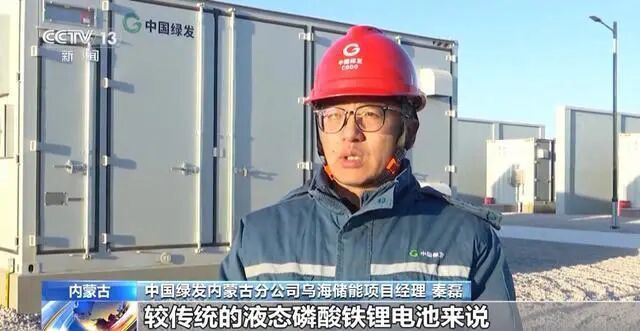
Semi-Solid-State Lithium Battery Energy Storage Project Successfully Connected to the Grid in Wuhai, Inner Mongolia
Qin Lei, Project Manager of Wuhai Energy Storage Project, Inner Mongolia Branch, China Green Development Group:
“This massive ‘power bank’ utilizes domestically-developed semi-solid-state lithium iron phosphate battery technology, which offers significant advantages in safety performance, energy density, and cycle life compared with conventional liquid lithium iron phosphate batteries.”
With the rapid upgrade of the new energy industry, energy storage - essential for grid peak regulation, frequency modulation, and improving renewable energy utilization - is entering a phase of large-scale expansion. Semi-solid-state lithium battery technology represents a key direction for the future development of power and storage batteries. Using a hybrid solid-liquid electrolyte, semi-solid-state batteries retain the high ionic conductivity of liquid systems while achieving a cycle life exceeding 12,000 cycles, which greatly reduces lifecycle operational costs. In addition, they can effectively suppress lithium dendrite growth, further enhancing safety.
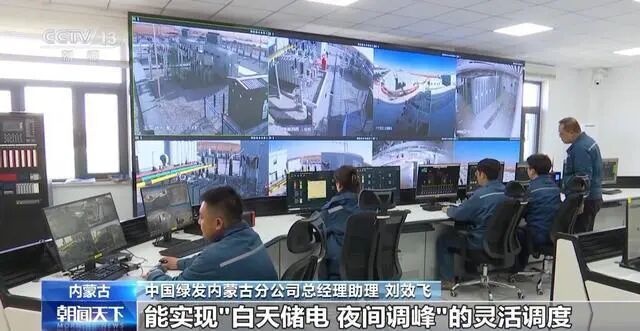
Semi-Solid-State Lithium Battery Energy Storage Project Successfully Connected to the Grid in Wuhai, Inner Mongolia
Liu Xiaofei, Assistant General Manager, Inner Mongolia Branch, China Green Development Group:
“Once fully operational, the project will feature a peak-shaving and frequency-regulating capability of 200MW/800MWh, providing 189,000 MWh of clean electricity to the grid annually. It enables flexible scheduling - storing energy during the day and supporting peak loads at night - significantly enhancing power system stability. It will also ensure that local green electricity can be fully delivered, stably transmitted, and efficiently utilized, solving key bottlenecks in regional renewable energy consumption.”

Semi-Solid-State Lithium Battery Energy Storage Project Successfully Connected to the Grid in Wuhai, Inner Mongolia
In recent years, semi-solid-state lithium batteries - offering both high safety and strong economic performance - have become a core direction of technological evolution in the energy storage sector. Previously, China's largest grid-connected semi-solid-state storage project had a capacity of 100MW/200MWh. The Wuhai project doubles that scale, demonstrating that China is now at the global forefront of large-scale applications of semi-solid-state energy storage technology.
CENSA Upcoming Events:
1. Dec.4-5 | 2025 China Energy Storage CEO Summit | Xiamen, Fujian
Register Now to attend
Read more: http://en.cnesa.org/new-events-1/2025/12/4/dec4-5-2025-china-energy-storage-ceo-summit

2. Apr. 1-3, 2026 | The 14th Energy Storage International Conference & Expo
Register Now to attend, free before Oct 31, 2025.

Multiple Gigawatts of European BESS Project M&A, Financing and Route-to-Market Deals
Source: Energy Storage News
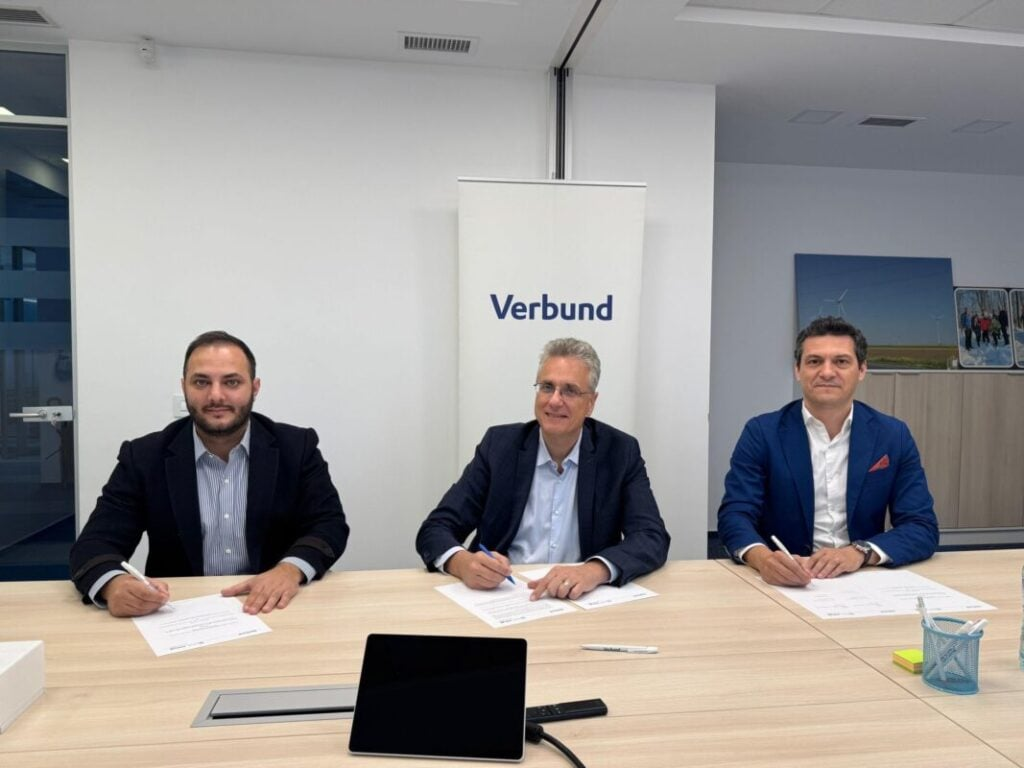
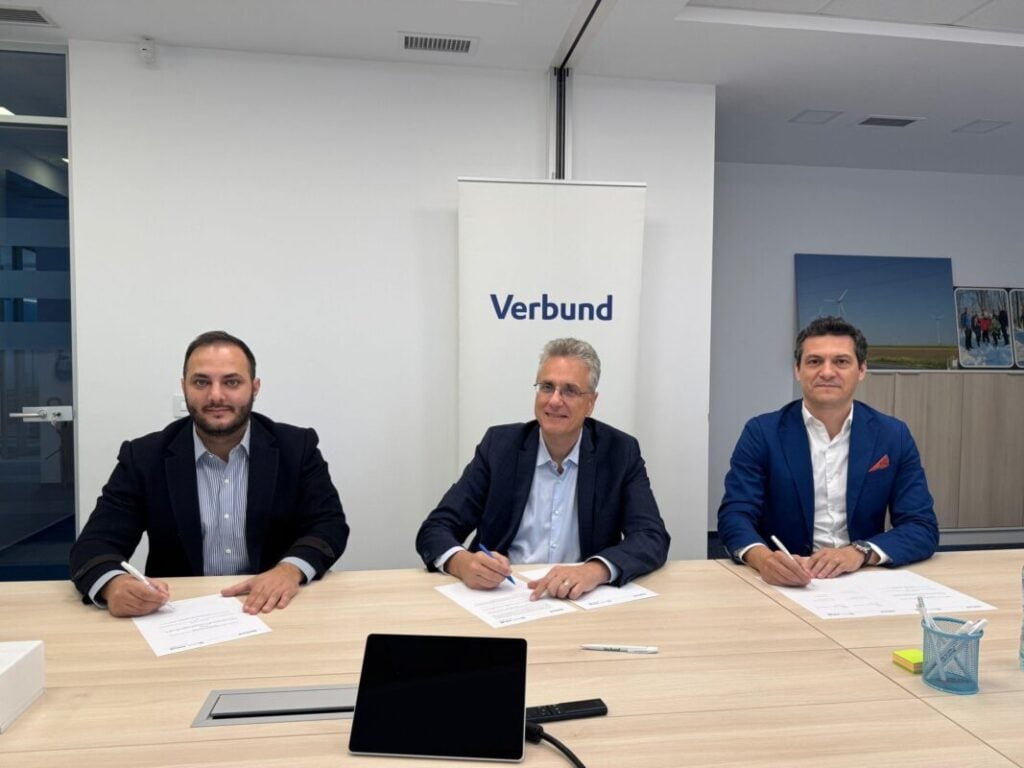
Verbund, Prime Batteries and Enevo executives signing a Romania BESS project deal. From left to right: Vicentiu Ciobanu (CEO Prime Batteries), Adrian Remus Borotea (managing director of Verbund Wind Power Romania) and Cristian Pirvulescu (CEO of Enevo Group). Image: Verbund via LinkedIn.
European BESS news from project owners Premier Energy Group, Verbund, Eco Stor, Ingrid Capacity, Ric Energy, Ganfeng Lithium, EP Group, RWE and Giga Storage, securing acquisitions, financings and route-to-market (RTM) deals for multiple gigawatts of capacity this past week.
Romania: Premier buys 400MWh BESS, Verbund enlists
contractors for project
Energy firm Premier Energy Group has acquired a ready-to-build (RTB) 200MW/400MWh battery energy storage system (BESS) in Romania, near Iasi.
Construction on the project will start in 2026, with commissioning anticipated in late 2026 or early 2027. The project will support the integration or more renewables on Romania’s grid with fast-response capacity and grid balancing applications.
Premier is currently in advanced discussions on financing options for the project, with the expectation of securing a long-term structure, it said. The announcement did not say whether it was one of the winning projects from a recent EU-backed capex support scheme.
In related news, Austria-based utility and power firm Verbund’s local arm Verbund Wind Power Romania has enlisted OEM Prime Batteries and engineering firm Enevo Group to supply and integrate a 48MW/76MWh project.
It will be built at Verbund’s Alpha Nord Wind Farm in Tulcea County. The installation will help integrate more renewables but also improve the operational flexibility of the Verbund’s local renewable assets.
Prime Batteries Technology and Enevo Group will deliver the full engineering, procurement and construction (EPC) scope, including design, equipment supply, system integration, installation and commissioning.
Construction is scheduled to begin in February 2026 with commissioning set for September 2026.
Prime Batteries made headlines last year when it integrated a BESS for owner Monsson with an emphasis on locally manufactured technology.
Germany: Eco Stor project toll and Ingrid Capacity enters market
Project owner-operator and EPC Eco Stor has entered into a long-term toll with energy firm Alpiq for a 103.5MW/238 MWh BESS in Schleswig-Holstein, Germany.
Alpiq will partner with optimisers Enspired and Entelios to manage the BESS project’s activity in the electricity market.
It is Eco Stor’s second major grid-scale project in Germany, and identically sized to its first which came online in June this year, in Bollingstedt. The project with Alpiq in Schleswig-Holstein will come online in mid-2026.
The announcement coincided with one from Sweden-headquartered BESS owner-operator Ingrid Capacity, revealing it has partnered with developer Energiequelle for 200MW of grid-scale projects in Germany.
Energiequelle will develop the projects while finance, operate, and optimise the assets using its in-house trading and optimisation platform. The projects are expected to reach RTB in 2026. Ingrid has so far been active primarily in Sweden and Finland.
Italy: Ric Energy buys 200MW BESS
Spain-headquartered Ric Energy Group has acquired a 200MW BESS in the Apulia region of Italy. The firm’s development pipeline in Italy now stands at 942MW, it said announcing the post on LinkedIn.
It didn’t provide more details about the project in its post. Italy is currently a hotbed of activity, with the long-awaited first auction of its MACSE scheme concluded with 10GWh of BESS handed long-term revenue contracts. Many investors and owner-operators were waiting for the auction before taking FIDs and proceeding to construction.
Our publisher Solar Media will host the Battery Asset Management Summit Europe 2025 in Rome tomorrow and Wednesday (2 & 3 December), where MACSE and Italy will undoubtedly be big talking points.
Netherlands: Giga Storage toll with Vattenfall
BESS owner-operator Giga Storage has entered into a long-term toll with energy firm Vattenfall for its Project Leopard, a 300MW/1,200MWh BESS in the Netherlands.
The toll covers 100MW, one-third of Leopard’s total capacity. It will provide Giga with a fixed, long-term income stream that supports the project’s financing. Vattenfall will optimise the contracted portion of Leopard’s capacity for services such as grid stability, portfolio balancing, and electricity trading.
RTM deals for grid-scale BESS in the Netherlands are characterised by portioning a project’s capacity into different slices with different tollers and offtakers to spread risk, the same strategy adopted by other major BESS owner-operators there including Lion Storage and SemperPower.
UK: RWE to build 700MWh BESS, two optimisation deals announced
Germany-headquartered power firm RWE has made a final investment decision (FID) on a 350MW/700MWh BESS in Wales, called Pembroke Battery Storage. It is part of the wider Pembroke Net Zero Centre project combining renewable generation including green hydrogen production.
The project received planning consent in January 2025 and also won contracts in the UK’s most recent capacity market (CM) auction. Construction will start in 2026 with commissioning and commercial operation in H2 2028, ‘subject to receiving an updated and timely grid connection’, RWE said. That probably alludes to the ongoing grid connection queue reshuffle.
The news follows hot on the heels of two BESS optimisation announcements in the UK, both covered by our sister site Solar Power Portal.
China-based Ganfeng Lithium has enlisted power firm EDF to provide RTM and optimisation services for its 50MW/160MWh Kintore BESS project, while EP Group has contracted optimiser GridBeyond to do the same for its 50MW North Baddesley BESS.
(By Cameron Murray)
CENSA Upcoming Events:
1. Dec.4-5 | 2025 China Energy Storage CEO Summit | Xiamen, Fujian
Register Now to attend
Read more: http://en.cnesa.org/new-events-1/2025/12/4/dec4-5-2025-china-energy-storage-ceo-summit

2. Apr. 1-3, 2026 | The 14th Energy Storage International Conference & Expo
Register Now to attend, free before Oct 31, 2025.

China's Largest Grid-Side Lead-Carbon Energy Storage Power Station Goes Online
Source: Science and Technology Daily
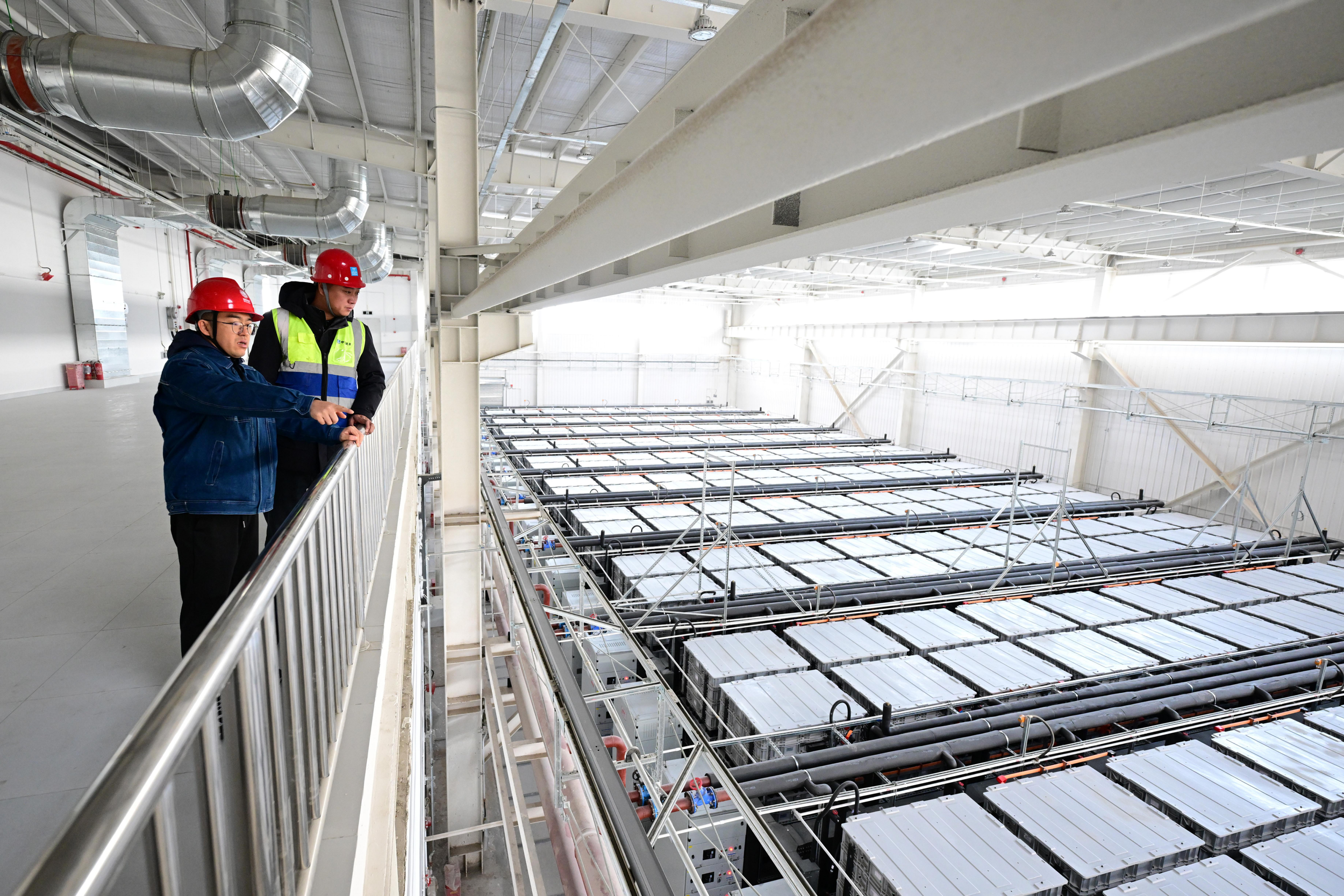
At 19:18 on November 26, the battery cabin of the Diannong No.1 Energy Storage Station - part of the 200 MW / 400 MWh shared energy storage project by Ningxia Jiyang Green Storage - was successfully energized for the first time, marking the successful grid connection and commissioning of China's largest grid-side lead-carbon energy storage power station.
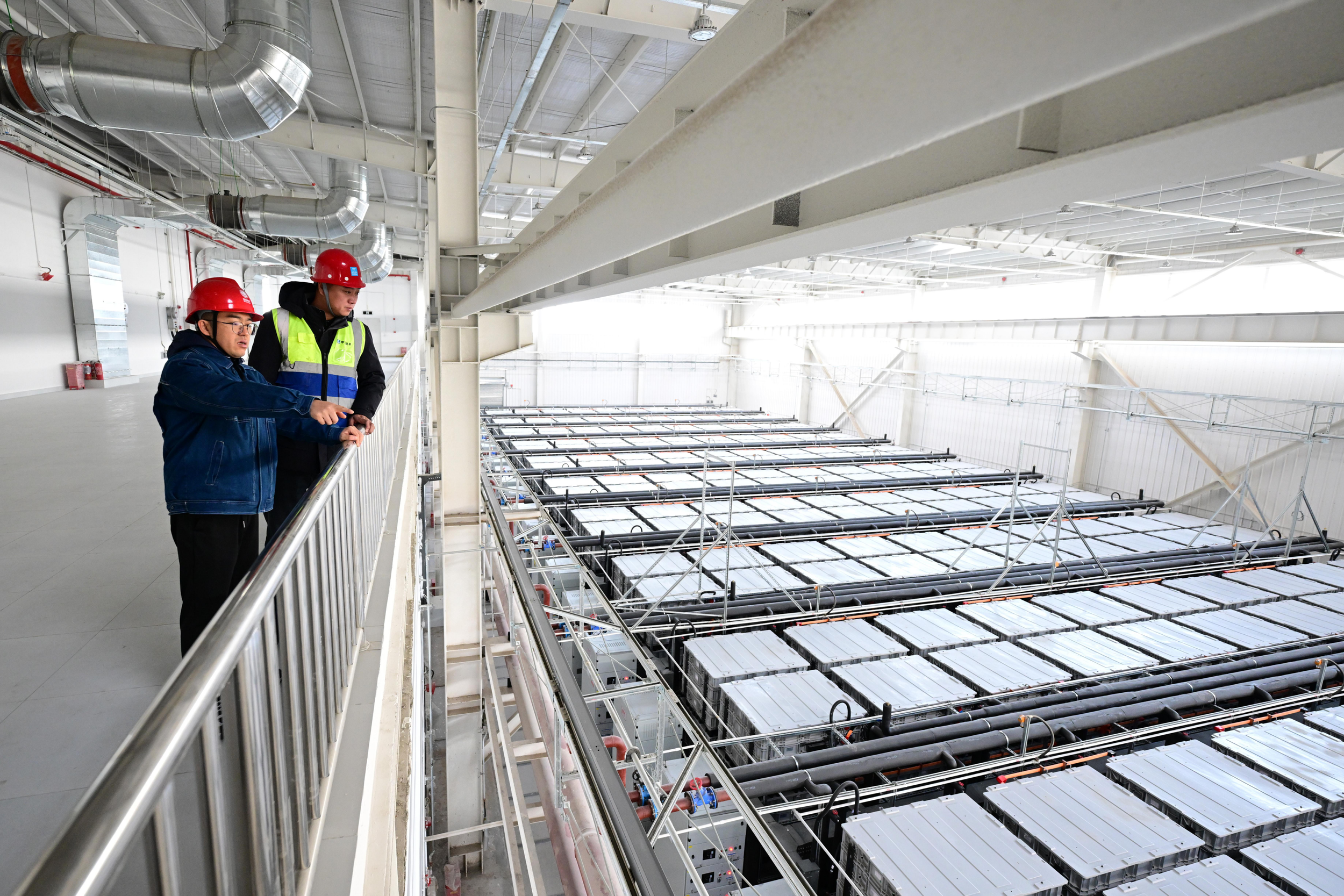
The Jiyang Green Storage 200 MW / 400 MWh shared energy storage project was invested and constructed by Ningxia Jiyang Green Storage Integrated Energy Services Co., Ltd. Covering an area of 55.4 mu (≈ 3.7 hectares) with a total investment of 620 million yuan, the project sets new records for the largest scale and highest power among grid-side lead-carbon energy storage stations. It is located in the core energy corridor of Xixia District, Yinchuan, and is equipped with 80 customized lead-carbon energy storage integrated cabins.
The system boasts a cycle life of over 6,000 cycles - 3 times that of traditional lead-acid batteries and 1.5 times that of lithium batteries - with a full life-cycle cost 40% lower than lithium batteries, making it the most cost-effective large-scale energy storage solution in China.
The State Grid Yinchuan Electric Power Company comprehensively tracked the project's construction progress, coordinated every step, and organized a professional technical team of dozens of staff from power dispatch, operation and maintenance, marketing, and information communications to provide grid connection services. The power dispatch control center assigned dedicated personnel for over 300 days of full-process monitoring. Under the overall deployment of State Grid Ningxia Electric Power Co., Ltd., both State Grid Yinchuan Electric Power Company and Ningxia Jiyang Green Storage actively coordinated to ensure the smooth grid connection of the Diannong No.1 Energy Storage Station.
“A successful grid connection of this project helps accelerate the integrated development of Yinchuan's energy storage industry and supporting clean energy sectors, enhances the grid's flexible regulation capability, increases renewable energy absorption, and eases peak electricity supply pressure. It also serves as an important demonstration for the integration of ‘generation-grid-load-storage’ and multi-energy complementarity,” said a relevant official from State Grid Yinchuan Electric Power Company.
CENSA Upcoming Events:
1. Dec.4-5 | 2025 China Energy Storage CEO Summit | Xiamen, Fujian
Register Now to attend
Read more: http://en.cnesa.org/new-events-1/2025/12/4/dec4-5-2025-china-energy-storage-ceo-summit

2. Apr. 1-3, 2026 | The 14th Energy Storage International Conference & Expo
Register Now to attend, free before Oct 31, 2025.

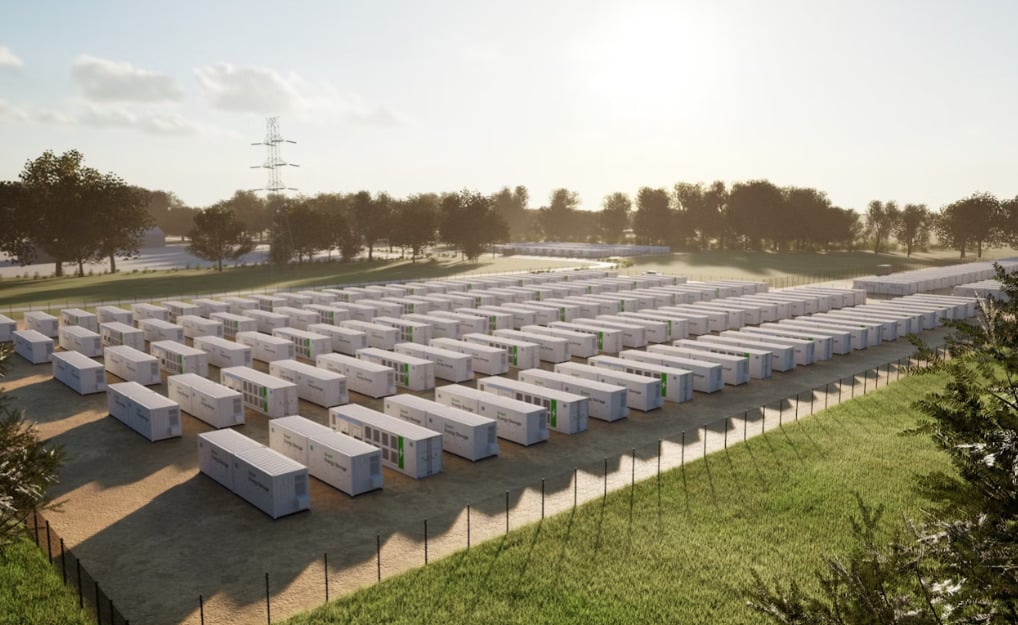
Australia Opens Capacity Investment Scheme Tender 8, Seeking 16GWh of Energy Storage across NEM
Source: Energy Storage News
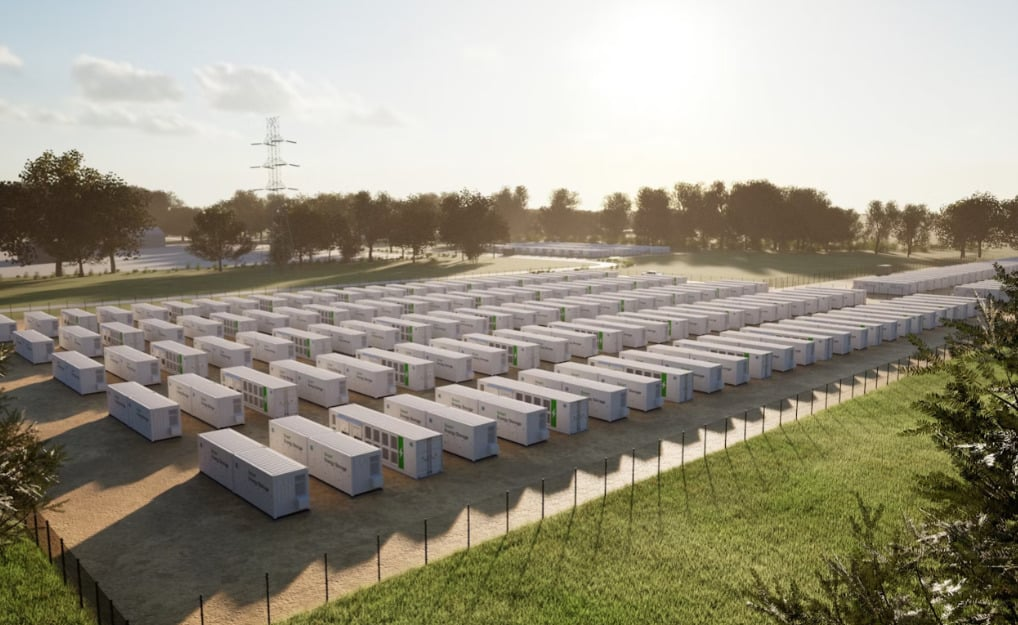
Pacific Green was one of the successful participants in the CIS, with the Limestone Coast Energy Park (pictured) having been awarded a CISA. Image: Pacific Green.
The Australian government has officially opened the Capacity Investment Scheme (CIS) Tender 8, targeting 16GWh of energy storage capacity across the National Electricity Market (NEM).
The tender represents the largest single energy storage procurement under the CIS programme, reflecting the government’s accelerated deployment timeline for grid-scale storage infrastructure.
Tender 8 registrations opened earlier today (28 November) and will close on 23 January, with submissions closing on 6 February. The tender specifically targets energy storage projects with a minimum 4-hour duration requirement, emphasising the government’s focus on medium-duration storage technologies capable of providing extended grid support services during peak demand periods and renewable energy intermittency events.
The 16GWh capacity target represents a substantial increase from previous tender rounds and aligns with Australia’s expanded CIS target of a total 40GW of renewables and energy storage.
The tender incorporates streamlined assessment processes developed through previous rounds, building on reforms introduced when the government unveiled four tenders for 2025.
These process improvements aim to reduce assessment timeframes and provide greater certainty for project developers while maintaining rigorous evaluation criteria for technical capability, financial viability, and grid integration requirements.
Eligible technologies under Tender 8 include battery energy storage systems, pumped hydro energy storage (PHES), compressed air energy storage, and other proven energy storage technologies capable of meeting the 4-hour minimum duration requirement.
The tender excludes hybrid renewable energy projects, focusing exclusively on standalone energy storage systems that can provide grid services, including frequency regulation, voltage support, and energy arbitrage across multiple market timeframes.
The CIS has demonstrated significant success in previous tender rounds, with substantial energy storage capacity awarded across multiple procurement cycles.
Tender 3 resulted in over 15GWh of energy storage being awarded to successful applicants, while Tender 4 saw 11.4GWh of solar-plus-storage projects receive government support through the programme.
The scheme provides revenue support through Capacity Investment Scheme Agreements (CISAs) that supplement market revenues, enabling project developers to secure financing for energy storage projects that might otherwise face commercial viability challenges in merchant market conditions.
The support mechanism includes floor and ceiling price arrangements that provide revenue certainty while maintaining market exposure and incentives for efficient operation.
Tender 8 evaluation criteria encompass technical specifications, commercial arrangements, grid connection requirements and project development timelines.
Projects must demonstrate grid connection agreements or advanced connection applications with relevant transmission network service providers, along with evidence of site control, environmental approvals, and financial capacity to complete construction and commissioning activities.
The geographic distribution requirements under Tender 8 aim to ensure the deployment of energy storage across multiple states and regions within the NEM, thereby supporting grid resilience and renewable energy integration under diverse network conditions.
The scheme includes milestone requirements and progress reporting obligations to ensure that successful projects advance through the development, construction, and commissioning phases according to agreed-upon schedules.
The DCCEEW will conduct information sessions for potential applicants during December 2025 and January 2026, providing guidance on application requirements, evaluation criteria and commercial arrangements.
Successful Tender 8 projects are expected to be announced in mid-2026, with CISAs enabling project financing and construction commencement. You can find out more about CIS Tender 8 on the official website.
CENSA Upcoming Events:
1. Dec.4-5 | 2025 China Energy Storage CEO Summit | Xiamen, Fujian
Register Now to attend
Read more: http://en.cnesa.org/new-events-1/2025/12/4/dec4-5-2025-china-energy-storage-ceo-summit

2. Apr. 1-3, 2026 | The 14th Energy Storage International Conference & Expo
Register Now to attend, free before Oct 31, 2025.

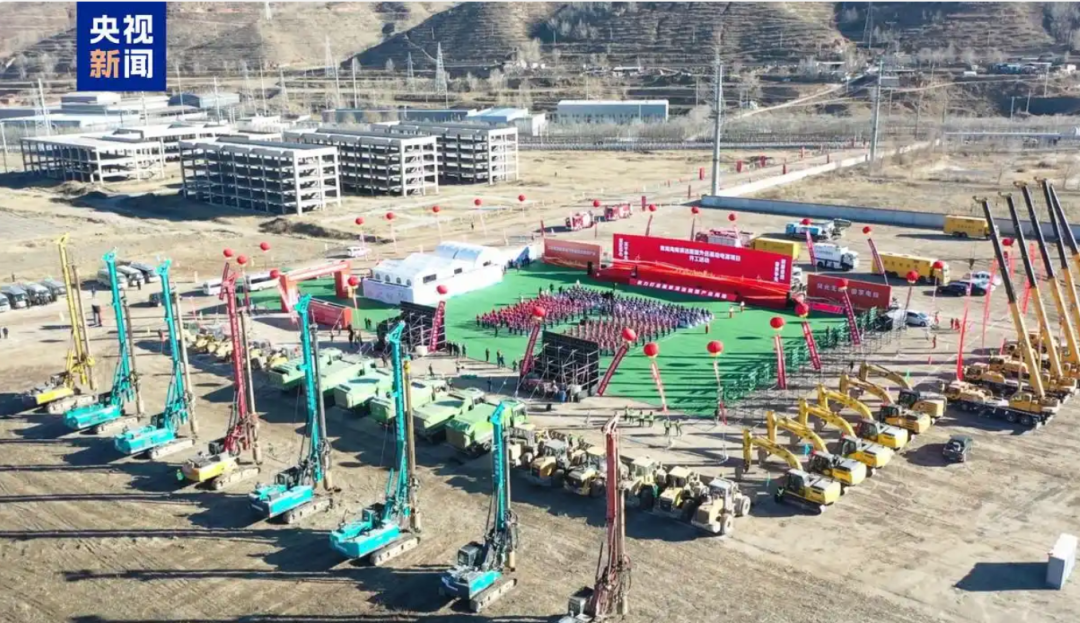
73 Billion Yuan Investment! 4.8 GWh of Energy Storage! SPIC Launches 19.44 GW “Desert-Gobi-Wasteland” Mega Project
Source: CCTV News
On November 27, according to the State Power Investment Corporation (SPIC), construction has officially begun in Xining, Qinghai Province on China's largest power supply project with the highest share of new energy - the Qinghai Hainan Clean Energy Delivery Base Project, part of the national “Desert-Gobi-Wasteland” mega base initiative.
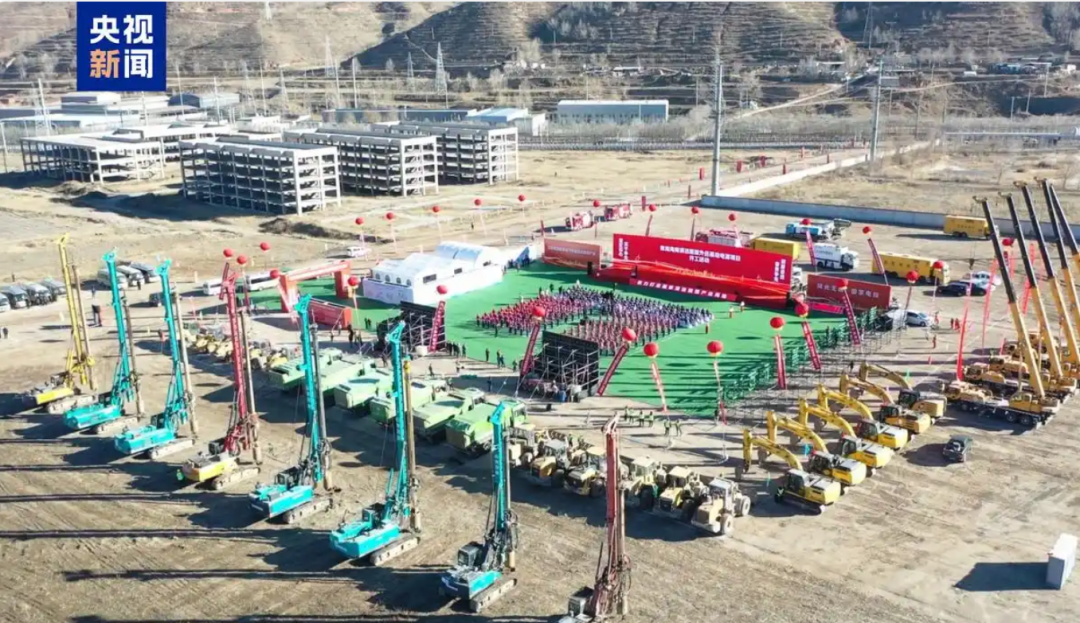
“Desert-Gobi-Wasteland” refers to vast desert and semi-arid regions, which are rich in wind and solar resources. The project in Qinghai's Hainan Prefecture represents a total investment of nearly 73 billion yuan, with a planned installed capacity of 19.44 GW. New energy accounts for 86.4% of the total, including 9.6 GW of solar PV, 6 GW of wind power, 2.64 GW of supporting coal-fired power, and 1.2 GW/4-hour of electrochemical energy storage (4.8 GWh). The project will transmit electricity directly to Guangdong via a ±800 kV ultra-high-voltage DC transmission line with a capacity of 8 GW.
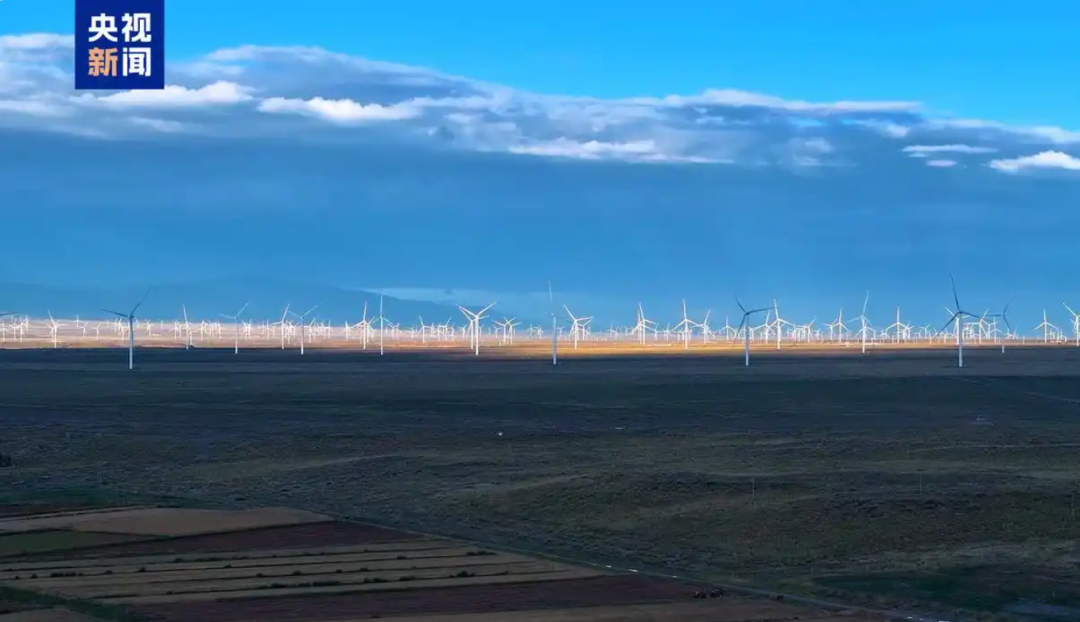
Once completed, the project will generate an average of 36,000 GWh of electricity annually, equivalent to saving about 10 million tons of standard coal and reducing carbon emissions by roughly 23.5 million tons. It will deliver 36,000 GWh of power annually to the Guangdong-Hong Kong-Macao Greater Bay Area, playing a major strategic role in optimizing China's energy mix and supporting high-quality development in the eastern region.
CENSA Upcoming Events:
1. Dec.4-5 | 2025 China Energy Storage CEO Summit | Xiamen, Fujian
Register Now to attend
Read more: http://en.cnesa.org/new-events-1/2025/12/4/dec4-5-2025-china-energy-storage-ceo-summit

2. Apr. 1-3, 2026 | The 14th Energy Storage International Conference & Expo
Register Now to attend, free before Oct 31, 2025.

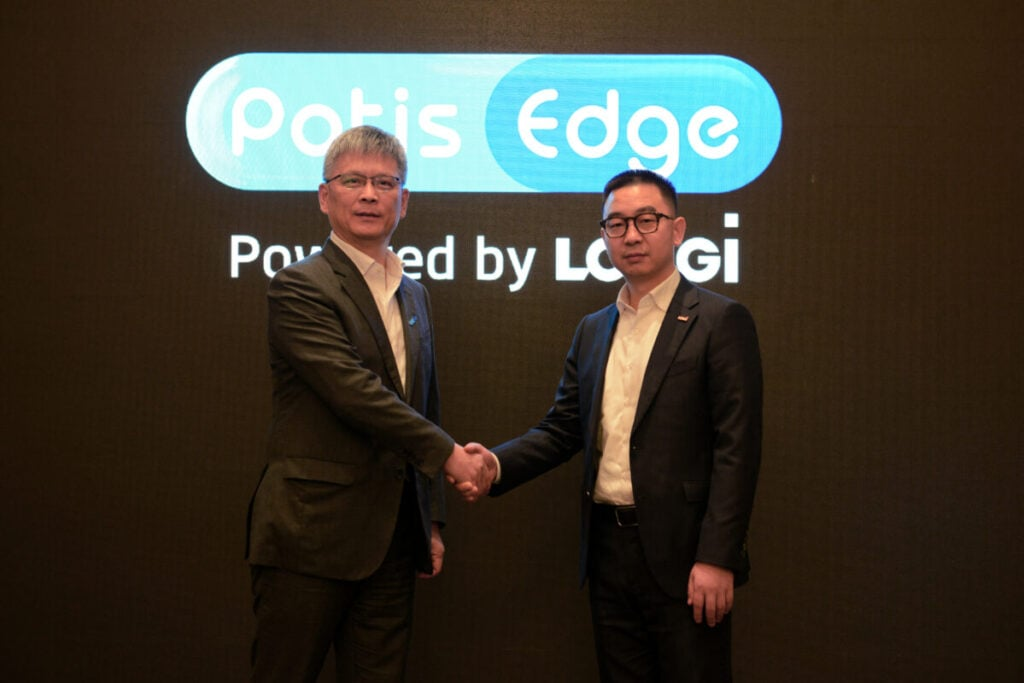
‘Rapid Growth but Disorderly Competiton’: Longi Enters Energy Storage Industry with PotisEdge Deal
Source: Energy Storage News
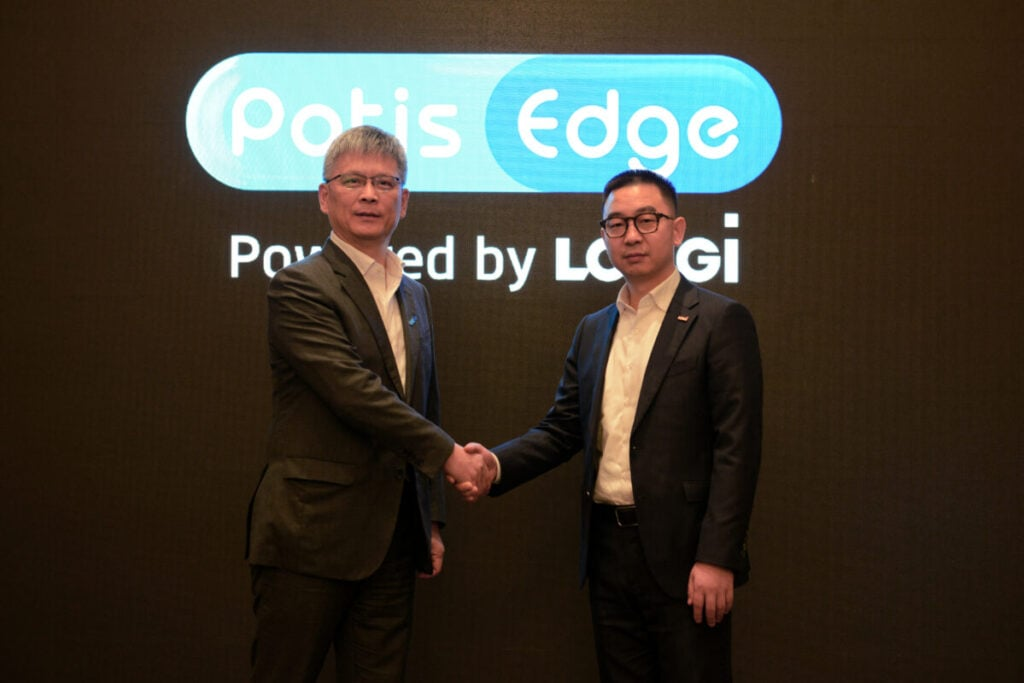
Longi PotisEdge Presidents agreeing marking the new partnership with a ceremony in London. Image: Longi.
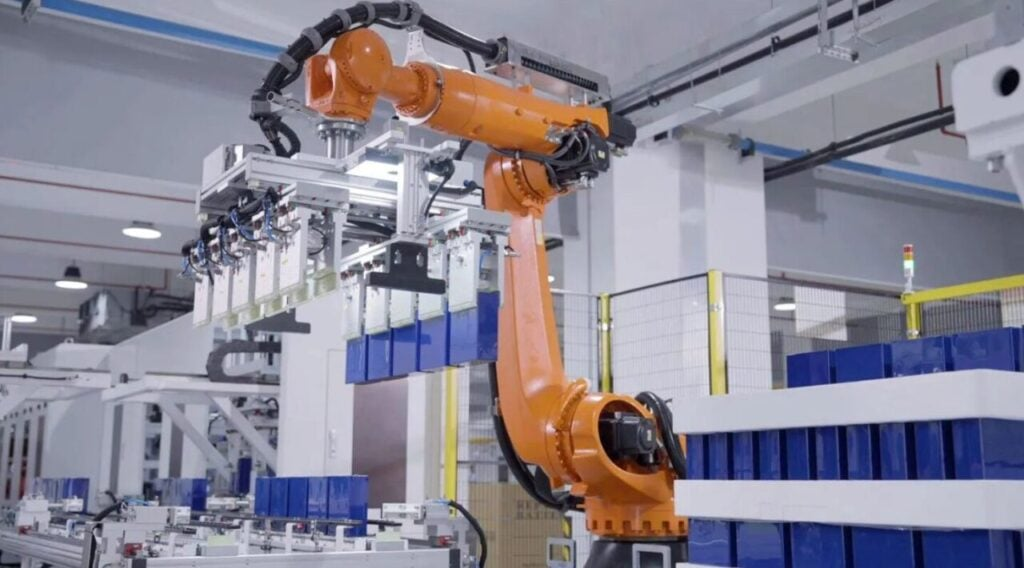
PotisEdge manufactures BESS and all its components (except cells) from its facilities in Suzhou, and soon Georgia, US. Here, battery modules are being sorted and assembled into packs, prior to BESS assembly. Image: PotisEdge.
We caught up with the president of system integrator PotisEdge following news of its acquisition by Longi, which marks the Chinese solar PV giant’s move into the energy storage industry.
News of Longi’s acquisition of PotisEdge first emerged on 13 November, with a public notice on the Shaanxi Provincial Administration for Market Regulation website. It revealed that Longi Green Energy Technology has agreed to acquire c.62% of PotisEdge via an equity acquisition, capital increase and voting rights, giving it sole control of the firm. Prior to the deal, PotisEdge was 44.79% held by individuals.
Longi and PotisEdge are characterising the deal as a partnership via which Longi will launch its ‘Energy Storage One-Stop Solution’, as it now covers solar, hydrogen and energy storage. Longi said its energy storage solution will be deployed first in key markets such as the UK, Germany, Italy, and Spain.
Longi VP Dennis She said in the announcement: “The current development stage of the energy storage industry is very similar to the early days of solar — confidence-driven rapid growth, but also bringing disorderly competition. The future dimension of competition in energy storage has evolved from ‘having the technology’ to ‘value reliability.”
PotisEdge president: Combination will offer opportunities
Speaking to Energy-Storage.news at an event in London marking the deal, PotisEdge founder and president Minjie Shi said: “Longi will bring the strong brand name and a big market to PotisEdge, and the combination of the two companies offers big opportunities to the market.”
“We are a technology company that designs and manufactures all the key components with the exception of the battery cells. We’re highly integrated, and that’s allowed us to gain a good reputation and solve market challenges,” Shi said.
“Battery cell manufacturing and system integration are totally different. Battery cells are a chemistry process, system integration is about controls, software, hardware and intelligent systems.”
Core technology offering
The firm’s offering is built around the five ‘S’s: BMS (battery management system), EMS (energy management system), PCS (power conversion system), TMS (thermal management system) and its proprietary ICCS (intelligent cell contact system) technology for predicting thermal runaway.
In September, the firm launched a 6.25MWh AC BESS product with string inverters and its ICCS technology for fire safety. The tech is designed for monitoring and protection of battery cells, to prevent thermal runaway and ensure safe operation of the system. It provides early warnings, predictions and an immediate response to potential cell malfunctions.
Before the AC launch, its grid-scale products were DC products. “Amongst the 12GWh of deployments, that has mainly been DC products, especially the 5MWh unit. Now we are shipping the all-in-one AC solution,” Shi said, adding that all regions are showing demand for both DC and AC products.
He added that the PotisEdge brand would remain for the foreseeable future, as it had over a decade of experience in the BESS industry with 12GWh deployed. It has mainly been active in the grid-scale segment, with deployments to date primarily in China, but also in North America, Europe and Australia.
Markets
“Europe is an important market for us, we’ve already delivered for a few sites here like Italy,” he said.
It has 31GWh manufacturing capacity from its facility in Suzhou, China, and a 4-6GWh one in Atlanta, Georgia, US, set to start manufacturing next year. The Atlanta facility will produce the same products as its Suzhou facility, but will be more automated, with only 100 employees needed, Shi said.
“For the US market, the main thing is to localise production, and we’ve focused on solving this for the last two years. All companies are facing that same challenge.”
PotisEdge is also working on a modular BESS solution, as many other system integrators and BESS manufacturers have done in response to transportation issues with ever more energy-dense and heavy 20-foot containers.
As part of its expansion into storage with PotisEdge, Longi will establish a Solar-Storage Technology Innovation Center Center of Excellence in Europe, it said.
Chinese solar PV companies have steadily moved into energy storage, seeking to capitalise on its growth opportunities but also to offset falling profits in their core market as the sector suffers from over-supply. See all coverage of Longi by our sister site PV Tech here.
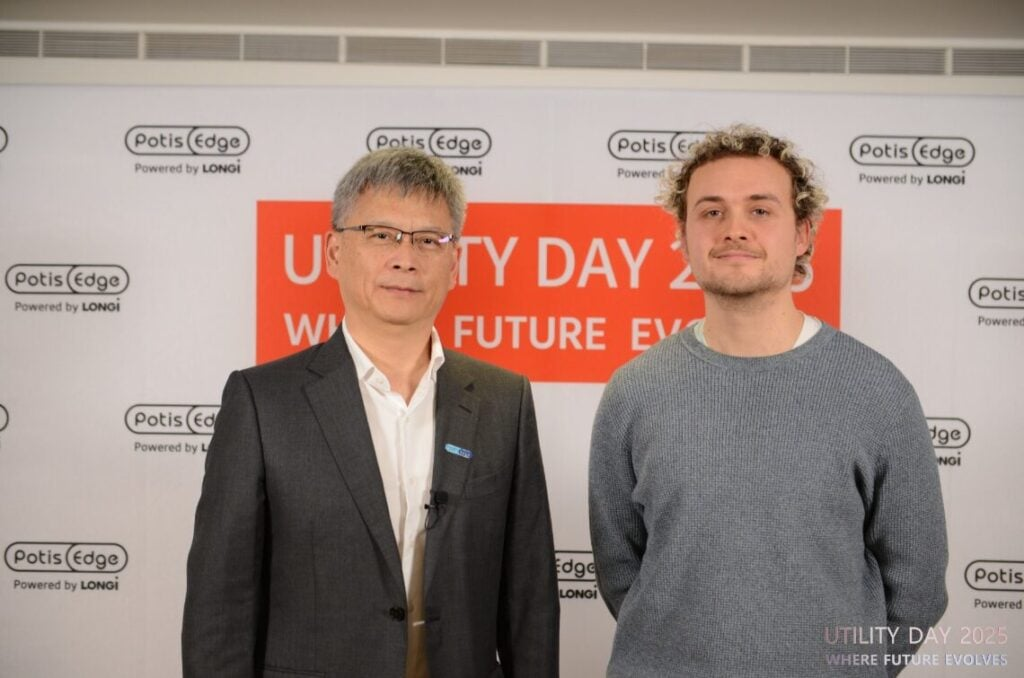
PotisEdge president Minjie Shi and Energy-Storage.news reporter Cameron Murray.
(By Cameron Murray)
CENSA Upcoming Events:
1. Dec.4-5 | 2025 China Energy Storage CEO Summit | Xiamen, Fujian
Register Now to attend
Read more: http://en.cnesa.org/new-events-1/2025/12/4/dec4-5-2025-china-energy-storage-ceo-summit

2. Apr. 1-3, 2026 | The 14th Energy Storage International Conference & Expo
Register Now to attend, free before Oct 31, 2025.

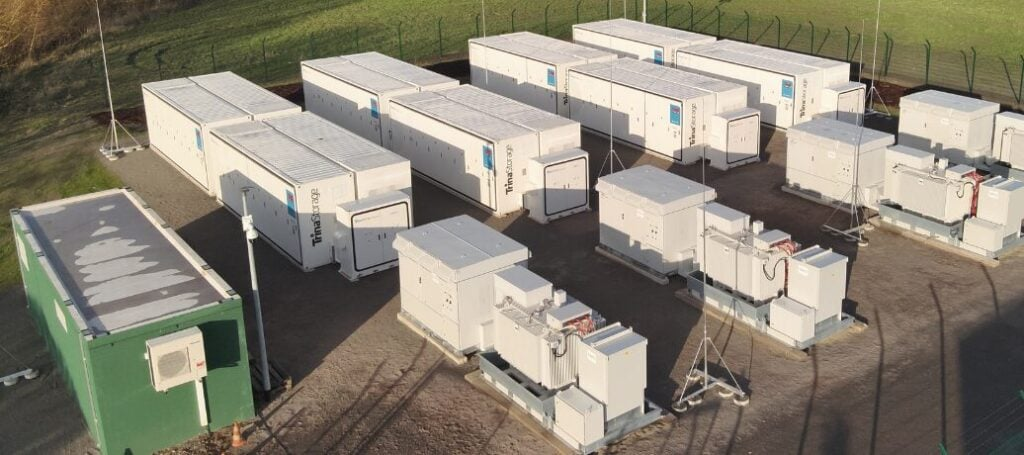
Germany BESS ‘Firsts’: Integrated Software, Multi-Party Optimisation, Privileged Permitting
Source: Energy Storage News
Germany BESS ‘firsts’: Integrated software, multi-party optimisation, privileged permitting
A week of claimed first-of-their-kind advances in Germany’s BESS market, including the combination of monitoring, diagnostics and energy trading on one platform, an optimisation deal allowing multiple companies to trade one asset virtually, and a law change accelerating permitting.
In summary:
· Investor Dynamic is deploying a BESS where digital monitoring, battery analytics and diagnostics, and energy trading are combined into one single, coordinated system: an industry-first according to the analytics provider Volytica
· Optimisation platform Terralayr has enabled three optimisers – Entrix, Suena and The Mobility House – to virtually trade portions of one single BESS asset
· The German Federal Parliament (Bundestag) has passed a law simplifying the development of energy storage projects, and expressly granting them privileged status
Dynamic’s Tangermünde project’s ‘first-of-its-kind’ integration
Investor Dynamic has partnered with digital monitoring and asset management solutions firm Amperecloud, battery analytics and diagnostics provider Volytica and optimiser Enspired for a 15.8MW/32MWh battery energy storage system (BESS) in Tangermünde, Saxony-Anhalt.
Volytica said it is the first project to “…combine monitoring, battery diagnostics, and energy trading into a single, coordinated system. These features are integrated to simplify operations and ensure competitiveness in today’s energy market”.
The analytics provider said the initiative addresses the common BESS industry challenge of fragmented digital tools for operational control, battery condition monitoring, and commercial optimisation. By integrating their platforms, the partners aim to enable continuous, data-driven system management, from performance monitoring to market participation, it said.
A spokesperson for Volytica said that, normally, you have individual software tools for asset management to operate and maintain the BESS, one tool for trading, one tool to access BMS data and one tool for analytics and monitoring, with no connection between providers.
Volytica CEO Claudius Jehle posted in more detail on his LinkedIn about the concept when Volytica announced the project.
The spokesperson said the integrated approach saves time and money, improves efficiency and competitiveness, and erases blind spots and increase transparency.
The project appears to already be operational, with a photo provided showing BESS units from Trina Storage, though the release did not refer to this.
Terralayr’s multi-optimiser BESS arrangement
BESS optimisation and virtual aggregation platform Terralayr has also claimed an industry-first, software-related asset management breakthrough.
It said its latest commercialisation model creates the “world’s first, risk-adjusted portfolio-effect for storage operators”.
The firm’s virtualisation set up allows multiple optimisers to trade a slice of one or multiple physical assets. The solution is live on Terralayr’s assets, will be rolled out to all future ones as well and available to asset owners in Germany.
Every asset owner has one contract per physical asset and that asset would be disaggregated into virtual batteries. Each virtual battery is then optimised by one different optimiser. As a result, one physical asset is optimised by multiple optimisers in parallel, a spokesperson explained.
A hypothetical arranagement is visualised in the infographic the firm provided below, with the BESS sliced into three virtual assets, 50MW each for Entrix and Suena and 100MW for The Mobility House (for example).
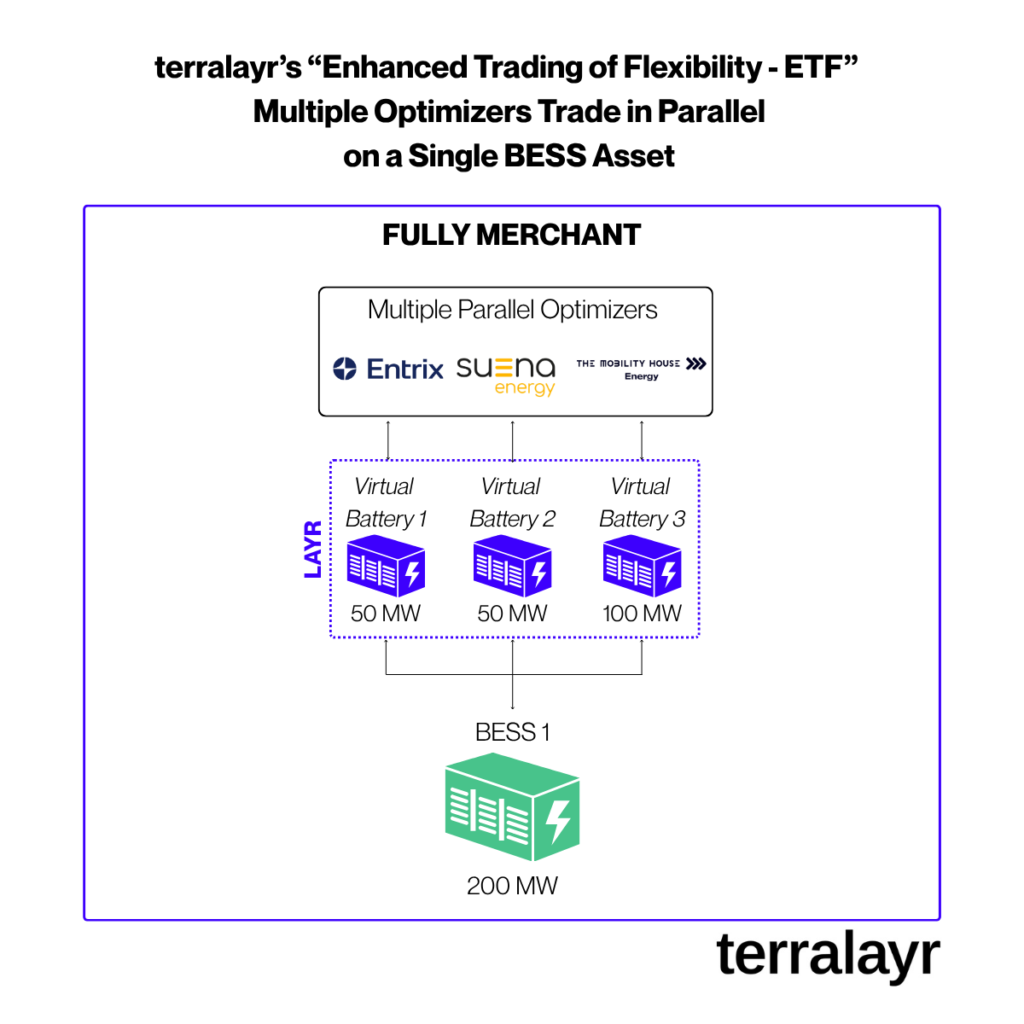
The model is called ‘Enhanced Trading of Flexibility – ETF’, and Terralayr claimed that it drives market efficiency, lowers revenue volatility, and creates a more stable risk-return profile for operators.
It also described an additional benefit called the “netting-off effects”, which regularly occurs when optimisers’ dispatch schedules offset each other, saving battery cycles and reducing degradation.
Terralayr’s platform bundles all optimiser dispatch and ancillary service signals and allocates them to the physical asset, while guaranteeing adherence to all technical restrictions and manufacturer specifications.
The firm launched in 2022, and has onboarded big-name energy firms in Germany including RWE and Vattenfall to its virtual BESS aggregation and optimisation platform as offtakers. Terralayr is deploying its own, smaller grid-scale BESS projects, at least partially to provide capacity for, and prove out, its platform.
Parliament in Germany adopts faster permitting for storage
In related BESS industry news, the German Federal Parliament (Bundestag) passed an amendment to the Energy Industry Act and the Federal Building Code which significantly simplifies the development of energy storage projects, law firm Evershed Sutherlands said in a note.
In a nutshell, the reform elevates legal certainty regarding the privileged treatment of thermal storage facilities, hydrogen storage facilities, and large-scale BESS in outside areas (Außenbereich), the firm explained: such projects are now expressly granted privileged status. The reform aims to accelerate energy storage permitting and deployment.
It creates a major simplification of future permit procedures, whereas previously energy storage was subject to considerable legal uncertainty.
Most grid-scale development in Germany is currently focused around projects that will come online before August 2028, when a three-year exemption from grid fees for charging and discharging ends. The government is discussing a more long-term solution, but whether this new change will benefit projects that can be deployed within the next three years is unclear.
(By Cameron Murray)
CENSA Upcoming Events:
1. Dec.4-5 | 2025 China Energy Storage CEO Summit | Xiamen, Fujian
Register Now to attend
Read more: http://en.cnesa.org/new-events-1/2025/12/4/dec4-5-2025-china-energy-storage-ceo-summit

2. Apr. 1-3, 2026 | The 14th Energy Storage International Conference & Expo
Register Now to attend, free before Oct 31, 2025.

NVIDIA's 800V Architecture Reshapes AI Data Centers: 31 Core Industry Chain Companies Unveiled
Source: CNESA
“How big is AI's appetite? The power consumption of a large AI data center is comparable to that of a small-to-medium-sized city. More challenging is its power usage pattern, which is like a ‘roller coaster’: one moment it computes at full capacity, and power spikes to its peak; the next moment it exchanges data, and power consumption drops sharply.” Such drastic fluctuations overwhelm traditional power grids and backup power sources represented by UPS (Uninterruptible Power Supply).
Against this backdrop, NVIDIA's recently released 800V DC architecture white paper has significance beyond a simple technical upgrade. It explicitly proposes a key requirement for future AI data centers: the integration of advanced energy storage systems capable of fast response, instantaneous charge/discharge, and intelligent scheduling. This forward-looking guidance signals that the energy storage industry is poised for an AI-driven explosive growth opportunity.
The Energy Bottleneck of Computing Power and Architectural
Breakthroughs
To address this challenge, industry leaders led by NVIDIA have laid out a clear vision, outlining a “three-step” evolution roadmap for the entire sector, aiming to steadily move toward the ultimate 800V DC architecture.
The first step is a transitional solution, innovatively adopting a “side-mounted power cabinet” to physically separate power modules from the core computing area.
The second step, the mid-term solution, promotes the architecture from “distributed” toward “centralized.”
The third step, the ultimate solution, uses SST to achieve a “one-step” conversion from the grid's 10kV medium-voltage AC to 800V DC.

Overview of the 800VDC MGX Cabinet
To enable this new architecture to effectively handle power fluctuations, “hybrid energy storage” becomes an inevitable technical core. By organically combining supercapacitors (responding to millisecond-level surges), high-rate batteries (addressing second-to-minute demands), and large-scale energy storage systems, it forms a multi-layered, fast-response backup power system.
However, the new architecture also raises the technical threshold comprehensively.
Traditional silicon-based power chips, like inefficient old engines, can no longer meet the stringent requirements of 800V high voltage. Consequently, third-generation semiconductors represented by silicon carbide (SiC) and gallium nitride (GaN) have emerged.
In this new architecture, SiC acts as the “strongman,” stabilizing high-voltage conversion of tens of thousands of volts in components such as solid-state transformers (SST), while GaN, like a “sprinter,” delivers precise low-voltage power to GPUs inside servers at extremely high speed. They are not just a performance upgrade but the cornerstone enabling the entire new architecture.
The ultimate form of this technological revolution is embodied in the disruptive product, the solid-state transformer (SST). It uses a “high-speed direct route” approach to efficiently convert medium-voltage grid power directly into 800V DC required by data centers, eliminating energy losses from multiple intermediate conversions, saving tens of millions of kWh annually for a large data center.
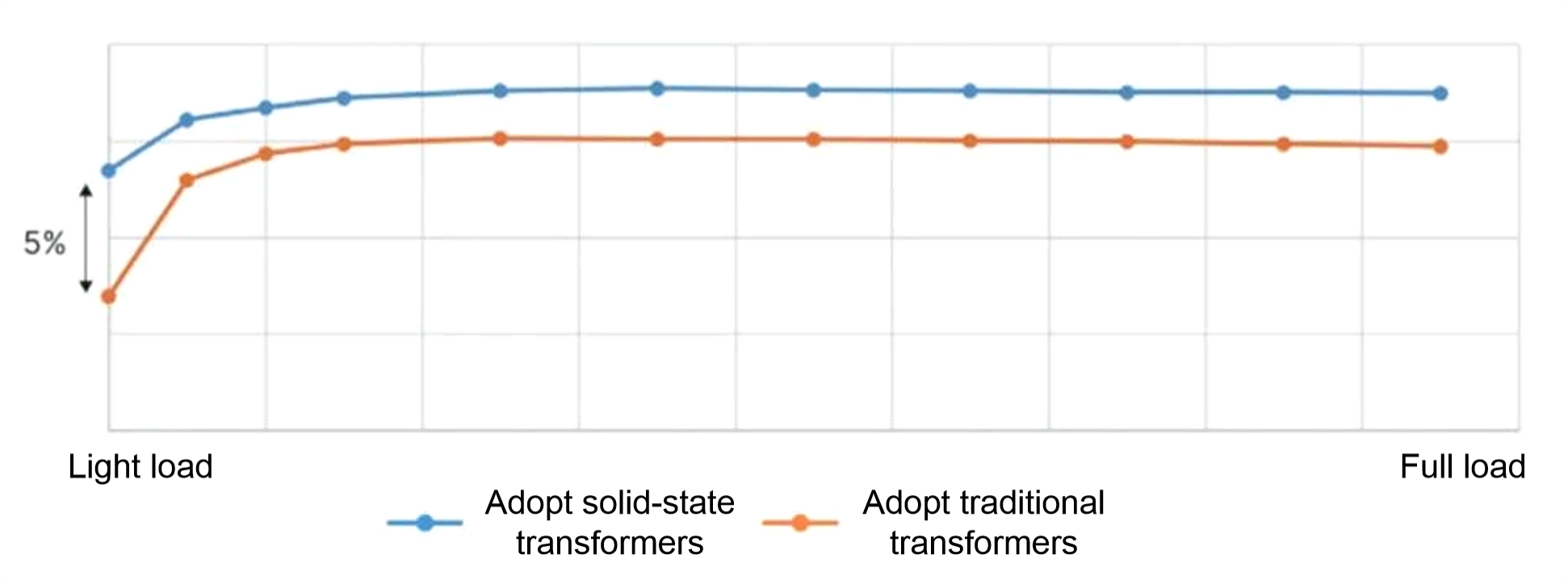
Under light load, SST efficiency is 5% higher than traditional transformers
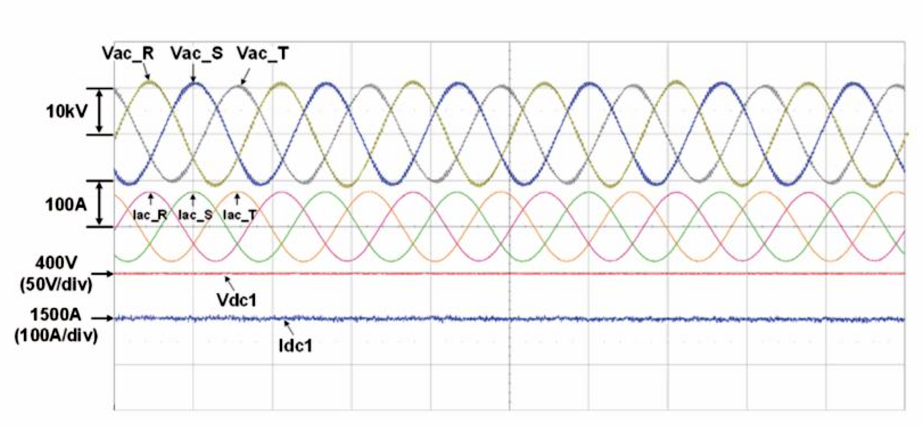
Improved Power Quality
Meanwhile, SST replaces heavy copper coils with advanced chips, achieving “silicon in, copper out,” reducing the power supply system footprint by more than half and freeing valuable space for core computing equipment. More importantly, it functions as an intelligent “energy router,” seamlessly integrating photovoltaics, energy storage, and other new energy sources, becoming an indispensable intelligent core for building future AI factories.
Technological and product transformation will ultimately lead to a reshaping of business models. Future competition will no longer be a battle of hardware parameters but a contest of “intelligence,” with suppliers required to evolve into solution providers “understanding computing power.”
This means energy systems must have predictive capabilities, anticipating computing load changes and proactively scheduling resources; simultaneously, they must coordinate intelligently, directing supercapacitors, batteries, and other energy storage units to work efficiently together.
In this transformation, true value is shifting from hardware itself to the control algorithms and software behind it. Future winners will no longer be mere equipment manufacturers but service providers capable of delivering integrated hardware-software intelligent energy solutions.
The Blue Ocean Emerges: “Consensus and Competition” in a
Trillion-Yuan Track
With the surge in computing power and data center energy demand, relevant companies in the energy storage industry chain have actively responded, and a strategic competition over technical routes and market positioning has fully unfolded. From UPS suppliers to thermal management solution providers to energy storage system integrators, numerous market participants are showcasing their core technologies and solutions, forming a vibrant competitive landscape. The following outlines the main market players in this field.

1. Sungrow Power: A leading new energy company entering the AI data center power foundation
As a global leader in PV inverters and energy storage, Sungrow is actively deploying AI data center power solutions. In May 2025, the company announced the establishment of the AIDC division, with related products expected in 2026. The team is positioned at a high starting point, focusing on overseas markets, planning comprehensive solutions including cabinet power, high-voltage side, and low-voltage side DC microgrid solutions.
2. Huawei: A system-level player building AI data centers with full-stack energy digital capabilities
Huawei places great emphasis on future data center trends. In January 2024, it released the Top 10 Trends of Data Center Facility 2024 White Paper, proposing that future data centers should achieve three features: “safe and reliable, ultra-simple integration, low-carbon and green.” Huawei, alongside Schneider and Emerson, is a leading domestic company in data center power distribution, emphasizing high integration and green transformation.
3. Kehua Data: Pioneer in self-built data centers and HVDC solutions
As a leading domestic and the world's fourth-largest modular UPS supplier, Kehua Data focuses on data centers. In China, it has independently built more than 20 data centers, and its efficient liquid cooling, UPS, and power distribution products are deeply adopted by top clients such as Tencent Yangtze River Delta data center, ByteDance data center, and Alibaba Cloud.
4. Shuangdeng Group: The “invisible champion” of data center energy storage
As one of China's earliest companies in communication and data center energy storage, Sundeng is hailed as an “invisible champion.” According to the China Energy Storage Alliance (CNESA) ranking, the company topped the 2024 global market for base station/data center battery shipments.
5. ZTT: Empowering AI data center infrastructure with “communication + power” dual engines
Focused on lithium battery energy storage systems, ZhongTian Energy Storage Technology Co., Ltd. aims to fully develop in communication and power energy storage. Its products are widely used in new energy vehicles, communication backends, and grid-side energy storage systems. Annual capacity has reached billions of ampere-hours, with investment in a top domestic lithium battery R&D center, laying the foundation for integrated product R&D and application.
6. Narada Power: Deep development in energy storage technology, winning overseas AI projects
With over 30 years of energy storage expertise, Zhejiang Narada Power Source Co., Ltd. ranked second in the 2024 global base station/data center battery shipment ranking. In October 2025, it successfully won a lithium battery storage project for a massive AI data center campus in Texas, USA. Its self-developed high-voltage, high-power lithium-ion backup power system is containerized, high-rate, and capable of evolving to HVDC, gradually applied in global top data center projects.
7. Hithium Energy Storage: Dedicated energy storage solutions for AI data centers
Specializing in long-duration and high-density storage, Xiamen Hithium Energy Storage Technology Co., Ltd. launched a comprehensive energy storage solution for AI data centers at the U.S. data center exhibition in September 2025.
8. Potisegde: Focused practitioner of AIDC intelligent energy solutions
In September 2025, iPotisEdge Co., Ltd. launched a new-generation data center solution overseas, including the PotisBank-L6.25-AC energy storage system and intelligent energy management system (EMS).
9. Ampace: Semi-solid batteries safeguarding data centers
Xiamen Ampace Technology Limited has integrated this battery of high rate and high safety into the latest “PU200” data center power supply and “PR-S4” UPS systems for financial, communication, and other critical backup scenarios, featuring multiple safety measures like liquid detection and cell-level fire prevention.
10. CLOU: Next-generation liquid-cooled storage systems empowering data centers
Shenzhen CLOU Electronics Co. Ltd launched the Aqua-C3.0 Pro liquid-cooled storage system globally in September 2025, providing integrated EMS for cloud-edge collaboration.
11. Hopewind: Core supplier in the 800V HVDC supply chain
As a supplier of power electronics and energy storage systems, Shenzhen Hopewind Electric Corporation Limited plays a significant role in the supply chain of NVIDIA's 800V DC architecture. The company is the key subcontractor for Vertiv's 800V HVDC system, providing cabinet-level power modules and dynamic load adapters.
12. Chint Electrics: “Source-Grid-Load-Storage-Charge” integrated solutions empowering green data centers
As a globally renowned comprehensive service provider in new energy and power intelligence, Zhejiang Chint Electrics Co., Ltd. actively promotes the integration of "source-grid-load-storage-charging" and microgrid technology, offering comprehensive energy solutions for scenarios such as industrial parks and data centers. Its "integrated" microgrid architecture can operate in coordination with DC bus technology to optimize energy from the source.
13. Kstar: Winning overseas national AI data center projects
Shenzhen Kstar Science & Technology Co.,Ltd is a leading domestic provider of UPS and energy storage overall solutions. Recently, it successfully won the bid for the National AI Data Center project in Malaysia with its independently developed high-power VRLA lead-acid battery system.
14. Vertiv: Global leader in critical data center infrastructure
As a leading global provider of critical infrastructure, Vertiv Group Corp. closely collaborates with industry partners such as NVIDIA to drive the upgrade of power architectures in AI data centers. The company announced in October 2025 the plan to launch a complete 800V DC (HVDC) product line in 2026 to support NVIDIA's Rubin Ultra platform.
15. Delta Electronics: Author of the 800V DC technical white paper
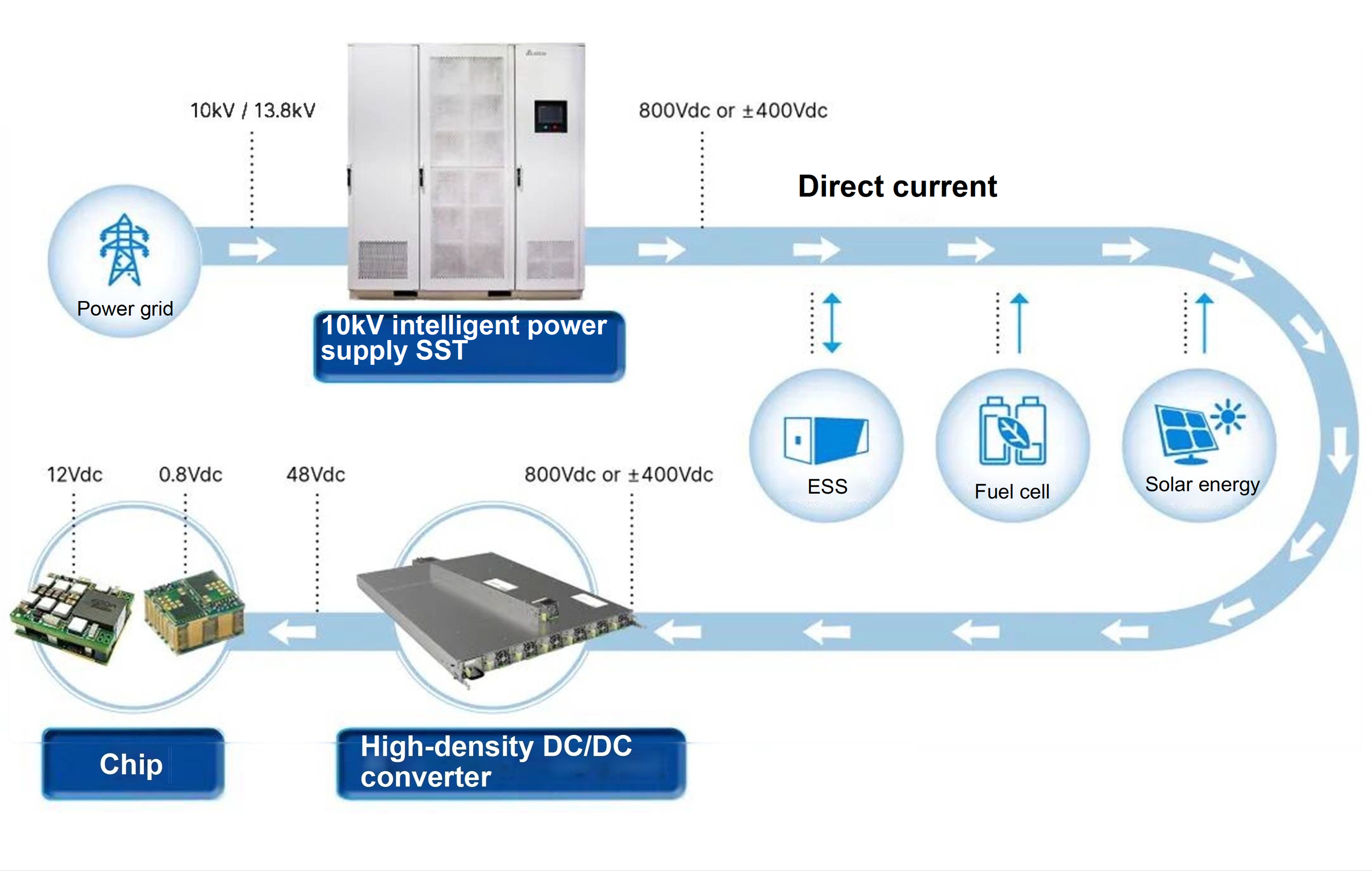
As a global leader in power supply and cooling solutions, Delta Electronics, Inc. is one of the key power module suppliers in NVIDIA's 800VDC ecosystem. Delta Electronics co-developed the “Panama” medium-voltage DC power solution with Alibaba and released China's first Data Center 800V DC Power Technology White Paper.
16. Eaton: New 800V DC reference architecture for AI data centers
As a global intelligent power management company, Eaton Corporation plc closely collaborated with NVIDIA to launch a brand-new 800V DC reference architecture for AI data centers in October 2025. This solution integrates innovative technologies such as supercapacitors as fast backup power and bus distribution supporting the Open Rack V3 standard.
17. Shenzhen Center Power Tech. Co., Ltd.: Full-range backup power solutions
Shenzhen Center Power Tech. Co., Ltd. has clearly identified data center UPS as its core strategic direction and launched the "REVO 3.0" AI computing center backup power solution that supports 5 to 60 minutes of backup power.
In March 2025, the company provided over 14,000 high-power VRLA lead-acid batteries (model HFS12-710WS) for the second phase of the Shanghai Songjiang Big Data Computing Center project, meeting the backup power demand of this ultra-large-scale autonomous computing infrastructure for up to tens of minutes.
18. Shenzhen Sinexcel Electric Co., Ltd.: Power quality expert for HVDC systems
Shenzhen Sinexcel Electric Co., Ltd. is a provider of core equipment for the energy Internet, specializing in power electronics and power quality management. In 800V DC and HVDC scenarios, its active power filter (APF) and static reactive power generator (SVG) can smooth out harmonics and voltage fluctuations. The company has reached a cooperation with Vertiv to provide a corresponding power quality solution for its HVDC power supply system.
19. JST: Leading SST exporter
As a global supplier of power equipment, JST Power Equipment not only has the delivery capacity for medium and low voltage switch cabinets, transformers and other products, but also has successfully independently developed a 10kV/2.4MW solid-state transformer (SST) prototype specially designed for 800V DC power supply architecture, and is actively promoting customer certification.
20. VNET: Nasdaq-listed IDC cornerstone and green computing pioneer
As the first third-party neutral data center operator in China to be listed on the Nasdaq in the United States, VNET Group is one of the pioneers of China's IDC industry. In 2023, the company will fully focus on the coordinated development of "green electricity + computing power". VNET Group operates over 50 data centers and more than 52,000 cabinets in over 30 cities across the country, and focuses on building projects such as the "10GW Green DC" ultra-large-scale intelligent computing base in Ulanqab and the AIDC node in Huailai, Hebei Province.
21. Sinnet: AWS core operator in China and cloud-network integration service provider
As a digital infrastructure integrated service provider listed on the Growth Enterprise Market of the Shenzhen Stock Exchange, Beijing Sinnet Technology Co., Ltd. has over 12 self-built data centers in core regions such as the Beijing-Tianjin-Hebei area and the Yangtze River Delta, with more than 70,000 operational cabinets. It also actively responds to the "East Data West Computing" strategy and is accelerating the layout of large-scale computing power bases in places like Hohhot and Ulanqab in Inner Mongolia.
22. Aofei Data: “PV + IDC” zero-carbon computing explorer
As an important computing power leasing provider for Alibaba Cloud in South China, Guangdong Aofei Data Technology Co., Ltd. promises to provide it with a cumulative total of tens of thousands of PFlops of AI computing power. The company has established over 13 large-scale data centers across the country and completed a private placement of 1.69 billion yuan in the first half of 2025, which was invested in the Langfang Smart Computing Park project.
23. @hub: State-backed green IDC leader
Shanghai @hub Co.,Ltd. has been operating 35 data centers in seven core markets across the country, with a total installed power of 371.1MW. Dataport is renowned for its outstanding technological and operational capabilities. Not only has it provided security guarantees for Alibaba's "Double 11" promotion for 16 consecutive years, but its Heyuan Data center, in collaboration with Alibaba, has also been rated as a "National Green Data Center of 2025" with a PUE of 1.19.
24. Range Technology: Park-level ultra-large-scale AIDC operator
Range Technology Development Co., Ltd. has in-depth cooperation with operators such as China Telecom and China Unicom. We have completed the layout of seven AIDC computing power clusters across the country, with a planned number of 320,000 racks, covering core regions such as the Beijing-Tianjin-Hebei area, the Yangtze River Delta, the Greater Bay Area, the Chengdu-Chongqing region, Gansu and Hainan, and initially established an "integrated computing power center system".
25. Alibaba Cloud: Absolute leader in China's public cloud market
As a core business under Alibaba Group, Alibaba Cloud is not only the largest public cloud service provider in China in terms of market size, but also a leading global provider of cloud infrastructure. Its infrastructure covers 29 regions and 92 availability zones around the world.
26. Tencent Cloud: Global cloud service provider backed by top ecosystem
By the end of 2024, Tencent Cloud's infrastructure had covered 21 regions and 58 availability zones worldwide, and its international business had become a new growth engine. In February 2025, Tencent Cloud announced an investment of 150 million US dollars to build its first Middle East data center in Riyadh, Saudi Arabia, marking an important step in its global layout.
27. TONGFEI: Industrial temperature control crossing over to AIDC liquid cooling
Sanhe Tongfei Refrigeration Co., Ltd. has launched a complete set of solutions covering both plate and immersion liquid cooling, including core products such as CDU, Manifold, outdoor dry coolers, and immersion boxes. The company has successfully expanded its customer base to include Kehua Data and has products for CPU/GPU cooling scenarios. With the surging demand for efficient heat dissipation in AIDC, TONGFEI is expected to transform its advantages in industrial temperature control into a new growth point in the data center field.
28. Envicool: Leader in full-chain liquid cooling solutions
In 2021, Shenzhen Envicool Technology Co., Ltd. was the first to launch the "Coolinside" full-chain liquid cooling solution, covering the entire architecture from CPU/GPU cold plates to coolants. It has provided a large number of highly efficient and energy-saving cooling products for large-scale Internet data centers such as Tencent, Alibaba, and Chindata.
29. Goaland: “Special forces” in data center liquid cooling
In recent years, Guangzhou Goaland Energy Conservation Tech. Co., Ltd. has successfully extended its technological advantages to the data center field and has formed a complete liquid cooling solution covering cold plate and immersion types. Its immersion liquid cooling technology has reached the international advanced level. The company has established stable cooperative relationships with leading enterprises in the industry such as ByteDance, Alibaba, Tencent and GDS.
30. Shenling: “Tech faction” in energy-saving data center environment control
In 2024, the revenue of the company's data services segment increased by 75.4% year-on-year, and new orders from leading clients such as ByteDance, Tencent, and Alibaba nearly doubled. Since 2011, Guangdong Shenling Environmental Systems Co., Ltd. has been engaged in the research and development of liquid cooling technology and holds over 68 related patents. Its technology has been appraised by the Ministry of Industry and Information Technology as being at the "international leading level".
31. Haiwu: Digital energy and critical infrastructure solutions expert
Beijing Haiwu Technology Co., Ltd. is committed to presenting innovative achievements in thermal management across all scenarios, from air cooling to liquid cooling, and from equipment to systems, providing reliable and efficient intelligent temperature control solutions for data centers. Meanwhile, as a director unit of the China Association of Communication Enterprises and a vice chairman unit of the China Association for Engineering Construction Standardization, the company, relying on its profound technological accumulation, provides innovative products and services for the industry to respond to the global demand for low-carbon transformation.
The 2025 China Energy Storage CEO Summit, held on December 4 in Xiamen, Fujian, will set up a “Energy Storage + Data Center” forum, providing an in-depth discussion and precise matching platform for industry peers to seize new market opportunities. Details: 2025 China Energy Storage CEO Summit & The 10th “International Energy Storage Innovation Competition”
Additionally, the upcoming 14th Energy Storage International Conference and Expo (ESIE 2026) will focus on hot scenarios like data centers, with specialized forums, ecosystem salons, and featured matching events, exploring innovative applications and development trends of energy storage technology in data centers.
Looking forward to your attendance!
CENSA Upcoming Events:
1. Dec.4-5 | 2025 China Energy Storage CEO Summit | Xiamen, Fujian
Register Now to attend
Read more: http://en.cnesa.org/new-events-1/2025/12/4/dec4-5-2025-china-energy-storage-ceo-summit

2. Apr. 1-3, 2026 | The 14th Energy Storage International Conference & Expo
Register Now to attend, free before Oct 31, 2025.

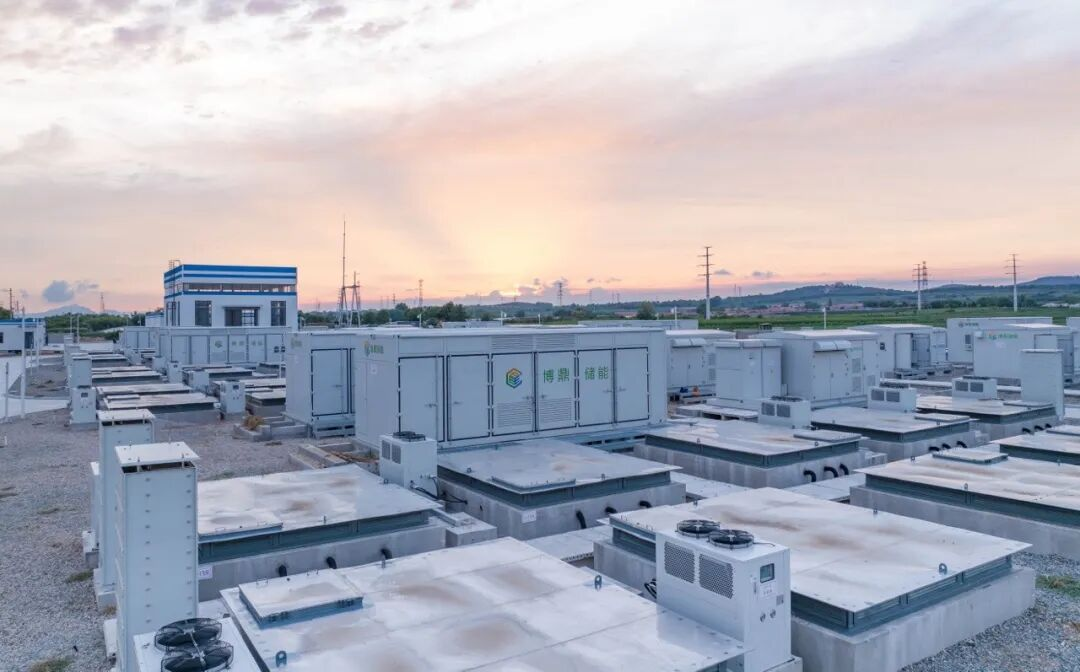
3,200 MWh New Energy Storage Projects Reach Key Milestones
Source: CNESA
Recently, multiple new energy storage projects across China have reached important milestones. In Shandong, Xinjiang, Hebei, Qinghai, and Inner Mongolia, several 100-MW-level projects have either started construction or successfully connected to the grid. Technologies involved include flywheel storage, lithium iron phosphate (LFP) batteries, hydrogen storage, and more - together painting a rapidly emerging panorama of diversified and large-scale storage development.
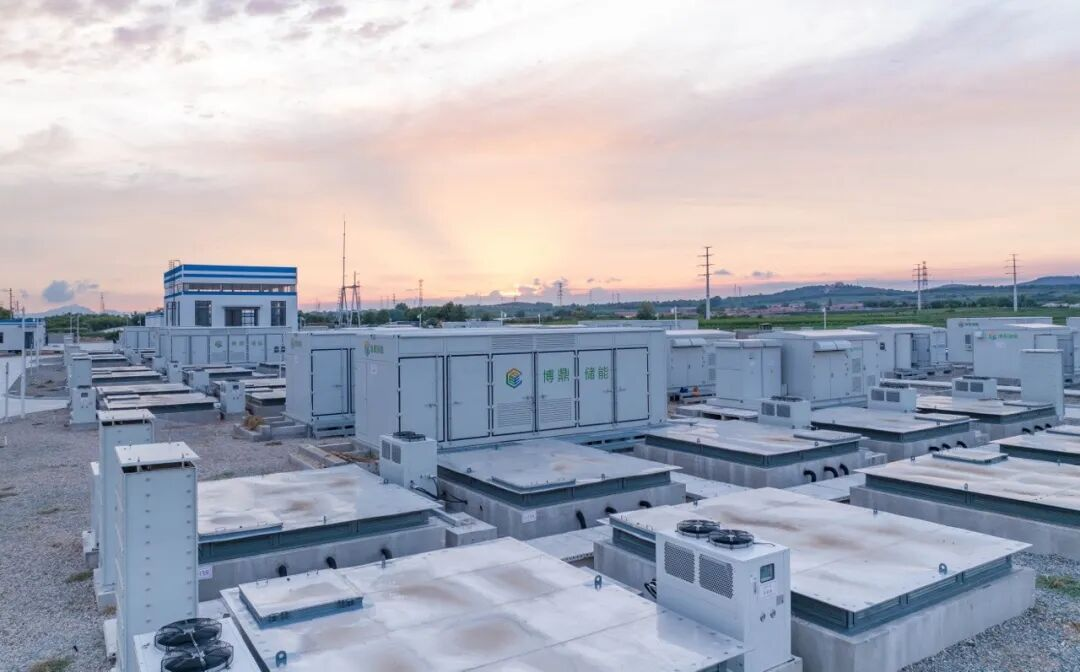
Breakthrough in Grid Frequency Regulation: World's First 100-MW
Flywheel Storage Demonstration Project Commissioned
The world's first 100-MW independent flywheel frequency-regulation demonstration plant - the Boding Energy 100 MW Vacuum Magnetic Suspension Flywheel Independent Frequency Regulation Project (Phase I) - has officially been commissioned in Rushan, Weihai, Shandong. Sungrow's energy storage PCS integrated system introduced multiple hardware and software innovations tailored for flywheel storage, achieving key breakthroughs in response speed and operational reliability, and setting a new benchmark for frequency-regulation applications.
Phase I of the Rushan Bodin flywheel project was grid-connected in July, and Phase II has already been included in Shandong's 2025 New Energy Storage Demonstration Program. The project's successful commissioning verifies Sungrow's PCS stability and rapid system response in flywheel-based frequency regulation, enhances overall operational efficiency, and lays a strong foundation for large-scale deployment of flywheel energy storage in grid applications.
CGN's 200 MW / 800 MWh Independent Energy Storage Project in
Lop County, Xinjiang Breaks Ground
On November 16, CGN (China General Nuclear Power Group Co., Ltd.)'s 200 MW / 800 MWh independent energy storage project in Lop County, Hotan Prefecture, Xinjiang officially started construction. Located about 20 km from Luopu County, the project is invested in and developed by CGN New Energy Lop Co., Ltd., and constructed by China Energy Engineering Xinjiang Electric Power Construction Co., Ltd.. The project will build a centralized electrochemical storage station with a planned total capacity of 200 MW / 800 MWh.
Hebei Zhuozhou 200 MW / 800 MWh Independent Energy Storage
Project Starts Construction
On November 18, construction officially began on the 200 MW / 800 MWh independent energy storage station in Zhuozhou, Hebei. As a key pilot project supported by Hebei Province, it carries a total investment of over 1 billion RMB. Jointly developed by DURIA TECH, CORUN, CALB, and Guoxia Technology, the project establishes a full-chain closed-loop system from upstream materials to mid-stream equipment and downstream operations - advancing integrated “project development + supply chain security + full-cycle services.”
The project adopts a hybrid “lithium iron phosphate + nickel-metal hydride” storage technology route. Once completed, it will significantly enhance peak-shaving and frequency-regulation capability for the Beijing-Tianjin-Hebei grid, supporting efficient renewable-energy consumption and improving grid safety and stability.
150 MW / 600 MWh: SPIC Qinghai Haixi Grid-Side Storage Project
Breaks Ground
On November 13, Huanghe Hydropower Development Co., Ltd. Under the SPIC (State Power Investment Corporation Ltd.) held a groundbreaking ceremony for the Qinghai Haixi Tuosu grid-side electrochemical storage project at the Yixuan PV power station. The project is part of the supporting storage facilities for the first phase of the company's 2.2 GW multi-energy complementary project in Delingha. With a planned capacity of 150 MW / 600 MWh, the station will significantly enhance the grid's peak-shaving ability and its capability to absorb PV and other renewable generation.
The project includes a 100 MW / 400 MWh centralized storage system and a 50 MW / 200 MWh high-voltage cascaded storage system, both designed to provide reliable power support during peak demand periods.
300 MW / 600 MWh: Xinjiang's First Immersed Energy Storage
System Commissioned
On November 9, the energy storage project invested by Xinjiang Weilan New Energy Technology Development Co., Ltd. - the first large-scale electrochemical energy storage station in the Xinjiang Production and Construction Corps (XPCC) and the first immersed energy storage system in Xinjiang - successfully completed all equipment commissioning and was energized and put into operation.
The project turns “technological firsts” into “industry benchmarks,” adopting a mature immersed-system design paired with high-safety LFP batteries. As Xinjiang's first immersed-system energy storage project, it can control battery operating temperature differences within ≤2 °C. Combined with its large 300 MW / 600 MWh configuration, the project fills the technical gap for large-scale electrochemical storage within the XPCC.
100 MW / 400 MWh: Independent Grid-Side Storage Demonstration
Project in Huade, Ulaanqab (Inner Mongolia) Successfully Connected
On November 13, the electrochemical portion of the Huade County grid-side independent energy storage demonstration project in Ulaanqab, Inner Mongolia, was successfully connected to the grid. The project includes a total planned capacity of 100 MW / 400 MWh, adopting a hybrid “electrochemical + hydrogen storage” configuration:
Electrochemical storage: 90 MW / 360 MWh, providing second-level frequency regulation and short-term peak-shaving;
Hydrogen storage: 10 MW / 40 MWh, serving long-duration storage (scheduled for completion and grid connection in 2026).
CENSA Upcoming Events:
1. Dec.4-5 | 2025 China Energy Storage CEO Summit | Xiamen, Fujian
Register Now to attend
Read more: http://en.cnesa.org/new-events-1/2025/12/4/dec4-5-2025-china-energy-storage-ceo-summit

2. Apr. 1-3, 2026 | The 14th Energy Storage International Conference & Expo
Register Now to attend, free before Oct 31, 2025.

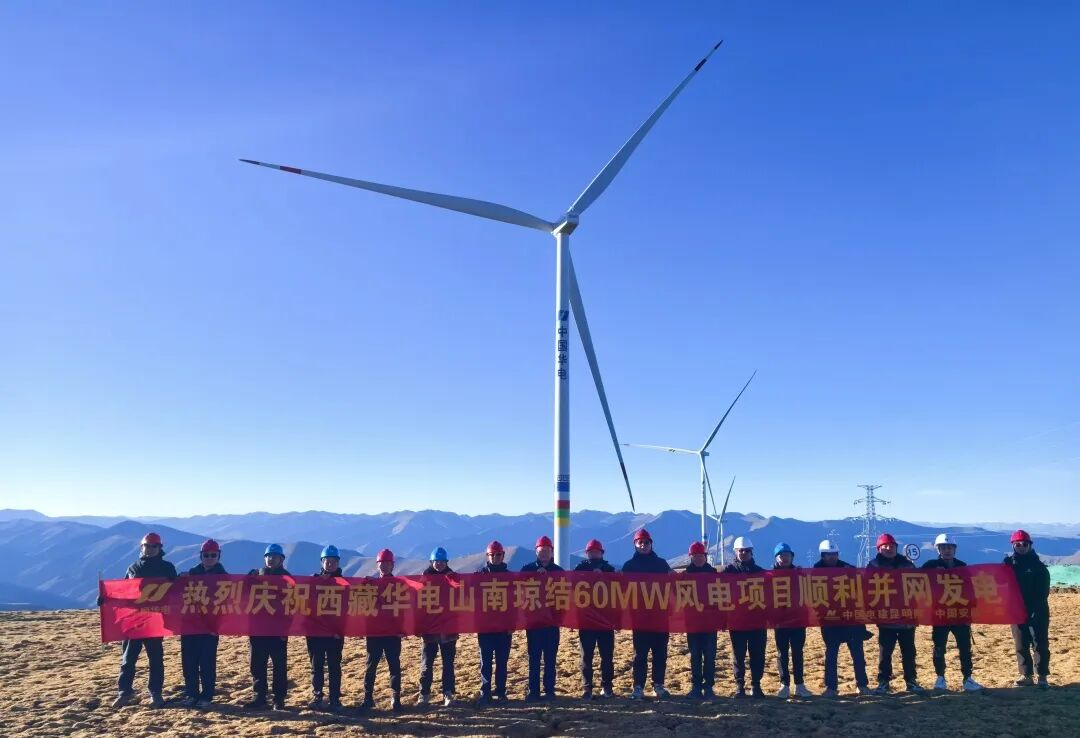
World's Highest-Altitude Operating Wind Power Project Now Connected to the Grid
Source: China Electric Power News
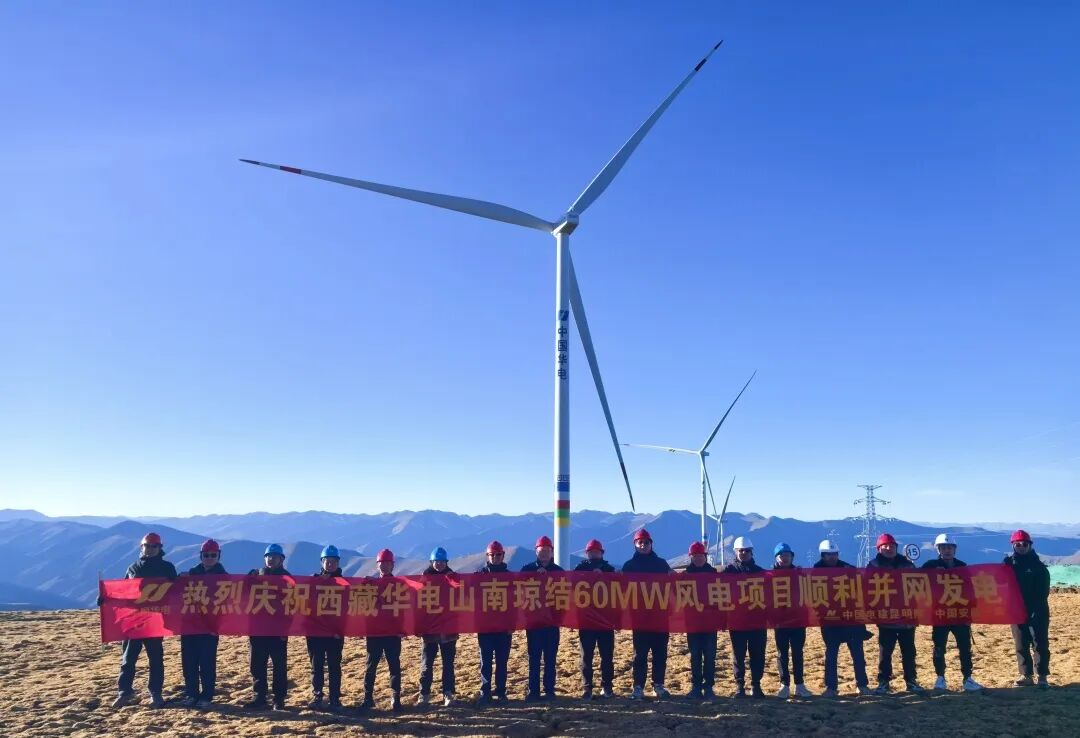
On November 17, against the backdrop of the majestic Yarlha Shampo Snow Mountain, the China Huadian Corporation’s Wind Power Project in Qonggyai County - whose highest turbine installation point sits at an altitude of 5,370 meters - was officially connected to the grid. The project is not only the largest single-unit-capacity wind power project in the Tibet Autonomous Region, but also the world's highest-altitude operating wind power project, injecting new momentum into green and low-carbon development on the Tibetan Plateau.
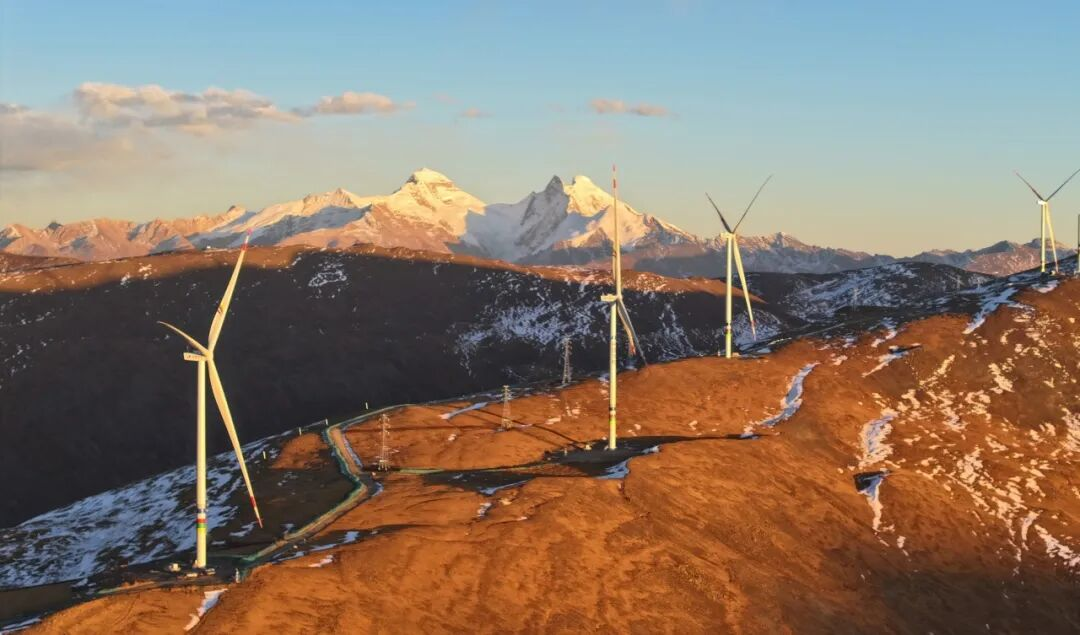
Located in Zhongdui Village, Qonggyai County, Shannan City, the Huadian Qonggyai Wind Power Project has a total installed capacity of 60 MW. It is equipped with eleven 5.0 MW turbines and one 6.25 MW turbine, along with a supporting 12 MW/48 MWh grid-forming energy storage system. Once in operation, the project is expected to supply clean electricity sufficient for about 120,000 households annually, equivalent to reducing carbon dioxide emissions by 128,700 tons per year.
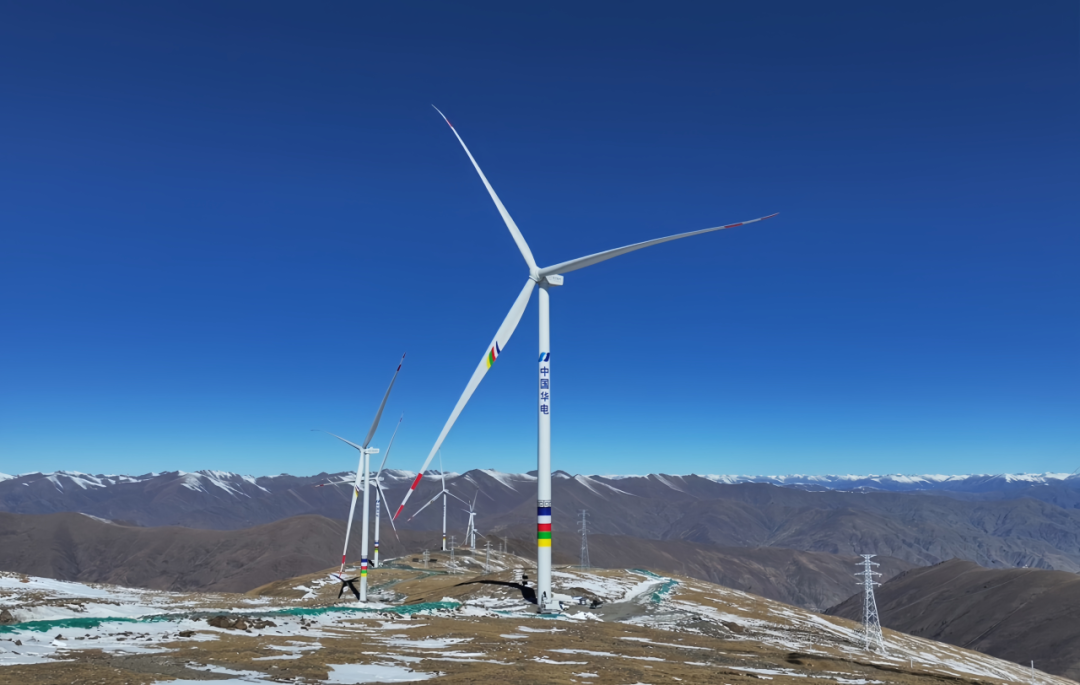
Constructing a wind farm at an altitude of 5,370 meters requires overcoming conventional engineering limitations. Facing extreme conditions - oxygen levels at only 57% of those in lowland areas, day-night temperature variation exceeding 20°C, and cumulative road elevation gain of 1,670 meters - the project team tackled challenges with innovative practices:
they planned logistics routes in advance, optimized the allocation of equipment and personnel, and ensured efficient material transportation; they improved concrete mix designs and pioneered a “film + quilt + tarpaulin” layered insulation method, combined with an intelligent temperature-control curing system, to ensure concrete strength and durability in low-temperature environments. These solutions enabled continuous one-time pouring of large-volume concrete under high-altitude, low-oxygen conditions, providing replicable technical experience for ultra-high-altitude wind power construction worldwide. The team also innovated construction methods by applying single-blade hoisting technology for the first time ever at altitudes above 5,000 meters - saving about 66% of the working area compared with traditional whole-rotor hoisting and increasing the upper limit of operable wind speed to 10 m/s - laying a solid foundation for the project's high-quality commissioning.
Throughout construction, the company fully upheld the principles of being “system-friendly, eco-friendly, and community-friendly.” The project incorporates a “equipment selection + energy storage + intelligent control” technical system with a grid-forming storage facility to effectively smooth wind power fluctuations and enhance grid reliability. It strictly followed the four-step method of “lifting, preserving, nurturing, restoring” for high-altitude meadow protection and adopted high-performance substrate ecological spraying technology, restoring a total of 360,000 square meters of vegetation and installing 120,000 square meters of protective mesh, ensuring coordinated progress between engineering development and ecological conservation.
Meanwhile, through land leasing, local employment, construction participation, and skills training, the project directly increased local residents' income by more than 3.6 million yuan and boosted local industries by over 11 million yuan, ensuring that the benefits of clean energy development are shared by people of all ethnic groups in the region.
CENSA Upcoming Events:
1. Dec.4-5 | 2025 China Energy Storage CEO Summit | Xiamen, Fujian
Register Now to attend
Read more: http://en.cnesa.org/new-events-1/2025/12/4/dec4-5-2025-china-energy-storage-ceo-summit

2. Apr. 1-3, 2026 | The 14th Energy Storage International Conference & Expo
Register Now to attend, free before Oct 31, 2025.

Sign up for our free monthly newsletter to stay informed about the Chinese energy storage market.