
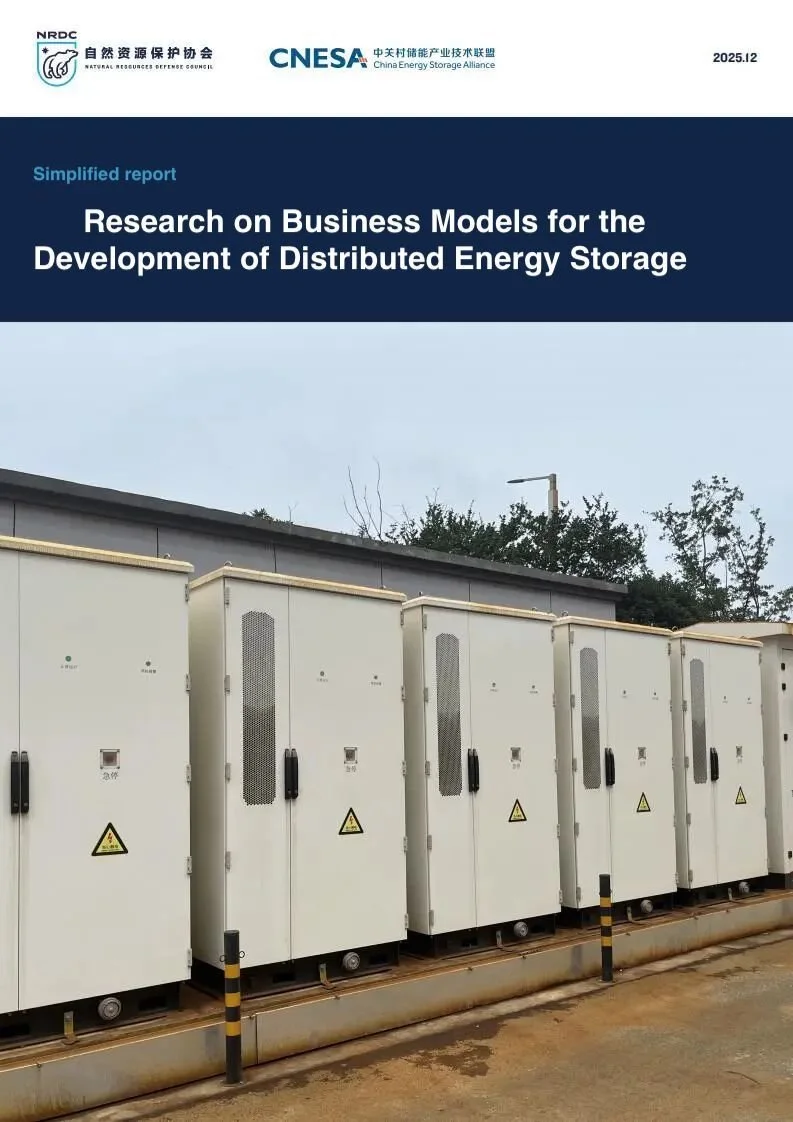
Major Report Released: Research on Business Models for the Development of Distributed Energy Storage
On December 16, the Natural Resources Defense Council (NRDC) and the China Energy Storage Alliance (CNESA) jointly held a seminar in Beijing and officially released the report “Research on Business Models for the Development of Distributed Energy Storage.”
Experts participating in the seminar included Wang Shuyang, Deputy Director of the Supply–Demand Interaction Division of the Energy Consumption Research Institute at the China Electric Power Research Institute; Peng Kuankuan, Deputy General Manager of Domestic Marketing at Shanghai Pylon Technology Co., Ltd.; Gao Zhiyuan, Marketing Director of XYZ Storage (Beijing) Co., Ltd.; and Zhang Mingjun, Project Manager and Deputy Dean of the Virtual Power Plant Research Institute at Shanxi Fengxing Measurement & Control Co., Ltd., among others.
Distributed energy storage refers to small-scale energy storage systems deployed on the user side (such as households, factories, and shopping malls), on the distribution network side, or near distributed renewable energy sources. Compared with centralized energy storage, individual distributed storage projects are relatively small in scale, and overall growth has been slower than that of centralized storage.
However, as China further strengthens requirements for the local consumption of renewable energy, distributed energy storage is gradually becoming a key solution to addressing challenges related to nearby renewable energy absorption. Distributed energy storage can store surplus electricity locally, smooth output fluctuations, and significantly improve local renewable energy self-consumption rates and distribution network hosting capacity.
The report “Research on Business Models for the Development of Distributed Energy Storage” analyzes the current business models and major challenges facing distributed energy storage in China. Drawing on international experience and China’s power market development status, the report explores potential directions for business model innovation and proposes recommendations for improving supporting mechanisms.
📎 Report access link:
https://www.esresearch.com.cn/pdf/get_watermark/?id=418&type=report&file=remark_file
In recent years, driven by the declining construction and operating costs of new-type energy storage, the large-scale development and utilization of distributed energy resources, and a series of supportive policy measures, the development of distributed energy storage in China has accelerated significantly. From 2019 to the first three quarters of 2025, China’s cumulative installed capacity of distributed energy storage increased by more than fivefold, rising from 570 MW to 3,638 MW. Six major application scenarios have taken shape, including commercial and industrial (C&I) energy storage, distributed photovoltaic (PV) plus storage, green power direct supply, distribution transformer area energy storage , virtual power plants (VPPs), and energy storage paired with EV charging and battery swapping stations.
Among these, C&I energy storage is the most mature application scenario, primarily relying on time-of-use (TOU) electricity price arbitrage. However, its economic performance is highly sensitive to provincial peak–valley price spread policies. Distributed PV plus storage can be divided into source-side and load-side configurations: source-side projects are typically full-grid-connection projects that mainly participate in market-based electricity trading, while load-side systems are primarily used to improve self-consumption rates and capture TOU price arbitrage opportunities. Green power direct supply projects include both grid-connected and off-grid models. In grid-connected projects, energy storage serves dual functions by reducing renewable energy curtailment and enabling TOU price arbitrage, whereas in off-grid projects, storage plays a combined role in minimizing curtailment and ensuring power supply reliability. distribution transformer area energy storage focuses on dynamic capacity expansion and is mostly implemented as grid-led demonstration projects. Virtual power plants enhance system flexibility by aggregating distributed energy storage resources and participating in demand response, energy markets, and ancillary service markets. Energy storage deployed at EV charging and battery swapping stations primarily targets transformer capacity expansion and peak–valley price arbitrage. Overall, however, distributed energy storage business models in China remain at an exploratory stage and face multiple challenges, including insufficient policy continuity, limited and single revenue streams, incomplete safety standards and operation & maintenance systems, and the absence of effective cost recovery mechanisms.
To enhance the utilization rate and economic performance of distributed energy storage, and to promote its diversified and market-oriented development, the report recommends that during the period 2025–2027, priority should be given to reasonably widening time-of-use (TOU) electricity price peak–valley spreads, improving demand response mechanisms, strengthening safety standards, and enhancing fiscal and tax support, so as to ensure basic project revenues and safe operation of distributed energy storage systems. During the period 2028–2030, efforts should focus on deepening power market reforms, including improving dynamic TOU pricing adjustment mechanisms, promoting the participation of distributed energy storage in spot electricity markets, and exploring the monetization of capacity value and ancillary service value of distributed energy storage. At the same time, greater emphasis should be placed on unlocking the environmental value potential of distributed energy storage in areas such as green electricity, green certificates, and carbon markets, with the ultimate goal of establishing diversified revenue streams and comprehensively enhancing the economic viability and market competitiveness of distributed energy storage.

Liu Wei, Secretary General of the China Energy Storage Alliance (CNESA), stated that distributed energy storage, as a critical link connecting power generation, the grid, and end users, is gradually transitioning from pilot demonstrations to large-scale deployment, and has become an important driving force for energy transition, enhancing grid flexibility, and improving user-side power resilience. However, distributed energy storage still faces challenges such as limited application scenarios, imperfect market mechanisms, and immature business models. CNESA will continue to leverage its platform advantages to promote the integration of policy, technology, and markets, and work together with all stakeholders to build a sound industrial ecosystem for the development of distributed energy storage, thereby supporting the achievement of China’s dual-carbon goals.
Experts from the IEEE PES International Subcommittee on Electrical Energy Storage Markets and Planning noted that, with continued improvements in technology, economics, and safety, distributed energy storage will see widespread deployment during the 15th Five-Year Plan period, and will play a key supporting role in the development of China’s new power system and the enhancement of overall national competitiveness.Looking ahead, the future development of distributed energy storage will increasingly focus on its core value attributes, fully leveraging its technical advantages and value potential to support the safe and stable construction of localized power grids, and gradually evolving from the traditional single arbitrage-based model toward source–load interaction models.
According to the expert, the evolution of distributed energy storage will exhibit five major characteristics:
First, market-oriented development.
Future investments in distributed energy storage will be increasingly market-driven and more diversified. Market participants will include renewable energy investors, load-side enterprises, as well as financial institutions such as securities firms, funds, and trusts.
Second, diversification of technology pathways.
Driven by requirements related to economic viability and safety, technologies such as sodium-ion batteries and vanadium redox flow batteries are expected to develop in parallel, resulting in a diversified technological landscape.
Third, microgrid integration.
Following the introduction of policies supporting green power direct supply, localized distribution networks are being deployed more extensively. In the future, local wind and solar resources will be integrated into comprehensive energy microgrid systems, with distributed energy storage playing a smoothing role to enhance system safety and stability.
Fourth, enhanced convenience.
Distributed energy storage systems are typically smaller in capacity and are often deployed using temporary building structures, featuring modular designs that enable faster installation, easier maintenance, and advantages in mobility and scalability.
Fifth, AI-driven operation.
By integrating local energy balance data into control platforms and enabling interaction with energy storage systems, combined with weather and load variations, AI-based deployment can be used to forecast future loads, achieve localized microgrid balancing and regulation, and continuously optimize system performance.
When discussing how to address the development challenges of distribution transformer area energy storage, the expert emphasized that the first priority should be to enhance the safety of energy storage systems and establish corresponding standards and operational guidelines, enabling grid operators to carry out operation and maintenance in a regulated and standardized manner, while also mobilizing investment enthusiasm across society. In addition, the overall beneficiaries of Taqu energy storage deployment include local users, local governments, and society as a whole. Users benefit from high-quality, stable, and sufficient electricity supply; local governments enhance their ability to attract investment by strengthening power supply security; and society benefits from the clean, low-carbon, and secure development of the power system. Therefore, it is recommended that grid companies be encouraged to regularly publish demand for Taqu energy storage, and, under the premise of government-backed public welfare investment mechanisms (such as capacity payments or subsidies), promote diversified investment. Ultimately, this approach would form socialized assets maintained and operated by grid companies or their professional entities, achieving a shared investment and benefit distribution mechanism that benefits the state, government, enterprises, and individuals alike.

Wang Shuyang, Deputy Director of the Supply–Demand Interaction Division at the Energy Consumption Research Institute of the China Electric Power Research Institute, pointed out that the proportion of distributed energy storage participating in system operation through virtual power plants (VPPs) remains relatively low at present. There are two main reasons for this situation. First, the volume of energy storage resources aggregated by virtual power plants is still limited. Second, user-side energy storage systems are typically located within user premises and often lack independent metering devices. As a result, during statistical accounting, these systems are frequently classified as either generation sources or loads, making it difficult to separately identify and account for them as distributed energy storage.
In terms of market participation, Wang Shuyang explained that virtual power plants currently mainly participate in the energy market, peak-shaving market, and demand response programs, while Hubei Province has also explored participation in secondary frequency regulation. In the spot electricity market, provinces such as Shanxi, Shandong, Ningxia, and Fujian have already carried out pilot practices. For example, Shanxi has enabled virtual power plants to earn revenue from their regulation activities by relaxing medium- and long-term contract constraints. Regarding peak-shaving ancillary services, the North China region has launched regional peak-shaving ancillary services since November, with the Jibei Integrated Energy Virtual Power Plant demonstrating strong participation performance. Meanwhile, Zhejiang Province conducted normalized response regulation for new market entities during this year’s summer peak period.
Wang Shuyang emphasized that, as a high-quality flexibility resource, distributed energy storage inevitably needs to participate in the power market through aggregation mechanisms such as virtual power plants. This approach not only reduces decision-making costs for individual resources, but also enables numerous small-scale distributed energy storage units to collectively meet market access thresholds, thereby generating economies of scale and enhancing bargaining power in the electricity market.
He further noted that distributed energy storage could continue to explore participation in additional ancillary services, such as frequency regulation and voltage regulation, in the future. Compared with standalone energy storage, distributed energy storage may face cost pressures in the application of grid-forming technologies, which calls for technological breakthroughs to enable lightweight, standardized mass production, so as to better realize its regulation capabilities. At the policy and regulatory level, Wang Shuyang highlighted the need to promote the installation of independent metering for distributed energy storage systems, facilitating accurate measurement and settlement in a market-based environment. In addition, due to the highly decentralized nature of distributed energy storage, achieving effective coordination with grid operations requires the application of AI technologies to optimize decision-making and fully leverage the regulation potential of distributed energy storage resources.
Peng Kuankuan, Deputy General Manager of Domestic Marketing at Shanghai Pylon Technology Co., Ltd., pointed out that the business models of distributed energy storage mainly include time-of-use (TOU) price arbitrage, virtual power plants (VPPs), and demand-side response. Among these, the TOU peak–valley arbitrage model is relatively stable, while revenue streams from other models still face significant uncertainty. From the perspective of the current overall market environment, distributed energy storage on the user side exhibits a high degree of decentralization, a characteristic that determines the diversity of its application scenarios. He emphasized that across different scenarios, the most important missions of distributed energy storage are to reduce costs for customers, ensure the reliability and security of electricity supply, and achieve effective coordination with green power.
Peng Kuankuan noted that in recent years, data centers have become a key area of focus for the energy storage industry. Although data center energy storage has been deployed in China for many years, practical operation still faces challenges related to policy frameworks, electricity pricing, and safety, with safety concerns being particularly prominent among data center owners and tenants.
In the past, data center energy storage largely followed the logic of commercial and industrial energy storage. However, current application scenarios are gradually expanding to support multiple functions, including:
reducing data center carbon emissions through the use of green electricity;
lowering electricity costs through peak shaving and valley filling, while paying close attention to capacity charges and safety issues;
serving as backup power; and
smoothing short-term peak load fluctuations, especially as AI data centers become more widespread.
Peng Kuankuan also highlighted telecom base station energy storage as a highly promising application scenario. China has a vast number of telecom base stations—over ten million nationwide—with relatively concentrated customers, mainly the three major telecom operators and China Tower, making the business model easier to implement. This year, his company has supplied power to base stations through “distributed PV + energy storage” solutions and carried out peak shaving and valley filling practices. From an economic perspective, this model has demonstrated relatively stable returns. More importantly, given the large number of base stations, effective coordination between energy storage systems and base stations could unlock substantial dispatchable resources and achieve considerable aggregate scale.
Peng Kuankuan further pointed out that whether distributed energy storage business models can achieve breakthroughs in the short term depends on two key factors: policy and technology. From a policy perspective, the framework of market mechanisms is expected to become clearer over the next three years, although overall maturity will remain limited; over a longer time horizon, the outlook is more optimistic. From a technology perspective, the continued decline in energy storage costs will accelerate the maturation of business models, which has also been a key driver behind the industry’s rapid growth in the past. Regarding safety considerations, he noted that grid companies are more concerned with the reliability of response rather than the intrinsic safety of individual devices. As distributed energy storage consists of decentralized terminal resources that typically participate in dispatch through virtual aggregators, grid operators do not directly control these devices. Therefore, safety concerns do not undermine grid confidence in dispatch, and the safety performance of mainstream battery technologies is already sufficient to meet current application requirements.
Gao Zhiyuan, Marketing Director of XYZ Storage (Beijing) Co., Ltd., stated that following the release of the basic operating rules for the power market, the most significant change has been the formal recognition of energy storage as a distinct market entity. Previously, energy storage mainly played a supporting role within the power system; going forward, its more important role will be that of a flexible regulation resource. With the identity of energy storage clarified, various regions have introduced corresponding pilot and demonstration policies. For example, Guangdong Province released the Implementation Rules for the Operation and Management of Virtual Power Plants in Guangdong (Trial), under which virtual power plants aggregating distributed energy storage have begun participating in frequency regulation and peak-shaving ancillary services of the Guangdong power grid. In August this year, Zhejiang Province issued the Implementation Rules for Market-Oriented Response of New Market Entities in the Power Sector of Zhejiang (Trial), enabling energy storage systems deployed in certain projects to participate in virtual power plant bidding, fully demonstrating the flexibility of energy storage and its capability to participate in electricity markets. Shandong Province has also introduced relevant policies supporting the participation of distributed energy storage in capacity compensation mechanisms and power trading. Under the encouragement of national and local policies, as well as support from state-owned capital and private investment, distributed energy storage has begun to participate in the power market as an independent entity. Its revenue structure has evolved from a single electricity price spread model to a diversified combination of market-based trading, ancillary services, and targeted local subsidies, with these cases serving as effective demonstrations for broader replication. However, Gao Zhiyuan emphasized that transforming these pilot projects into widespread market practices will still require joint efforts from both government and industry, as well as full utilization of market-based adjustment mechanisms. For instance, policy adjustments have created certain challenges for photovoltaic projects, and many commissioned distributed PV systems are facing returns below expectations. By retrofitting these projects with an appropriate proportion of energy storage, it is possible to optimize the overall electricity price structure and improve project returns.
Drawing on the company’s practical project experience, Gao Zhiyuan introduced the application of distributed energy storage across different scenarios. He pointed out that distributed energy storage can effectively address “source–load interaction”, and that future development should focus on the load side, with in-depth analysis of specific scenarios. Beyond electricity price-related revenues, it is necessary to explore additional value streams and marginal benefits. In the data center scenario, this involves not only understanding electricity consumption characteristics and distribution system structures, but also addressing safety and space constraints. Data centers have a rigid demand for backup power as well as for energy storage. By leveraging electricity price differentials and regulation-induced fluctuations to capture marginal arbitrage value, energy storage can achieve an integrated “backup-plus-storage” model. In the telecom base station sector, base stations require backup power and consume large amounts of electricity, while communication reliability is particularly critical during extreme weather events. Energy storage can enhance power supply reliability while also enabling energy storage and dispatch functions. This model is expected to create new application scenarios that meet essential operational needs while generating additional marginal value, thereby stimulating investment enthusiasm across the industry.
Zhang Mingjun, Project Manager and Deputy Dean of the Virtual Power Plant Research Institute at Shanxi Fengxing Measurement & Control Co., Ltd., explained that at present, distributed energy storage participates in electricity trading mainly through aggregation by virtual power plants (VPPs), involving medium- and long-term transactions and spot markets in the wholesale market, as well as demand response and peak-shaving ancillary services. However, in many regions, regulations stipulate that a virtual power plant can obtain only one source of revenue for the same regulation capability during the same time period. For example, in Shanxi Province, a VPP’s regulation capacity during a given time period can participate in only one market—either conventional electricity retail combined with demand response, or the electricity spot market.
Zhang Mingjun expects that distributed energy storage will experience significant development in terms of technology, markets, and business models in the future. At the technological level, progress will primarily rely on “AI+” applications to achieve more accurate load forecasting and electricity price forecasting, enabling distributed energy storage charging and discharging strategies to better align with price signals. From a market perspective, the profit potential of distributed energy storage is expected to expand further. In addition to participating in wholesale market transactions through VPPs to capture price spreads between medium- and long-term contracts and the spot market, distributed energy storage will also be able to generate revenue by participating in deep peak-shaving or reserve ancillary services. In addition, capacity markets are currently being piloted. Shanxi Province is exploring mechanisms whereby virtual power plants aggregate the total capacity of distributed energy storage to participate in capacity market transactions, providing long-term capacity support to the power system and thereby obtaining capacity compensation or leasing revenues. In terms of business models, Zhang Mingjun emphasized that traditional calculation models based solely on peak–valley price arbitrage will be completely phased out, and that distributed energy storage business models will evolve toward becoming true carriers of energy value. From a long-term perspective, this transformation will promote the healthy and sustainable development of the industry, as the real value of energy storage lies not merely in behind-the-meter peak–valley arbitrage, but in its ability—through virtual power plant aggregation—to provide flexibility and reliability support to the power system on the grid side. Under previous mechanisms, such flexibility was difficult to price and trade in a rational and effective manner.
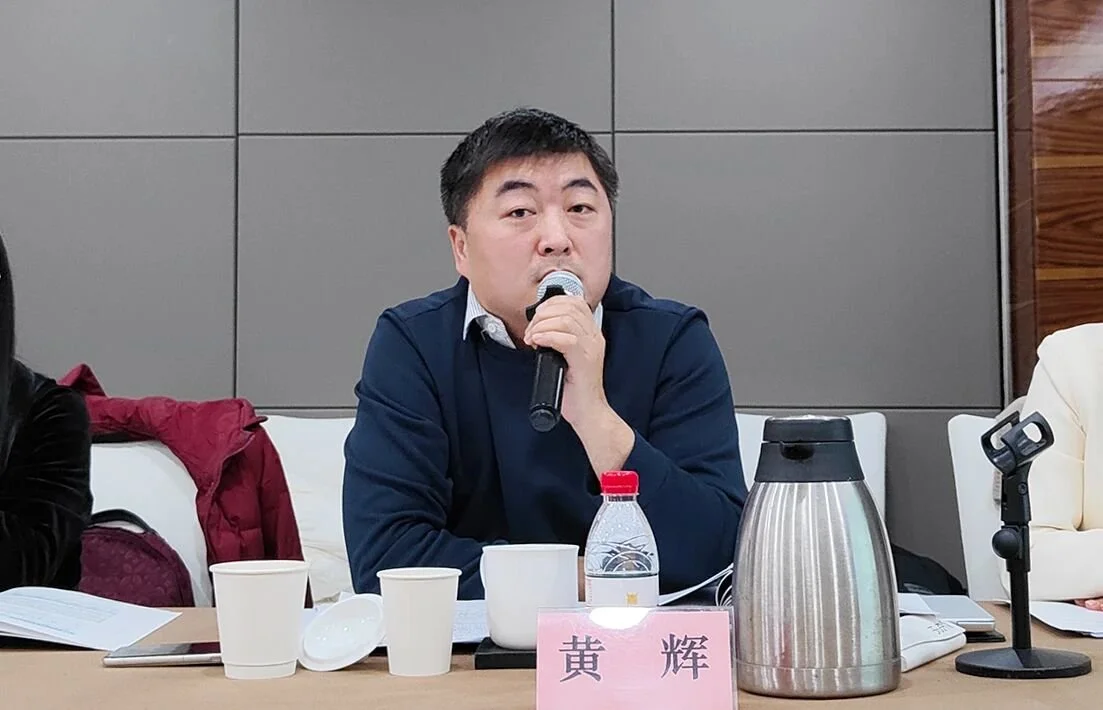
Huang Hui, Senior Program Manager of the Energy Transition Program at the Natural Resources Defense Council (NRDC), stated that with the development of distributed renewable energy and diversified loads, the value of distributed energy storage is becoming increasingly multidimensional. At present, driven by policies promoting market access for distributed resources, local consumption of renewable energy, and the expanded use of green electricity across industries, distributed energy storage is transitioning from a simple commercial and industrial peak–valley arbitrage model toward serving as a supporting unit for distributed renewable energy integration—including smoothing output fluctuations and improving self-consumption rates—as well as a grid-supporting micro-regulation unit. From a technical perspective, distributed energy storage systems are required to evolve toward grid-forming capabilities and intelligent operation, with further improvements needed in response speed and control accuracy. At the same time, operational logic is gradually shifting from simple charging and discharging strategies to dynamic optimization across multiple markets.
Huang Hui noted that in terms of specific application scenarios, recent developments in green power direct supply, zero-carbon industrial parks, and data centers have significantly driven the rapid growth of distributed energy storage. This is primarily because these new policies set explicit requirements for on-site consumption of green electricity. For example, policies for zero-carbon industrial parks stipulate that electricity demand within such parks should be met primarily through direct supply of green power, with the direct supply ratio generally required to be no less than 50%. These application scenarios also impose high requirements for power supply reliability, and the rigid demand for stable and green electricity has become a key driver of distributed energy storage deployment. In addition, as market mechanisms gradually open up on the user side, revenue diversification has become another critical factor promoting the development of distributed energy storage. For instance, by aggregating distributed energy storage resources into virtual power plants, projects can participate in spot markets, frequency regulation, and reserve services, thereby increasing the revenues of individual projects. Meanwhile, the logic of power supply and consumption is shifting from a focus on electricity volume to an emphasis on power quality. In the future, different customers will have differentiated requirements for supply reliability and power quality levels. Distributed energy storage—particularly distribution transformer area (Taqu) energy storage—can achieve cost recovery by providing more reliable electricity and charging differentiated power quality service fees.
Huang Hui further emphasized that grid-side standalone energy storage and distributed energy storage each have their own advantages. For example, in frequency regulation, standalone energy storage features fast response, stable capacity, and more precise and controllable single-point regulation, resulting in higher suitability. Distributed energy storage, when aggregated into virtual power plants, is affected by factors such as communication constraints of dispersed resources and limited adjustable margins, leading to relatively lower adaptability and requiring technological upgrades to participate efficiently. However, distributed energy storage demonstrates greater advantages in managing distribution network congestion. Through the coordination of distributed energy storage and flexible loads across multiple nodes, virtual power plants can provide targeted solutions to distribution network congestion, highlighting a key system-level value that complements standalone energy storage.
CENSA Upcoming Events:
Apr. 1-3, 2026 | The 14th Energy Storage International Conference & Expo
Register Now to attend, free before Dec 31, 2025.
