
Chen Haisheng: Toward the 300 GW Goal — How Can New-Type Storage Walk Steadily and Far During the 15th Five-Year Plan Period
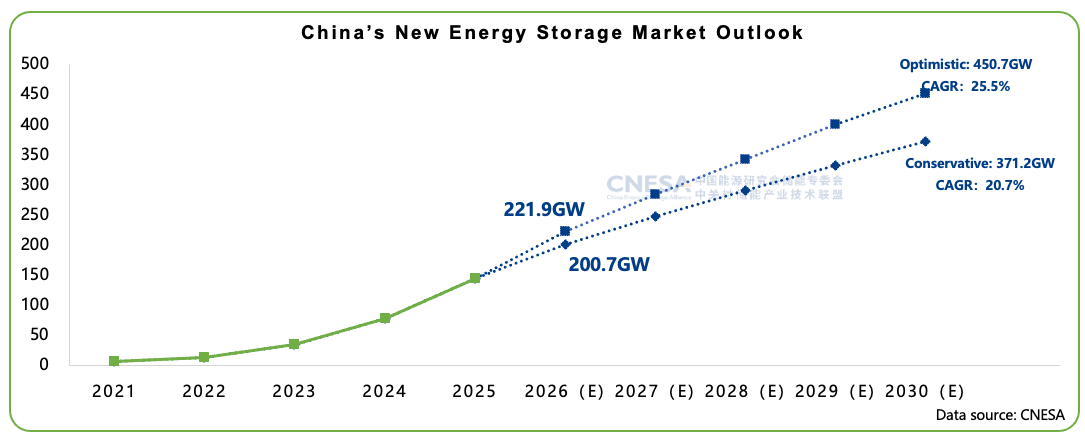
In July this year, the National Development and Reform Commission (NDRC) and the National Energy Administration (NEA) jointly issued the 15th Five-Year Plan for Building the New Power System, setting a clear coordinate for storage development over the next five years — national new-type storage capacity reaching 300 GW during the 15th Five-Year Plan period. At present, China’s installed new-type storage capacity exceeds 150 GW, up 61% year-on-year, and new-type storage has surpassed pumped hydro to become the largest regulation resource in the power system.
Behind the rapid growth in installed capacity is a switch in the development logic. As the new power system enters the stage of substantive implementation, can new-type storage fully deliver its actual effectiveness and shed the label of “built but unused”? Amid homogenized competition and low-price battles, how can new-type storage be guided toward “value competition”? How can long-duration storage break through on the eve of industrialization? How should grid-forming storage develop in a standardized way?
With these questions, the reporter interviewed Chen Haisheng, director of the Institute of Engineering Thermophysics of the Chinese Academy of Sciences and chairman of the China Energy Storage Alliance (CNESA). As a long-time pioneer of new large-scale storage technologies and promoter of the world’s first 300MW advanced compressed air energy storage demonstration plant, he brings a front-line judgment on the direction of new-type storage.
Three Types of Market Demand Drive New-Type Storage Growth
China Electric Power Enterprise Management: Recently, the NDRC and the NEA issued the 15th Five-Year Plan for Building the New Energy System, proposing that new-type storage installations reach 300 GW by 2030. How do you view this target?
Chen Haisheng: The 15th Five-Year Plan for Building the New Energy System clearly proposes that by 2030, China’s installed new-type storage capacity will reach 300 GW and source-storage regulation capacity will improve by more than 40%, establishing a dual control system of “storage scale + system regulation capacity” — a core rigid arrangement adapted to the transformation toward a high-share renewable power system. According to CNESA statistics, as of June 2026, cumulative domestic new-type storage installations reached 168 GW, leaving clear incremental room during the 15th Five-Year Plan period. The plan defines the structural layout: grid-side standalone storage will add 80 GW to reach 140 GW in total, satisfying the equivalent of 4 hours of peak supply support, with the remainder filled by renewables-coupled storage and user-side storage. This target rests on three types of market demand.
First, demand from high-share renewable integration and consumption. By the end of 2025, national wind and solar installations accounted for nearly half of total capacity, with serious wind and solar curtailment in some areas. Wind and solar installations are expected to exceed 2.8 billion kW by 2030, further intensifying output volatility and intermittency. The industry’s assessment focus is shifting from installed scale to credible output and peak supply capability. Storage can effectively smooth renewable output fluctuations, raise generation confidence, and solve the consumption problem.
Second, power supply gaps force the expansion of system regulation resources. Urban and rural electricity loads are growing steadily, and winter-summer evening peak supply gaps keep widening, while the regulation potential of thermal retrofits and hydropower is nearing saturation. With fast response and flexible deployment, new-type storage can provide diversified power services such as peak shaving, frequency regulation, and black start, filling the system’s flexible regulation shortfalls.
Third, emerging business formats create incremental storage space. Scenarios such as AI computing hubs, zero-carbon parks, and direct green power connections are landing quickly, requiring storage both to stabilize power loads and meet rigid green power assessment targets, and to solve green power timing mismatch through integrated source-grid-load-storage models.
Overall, the target is a systematic strategic arrangement that balances renewable consumption, grid security and supply, and adaptation to new loads.
China Electric Power Enterprise Management: Previously, new-type storage faced the prominent problem of “built but unused” — storage was even a pure cost item “built only for grid connection.” With the full market entry of new energy and the deepening of power market development, how do you see the investment logic and business models of storage being transformed and reconstructed? How can the “built but unused” label be removed?
Chen Haisheng: 2026 is the opening year of the 15th Five-Year Plan and a key node in the full market-oriented transformation of new-type storage. The industry has officially bid farewell to the mandatory storage allocation model and entered a new stage driven by the market — a historic reshaping of the industry’s development logic.
Before the implementation of the Notice on Deepening the Market-Oriented Reform of On-Grid Electricity Prices for New Energy to Promote High-Quality Development of New Energy (NDRC Price Document No. 136 [2025], hereinafter “Document 136”), domestic storage development relied on policy drivers, with storage allocation a precondition for new energy project approval and grid connection. But in that stage, market-based revenue mechanisms for storage were missing, and profit channels were single and unstable. For new energy investors, storage was merely a cost item to meet access requirements; the industry only pursued low-cost compliance, without valuing storage performance and actual operational value — ultimately forming the problem of “built for grid connection, built but unused.”
With the implementation of Document 136 and the Notice on Improving the Generation-Side Capacity Price Mechanism (NDRC Price Document No. 114 [2026], hereinafter “Document 114”), industry development began to change.
Document 136 stipulates that storage allocation is no longer a precondition for the approval, grid connection, or on-grid delivery of new new energy projects; existing new energy projects continue to follow the original local policies. This pushes storage away from policy dependence and back to being an independent market entity.
Document 114, for the first time at the national institutional level, clarifies the capacity value of new-type storage. With “equal pay for equal work” as the core principle, it formally includes grid-side standalone new-type storage in the generation-side capacity price mechanism, providing storage with a baseline guaranteed revenue. The introduction of Document 114 also marks the completion of the full revenue landscape for standalone new-type storage — energy revenue, ancillary service revenue, and capacity compensation revenue working in concert, laying a solid revenue foundation for the sustainable development of the new-type storage industry and igniting industry confidence. For investors and builders, having a capacity price mechanism does not mean they can “rest on their laurels”; it raises higher requirements for the technical performance and construction and operation capabilities of storage stations.
The two policies form a powerful combination, reconstructing storage’s investment decision logic from policy-driven to market-driven.
New-Type Storage Enters a Stage of Coordinated Short- and Long-Duration Development
China Electric Power Enterprise Management: The plan proposes “intensifying the development of long-duration storage.” What key bottlenecks must be overcome for China’s long-duration storage to reach scale-up application? During the 15th Five-Year Plan period, how should China achieve differentiated deployment and scenario-based adaptation of different storage types?
Chen Haisheng: The plan’s call to “intensify the development of long-duration storage” is an inevitable requirement of the new power system. To reach scale-up application, China’s long-duration storage must overcome three bottlenecks: first, the storage pricing mechanism must reflect long-duration value, so that long-duration storage is reflected in capacity prices, energy prices, and ancillary service prices; second, long-duration technologies themselves — such as all-vanadium flow batteries and compressed air energy storage — must further improve performance and reduce costs so their techno-economics meet capital investment return requirements; third, strengthen policy support for long-duration storage, increase investment in technology R&D, engineering demonstration, and the industry chain, and promote the scale mass-production capability of key core equipment such as separators and high-power compressors, driving cost reduction and efficiency gains at scale.
Storage’s differentiated deployment and coordinated short- and long-duration configuration must be optimized. Storage has now entered a stage of coordinated short- and long-duration development. During the 15th Five-Year Plan period, scenario-based and differentiated deployment should be implemented according to the technical characteristics, costs, and maturity of various storage technologies. For example, regions with high renewable penetration can focus on a combined “short-duration + long-duration” configuration model: short-duration lithium storage provides rapid power support and short-term backup, while long-duration storage handles long-period energy consumption, with the ratio of short- to long-duration storage determined by renewable output characteristics. Load-center regions should prioritize short-duration storage, addressing grid congestion relief and rapid voltage and frequency regulation, and configuring short-duration power and long-duration capacity support resources according to grid congestion, peak-shaving gaps, and supply reliability needs.
China Electric Power Enterprise Management: In building the new power system, how should grid-forming storage develop in a standardized way to better meet system needs?
Chen Haisheng: Grid-forming storage can actively support grid voltage and frequency, providing inertia and voltage support for high-renewable-share and weak grids, and is an important regulation resource of the new power system. However, existing technical standards, grid-connection rules, dispatch mechanisms, and performance assessments remain incomplete. During the 15th Five-Year Plan period, its standardized development must be promoted across standards, grid connection, dispatch, and markets:
First, improve the dedicated standards system. In the future, standards for grid-forming control, fault ride-through, inertia emulation, multi-unit parallel stability, safety boundaries, and testing must be completed; technical indicators and entry thresholds must be clarified; differentiated requirements for short- and long-duration grid-forming storage must be distinguished; the current practice of copying grid-following storage standards must be abandoned; and testing and certification norms must be unified.
Second, optimize grid-connection access and dispatch mechanisms. Priority deployment is suggested in high-renewable-share regions, weak grids, and large renewable bases; grid-connection conditions should be refined; the logic of switching between grid-forming and grid-following modes should be standardized; and the risk of oscillation instability in multi-unit parallel operation should be prevented and controlled. Inertia and voltage support should be included in dispatchable regulation resources, making grid-forming functions monitorable, adjustable, and controllable.
Third, establish a value compensation mechanism. Existing ancillary service markets focus on frequency regulation and peak shaving by grid-following storage, while the security value of grid-forming storage — virtual inertia, voltage support — is not reasonably rewarded. During the 15th Five-Year Plan period, regions with demand can pilot inertia and voltage compensation rules, incorporate grid-forming capability into capacity compensation or ancillary service assessments, eliminate fake grid-forming, and incentivize the real delivery of grid-forming capability.
Fourth, advance technology R&D and demonstration applications. Relying on large renewable bases and standalone storage, carry out scale demonstrations, collect real operating data, verify actual grid-forming effectiveness, and ensure it serves grid security.
From “Price Competition” to “Value Competition”
China Electric Power Enterprise Management: In recent years, “involution” in the storage industry has intensified, with price wars continuing. The national level has repeatedly emphasized “anti-involution” to guide healthy competition. Where should forces be combined to move the storage industry from “price competition” to “value competition”?
Chen Haisheng: In recent years, China has carried out governance of “involution-style” competition through policy management, market guidance, and industry self-discipline.
At the policy management level, in 2025, eight departments jointly issued the Action Plan for High-Quality Development of the New-Type Storage Manufacturing Industry, clarifying development goals and requirements. The NDRC and the State Administration for Market Regulation jointly issued the Announcement on Curbing Disorderly Price Competition and Maintaining Good Market Price Order, launching top-level guidance for industry governance. The Anti-Unfair Competition Law, the Price Law, and the Bidding Law were subsequently revised in succession, gradually building the macro-control bottom line to curb irrational competitive behavior.
At the market guidance level, the state has set the new-type storage installation target of 300 GW during the 15th Five-Year Plan period, opening up expectation space for scale development. Meanwhile, the construction of the national unified power market has entered a new stage. With the implementation of Document 114, storage’s revenue landscape of “energy + ancillary services + capacity price” has taken shape, and the profit space of downstream projects is gradually improving, playing a key role in easing upstream market competition.
At the industry self-discipline level, under the guidance and supervision of competent government authorities, industry organizations have proactively initiated self-discipline documents such as the Self-Discipline Practice Guide for Containerized Lithium Battery Storage, the Industry Self-Discipline Convention on Promoting High-Quality Development of the Storage Industry in the New Era, and the Initiative on Payment Norms for Suppliers of Power and Storage Battery Enterprises, promoting endogenous cohesion in the industry and improving the competitive environment through overall self-discipline.
At present, with the explosion of overseas storage demand, leading new-type storage enterprises face short-term supply shortages, and small, medium, and second- and third-tier enterprises also maintain certain capacity utilization. Under the constraint of high-quality development, low-end capacity across the industry is gradually exiting. Overall, the governance of storage industry involution has achieved certain results: market price levels have risen, and corporate profitability is slowly improving.
To move the new-type storage industry from “price competition” to “value competition” during the 15th Five-Year Plan period: first, continuously strengthen market regulation, with the government conducting dynamic assessment of market supply and demand and rationally planning capacity layout. Second, maintain a good market environment, promote enterprises’ professional bidding capability, and make technology, safety, service, and full-lifecycle benefits the core yardstick of bidding competition, achieving the matching of price and value. Third, promote enterprise technological innovation and strengthen comprehensive service capabilities, reasonably reducing technology costs while ensuring service quality. Fourth, deepen the implementation of industry self-discipline, support industry organizations in playing a bridging role, guide the continuous optimization of the competitive environment, and pool industry strength to jointly promote high-quality industry development.
China Electric Power Enterprise Management: Facing the 15th Five-Year Plan period, how should the new-type storage industry grasp new opportunities under the new situation? At the same time, what risks need to be guarded against?
Chen Haisheng: Facing the 15th Five-Year Plan period, as power market reform and the “dual carbon” strategy continue to deepen, the new-type storage industry will gradually move from a high-speed development stage dominated by scale expansion to a high-quality development stage dominated by quality and efficiency improvement. The new-type storage industry faces unprecedented development opportunities.
First, the new policy on new energy credibility will raise storage demand and value. The 15th Five-Year Plan specifies that by 2030, total wind and solar installations will reach more than 2.8 billion kW, with a share exceeding 50%, and requires new wind and solar projects to have credible output of no less than 10% of capacity, with 20% encouraged. Storage can effectively smooth generation fluctuations and improve station credible capacity and grid-connection confidence, helping consolidate project market-based returns.
Second, green power assessment for high-energy-load and computing loads expands storage application scenarios. Under renewable consumption weight assessment requirements, the state sets rigid indicators for key industries: new AI computing centers at national hub nodes must have a green power ratio of no less than 80%, and energy-intensive industries such as steel and electrolytic aluminum face green power consumption assessment ratios of 25%–70%. Through direct green power connection models, storage can smooth renewable output fluctuations and stabilize direct supply loads, helping enterprises meet green power assessment targets and effectively reduce the cost of supporting grid construction.
Third, demand charge reform will highlight the value of capacity regulation. In July 2026, the NDRC issued the Notice on Provincial Grid Transmission and Distribution Prices and Regional Grid Transmission Prices for the Fourth Regulatory Period and Related Matters (NDRC Price Document No. 1077 [2026]), implementing transmission and distribution price reform for the fourth regulatory period. Prices show a mixed pattern: industrial energy prices are generally reduced, but capacity (demand) charges are rising in many provinces. As peak demand management for commercial and industrial users continues to tighten, the value of user-side storage in peak shaving, demand management, and capacity regulation in these regions has risen significantly — effectively reducing enterprise electricity costs, and, combined with demand response and ancillary service revenues, promoting the scale deployment of distributed storage. While opportunities are clear, the following risks and challenges still require attention:
First, the market-based price system remains incomplete. Power market development progress is uneven across regions; spot price spreads diverge significantly by region; arbitrage space is narrowing in some areas; some projects are not economical; and a universally replicable commercial closed loop has not yet formed.
Second, comprehensive operating costs may rise. Document 114 unifies national rules for storage charging costs — storage must bear system operation fees and line loss costs based on its charging volume. Combined with external factors such as new energy price-difference settlement and rising thermal capacity prices, storage’s comprehensive operating costs are rising rather than falling, forming a two-way squeeze of “improved revenues, offsetting costs.”
Third, overseas trade barriers carry escalation risks. Recently, the United States and Europe have continued to tighten both tariffs and technical access restrictions: from January 2026, the United States raised the Section 301 additional tariff on storage batteries from 7.5% to 25%, bringing the current combined tax rate to 28.4%; during periods with temporary tariffs, the peak rate once reached 48.4%. In the EU, the Batteries and Waste Batteries Regulation has mandated carbon footprint assessment for industrial storage batteries above 2 kWh since February 2026; in March 2026, the EU further proposed “localization” requirements for net-zero technologies, and foreign trade risks for the domestic storage industry chain are likely to escalate. In summary, during the 15th Five-Year Plan period, the new-type storage industry will move from high-speed development to high-quality development. At the enterprise level, the focus should shift from scale expansion to technological iteration and refined operation; at the mechanism level, spot market reform should accelerate, storage pricing mechanisms should be improved, and cost pass-through mechanisms should be optimized; at the export level, diversified layout should be emphasized, emerging markets cultivated, and regional trade risks diversified to achieve steady and long-term industry development.
Seven Departments Issue the “15th Five-Year Plan” for the New Battery Industry: All-Solid-State Batteries to Reach Initial Scale-Up, Storage Application Scenarios to Expand Further
On September 28, 2026, seven departments — the Ministry of Industry and Information Technology (MIIT), the National Development and Reform Commission, the Ministry of Transport, the Ministry of Commerce, the State Administration for Market Regulation, the National Energy Administration, and the National Railway Administration — jointly issued the 15th Five-Year Plan for the Development of the New Battery Industry (hereinafter “the Plan”).
New batteries are high-efficiency electrical energy storage and conversion devices or systems centered on innovation in new mechanisms, new materials, new structures, and new processes. Represented by lithium batteries, sodium batteries, and flow batteries, they are characterized by fast technological iteration, wide application, and strong spillover effects.
The Plan sets out development goals: by 2030, China’s new battery industry will achieve steady growth in scale. Full-chain innovation capacity will be continuously strengthened, with new breakthroughs in advanced electrode materials, new electrolytes, and high-end auxiliary materials; major progress in the R&D of new battery systems; initial scale-up application of all-solid-state batteries; cycle life of long-life lithium batteries reaching 15,000 cycles; and product defect rates at leading enterprises reaching PPB level. The all-scenario application ecosystem will accelerate, with new battery technologies integrating more quickly with clean energy and end-use terminals, efficiently empowering the iterative upgrading of smart terminal products and the electrification of automobiles, ships, aviation, intelligent robots, construction machinery, and agricultural equipment. Meeting the needs of the new power system, storage application scenarios on the power supply side, the grid side, and in industrial parks, data centers, and other settings will be further expanded. International trade and investment integration will advance in depth, serving global green and low-carbon development.
Centering on the main goals, the Plan proposes 19 key tasks and 5 feature columns across five areas: accelerating full-chain innovation, promoting industrial transformation and upgrading, improving the industry system, enhancing industrial technology services, and raising the quality and level of trade and investment cooperation.
1. Strengthening frontier and common technology breakthroughs. Focusing on key directions such as improving ionic conductivity and cycling stability and optimizing costs, accelerate breakthroughs in all-solid-state battery industrialization technologies. Make forward-looking arrangements for next-generation battery systems such as new alkali metal-ion batteries, multivalent-ion batteries, metal-air/sulfur batteries, multifunctional composite structure batteries, and nuclear batteries.
3. Enriching the supply of high-end battery products. Targeting diverse application scenarios, accelerate the high-end, diversified, and integrated development of new battery products and improve product safety and reliability. Build a new battery product supply system led by lithium batteries with coordinated development of sodium batteries, flow batteries, and others. Improve the power and energy density of sodium batteries, develop flow batteries with high conversion efficiency, and promote the iteration of products such as hybrid supercapacitors. Upgrade thin, lightweight, flexible batteries for consumer electronics; optimize high-safety, all-climate traction batteries for new energy vehicles; develop long-life, high-safety storage batteries meeting long-duration storage needs; and raise the supply of batteries for low-altitude equipment and intelligent robots, as well as high-tolerance batteries for extreme environments such as aviation, deep-sea, and polar regions. Improve the industrialization capacity of all-solid-state batteries, aqueous batteries, and ultra-fast-charging batteries.
4. Strengthening system integration innovation. Focusing on dimensions such as structural integration, thermal management systems, battery management systems, energy management systems, high-voltage electrical systems, and system safety, develop integration technologies featuring structural optimization, multi-domain fusion, and safety and efficiency.
5. Promoting innovation-driven applications across multiple fields. Actively advance electrification in public transport, heavy trucks, aviation, inland shipping, and agricultural machinery, and carry out innovative applications of new-type energy storage in scenarios such as intelligent computing centers and industrial green microgrids. Explore innovations in application models such as direct green power connections, virtual power plants, and computing-power-energy coordination.
6. Improving the recycling and utilization system. Implement the extended producer responsibility system, and promote enterprises to establish waste battery recycling systems matching their product sales through self-building or commissioning. Accelerate the construction and operation of waste battery recycling service outlets; support the R&D and industrial application of technologies and equipment for fine disassembly, low-cost utilization, and efficient extraction of valuable elements from waste batteries; improve the refinement and automation of dismantling, crushing, sorting, and smelting processes; and promote the efficient utilization of secondary resources. Guide localities to rationally arrange processing capacity matching regional waste battery volumes and promote the concentration of resources in advantaged enterprises. Guide enterprises to lay out waste battery comprehensive utilization capacity in major export markets where conditions permit, enhancing resource security.
Notice on the Issuance of the 15th Five-Year Plan for the Development of the New Battery Industry by MIIT and Six Other Departments
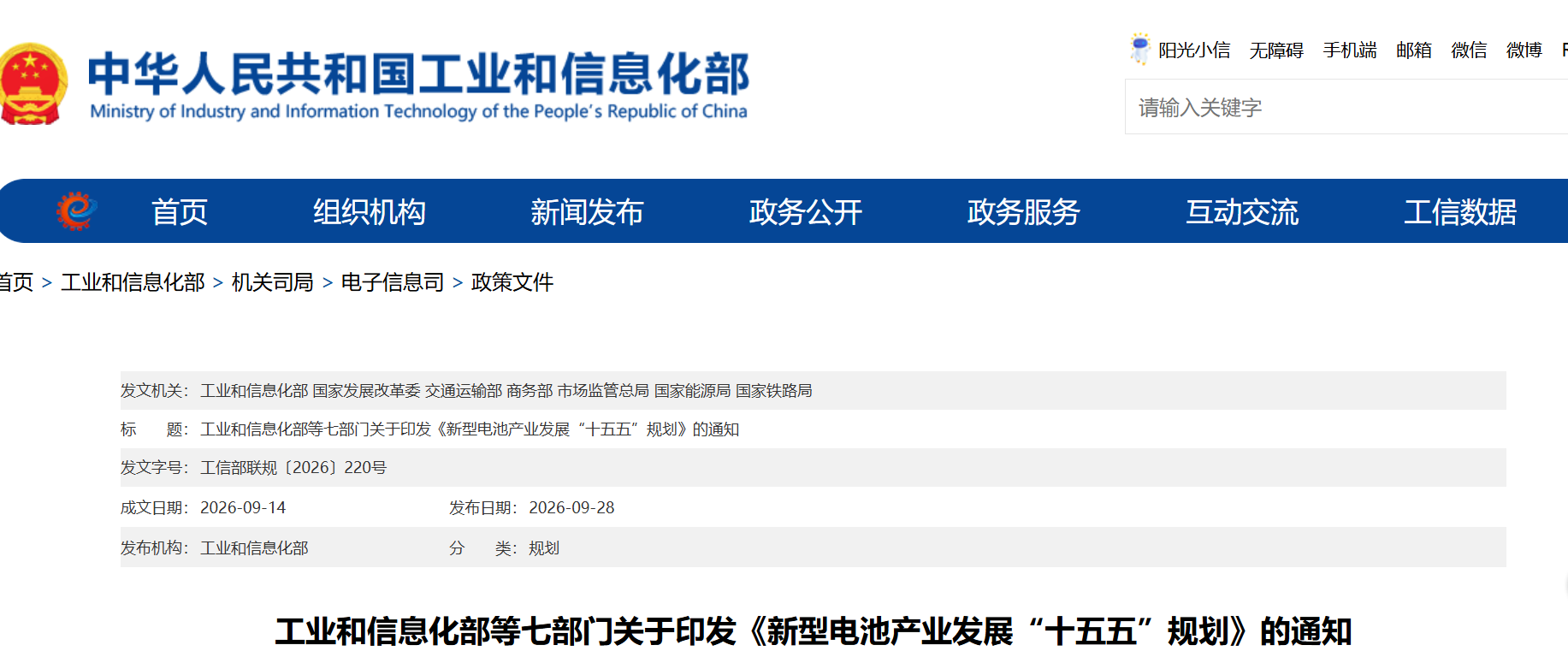
MIIT Joint Regulation No. 220 [2026]
To the competent departments of industry and information technology, development and reform, transport, commerce, market regulation, and energy of all provinces, autonomous regions, municipalities directly under the Central Government, cities with independent planning status, and the Xinjiang Production and Construction Corps; to all regional railway regulatory bureaus; to the communications administration bureaus of all provinces, autonomous regions, and municipalities directly under the Central Government; and to all relevant entities:
The 15th Five-Year Plan for the Development of the New Battery Industry is hereby issued to you. Please implement it earnestly in light of your actual conditions.
Ministry of Industry and Information Technology
National Development and Reform Commission
Ministry of Transport
Ministry of Commerce
State Administration for Market Regulation
National Energy Administration
National Railway Administration
September 14, 2026
National Standard for Virtual Power Plants Officially Takes Effect
On September 1, 2026, the recommended national standard GB/T 47241-2026, Technical Guidelines for Virtual Power Plants, officially took effect. Led by the Electric Power Research Institute of China Southern Power Grid Co., Ltd., the standard was jointly drafted by 20 organizations, including China Southern Power Grid, State Grid Corporation of China, the China Electric Power Research Institute, Tsinghua University and Southeast University, filling the gap in full-process technical specifications for virtual power plants.
The document specifies requirements for virtual power plants covering general provisions, overall framework, resources and connection, systems and terminals, information and communications, safety protection, design acceptance and testing, operation and management, and benefits and evaluation. It applies to activities concerning the construction, connection, operation and management of virtual power plants.
The document states that a virtual power plant is an electric power operation organizational model and system that, based on power system architecture and by applying modern information and communications, system integration and control technologies, aggregates various distributed resources such as distributed generation, adjustable loads and energy storage, and, as a new type of market entity, jointly participates in power system optimization and electricity market trading.
A virtual power plant mainly consists of virtual power plant resources, virtual power plant terminals, the virtual power plant operator and technical support systems, as well as the data transmission channels among them. The architecture of a virtual power plant and its relationships with relevant business systems are shown in Figure 1.

A virtual power plant shall have the following basic characteristics:
a) the connected resources are distributed and should meet the management requirements of observability, measurability, adjustability and controllability;
b) resource aggregation and regulation are realized based on a digital platform, enabling coordinated participation in power system optimization and electricity market trading.
A virtual power plant should meet the following technical indicators:
a) total aggregated capacity of no less than 10 MW;
b) total regulation capacity of no less than 5 MW, with the regulation capacity of a single unit of no less than 1 MW;
c) a regulation rate of no less than 3% of the regulation capacity per minute;
d) continuous regulation duration of no less than 1 hour.
NEA Deploys Major Tasks: Accelerating R&D and Application of Flexible Grid-Forming, Long-Duration Energy Storage and Other New Grid Technologies
During the 15th Five-Year Plan period (2026-2030), China's electricity demand is expected to maintain annual growth of around 5%, with the share of new energy further increasing, placing higher demands on the construction of the new-type power grid. On September 1, the National Energy Administration (NEA) convened a deployment meeting on new-type power grid construction, comprehensively assigning major tasks that will strongly support both near-term investment promotion and long-term structural adjustment.
New-type power grid construction links upstream projects such as new energy power generation on one end and downstream electricity consumption by commercial, industrial, and residential users on the other, generating strong multiplier effects and an enormous investment scale.

The NEA outlined four priorities:
Consolidate Infrastructure Strengths
Build a new coordinated grid architecture integrating the main grid, distribution networks, and microgrids that enhances the safety and stability of the large power grid, fully leverages the distribution network's role as a public platform, and promotes flexible, diversified interaction among smart microgrids.
Lead with Innovation
Accelerate the R&D and application of new grid technologies including Artificial Intelligence Plus (AI+), flexible grid-forming, intelligent dispatch and control, and long-duration energy storage, and develop new quality productive forces.
Strengthen Diversified Support
Upgrade new grid services that are friendly to emerging business forms such as efficient grid connection and accommodation of new energy, high-quality power supply, and compute-power coordination, better meeting the needs of industrial development and the public.
Hold the Safety Bottom Line
Ensure safe and stable operation of the large power grid, strengthen project safety and quality management, enhance grid disaster prevention and emergency response capabilities, and improve safety resilience.
Going forward, the NEA will accelerate the approval and construction of major grid projects such as transmission corridors. Grid companies should advance project construction with lean management and fully leverage the investment-driving role of major projects, while local energy authorities should expedite the processing of supporting permits. Overall coordination of new-type power grid construction will be strengthened.
CNESA Releases 2026 H1 Energy Storage Data: New Installations Down 18%, Sending New Signals for the Industry
On August 27, 2026, the 11th Western Energy Storage Forum opened in Lanzhou, Gansu Province. The forum is hosted by the China Energy Research Society, Lanzhou University, and the China Energy Storage Alliance (CNESA). At the opening ceremony, Chen Haisheng, Chairman of CNESA and Director of the Institute of Engineering Thermophysics, Chinese Academy of Sciences, delivered a keynote speech titled “Current Status and Development Trends of the New Energy Storage Industry.” During the session, CNESA officially released its CNESA DataLink 2026 H1 energy storage industry data, providing a systematic review of China’s energy storage development in the first half of 2026 and an outlook on industry trends during the 15th Five-Year Plan period.
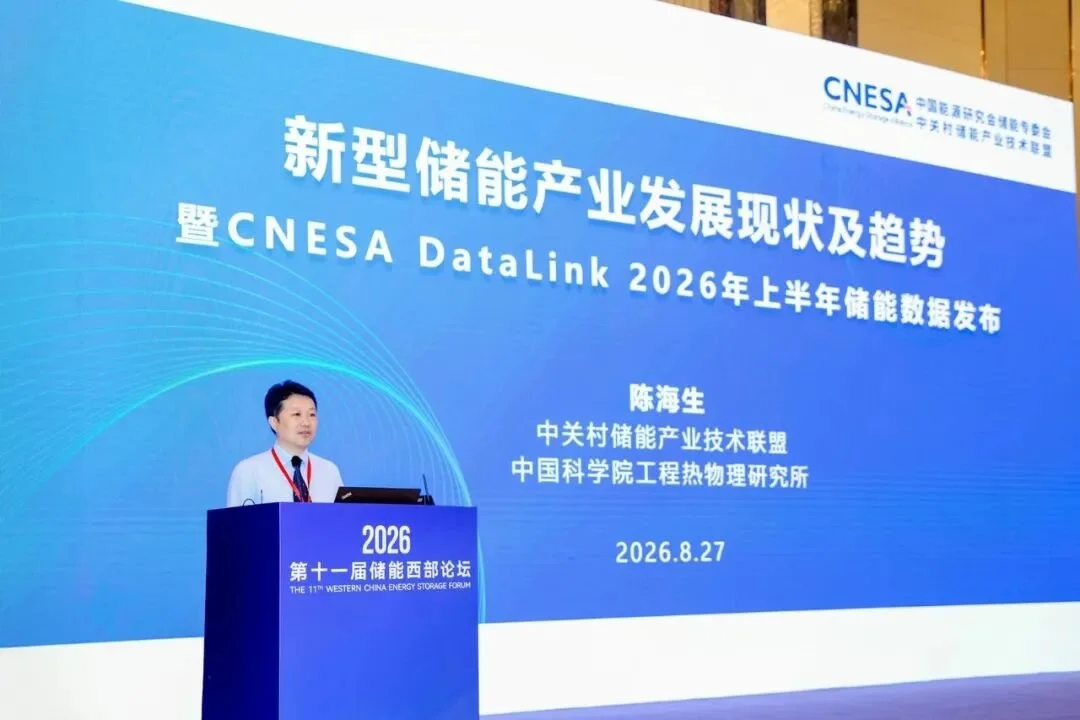
According to incomplete statistics from the CNESA DataLink Global Energy Storage Database, by the end of June 2026, China’s cumulative installed capacity of power storage reached 237.7 GW, up 41.7% year-on-year. Of this total, cumulative installed capacity of new energy storage reached 168.3 GW / 448.7 GWh, up 59% / 71% year-on-year and 15% higher than the end of 2025.
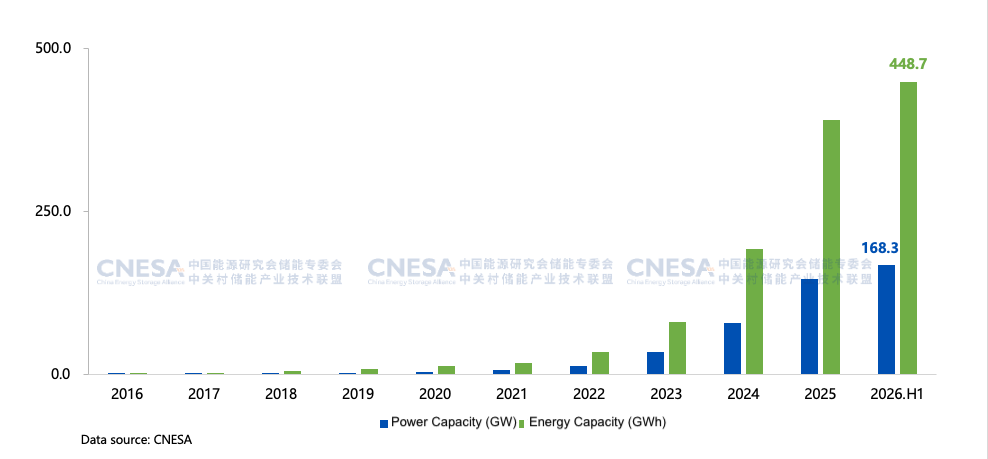
Figure 1: Cumulative installed capacity of China’s new energy storage market as of 2026 H1 (Source: CNESA)
At the same time, newly commissioned new energy storage capacity in the first half of 2026 reached 21.81 GW / 58.60 GWh, down 18% in power terms and 16% in energy terms year-on-year. With cumulative capacity continuing to grow while new additions experience a temporary decline, China’s energy storage industry is moving from the previous stage of “scale expansion” into a critical period of “value restructuring,” showing several new development characteristics.
1-Installation Landscape: Growth Pace Adjusts as Projects Become Larger and Longer-Duration
In the first half of 2026, the number of newly commissioned energy storage projects declined year-on-year, while the average size of individual projects increased significantly. The number of newly commissioned projects fell by 51% year-on-year, while the share of projects above 100 MW increased by 8 percentage points.
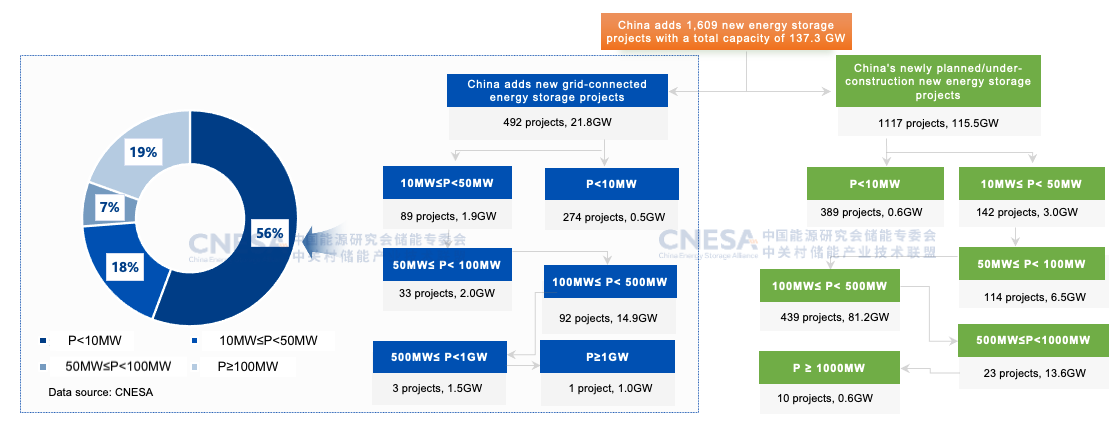
Figure 2: Distribution of newly commissioned new energy storage projects in China by power capacity in 2026 H1 (Source: CNESA)
Meanwhile, the average storage duration of newly commissioned projects reached 2.69 hours, up 2.3% year-on-year. The share of projects with durations of four hours or more also increased further, up 4.8 percentage points year-on-year.
This indicates that the incremental energy storage market is shifting from “quantity expansion” toward “scale and structural optimization.” Large-scale energy storage stations are becoming an increasingly important part of the new-build market, while the trend toward longer-duration storage is becoming more visible.
However, the decline in new installations does not mean market demand is weakening. Rather, the pace of energy storage construction is returning to a more normalized rhythm, while project formats and market structures are changing.
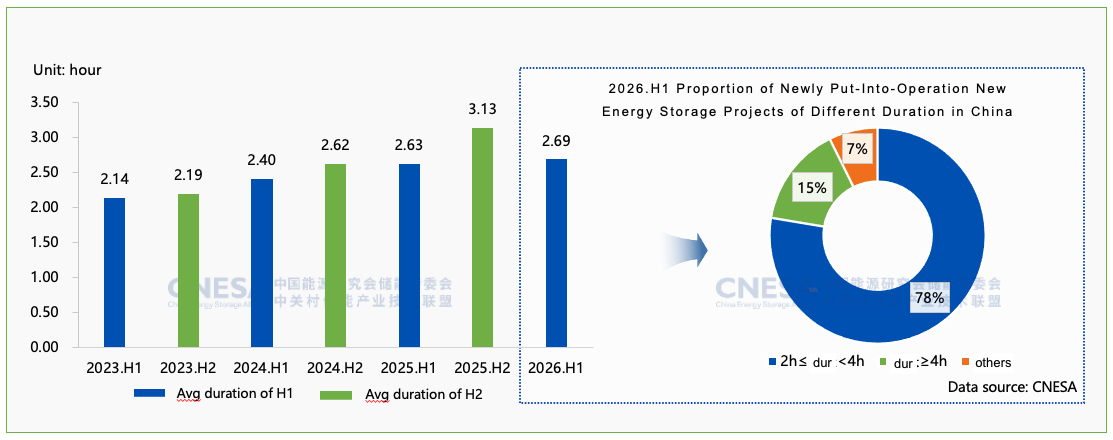
Figure 3: Average storage duration of newly commissioned new energy storage projects in China over the past three years (Source: CNESA)
2-Business Models: A Complete Revenue Framework Takes Shape, Making Operational Capability Critical
In the first half of 2026, newly installed independent energy storage capacity reached 15.1 GW, accounting for 69.3% of all newly installed capacity, an increase of 13.9 percentage points. Independent energy storage has become the dominant form in the new-build market.
At the same time, a complete revenue framework for independent energy storage is taking shape. The industry is officially moving from a policy-driven model based on mandatory storage allocation toward a new stage of three-dimensional revenue operations: capacity payments, electricity energy markets, and ancillary services markets.
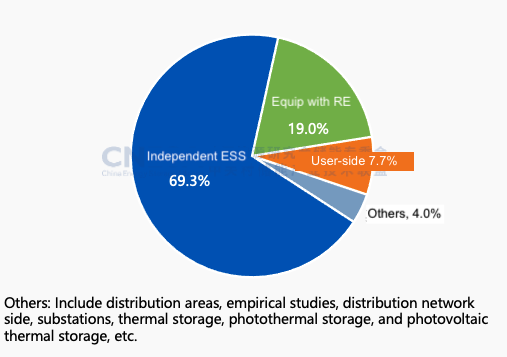
Figure 4: Application distribution of newly commissioned new energy storage projects in China in 2026 H1 by power capacity (Source: CNESA)
At the beginning of 2026, Document No. 114 clarified that after continuous operation of power spot markets, a generation-side reliable capacity compensation mechanism should be established in an orderly manner. This marks the first time the capacity value of new energy storage has been clarified at the national institutional level.
So far, Gansu, Jilin, Shaanxi, Xinjiang, Hubei, Ningxia, Qinghai, and other provinces have introduced detailed capacity compensation rules, though compensation standards vary significantly across regions. As capacity compensation mechanisms are implemented, the capacity value of energy storage is being unlocked. However, duration-based capacity conversion still has a significant impact on project returns, and business models require further refinement.
In terms of energy storage participation in power markets, spot markets and frequency regulation remain the main channels, while new ancillary service products such as ramping, reserves, and black start are also being developed.
At the same time, the market-oriented transition of energy storage still faces many challenges. In the first half of this year, peak-valley spreads narrowed in some regions, while system operation costs increased, further raising charging costs for energy storage and compressing electricity market revenues.
In the future, the value of energy storage projects will depend not only on equipment investment costs, but also on market trading capabilities, operational strategies, and full-lifecycle O&M performance.
3- Distribution of global shipments of energy storage lithium battery cells by Chinese enterprises in 2026 H1 (Unit: GWh)
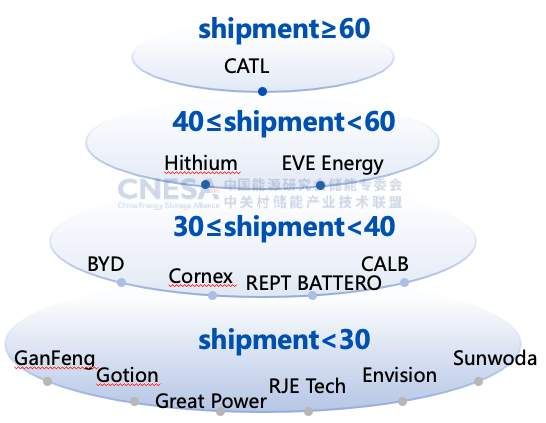
Figure 7: Distribution of global shipments of energy storage lithium battery cells by Chinese enterprises in 2026 H1
Unit: GWh
Note: Enterprises in each shipment range are listed alphabetically by the pinyin initials of their Chinese abbreviated names.
Scope: Global shipments in 2026 H1 of self-produced energy storage cells by enterprises, excluding cells for base stations and data centers. Shipments are counted when cells have left the factory and been delivered to customers or project sites.
Source: CNESA
4-Technologies and Applications: Multiple Technology Pathways Advance, While Emerging Demand from AIDC Is Released
In the first half of 2026, energy storage technology continued to evolve actively. Large-capacity lithium battery products continued to develop, with products above 500 Ah entering mass production. The share of long-duration energy storage technologies such as flow batteries and compressed air energy storage increased by 0.2 percentage points. Sodium-ion, semi-solid-state, flywheel, and other technologies also accelerated deployment.
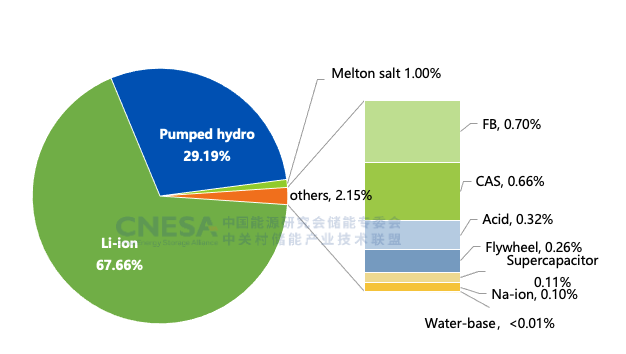
Figure 8: Distribution of cumulative installed power storage capacity in China by technology as of 2026 H1
Source: CNESA
At the same time, PCS, grid-forming energy storage, digital O&M, and safety technologies continued to advance. Looking ahead, lithium batteries will continue to meet the majority of demand, while multiple technology pathways will develop differentiated roles around specific application scenarios.
From the perspective of emerging applications, AIDC is creating clear demand for energy storage. On one hand, energy storage provides reliable and green energy support for AI data centers. On the other hand, AI is being integrated into energy storage operation, safety management, and business decision-making.
In the first half of 2026, new products targeting AIDC applications emerged intensively, covering high-rate cells, solid-state transformers, backup power systems, and integrated solutions. In the future, energy storage products will become increasingly customized for specific scenarios, while product competition will move beyond single devices toward integrated solutions combining energy storage, power electronics, energy management, and comprehensive energy services.
5-Global Expansion: Overseas Orders Reach 298 GWh as Chinese Companies Move from Product Export to Integrated Solutions
As the domestic market structure changes, Chinese energy storage companies are continuing to accelerate global expansion.
In the first half of 2026, overseas energy storage orders signed by Chinese enterprises reached 298 GWh, up 83% year-on-year. Europe remained an important market, while markets such as the Middle East, India, and Chile grew rapidly.
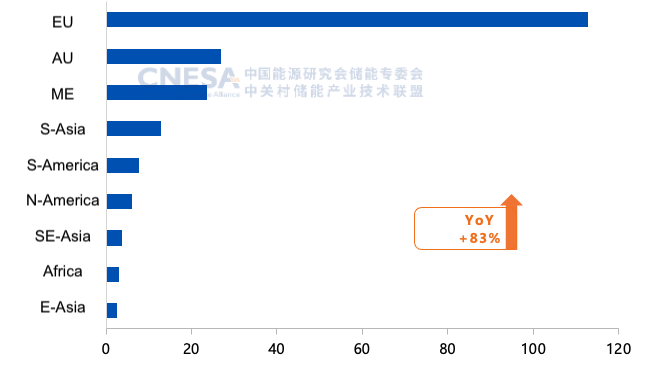
Figure 9: Regional distribution of overseas energy storage orders signed by Chinese enterprises in 2026 H1
Unit: GWh
Source: CNESA
Notably, Chinese energy storage companies are moving beyond simple product exports toward overseas manufacturing, localized services, technology cooperation, and integrated solution delivery.
The global energy storage market remains in a growth stage, but trade barriers, supply chain security, and localization compliance are also reshaping the global competitive landscape. In the future, global competition for Chinese enterprises will increasingly test their comprehensive capabilities.
6- Outlook
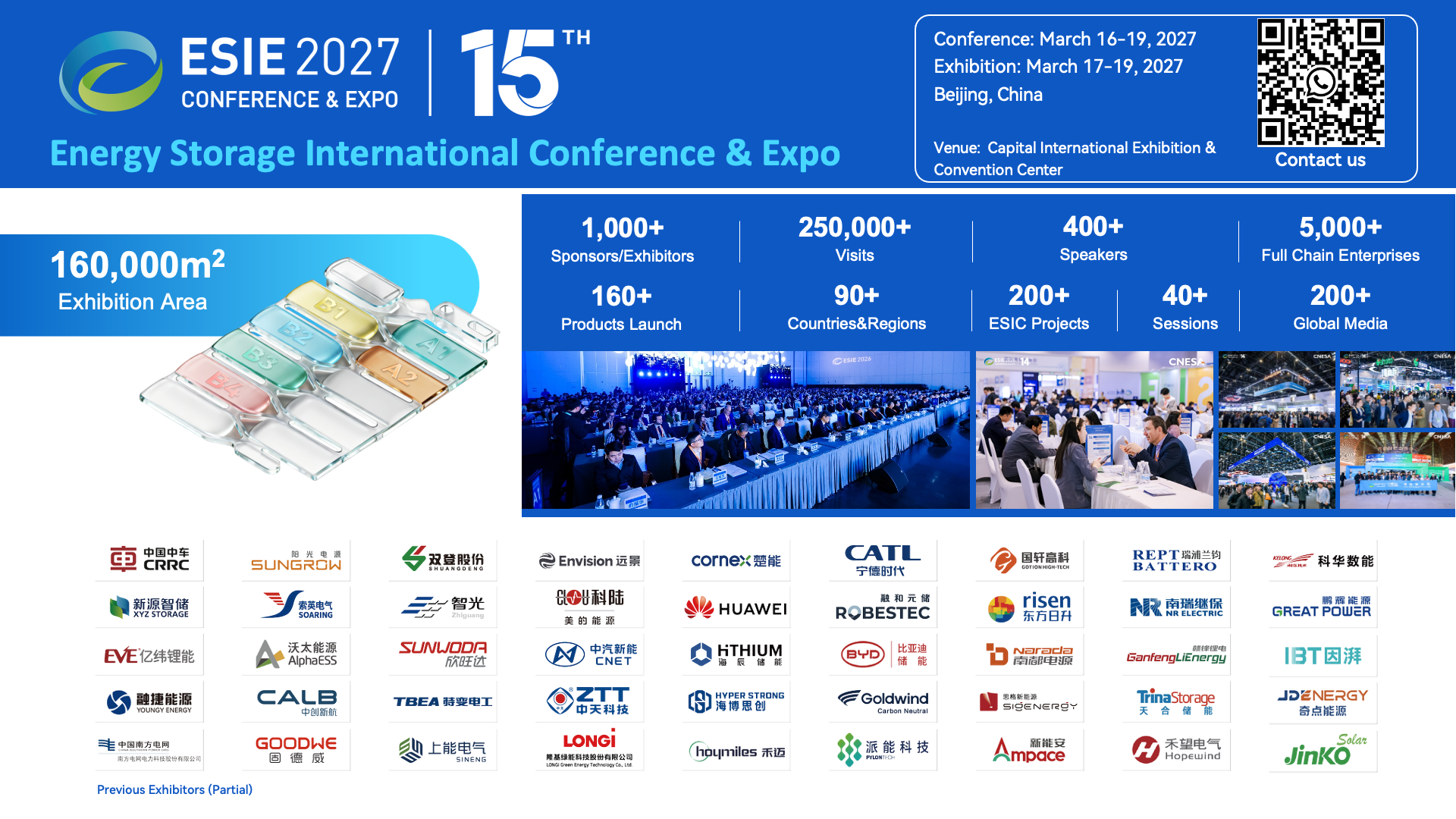
Connect with Chinese energy storage industry at ESIE 2027, March 16-19, 2027, Beijing China!
Event website: esie.net

CNESA Visits UK to Foster Industry Collaboration: China and UK Explore New Opportunities in Energy Storage Development
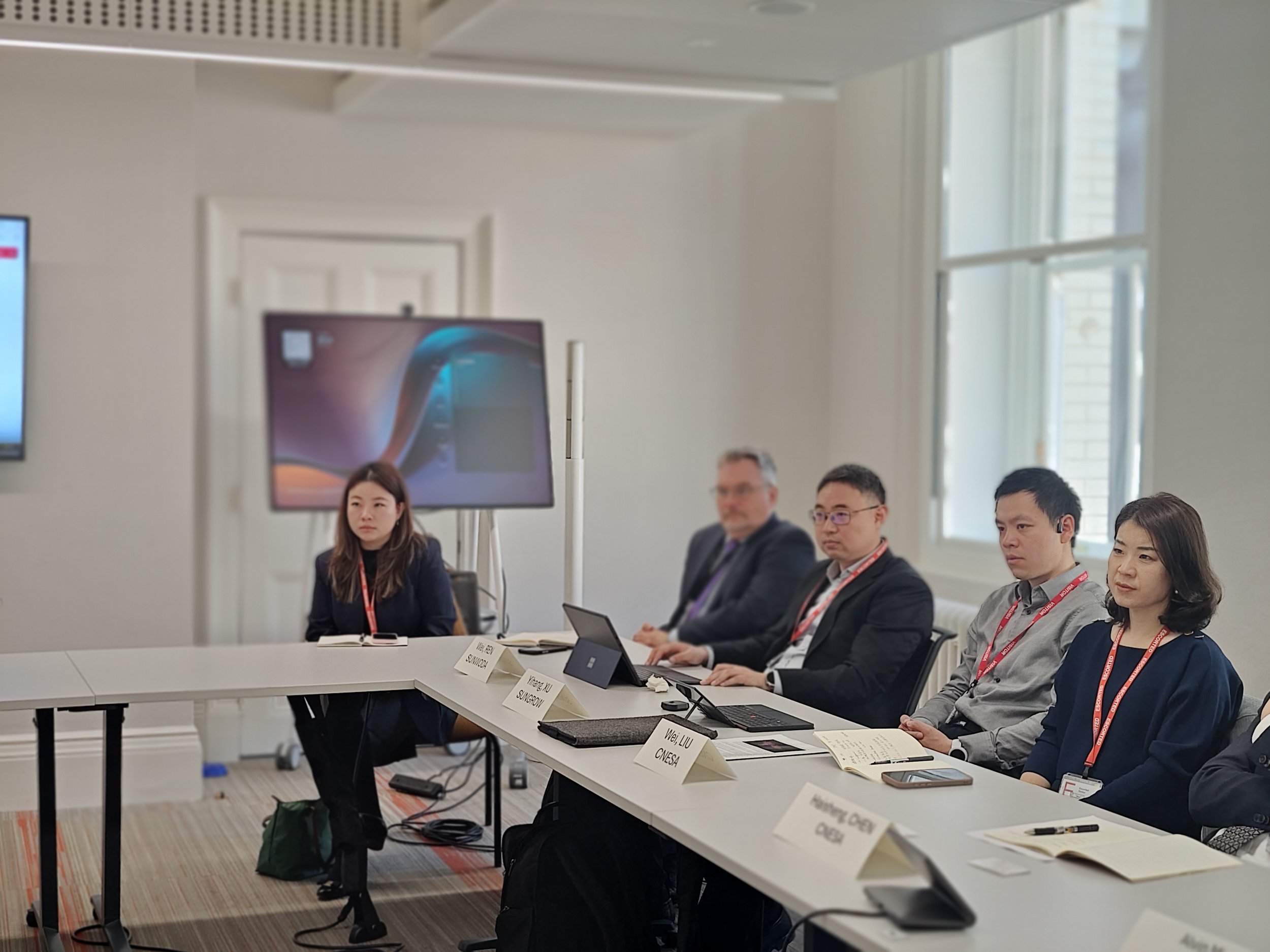
On April 14, 2025 (local time), Chen Haisheng, Chairman of the China Energy Storage Alliance (CNESA), led a delegation of member companies, including Sungrow, Sunwoda, and GreenArch Energy, on a visit to the UK. The delegation held a symposium on energy storage industry cooperation and development with the UK Department for Business and Trade (DBT). Liu Wei, Secretary-General of CNESA, and Yue Fen, Deputy Secretary-General, also attended the meeting.
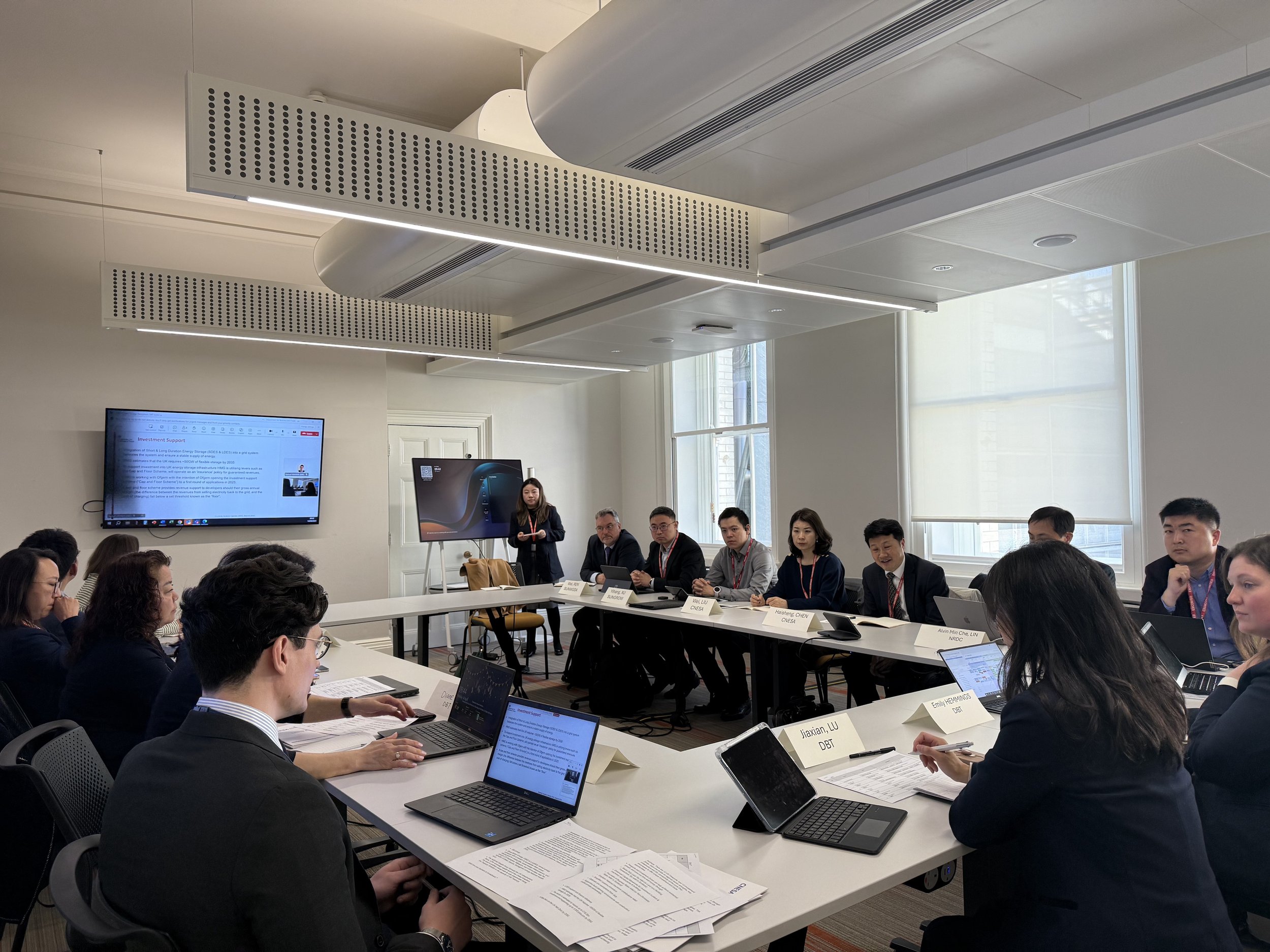
The discussions focused on the development prospects of the UK energy storage market, policy support frameworks, and the opportunities and challenges for Sino-UK corporate collaboration, aiming to provide support for Chinese energy storage companies expanding into the UK market and facilitate their global outreach.
Representatives from the UK Department for Business and Trade provided a detailed overview of the UK energy storage market. It is projected that the demand for new energy storage will reach 50GW by 2035. Policies such as the forthcoming "cap and floor mechanism" (see Note 1) and the Clean Power Plan 2030 will offer investors up to 10 years of revenue assurance. Currently, energy storage projects in the UK achieve an average annual return of 9-10%, with revenue streams from the capacity market, ancillary services market, and wholesale energy market.
Chen Haisheng, Chairman of CNESA, stated that this exchange marks a new phase in Sino-UK energy storage cooperation. The UK's highly liberalized electricity market and mature trading mechanisms complement the well-developed industrial chain advantages of Chinese energy storage companies. The alliance will continue to build three key platforms—policy coordination, technical exchange, and project collaboration—to help Chinese energy storage enterprises seize development opportunities in the global energy transition.
During the meeting, representatives from Chinese energy storage companies highlighted the opportunities and challenges of developing energy storage projects in the UK, covering areas such as talent recruitment, local supply chain security, and policy stability. The UK Department for Business and Trade responded with commitments to follow-up support measures. Through this dialogue, CNESA has established a crucial bridge for policy and market alignment between China and the UK in the energy storage sector, breaking down barriers to international expansion through information sharing and enhancing the global competitiveness of China’s energy storage industry.
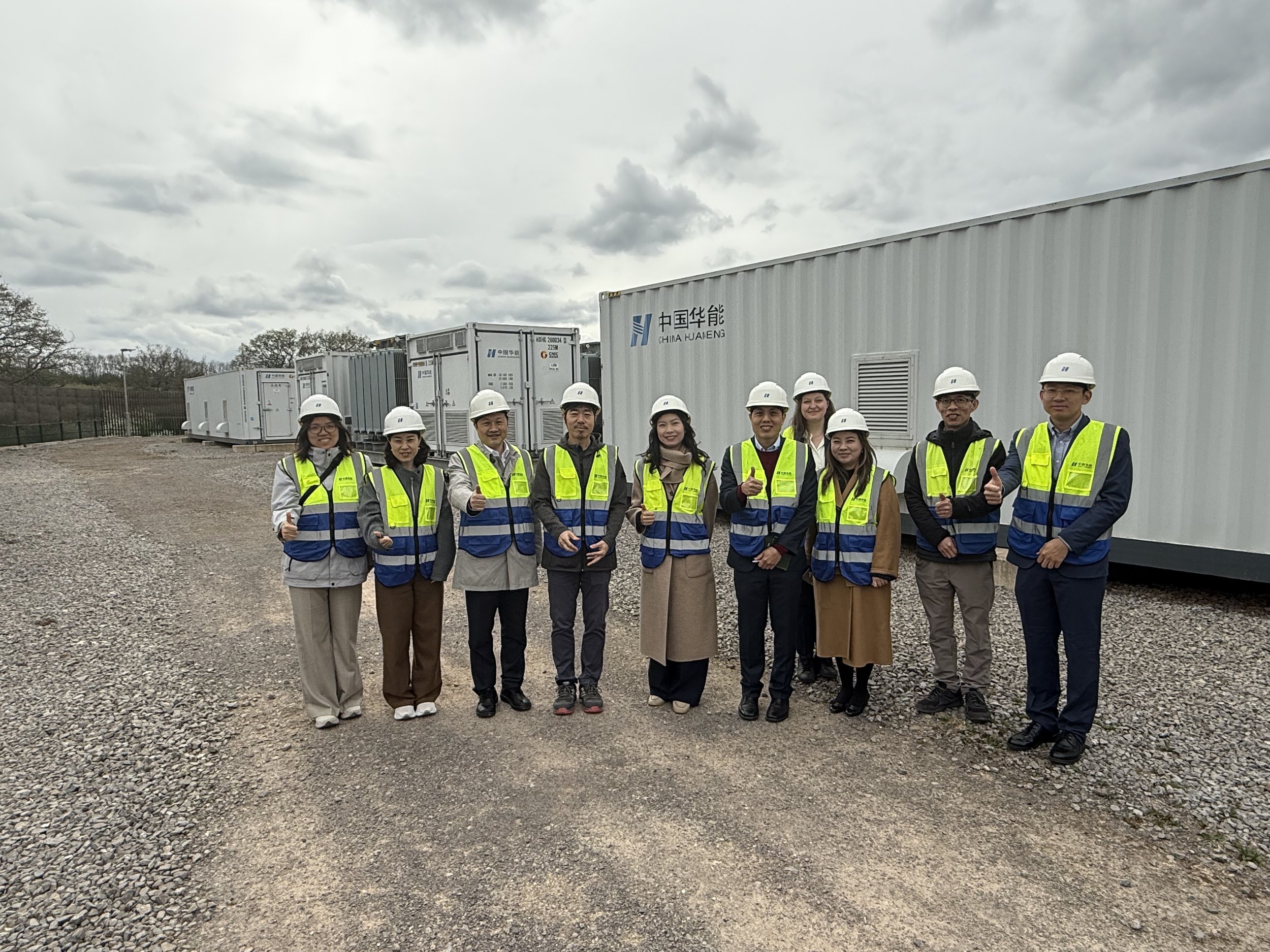
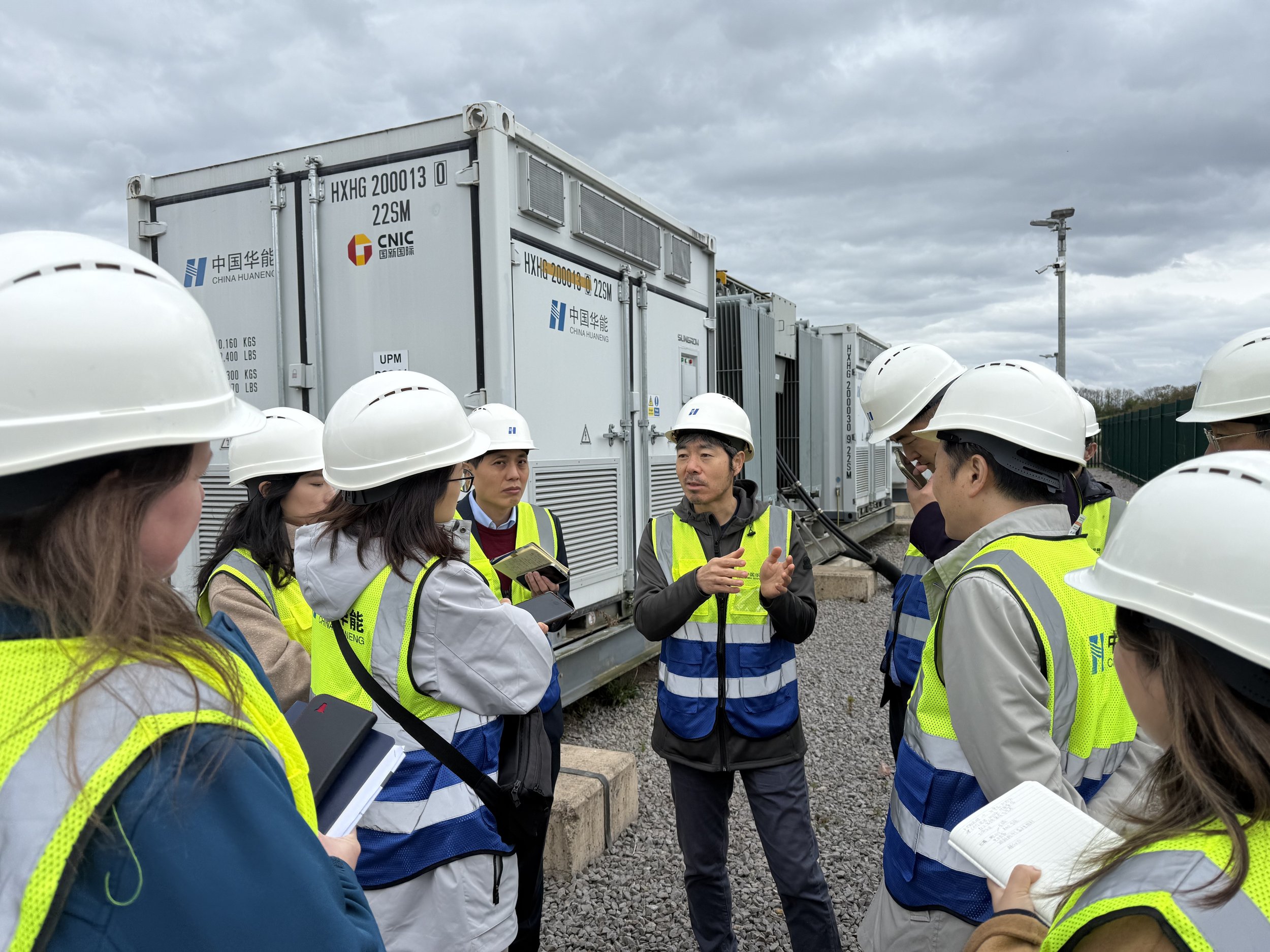
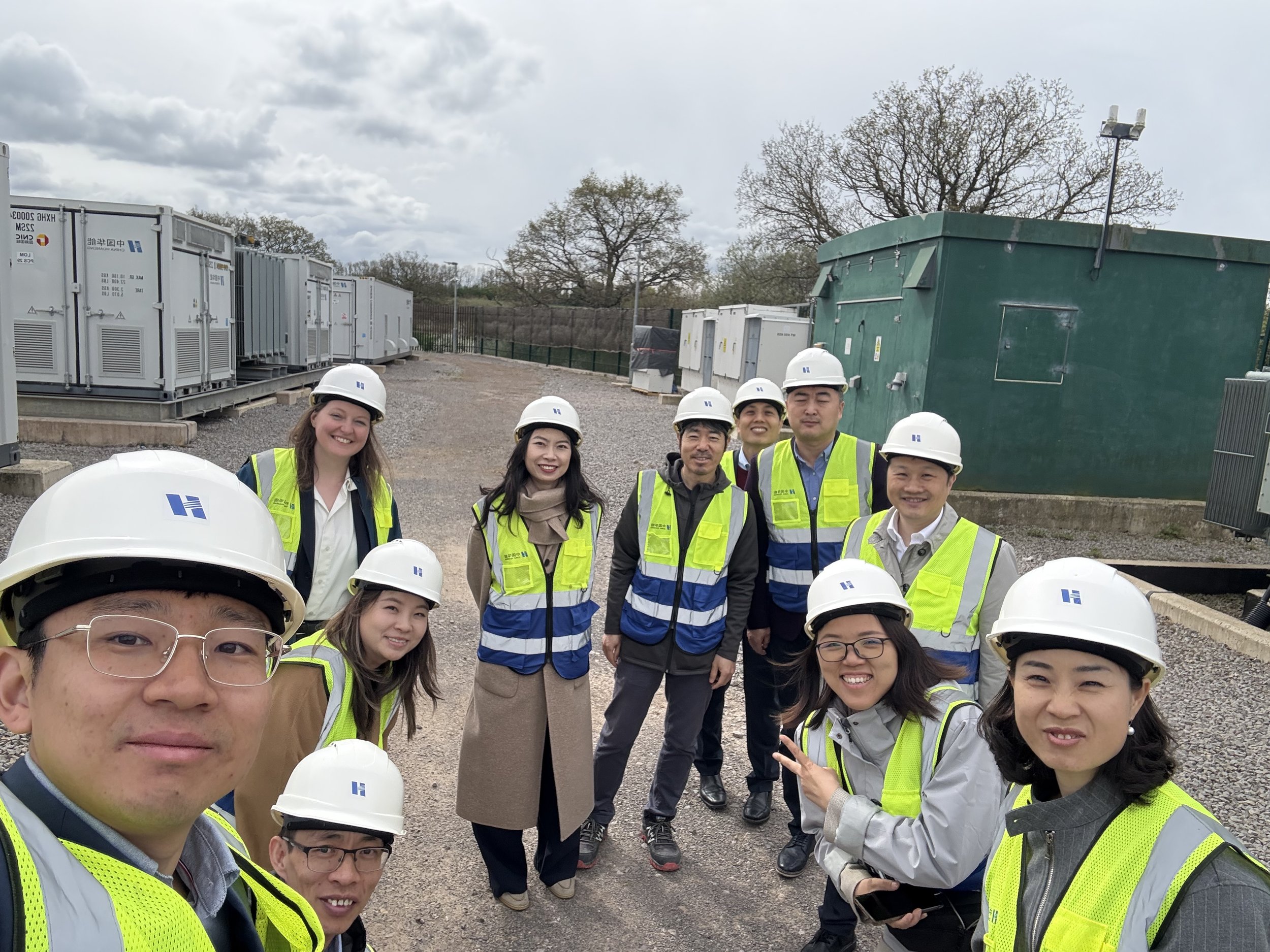
In the afternoon, the delegation visited the China Huaneng Group’s Minety Battery Storage Project, which has a capacity of 100MW/100MWh (1-hour discharge duration). The project was jointly invested by Huaneng Hong Kong and CNIC Corporation Limited, with construction commencing in December 2019 and commercial operation starting in July 2021. Currently, Shell Global acts as the market agent for the project’s participation in electricity trading. In its first two years, the project primarily provided frequency regulation services, achieving strong returns. However, due to increased competition from a growing number of energy storage projects in the UK, Minety’s revenue has declined in recent years. Today, the project engages in frequency regulation, energy arbitrage, and holds long-term capacity market contracts, diversifying its revenue streams. The UK market has a strong demand for energy storage and is exploring compensation models for reactive power services, with expectations of new frequency regulation service varieties in the future. This is anticipated to improve energy storage project returns in the short term. The Minety project’s business model offers valuable insights for the evolution of energy storage projects in China.
Relevant Links:
Cap and Floor Mechanism: In October 2024, the UK government announced this regulatory framework for long-duration energy storage (LDES). By setting a price cap and floor, the mechanism aims to balance investment risks and returns, accelerate large-scale energy storage infrastructure development, and support the 2050 net-zero emissions target. The scheme is overseen by Ofgem, the UK energy regulator.

Construction Begins on China's First Independent Flywheel + Lithium Battery Hybrid Energy Storage Power Station
Recently, the groundbreaking ceremony for the new 200MW/100.83MWh independent hybrid energy storage project was held in the Sangcun Industrial Park, Wenshui Economic Development Zone, Wenshui County, Shanxi Province. The ceremony was attended by Meng Lansheng, Deputy Secretary of the County Party Committee and County Mayor, Wu Yingzhe, a member of the county government party group and director of the Economic Development Zone Management Committee, along with more than a hundred representatives from relevant units.
The Wenshui Energy Storage Power Station project covers approximately 3.75 hectares within the red line area. The station is divided into four main functional zones: office and living service facilities, power distribution and step-up station, lithium iron phosphate energy storage area, and flywheel energy storage area. This project, as an independent frequency regulation power station, combines flywheel energy storage technology with lithium iron phosphate batteries, with a capacity of 200MW. Upon completion, it is expected to become the first independent flywheel + lithium battery hybrid energy storage power station in China, capable of meeting both frequency regulation and peak shaving demands, thus contributing to the safe and stable operation of the power grid. The project is anticipated to generate an annual income of approximately 240 million yuan and tax revenue of 36 million yuan.

China's First Vanadium Battery Industry-Specific Policy Issued
On May 8th, the Sichuan Provincial Department of Economy and Information Technology and six other departments jointly issued the "Implementation Plan for Promoting High-Quality Development of the Vanadium Battery Storage Industry" (hereinafter referred to as the "Implementation Plan"). This policy is also the first vanadium battery industry-specific policy in the country. Qing Jiasheng, Director of the Material Industry Division of the Sichuan Provincial Department of Economy and Information Technology, introduced that by 2025, the penetration rate of vanadium batteries in the storage field is expected to reach 15% to 20%, taking a leading position in the field of large-scale, long-duration storage. The "Implementation Plan" aims to build a leading national vanadium battery storage industry base through initiatives such as conducting application pilot demonstrations, strengthening technological self-innovation, expanding the production and supply of vanadium products, promoting industry cost reduction and efficiency enhancement, accelerating the creation of industrial clusters, and cultivating improved standards and brands. Sichuan has a solid foundation for the development of the vanadium battery storage industry, holding the country's largest vanadium resource reserves and leading in the production of vanadium pentoxide, having built the world's largest and most comprehensive vanadium product production base. Additionally, Sichuan's abundant hydropower resources and gradually increasing photovoltaic power generation share provide a substantial market space for vanadium battery storage stations as important energy reserves. To further promote new industrialization, accelerate the construction of a modern industrial system, plan for future new products, cultivate new quality productive forces, and build a leading domestic vanadium battery industry base, it is necessary to introduce measures to promote the high-quality development of the vanadium battery storage industry.
Development targets include:
- Vanadium battery storage industry's technology level and innovation capacity to be among the national leaders;
- Vanadium electrolyte production capacity to reach 200,000 cubic meters/year, electrode material production capacity to reach 6.5 million square meters/year, stack production capacity to reach 3GW/year, and system integration capacity to break through 12GWh/year;
- Cultivate at least three innovative and nationally competitive leading companies;
- Build a number of economically effective pilot demonstration projects with strong driving capabilities.
Pilot demonstration proposals include:
- Support the promotion and application of vanadium batteries in various aspects such as photovoltaic, wind power generation storage, grid peak shaving and frequency modulation, and communication base station storage.
- Support areas with solid vanadium industry foundations such as the relevant load centers within the province and cities like Panzhihua, Neijiang, and Leshan, to construct a number of vanadium battery storage stations based on actual demand.
- Actively explore innovations in technology, business models, and institutional mechanisms to promote the market-oriented, large-scale application of vanadium battery storage.
Policy support proposals include:
- Increase fiscal funding support for major projects, innovation platforms, and characteristic parks in the vanadium battery storage industry.
- Strengthen the guarantee of essential resources such as land and energy use, and actively promote the construction of major pilot demonstration projects.
- Support grid integration and utilization of vanadium battery storage stations, optimize time-of-use electricity pricing policies such as peak and off-peak tariffs, and seasonal tariffs in a timely manner to increase revenue channels for vanadium battery storage.
- Improve incentive mechanisms, support new energy projects to deploy vanadium battery storage as needed, and implement related incentive policies from the "Action Plan for Quality Improvement and Doubling of Advanced Materials Industry".
- Explore establishing a vanadium resource price stabilization negotiation mechanism, construct a "vanadium electrolyte bank," a bulk vanadium asset trading platform, and a national vanadium asset trading system centered in Sichuan.
Market mechanism proposals include:
- Support vanadium battery storage to participate as independent market entities in medium and long-term transactions, spot and ancillary services in the electricity market.
- During charging in the electricity quantity market, it can enjoy time-of-use tariffs as an electricity market consumer, with the corresponding electricity purchased on its behalf by electricity sales companies or grid enterprises;
- During discharging, participate in the thermal power market transactions, with prices formed by the market.
- Accelerate the construction of an electricity ancillary services market, enrich the varieties of vanadium battery storage participating in the electricity ancillary services market, and fully reflect the flexible adjustment value of vanadium battery storage.
- Support joint investment by new energy development enterprises and vanadium battery storage enterprises, encourage new energy stations to configure vanadium battery storage through self-construction, leasing, or purchasing, and reasonably distribute profits through market mechanisms.

Major Breakthrough: Successful Completion of Integration Test on World First 300MW Advanced Compressed Air Energy Storage System Expander
Recently, a major breakthrough has been made in the field of research and development of the Compressed Air Energy Storage (CAES) system in China, which is the completion of integration test on the world-first 300MW expander of advanced CAES system marking the smooth transition from development to production. This pioneering achievement is independently developed by the Institute of Engineering Thermophysics of Chinese Academy of Sciences (IET) and Zhong-Chu-Guo-Neng Co. Ltd.
Energy storage technology serves as the key supporting technology for the ongoing energy revolution, while the relevant industry gradually evolves into a pivotal pillar within the spectrum of national strategic emerging industries. In this context, CAES has distinct merits of large-scale, cost-effectiveness, high efficiency and eco-friendliness etc., which is one of the most promising large-scale energy storage solutions. As for the core component of CAES system, the development of expanders emerges with such intricate technical challenges as substantial loads, copious flow rates, intricate flow and heat transfer as well as the demanding wide- operating-gamut with uncompromising efficiency. After years of unremitting efforts, the R&D team of IET has successively resolved key technical problems in breakthrough technologies including intricate 3D design implementation, sophisticated shaft architectures, and dynamic adjustment and control mechanism etc., and developed world-first multi-stage high-load 300MW expander of advanced CAES system endowed with completely independent intellectual property rights. (See Figure 1)
On August 1st, 2023, IET and Zhong-Chu-Guo-Neng Co. Ltd accomplished a significant feat, that is, the successful integration test of a 300MW compressed air expander. Notably, all results of various tests not only met but exceeded the design indexes, highlighting attributes such as exceptional integration, high efficiency, rapid start-stop capabilities, extended operational lifespan and simplified maintenance. The successful development of the 300MW compressed air expander stands as a significant milestone in domestic compressed air energy storage domain. Not only does it mark a turning point for advanced compressed air energy technology, but it also propels the nation's capabilities to unprecedented height. This accomplishment underscores China's commitment to innovative energy solutions and signifies a crucial step forward in the evolution of advanced compressed air energy storage technology.
As the earliest domestic institution in the research on compressed air energy storage, IET has already set up a research and development system with complete independent intellectual property rights through 19 years of efforts. IET successively achieved breakthroughs in critical domains such as comprehensive system design and control across all operational conditions, multi-stage high-load compressors and expanders, and highly efficient supercritical heat storage and transfer etc. These accomplishments bore fruit in establishing the world-first advanced CAES systems, such as the 1.5MW model in 2013, 10MW model in 2016 as well as the groundbreaking 100MW model in 2021. Incorporating the pioneering CAES technology of the IET, Zhong-Chu-Guo-Neng Co. Ltd has the full set of capacities in research and development, design, manufacture, project implementation, investment and operational management of 100 MW level CAES systems. This multifaceted prowess positions the company as a prominent trailblazer and global frontrunner in the realm of advanced CAES systems. Since the advent of their partnership in 2018, both sides have taken the lead in the development of the world-first 300MW advanced CAES system.
The scale-enlargement of CAES systems constitutes an important way to reduce cost, improve efficiency and enhance market competitiveness. Compared with the 100MW advanced CAES system, the forthcoming 300MW system will achieve a threefold amplification in scale, notable 20%-30% reduction in unit cost and a marked 3-5% enhancement in overall efficiency. The successful completion of integration test and subsequent deployment of the 300MW advanced CAES system expander marks the significant progress in the national demonstration project of world-first 300MW advanced CAES system development.
The accomplishments described above have received robust support from the National Natural Science Foundation of China, the strategic pilot project of the Chinese Academy of Sciences, and the national key research and development programs.

"Penghui Energy Signed an Agreement with Canadian Company for 5.1GWh Energy Storage Cell Cooperation"
Recently, Great Power and Canadian Corporation Discover Energy Systems officially signed a strategic cooperation agreement, according to which the two sides will reach in-depth cooperation in the field of energy storage. Great Power will provide market-competitive cell products for Discover Energy Systems' global projects, and the partnership will drive the completion of the 5.1GWh procurement program. In the future, the two sides will jointly explore the North American energy storage market.

BYD and Bison Brothers Signed 10GWh Energy Storage Strategic Cooperation Framework Agreement
According to Bison Brothers, two leading companies in China's energy storage industry, Shanghai Bison Brothers Power Technology Co. and BYD Automotive Industry Co. announced that they have signed a 10GWh energy storage strategic cooperation framework agreement. The cooperation will be carried out in the global market to tap and expand the new energy storage application market as the core to promote the prosperous development of the energy storage industry ecology.

CATL’s First-Half Energy Storage Business Revenue of 27.985 Billion Yuan, Gross Margin of 21.32%
On the evening of July 25th, Contemporary Amperex Technology Co., Ltd.(CATL)released its 2023 semi-annual report. During the reporting period, the company achieved a total operating revenue of 189.25 billion yuan, a year-on-year increase of 67.5%; the net profit attributable to shareholders of the listed company was 20.717 billion yuan, a year-on-year increase of 153.64%; and the basic earnings per share were 4.72 yuan. Among them, the energy storage battery system business achieved a total operating revenue of 27.985 billion yuan, a year-on-year increase of 119.73%, with a gross profit margin of 21.32%, a year-on-year increase of 14.89%.
-
October 2026
- Oct 12, 2026 Chen Haisheng: Toward the 300 GW Goal — How Can New-Type Storage Walk Steadily and Far During the 15th Five-Year Plan Period Oct 12, 2026
- Oct 7, 2026 Seven Departments Issue the “15th Five-Year Plan” for the New Battery Industry: All-Solid-State Batteries to Reach Initial Scale-Up, Storage Application Scenarios to Expand Further Oct 7, 2026
- September 2026
- August 2026
- April 2025
-
May 2024
- May 19, 2024 Construction Begins on China's First Independent Flywheel + Lithium Battery Hybrid Energy Storage Power Station May 19, 2024
- May 16, 2024 China's First Vanadium Battery Industry-Specific Policy Issued May 16, 2024
-
August 2023
- Aug 22, 2023 Major Breakthrough: Successful Completion of Integration Test on World First 300MW Advanced Compressed Air Energy Storage System Expander Aug 22, 2023
- Aug 20, 2023 "Penghui Energy Signed an Agreement with Canadian Company for 5.1GWh Energy Storage Cell Cooperation" Aug 20, 2023
- Aug 20, 2023 BYD and Bison Brothers Signed 10GWh Energy Storage Strategic Cooperation Framework Agreement Aug 20, 2023
- Aug 20, 2023 CATL’s First-Half Energy Storage Business Revenue of 27.985 Billion Yuan, Gross Margin of 21.32% Aug 20, 2023
- Aug 20, 2023 The First Domestic Combined Compressed Air and Lithium-Ion Battery Shared Energy Storage Power Station Has Commenced Construction Aug 20, 2023
- Aug 20, 2023 The world's First Prussian Blue Sodium-Ion Battery Energy Storage System Put into Use Aug 20, 2023
- Aug 20, 2023 China's First Climbing Auxiliary Service Market Trading Rules for Comments Aug 20, 2023
- Aug 20, 2023 Tibet Autonomous Region Issues the “Notice on Actively Promoting the Pilot Demonstration and Application of Grid-Forming Energy Storage Projects in the Tibet Electric Power System” Aug 20, 2023
-
July 2023
- Jul 2, 2023 Notice Issued by the National Development and Reform Commission on Pumped Storage Power Station Capacity Tariffs and Related Matters Jul 2, 2023
- Jul 2, 2023 Notice Issued by the National Development and Reform Commission on Provincial Power Grid Transmission and Distribution Tariffs for the Third Regulatory Period and Related Matters Jul 2, 2023
- Jul 2, 2023 Laibei Huadian Independent Energy Storage Power Station Successfully Grid-Connected Jul 2, 2023
- Jul 2, 2023 High-Temperature Molten Salt Rupture Accident Occurs in Thermal Energy Storage Project Jul 2, 2023
- Jul 2, 2023 Construction Begins on China's First Grid-Level Flywheel Energy Storage Frequency Regulation Power Station Jul 2, 2023
- Jul 2, 2023 Official Release of Energy Storage Subsidies in Xinjiang: Capacity Compensation of 0.2 CNY/kWh, Capacity Lease of 300 CNY/kW·year, and Peak Shaving Compensation of 0.55 CNY/kWh Jul 2, 2023
- Jul 2, 2023 Guangdong Robust energy storage support policy: user-side energy storage peak-valley price gap widened, scenery project 10%·1h storage Jul 2, 2023
- Jul 2, 2023 The National Energy Administration approved 310 energy industry standards such as Technical Guidelines for New Energy Storage Planning for Power Transmission Configuration of New Energy Bases Jul 2, 2023
-
February 2023
- Feb 27, 2023 Gansu Province Became The First Region in China to Open up The Peak-shaving Capacity Market for Energy Storage Feb 27, 2023
- Feb 27, 2023 The National Standard "Safety Regulations for Electrochemical Energy Storage Stations" Was Released Feb 27, 2023
- Feb 27, 2023 Inner Mongolia Government Releases Energy Storage Support Policy Feb 27, 2023
- Feb 27, 2023 The Largest Single Liquid-cooled Energy Storage Station in China Was Connected to The Grid Feb 27, 2023
- Feb 27, 2023 Changzhou Released New Energy Storage Subsidy Plan Feb 27, 2023
- Feb 27, 2023 Chongqing Liangjiang New District: A Subsidy of 200 yuan/kWh Will Be Granted According to The Scale of Energy Storage Systems Feb 27, 2023
- Feb 27, 2023 China speeds up Research of Solid-state Batteries, Sodium-ion Batteries And Other New Batteries Feb 27, 2023
- Feb 27, 2023 China's First Large-capacity Supercapacitor Hybrid Energy Storage Frequency Regulation Project Successfully Went Online Feb 27, 2023
-
December 2022
- Dec 22, 2022 Shanxi Provincial Energy Bureau released the "14th Five Year Plan" Implementation Plan for the Development of New Energy Storage Dec 22, 2022
- Dec 22, 2022 100MW Dalian Liquid Flow Battery Energy Storage and Peak shaving Power Station Connected to the Grid for Power Generation Dec 22, 2022
- Dec 22, 2022 State Grid operating area ”The Guidelines for the Registration of New Energy Storage Entities (for Trial Implementation)” released Dec 22, 2022
- Dec 22, 2022 Promoting The High Quality Development Of Vanadium Titanium Industry” lauched by Sichuan Provincial Department of Economy and Information Technology Dec 22, 2022
- Dec 22, 2022 National Energy Administration of China released "Basic Rules of Electricity Spot Market" "Supervision Measures of Electricity Spot Market" draft for comments Dec 22, 2022
- Dec 22, 2022 Construction starts on the largest 30MW/300MWh user-side lead-carbon battery storage project in Zhejiang Province. Dec 22, 2022
- Dec 22, 2022 China’s largest single station-type electrochemical energy storage power station Ningde Xiapu energy storage power station (Phase I) successfully transmitted power. Dec 22, 2022
-
November 2022
- Nov 2, 2022 Inner Mongolia Plans to Build a Net-zero Wind-Solar-Storage-Hydrogen-Ammonia Industrial Park with Capacity of 10GW in Tongliao Nov 2, 2022
- Nov 2, 2022 Construction starts on 10MW/97.312MWh Jilin Electric Power User-side Lead-Carbon Battery Energy Storage Project Nov 2, 2022
- Nov 2, 2022 Shandong Introduced China's First Energy Storage Support Policy in Electricity Spot Market Nov 2, 2022
- Nov 2, 2022 " The Special Program For Training High-level Energy Storage Technology Talents "Launched Nov 2, 2022
-
July 2022
- Jul 19, 2022 The 2.4GWh Shared Energy Storage Site in Inner Mongolia Is Approved, And The Duration Is Designed to Be 2-4 Hours Jul 19, 2022
- Jul 19, 2022 After 6 Years, The 100MW/400MWh Redox Flow Battery Storage Project in Dalian Is Connected to The Grid Jul 19, 2022
- Jul 19, 2022 Yangxi County Plans To Build 2GW/5GWh 'Green Energy Storage Project' To Support The Deployment of Offshore Wind Generation Jul 19, 2022
- Jul 19, 2022 Shanxi Energy Regulatory Office Issued "Shanxi Primary Frequency Control Market Trading Rules (Trial) " Jul 19, 2022
- Jul 19, 2022 NDRC and NEA Issued The Notice on Promoting The Participation of New Energy Storage Technologies in The Electricity Market and Dispatches Jul 19, 2022
-
June 2022
- Jun 14, 2022 150MW/300MWh BESS for Thermal Plant of China Huadian Corporation Began Construction in Datong Jun 14, 2022
- Jun 14, 2022 CGDG And The Technical Institute of Physics and Chemistry of CAS Will Cooperate to Construct The First 50MW/600MWh Liquid Air Energy Storage Demonstration Project Jun 14, 2022
- Jun 14, 2022 Ministry of Education of China Issued The Construction Plan for Carbon Peaking & Carbon Neutrality Higher Education Training System Jun 14, 2022
- Jun 14, 2022 The National Energy Administration Issued The List of Key Technical Equipment & Projects in The Energy Sector of 2021 Jun 14, 2022
-
May 2022
- May 16, 2022 CHNG Huangtai Energy Storage Station Entered the Market And Traded 855MWh of Electricity May 16, 2022
- May 16, 2022 Lithium-ion Battery + Flywheel Hybrid Storage System Was Firstly Used in Frequency Regulation in Grid of China May 16, 2022
- May 16, 2022 The Ministry of Industry and Information Technology of China Released the Domestic Lithium-ion Battery Industry Status From January to February 2022 May 16, 2022
- May 16, 2022 NDRC and the National Energy Administration of China Issued the Medium and Long Term Development Plan for Hydrogen Industry (2021-2035) May 16, 2022
- May 16, 2022 NDRC and the National Energy Administration of China Issued the New Energy Storage Development Plan During "14th Five-Year Plan" Period May 16, 2022
-
March 2022
- Mar 23, 2022 The first batch of independent energy storage facilities in Shandong participates in electricity spot trading Mar 23, 2022
- Mar 23, 2022 China Southern Power Grid issued the "14th Five-Year" Development Plan for Emerging Businesses Mar 23, 2022
- Mar 23, 2022 Baoan Xin: Strive to increase electrochemical energy storage from 3 GW to 100 GW in 2030 Mar 23, 2022
- Mar 23, 2022 South China Energy Regulatory Office issued the “Notice on Strengthening the Supervision of the Development and Application of New Energy Storage Technologies” Mar 23, 2022
- Mar 23, 2022 Local Government of Qinghai Province issued the “14th Five-Year Plan for Energy Development of Qinghai” Mar 23, 2022
- Mar 23, 2022 Suzhou Industrial Park Administrative Committee issued "Several Measures for Further Promoting Distributed Photovoltaic Development in Suzhou Industrial Park" Mar 23, 2022
- Mar 23, 2022 Xinjiang Development and Reform Commission issued the "Guidelines for the Construction of Large-scale Wind Power and Photovoltaic Bases in the Autonomous Region (Version 1.0)" Mar 23, 2022
- Mar 23, 2022 The Ministry of Science and Technology of China issued a draft for the 2022 application guidelines for the key project of "Energy Storage and Smart Grid Technology" Mar 23, 2022
-
November 2021
- Nov 11, 2021 NDRC: Significance Progress Has Been Made in "Allowing for More Competition in Electricity Generation, Sales and Consumption" and Establishing A Market-based Electricity Price Mechanism Nov 11, 2021
- Nov 11, 2021 Anhui Province: Construction of the First 100-megawatt Centralized Shared Energy Storage Station Started Nov 11, 2021
- Nov 11, 2021 Rules of North China Electric Power's Peak Shaving: Energy Storage Give Priority to Meeting the Consumption of New Energy Plants and stations, Participates in Peak Shaving Alone at the Same Time Nov 11, 2021
- Nov 11, 2021 State Council Executive Meeting: Actively Promote the Construction of Energy Storage Capacity, Make Sure the Power Price Fluctuation Range Not Exceed 20% Nov 11, 2021
- Nov 11, 2021 The Energy Storage Ratio 15%-30%! Public Announcement of The List of Guaranteed Grid-connected Centralized Wind and Solar Projects in Inner Mongolia in 2021 Nov 11, 2021
-
July 2021
- Jul 4, 2021 Shandong Energy Storage participates in ancillary service market for the first time Jul 4, 2021
- Jul 4, 2021 Gansu encourages the construction of wind-solar + energy storage projects to play the role of energy storage Jul 4, 2021
- Jul 4, 2021 The first power plant side energy storage industry standards were officially released Jul 4, 2021
- Jul 4, 2021 Qinghai's market-oriented grid connection project in 2021: 42.13GW new energy equipped with energy storage 5.2GW Jul 4, 2021
-
June 2021
- Jun 1, 2021 Zhejiang Started the Third Party Independent Subject to Participate Electricity Ancillary Service Jun 1, 2021
- Jun 1, 2021 China Southern Power Grid Issued a White Paper on New Power System Action Plan Jun 1, 2021
- Jun 1, 2021 The Thermal Energy Storage Subsystem of The World's First 100MW Compressed Air Energy Storage Demonstration Project Began to Install Jun 1, 2021
-
December 2020
- Dec 29, 2020 National Development and Reform Commission (NDRC) and National Energy Administration (NEA) Jointly Issue Statement on Widening the Peak and Off-peak Electricity Price Gap Dec 29, 2020
- Dec 29, 2020 National Energy Administration (NEA) Announces Approval of Seven Energy Storage Standards Dec 29, 2020
- Dec 29, 2020 Six Provinces and Municipalities Issue Documents Encouraging Development of Unified Solar, Storage, and Charging Facilities Dec 29, 2020
-
November 2020
- Nov 24, 2020 First Batch of National Energy Administration (NEA) Energy Storage Demonstration Projects are Publicized Nov 24, 2020
- Nov 24, 2020 China’s First Independent Commercial Energy Storage Station Launches in Golmud, Qinghai Province Nov 24, 2020
- Nov 24, 2020 Four Renewable Energy + Energy Storage Projects in Hunan Begin EPC Bidding Nov 24, 2020
-
October 2020
- Oct 30, 2020 Bidding Begins on Three of 28 Wind Storage Projects in Hunan Oct 30, 2020
- Oct 30, 2020 Clean Heating and Solar+Storage+Charging—First Integrated Energy Demonstration Project Constructed in Xinjiang Oct 30, 2020
- Oct 30, 2020 China’s Largest Wind Power Energy Storage Project Approved for Grid Connection Oct 30, 2020
- Oct 30, 2020 Guiding Opinions on "Integration of Wind-Solar-Hydro-Thermal-Storage" and "Integration of Generation-Grid-Load-Storage" (Draft for Comments) Oct 30, 2020
-
September 2020
- Sep 26, 2020 Understanding the Goals of the First Batch of National Energy Administration Energy Storage Demonstration Projects Sep 26, 2020
- Sep 26, 2020 Construction Begins on “Salt Cave Compressed Air Energy Storage National Test and Demonstration Project” Sep 26, 2020
- Sep 26, 2020 As Solar+Energy Storage Becomes a Leading Trend, what is the Best Configuration to Maximize Benefit? Sep 26, 2020
- Sep 26, 2020 Energy Storage System for Frequency Regulation at Hengyi Power Plant Begins Operation Sep 26, 2020
-
April 2019
- Apr 30, 2019 SPECO Unveils Next-generation Mobile Energy Storage System Apr 30, 2019
- Apr 30, 2019 China’s First Sodium Nickel Battery Trial Project Begins Operations in Zhejiang Apr 30, 2019
- Apr 30, 2019 CATL Forms Partnership with KSTAR Apr 30, 2019
-
January 2019
- Jan 29, 2019 500MWh Li-ion Battery Energy Storage Project Planned for Putian, Fujian Province Jan 29, 2019
- Jan 29, 2019 First Stage of Vanadium Flow Battery Storage+Solar Project in Zaoyang, Hubei Goes into Operation Jan 29, 2019
- Jan 29, 2019 Guizhou Province Development and Reform Commission Releases Guidelines for Innovation and Improvement in Green Development Jan 29, 2019
- Jan 28, 2019 Beijing 798 Art Zone Plans to Install Peak Shifting Energy Storage Demonstration Project Jan 28, 2019
-
December 2018
- Dec 17, 2018 Shenzhen 2.15MW/7.2MWh Second-Life Battery Storage Project Equipment and Installation Bidding Dec 17, 2018
- Dec 17, 2018 Wanli Tire Energy Storage Project Begins Trial Operations Dec 17, 2018
- Dec 17, 2018 Largest Ever Foreign Invested Project in Zhejiang Province Holds Launch Ceremony Dec 17, 2018
- Dec 17, 2018 Holley Group and Sermatec Sign First Energy Storage Supply Agreement Between Mainland and Taiwanese Companies Dec 17, 2018
-
September 2018
- Sep 19, 2018 Hefei Offers Solar-plus-storage Systems 1 RMB/kWh Charging Subsidy; 1 Million RMB Available Per Year for Each Project Sep 19, 2018
- Sep 19, 2018 Renewable Microgrid Demonstration Project in Erlianhaote City, Inner Mongolia Will Include 30MW of Storage Sep 19, 2018
- Sep 19, 2018 Vision Group and Dian-E Sign Strategic Partnership Agreement for Energy Storage Battery Sales and Rentals Sep 19, 2018
- Sep 19, 2018 Bidding Begins for 120MWh Energy Storage Power Station Project in Changsha Sep 19, 2018
Follow CNESA on Twitter
Subscribe
Sign up for our free monthly newsletter to stay informed about the Chinese energy storage market.