The AIDC sector has continued to gain momentum in 2026, with energy storage companies moving in through different routes. Envision Energy, HyperStrong and GCL Energy Technology have each advanced self-developed data center projects. CATL has used equity investments to connect upstream and downstream players across the industry chain, while companies including Sungrow, NR Electric and Shuangdeng Group have rolled out energy solutions tailored to AIDCs.
The convergence of computing power and energy has become an industry-wide consensus. Yet behind the current boom are several unresolved questions: What differentiated paths are available to energy storage companies entering the AIDC market? Can the business model for building and operating their own computing centers prove commercially viable? And what long-term value will this deep integration of energy and computing ultimately create for the energy storage industry?
Three Routes for Energy Storage Companies Entering the AIDC Market
Route 1:
Asset-Heavy, Self-Built AIDCs: Toward Integrated Power-and-Computing Operations
This is the most capital-intensive route for energy storage companies entering the AIDC market, and the one that extends furthest along the industry chain. Companies act as project investors, acquire land and build intelligent computing clusters, retain ownership of the computing assets and operate them independently. Renewable generation, energy storage and computing loads are brought under a unified dispatch system.
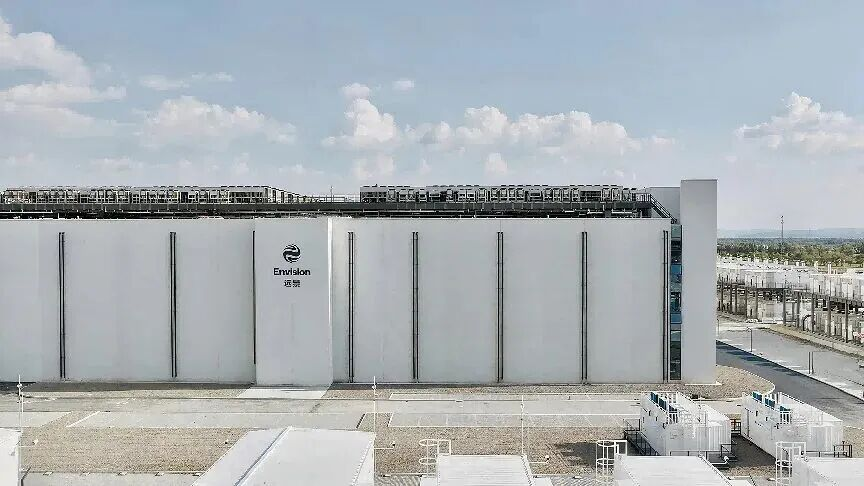
Envision Energy | Envision Galaxy Campus in Ulanqab
Envision Energy has developed the Envision Galaxy Campus in Ulanqab, Inner Mongolia, which officially commenced operations in August 2026. The project is planned to reach a computing capacity of 3 GW. Once completed, it is expected to support one million accelerators operating in parallel and deliver computing capacity on the scale of one million P; more than 80% of its electricity will be supplied directly by green power. The campus uses Envision’s self-developed 800V high-voltage direct-current (HVDC) power supply system—the first of its kind to enter operation globally—and offers computing-power leasing services to domestic computing clusters and large-model customers.
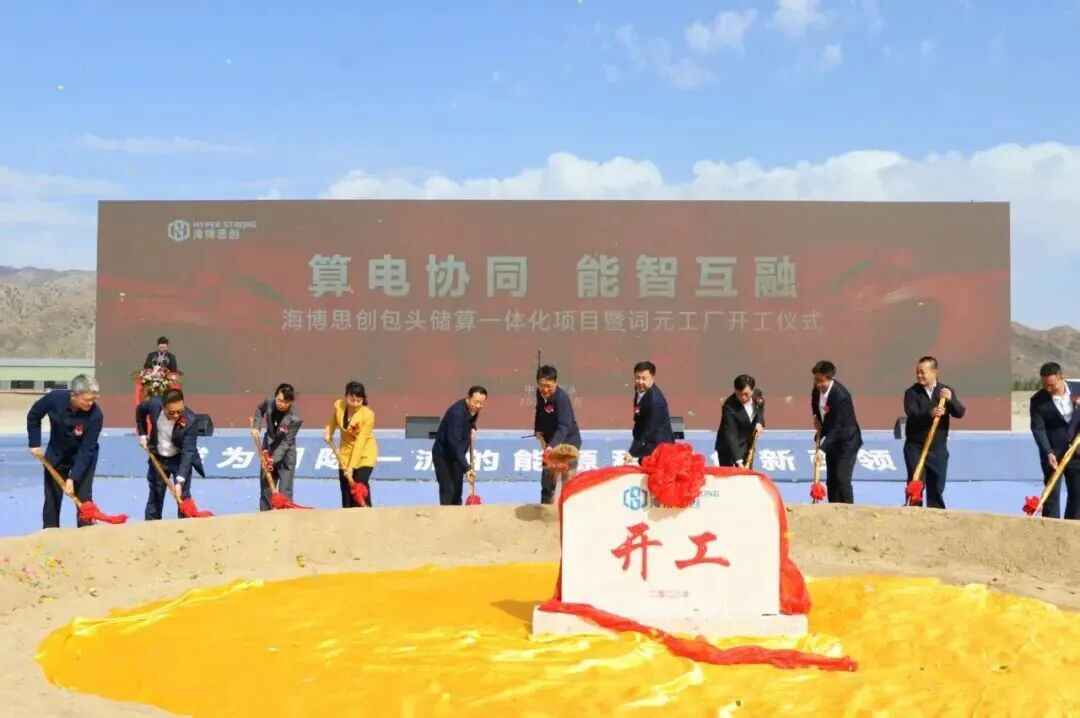
HyperStrong | Baotou Storage-Computing Integration Project and Token Factory
HyperStrong is developing a storage-computing integrated Token Factory in Baotou, Inner Mongolia. The project officially broke ground on September 29, 2026, and is described as China’s first storage-computing integration demonstration project. Its core equipment includes HyperSST solid-state transformers and HyperPTU power container units. Under the innovative Token Factory model, computing capacity is converted into standardized services that can be measured, priced and delivered to customers.
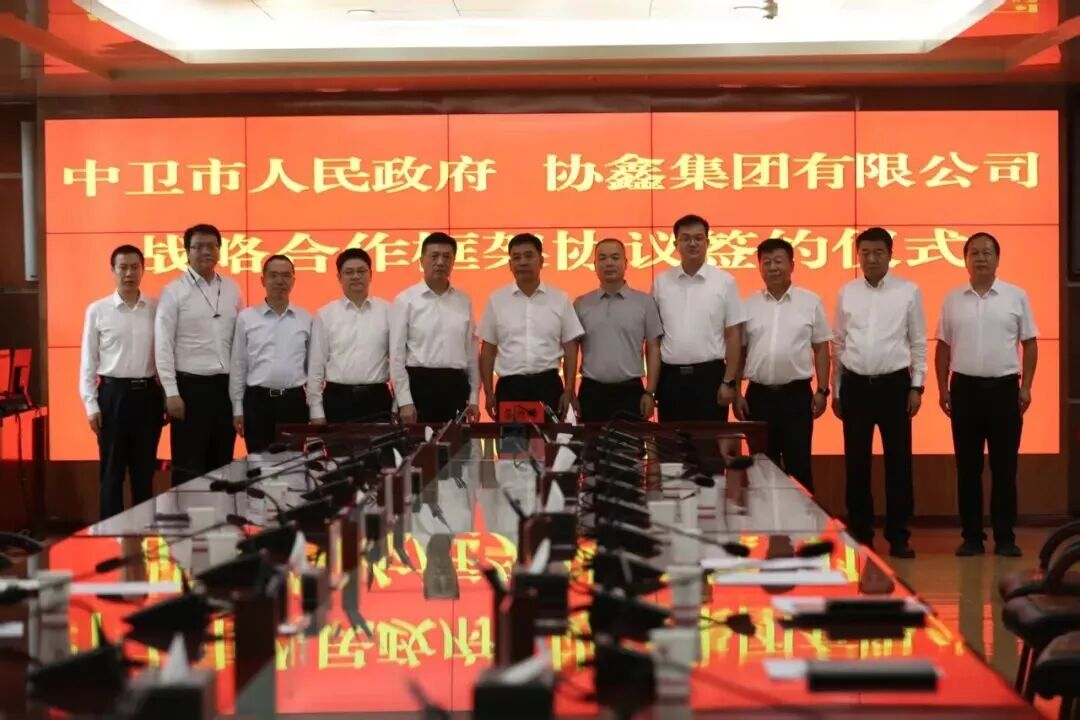
GCL Energy Technology | South China Intelligent Computing Base in Shaoguan, Guangdong, and Zhongwei Token Factory in Ningxia
In June and July, GCL Energy Technology signed agreements with the city of Shaoguan and the Zhongwei Industrial Park in Ningxia, respectively, to develop intelligent computing projects. Phase I of the South China Intelligent Computing Base in Shaoguan involves an investment of RMB 10 billion and is planned to include 80,000 standard server racks. Longer-term plans call for a gigawatt-scale, zero-carbon intelligent computing park and a Token operations center. The Zhongwei project centers on the development of a large-scale Token Factory, supported by an AI Token operations platform and integrated new-energy and computing-power infrastructure.
In terms of revenue, this model goes beyond collecting fees for computing-power leasing. Instead, it creates a multi-layered revenue loop:
Basic computing-power leasing provides the core recurring cash flow
Value-added Token services capture higher-margin opportunities
The self-built campus creates demand for the company’s own energy storage equipment and energy solutions
Co-located energy storage assets can participate in electricity markets to generate additional revenue
Route 2:
Capital-Chain Investments: An Asset-Light Position in the Power-and-Computing Ecosystem
Companies following this route do not directly invest in, build or operate computing facilities. Instead, they use equity investments to secure positions in key links upstream and downstream of the computing industry chain.
Representative Case: CATL’s End-to-End Ecosystem Strategy
Rather than building AIDC assets itself, CATL has invested step by step along the chain—from power supply technologies to computing facilities and downstream applications:
An affiliated party acquired a 38.1% stake in VNET Group, a leading AIDC operator, becoming its largest shareholder
CATL increased the capital of the controlling shareholder of Hangzhou Zhongheng Electric and secured a 49% stake, positioning itself in the core HVDC power supply segment
Through an industry investment fund, CATL also invested in the large-model company DeepSeek, gaining exposure to downstream demand for computing power
Through these three layers of investment, CATL has established an industrial loop spanning energy storage batteries, HVDC power supply, computing facilities and demand from large AI models. This provides an industrial foundation for joint R&D and deployment of power-and-computing coordination technologies and solutions.
Route 3:
Supplying the Energy Infrastructure: Focusing on Products and Solutions
This is the route chosen by the vast majority of energy storage companies, and it is where the largest concentration of orders in the AIDC market can currently be found. These companies do not own computing assets. Instead, they draw on their expertise in power electronics, energy storage systems and power management to supply AIDCs with essential energy infrastructure products and solutions.
By technology focus, the key players fall into three categories:
High-voltage power supply and energy-routing solution providers: Companies including Sungrow, NR Electric, Envision Energy, Zhiguang Electric, Kehua Data, KSTAR, Xinfengguang and Sifang are building out solid-state transformer (SST) product portfolios on the back of their power-electronics capabilities in energy storage. Sungrow’s EnerNeo series of SSTs has become one of NVIDIA’s first SST ecosystem partners, while NR Electric’s products have been deployed at Jiangsu’s first energy storage demonstration platform for power-and-computing coordination.
Integrated energy management and energy storage system integrators: Huawei Digital Power, Trina Storage, Kehua Tech, Clou Electronics, HyperStrong, Jinko ESS and Gotion High-tech are leveraging their energy storage system integration capabilities to develop integrated AIDC energy solutions spanning power sources, grids, loads, energy storage and computing.
Suppliers of highly reliable backup-power storage cells and systems: CATL, Shuangdeng Group, EVE Energy, BYD Energy Storage, Great Power, Sunwoda, REPT BATTERO, Narada Power, Pylontech, Ampace and CORNEX are building product portfolios for backup power and energy storage across AIDC scenarios, drawing on their expertise in high-rate energy storage cells.
The Industrial Value of Integrating Energy Storage and Computing
Returning to the question raised at the outset: what can the growing involvement of energy storage companies in AIDCs bring to the industry?
Deeper Technical Validation and Iteration Through Storage-Computing Integration
Under the traditional AIDC development model, energy storage and computing operate in separate chains, limiting the benefits of coordination. The storage-computing integration model led by energy storage companies tightly couples the two. It provides large-scale validation environments for technologies such as SSTs, grid-forming energy storage and HVDC power supply, accelerating technology maturation and cost reductions. This will help AIDC energy solutions evolve from basic supporting infrastructure to integrated, natively designed systems.
Expanding and Upgrading Energy Storage Business Models
As energy storage companies deepen their penetration of the AIDC market, the industry’s revenue models are becoming more diversified and sophisticated. Revenue streams are expanding beyond traditional equipment sales and energy storage station operations to include integrated solutions spanning power sources, grids, loads, energy storage and computing, and further into computing-power leasing and value-added Token monetization. This creates a progressive revenue structure built around “hardware + solutions + operations” and moves the industry beyond monetizing standalone power assets toward a composite value model combining energy, computing and AI.
This industrial convergence creates benefits in both directions: it opens up new market opportunities for the energy storage industry while also accelerating reductions in AIDC energy costs and supporting the transition to low-carbon operations.
Practical Challenges Facing Energy Storage Companies Entering the AIDC Market
Of course, energy storage companies face significant challenges on the road into the AIDC market.
The first is the high capital requirement and operational barrier. Building an AIDC from the ground up requires substantial investment. Moving from supplying energy equipment to operating computing infrastructure also requires time to build the necessary teams, resources and capabilities. The payback period for these projects remains uncertain.
The second is intensifying competition in the computing-power market. AIDC construction continues to accelerate in China, with computing parks being developed across multiple regions. Energy storage companies entering this market from adjacent industries do not necessarily have an advantage in access to computing resources or customer channels.
The third is the risk of technological obsolescence. AI computing technologies are evolving rapidly, while computing architectures, power supply solutions and equipment standards continue to change. Capital-intensive computing campuses therefore face the risk that their technology choices will become outdated and their assets will depreciate more quickly.
Conclusion
The influx of energy storage companies into the AIDC market is not simply a matter of following a cross-industry trend. It is a natural outcome of the convergence of the computing industry and the new-type power system.
The three routes reflect choices made by companies according to their respective resources and strategic positioning. The self-build model is the most capital-intensive and aims to capture the long-term value of integrated power-and-computing operations. Capital investment offers greater flexibility and focuses on industrial synergies and ecosystem development. Supplying core energy infrastructure is the most stable route, allowing companies to translate their existing technological advantages into business results more quickly.
One thing is clear: the rapid growth of AIDCs is continuously reshaping the boundaries of the energy storage industry. Energy storage is no longer merely a backup power source for data centers; it is becoming a critical nexus connecting computing infrastructure with the new-type power system. Power-and-computing coordination is also set to become a major growth driver for the energy storage industry in its next stage of development.
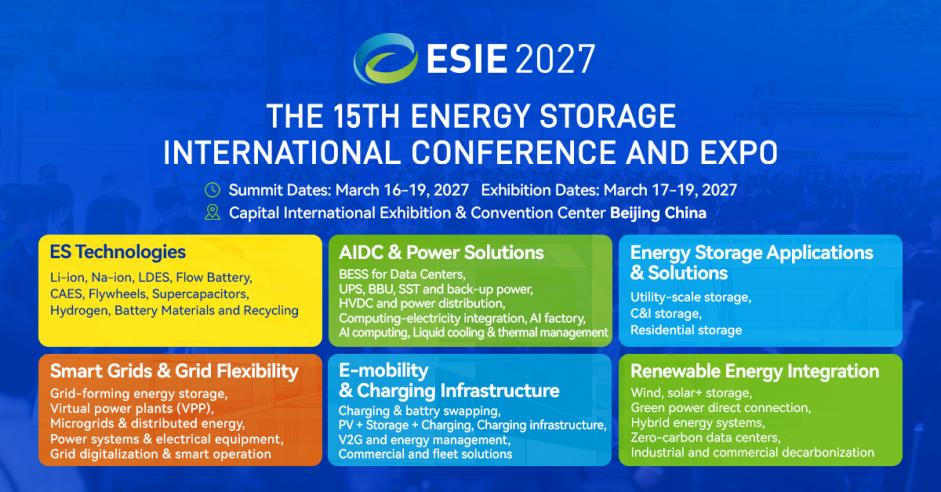
The 15th Energy Storage International Conference and Expo (ESIE 2027), organized by the China Energy Storage Alliance (CNESA), the China Energy Research Society and the Institute of Engineering Thermophysics of the Chinese Academy of Sciences, will be held from March 16 to 19, 2027, at the Capital International Exhibition & Convention Center in Beijing.
For the first time, ESIE 2027 will feature an exhibition dedicated to AIDC power-and-computing coordination. It will showcase frontier technologies and products, including high-rate BBU energy storage, SST solid-state transformers, HVDC, immersion and cold-plate liquid cooling, direct green-power supply, integrated power-source-grid-load-storage systems, and joint dispatch systems for computing and energy storage. The exhibition will be accompanied by thematic forums, new-product launches and matchmaking events, bringing together key buyers such as the three major telecom operators, cloud service providers and IDC operators. It will continue to serve as a platform for cross-sector collaboration between computing and energy storage, supporting the high-quality development of the energy storage industry.