
Latest News
AI Innovation Empowers New Energy Storage Scenarios Salon Successfully Held
On the afternoon of November 5, the AI Innovation Empowers New Energy Storage Scenarios Salon was held at the Zhongguancun (Haidian) AI Digital Energy Industrial Park.
Guided by the Zhongguancun Science City Administrative Committee, the event was jointly hosted by the China Energy Storage Alliance (CNESA), Zhongguancun (Haidian) AI Digital Energy Industrial Park and Zhongguancun Cloud Computing Industry Alliance (CCIA). Under the theme Digital-Intelligence Integrates with Energy Storage · Smartly Usher in a New Frontier, the salon focused on the integrated deployment of AI technologies in energy scenarios. It gathered representatives from AI large model firms, cloud computing players, research institutes and leading energy storage enterprises for in-depth discussions on AI-enabled innovation in power and energy scenarios, technological exploration, benchmark use cases and business models. The event facilitated technical exchanges, idea sharing, precise matching of supply and demand across the industrial chain, and collaborative innovation. More than 60 delegates from AI large model, cloud computing, research and energy storage enterprises attended the salon.
In the opening session, the Zhongguancun (Haidian) AI Digital Energy Industrial Park delivered a keynote presentation titled Source of Innovation: Building a New Aggregated Tech Industrial Ecosystem — Sharing on Haikai Holdings’ Industrial Layout and Ecosystem Value. The presentation covered Haikai Holdings’ industrial deployment, the park’s industrial ecosystem and the background of this salon.
During the keynote segment, Zhang Qing, Expert of CSG New Power System (Beijing) Research Institute Co., Ltd.; Yan Yufan, Architect of Hangzhou Eagle Cloud Technology Co., Ltd.; Liu Ming, Chief Algorithm Engineer of ZTE Digital Energy; Zhao Cong, Senior Solution Manager of CLOU Energy Storage, Midea Group; and Shang Wenxiao, Technical Lead of TELD Beijing Branch, gave presentations in sequence. They explored topics including AI practices within new power systems, security governance frameworks for AI Agents in power and energy systems, AI applications for commercial & industrial energy storage, AIDC compute-power coordination energy storage solutions, and how AI boosts efficiency for integrated PV-storage-charging-discharging scenarios.
In the panel discussion, participating guests exchanged views thoroughly on the deployment forms and application progress of power large models, joint overseas expansion by domestic enterprises for the global compute-power coordination market, rollout and cybersecurity risk management of large language models in the power sector, and the balance between component technical performance and cost requirements for energy storage applications.
Panel Discussion & Exchange | Tour of the Park Exhibition Hall
Rooted in Haidian’s industrial ecosystem for AI and digital energy, the event took AI-enabled energy storage as its main thread. It targeted frontline pain points across new power systems, C&I energy storage, AIDC compute-power coordination, PV-storage-charge-discharge integration and AI security governance. It broke down barriers between artificial intelligence and the energy storage industry, linking grid operators, equipment vendors, system integrators, asset operators and capital providers to drive full-lifecycle value for energy storage via digital and intelligent technologies.
The China Energy Storage Alliance (CNESA) will continue to serve as an industrial platform hub, building cross-border cooperation channels connecting AI and energy storage, pooling resources from industry, academia, research and end users, and supporting the commercialization and high-quality growth of the AI + energy storage industry.
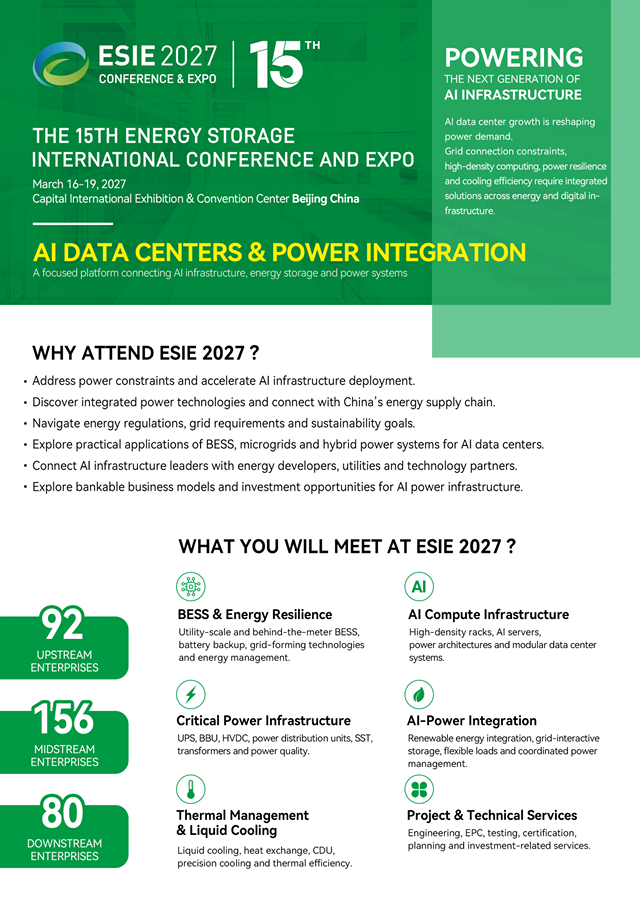
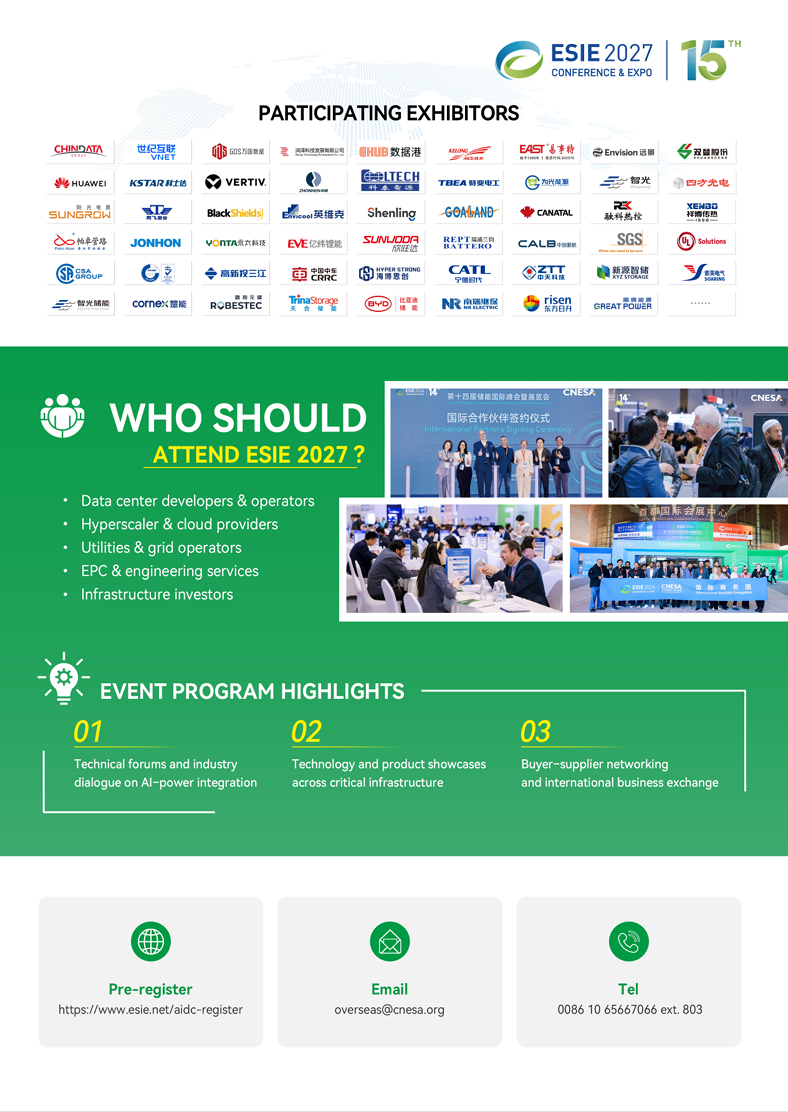
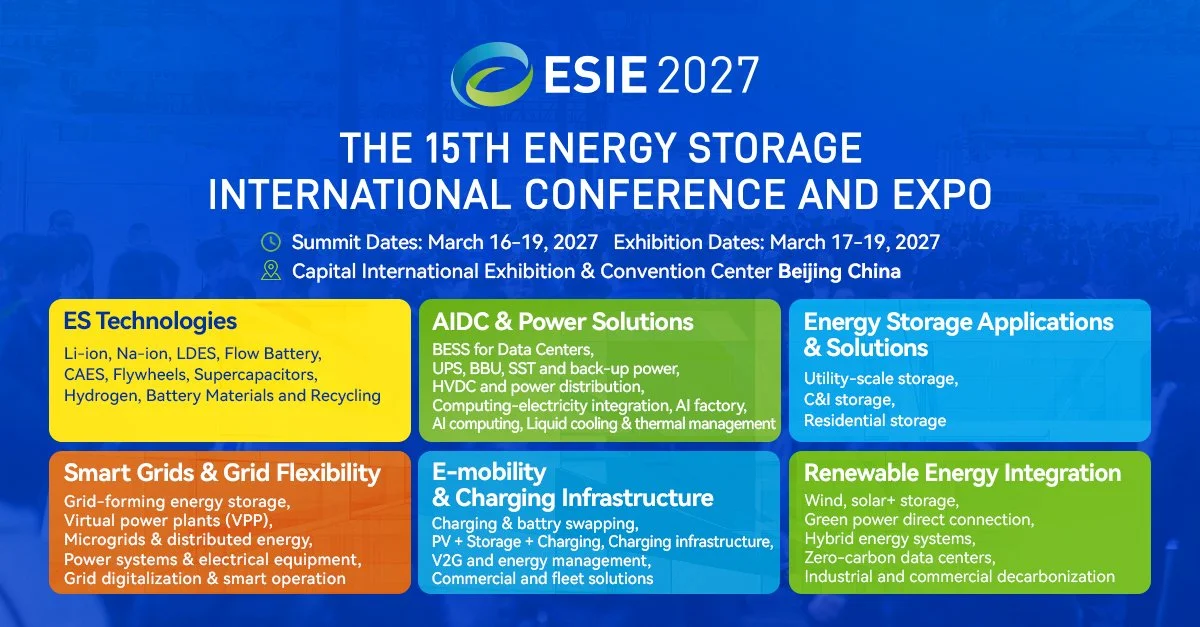
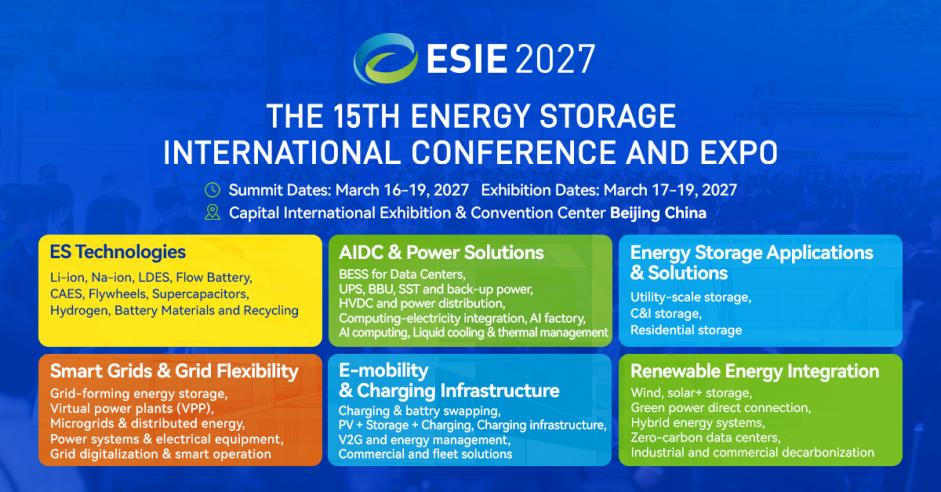
The 15th Energy Storage International Conference and Expo (ESIE 2027), co-hosted by the China Energy Storage Alliance (CNESA), China Energy Research Society (CERS) and the Institute of Engineering Thermophysics, Chinese Academy of Sciences (IET, CAS), will take place from March 16 to 19, 2027, at the Capital International Exhibition & Convention Center in Beijing.
For the first time, ESIE 2027 will launch a dedicated AIDC Compute-Power Coordination Exhibition Zone, showcasing cutting-edge technologies and products including high-rate energy storage for BBU, Solid-State Transformers (SST), HVDC, immersion liquid cooling, cold-plate liquid cooling, direct green power supply, generation-grid-load-storage integration, and coordinated dispatch systems for computing and energy storage. It will also feature themed forums, new product launches and supply-demand matching sessions. Bringing together core buyers including the three major telecom operators, cloud vendors and IDC operators, the expo will continue to serve as a cross-industry platform for computing infrastructure and energy storage, advancing the high-quality development of the energy storage sector.
Energy Storage Leaders Are Building Their Own AIDCs: From Selling Equipment to Owning Computing Capacity—Who Will Be First to Scale Up?
The AIDC sector has continued to gain momentum in 2026, with energy storage companies moving in through different routes. Envision Energy, HyperStrong and GCL Energy Technology have each advanced self-developed data center projects. CATL has used equity investments to connect upstream and downstream players across the industry chain, while companies including Sungrow, NR Electric and Shuangdeng Group have rolled out energy solutions tailored to AIDCs.
The convergence of computing power and energy has become an industry-wide consensus. Yet behind the current boom are several unresolved questions: What differentiated paths are available to energy storage companies entering the AIDC market? Can the business model for building and operating their own computing centers prove commercially viable? And what long-term value will this deep integration of energy and computing ultimately create for the energy storage industry?
Three Routes for Energy Storage Companies Entering the AIDC Market
Route 1:
Asset-Heavy, Self-Built AIDCs: Toward Integrated Power-and-Computing Operations
This is the most capital-intensive route for energy storage companies entering the AIDC market, and the one that extends furthest along the industry chain. Companies act as project investors, acquire land and build intelligent computing clusters, retain ownership of the computing assets and operate them independently. Renewable generation, energy storage and computing loads are brought under a unified dispatch system.
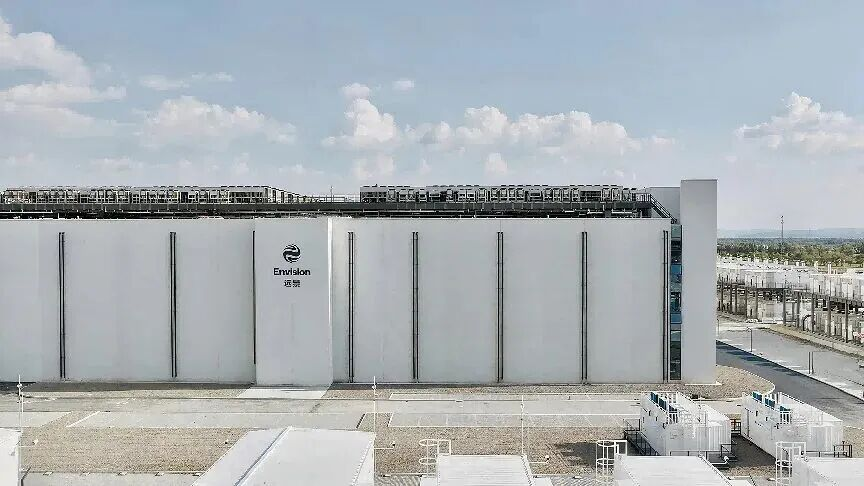
Envision Energy | Envision Galaxy Campus in Ulanqab
Envision Energy has developed the Envision Galaxy Campus in Ulanqab, Inner Mongolia, which officially commenced operations in August 2026. The project is planned to reach a computing capacity of 3 GW. Once completed, it is expected to support one million accelerators operating in parallel and deliver computing capacity on the scale of one million P; more than 80% of its electricity will be supplied directly by green power. The campus uses Envision’s self-developed 800V high-voltage direct-current (HVDC) power supply system—the first of its kind to enter operation globally—and offers computing-power leasing services to domestic computing clusters and large-model customers.
HyperStrong | Baotou Storage-Computing Integration Project and Token Factory
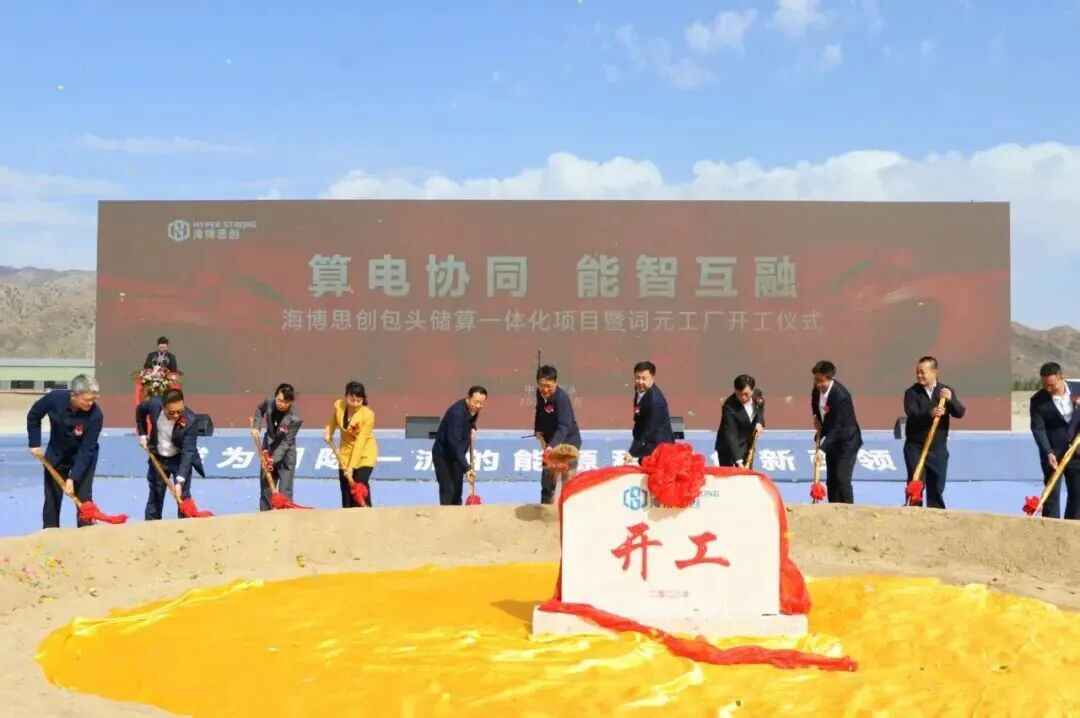
HyperStrong is developing a storage-computing integrated Token Factory in Baotou, Inner Mongolia. The project officially broke ground on September 29, 2026, and is described as China’s first storage-computing integration demonstration project. Its core equipment includes HyperSST solid-state transformers and HyperPTU power container units. Under the innovative Token Factory model, computing capacity is converted into standardized services that can be measured, priced and delivered to customers.
GCL Energy Technology | South China Intelligent Computing Base in Shaoguan, Guangdong, and Zhongwei Token Factory in Ningxia
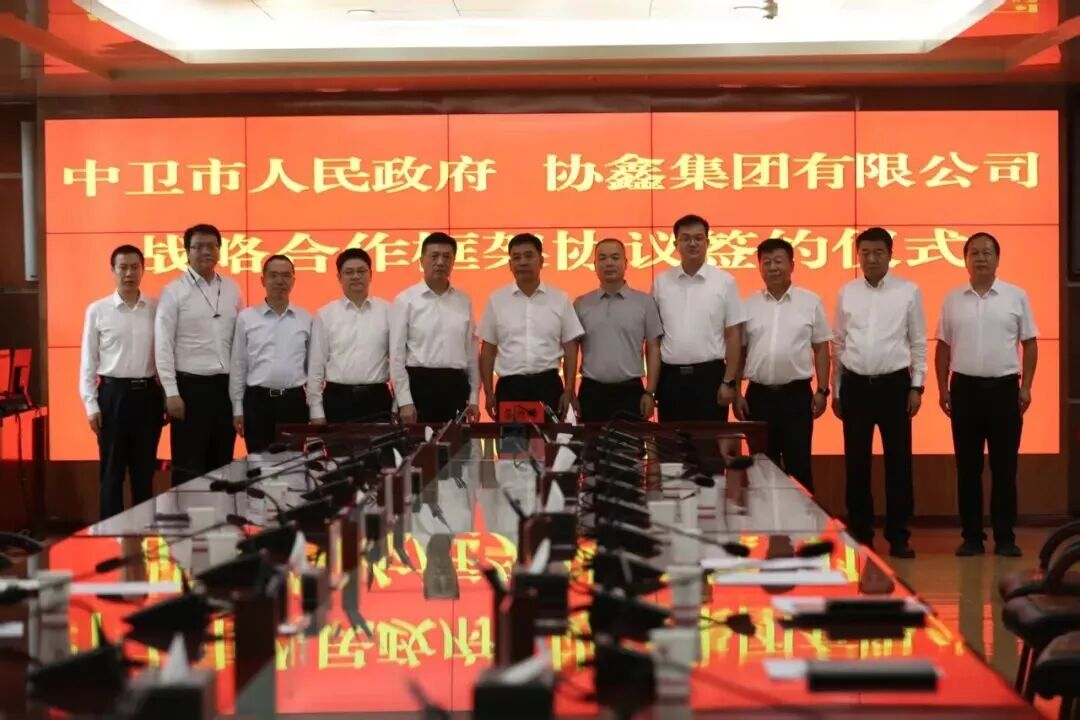
In June and July, GCL Energy Technology signed agreements with the city of Shaoguan and the Zhongwei Industrial Park in Ningxia, respectively, to develop intelligent computing projects. Phase I of the South China Intelligent Computing Base in Shaoguan involves an investment of RMB 10 billion and is planned to include 80,000 standard server racks. Longer-term plans call for a gigawatt-scale, zero-carbon intelligent computing park and a Token operations center. The Zhongwei project centers on the development of a large-scale Token Factory, supported by an AI Token operations platform and integrated new-energy and computing-power infrastructure.
In terms of revenue, this model goes beyond collecting fees for computing-power leasing. Instead, it creates a multi-layered revenue loop:
Basic computing-power leasing provides the core recurring cash flow
Value-added Token services capture higher-margin opportunities
The self-built campus creates demand for the company’s own energy storage equipment and energy solutions
Co-located energy storage assets can participate in electricity markets to generate additional revenue
Route 2:
Capital-Chain Investments: An Asset-Light Position in the Power-and-Computing Ecosystem
Companies following this route do not directly invest in, build or operate computing facilities. Instead, they use equity investments to secure positions in key links upstream and downstream of the computing industry chain.
Representative Case: CATL’s End-to-End Ecosystem Strategy
Rather than building AIDC assets itself, CATL has invested step by step along the chain—from power supply technologies to computing facilities and downstream applications:
An affiliated party acquired a 38.1% stake in VNET Group, a leading AIDC operator, becoming its largest shareholder
CATL increased the capital of the controlling shareholder of Hangzhou Zhongheng Electric and secured a 49% stake, positioning itself in the core HVDC power supply segment
Through an industry investment fund, CATL also invested in the large-model company DeepSeek, gaining exposure to downstream demand for computing power
Through these three layers of investment, CATL has established an industrial loop spanning energy storage batteries, HVDC power supply, computing facilities and demand from large AI models. This provides an industrial foundation for joint R&D and deployment of power-and-computing coordination technologies and solutions.
Route 3:
Supplying the Energy Infrastructure: Focusing on Products and Solutions
This is the route chosen by the vast majority of energy storage companies, and it is where the largest concentration of orders in the AIDC market can currently be found. These companies do not own computing assets. Instead, they draw on their expertise in power electronics, energy storage systems and power management to supply AIDCs with essential energy infrastructure products and solutions.
By technology focus, the key players fall into three categories:
High-voltage power supply and energy-routing solution providers: Companies including Sungrow, NR Electric, Envision Energy, Zhiguang Electric, Kehua Data, KSTAR, Xinfengguang and Sifang are building out solid-state transformer (SST) product portfolios on the back of their power-electronics capabilities in energy storage. Sungrow’s EnerNeo series of SSTs has become one of NVIDIA’s first SST ecosystem partners, while NR Electric’s products have been deployed at Jiangsu’s first energy storage demonstration platform for power-and-computing coordination.
Integrated energy management and energy storage system integrators: Huawei Digital Power, Trina Storage, Kehua Tech, Clou Electronics, HyperStrong, Jinko ESS and Gotion High-tech are leveraging their energy storage system integration capabilities to develop integrated AIDC energy solutions spanning power sources, grids, loads, energy storage and computing.
Suppliers of highly reliable backup-power storage cells and systems: CATL, Shuangdeng Group, EVE Energy, BYD Energy Storage, Great Power, Sunwoda, REPT BATTERO, Narada Power, Pylontech, Ampace and CORNEX are building product portfolios for backup power and energy storage across AIDC scenarios, drawing on their expertise in high-rate energy storage cells.
The Industrial Value of Integrating Energy Storage and Computing
Returning to the question raised at the outset: what can the growing involvement of energy storage companies in AIDCs bring to the industry?
Deeper Technical Validation and Iteration Through Storage-Computing Integration
Under the traditional AIDC development model, energy storage and computing operate in separate chains, limiting the benefits of coordination. The storage-computing integration model led by energy storage companies tightly couples the two. It provides large-scale validation environments for technologies such as SSTs, grid-forming energy storage and HVDC power supply, accelerating technology maturation and cost reductions. This will help AIDC energy solutions evolve from basic supporting infrastructure to integrated, natively designed systems.
Expanding and Upgrading Energy Storage Business Models
As energy storage companies deepen their penetration of the AIDC market, the industry’s revenue models are becoming more diversified and sophisticated. Revenue streams are expanding beyond traditional equipment sales and energy storage station operations to include integrated solutions spanning power sources, grids, loads, energy storage and computing, and further into computing-power leasing and value-added Token monetization. This creates a progressive revenue structure built around “hardware + solutions + operations” and moves the industry beyond monetizing standalone power assets toward a composite value model combining energy, computing and AI.
This industrial convergence creates benefits in both directions: it opens up new market opportunities for the energy storage industry while also accelerating reductions in AIDC energy costs and supporting the transition to low-carbon operations.
Practical Challenges Facing Energy Storage Companies Entering the AIDC Market
Of course, energy storage companies face significant challenges on the road into the AIDC market.
The first is the high capital requirement and operational barrier. Building an AIDC from the ground up requires substantial investment. Moving from supplying energy equipment to operating computing infrastructure also requires time to build the necessary teams, resources and capabilities. The payback period for these projects remains uncertain.
The second is intensifying competition in the computing-power market. AIDC construction continues to accelerate in China, with computing parks being developed across multiple regions. Energy storage companies entering this market from adjacent industries do not necessarily have an advantage in access to computing resources or customer channels.
The third is the risk of technological obsolescence. AI computing technologies are evolving rapidly, while computing architectures, power supply solutions and equipment standards continue to change. Capital-intensive computing campuses therefore face the risk that their technology choices will become outdated and their assets will depreciate more quickly.
Conclusion
The influx of energy storage companies into the AIDC market is not simply a matter of following a cross-industry trend. It is a natural outcome of the convergence of the computing industry and the new-type power system.
The three routes reflect choices made by companies according to their respective resources and strategic positioning. The self-build model is the most capital-intensive and aims to capture the long-term value of integrated power-and-computing operations. Capital investment offers greater flexibility and focuses on industrial synergies and ecosystem development. Supplying core energy infrastructure is the most stable route, allowing companies to translate their existing technological advantages into business results more quickly.
One thing is clear: the rapid growth of AIDCs is continuously reshaping the boundaries of the energy storage industry. Energy storage is no longer merely a backup power source for data centers; it is becoming a critical nexus connecting computing infrastructure with the new-type power system. Power-and-computing coordination is also set to become a major growth driver for the energy storage industry in its next stage of development.
The 15th Energy Storage International Conference and Expo (ESIE 2027), organized by the China Energy Storage Alliance (CNESA), the China Energy Research Society and the Institute of Engineering Thermophysics of the Chinese Academy of Sciences, will be held from March 16 to 19, 2027, at the Capital International Exhibition & Convention Center in Beijing.
For the first time, ESIE 2027 will feature an exhibition dedicated to AIDC power-and-computing coordination. It will showcase frontier technologies and products, including high-rate BBU energy storage, SST solid-state transformers, HVDC, immersion and cold-plate liquid cooling, direct green-power supply, integrated power-source-grid-load-storage systems, and joint dispatch systems for computing and energy storage. The exhibition will be accompanied by thematic forums, new-product launches and matchmaking events, bringing together key buyers such as the three major telecom operators, cloud service providers and IDC operators. It will continue to serve as a platform for cross-sector collaboration between computing and energy storage, supporting the high-quality development of the energy storage industry.
ESIE | 2027 Debuts AIDC Energy Storage Section, Targeting the New Blue Ocean of Data Center Energy Storage
As one of the world's largest energy storage exhibitions, ESIE has witnessed and continues to lead the innovation and development of the global energy storage industry through fourteen editions of heritage.
The 15th Energy Storage International Summit and Exhibition (ESIE 2027), organized by the China Energy Storage Alliance, the China Energy Research Society, and the Institute of Engineering Thermophysics of the Chinese Academy of Sciences, will be held on March 16-19, 2027 at the Capital International Convention & Exhibition Center in Beijing.
ESIE 2027 Debuts
the AIDC Energy Storage Section
An Exploding New Storage Track
ESIE 2027 debuts its AIDC Energy Storage section precisely against the backdrop of this track's explosive growth.
March 2026 - "Computing-electricity coordination" was written into the Government Work Report for the first time, becoming an important lever for the deep integration of computing power and electricity.
April 2026 - The Action Plan on Promoting Two-Way Empowerment Between Artificial Intelligence and Energy explicitly encourages computing facilities to be equipped with grid-forming energy storage, enabling computing facilities to participate in grid operations as flexible, adjustable load-side resources.
June 2026 - The 15th Five-Year Plan for Building a New Energy System calls for promoting direct green power supply projects for computing centers and "strengthening computing with electricity and promoting electricity through computing".
July 2026 - In its reply to a National People's Congress proposal, the National Energy Administration noted that pilot programs will give key consideration to AIDC energy storage application scenarios, and the first-set-of-equipment selection will consider supporting technical equipment for AIDC energy storage application scenarios.
On the market side, according to National Energy Administration data, total electricity consumption of computing centers nationwide reached 170 billion kWh in 2025, and computing electricity consumption at the eight hub nodes of the national integrated computing power network grew at an average annual rate of about 39.5% over the past three years. During the 15th Five-Year Plan period, national computing electricity consumption is expected to grow by more than 100 billion kWh per year on average, reaching an estimated 800 billion kWh by 2030.
The explosive growth in computing demand not only calls for higher power supply reliability, but also raises brand-new requirements for data centers' energy costs, green power consumption, and computing dispatch. AIDC energy storage is precisely the key carrier connecting computing loads, green power supply, and grid regulation.
But Amid High Growth,
AIDC Energy Storage Still Faces Several Practical Problems
Technology routes still evolving. UPS, HVDC, and SST routes coexist, and solutions differ widely between vendors. Many companies remain at the "selling batteries" stage, lacking integrated solution capabilities from rack-level backup power to campus-level energy storage.
Cost and return out of balance. AIDC supporting energy storage carries high initial investment and a long payback period. Current returns rely mainly on peak shaving/valley filling and backup power assurance; value-added revenue channels such as green power trading, demand response, and ancillary services remain underdeveloped.
Missing standards. Technical standards, acceptance specifications, and safety requirements for AIDC energy storage are still being drafted. High-rate cells, BBUs, and liquid cooling integration lack unified standards, leaving poor product compatibility and no basis for procurement and acceptance.
Insufficient supply-demand matching. Energy storage companies do not understand computing, and cloud vendors do not understand energy storage; both sides lack an effective exchange platform. Information gaps persist between the real needs of the three major telecom operators, cloud vendors, and IDC operators on one side, and the product capabilities of energy storage companies on the other.
The 15th Energy Storage International Summit and Exhibition
Debuts the AIDC Energy Storage Section for the First Time
Exhibition + Matchmaking + Launches + Forums in One
1. Exhibition: The Full Chain of Computing Power Supply
AIDC Energy Storage Panorama Exhibition - all technology routes in one visit:
• Rack-level backup power: high-rate BBU cells, supercapacitors (EDLC), hybrid backup solutions
• Data hall-level power supply: lithium battery UPS systems, HVDC high-voltage DC systems, SST solid-state transformers, grid-forming PCS
• Thermal management systems: cold plate liquid cooling, immersion liquid cooling
• Campus-level energy storage: C&I energy storage cabinets, large-scale storage containers, grid-forming energy storage systems
• Software & platforms: AIDC energy storage EMS, computing-electricity coordination dispatch platforms, digital twin O&M systems
• From millisecond-level power support to hour-level energy regulation - every level in a single visit
2. Matchmaking: Onsite Exchange with Domestic and International Buyers
• Domestic: representatives of the three major telecom operators, domestic cloud providers such as Tencent Cloud, and IDC operators such as Chindata and VNET share data center energy storage practices and procurement needs
• International: overseas cloud providers and IDC operators including Amazon, Google, and Meta join the exchange
3. Launches: Global First Releases of AIDC New Products
The hottest technology directions in AIDC energy storage, with concentrated first launches:
• SST solid-state transformers: core equipment of the 800 V high-voltage DC power supply architecture, the next-generation direction of data center power supply transformation
• High-rate BBU cells: 50C+ discharge, millisecond-level response, a must-have for GPU cluster backup power
• Immersion liquid cooling: single-phase and two-phase routes, the required solution for rack power density above 30 kW
• HVDC high-voltage DC: next-generation power supply technology, 2-3 percentage points more efficient than traditional UPS
• Campus-level energy storage systems: AIDC supporting energy storage with multiple revenue streams from peak shaving/valley filling, green power consumption, and demand response
• Multiple industry-first products make their debut, targeting the most cutting-edge technology directions
4. Forums: Computing-Electricity Coordination Thematic Exchanges
A forum series running alongside the exhibition for in-depth discussion of core AIDC energy storage topics:
• Policy interpretation: top-level design and market mechanisms of computing-electricity coordination, and how they affect energy storage returns
• Technology routes: comparison of UPS, HVDC, and SST power supply architectures and selection logic
• Deployment scenarios: rack-level, data hall-level, and campus-level technical requirements and applicable scenarios
• Business models: revenue models and investment return analysis for peak shaving/valley filling, demand response, green power trading, and virtual power plants
• Operators, cloud vendors, IDC operators, and energy storage companies in dialogue to promote supply-demand matching
5. Going Global: International Market Connections
• International buyer delegations: representatives of cloud vendors, IDC operators, EPC contractors, and infrastructure funds from North America, Europe, Southeast Asia, the Middle East, and elsewhere for onsite matchmaking
• Overseas market sessions: the global AIDC energy storage market landscape and regional opportunities; international certification paths such as UL/CE/IEC and AIDC-specific requirements such as NVIDIA BESS certification; overseas project implementation models and profit paths; and localization compliance requirements to help energy storage companies expand into overseas computing markets
Only 30% of Booths Remain
ESIE 2027: Six Major Sections
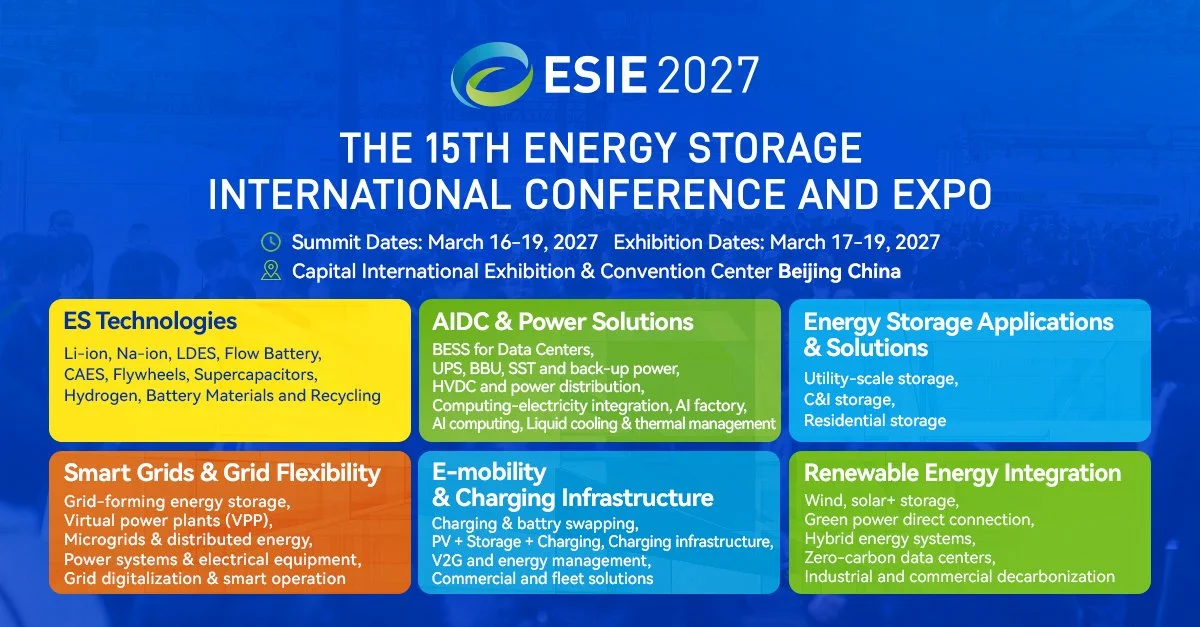
01 New Energy Storage
A panorama of the full technology roadmap of new energy storage, covering frontier technologies such as lithium, sodium, flow batteries, solid-state batteries, compressed air, flywheel, and hydrogen. Frontier technology conferences led by academicians and global first-release events for new energy storage products help companies debut next-generation energy storage technology products.
02 AIDC Energy Storage
The first AIDC display section in a professional energy storage exhibition, focusing on rack-level backup power, data hall-level power supply, power supply architecture upgrades, and thermal management, covering the full chain of BBUs, high-rate cells, UPS, SST, and more. High-value buyers from the three major telecom operators, cloud vendors, and IDC operators in attendance.
03 Full-Stack Energy Storage Solutions
Covering residential, C&I, and utility-scale scenarios, showcasing a complete product matrix from cells and core components to systems, and from hardware and software to operations. Multiple international business matchmaking sessions help companies go global.
04 Smart Grid
Focusing on grid adaptation technologies under high renewable penetration, showcasing grid-forming energy storage, flexible transmission, virtual power plants, and smart microgrids. Professional buyers from grid companies, power design institutes, and renewable plant owners in attendance.
05 Transportation-Energy Integration
Covering charging piles, battery-swap stations, integrated PV-storage-charging stations, V2G bidirectional charging/discharging systems, shore power for ships, port energy storage, and regenerative braking energy storage for rail transit - complete solutions for bidirectional vehicle-grid interaction. Cross-sector buyers from automakers, charging operators, mobility platforms, and transport infrastructure investors in attendance.
06 Green Energy
Around scenarios such as direct green power supply, large energy bases, zero-carbon parks, and integrated energy services, presenting zero-carbon solutions from renewable energy development and power trading to end-use energy. High-value buyers from industrial park owners, local governments, high-energy-consuming enterprises, power retail companies, and integrated energy service providers in attendance.
The World's Largest Energy Storage Exhibition
ESIE 2027: Six Core Advantages
01 Industry Leaders Gathered
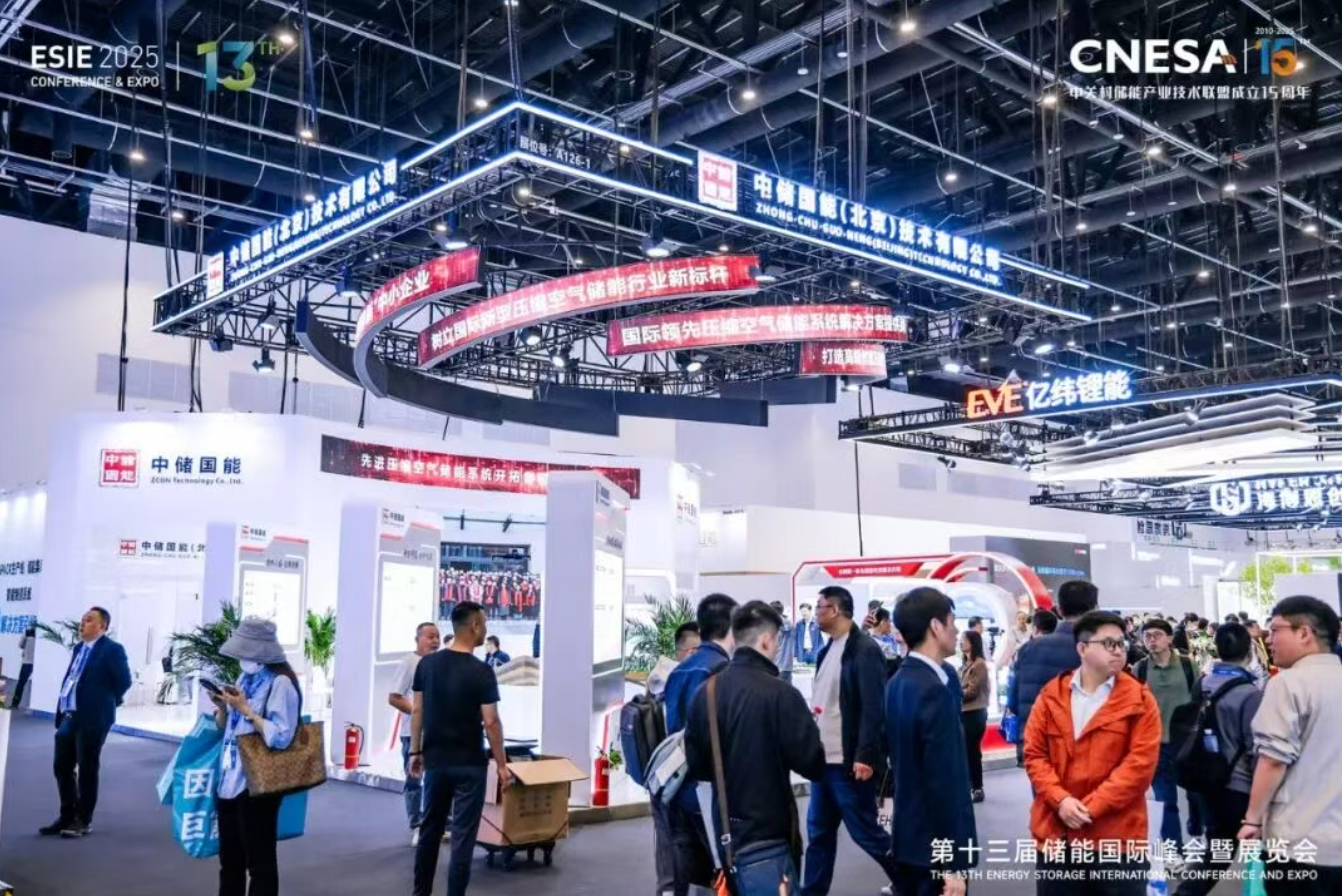
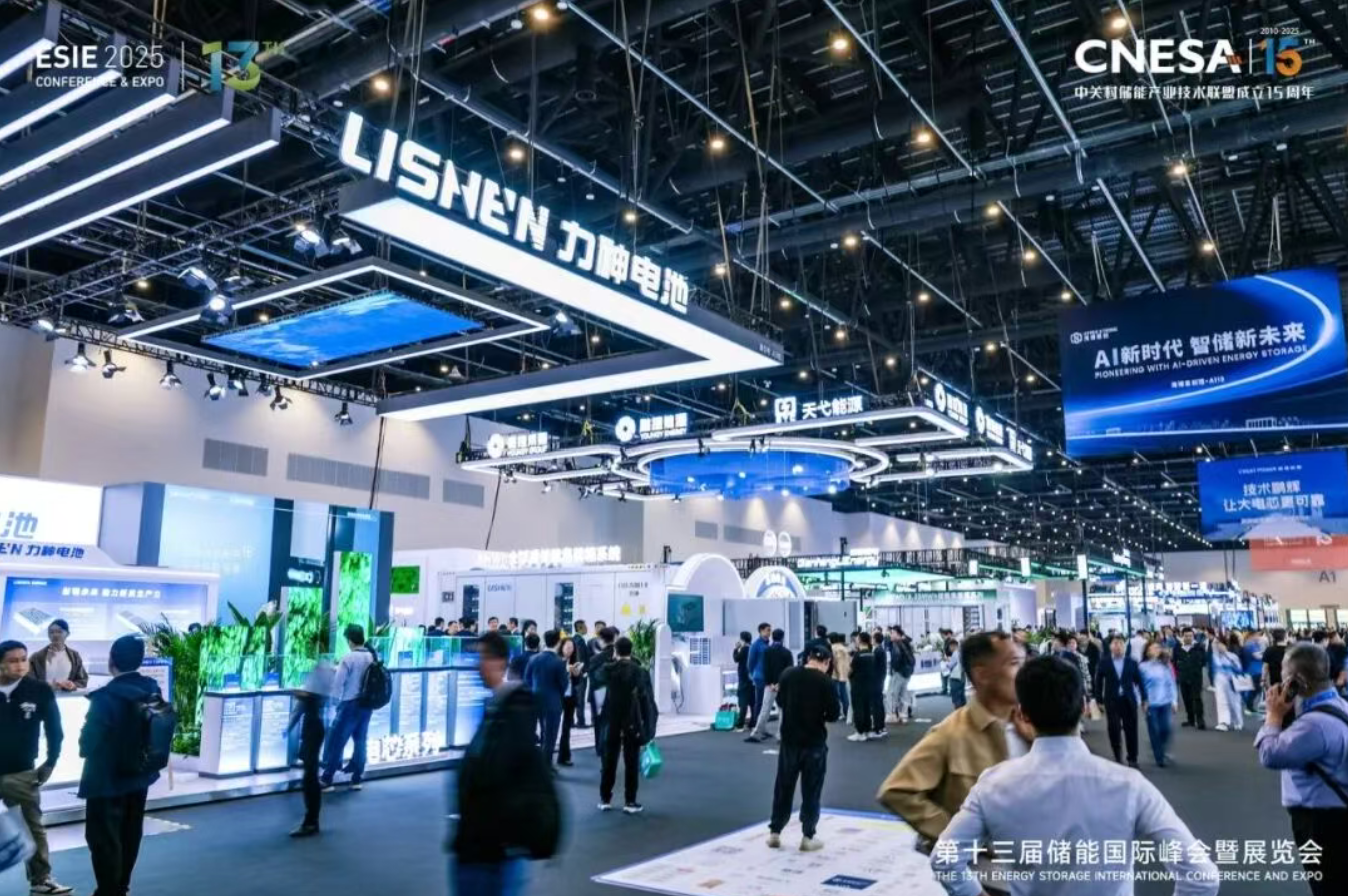
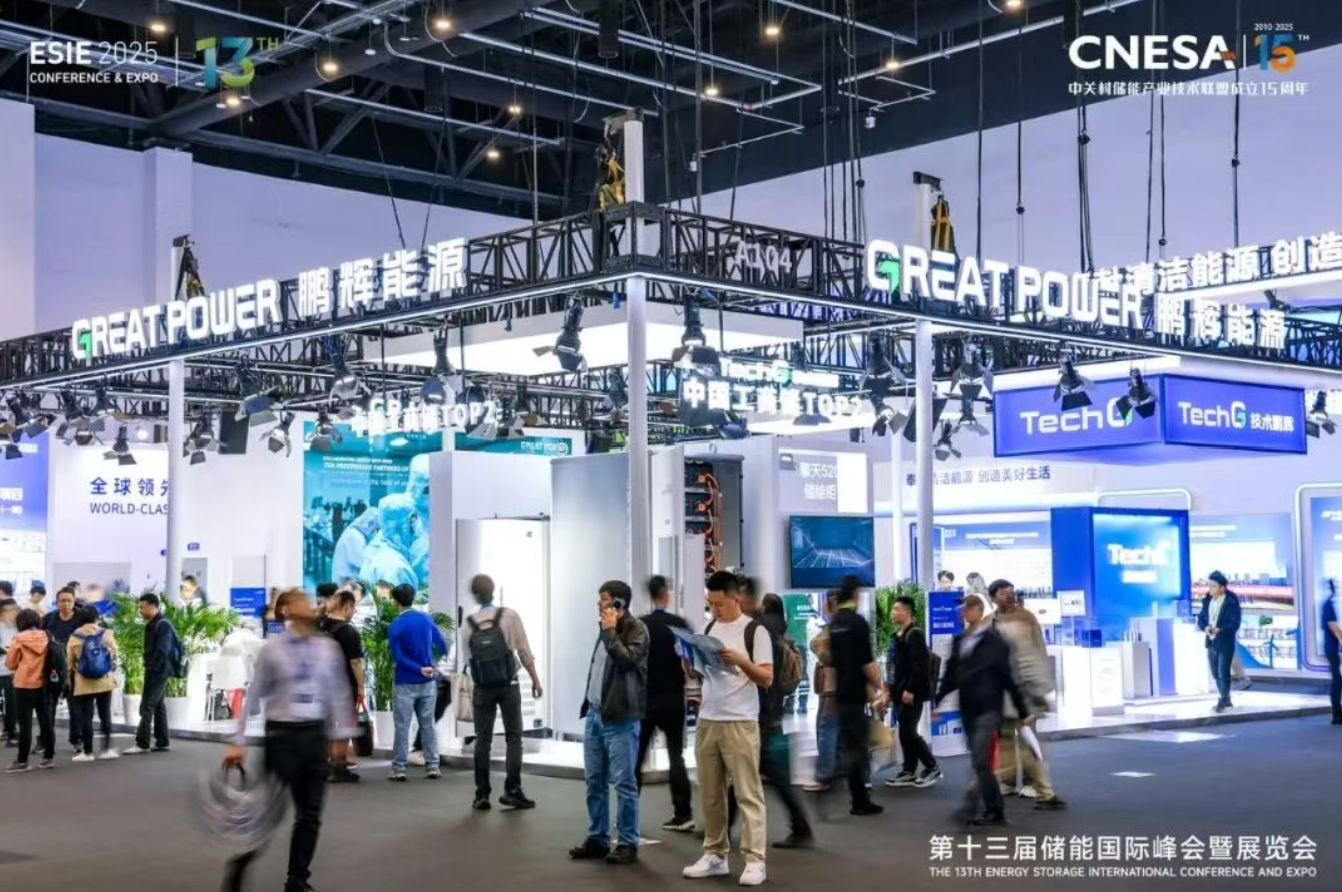
• Selected past exhibitors
02 Global Cooperation
• International buyers from 90+ countries and regions, covering core markets in Europe, Southeast Asia, the Middle East, and Africa;
• 4 international business matchmaking sessions for precise supply-demand matching.
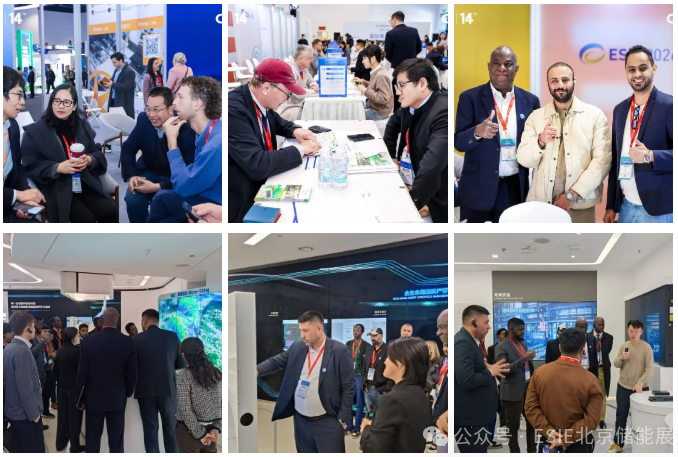
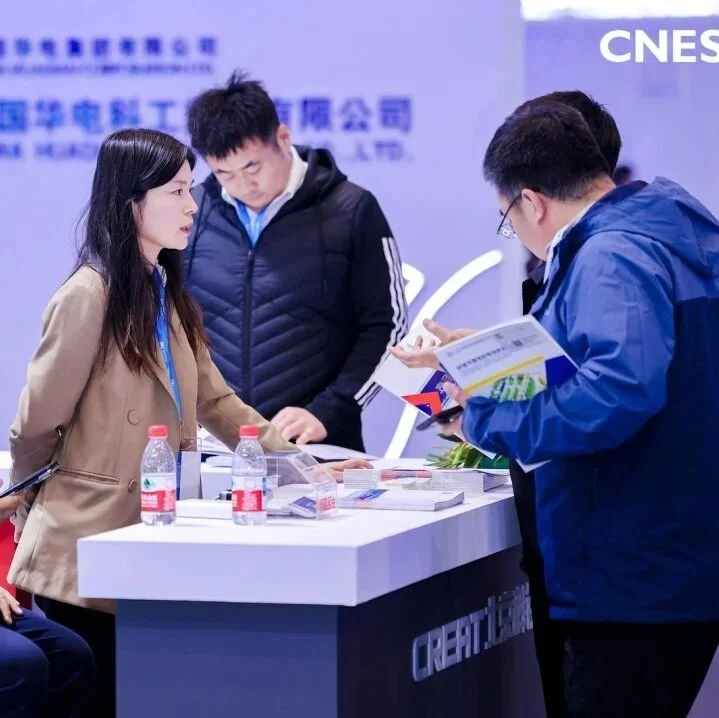
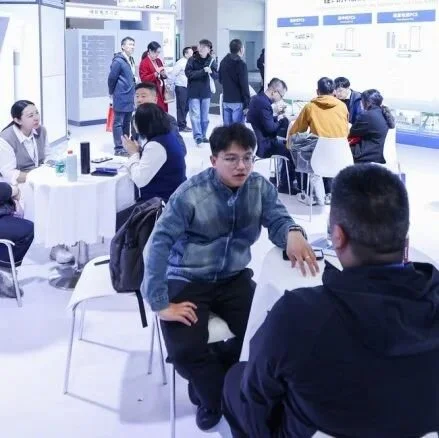
03 Efficient Matchmaking
• Professional exhibition tour groups covering professional buyers such as central and state-owned energy groups, AIDC operators, and C&I park owners;
• Online smart matching plus offline supply-demand exchange to shorten the matchmaking process.
04 Authoritative Leadership
• Government and energy authorities, State Grid, China Southern Power Grid, and power generation groups in attendance.
• Leaders of top energy storage companies engage in deep dialogue on strategic development directions for the new cycle.
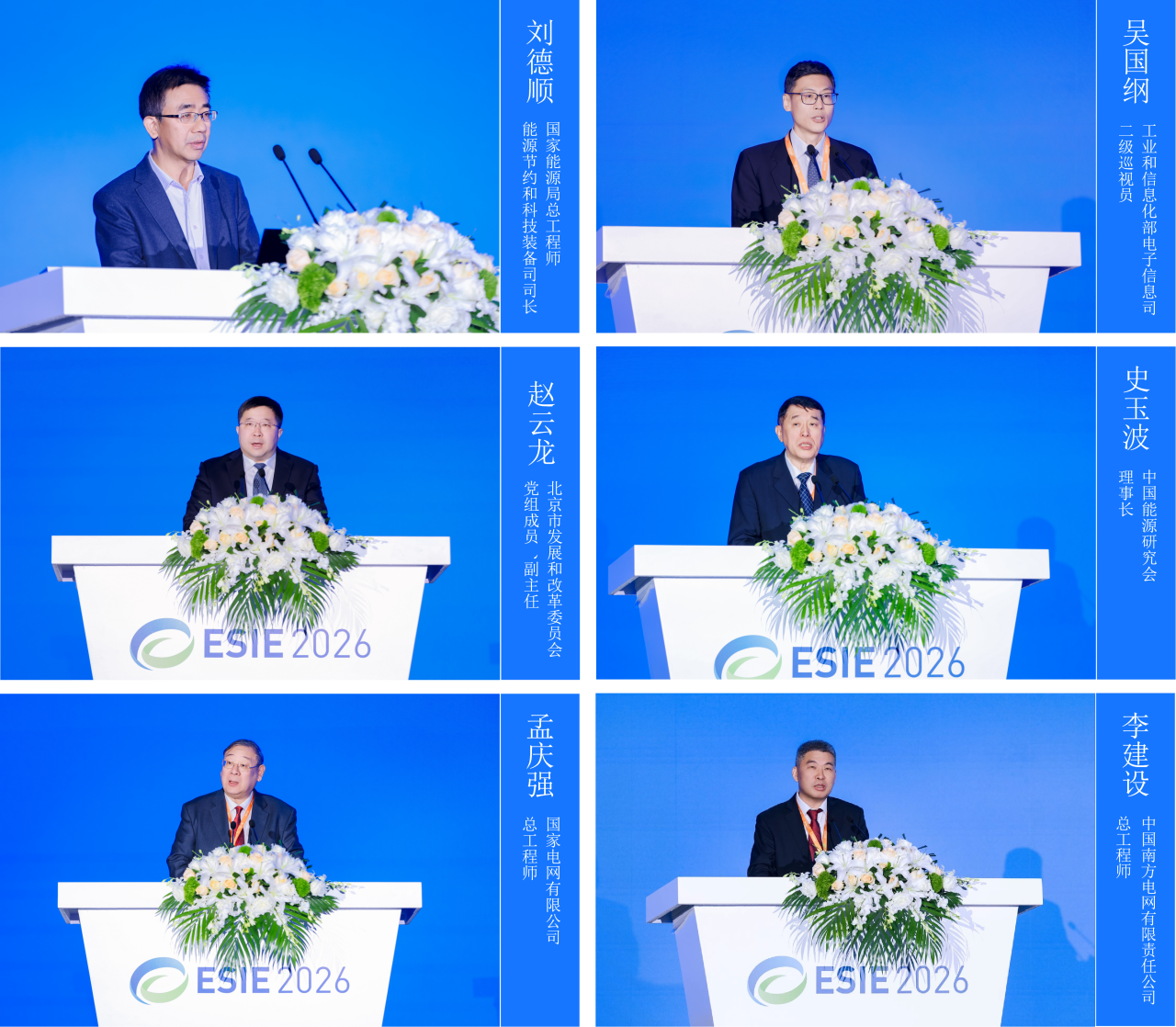
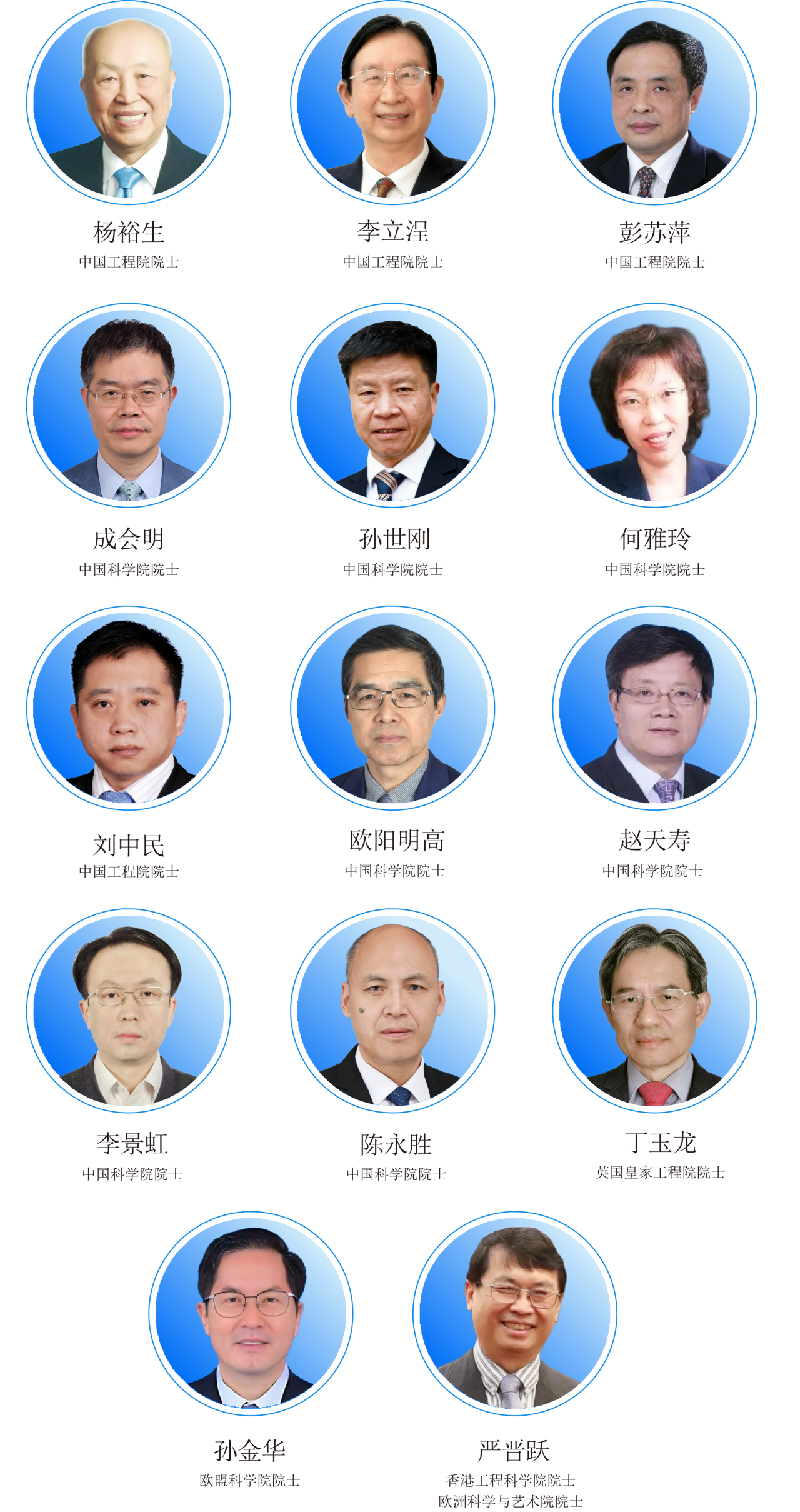
• Selected past guests
05 Technology Leadership
• More than ten academicians of the two academies in attendance;
• Assessment of the development status and future trends of frontier technologies such as hydrogen, long-duration energy storage, short-duration high-frequency energy storage, and grid-forming energy storage;
• Companies' annual blockbuster products make their global debuts here.
• Selected past guests
06 Industry-Academia-Research-Finance Synergy
• 40+ thematic forums with 400+ industry leaders taking the stage;
• Core topics from policy outlook, market mechanisms, and technology trends to industry-finance matchmaking, building a high ground for thought exchange in the energy storage industry.
March 16-19, 2027
Beijing - Capital International Convention & Exhibition Center
ESIE 2027 cordially invites colleagues from the global energy storage community to reunite.
Together, let us build a new future of high-quality development for new energy storage!
Sungrow EnerNeo SST Becomes the World’s First SST with Dual EU-US System-Level Certification: cTUVus + EMC + 13.8kV Reinforced Insulation
The surge in AI computing demand is pushing data center power architectures toward the 800V DC era. The China Energy Storage Alliance (CNESA) has noted that Sungrow’s EnerNeo solid-state transformer (SST) received system-level certification from TÜV Rheinland at the 2026 OCP Global Summit, becoming the world’s first SST to pass both European (IEC/EN) and American (UL) system-level certification and the first to secure a ticket to large-scale commercial deployment in the European and American data center markets. This article examines the substance of the certification, the technology route and the cost calculus behind the milestone.
At the 2026 OCP Global Summit, Zhang Di, President of Sungrow Source Intelligence, received a set of certificates from Sean Tilley, Vice President of the Product Services Business Unit of TÜV Rheinland Americas. The EnerNeo SST became the world’s first SST product to pass both European (IEC/EN) and American (UL) system-level certification, with the complete set of cTUVus, EMC and 13.8kV reinforced insulation certificates.
Not One Certificate, but a Stack
During the days of the OCP Global Summit, the convention center in San Jose, Silicon Valley, was packed with data center professionals. It was there that Sean Tilley handed Zhang Di the system-level and key-component certification certificates based on the UL, IEC, EN and 2 PfG series standards.
This certification covers the complete SST system. TÜV Rheinland conducted a system-level assessment of the EnerNeo against safety standards including UL 2877, IEC/EN 62477-1, IEC/EN 62477-2 and 2 PfG 3175, as well as EMC standards including EN 61000-6-2, EN 61000-6-4 and FCC Part 15. The core component, the high-frequency isolation transformer, additionally passed the dedicated 2 PfG 3179 certification, meeting the 13.8kV reinforced insulation requirement.
The outcome: the EnerNeo obtained the TÜV Rheinland certification mark, the cTUVus and EMC certificates, and the corresponding test reports. For Chinese equipment makers aiming to enter the European and American data center supply chains, completing this full set is far more difficult than passing any single test.
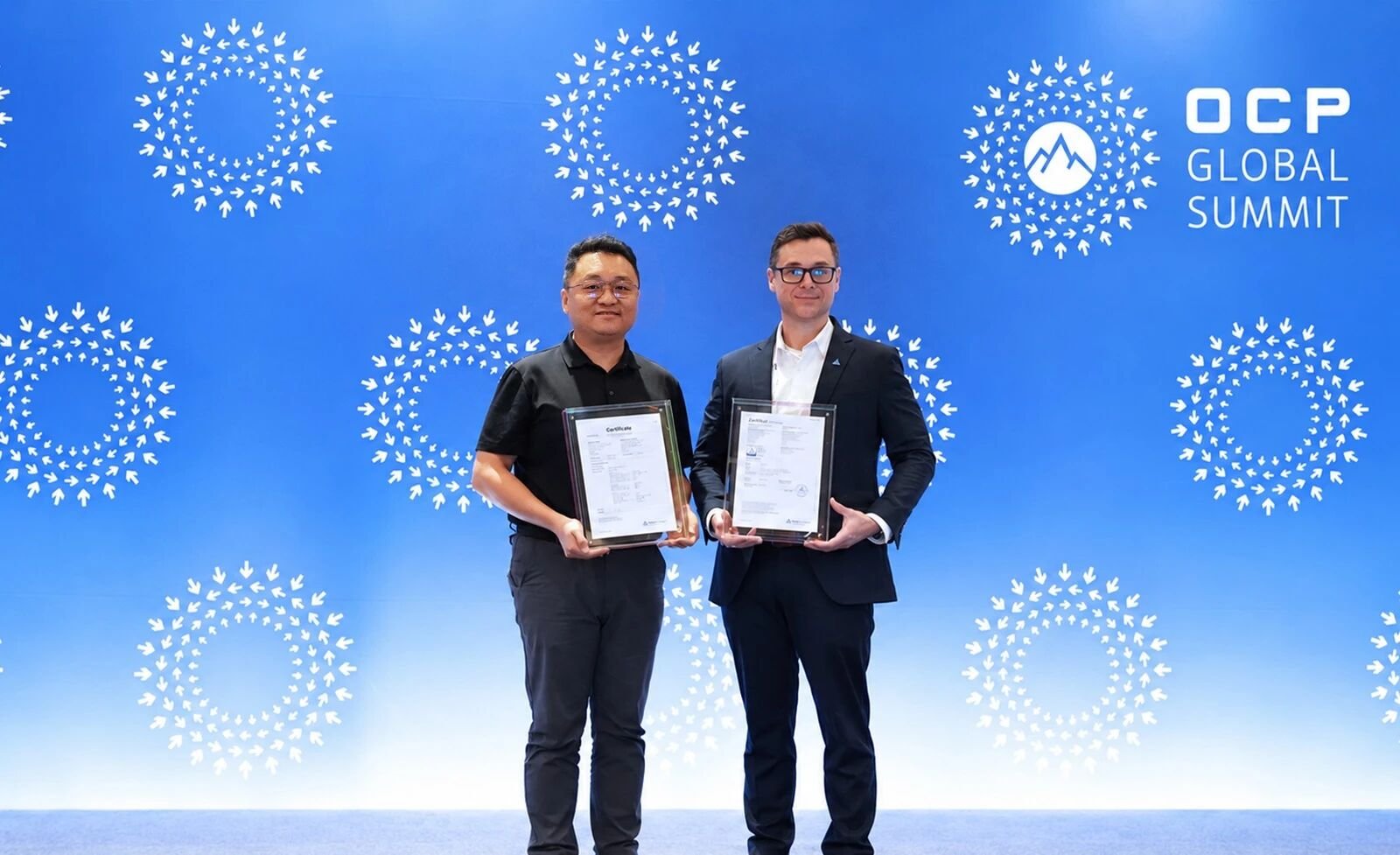
Sean Tilley (right), Vice President of the Product Services Business Unit of TÜV Rheinland Americas, presents the certification certificates to Zhang Di (left), President of Sungrow Source Intelligence.
Why System-Level Certification Is the Real Barrier
Some may ask: SST certification is not news, given that Eaton passed TÜV SÜD’s IEC 62477-2 certification in August. What is the difference?
The key lies in “system-level” and “dual-standard”.
The Solid State Transformer Specification v0.3, effective from June this year under the Open Compute Project (OCP) and jointly developed by Google, Microsoft and NVIDIA, defines the SST as a megawatt-class power electronics converter: a 13.8kV or 34.5kV medium-voltage AC input and an 800V DC output, with a power range corresponding to 5MW or 10MW. The specification covers not only power conversion but also medium-voltage input, low-voltage DC output, auxiliary power, firmware, control and communication, all within the scope of the SST product.
In other words, an SST is no longer just the “transformer” component; it is a complete power electronics system comprising power semiconductors, magnetics, control systems and communication systems. To pass system-level certification, insulation, efficiency, power density and thermal management must all meet the requirements simultaneously, rather than passing part by part.
Certification Dimension
Standards Indicators Involved
US Safety Standards UL 2877
EU Safety Standards IEC/EN 62477-1, IEC/EN 62477-2
Key Component 2 PfG 3175, 2 PfG 3179 (high-frequency isolation transformer,
13.8kV reinforced insulation)
EMC EN 61000-6-2, EN 61000-6-4, FCC Part 15
Certification Marks TÜV Rheinland certification mark, cTUVus, EMC certificates
The European and American markets are particularly strict on this point – UL and cTUVus on the US side, and the IEC/EN series on the European side. For entry into European and American data center procurement lists, system-level dual certification is close to a hard threshold. By securing both at once, the EnerNeo can now compete on equal footing with overseas players such as Delta, Eaton and Vertiv in terms of certification compliance.
800V DC: NVIDIA Sets the Course, Sungrow Delivers First
Why focus on 800V DC? The answer lies in power density.
The white paper “800VDC Architecture for Next-Generation AI Infrastructure”, released by NVIDIA at last October’s OCP Global Summit, has established 800V DC as the standard power architecture for next-generation AI infrastructure, with the SST positioned as the ultimate power supply device in the medium to long term. Sungrow’s 800V solution is also listed in the white paper as a recommended technology route.
The traditional data center power chain is: AC from the grid → step-down via a power-frequency transformer → multi-stage UPS/AC-DC conversion → server racks. Each stage incurs losses, with end-to-end efficiency of about 90%–92%. For megawatt-class racks, hundred-megawatt buildings and gigawatt-scale campuses, these few percentage points of loss translate into enormous electricity bills and thermal loads.
What the EnerNeo does is convert 10–13.8kV medium-voltage AC directly to 800V DC, using SiC power devices and an optimized series-connected H-bridge architecture, eliminating the power-frequency transformer and multi-stage conversion. Published parameters: 98.5% efficiency, 99.999% availability, 312 kW/m² power density, zero partial discharge at rack level (within 21kV), meeting the 42kV power-frequency withstand voltage and 95kV lightning impulse indicators.
According to Sungrow’s own calculation, for a 1GW computing project, the 800V DC architecture can save 400 million kWh of electricity per year. In terms of efficiency difference, 98.5% versus the 90%–92% of the full chain leaves a gap of 6–8 percentage points – no small figure at gigawatt scale.
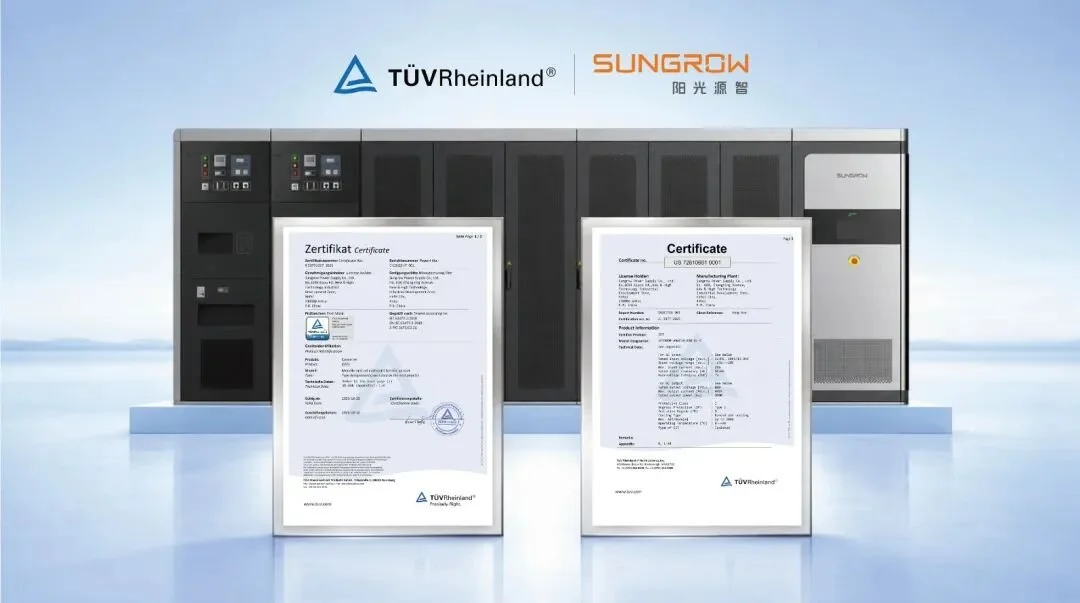
The EnerNeo SST system and the TÜV Rheinland certificates
Evolution of the power architecture for AI supernode full racks: single-rack power leaps from the 100kW class to the megawatt class, making 800V HVDC an inevitable choice.
The Cost Calculus: SST and Traditional Solutions Are Now on the Same Level
Technology, however good, must pass the cost test. The most-cited criticism of the SST used to be its price; that anchor is now beginning to shift.
In August 2026, the SST procurement budget for the data center of the “Zhiyun Changjingkai” platform was RMB 2 million for 2.5MW of capacity, equivalent to a budgeted unit price of about RMB 0.8/W. In the same year, China Mobile Jiangsu purchased four sets of 2500kVA medium-voltage integrated power systems for its Nanjing Jiangbei Data Center at a winning price of about RMB 1.77 million per set excluding tax, or about RMB 2 million including 13% VAT. 2500kVA is AC apparent power; with the data center load power factor close to 1, the two can be compared at similar capacity levels.
Comparison Item SST Solution Traditional Medium-Voltage Integrated Power
Project Sample Zhiyun Changjingkai 2.5MW SST China Mobile Jiangsu 2500kVA integrated power
Procurement Budget / About RMB 2 million (budget) About RMB 2 million per set (incl. 13% VAT)
Winning Price
Unit Price About RMB 0.8/W About RMB 0.8/W (equivalent at similar capacity)
Capacity Class 2.5MW 2500kVA(≈2.5MW, power factor close to 1)
The comparison is noteworthy: the procurement budget of a 2.5MW-class SST is broadly on par with the winning price of a comparable 2500kVA integrated power system. Once costs reach the same level, the advantages in efficiency, footprint and response speed become decisive factors in procurement decisions.
Certification Is a Ticket, Not the Destination
Back to the OCP Summit. Experts from Google, Microsoft and NVIDIA stood in the audience as Zhang Di received the certificates – a scene carrying more information than the certificates themselves: the core initiators of the OCP SST working group are casting a vote of confidence in a Chinese manufacturer’s technology route.
But this vote is only an entry ticket. The industry is still in the stage of small-batch delivery and customer site validation. Between “certification passed” and “large-scale commercialization” lie multiple tests: engineering reliability, O&M systems, supply chain responsiveness, and acceptance by financing and insurance institutions.
What deserves even closer observation is whether Sungrow Source Intelligence can secure its first large-scale order in Europe and America after obtaining dual-standard certification. Eaton and Delta still hold first-mover advantages in overseas data center O&M and brand recognition; the next challenge for Chinese manufacturers is not laboratory parameters, but the long-term trust of overseas customers.
Two Japan AI Compute Deals in One Day: Osaka's KIX15 Breaks Ground, Tokyo's TOK1 Adds USD 1 Billion
On October 7, Japan's AI compute market saw two investments land in a single day: MC Digital Realty started construction of the KIX15 data center in Osaka, and AirTrunk added USD 1 billion to the TOK1 campus east of Tokyo for liquid cooling deployment. The two projects differ in scale and route, yet both treat liquid cooling as the foundational solution for high-density AI workloads. Energy storage is becoming part of the supporting infrastructure of AIDC.
1. KIX15: Liquid Cooling Reserved at the Design Stage of a New Campus
On October 7, MC Digital Realty, a 50/50 joint venture between Digital Realty and Mitsubishi Corporation, officially started construction of the KIX15 data center at its KIX campus in Ibaraki City, Osaka Prefecture. With an IT capacity of 24 MW, the project is scheduled for commissioning in Q4 2028. As the fifth data center at the KIX campus, KIX15 will bring the joint venture's data centers operating in Japan to ten, with a combined IT capacity of about 220 MW. The project adopts a hybrid air- and liquid-cooling scheme, with liquid cooling reserved at the design stage to accommodate mid- and long-term AI compute expansion. Included in the "Kansai AI Infrastructure Co-Creation Project", it serves hyperscale cloud providers, cloud service providers, and enterprises building their own AI compute capacity. With relatively ample land and power resources, the Kansai region has become the main landing point for foreign capital building compute clusters in western Japan.

2. TOK1: Liquid Cooling Retrofit for an Existing Hyperscale Campus
On the same day, AirTrunk, backed by Blackstone, announced an additional investment of USD 1 billion in its TOK1 campus in Inzai City, Chiba Prefecture, to deploy liquid cooling systems supporting high-density AI compute loads. TOK1 has a total capacity of more than 300 MW. The investment is matched by a USD 1 billion green loan led by Sumitomo Mitsui Banking Corporation, MUFG Bank, and United Overseas Bank. AirTrunk CEO Robin Khuda said TOK1 aims to become Japan's first large-scale AI compute campus; driven by geopolitical factors, a growing number of North Asian customers are choosing to locate their compute capacity in Japan.
3. Two Construction Routes, One Shared Signal
The two projects represent two approaches to building compute capacity in Japan. KIX15 is a greenfield campus with liquid cooling reserved from the design stage for long-term expansion; TOK1 is a retrofit of an existing campus, where liquid cooling upgrades will convert data halls originally serving general cloud business into AIDC, putting built assets to use and shortening the time to service. Different routes, one shared signal: as rack power density keeps rising, traditional air cooling can no longer support large-scale GPU clusters, and liquid cooling is shifting from an optional extra to a threshold requirement for high-density AIDC.
4. Japan as a North Asian Compute Node: Opportunities and Constraints
Japan is fast becoming an important alternative node for compute in North Asia. In the past, overseas cloud providers and compute service providers expanding in Asia preferred Singapore and Malaysia; today, geopolitics, compliance, and low seismic risk are steadily raising Japan's appeal. But the flip side of capital inflows is real constraint: Japan faces its own pressures on power supply, energy consumption approvals, and land costs. New AI compute projects generally need more than two years of construction; when this batch of projects comes online around 2028, the market's supply-demand landscape will change markedly.
5. CNESA Observation: Beyond Cooling, Power Supply and Backup Needs Rise in Tandem
Liquid cooling addresses thermal management, but high-density AI data halls are raising requirements for power supply reliability, emergency backup, and green power support at the same time, needs that energy storage is positioned to serve. UPS-integrated storage, data center backup power, and battery energy storage systems that participate in grid regulation are gradually becoming part of the supporting infrastructure of AIDC; with power supply tight in Japan, the urgency is even greater. For China's industries, both the liquid cooling and energy storage supply chains stand to win follow-on orders from the wave of overseas compute construction.
LG Electronics Wins 5 GW Chiller Framework Deal in North America: Data Center Cooling Enters Full-Chain Competition
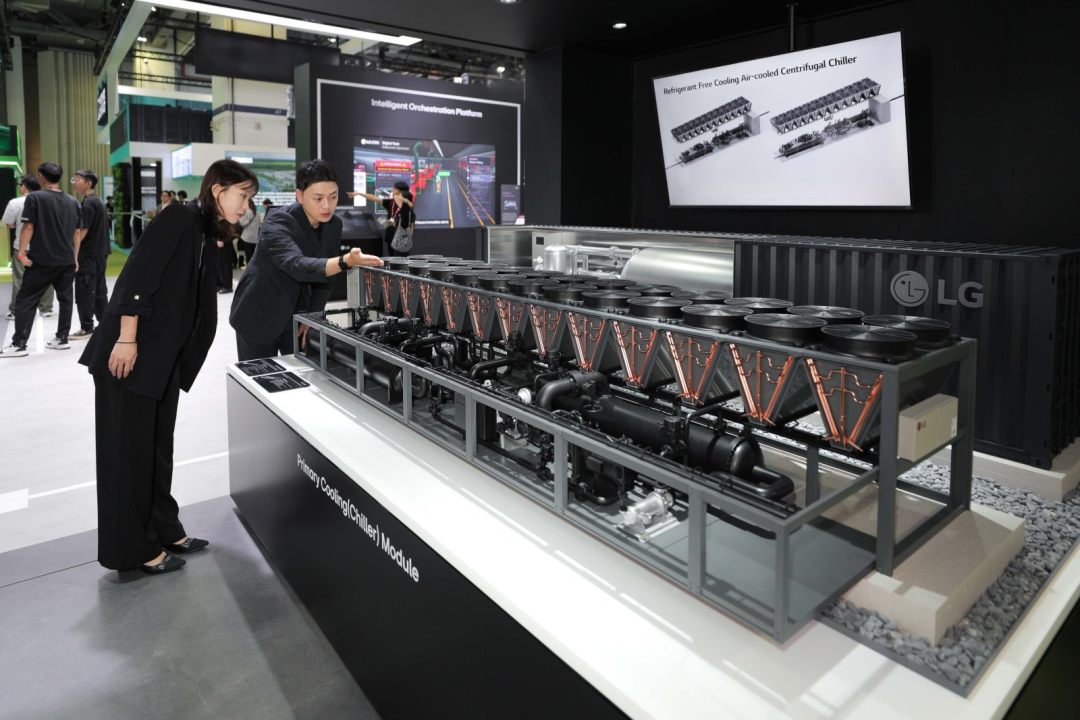
On October 5, LG Electronics announced a long-term chiller supply framework agreement with North American infrastructure platform AIR Control Concepts, covering large AI data center projects in the United States and Canada with a combined capacity of more than 5 GW. This is not a single-site equipment order but a supply arrangement spanning multiple projects and multiple years. The China Energy Storage Alliance (CNESA) notes that rapid GPU power iterations are turning data center cooling from a supporting function into a capacity constraint for AI infrastructure, and thermal management and energy storage are rising in tandem within AIDC infrastructure.
1. What 5 GW Means
Measured against the 50-100 MW IT loads of medium-sized AI data centers in China, 5 GW equates to the cooling capacity of fifty to sixty, or even over a hundred, medium-sized data halls, close to the cooling volume of a core-city compute cluster. The partner, AIR Control Concepts, is a North American infrastructure platform spanning HVAC, electrical, and controls businesses, integrating more than 50 operating companies and over 3,500 technical staff, with long-standing involvement in North America's core data center clusters and top-tier global operators among its customers. A long-term framework agreement with such a platform marks the formal entry of LG chillers into North America's mainstream AI data center supply chain. The order momentum is backed by figures: in the first half of 2026, LG's data center cooling solution orders reached USD 428 million, and the company expects total orders for the year to reach the "billions of dollars" level; the earlier target of KRW 1 trillion (about USD 680 million) in chiller revenue for 2027 is likely to be met ahead of schedule at the current pace.

2. Where the Heat Comes From: Chip Power Pushes Air Cooling to Its Limit
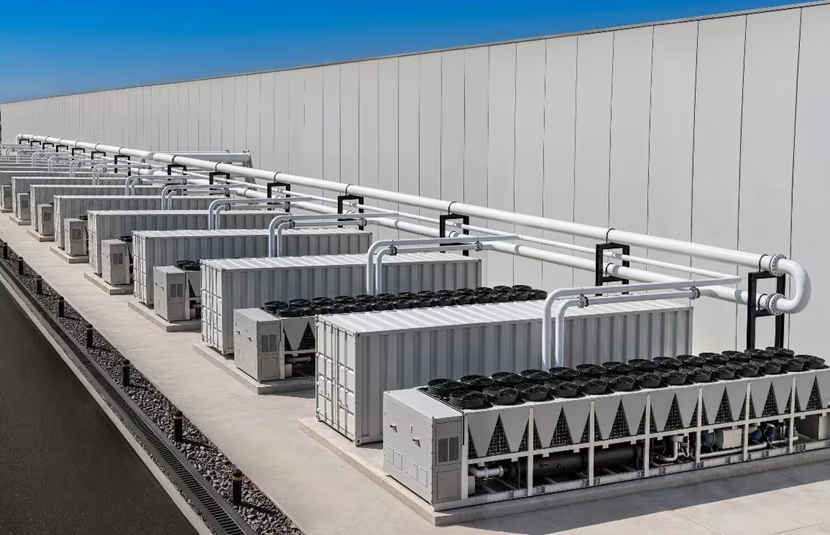
The North American data center cooling market is about USD 9.35 billion in 2026, close to 40% of the global total; within it, the AI thermal management segment is growing at a compound annual rate of about 22%, among the fastest in the data center industry. The root cause is chip power: a single Blackwell-architecture GPU now has a thermal design power (TDP) of 1,000 W, and the next generation could approach 1,400 W. Once rack power density exceeds 200 kW, traditional air cooling can no longer hold, and liquid cooling moves from an option to a must. For liquid cooling to scale, retrofitting campus chiller plants is an unavoidable prerequisite: of the roughly USD 725 billion in combined 2026 capital expenditure by the four major North American cloud providers, about 75% is going to AI infrastructure, and cooling is a hard requirement within it. The division of labor is clear: chillers are the campus-level source of cooling, producing chilled water and ultimately rejecting heat outdoors, while CDUs (coolant distribution units) are the rack-level hub, connecting the chiller's chilled-water loop on one side and server cold plates on the other, precisely controlling the temperature, pressure, and flow of the coolant on the chip side.
3. LG's Three Steps
First, aligning with chipmakers' standards. This year, LG's 600 kW, 1 MW, and 2.6 MW CDUs successively passed NVIDIA infrastructure qualification, and the 2.6 MW CDU entered the first batch of the NVIDIA DSX Ready list, effectively NVIDIA's official entry threshold for AI factory infrastructure, granting seamless integration with NVIDIA compute cluster reference architectures. Verification of the 4 MW CDU is underway, and LG has also become a preferred partner for NVIDIA power and cooling solutions.
Second, moving capacity forward. On October 1, LG announced a new chiller and CDU production base in Virginia, USA, alongside capacity expansion at its Changwon and Pyeongtaek plants in Korea, forming a three-base layout across the US and Korea to shorten delivery cycles for North American projects and meet local supply chain requirements.
Third, expanding its footprint. Beyond North America, data center cooling projects in the Middle East and Indonesia are advancing in parallel; drawing on synergies across the group's electronics, HVAC, and energy divisions, LG aims to move from a single-product supplier to an end-to-end data center thermal management solution provider.
4. The Logic of the Cooling Business Has Changed: From Support to Capacity (CNESA Observation)
A few years ago, data center cooling was a supporting business where vendors competed on energy efficiency ratio, price, and delivery time. That logic is being rewritten: whether a vendor can keep pace with GPU power iterations, align with chipmakers' standards, and withstand heat densities of several hundred kilowatts per rack is now the ticket to entry. Customers no longer ask for single products but for complete solutions from chip cold plates to campus chiller plants, making full-chain integration the dividing line. Notably, LG appears in both the energy storage and CDU columns of the NVIDIA DSX Ready partner list: power supply and cooling are equally hard requirements for high-density AIDC, and cooling and energy storage are both becoming capacity constraints in AI infrastructure. Only vendors whose capacity and service networks span the global market can capture this wave of demand.
10C Ultra-High Rate + Extreme Fire Test: Shuangdeng DP60 AIDC Lithium System Launched Overseas
Shuangdeng Group has confirmed its participation in the 15th Energy Storage International Summit and Exhibition (ESIE 2027). The company will present its annual new products and full-scenario solutions, and cordially invites industry colleagues to gather for the annual global energy storage event!
As the global AI computing wave surges forward, high pulse load impacts, high-density rack deployment, and 24/7 uninterrupted computing output mean that the demands of AIDC scenarios on backup power storage have long surpassed basic stable power supply, forcing the industry to redefine the safety boundaries and performance ceilings of systems.
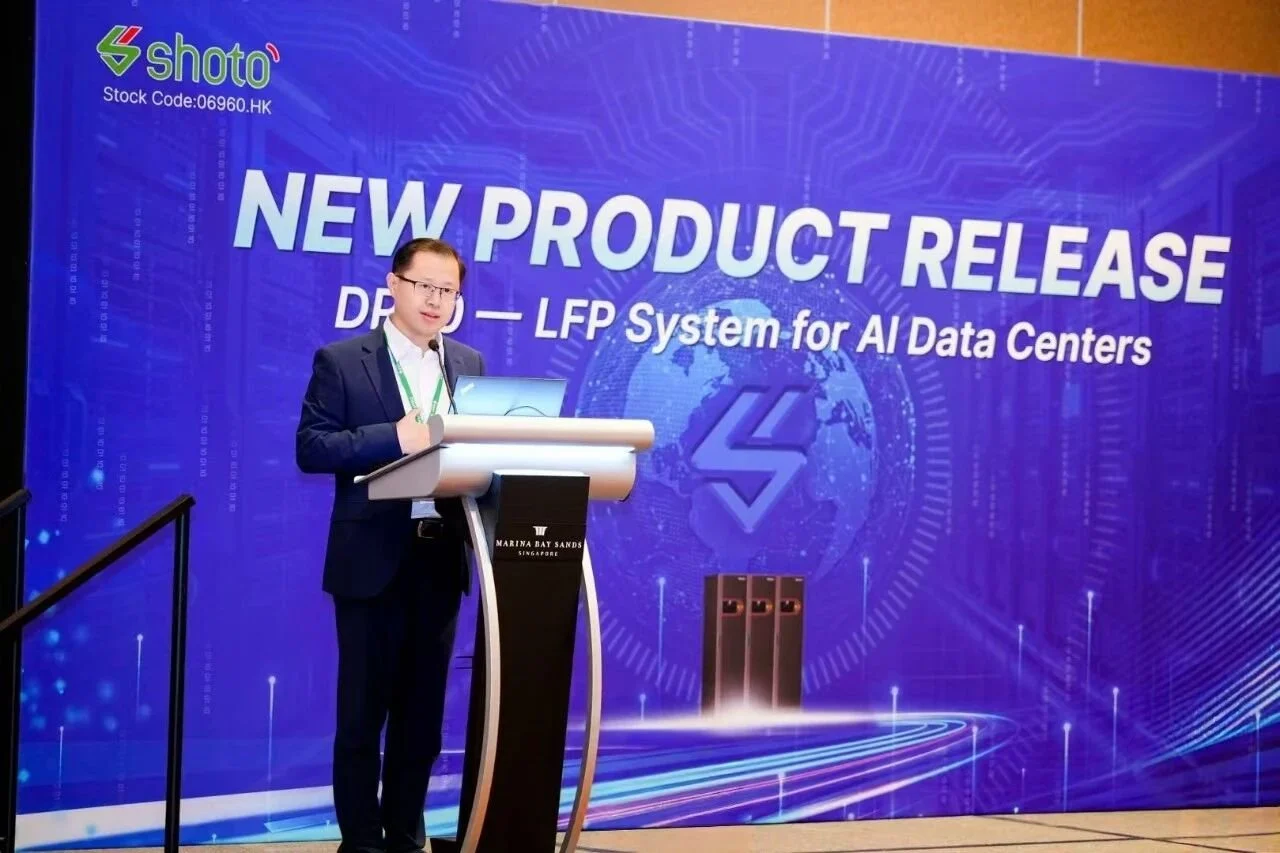
On September 30, Shuangdeng Group officially launched the DP60 high-rate AIDC lithium system overseas. As a new-generation high-power energy storage backup product built for AI computing centers, DP60 relies on a full-chain safety architecture and breakthrough extreme performance to build a solid, reliable energy foundation for AIDC computing-electricity coordination.
Safety is the bottom line of computing energy storage, and the core origin of DP60's development.
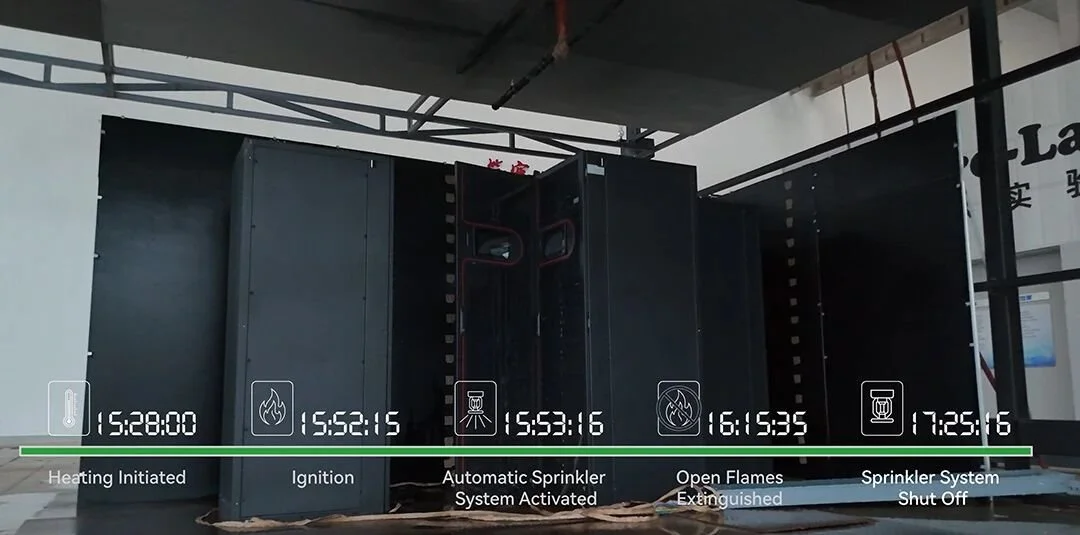
At the launch event, Shuangdeng publicly presented the results of an extreme large-scale fire test of the DP60 system under the UL 9540A framework. The test abandoned ideal laboratory conditions, reproducing 1:1 real boundary conditions of a machine room - 100% SOC fully charged, zero-spacing dense rack arrangement, and enclosed heat accumulation - and fully reproducing the complete thermal runaway process of the cells. The measured results showed that thermal runaway and open flames were strictly confined within a single cabinet, with no cross-cabinet fire spread, no explosion risk, no high-voltage arcing, and no re-ignition after the test; all assessment indicators passed in one go.
Beyond safety, DP60 comprehensively resets the performance benchmark of AIDC energy storage backup, achieving coordinated breakthroughs in three dimensions - power, space, and lifecycle:
10C ultra-high-rate discharge: millisecond-level response to computing power spikes
The system responds at the millisecond level to pulsed high-power loads brought by large model training, withstands instantaneous power impacts, keeps computing clusters continuously online under drastic load fluctuations, and easily adapts to the dynamic power throughput characteristics of AI business.
Extreme power density: releasing core space value of the machine room
A single cabinet occupies only 0.48 square meters, with a maximum output power of 630 kW and a power density of 1,312.5 kW per square meter. In intelligent computing machine rooms where space is at a premium, it sharply compresses the area taken by backup power systems, freeing more cabinet resources for computing deployment and effectively reducing data center infrastructure investment.
Ultra-high power and simplified link design: long-term stable operation
The system adopts large-capacity ultra-high-rate single cells and simplified series-parallel links, reducing electrical connection nodes, lowering system failure probability, and improving on-site integration and O&M efficiency. It matches the development needs of computing business over the long term, maximizing the full-lifecycle value of the equipment.
From the foundation of telecom energy storage to the main track of AIDC energy storage, Shuangdeng insists on starting from real scenarios rather than conceptual technology deductions, putting products through validation under extreme operating conditions. Every fire test and every round of reliability validation is, in essence, a solemn commitment to the safety of customer assets.
In the computing era, the reliability of the energy foundation determines the ceiling of the digital world. The DP60 high-rate AIDC lithium system integrates safety, power, and space efficiency, providing global intelligent computing centers with energy storage backup solutions that combine high performance and high safety, and supporting the high-quality deployment of green computing infrastructure.
At the launch site, the Shuangdeng team held in-depth exchanges with overseas customers, design institutes, and system integrators, conducting focused discussions on core topics such as global AIDC safety compliance standards, localization adaptation of overseas projects, and optimization of computing-storage coordination architectures, working with industry partners to empower the sustainable development of AIDC energy.
In the future, Shuangdeng will continue to deepen its presence in the AIDC energy storage track, leveraging full-industry-chain self-developed manufacturing capabilities to continuously refine product safety and performance, and building a safe, efficient, and sustainable computing-storage ecosystem with industry partners.
Abu Dhabi Raises 2035 Energy Storage Target to 15 GW: PV-Storage and AI Computing Drive Growth in Tandem
In September 2026, the Emirates Water and Electricity Company (EWEC) released its latest long-term plan: up to 15 GW of battery energy storage and more than 35 GW of solar PV capacity in Abu Dhabi by 2035. PV-storage pairing on the energy transition side, and new high-reliability power supply demand from AI data centers. Chinese energy storage companies have already secured orders across several links.

1. A Three-Step Target Raise: Over 35 GW Solar and Up to 15 GW Storage by 2035
Abu Dhabi's capacity targets have been raised repeatedly: the 2035 solar target set in 2024 was 18 GW, raised to over 30 GW in May 2026, and raised again in September 2026 to over 35 GW, together with a storage goal of up to 15 GW set for 2035 for the first time. On the interim timeline, the 2030 solar target stands at 14 GW, meaning at least 21 GW more must be added between 2031 and 2035. As Abu Dhabi's sole purchaser and supplier of electricity and water, EWEC stated that as this advanced capacity comes online, the flexibility contribution of gas-fired generation is expected to decline, and storage will take on the main balancing role.
2. Flagship Project First: 5.2 GW Solar + 19 GWh Storage
Abu Dhabi's storage expansion is not confined to planning. Local energy giant Masdar and EWEC are jointly developing a flagship project pairing 5.2 GW of solar PV with 19 GWh of battery storage, designed to deliver 1 GW of continuous renewable power. Construction began in 2025, with commercial operation targeted for 2027. The project involves a total investment of more than AED 22 billion, is expected to create about 10,000 jobs, and will cut about 5.7 million tonnes of CO2 emissions annually. It marks Abu Dhabi's shift from "solar mainly for daytime generation" to "large-scale PV paired with storage to provide dispatchable renewable power". Chinese companies are deeply involved: BYD Energy Storage signed an 11.275 GWh storage system supply agreement featuring 2,710 Ah blade cells; Sungrow secured a 7.5 GWh storage order in the north zone plus a 2.6 GW PV inverter supply agreement; and PowerChina signed the EPC contract for the 2.1 GW + 7.75 GWh RTC solar-storage project, worth about RMB 13.962 billion. Beyond utility-scale projects, Abu Dhabi is also extending into distributed markets: a PV-plus-storage self-consumption policy for agriculture was launched in February 2026 and extended to residential users in April.
3. Emissions Main Line: Power and Water Carbon Emissions Down Over 45%
These moves serve Abu Dhabi's broader emissions reduction goals. EWEC projects that total carbon emissions from power and water production will fall from about 42 million tonnes in 2019 to about 23 million tonnes by 2035, a reduction of more than 45%. Solar power, battery storage, and reverse osmosis desalination are identified as the three core drivers.
4. AIDC: The Second Growth Curve for Storage
The sharp raise of Abu Dhabi's storage targets is closely tied to the region's fast-moving AI data center buildout. In the desert west of Abu Dhabi, a planned "UAE-US AI campus" covering about 26 square kilometers is under construction. Led by UAE artificial intelligence company G42, its first phase, "Stargate UAE", plans a USD 30 billion investment to build a 1 GW compute cluster, with the first 200 MW expected to enter service in 2026. According to Reuters, changes in the regional security situation may shift the project from a single large campus to multiple sites across the UAE, with studies on protective measures such as building some facilities underground or inside mountains and deploying air defense systems and electronic jamming equipment; G42 said the project is "on track".
The power characteristics of AI loads explain exactly why storage is being added in tandem. Unlike traditional data centers, AI training and inference clusters show large, fast power fluctuations, with far higher requirements for supply continuity and power quality than general loads. Khalid, the storage procurement lead of the RTC project, said the project explicitly requires storage to serve both PV peak regulation and the backup needs of nearby new AIDC computing parks; the differing load characteristics of the two forced the drawings to be redone at the design stage. Green power compliance requirements are also driving storage attachment: the UAE requires new large computing projects to use at least 60% green power, and since PV cannot supply stable power around the clock, storage becomes the hard carrier of compliance. Large computing projects without their own storage typically wait three to five years in the municipal grid connection queue, while adding storage reduces reliance on grid expansion. Acceptance standards likewise reflect the special requirements of computing loads: storage PCS power response must be within 10 milliseconds, annual system availability must reach 99.999%, and all suppliers must complete tens of thousands of load impact simulation tests at local laboratories in Abu Dhabi before entering the site. Institutionally, in January 2026 Abu Dhabi announced plans for a dedicated electricity tariff mechanism for AI data centers, offering globally competitive prices to hyperscale data centers.
For Chinese energy storage companies, AIDC scenarios are reshaping the competitive threshold of overseas utility-scale storage projects: response speed, availability, and simulation validation are becoming new entry tickets. The combined "PV + storage + computing" demand in the Middle East is opening new space for storage applications.
Source material: EWEC's plan and public reports by Reuters and other media
Energy Storage Becomes Core Infrastructure: Three-Layer AIDC Power Architecture Points to 209 GWh of Data Center Storage by 2030
As large-model training and inference scale up, power consumption at AI compute clusters keeps climbing, and the role of energy storage in AI data center (AIDC) campuses is undergoing a fundamental shift—from an optional backup device to core infrastructure that underpins stable compute operations. The logic behind this shift lies in the layering of the power architecture: the white, grey and green zones correspond to regulation needs at the millisecond, minute and hour levels respectively, and energy storage product portfolios are being restructured accordingly.
1. White, Grey and Black Zones: Storage Matched to Each Layer
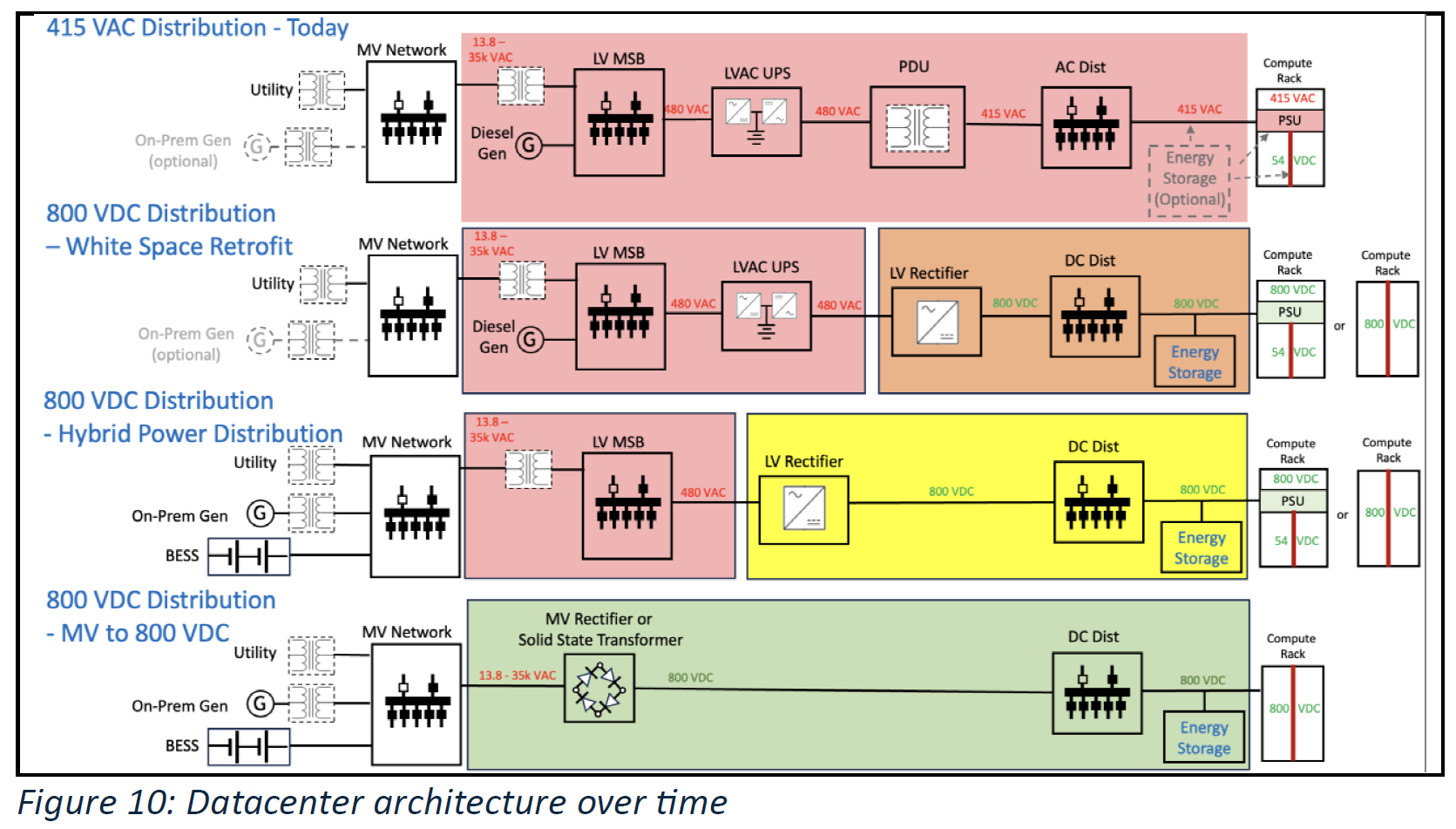
A large AIDC campus can be divided, from the inside out, into three zones, each imposing distinct technical requirements on energy storage. The white zone sits inside the server racks, where CBUs and BBUs together absorb the millisecond-level power transients generated by GPUs; products there must deliver both high power density and moderate energy density. The grey zone lies at the power distribution side of the machine rooms, where 800 V high-voltage direct current (HVDC) systems are gradually replacing conventional UPSs; storage units connect directly to the 800 V DC bus and, beyond basic backup duty, participate in peak shaving and demand response. The green zone sits at the interface between the campus and the public grid, where long-duration storage and grid-forming storage smooth the output fluctuations of wind and solar power, keep compute supply uninterrupted, and provide dispatchable capacity to the grid.
The three zones operate on different timescales: milliseconds inside the racks, minutes on the distribution side, and hours at the grid connection point. AIDC energy storage is therefore no longer a single backup battery but a multi-layer combination of rack-level BBUs, machine-room BESS and campus-level storage, with diversified product forms and technology routes.
2. Market Data: The Track Enters a Phase of Acceleration
Two sets of figures—energy consumption and installed capacity—trace the growth curve. Global data center electricity consumption totaled 415 TWh in 2024 and is forecast to double to 945 TWh by 2030. In China, computing-center electricity use reached 170 billion kWh in 2025, or 1.6% of total electricity consumption, and is expected to rise to 800 billion kWh, roughly 6%, by 2030.
Energy storage installations are scaling up in tandem. Global data center storage additions grew from 4 GWh in 2020 to 16.5 GWh in 2024, a compound annual growth rate of 43.0%; industry forecasts put the 2030 figure at 209.4 GWh, lifting the 2024-2030 CAGR to 52.7%. In the first half of 2026, global shipments of lithium battery energy storage systems reached 461.3 GWh, up 71% year on year, with China leading at 202.5 GWh (up 49%) and North America and Europe up 83% and 74% respectively. AIDC storage demand is concentrated in North America, where compute clusters are densest; as overseas orders continue to flow, China’s storage supply chain stands to benefit.
3. Orders Materializing: The Fluence-EVE Long-Term Deal
The market’s acceleration is translating into concrete orders. Energy storage integrator Fluence posted revenue of USD 649.8 million in the third quarter of fiscal 2026 (ended June 30, 2026), up 7.8% year on year and nearly 40% quarter on quarter; new orders signed in the quarter topped USD 1.44 billion, and backlog rose 14% sequentially to USD 6.4 billion. Data center-related orders amounted to roughly USD 850 million, including a contract worth more than USD 500 million with a hyperscale compute operator as well as a large behind-the-meter storage order—AIDC business has become a new growth pillar for Fluence.
On the cell side, EVE Power, a subsidiary of EVE Energy, signed a battery supply framework agreement with Fluence for 2027-2031, covering a total of 206 GWh: 16 GWh committed for delivery in 2027 and 190 GWh of reserved capacity for 2028-2031. In the first half of 2026, EVE Energy shipped 44.46 GWh of energy storage batteries, up 54.88% year on year. The company says it has built backup power solutions covering the full range of AIDC scenarios, and that the long-term deal anchors a strategic partnership while securing medium- and long-term demand from overseas compute storage in advance.
4. Supply Chain and Risk Notes
Rising AIDC storage demand benefits multiple links of the industry chain: upstream, in raw materials and power electronics components, players include Ganfeng Lithium, Tianqi Lithium, Xinleineng, Actionpower and Sinofuse; midstream, in cells and power equipment, EVE Energy, Azure, Zhongheng Electric, Megmeet, Jinpan Technology and TGOOD; downstream, in system integration, Sungrow, CATL and HyperStrong.
For storage companies, the layered power architecture means product matrices must be rebuilt around timescales—millisecond-level power support, minute-level peak shaving and demand response, and hour-level long-duration regulation coexist, and no single product line can cover every scenario. Meanwhile, long-term contracts plus framework agreements are becoming the typical commercial form of overseas AIDC storage, locking in three to five years of visible demand.
Risks deserve equal attention: the pace of technology iteration in AIDC power architectures, delivery and capacity ramp-up of storage products, and the speed at which compute storage demand actually materializes at home and abroad could all fall short of expectations. Worth watching going forward are the progress of layered storage technology routes and the conversion of orders into actual deliveries.
Source material: company announcements by Fluence and EVE Energy, and public media reports
BDx Breaks Ground on 640 MW AI Campus in Indonesia: With Hydro Power and Liquid Cooling, Power-First Becomes the Main Line of Southeast Asia's Compute Race
On September 22, Singapore-based data center operator BDx Data Centers held a groundbreaking ceremony in West Java, Indonesia, for its 640 MW CGK4 AI campus. The project's significance goes beyond its scale: 845 MVA of grid capacity secured in advance, a hydro power arrangement being pursued with a state-owned water company, and direct-to-chip liquid cooling supporting racks of up to 500 kW - in Southeast Asia's AI infrastructure race, power supply capability is replacing land and site selection as the first precondition.
1. Project Profile: Six Buildings, About Three Years to Complete
The CGK4 (AI Campus 2) Jatiluhur campus is located in Purwakarta, about 5 km from the Jatiluhur Dam and about a two-hour drive from the capital, Jakarta. The project has secured 845 MVA of grid capacity from state utility PLN, and construction of the first of six planned buildings has begun; the campus is expected to be developed over about three years. The first 120 MW building is planned to enter service in early 2027, providing 120 MW of IT capacity in phases. The project adopts direct-to-chip liquid cooling designed to support racks with power demands of up to 500 kW, and holds certification under the NVIDIA DGX-Ready Managed Data Center program (April 2025). On the latest developments: Indonesian outlet Selular reported in October 2026 that West Java Governor Dedi Mulyadi requested construction be paused until approvals such as the AMDAL environmental impact analysis and the PBG building permit are complete; BDx said it is cooperating with the government, and the early-2027 target for the first phase is unchanged.
2. Power First: Grid Capacity and Hydro Supply
BDx is advancing a hydro power arrangement with state-owned water company Perum Jasa Tirta II as part of its efforts to secure low-carbon electricity for the campus. Across its three AI-focused campuses in Indonesia (CGK3/3A, CGK4, CGK5), the company has secured more than 1.2 GVA of grid capacity in total, and in 2026 obtained a USD 320 million loan facility to support its Indonesian expansion. The expansion comes as Indonesia seeks to attract more data center investment and build AI and cloud computing capabilities, with operators competing for land, power, and connectivity, especially in and around Jakarta.
3. Demand Signals and Official Statements
BDx Data Centers CEO Mayank Srivastava said Indonesia is entering a new phase of digital and AI development, and CGK4 is a long-term investment in the infrastructure this phase requires. BDx Indonesia CEO Agus Hartono Wijaya said the project will enable local companies, government agencies, and developers to run advanced AI workloads domestically. According to BDx, CGK4 has attracted interest from hyperscale cloud service providers, technology companies, AI cloud providers, and enterprises, though the company has not disclosed customers or contract values.
4. CNESA Observation: With Power as the Constraint, Space for Storage Opens Up
From the storage industry's perspective, the project sends three signals. First, 845 MVA locked in advance and more than 1.2 GVA across three campuses show that the primary constraint in campus competition is power, not land - stable supply capability directly determines whether a project can land and come online on schedule. Second, hydro direct supply is a low-carbon power path, but hydro output fluctuates seasonally, amplifying the role of campus-level storage in peak regulation and backup. Third, 500 kW racks and direct-to-chip liquid cooling mean supply reliability and thermal management requirements are rising together, making backup storage demand a certainty. For Chinese companies, the accelerating AIDC buildout in Southeast Asia opens a window for the storage and liquid cooling supply chains to go overseas; BDx has not disclosed its equipment suppliers, which is a potential entry point. As campus competition shifts from "site selection" to "power access", the toolkit for stable supply and green power assurance - storage, hydro supply, and liquid cooling - is becoming the hard requirement of AIDC infrastructure.
Source material: public information from BDx Data Centers and reports by DatacenterDynamics, Selular, and other media
How to Sell Energy Storage Systems into AIDC? Understand the White, Gray, and Black Zones First
Demand for energy storage in AIDC (AI data centers) is shifting from “whether to install” to “where to install it and what problem it solves.”
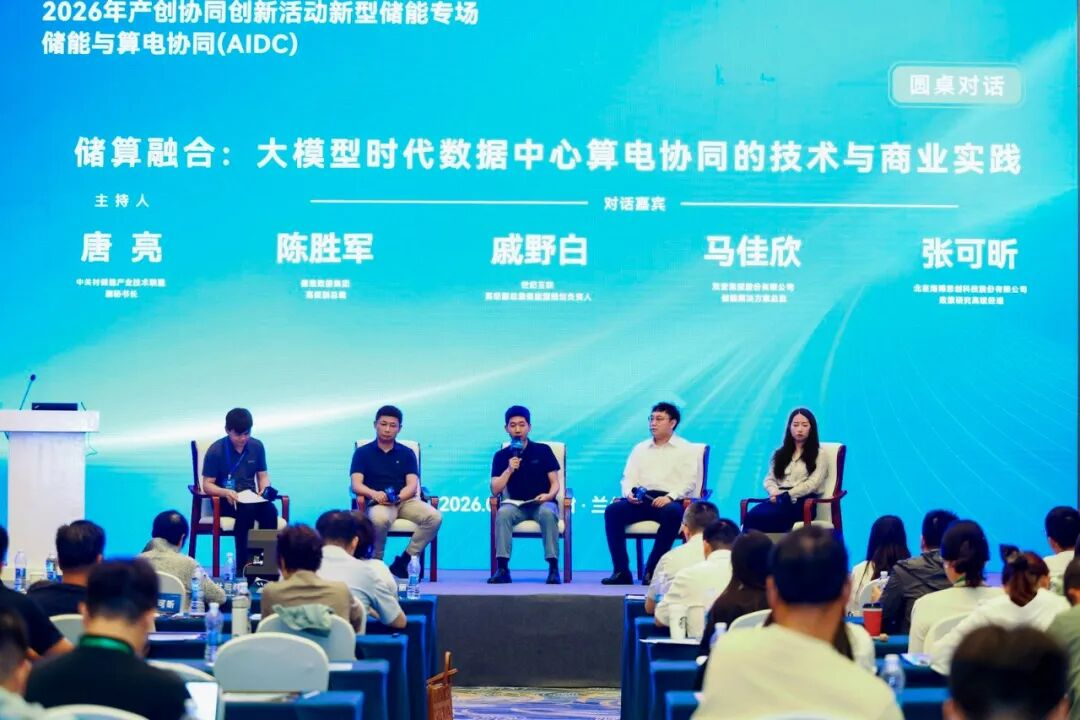
At the roundtable “Storage-Computing Convergence: Technical and Commercial Practices of Power-Computing Coordination for Data Centers in the Era of Large Models” at the recently held 11th Western Energy Storage Forum, front-line speakers from data center operators and energy storage companies pointed out that, from the campus-level energy foundation to the rack side close to GPUs, different time scales correspond to completely different storage technology routes, and no single product fits all scenarios.
The forum was hosted by the China Energy Research Society, Lanzhou University, and the China Energy Storage Alliance (CNESA). Tang Liang, Deputy Secretary-General of CNESA, moderated the dialogue, joined by Chen Shengjun, Senior Vice President of Chindata Group; Qi Yebai, Senior Vice President and Head of Energy Planning of VNET Group; Ma Jiaxin, Director of Energy Storage Solutions of Shuangdeng Group; and Zhang Kexin, Senior Manager of Policy Research of HyperStrong.
Value Ranking of Energy Storage in AIDC
Deploying energy storage in AIDC must follow the basic logic of “demand driving technology and product selection.” In other words, storage at different levels must first answer what the user’s real pain points are, rather than discussing how much revenue it can bring.

Chen Shengjun, Senior Vice President of Chindata Group, divides the value of energy storage into four levels.
The first is CAPEX (capital expenditure) — whether upfront development and O&M costs can be reduced. If a suitable storage and power supply scheme can cut related capital input, its value first shows at the initial investment stage.
The second is avoiding SLA penalties. For critical business, the value of a stable power supply far exceeds electricity price differentials. Once supply continuity is affected, penalties faced by a data center can reach hundreds of millions of yuan.
The third is reducing OPEX (operating expenditure), including daily operating costs such as electricity bills.
Only the fourth is the additional revenue gained from deploying storage. Chen stressed that simply emphasizing “how much money storage can make for me” is not the first concern of data center owners.
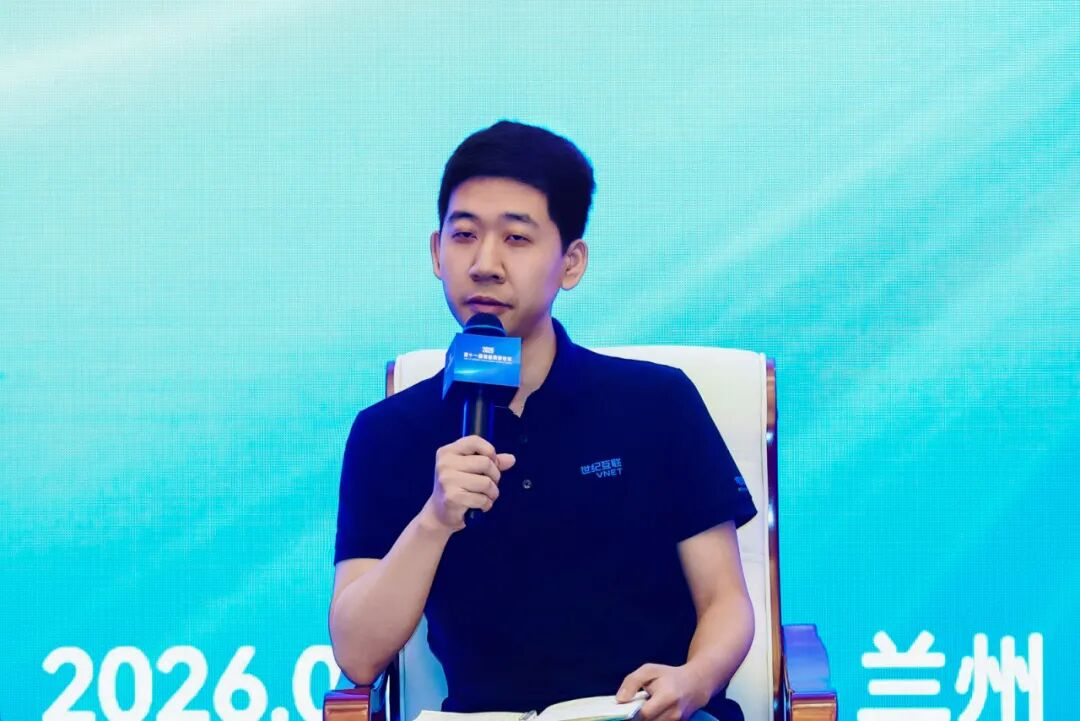
Qi Yebai, Senior Vice President and Head of Energy Planning of VNET Group, also said that the necessity of storage entering AIDC can be summarized in two points: first, making a real contribution to the power supply by providing power support, instantaneous supply, and reliability assurance; second, gaining verified economics. At present, however, the electricity costs saved by storage through peak-valley arbitrage and demand management account for at most 5%–10% of total OPEX — a value mismatch compared with the hundreds of billions of yuan of computing assets that need protection. The value of storage should therefore be measured not by “how much electricity was saved” but by “how much assets were safeguarded.”
Technology Routes of AIDC Energy Storage
For AIDC loads, the core of storage technology routes lies not in one battery type covering everything, but in matching capabilities across different zones and time scales. Chen Shengjun summarizes this as differentiated configuration across the white zone, gray zone, and black zone.
White Zone: Second- and Millisecond-Level Response to Power Transients
The “white zone” refers to the computer room area housing IT equipment — where server cabinets actually compute and power is directly supplied to computing — and also to the low-voltage supply area from inside the cabinet down to the chip level (generally within 48V). It is where power consumption of the entire data center is most concentrated and most volatile. During AI training, GPU load can jump from idle to full load within milliseconds, easily causing voltage sag or false triggering of overload protection.
The “white zone” therefore emphasizes power-type storage with second- or even millisecond-level response, aiming mainly to stabilize power fluctuations, suppress peaks, and reduce demand charges. To meet this need, technologies such as capacitors, supercapacitors, and high-rate lithium batteries in BBUs are more targeted.
Gray Zone: Minutes to Hours, Driving SST and High-Rate Battery Demand
The “gray zone” refers to the area housing back-end infrastructure such as electrical and mechanical equipment, providing power supply, cooling, and other supporting functions. As cabinet power density rises, supply voltage is being upgraded from traditional AC to 800V or even higher-voltage DC to reduce line losses. SST (solid-state transformer) is seen as the key technology for gray-zone transformation: it can step down voltage directly from the high-voltage grid and output high-voltage DC matching the cabinets, simplifying the gray-zone structure and achieving AC/DC compatibility.
Compared with the white zone, the gray zone operates on longer time scales, typically from minutes up to an hour. Lead-acid batteries in traditional UPS will not be fully replaced in the short term, but options such as sodium-ion, high-rate LFP, and supercapacitors are entering retrofits and comparisons. For scenarios converting general-purpose computing rooms into intelligent computing rooms, adding high-power compensation in the gray zone is also a technology path suited to local conditions.
Black Zone: Long-Duration Storage Demand Emerges
The “black zone” refers to the connection point between the bulk grid and the behind-the-meter microgrid, covering utility access, transformers, storage, backup power, and microgrid dispatch — a critical area for ensuring supply continuity and power-computing coordination. Closer to the high-voltage side and the power source side, the black zone can also be planned in a unified way with direct green power connections. Here, long-duration storage can serve as the energy foundation and long-term backup, with demand for 6-hour, 8-hour, and even longer durations becoming evident. For scenarios combining a high share of renewables with a high share of power-electronic loads, grid-forming storage can provide regulation capability and reduce major losses from risks such as wideband oscillation.
Solution Selection for AIDC Energy Storage
Qi Yebai believes that for data centers, different technology routes suit different risk types. Meanwhile, technology routes should not be viewed statically: technology is advancing and customer awareness is changing too.
Qi also pointed out that campus-type wholesale IDC and urban retail IDC follow different logic: for the former, large customers come first and the campus is built afterwards, with customers directly setting the technical standards; for the latter, the computer room is built first and customers are found later. Since a single project of a large customer can reach hundreds of megawatts, storage solutions must be highly customized and cannot be configured along the standardized product logic of traditional utility-scale storage.

Zhang Kexin of HyperStrong noted that on the AIDC computer-room side, HyperStrong is also developing solid-state transformer (SST) products, with releases planned before the end of this year. On the energy foundation side, where wider power access and system regulation must be considered, HyperStrong proposes a “lithium-sodium synergy” approach: sodium-ion batteries handle short-duration shocks, fluctuations, and switching, while lithium-ion batteries handle longer-duration regulation and peak shaving — matching AIDC’s multi-timescale needs through a division of labor between different electrochemical systems.

Ma Jiaxin, Director of Energy Storage Solutions of Shuangdeng Group Co., Ltd., said that AIDC customers’ customization needs are completely different, with a “disruptive” impact on storage products, especially in the North American market. On one hand, cells must withstand short-duration, high-frequency, high-current discharge while also meeting long-duration operation and lifetime requirements; on the other, AIDC’s requirement for SOH (state of health) estimation accuracy may rise from the industry-common 5%–6% to 2%–3%.
Moreover, the integration of backup power and energy storage means control strategies cannot remain static: as battery capacity degrades, the system must dynamically adjust the capacity allocated to backup versus economic operation according to SOH, and thermal management strategies differ under different operating conditions. For PCS, grid-following, grid-forming, off-grid operation, and smooth switching capabilities are required.
AIDC Energy Storage Market Size
Zhang Kexin of HyperStrong looked ahead to future development models. Today’s mainstream power-computing coordination is a one-way, downstream-to-upstream demand model: computing companies demand from AIDC, and AIDC demands from the power supply. In the future it may evolve into two-way regulation between computing and power, as AIDC advances from traditional cabinet rental and server rental models into a “Token factory,” requiring more adjustable resources and giving energy storage much larger room to play.
Ma Jiaxin believes AIDC energy storage is about to enter an explosive growth period — but only after market acceptance, demonstration projects, and testing and certification of new products all run smoothly, after which development will accelerate rapidly. At the same time, overseas policy risks deserve attention: recent US bans targeting energy storage systems and related equipment will have some impact on Chinese companies entering the North American market.
Qi Yebai of VNET Group raised a neglected incremental scenario. He believes storage vendors’ thinking should not just circle between the two ends of “macro (source side)” and “micro (inside the computer room)”; in between lies a “mesoscopic” level: can Phase I and Phase II of the same customer be bridged? Can adjacent data centers be linked, using storage for DC transfer? Viewed from a broader perspective, some more differentiated value points can actually be matched. He encouraged companies to break out of inertial thinking and actively explore.
Chen Shengjun of Chindata Group stressed that next year is critical. Whether storage companies can deliver truly valuable products for data centers in 2027 will determine how large the storage market in the AIDC track can grow and how far it can go. Chen also revealed that from the end of this year into next year, new electrical architectures will be released one after another, and storage may be embedded within them.
The 15th Energy Storage International Conference and Expo (ESIE 2027) will be held on March 16–19, 2027 at the Beijing Capital International Convention and Exhibition Center. For the first time, the expo will feature an AIDC Energy Storage section, showcasing the complete AIDC storage industry chain, from high-rate cells, BBU backup power, UPS, and HVDC to solid-state transformers (SST) and complete system solutions.
China’s three major telecom operators, cloud service providers such as Tencent Cloud, third-party IDC operators such as Chindata and VNET, and leading overseas computing and cloud companies such as Amazon, Google, and Meta will gather at the event to share their on-the-ground practices in data center energy storage.
The expo will also set up an AIDC Energy Storage New Product Launch Zone, supporting companies to debut innovative products and technical solutions in the AIDC storage field. Whether entering the new AIDC storage track, launching annual innovative products, or connecting with upstream and downstream partners across the industry chain, ESIE 2027 is the industry’s key matchmaking platform.
CATL Affiliate Closes USD 942 Million Strategic Investment, Becoming VNET’s Largest Shareholder
On September 21, VNET announced that the strategic investment in the company by a CATL affiliate had closed, at a total consideration of approximately USD 942 million (about RMB 6.4 billion). Upon closing, the buyers hold roughly 38.1% of the company, becoming its largest shareholder, while under the voting arrangements that took effect simultaneously, control of the company remains with the founding team. The deep binding between a battery leader and a computing operator has now entered a substantive phase.
1. Deal Structure: 38.1% Equity and Delegated Voting
The buyers are PJ Millennium I Limited and PJ Millennium II Limited, both wholly-owned subsidiaries of PJ Millennium Limited Partnership and uncontrolled, non-consolidated affiliates of CATL. Together they acquired 650,424,192 Class A ordinary shares at USD 1.4486 per ordinary share (USD 8.6914 per ADS), for a total consideration of approximately USD 942 million, or about RMB 6.4 billion. Based on roughly 1.70897 billion ordinary shares outstanding as of June 30, 2026, the buyers hold 38.1% upon closing. The deal was announced on May 13 and had been expected to close in the fourth quarter; the actual closing came ahead of schedule.
The governance arrangements are equally clear: an investor rights agreement and a voting and consortium agreement took effect upon closing, under which the CATL affiliate must exercise its voting rights as directed by Sheng Chen, VNET’s founder and executive chairman, and is subject to a lock-up period. In other words, the CATL affiliate has become the largest shareholder, but control remains with the founding team. The previous industrial shareholder, Shandong Hi-Speed Holdings Group, exited at the same time—having invested at USD 0.4597 per share in late 2023 for a total of USD 299 million, it realized a return of about 215%.
From an industry perspective, the structure is instructive: binding computing asset owners through equity investment while defusing control contests through delegated voting rights—the "capital tie plus strategic synergy" model offers a replicable template for cooperation between energy companies and computing operators.
2. Strategic Cooperation: A Three-Layer Computing-Electricity Coordination System
The equity closing is the key move in the two companies’ cooperation. In August this year, VNET and CATL signed a strategic cooperation agreement centered on deep computing-electricity integration, building a three-layer computing-electricity coordination system of "gigawatt-scale computing-electricity factories + distributed computing-electricity networks + a zero-carbon token ecosystem", covering new technology applications such as green direct current and green-power direct connection. VNET contributes its capabilities in integrated computing-electricity operations and full-scenario computing infrastructure construction—more than 50 data centers, over 6,000 customers and nearly 30 years of "electricity-to-compute" engineering expertise make it a landing channel that takes storage and green-power solutions directly into data centers—while CATL contributes full-stack energy technology and zero-carbon new energy solutions.
CATL has been moving rapidly in the computing-electricity coordination arena: alongside the VNET investment, it also invested in the power equipment maker Zhongheng Electric in the same period. Battery leaders are no longer content with supplying cells; they are deploying capital into computing energy infrastructure, and "equity for channels" is becoming a new commercial form of computing-electricity coordination.
3. Fundamentals: Operating Capacity Tops 1 GW
VNET’s business fundamentals underpin the cooperation. In the second quarter of 2026, the company’s wholesale IDC operating capacity grew 49.4% year on year to 1,007 MW, exceeding 1 GW for the first time, with a contracted rate of 96.3%. New wholesale orders so far this year totaled 862 MW, including a 345 MW order from a leading cloud computing customer in the Beijing-surrounding region. The company’s total operating and reserved capacity has surpassed 4 GW, with a clear growth path in both domestic and international markets.
4. Industry Resonance: Computing-Electricity Coordination Rises to National Strategy
Computing-electricity coordination was written into China’s government work report for the first time in 2026, marking its formal elevation to a national strategy. According to the National Energy Administration, national computing electricity consumption is expected to increase by more than 100 billion kWh annually during the 15th Five-Year Plan period, reaching 800 billion kWh by 2030, or about 6% of total electricity consumption. Against this backdrop, the resonance of the "energy company plus computing operator" binding model is clear: energy storage and green power gain a stable consumption scenario, while data centers gain a low-carbon, reliable energy foundation.
VNET says it will use the cooperation to drive major technological and industrial innovation in its dual-engine business model of "wholesale hyperscale IDC + urban retail IDC", and to pursue high-quality growth through new engines—"gigawatt-scale AIDC campuses with green-power direct connection" and "hyper-connected urban computing with edge-integrated AIDC new retail"—as it upgrades toward an agent-native next-generation AIDC strategy. Going forward, the two companies will deepen their coordination and jointly build the next-generation digital energy infrastructure for the AI era.
Source material: VNET announcements and public media reports
Amazon Locks In Backup Power Capacity with USD 8 Billion Framework: AI Infrastructure Investment Extends from Computing to Power
On September 16 local time, generator maker Generac filed with the U.S. Securities and Exchange Commission (SEC), disclosing a seven-year backup generator supply agreement with Amazon: initial deliveries are expected in 2027-2028, worth about USD 2.4 billion, and if all subsequent purchases are executed the agreement could be worth up to USD 8 billion. The deal's significance goes beyond its size: the warrant-linked, tranche-vesting purchase structure and the market's response, with Generac shares once surging over 34% in pre-market trading, point to the same signal - the competitive focus of AI infrastructure is extending from computing to power.
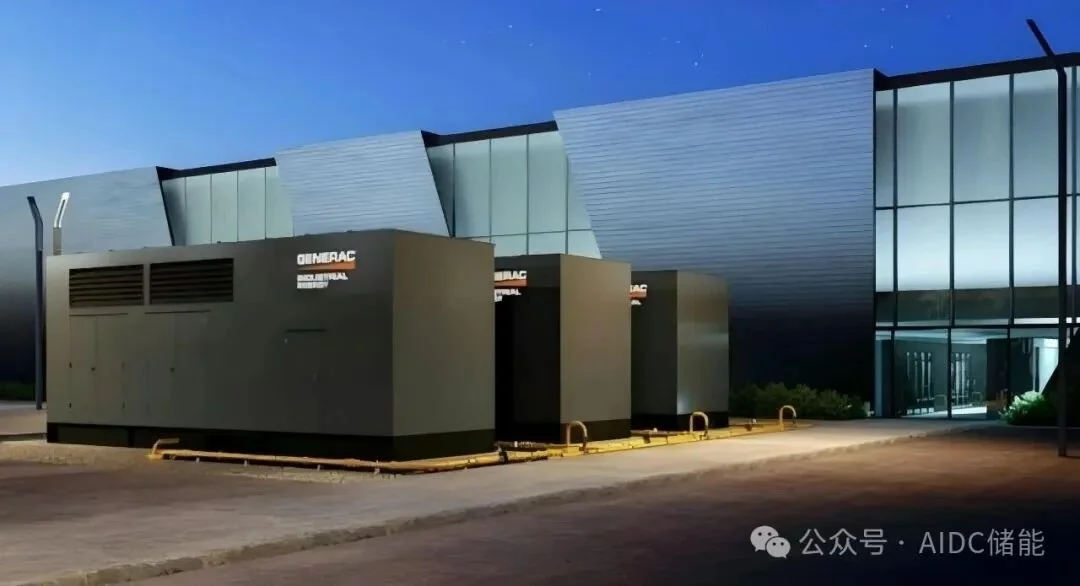
1. Deal Structure: USD 8 Billion Is a Ceiling, Not a One-Time Commitment
On the day of disclosure, Generac shares surged more than 34% in pre-market trading, the biggest single-day gain since 2010. What underpins the market is not an ordinary equipment order but the structure of the agreement: Generac issued a warrant to a wholly owned Amazon subsidiary, allowing it to purchase up to about 1.69 million Generac common shares at about USD 200.93 per share, roughly 3% of the company's outstanding shares if fully exercised. About 308,000 shares vested immediately upon signing, with the rest vesting in batches as Amazon's cumulative purchases grow; the warrant vests in full only when Amazon's cumulative backup generator purchases ultimately reach USD 8 billion. In other words, USD 8 billion is a potential ceiling tied to purchase progress. The warrant runs until September 2033, extending the partnership beyond seven years. Wells Fargo analysts view the arrangement as a sign that Amazon aims to cover longer delivery cycles rather than merely lock in the first orders.
2. Why Backup Power Suddenly Takes Center Stage
Backup generators have long played an "insurance" role in data centers - silent when grid power is normal, active only during outages. AI data centers are changing that supporting role: training and inference clusters show large, fast power fluctuations, and the cost of a grid interruption is no longer just a service pause but potentially the loss of expensive training jobs in progress. Meanwhile, grid interconnection wait times in major markets have stretched to four to seven years, and some projects need on-site generation to start before grid capacity arrives. Amazon's deal echoes Oracle's similar investment in fuel cell maker Bloom Energy in April 2026 - two hyperscalers are both locking in the long-term capacity of key power equipment suppliers through equity ties. The reliability and availability of power are gaining strategic importance equal to GPUs in the AI infrastructure race.
3. Generac's Capacity and Earnings Outlook
The order did not come out of nowhere. Over the past two years, Generac has been preparing to enter the hyperscale data center market, expanding manufacturing capacity to more than USD 1.25 billion per year. William Blair analyst Brian Drab called the agreement a "major win" for Generac, estimating it will lift the company's 2028 EBITDA by more than 20%; against a backdrop of investor concern over the durability of data center capex, the long-term agreement improves earnings visibility and helps reduce the market's risk discount on its capacity expansion. Still, the full picture remains a puzzle: Generac has not disclosed the generator models, unit capacities, or deployment sites for the order, and Amazon has not specified its technical route for backup power; the USD 2.4 billion initial deliveries are only the starting point, and the remaining USD 5.6 billion depends on Amazon's data center construction pace and Generac's delivery capability.
4. CNESA Observation: Backup Power Is Being Repriced, and the Window for Storage-Based Backup Is Opening
Amazon's capital expenditure for 2026 has been raised to about USD 220 billion, a large share of it directed at data centers, which explains why hyperscalers are willing to bind power equipment suppliers with equity: power is becoming a hard constraint of AI infrastructure. For the storage industry, the deal sends two signals. First, backup power is shifting from an "accessory" to a "foundation", expanding AIDC backup demand overall; beyond diesel, storage-based backup (BESS, BBUs, etc.), with its low-carbon compliance advantage, is becoming an alternative and complement to diesel, and Amazon's long-term decarbonization path still leaves room for storage. Second, the "warrant plus tranche vesting" long-term locking model deserves attention: the means by which hyperscale customers secure supply chain stability may likewise be replicated in the storage supply chain. Moreover, interconnection waits of four to seven years mean AIDC's power anxiety is structural; fast deployment and modular delivery are the entry tickets for storage companies to capture such demand.
Source material: Generac's SEC filing and public media reports
Energy Vault Locks In 275 MW of Rolls-Royce MTU Engine Capacity—and the Financing—for Hyperscale AI Campuses
Energy Vault Holdings (NYSE: NRGV) has secured and fully contracted 275 MW of reciprocating engine generation capacity built on Rolls-Royce MTU technology, backed by a dedicated equipment financing package from Eagle Point Credit Management LLC. Equipment deliveries are scheduled to begin in the second half of 2027 and continue through the first half of 2028, and the capacity will anchor the company’s integrated onsite power architecture for hyperscale AI and high-performance computing campuses.
1. The Deal: Long-Lead Equipment and Capital, Locked In Together
The Westlake Village, California-based company announced the procurement alongside the financing—a senior secured credit facility of USD 137.5 million provided by Eagle Point to an Energy Vault subsidiary. The structure supports capital-efficient procurement while limiting the use of corporate capital before the equipment is deployed into customer projects. Together, the two moves address what Energy Vault identifies as the two critical requirements for large-scale AI infrastructure development: equipment availability and access to capital.
Contracting generation capacity ahead of deployment is itself the point. Reciprocating engines of this class carry long lead times, and equipment orders placed early effectively reserve a slot on the factory floor—something hyperscale developers increasingly cannot afford to leave until project financing closes.
2. Why It Matters: Power Is the Critical Path for AI
The transaction speaks to one of the most significant constraints facing hyperscale AI infrastructure: access to reliable power on timelines that match rapidly growing compute demand. "For hyperscalers, access to power and speed-to-power are increasingly determining where and how quickly AI infrastructure can be deployed," said Cory Magnuson, President of Asset Vault at Energy Vault. "By securing 275 MW of reciprocating engine generation capacity for delivery beginning in 2027, together with dedicated financing supporting the procurement, we are taking greater control over two critical elements of execution: equipment availability and capital."
The company frames the move as part of its strategy to build, own and operate the critical power infrastructure required for large-scale AI campuses—creating long-duration infrastructure assets, recurring cash flows and durable value for shareholders, while giving hyperscale customers greater certainty around power availability and deployment schedules.
3. The Architecture: Engines, Batteries and Grid-Forming Controls
The Rolls-Royce MTU engines are designed for demanding power applications, including mission-critical and data center infrastructure. Their modular nature is expected to support phased deployment and expansion as Energy Vault develops onsite power infrastructure across its AI campus portfolio.
The engines will be deployed as one element of an integrated power architecture that combines dispatchable onsite generation, battery energy storage systems, grid-forming power conversion systems and advanced power plant controls. The design goal is a repeatable pathway to faster energization while supporting the reliability, power quality and operational flexibility required by next-generation AI workloads.
4. Powered Land: Building, Owning and Operating AI Power
The 275 MW of secured capacity supports Energy Vault’s Powered Land platform, which brings together development-ready land, grid access, onsite generation, energy storage, electrical infrastructure and intelligent controls into an integrated offering. Depending on project requirements, Energy Vault intends to develop, finance, build, own and operate these assets under long-term commercial agreements with hyperscale and AI infrastructure customers, and the company says the equipment complements its multi-gigawatt pipeline of AI infrastructure opportunities.
For Eagle Point, the facility is a bet on the same trend. "The rapid growth of AI infrastructure is creating significant demand for power capacity and the capital required to deploy that infrastructure at scale," said Jennifer Powers, Principal and Head of Infrastructure Credit at Eagle Point. "Equipment lead times are often a critical path to getting power online and our bespoke structuring solutions aim to move as quickly as the market demands."
The deal points to a broader pattern in AI infrastructure finance: credit is migrating upstream, from financing finished power assets to financing the longest-lead equipment itself. As engine, turbine and transformer lead times stretch, pre-contracted capacity and equipment-level facilities are becoming a competitive differentiator—and for financiers, AI’s power build-out is turning supply-chain lead times into a new lending opportunity.
Source material: Energy Vault and Eagle Point Credit Management announcements
DOE Closes $1 Billion Loan for Three Mile Island Restart, Powering Microsoft’s Data Centers
On November 18, 2025, the US Department of Energy’s Loan Programs Office (LPO) closed a USD 1 billion loan to Constellation Energy to restart the 835 MW Three Mile Island Unit 1 reactor in Pennsylvania, now renamed the Crane Clean Energy Center. The plant, shut down in 2019 for economic reasons, is slated to return to service in 2027 and supply carbon-free electricity to Microsoft data centers in the PJM region under a 20-year power purchase agreement.
1. The Deal: A First-of-Its-Kind Close
The transaction marks the first time in LPO history that a conditional commitment and a financial close were announced at the same moment. The loan was made through the Energy Dominance Financing Program and is guaranteed by Constellation’s own balance sheet—a structure LPO head Greg Beard says protects taxpayers if the project does not succeed. Beard noted that Constellation, the largest nuclear operator in the United States with 21 reactors across 15 sites, is an established investment-grade borrower that "could have obtained a bank loan even without government assistance." The loan’s role, then, is to lower the cost of financing and help leverage private investment into the restart. Reported pricing is roughly 0.375% above US Treasury rates, and Constellation shares rose about 5% on the announcement.
2. From Shutdown to Restart: What It Takes
The reactor being restarted is Unit 1—the unit that closed in 2019 for economic reasons, not Unit 2, which suffered the 1979 partial meltdown and is being decommissioned. Constellation and Microsoft signed the contract backing the restart in 2024, with the total restart cost estimated at around USD 1.6 billion; the federal loan covers most startup costs, with the first advance due in the first quarter of 2026.
The physical work is well underway: major equipment has been ordered, more than 500 employees hired—over 80% of planned staffing—and infrastructure inspections completed. Before the plant can produce electricity, it still needs a refurbished cooling tower, a new main power transformer and refueling, plus approval from the US Nuclear Regulatory Commission and water-related permits.
The schedule moved forward in June 2025, when PJM accelerated its review process for connecting the project to the grid, allowing Constellation to pull the restart target forward to 2027.
3. Nuclear and AI: Demand Rebound Meets Baseload Supply
The restart is happening against the backdrop of the first sustained increase in US power demand since the 1990s, driven in large part by AI and data centers. For companies with constant power needs and climate commitments, nuclear energy—with virtually no carbon emissions—has become a credible option. Critics, however, point out that the United States has still not found a permanent solution for radioactive waste.
The commercial logic is clear: a long-term offtake agreement with a hyperscaler converts a decommissioned plant into bankable infrastructure. And for the wider energy stack, nuclear restarts and energy storage are complements rather than competitors—baseload generation on one side, flexibility on the other—both of which a grid absorbing gigawatts of AI load will need.
4. The Broader Push: $250 Billion and Counting
Beard said the LPO holds more than USD 250 billion in lending authority under the 2025 spending law. "We expect a large part of this to be used to reinvigorate large-scale reactor development," he said. Energy Secretary Chris Wright has said most LPO funds will go to nuclear projects, framed around grid reliability, affordability and winning the AI race.
The economic stakes extend beyond the plant itself: a Brattle Group study projects roughly 3,400 direct and indirect jobs, USD 16 billion added to Pennsylvania’s GDP and more than USD 3 billion in tax revenue. The Crane loan is the third LPO deal closed under the current administration—and the clearest signal yet that the United States is mobilizing federal credit to rebuild its nuclear fleet around AI’s power needs.
Source material: Reuters and US Department of Energy Loan Programs Office announcements
Sign up for our free monthly newsletter to stay informed about the Chinese energy storage market.