
Latest News
DOE now requires energy storage for large-scale renewable energy projects
To improve national grid stability, the Department of Energy (DOE) has issued a new directive requiring all large-scale renewable energy projects to integrate energy storage systems (ESS).
To improve national grid stability, the Department of Energy (DOE) has issued a new directive requiring all large-scale renewable energy projects to integrate energy storage systems (ESS).
Under Department Circular No. DC2026-02-0008, issued Thursday, all prospective variable renewable energy (VRE) power plants with a capacity of 10 megawatts (MW) or higher must now include energy storage. The storage component must represent at least 20% of the plant’s total installed capacity.
The policy marks a significant shift in how the Philippines manages the inherent intermittency of solar and wind power. By mandating “batteries” or other storage technologies, the DOE aims to mitigate sudden generation losses and ensure a more dependable electricity supply.
“Energy storage is not only about storing surplus energy, it is about strengthening the grid’s capability to absorb more renewables while maintaining reliability,” said Energy Secretary Sharon S. Garin. “This policy ensures that ESS integration becomes part of system planning and project development, supporting better outcomes for consumers”.
The circular also encourages developers to use advanced technologies, such as grid-forming (GFM) inverters. These tools provide “virtual inertia,” helping to stabilize the grid’s voltage and frequency during fluctuations—functions traditionally provided by fossil fuel-based plants.
Beyond private power plants, the DOE has instructed the Transmission Network Provider (TNP) and distribution utilities to incorporate energy storage into their long-term infrastructure strategies. This includes treating storage as a critical resource for grid reinforcement, frequency control, and as an alternative supply for “islanding” scenarios where areas are temporarily cut off from the main grid.
The government plans to institutionalize these requirements by reflecting them in upcoming updates to the Philippine Energy Plan (PEP) and the Transmission Development Plan (TDP). According to the DOE, the updated framework is intended to create stronger signals for investors while accelerating the country’s clean energy targets. (JLN/PIA-NCR)
Source: Philippine Information Agency
_________________________________________________________________
Register now to attend Asia’s Largest Energy Storage Trade Show for free:
What: The 14th Energy Storage International Conference & Expo
When: Conferences: March 31 - April 2, 2026
Exhibitions: April 1-3, 2026
Where: CIECC Beijing, China
Address: No. 55 Yudong road, Shunyi District, Beijing China


Victoria Approves 2,200MWh of Battery Storage through Streamlined Pathway in Australia
Source: Energy Storage News
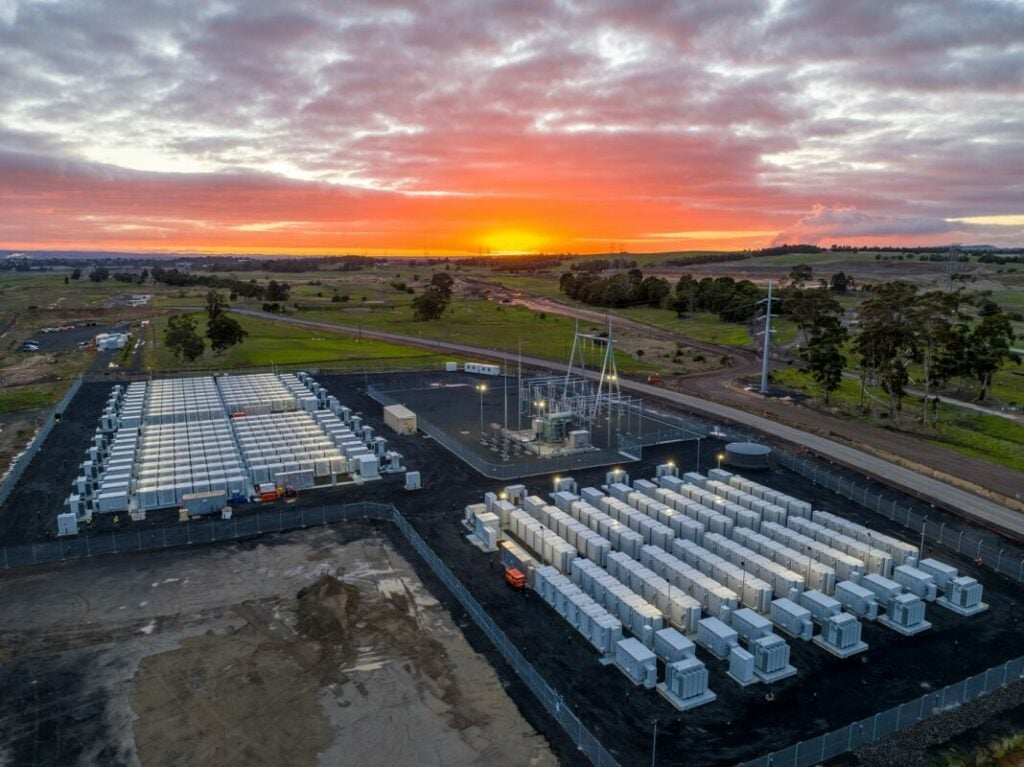
The Tramway Road BESS will be built near Eku Energy’s operational 150MW/150MWh Hazelwood BESS in Victoria (pictured). Image: Eku Energy
The Victoria government in Australia has approved a 300MW/1,200MWh battery energy storage system (BESS) in Gippsland and a 332MW solar PV power plant with integrated storage in the state’s northeast region, via the Development Facilitation Program.
Victoria’s planning minister, Sonya Kilkenny, announced the approvals for Eku Energy’s Tramway Road standalone BESS and the Meadow Creek Solar Farm, which combines a 332MW solar PV plant with a 250MW/1,000MWh battery system.
The projects represent approximately AU$1.2 billion (US$780 million) in combined investment and will create over 650 construction jobs across both developments.
Eku Energy’s 1,200MWh Tramway Road BESS
The Tramway Road BESS will deliver a 4-hour duration storage capacity of 300MW, positioning the facility to provide grid stability services and energy arbitrage opportunities across Victoria’s transmission network.
Located in Hazelwood North, the project will be constructed adjacent to existing transmission infrastructure where developer Eku Energy already operates the 150MW/150MWh Hazelwood BESS at the former Hazelwood Power Station coal-fired power plant.
Eku Energy has numerous projects under development in Australia, while also maintaining a presence in several other international markets. The company, which is jointly owned by Macquarie Asset Management and British Columbia Investment Management Corporation, aims to achieve 9GWh of storage capacity by 2028 and has recently expanded into the New Zealand market.
The Tramway Road facility will connect directly to the transmission network, enabling participation in the National Electricity Market (NEM) ancillary services while supporting the integration of renewable energy across southeastern Australia.
The 1,000MWh Meadow Creek solar-plus-storage site
Meanwhile, the Meadow Creek Solar Farm, located 27km southeast of Wangaratta, is being pursued by energy storage developer and system integrator Energy Vault.
Alongside the solar PV power plant, the project proposal includes a co-located 250MW/1,000MW battery system that would provide additional grid stability services during peak demand periods.
The hybrid project will span 400 hectares of agricultural land and incorporate agrivoltaics principles, allowing continued farming operations beneath and around the solar installation.
The Meadow Creek development was first announced in 2022’s edition of All-Energy Australia, where the developer described the BESS as a 250MW/500MWh system.
The Victoria government’s Development Facilitation Program initiative, which was expanded last year to include renewable energy projects, aims to speed up the development of critical infrastructure projects in Victoria.
Before its inclusion, projects had to pass through the Victorian Civil and Administrative Tribunal, which resulted in around 20% of these projects being delayed by approximately two years.
The Victoria government noted that more than AU$7.8 billion worth of investment across 22 projects has been included in the Development Facilitation Program since it was expanded to include renewables.
Victoria’s energy and resources minister, Lily D’Ambrosio, emphasised the projects’ role in delivering lower energy costs to Victorian households while creating employment opportunities in regional communities.
“Our fast-tracked pathway has unlocked nearly AU$8 billion worth of investment into renewable energy projects – helping provide cheaper and cleaner energy to hundreds of thousands of Victorian households,” D’Ambrosio said.
Other notable BESS projects to have advanced through the initiative in recent months include Chinese PV module manufacturer Trina Solar’s 500MW/1,000MWh Kiewa Valley BESS, which is being developed in the Murray-Darling basin, to the east of Melbourne, the state capital.
Developer ACEnergy also saw its 350MW/770MWh Little River BESS included within the scheme earlier this year.
(By George Heynes)
CENSA Upcoming Events:
1. Dec.4-5 | 2025 China Energy Storage CEO Summit | Xiamen, Fujian
Register Now to attend
Read more: http://en.cnesa.org/new-events-1/2025/12/4/dec4-5-2025-china-energy-storage-ceo-summit

2. Apr. 1-3, 2026 | The 14th Energy Storage International Conference & Expo
Register Now to attend, free before Oct 31, 2025.

Sign up for our free monthly newsletter to stay informed about the Chinese energy storage market.