

Latest News
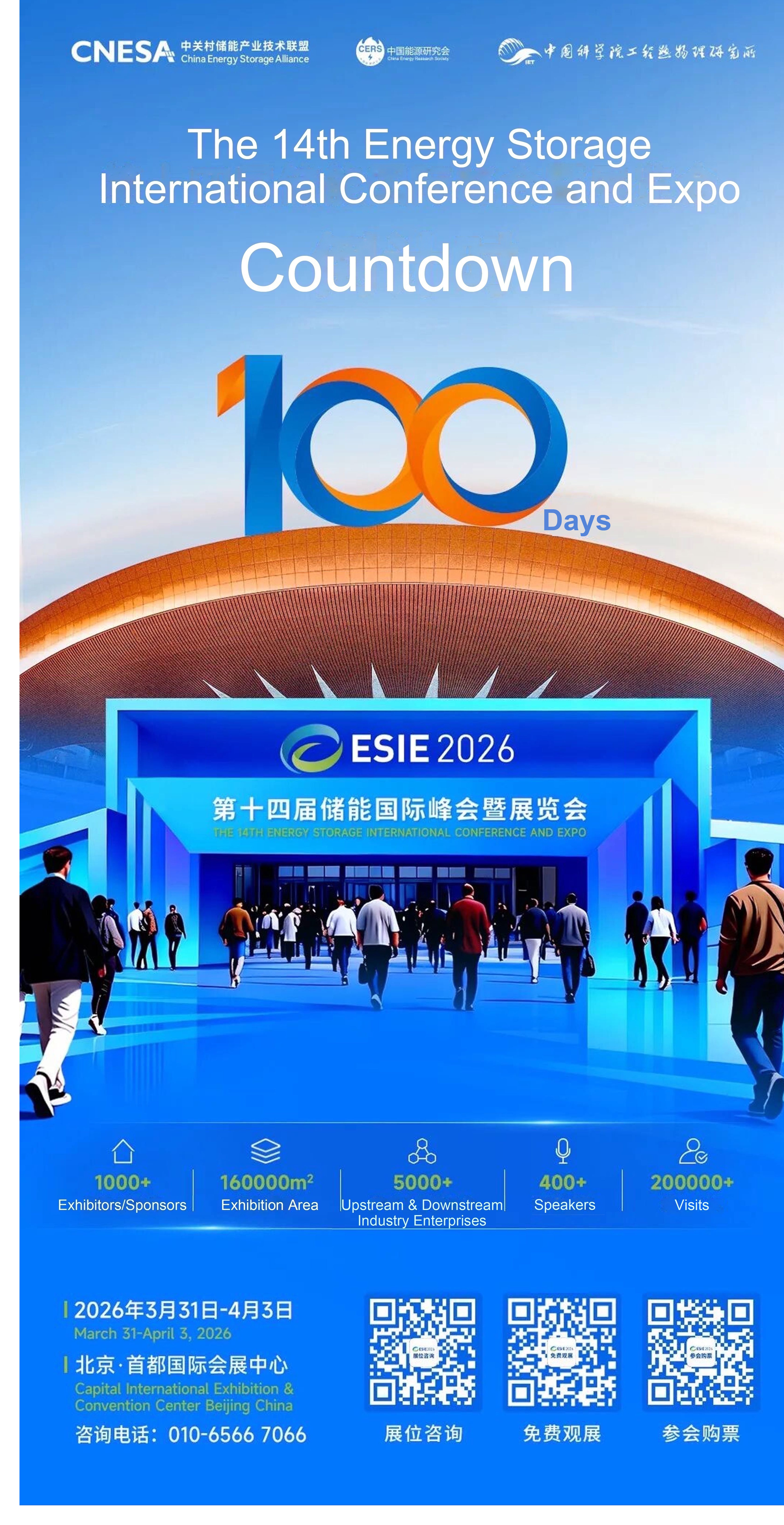
Countdown: 100 Days to Go! - ESIE 2026 Energy Storage Expo Announces First Batch of Exhibitors
Source: CNESA
The 14th Energy Storage International Conference & Expo (ESIE 2026)
March 31 - April 3, 2026
Capital International Exhibition & Convention Center, Beijing, China
With just 100 days remaining until the opening of the 14th Energy Storage International Conference & Expo (ESIE 2026), anticipation across the industry continues to build. Momentum is accelerating, and companies are actively registering to exhibit.
As exhibitor recruitment enters its final countdown, this landmark event - designed to build industry consensus, drive technological innovation, and foster global exchange - warmly invites energy storage professionals worldwide to gather in Beijing.
Exhibition Overview
ESIE 2026 will feature 6 themed exhibition halls:
Energy Storage & Power Equipment Hall
Battery & Intelligent Manufacturing Hall
2 Energy Storage Application Halls
Battery & Materials, International Hall
Future Ecology Hall
In addition, 9 specialized zones will be set up, covering:
power equipment, zero-carbon industrial parks, data centers, EV charging infrastructure, fire safety, intelligent manufacturing, hydrogen energy, materials, and testing & certification.
Together, the exhibition comprehensively covers enterprises across the entire upstream and downstream energy storage industry chain.
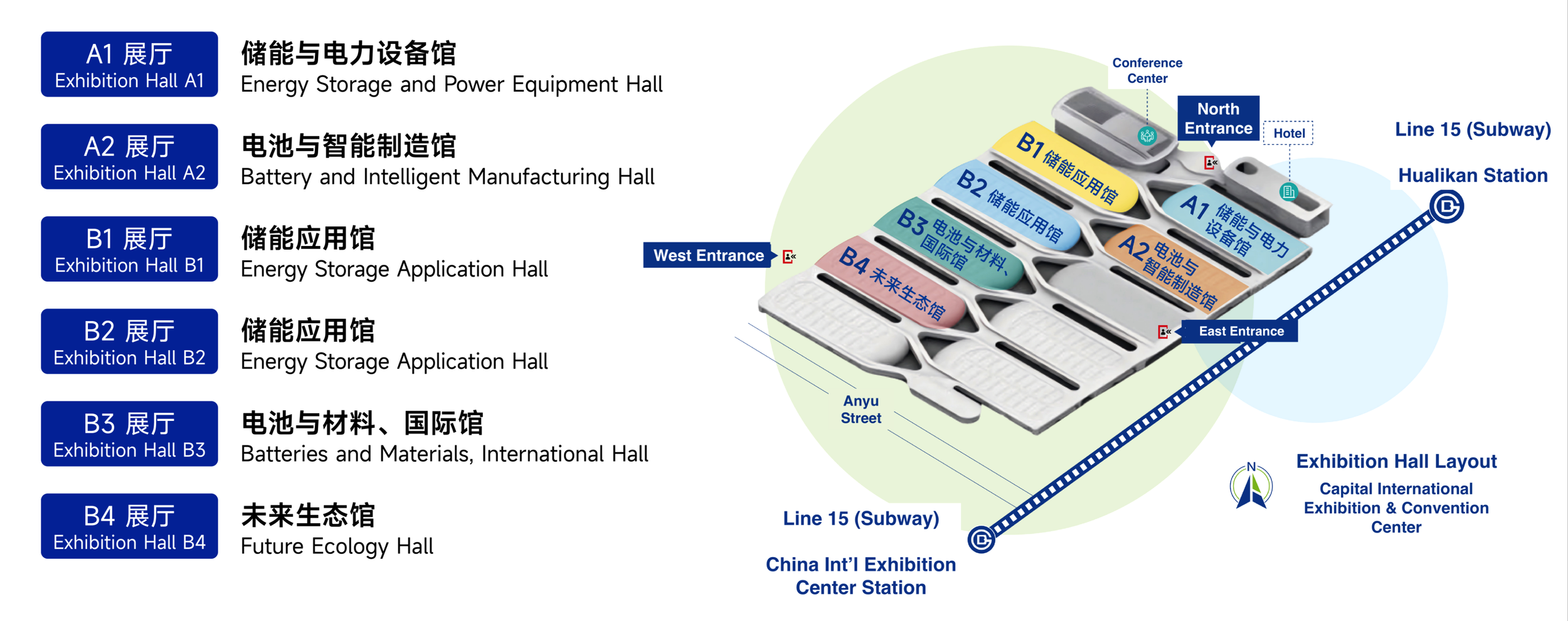
Figure | Layout Plan of the 14th Energy Storage International Conference & Expo
A1 - Energy Storage & Power Equipment Hall
Well-known brands exhibiting include: HyperStrong, EVE Energy, Zhongqi New Energy, Pengcheng Infinite, CLOU, Zhongchu Guoneng, Great Power, Inpai Battery, Huadian Heavy Industries, Hongzheng Energy Storage, Chint Electrics, Guodian Nanjing Automation, Elecnova, Envicool, Qianye Technology, Tiansu, Futronics, Dafu Integrated Equipment Technology, UTL Electrical, Winsure Communication, Sanwo Liyuan, Fans-tech Electrical, Kait, Qingyuan HeYi, YNTECH, Regal Rexnord, and more.
A2 - Battery & Intelligent Manufacturing Hall
Exhibitors include: CATL, Soaring Electric, XYZ Storage, Kehua Digital Energy, Cornex, Sineng Electric, NR Electric, AlphaESS, Hopewind, Ampace, Nebula Electronics, Autowell, Gaodengsai Energy, RelyEZ, Phoenix Contact, Youxing Shark, Lead Technology, Iron Man Fire Fighting, RePower Technology, Kelvin New Energy, Huasi Systems, Ligoo New Energy, Zonzsin, Tangent, Xenbo Heat Sink, Ubetter, Yaliqu, Heidun Cloud, Luoweite, National Center for Advanced Energy Storage Product Quality Inspection & Testing, Balance Intelligent Fire, and others.
B1 - Energy Storage Application Hall
Participating companies include: CRRC Zhuzhou Institute, Gotion High-Tech, Goldwind, Huawei, Sunwoda, Hoymiles, Hithium, Ganfeng, KE Electric & Hisense, Pylontech, Zhiguang Energy Storage, Liangxin Electrical, Ancheng New Energy, Xingchen New Energy, Gold Electronic, TCL, PULSST, Advantech, Chuancheng Energy Storage, SAV, SGS-CSTC Standards, TYT, Xinyuan Tech, Enerflow, Hysea, Stif, TIG Technology, Candera, TYES Energy Storage, among others.
B2 - Energy Storage Application Hall
Exhibitors include: Sungrow, CALB, Narada, REPT BATTERO Energy, Robestec, Windey Energy, iPotisEdge, TONGFEI, Siyuan Electric, Dongfang Electric, InfyPower, Xiqing, HYXiPOWER, Kgooer, Xiamen Hongfa, Qualtech, REsource Electric, HIGEE, State Energy XinControl, Beijing Micro Control Industrial Gateway Technology, Rongke Power, BMSER, Sinofuse, Southern CIMC, EMKA (Tianjin), Lanrui Electric, Hecheng Smart Electric, ZONZEN, Kefa Electronics, and more.
B3 - Battery & Materials, International Hall
Exhibitors include: Shuangdeng Group, Megarevo, Concord New Energy, Kstar, GoodWe, ZTT, Wocheng, Sigenergy, German Pavilion, Suqian Times, CVC Testing, SHENG YANG Electric, Heyuan Magnetics, Shentong Mechanical & Electrical, TOPOS, Honghaisheng, Dianwei, Carbon Energy Technology, WILO SE, Cergen New Energy, Longxiang Rubber, Onpow Push Button, Hefei Zhiyou Electric, WSF, CHEVRON Electronic, and others.
B4 - Future Ecology Hall
Exhibitors include: Envision Storage, BYD, Trina Storage, Singularity Energy, Longking, CSG Energy Storage, Jinko, State Power Rixin Technology, Contemporary Nebula Energy Technology, iBatteryCloud, Gresgying, CSG Technology, Wincell, ESF Technology, Sino Group, and more.
One-Stop Access to Cross-Sector Energy Storage Innovations
Visitors can explore a wide range of integrated application scenarios, including:
Energy Storage + Industry: Steel, cement, chemicals, petroleum, aluminum, coal, oilfields, and more - discover how energy-intensive enterprises reduce costs and improve efficiency with storage solutions.
Energy Storage + Wind & Solar: BIPV storage, CIPV storage, source-grid-load-storage integration, PV-storage-DC-flexible systems - all solutions for coordinated renewable and storage development.
Energy Storage + Desert & Gobi Mega Bases: Wind-solar-storage bundled transmission, grid-forming storage, multi-energy complementarity (wind + solar + storage + coal/solar thermal), and ecological desert control - unlock efficient desert energy utilization.
Energy Storage + Zero-Carbon Parks / Green Power Direct Supply: Microgrids, distributed PV-storage consumption, dedicated green power lines, peak-valley arbitrage, emergency backup, and green power traceability - ensuring stable green electricity supply.
Energy Storage + Data Centers / Telecom Base Stations: Backup power, peak-valley arbitrage, off-grid power supply, and green power integration - supporting stable and cost-efficient digital infrastructure.
Smart Energy: Smart grids, microgrids, virtual power plants, distributed energy management systems, and energy IoT platforms - key tools for future energy management.
Energy Storage + Transportation: Vehicle-to-grid interaction, charging and swapping facilities, PV-storage-charging stations, EVs, electric heavy trucks, low-altitude economy, and new energy solutions for ports and airports.
Innovative Energy Storage Technologies: Hydrogen energy; chemical storage (sodium-ion, solid-state, aqueous, all-vanadium flow, etc.); physical storage (compressed air, flywheel, gravity, molten salt, etc.).
Preparations for ESIE 2026 have entered the full-scale sprint phase. The organizing committee is advancing all work in a coordinated and efficient manner to deliver a high-level professional exchange platform for the industry.
Exhibition booths are now in short supply, with only a limited number of premium locations remaining. Energy storage enterprises across the entire value chain are warmly invited to join ESIE 2026 - uniting around technological innovation, advancing industrial upgrading, and jointly shaping a high-quality future for the new energy storage industry.
Register Now to attend, free before Dec 31, 2025:
https://mailchi.mp/2a7b423a7efb/esie-2026-registration-socialmedia
Promoting Electric Vehicles in Beijing
Beijing is putting out policies to get more EVs on the road.
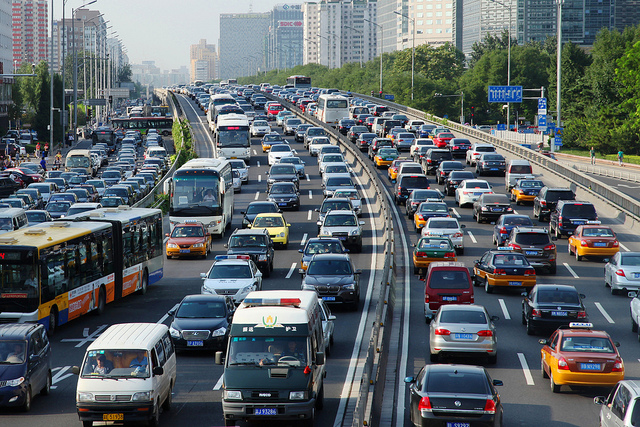
As one of the first cities in China to promote electric vehicle use, Beijing has been at the forefront of efforts to increase the number of EVs on the road. EV use in Beijing is now moving from a pilot phase towards broader commercial development. During our annual conference last month – Energy Storage China 2015 – Director Chen Chu of the Beijing Electric Vehicle Development Center described the state of affairs for electric vehicles in the capital. Here are some of his observations and our own analysis.
Beijing EV Policies
Broadly speaking, the Beijing municipal government is focusing its attention on all-electric vehicles and the creation of an effective industrial chain. Director Chen emphasized the importance placed on promoting R&D and manufacturing, demonstration projects, and building up EV infrastructure to create a supporting framework for the industry.
In terms of policy, the municipal government has passed nearly a dozen regulations, procedures, and notices related to EVs and infrastructure since 2014. Most notable were policies related to EV purchasing and measures to establish an EV policy framework. In 2015, we’ve seen new policies come out governing new applications for EV technology and extending EV infrastructure.
| Date | Policy |
| February 2014 | Beijing Municipal Procedures for Management of Electric Passenger Car Demonstration Projects |
| February 2014 | Beijing Municipal Regulations on EV Manufacturers and Product Auditing for Electric Passenger Car Demonstration Projects |
| March 2014 | Beijing Municipal Regulations on Financial Subsidies for Electric Passenger Car Demonstration Projects |
| June 2014 | Beijing Municipal Regulations on Construction of Private Charging Infrastructure for Electric Passenger Car Demonstration Projects |
| June 2014 | Notice on Promoting the Installation of Private EV Charging Infrastructure in Existing Residential Complexes |
| July 2014 | Notice on Promoting the Installation of Private EV Charging Infrastructure in Property Management Areas |
| July 2014 | Beijing Municipal EV Promotion Action Plan (2014-2017) |
| March 2015 | Notice on Financial Policies for the Purchasing of Electric Vehicles |
| March 2015 | Notice on Incentives for Early Retirement or Upgrading of Taxis |
| April 2015 | Notice on Questions Regarding Beijing EV Charging Station Service Fees |
| May 2015 | Notice on Exemption of Electric Passenger Cars from Working Day Rush Hour Road Space Limitations |
Three policy documents published in 2015 are particularly interesting:
- The “Opinions on the Beijing Municipal Public Facilities Deployment Index,” a document that, among other things, specifies the allocation of parking spaces in publically-owned buildings, also included a clause reserving 18% of parking spaces in residential complexes for electric vehicles.
- The “Notice on Exemption of Electric Passenger Cars from Working Day Rush Hour Road Space Limitations,” published in May, exempted small passenger EVs from rules that restrict the number of passenger cars on Beijing’s streets during the week.
- The “Notice on Questions Regarding Beijing EV Charging Station Service Fees,” passed in April, allows operators of public EV charging stations to charge users a service fee. This fee is based on the price of gasoline, and is designed to incentivize the build-out of future charging stations. Specifically, the document specifies that the service fee cannot exceed 15% of the price of one liter of 92-octane gasoline per kilowatt-hour charged.
Collectively, these policies clarify the rules on EV infrastructure, traffic management methods, and EV charging services. They reaffirm the city’s commitment to supporting EV development and the promotion of EVs in the consumer market.
EV Support Platforms
The city has also designed a number of software platforms to promote the expansion of the city’s EV fleet.
One such platform monitors and collects information on the battery power, vehicle status, and the geographic location of public-use electric vehicles.
Another, the Beijing EV Charging Facility Smart Management Platform, provides internet access to electric vehicles, thus giving drivers access to the current status and location of charging facilities. The platform also helps drivers navigate to charging stations and reserve a charging space in advance.
The National EV Testing Service Platform, one other such service, tests the performance of an EV and its components, including a vehicle’s drive and control systems, battery, and charging capacity.
EV Development Strategy
The city is currently working to build a hierarchical public transportation system. This includes promoting EVs for use as taxis, in delivery services, and in hourly car rentals. In terms of infrastructure, the city government has described its strategy as emphasizing slow charging for private vehicles and fast charging for public transportation.
The city is also actively exploring home charging, distributed charging stations, and park and ride charging stations at rail stations.
The Beijing city government’s active stance on EV policy suggests that the industry is picking up speed. It also show that EVs are a part of the city’s strategy to fight air pollution.
CNESA will continue to follow these developments.
Sign up for our free monthly newsletter to stay informed about the Chinese energy storage market.