

Latest News
The 6th Energy Storage Safety Forum Successfully Held in Hefei
With the diversification of energy storage technologies, application scenarios are rapidly expanding beyond traditional power systems into emerging fields such as industrial manufacturing, data centers, and zero-carbon parks. However, these emerging applications have much lower tolerance for fire risks, presenting unprecedented challenges to the safe development of the energy storage industry. At this critical stage, the 6th Energy Storage Safety Forum, themed “AI Empowering Energy Storage Risk Management and Control, Safety Building a Sustainable Future”, aimed to build industry consensus, address key safety challenges, and promote the stable and sustainable growth of the energy storage sector.
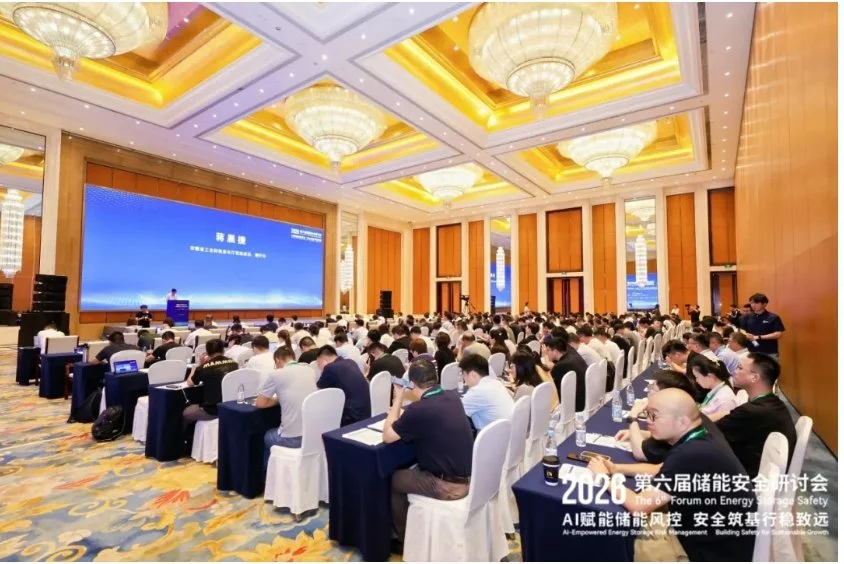
On July 17, 2026, the 6th Energy Storage Safety Forum was successfully held in Hefei, Anhui Province. The event was organized by the China Energy Storage Alliance (CNESA), and co-organized by the National Energy Storage Technology Industry-Education Integration Innovation Platform of Tianjin University, the CNESA Energy Storage Safety Committee, and Gotion High-tech. The forum brought together government officials, industry leaders, academic experts, and research institutions to jointly explore pathways toward safer and more sustainable energy storage development.
The opening ceremony gathered representatives from government authorities, leading research institutions, and enterprises. Attendees included Wang Shijiang, Deputy Director of the Department of Electronic Information of the Ministry of Industry and Information Technology (MIIT); Xu Ziming, Deputy Director of the Electricity Safety Supervision Department of the National Energy Administration (NEA); Jiang Chenyue, Member of the Party Leadership Group and Deputy Director of the Anhui Provincial Department of Industry and Information Technology; Zeng Xiaoming, Member of the Party Leadership Group and Deputy Director of the Anhui Energy Bureau; Sun Jinhua, Academician of the European Academy of Sciences and Professor at the University of Science and Technology of China; Chen Zhongwei, Fellow of the Royal Society of Canada and the Canadian Academy of Engineering; Chen Haisheng, Director of the Institute of Engineering Thermophysics at the Chinese Academy of Sciences; Yang Quanhong, Chair Professor at Tianjin University; Zhuo Ping, Director of the Fourth Research Division of Tianjin Fire Research Institute under the Ministry of Emergency Management; Wang Qisui, Executive President of Gotion High-tech; and Yu Zhenhua, Executive Vice Chairman of CNESA.
The forum also received strong support from organizations and companies including the School of Energy and Power Engineering at Tianjin University, Sungrow, Envision Energy, Honeywell China, Xien Technology, Pengcheng Infinite, Benji Electric, Yangyi Technology, and Huachu Technology. The opening ceremony was hosted by Liu Wei, Secretary General of CNESA.
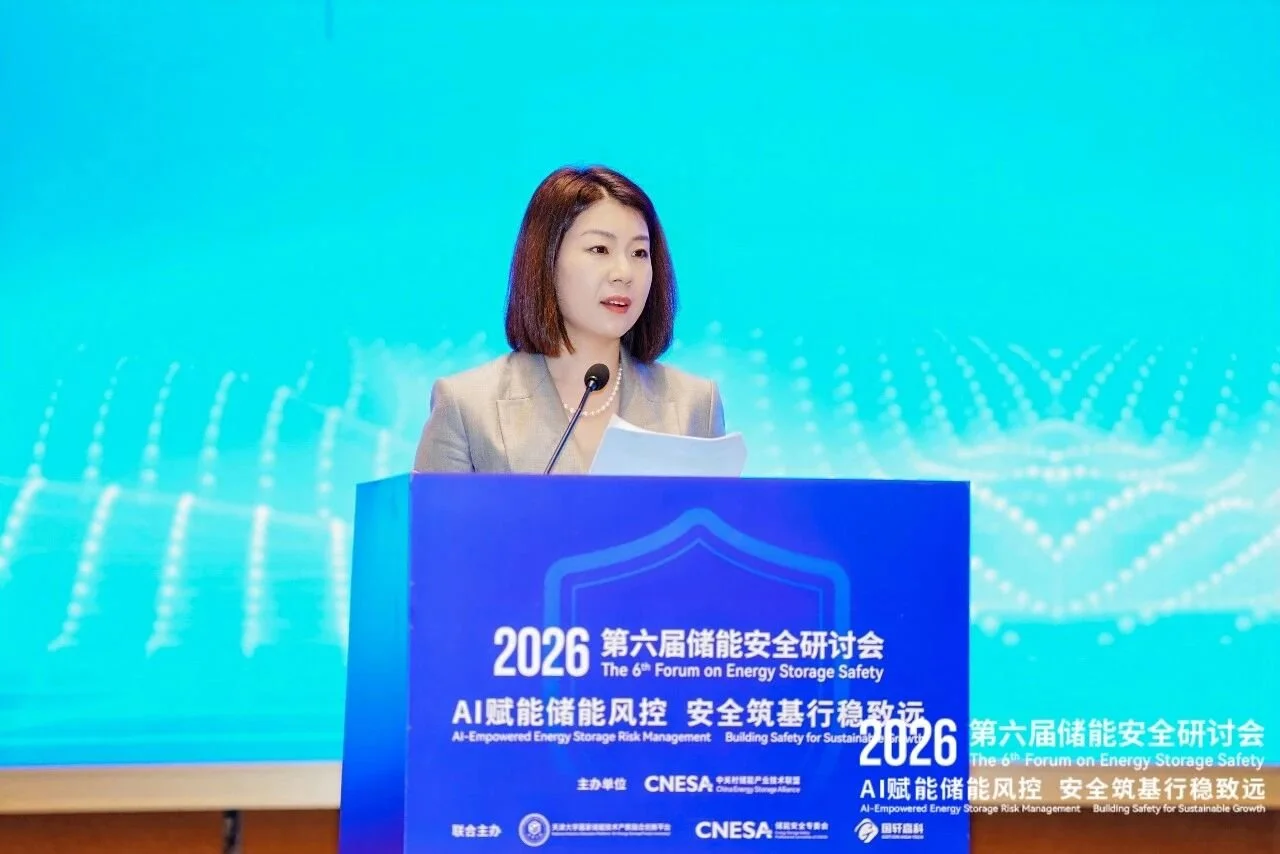
Opening Remarks: Balancing Energy Storage Safety and Development
In his opening speech, Wang Shijiang stated that energy storage is a key driver for achieving China’s dual-carbon goals. The country’s energy storage industry is currently developing rapidly, with strong momentum. In the first quarter of 2026, China’s energy storage lithium battery output reached 185GWh, representing year-on-year growth of more than 100%. Meanwhile, technological innovation continues to accelerate, with applications expanding across power systems, industrial sectors, and zero-carbon parks.
However, safety risks have become a major bottleneck restricting high-quality industry development. Wang emphasized that MIIT’s Department of Electronic Information will coordinate both development and safety, focusing on four key areas:
Strengthening top-level planning and guiding the industry’s transition from scale expansion toward quality improvement and enhanced safety;
Regulating market competition and fostering a healthy industrial ecosystem;
Establishing a strong safety foundation by accelerating the development of national standards, including safety grading evaluation standards for energy storage batteries;
Enhancing technological innovation to prevent and mitigate safety risks at the source.
He called for deeper collaboration across the industry to jointly promote safe, healthy, and sustainable development of energy storage.
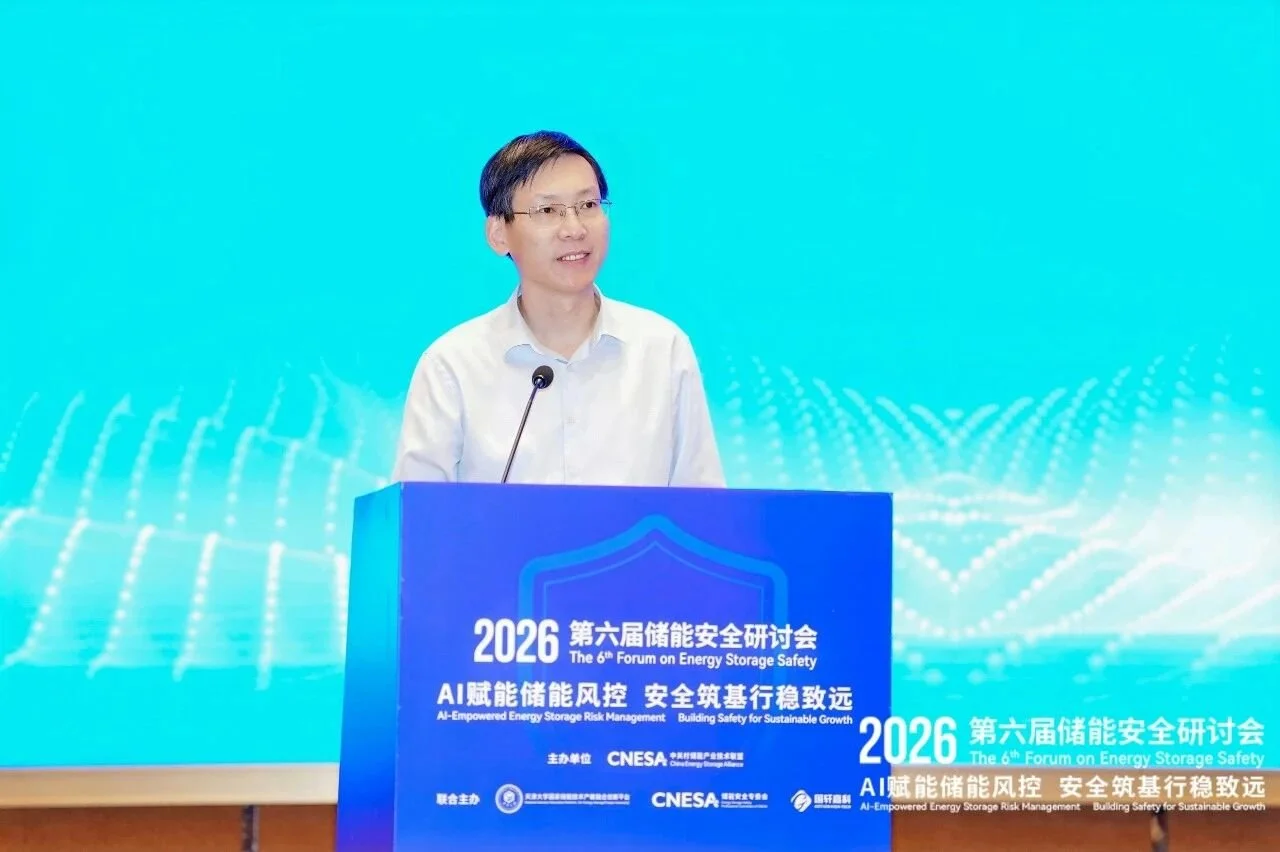
Jiang Chenyue
Deputy Director, Anhui Provincial Department of Industry and Information Technology
Jiang Chenyue highlighted Anhui’s strong industrial growth, noting that the province’s industrial output value has increased from RMB 3.8 trillion at the beginning of the 14th Five-Year Plan period to RMB 5.5 trillion, with its national ranking rising from 12th to 6th place.
In the energy storage sector, Anhui has established a complete industrial chain covering materials, batteries, and systems. Multiple technology routes are developing in parallel, and the industry scale has grown sixfold since the beginning of the 14th Five-Year Plan period, surpassing RMB 1 trillion last year. Leading companies such as Gotion High-tech and Sungrow have emerged as globally competitive enterprises, with energy storage battery cells and system shipments ranking among the world’s leading levels.
Looking ahead to the 15th Five-Year Plan period, Anhui will prioritize new energy storage as a key sector within its “1188” modern industrial system. The province will further integrate industrial development with technological innovation, strengthen market players, accelerate commercialization of new technologies and products, and build an ecosystem integrating government, industry, academia, research, finance, services, and applications.
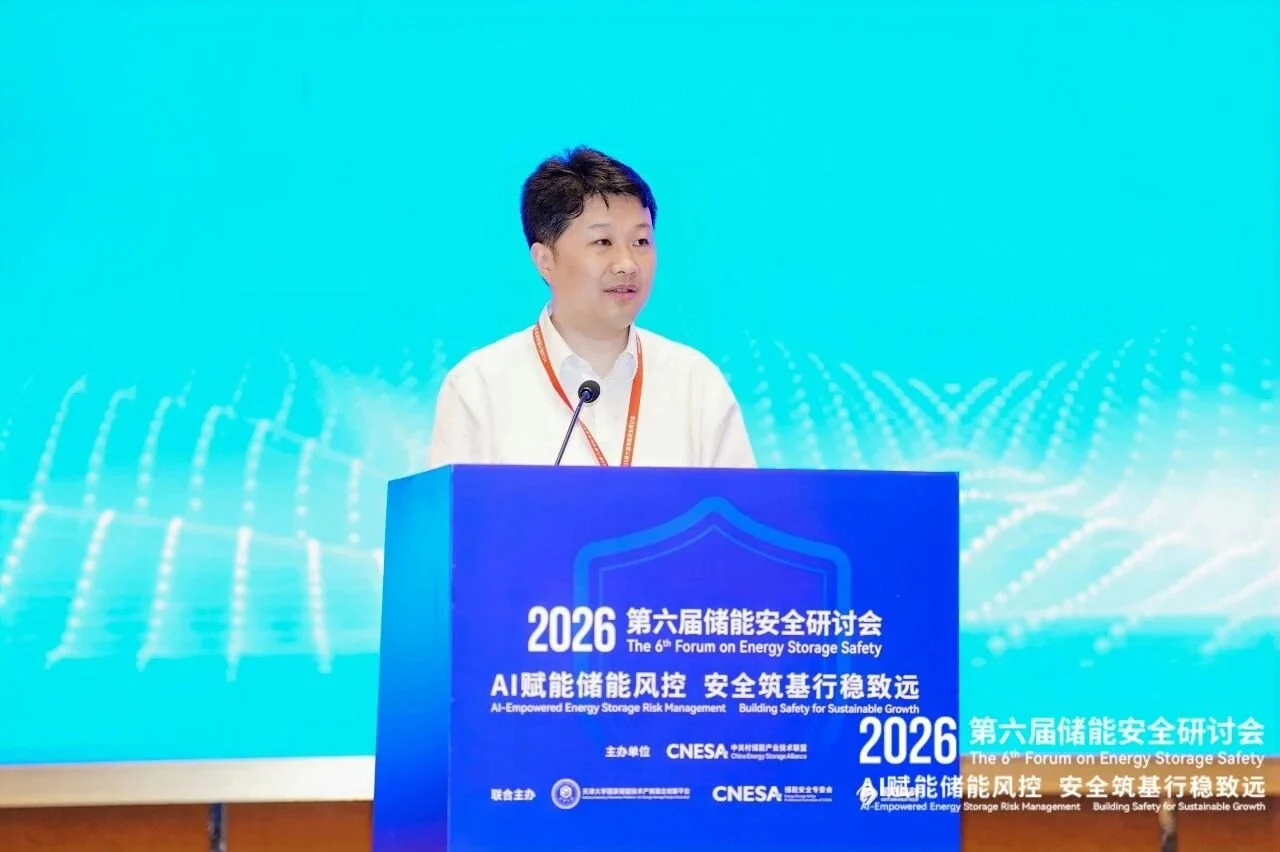
Chen Haisheng
Chairman of CNESA; Director of the Institute of Engineering Thermophysics, Chinese Academy of Sciences
Chen Haisheng stated that 2026 marks a critical year for China’s new energy storage industry as it transitions from large-scale expansion toward high-quality growth.
By the end of June 2026, China’s cumulative installed capacity of energy storage projects reached 237.2GW, representing year-on-year growth of 41.4%. Among this, new energy storage accounted for 168.2GW, exceeding 70% of total capacity. Newly installed capacity reached 21.64GW/58.20GWh, while storage duration continued to increase and technology pathways rapidly evolved.
Despite rapid industry expansion, safety challenges remain the most critical issue facing the sector. Chen emphasized that CNESA will continue strengthening international cooperation, building a global energy storage safety platform, developing comprehensive safety systems, and supporting the global transition toward green and low-carbon energy.
Emerging Insights: Tackling Energy Storage Safety Challenges Across the Entire Value Chain
A clear trend is emerging: energy storage safety innovation is moving beyond battery cell-level protection toward a comprehensive approach integrating battery innovation, system architecture, intelligent operation and maintenance, safety standards, and application scenarios.
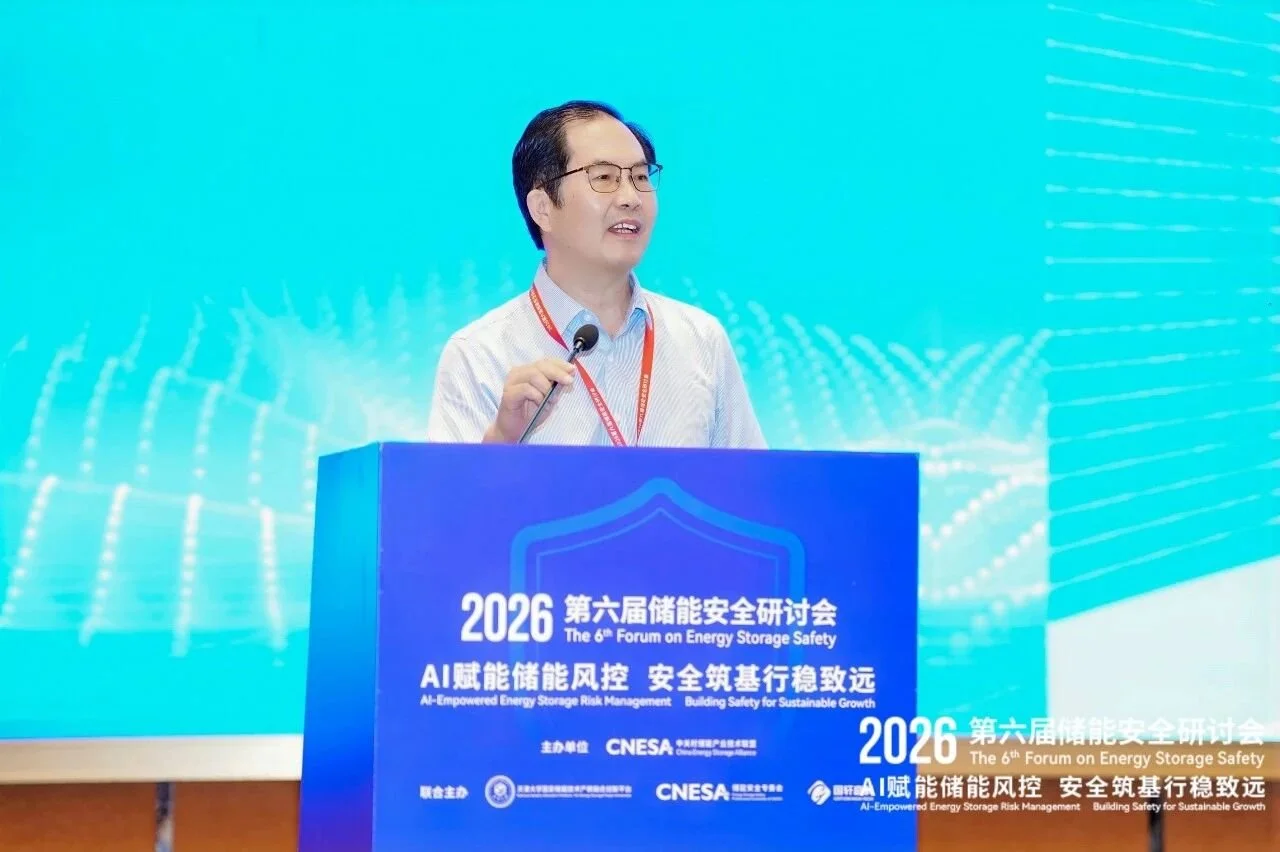
Sun Jinhua
Academician of the European Academy of Sciences; Professor, University of Science and Technology of China
In his presentation titled “Fire Risks and Prevention Strategies for Energy Storage in Computing Power and Data Centers,” Sun Jinhua highlighted the rapid growth of electricity demand from artificial intelligence computing and data centers.
Electricity consumption by computing and data centers approached 200 billion kWh in 2025 and is expected to reach 526–700 billion kWh by 2030. With China requiring newly built data centers in national computing hubs to achieve at least 80% renewable electricity consumption, energy storage will become increasingly essential.
However, fire risks remain a major concern. Global energy storage fire probability is estimated at approximately 0.3%–0.4%, while data centers face higher potential losses due to concentrated assets and personnel, requiring much stricter safety standards.
Sun proposed three layers of safety protection:
Improving intrinsic battery safety through interdisciplinary research and AI technologies to reduce thermal runaway probability below 10⁻⁸;
Enhancing process safety through intelligent thermal management materials, fiber-optic in-situ monitoring, and integrated thermal management and early-warning technologies;
Optimizing firefighting solutions through technologies such as liquid nitrogen extinguishing and multiple-stage suppression.
He emphasized the need to develop intelligent safety management platforms integrating remote monitoring, predictive analysis, multi-level warnings, and dynamic response capabilities.
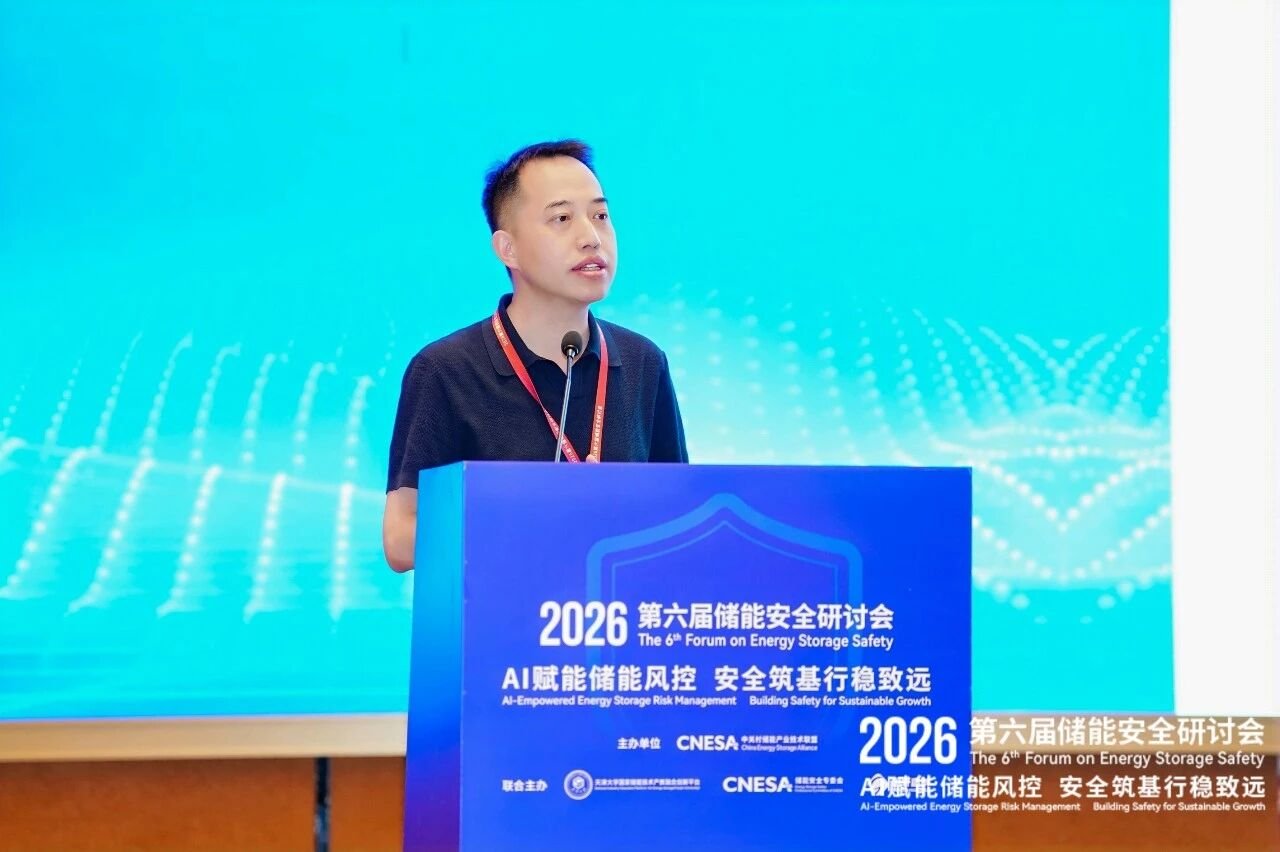
Chen Zhongwei, Fellow of the Royal Society of Canada and the Canadian Academy of Engineering; Researcher and PhD Supervisor at the Dalian Institute of Chemical Physics, Chinese Academy of Sciences.
Chen Zhongwei delivered a keynote speech titled “Building an Intelligent Management System for the Full Life Cycle of Electrochemical Energy Storage.”
He identified five major challenges in the energy storage industry: design, manufacturing, management, operation and maintenance, and electricity market participation. AI-based full life-cycle management provides a key solution.
Since 2015, Chen’s team has focused on integrating electrochemistry and artificial intelligence, achieving breakthroughs in:
Building battery industrial databases covering design, manufacturing, management, and operation;
Developing AI-assisted battery design based on electrochemical simulation;
Creating electrochemistry-AI coupled models for battery health evaluation;
Establishing closed-loop manufacturing optimization through production data and performance feedback;
Applying AI algorithms and robotics for retired battery sorting and second-life utilization;
Developing high-precision algorithms for RUL, SOC, and SOH estimation.
Based on these technologies, the team developed the Energy Storage AI Intelligent Monitoring System, establishing a three-level health diagnosis framework covering cells, battery containers, and entire energy storage stations.
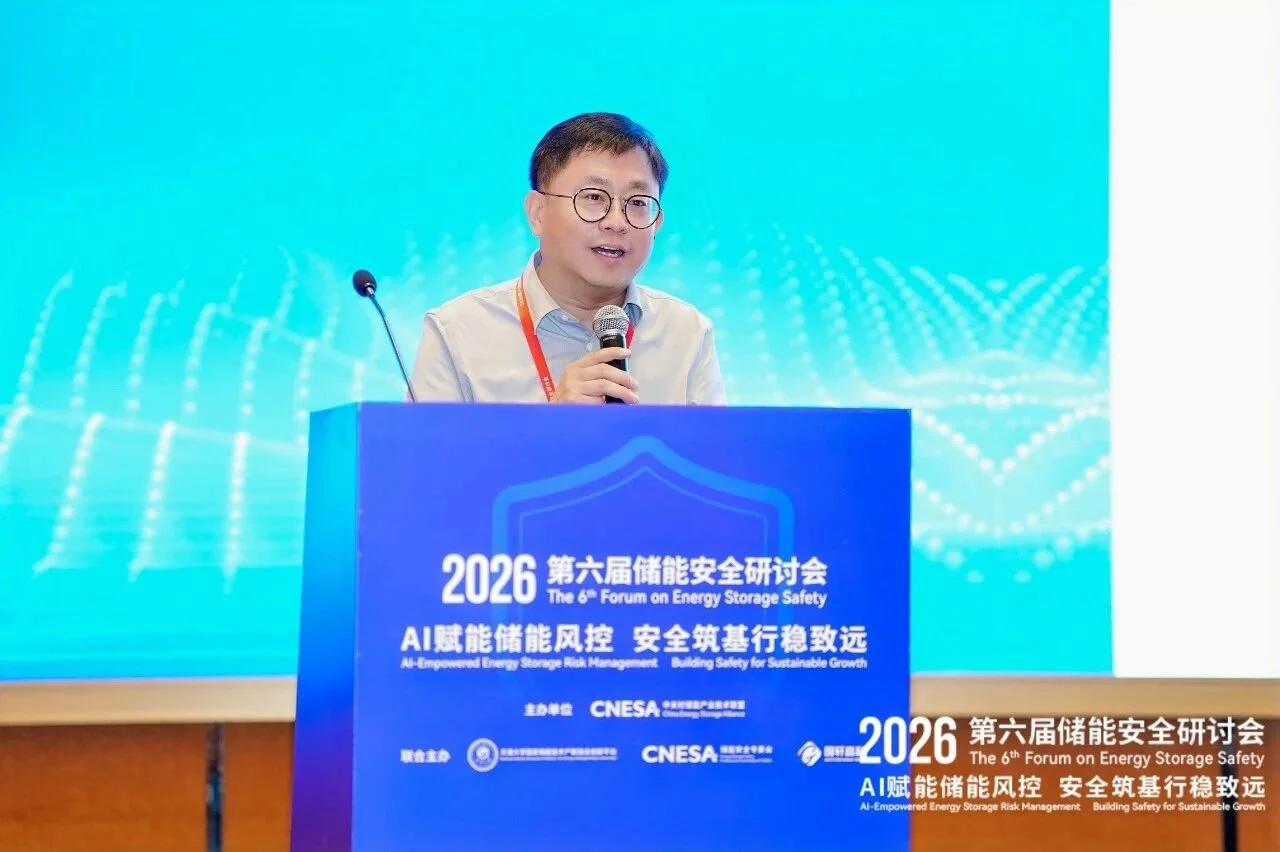
Yang Quanhong
Chair Professor, Tianjin University
Yang Quanhong discussed “Water Management in Intrinsically Safe Aqueous Zinc Batteries: Fundamental Principles and Solutions.”
He emphasized that future energy storage technologies must achieve high safety, low cost, and resource sustainability. Aqueous zinc batteries represent a promising pathway due to their intrinsic safety and resource availability.
However, commercialization faces challenges caused by water-related reactions, including hydrogen evolution, corrosion, dendrite growth, cathode structural degradation, and limited cycle life.
The key solution lies in precise “water management,” including:
Water reaction management;
Water demand management;
Water state management;
Advanced conversion-type cathode technologies.
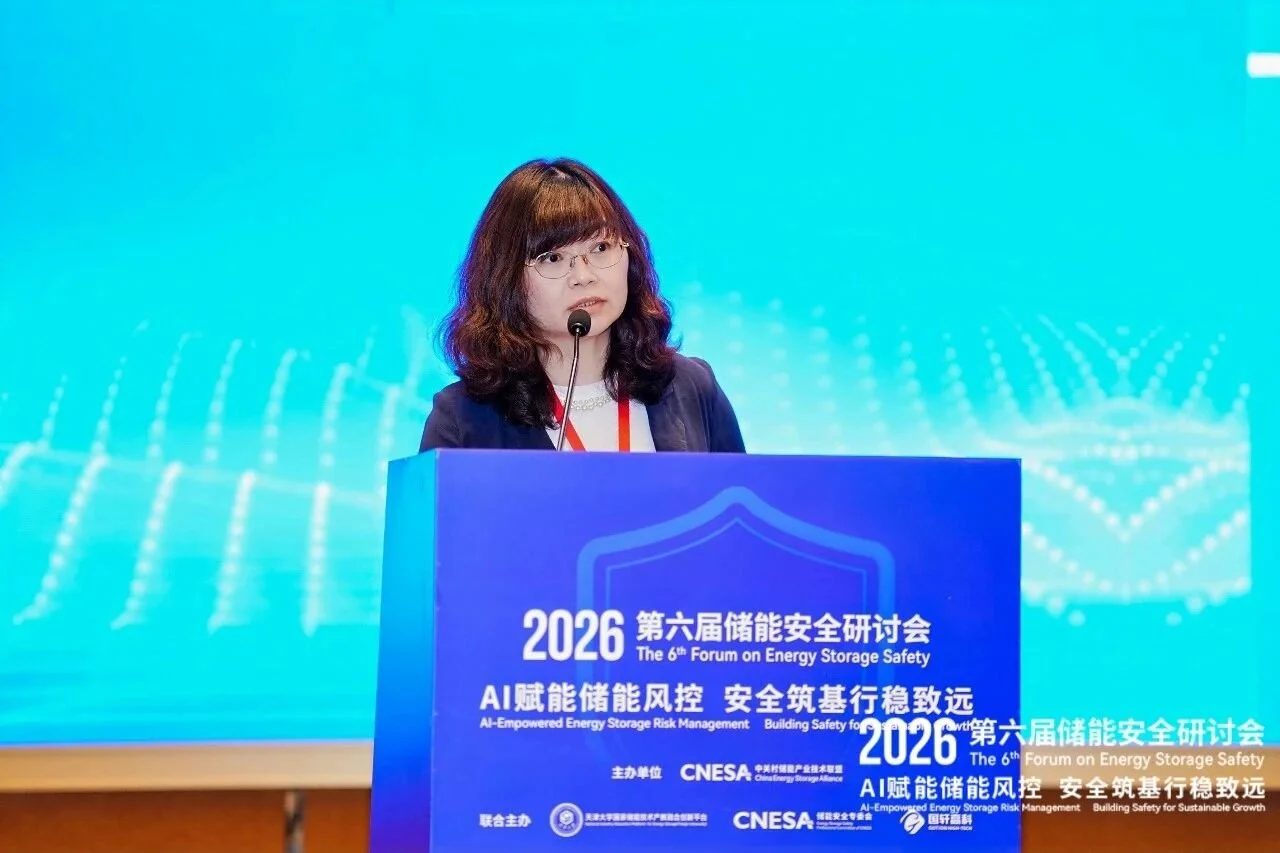
Zhuo Ping
Director, Fourth Research Division, Tianjin Fire Research Institute, Ministry of Emergency Management
Zhuo Ping introduced China-led international standards research on energy storage fire safety.
She explained that energy storage fire scenarios should consider four major safety objectives:
Life safety;
Property protection;
Environmental protection;
Cultural heritage protection.
Fire scenarios should incorporate different application characteristics, ignition sources, fire types, firefighting systems, and human behaviors.
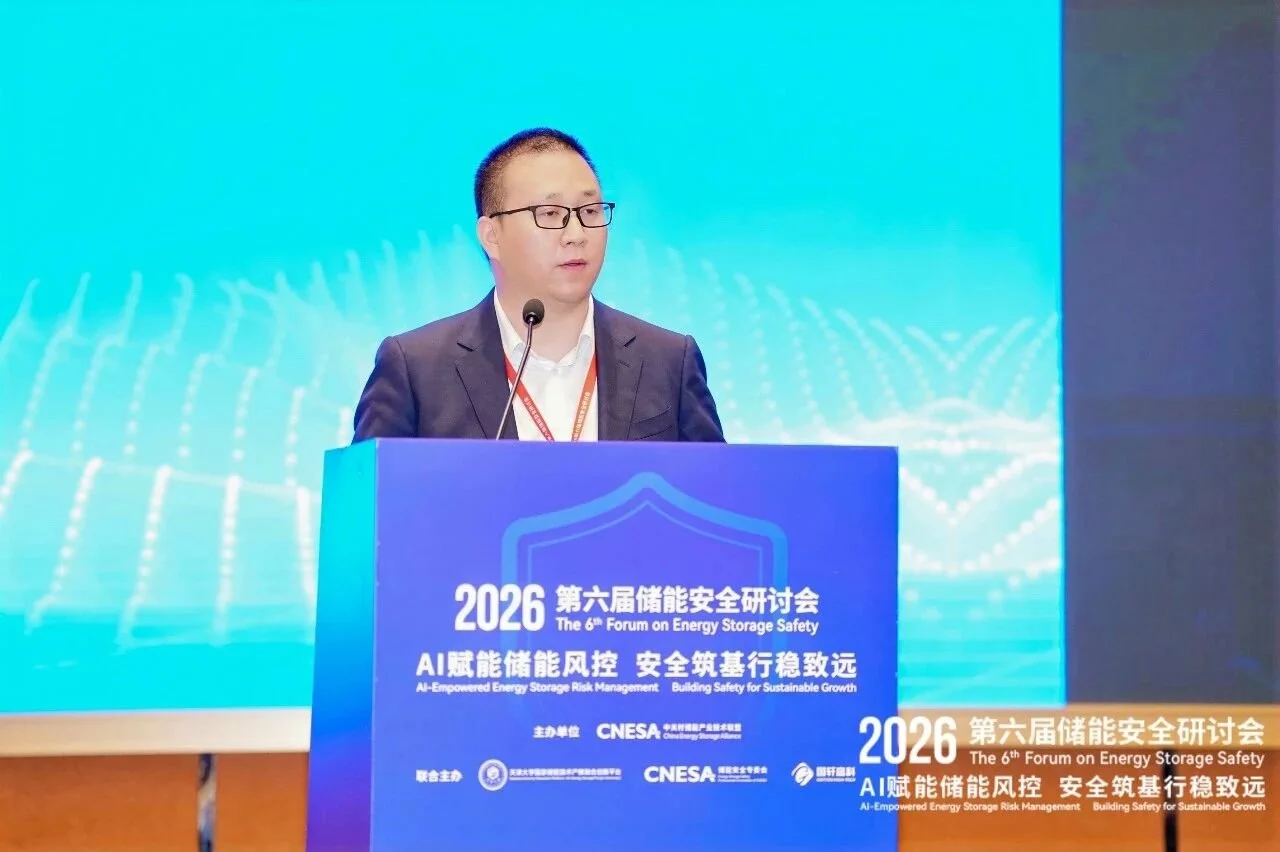
Zhang Peidao
Solution Director, Energy Storage Business Division, Gotion High-tech
Zhang Peidao shared industrial practices under the theme “Architectural Innovation of Energy Storage Systems in New Power Systems.”
He noted that energy storage faces challenges including efficiency improvement, safety risks, high availability requirements, and life-cycle cost optimization.
Gotion High-tech addresses these challenges through architectural innovation:
The Qianyuan Intelligent Energy Storage 2.0 grid-forming high-voltage cascade storage system directly connects to 6–35kV grids without transformers;
System efficiency exceeds 92%;
AI-based predictive maintenance improves operational efficiency by 50%;
Multi-dimensional sensing and fire protection systems create layered safety protection;
Modular design reduces land occupation by 38%.
The solutions have already been applied in projects including user-side storage in Jinzhai and grid-side storage in Lujiang.
Roundtable Discussion: AI Empowering Energy Storage Safety from Passive Protection to Active Intelligence
The roundtable focused on how AI can transform energy storage safety from passive prevention to proactive intelligence.
Hosted by Wang Qingsong, Researcher at the University of Science and Technology of China and Chairman of the CNESA Energy Storage Safety Committee, the discussion gathered experts from grid operators, equipment manufacturers, industrial software providers, sensor companies, and AI technology companies.
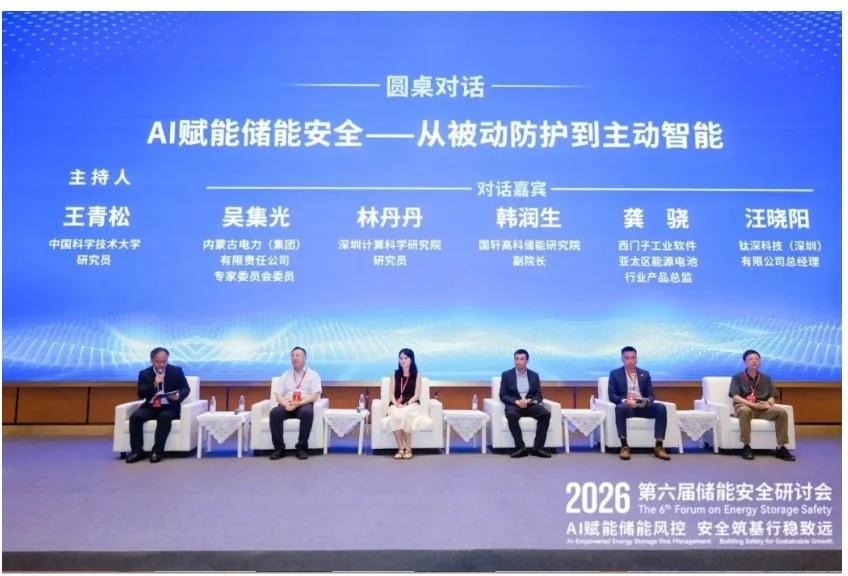
Participants agreed on three major conclusions:
The transition from passive protection to active intelligence is inevitable.
AI will not replace intrinsic battery safety, hardware protection, or human operation, but will serve as an enabling technology connecting sensing, simulation, and decision-making.AI adoption should follow a gradual human-machine collaboration approach.
Challenges remain, including data silos, limited algorithm generalization, incomplete standards, and hardware adaptation issues.Full industrial collaboration is essential.
Energy storage intelligent safety requires cooperation among grid operators, battery manufacturers, research institutions, software companies, and sensor providers.
Launch of the New Intelligent Safety Ecosystem for Energy Storage
During the opening ceremony, Gotion High-tech initiated the establishment of the New Energy Storage Digital Intelligence Safety Ecosystem, bringing together universities, research institutions, and industry leaders.
Representatives from organizations including Beijing University of Science and Technology, University of Science and Technology of China, Hefei University of Technology, Gotion High-tech, Siemens Digital Industries Software, iFlytek, Tishen Technology, Inovance Technology, and CNESA participated in the launch ceremony.
Special Forums: Exploring the Future Path of Energy Storage Safety Technologies
Two parallel forums were held in the afternoon:
“Safety of Energy Storage Power Stations and Commercial & Industrial Storage Systems”
This forum focused on:
Implementation of safety standards;
Fire monitoring and early-warning technologies;
Fire risk assessment of large-scale lithium iron phosphate systems;
Immersion cooling technologies;
Full-chain safety solutions for sodium-ion batteries.
“AI and Energy Storage Safety”
This forum explored:
National-level energy storage operation data platforms;
Intelligent operation and maintenance technologies;
Big data platforms for power generation companies;
AI-driven life-cycle management of large-scale energy storage.
The 6th Energy Storage Safety Forum brought together government authorities, industry players, academic experts, and research institutions to explore the future of energy storage safety.
Participants agreed that safety is the foundation for high-quality energy storage development, and AI-driven technologies are accelerating the transformation from passive protection toward proactive intelligent safety management.
Looking ahead, only through collaboration across the entire value chain and continuous strengthening of safety foundations can the energy storage industry achieve sustainable growth and contribute Chinese solutions to the global green energy transition.

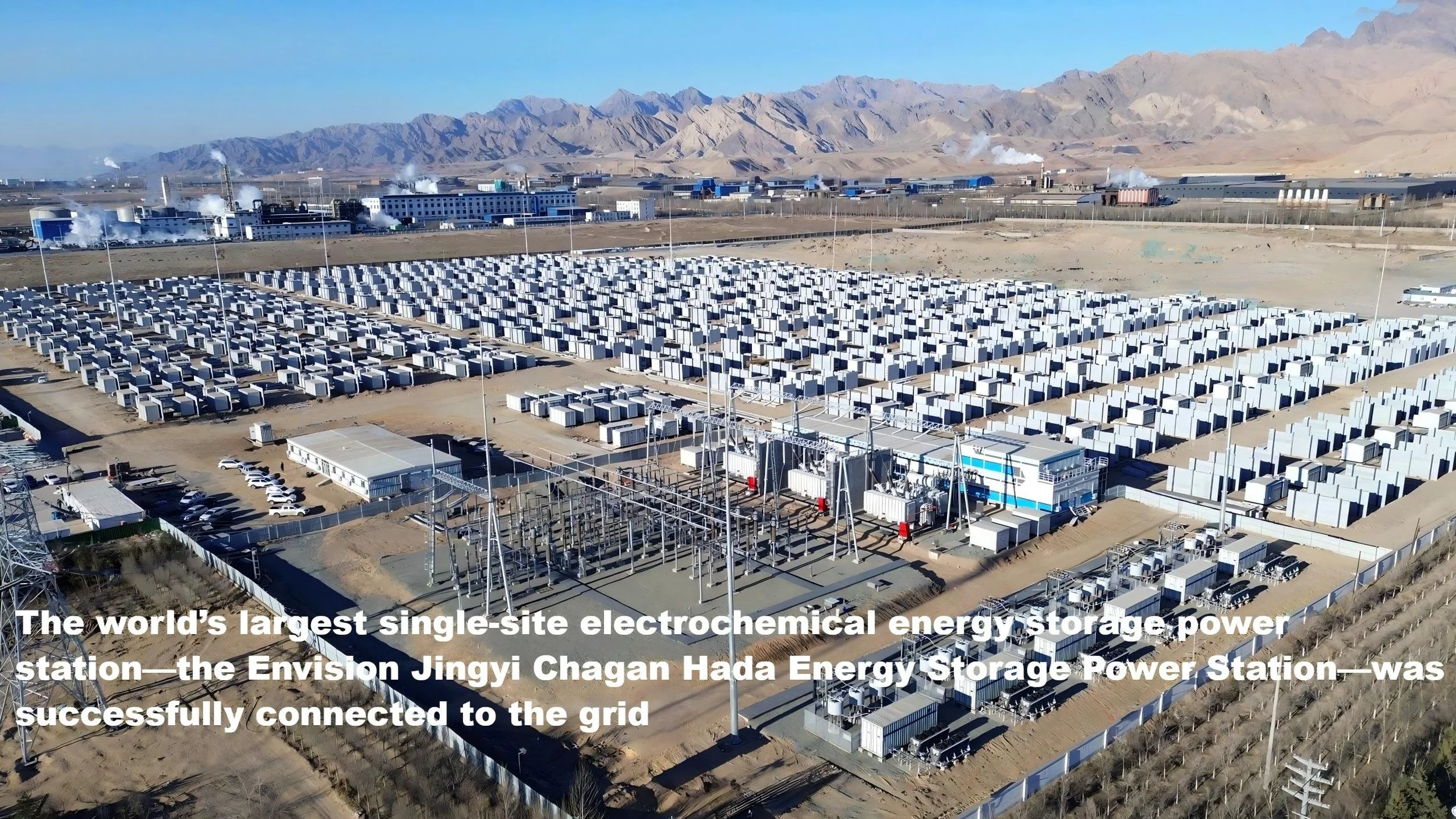
12.8 GWh Energy Storage Cluster Connected to the Grid AI-Powered Energy Storage Reshapes the Future of New Power Systems
The world’s largest single-site electrochemical energy storage power station—the Envision Jingyi Chagan Hada Energy Storage Power Station—was successfully connected to the grid, completing a 12.8 GWh AI-powered energy storage cluster in Inner Mongolia. The project sets new global benchmarks for scale, grid-connection speed, and system reliability, while demonstrating advanced grid-forming capabilities that enable rapid commissioning, deep grid interaction, and large-scale renewable integration.
Recently, the world’s largest single-site electrochemical energy storage power station—the Envision Jingyi Chagan Hada Energy Storage Power Station—was successfully connected to the grid. With a total capacity of 4 GWh, the project is fully equipped with Envision’s AI-powered energy storage system. This milestone marks the completion and grid connection of Envision’s 12.8 GWh energy storage cluster deployed across Bayannur, Ordos, Hohhot, Ulanqab, Xilingol League, and Alxa League. To date, Envision-led energy storage projects in Inner Mongolia exceed 14 GWh in total capacity.
The project passed grid verification at rated power through “three charge and three discharge” and a 72-hour continuous trial operation at one time, becoming the largest energy storage project in China to complete such testing. This achievement not only sets new global records for energy storage cluster scale and grid-connection speed, but also demonstrates Envision’s capabilities in ultra-large-scale system integration, extreme-environment adaptability, deep grid interaction, and large-scale project delivery.
Notably, the project’s grid connection coincided with the release of China’s Guidelines on Promoting High-Quality Power Grid Development by the National Development and Reform Commission (NDRC) and the National Energy Administration (NEA), highlighting strong alignment between national policy direction and industrial practice. Together, they signal that AI-centered energy storage technologies are reshaping the future of new power system from technological, market, and application perspectives.
Technology: From “Optional” to “Essential”
The Guidelines clearly state that power system regulation capabilities should be upgraded toward greater diversity and massive-scale coordination. They call for accelerated development of regulation capabilities for new grid-connected entities, including distributed renewable energy and new-type energy storage, to enable the coordinated and optimized dispatch of diverse and large-scale resources. The Guidelines also emphasize strengthening R&D in critical power grid technologies, targeting application scenarios such as deserts, Gobi and barren regions, integrated wind–solar–hydro systems, high-altitude areas, and deep and far-offshore environments. They propose piloting long-distance transmission from large-scale 100% renewable energy bases, and accelerating the engineering validation and deployment of grid-forming technologies.
It is said that Envision’s AI energy storage system deployed in Inner Mongolia integrates advanced capabilities from “grid-following” to “grid-forming”, enabled by a full-time-scale simulation platform and a three-layer grid-forming architecture spanning equipment, system, and site levels. This allows GW-scale stations to connect to the grid immediately upon energization, significantly reducing commissioning time, mitigating oscillation risks, and enhancing system support strength. As a result, energy storage evolves from a “grid follower” to a “grid builder,” providing a solid technical foundation for power systems with high shares of renewable energy.
Market: From Grid Connection to Market Participation
The Guidelines emphasize deep integration between market mechanisms and dispatch systems, and encourage exploration of new pricing mechanisms. This creates clear and predictable revenue pathways for AI-powered energy storage through participation in electricity spot markets, provision of ancillary services such as frequency and peak regulation, and access to capacity compensation and price arbitrage.
The 12.8 GWh energy storage cluster will be fully integrated into the electricity spot market. Leveraging Envision’s AI system—where trading agents and grid-forming agents operate in coordination—the project enables a closed-loop lifecycle operation covering forecasting, dispatch, trading, and self-learning. This approach not only enhances the intelligence, efficiency, and execution of power trading decisions, but also provides a replicable and scalable model for the large-scale participation of new-type energy storage in electricity markets. At the same time, it significantly improves regional renewable energy consumption and strengthens the operational resilience of the power grid. In previous deployments, Envision’s AI energy storage system has ranked first in trading forecast accuracy at several sites in Inner Mongolia for consecutive months. Based on measured operational data, the project is expected to increase total lifecycle returns by more than 20%.
Applications: From Single Use to Broad Scenarios
The Guidelines elevate smart microgrids as a key component of new-type power systems, unlocking vast opportunities for AI energy storage in industrial parks, zero-carbon parks, and remote areas. In these scenarios, AI-powered energy storage functions as a local energy brain, optimizing the coordination of generation, grid, load, and storage to maximize renewable self-consumption, enhance supply reliability, and enable higher-level grid interaction.
As power systems become increasingly clean and market-oriented, simple equipment aggregation is no longer sufficient. In high-renewable scenarios, AI-driven energy storage that balances grid stability with revenue optimization has become indispensable. The successful grid connection of the Inner Mongolia cluster underscores Envision’s leadership in physical AI and AI-enabled renewable energy solutions.
Envision has established a full industrial chain in Inner Mongolia, from battery cells and system integration to project delivery and intelligent operation. Leveraging its integrated capabilities, the project drives industrial clustering, injects new momentum into the local economy, supports the development of a new-type power system, and underpins the region’s efforts to accelerate the construction of a nationally important energy and strategic resources base.
This milestone delivery marks a successful conclusion to Envision’s energy storage business expansion in 2025. Empowered by physical artificial intelligence, Envision has secured a series of major contracts both at home and abroad this year. Building on its established global footprint, the company has successfully expanded into ten strategic overseas markets, including Australia, Chile, Italy, and Poland. Looking ahead, Envision will continue to strengthen the foundational support for next-generation power systems through innovative products and world-class project execution, accelerating the global transition toward zero-carbon and driving a new era of shared prosperity powered by Chinese renewable energy technologies.
____________________________________________________________________
Envision Energy Storage has confirmed its participation in the 14th Energy Storage International Conference and Expo (ESIE 2026). Register now to attend Asia's Largest Energy Storage Trade Show for free:
What: The 14th Energy Storage International Conference & Expo
When: Conferences: March 31 - April 2, 2026
Exhibitions: April 1-3, 2026
Where: CIECC Beijing, China
Address: No. 55 Yudong road, Shunyi District, Beijing China

NVIDIA's 800V Architecture Reshapes AI Data Centers: 31 Core Industry Chain Companies Unveiled
Source: CNESA
“How big is AI's appetite? The power consumption of a large AI data center is comparable to that of a small-to-medium-sized city. More challenging is its power usage pattern, which is like a ‘roller coaster’: one moment it computes at full capacity, and power spikes to its peak; the next moment it exchanges data, and power consumption drops sharply.” Such drastic fluctuations overwhelm traditional power grids and backup power sources represented by UPS (Uninterruptible Power Supply).
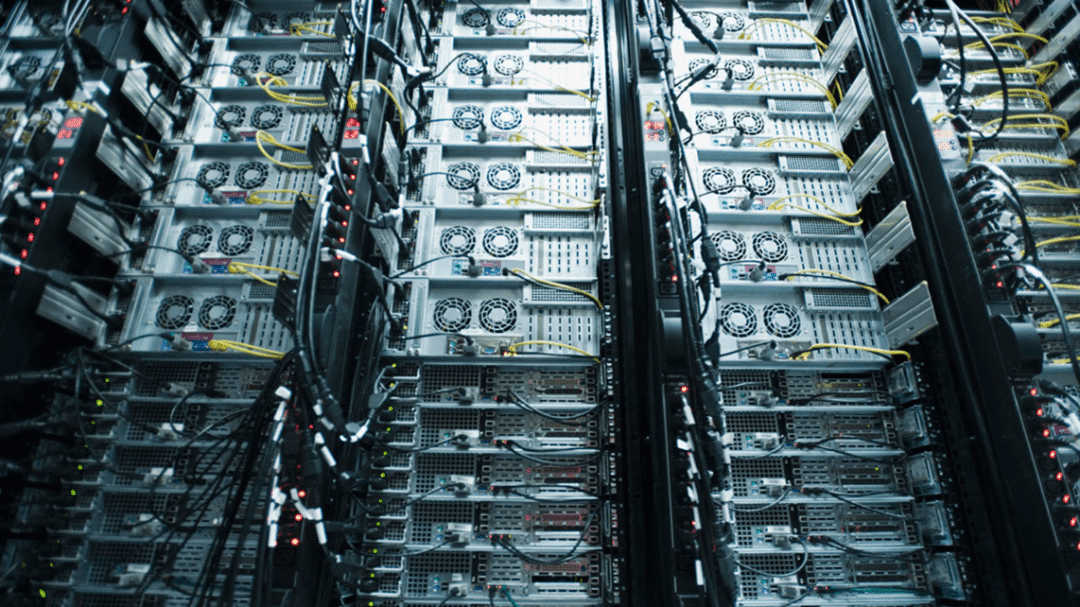
Against this backdrop, NVIDIA's recently released 800V DC architecture white paper has significance beyond a simple technical upgrade. It explicitly proposes a key requirement for future AI data centers: the integration of advanced energy storage systems capable of fast response, instantaneous charge/discharge, and intelligent scheduling. This forward-looking guidance signals that the energy storage industry is poised for an AI-driven explosive growth opportunity.
The Energy Bottleneck of Computing Power and Architectural
Breakthroughs
To address this challenge, industry leaders led by NVIDIA have laid out a clear vision, outlining a “three-step” evolution roadmap for the entire sector, aiming to steadily move toward the ultimate 800V DC architecture.
The first step is a transitional solution, innovatively adopting a “side-mounted power cabinet” to physically separate power modules from the core computing area.
The second step, the mid-term solution, promotes the architecture from “distributed” toward “centralized.”
The third step, the ultimate solution, uses SST to achieve a “one-step” conversion from the grid's 10kV medium-voltage AC to 800V DC.

Overview of the 800VDC MGX Cabinet
To enable this new architecture to effectively handle power fluctuations, “hybrid energy storage” becomes an inevitable technical core. By organically combining supercapacitors (responding to millisecond-level surges), high-rate batteries (addressing second-to-minute demands), and large-scale energy storage systems, it forms a multi-layered, fast-response backup power system.
However, the new architecture also raises the technical threshold comprehensively.
Traditional silicon-based power chips, like inefficient old engines, can no longer meet the stringent requirements of 800V high voltage. Consequently, third-generation semiconductors represented by silicon carbide (SiC) and gallium nitride (GaN) have emerged.
In this new architecture, SiC acts as the “strongman,” stabilizing high-voltage conversion of tens of thousands of volts in components such as solid-state transformers (SST), while GaN, like a “sprinter,” delivers precise low-voltage power to GPUs inside servers at extremely high speed. They are not just a performance upgrade but the cornerstone enabling the entire new architecture.
The ultimate form of this technological revolution is embodied in the disruptive product, the solid-state transformer (SST). It uses a “high-speed direct route” approach to efficiently convert medium-voltage grid power directly into 800V DC required by data centers, eliminating energy losses from multiple intermediate conversions, saving tens of millions of kWh annually for a large data center.
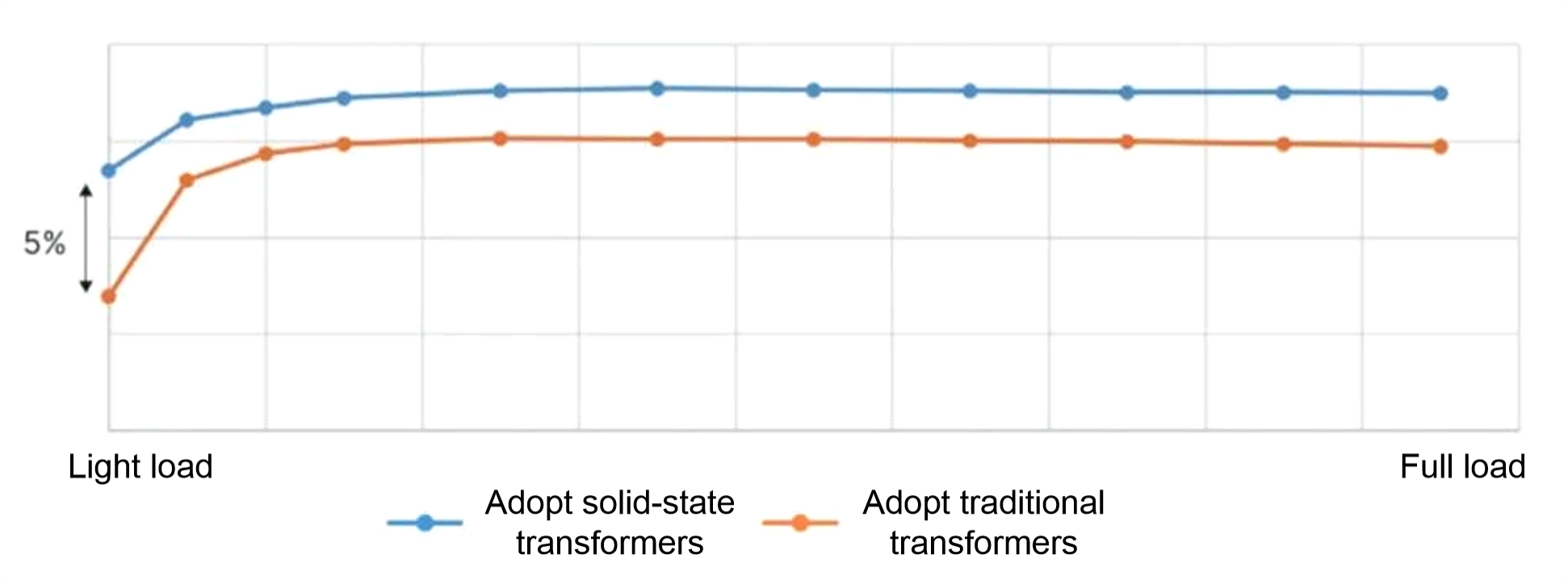
Under light load, SST efficiency is 5% higher than traditional transformers
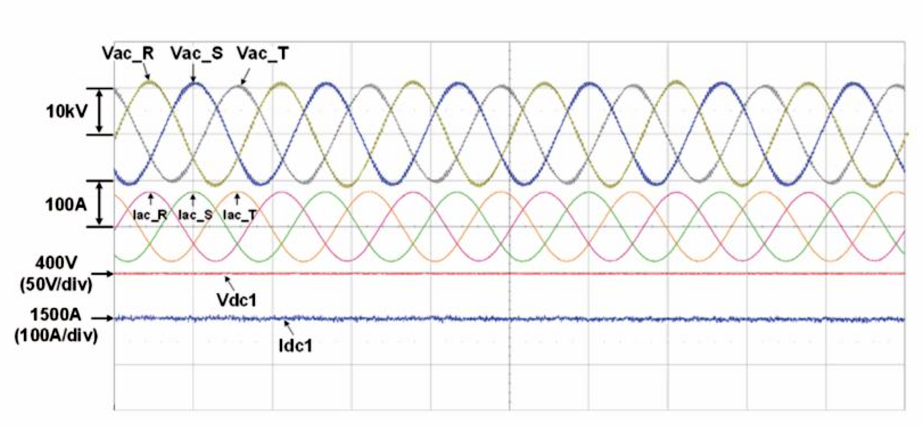
Improved Power Quality
Meanwhile, SST replaces heavy copper coils with advanced chips, achieving “silicon in, copper out,” reducing the power supply system footprint by more than half and freeing valuable space for core computing equipment. More importantly, it functions as an intelligent “energy router,” seamlessly integrating photovoltaics, energy storage, and other new energy sources, becoming an indispensable intelligent core for building future AI factories.
Technological and product transformation will ultimately lead to a reshaping of business models. Future competition will no longer be a battle of hardware parameters but a contest of “intelligence,” with suppliers required to evolve into solution providers “understanding computing power.”
This means energy systems must have predictive capabilities, anticipating computing load changes and proactively scheduling resources; simultaneously, they must coordinate intelligently, directing supercapacitors, batteries, and other energy storage units to work efficiently together.
In this transformation, true value is shifting from hardware itself to the control algorithms and software behind it. Future winners will no longer be mere equipment manufacturers but service providers capable of delivering integrated hardware-software intelligent energy solutions.
The Blue Ocean Emerges: “Consensus and Competition” in a
Trillion-Yuan Track
With the surge in computing power and data center energy demand, relevant companies in the energy storage industry chain have actively responded, and a strategic competition over technical routes and market positioning has fully unfolded. From UPS suppliers to thermal management solution providers to energy storage system integrators, numerous market participants are showcasing their core technologies and solutions, forming a vibrant competitive landscape. The following outlines the main market players in this field.

1. Sungrow Power: A leading new energy company entering the AI data center power foundation
As a global leader in PV inverters and energy storage, Sungrow is actively deploying AI data center power solutions. In May 2025, the company announced the establishment of the AIDC division, with related products expected in 2026. The team is positioned at a high starting point, focusing on overseas markets, planning comprehensive solutions including cabinet power, high-voltage side, and low-voltage side DC microgrid solutions.
2. Huawei: A system-level player building AI data centers with full-stack energy digital capabilities
Huawei places great emphasis on future data center trends. In January 2024, it released the Top 10 Trends of Data Center Facility 2024 White Paper, proposing that future data centers should achieve three features: “safe and reliable, ultra-simple integration, low-carbon and green.” Huawei, alongside Schneider and Emerson, is a leading domestic company in data center power distribution, emphasizing high integration and green transformation.
3. Kehua Data: Pioneer in self-built data centers and HVDC solutions
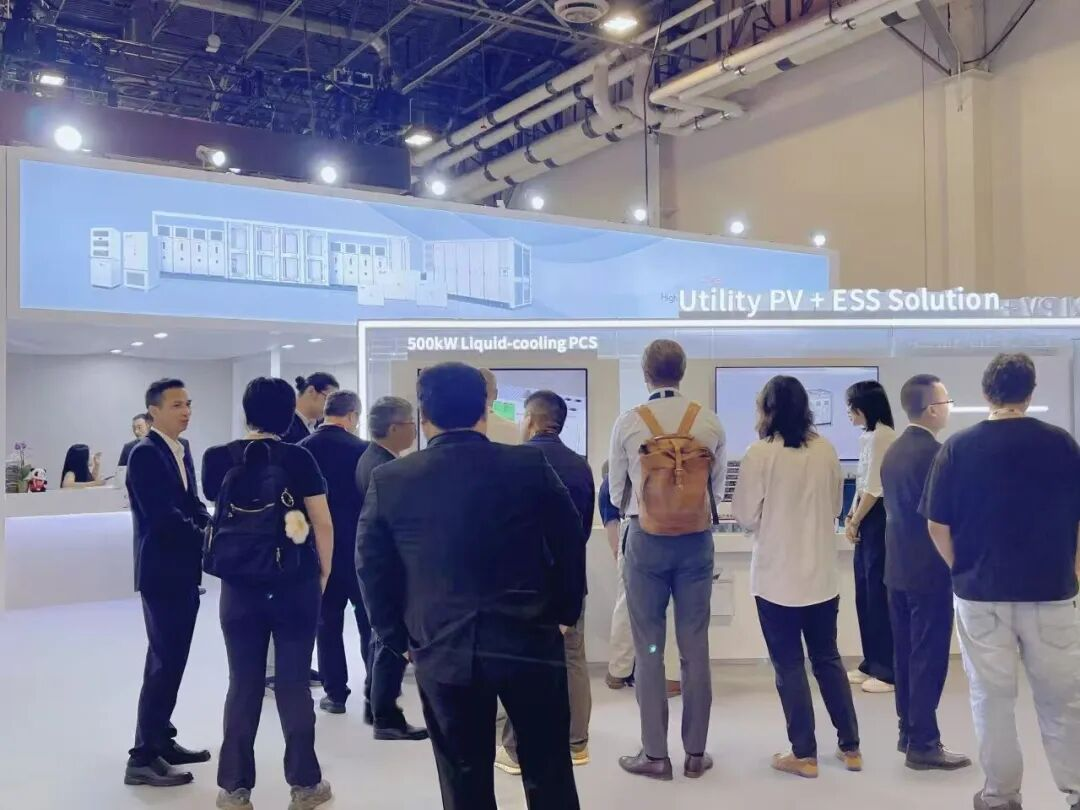
As a leading domestic and the world's fourth-largest modular UPS supplier, Kehua Data focuses on data centers. In China, it has independently built more than 20 data centers, and its efficient liquid cooling, UPS, and power distribution products are deeply adopted by top clients such as Tencent Yangtze River Delta data center, ByteDance data center, and Alibaba Cloud.
4. Shuangdeng Group: The “invisible champion” of data center energy storage
As one of China's earliest companies in communication and data center energy storage, Sundeng is hailed as an “invisible champion.” According to the China Energy Storage Alliance (CNESA) ranking, the company topped the 2024 global market for base station/data center battery shipments.
5. ZTT: Empowering AI data center infrastructure with “communication + power” dual engines
Focused on lithium battery energy storage systems, ZhongTian Energy Storage Technology Co., Ltd. aims to fully develop in communication and power energy storage. Its products are widely used in new energy vehicles, communication backends, and grid-side energy storage systems. Annual capacity has reached billions of ampere-hours, with investment in a top domestic lithium battery R&D center, laying the foundation for integrated product R&D and application.
6. Narada Power: Deep development in energy storage technology, winning overseas AI projects
With over 30 years of energy storage expertise, Zhejiang Narada Power Source Co., Ltd. ranked second in the 2024 global base station/data center battery shipment ranking. In October 2025, it successfully won a lithium battery storage project for a massive AI data center campus in Texas, USA. Its self-developed high-voltage, high-power lithium-ion backup power system is containerized, high-rate, and capable of evolving to HVDC, gradually applied in global top data center projects.
7. Hithium Energy Storage: Dedicated energy storage solutions for AI data centers
Specializing in long-duration and high-density storage, Xiamen Hithium Energy Storage Technology Co., Ltd. launched a comprehensive energy storage solution for AI data centers at the U.S. data center exhibition in September 2025.
8. Potisegde: Focused practitioner of AIDC intelligent energy solutions
In September 2025, iPotisEdge Co., Ltd. launched a new-generation data center solution overseas, including the PotisBank-L6.25-AC energy storage system and intelligent energy management system (EMS).
9. Ampace: Semi-solid batteries safeguarding data centers
Xiamen Ampace Technology Limited has integrated this battery of high rate and high safety into the latest “PU200” data center power supply and “PR-S4” UPS systems for financial, communication, and other critical backup scenarios, featuring multiple safety measures like liquid detection and cell-level fire prevention.
10. CLOU: Next-generation liquid-cooled storage systems empowering data centers
Shenzhen CLOU Electronics Co. Ltd launched the Aqua-C3.0 Pro liquid-cooled storage system globally in September 2025, providing integrated EMS for cloud-edge collaboration.
11. Hopewind: Core supplier in the 800V HVDC supply chain
As a supplier of power electronics and energy storage systems, Shenzhen Hopewind Electric Corporation Limited plays a significant role in the supply chain of NVIDIA's 800V DC architecture. The company is the key subcontractor for Vertiv's 800V HVDC system, providing cabinet-level power modules and dynamic load adapters.
12. Chint Electrics: “Source-Grid-Load-Storage-Charge” integrated solutions empowering green data centers
As a globally renowned comprehensive service provider in new energy and power intelligence, Zhejiang Chint Electrics Co., Ltd. actively promotes the integration of "source-grid-load-storage-charging" and microgrid technology, offering comprehensive energy solutions for scenarios such as industrial parks and data centers. Its "integrated" microgrid architecture can operate in coordination with DC bus technology to optimize energy from the source.
13. Kstar: Winning overseas national AI data center projects
Shenzhen Kstar Science & Technology Co.,Ltd is a leading domestic provider of UPS and energy storage overall solutions. Recently, it successfully won the bid for the National AI Data Center project in Malaysia with its independently developed high-power VRLA lead-acid battery system.
14. Vertiv: Global leader in critical data center infrastructure
As a leading global provider of critical infrastructure, Vertiv Group Corp. closely collaborates with industry partners such as NVIDIA to drive the upgrade of power architectures in AI data centers. The company announced in October 2025 the plan to launch a complete 800V DC (HVDC) product line in 2026 to support NVIDIA's Rubin Ultra platform.
15. Delta Electronics: Author of the 800V DC technical white paper
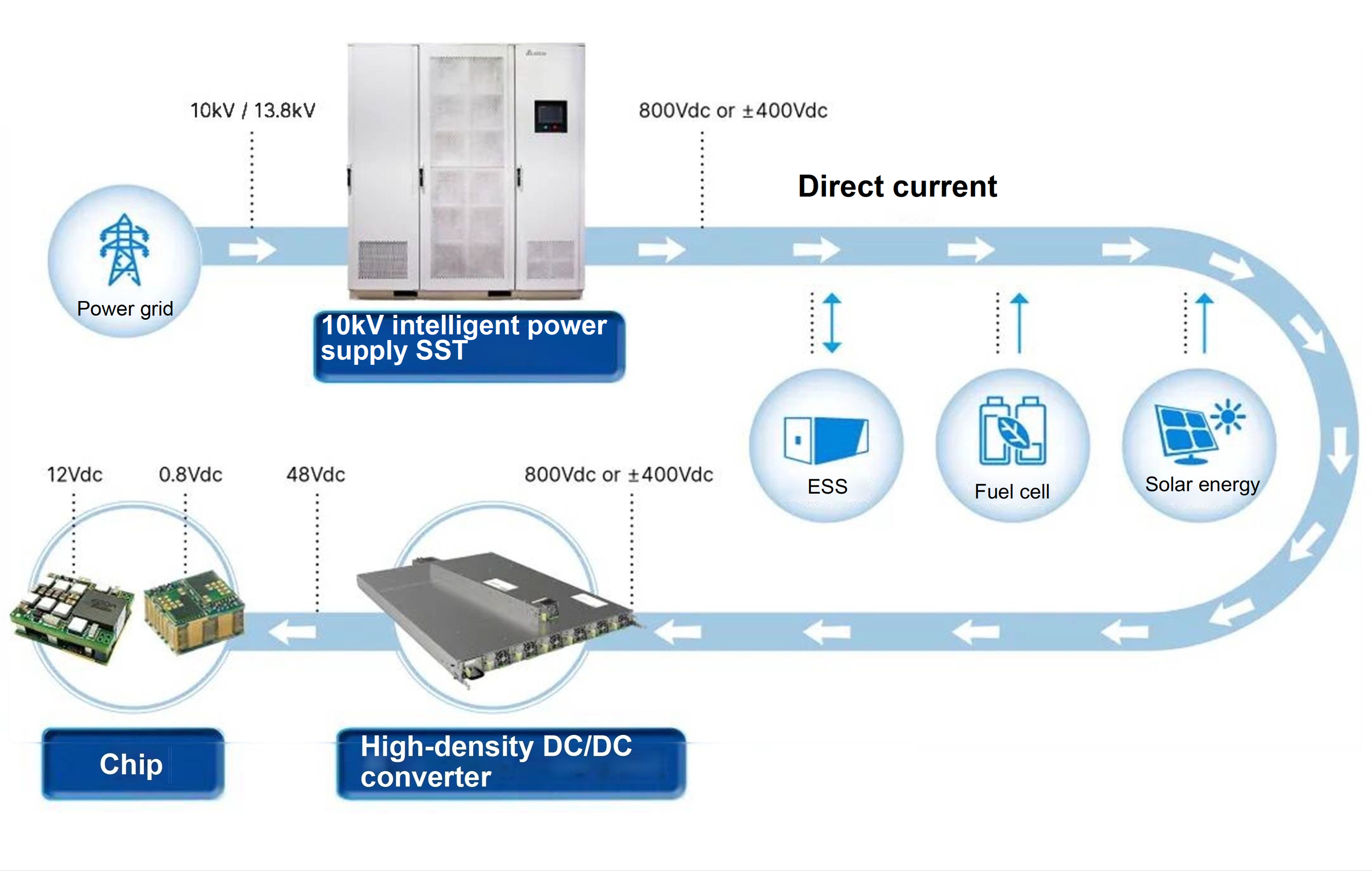
As a global leader in power supply and cooling solutions, Delta Electronics, Inc. is one of the key power module suppliers in NVIDIA's 800VDC ecosystem. Delta Electronics co-developed the “Panama” medium-voltage DC power solution with Alibaba and released China's first Data Center 800V DC Power Technology White Paper.
16. Eaton: New 800V DC reference architecture for AI data centers
As a global intelligent power management company, Eaton Corporation plc closely collaborated with NVIDIA to launch a brand-new 800V DC reference architecture for AI data centers in October 2025. This solution integrates innovative technologies such as supercapacitors as fast backup power and bus distribution supporting the Open Rack V3 standard.
17. Shenzhen Center Power Tech. Co., Ltd.: Full-range backup power solutions
Shenzhen Center Power Tech. Co., Ltd. has clearly identified data center UPS as its core strategic direction and launched the "REVO 3.0" AI computing center backup power solution that supports 5 to 60 minutes of backup power.
In March 2025, the company provided over 14,000 high-power VRLA lead-acid batteries (model HFS12-710WS) for the second phase of the Shanghai Songjiang Big Data Computing Center project, meeting the backup power demand of this ultra-large-scale autonomous computing infrastructure for up to tens of minutes.
18. Shenzhen Sinexcel Electric Co., Ltd.: Power quality expert for HVDC systems
Shenzhen Sinexcel Electric Co., Ltd. is a provider of core equipment for the energy Internet, specializing in power electronics and power quality management. In 800V DC and HVDC scenarios, its active power filter (APF) and static reactive power generator (SVG) can smooth out harmonics and voltage fluctuations. The company has reached a cooperation with Vertiv to provide a corresponding power quality solution for its HVDC power supply system.
19. JST: Leading SST exporter
As a global supplier of power equipment, JST Power Equipment not only has the delivery capacity for medium and low voltage switch cabinets, transformers and other products, but also has successfully independently developed a 10kV/2.4MW solid-state transformer (SST) prototype specially designed for 800V DC power supply architecture, and is actively promoting customer certification.
20. VNET: Nasdaq-listed IDC cornerstone and green computing pioneer
As the first third-party neutral data center operator in China to be listed on the Nasdaq in the United States, VNET Group is one of the pioneers of China's IDC industry. In 2023, the company will fully focus on the coordinated development of "green electricity + computing power". VNET Group operates over 50 data centers and more than 52,000 cabinets in over 30 cities across the country, and focuses on building projects such as the "10GW Green DC" ultra-large-scale intelligent computing base in Ulanqab and the AIDC node in Huailai, Hebei Province.
21. Sinnet: AWS core operator in China and cloud-network integration service provider
As a digital infrastructure integrated service provider listed on the Growth Enterprise Market of the Shenzhen Stock Exchange, Beijing Sinnet Technology Co., Ltd. has over 12 self-built data centers in core regions such as the Beijing-Tianjin-Hebei area and the Yangtze River Delta, with more than 70,000 operational cabinets. It also actively responds to the "East Data West Computing" strategy and is accelerating the layout of large-scale computing power bases in places like Hohhot and Ulanqab in Inner Mongolia.
22. Aofei Data: “PV + IDC” zero-carbon computing explorer
As an important computing power leasing provider for Alibaba Cloud in South China, Guangdong Aofei Data Technology Co., Ltd. promises to provide it with a cumulative total of tens of thousands of PFlops of AI computing power. The company has established over 13 large-scale data centers across the country and completed a private placement of 1.69 billion yuan in the first half of 2025, which was invested in the Langfang Smart Computing Park project.
23. @hub: State-backed green IDC leader
Shanghai @hub Co.,Ltd. has been operating 35 data centers in seven core markets across the country, with a total installed power of 371.1MW. Dataport is renowned for its outstanding technological and operational capabilities. Not only has it provided security guarantees for Alibaba's "Double 11" promotion for 16 consecutive years, but its Heyuan Data center, in collaboration with Alibaba, has also been rated as a "National Green Data Center of 2025" with a PUE of 1.19.
24. Range Technology: Park-level ultra-large-scale AIDC operator
Range Technology Development Co., Ltd. has in-depth cooperation with operators such as China Telecom and China Unicom. We have completed the layout of seven AIDC computing power clusters across the country, with a planned number of 320,000 racks, covering core regions such as the Beijing-Tianjin-Hebei area, the Yangtze River Delta, the Greater Bay Area, the Chengdu-Chongqing region, Gansu and Hainan, and initially established an "integrated computing power center system".
25. Alibaba Cloud: Absolute leader in China's public cloud market
As a core business under Alibaba Group, Alibaba Cloud is not only the largest public cloud service provider in China in terms of market size, but also a leading global provider of cloud infrastructure. Its infrastructure covers 29 regions and 92 availability zones around the world.
26. Tencent Cloud: Global cloud service provider backed by top ecosystem
By the end of 2024, Tencent Cloud's infrastructure had covered 21 regions and 58 availability zones worldwide, and its international business had become a new growth engine. In February 2025, Tencent Cloud announced an investment of 150 million US dollars to build its first Middle East data center in Riyadh, Saudi Arabia, marking an important step in its global layout.
27. TONGFEI: Industrial temperature control crossing over to AIDC liquid cooling
Sanhe Tongfei Refrigeration Co., Ltd. has launched a complete set of solutions covering both plate and immersion liquid cooling, including core products such as CDU, Manifold, outdoor dry coolers, and immersion boxes. The company has successfully expanded its customer base to include Kehua Data and has products for CPU/GPU cooling scenarios. With the surging demand for efficient heat dissipation in AIDC, TONGFEI is expected to transform its advantages in industrial temperature control into a new growth point in the data center field.
28. Envicool: Leader in full-chain liquid cooling solutions
In 2021, Shenzhen Envicool Technology Co., Ltd. was the first to launch the "Coolinside" full-chain liquid cooling solution, covering the entire architecture from CPU/GPU cold plates to coolants. It has provided a large number of highly efficient and energy-saving cooling products for large-scale Internet data centers such as Tencent, Alibaba, and Chindata.
29. Goaland: “Special forces” in data center liquid cooling
In recent years, Guangzhou Goaland Energy Conservation Tech. Co., Ltd. has successfully extended its technological advantages to the data center field and has formed a complete liquid cooling solution covering cold plate and immersion types. Its immersion liquid cooling technology has reached the international advanced level. The company has established stable cooperative relationships with leading enterprises in the industry such as ByteDance, Alibaba, Tencent and GDS.
30. Shenling: “Tech faction” in energy-saving data center environment control
In 2024, the revenue of the company's data services segment increased by 75.4% year-on-year, and new orders from leading clients such as ByteDance, Tencent, and Alibaba nearly doubled. Since 2011, Guangdong Shenling Environmental Systems Co., Ltd. has been engaged in the research and development of liquid cooling technology and holds over 68 related patents. Its technology has been appraised by the Ministry of Industry and Information Technology as being at the "international leading level".
31. Haiwu: Digital energy and critical infrastructure solutions expert
Beijing Haiwu Technology Co., Ltd. is committed to presenting innovative achievements in thermal management across all scenarios, from air cooling to liquid cooling, and from equipment to systems, providing reliable and efficient intelligent temperature control solutions for data centers. Meanwhile, as a director unit of the China Association of Communication Enterprises and a vice chairman unit of the China Association for Engineering Construction Standardization, the company, relying on its profound technological accumulation, provides innovative products and services for the industry to respond to the global demand for low-carbon transformation.
The 2025 China Energy Storage CEO Summit, held on December 4 in Xiamen, Fujian, will set up a “Energy Storage + Data Center” forum, providing an in-depth discussion and precise matching platform for industry peers to seize new market opportunities. Details: 2025 China Energy Storage CEO Summit & The 10th “International Energy Storage Innovation Competition”
Additionally, the upcoming 14th Energy Storage International Conference and Expo (ESIE 2026) will focus on hot scenarios like data centers, with specialized forums, ecosystem salons, and featured matching events, exploring innovative applications and development trends of energy storage technology in data centers.
Looking forward to your attendance!
CENSA Upcoming Events:
1. Dec.4-5 | 2025 China Energy Storage CEO Summit | Xiamen, Fujian
Register Now to attend
Read more: http://en.cnesa.org/new-events-1/2025/12/4/dec4-5-2025-china-energy-storage-ceo-summit

2. Apr. 1-3, 2026 | The 14th Energy Storage International Conference & Expo
Register Now to attend, free before Oct 31, 2025.

Sign up for our free monthly newsletter to stay informed about the Chinese energy storage market.