

Latest News
Top Energy Storage Projects in China in H1 2026
In the first half of 2026, China’s new energy storage sector maintained rapid growth momentum, with multiple breakthroughs achieved in grid-connected projects. Notably, industry development is no longer focused solely on maximizing individual project scale. While lithium iron phosphate (LFP) battery storage remains the dominant technology route, the industry is gradually shifting from simply expanding installed capacity toward improving the overall performance and efficiency of energy storage systems.
Energy storage technologies are becoming increasingly diversified. Beyond lithium-ion batteries, long-duration energy storage technologies such as vanadium redox flow batteries and compressed air energy storage have achieved large-scale grid-connected demonstrations. Emerging technologies, including semi-solid-state batteries, have also entered engineering demonstration stages. Meanwhile, grid-forming energy storage, intelligent string-based storage systems, and cloud-based energy storage solutions are accelerating commercialization and deployment.
Energy storage application scenarios continue to expand, covering a wide range of use cases including generation-side, grid-side, behind-the-meter, and standalone energy storage. Integrated models such as solar-storage, solar-hydrogen-storage, and grassland photovoltaic complementary storage projects are also being implemented.
The China Energy Storage Alliance (CNESA) has compiled representative new energy storage projects launched or connected to the grid in the first half of 2026 for industry reference.
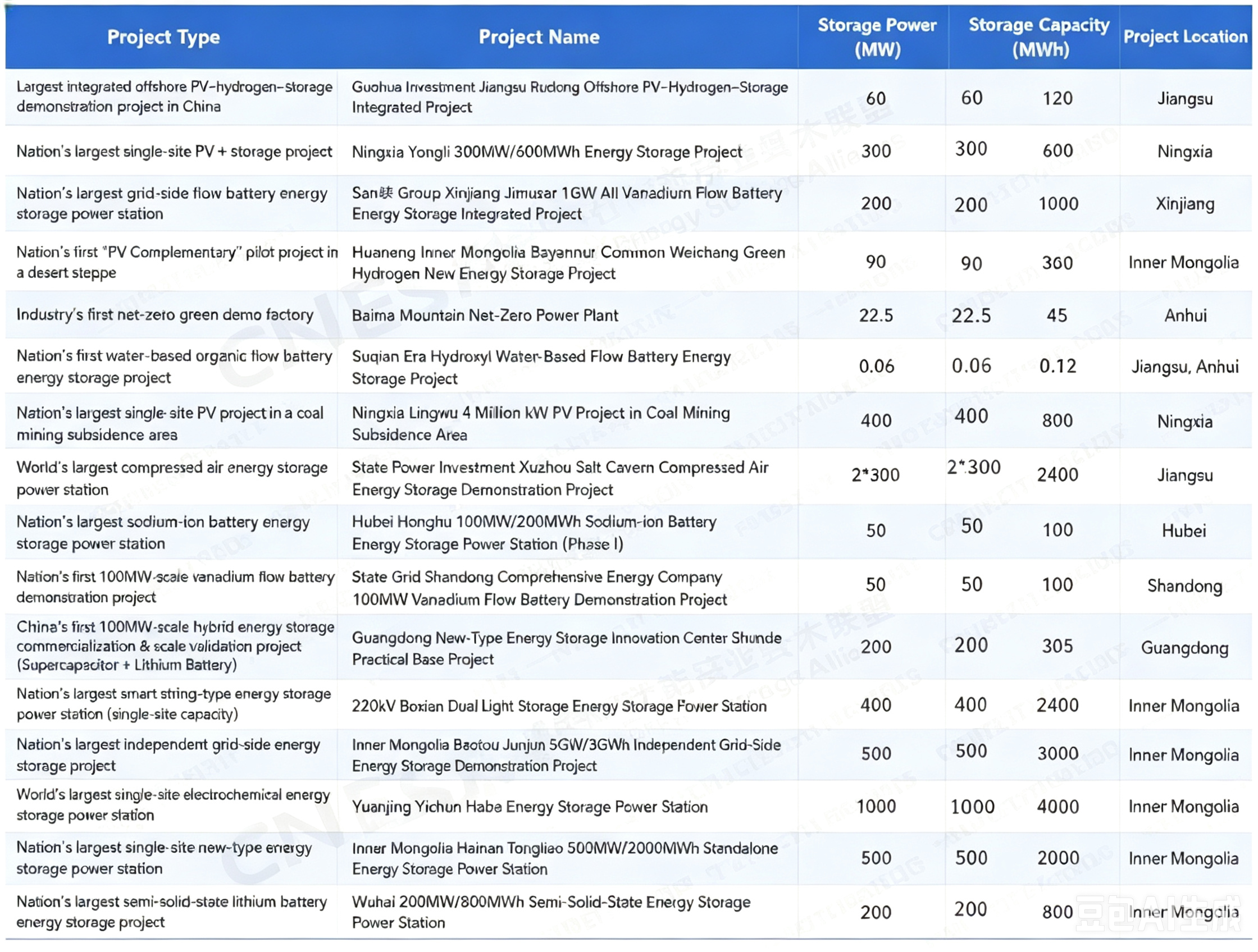
01
China’s Largest Offshore PV-Hydrogen-Storage Integrated Demonstration Project
Guohua Investment Jiangsu Rudong Offshore PV-Hydrogen-Storage Integrated Project
Grid Connection Date: June 2026
Location: Jiangsu Province
Owner: Guohua (Rudong) New Energy Co., Ltd.
Energy Storage Technology: Lithium Iron Phosphate (LFP) Battery Storage
Storage Scale: 60MW/120MWh
Located at Yangkou Port in Rudong, Jiangsu Province, the project is one of the key projects under China’s third batch of large-scale photovoltaic bases.
The project integrates a 400MW photovoltaic power plant, a 60MW/120MWh energy storage system, and a green hydrogen production facility with a capacity of 1,500 Nm³/h, forming a complete industrial chain covering green electricity generation, storage, and conversion.
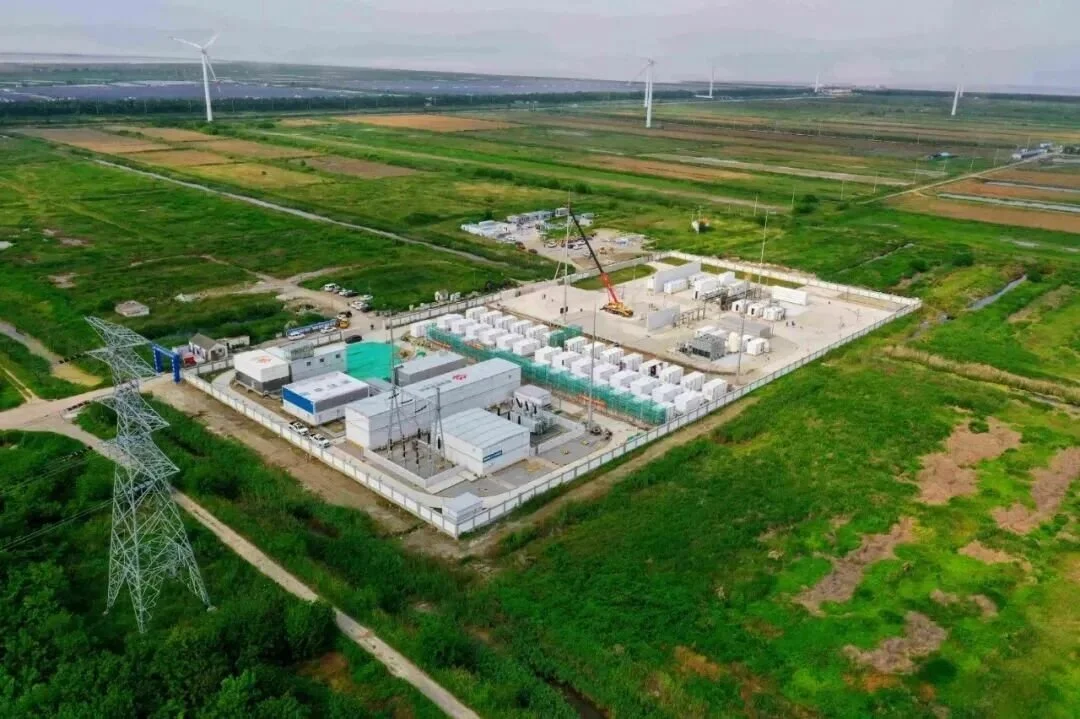
02
China’s Largest Single-Site PV + Energy Storage Project
Ningxia Yongli 300MW/600MWh Energy Storage Project
Grid Connection Date: June 2026
Location: Ningxia Hui Autonomous Region
Owner: Ningxia Dian Investment Yongli (Zhongwei) New Energy Co., Ltd.
Energy Storage Technology: Lithium Iron Phosphate (LFP) Battery Storage
Storage Scale: 300MW/600MWh
Located in Shapotou District, Zhongwei City, Ningxia, the project was developed specifically to support the 3GW photovoltaic base in Zhongwei.
The project consists of three independent energy storage stations — No.1, No.2, and No.3 — each with a capacity of 100MW/200MWh. The combined installed capacity reaches 300MW/600MWh.
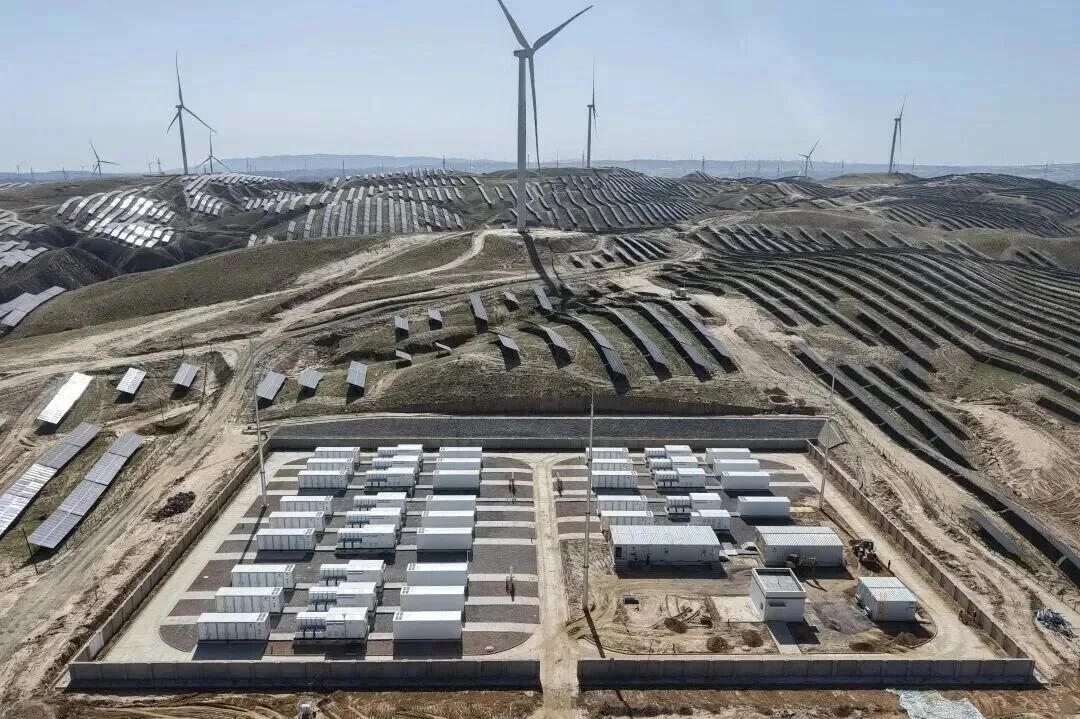
03
China’s Largest Vanadium Flow Battery Energy Storage Power Station
Three Gorges Group Xinjiang Jimusar 1GW PV + Vanadium Flow Battery Energy Storage Integrated Project
Grid Connection Date: June 2026
Location: Xinjiang
Owner: Three Gorges New Energy Jimusar Power Generation Co., Ltd.
Energy Storage Technology: Vanadium Redox Flow Battery (VRFB)
Storage Scale: 200MW/1000MWh
Located in Jimusar County, Changji Hui Autonomous Prefecture, Xinjiang, the project features a rated power capacity of 200MW and an energy storage capacity of 1,000MWh.
It is currently the largest vanadium flow battery energy storage power station in China, representing a major milestone in the large-scale application of long-duration energy storage technologies.
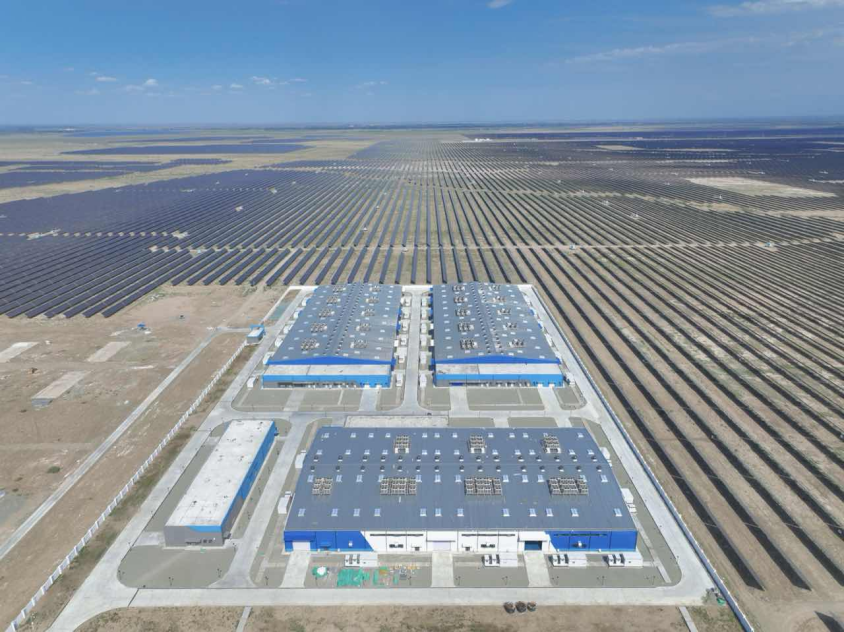
04
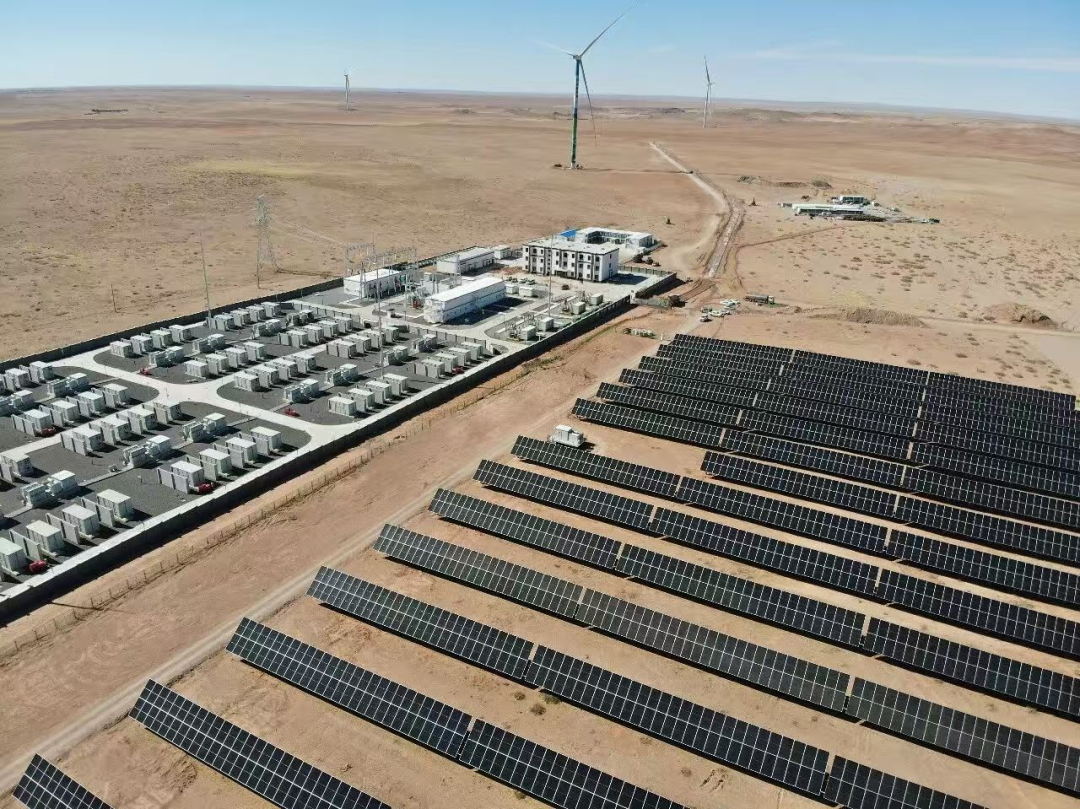
China’s First Desert Grassland “PV + Grassland Complementary” Pilot Project
Huaneng Inner Mongolia Tongwei Green Materials New Energy Storage Project
Grid Connection Date: May 2026
Location: Inner Mongolia Autonomous Region
Owner: Baotou No.1 Thermal Power Plant, North United Power Co., Ltd. (Huaneng North China Company)
Energy Storage Technology: Lithium Iron Phosphate (LFP) Battery Storage
Storage Scale: 90MW/360MWh
Developed by Huaneng North China Company’s Baotou No.1 Thermal Power Plant, the project has a planned renewable energy capacity of 350MW, including:
300MW wind power
50MW photovoltaic power
90MW/360MWh electrochemical energy storage system
The project adopts a “grassland + photovoltaic” complementary model, with renewable electricity accounting for 50.17% of the electricity consumption of the industrial silicon production facility.
05
The Industry’s First Fully Green Electricity Demonstration Factory
Baima Mountain Fully Green Electricity Factory
Grid Connection Date: March 2026
Location: Anhui Province
Owner: Anhui Conch Group
Energy Storage Technology: Lithium Iron Phosphate (LFP) Battery Storage
Storage Scale: 22.5MW/45MWh
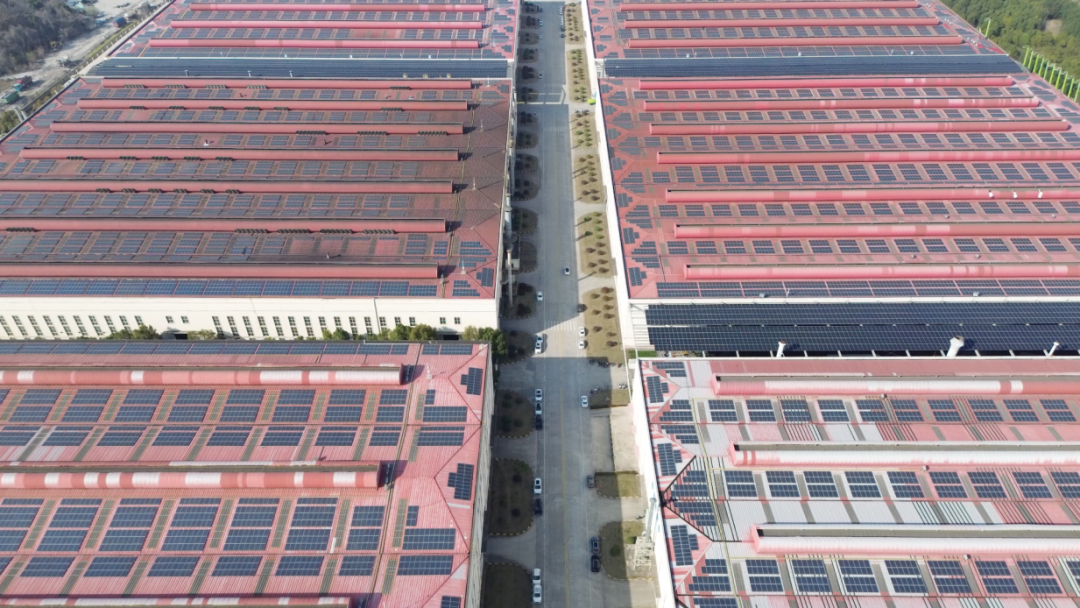
Located in Wuhu, Anhui Province, the project is the industry’s first fully green electricity demonstration factory integrating:
photovoltaic power generation
electrochemical energy storage
smart microgrid systems
new energy vehicle charging infrastructure
Building on waste heat power generation from cement kilns, the project innovatively expands photovoltaic deployment across multiple scenarios, including:
rooftop and corridor spaces
building facades
floating PV systems on water surfaces
curved roof structures
By utilizing more than 130,000 square meters of available space, the project integrates renewable generation and energy storage systems to establish a multi-energy complementary energy ecosystem.
06
China's First Distribution-Level Aqueous Organic Flow Battery Energy Storage Project
Suqian Era Aqueous Organic Flow Battery Distribution-Level Energy Storage Project
Grid Connection Date: March 2026
Location: Jiangsu Province and Anhui Province
Energy Storage Technology: Aqueous Organic Flow Battery
Storage Capacity: 60kW/120kWh
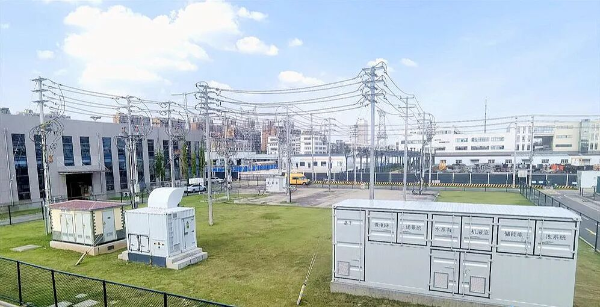
The project represents China's first deployment of an aqueous organic flow battery energy storage system at the distribution-transformer level.
It achieved several technological breakthroughs, including the development of an organic quaternary ammonium salt-based electrolyte system, a high-ion-conductivity anion exchange membrane, and advanced multi-physics coupled control technology.
Jointly developed by Suqian Era Energy Storage Technology Co., Ltd. and State Grid Electric Power Research Institute, the project was commissioned in Suqian Economic Development Zone, Jiangsu Province, with a parallel deployment in Chuzhou, Anhui Province.
07
China's Largest Single-Site PV Project in a Coal Mining Subsidence Area
Ningxia Lingwu 4GW PV Project in a Coal Mining Subsidence Area
Grid Connection Date: February 2026
Location: Ningxia Hui Autonomous Region
Owner:CHN Energy
Energy Storage Technology: Lithium Iron Phosphate (LFP)
Storage Capacity: 400MW/800MWh
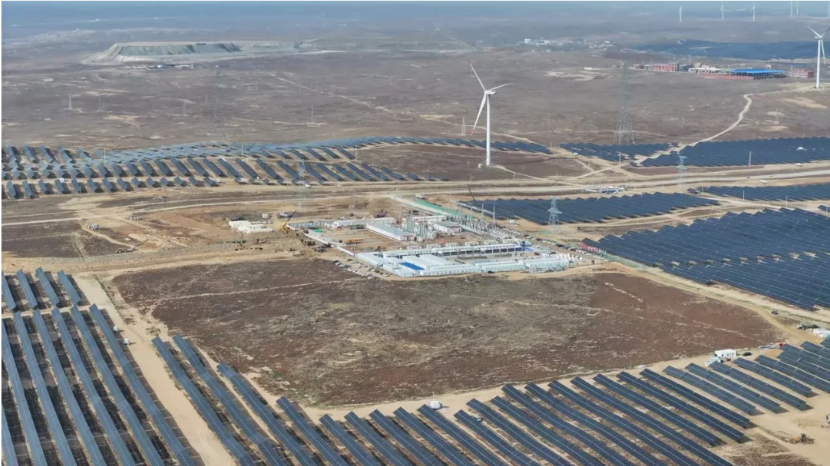
The project is being developed in two phases with a total installed PV capacity of 4GW, making it China's largest single-site photovoltaic project built on a former coal mining subsidence area.
As one of the key projects under China's second batch of large-scale desert, Gobi, and wasteland renewable energy bases, it also serves as an important green power source for the Ningxia–Zhejiang LingShao UHV DC transmission corridor.
The project is planned to include 600MW/1,200MWh of battery energy storage, of which 400MW/800MWh has already been commissioned.
08
World's Largest Compressed Air Energy Storage Power Station
Jiangsu Guoxin Suyan Huai'an Salt Cavern Compressed Air Energy Storage Demonstration Project
Grid Connection Date: January 2026
Location: Jiangsu Province
Owner: Jiangsu Guoxin Suyan (Huai'an) Energy Storage Power Generation Co., Ltd.
Energy Storage Technology: Compressed Air Energy Storage (CAES)
Storage Capacity: 2 × 300MW / 2,400MWh
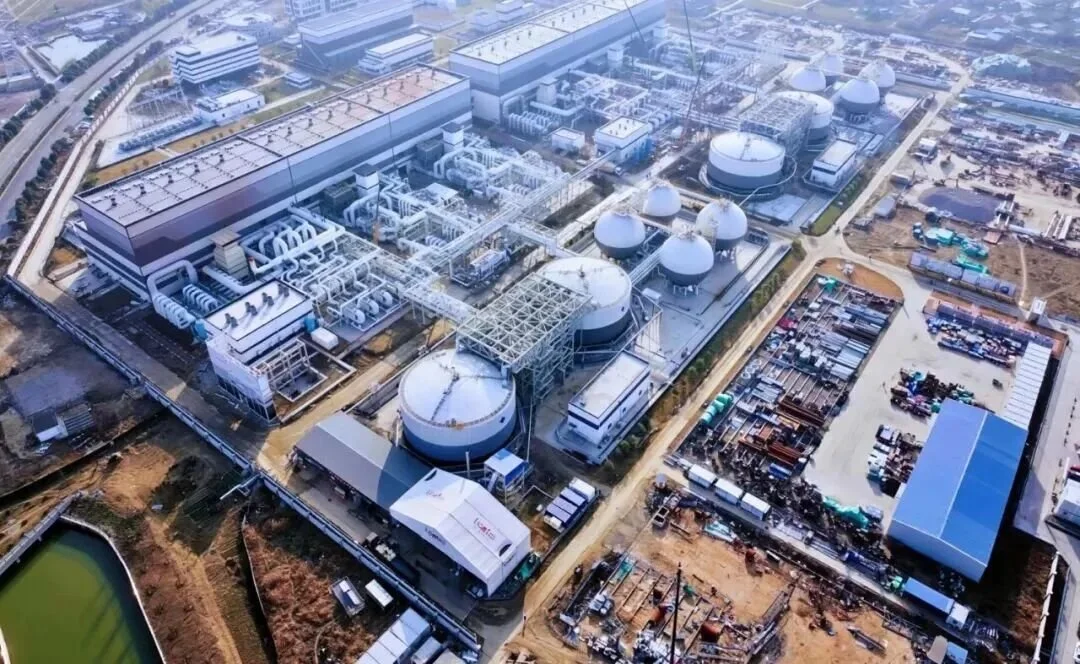
The project utilizes underground salt caverns in Huai'an, Jiangsu Province, to construct two 300MW non-fuel supplementary compressed air energy storage units.
It adopts internationally advanced high-temperature adiabatic compressed air energy storage technology, combining molten salt thermal storage with pressurized hot water heat storage.
With a total storage capacity of 2,400MWh and a round-trip efficiency of approximately 71%, it is currently the world's largest compressed air energy storage power station.
09
China's Largest Sodium-Ion Battery Energy Storage Power Station Under Construction
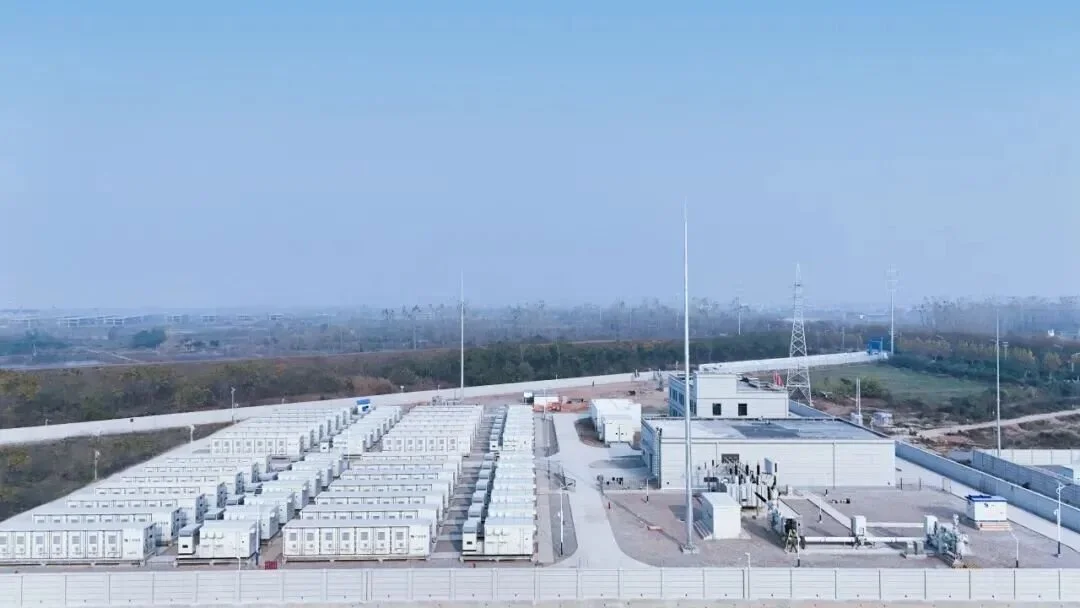
Honghu 100MW/200MWh Sodium-Ion Battery Energy Storage Demonstration Project (Phase I)
Phase I Grid Connection Date: January 2026
Location: Hubei Province
Owner: Honghu Suifa New Energy Co., Ltd. (a wholly owned subsidiary of Guangzhou Development Group)
Energy Storage Technology: Sodium-Ion Battery
Phase I Capacity: 50MW/100MWh
The project is one of Hubei Province's first batch of new energy storage demonstration projects.
Phase I includes a 50MW/100MWh sodium-ion battery energy storage system, a new 110kV booster substation, and a dedicated transmission line connecting to the Maojiang 110kV substation.
Once fully completed, the project is expected to become one of China's largest sodium-ion battery energy storage power stations, demonstrating the commercial potential of sodium-ion technology for grid-scale applications.
10
China's First 100MWh Distribution-Level Cloud Energy Storage Demonstration Project
State Grid Shandong Integrated Energy Service Cloud Energy Storage Demonstration Project
Grid Connection Date: January 2026
Location: Shandong Province
Storage Capacity: 50MW/100MWh
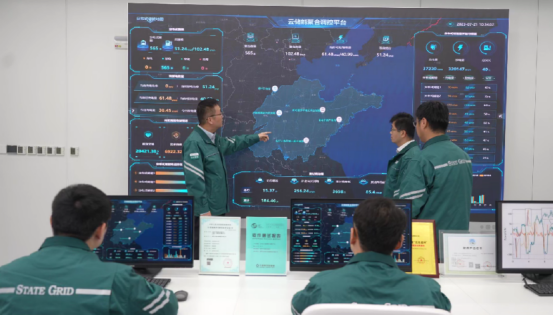
As China's first 100MWh cloud energy storage demonstration project, the initiative is built around the concept of distributed aggregation, cloud-based dispatch, and intelligent coordination.
The project enables centralized management and flexible dispatch of a large number of geographically distributed energy storage resources, providing an innovative solution for improving grid flexibility, renewable energy integration, and distributed energy resource management.
Milestone Projects Commissioned at the End of 2025
While a wide range of innovative energy storage projects entered operation during the first half of 2026, several landmark projects commissioned in late 2025 also deserve recognition for their technological significance. These projects span hybrid energy storage, ultra-large-scale lithium battery storage, semi-solid-state battery systems, intelligent string-based energy storage, and other cutting-edge applications, further demonstrating China's accelerating innovation in the energy storage sector.
11
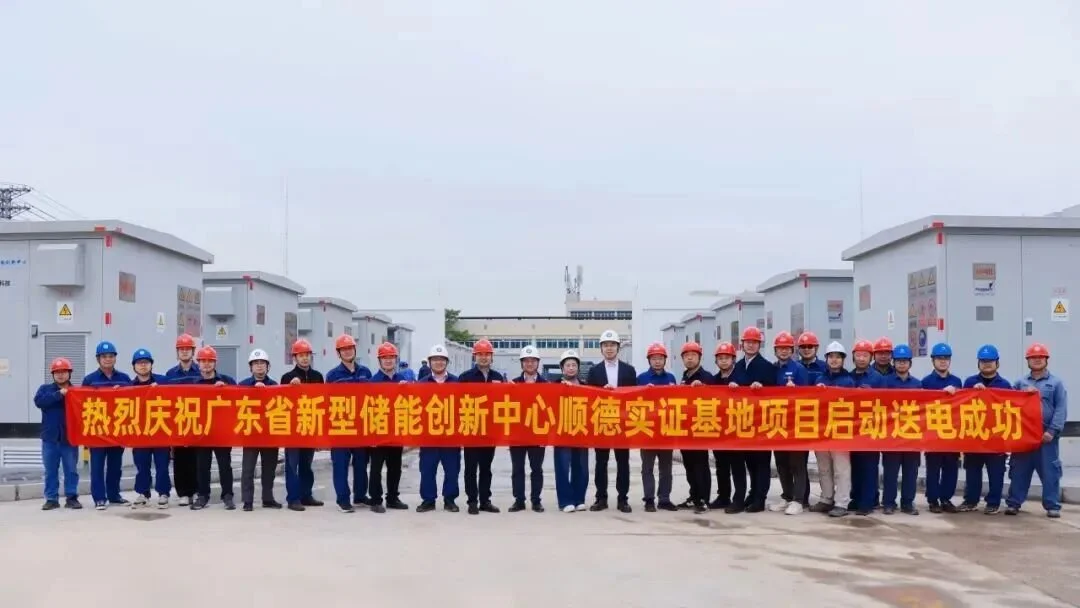
China's First 100MW-Scale Hybrid Energy Storage Demonstration Project Combining Supercapacitors and Lithium Batteries
Shunde Demonstration Base Project of the Guangdong New-type Energy Storage Innovation Center
Grid Connection Date: December 2025
Location: Guangdong Province
Owner: Guangdong New-type Energy Storage National Research Institute Co., Ltd.
Energy Storage Technology: Supercapacitors + Lithium Iron Phosphate (LFP) Batteries
Storage Capacity: 200MW/305MWh
As China's first commercial-scale demonstration project integrating supercapacitors and lithium batteries, the project validates the technical and commercial viability of hybrid energy storage systems at the 100MW scale.
The project utilizes domestically developed high-energy-density, high-power supercapacitors (90Wh/kg with a service life exceeding 100,000 charge-discharge cycles) and adopts a hybrid configuration consisting of 50MW/5MWh of supercapacitors and 150MW/300MWh of LFP battery storage.
By combining the ultra-fast response capability of supercapacitors with the long-duration energy support of lithium batteries, the system provides multiple grid services, including grid-forming support, primary and secondary frequency regulation, and sustained energy balancing, offering a comprehensive solution for next-generation power systems.
12
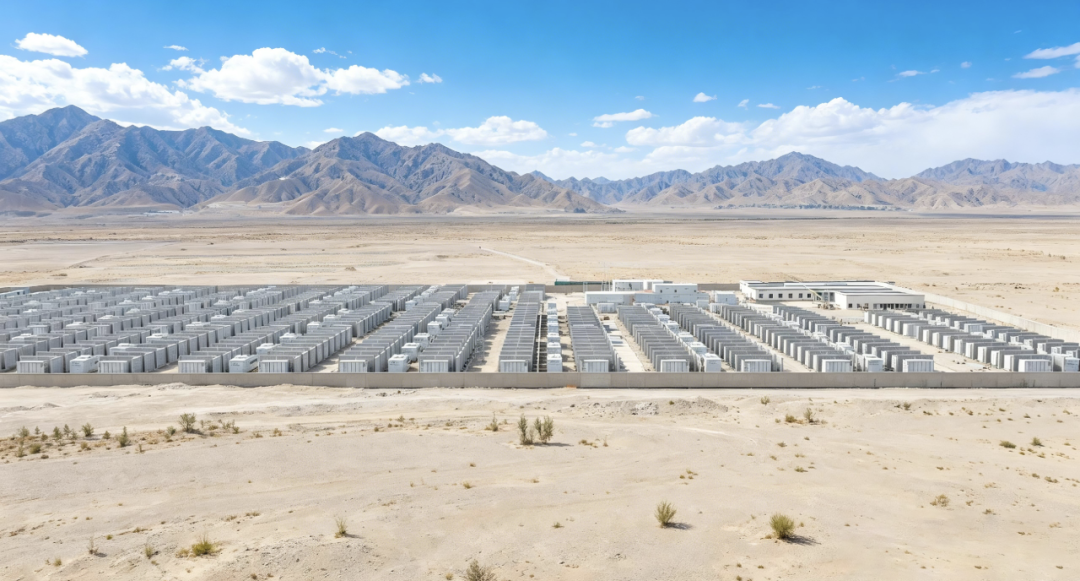
China's Largest Intelligent String Energy Storage Power Station by Single-Site Capacity
220kV Boxian Xingguang Energy Storage Power Station
Grid Connection Date: December 2025
Location: Inner Mongolia Autonomous Region
Owner: Baotou Boxian New Energy Technology Co., Ltd. (a wholly owned subsidiary of HyperStrong)
Energy Storage Technology: Lithium Iron Phosphate (LFP) Batteries
Storage Capacity: 400MW/2,400MWh
With a total capacity of 400MW/2,400MWh, the project is China's largest intelligent string energy storage power station by single-site capacity.
Developed by HyperStrong, the project features Huawei's intelligent string grid-forming PCS alongside HyperStrong's industry-leading 7MWh high-capacity battery energy storage system, enhancing system safety, operational flexibility, and grid support capability.
13
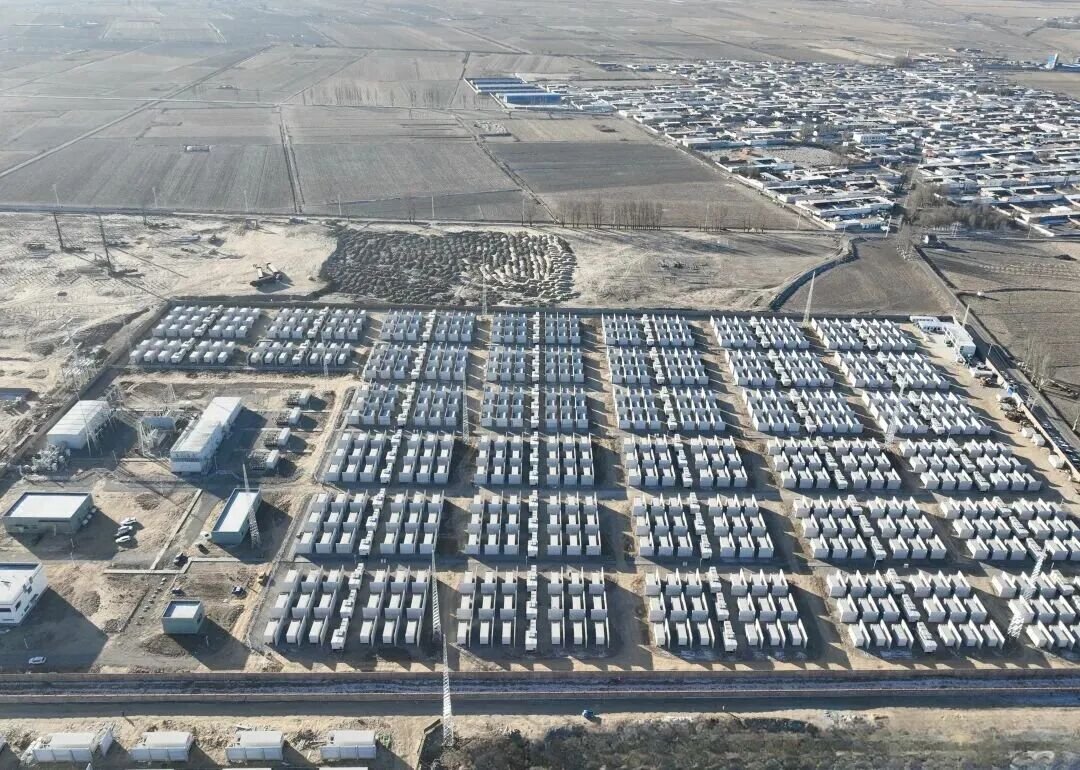
China's Largest Independent Grid-side Energy Storage Demonstration Project
Baotou Weijun 500MW/3,000MWh Independent Grid-side Energy Storage Demonstration Project
Grid Connection Date: December 2025
Location: Inner Mongolia Autonomous Region
Owner: Baotou Tuyou Banner Bosi New Energy Technology Co., Ltd. (a wholly owned subsidiary of HyperStrong)
Energy Storage Technology: Lithium Iron Phosphate (LFP) Batteries
Storage Capacity: 500MW/3,000MWh
Located in Tumed Right Banner, Baotou, Inner Mongolia, the project is currently China's largest independent grid-side energy storage demonstration project.
Serving as a flagship project for China's new power system development, it also plays a vital role in facilitating renewable energy integration across western Inner Mongolia while strengthening regional grid stability and flexibility.
14
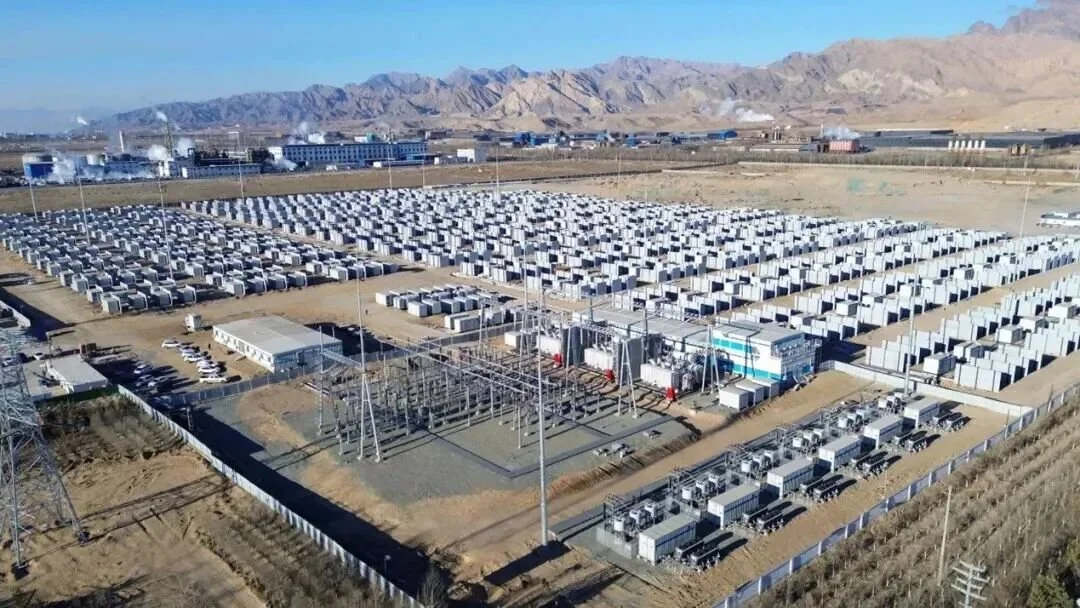
World's Largest Single-Site Electrochemical Energy Storage Power Station
Envision Chaganhada Energy Storage Power Station
Grid Connection Date: December 2025
Location: Inner Mongolia Autonomous Region
Owner: Envision Group
Energy Storage Technology: Lithium Iron Phosphate (LFP) Batteries
Storage Capacity: 1,000MW/4,000MWh
Located in Bayannur, Inner Mongolia, the project has a total storage capacity of 4GWh, making it the world's largest single-site electrochemical energy storage power station.
The facility is fully equipped with Envision's AI-powered energy storage system, enabling intelligent operation and maintenance while successfully passing the grid's stringent "three-charge, three-discharge" commissioning test on its first attempt.
15
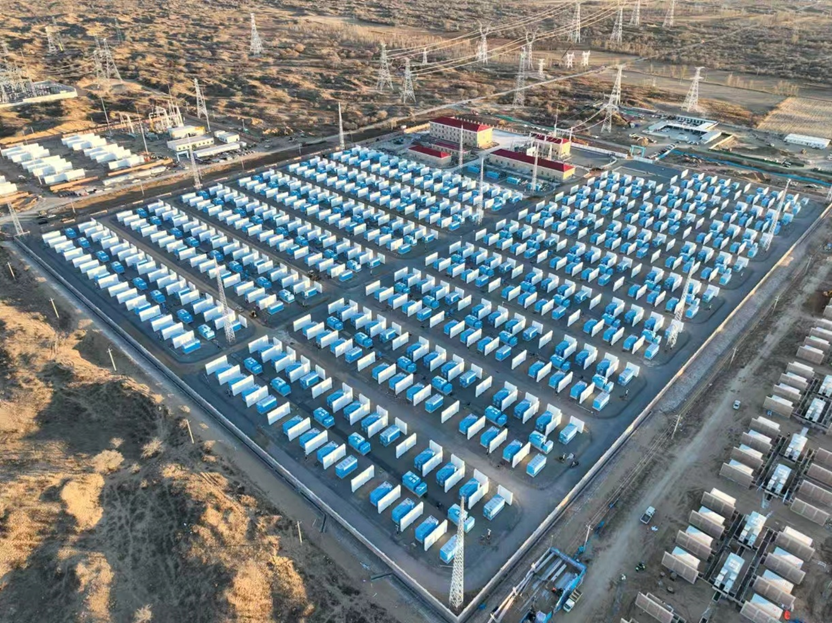
China's Largest Standalone New-type Energy Storage Power Station by Single-Site Capacity
Tongliao Hailuo 500MW/2,000MWh Standalone Energy Storage Power Station
Grid Connection Date: November 2025
Location: Inner Mongolia Autonomous Region
Owner: Tongliao Conch New Energy Co., Ltd. (a wholly owned subsidiary of Anhui Conch Group)
Energy Storage Technology: Lithium Iron Phosphate (LFP) Batteries
Storage Capacity: 500MW/2,000MWh
Located in Naiman Banner, Tongliao, Inner Mongolia, the project was developed by Tongliao Conch New Energy Co., Ltd.
The station adopts CATL's 5MWh battery energy storage system and, at the time of commissioning, became China's largest standalone new-type energy storage power station by single-site capacity.
16
China's Largest Semi-solid-state Lithium Battery Energy Storage Project
Wuhai 200MW/800MWh Semi-solid-state Energy Storage Power Station
Grid Connection Date: November 2025
Location: Inner Mongolia Autonomous Region
Owner: China Green Development Investment Group
Energy Storage Technology: Semi-solid-state Lithium Iron Phosphate Batteries
Storage Capacity: 200MW/800MWh
With a total investment of approximately RMB 600 million, the project is the first utility-scale energy storage project in Inner Mongolia to deploy semi-solid-state LFP battery technology.
Occupying approximately 100 mu (about 6.7 hectares), the facility comprises 160 battery containers and 40 integrated PCS and step-up transformer units, providing valuable engineering validation for the commercialization of next-generation battery technologies.
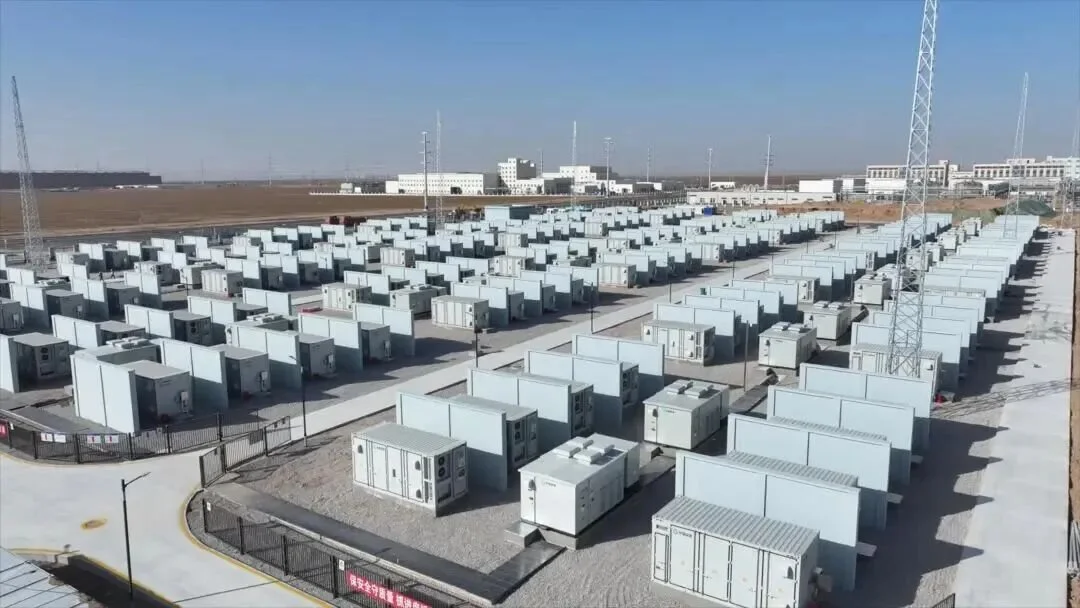
A review of China's landmark energy storage projects commissioned in recent years clearly demonstrates that the industry has entered a new stage of development. Rather than relying solely on expanding lithium battery deployment, China's energy storage market is rapidly evolving toward technology diversification, complementary short- and long-duration storage solutions, and full-spectrum applications spanning the generation, grid, and demand sides.
Emerging technologies—including long-duration energy storage, solid-state batteries, hybrid energy storage systems, intelligent aggregation, and cloud-based dispatch—are continuously advancing from engineering demonstrations to large-scale commercial deployment. At the same time, integrated energy solutions combining multiple renewable resources and storage technologies are becoming increasingly common across utility-scale, grid-side, and customer-side applications.
Driven by supportive policies, growing market demand, and sustained investment, China's energy storage industry is expected to continue overcoming technological and commercial barriers. The sector is steadily building a multi-level, diversified, and highly efficient energy storage ecosystem, accelerating the industrialization of advanced storage technologies while providing critical support for the country's energy transition and the development of a modern power system.
New Installations Surge Over 120% YoY — February Analysis of China’s New Energy Storage Projects
In February 2026, China’s new energy storage market sustained its rapid growth momentum, with newly installed capacity increasing by over 120% year-on-year (YoY). Meanwhile, the application structure of the market has undergone adjustments compared with the same period last year.
In February 2026, China’s new energy storage market sustained its rapid growth momentum, with newly installed capacity increasing by over 120% year-on-year (YoY). Meanwhile, the application structure of the market has undergone adjustments compared with the same period last year.
Short-term fluctuations do not alter long-term growth trend: In February, newly installed capacity reached 3.6 GW, representing a YoY increase of over 120% and a month-on-month (MoM) decline of 31%. Despite the short-term slowdown, the long-term growth trajectory of the energy storage market remains strong.
Front-of-the-meter standalone storage drives growth: Standalone energy storage on the generation and grid side became the primary growth driver. In February, standalone storage accounted for 90% of newly added capacity, up 42 percentage points YoY. Newly installed power and energy capacity of standalone storage increased by more than 310% and 270% YoY, respectively.
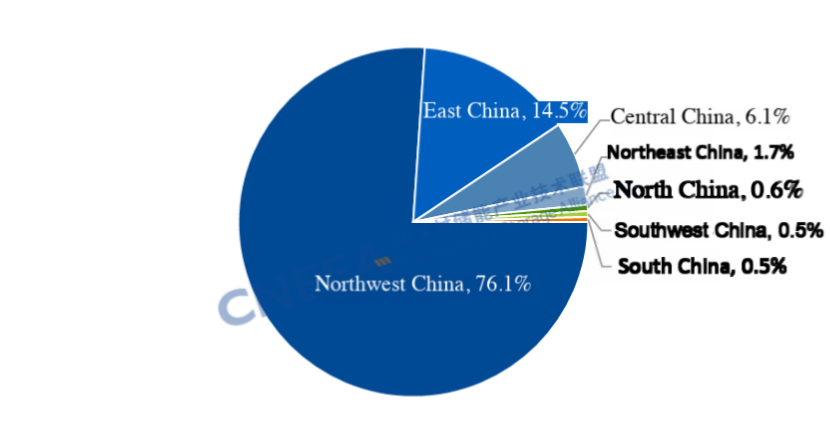
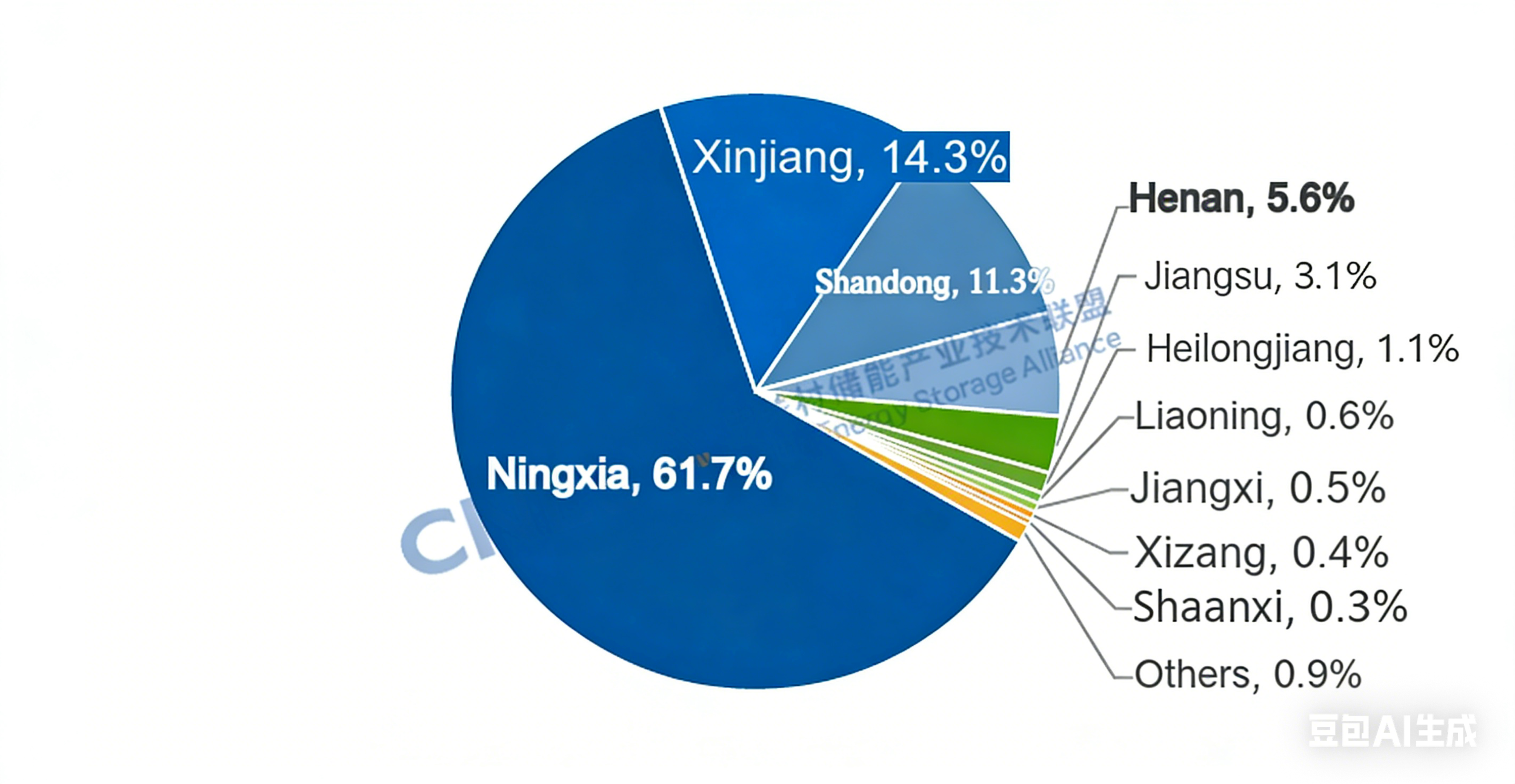
Highly concentrated regional deployment: The Northwest region accounted for over 75% of total additions, with Ningxia alone exceeding 2 GW, contributing more than 60% of the national total.
According to incomplete statistics from China Energy Storage Alliance(CNESA), China commissioned 3.56 GW / 8.19 GWh of new energy storage capacity in February 2026, representing YoY increases of +120% / +95% and MoM declines of -31% / -21%.
The MoM decline was mainly due to project construction cycles and the impact of the Spring Festival holiday. However, the YoY growth exceeding 120% indicates a fundamentally positive market outlook. Notably, front-of-the-meter (FTM) installations reached 3.4 GW, up 147% YoY, effectively doubling the total monthly additions.
Key Market Characteristics in February
1. Standalone Storage Surges Over 270%, Driving Market Expansion
In terms of application structure, standalone energy storage dominated the market. It accounted for 90% of total newly installed power capacity, up 42 percentage points YoY and 8 percentage points MoM. Newly added capacity reached 3.2 GW / 7.4 GWh, with YoY growth of +313% / +274%, becoming the main driving point of energy storage market. All newly commissioned standalone energy storage projects reached at least the 100 MW level, with the number of such projects rising by 29% year-on-year, alongside the commissioning of two gigawatt-scale projects.
Installations on the generation side and behind-the-meter (BTM) user side experienced a temporary decline. Newly installed capacity on the generation side reached 217.3 MW / 474.3 MWh, down 65% / 72% year-on-year and 41% / 36% month-on-month. Co-located storage with renewable energy remained the dominant model, covering a range of application scenarios such as aquaculture, solar hybrid projects and desertification control initiatives.
New user-side installations totaled 135.2 MW / 292.7 MWh, down 41% / 42% year-on-year and 51% / 58% month-on-month. The market was highly concentrated, with Jiangsu, Guangdong, and Zhejiang accounting for 90% of total user-side energy storage capacity, while Jiangsu ranked first nationwide in both installed capacity and project count.
On the technology front, lithium-ion batteries continued to scale rapidly, supporting the commissioning of gigawatt-level standalone storage plants. Meanwhile, hybrid systems combining lithium-ion and sodium-ion batteries at the 100 MW level were deployed, and aqueous organic flow batteries were implemented on the user side, providing more diversified technological pathways for long-term development.
2. Regional Concentration Intensifies, Northwest China Dominates
In February, regional concentration of new installations was pronounced. The Northwest region added 2.7 GW, accounting for 76% of the national total. The combined share of the Northwest and North China regions exceeded 90%. Ningxia added 2.2 GW / 4.4 GWh of new capacity, ranking first nationwide in both power and energy scale and setting a new monthly record for the region. This surge was driven by the grid connection of several gigawatt-scale shared energy storage projects and storage systems paired with large renewable energy bases.
By the end of 2025, Ningxia’s renewable energy capacity reached 57.32 GW, accounting for 65.5% of total grid capacity under centralized dispatch. Solar power has surpassed coal-fired generation to become the largest power source in the region. Due to the intermittency of renewables—characterized by surplus generation during the day and shortages at night—demand for grid services such as peak shaving and frequency regulation has surged. A coordinated development model integrating wind, solar, thermal power, and energy storage is rapidly taking shape. Looking ahead, energy storage is expected to generate revenue through multiple channels, including capacity compensation, spot market trading, frequency regulation services, ramp rate support and so on.
In addition, Ningxia has introduced policies encouraging private capital participation in energy storage investment. In February, a gigawatt-scale storage project developed by Jiayang Energy was commissioned, demonstrating strong investor confidence in the region. At the end of February, the region released its first batch of 2026 private investment promotion projects, including 22 energy storage projects with a total scale of 4.15 GW / 14.4 GWh, providing a solid pipeline for continued market growth.
Register now to attend Asia’s Largest Energy Storage Trade Show for free:
What: The 14th Energy Storage International Conference & Expo
When: Conferences: March 31 - April 2, 2026
Exhibitions: April 1-3, 2026
Where: CIECC Beijing, China
Address: No. 55 Yudong road, Shunyi District, Beijing China

2.1GW+7.75GWh! China Power Construction Group Signed One of the Largest Solar-Plus-Storage Projects in the UAE
Recently, China Power Construction Group officially signed the EPC contract for the 2.1GW + 7.75GWh RTC solar-plus-storage project in Abu Dhabi, United Arab Emirates (UAE), with a contract value of approximately RMB 13.962 billion. As one of the largest integrated solar-plus-storage projects in the Middle East and even the world, the signing of the contract marks the project’s transition into the full implementation phase, which is projected to be delivered in 2027.
Recently, China Power Construction Group officially signed the EPC contract for the 2.1GW + 7.75GWh RTC solar-plus-storage project in Abu Dhabi, United Arab Emirates (UAE), with a contract value of approximately RMB 13.962 billion. As one of the largest integrated solar-plus-storage projects in the Middle East and even the world, the signing of the contract marks the project’s transition into the full implementation phase, which is projected to be delivered in 2027.
Amid the accelerating global energy transition and the impact of geopolitical on energy supply, solar-plus-storage systems, as independent and controllable energy solutions, is witnessing an explosive growth in demand. Industry forecasts suggest that large-scale solar-plus-storage projects are being tendered in rapid succession worldwide, with the Middle East emerging as a key engine of market demand, providing significant growth opportunities for the energy storage sector.
Notably, the overseas business of China Power Construction Group has demonstrated strong performance this year. Data indicates a significant increase in the share of overseas operations. According to the company’s operational report of January-February 2026 released on March 12, China Power Construction Group signed RMB 147.893 billion in new contracts during the first two months of the year. Among them, overseas contracts reached RMB 40.888 billion, representing a year-on-year increase of 19.92%. Despite broader market pressures, overseas business continued to expand, with its share of newly signed contracts rising from around 21% in the same period last year to approximately 27%.
Register now to attend Asia’s Largest Energy Storage Trade Show for free:
What: The 14th Energy Storage International Conference & Expo
When: Conferences: March 31 - April 2, 2026
Exhibitions: April 1-3, 2026
Where: CIECC Beijing, China
Address: No. 55 Yudong road, Shunyi District, Beijing China

Jinko ESS SunTera 5MWh Passes Stringent Large-Scale Fire Test, Validating Safety Boundaries
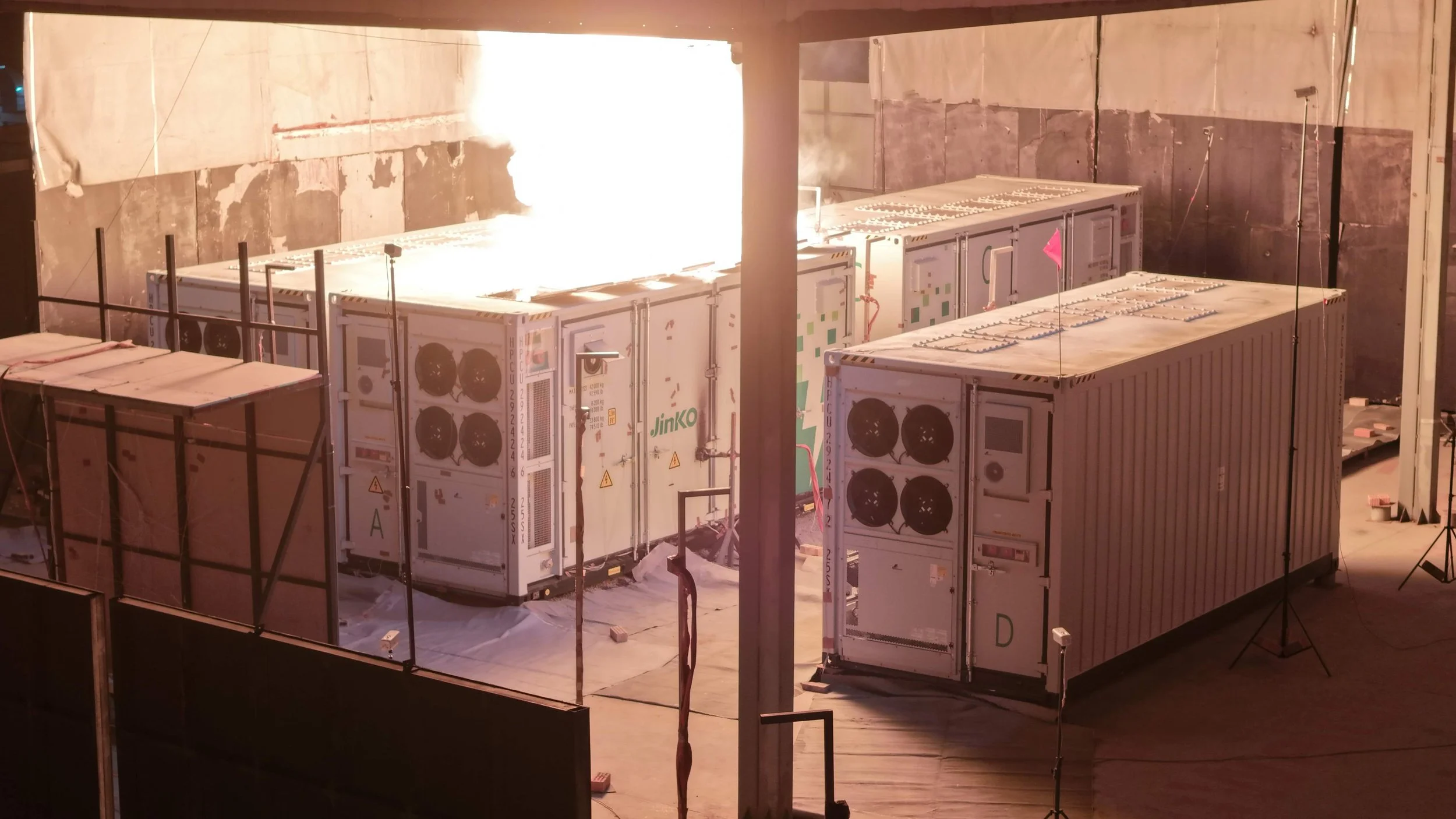
Jinko ESS, a global leading energy storage solution provider and a subsidiary of Jinko Solar Co., Ltd., recently announced the successful completion of a large-scale fire test for SunTera 5MWh Liquid-Cooling Energy Storage System. Conducted at a specialized testing facility in Suzhou City, Anhui Province, the test followed the CSA C800 standard and the November 2025 draft of UL 9540A and was witnessed on-site by CSA Group representatives and North American fire protection engineers.
Jinko ESS, a global leading energy storage solution provider and a subsidiary of Jinko Solar Co., Ltd., recently announced the successful completion of a large-scale fire test for SunTera 5MWh Liquid-Cooling Energy Storage System. Conducted at a specialized testing facility in Suzhou City, Anhui Province, the test followed the CSA C800 standard and the November 2025 draft of UL 9540A and was witnessed on-site by CSA Group representatives and North American fire protection engineers.
By simulating fire scenarios under real-world utility-scale deployment conditions, the evaluation assessed fire behavior, thermal runaway propagation potential, enclosure integrity, and the impact on adjacent units. These results provide measured data under the Large-Scale Fire Testing (LSFT) framework referenced in the forthcoming NFPA 855:2026 provisions, supporting the industry’s transition from compliance-driven safety toward performance-validated safety.
Engineering Performance Under Conservative Conditions
The SunTera 5MWh system is Jinko ESS’s flagship product, built on a high-capacity 314Ah cell platform. The system features advanced liquid-cooling thermal management, a nominal energy capacity of 5.015MWh, and supports 0.5P continuous charge and discharge. With an IP55 protection rating and C4/C5 corrosion resistance, it is designed for a 20-year operational life.
For this evaluation, four SunTera containers were deployed in a high-density configuration to replicate practical project spacing:
l Unit A (Initiating Unit): Target unit for forced ignition.
l Unit B: Back-to-back with Unit A at a 15cm spacing.
l Unit C: Side-by-side with Unit A at a 1m spacing.
l Unit D: Face-to-face with Unit A at a 3.5m spacing.
To evaluate passive protection performance under conservative conditions, all units were charged to 100% State of Charge (SOC), active fire suppression systems were disabled, and no manual intervention occurred during the test.
Measured Results: Effective Propagation Containment
On February 10, 2026, forced heating of Unit A commenced at 17:00. At approximately 18:10, cells reached ignition conditions, resulting in sustained combustion. During the event, the internal temperature of Unit A peaked at 1296°C.
Despite the intensity of the initiating fire, adjacent units remained stable. Maximum recorded internal cell temperatures were significantly below thermal runaway thresholds (Unit B: 51.3°C, Unit C: 38.3°C, Unit D: 41.2°C)。
Although external surface temperatures of adjacent enclosures reached elevated levels—up to 404°C on Unit D due to direct flame exposure—internal battery module temperatures remained within safe limits. This demonstrates effective enclosure-level thermal insulation and fire containment performance.
The fire self-extinguished at 07:50 on February 11, with a total combustion duration of approximately 13 hours and 40 minutes. Post-test inspections confirmed:
l Structural Integrity: Unit A maintained its structure with localized surface soot and no enclosure collapse. Units B, C, and D remained structurally intact.
l Functional Continuity: Functional testing verified that adjacent units (B, C, and D) retained full electrical functionality, with no observable impact on charge and discharge performance.
l Environmental Responsibility: The test incorporated controlled flue gas capture and treatment measures to minimize environmental impact.
Leadership Perspectives
“Large-scale fire test allows us to better quantify fire propagation limits,” said Carl Yang, Product General Manager of Jinko ESS. “The SunTera 5MWh system demonstrated thermal runaway containment within a single enclosure under challenging conditions. These data support more precise installation spacing guidance and contribute to reducing multi-unit propagation risk.”
Dora Zhao, Senior Product Management Engineer, said: “SunTera’s safety architecture is built on a three-level design philosophy: cell-level stability, pack-level insulation with engineered pressure relief, and system-level fire barriers. Even when insulation materials in the initiating pack were intentionally modified to accelerate ignition, adjacent packs maintained electrical functionality.”
Patrick Rimel, North America Product Manager, highlighted the market implications: “As regulatory frameworks evolve toward risk quantification, empirical data from LSFT becomes essential. These results provide AHJs, insurers, and project owners with performance-based insights that can inform permitting decisions and risk evaluations, especially in high-density deployments.”
Independent Expert Validation
Todd LaBerge, Fire Protection Engineer from ATAR FIRE, commented: “The test was conducted in accordance with CSA C800 and the latest UL 9540A draft. The system incorporates deflagration protection principles aligned with NFPA 68 and NFPA 69. With enclosure doors closed and venting mechanisms engaged, the initiating fire remained contained within the originating enclosure. The test execution and data integrity meet internationally recognized best-practice standards.”
The Significance Beyond Validation
The impact of large-scale fire testing extends far beyond mere technical validation. It serves as a mirror, reflecting the true safety boundaries of product design, and a yardstick, measuring a company’s fundamental commitment to risk responsibility.
For Jinko ESS, this test marks a new beginning. We remain committed to transforming "extreme conditions" into "standard configurations," working alongside global partners to build a more resilient power system grounded in data-driven trust and safety-first principles.
_________________________________________________________________________________________
Register now to attend Asia’s Largest Energy Storage Trade Show for free:
What: The 14th Energy Storage International Conference & Expo
When: Conferences: March 31 - April 2, 2026
Exhibitions: April 1-3, 2026
Where: CIECC Beijing, China
Address: No. 55 Yudong road, Shunyi District, Beijing China
Sharp Pullback! User-Side Energy Storage Additions in January Down 58% Year-on-Year
In January 2026, China’s user-side new energy storage market recorded a year-on-year decline of more than 50% in newly added capacity. The pace of project filings slowed while quality improved, and market deployment shifted toward larger single projects and more capital-intensive investments.
In January 2026, China’s user-side new energy storage market recorded a year-on-year decline of more than 50% in newly added capacity. The pace of project filings slowed while quality improved, and market deployment shifted toward larger single projects and more capital-intensive investments.
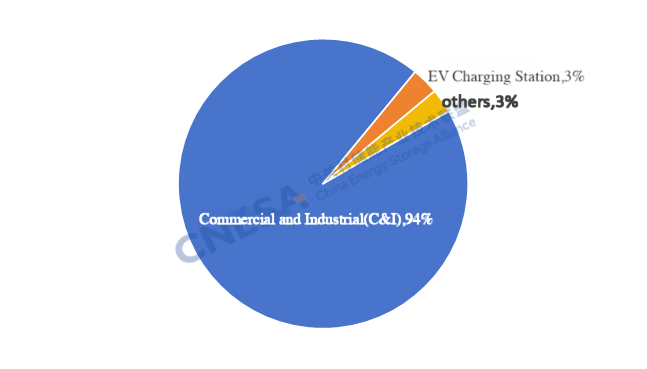
The user-side energy storage market experienced a clear correction, with installed capacity down 58% year-on-year. Commercial and industrial (C&I) energy storage accounted for more than 90% of total additions.
The East China region contributed over three-quarters of newly commissioned capacity. Jiangsu led the nation, accounting for 60% of total installed capacity.
Nationwide, the number of newly filed user-side projects fell by 38% year-on-year, while the average size of individual projects increased by 87%. Core markets—Jiangsu, Guangdong, and Zhejiang—continued to lead, as user-side deployment shifted from small, distributed projects toward larger-scale, more centralized investments.
Analysis of User-Side New Energy Storage Projects in January
In January, newly commissioned user-side energy storage capacity totaled 166.2 MW / 456.5 MWh, representing -58% / -39% year-on-year and -81% / -73% month-on-month. The following characteristics were observed.
(1) Installed capacity of user-side energy storage
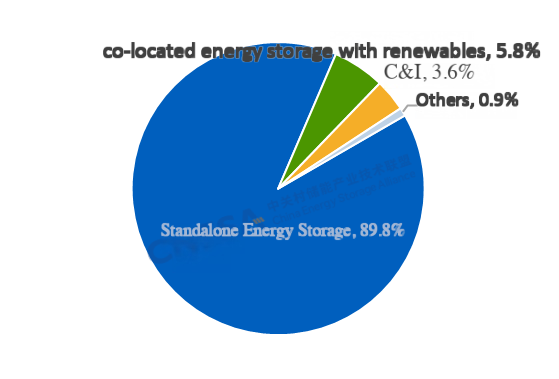
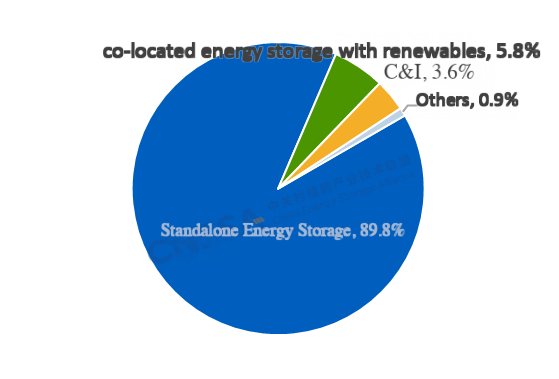
In January, the market remained dominated by C&I applications, accounting for over 90% of total additions. Newly commissioned C&I projects reached 156.7 MW / 435.4 MWh, down 60% / 41% year-on-year and 82% / 74% month-on-month.
From a technology perspective, all newly commissioned projects adopted electrochemical energy storage. Lithium iron phosphate (LFP) batteries accounted for more than 99% of installed power capacity. In the long-duration energy storage, one 7-hour photovoltaic-plus-storage integrated smart power station project and one 4-hour solid-state lead battery energy storage project were commissioned.
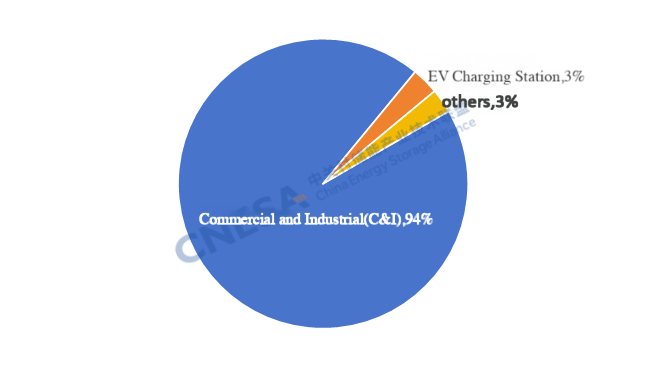
Figure 1. Application distribution of newly commissioned user-side new energy storage projects in January 2026 (MW %)
Source: CNESA DataLink
Note: “C&I” includes industrial facilities, industrial parks, and commercial buildings; “Others” include mining areas, oilfields, rail transit, data centers, etc.
(2) Regional Distribution of User-Side Energy Storage
By region, newly commissioned projects were distributed across 13 provinces, including Jiangsu, Anhui, Shandong, Sichuan, and Guangdong. East China dominated the January market, accounting for 78% of newly added capacity and 44% of total project numbers.
At the provincial level, Jiangsu ranked first nationwide, contributing 60% of total installed power capacity and 16% of newly commissioned projects. Both installed capacity and project count ranked first nationally. This performance was driven by a combination of power market reforms, demand response incentives, strong C&I demand, and the centralized grid connection of large-scale projects.
On the policy front, multiple supportive measures were introduced, accelerating the transition of user-side energy storage business models from “fixed arbitrage” to “volatility-driven optimization.” In January, Jiangsu implemented new power market reforms, with the Jiangsu Energy Regulatory Office releasing the Implementation Rules for the Jiangsu Medium- and Long-Term Power Market (Draft for Comments). These rules marked a shift in C&I electricity pricing from fixed time-of-use tariffs to fully market-based pricing. In the short term, this reduced fixed peak–valley arbitrage margins; however, in the medium to long term, more frequent price fluctuations are expected to create diversified arbitrage opportunities for projects with advanced forecasting and intelligent dispatch capabilities. In addition, as of January 1, 2026, Jiangsu officially implemented full market participation for all renewable electricity, making photovoltaic-plus-storage integration a necessity for smoothing output profiles and enhancing market-based revenues. During the critical winter peak demand period, user-side storage projects could also participate in demand response programs, earning peak-shaving compensation of up to RMB 4.8/kWh, significantly improving short-term revenue certainty and incentivizing projects to connect to the grid within the policy window.
On the demand side, structural factors continued to underpin market growth. January marked the winter peak electricity demand season in Jiangsu. On January 20, the province’s maximum load reached 135 GW, a new winter record and the highest nationwide for six consecutive years. Grid balancing and supply security pressures highlighted the system value of user-side storage. As a major manufacturing province with a high concentration of energy-intensive industries, Jiangsu faces strong demand for peak shaving, valley filling, and demand charge optimization. In January, peak–valley price spreads remained above RMB 0.6/kWh, supporting stable combined returns from energy arbitrage and demand management. Moreover, Jiangsu’s large installed base of distributed photovoltaics further amplified demand for storage, as pairing PV with storage under full market participation policies enables off-peak discharge and enhances project economics.
From a market structure perspective, growth in Jiangsu exhibited clear characteristics of scale and concentration. In January, several large projects—such as the 300 MWh user-side energy storage project of Jiangsu Huiran Industrial Co., Ltd.—along with multiple projects exceeding 5 MW / 40 MWh, were commissioned. Large-capacity projects accounted for the majority of additions, reinforcing Jiangsu’s “fewer projects, higher capacity” market profile. In addition, Jiangsu benefits from a well-developed local energy storage industrial chain. Through full-chain coordination, economies of scale, resource sharing, technology reuse, and business model innovation, system-level costs—including initial investment, operations, and lifecycle costs—can be significantly reduced, providing a strong industrial foundation for continued user-side market growth.
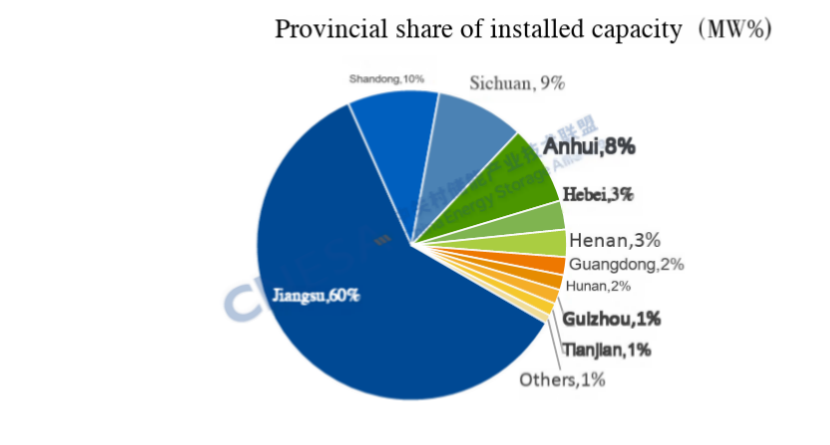
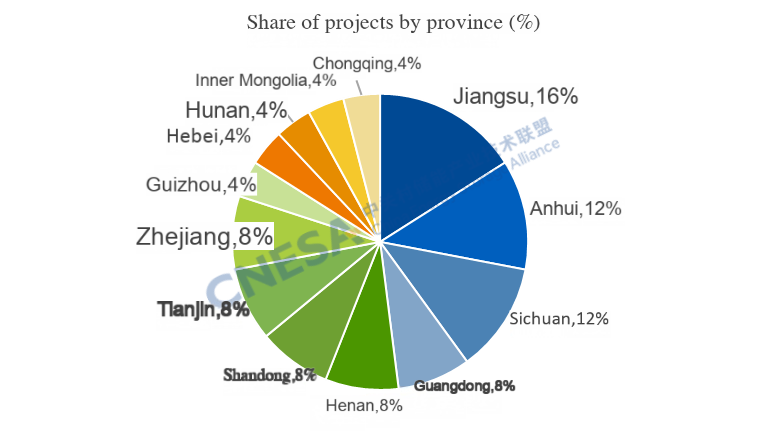
Figure 2. Provincial distribution of newly commissioned user-side new energy storage projects in January 2026
Source: CNESA DataLink
(3) Project Filings
From the perspective of project filings, January saw a “less but better” trend nationwide. The user-side market shifted from distributed expansion to scale and centralized development. The number of newly filed user-side projects fell by 38% year-on-year, while total filed capacity increased by 16%, and the average project size of single projects rose by 87%. In traditional markets, Jiangsu, Guangdong, and Zhejiang together added 321 new projects, down 42% year-on-year, while total energy capacity increased by 28%. Jiangsu recorded the largest total filed capacity, while Guangdong led in the number of newly filed projects. Over the past three years, Jiangsu has consistently seen year-on-year growth in both total filed capacity and average project size in January. This January, Jiangsu’s newly filed capacity rose 81% year-on-year, while project numbers declined 44%, resulting in an average project size roughly three times that of the same period last year—highlighting a clear trend toward larger individual projects. By contrast, Zhejiang continued to see declines in newly filed projects. In January, the number of projects fell 67% year-on-year, and total capacity declined 86%.
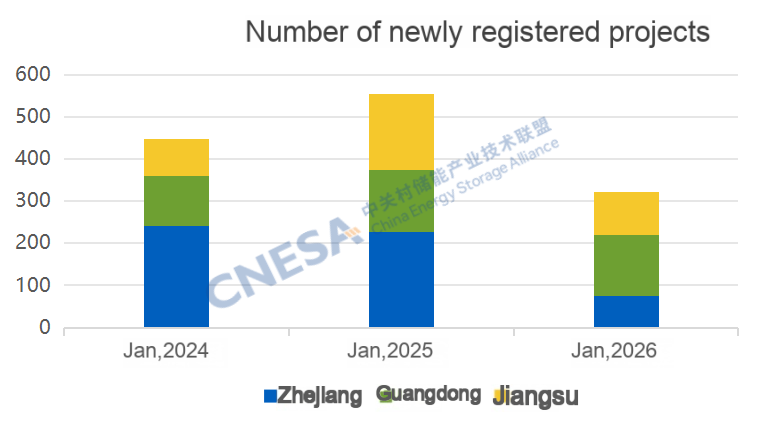
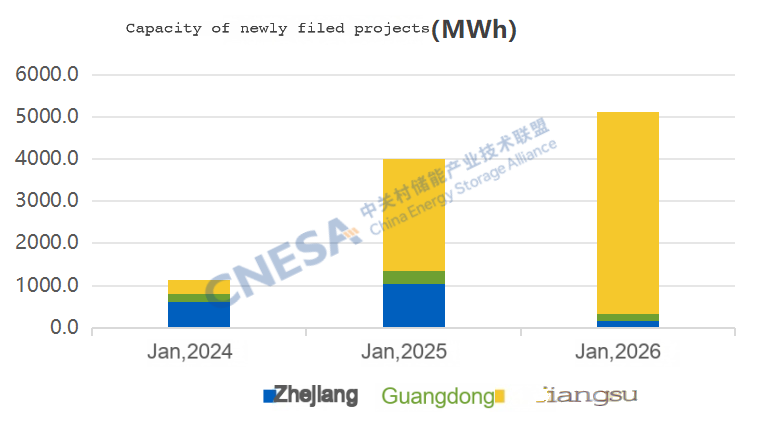
Figure 4. Newly filed energy storage projects in Zhejiang, Guangdong, and Jiangsu in January over the past three years
Source: CNESA DataLink
Overall Analysis of New Energy Storage Projects in January
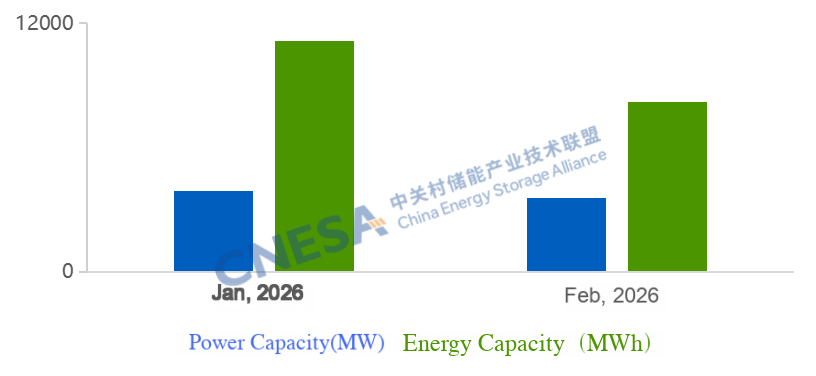
According to incomplete statistics from China Energy Storage Alliance (CNESA), total newly commissioned new energy storage capacity in China reached 3.78 GW / 10.90 GWh in January 2026, representing +62% / +106% year-on-year, but -84% / -86% month-on-month. Despite the sequential decline, year-on-year growth exceeded 60%, signaling a positive start to the year for the new energy storage market.
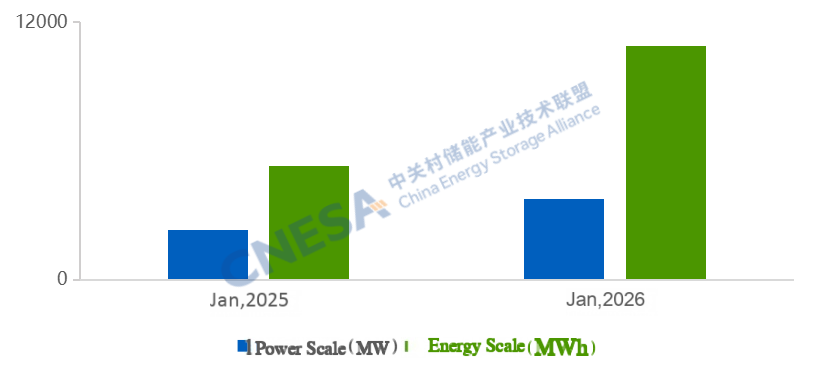
Figure 5. Newly commissioned new energy storage capacity in China in January 2026
Source: CNESA DataLink
Note: Year-on-year comparisons are based on the same period of the previous year; month-on-month comparisons are based on the immediately preceding period.
China Energy Storage Alliance adheres to standardized, timely, and comprehensive data collection methodologies to continuously track energy storage project developments. Leveraging long-term data accumulation and in-depth professional analysis, CNESA regularly publishes objective market analyses to support industry decision-making. Since June 2025, the Alliance’s monthly project analysis has been divided into two dedicated reports—Source-Grid-Side Market and User-Side Market. This issue focuses on the user-side market in January 2026.
For more comprehensive project information, authoritative data, and in-depth market insights, please visit www.esresearch.com.cn or access the CNESA DataLink mini program to explore detailed datasets and research reports. Customized data consulting services are also available through CNESA’s official support channels. CNESA is committed to providing full-cycle, high-quality data services for the industry.

At this critical juncture of diversified business model transformation for user-side energy storage, the ESIE 2026 will bring together leading enterprises from across the industry. The event will feature major launches of new C&I and residential storage products, alongside a series of high-level forums, including:Energy Storage Applications in Zero-Carbon Industrial Parks; Energy Storage + AIDC Collaborative Development;Energy Storage and Emerging Business Models;Distributed PV-plus-Storage;PV–Storage–Charging Integration;Overseas Energy Storage Project Development, Operation, and Practice;The Role and Value of Energy Storage in Virtual Power Plants.These sessions will provide in-depth analysis of market shifts and offer a one-stop platform spanning product showcases, operational best practices, and ecosystem collaboration. We cordially invite you to attend and explore pathways to breakthrough and growth in the evolving user-side energy storage landscape.
Register now to attend Asia’s Largest Energy Storage Trade Show for free:
What: The 14th Energy Storage International Conference & Expo
When: Conferences: March 31 - April 2, 2026
Exhibitions: April 1-3, 2026
Where: CIECC Beijing, China
Address: No. 55 Yudong road, Shunyi District, Beijing China

10.9 GWh! Newly Added New-Type Energy Storage Capacity in January Doubled Year-on-Year
China’s new-type energy storage market witnessed a strong start in January 2026. Newly commissioned capacity in January increased by over 60% year-on-year, while the market’s underlying structure showed notable adjustments compared with the same period last year.
China’s new-type energy storage market witnessed a strong start in January 2026. Newly commissioned capacity in January increased by over 60% year-on-year, while the market’s underlying structure showed notable adjustments compared with the same period last year.
A Strong Start to the Year: Newly added capacity: 3.8 GW / 10.9 GWh in January, representing a
year-on-year increase of 62% / 106%, marking a positive opening for the new-type energy storage
market.
Accelerated Deployment of Independent Energy Storage: In January, independent energy
storage accounted for nearly 90% of newly added capacity, up 41 percentage points year-on-
year. Newly added power and energy capacity of independent energy storage grew by over 240% /
290% year-on-year. Xinjiang ranked first nationwide in both power and energy capacity, with 1 GW
of newly commissioned independent energy storage.
Rise of Third-Party Enterprises: Third-party enterprises accounted for 45% of newly added
installed capacity, once again surpassing local energy groups and the “Big Five and Small Six”
state-owned power generation groups. The trend toward a diversified investment landscape has
become increasingly evident.
Accelerated Deployment of Diverse Technologies: Beyond mainstream lithium-ion batteries,
alternative technologies such as compressed air energy storage (CAES), flow batteries, and
flywheels are being deployed at a faster pace, supporting the industry’s long-term development.
Overall Analysis of New-Type Energy Storage Projects in January
According to incomplete statistics from the CNESA DataLink, in January 2026, newly commissioned new-type energy storage projects in China reached a total installed capacity of 3.78 GW / 10.90 GWh, representing year-on-year increases of 62% and 106%, respectively, and month-on-month declines of 84% and 86%. Monthly new added capacity growth exceeded 60% year-on-year, underscoring a positive market outlook at the beginning of the year.
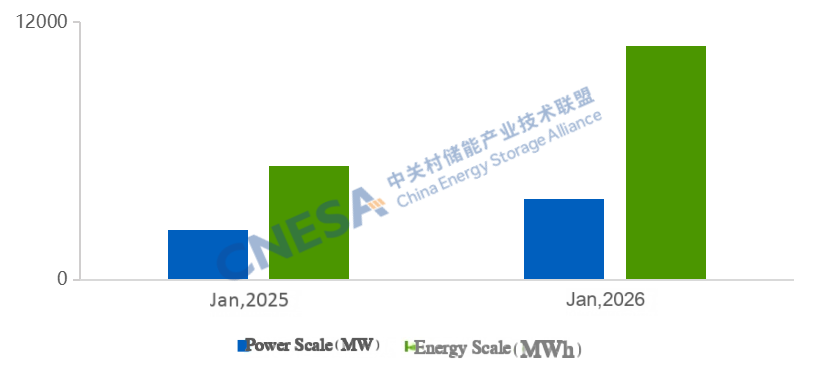
Figure 1: Installed Capacity of Newly Commissioned New-Type Energy Storage Projects in China, January 2026
Source: CNESA DataLink
Note: Year-on-year (YoY) comparisons are based on the same period of the previous year; month-on-month (MoM) comparisons are based on the immediately preceding statistical period.
Analysis of Generation- and Grid-Side New-Type Energy Storage Projects in January
In January, newly added generation- and grid-side new-type energy storage capacity reached 3.62 GW / 10.44 GWh, up 87% / 130% year-on-year, and down 84% / 87% month-on-month. Key characteristics include:
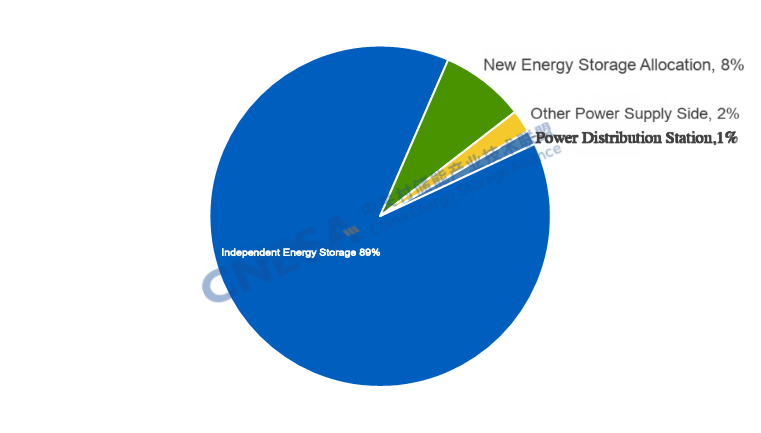
1.Independent energy storage accounted for 89% of new installations, up 41 percentage
points year-on-year and 12 percentage points month-on-month.
Newly added independent energy storage reached 3.2 GW / 9.6 GWh, up 249% / 298% year-on-year, and down 84%/87% month-on-month. The number of projects with capacities of 100 MW and above increased by 122% year-on-year, accounting for 85% of total projects—29 percentage points higher than the same period last year. By contrast, power-generation-side new-type energy storage additions were 366.5 MW / 740.3 MWh, down 64% / 65% year-on-year and 92% / 95% month-on-month. Among these, renewable-plus-storage projects accounted for 79% of power capacity, spanning diversified application scenarios such as desertification control, thermal–renewable–storage multi-energy integration, and hydro–solar–pumped storage integration.
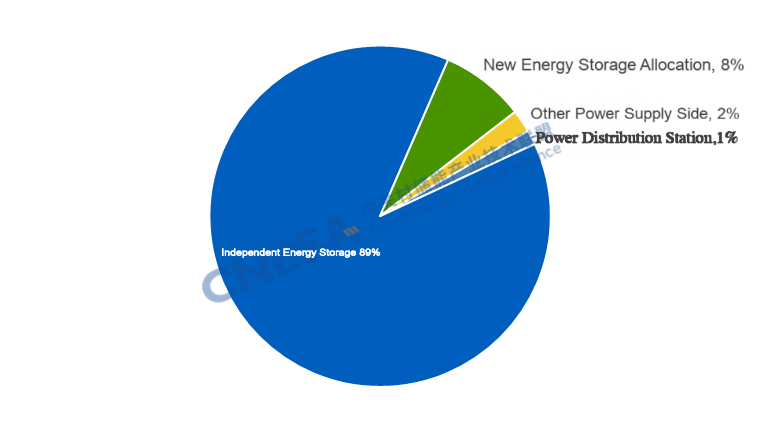
Figure 2: Application Distribution of Newly Commissioned Generation- and Grid-Side New-Type Energy Storage Projects in January 2026 (MW%)
Source: CNESA DataLink
Note: “Others” include substations, emergency power supplies, etc.
2. Northwest China Accounted for Over 35% of New Capacity, with Xinjiang Leading
In January, the Northwest region ranked first nationwide, accounting for 35% of newly added capacity. Combined, the Northwest and North China regions contributed more than half of the national total. By province, Xinjiang recorded newly added capacity of 1.2 GW / 4.3 GWh, ranking first nationwide in both power and energy capacity.
By the end of January, Xinjiang’s installed renewable energy capacity exceeded 160 GW, accounting for 64% of the region’s total power capacity. Due to its distance from eastern and central load centers, Xinjiang has historically faced wind and solar curtailment challenges. In 2025, wind and solar utilization rates in Xinjiang were 91.0% and 86.3%, respectively—both below the national average. Growing pressure for renewable energy consumption and the need to mitigate grid fluctuations have driven large-scale deployment of new-type energy storage in the region. At the start of the year, several major projects were commissioned in quick succession, including the 500 MW / 2,000 MWh Ruoqiang energy storage project by Xinjiang Green Development Power, the 200 MW / 800 MWh grid-forming energy storage project by Huaneng Jingshun, and the 200 MW / 800 MWh energy storage project by LiXin Energy, demonstrating strong pilot and demonstration effects.
In terms of revenue mechanisms, Xinjiang has formed a relatively mature model combining capacity compensation, electricity energy trading, and ancillary services. On May 19, 2023, the Xinjiang Development and Reform Commission issued the Notice on Establishing and Improving Supporting Policies for the Healthy and Orderly Development of New-Type Energy Storage, introducing capacity compensation for grid-connected independent energy storage projectsand specified the implementation standards for 2023, 2024, and 2025, providing predictable early-stage policy support for independent energy storage projects in Xinjiang. . Although the original policy expired at the end of 2025, the clarification at the national level regarding capacity pricing mechanisms for grid-side independent energy storage is expected to lead to new local policies in Xinjiang, further improving long-term revenue certainty. With the rollout of ancillary service market rules in July 2025 and the transition of Xinjiang’s power spot market to continuous settlement trial operation, independent energy storage is expected to increasingly generate revenue through spot market arbitrage.
Moreover, Xinjiang has established a complete energy storage industry chain, covering batteries, PCS, BMS, and system integration. Large-scale manufacturing bases established by leading energy storage companies, together with local supply chains, have significantly reduced logistics and system integration costs, enhancing project economics. As grid upgrades and transmission channel construction progress, energy storage demand in Xinjiang is expected to be further released.
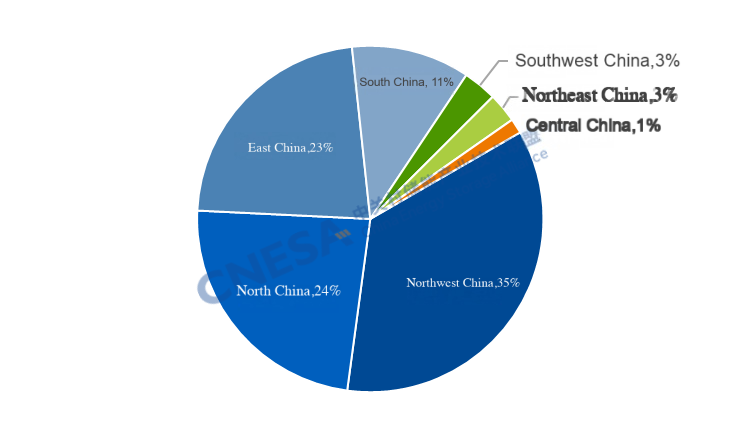
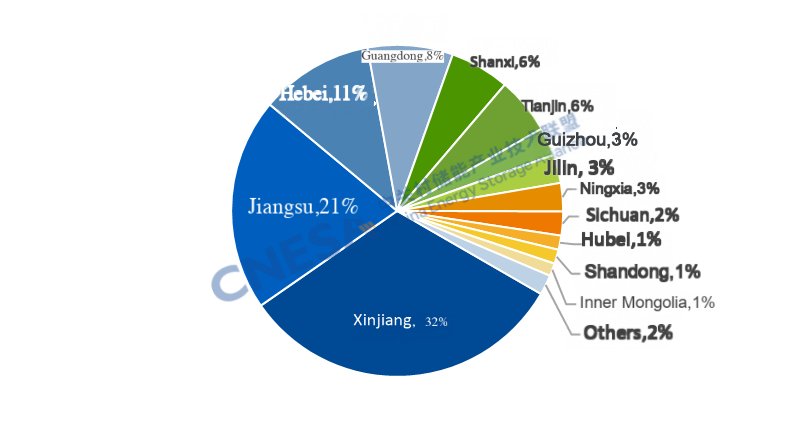
Figure 3: Regional Distribution of Newly Commissioned Generation- and Grid-Side New-Type Energy Storage Projects in January 2026 (MW%)
Figure 4: Provincial Distribution of Newly Commissioned Generation- and Grid-Side New-Type Energy Storage Projects in January 2026 (MW%)
Source: CNESA DataLink
3. Faster Deployment of Projects Invested by Third-Party Enterprises, the trend toward
diversification of energy storage investment entities has become increasingly evident.
In January, projects invested and developed by third-party enterprises—including China Green Development Group, Aerospace Hongji Energy Storage, and Daowei Energy Storage Group—were commissioned one after another. Third-party enterprises accounted for 45% of newly added installed power capacity, ranking first among all investor categories. Driven by rising market demand, supportive national policies, diversified technology pathways, and declining technology costs, the investment entity diversification trend became more pronounced in the first month of 2026.
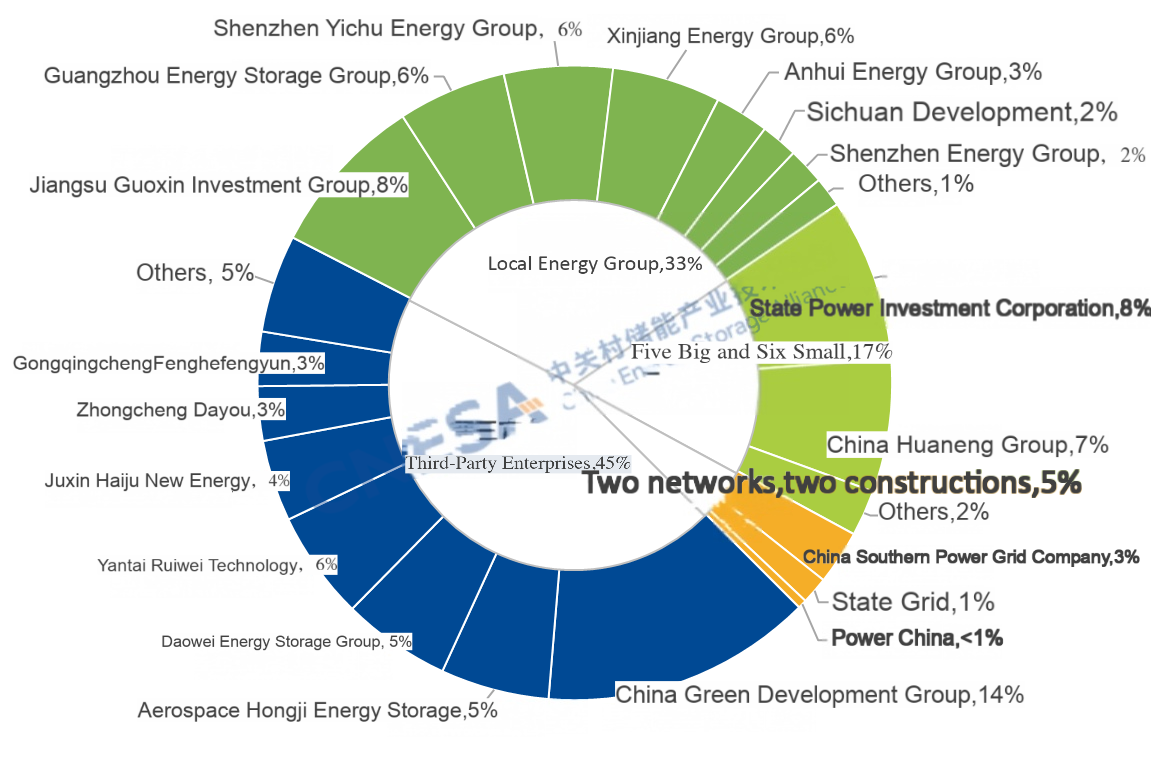
Figure 5: Owner Distribution of Newly Commissioned Generation- and Grid-Side New-Type Energy Storage Projects in January 2026 (MW%)
Source: CNESA DataLink Global Energy Storage Database
Note: Third-party enterprises refer to companies other than large state-owned power generation groups, the two major grid companies, their construction subsidiaries, and local energy groups.
4. Accelerated Deployment of Long-Duration Energy Storage Technologies
From a technology perspective, newly commissioned generation- and grid-side projects were dominated by lithium iron phosphate (LFP) batteries, accounting for 89% of installed power capacity, followed by compressed air energy storage (8%) and flow batteries (3%). Long-duration energy storage technologies—represented by CAES and flow batteries—as well as hybrid frequency regulation systems, are being deployed at an accelerating pace. Notable projects include the 300 MW Jiangsu Huai’an salt cavern CAES demonstration project, the Phase I Baicheng vanadium redox flow battery energy storage power station, and the Changyang Longzhouping vanadium redox flow battery energy storage project. In addition, a lithium battery + flywheel frequency regulation project by Shaanxi Energy was commissioned.
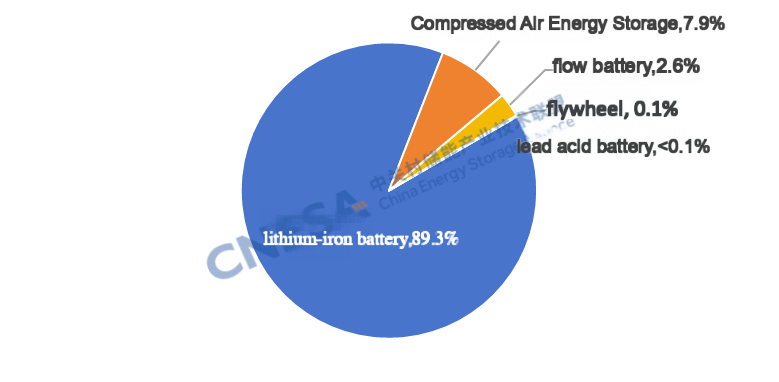
Figure 6: Technology Distribution of Newly Commissioned Generation- and Grid-Side New-Type Energy Storage Projects in January 2026 (MW%)
Source: CNESA DataLink
China Energy Storage Alliance (CNESA) continues to track energy storage project developments based on standardized, timely, and comprehensive data collection criteria. Leveraging long-term data accumulation and in-depth professional analysis, CNESA regularly publishes objective market analyses of energy storage installations, providing valuable references for industry decision-making. Since June 2025, CNESA’s monthly energy storage project analysis has been divided into generation- and grid-side and user-side market reports. This edition focuses on an in-depth interpretation of the generation- and grid-side market in January 2026.
For more comprehensive project information, authoritative data, and in-depth market analysis, please visit www.esresearch.com.cn or access the CNESA DataLink via the mini-program. For customized data consulting services, please contact CNESA through the official QR code. CNESA is committed to providing full-cycle, high-quality energy storage data services to industry stakeholders.

Register now to attend Asia’s Largest Energy Storage Trade Show for free:
What: The 14th Energy Storage International Conference & Expo
When: Conferences: March 31 - April 2, 2026
Exhibitions: April 1-3, 2026
Where: CIECC Beijing, China
Address: No. 55 Yudong road, Shunyi District, Beijing China

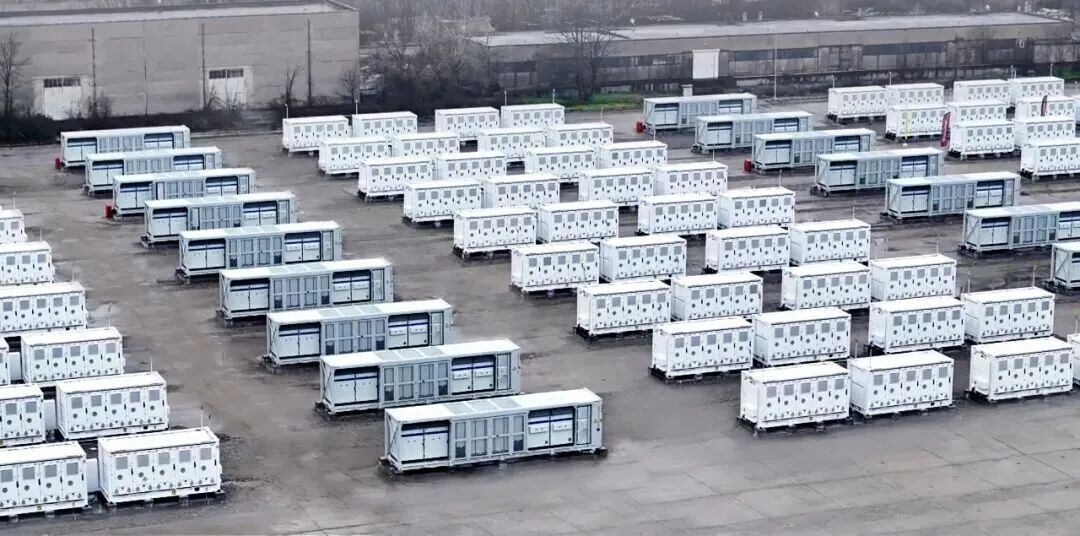
500MWh!BYD Energy Storage Has Commissioned Its Largest Energy Storage Project in East Europe
On January 8, 2026, a 500MWh standalone Battery Energy Storage System(BESS) project located at Maritsa East 3 in Bulgaria was officially commissioned. The project was the jointly developed by BYD Energy Storage and ContourGlobal under their strategic collaboration which is one of the largest standalone energy storage projects in East Europe.
On January 8, 2026, a 500MWh standalone Battery Energy Storage System(BESS) project located at Maritsa East 3 in Bulgaria was officially commissioned.
The project was the jointly developed by BYD Energy Storage and ContourGlobal under their strategic collaboration which is one of the largest standalone energy storage projects in East Europe. It is also BYD Energy Storage’s largest energy storage project in East Europe so far, fully demonstrating its technological capabilities and continued expansion of its global footprint. Since the cooperation agreement was signed in December, 2024, leveraging BYD Energy Storage’s own technological advantage together with CountourGlobal’s strong industry influence, the two parties have worked together to promote project deployment, laying solid foundation for long-term partnership, deeper penetration of the European market and enhanced brand presence in the Eastern European renewable energy sector.
BYD Energy Storage has confirmed its participation in the 14th Energy Storage International Conference and Expo(ESIE 2026), register now to attend Asia’s Largest Energy Storage Trade Show for free:
What: The 14th Energy Storage International Conference & Expo
When: Conferences: March 31 - April 2, 2026
Exhibitions: April 1-3, 2026
Where: CIECC Beijing, China
Address: No. 55 Yudong road, Shunyi District, Beijing China

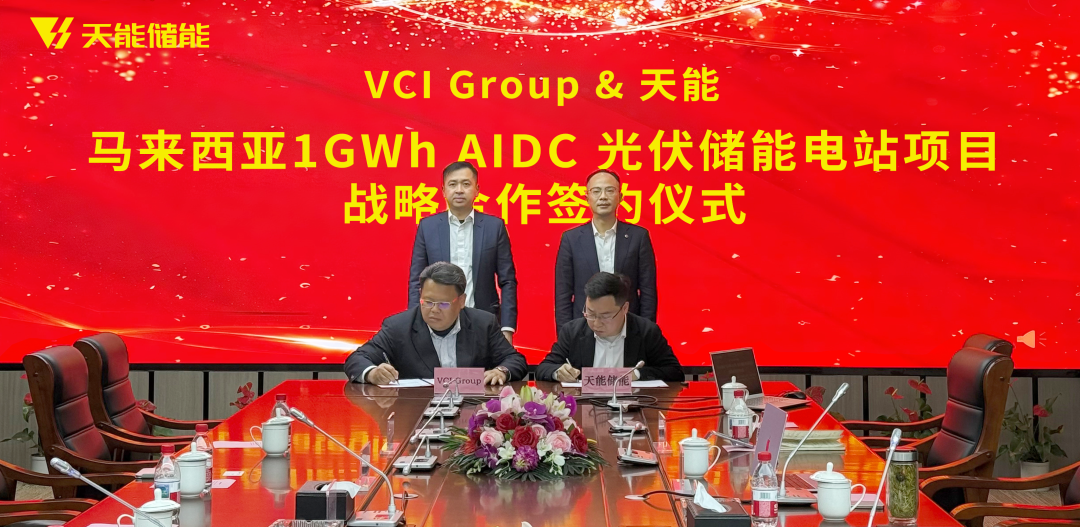
Tianneng Signs a 1GWh Project in Malaysia, Build a benchmark for Integrated “Solar- Storage- Computing”Solutions
Recently, Tianneng Group signed a strategic agreement with NASDAQ-listed company VCIG Group. The two parties will build a 1GWh AIDC solar energy storage power station in Malacca, Malaysia. The project aims to address the high-energy-consumption challenge of AIDC and will be developed under an “EPC+F” model.
Recently, Tianneng Group signed a strategic agreement with NASDAQ-listed company VCIG Group. The two parties will build a 1GWh AIDC solar energy storage power station in Malacca, Malaysia. The project aims to address the high-energy-consumption challenge of AIDC and will be developed under an “EPC+F” model.
It is said that phase I of the project plans to build a 250MW solar infrastructure together with Tianneng’s independently developed liquid cooing energy storage system. Leveraging Malaysia’s “CRESS” programme, the project will provide zero-carbon electricity to local AI computing infrastructure through signing direct power purchase agreement(PPA). The move marks an important breakthrough for Tianneng Group’s energy storage business in large-scale infrastructure development in Southeast Asia.
Register now to attend Asia’s Largest Energy Storage Trade Show for free:
What: The 14th Energy Storage International Conference & Expo
When: Conferences: March 31 - April 2, 2026
Exhibitions: April 1-3, 2026
Where: CIECC Beijing, China
Address: No. 55 Yudong road, Shunyi District, Beijing China

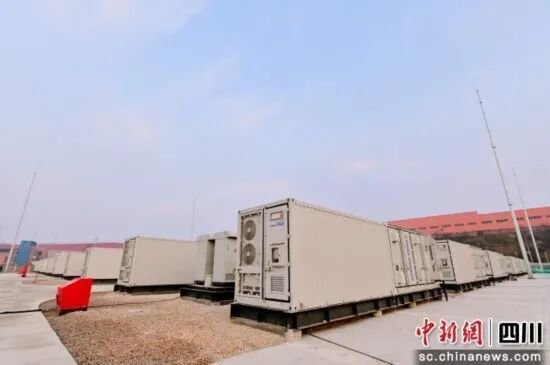
Annual Power Cost Savings Exceed RMB 60 Million ! Great Power’s 107MW/428MWh Hydropower-based Aluminium User-side Energy Storage Project is Commissioned
On January 16th, a 107.12MW/428.48MWh green hydropower-based aluminium user-side energy storage project jointly developed by Great Power and Henan Zhongfu Industry was officially commissioned in Guangyuan, Sichuan Province.
On January 16th, a 107.12MW/428.48MWh green hydropower-based aluminium user-side energy storage project jointly developed by Great Power and Henan Zhongfu Industry was officially commissioned in Guangyuan, Sichuan Province.
Designed and delivered under an EPC contract by Sichuan Zefeng Electric Power Design, the project achieved full-capacity grid connection by the end of 2025 after just five months of construction. It stands as a landmark project for green energy transformation in northern Sichuan and a benchmark case for energy-extensive industry implementing “source-grid-load-storage” integration.
Electricity stored at the facility is directly supplied to the electrolytic aluminium production system, primarily leveraging peak-valley electricity price arbitrage to reduce operating cost. According to estimates, the project is expected to lower electricity costs for electrolytic aluminum by approximately RMB 140 per tonne, delivering annual power cost savings of over RMB 60 million. Meanwhile, it will cut 52,000 tons carbon commission per year, providing a commercially viable solution to address high electricity costs and decarbonization pressures faced by energy-extensive industries.
Building on this project, the two partners will be committed to advance the development of a “zero-carbon aluminum industrial park” in Guangyuan. It plans to introduce advanced intelligent technology to build a virtual power plant (VPP) capable of engaging in power trading and grid dispatch. During the 15th Five-Year Plan period, the project developers will further expand the deployment of solar PV, wind power, green power direct supply and intelligent microgrids, ultimately establishing a safe and controllable regional intelligent micro-grid dominated by new energy, providing a practical model for developing a national new-type power system.
_______________________________________________
The Great Power has confirmed its participation in the 14th Energy Storage International Conference and Expo, register now to attend Asia’s Largest Energy Storage Trade Show for free:
What: The 14th Energy Storage International Conference & Expo
When: Conferences: March 31 - April 2, 2026
Exhibitions: April 1-3, 2026
Where: CIECC Beijing, China
Address: No. 55 Yudong road, Shunyi District, Beijing China

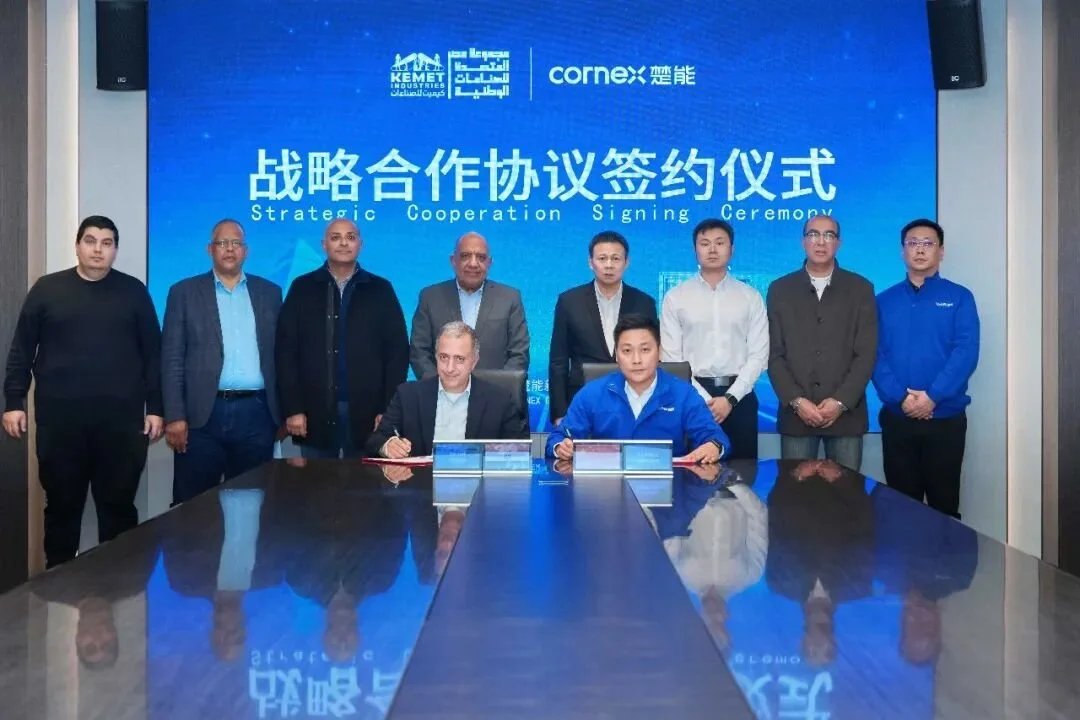
CORNEX Secures a 6GWh Energy Storage Order in Egypt, Successfully Expanding Into the North African Market
On January 16th, Cornex New Energy signed a strategic cooperation agreement with Egypt-based partners WeaCan and Kemet.
The agreement was signed by Dai Deming, chairman of Cornex New Energy and Ahmed Salaheldin Abdelwahab Elabd, Chiarman of the Board of Kemet. The signing ceremony was witnessed by Moustafa Kamal Esmat Mahmoud, minister of Egypt’s Ministry of Electricity and Renewable Energy, along with other government officials and senior executives from relevent enterprises.
On January 16th, Cornex New Energy signed a strategic cooperation agreement with Egypt-based partners WeaCan and Kemet.
The agreement was signed by Dai Deming, chairman of Cornex New Energy and Ahmed Salaheldin Abdelwahab Elabd, Chiarman of the Board of Kemet. The signing ceremony was witnessed by Moustafa Kamal Esmat Mahmoud, minister of Egypt’s Ministry of Electricity and Renewable Energy, along with other government officials and senior executives from relevent enterprises.
Under the agreement, Weacan and Kemet will serve as the core facilitator for project implementation. Leveraging their extensive local industrial resources and proven project execution experience in Egypt, the two partners will take full charge of services including scenario alignment, coordination of government approvals, grid connection support, and localized operation and service delivery, providing solid guarantee for the large-scale implementation of Cornex’s energy storage products. As the core technology and product supplier, Cornex will deliver high-quality energy storage systems in phases, with a total supply capacity of up to 6GWh, ensuring the safe and stable operation of its products in Egypt’s power system and providing full life-cycle technical support services.
Located on the eastern edge of the Sahara Desert, Egypt is endowed with abundant solar and wind resources, offering uniquely favourable conditions for the development of “solar power, wind power+energy storage” solutions. In recent years, Egypt has actively advanced its energy transition, setting a clear target to raise the share of renewable energy generation to 42% by 2030. The country has commissioned several hundred-megawatt-scale energy storage demonstration projects and plans to add over 10GWh energy storage capacity on the grid side to date. As market demand continues to accelerate, Egypt’s energy storage industry is entering a phase of rapid growth.
The 6GWh cooperation on energy storage procurement marks not only an important breakthrough for Cornex in the North African market but a concrete example of green energy cooperation between China and Egypt within the framework of the Belt and Road Initiative. Once commissioned, the project will effectively increase the local grid’s peak-shaving and frequency-regulation capability, facilitate the large-scale grid connection and integration of clean energy like solar power so as to help Egypt built a more flexible, reliable and low-carbon new-type power system.
At present, Cornex has built four major regional service centers with China, Europe, North America and Australia as a core, forming a globalized service network. This system enables full life-cycle services from product delivery to technical consulting, installment and operation and maintenance support. Backed by its independently developed core technologies, high-safety system designs and accurate response to diverse market demand, Cornex has achieved mass commission and landmark projects deployment in more than 60 countries and regions with its brand influence and customer recognition continuing to grow.
Looking ahead, Cornex will continue to uphold an open and win-win cooperation, deepen collaborations with international strategic partners across technology, channels, and ecosystem resources, and accelerate the expansion of its global business footprint through complementary strengths and localized integration.
Cornex New Energy has confirmed ins participation in the 14th Energy Storage International Conference and Expo (ESIE 2026), register now to attend Asia’s Largest Energy Storage Trade Show for free:
What: The 14th Energy Storage International Conference & Expo
When: Conferences: March 31 - April 2, 2026
Exhibitions: April 1-3, 2026
Where: CIECC Beijing, China
Address: No. 55 Yudong road, Shunyi District, Beijing China

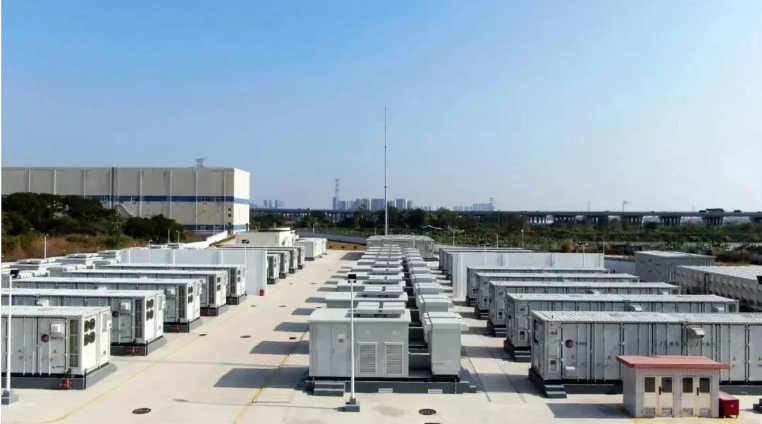
100MW/200MWh! Sineng Electric Supports Commissioning of Phase I of Nanlang Energy Storage Power Station
The Phase I 100MW/200MWh Nanlang energy storage power station, supplied by Sineng Electric, has now been successfully commissioned and put into operation. As the first large-scale standalone energy storage project on the grid side to be completed and commissioned in Zhongshan, China, the facility not only injects enhanced flexibility into the regional power grid, but establishes efficient and reliable revenue mechanism through an innovative frequency regulation service model.
The Phase I 100MW/200MWh Nanlang energy storage power station, supplied by Sineng Electric, has now been successfully commissioned and put into operation. As the first large-scale standalone energy storage project on the grid side to be completed and commissioned in Zhongshan, China, the facility not only injects enhanced flexibility into the regional power grid, but establishes efficient and reliable revenue mechanism through an innovative frequency regulation service model.
Grid-Forming Foundation, Intelligent Frequency Regulation
The project was invested in and developed by Shennan Dianxiwan (Zhongshan) Company, with Sineng Electric providing the core equipment, 1,250 kW centralized energy storage PCS units. The system is equipped with Sineng Electric’s second-generation enhanced hybrid grid-forming technology, incorporating globally leading IGBT drive technology and advanced intelligent control algorithms. As a result, the solution demonstrates significant advantages in three critical areas including response speed, command latency, and control accuracy, with its comprehensive frequency regulation performance index (K value) ranking among the best in the industry.
Since entering commercial operation six months ago, the power station has become an indispensable “gold-standard auxiliary service provider” for the regional grid. Supported by Sineng Electric’s energy storage PCS as the core equipment, the station has repeatedly delivered high-quality secondary frequency regulation services, effectively smoothing grid frequency fluctuations. The PCS offers flexible, on-demand adjustable ramp rates, reaching up to 50Pn/s, with a response time of ≤5 ms and a control accuracy error of no more than 0.5%. Much like a “speed stabilizer” for a high-speed power system, the solution significantly enhances the stability and reliability of electricity supply for thousands of households.
Sineng Electric has also confirmed its participation in the 14th Energy Storage International Conference and Expo (ESIE 2026), register now to attend Asia’s Largest Energy Storage Trade Show for free:
What: The 14th Energy Storage International Conference & Expo
When: Conferences: March 31 - April 2, 2026
Exhibitions: April 1-3, 2026
Where: CIECC Beijing, China
Address: No. 55 Yudong road, Shunyi District, Beijing China

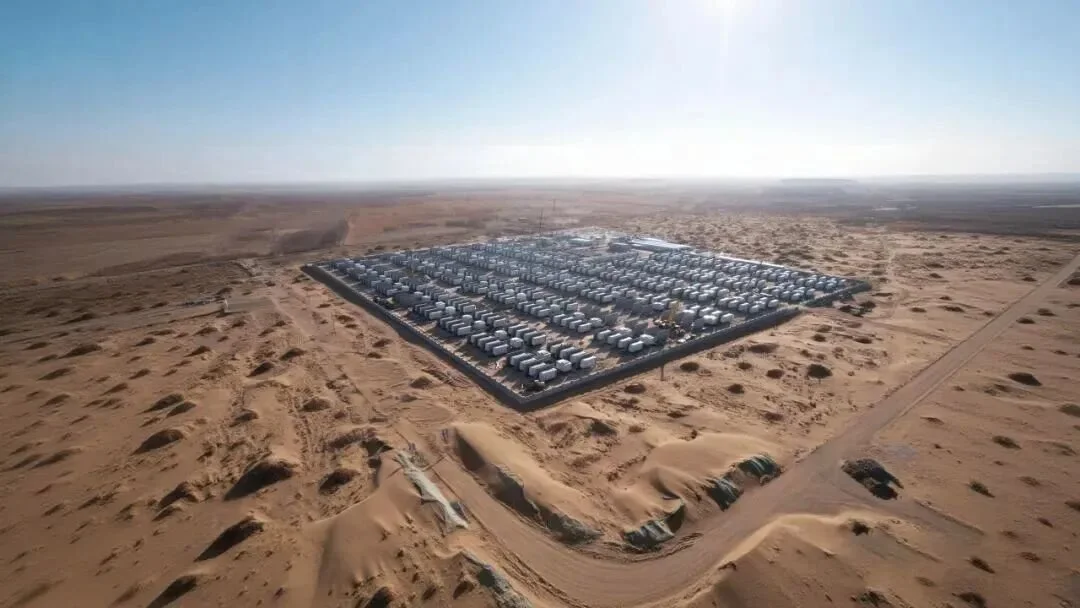
500MW/200MWh! JD Energy’s First GWh-Level Project Successfully Grid-Connected
In December 2025, the 500MW/2000MWh energy storage project was successfully grid-connected in Dengkou, Inner Mongolia. The energy storage station, standing proudly under the winter sun, is the first GWh-level project delivered by JD Energy. It not only set a new record for the scale of a single project but marked a significant milestone in the company’s development with its outstanding construction achievements.
In December 2025, the 500MW/2000MWh energy storage project was successfully grid-connected in Dengkou, Inner Mongolia. The energy storage station, standing proudly under the winter sun, is the first GWh-level project delivered by JD Energy. It not only set a new record for the scale of a single project but marked a significant milestone in the company’s development with its outstanding construction achievements.
01. 500MW/2000MWh: JD Energy enters the GWh-level project delivery
The 500MW/2000MWh energy storage project in Dengkou, Inner Mongolia, the first GWh-level project of JD Energy, utilized the company’s newly developed string-type prefabricated cabin, Galaxy-1. The project has an installed capacity of 500MW/2000MWh, deploying 400 units of Galaxy-1-4G and 100 units of eLink-HV35, a combined inverter and transformer.
In the harsh environment of sandstorms and cold temperatures, Galaxy-1 was used for the first time in a large-scale application on the grid-side. Despite the swirling yellow sands and biting winds, Galaxy-1 has laid a solid foundation for the new energy paradigm of Inner Mongolia with its exceptional environmental adaptability and operational stability.
02. Innovation empowerment: String-type prefabricated cabin Galaxy-1’s successful debut
The successful implementation of the 500MW/2000MWh energy storage project in Dengkou is driven by the flagship new product of JD Energy, the string-type prefabricated cabin Galaxy-1. This product adopts “All In One” design concept, integrating systems including 314Ah lithium iron phosphate (LiFePO4) batteries, BMS, string-type PCS, fire protection system, thermal management system, power distribution and communication system into a standard 20-foot container. It boasts key advantages of high efficiency, high safety and high integration. Through the successful practice of Dengkou project, Galaxy-1 made its debut on the grid-side, verifying its reliability and excellency in large-scale application.
With eMind-Trader as its core software system, JD Energy played a central role in supporting Dengkou power station’s operations from grid connection, market entry to autonomous participation in power trading, realizing a full value chain from system integration and project delivery to smart operation. This comprehensive technological advantage covering both hardware and software can not only significantly enhances the regional integration of new energy but also maximizes the project’s full lifecycle returns, achieving both stability and economic benefits.
03. Energizing the desert: green power driving regional development
At the turn of the year, Inner Mongolia has witnessed a surge in the grid connection of energy storage projects with energy constantly flowing. The successful grid connection of the 500MW/2000MWh energy storage project in Dengkou can effectively mitigate the fluctuations of intermittent renewable energy power generation of wind and solar power and significantly improve the grid’s adjustment capabilities and operational safety, providing more stable and higher-quality green electricity for Inner Mongolia and the North China region.
Meanwhile, the project will greatly increase the region’s ability to absorb renewable energy, reducing wind and solar curtailment. It will reinforce the energy transformation in Inner Mongolia and advance the national strategic goals of carbon peaking and carbon neutrality.
The successful grid connection of the 500MW/2000MWh energy storage project in Dengkou, Inner Mongolia marks JD Energy’s successful breakthrough in delivering a GWh-level single-project. It embodies the power of JD Energy with the debut of its flagship new product Galaxy-1. Moving forward, JD Energy will continue to innovate and explore energy storage sector, leaving a solid mark on the vast energy landscape while accelerating the progress of China’s energy revolution.
_______________________________________________________________
JD Energy has confirmed its participation of the 14th Energy Storage International Conference And Expo(ESIE 2026), register now to attend Asia’s Largest Energy Storage Trade Show for free:
What: The 14th Energy Storage International Conference & Expo
When: Conferences: March 31 - April 2, 2026
Exhibitions: April 1-3, 2026
Where: CIECC Beijing, China
Address: No. 55 Yudong road, Shunyi District, Beijing China

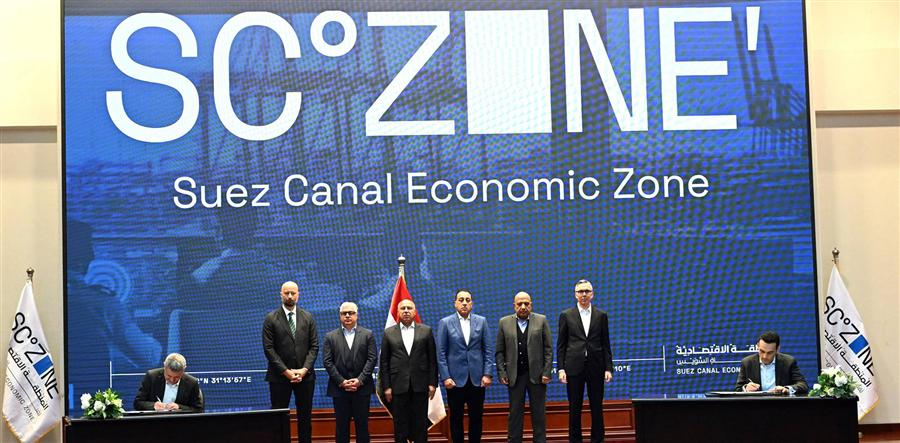
Sungrow’s First Energy Storage Plant in the Middle East Launched,with an Annual Capacity of 10 GWh
Egypt has taken a major step toward accelerating its clean energy transition, as Chinese energy storage leader Sungrow and Norwegian renewable developer Scatec partner with the Egyptian government to deliver large-scale solar+storage projects and establish the Middle East’s first battery energy storage manufacturing base, with a planned annual capacity of 10 GWh.
According to foreign media reports, the Egyptian government recently announced that it has signed a series of agreements worth over 1.8 billion USD with Norwegian renewable energy developer Scatec and Chinese energy storage company Sungrow. These agreements aim to build large-scale solar+storage projects and promote local manufacturing of battery energy storage systems. This series of agreements is a key initiative for Egypt to expand its clean energy installed capacity and improve its new energy industry chain.
Scatec will develop the “Energy Valley” project in Minya, which will include the construction of a large-scale integrated solar power and energy storage plant. Meanwhile, Sungrow will build a battery energy storage system manufacturing plant in the Suez Canal Economic Zone (SCZONE) to support energy storage equipment for the project and the regional market.
Both projects are being advanced with the coordination of Egyptian Ministry of Electricity and Renewable Energy and the Suez Canal Economic Zone Authority. Egyptian Prime Minister Mostafa Madbouly stated that these projects highly align with the country’s strategy of localizing new energy industries, and that localizing energy storage and renewable energy manufacturing will be key pillars for enhancing Egypt’s energy security and driving its green transformation.
As part of the project arrangements, the Egyptian Electricity Transmission Company (EETC) has signed a Power Purchase Agreement (PPA) with Scatec, while the New and Renewable Energy Authority (NREA) has signed a land use agreement for the Energy Valley project. Additionally, Sungrow has secured the land use rights for building the battery energy storage manufacturing plant in the TEDA Industrial Zone in SCZONE.
Furthermore, Scatec and Sungrow Energy have signed a battery supply contract, under which Sungrow Energy will provide the battery energy storage systems for the Energy Valley project in Minya.
According to the introduction, the Energy Valley project is positioned as one of the largest integrated clean energy projects in the world, and the first solar+storage project in the region capable of providing stable power supply around the clock. The project will build a 1.7 GW (AC) solar photovoltaic capacity, along with a total of 4 GWh of battery storage systems, distributed across Minya, Qena, and Alexandria. The project will also build new substations and dedicated transmission lines to provide clean electricity to the Wadi El-Sereiriya Industrial Zone in Minya.
On the manufacturing side, Sungrow Energy’s factory in Egypt will become the first battery energy storage system manufacturing base in the Middle East and Africa. Located in the TEDA-Egypt Industrial Zone in Ain Sokhna, the factory will cover an area of about 50,000 square meters and is expected to create around 150 direct jobs. Once operational, the factory will have an annual capacity of 10 GWh, with production expected to begin in April 2027.
Regarding financing, the Egyptian Prime Minister also witnessed the signing of preliminary financing agreements for the Energy Valley project between Scatec and the European Investment Bank (EIB), the European Bank for Reconstruction and Development (EBRD), and the African Development Bank (AfDB), marking the project’s support from multilateral development financial institutions.
__________________________________________________________________
Sungrow Energy has confirmed its sponsorship of the 14th Energy Storage International Conference and Expo (ESIE 2026), register now to attend Asia’s Largest Energy Storage Trade Show for free:
What: The 14th Energy Storage International Conference & Expo
When: Conferences: March 31 - April 2, 2026
Exhibitions: April 1-3, 2026
Where: CIECC Beijing, China
Address: No. 55 Yudong road, Shunyi District, Beijing China

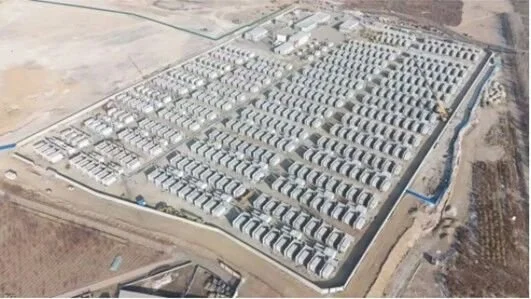
4.8 GWh Installed: Beijing KeRui Supports the Grid Connection of Two Major Grid-Side Energy Storage Projects in Inner Mongolia, Chi
In December 2025, two large-scale grid-side independent energy storage projects supported by Beijing KeRui were successfully connected to the grid in Inner Mongolia and put into operation: the 500 MW / 2,000 MWh Gushanliang project in Ordos and the 400 MW / 2,400 MWh Bu’erhantu project in Baotou.
In December 2025, two large-scale grid-side independent energy storage projects supported by Beijing KeRui were successfully connected to the grid in Inner Mongolia and put into operation: the 500 MW / 2,000 MWh Gushanliang project in Ordos and the 400 MW / 2,400 MWh Bu’erhantu project in Baotou.
Leveraging outstanding engineering execution capabilities, Beijing KeRui’s service team completed the entire process from installation to power delivery in just 50 days—an industry miracle that provided strong assurance for the high-quality and rapid commissioning of both projects. With a combined capacity of 4.8 GWh, the two projects set a new benchmark for the development of China’s independent energy storage sector in terms of large scale, high quality, and accelerated delivery. They inject strong momentum into regional energy structure transformation and provide critical support for building a stable and reliable new-type power system.
In these two flagship projects, Beijing KeRui’s integrated energy storage power conversion and step-up units served as the primary AC-side equipment and played a central role in successful commissioning. Several innovative technologies proved critical to project delivery:
Energy-Efficiency-Oriented Intelligent Thermal Management
The system adopts an innovative multi-tier thermal management strategy centered on “on-demand activation and load matching.” By dynamically aligning transformer cooling requirements with fan operating conditions, the design achieves optimal coordination between auxiliary power consumption and heat dissipation efficiency, significantly reducing unnecessary energy use. In addition, an intelligent heat-exchange buffering design adjusts fresh-air temperature seasonally—mitigating cold shock in winter to protect equipment and pre-cooling intake air in summer to enhance heat dissipation—thereby ensuring long-term stable operation while further refining overall energy efficiency.
Reinforced Structural Design with Integrated Drainage
Through optimization of the converter platform layout, the system enhances overall structural strength while naturally forming efficient drainage channels. This eliminates the need for additional drainage components, achieving dual functionality within a single structure and balancing structural safety with environmental adaptability. The design reflects a philosophy of simplicity, reliability, and efficiency.
Verified Transport Reliability
The equipment underwent rigorous transportation testing, including over 3,000 kilometers of highway transport and 450 kilometers of reinforced standard-condition road testing. These trials fully validated the system’s ability to withstand complex overland transportation challenges, ensuring structural integrity and stable performance throughout delivery and meeting the stringent requirements of real-world engineering logistics.
One notable highlight of the projects is the application of HyperStrong’s flagship large-capacity liquid-cooled energy storage system, representing the latest advancements in electrochemical energy storage technology. HyperStrong’s independently developed second-generation power conversion system (PCS) features advanced technology with fully independent and controllable core technologies. It can accurately respond to grid dispatch requirements and, through customized design, adapts effectively to complex operating conditions to ensure safe and stable year-round operation. This PCS has been successfully integrated into Beijing KeRui’s integrated unit solution.
Another key highlight is the adoption of CATL’s advanced 587 Ah energy storage cells, which achieve an energy density of 434 Wh/L, a cycle efficiency of up to 96.5%, and further optimized cycle life and degradation performance. This marks the first time Beijing KeRui’s integrated power conversion and step-up system has been deployed in combination with this cell model, demonstrating the company’s rapid response capability in adopting cutting-edge technologies and integrating high-performance components. Beijing KeRui’s integrated design deeply combines core modules—including the power conversion system, step-up transformer, power distribution switchgear, intelligent control, fire protection and security, and thermal management—into a single solution. Through optimized structural topology and layered spatial design, the capacity of a single box-type dry transformer can be increased to over 8,250 kVA, unlocking substantial energy output within limited space. This approach reduces land-use costs while enabling flexible deployment across diverse application scenarios.
The commissioning of the two energy storage power stations will significantly enhance the Inner Mongolia power grid’s ability to accommodate variable renewable energy sources such as wind and photovoltaic power. The projects will effectively smooth peak–valley load differences, improve grid flexibility, and strengthen overall system security and stability. Looking ahead, leveraging the comprehensive advantages of its integrated energy storage power conversion and step-up units—spanning energy efficiency, structural optimization, reliability, and adaptability—Beijing KeRui will continue to provide high-performance, high-reliability energy storage system solutions. The company aims to help customers achieve lower operating costs, higher full life-cycle discharge returns, and improved investment performance.
As an active participant and key driver in the development of new-type power systems, Beijing KeRui remains committed to advancing clean and low-carbon energy transition through technological innovation and superior service, contributing to a safer, more efficient, and greener modern energy system.
Register now to attend Asia’s Largest Energy Storage Trade Show for free:
What: The 14th Energy Storage International Conference & Expo
When: Conferences: March 31 - April 2, 2026
Exhibitions: April 1-3, 2026
Where: CIECC Beijing, China
Address: No. 55 Yudong road, Shunyi District, Beijing China

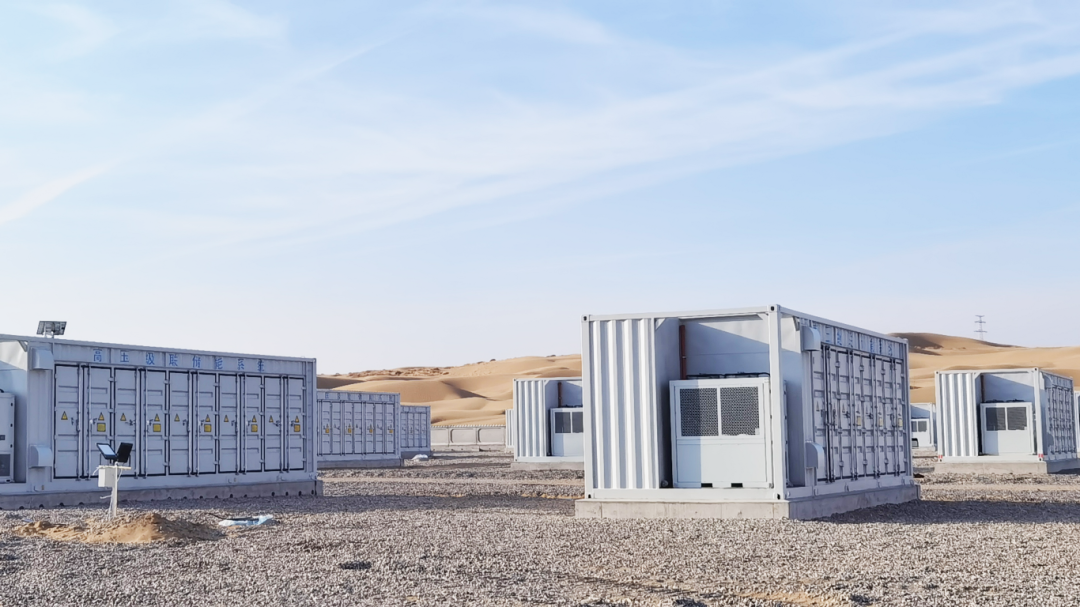
China Mingyang Longyuan’s First 100MW/400MWh High-Voltage Cascade Independent Energy Storage Project Achieves Full-Capacity Grid Connection
Mingyang Longyuan has built a major milestone in China’s energy storage sector with the successful full-capacity grid connection of its first 100MW/400MWh high-voltage cascade independent energy storage project in Ordos, Inner Mongolia. The project’s commissioning highlights the company’s technological strength in large-scale, high-efficiency, and highly reliable energy storage solutions, while reinforcing the critical role of advanced storage systems in supporting grid stability and renewable energy integration.
On December 28, Mingyang Longyuan’s first 100MW/400MWh high-voltage cascade independent energy storage project, the Yashitu Power Station, successfully achieved full-capacity grid connection at the Gushanliang site in Ordos, China. The project also passed the “three charge and three discharge” test of the West Inner Mongolia Power Grid and has officially entered commercial operation.
As an optimal solution for large-scale energy storage power stations, Mingyang Longyuan’s high-voltage cascade energy storage system demonstrates significant advantages, including large unit capacity, high energy conversion efficiency, enhanced safety performance, lower overall system cost, simplified coordinated control, and extended battery lifespan. The system also provides strong grid-support capabilities, enabling reliable performance under complex conditions such as extreme temperature variations and high humidity, while effectively supporting peak shaving, frequency regulation, and large-scale integration of renewable energy.
The project has achieved a long-duration cycle efficiency exceeding 90 percent, marking a substantial breakthrough in key performance indicators. This achievement reflects the sustained efforts of Mingyang Longyuan’s R&D and service teams. Despite harsh construction conditions characterized by strong winds, heavy snowfall, and extremely low temperatures in Ordos, the team overcame multiple technical challenges through continuous on-site work, ensuring the project’s timely commissioning. The experience gained has further strengthened the company’s capabilities in operating energy storage systems under extreme environmental conditions, laying a solid foundation for long-term stable and reliable performance.
The successful commissioning of the Gushanliang energy storage power station in Ordos underscores Mingyang Longyuan’s technical strength and product reliability, representing an important milestone in the company’s continued expansion in the energy storage sector. Looking ahead, Mingyang Longyuan will remain driven by technological innovation, advancing the upgrading of the energy storage industry and contributing to the development of a clean, low-carbon, safe, and efficient energy system.
——————————————————————————————————————————————————
Register now to attend Asia's Largest Energy Storage Trade Show for free:
What: The 14th Energy Storage International Conference & Expo
When: Conferences: March 31 - April 2, 2026
Exhibitions: April 1-3, 2026
Where: CIECC Beijing, China
Address: No. 55 Yudong road, Shunyi District, Beijing China

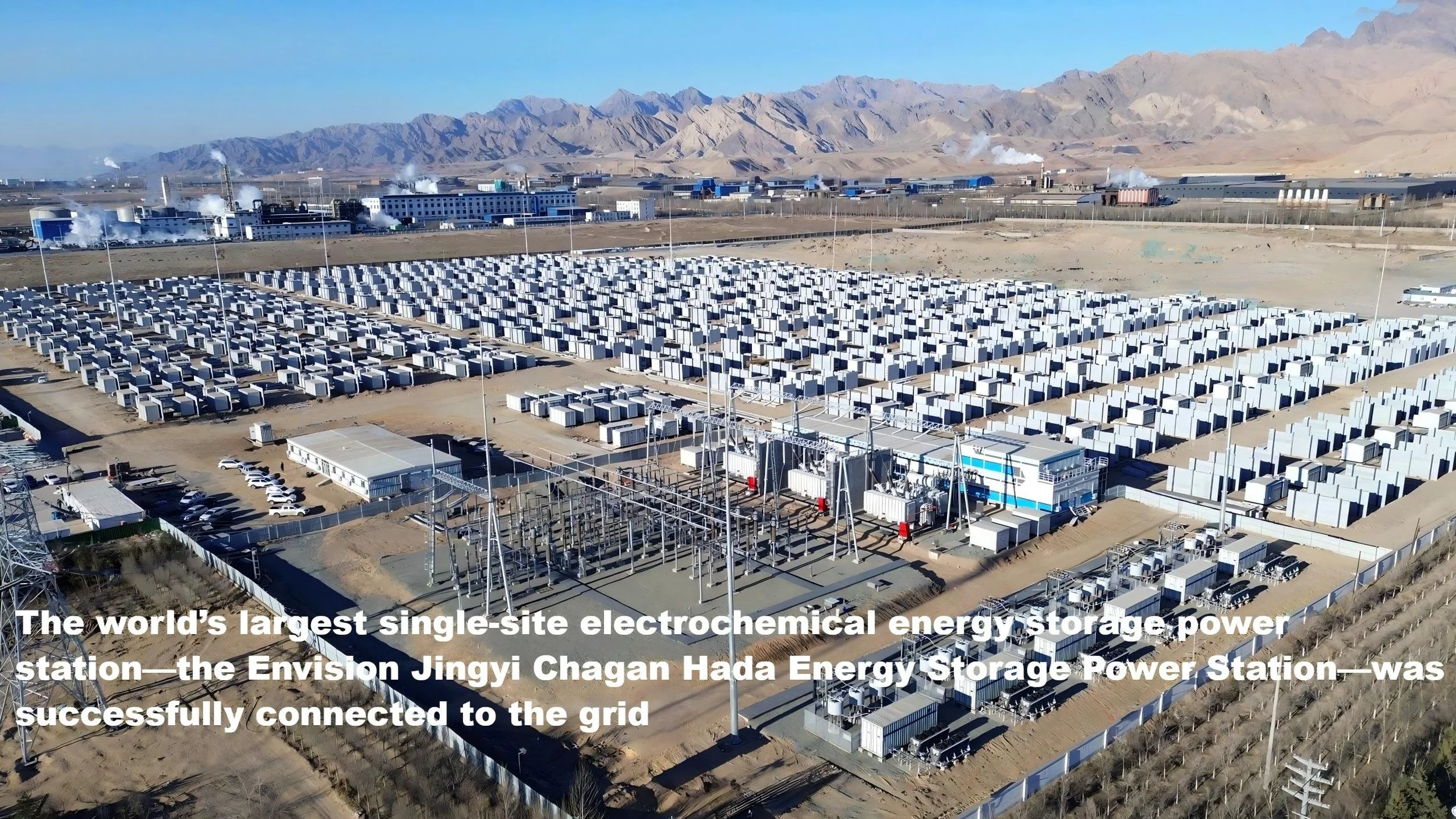
12.8 GWh Energy Storage Cluster Connected to the Grid AI-Powered Energy Storage Reshapes the Future of New Power Systems
The world’s largest single-site electrochemical energy storage power station—the Envision Jingyi Chagan Hada Energy Storage Power Station—was successfully connected to the grid, completing a 12.8 GWh AI-powered energy storage cluster in Inner Mongolia. The project sets new global benchmarks for scale, grid-connection speed, and system reliability, while demonstrating advanced grid-forming capabilities that enable rapid commissioning, deep grid interaction, and large-scale renewable integration.
Recently, the world’s largest single-site electrochemical energy storage power station—the Envision Jingyi Chagan Hada Energy Storage Power Station—was successfully connected to the grid. With a total capacity of 4 GWh, the project is fully equipped with Envision’s AI-powered energy storage system. This milestone marks the completion and grid connection of Envision’s 12.8 GWh energy storage cluster deployed across Bayannur, Ordos, Hohhot, Ulanqab, Xilingol League, and Alxa League. To date, Envision-led energy storage projects in Inner Mongolia exceed 14 GWh in total capacity.
The project passed grid verification at rated power through “three charge and three discharge” and a 72-hour continuous trial operation at one time, becoming the largest energy storage project in China to complete such testing. This achievement not only sets new global records for energy storage cluster scale and grid-connection speed, but also demonstrates Envision’s capabilities in ultra-large-scale system integration, extreme-environment adaptability, deep grid interaction, and large-scale project delivery.
Notably, the project’s grid connection coincided with the release of China’s Guidelines on Promoting High-Quality Power Grid Development by the National Development and Reform Commission (NDRC) and the National Energy Administration (NEA), highlighting strong alignment between national policy direction and industrial practice. Together, they signal that AI-centered energy storage technologies are reshaping the future of new power system from technological, market, and application perspectives.
Technology: From “Optional” to “Essential”
The Guidelines clearly state that power system regulation capabilities should be upgraded toward greater diversity and massive-scale coordination. They call for accelerated development of regulation capabilities for new grid-connected entities, including distributed renewable energy and new-type energy storage, to enable the coordinated and optimized dispatch of diverse and large-scale resources. The Guidelines also emphasize strengthening R&D in critical power grid technologies, targeting application scenarios such as deserts, Gobi and barren regions, integrated wind–solar–hydro systems, high-altitude areas, and deep and far-offshore environments. They propose piloting long-distance transmission from large-scale 100% renewable energy bases, and accelerating the engineering validation and deployment of grid-forming technologies.
It is said that Envision’s AI energy storage system deployed in Inner Mongolia integrates advanced capabilities from “grid-following” to “grid-forming”, enabled by a full-time-scale simulation platform and a three-layer grid-forming architecture spanning equipment, system, and site levels. This allows GW-scale stations to connect to the grid immediately upon energization, significantly reducing commissioning time, mitigating oscillation risks, and enhancing system support strength. As a result, energy storage evolves from a “grid follower” to a “grid builder,” providing a solid technical foundation for power systems with high shares of renewable energy.
Market: From Grid Connection to Market Participation
The Guidelines emphasize deep integration between market mechanisms and dispatch systems, and encourage exploration of new pricing mechanisms. This creates clear and predictable revenue pathways for AI-powered energy storage through participation in electricity spot markets, provision of ancillary services such as frequency and peak regulation, and access to capacity compensation and price arbitrage.
The 12.8 GWh energy storage cluster will be fully integrated into the electricity spot market. Leveraging Envision’s AI system—where trading agents and grid-forming agents operate in coordination—the project enables a closed-loop lifecycle operation covering forecasting, dispatch, trading, and self-learning. This approach not only enhances the intelligence, efficiency, and execution of power trading decisions, but also provides a replicable and scalable model for the large-scale participation of new-type energy storage in electricity markets. At the same time, it significantly improves regional renewable energy consumption and strengthens the operational resilience of the power grid. In previous deployments, Envision’s AI energy storage system has ranked first in trading forecast accuracy at several sites in Inner Mongolia for consecutive months. Based on measured operational data, the project is expected to increase total lifecycle returns by more than 20%.
Applications: From Single Use to Broad Scenarios
The Guidelines elevate smart microgrids as a key component of new-type power systems, unlocking vast opportunities for AI energy storage in industrial parks, zero-carbon parks, and remote areas. In these scenarios, AI-powered energy storage functions as a local energy brain, optimizing the coordination of generation, grid, load, and storage to maximize renewable self-consumption, enhance supply reliability, and enable higher-level grid interaction.
As power systems become increasingly clean and market-oriented, simple equipment aggregation is no longer sufficient. In high-renewable scenarios, AI-driven energy storage that balances grid stability with revenue optimization has become indispensable. The successful grid connection of the Inner Mongolia cluster underscores Envision’s leadership in physical AI and AI-enabled renewable energy solutions.
Envision has established a full industrial chain in Inner Mongolia, from battery cells and system integration to project delivery and intelligent operation. Leveraging its integrated capabilities, the project drives industrial clustering, injects new momentum into the local economy, supports the development of a new-type power system, and underpins the region’s efforts to accelerate the construction of a nationally important energy and strategic resources base.
This milestone delivery marks a successful conclusion to Envision’s energy storage business expansion in 2025. Empowered by physical artificial intelligence, Envision has secured a series of major contracts both at home and abroad this year. Building on its established global footprint, the company has successfully expanded into ten strategic overseas markets, including Australia, Chile, Italy, and Poland. Looking ahead, Envision will continue to strengthen the foundational support for next-generation power systems through innovative products and world-class project execution, accelerating the global transition toward zero-carbon and driving a new era of shared prosperity powered by Chinese renewable energy technologies.
____________________________________________________________________
Envision Energy Storage has confirmed its participation in the 14th Energy Storage International Conference and Expo (ESIE 2026). Register now to attend Asia's Largest Energy Storage Trade Show for free:
What: The 14th Energy Storage International Conference & Expo
When: Conferences: March 31 - April 2, 2026
Exhibitions: April 1-3, 2026
Where: CIECC Beijing, China
Address: No. 55 Yudong road, Shunyi District, Beijing China

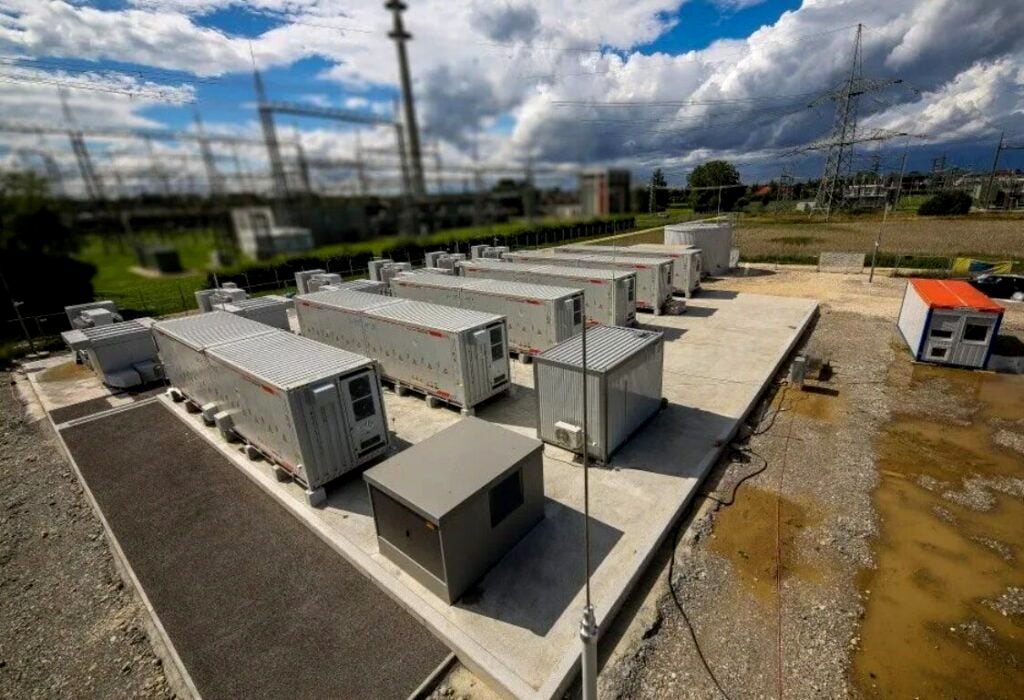
Germany Roundup: 500MW BESS and Data Centre Transaction, Seven-Year Toll and 370MW Pipeline Secured
Source: Energy Storage News
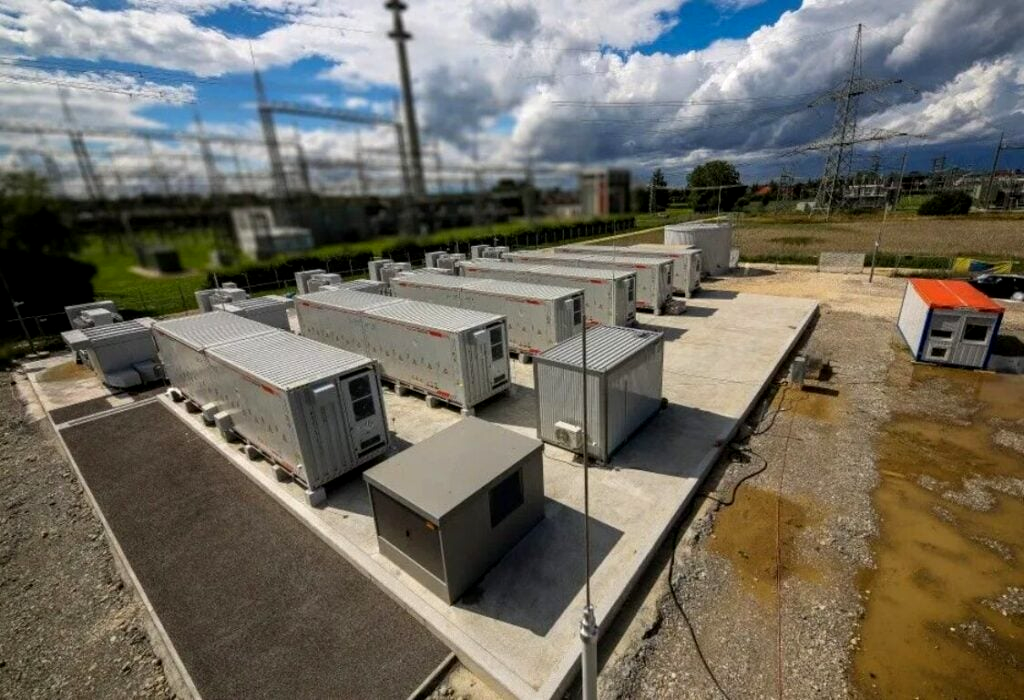
The BESS with which ju:niz Energy will enter into a toll with Next Kraftwerke. Image: ju:niz Energy
A trio of German grid-scale BESS news items, with Next Kraftwerke and ju:niz Energy agreeing a seven-year toll, Alpiq announcing a 370MW pipeline, and WBS Power selling the country’s largest solar-plus-storage project and planning a data centre on the same site.
Germany has this year become a hotbed of battery energy storage system (BESS) project announcements and deal-making, driven by its substantial revenue opportunities as Europe’s largest electricity market and a looming August 2029 deadline for getting projects operational to avoid charge-discharge grid fees. See all recent coverage here.
WBS Power sells solar-plus-storage project, plans data centre
Developer WBS Power has sold the 150MW solar, 500MW/2,000MWh BESS Project Jupiter in Brandenburg, Germany, to investor Prime Capital.
WBS acquired the site for the clean energy project in 2022, and the project will require €500 million (US$583 million), with construction expected in late 2026/early 2027. Both technologies will share a 380kV grid connection in the area of TSO 50Hertz. The acquisition is subject to Project Jupiter reaching ready-to-build (RTB) status.
The transaction also establishes a joint venture to co-locate a hyperscale data centre of up to 500MW in power demand in the same area.
WBS Power said there is growing demand for data centres in Germany, which are highly energy-intensive and benefit significantly from direct access to renewable power and grid stability.
“By integrating Germany’s largest co-located BESS and Solar PV project with a hyperscale data center, we are creating a unique platform that supports both the energy transition and digital transformation,” said Maciej Marcjanik, CEO of WBS Power Group.
Alpiq secures 370MW Germany pipeline
Switzerland-based energy firm Alpiq has expanded in Germany with a 370MW BESS pipeline the company has ‘secured’, in partnership with developer SPP Development. The projects in Brandenburg and Saxony-Anhalt are expected to reach RTB status in 2026.
Lukas Gresnigt, Head International and member of the Executive Board of Alpiq said that Germany is a competitive and complex market for BESS, with many projects are queuing for grid access and permits, and the partnership combined Alpiq’s financial strength and SPP’s local expertise.
Last week, Energy-Storage.news reported on Alpiq entering into a long-term toll for a BESS in Germany owned and operated by Eco Stor. Alpiq has acquired projects in France and Finland, where it recently commissioned a 30MW/36MW project.
Shell and EQT companies agree Germany BESS toll
VPP operator Next Kraftwerke, acquired by Shell in 2021, has concluded a Germany BESS toll with BESS platform ju:niz Energy, acquired by investor EQT in 2024.
The seven-year toll is for a 20MW/40MWh project in Vöhringen, Bavaria, and Next said it is one of the first operational contracts of its kind in Germany, live since 1 November.
Next Kraftwerke will pay ju:niz Energy a fixed monthly fee per installed MW for the use of the BESS capacity. The model offers stable revenues for the operator (ju:niz) and flexibility for the optimiser (Next Kraftwerke). The toll is 80% fixed remuneration and 20% merchant, Next said.
(By Cameron Murray)
CENSA Upcoming Events:
Apr. 1-3, 2026 | The 14th Energy Storage International Conference & Expo
Register Now to attend, free before Dec 31, 2025.

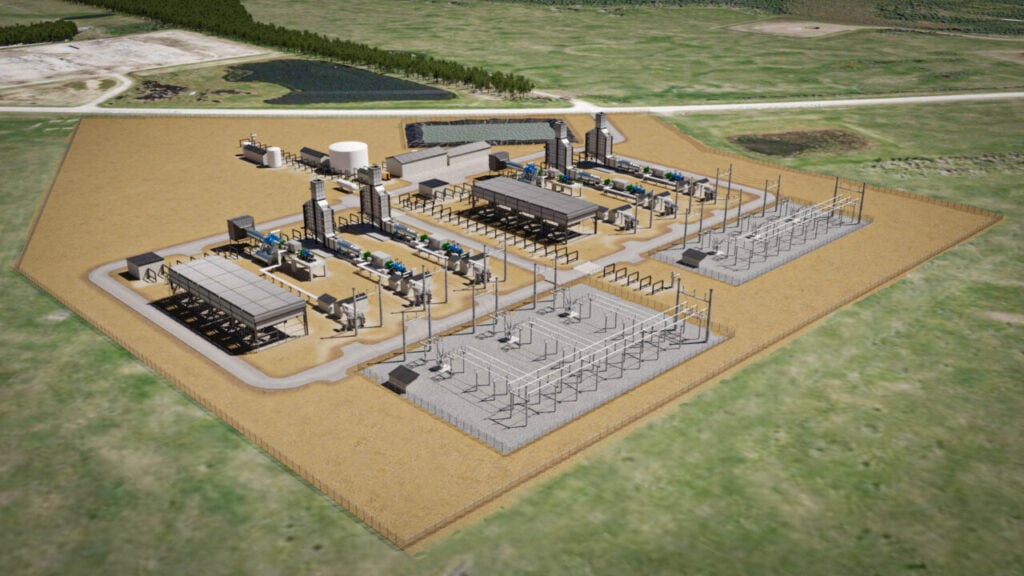
Cache Power Plans ‘Canada’s First’ Commercial-Scale Compressed Air Energy Storage Facility
Source: Energy Storage News
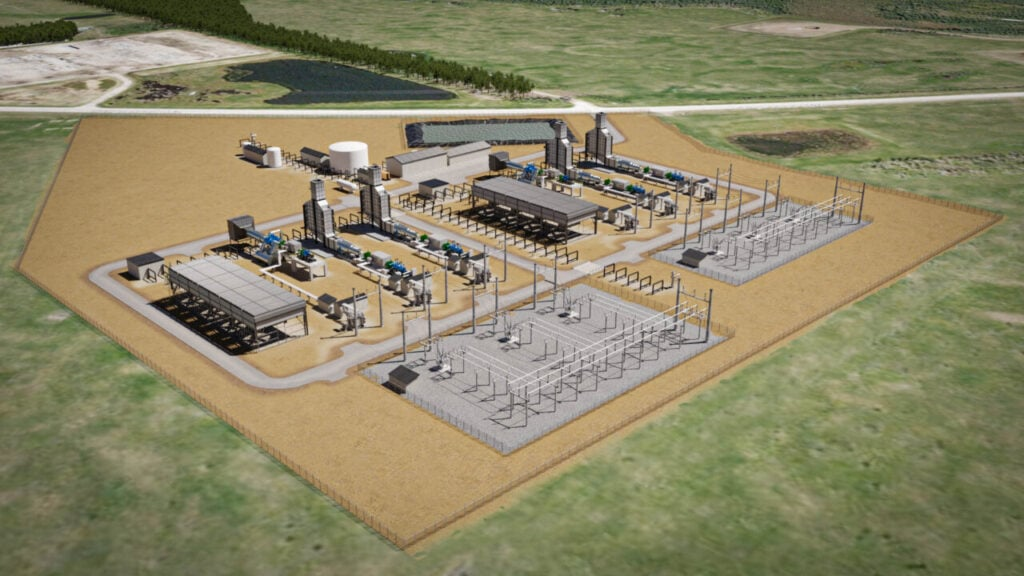
The facility will be constructed in two phases and located next to the Marguerite Lake substation to enhance efficiency and facilitate grid integration. Image: EllisDon
Compressed air energy storage (CAES) developer Cache Power is partnering with construction company EllisDon to deliver a CAES facility in Northeast Alberta, Canada.
The facility will be constructed in two phases and located next to the Marguerite Lake substation to enhance efficiency and facilitate grid integration.
Cache Power does not have any information on its website, but appears to be a special purpose vehicle (SPV) for Federation Engineering.
On Federation’s website, the company clarifies that the Marguerite Lake facility will have a 250MW load capacity and 640MW generation capacity. Energy storage capacity or planned duration were not referred to in publicly available materials.
The companies assert that the technology will be essential in stabilising Alberta’s grid and supporting both provincial and national efforts toward a net-zero electricity future. The project has secured all key regulatory approvals, with early construction scheduled to start soon.
CAES technology operates by pressurising and directing air into a storage medium to load the system. When discharging, the stored air is released through a heating system to expand, driving a turbine generator.
Notably, the companies claim the project will be the first commercial scale CAES facility in Canada.
Ontario-headquartered Hydrostor is known for its advanced compressed air energy storage (A-CAES) projects.
A-CAES operates similarly to traditional CAES but captures heat from the compressor and passes it through heat exchangers to store in pressurised water. This water is kept in a reservoir and then released into a cavern to displace air during discharging, a process known as hydrostatic compensation.
In conventional CAES, less than 50% of the energy can typically be recovered. The thermal energy produced during compression is often wasted, and the power output varies depending on the residual underground air pressure.
Hydrostor has two small operational projects in Canada, one a pilot and the other a commercial demonstrator, with the larger one being a 2.2MW/10MWh commercial system in Goderich, Ontario.
Hydrostor noted the Goderich Energy Storage Centre as the world’s first commercially contracted A-CAES facility. In addition to its role as technology provider, the A-CAES company is also developing large-scale projects around the world, including its 1.6GWh Silver City project in New South Wales, Australia, and 4GWh Willow Rock project in California, US. The company has secured some funding and offtake agreements for both, including a recent renegotiation of contracts for Willow Rock (ESN Premium article).
It has also proposed a 500MW/8,000MWh project in Ontario (ESN Premium), adjacent to Ontario Power Generation’s Lennox Generating Station in Greater Napanee.
Speaking with Energy-Storage.news, a representative from Federation clarified that the distinction between the CAES system titles for itself and Hydrostor came down to scale and usage.
Cache Power’s facility can store up to 48 hours of energy by compressing air with excess grid electricity and sequestering it in underground salt caverns formed through solution mining.
It can also blend up to 75% hydrogen with natural gas, with a future plan for complete hydrogen utilisation, aligning with Canada’s net-zero ambitions.
Power plant equipment supplier Babcock & Wilcox are collaborating on engineering the possible hydrogen facility expansion, employing the company’s BrightLoop technology.
Babcock & Wilcox claim that BrightLoop can produce hydrogen while isolating carbon dioxide for capture and storage.
Additionally, Cache Power states it will deliver economic and social advantages to the local community and Indigenous Partners. Cold Lake First Nations has actively engaged in the project’s development and is anticipated to collaborate as a partner with Cache Power in both the project and its operations.
Update: Jordan Costley, Director of Sustainability Projects at Federation Engineering, and President of Cache Power has clarified that the project will be 30.72GWh. Costley also added about CAES energy recovery:
“(The 50% recovery statistic) may have been true for the original D-CAES projects such as Huntorf (Germany 1978) and McIntosh (USA 1991) but our project is utilizing the latest D-CAES technology from Siemens Energy.“
“Today’s compression technology utilising multi-stage integrally geared and intercooled compressors is very efficient resulting in the heat of compression being low grade not valuable for thermal energy storage and reuse in the expansion process. The expander trains also include 90% effective dual-reheat recuperators again significantly increasing the overall efficiency. The technology we are utilizing is not “conventional CAES” as defined by Huntorf and McIntosh.
(By April Bonner)
CENSA Upcoming Events:
Apr. 1-3, 2026 | The 14th Energy Storage International Conference & Expo
Register Now to attend, free before Dec 31, 2025.

4GW/5.12GWh Malaysia Solar-Plus-Storage Hub Receives World Bank Funding
Source: PV Tech
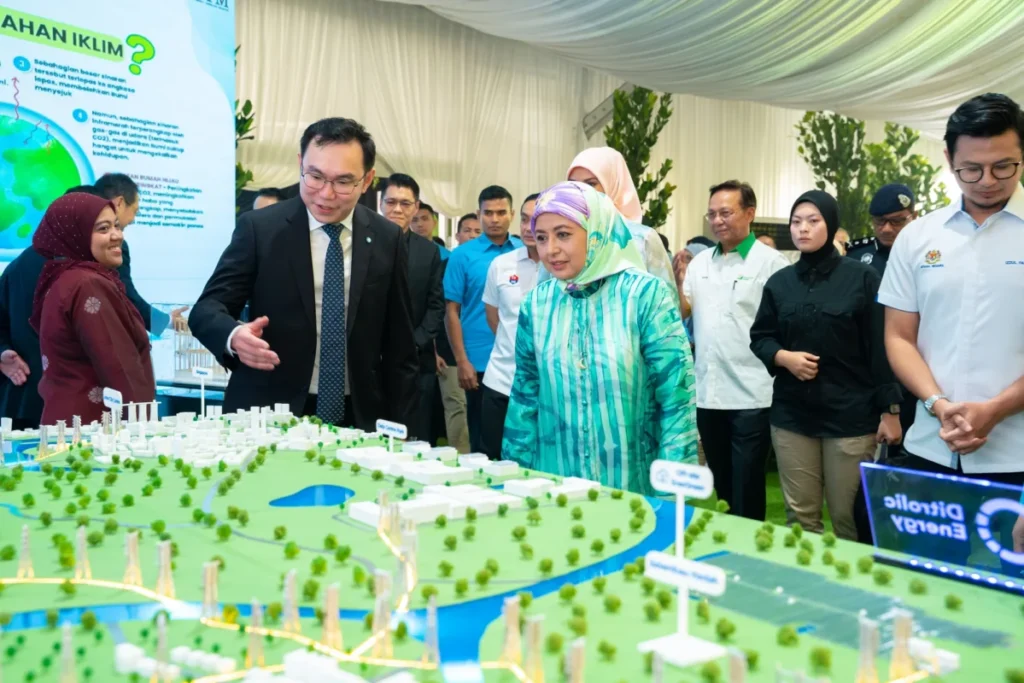
The agreement was signed this week, in the presence of the Queen of Malaysia (pictured). Image: IFC
The World Bank will invest in a huge 4GW, 5.12GWh solar-plus-storage complex in Malaysia, which will form part of a pan-Southeast Asian power grid initiative.
The Southern Johor Renewable Energy Corridor (SJREC) will be a roughly 2,000sqKm area dedicated to solar PV and energy storage capacity. The US$6 billion project is backed by the World Bank’s private investment arm, the Iternational Finance Corporation (IFC), alongside the state investment firm of Johor, Permodalan Darul Ta’zim (PDT), and Ditrolic Energy, a Malaysian integrated energy company.
The project is part of a number of larger schemes, chiefly the ASEAN Power Grid Initiative, a plan to integrate power grids and energy supply across Southeast Asian nations. In this vein, the SJREC will be part of the Johor–Singapore Special Economic Zone (JS-SEZ) “masterplan”, able to transmit clean energy to Singapore, which sits on Johor’s southern border.
As a densely populated city state, Singapore relies heavily on energy imports and has made significant plans for cross-border renewables transmission, perhaps most notably the mammoth AA PowerLink project in Northern Australia, which aims to deploy almost 20GW of solar capacity when fully operational and supply power to Singapore via undersea cables.
The site is also part of the Johor Green Development Policy 2030, which the state government introduced to expand its green industries and renewable energy developments.
“As the state agency entrusted to formulate the Johor Green Development Policy 2030, PDT is proud to witness our strategic framework transition into tangible reality today,” said Dato’ Ramlee bin A Rahman, president and group chief executive of Permodalan Darul Ta’zim.
“The Southern Johor Renewable Energy Corridor was conceived as the cornerstone of this policy, specifically Strategy one, to unlock the immense solar potential of the Kota Tinggi and Mersing districts.”
Tham Chee Aun, CEO of Ditrolic Energy, said the SJREC hub would “Anchor Johor’s clean energy export potential and provide a foundation for industries seeking renewable, low-cost power in the region.”
In an announcement, the IFC said the project would supply renewable energy to “local and multinational corporations, including hyperscale data centre operators, manufacturers, and other businesses in Johor”.
Renewables development is a major driver for meeting data centre power demand, primarily because of the affordability of solar projects and solar energy and the stability offered by coupling the technology with energy storage. In its most recent report, the International Energy Agency (IEA) said the world would become “thirsty for energy” in the coming years and that data centres were an “Important driver” of growing power demand.
(By Will Norman)
CENSA Upcoming Events:
Apr. 1-3, 2026 | The 14th Energy Storage International Conference & Expo
Register Now to attend, free before Oct 31, 2025.

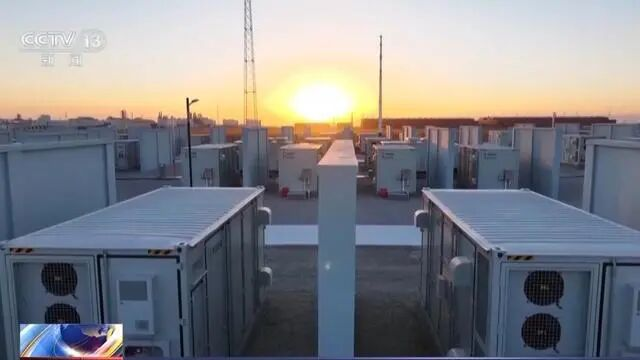
200MW/800MWh! China's Largest Semi-Solid-State Energy Storage Project Connected to the Grid
Source: CCTV News
According to a report by CCTV News on December 1, China Green Development Group announced that a 200MW/800MWh semi-solid-state battery energy storage project located in Wuhai, Inner Mongolia, has been successfully connected to the grid. The project not only sets a new record for the installed capacity of grid-connected semi-solid-state lithium battery energy storage in China, but also marks a crucial step for China's semi-solid-state energy storage technology from pilot demonstration to large-scale commercial operation.
As a major new energy hub in northwest China, Wuhai city in the Inner Mongolia Autonomous Region, has leveraged its abundant wind and solar resources to consistently advance integrated development of “source-grid-load-storage” in recent years. This newly grid-connected energy storage facility serves as a core infrastructure project for enhancing local renewable energy consumption. Covering an area of about 100 mu (about 6.67 hectares), the project is equipped with 160 energy storage battery containers and 40 converter and booster integrated units.
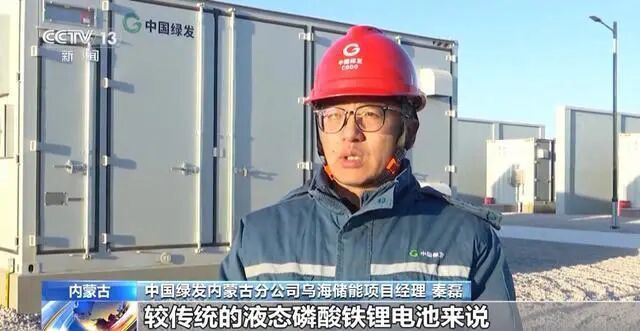
Semi-Solid-State Lithium Battery Energy Storage Project Successfully Connected to the Grid in Wuhai, Inner Mongolia
Qin Lei, Project Manager of Wuhai Energy Storage Project, Inner Mongolia Branch, China Green Development Group:
“This massive ‘power bank’ utilizes domestically-developed semi-solid-state lithium iron phosphate battery technology, which offers significant advantages in safety performance, energy density, and cycle life compared with conventional liquid lithium iron phosphate batteries.”
With the rapid upgrade of the new energy industry, energy storage - essential for grid peak regulation, frequency modulation, and improving renewable energy utilization - is entering a phase of large-scale expansion. Semi-solid-state lithium battery technology represents a key direction for the future development of power and storage batteries. Using a hybrid solid-liquid electrolyte, semi-solid-state batteries retain the high ionic conductivity of liquid systems while achieving a cycle life exceeding 12,000 cycles, which greatly reduces lifecycle operational costs. In addition, they can effectively suppress lithium dendrite growth, further enhancing safety.
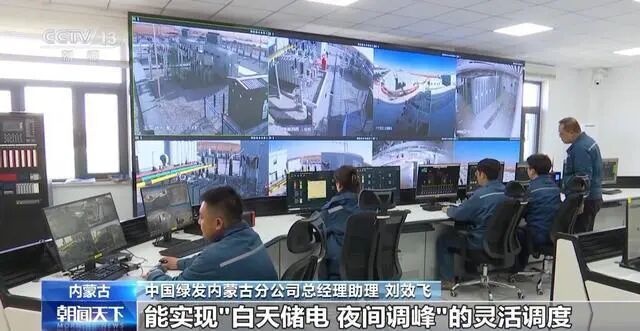
Semi-Solid-State Lithium Battery Energy Storage Project Successfully Connected to the Grid in Wuhai, Inner Mongolia
Liu Xiaofei, Assistant General Manager, Inner Mongolia Branch, China Green Development Group:
“Once fully operational, the project will feature a peak-shaving and frequency-regulating capability of 200MW/800MWh, providing 189,000 MWh of clean electricity to the grid annually. It enables flexible scheduling - storing energy during the day and supporting peak loads at night - significantly enhancing power system stability. It will also ensure that local green electricity can be fully delivered, stably transmitted, and efficiently utilized, solving key bottlenecks in regional renewable energy consumption.”

Semi-Solid-State Lithium Battery Energy Storage Project Successfully Connected to the Grid in Wuhai, Inner Mongolia
In recent years, semi-solid-state lithium batteries - offering both high safety and strong economic performance - have become a core direction of technological evolution in the energy storage sector. Previously, China's largest grid-connected semi-solid-state storage project had a capacity of 100MW/200MWh. The Wuhai project doubles that scale, demonstrating that China is now at the global forefront of large-scale applications of semi-solid-state energy storage technology.
CENSA Upcoming Events:
1. Dec.4-5 | 2025 China Energy Storage CEO Summit | Xiamen, Fujian
Register Now to attend
Read more: http://en.cnesa.org/new-events-1/2025/12/4/dec4-5-2025-china-energy-storage-ceo-summit

2. Apr. 1-3, 2026 | The 14th Energy Storage International Conference & Expo
Register Now to attend, free before Oct 31, 2025.

Sign up for our free monthly newsletter to stay informed about the Chinese energy storage market.