

Latest News
Dalian Institute of Chemical Physics Wins Second Prize of National Technical Invention Award for Next-Generation Large-Scale All-Vanadium Flow Battery Core Technologies & Applications
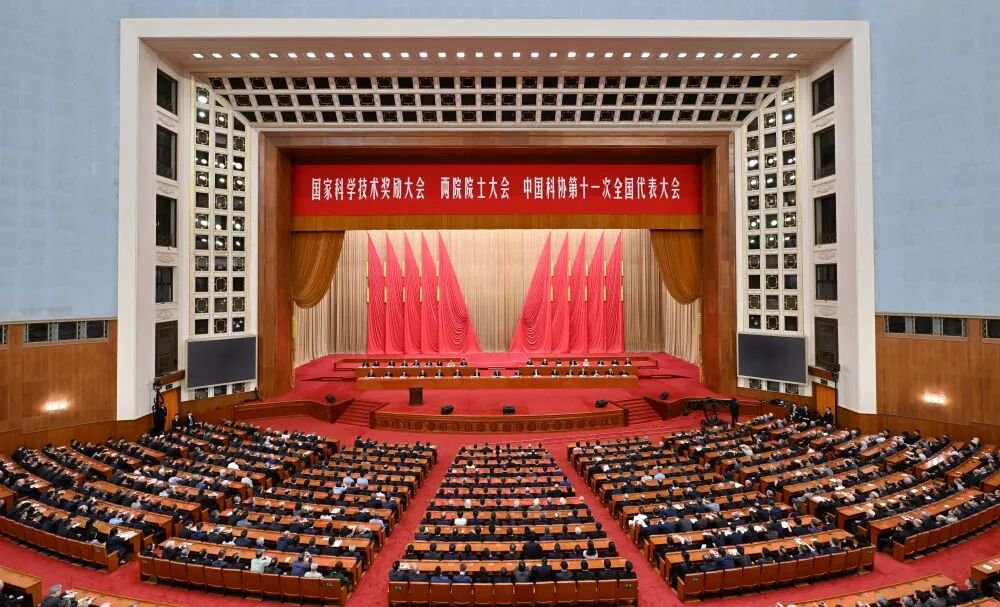
On the morning of July 8, the National Science and Technology Awards Ceremony, the General Assembly of the Chinese Academy of Sciences and the Chinese Academy of Engineering, and the 11th National Congress of the China Association for Science and Technology convened in Beijing.
As China’s highest honor in science and technology, the National Science and Technology Awards cover five categories: the State Preeminent Science and Technology Award, the National Natural Science Award, the National Technical Invention Award, the National Science and Technology Progress Award, and the International Science and Technology Cooperation Award of the People’s Republic of China.
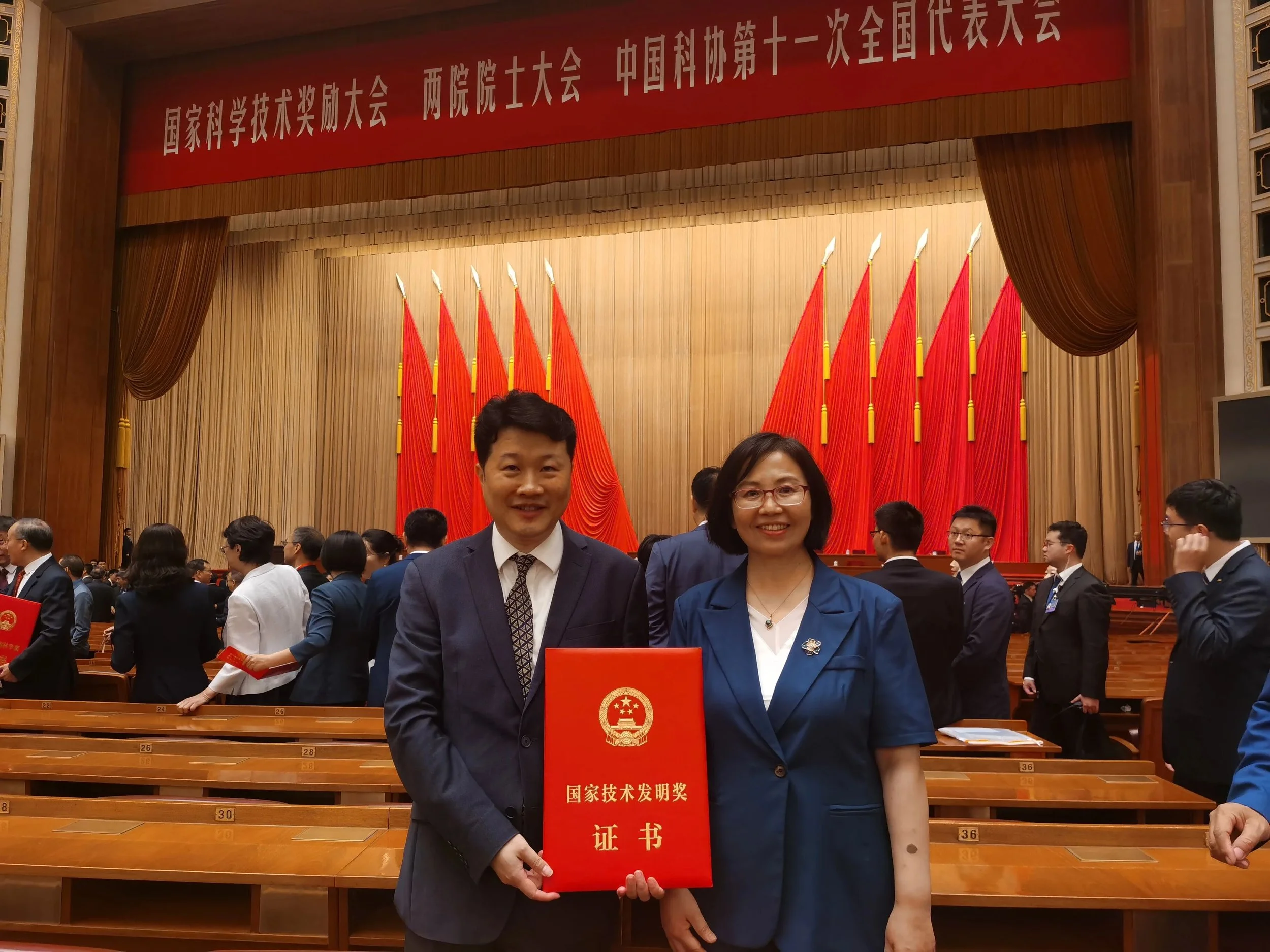
The research achievement titled Key Technologies and Applications of Next-Generation Large-Scale All-Vanadium Flow Batteries developed by the Dalian Institute of Chemical Physics (DICP), Chinese Academy of Sciences, was conferred the Second Prize of the National Technical Invention Award.
DICP is the initiator institution of the Flow Battery Special Committee under the China Energy Storage Alliance (CNESA). Researcher Li Xianfeng, Deputy Director of DICP, serves as the first Chairman of the Special Committee. CNESA hereby extends our sincerest respect and warmest congratulations to Researcher Li Xianfeng and his entire R&D team.
Energy storage acts as an indispensable core technology for building a new power system dominated by renewable energy and delivering China’s Dual Carbon Goals. Featuring ultra-long service life, intrinsic high safety and outstanding energy efficiency, all-vanadium redox flow batteries (VRFBs) have emerged as a high-priority technical pathway for global energy storage and a top choice for large-scale energy storage deployment in China.
Nevertheless, all-vanadium flow battery systems boast sophisticated architectures that integrate multiple interdisciplinary disciplines. Efficient collaborative integration of diverse internal materials and functional components poses substantial challenges to system assembly and engineering implementation.
For more than a decade, the research team led by Researcher Li Xianfeng from DICP has dedicated itself to flow battery innovation. After completing MW-scale system demonstration and validation back in 2012, the team systematically resolved critical industrialization bottlenecks including high manufacturing costs, insufficient operational reliability, and foreign monopolies over core materials. Through sustained original innovation, the team pioneered the complete set of next-generation core technologies for large-scale all-vanadium flow batteries.
The team put forward the original concept of "ion sieving conduction", which underpinned the independent R&D and mass production of proprietary ion exchange membranes. Breakthroughs were also realized in novel electrolyte formulations, high-performance cell stacks and full system integration. Relying on these foundational principal innovations and core technical advances, the team established a fully independent industrialization chain for all-vanadium flow batteries, spanning fundamental research through full-scale commercial engineering.
Over the past five years, the team has deployed more than 30 commercial demonstration projects worldwide based on its proprietary next-generation VRFB technologies. Flagship projects include the world’s first national-grade 100 MW / 400 MWh all-vanadium flow battery peak-shaving power station, and the world’s largest ongoing 200 MW / 1 GWh PV-storage integrated project in Jimsar, Xinjiang. To date, the cumulative installed capacity of the team’s VRFB technologies has exceeded 4 GWh, capturing a dominant share of the global mainstream flow battery market.
The award-winning achievement has built a robust independent intellectual property portfolio, encompassing over 200 authorized invention patents including 12 international patents. A total of 15 patent licensing agreements has been signed with domestic and overseas enterprises, marking successful technology exports to developed European economies.
Furthermore, the team led the formulation and release of the world’s first international standard for flow batteries, alongside more than 20 national and industrial standards, securing China’s rule-setting dominance across the global flow battery sector.
This landmark research outcome was jointly completed by the Dalian Institute of Chemical Physics, Dalian Rongke Power Co., Ltd., and Dalian Rongke Power Group Co., Ltd. The technology has catalyzed a complete upstream and downstream industrial cluster with remarkable agglomeration effects, delivering pivotal support for technological advancement in China’s energy storage sector, the growth of the new energy industry, and the structural transformation of national energy systems.
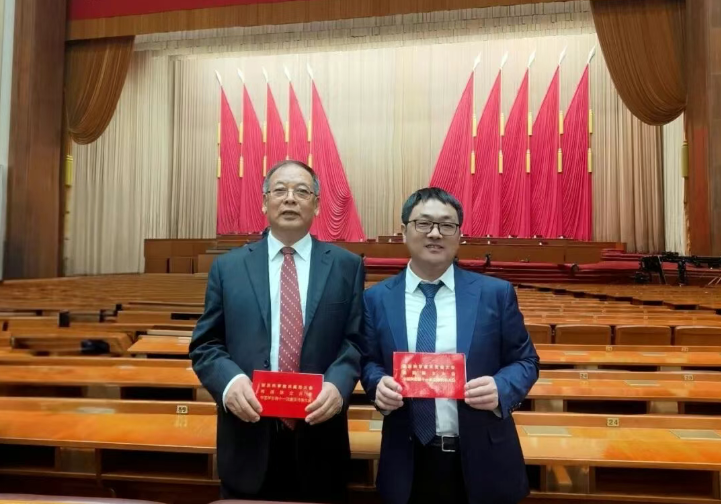
Two Pioneering Figures in China’s Energy Storage Sector Win Top National Science and Technology Honors at the 2025 National Science and Technology Awards
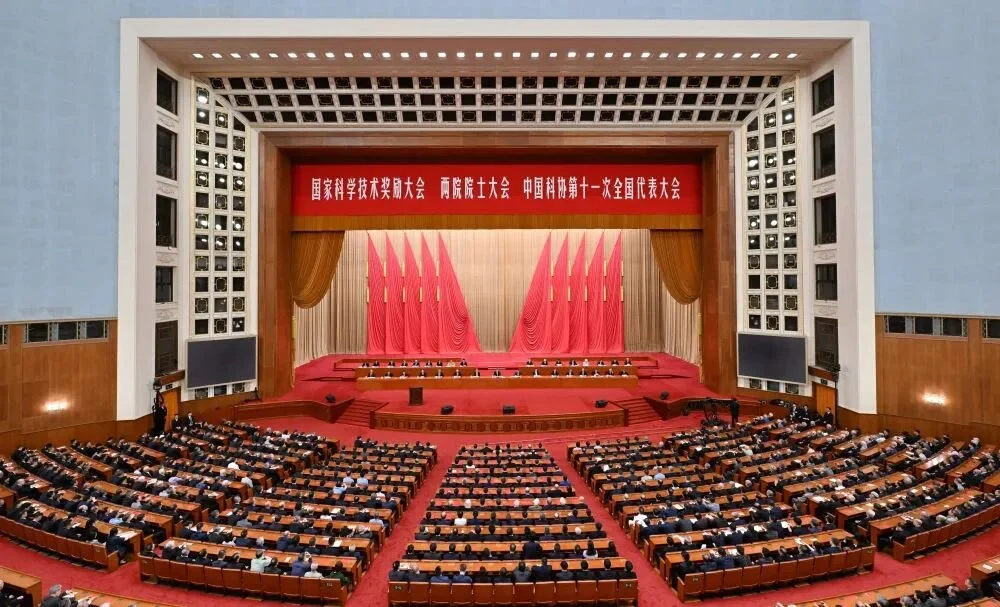
A landmark moment for China’s energy storage industry unfolded at the 2025 China National Science and Technology Awards Ceremony, held in Beijing on July 8, 2026. Two trailblazing scientists who have shaped the trajectory of China’s energy storage technology received the nation’s most prestigious scientific recognitions, marking a historic milestone for domestic long-duration energy storage and lithium-ion battery innovation.
Academician Chen Liquan, a researcher at the Institute of Physics, Chinese Academy of Sciences, and the founding father of China’s lithium battery industry, was honored with the National Highest Science and Technology Award—the country’s supreme honor for scientific and technological contributions. As a pioneer and global leading authority on lithium battery technologies, Academician Chen Liquan laid the foundational framework for China’s lithium-ion battery industrial system, spearheading breakthroughs in basic materials, cell manufacturing and industrialization over decades of research. His lifelong work underpins the rapid growth of China’s electrochemical energy storage, power battery and new energy vehicle sectors, laying irreplaceable technical groundwork for the national dual carbon strategy and energy transition revolution.
Meanwhile, Prof. Chen Haisheng, Chairman of China Energy Storage Alliance (CNESA) and researcher at the Institute of Engineering Thermophysics, Chinese Academy of Sciences, led his research team to claim the Second Prize of the National Technology Invention Award for the landmark achievement Key Technologies for Large-Scale Advanced Compressed Air Energy Storage (CAES) Systems.
Energy storage stands as a core, indispensable supporting technology for China’s dual carbon goals and national energy revolution. Compressed Air Energy Storage (CAES) is widely recognized as one of the most promising long-duration bulk energy storage solutions worldwide, featuring large installation scale, low lifecycle cost, ultra-long service life and outstanding operational safety, and has become a strategically competitive technical field across all major economies. Traditional CAES systems have long been restrained by critical bottlenecks including fossil fuel dependency and low round-trip efficiency, severely limiting large-scale commercial rollout globally.
Supported by successive national key research programs including the National Basic Research Program (973), National High-Tech R&D Program (863) and National Key R&D Program, Prof. Chen Haisheng’s team dedicated 20 consecutive years to targeted research and iterative breakthroughs, delivering a full set of systematic original innovations that resolve historic pain points of conventional CAES technology:
1. Proposed the novel "storage-release correspondence & cycle matching" design theory for energy storage systems, and invented an advanced CAES architecture based on a homologous circulation principle;
2. Overcame the synergistic aerodynamic and structural design challenge for multi-stage compressors and expanders, developing ultra-high pressure ratio-compressors and ultra-high expansion ratio expanders with fully independent intellectual property rights;
3. Cracked core technical barriers for supercritical heat/cold storage heat exchangers, inventing high-efficiency compact heat exchange equipment for CAES systems.
The research team has completed the construction of the world’s first series of advanced CAES demonstration facilities covering 1.5MW, 10MW, 100MW and 300MW capacity levels. The round-trip efficiency of the flagship system exceeds 70%, repeatedly setting new global performance benchmarks and firmly establishing China’s world-leading position in advanced compressed air energy storage technology.
To date, the project has secured 162 authorized invention patents (including 9 international patents), ranking No.1 globally in CAES patent holdings and forming a high-value, tightly integrated patent portfolio. The team has published 267 SCI papers, which have accumulated over 13,700 SCI citations, demonstrating profound academic influence in the global energy storage research community. Industrial transformation of the core technologies has generated direct economic benefits exceeding 7 billion RMB, delivering tangible value for the large-scale commercialization of long-duration energy storage.
The National Science and Technology Awards consist of five major categories: the National Highest Science and Technology Award, National Natural Science Award, National Technology Invention Award, National Science and Technology Progress Award, and China International Science and Technology Cooperation Award, representing the highest official recognition of scientific innovation in China.
CNESA extends sincere congratulations to Academician Chen Liquan and Prof. Chen Haisheng’s research team on their extraordinary accomplishments. These top-tier national honors fully validate the core strategic value of energy storage technologies in advancing global low-carbon energy transition, and highlight the strength of sustained independent innovation among China’s energy storage scientific community. As energy storage evolves into a critical backbone of the global net-zero energy system, CNESA will continue to unite industrial, academic and research stakeholders to accelerate technology iteration, industrial standardization and global cooperation, further boosting the high-quality development of China’s energy storage industry and contributing Chinese solutions to worldwide energy transformation.
2.1GW+7.75GWh! China Power Construction Group Signed One of the Largest Solar-Plus-Storage Projects in the UAE
Recently, China Power Construction Group officially signed the EPC contract for the 2.1GW + 7.75GWh RTC solar-plus-storage project in Abu Dhabi, United Arab Emirates (UAE), with a contract value of approximately RMB 13.962 billion. As one of the largest integrated solar-plus-storage projects in the Middle East and even the world, the signing of the contract marks the project’s transition into the full implementation phase, which is projected to be delivered in 2027.
Recently, China Power Construction Group officially signed the EPC contract for the 2.1GW + 7.75GWh RTC solar-plus-storage project in Abu Dhabi, United Arab Emirates (UAE), with a contract value of approximately RMB 13.962 billion. As one of the largest integrated solar-plus-storage projects in the Middle East and even the world, the signing of the contract marks the project’s transition into the full implementation phase, which is projected to be delivered in 2027.
Amid the accelerating global energy transition and the impact of geopolitical on energy supply, solar-plus-storage systems, as independent and controllable energy solutions, is witnessing an explosive growth in demand. Industry forecasts suggest that large-scale solar-plus-storage projects are being tendered in rapid succession worldwide, with the Middle East emerging as a key engine of market demand, providing significant growth opportunities for the energy storage sector.
Notably, the overseas business of China Power Construction Group has demonstrated strong performance this year. Data indicates a significant increase in the share of overseas operations. According to the company’s operational report of January-February 2026 released on March 12, China Power Construction Group signed RMB 147.893 billion in new contracts during the first two months of the year. Among them, overseas contracts reached RMB 40.888 billion, representing a year-on-year increase of 19.92%. Despite broader market pressures, overseas business continued to expand, with its share of newly signed contracts rising from around 21% in the same period last year to approximately 27%.
Register now to attend Asia’s Largest Energy Storage Trade Show for free:
What: The 14th Energy Storage International Conference & Expo
When: Conferences: March 31 - April 2, 2026
Exhibitions: April 1-3, 2026
Where: CIECC Beijing, China
Address: No. 55 Yudong road, Shunyi District, Beijing China


China’s Ministry of Commerce: The General Administration of Customs Imposes Export Controls on Lithium Batteries with an Energy Density of ≥300 Wh/kg
Source: Ministry of Commerce of the People’s Republic of China

Announcement No.18 of 2025 of The Ministry of Commerce and The
General Administration of Customs of The People’s Republic of China
Announcing the Decision to Implement Export Control on Lithium
Batteries and Artificial Graphite Anode Materials Related Items
[Issuer] Bureau of Industry, Security, Import and Export Control
[Issuance Document Number] Announcement No.18 of 2025 of The Ministry of Commerce and The General Administration of Customs of The People’s Republic of China
[Date of Issuance] October 9, 2025
According to the relevant provisions of the Export Control Law of the People’s Republic of China, the Foreign Trade Law of the People’s Republic of China, the Customs Law of the People’s Republic of China and the Regulations on Export Control of Dual-Use Items of the People’s Republic of China, in order to safeguard national security and interests and fulfill international obligations such as non-proliferation, with the approval of the State Council, a decision is made to implement export control on the following items:
I. Lithium Battery Related Items
(1) 3A001 -- Rechargeable lithium-ion batteries (including cells and battery packs) with a gravimetric energy density ≥ 300 Wh/kg (Reference HS Code: 85076000).
(2) 3B901.a -- Equipment used for manufacturing rechargeable lithium-ion batteries:
1. Winding machines (Reference HS Code: 84798999);
2. Stacking machines (Reference HS Code: 84798999);
3. Electrolyte Filling machines (Reference HS Code: 84798999);
4. Hot-pressing machines;
5. Formation and Aging & Grading systems;
6. Capacity Grading cabinets.
(3) 3E901.a -- Technologies used for producing items controlled under 3A001.
II. Cathode Material Related Items
(1) 3C901.a.1 -- Lithium iron phosphate (LFP) cathode materials with a compacted density ≥ 2.5 g/cm3 and specific capacity ≥ 156 mAh/g (Reference HS Code: 28429040).
(2) 3C901.a.2 -- Precursors for ternary cathode materials:
a. Nickel cobalt manganese hydroxides (Reference HS Code: 28539030);
b. Nickel cobalt aluminum hydroxides (Reference HS Code: 28539050).
(3) 3C901.a.3 -- Lithium-rich manganese-based cathode materials.
(4) 3B901.b -- Equipment used for manufacturing cathode materials for rechargeable lithium-ion batteries:
1. Roller kilns;
2. High-speed mixers;
3. Sand mills;
4. Jet mills.
III. Graphite Anode Material Related Items
(1) 3C901.b.1 -- Artificial graphite anode materials.
(2) 3C902.b.2 -- Mixed anode materials composed of artificial graphite and natural graphite.
(3) 3B901.c.1 -- Granulation equipment used in the production of graphite anode materials:
a. Vertical granulation reactors with a volume ≥ 5 m³;
b. Continuous granulation reactors with a volume ≥ 5 m³.
(4) 3B901.c.2 -- Graphitization equipment used in the production of graphite anode materials:
a. Box furnaces;
b. Acheson furnaces;
c. Internal string furnaces;
d. Continuous graphitization furnaces.
(5) 3B901.c.3 -- Coating and modification equipment used in the production of graphite anode materials:
a. Fusion coating equipment with a volume ≥ 300 L;
b. Spray drying equipment with a volume ≥ 60 m³;
c. Chemical vapor deposition (CVD) rotary kilns with a drum diameter ≥ 0.5 m.
(6) 3E901.b -- Processes and technologies used for producing graphite anode materials:
1. Granulation processes;
2. Continuous graphitization technology;
3. Liquid-phase coating technology.
Exporters of the above-listed items shall apply for a license from the Ministry of Commerce and its subordinate units under the State Council in accordance with the Export Control Law of the People’s Republic of China and the Regulations of the People’s Republic of China on Export Control of Dual-Use Items.
The exporter shall identify the items and indicate in the Remarks section whether the goods for export are controlled items when making customs declarations. For controlled items, its dual-use item control number shall be specified. For any doubt about the declared information, the customs authorities will question it in accordance with the law, and the goods for export will not be released during the questioning period.
This announcement shall come into effect on the date of issuance. The Export Control List of Dual-Use Items of the People’s Republic of China is updated accordingly.
Ministry of Commerce
General Administration of Customs
October 9, 2025
(This announcement is authentic in Chinese. The English version is for reference only.)

The 14th ESIE - largest energy storage event in China is coming on April 1-3, 2026, Beijing, China!
Register Now to attend, free before Oct 31, 2025.
Sign up for our free monthly newsletter to stay informed about the Chinese energy storage market.