

Latest News
2.1GW+7.75GWh! China Power Construction Group Signed One of the Largest Solar-Plus-Storage Projects in the UAE
Recently, China Power Construction Group officially signed the EPC contract for the 2.1GW + 7.75GWh RTC solar-plus-storage project in Abu Dhabi, United Arab Emirates (UAE), with a contract value of approximately RMB 13.962 billion. As one of the largest integrated solar-plus-storage projects in the Middle East and even the world, the signing of the contract marks the project’s transition into the full implementation phase, which is projected to be delivered in 2027.
Recently, China Power Construction Group officially signed the EPC contract for the 2.1GW + 7.75GWh RTC solar-plus-storage project in Abu Dhabi, United Arab Emirates (UAE), with a contract value of approximately RMB 13.962 billion. As one of the largest integrated solar-plus-storage projects in the Middle East and even the world, the signing of the contract marks the project’s transition into the full implementation phase, which is projected to be delivered in 2027.
Amid the accelerating global energy transition and the impact of geopolitical on energy supply, solar-plus-storage systems, as independent and controllable energy solutions, is witnessing an explosive growth in demand. Industry forecasts suggest that large-scale solar-plus-storage projects are being tendered in rapid succession worldwide, with the Middle East emerging as a key engine of market demand, providing significant growth opportunities for the energy storage sector.
Notably, the overseas business of China Power Construction Group has demonstrated strong performance this year. Data indicates a significant increase in the share of overseas operations. According to the company’s operational report of January-February 2026 released on March 12, China Power Construction Group signed RMB 147.893 billion in new contracts during the first two months of the year. Among them, overseas contracts reached RMB 40.888 billion, representing a year-on-year increase of 19.92%. Despite broader market pressures, overseas business continued to expand, with its share of newly signed contracts rising from around 21% in the same period last year to approximately 27%.
Register now to attend Asia’s Largest Energy Storage Trade Show for free:
What: The 14th Energy Storage International Conference & Expo
When: Conferences: March 31 - April 2, 2026
Exhibitions: April 1-3, 2026
Where: CIECC Beijing, China
Address: No. 55 Yudong road, Shunyi District, Beijing China

DOE now requires energy storage for large-scale renewable energy projects
To improve national grid stability, the Department of Energy (DOE) has issued a new directive requiring all large-scale renewable energy projects to integrate energy storage systems (ESS).
To improve national grid stability, the Department of Energy (DOE) has issued a new directive requiring all large-scale renewable energy projects to integrate energy storage systems (ESS).
Under Department Circular No. DC2026-02-0008, issued Thursday, all prospective variable renewable energy (VRE) power plants with a capacity of 10 megawatts (MW) or higher must now include energy storage. The storage component must represent at least 20% of the plant’s total installed capacity.
The policy marks a significant shift in how the Philippines manages the inherent intermittency of solar and wind power. By mandating “batteries” or other storage technologies, the DOE aims to mitigate sudden generation losses and ensure a more dependable electricity supply.
“Energy storage is not only about storing surplus energy, it is about strengthening the grid’s capability to absorb more renewables while maintaining reliability,” said Energy Secretary Sharon S. Garin. “This policy ensures that ESS integration becomes part of system planning and project development, supporting better outcomes for consumers”.
The circular also encourages developers to use advanced technologies, such as grid-forming (GFM) inverters. These tools provide “virtual inertia,” helping to stabilize the grid’s voltage and frequency during fluctuations—functions traditionally provided by fossil fuel-based plants.
Beyond private power plants, the DOE has instructed the Transmission Network Provider (TNP) and distribution utilities to incorporate energy storage into their long-term infrastructure strategies. This includes treating storage as a critical resource for grid reinforcement, frequency control, and as an alternative supply for “islanding” scenarios where areas are temporarily cut off from the main grid.
The government plans to institutionalize these requirements by reflecting them in upcoming updates to the Philippine Energy Plan (PEP) and the Transmission Development Plan (TDP). According to the DOE, the updated framework is intended to create stronger signals for investors while accelerating the country’s clean energy targets. (JLN/PIA-NCR)
Source: Philippine Information Agency
_________________________________________________________________
Register now to attend Asia’s Largest Energy Storage Trade Show for free:
What: The 14th Energy Storage International Conference & Expo
When: Conferences: March 31 - April 2, 2026
Exhibitions: April 1-3, 2026
Where: CIECC Beijing, China
Address: No. 55 Yudong road, Shunyi District, Beijing China

500MWh!BYD Energy Storage Has Commissioned Its Largest Energy Storage Project in East Europe
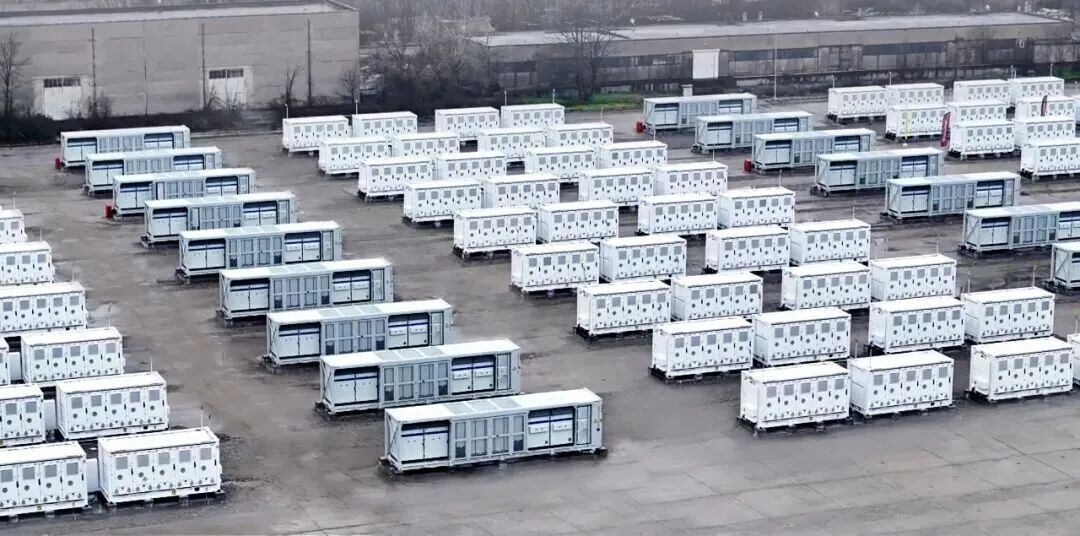
On January 8, 2026, a 500MWh standalone Battery Energy Storage System(BESS) project located at Maritsa East 3 in Bulgaria was officially commissioned. The project was the jointly developed by BYD Energy Storage and ContourGlobal under their strategic collaboration which is one of the largest standalone energy storage projects in East Europe.
On January 8, 2026, a 500MWh standalone Battery Energy Storage System(BESS) project located at Maritsa East 3 in Bulgaria was officially commissioned.
The project was the jointly developed by BYD Energy Storage and ContourGlobal under their strategic collaboration which is one of the largest standalone energy storage projects in East Europe. It is also BYD Energy Storage’s largest energy storage project in East Europe so far, fully demonstrating its technological capabilities and continued expansion of its global footprint. Since the cooperation agreement was signed in December, 2024, leveraging BYD Energy Storage’s own technological advantage together with CountourGlobal’s strong industry influence, the two parties have worked together to promote project deployment, laying solid foundation for long-term partnership, deeper penetration of the European market and enhanced brand presence in the Eastern European renewable energy sector.
BYD Energy Storage has confirmed its participation in the 14th Energy Storage International Conference and Expo(ESIE 2026), register now to attend Asia’s Largest Energy Storage Trade Show for free:
What: The 14th Energy Storage International Conference & Expo
When: Conferences: March 31 - April 2, 2026
Exhibitions: April 1-3, 2026
Where: CIECC Beijing, China
Address: No. 55 Yudong road, Shunyi District, Beijing China

Tianneng Signs a 1GWh Project in Malaysia, Build a benchmark for Integrated “Solar- Storage- Computing”Solutions
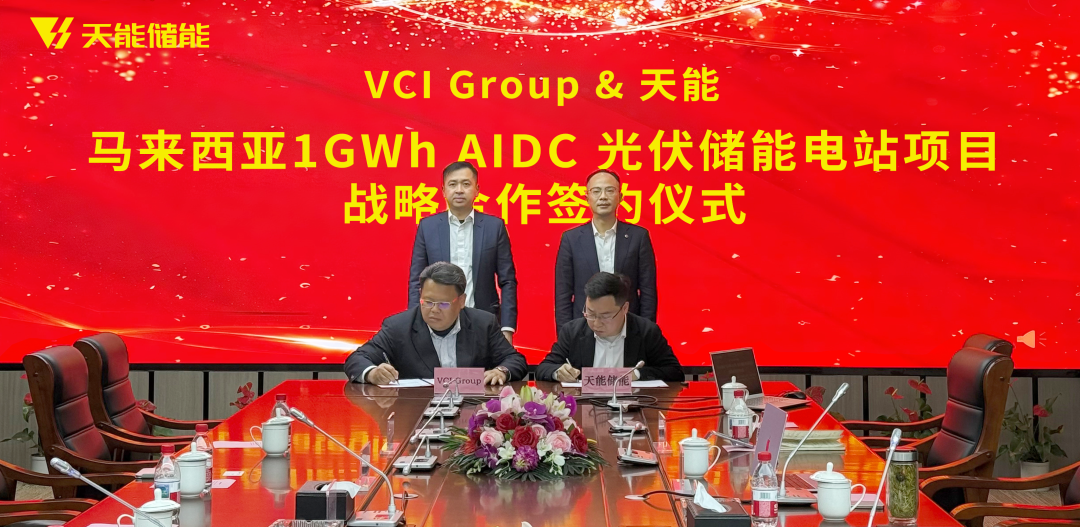
Recently, Tianneng Group signed a strategic agreement with NASDAQ-listed company VCIG Group. The two parties will build a 1GWh AIDC solar energy storage power station in Malacca, Malaysia. The project aims to address the high-energy-consumption challenge of AIDC and will be developed under an “EPC+F” model.
Recently, Tianneng Group signed a strategic agreement with NASDAQ-listed company VCIG Group. The two parties will build a 1GWh AIDC solar energy storage power station in Malacca, Malaysia. The project aims to address the high-energy-consumption challenge of AIDC and will be developed under an “EPC+F” model.
It is said that phase I of the project plans to build a 250MW solar infrastructure together with Tianneng’s independently developed liquid cooing energy storage system. Leveraging Malaysia’s “CRESS” programme, the project will provide zero-carbon electricity to local AI computing infrastructure through signing direct power purchase agreement(PPA). The move marks an important breakthrough for Tianneng Group’s energy storage business in large-scale infrastructure development in Southeast Asia.
Register now to attend Asia’s Largest Energy Storage Trade Show for free:
What: The 14th Energy Storage International Conference & Expo
When: Conferences: March 31 - April 2, 2026
Exhibitions: April 1-3, 2026
Where: CIECC Beijing, China
Address: No. 55 Yudong road, Shunyi District, Beijing China

Amazon buys 1.2GW Sunstone solar-plus-storage project from bankrupt Pine Gate
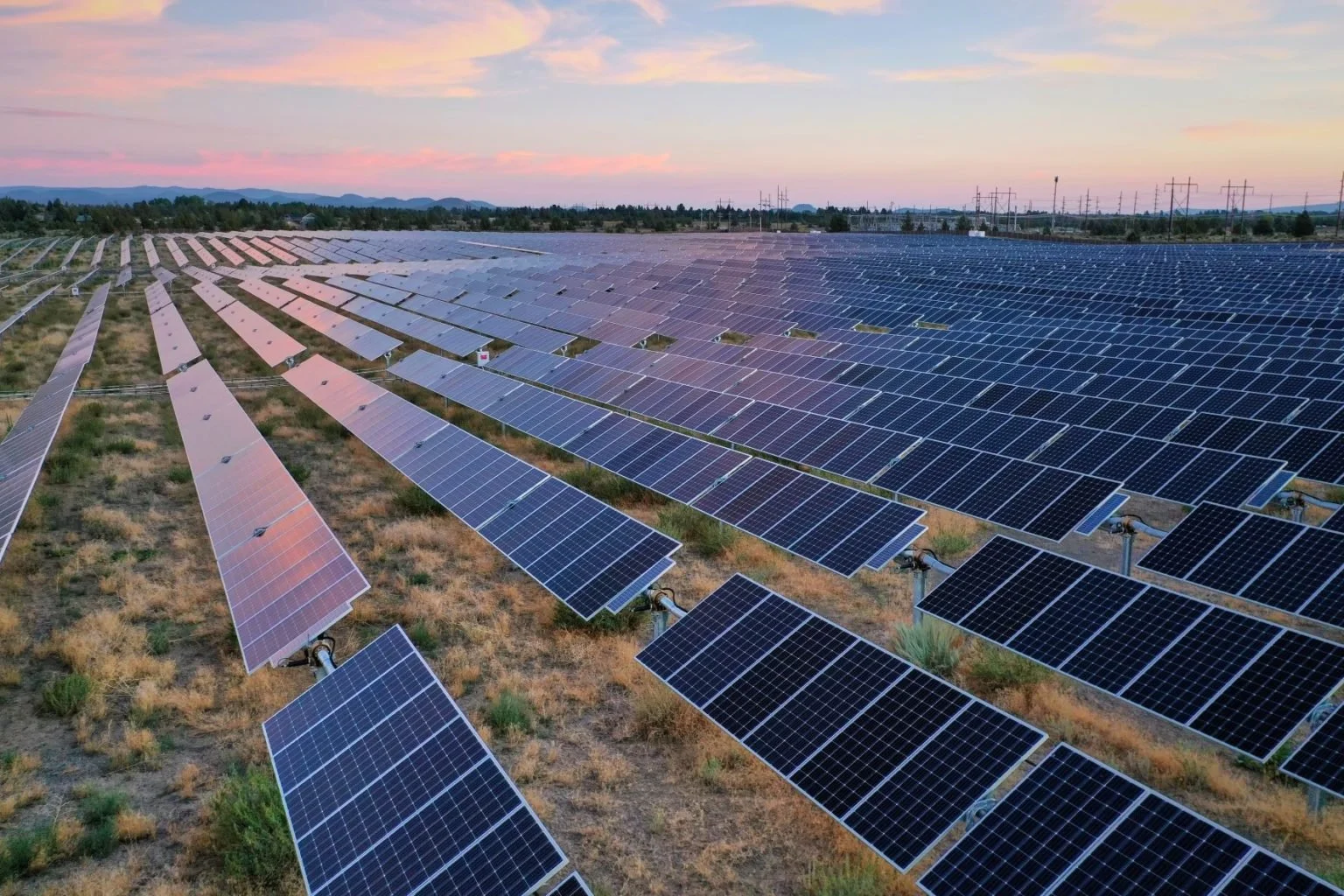
Global tech giant Amazon has been approved as the buyer of the 1.2GW Sunstone solar project in Oregon, one of the largest solar PV projects in the US.
Global tech giant Amazon has been approved as the buyer of the 1.2GW Sunstone solar project in Oregon, one of the largest solar PV projects in the US.
The Sunstone site was developed and previously owned by Pine Gate Renewables, the US independent power producer (IPP), which filed for bankruptcy in November 2025. It includes 1.2GW of solar PV and 1.2GW of battery energy storage system (BESS) capacity, which is ready to build, having received permitting and approvals from the Oregon Energy Facility Siting Council (EFSC).
Amazon’s acquisition was approved by the Bankruptcy Court for the Southern District of Texas, which granted its offer of US$83 million in cash via its specific project subsidiary, Oregon Solar I.
The move follows Amazon’s complaints back in November that an Oregon utility was not supplying sufficient power to its data centre projects in the state, where it has built numerous cloud computing data centres close to the banks of the Columbia River. Once fully operational, the Sunstone solar-plus-storage project will be one of the most significant renewable energy generation projects in the US.
To date, most of Amazon’s energy procurement has been via power purchase agreements (PPAs), and along with fellow Big Tech leviathans Meta and Google, Amazon led US solar power procurement deals in 2024. But the scale of Sunstone, and the fact that it is ready to be built with approvals and permits in place, makes it an attractive proposition for a company whose growing energy demand will be a significant story in the industry over the coming years.
As the power demands of these data centre hyperscalers continue to grow, owning their own power sources might become more common. Last month, Google’s parent company Alphabet announced the acquisition of Intersect Power, an energy project developer, with a view to developing more energy capacity “in lockstep with new data centre load”, Sundar Pichai, CEO of Google and Alphabet, said at the time.
Since declaring bankruptcy, Pine Gate’s roughly 10GW of project assets have been offered to the market, though the company says it has sufficient liquidity to continue operating in the meantime. Earlier this month, Israel-based project developer Nofar Energy bought 1GW worth of Pine Gate’s utility-scale solar assets across the Carolinas, Alabama and Texas for US$285 million.
Source: Energy Storage News
By Will Norman
______________________________________________
Register now to attend Asia’s Largest Energy Storage Trade Show for free:
What: The 14th Energy Storage International Conference & Expo
When: Conferences: March 31 - April 2, 2026
Exhibitions: April 1-3, 2026
Where: CIECC Beijing, China
Address: No. 55 Yudong road, Shunyi District, Beijing China

CORNEX Secures a 6GWh Energy Storage Order in Egypt, Successfully Expanding Into the North African Market
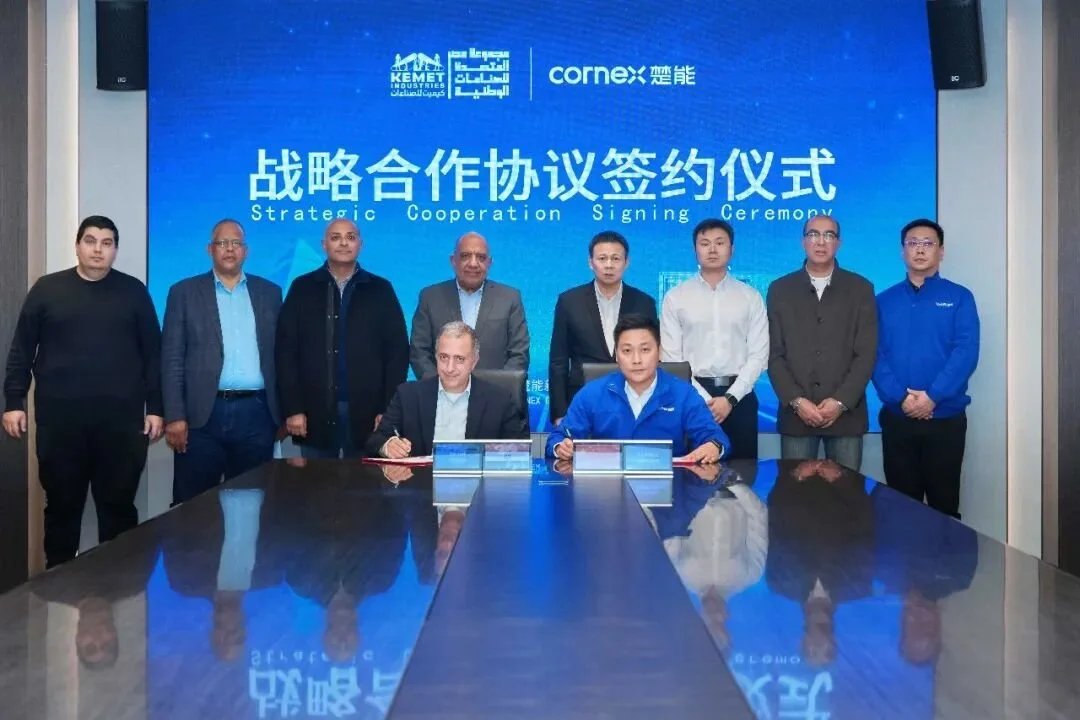
On January 16th, Cornex New Energy signed a strategic cooperation agreement with Egypt-based partners WeaCan and Kemet.
The agreement was signed by Dai Deming, chairman of Cornex New Energy and Ahmed Salaheldin Abdelwahab Elabd, Chiarman of the Board of Kemet. The signing ceremony was witnessed by Moustafa Kamal Esmat Mahmoud, minister of Egypt’s Ministry of Electricity and Renewable Energy, along with other government officials and senior executives from relevent enterprises.
On January 16th, Cornex New Energy signed a strategic cooperation agreement with Egypt-based partners WeaCan and Kemet.
The agreement was signed by Dai Deming, chairman of Cornex New Energy and Ahmed Salaheldin Abdelwahab Elabd, Chiarman of the Board of Kemet. The signing ceremony was witnessed by Moustafa Kamal Esmat Mahmoud, minister of Egypt’s Ministry of Electricity and Renewable Energy, along with other government officials and senior executives from relevent enterprises.
Under the agreement, Weacan and Kemet will serve as the core facilitator for project implementation. Leveraging their extensive local industrial resources and proven project execution experience in Egypt, the two partners will take full charge of services including scenario alignment, coordination of government approvals, grid connection support, and localized operation and service delivery, providing solid guarantee for the large-scale implementation of Cornex’s energy storage products. As the core technology and product supplier, Cornex will deliver high-quality energy storage systems in phases, with a total supply capacity of up to 6GWh, ensuring the safe and stable operation of its products in Egypt’s power system and providing full life-cycle technical support services.
Located on the eastern edge of the Sahara Desert, Egypt is endowed with abundant solar and wind resources, offering uniquely favourable conditions for the development of “solar power, wind power+energy storage” solutions. In recent years, Egypt has actively advanced its energy transition, setting a clear target to raise the share of renewable energy generation to 42% by 2030. The country has commissioned several hundred-megawatt-scale energy storage demonstration projects and plans to add over 10GWh energy storage capacity on the grid side to date. As market demand continues to accelerate, Egypt’s energy storage industry is entering a phase of rapid growth.
The 6GWh cooperation on energy storage procurement marks not only an important breakthrough for Cornex in the North African market but a concrete example of green energy cooperation between China and Egypt within the framework of the Belt and Road Initiative. Once commissioned, the project will effectively increase the local grid’s peak-shaving and frequency-regulation capability, facilitate the large-scale grid connection and integration of clean energy like solar power so as to help Egypt built a more flexible, reliable and low-carbon new-type power system.
At present, Cornex has built four major regional service centers with China, Europe, North America and Australia as a core, forming a globalized service network. This system enables full life-cycle services from product delivery to technical consulting, installment and operation and maintenance support. Backed by its independently developed core technologies, high-safety system designs and accurate response to diverse market demand, Cornex has achieved mass commission and landmark projects deployment in more than 60 countries and regions with its brand influence and customer recognition continuing to grow.
Looking ahead, Cornex will continue to uphold an open and win-win cooperation, deepen collaborations with international strategic partners across technology, channels, and ecosystem resources, and accelerate the expansion of its global business footprint through complementary strengths and localized integration.
Cornex New Energy has confirmed ins participation in the 14th Energy Storage International Conference and Expo (ESIE 2026), register now to attend Asia’s Largest Energy Storage Trade Show for free:
What: The 14th Energy Storage International Conference & Expo
When: Conferences: March 31 - April 2, 2026
Exhibitions: April 1-3, 2026
Where: CIECC Beijing, China
Address: No. 55 Yudong road, Shunyi District, Beijing China

Sungrow’s First Energy Storage Plant in the Middle East Launched,with an Annual Capacity of 10 GWh
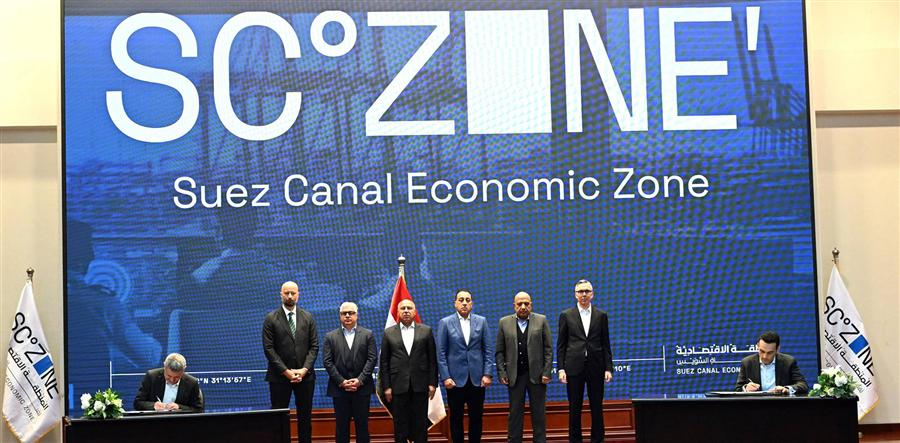
Egypt has taken a major step toward accelerating its clean energy transition, as Chinese energy storage leader Sungrow and Norwegian renewable developer Scatec partner with the Egyptian government to deliver large-scale solar+storage projects and establish the Middle East’s first battery energy storage manufacturing base, with a planned annual capacity of 10 GWh.
According to foreign media reports, the Egyptian government recently announced that it has signed a series of agreements worth over 1.8 billion USD with Norwegian renewable energy developer Scatec and Chinese energy storage company Sungrow. These agreements aim to build large-scale solar+storage projects and promote local manufacturing of battery energy storage systems. This series of agreements is a key initiative for Egypt to expand its clean energy installed capacity and improve its new energy industry chain.
Scatec will develop the “Energy Valley” project in Minya, which will include the construction of a large-scale integrated solar power and energy storage plant. Meanwhile, Sungrow will build a battery energy storage system manufacturing plant in the Suez Canal Economic Zone (SCZONE) to support energy storage equipment for the project and the regional market.
Both projects are being advanced with the coordination of Egyptian Ministry of Electricity and Renewable Energy and the Suez Canal Economic Zone Authority. Egyptian Prime Minister Mostafa Madbouly stated that these projects highly align with the country’s strategy of localizing new energy industries, and that localizing energy storage and renewable energy manufacturing will be key pillars for enhancing Egypt’s energy security and driving its green transformation.
As part of the project arrangements, the Egyptian Electricity Transmission Company (EETC) has signed a Power Purchase Agreement (PPA) with Scatec, while the New and Renewable Energy Authority (NREA) has signed a land use agreement for the Energy Valley project. Additionally, Sungrow has secured the land use rights for building the battery energy storage manufacturing plant in the TEDA Industrial Zone in SCZONE.
Furthermore, Scatec and Sungrow Energy have signed a battery supply contract, under which Sungrow Energy will provide the battery energy storage systems for the Energy Valley project in Minya.
According to the introduction, the Energy Valley project is positioned as one of the largest integrated clean energy projects in the world, and the first solar+storage project in the region capable of providing stable power supply around the clock. The project will build a 1.7 GW (AC) solar photovoltaic capacity, along with a total of 4 GWh of battery storage systems, distributed across Minya, Qena, and Alexandria. The project will also build new substations and dedicated transmission lines to provide clean electricity to the Wadi El-Sereiriya Industrial Zone in Minya.
On the manufacturing side, Sungrow Energy’s factory in Egypt will become the first battery energy storage system manufacturing base in the Middle East and Africa. Located in the TEDA-Egypt Industrial Zone in Ain Sokhna, the factory will cover an area of about 50,000 square meters and is expected to create around 150 direct jobs. Once operational, the factory will have an annual capacity of 10 GWh, with production expected to begin in April 2027.
Regarding financing, the Egyptian Prime Minister also witnessed the signing of preliminary financing agreements for the Energy Valley project between Scatec and the European Investment Bank (EIB), the European Bank for Reconstruction and Development (EBRD), and the African Development Bank (AfDB), marking the project’s support from multilateral development financial institutions.
__________________________________________________________________
Sungrow Energy has confirmed its sponsorship of the 14th Energy Storage International Conference and Expo (ESIE 2026), register now to attend Asia’s Largest Energy Storage Trade Show for free:
What: The 14th Energy Storage International Conference & Expo
When: Conferences: March 31 - April 2, 2026
Exhibitions: April 1-3, 2026
Where: CIECC Beijing, China
Address: No. 55 Yudong road, Shunyi District, Beijing China

Google Acquires U.S. Energy Storage Giant for $4.75 Billion
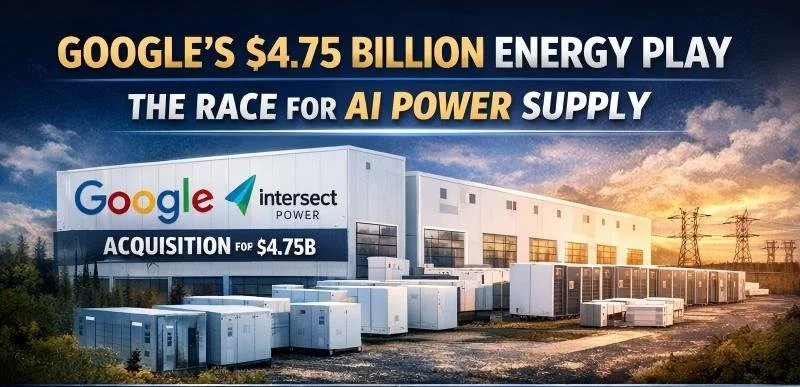
As the global tech giants engage in a frenzied race for AI computing power, a more fundamental battle over “energy supply” is unveiling. Google’s multi-billion dollar power play procured not just an energy storage company but the the “electricity passport” towards the AI-driven future.
I. Blockbuster Acquisition: Acquisition of U.S. Energy Storage Giant for $4.75 Billion
On December 22, Alphabet, Google's parent company, announced that it will acquire Intersect Power, a leading U.S. battery energy storage system developer and operator, for $4.75 billion in cash plus the assumption of debt.
What to watch:
Targeted Assets: The acquisition does not cover the already operational assets but targets its future clean energy power generation projects, data center and energy storage system, totaling 10GWh.
Strategic intention: directly circumvent the crowded traditional grid and build an exclusive “power generation + energy storage” closed loop for AI data center.
The Alphabet CEO said: “ Intersect will help us synchronize the creation of power generation and energy storage system so as to match the added data center load and reshape energy solutions of AI data center.
II. Urgency: The high energy consumption “black hole” of AI data center
It is the tremendous energy pressure alongside generative AI behind the acquisition.
Surge in electricity consumption: the electricity demand is estimated to grow manyfold of data center hubs including State of Texas and California in 2030.
Stringent Reliability requirement: The AI data center requires 99.999% power supply reliability, which is hard to satisfy for traditional grid.
Solutions: Battery Energy Storage System emerges as the key infrastructure to balance the intermittency of renewable energy and achieve 24/7 uninterrupted power supply.
III. Ecological Synergy: Tesla makes an indirect play and broaden the collaboration zone
It is noteworthy that Intersect and Tesla are long-term collaboration partners. Google’s move means Tesla will step into the collaboration zone.
Current collaboration: Many operational energy storage projects of Intersect have employed the Megapack energy storage system of Tesla (like the Oberon 1 GWh project of California)
A huge order: Intersect also signed the 15.3GWh supply contract with Tesla, becoming one of the world’s largest purchasers and operators of this model of energy storage equipment.
IV. Chinese Companies: A head start in the Global data center energy storage arena
In fact, China’s top-tier energy storage companies have identified the opportunities early on, actively expanding their presence in the global “data center + energy storage” sector:
Companies like SUNGROW, SHUANGDENG, HUAWEI, KWLONG, ZTT, NARADA, HTHIUM, ROBESTEC, Potis Edge, Ampace, CLOU, Hopewind, CHNT, KSTAR, Vertiv, DELTA, EATON, VISION, SINEXCEL, JST(JINPAN TECHNOLOGY), TONGFEI, Envicool, Goaland, Shenling, HAIWU and so on has played their respective roles engaging in data center energy construction.
The market demonstrates that China’s supply chain ranging from power sources, battery to management system is becoming an important power to underpin the global AI data center energy transformation.
V. Industry Barometer: the summit forum focuses on “data center + energy storage” future
Google’s acquisition does not stand alone and it points to a global trend: energy storage combined with data center has become the central arena where global technology and energy industry converge.
This trend will be fully represented in the upcoming industry grand.
_____________________________________________________________________________________________
Register now to attend Asia's Largest Energy Storage Trade Show for free:
What: The 14th Energy Storage International Conference & Expo
When: Conferences: March 31 - April 2, 2026
Exhibitions: April 1-3, 2026
Where: CIECC Beijing, China
Address: No. 55 Yudong road, Shunyi District, Beijing China

Germany Roundup: 500MW BESS and Data Centre Transaction, Seven-Year Toll and 370MW Pipeline Secured
Source: Energy Storage News
The BESS with which ju:niz Energy will enter into a toll with Next Kraftwerke. Image: ju:niz Energy
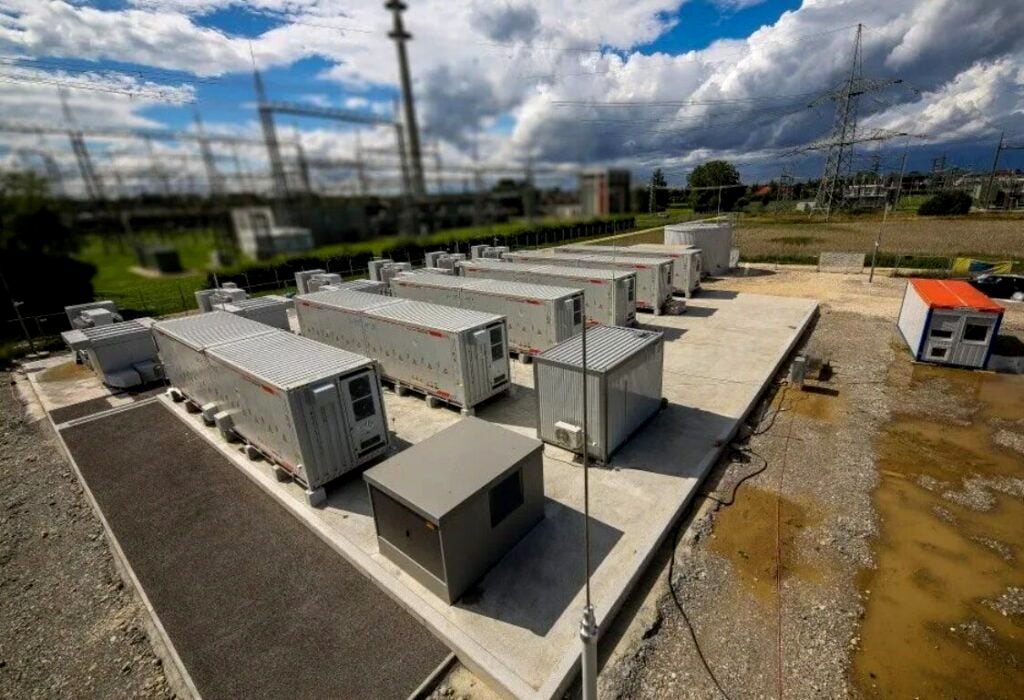
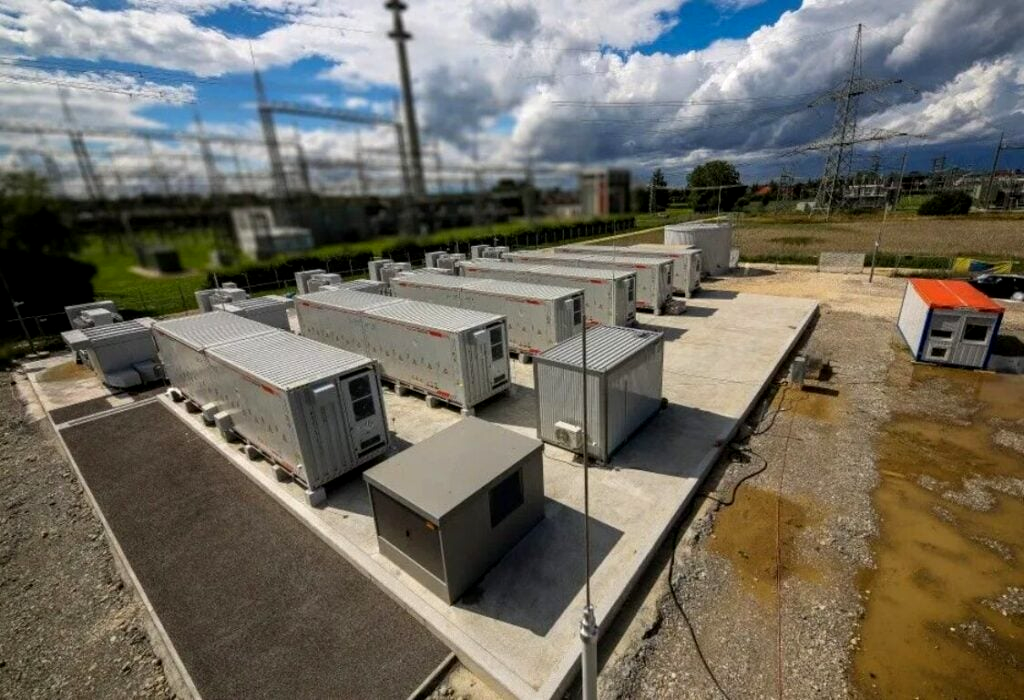
A trio of German grid-scale BESS news items, with Next Kraftwerke and ju:niz Energy agreeing a seven-year toll, Alpiq announcing a 370MW pipeline, and WBS Power selling the country’s largest solar-plus-storage project and planning a data centre on the same site.
Germany has this year become a hotbed of battery energy storage system (BESS) project announcements and deal-making, driven by its substantial revenue opportunities as Europe’s largest electricity market and a looming August 2029 deadline for getting projects operational to avoid charge-discharge grid fees. See all recent coverage here.
WBS Power sells solar-plus-storage project, plans data centre
Developer WBS Power has sold the 150MW solar, 500MW/2,000MWh BESS Project Jupiter in Brandenburg, Germany, to investor Prime Capital.
WBS acquired the site for the clean energy project in 2022, and the project will require €500 million (US$583 million), with construction expected in late 2026/early 2027. Both technologies will share a 380kV grid connection in the area of TSO 50Hertz. The acquisition is subject to Project Jupiter reaching ready-to-build (RTB) status.
The transaction also establishes a joint venture to co-locate a hyperscale data centre of up to 500MW in power demand in the same area.
WBS Power said there is growing demand for data centres in Germany, which are highly energy-intensive and benefit significantly from direct access to renewable power and grid stability.
“By integrating Germany’s largest co-located BESS and Solar PV project with a hyperscale data center, we are creating a unique platform that supports both the energy transition and digital transformation,” said Maciej Marcjanik, CEO of WBS Power Group.
Alpiq secures 370MW Germany pipeline
Switzerland-based energy firm Alpiq has expanded in Germany with a 370MW BESS pipeline the company has ‘secured’, in partnership with developer SPP Development. The projects in Brandenburg and Saxony-Anhalt are expected to reach RTB status in 2026.
Lukas Gresnigt, Head International and member of the Executive Board of Alpiq said that Germany is a competitive and complex market for BESS, with many projects are queuing for grid access and permits, and the partnership combined Alpiq’s financial strength and SPP’s local expertise.
Last week, Energy-Storage.news reported on Alpiq entering into a long-term toll for a BESS in Germany owned and operated by Eco Stor. Alpiq has acquired projects in France and Finland, where it recently commissioned a 30MW/36MW project.
Shell and EQT companies agree Germany BESS toll
VPP operator Next Kraftwerke, acquired by Shell in 2021, has concluded a Germany BESS toll with BESS platform ju:niz Energy, acquired by investor EQT in 2024.
The seven-year toll is for a 20MW/40MWh project in Vöhringen, Bavaria, and Next said it is one of the first operational contracts of its kind in Germany, live since 1 November.
Next Kraftwerke will pay ju:niz Energy a fixed monthly fee per installed MW for the use of the BESS capacity. The model offers stable revenues for the operator (ju:niz) and flexibility for the optimiser (Next Kraftwerke). The toll is 80% fixed remuneration and 20% merchant, Next said.
(By Cameron Murray)
CENSA Upcoming Events:
Apr. 1-3, 2026 | The 14th Energy Storage International Conference & Expo
Register Now to attend, free before Dec 31, 2025.

Puerto Rico Advances on Its Delayed Accelerated BESS Deployment Programme
Source: Energy Storage News
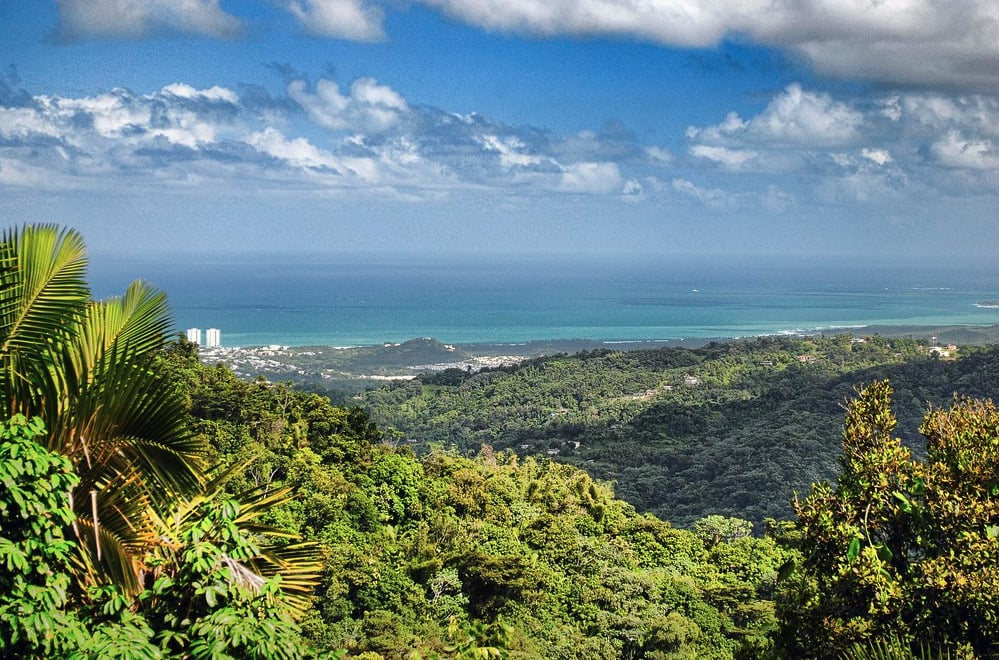
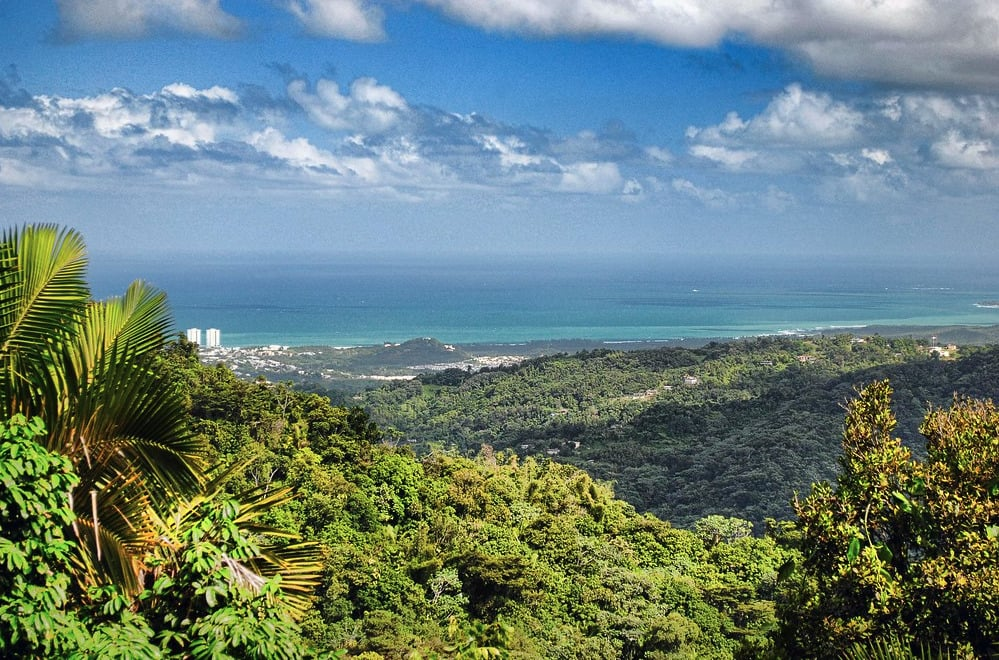
In Puerto Rico, the electric generation, transmission, and distribution facilities managed by PREPA are operated privately by Luma Energy. Both entities are overseen by the Puerto Rico Energy Bureau (PREB). Image: Trish Hartmann.
The Puerto Rico Energy Bureau (PREB) has issued a resolution and order requiring the Puerto Rico Electric Power Authority (PREPA) to complete the Accelerated Battery Energy Storage Addition Programme (ASAP).
The resolution and order require PREPA to finish the necessary review process with the Financial Oversight and Management Board (FOMB) concerning the four final agreements of the ASAP.
Implementation and delay of ASAP
In Puerto Rico, the electric generation, transmission, and distribution facilities managed by PREPA are operated privately by Luma Energy. Both entities are overseen by the Puerto Rico Energy Bureau (PREB).
ASAP aims to enhance grid reliability across the island by deploying utility-scale battery energy storage systems (BESS) alongside existing generation facilities.
Under the programme, independent power producers (IPPs) with existing power purchase and operating agreements (PPOAs) with PREPA will install BESS at their sites, “on an accelerated basis,” as stated in PREB documents available on the regulator’s website.
In 2024, PREB informed Luma Energy that its plan to contract with IPPs for BESS resources was consistent with public power policy.
In April 2024, Luma identified Phase 1 projects that could start immediately with minimal costs and no network upgrades, with some developers claiming they could be operational in less than 12 months and contracts expected to be executed by April 2025.
However, in August 2025, the projects remained stalled, with only one developer (Ecoeléctrica) responding to PREPA’s communications to say it was working to complete documentation by September, while three others (San Fermín, Horizon, and Oriana) did not respond at all.
PREB called the delays “extremely concerning” and required all four developers to provide detailed explanations for the lack of responsiveness, emphasising that these projects are crucial for addressing Puerto Rico’s electricity generation shortfall and warning that fines will be imposed if developers don’t comply with the information requests.
PREB issues resolution and order to PREPA
PREB concluded that Luma’s four final agreement terms for ASAP align with the island’s Energy Public Policy and the Integrated Resource Plan (IRP).
As a result, the Bureau approved the four drafts and directed Luma to finalise the contracts, submit them to PREPA’s Governing Board for approval, and demonstrate this process. Furthermore, PREPA was instructed to obtain approval from the FOMB.
On 20 November, Luma submitted final agreements to PREPA’s Board. The private operator asked for these documents to be confidential due to critical infrastructure, sensitive data, and personal information. PREB confirmed Luma’s compliance and granted confidentiality.
PREB clarified that the 1,500MW of battery storage listed in the IRP is a guideline, not a strict cap.
The resolution and order confirmed that this figure is not fixed and can be exceeded; battery projects in development will be assessed regardless of whether they propose more than 1,500MW of storage capacity. PREB also highlighted that any decision to increase or decrease this limit is solely at its discretion.
Because PREB has granted confidentiality to Luma, it is unclear for which participants the agreements have been submitted.
Developers Ecoeléctrica, San Fermín, Horizon, and Oriana have had ongoing communications with Luma. Though, as noted above, San Fermin, Horizon, and Oriana have previously failed to respond to PREPA’s communications.
Additionally, in August, Polaris Renewable Energy submitted a BESS standard offer (SO1) agreement on behalf of PREPA to PREB.
The SO1 agreement is included in the ASAP scheme. When submitted, Polaris appeared to distinguish itself from the other developers who had not delivered BESS projects on the island.
Included in the resolution and order, Commissioner Mateo Santos dissented in part and concurred in part, and stated:
“As I have previously expressed, I do not agree with the pass-through concepts included in the contracts under the ASAP programme, and therefore I dissent on that aspect. However, I concur with the Energy Bureau’s determination regarding the integration of battery energy storage resources.”
Santos continued, “Specifically, I agree with the Energy Bureau’s clarification that the approximately 1,500MW of Battery Energy Storage Resources identified in the Approved IRP’s Modified Action Plan constitutes a guideline rather than a fixed limit. Any final determination on the appropriate level of integration will be made by the Energy Bureau.”
(By April Bonner)
CENSA Upcoming Events:
Apr. 1-3, 2026 | The 14th Energy Storage International Conference & Expo
Register Now to attend, free before Oct 31, 2025.

Multiple Gigawatts of European BESS Project M&A, Financing and Route-to-Market Deals
Source: Energy Storage News
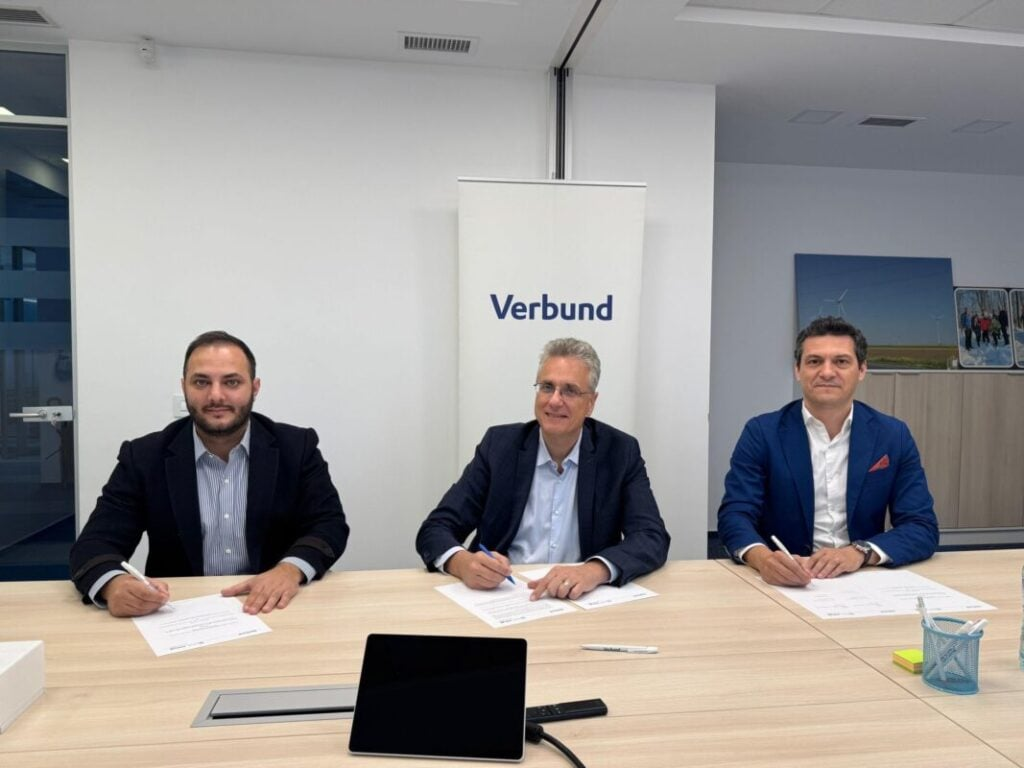
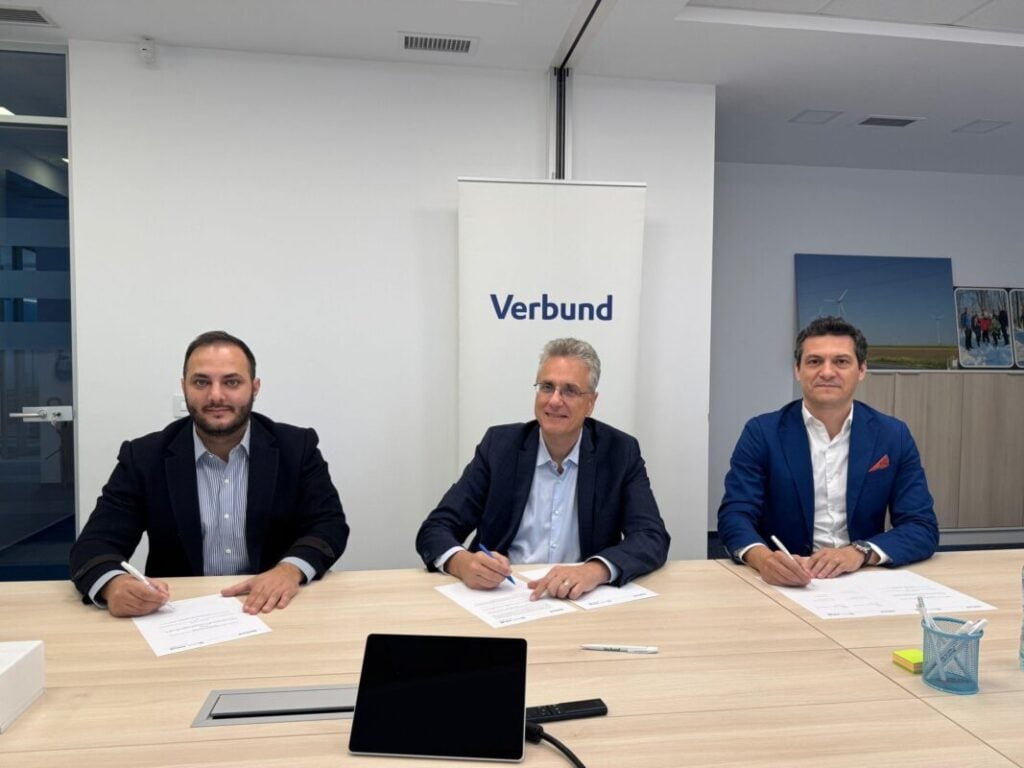
Verbund, Prime Batteries and Enevo executives signing a Romania BESS project deal. From left to right: Vicentiu Ciobanu (CEO Prime Batteries), Adrian Remus Borotea (managing director of Verbund Wind Power Romania) and Cristian Pirvulescu (CEO of Enevo Group). Image: Verbund via LinkedIn.
European BESS news from project owners Premier Energy Group, Verbund, Eco Stor, Ingrid Capacity, Ric Energy, Ganfeng Lithium, EP Group, RWE and Giga Storage, securing acquisitions, financings and route-to-market (RTM) deals for multiple gigawatts of capacity this past week.
Romania: Premier buys 400MWh BESS, Verbund enlists
contractors for project
Energy firm Premier Energy Group has acquired a ready-to-build (RTB) 200MW/400MWh battery energy storage system (BESS) in Romania, near Iasi.
Construction on the project will start in 2026, with commissioning anticipated in late 2026 or early 2027. The project will support the integration or more renewables on Romania’s grid with fast-response capacity and grid balancing applications.
Premier is currently in advanced discussions on financing options for the project, with the expectation of securing a long-term structure, it said. The announcement did not say whether it was one of the winning projects from a recent EU-backed capex support scheme.
In related news, Austria-based utility and power firm Verbund’s local arm Verbund Wind Power Romania has enlisted OEM Prime Batteries and engineering firm Enevo Group to supply and integrate a 48MW/76MWh project.
It will be built at Verbund’s Alpha Nord Wind Farm in Tulcea County. The installation will help integrate more renewables but also improve the operational flexibility of the Verbund’s local renewable assets.
Prime Batteries Technology and Enevo Group will deliver the full engineering, procurement and construction (EPC) scope, including design, equipment supply, system integration, installation and commissioning.
Construction is scheduled to begin in February 2026 with commissioning set for September 2026.
Prime Batteries made headlines last year when it integrated a BESS for owner Monsson with an emphasis on locally manufactured technology.
Germany: Eco Stor project toll and Ingrid Capacity enters market
Project owner-operator and EPC Eco Stor has entered into a long-term toll with energy firm Alpiq for a 103.5MW/238 MWh BESS in Schleswig-Holstein, Germany.
Alpiq will partner with optimisers Enspired and Entelios to manage the BESS project’s activity in the electricity market.
It is Eco Stor’s second major grid-scale project in Germany, and identically sized to its first which came online in June this year, in Bollingstedt. The project with Alpiq in Schleswig-Holstein will come online in mid-2026.
The announcement coincided with one from Sweden-headquartered BESS owner-operator Ingrid Capacity, revealing it has partnered with developer Energiequelle for 200MW of grid-scale projects in Germany.
Energiequelle will develop the projects while finance, operate, and optimise the assets using its in-house trading and optimisation platform. The projects are expected to reach RTB in 2026. Ingrid has so far been active primarily in Sweden and Finland.
Italy: Ric Energy buys 200MW BESS
Spain-headquartered Ric Energy Group has acquired a 200MW BESS in the Apulia region of Italy. The firm’s development pipeline in Italy now stands at 942MW, it said announcing the post on LinkedIn.
It didn’t provide more details about the project in its post. Italy is currently a hotbed of activity, with the long-awaited first auction of its MACSE scheme concluded with 10GWh of BESS handed long-term revenue contracts. Many investors and owner-operators were waiting for the auction before taking FIDs and proceeding to construction.
Our publisher Solar Media will host the Battery Asset Management Summit Europe 2025 in Rome tomorrow and Wednesday (2 & 3 December), where MACSE and Italy will undoubtedly be big talking points.
Netherlands: Giga Storage toll with Vattenfall
BESS owner-operator Giga Storage has entered into a long-term toll with energy firm Vattenfall for its Project Leopard, a 300MW/1,200MWh BESS in the Netherlands.
The toll covers 100MW, one-third of Leopard’s total capacity. It will provide Giga with a fixed, long-term income stream that supports the project’s financing. Vattenfall will optimise the contracted portion of Leopard’s capacity for services such as grid stability, portfolio balancing, and electricity trading.
RTM deals for grid-scale BESS in the Netherlands are characterised by portioning a project’s capacity into different slices with different tollers and offtakers to spread risk, the same strategy adopted by other major BESS owner-operators there including Lion Storage and SemperPower.
UK: RWE to build 700MWh BESS, two optimisation deals announced
Germany-headquartered power firm RWE has made a final investment decision (FID) on a 350MW/700MWh BESS in Wales, called Pembroke Battery Storage. It is part of the wider Pembroke Net Zero Centre project combining renewable generation including green hydrogen production.
The project received planning consent in January 2025 and also won contracts in the UK’s most recent capacity market (CM) auction. Construction will start in 2026 with commissioning and commercial operation in H2 2028, ‘subject to receiving an updated and timely grid connection’, RWE said. That probably alludes to the ongoing grid connection queue reshuffle.
The news follows hot on the heels of two BESS optimisation announcements in the UK, both covered by our sister site Solar Power Portal.
China-based Ganfeng Lithium has enlisted power firm EDF to provide RTM and optimisation services for its 50MW/160MWh Kintore BESS project, while EP Group has contracted optimiser GridBeyond to do the same for its 50MW North Baddesley BESS.
(By Cameron Murray)
CENSA Upcoming Events:
1. Dec.4-5 | 2025 China Energy Storage CEO Summit | Xiamen, Fujian
Register Now to attend
Read more: http://en.cnesa.org/new-events-1/2025/12/4/dec4-5-2025-china-energy-storage-ceo-summit

2. Apr. 1-3, 2026 | The 14th Energy Storage International Conference & Expo
Register Now to attend, free before Oct 31, 2025.

Australia Opens Capacity Investment Scheme Tender 8, Seeking 16GWh of Energy Storage across NEM
Source: Energy Storage News
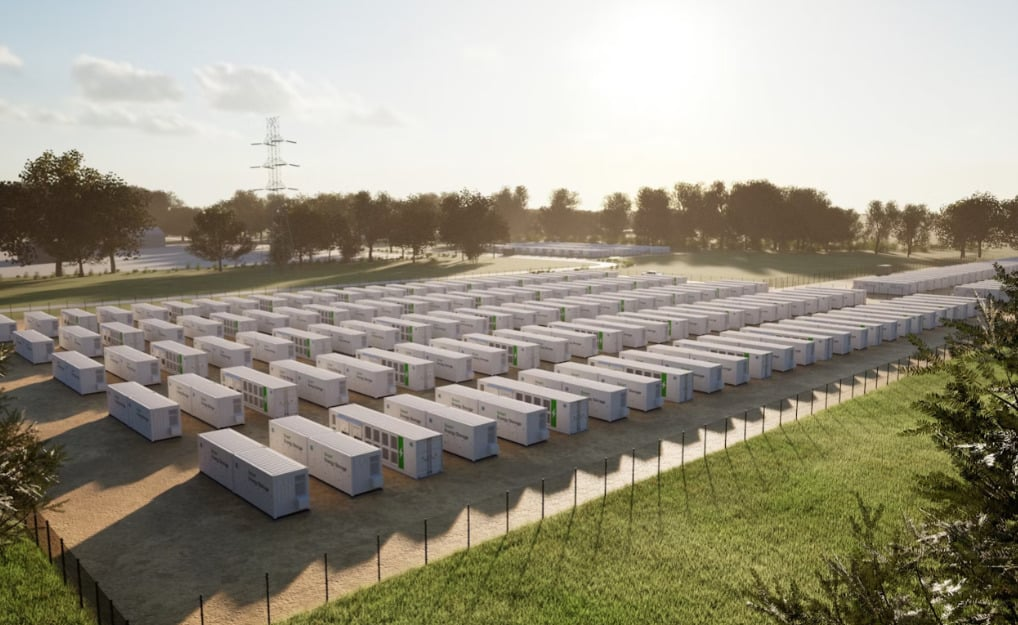
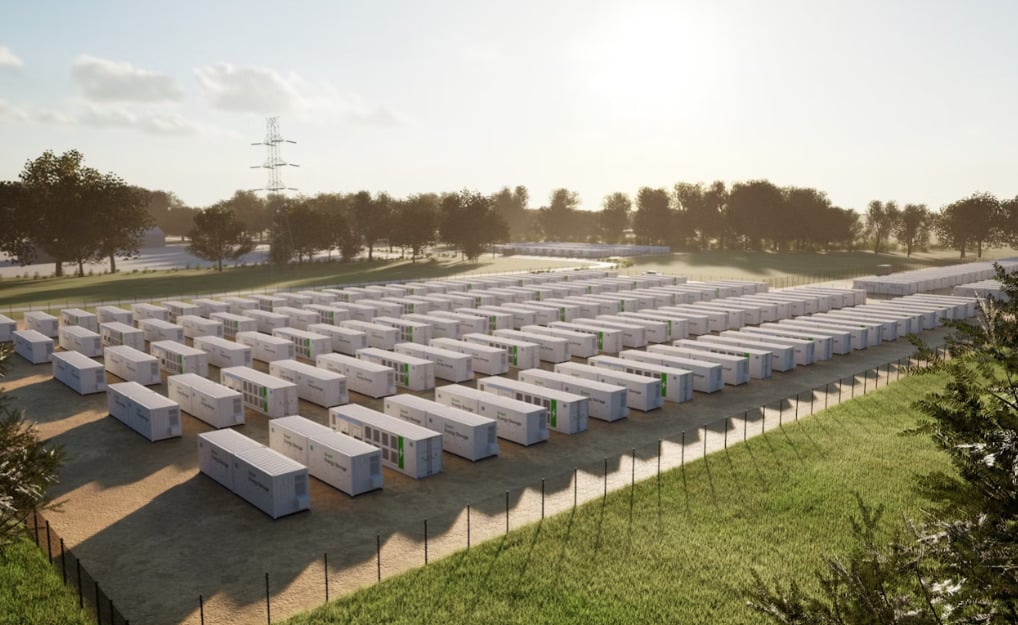
Pacific Green was one of the successful participants in the CIS, with the Limestone Coast Energy Park (pictured) having been awarded a CISA. Image: Pacific Green.
The Australian government has officially opened the Capacity Investment Scheme (CIS) Tender 8, targeting 16GWh of energy storage capacity across the National Electricity Market (NEM).
The tender represents the largest single energy storage procurement under the CIS programme, reflecting the government’s accelerated deployment timeline for grid-scale storage infrastructure.
Tender 8 registrations opened earlier today (28 November) and will close on 23 January, with submissions closing on 6 February. The tender specifically targets energy storage projects with a minimum 4-hour duration requirement, emphasising the government’s focus on medium-duration storage technologies capable of providing extended grid support services during peak demand periods and renewable energy intermittency events.
The 16GWh capacity target represents a substantial increase from previous tender rounds and aligns with Australia’s expanded CIS target of a total 40GW of renewables and energy storage.
The tender incorporates streamlined assessment processes developed through previous rounds, building on reforms introduced when the government unveiled four tenders for 2025.
These process improvements aim to reduce assessment timeframes and provide greater certainty for project developers while maintaining rigorous evaluation criteria for technical capability, financial viability, and grid integration requirements.
Eligible technologies under Tender 8 include battery energy storage systems, pumped hydro energy storage (PHES), compressed air energy storage, and other proven energy storage technologies capable of meeting the 4-hour minimum duration requirement.
The tender excludes hybrid renewable energy projects, focusing exclusively on standalone energy storage systems that can provide grid services, including frequency regulation, voltage support, and energy arbitrage across multiple market timeframes.
The CIS has demonstrated significant success in previous tender rounds, with substantial energy storage capacity awarded across multiple procurement cycles.
Tender 3 resulted in over 15GWh of energy storage being awarded to successful applicants, while Tender 4 saw 11.4GWh of solar-plus-storage projects receive government support through the programme.
The scheme provides revenue support through Capacity Investment Scheme Agreements (CISAs) that supplement market revenues, enabling project developers to secure financing for energy storage projects that might otherwise face commercial viability challenges in merchant market conditions.
The support mechanism includes floor and ceiling price arrangements that provide revenue certainty while maintaining market exposure and incentives for efficient operation.
Tender 8 evaluation criteria encompass technical specifications, commercial arrangements, grid connection requirements and project development timelines.
Projects must demonstrate grid connection agreements or advanced connection applications with relevant transmission network service providers, along with evidence of site control, environmental approvals, and financial capacity to complete construction and commissioning activities.
The geographic distribution requirements under Tender 8 aim to ensure the deployment of energy storage across multiple states and regions within the NEM, thereby supporting grid resilience and renewable energy integration under diverse network conditions.
The scheme includes milestone requirements and progress reporting obligations to ensure that successful projects advance through the development, construction, and commissioning phases according to agreed-upon schedules.
The DCCEEW will conduct information sessions for potential applicants during December 2025 and January 2026, providing guidance on application requirements, evaluation criteria and commercial arrangements.
Successful Tender 8 projects are expected to be announced in mid-2026, with CISAs enabling project financing and construction commencement. You can find out more about CIS Tender 8 on the official website.
CENSA Upcoming Events:
1. Dec.4-5 | 2025 China Energy Storage CEO Summit | Xiamen, Fujian
Register Now to attend
Read more: http://en.cnesa.org/new-events-1/2025/12/4/dec4-5-2025-china-energy-storage-ceo-summit

2. Apr. 1-3, 2026 | The 14th Energy Storage International Conference & Expo
Register Now to attend, free before Oct 31, 2025.

Germany BESS ‘Firsts’: Integrated Software, Multi-Party Optimisation, Privileged Permitting
Source: Energy Storage News
Germany BESS ‘firsts’: Integrated software, multi-party optimisation, privileged permitting
A week of claimed first-of-their-kind advances in Germany’s BESS market, including the combination of monitoring, diagnostics and energy trading on one platform, an optimisation deal allowing multiple companies to trade one asset virtually, and a law change accelerating permitting.
In summary:
· Investor Dynamic is deploying a BESS where digital monitoring, battery analytics and diagnostics, and energy trading are combined into one single, coordinated system: an industry-first according to the analytics provider Volytica
· Optimisation platform Terralayr has enabled three optimisers – Entrix, Suena and The Mobility House – to virtually trade portions of one single BESS asset
· The German Federal Parliament (Bundestag) has passed a law simplifying the development of energy storage projects, and expressly granting them privileged status
Dynamic’s Tangermünde project’s ‘first-of-its-kind’ integration
Investor Dynamic has partnered with digital monitoring and asset management solutions firm Amperecloud, battery analytics and diagnostics provider Volytica and optimiser Enspired for a 15.8MW/32MWh battery energy storage system (BESS) in Tangermünde, Saxony-Anhalt.
Volytica said it is the first project to “…combine monitoring, battery diagnostics, and energy trading into a single, coordinated system. These features are integrated to simplify operations and ensure competitiveness in today’s energy market”.
The analytics provider said the initiative addresses the common BESS industry challenge of fragmented digital tools for operational control, battery condition monitoring, and commercial optimisation. By integrating their platforms, the partners aim to enable continuous, data-driven system management, from performance monitoring to market participation, it said.
A spokesperson for Volytica said that, normally, you have individual software tools for asset management to operate and maintain the BESS, one tool for trading, one tool to access BMS data and one tool for analytics and monitoring, with no connection between providers.
Volytica CEO Claudius Jehle posted in more detail on his LinkedIn about the concept when Volytica announced the project.
The spokesperson said the integrated approach saves time and money, improves efficiency and competitiveness, and erases blind spots and increase transparency.
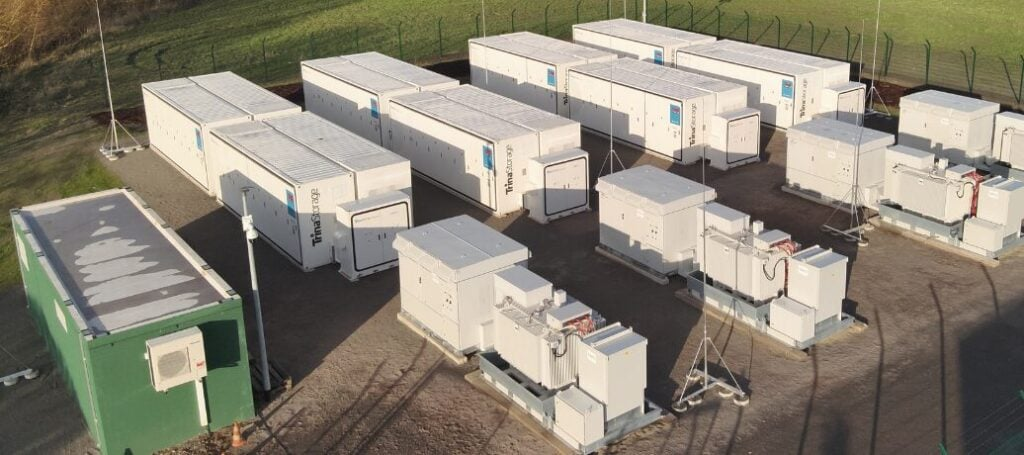
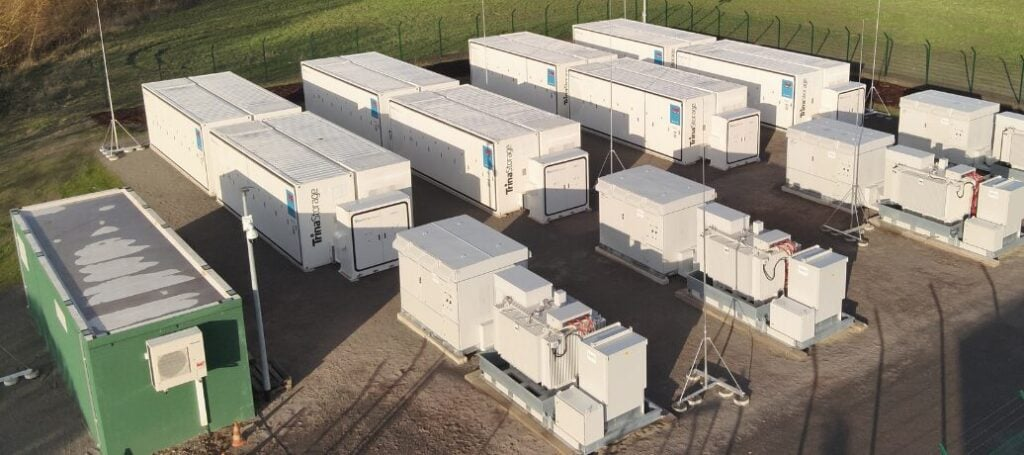
The project appears to already be operational, with a photo provided showing BESS units from Trina Storage, though the release did not refer to this.
Terralayr’s multi-optimiser BESS arrangement
BESS optimisation and virtual aggregation platform Terralayr has also claimed an industry-first, software-related asset management breakthrough.
It said its latest commercialisation model creates the “world’s first, risk-adjusted portfolio-effect for storage operators”.
The firm’s virtualisation set up allows multiple optimisers to trade a slice of one or multiple physical assets. The solution is live on Terralayr’s assets, will be rolled out to all future ones as well and available to asset owners in Germany.
Every asset owner has one contract per physical asset and that asset would be disaggregated into virtual batteries. Each virtual battery is then optimised by one different optimiser. As a result, one physical asset is optimised by multiple optimisers in parallel, a spokesperson explained.
A hypothetical arranagement is visualised in the infographic the firm provided below, with the BESS sliced into three virtual assets, 50MW each for Entrix and Suena and 100MW for The Mobility House (for example).
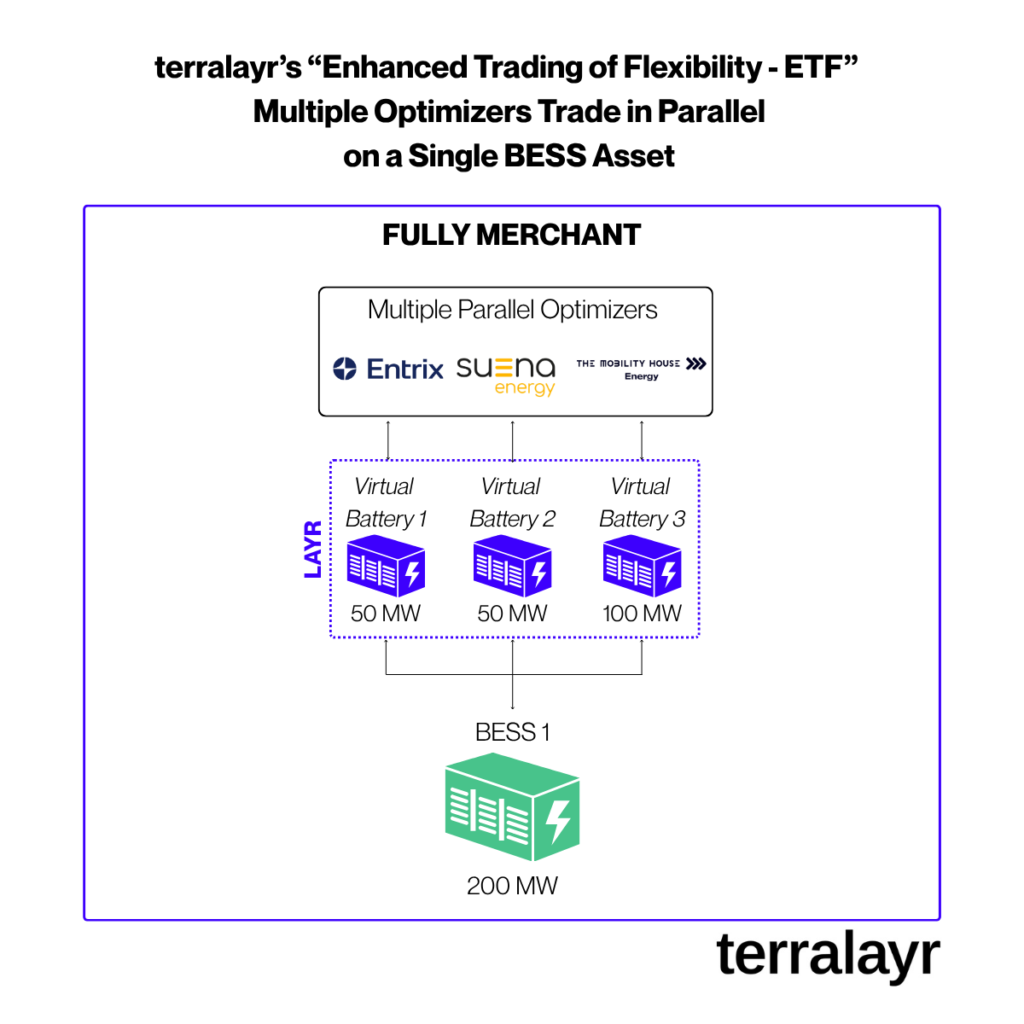
The model is called ‘Enhanced Trading of Flexibility – ETF’, and Terralayr claimed that it drives market efficiency, lowers revenue volatility, and creates a more stable risk-return profile for operators.
It also described an additional benefit called the “netting-off effects”, which regularly occurs when optimisers’ dispatch schedules offset each other, saving battery cycles and reducing degradation.
Terralayr’s platform bundles all optimiser dispatch and ancillary service signals and allocates them to the physical asset, while guaranteeing adherence to all technical restrictions and manufacturer specifications.
The firm launched in 2022, and has onboarded big-name energy firms in Germany including RWE and Vattenfall to its virtual BESS aggregation and optimisation platform as offtakers. Terralayr is deploying its own, smaller grid-scale BESS projects, at least partially to provide capacity for, and prove out, its platform.
Parliament in Germany adopts faster permitting for storage
In related BESS industry news, the German Federal Parliament (Bundestag) passed an amendment to the Energy Industry Act and the Federal Building Code which significantly simplifies the development of energy storage projects, law firm Evershed Sutherlands said in a note.
In a nutshell, the reform elevates legal certainty regarding the privileged treatment of thermal storage facilities, hydrogen storage facilities, and large-scale BESS in outside areas (Außenbereich), the firm explained: such projects are now expressly granted privileged status. The reform aims to accelerate energy storage permitting and deployment.
It creates a major simplification of future permit procedures, whereas previously energy storage was subject to considerable legal uncertainty.
Most grid-scale development in Germany is currently focused around projects that will come online before August 2028, when a three-year exemption from grid fees for charging and discharging ends. The government is discussing a more long-term solution, but whether this new change will benefit projects that can be deployed within the next three years is unclear.
(By Cameron Murray)
CENSA Upcoming Events:
1. Dec.4-5 | 2025 China Energy Storage CEO Summit | Xiamen, Fujian
Register Now to attend
Read more: http://en.cnesa.org/new-events-1/2025/12/4/dec4-5-2025-china-energy-storage-ceo-summit

2. Apr. 1-3, 2026 | The 14th Energy Storage International Conference & Expo
Register Now to attend, free before Oct 31, 2025.

Sign up for our free monthly newsletter to stay informed about the Chinese energy storage market.