

Latest News
Two Pioneering Figures in China’s Energy Storage Sector Win Top National Science and Technology Honors at the 2025 National Science and Technology Awards
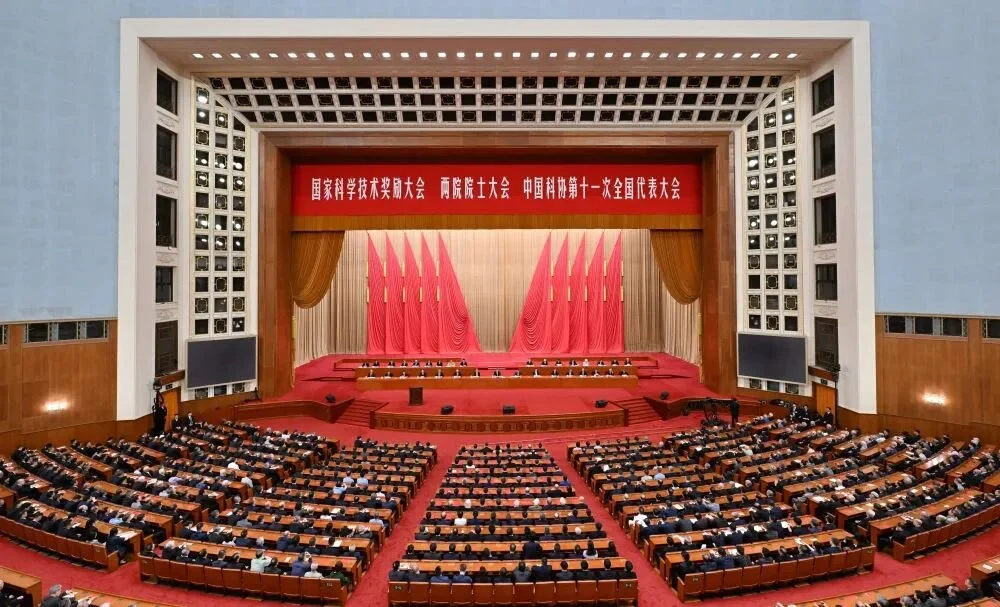
A landmark moment for China’s energy storage industry unfolded at the 2025 China National Science and Technology Awards Ceremony, held in Beijing on July 8, 2026. Two trailblazing scientists who have shaped the trajectory of China’s energy storage technology received the nation’s most prestigious scientific recognitions, marking a historic milestone for domestic long-duration energy storage and lithium-ion battery innovation.
Academician Chen Liquan, a researcher at the Institute of Physics, Chinese Academy of Sciences, and the founding father of China’s lithium battery industry, was honored with the National Highest Science and Technology Award—the country’s supreme honor for scientific and technological contributions. As a pioneer and global leading authority on lithium battery technologies, Academician Chen Liquan laid the foundational framework for China’s lithium-ion battery industrial system, spearheading breakthroughs in basic materials, cell manufacturing and industrialization over decades of research. His lifelong work underpins the rapid growth of China’s electrochemical energy storage, power battery and new energy vehicle sectors, laying irreplaceable technical groundwork for the national dual carbon strategy and energy transition revolution.
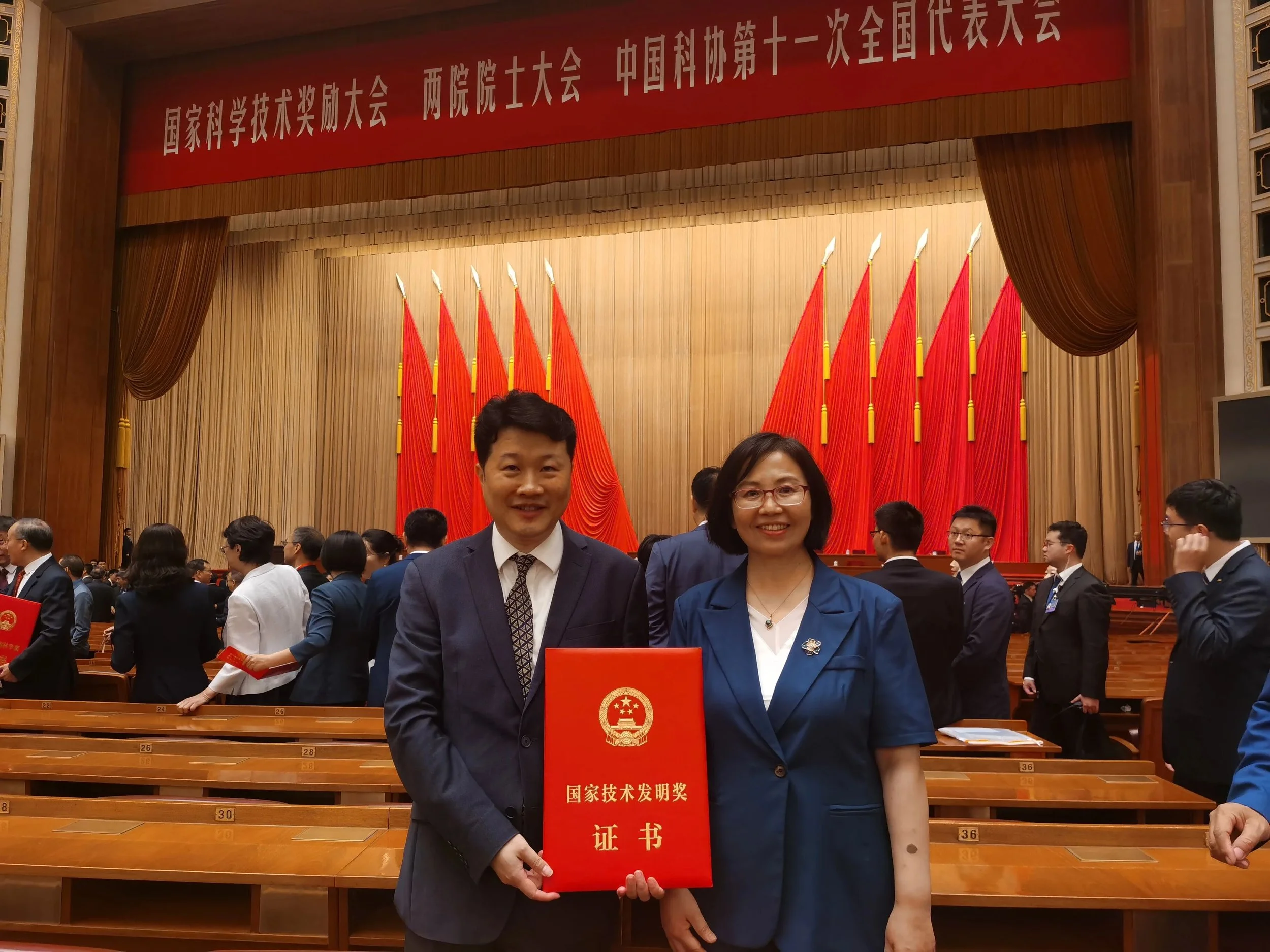
Meanwhile, Prof. Chen Haisheng, Chairman of China Energy Storage Alliance (CNESA) and researcher at the Institute of Engineering Thermophysics, Chinese Academy of Sciences, led his research team to claim the Second Prize of the National Technology Invention Award for the landmark achievement Key Technologies for Large-Scale Advanced Compressed Air Energy Storage (CAES) Systems.
Energy storage stands as a core, indispensable supporting technology for China’s dual carbon goals and national energy revolution. Compressed Air Energy Storage (CAES) is widely recognized as one of the most promising long-duration bulk energy storage solutions worldwide, featuring large installation scale, low lifecycle cost, ultra-long service life and outstanding operational safety, and has become a strategically competitive technical field across all major economies. Traditional CAES systems have long been restrained by critical bottlenecks including fossil fuel dependency and low round-trip efficiency, severely limiting large-scale commercial rollout globally.
Supported by successive national key research programs including the National Basic Research Program (973), National High-Tech R&D Program (863) and National Key R&D Program, Prof. Chen Haisheng’s team dedicated 20 consecutive years to targeted research and iterative breakthroughs, delivering a full set of systematic original innovations that resolve historic pain points of conventional CAES technology:
1. Proposed the novel "storage-release correspondence & cycle matching" design theory for energy storage systems, and invented an advanced CAES architecture based on a homologous circulation principle;
2. Overcame the synergistic aerodynamic and structural design challenge for multi-stage compressors and expanders, developing ultra-high pressure ratio-compressors and ultra-high expansion ratio expanders with fully independent intellectual property rights;
3. Cracked core technical barriers for supercritical heat/cold storage heat exchangers, inventing high-efficiency compact heat exchange equipment for CAES systems.
The research team has completed the construction of the world’s first series of advanced CAES demonstration facilities covering 1.5MW, 10MW, 100MW and 300MW capacity levels. The round-trip efficiency of the flagship system exceeds 70%, repeatedly setting new global performance benchmarks and firmly establishing China’s world-leading position in advanced compressed air energy storage technology.
To date, the project has secured 162 authorized invention patents (including 9 international patents), ranking No.1 globally in CAES patent holdings and forming a high-value, tightly integrated patent portfolio. The team has published 267 SCI papers, which have accumulated over 13,700 SCI citations, demonstrating profound academic influence in the global energy storage research community. Industrial transformation of the core technologies has generated direct economic benefits exceeding 7 billion RMB, delivering tangible value for the large-scale commercialization of long-duration energy storage.
The National Science and Technology Awards consist of five major categories: the National Highest Science and Technology Award, National Natural Science Award, National Technology Invention Award, National Science and Technology Progress Award, and China International Science and Technology Cooperation Award, representing the highest official recognition of scientific innovation in China.
CNESA extends sincere congratulations to Academician Chen Liquan and Prof. Chen Haisheng’s research team on their extraordinary accomplishments. These top-tier national honors fully validate the core strategic value of energy storage technologies in advancing global low-carbon energy transition, and highlight the strength of sustained independent innovation among China’s energy storage scientific community. As energy storage evolves into a critical backbone of the global net-zero energy system, CNESA will continue to unite industrial, academic and research stakeholders to accelerate technology iteration, industrial standardization and global cooperation, further boosting the high-quality development of China’s energy storage industry and contributing Chinese solutions to worldwide energy transformation.
Major Breakthrough Achieved in the R&D of the World’s First and Most Powerful Single-Unit Compressed Air Energy Storage Compressor
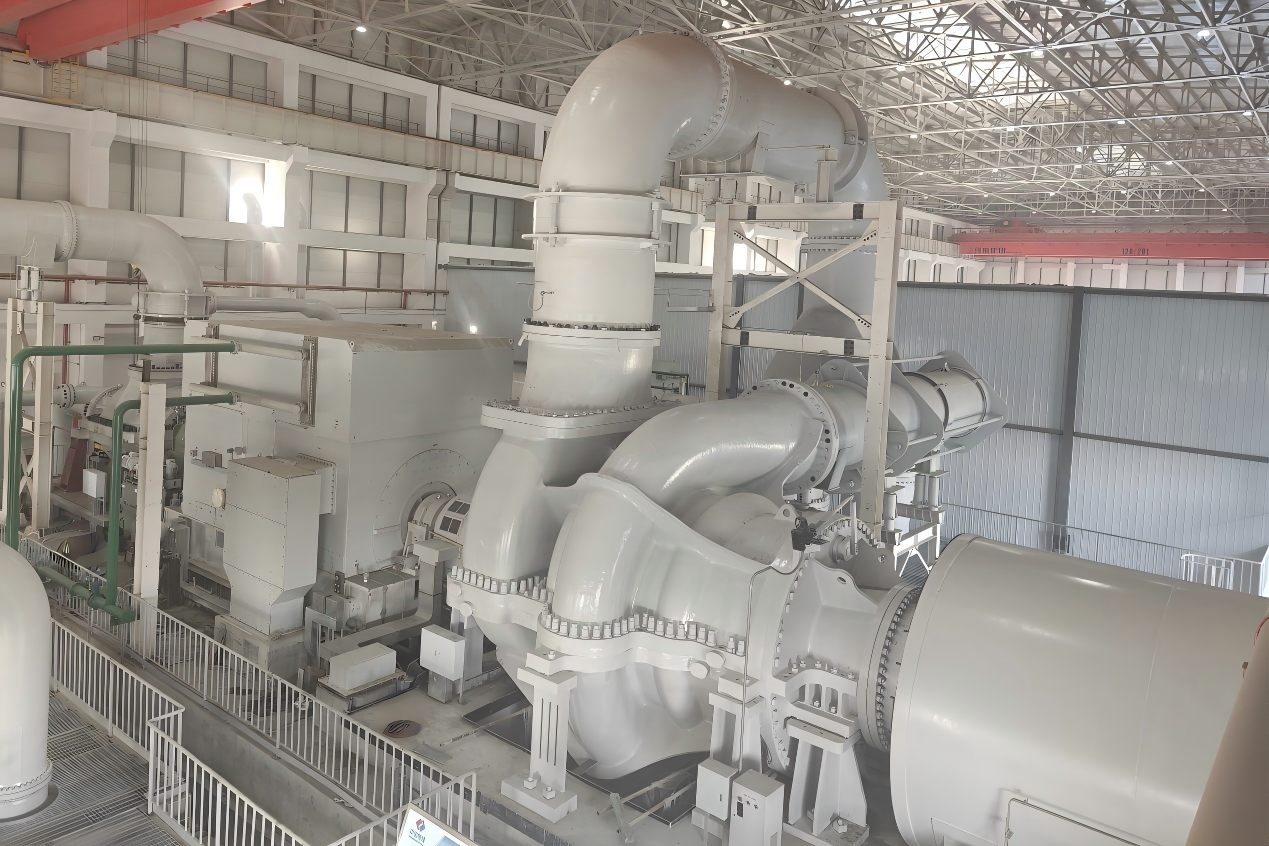
Recently, China has achieved a major breakthrough in the research and development of compressed air energy storage(CAES) technology . Developed jointly by the Institute of Engineering Thermophysics, Chinese Academy of Sciences(IET, CAS) and ZHONG-CHU-GUO-NENG(BEIJING)TECHNOLOGY CO.,LTD., the world’s first CAES compressor with the largest single unit power has successfully passed the third-party testing accredited by CNAS. According to the test results, the compressor achieved maximum discharge pressure of 10.1MPa, a maximum power output of 101MW and an operating range of 38.7% to 118.4% under variable conditions and an efficiency of 88.1% at maximum discharge pressure, reaching an internationally leading level.
Recently, China has achieved a major breakthrough in the research and development of compressed air energy storage(CAES) technology . Developed jointly by the Institute of Engineering Thermophysics, Chinese Academy of Sciences(IET, CAS) and ZHONG-CHU-GUO-NENG(BEIJING)TECHNOLOGY CO.,LTD., the world’s first CAES compressor with the largest single unit power has successfully passed the third-party testing accredited by CNAS. According to the test results, the compressor achieved maximum discharge pressure of 10.1MPa, a maximum power output of 101MW and an operating range of 38.7% to 118.4% under variable conditions and an efficiency of 88.1% at maximum discharge pressure, reaching an internationally leading level.
The compressor is one of the most critical core components of a compressed air energy storage system. During the energy storage process, it will compress the atmospheric pressure air to high-pressure state and store it in gasometers, converting electric energy to pressure energy and thermal energy of the air. Through independent innovation, the research team overcame key technical challenges including overall system design and optimization, full 3-Dimensional flow optimization, long rotor complex shafting structure design and high-efficiency variable operating condition control, successfully developing the world’s first CAES compressor with a single unit power exceeding 100MW, featuring fully independent intellectual property rights. Compared with existing CAES compressors, its single-unit power has increased by more than 100%, unit costs have been significantly reduced and it offers advantages including high efficiency, high pressure and a wide operating range.
The Institute of Engineering Thermophysics, Chinese Academy of Sciences has been a pioneer in China’s CAES research since 2005. Through continuous efforts for over 20 years, it originally proposed new principles for advanced compressed air energy storage, developed several critical technologies including system design for full operating conditions system design, wide-load compressors, high-efficiency compact heat exchangers and high-load expanders; It has established a comprehensive R&D and design system covering “system design-key components-integrated control; it has also taken the lead in building national demonstration projects for 1.5MW-10MW-300MW advanced CAES. The successful development of the CAES marks an important milestone of world compressed air energy storage technology, which will drive the technology to a new level.
The above work was supported by projects including Chinese Academy of Sciences Strategic Priority Research Program (Category A), National Key Research and Development Program of China and National Natural Science Foundation of China (NSFC) Young Scientists Fund (Category A), among others .
Looking ahead, ZHONG-CHU-GUO-NENG will actively promote the application of this compressor and continue to enhance its capabilities in technological innovation, manufacturing, and engineering implementation. Through the transformation and wider application of major scientific and technological equipment achievements, the company aims to deliver high-end equipment with higher efficiency, better performance, and lower costs, thereby driving high-quality industrial development and supporting China’s energy transformation and sustainable development of regional economies.
Register now to attend Asia’s Largest Energy Storage Trade Show for free:
What: The 14th Energy Storage International Conference & Expo
When: Conferences: March 31 - April 2, 2026
Exhibitions: April 1-3, 2026
Where: CIECC Beijing, China
Address: No. 55 Yudong road, Shunyi District, Beijing China

Cache Power Plans ‘Canada’s First’ Commercial-Scale Compressed Air Energy Storage Facility
Source: Energy Storage News
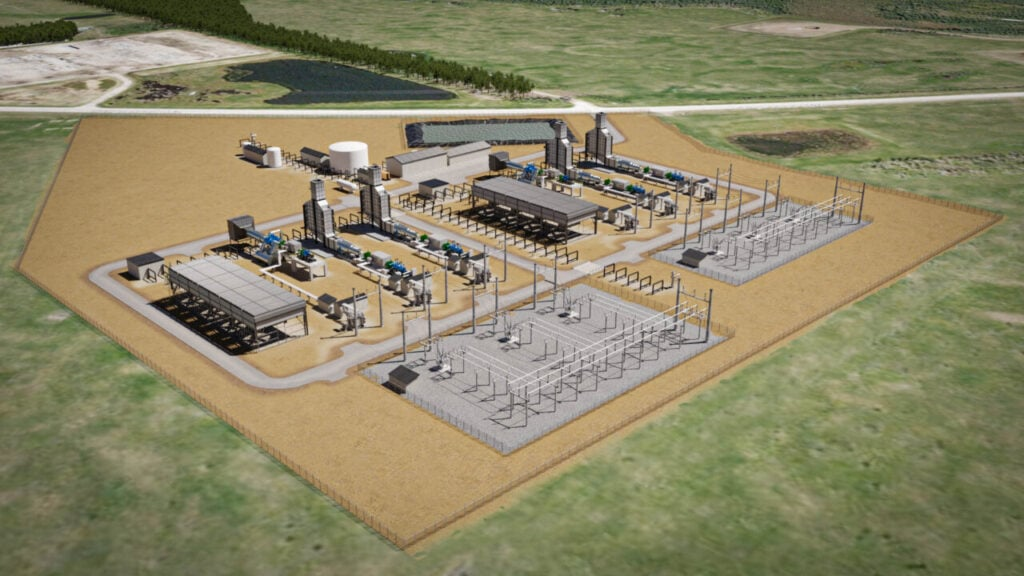
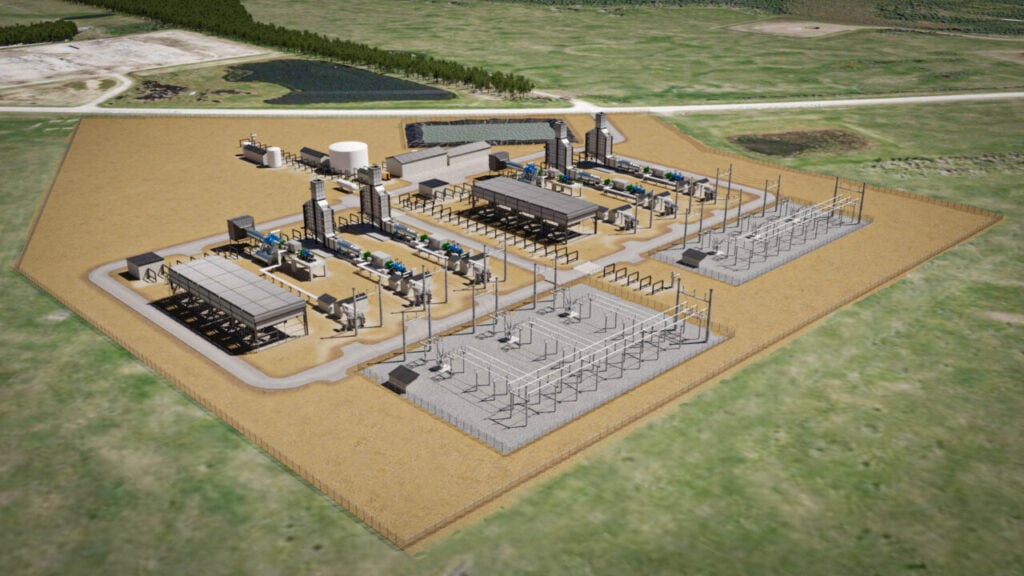
The facility will be constructed in two phases and located next to the Marguerite Lake substation to enhance efficiency and facilitate grid integration. Image: EllisDon
Compressed air energy storage (CAES) developer Cache Power is partnering with construction company EllisDon to deliver a CAES facility in Northeast Alberta, Canada.
The facility will be constructed in two phases and located next to the Marguerite Lake substation to enhance efficiency and facilitate grid integration.
Cache Power does not have any information on its website, but appears to be a special purpose vehicle (SPV) for Federation Engineering.
On Federation’s website, the company clarifies that the Marguerite Lake facility will have a 250MW load capacity and 640MW generation capacity. Energy storage capacity or planned duration were not referred to in publicly available materials.
The companies assert that the technology will be essential in stabilising Alberta’s grid and supporting both provincial and national efforts toward a net-zero electricity future. The project has secured all key regulatory approvals, with early construction scheduled to start soon.
CAES technology operates by pressurising and directing air into a storage medium to load the system. When discharging, the stored air is released through a heating system to expand, driving a turbine generator.
Notably, the companies claim the project will be the first commercial scale CAES facility in Canada.
Ontario-headquartered Hydrostor is known for its advanced compressed air energy storage (A-CAES) projects.
A-CAES operates similarly to traditional CAES but captures heat from the compressor and passes it through heat exchangers to store in pressurised water. This water is kept in a reservoir and then released into a cavern to displace air during discharging, a process known as hydrostatic compensation.
In conventional CAES, less than 50% of the energy can typically be recovered. The thermal energy produced during compression is often wasted, and the power output varies depending on the residual underground air pressure.
Hydrostor has two small operational projects in Canada, one a pilot and the other a commercial demonstrator, with the larger one being a 2.2MW/10MWh commercial system in Goderich, Ontario.
Hydrostor noted the Goderich Energy Storage Centre as the world’s first commercially contracted A-CAES facility. In addition to its role as technology provider, the A-CAES company is also developing large-scale projects around the world, including its 1.6GWh Silver City project in New South Wales, Australia, and 4GWh Willow Rock project in California, US. The company has secured some funding and offtake agreements for both, including a recent renegotiation of contracts for Willow Rock (ESN Premium article).
It has also proposed a 500MW/8,000MWh project in Ontario (ESN Premium), adjacent to Ontario Power Generation’s Lennox Generating Station in Greater Napanee.
Speaking with Energy-Storage.news, a representative from Federation clarified that the distinction between the CAES system titles for itself and Hydrostor came down to scale and usage.
Cache Power’s facility can store up to 48 hours of energy by compressing air with excess grid electricity and sequestering it in underground salt caverns formed through solution mining.
It can also blend up to 75% hydrogen with natural gas, with a future plan for complete hydrogen utilisation, aligning with Canada’s net-zero ambitions.
Power plant equipment supplier Babcock & Wilcox are collaborating on engineering the possible hydrogen facility expansion, employing the company’s BrightLoop technology.
Babcock & Wilcox claim that BrightLoop can produce hydrogen while isolating carbon dioxide for capture and storage.
Additionally, Cache Power states it will deliver economic and social advantages to the local community and Indigenous Partners. Cold Lake First Nations has actively engaged in the project’s development and is anticipated to collaborate as a partner with Cache Power in both the project and its operations.
Update: Jordan Costley, Director of Sustainability Projects at Federation Engineering, and President of Cache Power has clarified that the project will be 30.72GWh. Costley also added about CAES energy recovery:
“(The 50% recovery statistic) may have been true for the original D-CAES projects such as Huntorf (Germany 1978) and McIntosh (USA 1991) but our project is utilizing the latest D-CAES technology from Siemens Energy.“
“Today’s compression technology utilising multi-stage integrally geared and intercooled compressors is very efficient resulting in the heat of compression being low grade not valuable for thermal energy storage and reuse in the expansion process. The expander trains also include 90% effective dual-reheat recuperators again significantly increasing the overall efficiency. The technology we are utilizing is not “conventional CAES” as defined by Huntorf and McIntosh.
(By April Bonner)
CENSA Upcoming Events:
Apr. 1-3, 2026 | The 14th Energy Storage International Conference & Expo
Register Now to attend, free before Dec 31, 2025.

Sign up for our free monthly newsletter to stay informed about the Chinese energy storage market.