

Latest News
Germany Roundup: 500MW BESS and Data Centre Transaction, Seven-Year Toll and 370MW Pipeline Secured
Source: Energy Storage News
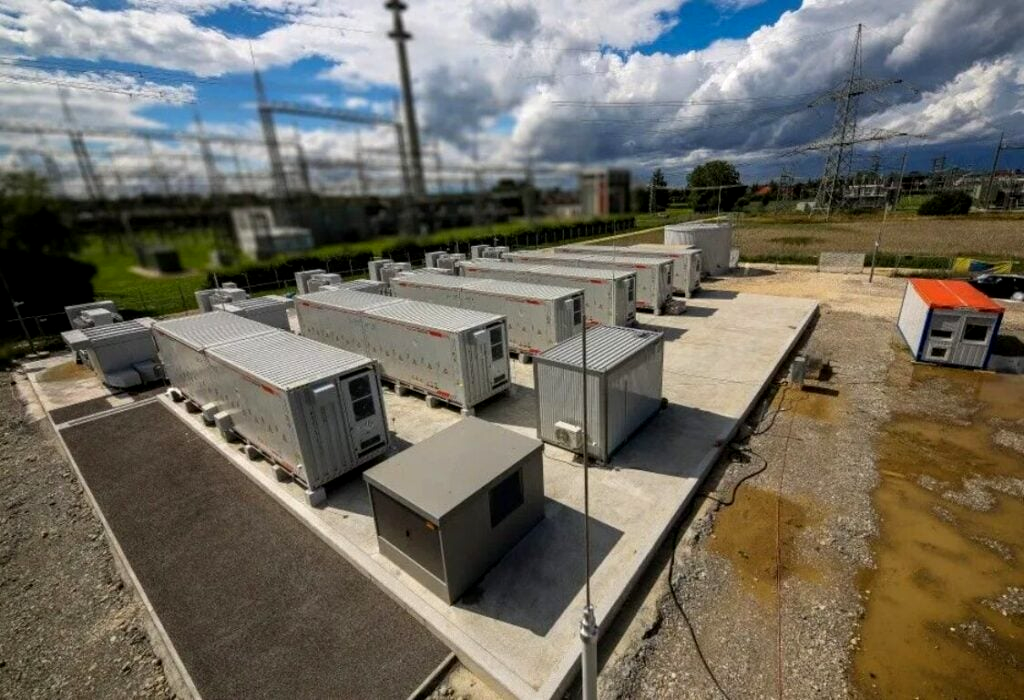
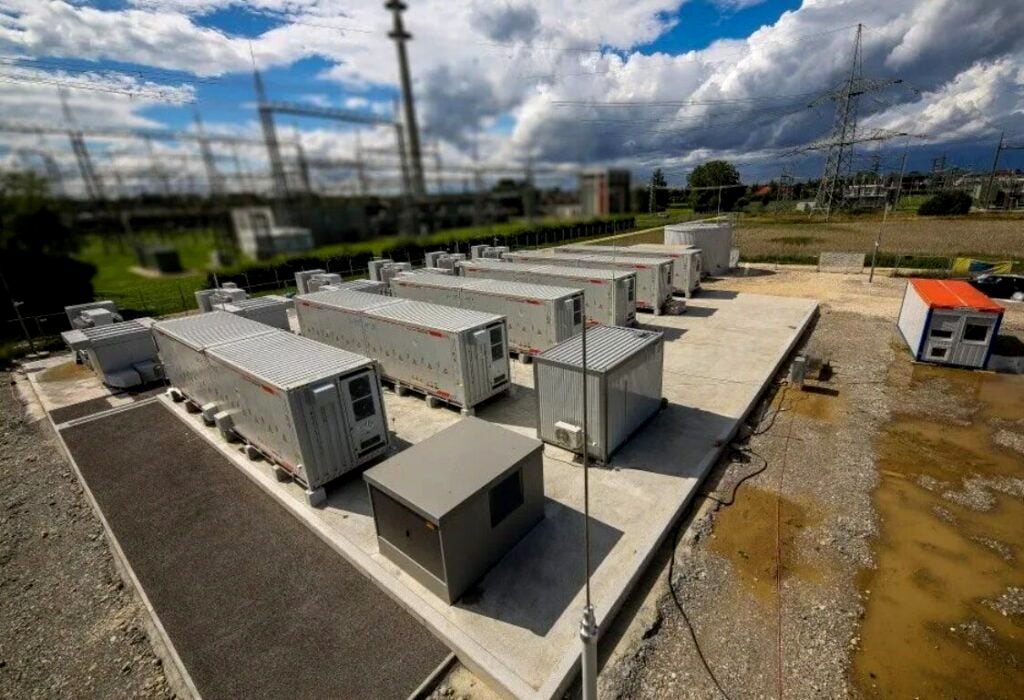
The BESS with which ju:niz Energy will enter into a toll with Next Kraftwerke. Image: ju:niz Energy
A trio of German grid-scale BESS news items, with Next Kraftwerke and ju:niz Energy agreeing a seven-year toll, Alpiq announcing a 370MW pipeline, and WBS Power selling the country’s largest solar-plus-storage project and planning a data centre on the same site.
Germany has this year become a hotbed of battery energy storage system (BESS) project announcements and deal-making, driven by its substantial revenue opportunities as Europe’s largest electricity market and a looming August 2029 deadline for getting projects operational to avoid charge-discharge grid fees. See all recent coverage here.
WBS Power sells solar-plus-storage project, plans data centre
Developer WBS Power has sold the 150MW solar, 500MW/2,000MWh BESS Project Jupiter in Brandenburg, Germany, to investor Prime Capital.
WBS acquired the site for the clean energy project in 2022, and the project will require €500 million (US$583 million), with construction expected in late 2026/early 2027. Both technologies will share a 380kV grid connection in the area of TSO 50Hertz. The acquisition is subject to Project Jupiter reaching ready-to-build (RTB) status.
The transaction also establishes a joint venture to co-locate a hyperscale data centre of up to 500MW in power demand in the same area.
WBS Power said there is growing demand for data centres in Germany, which are highly energy-intensive and benefit significantly from direct access to renewable power and grid stability.
“By integrating Germany’s largest co-located BESS and Solar PV project with a hyperscale data center, we are creating a unique platform that supports both the energy transition and digital transformation,” said Maciej Marcjanik, CEO of WBS Power Group.
Alpiq secures 370MW Germany pipeline
Switzerland-based energy firm Alpiq has expanded in Germany with a 370MW BESS pipeline the company has ‘secured’, in partnership with developer SPP Development. The projects in Brandenburg and Saxony-Anhalt are expected to reach RTB status in 2026.
Lukas Gresnigt, Head International and member of the Executive Board of Alpiq said that Germany is a competitive and complex market for BESS, with many projects are queuing for grid access and permits, and the partnership combined Alpiq’s financial strength and SPP’s local expertise.
Last week, Energy-Storage.news reported on Alpiq entering into a long-term toll for a BESS in Germany owned and operated by Eco Stor. Alpiq has acquired projects in France and Finland, where it recently commissioned a 30MW/36MW project.
Shell and EQT companies agree Germany BESS toll
VPP operator Next Kraftwerke, acquired by Shell in 2021, has concluded a Germany BESS toll with BESS platform ju:niz Energy, acquired by investor EQT in 2024.
The seven-year toll is for a 20MW/40MWh project in Vöhringen, Bavaria, and Next said it is one of the first operational contracts of its kind in Germany, live since 1 November.
Next Kraftwerke will pay ju:niz Energy a fixed monthly fee per installed MW for the use of the BESS capacity. The model offers stable revenues for the operator (ju:niz) and flexibility for the optimiser (Next Kraftwerke). The toll is 80% fixed remuneration and 20% merchant, Next said.
(By Cameron Murray)
CENSA Upcoming Events:
Apr. 1-3, 2026 | The 14th Energy Storage International Conference & Expo
Register Now to attend, free before Dec 31, 2025.

4GW/5.12GWh Malaysia Solar-Plus-Storage Hub Receives World Bank Funding
Source: PV Tech
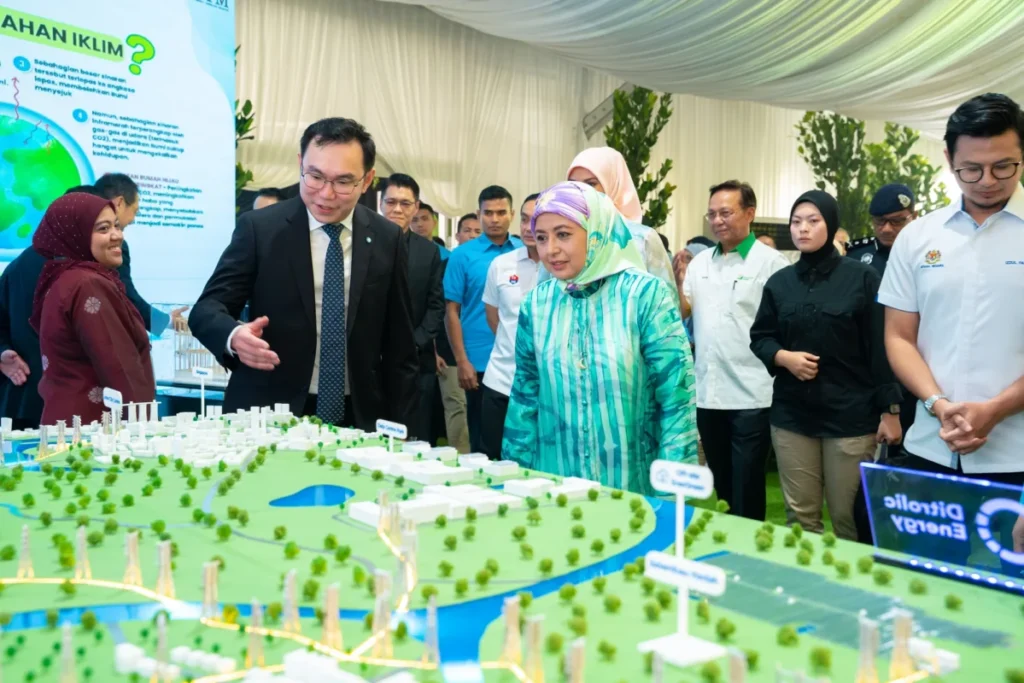
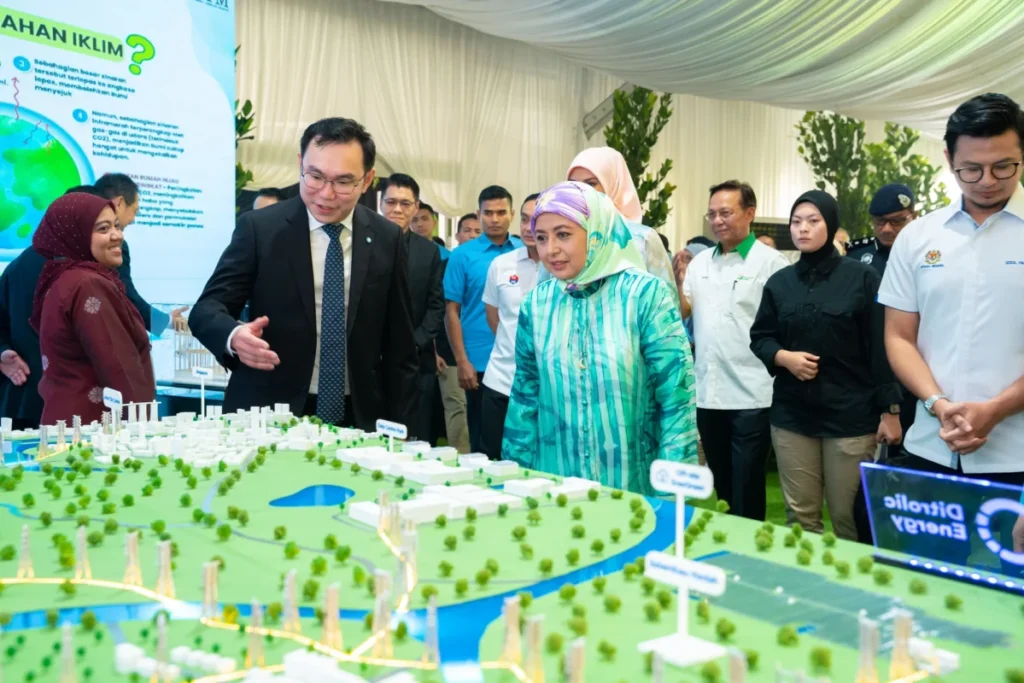
The agreement was signed this week, in the presence of the Queen of Malaysia (pictured). Image: IFC
The World Bank will invest in a huge 4GW, 5.12GWh solar-plus-storage complex in Malaysia, which will form part of a pan-Southeast Asian power grid initiative.
The Southern Johor Renewable Energy Corridor (SJREC) will be a roughly 2,000sqKm area dedicated to solar PV and energy storage capacity. The US$6 billion project is backed by the World Bank’s private investment arm, the Iternational Finance Corporation (IFC), alongside the state investment firm of Johor, Permodalan Darul Ta’zim (PDT), and Ditrolic Energy, a Malaysian integrated energy company.
The project is part of a number of larger schemes, chiefly the ASEAN Power Grid Initiative, a plan to integrate power grids and energy supply across Southeast Asian nations. In this vein, the SJREC will be part of the Johor–Singapore Special Economic Zone (JS-SEZ) “masterplan”, able to transmit clean energy to Singapore, which sits on Johor’s southern border.
As a densely populated city state, Singapore relies heavily on energy imports and has made significant plans for cross-border renewables transmission, perhaps most notably the mammoth AA PowerLink project in Northern Australia, which aims to deploy almost 20GW of solar capacity when fully operational and supply power to Singapore via undersea cables.
The site is also part of the Johor Green Development Policy 2030, which the state government introduced to expand its green industries and renewable energy developments.
“As the state agency entrusted to formulate the Johor Green Development Policy 2030, PDT is proud to witness our strategic framework transition into tangible reality today,” said Dato’ Ramlee bin A Rahman, president and group chief executive of Permodalan Darul Ta’zim.
“The Southern Johor Renewable Energy Corridor was conceived as the cornerstone of this policy, specifically Strategy one, to unlock the immense solar potential of the Kota Tinggi and Mersing districts.”
Tham Chee Aun, CEO of Ditrolic Energy, said the SJREC hub would “Anchor Johor’s clean energy export potential and provide a foundation for industries seeking renewable, low-cost power in the region.”
In an announcement, the IFC said the project would supply renewable energy to “local and multinational corporations, including hyperscale data centre operators, manufacturers, and other businesses in Johor”.
Renewables development is a major driver for meeting data centre power demand, primarily because of the affordability of solar projects and solar energy and the stability offered by coupling the technology with energy storage. In its most recent report, the International Energy Agency (IEA) said the world would become “thirsty for energy” in the coming years and that data centres were an “Important driver” of growing power demand.
(By Will Norman)
CENSA Upcoming Events:
Apr. 1-3, 2026 | The 14th Energy Storage International Conference & Expo
Register Now to attend, free before Oct 31, 2025.

Sign up for our free monthly newsletter to stay informed about the Chinese energy storage market.