

Latest News

CLOU Electronics’ Indonesia Energy Storage Base Set for 2026 Commissioning, Targets 3GWh Capacity
Source: CNESA
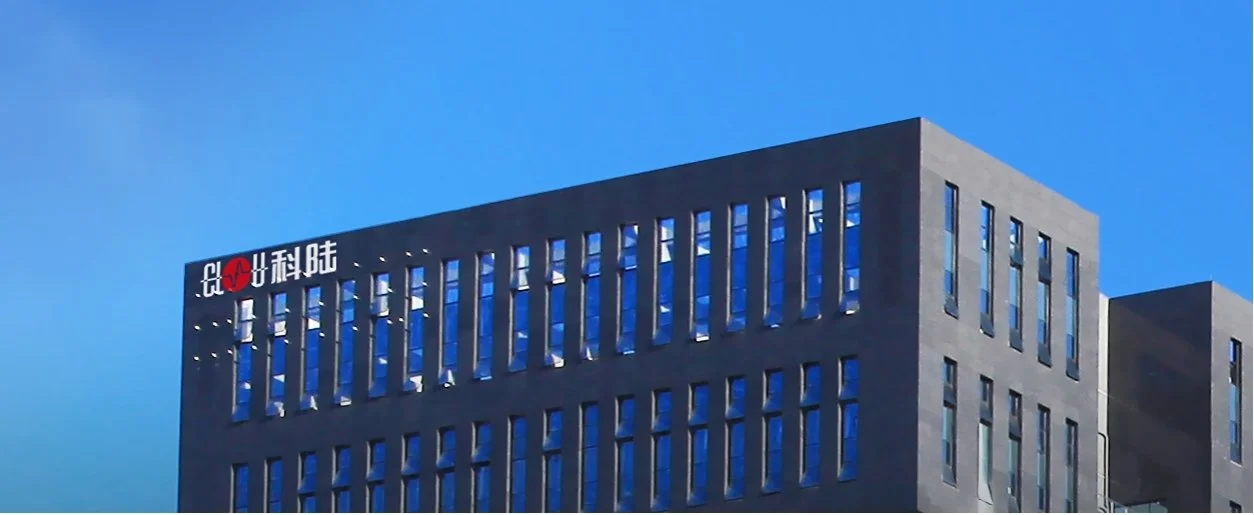
On November 6, CLOU Electronics announced key progress in its global manufacturing expansion, revealing that its energy storage production base in Indonesia is currently under construction and scheduled to commence operation in 2026. The facility has an initial planned capacity of 3GWh per year, with flexibility for future expansion based on market demand and business growth.
CLOU Electronics is a national high-tech enterprise in China with a number of national and provincial technical centers and laboratories. Focusing on two major fields including new electrochemical energy storage and new power system, CLOU Electronics has long accumulated deep technological expertise and extensive project experience in the energy storage sector. The company has achieved full in-house research, development, and manufacturing capabilities for core system components - including PCS, BMS, EMS, DC/DC converters, and O&MS platforms - enabling it to deliver comprehensive integrated energy storage solutions.
The Indonesia Energy Storage Base marks a strategic milestone in CLOU Electronics’ globalization roadmap. The site will focus on research, development, and large-scale production of key products such as lithium-ion battery energy storage systems and energy storage inverters (PCS). It will also include intelligent production lines, R&D and testing centers, and warehousing and logistics facilities.
Leveraging Indonesia’s abundant nickel and cobalt resources, the project aims to establish a fully integrated overseas industrial ecosystem of “resources-R&D-manufacturing-application.” This approach is expected to reduce supply chain costs and mitigate geopolitical risks, while enhancing production efficiency and responsiveness to regional demand.
As one of the world’s fastest-growing energy storage markets, Southeast Asia has seen rapid expansion driven by the rise of renewable energy installations and urgent power grid upgrades. The commissioning of CLOU’s Indonesian base will enable the company to provide localized products and solutions for utility-scale, industrial, commercial, and off-grid energy storage applications across ASEAN countries, the Middle East, and beyond.
CLOU Electronics has already implemented multiple energy storage projects in Southeast Asia, building a strong reputation and customer network that will support future market development once the new base becomes operational.
The relevant person in charge of CLOU Electronics stated that the Indonesian energy storage production base is a vital component of the company’s globalization strategy. The release of 3GWh annual capacity will significantly enhance the company’s global supply capability and competitiveness. Going forward, CLOU will use the Indonesian base as a hub to deepen its international market presence, accelerate technological innovation, and provide efficient, reliable, and cost-effective energy storage solutions that support global energy transition under the “dual-carbon” goals.
CENSA Upcoming Events:
1. Dec.4-5 | 2025 China Energy Storage CEO Summit | Xiamen, Fujian
Register Now to attend
Read more: http://en.cnesa.org/new-events-1/2025/12/4/dec4-5-2025-china-energy-storage-ceo-summit

2. Apr. 1-3, 2026 | The 14th Energy Storage International Conference & Expo
Register Now to attend, free before Oct 31, 2025.

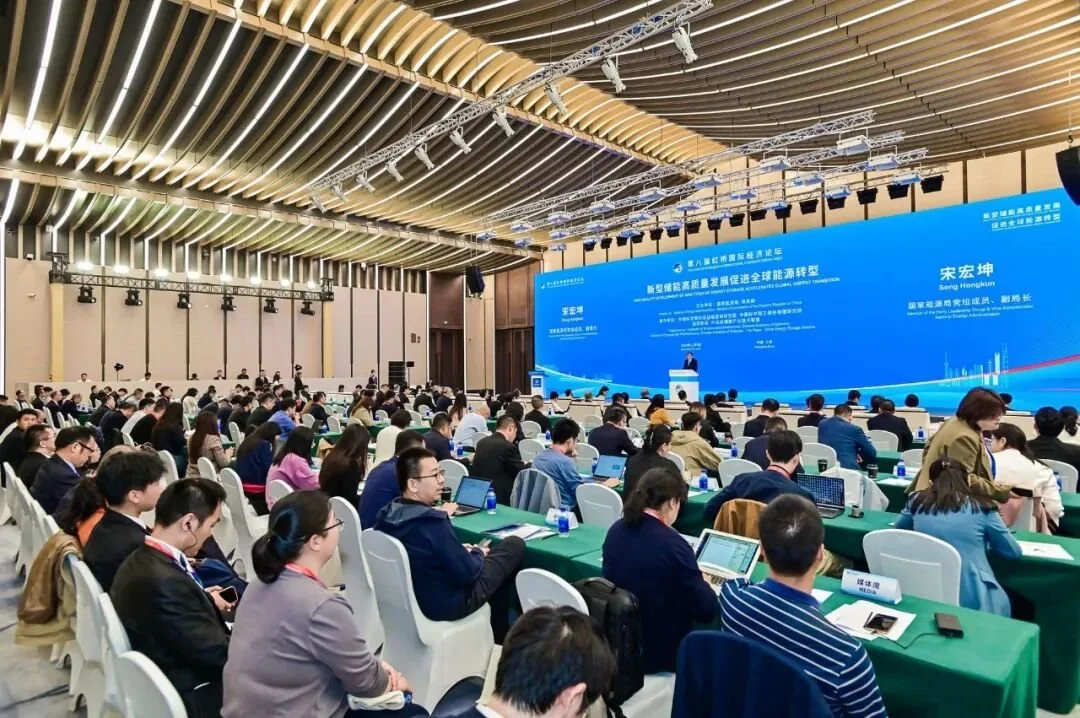
The 8th Hongqiao International Economic Forum’s Parallel Forum on New Energy Storage Held in Shanghai
"Those who share the same aspirations will not be kept apart by mountains and seas."
On November 5, 2025, the 8th China International Import Expo (CIIE) opened as scheduled. As one of its key supporting events, the Hongqiao International Economic Forum focuses on major global economic issues. This year, a Parallel Forum on New Energy Storage was held, reflecting the world’s shared attention to energy transition and sustainable development.
On the afternoon of November 5, the Parallel Forum on “Promoting High-Quality Development of New Energy Storage to Accelerate the Global Energy Transition”, jointly hosted by the National Energy Administration (NEA) and the Ministry of Commerce (MOFCOM), was successfully held at the National Exhibition and Convention Center (Shanghai). The event was co-organized by the Institute of Science and Development, Chinese Academy of Sciences (CASISD), the Institute of Engineering Thermophysics, CAS, The Paper, and the China Energy Storage Alliance (CNESA).
The forum brought together high-level guests from across China and abroad. Notable participants included Mr. Song Hongkun, Member of the Party Leadership Group and Deputy Director of the NEA; Ms. Xiao Lu, Deputy Director-General of the Department of Foreign Trade, MOFCOM; Mr. Zheng Deyan, Deputy Secretary of the Party Leadership Group and Deputy Director of the Shandong Provincial Development and Reform Commission, and Director of the Provincial Energy Bureau; Mr. Yang Yang, Director of the Xinjiang Uygur Autonomous Region Energy Bureau; Mr. Meng Qingqiang, Chief Engineer of the State Grid Corporation of China; Mr. Wang Shaowu, Deputy General Manager of China Southern Power Grid; Mr. Wang Shaomin, Deputy General Manager of State Power Investment Corporation (SPIC); Prof. Xia Qing from Tsinghua University; Mr. Pan Jiaofeng, President of CASISD; Mr. Yu Zhenhua, Executive Vice Chairman of CNESA; and Mr. Chen Xiang, Senior Vice President of EVE Energy and Head of EVE Energy Storage.
International guests included Mr. Laureano Ortega Murillo, Advisor to the President of the Republic of Nicaragua for Investments, Trade and International Cooperation, and Mr. Adam Bralczyk, Consul General of the Republic of Poland in Shanghai.
Dr. Steven Chu, Nobel Laureate in Physics and former U.S. Secretary of Energy, joined the event via video link.
The forum attracted extensive participation across the energy storage ecosystem, highlighting a shared commitment to high-quality development and open collaboration.
Leaders from the National Development and Reform Commission, the Ministry of Industry and Information Technology, and provincial energy authorities from Liaoning, Hebei, Jiangxi, Guangdong, Sichuan, Yunnan, Inner Mongolia, Hunan, Guangxi, and Gansu attended.
Executives from major state-owned enterprises such as State Grid, China Southern Power Grid, Huaneng, Datang, Huadian, SPIC, China Three Gorges Corporation, China Energy, POWERCHINA, Energy China, CGN, Inner Mongolia Energy Group, and Guangxi Energy Group were also present.
Representatives from leading enterprises, research institutes, and financial institutions participated, alongside international delegates from the Embassy of the French Republic, the Consulate General of the Republic of Finland in Shanghai, and the German Chamber of Commerce Abroad – Greater China (AHK), reflecting strong global consensus and cooperation toward energy transition.

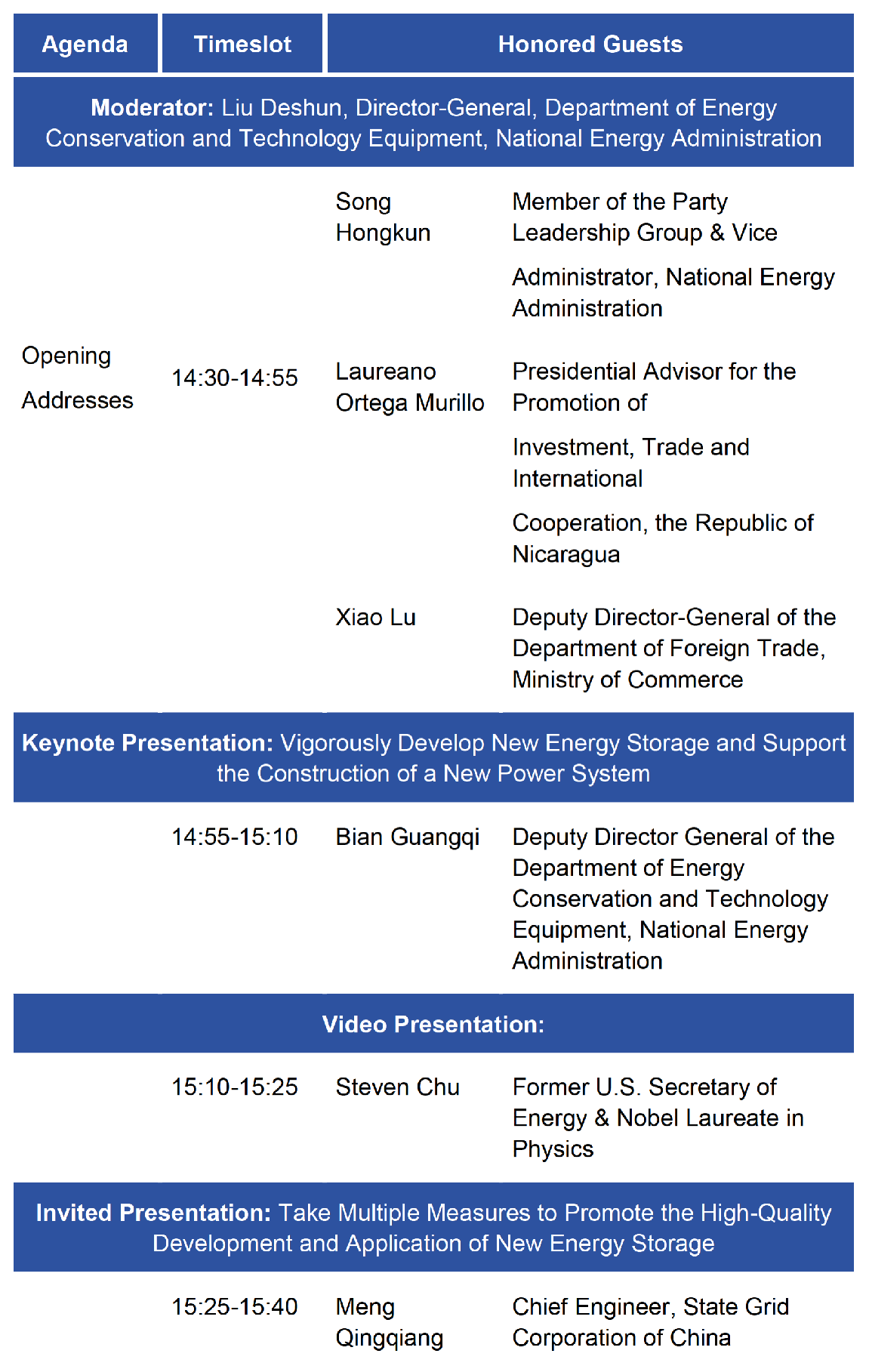
The session was moderated by Mr. Liu Deshun, Director-General of the Department of Energy Conservation and Science & Technology Equipment at the NEA.
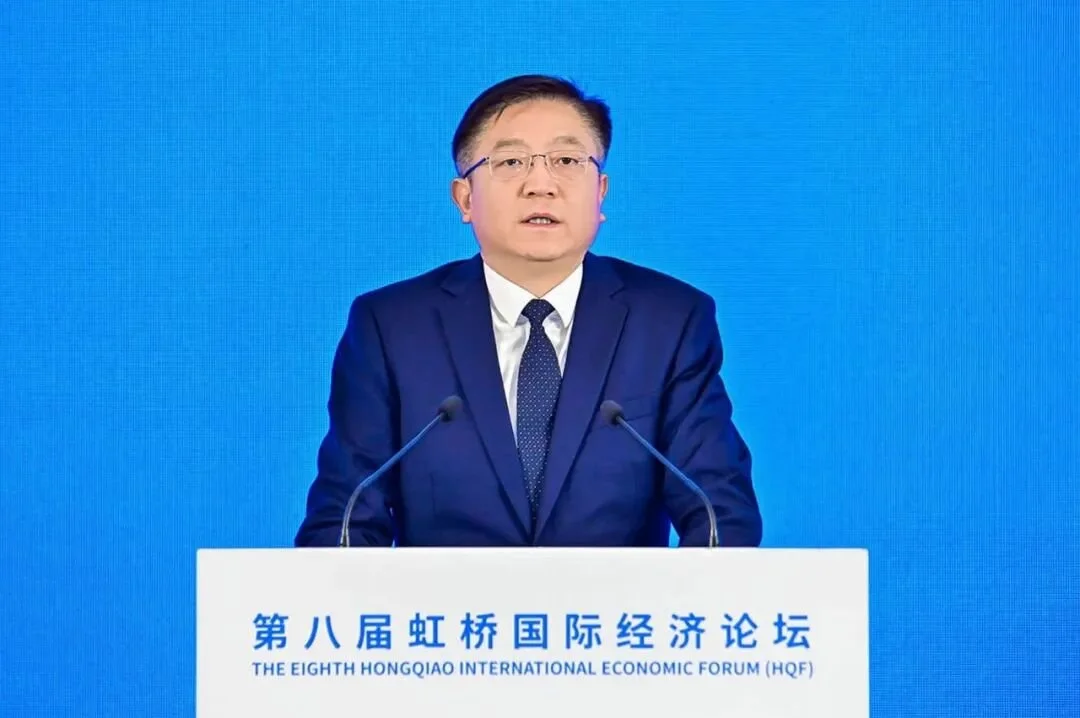
In his opening address, Deputy Director Song Hongkun emphasized that, marking the 10th anniversary of the Paris Agreement, the NEA continues to implement the “Four Revolutions, One Cooperation” energy security strategy, building the world’s largest and fastest-growing renewable energy system and a complete new energy industry chain.
As a key enabler of China’s new power system, new energy storage has achieved remarkable progress — reaching over 100 GW of installed capacity by September 2025 — and has become essential for renewable integration and energy security.
Since the start of the 14th Five-Year Plan, China’s new energy storage has directly driven over 200 billion yuan in project investment and over 1 trillion yuan across the industrial chain, supplying high-performance products globally and contributing to the energy transition. Looking ahead to the 15th Five-Year Plan, the NEA will continue promoting innovation, improving market mechanisms, and fostering new productivity in the energy sector to ensure the carbon peak goal is met on schedule.
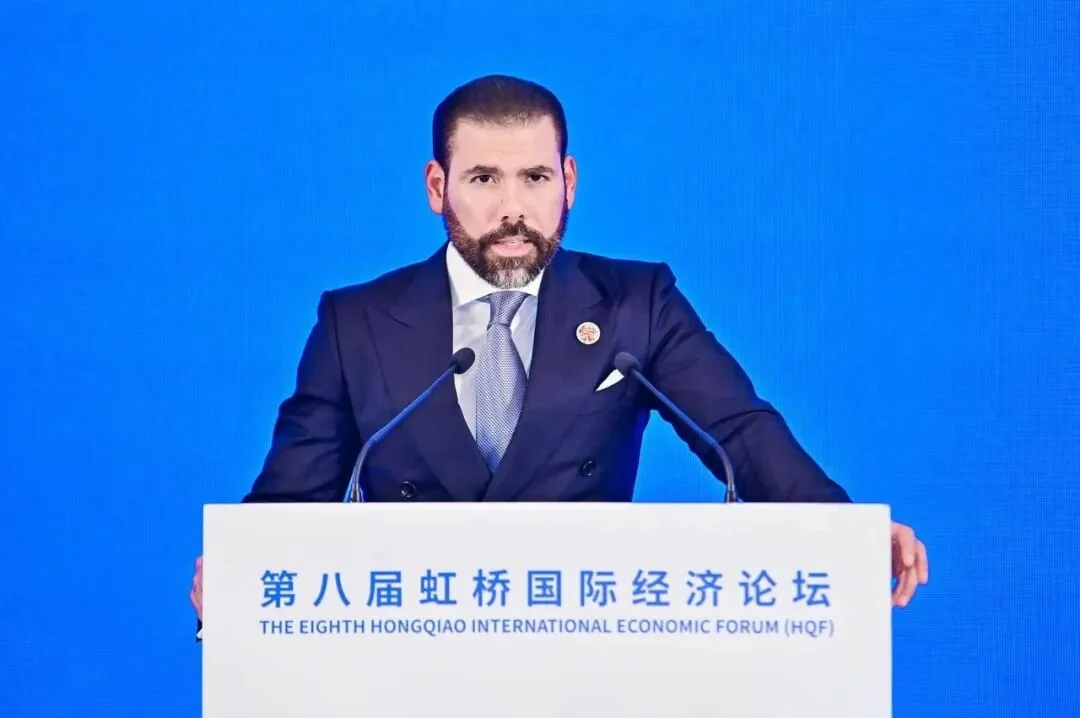
Mr. Laureano Ortega Murillo stated that Nicaragua is accelerating industrialization and energy diversification to meet growing power demand.
With abundant solar, wind, and geothermal resources, Nicaragua has already partnered with CCCC, POWERCHINA, and Huawei in renewable and storage projects. He welcomed further Chinese investment and cooperation to jointly advance global energy transition.
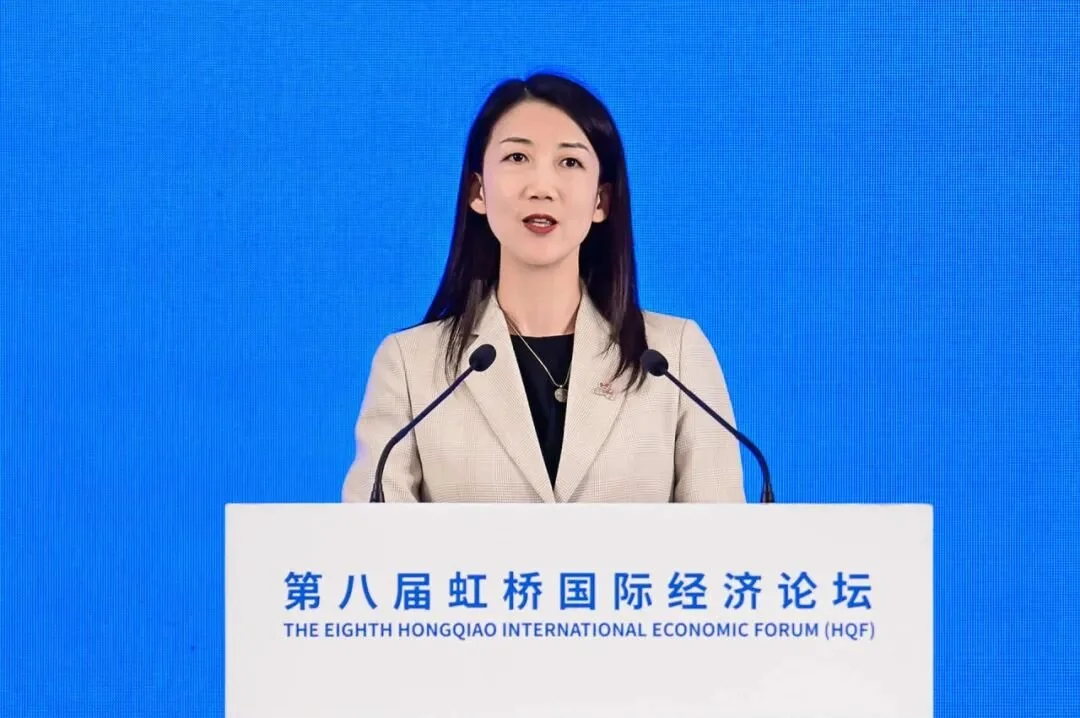
Ms. Xiao Lu, Deputy Director-General of MOFCOM’s Department of Foreign Trade, noted that Chinese energy storage enterprises are rapidly expanding abroad, leveraging technological and supply chain advantages to power the global green transition.
She highlighted three major trends:
Continuous expansion of trade volume;
Strengthened role as a global supply chain hub;
Steady growth in outbound investment.
Looking ahead, China will further support two-way openness — encouraging foreign enterprises to establish R&D centers in China and supporting domestic companies to “go global” — while enhancing international standards cooperation and alignment.
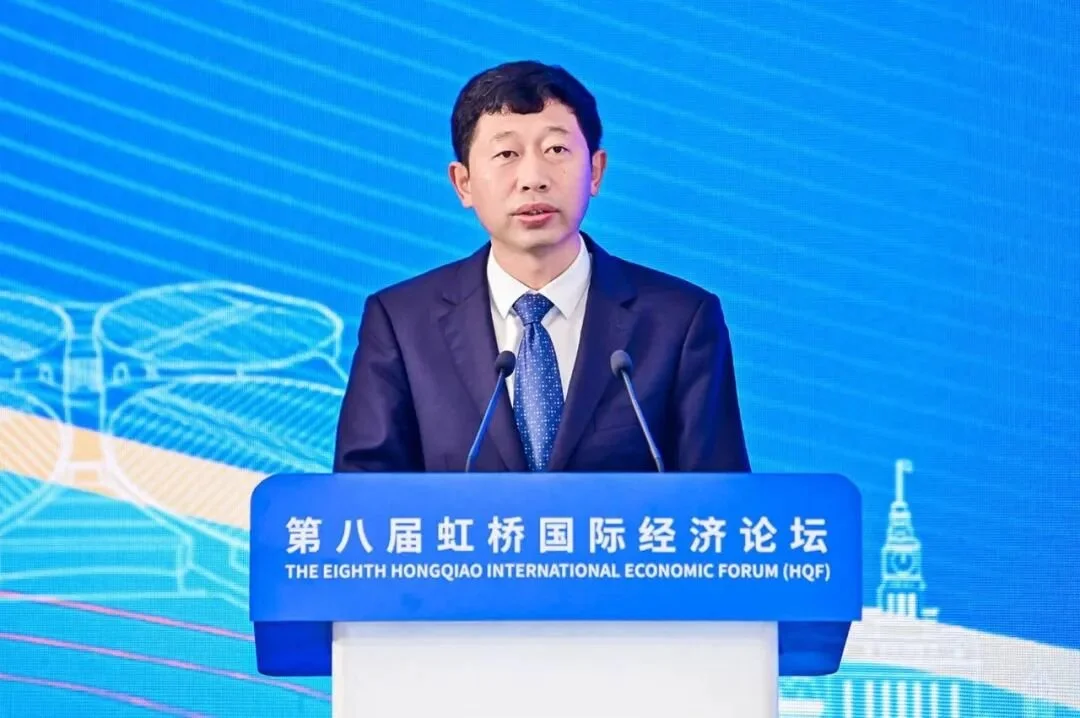
Mr. Bian Guangqi, Deputy Director-General of NEA’s Department of Energy Conservation and Science & Technology Equipment, delivered a keynote titled “Vigorously Developing New Energy Storage to Support New Power Systems.”
He highlighted that NEA continues to advance innovation and comprehensive policy measures, creating favorable conditions for technology progress, industrial growth, and improved commercial models in the new energy storage sector.
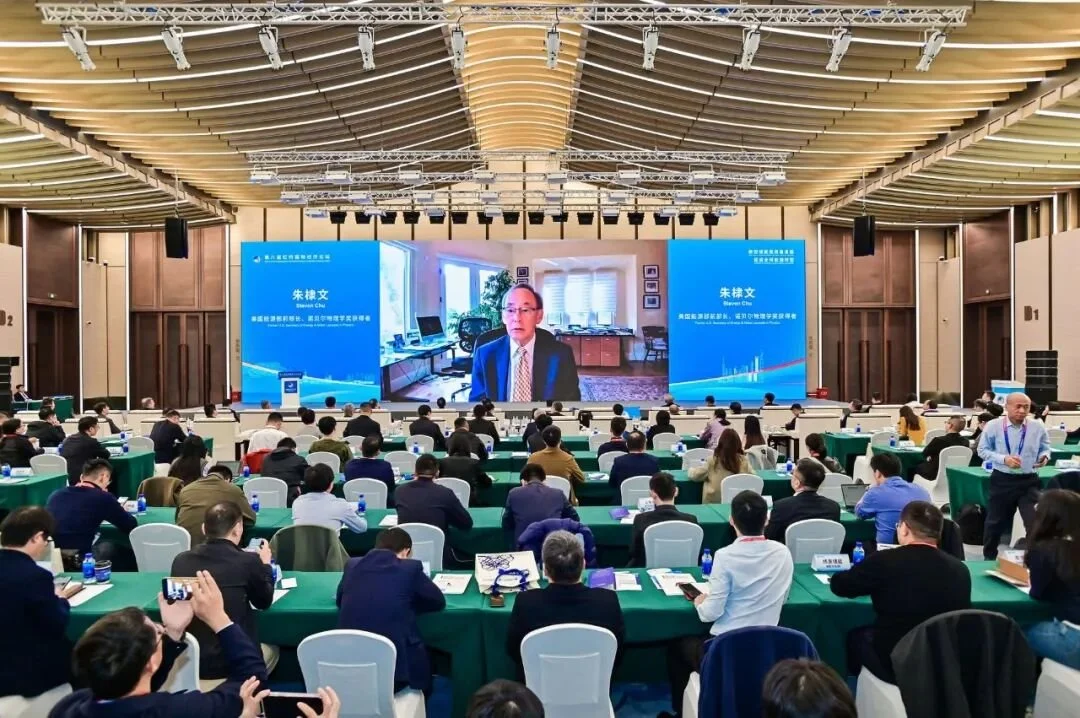
Dr. Steven Chu, Nobel Laureate and former U.S. Secretary of Energy, stressed via video that the world faces an urgent decarbonization challenge. While renewable energy costs have fallen sharply, he noted that achieving deep decarbonization requires multiple complementary technologies.
He praised China’s global leadership in large-scale wind turbines, battery storage, and nuclear cost control, and emphasized that efficient, affordable energy storage, next-generation nuclear, and carbon capture and storage (CCUS) will be crucial to achieving climate goals.
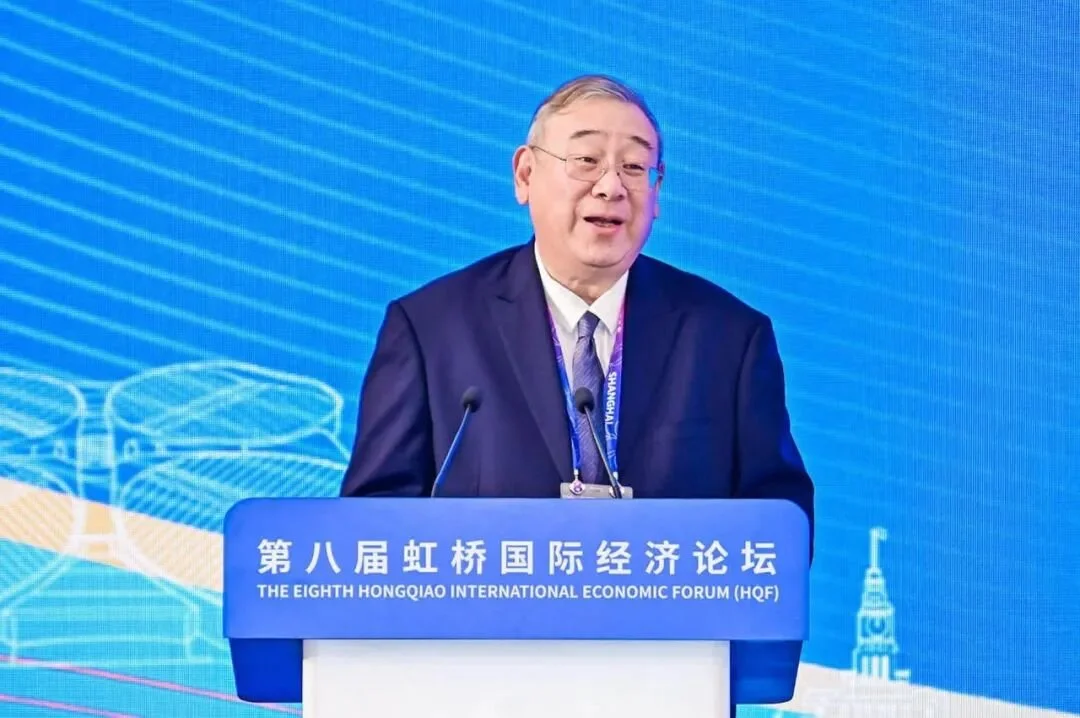
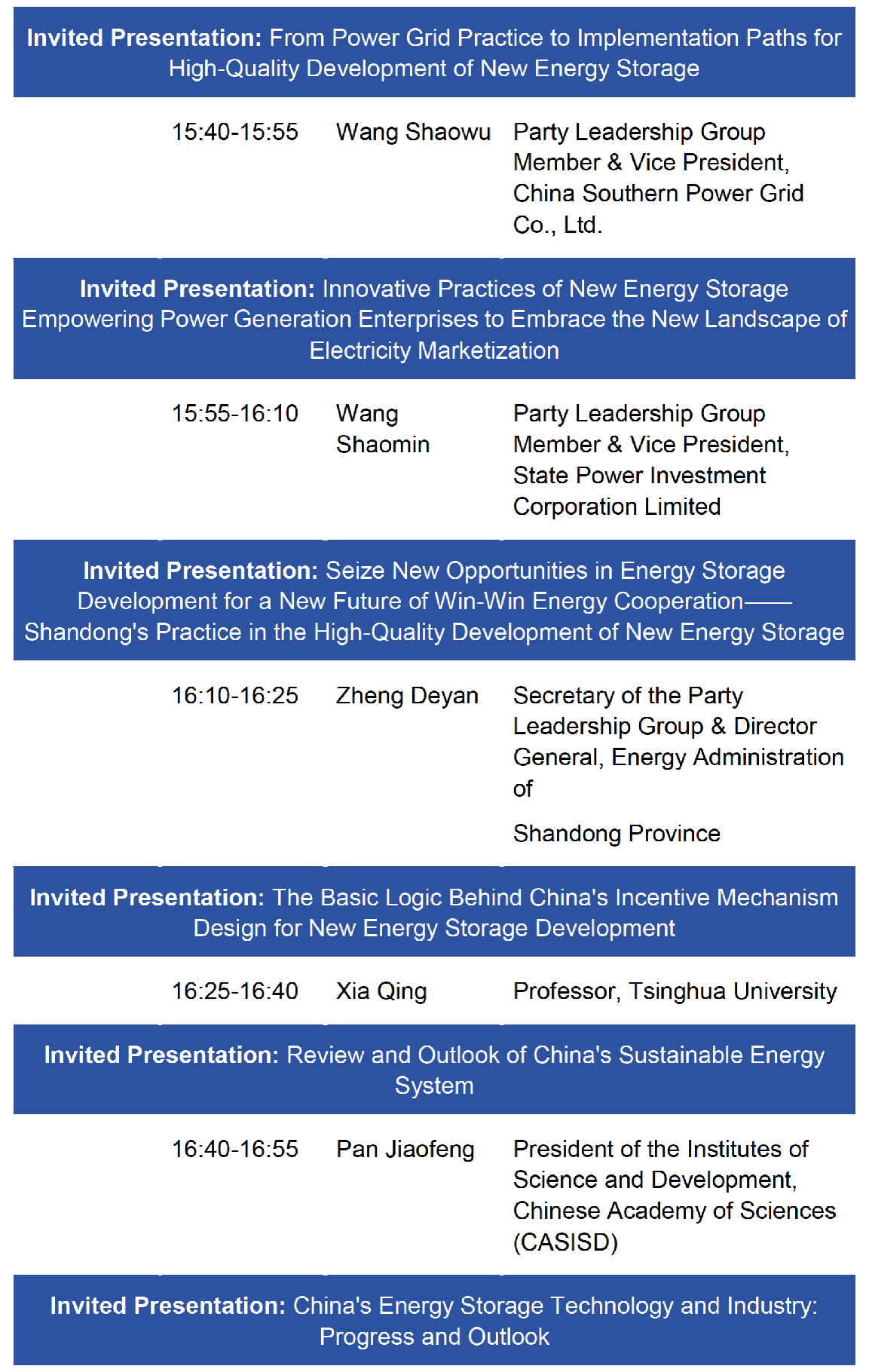
Mr. Meng Qingqiang, Chief Engineer of State Grid, analyzed challenges such as planning mismatches, insufficient market value recognition, and incomplete safety standards. He proposed coordinated planning, diversified market mechanisms, and accelerated innovation to support new power system construction.
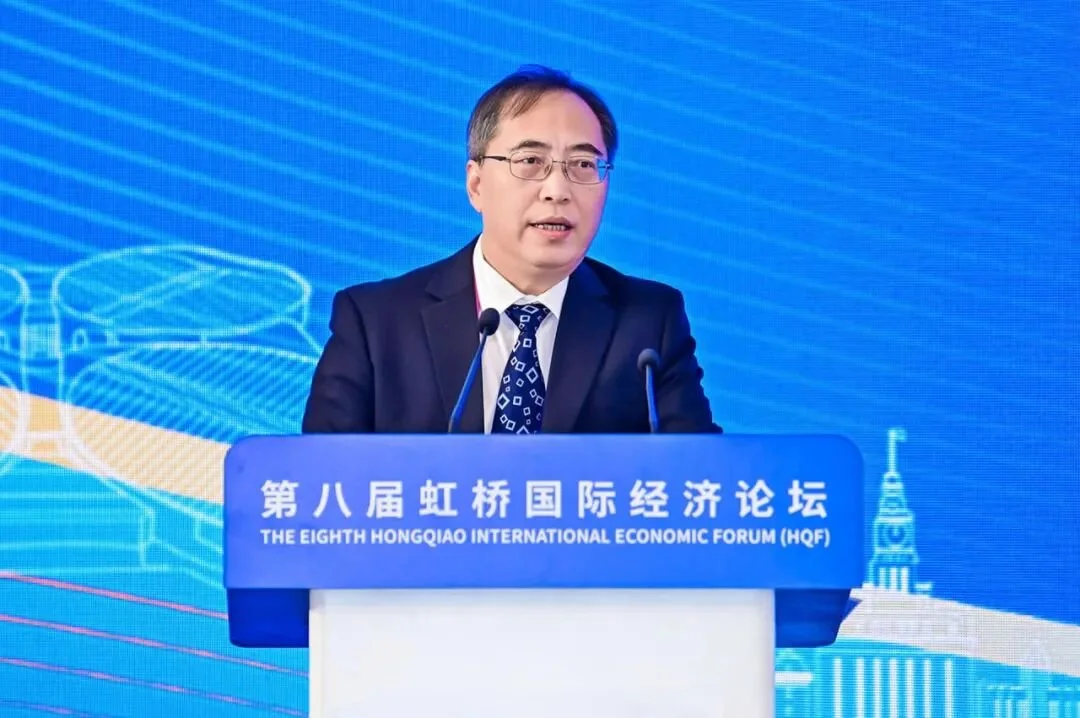
Mr. Wang Shaowu of China Southern Power Grid emphasized that energy storage, as a strategic technology for new power systems, faces both opportunities and challenges in achieving high-quality development. He outlined the company’s strategy to strengthen value creation, system integration, and platform-based innovation.
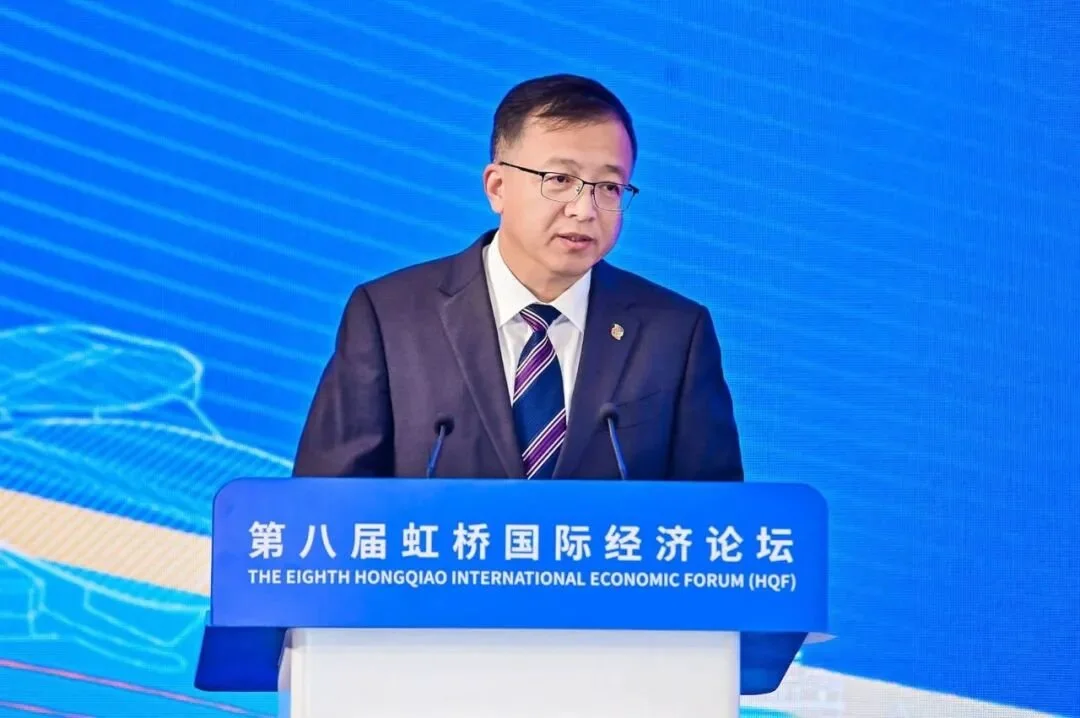
Mr. Wang Shaomin of SPIC reported that China’s cumulative new energy storage capacity reached 114 GW by October 2025, marking a shift from policy-driven to market-driven growth. SPIC now operates 279 projects totaling 8.74 GW (20.94 GWh), ranking first nationwide, and will continue promoting global collaboration and innovation.
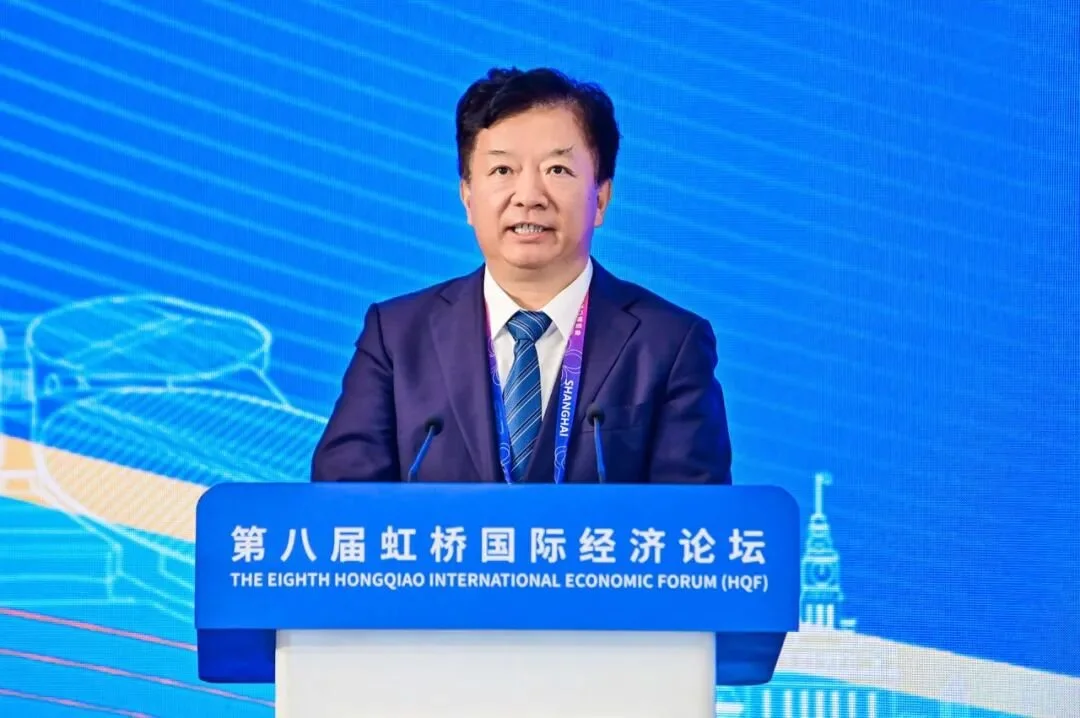
Mr. Zheng Deyan from Shandong Energy Bureau shared Shandong’s leadership in energy storage, noting 9.74 GW of operational capacity, ranking among the top three provinces in China for three consecutive years. The province aims to establish a “predictable, sustainable, and scalable” market mechanism to ensure reasonable returns and reduce investment risk.
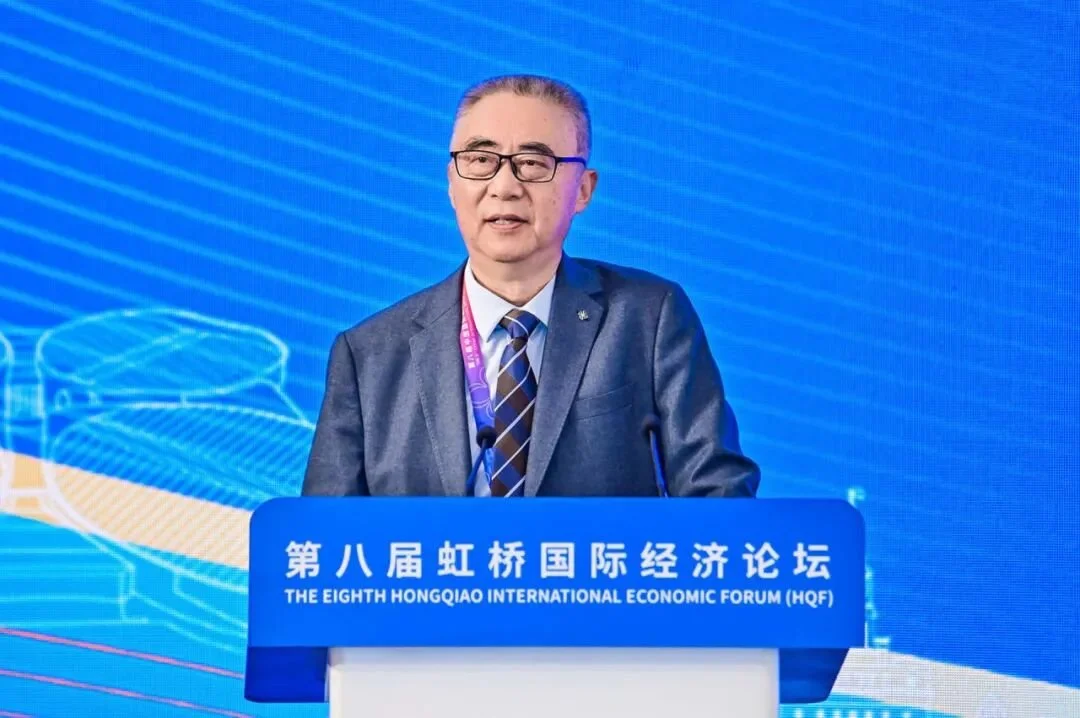
Prof. Xia Qing from Tsinghua University analyzed China’s policy evolution from early mandatory installation to market-based incentives such as capacity compensation and spot trading, enabling rapid capacity growth and cost reductions exceeding 50% since 2022.
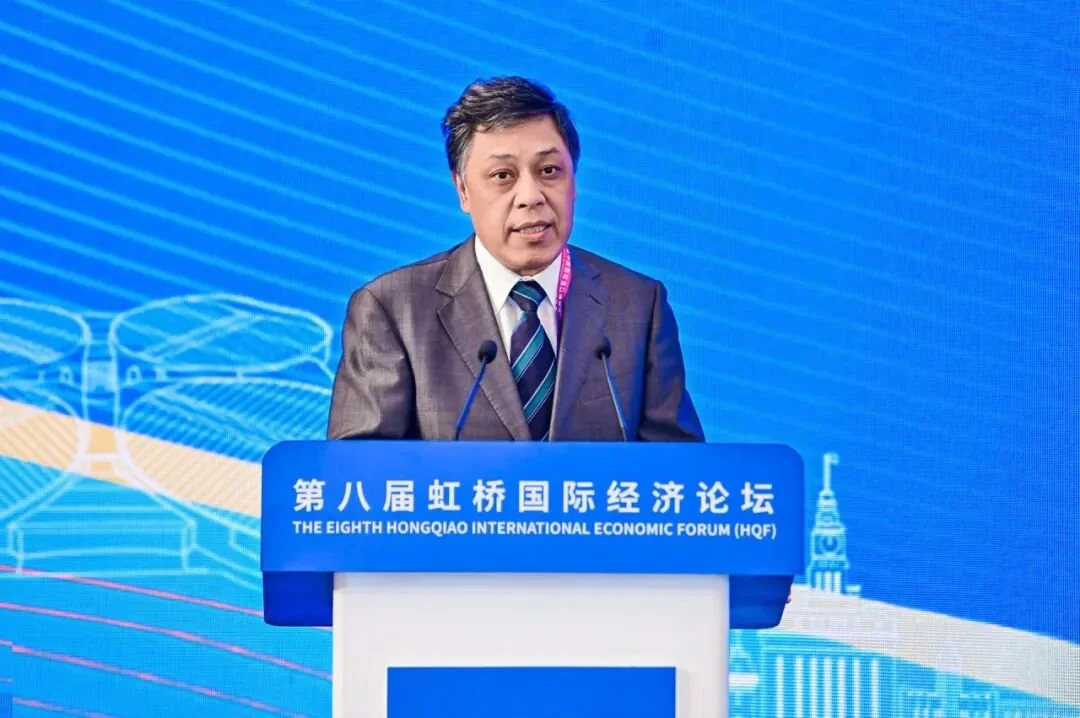
Mr. Pan Jiaofeng, President of CASISD, reviewed China’s progress in wind, solar, EVs, and hydrogen, and called for faster development of a non-fossil energy–dominated, innovation-driven power system to balance energy security and low-carbon transition.
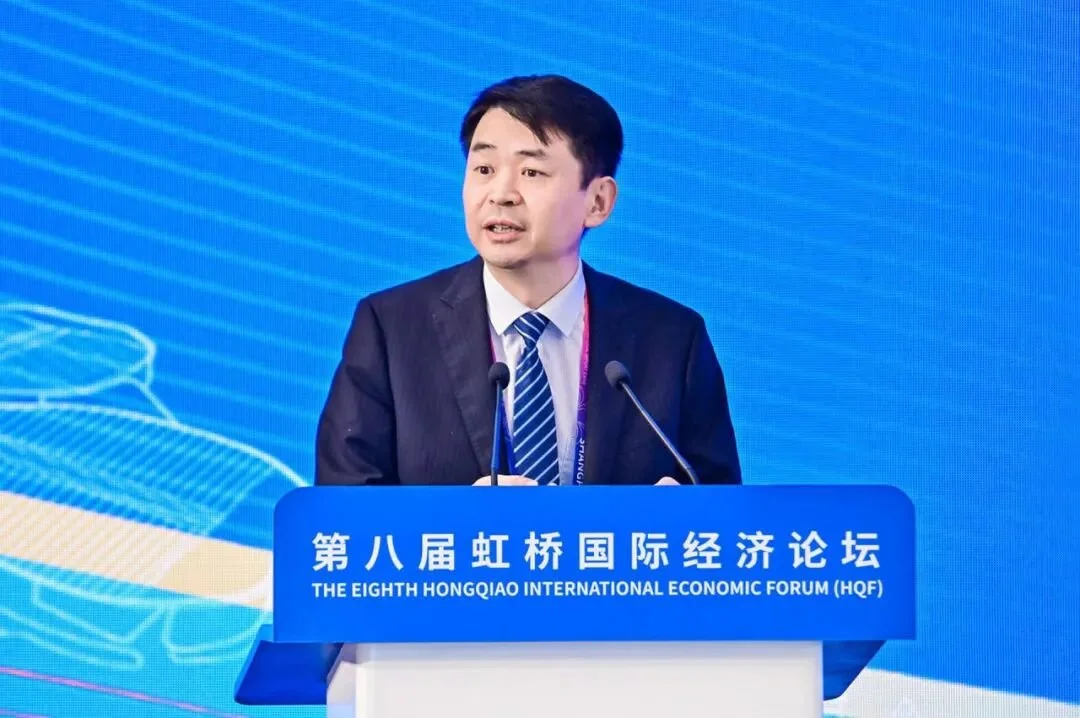
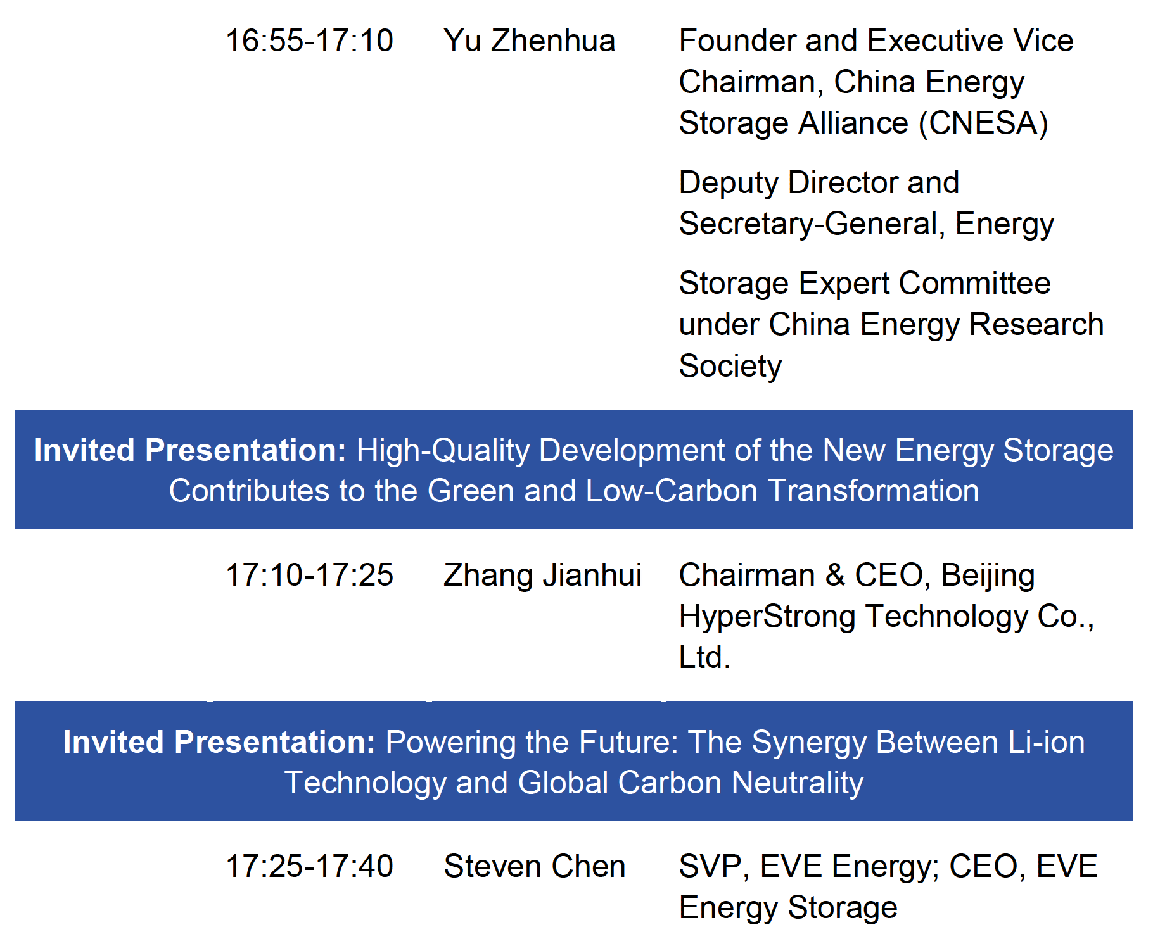
Mr. Yu Zhenhua, Executive Vice Chairman of CNESA, outlined trends in technology and industrial development — from pumped storage to battery-dominated systems — and highlighted growing diversification (e.g., sodium-ion and flow batteries) and enhanced safety standards.
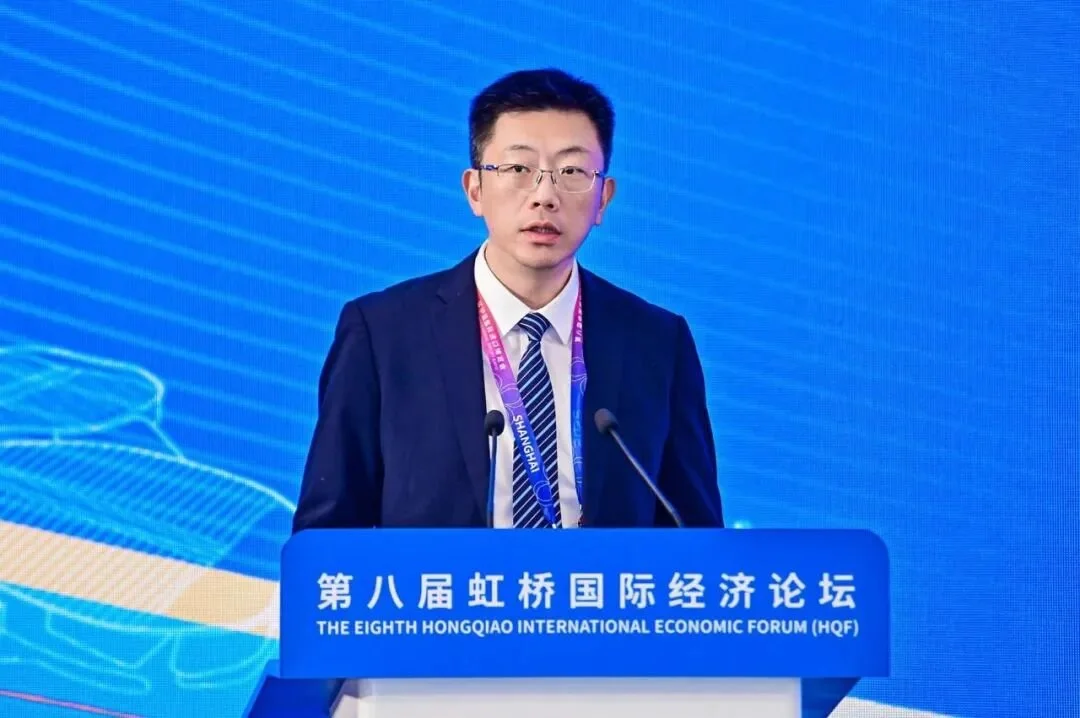
Mr. Chen Xiang, Senior VP of EVE Energy, noted that global markets show significant diversity in development stages and demand structures. He emphasized localization, long-duration storage innovation, and multi-technology approaches (solid-state, sodium-ion, etc.) to support a clean, resilient global energy system.
The Parallel Forum on New Energy Storage at the 8th Hongqiao International Economic Forum served as a vital platform for global dialogue and collaboration.
Participants exchanged insights on technological innovation, market mechanisms, and international cooperation, forming broad consensus on the future of the energy storage industry.
As one of the key achievements of this year’s Hongqiao Forum, the event will inject strong momentum into optimizing the global energy structure and advancing sustainable development and carbon neutrality worldwide.
CENSA Upcoming Events:
1. Dec.4-5 | 2025 China Energy Storage CEO Summit | Xiamen, Fujian
Register Now to attend
Read more: http://en.cnesa.org/new-events-1/2025/12/4/dec4-5-2025-china-energy-storage-ceo-summit

2. Apr. 1-3, 2026 | The 14th Energy Storage International Conference & Expo
Register Now to attend, free before Oct 31, 2025.


Victoria Approves 2,200MWh of Battery Storage through Streamlined Pathway in Australia
Source: Energy Storage News
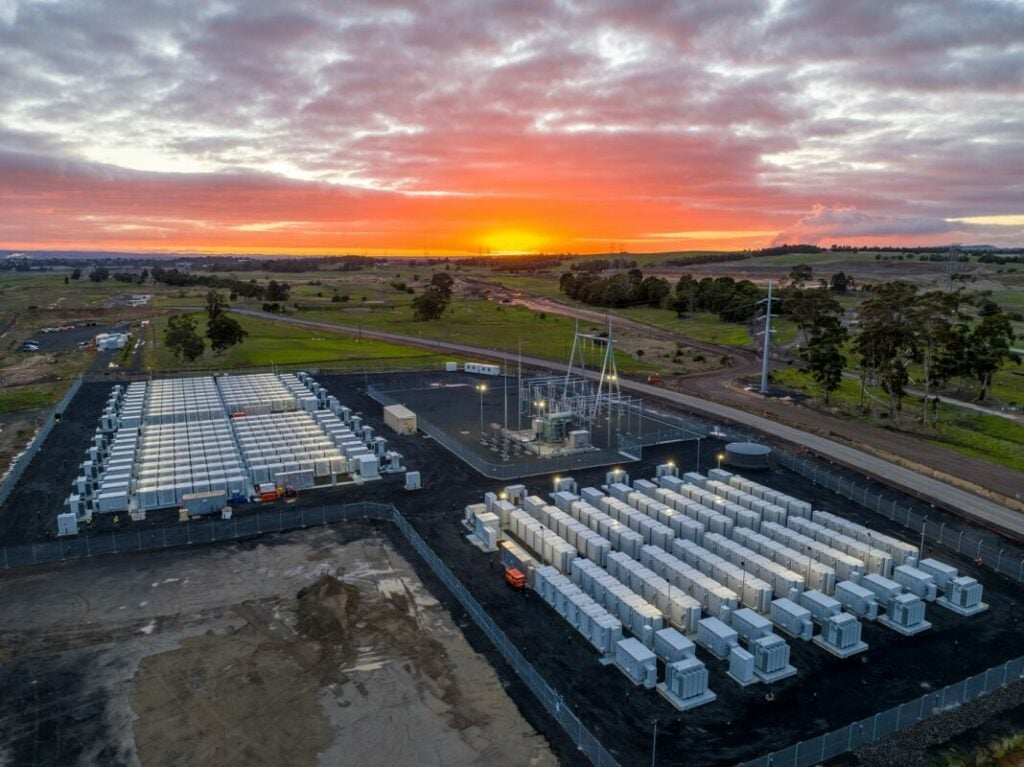
The Tramway Road BESS will be built near Eku Energy’s operational 150MW/150MWh Hazelwood BESS in Victoria (pictured). Image: Eku Energy
The Victoria government in Australia has approved a 300MW/1,200MWh battery energy storage system (BESS) in Gippsland and a 332MW solar PV power plant with integrated storage in the state’s northeast region, via the Development Facilitation Program.
Victoria’s planning minister, Sonya Kilkenny, announced the approvals for Eku Energy’s Tramway Road standalone BESS and the Meadow Creek Solar Farm, which combines a 332MW solar PV plant with a 250MW/1,000MWh battery system.
The projects represent approximately AU$1.2 billion (US$780 million) in combined investment and will create over 650 construction jobs across both developments.
Eku Energy’s 1,200MWh Tramway Road BESS
The Tramway Road BESS will deliver a 4-hour duration storage capacity of 300MW, positioning the facility to provide grid stability services and energy arbitrage opportunities across Victoria’s transmission network.
Located in Hazelwood North, the project will be constructed adjacent to existing transmission infrastructure where developer Eku Energy already operates the 150MW/150MWh Hazelwood BESS at the former Hazelwood Power Station coal-fired power plant.
Eku Energy has numerous projects under development in Australia, while also maintaining a presence in several other international markets. The company, which is jointly owned by Macquarie Asset Management and British Columbia Investment Management Corporation, aims to achieve 9GWh of storage capacity by 2028 and has recently expanded into the New Zealand market.
The Tramway Road facility will connect directly to the transmission network, enabling participation in the National Electricity Market (NEM) ancillary services while supporting the integration of renewable energy across southeastern Australia.
The 1,000MWh Meadow Creek solar-plus-storage site
Meanwhile, the Meadow Creek Solar Farm, located 27km southeast of Wangaratta, is being pursued by energy storage developer and system integrator Energy Vault.
Alongside the solar PV power plant, the project proposal includes a co-located 250MW/1,000MW battery system that would provide additional grid stability services during peak demand periods.
The hybrid project will span 400 hectares of agricultural land and incorporate agrivoltaics principles, allowing continued farming operations beneath and around the solar installation.
The Meadow Creek development was first announced in 2022’s edition of All-Energy Australia, where the developer described the BESS as a 250MW/500MWh system.
The Victoria government’s Development Facilitation Program initiative, which was expanded last year to include renewable energy projects, aims to speed up the development of critical infrastructure projects in Victoria.
Before its inclusion, projects had to pass through the Victorian Civil and Administrative Tribunal, which resulted in around 20% of these projects being delayed by approximately two years.
The Victoria government noted that more than AU$7.8 billion worth of investment across 22 projects has been included in the Development Facilitation Program since it was expanded to include renewables.
Victoria’s energy and resources minister, Lily D’Ambrosio, emphasised the projects’ role in delivering lower energy costs to Victorian households while creating employment opportunities in regional communities.
“Our fast-tracked pathway has unlocked nearly AU$8 billion worth of investment into renewable energy projects – helping provide cheaper and cleaner energy to hundreds of thousands of Victorian households,” D’Ambrosio said.
Other notable BESS projects to have advanced through the initiative in recent months include Chinese PV module manufacturer Trina Solar’s 500MW/1,000MWh Kiewa Valley BESS, which is being developed in the Murray-Darling basin, to the east of Melbourne, the state capital.
Developer ACEnergy also saw its 350MW/770MWh Little River BESS included within the scheme earlier this year.
(By George Heynes)
CENSA Upcoming Events:
1. Dec.4-5 | 2025 China Energy Storage CEO Summit | Xiamen, Fujian
Register Now to attend
Read more: http://en.cnesa.org/new-events-1/2025/12/4/dec4-5-2025-china-energy-storage-ceo-summit

2. Apr. 1-3, 2026 | The 14th Energy Storage International Conference & Expo
Register Now to attend, free before Oct 31, 2025.


France Introduces Grid Tariff Reforms for Energy Storage
Source: Energy Storage News
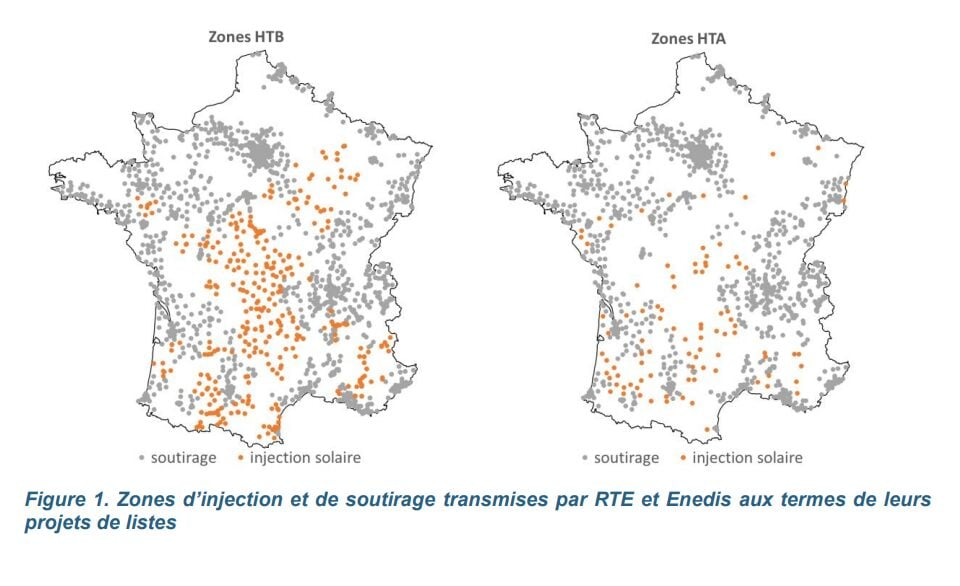
A map of zones in France that are part of the upcoming reform to grid fees. Image: CRE.
From August 2026, battery storage projects in France will benefit from changes to grid tariffs designed to encourage them to support the grid at specific times of the day.
The country’s energy regulator the Commission de Regulation de l’Energie (CRE) approved its TURPE 7 reforms last month.
From August 2026, battery storage assets can choose a new ‘injection–withdrawal’ tariff that rewards them for supporting the grid at times of need. Around 3,000 grid zones have been designated as either ‘withdrawal’ (soutirage) or ‘injection’ (injection solaire) zones.
In withdrawal zones, batteries will be paid to discharge during winter peaks (between 8-12am and 5-9pm) and in injection zones they will be rewarded to charge at midday during summer, said Alexandre Cleret, COO of French transport depot decarbonisation solution provider Decade Energy on LinkedIn.
(By Cameron Murray)
CENSA Upcoming Events:
1. Dec.4-5 | 2025 China Energy Storage CEO Summit | Xiamen, Fujian
Register Now to attend
Read more: http://en.cnesa.org/new-events-1/2025/12/4/dec4-5-2025-china-energy-storage-ceo-summit

2. Apr. 1-3, 2026 | The 14th Energy Storage International Conference & Expo
Register Now to attend, free before Oct 31, 2025.


RWE Starts Building Germany’s Largest BESS
Source: Energy Storage News
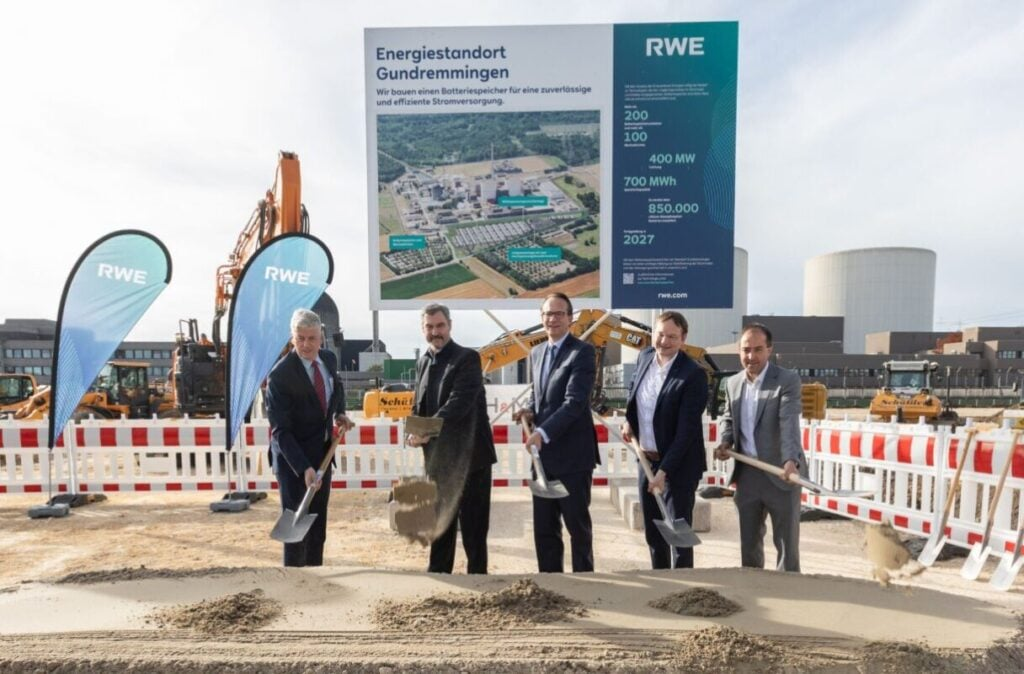
RWE and stakeholders groundbreaking on its Gundremmingen BESS project, the largest in Germany. Image: RWE.
Power firm RWE has launched construction on a 400MW/700MWh BESS project in Bavaria, Germany, the largest being built in the country.
The Germany-headquartered firm announced the start of construction on the project yesterday (29 October), in a ceremony attended by Bavarian Minister-President Dr Markus Söder (pictured above, second from left).
The 1.75-hour duration battery energy storage system (BESS) project is being built alongside the Gundremmingen nuclear power plant, which is undergoing decommissioning, and will use the plant’s existing grid connection.
RWE is investing around €230 million (US$267 million) in the BESS, which will comprise 200 container units and 100 inverters, and is expected online in 2028. It will take the title of largest BESS online from Eco Stor’s 103.5MW/238MWh Bollingstedt, commissioned earlier this year, as well as Eco Stor’s pipeline of 300MW/600MWh projects.
Söder commented: “Gundremmingen remains a key location in the Bavarian energy supply. In addition to the new battery storage facility, a 55-hectare solar park and a gas-fired power station are also set to be built. With an output of 400 MWand a capacity of over 700MWh, the battery storage facility will stabilise the grid when there is no wind or sunlight.”
Germany has emerged in the past few years as one of Europe’s most attractive markets for large-scale BESS investment, with large opportunities in its wholesale energy market (Europe’s deepest) and helpful regulatory changes including an exemption from charge-discharge grid fees for BESS projects put into operation by 2029.
Those opportunities are set to grow as the country deploys more wind and solar, and solar trade body BSW-Solar recently called for 100GWh of BESS deployments by 2030.
We recently caught up with German BESS platform Terra One to discuss the market drivers, regulatory challenges and the trade-offs when opting for a merchant or toll-based strategy in the country.
(By Cameron Murray)
CENSA Upcoming Events:
1. Dec.4-5 | 2025 China Energy Storage CEO Summit | Xiamen, Fujian
Register Now to attend
Read more: http://en.cnesa.org/new-events-1/2025/12/4/dec4-5-2025-china-energy-storage-ceo-summit

2. Apr. 1-3, 2026 | The 14th Energy Storage International Conference & Expo
Register Now to attend, free before Oct 31, 2025.


CNNC, HyperStrong, Trina Storage, and PotisEdge Lead the Charge! China’s Energy Storage Firms Secure GWh-Scale Overseas Contracts
Source: CNESA
In recent weeks, Chinese energy storage companies have made remarkable progress in global markets, winning a series of large-scale overseas contracts across diverse application scenarios including solar-plus-storage, grid-side, user-side, and data center projects, showcasing the strong international competitiveness of China’s energy storage technology.
CNNC Signed 1.2 GWh Solar-Storage Project in Indonesia
On October 28, international media reported that Singapore-based renewable energy company Equator Renewables Asia (ERA) signed an agreement with CNNC’s subsidiary CNNP Rich Energy (International) to jointly develop a 900 MWp solar and 1.2 GWh battery storage project in Indonesia’s Riau Islands. The project aims to supply green electricity to Singapore.
HyperStrong Expanded Projects in the EMEA Region
HyperStrong has achieved major breakthroughs in the Europe, Middle East, and Africa (EMEA) storage markets, securing projects in Greece, Estonia, Lithuania, Côte d'Ivoire, and Zimbabwe.
In Greece, the company signed a 45 MWh grid-side standalone energy storage plant, marking its first large-scale project in Southern Europe. In Estonia and Lithuania, it deployed 7 MWh, 20 MWh, and 5 MWh grid-side systems. In Côte d'Ivoire, it completed three factory energy storage projects using HyperBlock III 5 MWh systems. In Zimbabwe, HyperStrong advanced user-side cooperation, deploying 15 HyperCube C&I storage systems in the first phase.
Trina Storage Secured 1 GWh Sales Contract in Europe
On October 31, Trina Solar Co., Ltd. announced that its subsidiary Jiangsu Trina Storage Co., Ltd. signed a 1 GWh+ energy storage product sales contract with a European customer. The project will use the company’s next-generation Elementa 2 Pro flexible battery container.
Trina Storage won 233 MW / 1003 MWh Grid-Forming Storage Project in
Chile
Trina Storage also won GWh-scale order overseas again. Partnering with Atlas Renewable Energy, it will co-develop a 233 MW / 1003 MWh grid-forming energy storage project in Chile. Backed by Atlas’s recent US$475 million financing, the project will form part of a large-scale solar-plus-storage complex.
Narada Power Won RMB 478 Million Contract in U.S. AIDC Project
Narada Power announced it has won a RMB 478 million lithium equipment procurement contract for a large-scale AIDC (Artificial Intelligence Data Center) complex in Texas, USA. With a total investment exceeding US$25 billion, the project will host 10 data centers with a combined power capacity of 1.4 GW.
BYD Signed 300 MWh Storage Deal in Mexico
BYD Energy Storage and Mexico’s Skysense Energy will deploy 300 MWh of storage capacity by 2026, primarily using BYD’s MC Cube-T BESS. The systems will support commercial, industrial, and utility-scale applications, offering frequency regulation, virtual power plant, and backup functions.
Robestec Won 40 MWh Storage Project in Guinea
On October 24, Shanghai Robestec Energy Co, Ltd. announced its bid win for the 40 MWh Boké Port 2 Storage Project of SMB-Winning Consortium in Guinea, part of the Winning Alliance. The project will adopt the Enprime-Y liquid-cooled container system and microgrid technology to enhance port energy efficiency and reliability, supporting green low-carbon operations.
PotisEdge Reached Strategic Cooperation with A Well-known Australian
Energy Enterprise
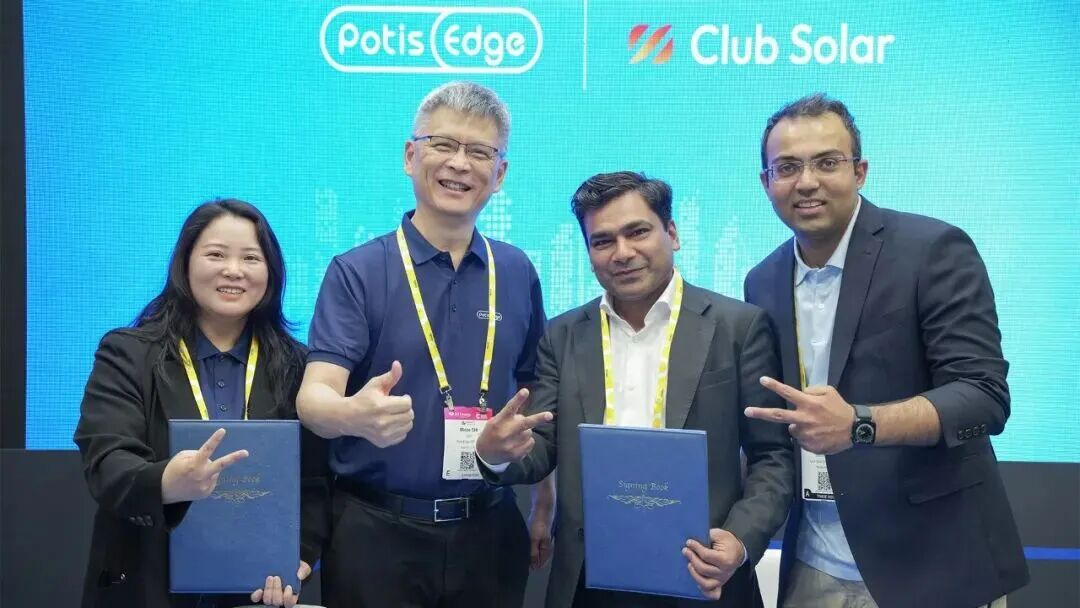
PotisEdge Energy and Australia’s leading energy company Club Solar signed a strategic cooperation agreement to deploy and promote 2 GWh of residential storage systems in the Australian market.
ZOE Energy Storage Signed A 400 MWh Order and Launched A Factory in
Hungary
ZOE Energy Storage announced a 400 MWh storage order from European partners and launched its new “Europe 2.0 Channel Business Model.” The company also unveiled its next-generation Z BOX-C PLUS C&I system and broke ground on a 6 GWh storage factory in Hungary, scheduled for completion in 2026 to enhance local production capacity.
Fox ESS Signed Strategic Cooperation with Australian Distributors
Fox ESS signed strategic cooperation agreements with top Australian renewable distributors OSW and Solar Juice, totaling 4 GWh:
2 GWh with OSW focuses on advanced system deployment.
2 GWh with Solar Juice centers on residential storage systems.
Qinkual Energy Won North American AIDC Project Order
Qinkual Energy received its first batch of over RMB 30 million orders for a North American AIDC energy storage project, with total demand expected to exceed 100 MWh by 2026. The company has recently secured multiple overseas data center storage projects, including 12 MWh in the Middle East and 10 MWh in Southeast Asia, bringing its total capacity of monthly orders above 80 MWh.
CENSA Upcoming Events:
1. Dec.4-5 | 2025 China Energy Storage CEO Summit | Xiamen, Fujian
Register Now to attend
Read more: http://en.cnesa.org/new-events-1/2025/12/4/dec4-5-2025-china-energy-storage-ceo-summit

2. Apr. 1-3, 2026 | The 14th Energy Storage International Conference & Expo
Register Now to attend, free before Oct 31, 2025.


China’s Newly Installed Renewable Energy Capacity Up 47.7% Year-on-Year in First Three Quarters
Source: Xinhua News Agency
According to China’s National Energy Administration (NEA), in the first three quarters of 2025, China added 310 GW of newly installed renewable energy capacity, representing a year-on-year increase of 47.7% and accounting for 84.4% of the nation’s total new power installations. Specifically, new hydropower capacity reached 7.16 GW, wind power 61.09 GW, solar power (including solar thermal) 240 GW, and biomass power 1.05 GW.
At a regular press conference held by the NEA on the same day, Zhang Xing, Deputy Director-General of the NEA’s General Affairs Department, stated that in the first three quarters of 2025, the NEA remained focused on China’s carbon peaking and carbon neutrality goals, fully implemented the new energy security strategy, and made all-out efforts to advance larger-scale and higher-quality renewable energy development.
On one hand, the installed capacity of renewable energy continued to expand, driving the optimization of China’s energy structure. As of the end of September 2025, China’s total installed renewable energy capacity approached 2,200 GW, up 27.2% year-on-year, accounting for 59.1% of the nation’s total power generation capacity. The combined installed capacity of wind and solar power exceeded 1,700 GW.
On the other hand, renewable power generation maintained steady growth, providing strong support for the country’s overall electricity supply. The latest data show that in the first three quarters of 2025, China’s renewable power generation reached 2.89 million GWh, up 15.5% year-on-year, accounting for around 40% of total power generation and roughly 60% of total industrial power consumption during the same period.
At the press conference, Xing Yiteng, Deputy Director-General of the NEA’s Development and Planning Department, noted that since the beginning of this year, funding and resource guarantees for key energy projects have been continuously strengthened, with accelerated formation of tangible project progress. As a result, national energy investment has maintained rapid growth - with 1.97 trillion yuan invested in key energy projects during the first eight months, marking an 18.2% year-on-year increase.
(Reported by Wang Xi and Dai Xiaohe)
CENSA Upcoming Events:
1. Dec.4-5 | 2025 China Energy Storage CEO Summit | Xiamen, Fujian
Register Now to attend
Read more: http://en.cnesa.org/new-events-1/2025/12/4/dec4-5-2025-china-energy-storage-ceo-summit

2. Apr. 1-3, 2026 | The 14th Energy Storage International Conference & Expo
Register Now to attend, free before Oct 31, 2025.

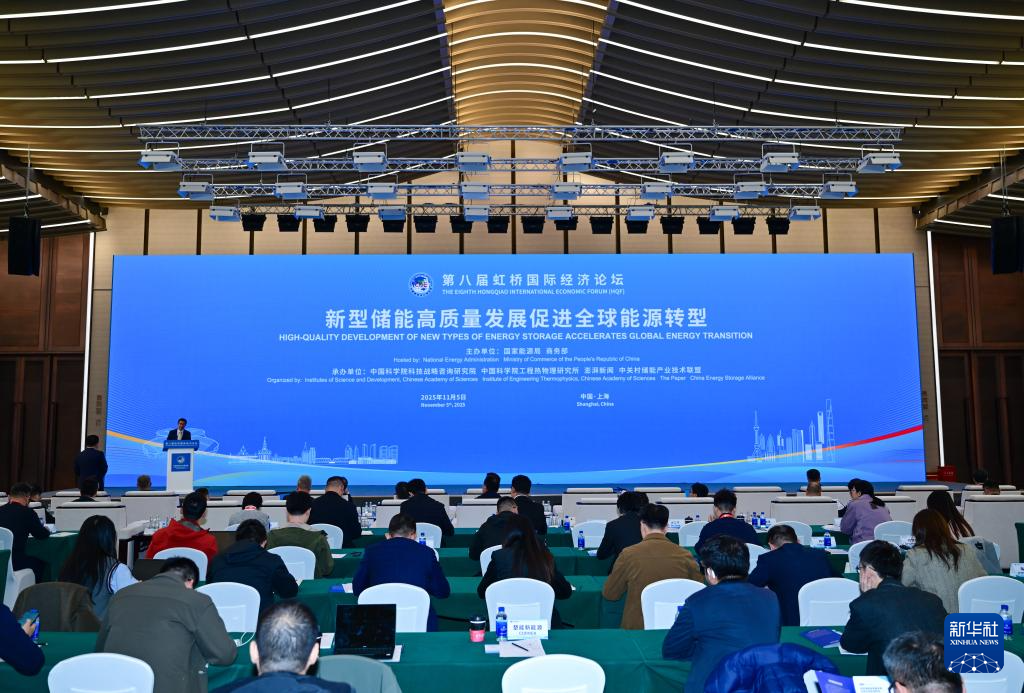
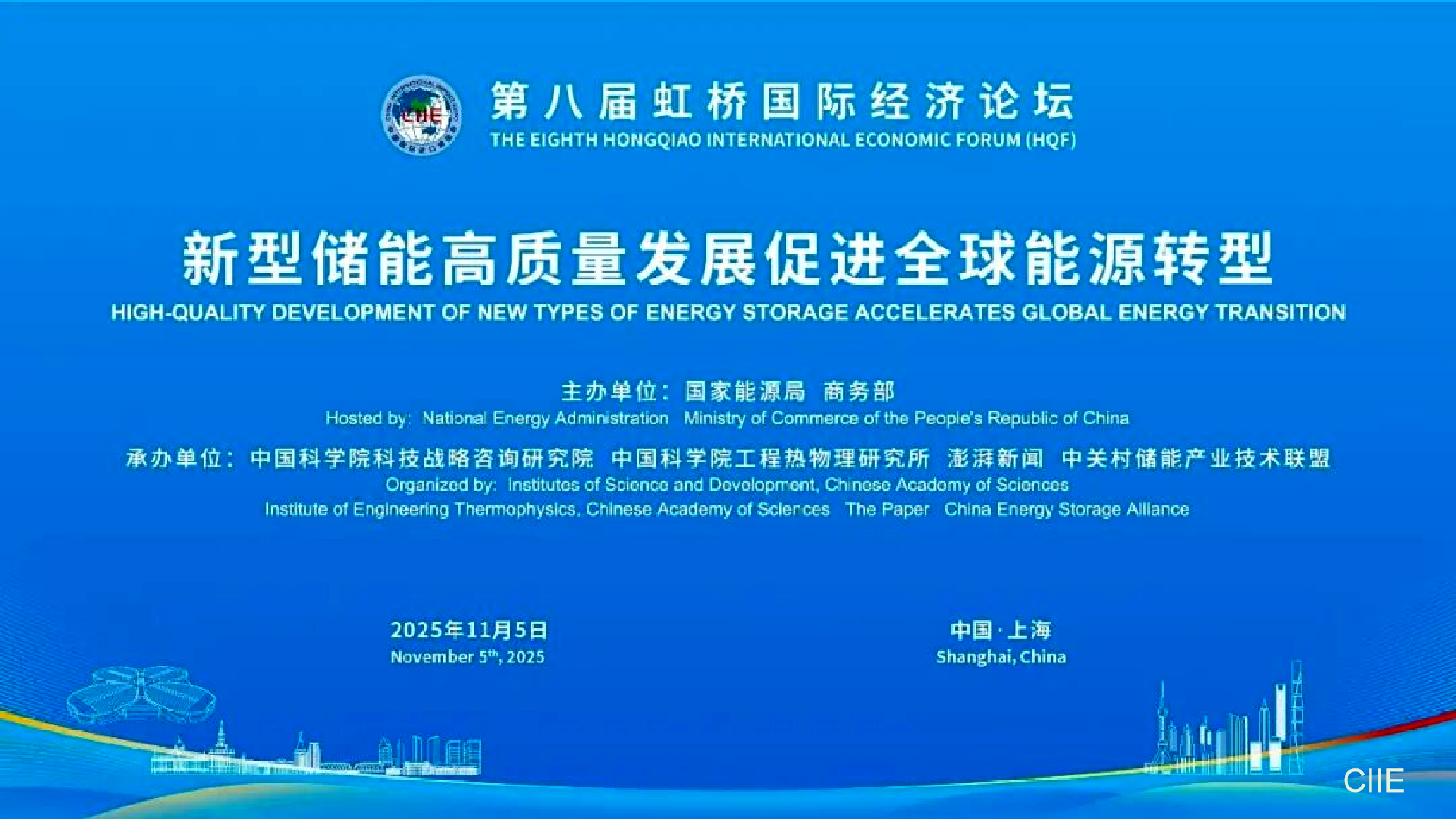
The 8th Hongqiao International Economic Forum - “High-quality Development of New Types of Energy Storage Accelerates Global Energy Transition”
Source: CNESA
Date: November 5, 2025, 14:30-17:30
Venue: Room D1, Hall 4.2, National Exhibition and Convention Center
(Shanghai)
Hosts: National Energy Administration
Ministry of Commerce of the People's Republic of China
Organizers: Institutes of Science and Development, Chinese Academy of
Sciences
Institute of Engineering Thermophysics, Chinese Academy of
Sciences
The Paper
China Energy Storage Alliance
Introduction:
The parallel session on "High-quality Development of New Types of Energy Storage Accelerates Global Energy Transition" will bring together distinguished representatives from government, industry, academia, research institutions, and finance to build a global high-end energy storage ecosystem. Participants will explore major topics such as technological breakthroughs, innovative business models, policy incentive mechanisms, and domestic and international industrial cooperation, sharing experience and contributing collective wisdom to the world.
Program:
Honored Guests:
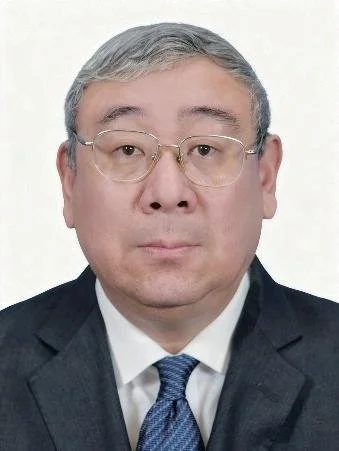
Meng Qingqiang
Chief Engineer, State Grid Corporation of China
Chief Engineer of State Grid Corporation of China, Chairman and Party Committee Secretary of SG Electric Power Research Institute. Born in July 1966 in Tianjin, of Han ethnicity, he holds a bachelor's degree and is a professor-level senior engineer. As a member of the Communist Party of China, he began working in July 1987. His previous roles include General Manager of Tianjin Binhai Company, Deputy General Manager and Party Committee Member of Tianjin Electric Power Company, Deputy General Manager and Party Committee Member of Jiangsu Electric Power Company, General Manager and Deputy Party Committee Secretary of Chongqing Electric Power Company, Director of the SG AC Construction Department, and Chairman and Party Committee Secretary of State Grid Hunan Electric Power Company. He previously served as Chief Engineer of State Grid Corporation of China and assumed his current position in March 2023.
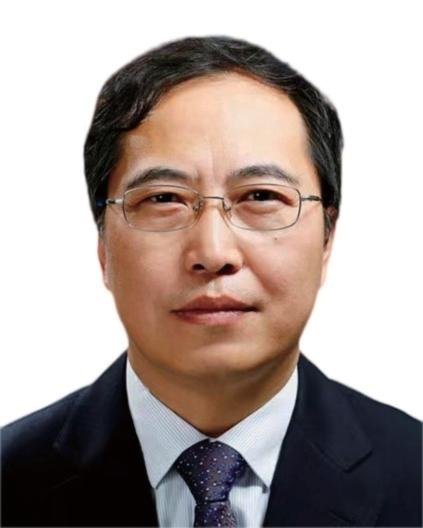
Wang Shaowu
Party Leadership Group Member & Vice President, China Southern Power Grid Co., Ltd.
Dr. WANG Shaowu, Vice President of China Southern Power Grid Co., Ltd., has long been engaged in research on high-voltage insulation, advanced UHV/EHV transmission, localization and development of power equipment, and management of innovative large-scale complex engineering systems. He is well-versed in the design, construction and operation of large power grids and has made systematic contributions to China's international leading position in UHVAC, UHVDC, and VSC-DC transmission technologies.
He has received National Award for Science and Technology Progress (Special Prize), China Electric Power Science and Technology Award (First Prize), and China Machinery Industry Science and Technology Progress Award (Special Prize), among others.
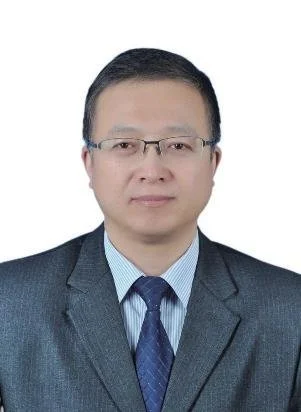
Wang Shaomin
Party Leadership Group Member & Vice President, State Power Investment Corporation Limited
Wang Shaomin, male, born in 1972, holds a master's degree with a Master of Engineering. He is a senior engineer (professorial level).
His previous roles include President of China Huaneng Group's Clean Energy Technology Research Institute, General Manager of Huaneng Fujian Branch, Party Committee Secretary and General Manager of Huaneng Xiong'an Branch, Executive Director and Party Committee Secretary of Huaneng Xiong'an Branch, Executive Director and General Manager of Huaneng (Xiong'an) Urban Integrated Energy Services Co., Ltd., and Executive Director and Party Committee Secretary of Huaneng Hebei Branch. He has long been engaged in management work in the power and energy sector. In December 2024, he was appointed as Vice President and Party Leadership Group Member of the State Power Investment Corporation Limited.
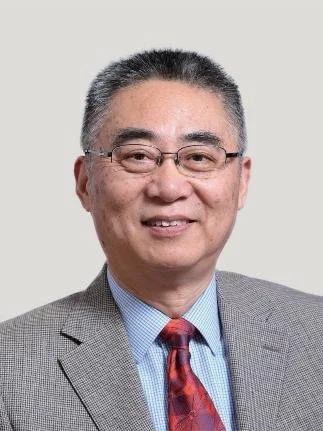
Xia Qing
Professor, Tsinghua University
Qing Xia received the B.E. and M.E. degree from Harbin Institute of Technology, in 1982 and 1986, respectively, and Ph.D. degree from Tsinghua University, in 1989, all in electrical engineering. He is now a Professor and Chair of the Academic Degree Committee in the Department of Electrical Engineering at Tsinghua University.
He has extensive academic and industrial experiences in electricity market and power system economic operations. His research team has designed and implemented load forecasting, generation scheduling, security assessment and market trading software for over ten provincial power grid companies in China. He has also been directing electricity market mechanism design and implementation towards China's electricity deregulation. Moreover, he has served as a consulting expert for both the State Grid Corporation and China Southern Power Grid Corporation for many years.
His research interests include power economics and electricity market, power system load forecasting, power system economic operation, generation & transmission expansion planning, optimization application in power systems, low-carbon electricity smart grid, etc.
He is a senior member of IEEE and a senior member of CSEE (Chinese Society for Electrical Engineering). He was awarded the title of national excellent science and technology workers.
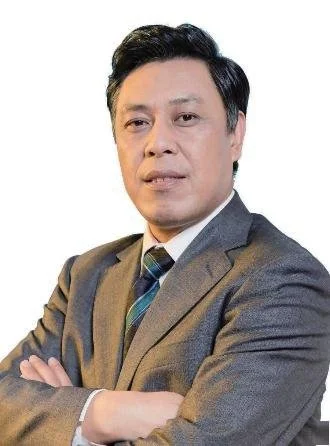
Pan Jiaofeng
President of the Institutes of Science and Development, Chinese Academy of Sciences (CASISD)
Pan Jiaofeng, Professor, Doctoral Supervisor. He is a deputy to the 14th National People's Congress. He is currently President of the Institutes of Science and Development, Chinese Academy of Sciences (CASISD), Dean of the School of Public Policy and Management, University of Chinese Academy of Sciences (UCAS), Director of China Innovation Strategy and Policy Research Center funded by Research Office of the State Council and CAS, and Chairman of the Chinese Association of Development Strategy Studies. He is also a member of the governing board of the International Research and Training Center for Science and Technology Strategy (CISTRAT), UNESCO. His research focuses on S&T strategies, innovation policies, and think-tank science and engineering. He has presided over more than 60 national major and key decision-making consultation, policy research and strategic research projects, and has achieved a number of influential results in decision-making consultation and theoretical research. He has innovated think-tank theories and methods, and published series of academic monographs including DIIS Theory and Methodology in Think Tanks, Double Helix Methodology in Think Tanks and Introduction of Think Tank Science and Engineering.
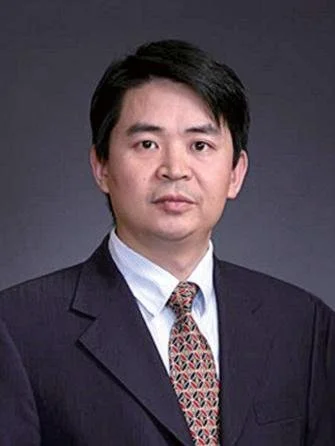
Yu Zhenhua
Founder and Executive Vice Chairman, China Energy Storage Alliance (CNESA)
Deputy Director and Secretary-General, Energy Storage Expert Committee under China Energy Research Society
Yu Zhenhua, Founder and Executive Vice Chairman of China Energy Storage Alliance (CNESA), and Deputy Director and Secretary-General of the Energy Storage Expert Committee under China Energy Research Society. In 2011, Mr. Yu led the establishment of CNESA, China's first and only social organization dedicated to the energy storage field. It is committed to promoting the development of the energy storage industry by influencing the formulation of government policies and the promotion of energy storage applications. In the same period, he founded Beijing ReneSola Century Technology Co., Ltd. and serves as Chairman, focusing on promoting the development and application of energy storage in the power application field and constructing China's first commercial power station project where energy storage participates in power auxiliary services. Leading the alliance team, Yu Zhenhua undertook 3 national key R&D programs. He has won awards including the Third Prize of Excellent Achievements in Energy Soft Science Research by the National Energy Administration in 2016 and the Second Prize of Energy Innovation Award by China Energy Research Society in 2022.
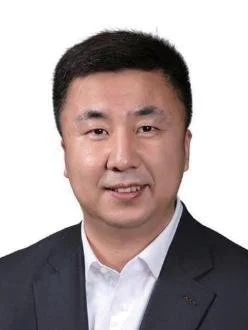
Jianhui Zhang
Chairman & CEO, BEIJING HYPERSTRONG TECHNOLOGY CO., LTD.
Dr. Jianhui Zhang is the founder, chairman, and CEO of Beijing HyperStrong Technology Co., Ltd. He is a professor-level senior engineer and has extensive experience in the product development and technical management of power electronics and large-scale integration. He holds a Ph.D. degree in Electrical Engineering from the University of California, Berkeley, as well as a M.S. degree and a B.S. degree in Electrical Engineering from Tsinghua University.
Dr. Zhang spent 10 years studying and working in the United States, during which he obtained more than 20 technology invention patents and published more than 10 academic papers. Prior to founding HyperStrong, he served as the Chief Technology Officer of the Smart Grid Group of Siemens China Co., Ltd., where he presided over the R&D and technical management of smart grid products.
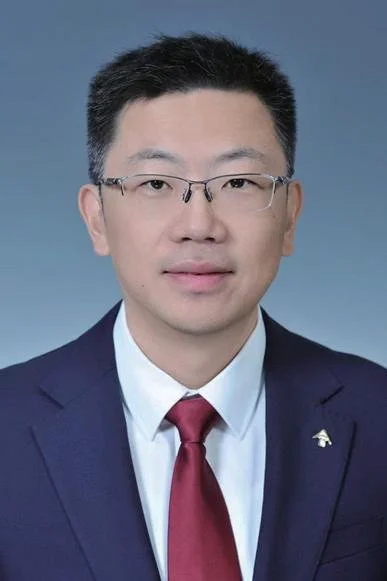
Steven Chen
SVP of EVE Energy, CEO of EVE Energy Storage
Mr. Steven Chen, a master's degree from Huazhong University of Science and Technology, is currently the senior vice president of EVE Energy Co., Ltd. and the president of EVE Energy Storage Co., Ltd.. He has more than 20 years of working experience in the eld of network energy and energy storage. Mr. Steven Chen joined Emerson Network Power Co., Ltd. in 2004 as the Director of Business Development for Asia Pacfic; Since March 2016, he has worked for EVE Energy Co., Ltd. as vice president, and has concurrently served as president of EVE Energy Storage Co., Ltd. since May 2018.
Mr. Steven Chen is good at integrating computer information processing, network energy applications and energy storage systems based on lithium battery technology for system application design.Have a deeper understanding of the development of the energy storage industry, integrate marketing, management and market analysis capabilities, go deep into the front line, and continue to operate the production, marketing and research of the electrochemical energy storage business in corporate operations.
CENSA Upcoming Events:
1. Dec.4-5 | 2025 China Energy Storage CEO Summit | Xiamen, Fujian
Register Now to attend
Read more: http://en.cnesa.org/new-events-1/2025/12/4/dec4-5-2025-china-energy-storage-ceo-summit

2. Apr. 1-3, 2026 | The 14th Energy Storage International Conference & Expo
Register Now to attend, free before Oct 31, 2025.


2GWh Residential Energy Storage Partnership! PotisEdge Makes Major Progress in the Australian Market
Source: PotisEdge
Recently, PotisEdge and Australia’s renowned energy enterprise Club Solar held a signing ceremony to establish a strategic partnership. According to the agreement, the two parties will jointly promote the deployment and application of 2GWh residential energy storage systems in the Australian market.
Through this strategic collaboration, the two sides aim to achieve comprehensive synergy and mutual benefits. Leveraging its strong R&D capabilities and global supply chain resources, PotisEdge will provide internationally competitive residential energy storage solutions, while Club Solar, with its extensive channel network and localized service experience in the Australian market, will build a robust market service system.

Wärtsilä to deliver ‘Australia’s largest DC-coupled hybrid battery system’ for the NEM
Source: Energy Storage News
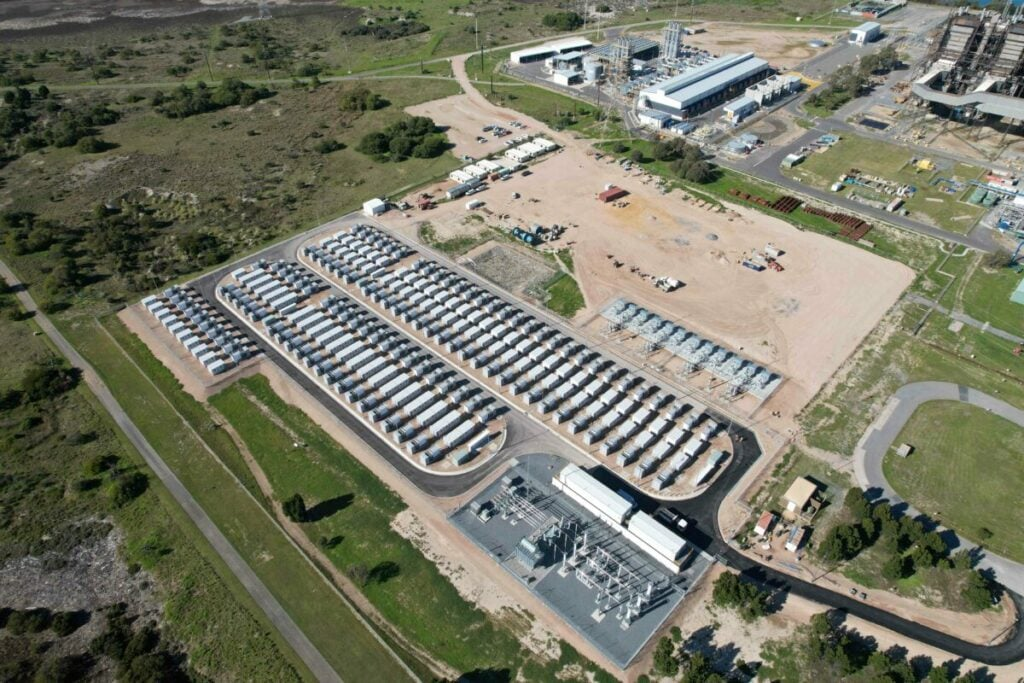
Finnish marine and energy technology group Wärtsilä will deliver what it claims is “Australia’s largest DC-coupled hybrid battery energy storage system (BESS)” for the National Electricity Market (NEM).
The project will be Wärtsilä’s ninth BESS site in Australia, expanding the company’s local footprint to 1.5GW/5.5GWh of capacity. The battery storage system is expected to be operational in 2028. The order will be booked by Wärtsilä in Q4 2025.
The announcement builds on Wärtsilä’s previous DC-coupled project in Australia, the 64MW/128MWh Fulham Solar Battery Hybrid project for Octopus Australia. Announced in April 2025, the project represented one of the first large-scale DC-coupled hybrid battery systems in the NEM.
Wärtsilä has not disclosed what project or developer it will supply the battery storage system for. However, the largest announced DC-coupled hybrid battery storage system in the NEM at the time of writing is Lightsource bp’s 49MW/562MWh Goulburn River solar-plus-storage site, which recently started construction.
CENSA Upcoming Events:
1. Dec.4-5 | 2025 China Energy Storage CEO Summit | Xiamen, Fujian
Register Now to attend
Read more: http://en.cnesa.org/new-events-1/2025/12/4/dec4-5-2025-china-energy-storage-ceo-summit

2. Apr. 1-3, 2026 | The 14th Energy Storage International Conference & Expo
Register Now to attend, free before Oct 31, 2025.


China-UK Hydrogen and Energy Storage Cooperation Forum Successfully Held
Source: CNESA
On October 23, 2025, during the International Forum on Energy Transition, the China-UK Hydrogen and Energy Storage Cooperation Forum was held in Suzhou. The event brought together representatives from energy authorities of both countries, the British Embassy in Beijing, and institutions such as the China Energy Storage Alliance (CNESA) and the China Hydrogen Alliance, along with experts, scholars, and business leaders from the hydrogen and energy storage industries. Participants engaged in in-depth discussions on technological innovation and industrial collaboration in promoting the global energy transition.
Liu Deshun, Director-General of the Department of Energy Conservation and Science & Technology Equipment of China’s National Energy Administration, and Rachel Kyte, the UK Special Representative for Climate, attended the forum and delivered remarks. Other distinguished guests included Greg Dyke, Deputy Director for International Affairs at the UK Department for Energy Security and Net Zero, and Jonathan Bacon, Minister Counsellor (Economic) at the British Embassy in Beijing. They shared insights into the UK’s energy sector development and international cooperation strategies under its net-zero goals.
Experts and representatives from University College London (UCL), the Faraday Institution, CNESA, and the China Hydrogen Alliance, as well as leading companies such as GoodWe, HyperStrong, Trina Solar, bp China, and Johnson Matthey, participated in the forum. Through open dialogue, they contributed professional expertise and practical perspectives to strengthen bilateral cooperation in the energy sector.
In his speech, Liu Deshun emphasized that the global energy landscape is undergoing profound transformation, and developing clean energy and tackling climate change have become a shared international priority. As strategic emerging industries, hydrogen and energy storage play crucial roles in driving energy transition and achieving carbon neutrality. He noted that China’s National Energy Administration remains committed to high-level opening-up. In March 2025, China and the UK signed a Memorandum of Understanding on the Clean Energy Partnership, identifying clean hydrogen and battery energy storage as key cooperation areas. Moving forward, both sides will deepen practical collaboration in hydrogen and energy storage, enhance policy dialogue, advance joint technology innovation and standards development, and promote project implementation and investment - jointly contributing to global energy transition and climate governance.
Rachel Kyte, the UK Special Representative for Climate, stressed that hydrogen and energy storage are strategic enablers of clean, secure, and affordable energy. The UK looks forward to deepening cooperation with China under the Clean Energy Partnership framework to promote the global deployment of hydrogen and energy storage technologies, advancing the global shift toward green, low-carbon development.
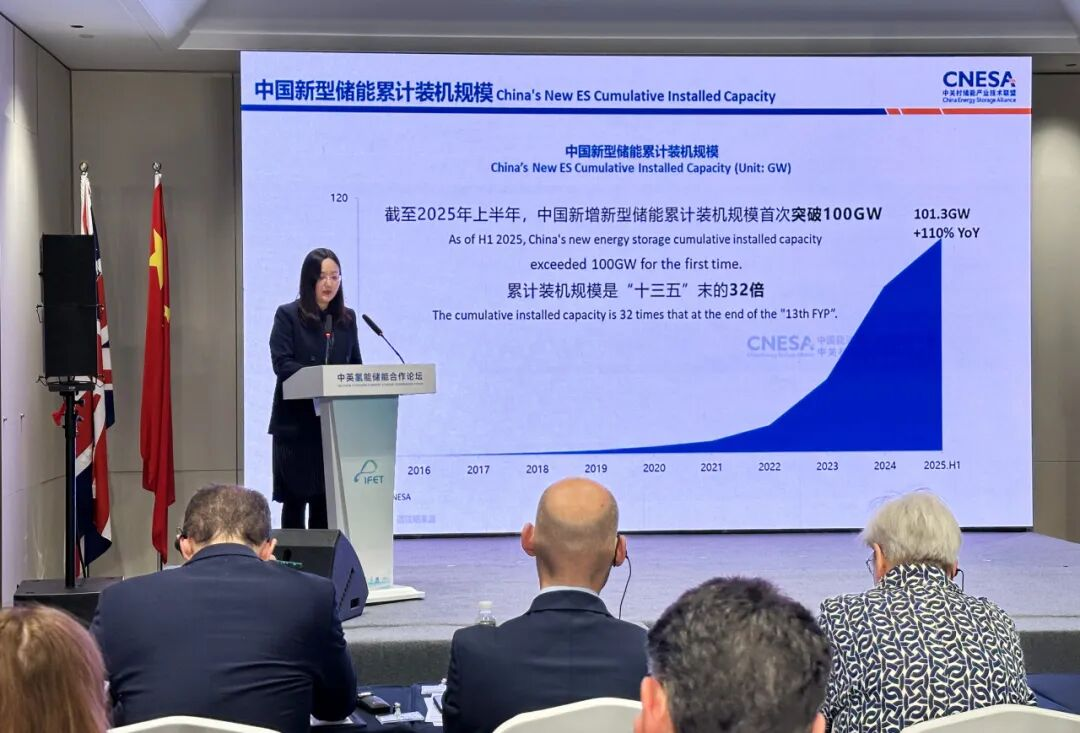
Representing Chinese institution, Nina Ning, Senior Research Manager of the CNESA, delivered a keynote speech titled “Latest Developments and Prospects of China’s Energy Storage Market”. Her presentation provided an in-depth overview of China’s energy storage progress, technological breakthroughs, and future trends, offering valuable insights for UK participants.
Aurore Mallon, Head of Battery Market and Investment at the UK Department for Energy Security and Net Zero, introduced the UK’s policy and regulatory framework for battery energy storage. Lu Huan, Dean of GoodWe Solar Academy, shared project experiences of Chinese storage companies entering the UK market. Professor Michael Grubb from University College London discussed the UK’s policy roadmap for commercializing energy storage. Their perspectives offered practical guidance for deepening bilateral industrial cooperation.

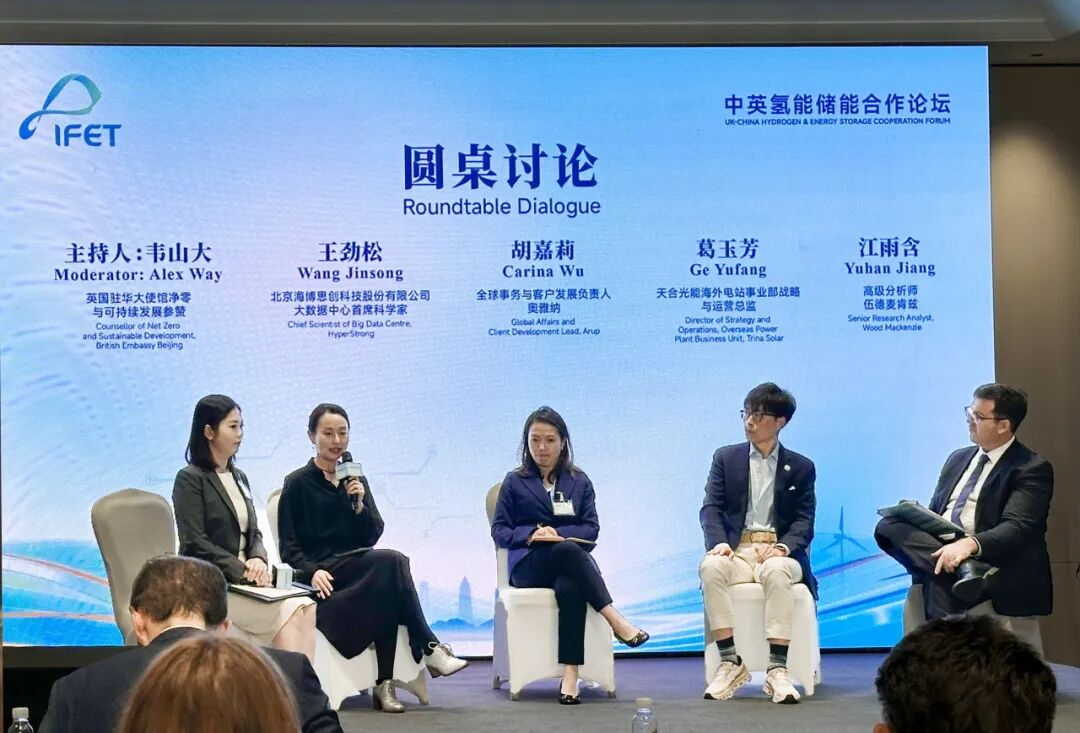
A panel discussion moderated by Alex Way, Counsellor for Net Zero and Sustainable Development at the British Embassy in Beijing, explored key topics such as the complementarity of China-UK technology roadmaps, compliance and localization challenges for overseas operations, and market mechanism design. Chinese participants - including Dr. Wang Jinsong, Chief Scientist at the Big Data Center of HyperStrong, and Ge Yufang, Director of Strategy and Operations at Trina Solar’s Overseas Power Plant Division - shared practical insights, while representatives from UK firms such as Arup and Wood Mackenzie provided professional recommendations to enhance China-UK industrial collaboration and support Chinese energy storage enterprises going global.
After the forum, the China-UK Hydrogen and Energy Storage Cooperation Reception was held as scheduled, providing a relaxed business networking platform for guests from both sides. The reception helped participants further connect resources and discuss cooperation in an informal setting, continuing the collaborative momentum of the forum.
The successful convening of the China-UK Hydrogen and Energy Storage Cooperation Forum marks a new stage of deepened collaboration between the two countries in the hydrogen and energy storage fields. As a leading industry service platform, CNESA remains committed to promoting the international development of China’s energy storage industry. Going forward, CNESA will continue to leverage international cooperation mechanisms, integrate industry resources, and provide diversified platforms for policy dialogue, technology exchange, and project collaboration - helping Chinese energy storage companies seize global market opportunities, manage compliance risks, and strengthen localization efforts, while contributing Chinese expertise and strength to the global energy transition.
CENSA Upcoming Events:
1. Dec.4-5 | 2025 China Energy Storage CEO Summit | Xiamen, Fujian
Register Now to attend
Read more: http://en.cnesa.org/new-events-1/2025/12/4/dec4-5-2025-china-energy-storage-ceo-summit

2. Apr. 1-3, 2026 | The 14th Energy Storage International Conference & Expo
Register Now to attend, free before Oct 31, 2025.


5.2 GW Solar + 19 GWh Storage! World’s Largest Solar-Storage Project Breaks Ground
Source: Xinhua Net
The groundbreaking ceremony for the UAE All-Day Power Supply Solar-Storage Project, co-built by Power Construction Corporation of China (POWERCHINA), was recently held in Abu Dhabi, the capital of the United Arab Emirates.
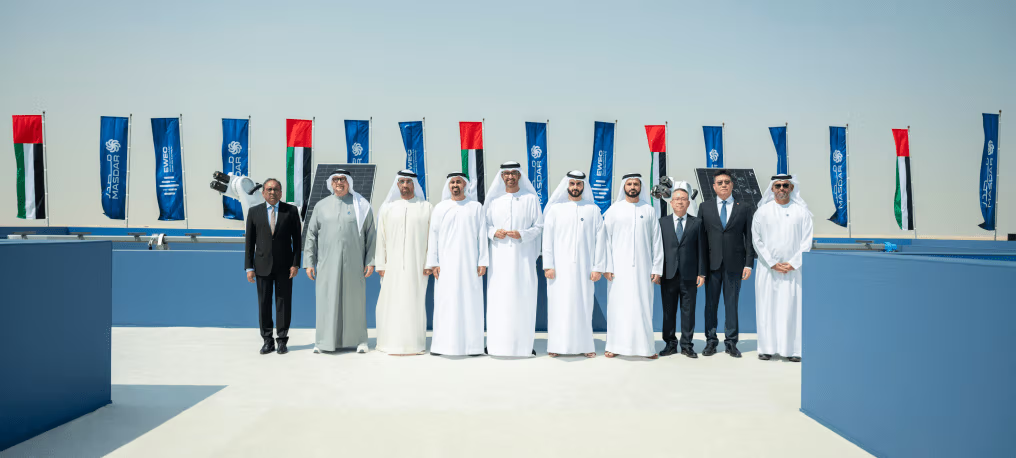
Jointly developed by Abu Dhabi Future Energy Company (Masdar) and the Emirates Water and Electricity Company (EWEC), the project marks a major step forward in the region’s renewable energy ambitions. Sultan Al Jaber, UAE Minister of Industry and Advanced Technology and Chairman of Masdar, said at the ceremony that the completion of the project will drive the local digital and industrial energy transition.
Mohamed Jameel Al Ramahi, CEO of Masdar, noted that by addressing the intermittency challenges of renewable energy, the project will deliver stable and sustainable clean power for the era of artificial intelligence and emerging technologies.
Peng Gang, Deputy General Manager of PowerChina and General Manager of its Middle East and North Africa Regional Headquarters, said the company will continue to advance global cooperation in clean energy projects.
According to reports, the project includes a photovoltaic power station with an installed capacity of 5.2 gigawatts, supported by a battery system with a total storage capacity of 19 gigawatt-hours. It is one of the largest integrated solar and storage projects of its kind in the world and is expected to begin operation in 2027.
CENSA Upcoming Events:
1. Dec.4-5 | 2025 China Energy Storage CEO Summit | Xiamen, Fujian
Register Now to attend
Read more: http://en.cnesa.org/new-events-1/2025/12/4/dec4-5-2025-china-energy-storage-ceo-summit

2. Apr. 1-3, 2026 | The 14th Energy Storage International Conference & Expo
Register Now to attend, free before Oct 31, 2025.

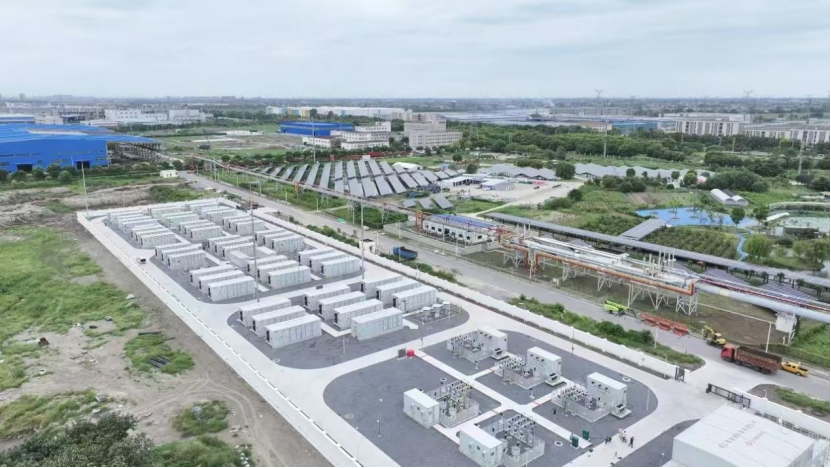
CRRC Zhuzhou Institute Helps the Nationwide Largest User-Side Grid-Forming Energy Storage Connect to the Grid!
Source: CRRC Zhuzhou Institute
Recently, the “Wind-PV-Storage” Green Low-Carbon Energy Supply Project of Jingjiang Special Steel Co., Ltd., a National Low-Carbon Metallurgy Technology Research Pilot Project invested by Xinli Era under the CITIC Pacific Energy Co., Ltd., was successfully connected to the grid.
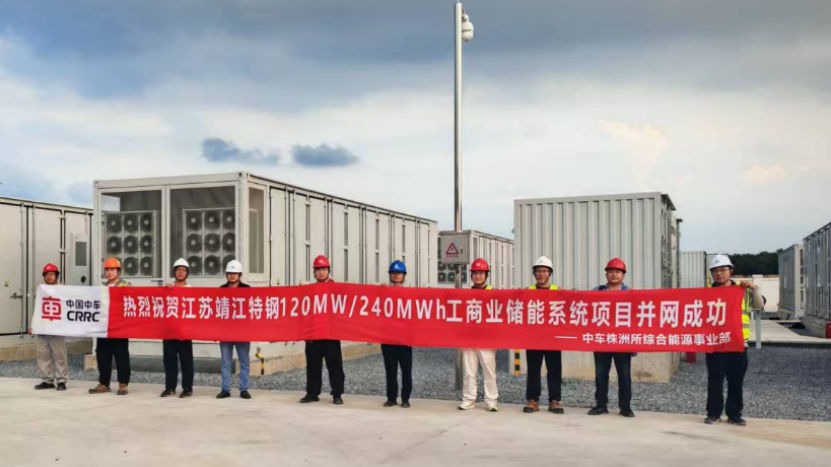
As the general contractor for the 120 MW / 240 MWh grid-forming high-voltage direct-connected energy storage system, CRRC Zhuzhou Institute Co., Ltd. applied high-speed rail-grade grid-forming converter technology and system integration expertise to successfully help Jingjiang Special Steel Co., Ltd. create China’s first near-zero-carbon steelmaking demonstration plant, providing an effective model for intelligent, green, and low-carbon transformation in the steel industry.
The project’s completion marks the beginning of a strong partnership between CITIC Pacific Energy and CRRC Zhuzhou Institute in the industrial and commercial energy storage sector.
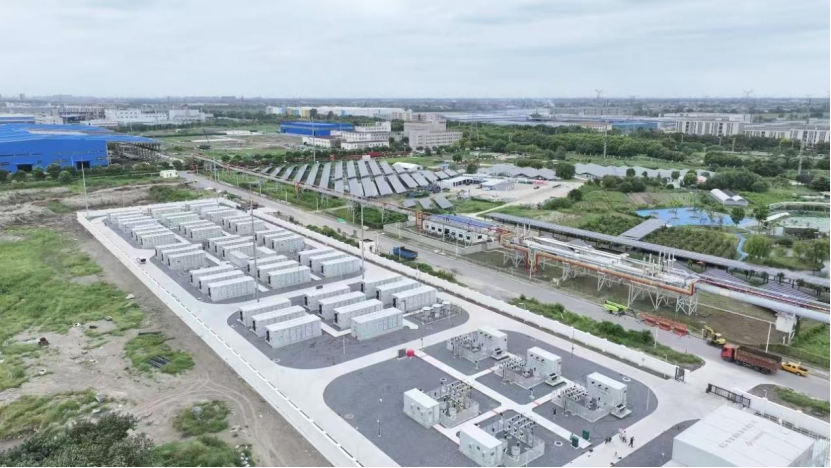
To meet the project’s fast grid connection requirements, CRRC Zhuzhou, after confirming the technical specifications, completed the full delivery of the 120 MW / 240 MWh grid-forming high-voltage direct-connected energy storage system within 45 days. Working with China Energy Engineering Group Jiangsu Power Design Institute Co., Ltd., they integrated a 36 MW distributed PV system and a 16.8 MW onshore wind power system to provide a comprehensive energy supply. Through the system’s grid-forming energy storage stability and fast-response capability, the project overcame challenges from high-impact steelmaking loads and the strong intermittency of renewable energy, optimizing energy matching in time and space, improving energy coordination efficiency, reducing carbon emissions, and achieving both high-efficiency stable production and green low-carbon goals.
01 Establish a zero-carbon industrial park
Building a resilient microgrid to ensure stable renewable energy supply
Upon completion, it will become China’s first grid-forming wind-PV-storage integrated microgrid demonstration project in the steel industry, expected to provide 75 million kWh of green electricity annually, reducing carbon emissions by 62,400 tons. By coordinating wind, solar, and storage with electric furnace loads, the project offers a full-process energy solution, helping Jingjiang Special Steel build a new green and low-carbon brand.
Focusing on continuous short-process electric furnace production, the project deploys grid-forming energy storage at the park level with three main objectives: stabilize power quality, increase the share of green electricity, and ensure continuous production. The park’s grid is structured to be autonomous, grid-connected, and switchable, transforming green electricity from “uncertain supply” to “stable, controllable, and high-quality supply”.
02 Technical Highlights
Power quality and renewable energy utilization have become key
challenges for zero-carbon industrial parks
teelmaking, as a typical high-load and high-impact process, demands high grid stability and reliability. Addressing the intermittency and fluctuations of renewable energy is key to achieving high-proportion green power supply. The mismatch between PV, wind power, and load limits renewable utilization, while the energy storage’s power and energy regulation capabilities effectively solve this problem. Grid-forming energy storage becomes an indispensable part of high-quality, high-utilization renewable microgrids.
High-voltage direct-connection architecture: breaking the “shackles” of efficiency and cost
The high-voltage direct-connected architecture developed independently by CRRC Zhuzhou uses H-bridge module cascades to synthesize 35 kV on the AC side, eliminating transformers, shortening energy paths, reducing system current and line losses, and enabling system cycle efficiency to exceed 92%, which is 6% higher than conventional low-voltage storage. This also reduces civil and equipment investment, adding about RMB 48 million in revenue over the 240 MWh storage system lifecycle.
Grid-forming energy storage: microgrid stabilizer
Grid-forming energy storage actively generates stable voltage and frequency, effectively combining “stabilizer + independent power supply”. The system provides 3×10-second grid-forming capability, and under high-impact steelmaking load conditions, its direct connection to the grid allows rapid response within 20 ms, providing instantaneous power support and bus voltage stability, ensuring power quality and production continuity.
Performance leap: millisecond-level grid connection/disconnection and 10-second black start
High-voltage cascaded direct-connected grid: shorter electrical distances and greater overload capacity. The system’s single-unit capacity reaches up to 45 MW. In the event of an external grid outage, it can achieve millisecond-level smooth grid connection / disconnection within 100 ms, forming an independent and stable high-voltage microgrid. It also features a 10-second rapid black start, requiring no external grid support, allowing the system to autonomously establish a stable high-voltage microgrid and restore power within seconds, ensuring uninterrupted, loss-free operation of high-load steel production lines.
Integrated source-grid-load-storage platform, unlocking 100% potential of grid-forming energy storage
The integrated source-grid-load-storage platform provides a framework that is observable, measurable, adjustable, and controllable, optimizing charging and discharging strategies based on weather and output forecasts. Local green electricity utilization is increased from below 70% to over 95%, with annual additional green power benefits exceeding RMB 10 million. In abnormal conditions, the platform triggers safety mode for rapid grid-forming switching. Full-state awareness and strategic dispatch of the storage system reduce manual intervention by over 90%, simplifying operations and maintenance.
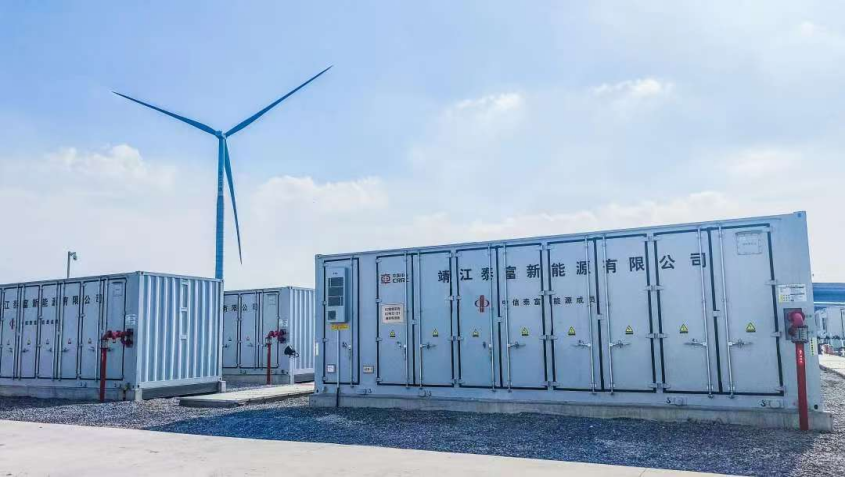
03 Multiple Benefits and Industry Breakthroughs
Grid-forming energy storage releases multiple values including capacity,
regulation, and power quality
The revenue structure is clear: it can increase green power utilization by 168 million kWh annually, reduce downtime and equipment wear, and generate additional benefits through green power trading and certificates, turning electricity from a cost center into an asset operation.
The next step is to integrate the park into virtual power plants for power market participation, releasing value in capacity, regulation, and power quality in a new-type power system that emphasizes system stability.
The Jingjiang Special Steel model: grid-forming energy storage empowers high-energy-consumption parks for zero-carbon transformation
In the near future, the Jingjiang Special Steel experience will be replicated across more industrial parks to strengthen capabilities in “park autonomy + multi-energy coordination + carbon accounting”. High-energy-consumption parks will be efficiently and reliably served through the “three-piece delivery suite” of standardized hardware combinations, scenario-based control strategies, and park-level dispatch interfaces. With more advanced energy storage system architectures and technologies, power quality and system resilience will be developed into tradable resources. Grid-forming energy storage helps microgrids reduce dependence on the main grid and, through the source–grid–load–storage–carbon coordination, enables dynamic capacity expansion, local autonomy, and high renewable energy utilization, becoming key infrastructure for industrial zero-carbon transformation and power grid modernization.
Pioneer of Grid-Forming Energy Storage: CRRC Zhuzhou Institute’s Experience and Vision
CRRC Zhuzhou Institute has successfully leveraged its extensive expertise in high-voltage converter design, multi-level converter topology development, and over 20 years of engineering experience with high-voltage conversion equipment in the rail transit sector to the energy storage field. This led to the launch of the grid-forming high-voltage direct-connected energy storage system, achieving seamless technological integration from the “heart of rail transit” to the “backbone of energy storage”.
As of September 2025, CRRC Zhuzhou’s grid-forming energy storage systems have reached a cumulative grid-connected capacity of 3 GWh and a contracted capacity of 5 GWh. Landmark projects such as the world’s first high-altitude grid-forming storage station in Ali, Tibet, and China’s first user-side high-voltage cascaded grid-forming storage station in Jingjiang, Jiangsu, have successfully demonstrated the company’s ability to provide highly reliable grid-forming energy storage solutions in extreme environments and complex industrial scenarios.
Looking ahead, CRRC Zhuzhou Institute will continue to advance innovation and application of grid-forming energy storage technologies, contributing more key technologies to drive the energy transition and industrial zero-carbon development.
CENSA Upcoming Events:
1. Dec.4-5 | 2025 China Energy Storage CEO Summit | Xiamen, Fujian
Register Now to attend
Read more: http://en.cnesa.org/new-events-1/2025/12/4/dec4-5-2025-china-energy-storage-ceo-summit

2. Apr. 1-3, 2026 | The 14th Energy Storage International Conference & Expo
Register Now to attend, free before Oct 31, 2025.

Guangdong’s First New Energy Storage Power Station Connected to an Offshore Wind Grid Node Started Construction in Xuwen County
Source: Southern Daily
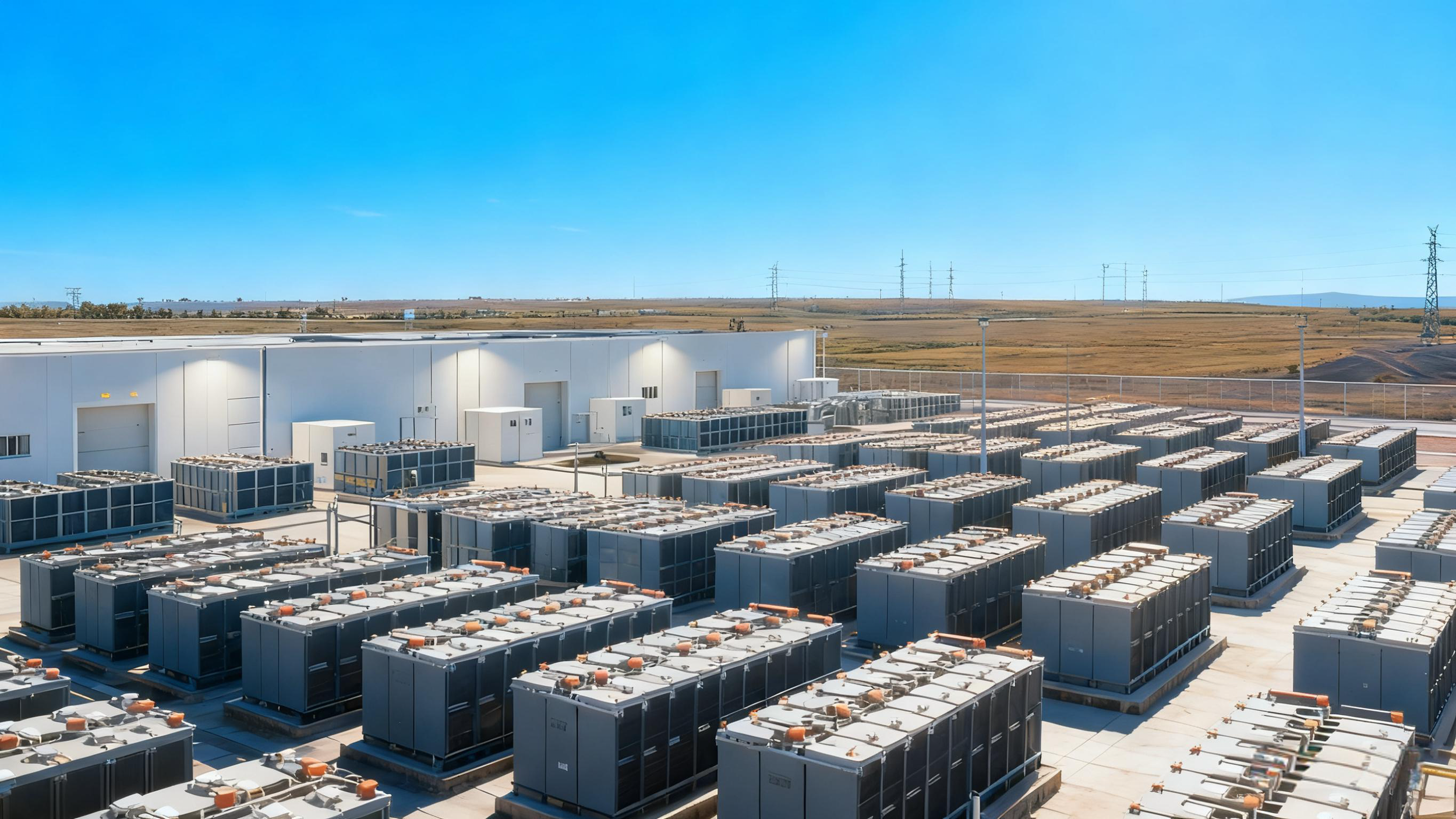
On October 18, construction officially began on the 200 MW / 400 MWh Independent Shared Energy Storage Power Station Project in Xuwen County, Zhanjiang City, Guangdong Province. This marks Guangdong’s first new-type energy storage station connected to a large-scale offshore wind power grid node. The project adopts advanced grid-forming technology to enhance the consumption and flexible regulation of renewable energy, supporting the creation of a system-friendly renewable power station and the development of a new-type power system.
Jointly invested by China Energy Engineering Group Guangdong Electric Power Design Institute Co., Ltd. and Xuwen County Infrastructure Construction Co., Ltd., the project will build a 200 MW / 400 MWh high-voltage cascade all-liquid-cooled lithium iron phosphate (LiFePO₄) energy storage station.
This independent shared energy storage station functions like a massive “shared power bank”, capable of serving multiple users. On one hand, it will support the consumption of wind and solar power, coordinating the power transmission needs of offshore wind farms in southern Zhanjiang. On the other hand, it will supply green and zero-carbon electricity for local industrial and residential use. Additionally, it can participate in grid emergency regulation and provide ancillary services, improving the safety and flexibility of the new-type power system.
Notably, the project will also strengthen Xuwen’s ability to cope with extreme weather and ensure energy security. Located in a coastal area frequently hit by typhoons and thunderstorms, Xuwen’s power facilities often face severe challenges. The independent storage system will enhance the grid’s resilience, emergency response, and self-healing capabilities, safeguarding lives, property, and the stable operation of the local economy and society.
The project is also Xuwen’s first “land-acquisition-to-construction” fast-track project. To ensure efficient implementation, the county government coordinated relevant departments to conduct parallel approvals, expediting the entire project process. On the same day, it issued four key permits - the Land Ownership Certificate, Land Use Planning Permit, Construction Planning Permit, and Construction Permit - and achieved financing disbursement, pressing the “fast-forward button” for project delivery and construction.
CENSA Upcoming Events:
1. Dec.4-5 | 2025 China Energy Storage CEO Summit | Xiamen, Fujian
Register Now to attend
Read more: http://en.cnesa.org/new-events-1/2025/12/4/dec4-5-2025-china-energy-storage-ceo-summit

2. Apr. 1-3, 2026 | The 14th Energy Storage International Conference & Expo
Register Now to attend, free before Oct 31, 2025.


China-UK Electricity Market Reform Seminar Held in Suzhou
Source: National Energy Administration
On October 22, 2025, the China-UK Electricity Market Reform Seminar was held in Suzhou. Representatives from energy authorities of both countries, the British Embassy in Beijing, and relevant research institutions attended the meeting. The participants engaged in in-depth discussions on topics such as power system and market reform and innovation.
During the seminar, the two sides signed a Memorandum of Understanding on the China-UK Electricity Market Reform Advisory Group, officially launching the joint advisory group established by China’s National Energy Administration (NEA) and the UK’s Department for Energy Security and Net Zero (DESNZ). The group will bring together leading research institutions from both countries to conduct collaborative studies and exchanges, providing professional consultation and policy recommendations on electricity market reform for the two governments.
CENSA Upcoming Events:
1. Dec.4-5 | 2025 China Energy Storage CEO Summit | Xiamen, Fujian
Register Now to attend
Read more: http://en.cnesa.org/new-events-1/2025/12/4/dec4-5-2025-china-energy-storage-ceo-summit

2. Apr. 1-3, 2026 | The 14th Energy Storage International Conference & Expo
Register Now to attend, free before Oct 31, 2025.

User-side Energy Storage Installation Declines Month-on-Month, Return on Investment Faces Increasing Uncertainty
Source: CNESA
Latest Data on User-Side Energy Storage Released: Year-on-Year Growth, Month-on-Month Decline
According to the latest CNESA DataLink statistics, user-side energy storage installations in September recorded year-on-year growth but a month-on-month decline. However, registration data shows that both the installed capacity and the number of new user-side storage projects exceeded the same period last year — up 28% and 80% year-on-year, respectively — indicating a clearer market structure emerging for user-side energy storage.
The report reveals that over 70% of installations came from high-energy-consuming industries, such as metallurgy, chemicals, and textiles, where “carbon reduction and power security” have become essential demands. In parts of Guangdong Province, the peak-to-valley electricity price gap remains around RMB 1.0/kWh, allowing for more than 600 charge/discharge cycles per year, offering strong potential for energy arbitrage. This correlates with the province’s filing data, which shows a 359% year-on-year increase in registered energy capacity. However, frequent adjustments to time-of-use (TOU) electricity pricing policies have also introduced greater uncertainty in investment returns.
September Analysis of User-Side Energy Storage Projects
According to incomplete statistics from the CNESA DataLink Global Energy Storage Database, in September 2025, newly installed user-side energy storage capacity reached 243.56 MW / 488.22 MWh, representing a year-on-year increase of 38% and 18%, but a month-on-month decline of 41% and 46%, respectively.The newly commissioned user-side energy storage projects in September exhibited the following characteristics:
Application: Over 70% of installations came from high-energy-consuming enterprises
The industrial and commercial sector dominated the market, making up more than 95% of total new capacity — 236.86 MW / 479.66 MWh, a year-on-year increase of 37% and 19%.
Projects owned by enterprises in the metallurgy, chemical, and textile industries represented 73% of newly installed capacity, indicating that carbon reduction and energy reliability needs have become major drivers of user-side energy storage adoption.Technology:
All new operational projects adopted electrochemical energy storage technologies, with lithium iron phosphate (LFP) batteries accounting for 99.96% of total power capacity.
In terms of non-lithium technologies, a 90 kW / 180 kWh sodium-ion battery storage system for an industrial and commercial user was also completed and put into operation.
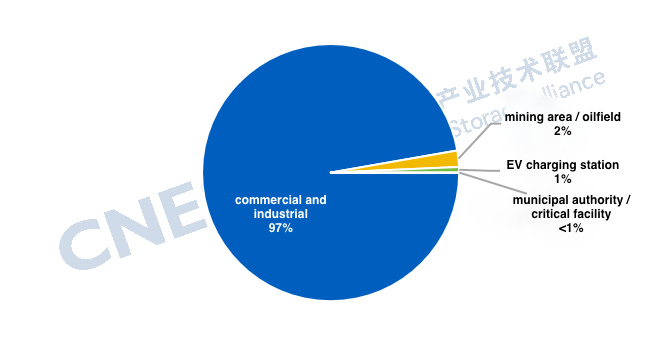
Figure 1. Application Distribution of Newly Commissioned User-Side Energy Storage Projects in September 2025 (MW%)
Source: CNESA DataLink Global Energy Storage Database — https://www.esresearch.com.cn/
Note: “Commercial and Industrial” includes industrial parks and commercial buildings.
New installations: Jiangsu had the largest capacity, while Zhejiang recorded the most projects
From a regional perspective, newly commissioned projects in September were mainly concentrated across 15 provinces, including Jiangsu, Zhejiang, Jiangxi, Henan, and Sichuan.
The East China region dominated the month’s new installations, accounting for 71% of total capacity and 43% of total project count, ranking first nationwide in both metrics.
At the provincial level, Jiangsu recorded the largest new installed capacity, representing nearly half of the national total, followed by Zhejiang, which led the country in the number of newly commissioned projects, accounting for over 20% of all projects.
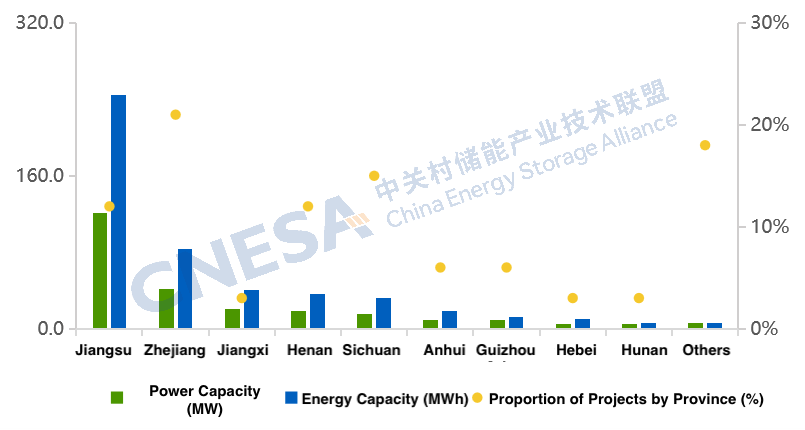
Figure 2. Provincial Distribution of Newly Commissioned User-Side Energy Storage Projects in China, September 2025
Source: CNESA DataLink Global Energy Storage Database — https://www.esresearch.com.cn/
New filings: Zhejiang, Guangdong, and Jiangsu saw a 9% year-on-year decline, while Anhui, Henan, and Sichuan recorded a 150% increase
According to project filing data, both the total capacity and the number of newly registered user-side energy storage projects in September exceeded those of the same period last year — up 28% and 80% year-on-year, respectively.
In Zhejiang, Guangdong, and Jiangsu, over 740 new user-side storage projects were registered, representing a 9% year-on-year decline in project count but a 68% increase in total capacity. Among them, Zhejiang recorded the highest number of new filings, with capacity rising 80% year-on-year and 144% month-on-month. Guangdong saw growth in both capacity and project count, up 359% and 25% year-on-year, respectively. Jiangsu had the largest total registered capacity, up 38% year-on-year, though its project count dropped 32%, indicating a clear trend toward larger-scale single projects.
Beyond these leading regions, Anhui, Henan, and Sichuan each registered over 80 projects, totaling more than 380 combined, marking a 150% year-on-year increase — signaling their emergence as new growth markets for user-side energy storage.
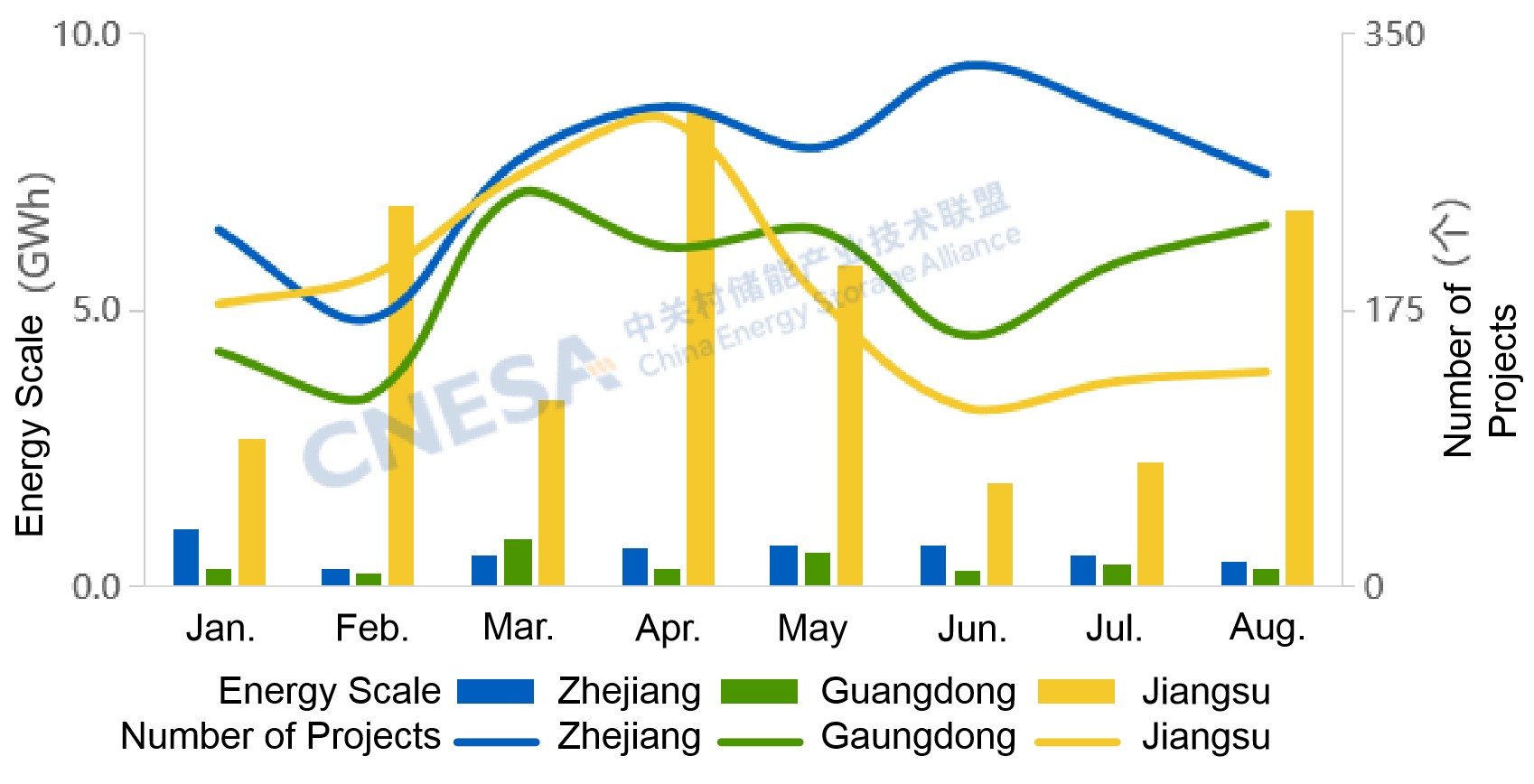
Figure 3. Monthly Distribution of Newly Registered Energy Storage Projects in Zhejiang, Guangdong, and Jiangsu (January–September 2025)
Source: CNESA DataLink Global Energy Storage Database — https://www.esresearch.com.cn/
Peak–valley price gap: In some parts of Guangdong, the gap continues to remain above 1.0 CNY/kWh
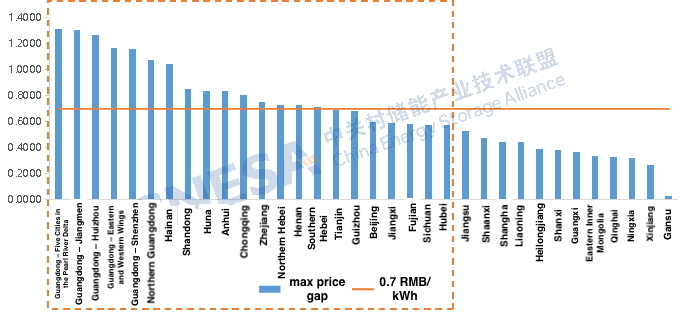
From the perspective of the maximum peak–valley price gap, 15 provinces and cities have a difference exceeding 0.7 CNY/kWh, and 7 of them exceed 1 CNY/kWh. Guangdong maintains the largest gap, with areas such as the Pearl River Delta’s five cities, Jiangmen, and Huizhou continuing to record a maximum gap of over 1.0 CNY/kWh.
Given that Guangdong allows for over 600 charge–discharge cycles per year, the province’s user-side energy storage projects demonstrate strong potential for price-difference arbitrage. This trend aligns with the sharp 359% year-on-year increase in Guangdong’s newly registered user-side storage capacity in September, underscoring its position as a key growth region for user-side energy storage in the future.
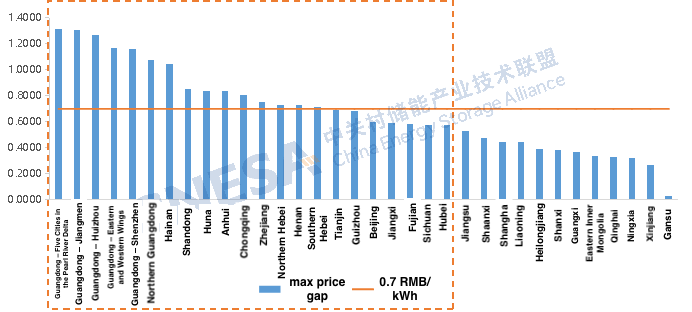
Figure 4. Distribution of Peak-to-Valley Electricity Price Differences by Regional Power Grids, September 2025
Source: Provincial Power Grid Companies; compiled and analyzed by CNESA
Investment returns: The frequent adjustments to time-of-use (TOU) electricity pricing policies have increased uncertainty
However, the recent frequent adjustments to time-of-use (TOU) electricity pricing policies have increased the uncertainty of investment returns for user-side energy storage projects. Overall, market participants remain cautious toward new investments in this segment.
For example, in Zhejiang, the latest TOU pricing consultation draft raises the peak–valley price ratio, but since the pricing base (such as transmission and distribution fees, government funds, and surcharges) is excluded from the floating portion, the actual arbitrage margin has narrowed, leading to a decline in investment returns.
In Jiangsu and Guangdong, although the widened peak–valley gap could increase arbitrage potential, the ongoing adjustments in TOU policy require investors to recalculate returns, adding further uncertainty to the overall profitability of user-side energy storage projects.
Overall Analysis of New Energy Storage Projects in September
According to incomplete statistics from the CNESA DataLink Global Energy Storage Database, as of September 2025, China’s newly commissioned new-type energy storage projects reached a total installed capacity of 3.08 GW / 9.08 GWh, representing a year-on-year increase of 166% and 200%, and a month-on-month increase of 7% and 15%.
In the third quarter, newly added installations totaled 9.16 GW / 25.52 GWh, marking a year-on-year growth of 10% and 24%. Cumulatively, installations in the first three quarters have already reached 74% of last year’s full-year total, indicating that 2025’s new installations are expected to surpass last year’s overall figure.
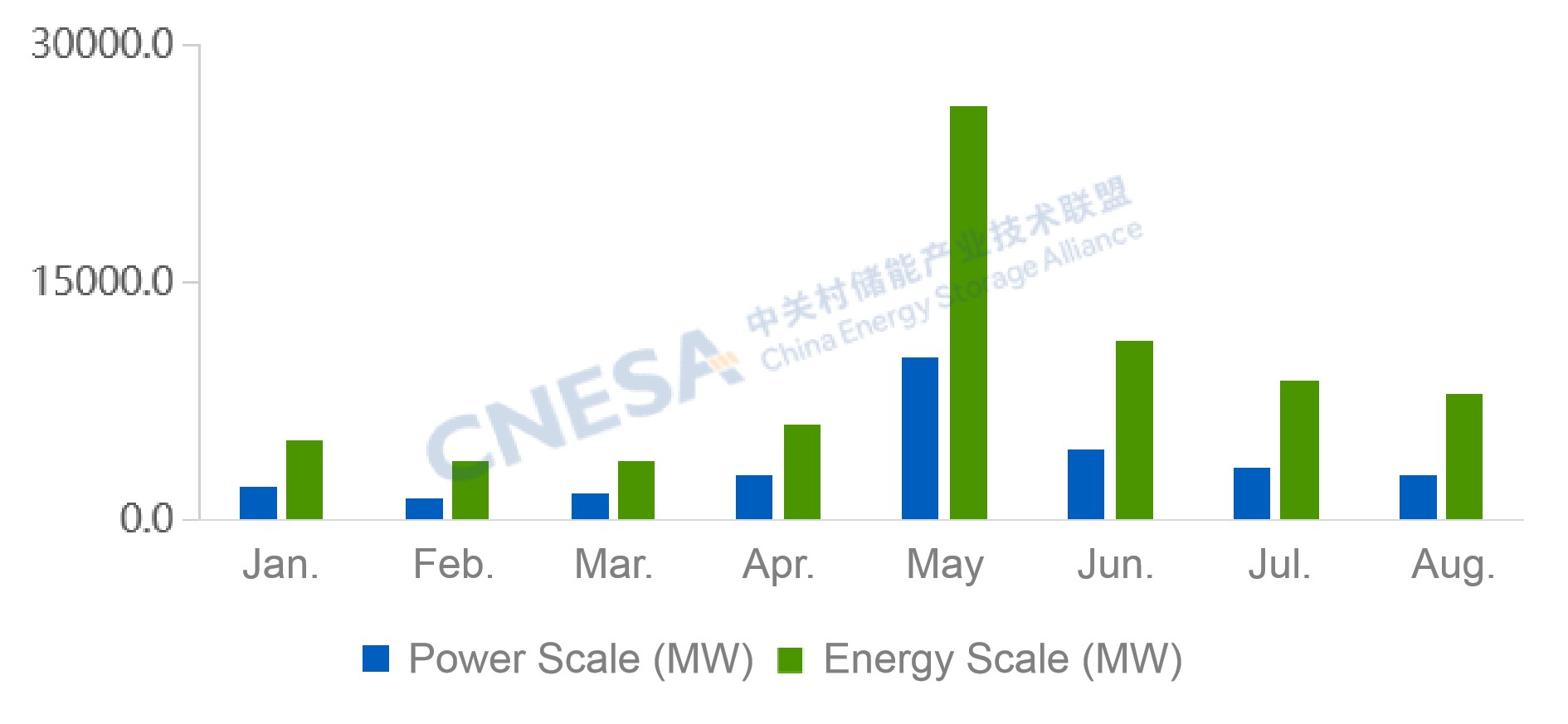
Figure 5. Installed Capacity of Newly Commissioned New Energy Storage Projects in China (January–September 2025)
Source: CNESA DataLink Global Energy Storage Database — https://www.esresearch.com.cn/
Note: Year-on-year (YoY) compares with the same period of the previous year; month-on-month (MoM) compares with the immediately preceding period.
CENSA Upcoming Events:
1. Dec.4-5 | 2025 China Energy Storage CEO Summit | Xiamen, Fujian
Register Now to attend
Read more: http://en.cnesa.org/new-events-1/2025/12/4/dec4-5-2025-china-energy-storage-ceo-summit

2. Apr. 1-3, 2026 | The 14th Energy Storage International Conference & Expo
Register Now to attend, free before Oct 31, 2025.

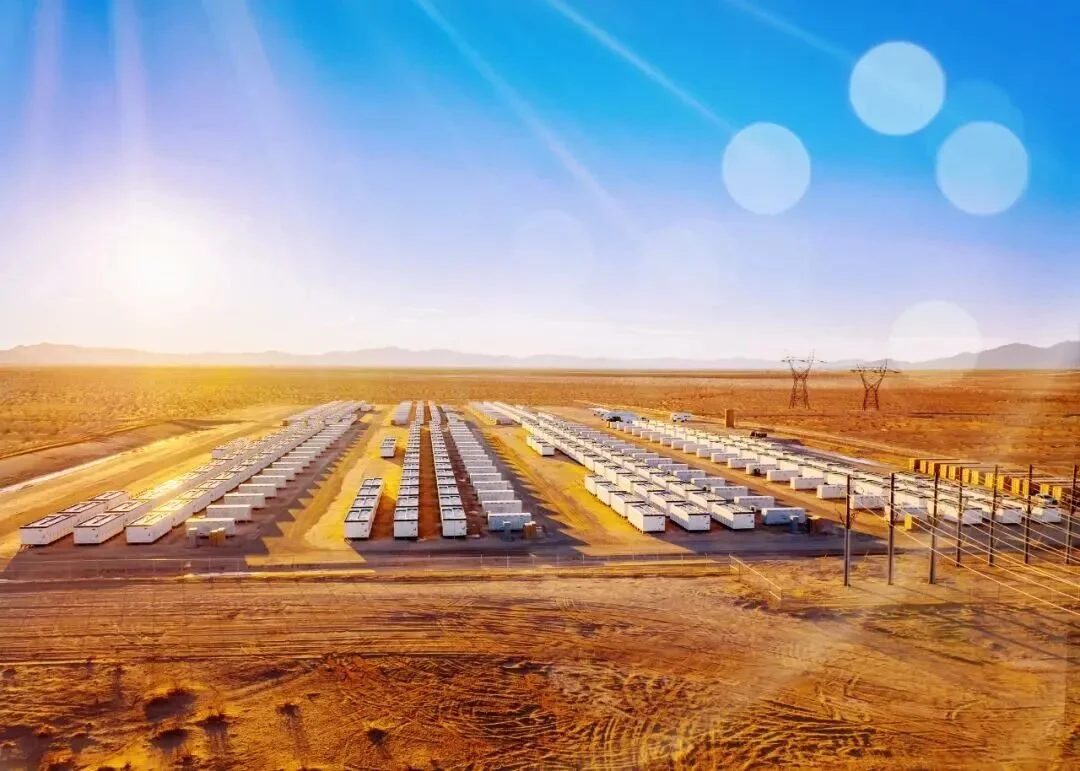
2.1 GWh! e-STORAGE Secures Major New Order in the North American Market
Source: Canadian Solar Inc.
On October 1, 2025, Canadian Solar Inc. (stock name: CSI Solar, stock code: 688472.SH), a global leader in solar and energy storage integrated solutions, announced that its energy storage subsidiary, e-STORAGE, has signed a Battery Supply Agreement (BSA) and Long-Term Service Agreement (LTSA) with Aypa Power, a renewable energy developer under Blackstone Group. The agreement covers the Elora and Hedley battery energy storage projects located in Ontario, Canada.
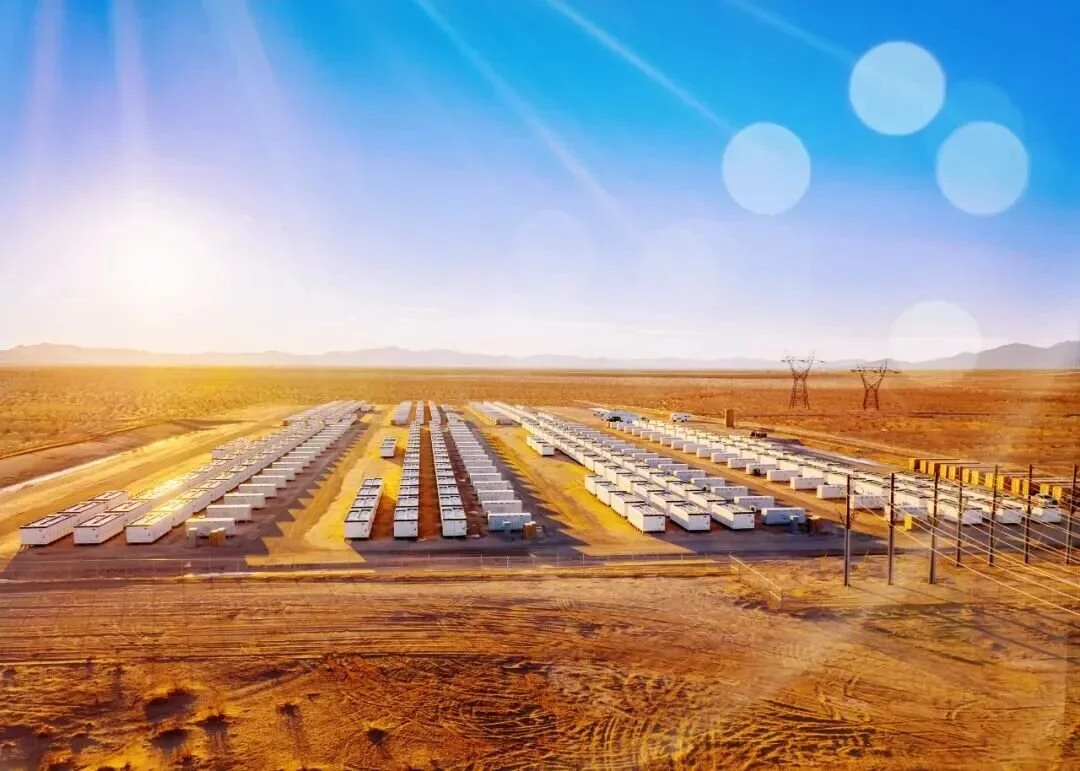
One of the World’s Largest Energy Storage Stations - Canadian Solar’s Crimson 350 MW / 1,400 MWh Project (pictured)
The Elora and Hedley projects together feature a total installed capacity of 420 MW / 2,122 MWh, adding substantial new storage capacity to Ontario’s power grid. They will become among the largest energy storage facilities currently under development in the province. This collaboration further strengthens Ontario’s leadership in large-scale energy storage deployment and highlights the deepening partnership between Canadian Solar’s e-STORAGE and Aypa Power in advancing key energy infrastructure across North America.
Both projects will utilize Canadian Solar’s SolBank, a large-scale energy storage system. According to the plan, equipment delivery will begin in Q1 2026, and commercial operation is expected to start in the first half of 2027.
Upon completion, e-STORAGE will provide comprehensive 20-year operations and maintenance (O&M) services under the signed Long-Term Service Agreement (LTSA). These services include continuous monitoring, preventive maintenance, and performance assurance, ensuring the system’s safe, reliable, and efficient operation throughout its lifecycle while securing long-term, stable service returns.
CENSA Upcoming Events:
1. Dec.4-5 | 2025 China Energy Storage CEO Summit | Xiamen, Fujian
Register Now to attend
Read more: http://en.cnesa.org/new-events-1/2025/12/4/dec4-5-2025-china-energy-storage-ceo-summit

2. Apr. 1-3, 2026 | The 14th Energy Storage International Conference & Expo
Register Now to attend, free before Oct 31, 2025.

107.12 MW / 428.48 MWh! China’s Largest User-Side Energy Storage Project Expected to Be Completed by Late November
Source: Guangyuan Economic and Technological Development Zone
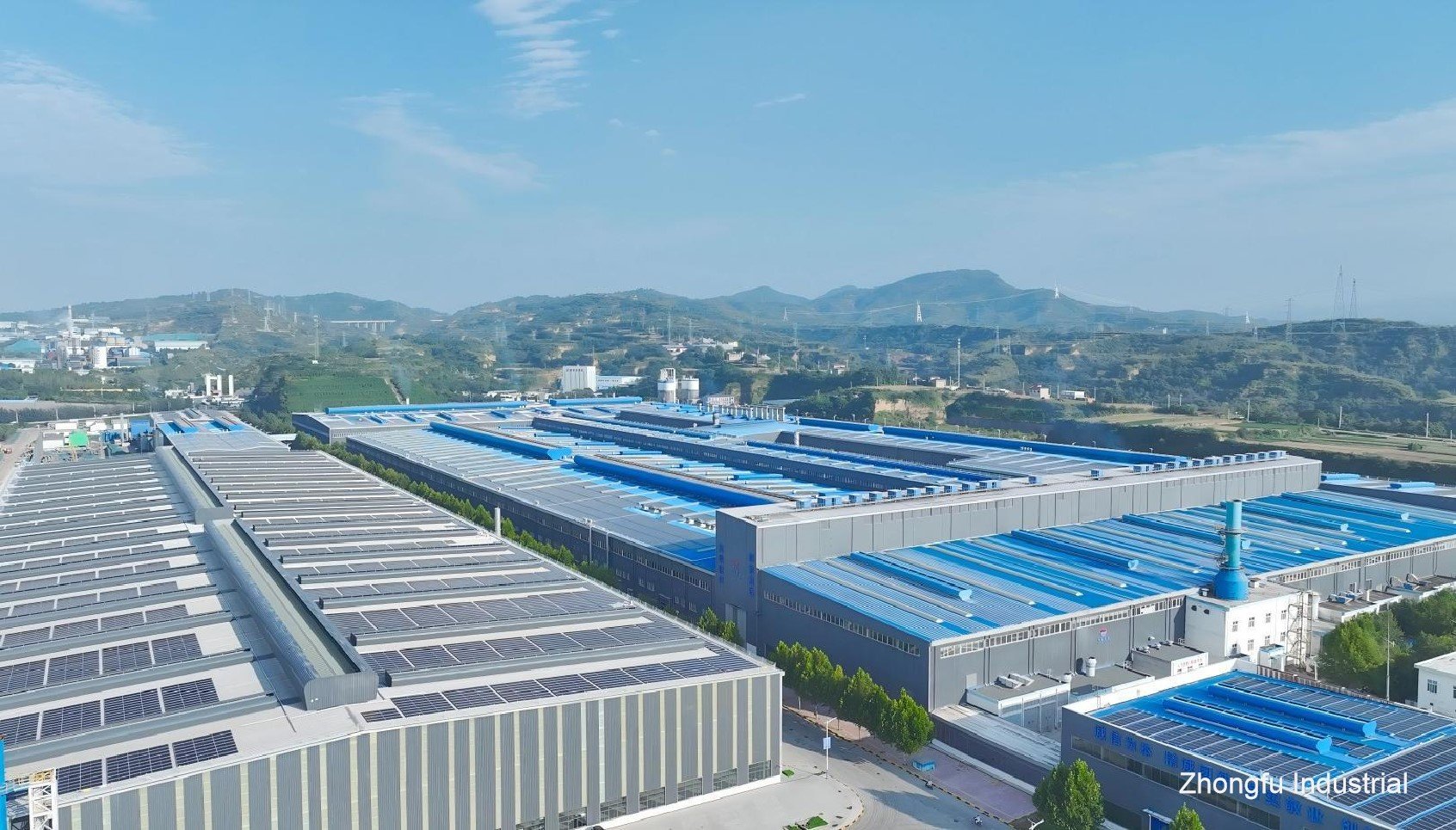
Recently, construction of China’s largest user-side energy storage project - the 107.12 MW / 428.48 MWh Guangyuan Zhongfu & Guangyuan Linfeng User-Side Lithium Battery Energy Storage Project in Sichuan Province - has entered its final phase. Since construction began on July 30, 2025, all work has proceeded steadily according to plan, with full efforts now focused on achieving the completion target of November 30.
The project is jointly developed by Great Power, a leading company in the energy storage industry, and Henan Zhongfu High Precision Aluminum Co., Ltd (Zhongfu Aluminum), a top enterprise in the aluminum sector. Located only 210 meters from Zhongfu Aluminum’s plant, the project directly connects to the 10 kV power distribution system, significantly reducing transmission losses and improving energy efficiency. It is linked via cables to two 220 kV substations in the industrial park and operates on a “charging during off-peak, discharging during peak” model, with a maximum charge/discharge power of 107 MW and a total capacity of 428.48 MWh, allowing for 4 hours of full charge and discharge per cycle.
Once operational, the project will not only reduce electricity costs and enhance power reliability for Zhongfu Aluminum, but also help the power grid with peak shaving and load balancing. According to plans, Phase II of the project construction will expand the system to 400 MW / 1,000 MWh, along with the construction of a new 220 kV substation, wind and solar power facilities, and EV charging stations. Ultimately, the project aims to establish an integrated “generation - grid - load - storage - charging” regional microgrid in Guangyuan, Sichuan province, providing a practical model for China’s power market reform and carbon neutrality goals, while injecting green momentum into the city’s economic and social development.
CENSA Upcoming Events:
1. Dec.4-5 | 2025 China Energy Storage CEO Summit | Xiamen, Fujian
Register Now to attend
Read more: http://en.cnesa.org/new-events-1/2025/12/4/dec4-5-2025-china-energy-storage-ceo-summit

2. Apr. 1-3, 2026 | The 14th Energy Storage International Conference & Expo
Register Now to attend, free before Oct 31, 2025.

A 100-Billion-Yuan Market for Power Battery Recycling Is on the Horizon!
Source: Xinhua News Agency
At a press conference on the standardization of power battery recycling held by the State Administration for Market Regulation (SAMR), it was revealed that China is about to enter the large-scale retirement phase of power batteries, based on their service life projections. The domestic market for power battery recycling is expected to exceed 100 billion yuan by 2030. According to statistics, in 2024, China’s total volume of recycled power batteries surpassed 300,000 tons, corresponding to a market size of over 48 billion yuan.
Liu Hongsheng, Director-General of the Department of Standards and Technology under the SAMR, stated that SAMR, together with the Ministry of Industry and Information Technology and other relevant departments, has been actively advancing the formulation and release of national standards covering the entire industrial chain of power battery recycling. These standards provide strong technical support for the development of the recycling industry.
To date, 22 national standards have been issued in China for power battery recycling and utilization. These cover areas such as general requirements, management specifications, dismantling procedures, residual energy testing, regeneration and reuse, lithium-ion waste recycling, and recycled black mass, effectively supporting and guiding the high-quality development of the industry.
Xie Zaichun, Deputy Director-General of the Fujian Provincial Administration for Market Regulation, noted that Fujian Province, as a key production base for power batteries in China, has achieved deep integration of technological innovation and standard development, forming a replicable and scalable model for standardization demonstration.
Brunp Recycling, a subsidiary of CATL, has transformed its self-developed DRT directional recycling technology into an advanced industrial standard, achieving 99.6% recovery rates for nickel, cobalt, and manganese, and 96.5% for lithium. In 2024, the company processed over 120,000 tons of used batteries and produced 17,100 tons of regenerated lithium salts.
Quanzhou Qingneng New Energy Technology Company has established a comprehensive standard system and, in 2024, processed 238 tons of retired batteries, achieving 238 tons of carbon reduction and generating 23 million yuan in output value.
Liu Hongsheng added that SAMR will accelerate the construction of a standard system for power battery recycling and utilization, focusing on areas such as green design, residual energy detection, discharge, storage, and directional recycling. The goal is to further enhance the role of standards in supporting and leading the sustainable development of China’s power battery recycling industry.
CENSA Upcoming Events:
1. Dec.4-5 | 2025 China Energy Storage CEO Summit | Xiamen, Fujian
Register Now to attend
Read more: http://en.cnesa.org/new-events-1/2025/12/4/dec4-5-2025-china-energy-storage-ceo-summit

2. Apr. 1-3, 2026 | The 14th Energy Storage International Conference & Expo
Register Now to attend, free before Oct 31, 2025.


2025 5th International Conference on Energy Storage Safety Technology and National Key R&D Program Workshop Successfully Held
Source: CNESA
On October 16, 2025, the 2025 5th International Conference on Energy Storage Safety Technology and the workshop on the National Key R&D Program project “Collaborative Research on Key Technologies for International Lithium-Ion Battery Energy Storage Safety Evaluation” was opened at the Crowne Plaza Tianjin Meijiangnan by IHG.
The forum was co-organized by the China Energy Storage Alliance (CNESA), the Tianjin Fire Science and Technology Research Institute of MEM, and the National Industry-Education Platform for Energy Storage (Tianjin University). Coinciding with the 130th anniversary of Tianjin University and the 60th anniversary of the Tianjin Fire Science and Technology Research Institute of MEM, the event carried special significance in bridging past achievements and future developments. It brought together more than 600 participants on-site from government, industry, academia, and research, with over 40,000 online viewers, collectively contributing ideas for the safety and sustainable development of the energy storage industry.
The successful convening of the seminar was also strongly supported by Kehua Digital Energy, Envision Energy, Trina Storage, Pylontech, Syi Tsing Energy Tech, Robestec Energy, Sermatec, Shell China, Potisedge, Risen Energy, CSA Group, and UL Solutions.
Opening:
Gathering Industry Leaders to Outline a Safety Blueprint
The opening ceremony brought together senior officials from regulatory authorities, distinguished experts, and industry elites. Attendees included leaders from the Safety Department of the National Energy Administration and the Electronics Information Department of the Ministry of Industry and Information Technology, as well as Zhang Laibin, academician of Chinese Academy of Engineering and professor of China University of Petroleum (Beijing) and Sun Jinhua, academician of European Academy of Sciences and professor of University of Science and Technology of China, alongside representatives of the organizing institutions.
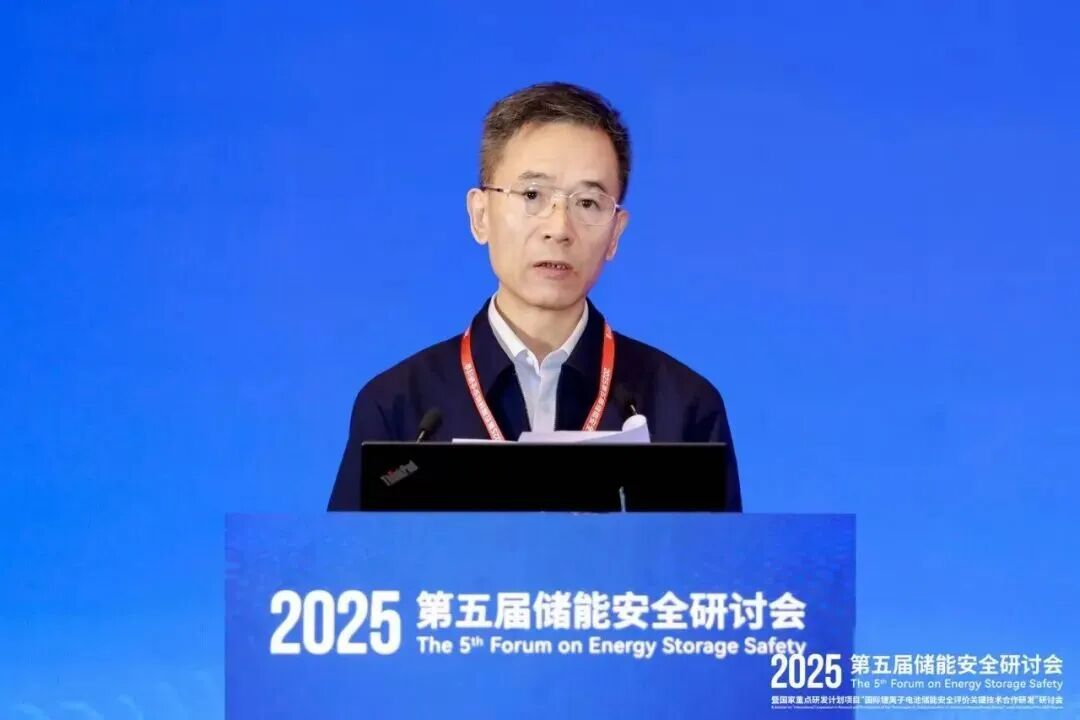
Sun Zhengyun
Vice Chairman and Secretary-General, China Energy Research Society
The opening ceremony was hosted by Sun Zhengyun, Vice Chairman and Secretary-General of the China Energy Research Society.
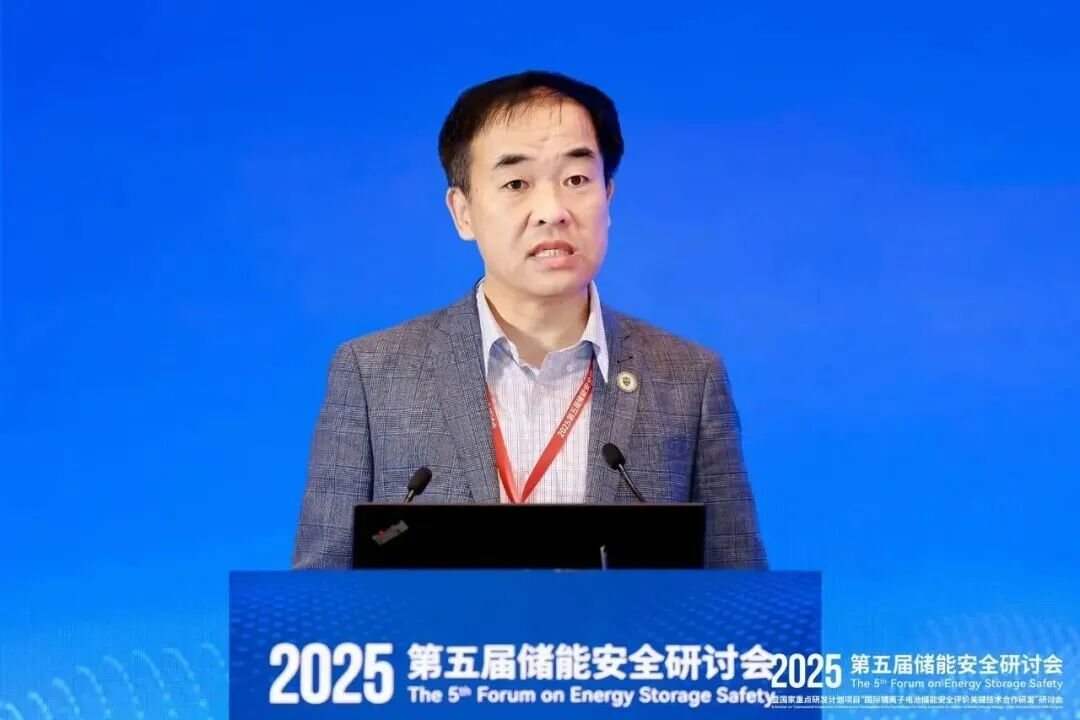
Li Bin
Member of the CPC Party Committee, Vice President, and Professor, Tianjin University
Professor Li Bin, member of the Party Committee and Vice President of Tianjin University, delivered the opening remarks. He noted that electrochemical energy storage is a core element for ensuring the stable operation of new power systems, but recent frequent safety incidents involving lithium-ion battery storage have posed systemic risks. He emphasized that energy storage safety is a critical issue for national energy security, and it is essential to develop a scientifically grounded, internationally recognized safety evaluation standard system through multidisciplinary collaboration and coordination among industry, academia, research, and application. By doing so, the “key variable” of energy storage safety can be transformed into the “greatest driver” for advancing the construction of new power systems.
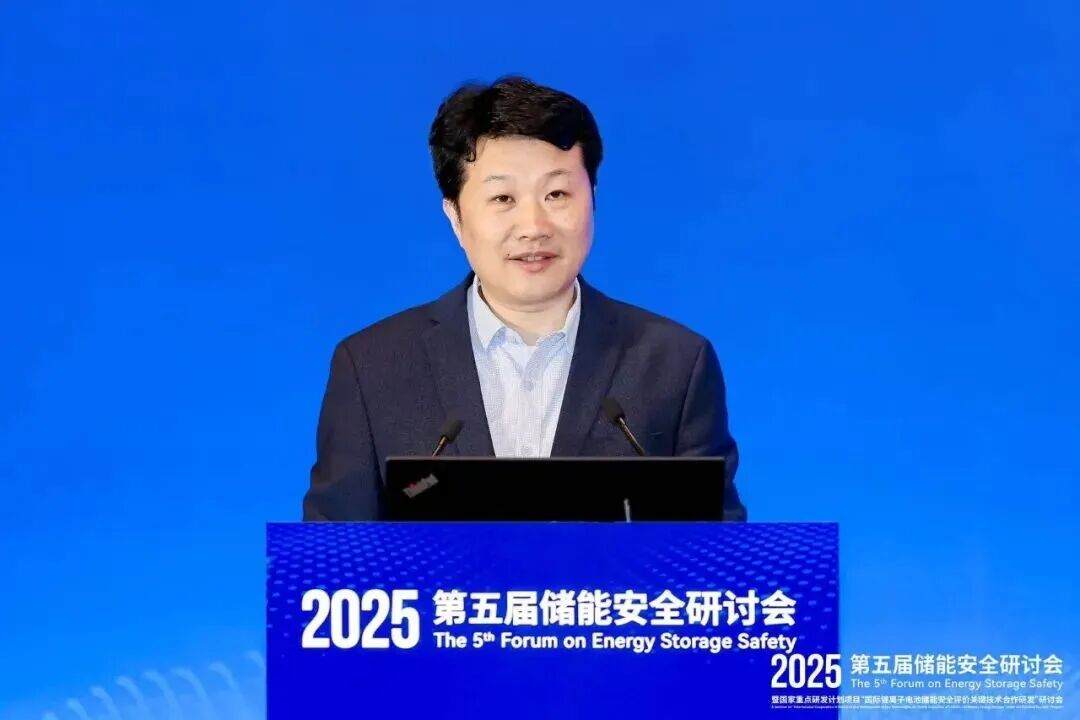
Chen Haisheng
Chairman, China Energy Storage Alliance (CNESA); Director, Institute of Engineering Thermophysics, Chinese Academy of Sciences
In his speech, Chen Haisheng, Chairman of CNESA and Director of the Institute of Engineering Thermophysics at the Chinese Academy of Sciences, stated that while the energy storage industry is thriving, safety remains its lifeline for sustainable development. He noted that frequent global energy storage incidents in recent years have sounded an alarm for the industry. To meet these challenges, the entire sector is systematically building safety defenses:
● Policy level: The government has introduced top-level designs to strengthen energy storage safety management.
● Standards: The industry is entering a new phase of mandatory safety regulations, with the first compulsory national standard implemented domestically, while both domestic and international regulations are tightening.
● Technology level: Full-scale combustion testing has become a crucial method to verify safety and gain market trust.
Frontline Insights:
Academicians and Experts Discuss Key Technological Challenges
The main forum reports focused on safety technologies across the entire chain, from materials and batteries to systems and evaluation standards.

Zhang Laibin
Academician, Chinese Academy of Engineering; Professor, China University of Petroleum (Beijing)
In his report, “Safety and Emergency Assurance Technologies for Deep Underground Energy Storage”, Professor Laibin Zhang, Academician of the Chinese Academy of Engineering and Professor at China University of Petroleum (Beijing), discussed the advantages and challenges of using deep underground spaces for physical energy storage. He systematically presented the five key technologies - deep gas storage, hydrogen storage, carbon sequestration, compressed air energy storage, and helium storage - along with their associated risks and challenges, emphasizing that only by effectively addressing safety issues can the application of deep energy storage spaces achieve sustainable development.
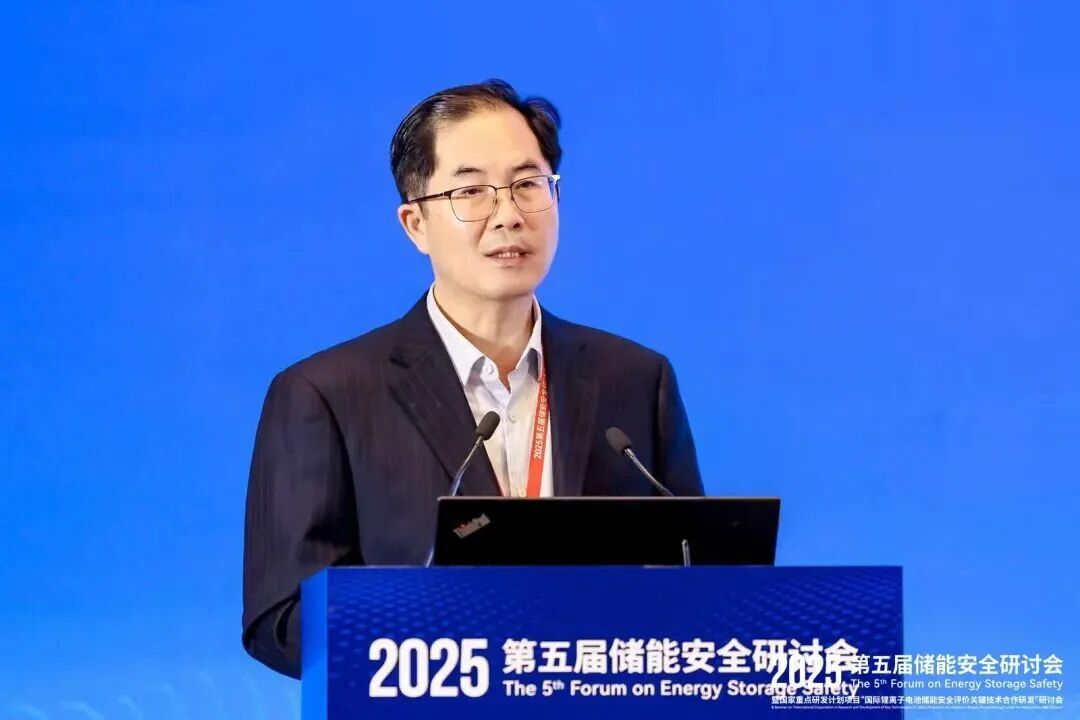
Sun Jinhua
Academician, European Academy of Sciences; Professor, University of Science and Technology of China
Professor Sun Jinhua, Academician of the European Academy of Sciences and Professor at the University of Science and Technology of China, systematically presented his report on “Fundamentals and Technological Advances in Fire Prevention and Control for Electrochemical Energy Storage”. He pointed out that fire safety is a core challenge amid the rapid development of electrochemical energy storage, and proposed a systematic solution based on three lines of defense: intrinsic safety, process safety, and fire protection safety. This approach includes developing high-safety materials to enhance intrinsic battery safety, using intelligent monitoring and hazard mitigation to suppress faults at an early stage, and developing precise firefighting technologies to prevent small fires from escalating. Finally, Professor Sun emphasized the need to strengthen industry self-discipline and eliminate irrational price competition, warning that such competition inevitably leads to declining product quality, increased safety incidents, and a damaged industry ecosystem. He called for standards and innovation to jointly safeguard the safe and high-quality development of the industry.

Xie Jia
Professor, Huazhong University of Science and Technology
In his report, “Thermal Runaway Mitigation Strategies and Key Materials for Lithium Batteries”, Professor Xie Jia from Huazhong University of Science and Technology revealed the safety risks of electrochemical energy storage through quantitative analysis. Using a 20-foot 314Ah energy storage container as an example, he noted that it contains up to 100 GJ of energy, equivalent to 24 tons of TNT. He emphasized that energy storage safety must start from the battery itself: preventing thermal runaway, minimizing energy release if it occurs, avoiding chain-fire incidents, and combining these measures with emergency response to enhance overall safety. Based on a deep understanding of the three key stages of the thermal runaway chain reaction, he proposed constructing “three lines of defense” within the battery itself and highlighted that developing intrinsic thermal runaway mitigation strategies and key materials is the core approach to achieving stage-wise precise intervention and fundamentally improving safety.
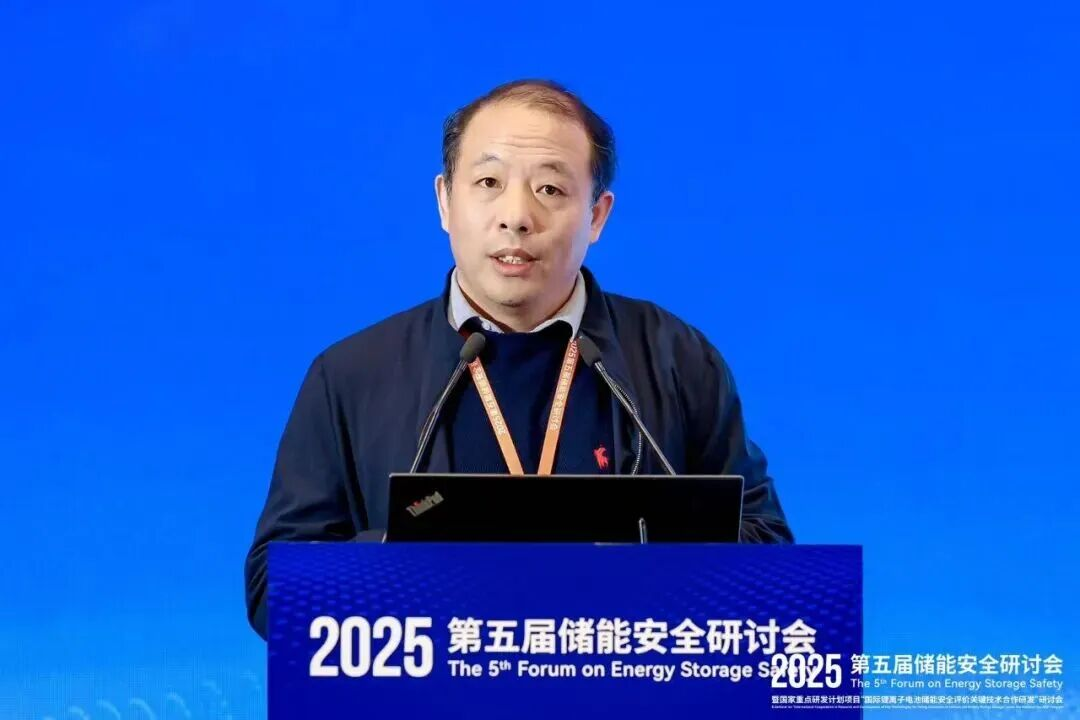
Chen Haosen
Professor, Beijing Institute of Technology
In his report, “Intelligent Battery Technologies for Intrinsic Safety”, Professor Chen Haosen from Beijing Institute of Technology highlighted that achieving intrinsic battery safety requires leveraging AI technologies to overcome the traditional sensing and management limitations of battery cells. Currently, his team focuses on AI for Service, using intelligent methods to enable precise battery state prediction and efficient management. To this end, they developed embedded chip sensors capable of real-time, multidimensional monitoring of temperature, strain, pressure, and five types of characteristic gases. This technology transforms the battery’s internal state from a ‘black box” into a “white box”, creating a unique “battery fingerprint” that provides essential data for early prediction, early warning, and early intervention. The approach has already facilitated the large-scale industrial application of domestically developed intelligent sensing technologies through industry collaborations.
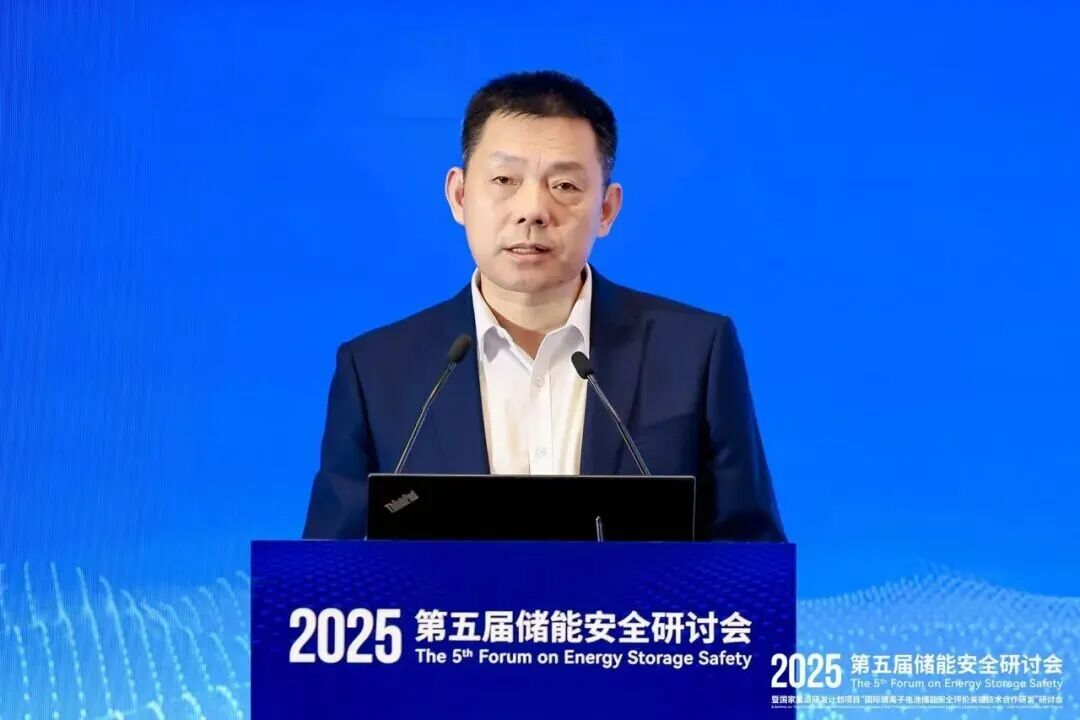
Li Jin
Deputy Director and Researcher, Tianjin Fire Science and Technology Research Institute of MEM
In his report, “Safety Evaluation Technologies for Lithium-Ion Battery Energy Storage Systems”, Researcher Li Jin, Deputy Director of the Tianjin Fire Research Institute, highlighted that in response to the serious challenge of frequent fires at energy storage facilities worldwide, the institute is leading the National Key R&D Program project “Collaborative Research on Key Technologies for International Lithium-Ion Battery Energy Storage Safety Evaluation”. The project has developed a comprehensive safety evaluation system covering all levels from cell, module, cluster, system, to entire power station. This system introduces a composite evaluation method integrating dynamic and static indicators, establishing quantitative safety performance grading techniques. The project outcomes have been applied in domestic and international energy storage safety assessments, and have supported the development of multiple national and international standards, providing a key “China approach” and technological support to improve energy storage safety and promote high-quality industry development.

Wang Fang
Chief Scientist, China Automotive Technology & Research Center Co., Ltd.
In her report, “Research and Evaluation of Energy Storage Battery Safety Technologies”, Wang Fang, Chief Scientist at the China Automotive Technology & Research Center, emphasized that energy storage battery safety is a systemic engineering challenge, requiring a comprehensive safety evaluation system covering all application scenarios, the full life-cycle, and all product levels. She noted that safety is the fundamental “veto line” in both energy storage and new energy vehicle sectors. Based on extensive accident analysis, Wang highlighted that battery safety must extend beyond the individual cell to a full-chain, system-level approach, closely integrated with specific application scenarios and real-world operating conditions. By implementing a full-chain framework encompassing design, application, usage, and management, the industry can continuously advance safety technologies.
Major Release:
“Self-Regulation Practice Guidelines” for the Energy Storage Industry
At the event, the “Self-Regulation Practice Guidelines for Containerized Lithium-Ion Battery Energy Storage Systems” was unveiled, which is a milestone achievement critical to the healthy development of the energy storage industry. Led by the China Energy Storage Alliance (CNESA) and jointly initiated by 25 leading industry enterprises from the CNESA Executive Council, this document is the industry’s first normative guidance specifically for containerized lithium-ion battery energy storage systems. It also marks the first time the industry has translated collective consensus into a systematic set of practical standards.
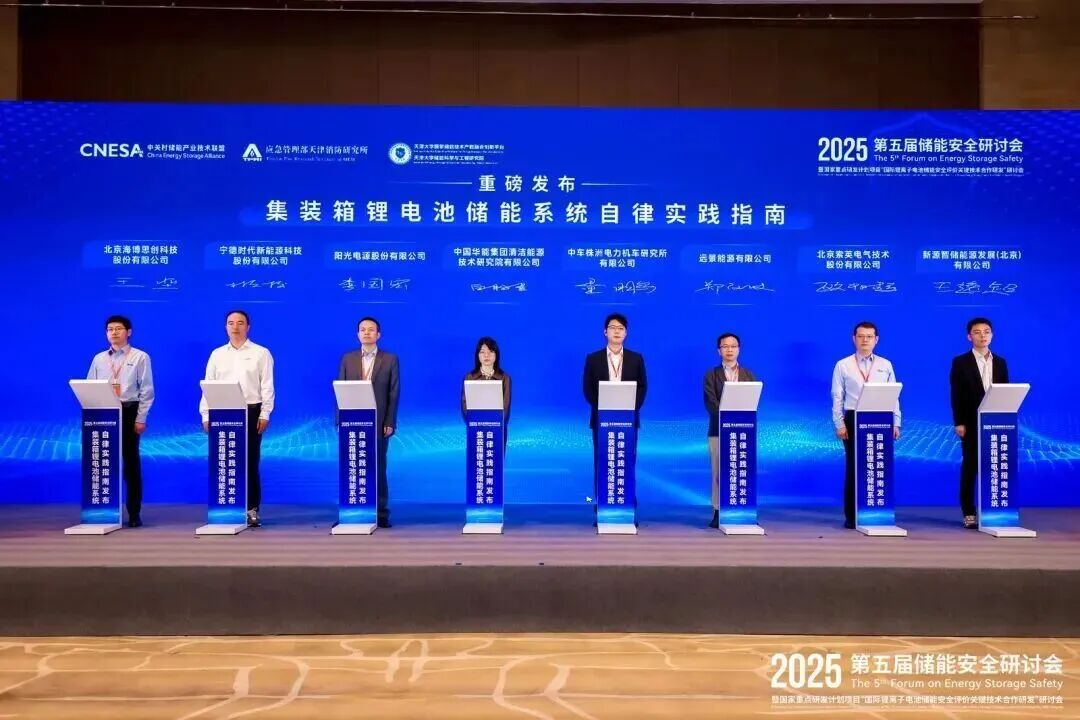
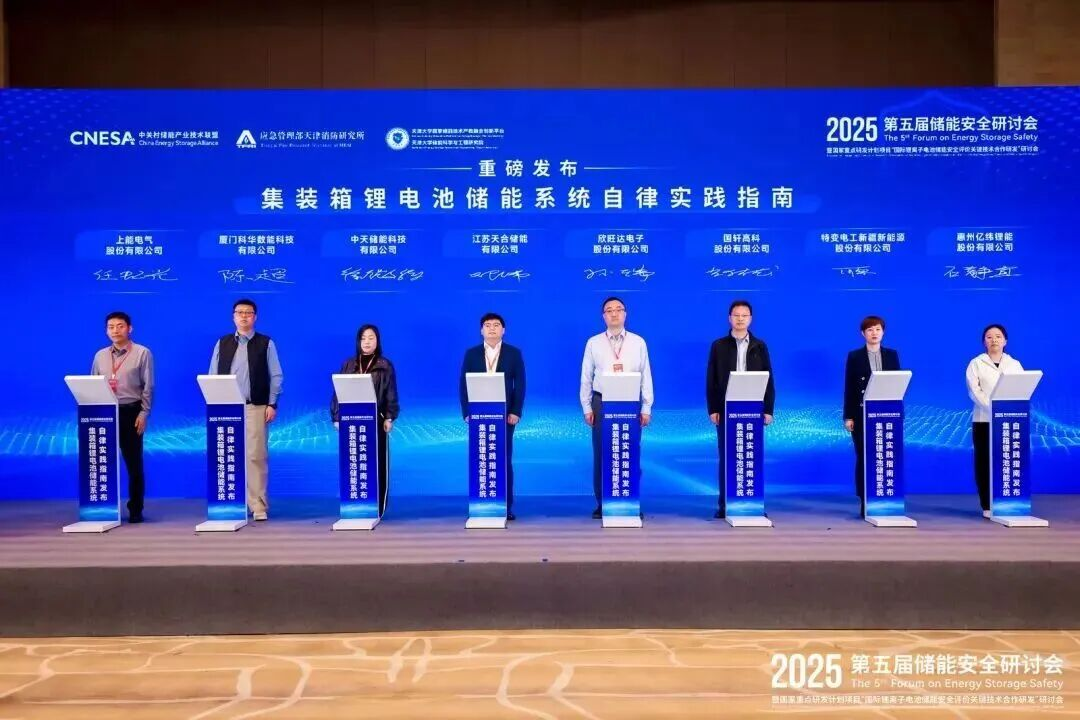
Representatives from 16 leading companies including HyperStrong, CATL (Contemporary Amperex Technology), Sungrow, CERI (Huaneng Clean Energy Institute), CRRC Zhuzhou Institute, Envision Energy, Soaring Electric Technology, XYZ Storage, Sineng Electric, Kehua Digital Energy, ZTT Storage, Trina Storage, Sunwoda, Gotion High-Tech, TBEA (formerly Tebian Electric Apparatus), and EVE Energy jointly took the stage to sign and witness this important moment.
In-Depth Discussions:
Three Parallel Sub-Forums Spark Innovative Ideas
In the afternoon, three parallel sub-forums were held, with topics of greater depth and specificity:
Sub-Forum 1: “Energy Storage Safety Technologies and Application Innovation” focused on the cutting-edge safety technology practices and challenges in the industry. It was chaired by Kong Depeng, Associate Dean and Professor at the School of Mechanical and Electrical Engineering, China University of Petroleum (East China). Experts from University of Science and Technology of China, Kehua Digital Energy, Pylon Technologies, Shell China, and CSA Group shared frontline results on topics including large-scale energy storage fire testing methods and innovations, full-stack safety technology solutions, industrial and commercial energy storage safety practices, and applications of immersion cooling fluids.
Following this, the “Large-Scale Fire Test” roundtable discussion, chaired by Researcher Wang Qingsong from the University of Science and Technology of China, brought together experts and leaders from Institute of Building Fire Research of China Academy of Building Research, Sungrow, Trina Storage, Envision Energy, and UL Solutions’ Energy & Industrial Automation Division. They engaged in in-depth debates on the necessity of extreme testing, differences in standards, certification costs, and how these factors translate into market competitiveness, providing the industry with practical technical pathways and market insights.
Sub-Forum 2: “Energy Storage Fault Diagnosis and Safe Operation & Maintenance” focused on how to prevent risks through refined management and advanced technologies.
The session was chaired by Professor Zhu Li, Deputy Director of the National Industry-Education Platform for Energy Storage (Tianjin University). Experts from Tianjin University, Southern Electric Power Research Institute, Robestec Energy, Pinggao Group, and AlphaESS shared cutting-edge solutions to enhance the reliability of energy storage systems, covering topics such as core protection technologies for lithium systems, full life-cycle battery management, immersion cooling technology, online early-warning systems, and digital twin applications.
The subsequent roundtable discussion, themed “Reliability Assessment of Energy Storage Systems and Cross-Industry Insights”, was chaired by Associate Professor Li Chao from Tianjin University. Experts from the Tianjin Fire Science and Technology Research Institute of MEM, CATARC Certification, CALB, Kehua Tech Data Center, and Huawei Digital Power explored how reliability practices from data center UPS and automotive-grade BMS systems could be applied to the energy storage sector. They also systematically analyzed the key role of advanced assessment methods such as FMEA and FTA in building a comprehensive life-cycle safety evaluation framework for energy storage systems.
Sub-Forum 3: “AI Empowering Energy Storage Safety” showcased the immense potential of cutting-edge technology in enhancing the intrinsic safety of energy storage.
The session was chaired by Associate Researcher Chu Yuxi from the Tianjin Fire Science and Technology Research Institute of MEM. Experts from Huazhong University of Science and Technology, Shenyang Fire Science and Technology Research Institute of MEM, Syi Tsing Energy Tech, Potisedge, Sermatec, and TEPDI (China Energy Engineering Group Tianjin Electric Power Design Institute Co., Ltd.) shared innovative AI-based practices in battery state sensing, intelligent early warning, health assessment, and thermal management.
The following roundtable discussion, themed “Responding to Energy Storage Incidents: Design + Fire Protection + Emergency Management”, was moderated by Tang Liang, Deputy Secretary-General of the China Energy Storage Alliance (CNESA). Experts and leaders from State Grid Jiangsu Electric Power, Huaneng Clean Energy Institute, China University of Mining and Technology (Beijing), and HyperStrong conducted in-depth discussions on the necessity and controversies surrounding fire suppression system configurations in energy storage systems, concepts of emergency response, and forward-looking goals for energy storage safety. The discussion provided a systematic framework for building a safety defense line covering the entire chain - from design and early warning to emergency handling.
In addition, on October 15, the conference hosted a closed-door seminar on the National Key R&D Program “International Cooperative R&D on Key Technologies for Lithium-Ion Battery Energy Storage Safety Assessment”, as well as a CNESA Energy Storage Safety Committee working meeting. On October 17, participants visited the TEDA Power 20.1 MW / 40.2 MWh grid-side energy storage project, achieving a close integration of theory and practice.
Summary and Outlook:
Building Consensus to Safeguard Steady and Sustainable
Industry Growth
2025 5th International Conference on Energy Storage Safety Technology was a high-standard, high-level, and high-impact industry event. It not only showcased China’s latest research achievements and technological advancements in the field of energy storage safety but also, through the release of the Self-Regulation Practice Guidelines, demonstrated the sector’s firm commitment to self-regulation and healthy development.
The forum forged a strong consensus that “safety is the cornerstone and lifeline of large-scale energy storage development”. It emphasized that only by reinforcing the safety bottom line can the energy storage industry unlock its full potential and play a greater role in driving the energy transition.
CENSA Upcoming Events:
1. Dec.4-5 | 2025 China Energy Storage CEO Summit | Xiamen, Fujian
Register Now to attend
Read more: http://en.cnesa.org/new-events-1/2025/12/4/dec4-5-2025-china-energy-storage-ceo-summit

2. Apr. 1-3, 2026 | The 14th Energy Storage International Conference & Expo
Register Now to attend, free before Oct 31, 2025.

Sign up for our free monthly newsletter to stay informed about the Chinese energy storage market.