Trina Solar’s 2 GWh Energy Storage Project in Australia Gains Approval

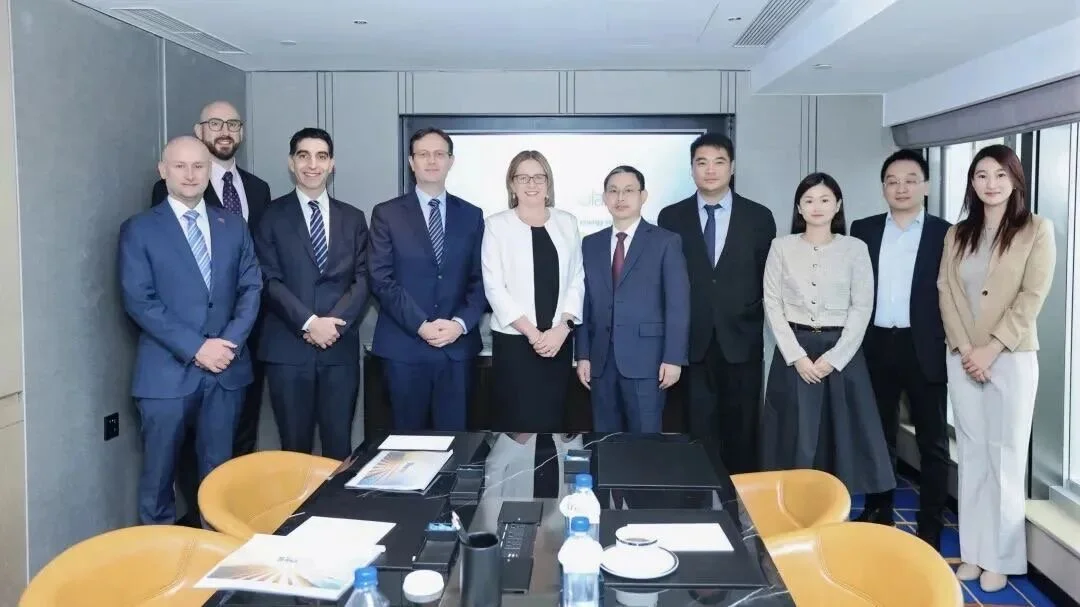
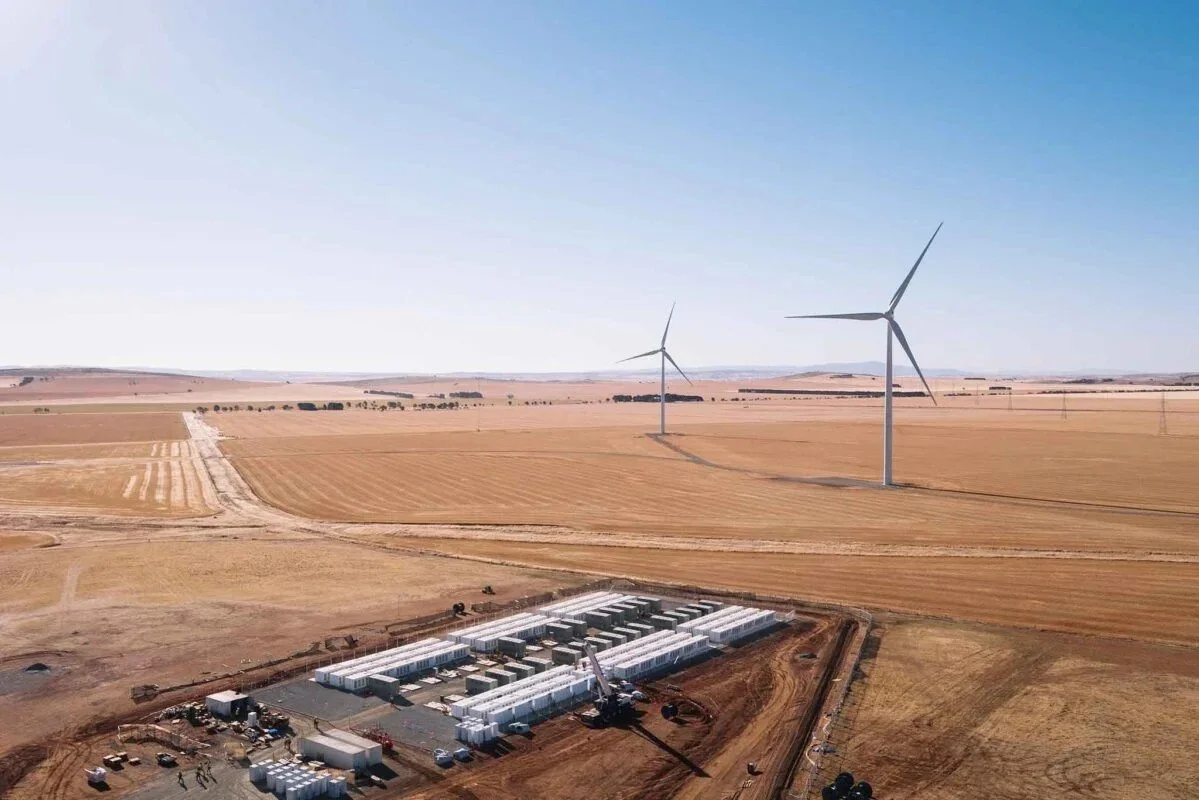
Recently, the 500 MW / 2,000 MWh (2 GWh) battery energy storage system (BESS) project developed by Trina Solarhas passed fast-track approval under the Victorian Labor Government’s Development Facilitation Program. The project, with a total investment of AUD 453 million (approximately RMB 2.18 billion), is expected to be completed by the end of 2027. Once operational, it will provide Victoria with cleaner and more cost-effective energy.

The 500 MW energy storage project is located near a high-voltage substation in northeastern Victoria. The system will store low-cost renewable energy during the day and feed power back to the grid during peak demand hours. It is estimated that the system will supply enough electricity annually to meet the needs of 172,000 households, while also creating approximately 86 local jobs.

The 14th ESIE - largest energy storage event in China is coming on April 1-3, 2026, Beijing, China!

Register Now to attend, free before Oct 31, 2025.

Read more: https://en.cnesa.org/new-events-1/2026/4/1/apr-1-apr3-the-14th-energy-storage-international-exhibition-amp-expo

The Largest User-Side Energy Storage Power Station in Jiangsu Province Successfully Connected to the Grid

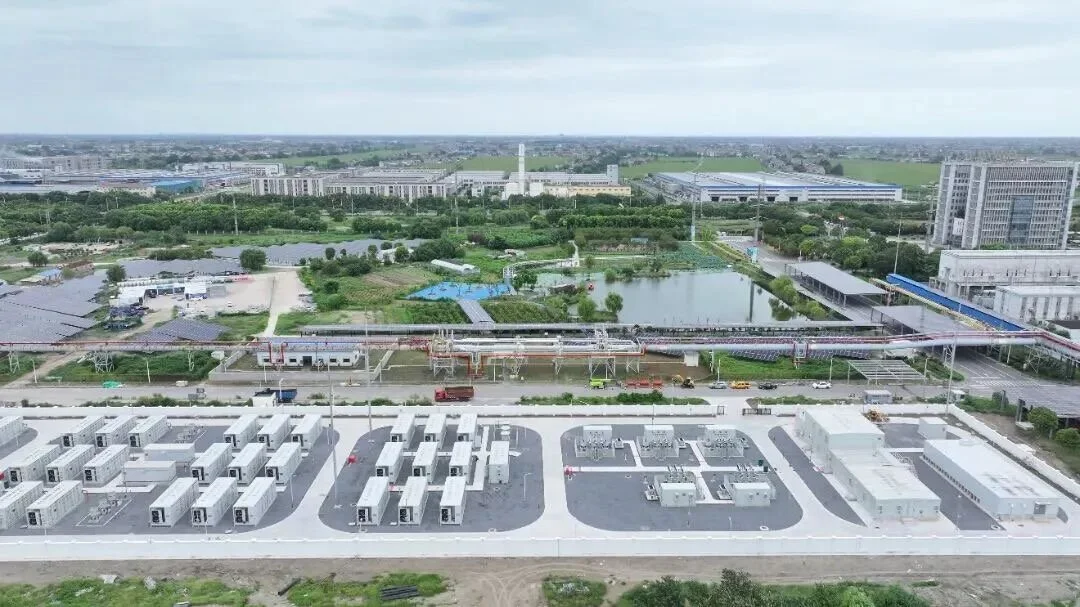
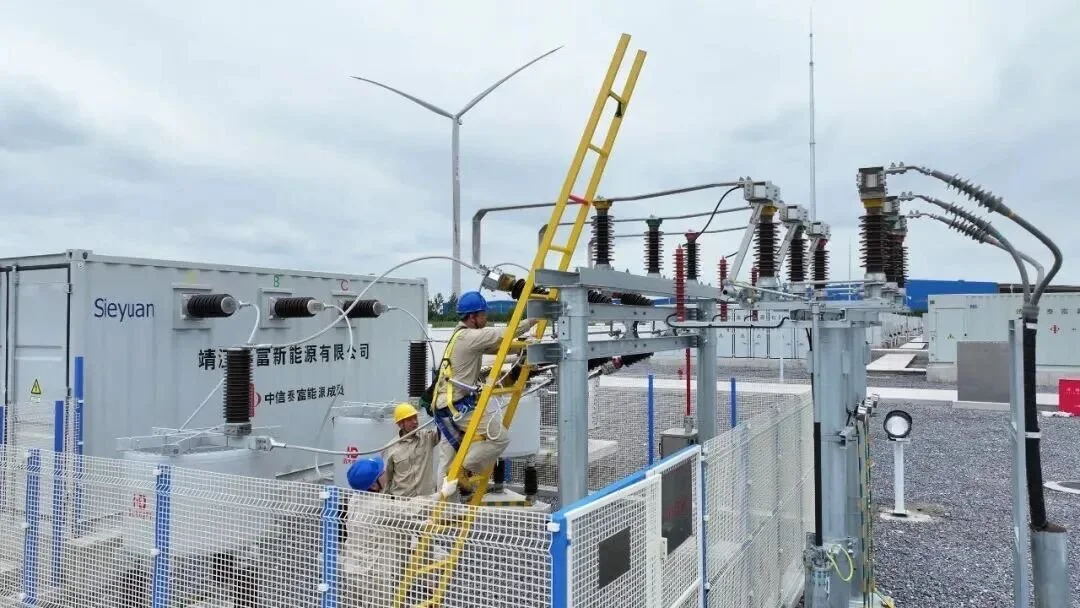
On September 18, the largest user-side energy storage power station in Jiangsu Province — a 240 MWh user-side energy storage project at Jiangsu Jingjiang Special Steel Co., Ltd. — was officially connected to the grid.

Jingjiang Special Steel Plant

Jingjiang Special Steel Plant

The project, located within Jiangsu Jingjiang Special Steel Co., Ltd., adopts grid-forming energy storage technology, featuring flexible operation, rapid start-up, and significant dynamic benefits. It can enhance the stability of the power system. According to estimates, when operating at full capacity, it can deliver 120 MW of power output and store 240 MWh of electricity, equivalent to meeting the daily electricity demand of 30,000 households.This energy storage station, together with other operational projects in Jiangsu — such as those at New Yangzi Shipbuilding and Changqiang Iron & Steel — will create a cluster effect, raising the total user-side energy storage capacity in Jiangsu to 157.2 MW.


The 14th ESIE - largest energy storage event in China is coming on April 1-3, 2026, Beijing, China!

Register Now to attend, free before Oct 31, 2025.

Read more: https://en.cnesa.org/new-events-1/2026/4/1/apr-1-apr3-the-14th-energy-storage-international-exhibition-amp-expo

Sep.25, 2025 | President Xi Jinping Announces Major Energy Target: Wind and Solar Power Capacity to Reach 3.6 Billion kW by 2035

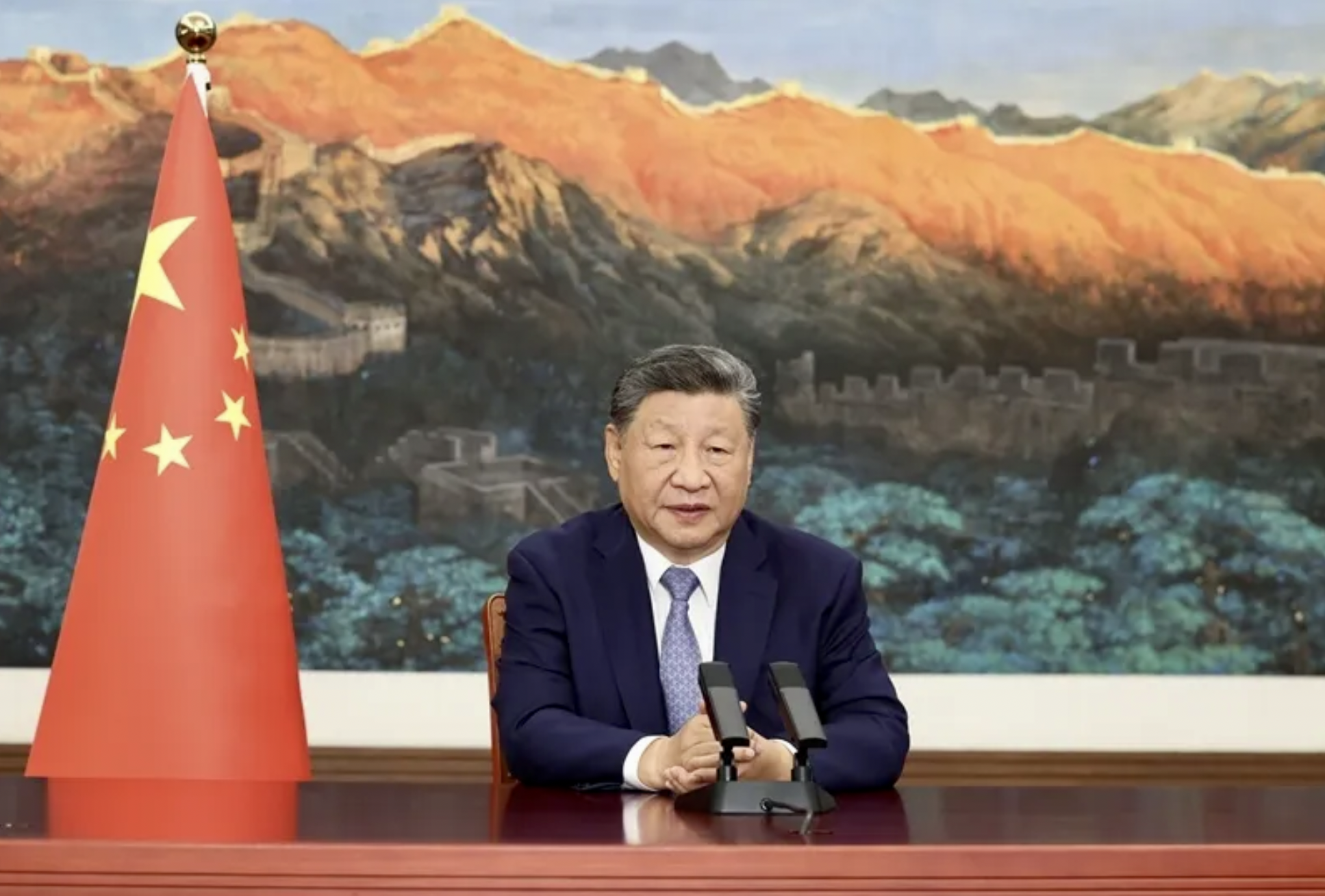
Wednesday, September 24, 2025,Chinese President Xi Jinping delivered a video address at the United Nations Climate Change Summit.

Xi noted that this year marks both the 10th anniversary of the Paris Agreement and a crucial moment for submitting a new round of Nationally Determined Contributions (NDCs), with global climate governance entering a critical stage.

He stressed three key points:

1. Strengthening confidence. Green and low-carbon transformation is the trend of the times. Despite some countries moving against the tide, the international community should stay on the right course, remain unwavering in confidence, continue action, and maintain strong momentum, injecting more positive energy into global climate cooperation through the formulation and implementation of NDCs.

2. Taking responsibility. Fairness and equity must be upheld, with full respect for the development rights of developing countries. The global green transition should help narrow, not widen, the North-South gap. All countries should adhere to the principle of common but differentiated responsibilities. Developed countries must fulfill their obligation to take the lead in emissions reduction and provide greater financial and technological support to developing countries.

3. Deepening cooperation. International collaboration in green technology and industry should be strengthened to fill the gap in green capacity, ensure the free flow of high-quality green products worldwide, and allow green development to truly benefit every part of the world.

President Xi announced China’s new round of NDC commitments:

• By 2035, China’s net greenhouse gas emissions across the entire economy will fall by 7%–10% from peak levels, with efforts to achieve even deeper cuts.

• Non-fossil energy will account for over 30% of total energy consumption.

• Total installed capacity of wind and solar power will exceed six times the 2020 level, aiming to reach 3.6 billion kW.

• Forest stock volume will surpass 24 billion cubic meters.

• New energy vehicles (NEVs) will become the mainstream of new car sales.

• The national carbon emissions trading market will cover all major high-emission industries.

• A climate-resilient society will be basically established.

On September 24, President Xi Jinping delivered a video address at the United Nations Climate Change Summit. (Photo by Huang Jingwen, Xinhua News Agency)

Xi emphasized that these targets were formulated with maximum effort in line with the requirements of the Paris Agreement. Achieving them will require tremendous domestic efforts as well as a favorable and open international environment. China has the determination and confidence to deliver on its promises. He called on all parties to take active steps to realize the vision of harmony between humanity and nature and safeguard the shared home of our planet.

Aug. 2025 | New Energy Storage Installations: Reached 2.9 GW/7.97 GWh; Power-Side Base Projects Record 285%/354% YoY Growth

The China Energy Storage Alliance has always adhered to standardized, timely, and comprehensive information collection criteria, continuously tracking the dynamics of energy storage projects. Relying on the solid data accumulated over the long term and in-depth professional analysis, the alliance regularly publishes objective market analysis articles on energy storage installations, providing industry peers with valuable market decision-making references. Since June 2025, the monthly energy storage project analysis has been refined into two sections: 'Generation-Grid Market' and 'User-Side Market.' This issue focuses on the analysis of the Source-Grid Market in August.


Overall Analysis of New Energy Storage Projects of August

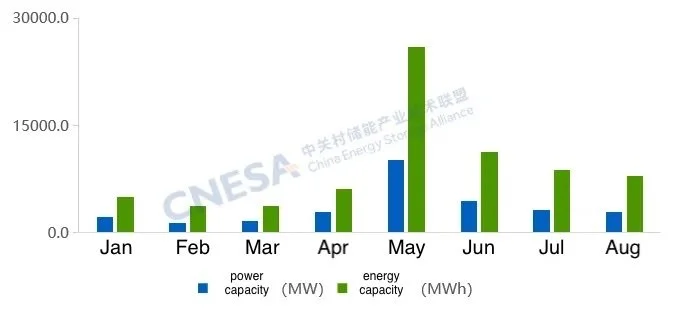
According to incomplete statistics from CNESA, in August 2025, the newly commissioned installed capacity of new energy storage projects in China totaled 2.90 GW/7.97 GWh, a year-on-year increase of +30%/+43%, and a month-on-month decrease of -11%/-10%. The newly installed capacity continued to decline in August, but the month-on-month decrease was smaller than the same period last year.

Figure 1: Newly Installed Capacity of New Energy Storage Projects in China from January to August 2025

Data Source: CNESA DataLink Global Energy Storage Database [https://www.esresearch.com.cn/](https://www.esresearch.com.cn/)

Note: Year-on-year (YoY) compares with the same period in the previous year; month-on-month (MoM) compares with the previous adjacent statistical period.


Analysis of New Energy Storage Projects on the Generation-Grid Side

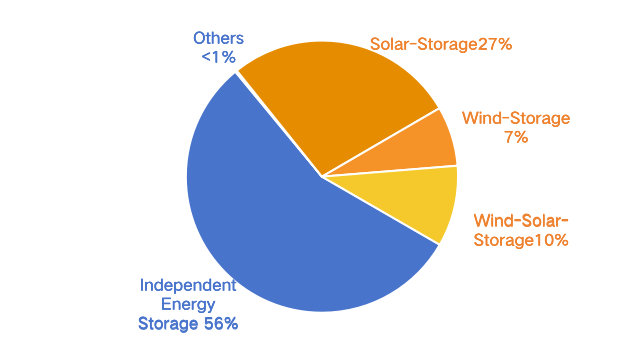
In August, newly added grid-side energy storage installations reached 2.50GW/7.08GWh, representing a 22%/36% year-on-year increase but a 17%/15% month-on-month decline. The grid-side new energy storage projects demonstrated the following characteristics:

Independent energy storage accounted for more than half of the total newly added capacity.

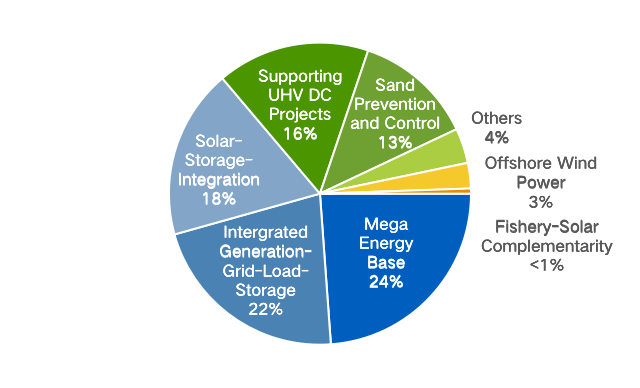
• In August, newly added independent energy storage installations totaled 1.39GW/3.98GWh, marking a 21%/12% year-on-year decrease. Projects with a capacity of 100MW and above represented 88% of the total. Newly added power-side installations reached 1.10GW/3.09GWh, showing a 285%/354% year-on-year surge. These projects covered a wide range of application scenarios, including large-scale energy bases, integrated generation-grid-load-storage projects, solar-storage integration, ultra-high-voltage (UHV) DC supporting projects, and desertification control initiatives.Among these, projects with capacities of 100MW and above accounted for 38%, an increase of 25 percentage points compared with July.

Figure 2: Application Distribution of Newly Commissioned Source-Network Side New Energy Storage Projects in August 2025 (MW%)

Data Source: CNESA DataLink Global Energy Storage Database [https://www.esresearch.com.cn/](https://www.esresearch.com.cn/)

Note: "Other" includes distribution network side and transformer station energy storage.


Figure 3: Distribution of Subdivided Application Scenarios for Newly Commissioned New Energy and Storage Projects in August 2025 (MW%)

Data Source: CNESA DataLink Global Energy Storage Database [https://www.esresearch.com.cn/](https://www.esresearch.com.cn/)


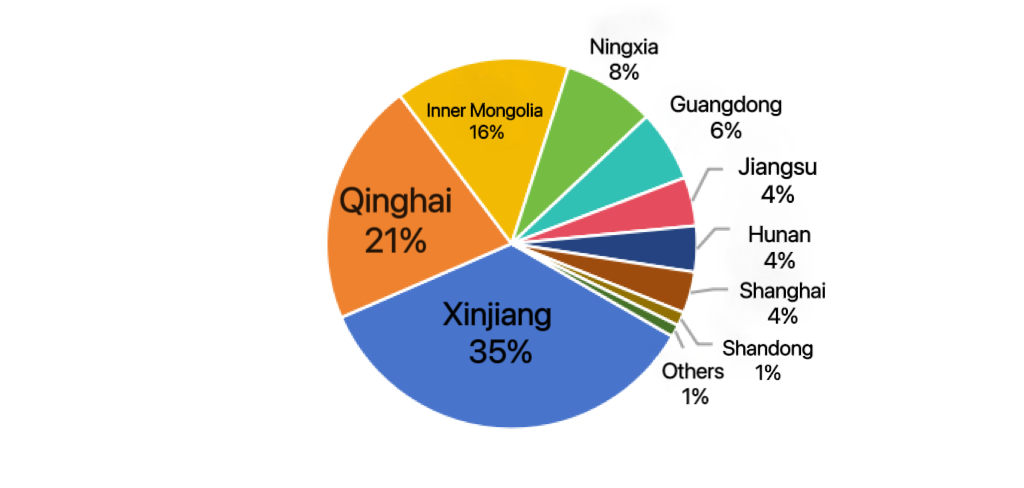
Northwest Region Accounts for 65% of New Installations, Xinjiang Leads in Scale

In August, newly added grid-side installations in Xinjiang exceeded 0.8GW, with independent energy storage accounting for 68%. As a key national energy base, Xinjiang’s new energy capacity has continued to expand rapidly. According to State Grid Xinjiang Electric Power, by the end of July the total installed capacity of the Xinjiang power grid had reached 219 million kW, of which 128 million kW came from new energy, accounting for about 60%. This represented an increase of around 10 percentage points compared with the same period last year, further driving the sustained growth in demand for grid-side new energy storage installations.

In addition, on July 11, 2025, Xinjiang issued detailed rules for ancillary services, allowing independent energy storage to generate revenue through peak shaving, frequency regulation, and reserve services, thereby expanding income sources. Starting from August 1, 2025, independent energy storage enterprises in Xinjiang, which had previously only been allowed to participate in monthly bilateral transactions, were permitted to take part in provincial medium- and long-term transactions with cycles of annual, monthly, and multi-day trading, including bilateral negotiated trading, centralized bidding, and rolling matching mechanisms. These changes have made trading methods more flexible.

Moreover, Xinjiang’s high curtailment rates have also been a major driver of the rapid increase in new energy storage installations. According to data from the National Renewable Energy Consumption Monitoring and Early Warning Center, in the first half of 2025, Xinjiang’s wind curtailment rate reached 10.1%, and the solar curtailment rate reached 12.9%, both falling below the national red line requiring 90% utilization of renewable energy.


Figure 4: Distribution of New Energy Storage Projects on the Source Network Side in China's Provinces in August 2025

Data source: CNESA DataLink Global Energy Storage Database

https://www.esresearch.com.cn/


More Than Half of New Installations Attributed to the ‘Big Five and Little Six’

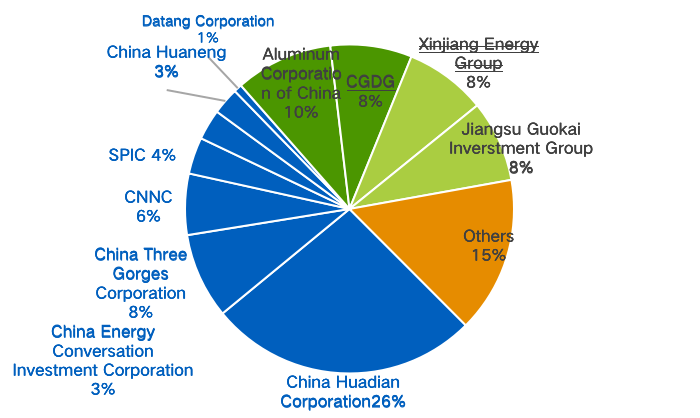
From the perspective of project owners, power generation groups such as Huadian, China Three Gorges, and China National Nuclear Corporation (CNNC) — collectively known as the “Big Five and Little Six” — accounted for more than half of the newly added installation market share. Among them, Huadian held the largest market share, with key projects such as the Huadian Xinjiang Changji Mulei Kaisheng Wind-Solar-Storage Base and the Urumqi Photovoltaic Base 1GW/4GWh Independent New Energy Storage Demonstration Project achieving phased grid connection.

In addition, state-owned enterprises including Aluminum Corporation of China (CHALCO), China Green Development Group, and various local energy groups together represented 38% of the market share, underscoring the comprehensive advantages of large-scale energy enterprises in investment scale, construction coordination, and operational managementof energy storage projects.

Figure 5 :Distribution of owners of new energy storage projects on the grid side of newly added operating sources in China in August 2025 (MW%)

Data source: CNESA DataLink Global Energy Storage Database https://www.esresearch.com.cn/


Average Storage Duration Up 12% YoY, Core Function Shifts to Long-Duration Supply Security.

Since May this year, the average storage duration of grid-side projects has exceeded the levels of the same period last year each month. In August, the average storage duration reached 2.84 hours, representing a 12% year-on-year increase.

Among the regions, Xinjiang recorded the longest average duration, at around 4.0 hours. This is mainly due to the seasonal mismatch between new energy generation and grid demand: Xinjiang’s renewable output is typically high in spring and autumn but low in summer and winter, while grid load is highest in summer and winter. Additionally, within a single day, there is a sharp contrast between midday peaks in wind and solar output and morning/evening peaks in electricity demand. Combined with the fact that large energy bases are located far from load centers, this results in significant spatial and temporal mismatches between renewable output and demand, driving higher requirements for storage system duration.

Qinghai followed with an average of 2.7 hours, while other provinces maintained an average storage duration of around 2 hours.


The average storage duration of generation-grid-side projects increased by 12% year-on-year, with the core function of energy storage shifting toward long-duration supply security.

Since May this year, the monthly average storage duration of generation-grid-side projects has consistently exceeded that of the same period last year. In August, the average storage duration reached 2.84 hours, representing a 12% year-on-year increase. Among provinces, Xinjiang recorded the longest average storage duration, at around 4.0 hours. This is primarily due to the mismatch between the seasonal characteristics of Xinjiang’s renewable generation—“large in spring and autumn, small in winter and summer”—and the grid’s demand profile of “higher loads in summer and winter.” In addition, the pronounced intra-day contradiction between midday renewable peaks and morning/evening load peaks, coupled with the long distance between energy bases and load centers, highlights the issue of spatiotemporal mismatch between renewable output and load demand, resulting in higher requirements for storage duration. Qinghai ranked second, with an average of 2.7 hours, while other provinces generally averaged 2 hours.


Acceleration in Deployment of Non-Lithium Technologies

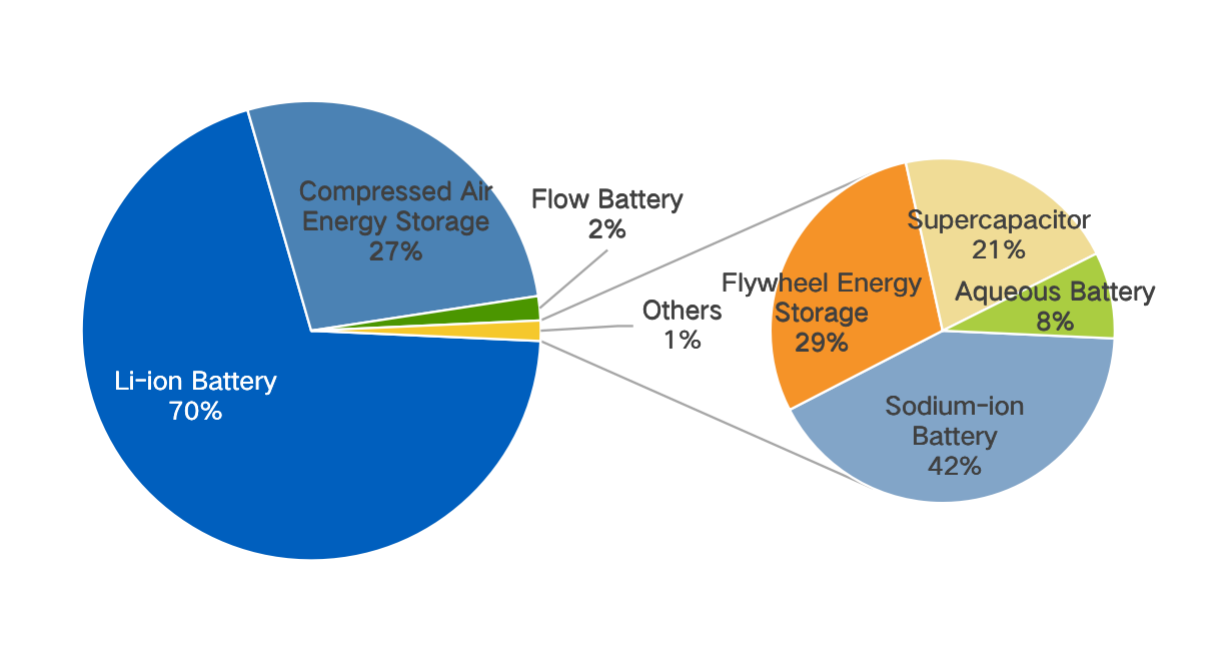
From a technology perspective, in August, all newly commissioned generation-grid-side storage projects adopted lithium iron phosphate (LFP) battery technology. Furthermore, grid-forming storage systems achieved gigawatt-hour–scale demonstration applications again in large-base projects, with a total station capacity of 1.05 GWh.

On the planning and construction side, the deployment of non-lithium technologies such as compressed air energy storage (CAES) and hybrid storage is accelerating. In CAES, construction has begun on the 300 MW advanced CAES project at Longquanshan, Yueyang, Hunan, as well as the 400 MW/1600 MWh artificial-cavern CAES project in Yongchuan District, Chongqing.In hybrid storage, projects under construction include a comprehensive demonstration project that integrates five technologies—lithium iron phosphate batteries, sodium-ion batteries, solid-state batteries, supercapacitors, and organic aqueous batteries—as well as a hybrid storage plant combining flywheels and lithium iron phosphate batteries for joint frequency regulation.

Figure 6: Technical distribution of new energy storage projects under construction on the source network side in China in August 2025 (unit: MW%)

Data source: CNESA DataLink Global Energy Storage Database

https://www.esresearch.com.cn/

The World’s First 600Ah+ Large Energy Storage Battery Project Successfully Delivers Power

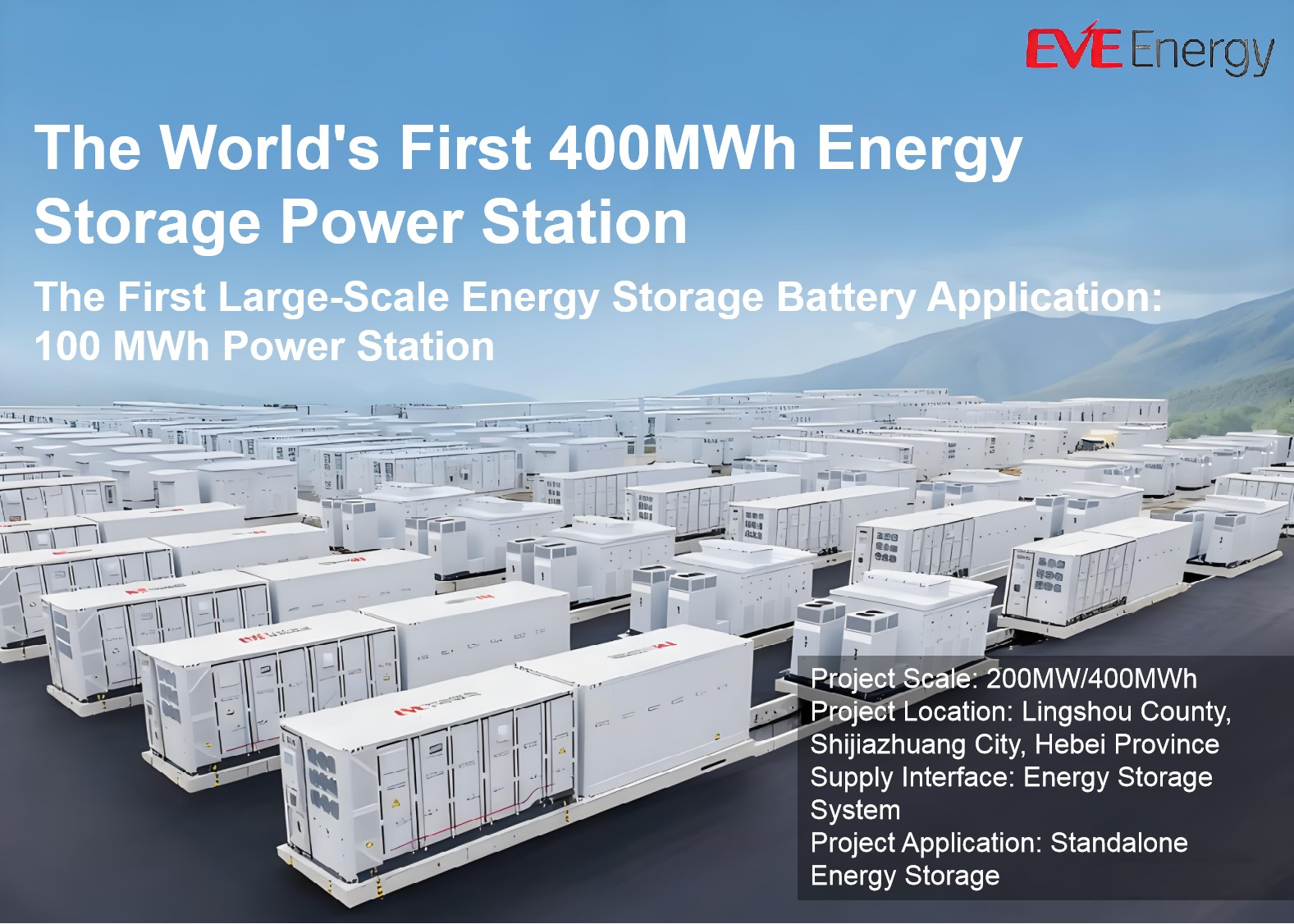
On 8 September, the world's first 400MWh energy storage power station based on 628Ah large energy storage batteries achieved successful one-time power delivery.

Located in Lingxiu County, Shijiazhuang, east of the Taihang Mountains, the 200MW/400MWh stand-alone energy storage station has officially begun operation. This marks the world's first large-scale deployment of a 600Ah+ large energy storage battery in a 100MWh project, signifying that the energy storage industry has entered the era of “2 kWh per battery cell”.

Storage project at Hebei, with EVE 628Ah+ Cell

Large batteries are widely regarded as the key pathway to reducing the levelized cost of storage (LCOS). By increasing single-cell capacity and reducing system integration complexity, these batteries can significantly lower the total lifecycle cost of energy storage systems. In 2024, global energy storage shipments surpassed 300 GWh, marking the final sprint before the industry enters the TWh era. As policy subsidies gradually phase out, market competition now increasingly depends on technological strength and product performance.

EVE Energy has achieved three major technological leaps in the large energy storage battery sector - from concept unveiling to mass production and pioneering engineering applications - driving the industry into a new phase of high-quality development fueled by innovation. In October 2022, the company introduced the LF560K concept large energy storage battery, ushering in the “500Ah+” era. In January 2024, it globally premiered the 628Ah “Mr. Big” large energy storage battery, achieving a single-cell energy capacity exceeding 2 kWh. By September 2025, EVE commissioned the world’s first 400MWh-scale power station using these batteries, transitioning from lab to grid in just 20 months.

The value of large energy storage batteries is backed by solid data. Operational data from the Jingmen demonstration project in Hubei Province showed system energy efficiency consistently above 95.5%, while maintenance components were reduced by 50% and operational costs lowered by 30%. In July 2025, EVE’s 600Ah+ battery became the world’s first to be fully certified under China's new national standards. The following month, the company secured a 154MWh order from China Electrical Equipment Group - the world’s first commercial order for 600Ah+ large energy storage batteries.

Behind this technological leadership lies EVE’s philosophy of “long-termism”. Chairman Liu Jincheng emphasizes, “A battery is a living entity. We approach each one with reverence, ensuring every cell is crafted to perfection.” This reverence for technology is reflected in the company's sustained R&D investment: the company’s sustained R&D commitment is reflected in its team of over 6,000 researchers, cumulative R&D investment exceeding RMB 10 billion since 2020, more than 10,000 patents, and involvement in 25 national-level projects. At its 60GWh super factory in Jingmen, extreme manufacturing principles enable production of 1.5 batteries per second with defect rates controlled at the PPB level, ensuring exceptional consistency and reliability.

With production bases advancing in Malaysia and Hungary, EVE Energy continues to optimize its global capacity layout. The company aims to reach 328GWh production capacity by 2027, supporting the worldwide energy transition. It has established deep partnerships with leading enterprises such as State Grid, China Southern Power Grid, Huaneng, Huawei, and Sungrow, while also making breakthroughs in overseas markets including Australia.

Industry analysis indicates that the first half of 2026 will witness a concentrated release of 500Ah+ batteries. Through its Lingshou project, EVE Energy demonstrates that large batteries are not a future concept but an ongoing reality. The deployment of this world-first 600Ah+ energy storage power station is not only a technological milestone but also an industry signal: the era of large batteries for energy storage has arrived.


CENSA Upcoming Events:

1. Dec.4-5 | 2025 China Energy Storage CEO Summit | Xiamen, Fujian

Register Now to attend

Read more: http://en.cnesa.org/new-events-1/2025/12/4/dec4-5-2025-china-energy-storage-ceo-summit

2. Apr. 1-3, 2026 | The 14th Energy Storage International Conference & Expo

Register Now to attend, free before Oct 31, 2025.

Read more: https://en.cnesa.org/new-events-1/2026/4/1/apr-1-apr3-the-14th-energy-storage-international-exhibition-amp-expo

HyperStrong’s Revenue Increased by 22.66% YoY in H1 2025, with Net Profit of 316 Million Yuan

On the evening of August 28, HyperStrong released its 2025 semi-annual report.

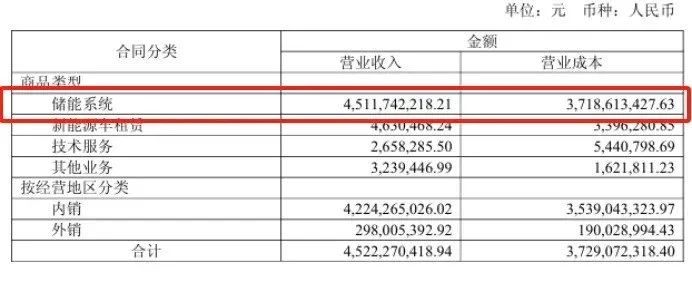
During the reporting period, the company achieved operating revenue of 4.522 billion yuan, an increase of 22.66% YoY; net profit attributable to owners of the parent company was 316 million yuan, an increase of 12.05% YoY; net profit attributable to owners of the parent company excluding non-recurring gains and losses was 259.6 million yuan, a decrease of 8.38% YoY. The company’s total assets reached 12.059 billion yuan, an increase of 9.91% compared with the beginning of the year; net assets attributable to shareholders of the listed company were 4.082 billion yuan, an increase of 29.95% compared with the beginning of the year.

From the classification of operating revenue, revenue from energy storage systems was 4.512 billion yuan, accounting for the highest proportion.

Actively Exploring Energy Storage Application Scenarios

In the era when the industry is fully shifting toward marketization, the reform of the electricity spot market is accelerating, the mechanisms for energy storage participation in the market are gradually improving, and the economic viability of energy storage power plant assets will be significantly enhanced, achieving a transformation from price-oriented to value-oriented.

Through technological breakthroughs, scenario innovation, and industrial collaboration, HyperStrong promotes the “Energy Storage + X” strategy, constructing a core logic driven by intelligent full lifecycle management, reconstructing the profit model, and continuously exploring application scenarios with commercial value, including independent energy storage power plants, PV-storage integration, generation-grid-load-storage integration, direct connection of green electricity, diesel generator replacement, and PV-storage-charging integration.

Rapidly Expanding the Global Market

In the domestic market, the company continues to maintain deep cooperation with the “Five Big, Six Small” power generation groups (Five Big: CHN Energy, Huaneng Group, SPIC, Huadian Group and China Datang; Six Small: CTG, CGN, CR Power, SDIC Power, CNNC and CECEP), while also focusing on high-quality local energy groups, local government investment platforms, and energy storage projects invested in by social capital, in order to expand incremental business and increase market share.

In the first half of 2025, the company has already participated in multiple grid-side energy storage projects and commercial & industrial energy storage projects in overseas markets, creating several benchmark cases. Among them, the successful commissioning of the Stockholm energy storage project in Sweden and the Waltershausen project in Germany accumulated valuable experience for the company’s expansion in the European market.

At the same time, the company has established long-term and stable cooperation with many internationally renowned enterprises. It has formally reached a strategic cooperation with European large-scale energy storage project developer Repono, and the two parties will jointly promote the implementation of grid-scale energy storage projects with a total scale of 1.4 GWh before 2027, helping to advance Europe’s energy transition; it has also cooperated with Singapore energy infrastructure developer Alpina, planning to provide 5,000 integrated charging-storage units during 2025–2027, developing energy storage applications in Singapore’s and the Asia-Pacific region’s rapidly growing electric vehicle charging market.

Deep Integration of AI and Digital Technology

Relying on the company’s massive data and technological advantages in the energy storage industry, an artificial intelligence big data service platform is being built. From the perspective of the entire industry chain—from energy storage product R&D, testing and verification, and pilot/demo to mass application—it continuously promotes the application of AI, big data, and digital twin technologies in the energy storage field, driving the intelligent and digital empowerment of the full lifecycle of energy storage systems, improving the safe operation and maintenance capabilities of energy storage power plants, and enhancing customer asset value.

Through AI-driven comprehensive calculations, it conducts revenue forecasting and configuration recommendations for each energy storage application scenario; through “AI modeling + data,” it drives customized product design and optimization, providing customized design for each energy storage power plant; through intelligent EMS combined with AI algorithms, it ensures optimal performance throughout the entire lifecycle of energy storage systems, providing predictive maintenance, proactive warnings, expert diagnostics, and AI-agent-assisted decision-making for refined intelligent operation and maintenance; through full-dimensional operation monitoring, it carries out equipment status estimation, high-precision price forecasting, and dynamic trading strategies, realizing intelligent electricity trading; through AI empowerment, it connects the entire industry chain from project planning, design, delivery, and operation & maintenance to operation, achieving efficient integrated management of the full lifecycle of energy storage systems.

Continuously Promoting Cross-boundary Cooperation in the Industry Ecosystem

The company has established strategic cooperative relationships with upstream and downstream enterprises in the industry chain, including Huawei Digital Power, CATL, EVE Energy, Genertec, Shuangdeng Group, Inovance Technology, Huachi Kinetic Energy, and plans to carry out cooperation in multiple key areas such as zero-carbon energy, intelligent manufacturing, resource and scenario integration, project co-construction, and industrial integration.

In addition, the semi-annual report disclosed HyperStrong’s core technologies and R&D progress, specifically including artificial intelligence technology in the field of energy storage applications, battery digital modeling technology, digital intelligent closed-loop verification technology, battery management system technology, energy storage converter technology, thermal management system technology, battery system integration technology, power coordination control system technology, energy management and energy storage power station monitoring system technology, and battery full lifecycle intelligent operation and maintenance system technology.

July | Monthly Project Tracker of New Energy Storage | Newly Commissioned User-Side New Energy Storage Projects +9% Year-on-Year, -41% Month-on-Month, East China Holds Largest Market Share

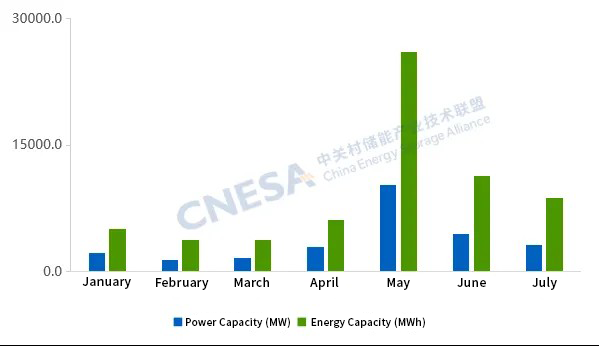
According to the incomplete statistics of the CNESA DataLink Global Energy Storage Database, in July 2025, the total newly commissioned capacity of domestic new energy storage projects was 3.24GW/8.79GWh, a year-on-year decrease of -35%/-26% and a month-on-month decrease of -28%/-23%. Affected by the “rush installation” of new energy, the newly added capacity of new energy storage continued the downward trend since “May 30.” The newly added capacity in July continued to decline, with a drop about 10 percentage points greater than the same period last year.

Figure 1: January–July 2025 Installed Capacity of Newly Commissioned New Energy Storage Projects in China

Data Source: CNESA DataLink Global Energy Storage Database https://www.esresearch.com.cn/

Since June this year, we have been publishing monthly updates on new energy storage projects by application market, dividing them into power source & grid side and user side. The following is the user-side new energy storage project installation landscape for July.

In July, user-side newly installed capacity was 252.3MW/529.7MWh, a year-on-year change of +9%/-1% and a month-on-month change of -41%/-49%.

User-side new energy storage project installations showed the following characteristics.

1.      C&I Energy Storage Dominated, with Emergency Power Assurance Functions Becoming Prominent

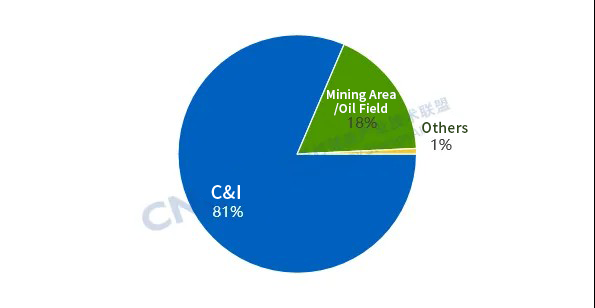
In July, the user-side energy storage market was dominated by C&I applications. Newly installed capacity in C&I scenarios reached 205.4MW/435.7MWh, a year-on-year change of -3%/-11%. Projects owned by high energy-consuming enterprises such as chemical, cement, and metallurgy accounted for 40% of the total, with the emergency power assurance role of user-side energy storage becoming increasingly prominent.

On the technical side, all newly commissioned projects adopted electrochemical energy storage technology, with lithium iron phosphate battery technology accounting for nearly 100% of installed power capacity. In addition, one vanadium redox flow battery C&I energy storage project was completed and put into operation.

Figure 2: Application Distribution of Newly Commissioned User-Side New Energy Storage Projects in July 2025 (MW%)

Data Source: CNESA DataLink Global Energy Storage Database https://www.esresearch.com.cn/

Note: “C&I” includes industry, industrial parks, and commercial buildings; “Others” includes EV charging stations, municipal utilities, and island.

2.      East China User-side Energy Storage Market Active, Sichuan Recorded the Largest Newly Installed Capacity

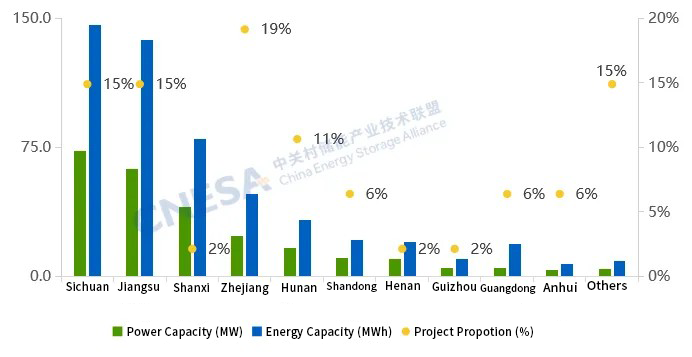
From the perspective of regional distribution, newly commissioned projects were mainly concentrated in 15 provinces including Sichuan, Jiangsu, Shanxi, Zhejiang, and Hunan. In terms of project numbers, the East China region (Zhejiang, Jiangsu, Shandong, etc.) held the largest market share, with nearly half of the country’s new projects, and Zhejiang accounted for nearly one-fifth of the national total, ranking first nationwide.

In terms of installed capacity, Sichuan recorded the largest increase, accounting for nearly 30% of the national total; Jiangsu followed, ranking first in East China. In July, Sichuan Power Grid Power Trading Center issued the “2025 User-Side New Energy Storage Project-Related Matters,” which clarified that energy storage operation revenue consists of two parts: peak-valley fluctuation revenue and storage discharge compensation fees, providing a clear revenue expectation for investment and operation of user-side storage projects.

Figure 3: Provincial Distribution of Newly Commissioned User-Side New Energy Storage Projects in China, July 2025

Data Source: CNESA DataLink Global Energy Storage Database https://www.esresearch.com.cn/

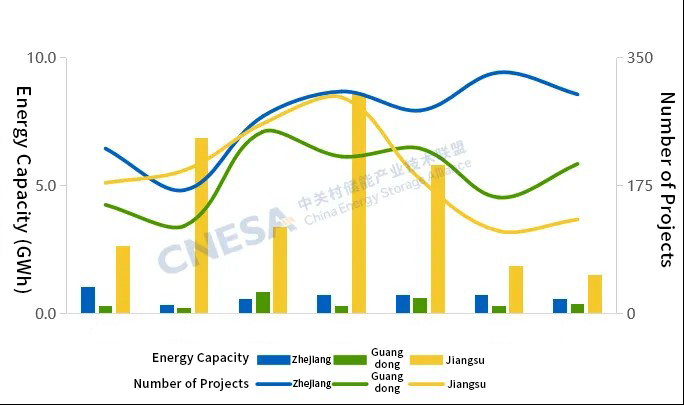
From the perspective of filed projects, since the second half of the year, overall investment enthusiasm in the user-side storage market has declined. In July, over 750 newly filed user-side storage projects were added nationwide, a year-on-year decrease of 35%, with energy capacity decreasing by 20% year-on-year.

Traditional user-side storage markets in Zhejiang, Guangdong, and Jiangsu showed sluggish growth. These three provinces recorded over 630 newly filed user-side storage projects, accounting for 84% of the national total, and remain the main market for user-side storage. However, both the number of newly filed projects and the energy capacity in these provinces were lower than the same period last year: Zhejiang -25%/-9% year-on-year, Guangdong -29%/-7%, Jiangsu -53%/-25%.

Emerging markets driven by power supply security needs are beginning to surface. Since 2025, Anhui’s user-side storage market has remained active, with the monthly number of newly filed projects consistently higher than the same period last year, and July growth exceeding 180%. In the first half of the year, Sichuan recorded 66 newly filed user-side storage projects, significantly higher than the same period last year. Henan recorded over 570 newly filed projects in the first half, a year-on-year increase of 21%.

Figure 4: Monthly Distribution of Newly Filed Storage Projects in Zhejiang, Guangdong, and Jiangsu (January–July 2025)

Data Source: CNESA DataLink Global Energy Storage Database https://www.esresearch.com.cn/

China Accelerates Green Energy Push With Major Projects, Spotlight on Energy Storage

China’s clean energy drive advanced this month as the State Grid Corporation’s Ningxia–Hunan ultra-high voltage direct current (UHVDC) project officially began transmitting electricity on August 20, according to China Economic Net. The 1,616-kilometer line is the country’s first UHV channel primarily built to carry wind and solar power from bases in desert, Gobi and wasteland to central regions. With an investment of 28.1 billion yuan and new energy accounting for more than 70 percent of its 17.64 million kilowatts of supporting capacity, the project will deliver up to 36 billion kilowatt-hours annually—around one-sixth of Hunan’s demand. Industry analysts say the commissioning reflects China’s broader pivot in energy investment “toward green and new,” with a wave of renewable, grid, and storage projects accelerating nationwide.

Government data show that in the first half of the year, investment in key energy projects exceeded 1.5 trillion yuan, rising 21.6 percent year-on-year. Spending on wind, solar, and offshore renewables surged across multiple provinces, while funds also flowed into smart grids, hydrogen, and energy storage. The National Energy Administration reported that investment in new energy storage and integrated generation-grid-load-storage systems grew by more than 30 percent, while charging and swapping infrastructure climbed nearly 70 percent. Hydrogen energy projects likewise doubled, with several large-scale green hydrogen facilities in Jilin Province advancing quickly. Experts stress that these technologies are critical to balancing intermittency challenges and ensuring renewable output can be absorbed reliably by the grid.

Looking ahead, analysts expect the second half of the year to maintain this strong pace, with grid modernization and energy storage projects becoming increasingly central to the country’s clean energy transition. While ultra-high voltage transmission enables large-scale renewable integration, energy storage and hydrogen remain essential to stabilize supply and unlock the full potential of China’s expanding green power base.

Lithuania Expands Energy Storage Plans to 1.7 GW/4 GWh

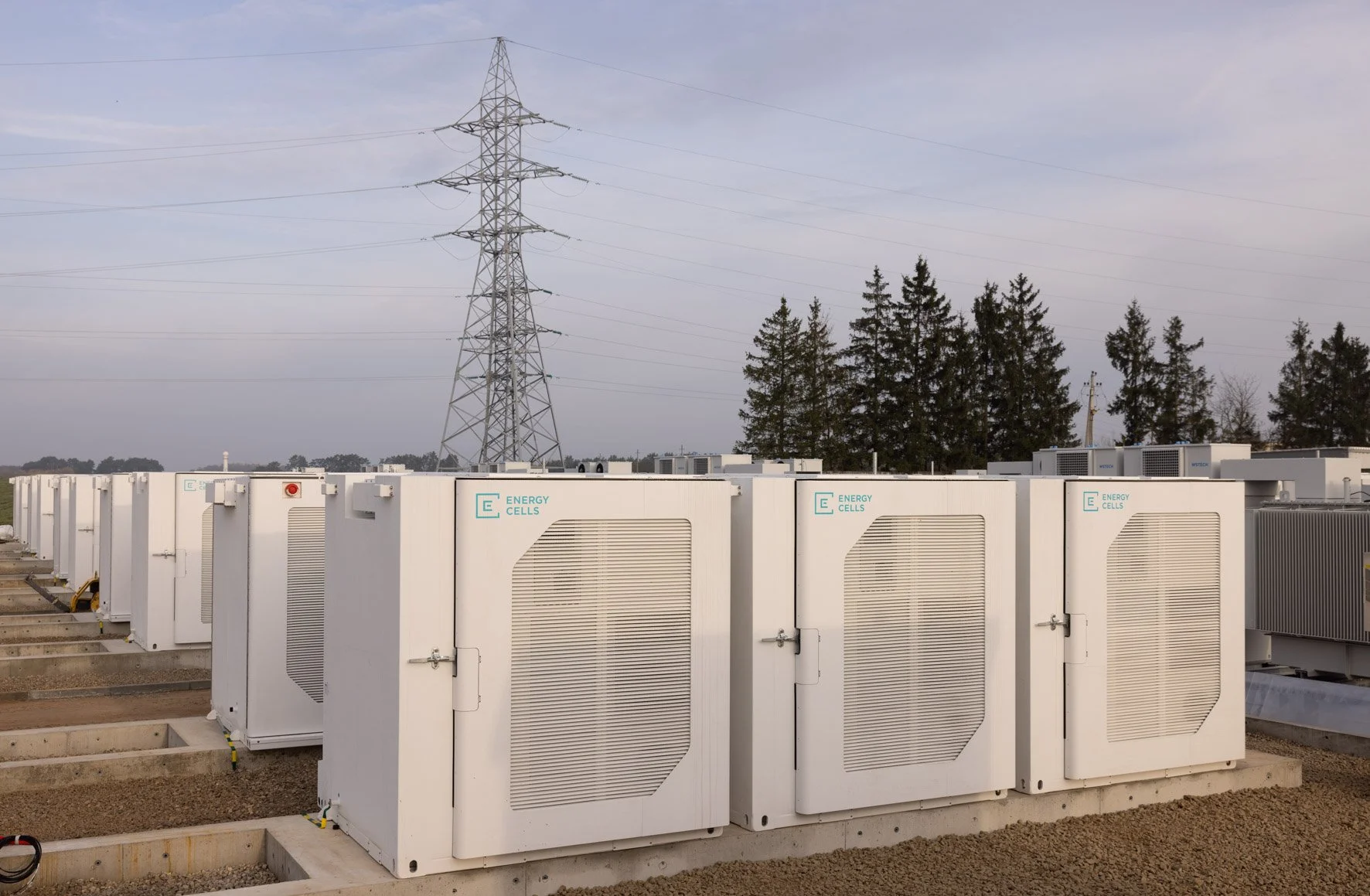
Image: Energy Cells

Lithuania is moving forward with one of the largest energy storage expansions in Europe, announcing plans to install 1.7 GW of capacity equal to 4 GWh of storage. The Ministry of Energy confirmed the decision after receiving strong demand in its recent procurement process. According to the ministry, the scale of the projects will play a critical role in strengthening the flexibility and reliability of the national grid while supporting the broader integration of renewable energy. Acting Energy Minister Žygimantas Vaičiūnas described the program as a “significant step” toward a more secure and modern power system, highlighting investor interest as a signal of strong private-sector commitment. The announcement marks a sharp increase from the government’s original target of 800 MWh.

The procurement call, first issued in February, generated more than 50 project applications worth about €197 million, nearly twice the amount initially budgeted. In July, the Ministry raised available funding by €37.33 million, on top of the original €102 million allocation. While the total pipeline now exceeds €840 million in value, state subsidies will average just under 15% of investments, covering up to 30% of eligible costs with a maximum of €150,000 per MWh. The supported projects will range from 30 MWh to 300 MWh and are intended to provide balancing services directly to Lithuania’s transmission network. Legal entities, excluding financial and credit institutions, are eligible for the subsidies.

The Ministry emphasized that this expansion represents a major step up from Lithuania’s earlier grid-scale storage project in 2020, a 200 MWh facility operated by Energy Cells. Officials also confirmed that a new round of procurement will be announced soon, signaling that the country’s energy storage build-out is only just beginning.

HiTHIUM to Supply 4GWh Long-Duration Energy Storage for Saudi Arabia’s Grid Stability Push

HiTHIUM has secured a landmark contract from the Saudi Electricity Company (SEC) to provide large-scale battery energy storage systems in northern Saudi Arabia, according to the company’s announcement on August 27. The project, valued at 4 gigawatt-hours of storage capacity, will be deployed across Tabuk and Hail provinces in partnership with Alfanar Projects. At its core, the installation will use HiTHIUM’s ∞Cell 1175Ah technology within 6.25 megawatt-hour containerized units—designed for long-duration performance. The initiative stands among the largest battery deployments in the Middle East and is expected to advance Saudi Arabia’s Vision 2030 goals by bolstering grid stability and supporting renewable integration. With growing energy demand and a push to reduce fossil fuel reliance, the deal positions HiTHIUM as a central technology provider in the kingdom’s energy transition.

Image: HiTHIUM

The storage systems, known as the ∞Power 6.25MWh Desert Eagle series, were specifically engineered to withstand Saudi Arabia’s harsh desert conditions. HiTHIUM noted the equipment includes multi-layer insulation capable of lowering internal temperatures by up to 10°C, ensuring reliable operation between -30°C and 60°C. Additional features include sealed enclosures to resist sandstorms, automated dust alerts to reduce maintenance, and components rated for more than 40,000 hours of continuous operation. These systems are designed to provide a range of critical grid services, from frequency regulation and voltage support to black-start capabilities and load shifting. HiTHIUM will oversee design, supply, and long-term service, while Alfanar leads construction efforts.

Commissioning of the projects is scheduled for 2026. If delivered as planned, the deployments will represent a new benchmark for large-scale energy storage in the region, highlighting both Saudi Arabia’s renewable ambitions and HiTHIUM’s strategy to scale its storage technology in extreme environments.

Bulgaria Opens Consultation on New 1.9 GWh Energy Storage Subsidy

Renalfa IPP's 25 MW/55 MWh battery energy storage system in the city of Razlog, in southwestern Bulgaria. | Image: Renalfa

Bulgaria’s Ministry of Energy has launched a public consultation on a new subsidy program designed to expand the country’s renewable energy storage capacity by 1.9 GWh. According to the ministry’s announcement, the initiative—called RESTORE 2—follows the strong uptake of the first RESTORE tender, which closed in April. That earlier round awarded funding to 82 projects representing nearly 9.7 GWh of usable capacity, more than tripling the original 3 GWh target. Supported by the EU’s Recovery and Resilience Plan, the program is part of Bulgaria’s broader strategy to scale renewable integration while ensuring sufficient storage infrastructure. Consultation documents are available for comment until September 15, with applications expected to open on September 18.

The draft guidelines specify that projects must deliver at least 10 MW of nominal AC power with a minimum of two hours of usable storage capacity. Funding will cover up to 50% of eligible costs, capped at BGN 156,466 (around $86,000) per MWh. A single applicant may request support for no more than 317 MWh, equal to one-sixth of the total quota. Financial requirements include a 3% participation guarantee and minimum own capital of BGN 6 million for 20–50 MWh facilities or BGN 10 million for projects above that size. Approved applicants must also provide a 10% performance guarantee upon signing their grant agreement.

To qualify, projects must represent “new usable energy storage capacity,” meaning construction cannot have started before June 25, 2024, and facilities must not be commissioned by then. Applicants are required to present a valid grid connection agreement, building permit, signed supply contract, and secured financing. According to the draft rules, all supported projects must be completed and commissioned by July 31, 2026.

National Energy Administration: China’s New Energy Storage Scale Now Ranks First in the World; Smart Microgrids, Virtual Power Plants, and Vehicle-to-Grid Pilot Programs Accelerating

By: State Council Information Office

On the morning of August 26, 2025 (Tuesday) at 10:00, the State Council Information Office held a press conference in the “High-quality Completion of the 14th Five-Year Plan” series. Wang Hongzhi, member of the Party Leadership Group of the National Development and Reform Commission and Head of the National Energy Administration, Wan Jinsong, Deputy Head of the National Energy Administration, Du Zhongming, Director General of the Department of Electric Power of the National Energy Administration, and Li Chuangjun, Director General of the Department of New Energy and Renewable Energy Sources of the National Energy Administration, introduced the achievements of high-quality energy development during the 14th Five-Year Plan period and answered questions from reporters.

Image: State Council Information Office

Wang Hongzhi, member of the Party Leadership Group of the National Development and Reform Commission and Head of the National Energy Administration, mentioned that the “14th Five-Year Plan” has witnessed greater breakthroughs in energy science and technology innovation. Technologies and equipment such as new energy are leading globally, with new energy patents accounting for more than 40% of the world’s total, photovoltaic conversion efficiency and offshore wind power unit capacity continuously refreshing world records. In just a few short years, China’s scale of new energy storage has ranked first in the world.

New models and new business forms are developing vigorously, with smart microgrids, virtual power plants and others entering the fast lane of development. Pilot programs for scaled application of vehicle-to-grid interaction are accelerating, the energy industry is speeding up integration with industries such as manufacturing and transportation, new fields and new tracks are continuously emerging, and they have become an important source of the development of new quality productive forces.

Li Chuangjun, Director General of the Department of New Energy and Renewable Energy Sources of the National Energy Administration, mentioned that since the “14th Five-Year Plan”, China’s electricity market transaction volume has increased from 10.7 trillion kilowatt-hours during the “13th Five-Year Plan” to 23.8 trillion kilowatt-hours, more than doubling. On the user side, all industrial and commercial users have entered the market, independent energy storage and other new entities, new models, and new business forms are developing vigorously, and a market pattern with orderly participation of multiple entities has basically taken shape.

Wan Jinsong, Deputy Head of the National Energy Administration, mentioned that investment in new energy business forms is also continuing to improve. In 2024, investment completed in key projects such as new energy storage, charging and swapping infrastructure, hydrogen energy, and generation-grid-load-storage integration reached nearly 200 billion yuan, gradually becoming a new growth point for energy investment.

During the “14th Five-Year Plan” period, we have made overall plans for the development of emerging industries such as new energy storage and hydrogen energy, promoting the continuous optimization of the industrial innovation ecosystem and development environment. As of the first half of this year, China’s installed capacity of new energy storage is about 95 million kilowatts, nearly 30 times growth in five years, equivalent to equipping the new power system with a “giant power bank.” In 2024, China’s hydrogen energy production and consumption scale exceeded 36 million tons, ranking first in the world, of which renewable energy hydrogen production capacity accounted for more than half of the global total.

Cracking the Bottleneck of Energy Storage: How to Quantify Multi-Scenario Revenue and Carbon Accounting?

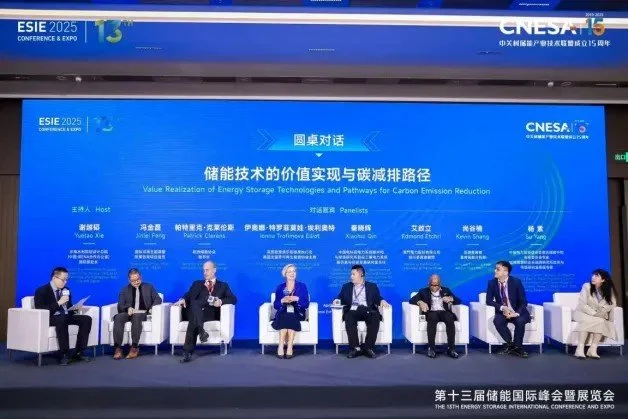
The first International Symposium on Value, Benefits, and Carbon Emission Assessment of Large-Scale Energy Storage, a National Key R&D Program Strategic Scientific and Technological Innovation Cooperation Project, was held in Beijing on April 11, 2025. Experts from industry, academia, and research institutes engaged in in-depth discussions on core pain points of the energy storage industry, technical pathways, carbon footprint management, and international cooperation.

Yu Zhenhua, Executive Vice Chairman of the China Energy Storage Alliance, pointed out at the symposium that the energy storage industry currently faces three core challenges: difficulty in cost assessment (diverse technical routes make cost evolution paths unclear), difficulty in comprehensive value assessment (multi-scenario revenue is hard to quantify), and difficulty in international mutual recognition of carbon emission standards (significant differences between domestic and foreign accounting systems). These issues have resulted in numerous obstacles for energy storage in supporting the realization of carbon peaking and carbon neutrality. The symposium revolved around these three challenges, and experts delved into the bottlenecks and pain points, presenting valuable insights. CNESA has compiled the experts’ key perspectives to share.

1. Global Perspective: The Demand and Positioning of Energy Storage in the Carbon Peaking and Carbon Neutrality Pathway

Global

Feng Jinlei, Policy Officer of the International Renewable Energy Agency, proposed that according to IRENA’s 1.5℃ temperature control scenario, the world needs to deploy 4000 GW of energy storage before 2050, of which long-duration energy storage accounts for more than 40%, with energy storage directly contributing 15% of carbon reduction.

Europe

Patrick Clerens, Secretary General of the European Association for Storage of Energy, emphasized that the EU is addressing consumption bottlenecks through market design and grid upgrades (500 billion euros of investment before 2030). This will reduce 310 TWh of renewable energy curtailment annually (worth 23 billion euros) and promote the integration of heat storage with industrial decarbonization. He also noted that the low-carbon advantage of China’s lithium battery industry chain can achieve value output through standard mutual recognition.

Regarding long-duration energy storage technology in supporting Europe’s net-zero target, Dr. Karin Arnold from the Wuppertal Institute for Climate, Environment and Energy pointed out that hydrogen shows potential in industrial heating and long-duration energy storage, but current costs are significantly driven by electrolyzer utilization (<3000 hours/year) and electricity prices. Under Germany’s 2045 carbon neutrality target, hydrogen-power coupling systems will need to undertake 15%-20% of peak shaving tasks, with green hydrogen costs expected to fall from 5 euros/kg in 2030 to 2 euros/kg in 2050. He emphasized that cross-regional hydrogen supply chain construction must simultaneously resolve storage and transport losses as well as infrastructure investment issues.

China

Ma Yuan from Tsinghua University stressed the urgency of China’s energy system transformation—with only 30 years from carbon peaking to carbon neutrality, much shorter than in Europe and the US. By building an optimized energy system model covering the entire industrial chain, by 2060, the share of fossil energy in China’s primary energy structure will drop to 13%, while renewable energy will account for 87% (solar 31%, wind 29%); total power generation capacity will reach 3.2 times the 2021 level, with wind and solar exceeding 80% of installed capacity. As a key regulatory tool, energy storage must be included in carbon peaking and carbon neutrality pathway models to enhance system robustness, particularly in raising end-use electrification rates and promoting renewable energy integration.

Regarding energy storage configuration and peak shaving in the new power system, Qin Xiaohui, Chief Engineer of Power-Carbon Coordination at China Electric Power Research Institute, analyzed that as the proportion of renewable energy increases, the role of energy storage in peak shaving will extend from “intra-day balancing” to “cross-cycle regulation.” For example, in a 2030 grid planning study of a major region, configuring 16 million kW/6-hour storage reduced curtailment rates by 3 percentage points and enabled over 40 billion kWh of additional renewable energy consumption. He emphasized that technology selection for energy storage must match application scenarios: large-capacity, long-duration storage can be configured at grid hub nodes to undertake energy transfer tasks while ensuring grid security constraints, whereas distributed storage focuses on power and energy self-balancing at the microgrid level.

2. How to Build an Energy Storage Carbon Emission Assessment System and Carbon Footprint Management System?

With the entry into force of the EU Battery Regulation (EU) 2023/1542, the EU has entered a stricter and more comprehensive era of lifecycle management for batteries, exerting profound and mandatory influence on Chinese companies exporting products containing batteries to the EU.

Qiu Lin, Chief Scientist of Zero Carbon Products at Envision Digital, noted in relation to the EU Battery Regulation that carbon footprint accounting for energy storage products must cover the full lifecycle “from mine to grave.” He suggested that companies can reduce emissions at the production end through zero-carbon industrial parks and use international standardization platforms to promote data mutual recognition.

On advancing carbon footprint accounting, certification, and mutual recognition, Zhao Lihua, Technical Director of the China Electronics Standardization Institute, introduced that China has established the first lithium battery carbon footprint background database, covering 95% of materials across the full industrial chain including cathodes, anodes, and electrolytes. The number of data entries increased from 210 in version 1.0 to 830 in version 2.0, with 90% derived from processes since 2020. The database adopts a “material flow-energy flow-emission flow” integrated modeling approach, enabling dynamic updates of power factors, thereby providing a scientific foundation for carbon footprint accounting, certification, and international mutual recognition. In the future, the database will be piloted in leading enterprises and its standard alignment with the EU and BRICS countries will be strengthened.

On international cooperation, Ionna Trofimova Elliott, CEO of the POLICY CLUB, pointed out that although the EU Battery Regulation sets carbon tariff thresholds, supply chain localization and technological cooperation must be balanced. The co-development of open carbon emission assessment methodologies for batteries and new energy storage technologies provides an opportunity for China-EU technical collaboration.

3. Under New Market Conditions, How to Measure the Comprehensive Value of Energy Storage (Including Green Value)?

On explicit revenue, Lai Xiaowen, CTO of Beijing Tsintergy, analyzed that as renewable energy storage policies phase out, energy storage revenues will shift toward market-driven mechanisms. In provinces with relatively mature market mechanisms, frequency regulation ancillary services (about 50–80%) and spot arbitrage (about 20–30%) are the main sources of revenue. However, provincial differences in market development are large, and independent energy storage revenue models face transitional adjustments, making it difficult to rely on a single trading product to achieve investment goals. Taking Guangdong as an example, with a spot price difference of only 0.1 yuan/kWh, energy storage must adopt a “multi-purpose” strategy (allocating part of capacity to frequency regulation and part to spot arbitrage) to balance revenue and lifecycle degradation. He suggested that in the future, capacity compensation or bidding mechanisms should be established to reflect the capacity value of energy storage, referencing thermal power standards.

On assessing the green value of energy storage for the entire power system, Qin Xiaohui, Deputy Chief Engineer of the China Electric Power Research Institute, analyzed that carbon reduction assessment of energy storage must establish a “baseline comparison” mechanism, distinguishing between bundled scenarios with renewable energy and independent grid-connected scenarios. Qiu Lin, Chief Scientist of Zero Carbon Products at Envision Digital, proposed that for solar-storage bundled projects, carbon reduction benefits can be quantified through green power tracing, while independent energy storage requires dispatch simulation models to evaluate renewable integration contributions. Edmond Etchri Sassouvi, adviser to the Executive Committee at Macau Power, shared the Macau case: by integrating green power from China Southern Power Grid and piloting second-life battery storage, the tourism city is advancing toward its 2050 carbon neutrality target, highlighting the role of regional grid interconnection in supporting low-carbon transition.

Yang Su from the State Grid Energy Research Institute proposed that China’s carbon market construction brings new opportunities for energy storage. The national carbon emissions trading market has already included the steel, cement, and electrolytic aluminum industries, with carbon prices expected to rise. Energy storage can actively participate in the selection of methodologies for voluntary greenhouse gas emission reduction projects and gain profit from the carbon market in the future. The full market entry of renewable energy will drive “wind-solar-storage” coordinated trading and give rise to new business models such as shared energy storage.

4. Conclusion: Building a Globally Coordinated Energy Storage Ecosystem of “Technology-Standards-Market”

The symposium reached a consensus: the value release of energy storage must be rooted in technological innovation, bridged by standard mutual recognition, and driven by market mechanisms. In the next three years, the National Key R&D Program “Strategic Scientific and Technological Innovation Cooperation” special project “Technical Cooperation Research on Value, Benefits, and Carbon Emission Assessment of Large-Scale Energy Storage” (2024YFE0209100) will focus on joint model and methodology research, co-development of international standards, and creation of cooperation and exchange platforms, promoting the transformation of energy storage from a “cost center” to a “value hub,” and providing China’s solution for global energy decarbonization.

US Poised for Record Year in Battery and Solar Energy Capacity

Image: EIA

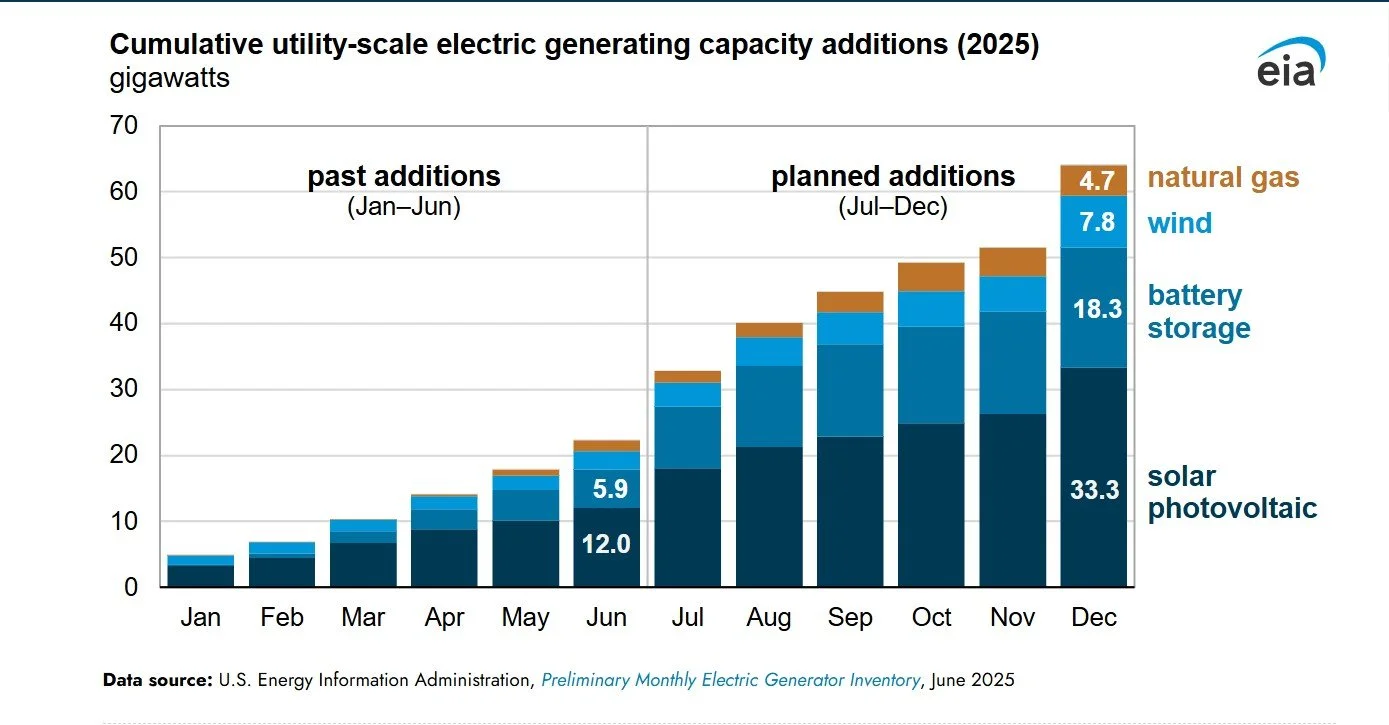
The United States is on track to set a new record for electricity generation capacity in 2025, driven primarily by solar and battery energy storage, according to the U.S. Energy Information Administration (EIA). A total of 64 gigawatts (GW) of new capacity is anticipated this year, with 33.3 GW coming from solar and 18.3 GW from battery storage. If realized, this would mark the strongest year yet for energy storage installations in the country. Batteries already made up 5.9 GW—about 26%—of new additions in the first half of 2025, with nearly half of those installations concentrated in Arizona and California. Texas is also expected to play a central role, potentially adding 7 GW of battery projects later this year.

Solar deployment is accelerating in the second half of 2025, with 21 GW expected to come online compared to 12 GW in the first half. Texas leads this expansion, already contributing 27% of new solar capacity this year and planning nearly 10 GW more before December. The EIA emphasized that this surge reflects both seasonal patterns in construction and tightened deadlines tied to federal clean energy tax credits. By contrast, wind projects are expected to add 7.8 GW this year, while natural gas lags with 4.7 GW. Retirements in fossil fuel plants are also underway, though some closures have been delayed or cancelled, including major coal, oil, and gas units in Maryland and Texas.

Overall, 2025 marks a turning point for U.S. energy development. Unlike the last record year in 2002, which was dominated by natural gas, this year’s milestone is set to be led by renewable energy and storage, signaling a significant shift in the nation’s power mix.

Sungrow Initiates Hong Kong Stock Listing! 2025H1 Energy Storage Revenue Reached RMB 17.803 Billion, Up 127.78% Year-on-Year, with a Gross Margin of 39.92%

On the evening of August 25, Sungrow released its 2025 semi-annual report. In the first half of the year, the company achieved operating revenue of RMB 43.533 billion, a year-on-year increase of 40.34%. Net profit attributable to the parent company was RMB 7.735 billion, up 55.97% year-on-year, and net profit excluding non-recurring items was RMB 7.495 billion, up 53.52% year-on-year.

On the same day, Sungrow announced plans to issue H-shares and list on the Hong Kong Stock Exchange, aiming to deepen its global strategic deployment, build diversified financing channels, and further enhance the company’s core competitiveness.

Energy Storage Revenue RMB 17.803 Billion, Up 127.78% Year-on-Year, with a Gross Margin of 39.92%

By industry:
Photovoltaic industry revenue was RMB 22.513 billion, accounting for 51.72%, up 4.84% year-on-year;
Energy storage industry revenue was RMB 17.803 billion, accounting for 40.89%, up 127.78% year-on-year;
Other business revenue was RMB 3.217 billion, accounting for 7.39%, up 85.96% year-on-year.

By product:
Photovoltaic inverters and other power electronic conversion equipment revenue was RMB 15.327 billion, up 17.06% year-on-year, with a gross margin of 35.74%, down 1.88% year-on-year;
Energy storage systems revenue was RMB 17.803 billion, up 127.78% year-on-year, with a gross margin of 39.92%, down 0.16% year-on-year;
New energy investment and development revenue was RMB 8.398 billion, down 6.22% year-on-year;
Photovoltaic power plant generation revenue was RMB 761 million, up 59.44% year-on-year.
Revenue from energy storage system products exceeded photovoltaic inverters.

By region:
Domestic revenue was RMB 18.155 billion, up 3.48% year-on-year, accounting for 41.70%;
Overseas revenue was RMB 25.379 billion, up 88.32% year-on-year, accounting for 58.30%.

Initiating Hong Kong Stock Listing
On the same day, Sungrow announced plans to issue H-shares and apply for listing on the main board of the Hong Kong Stock Exchange, in order to deepen its global strategic layout, enhance its international brand image, build diversified financing channels, and further strengthen core competitiveness.

R&D Personnel Account for About 40% of the Total, R&D Investment Up 37% Year-on-Year
The financial report shows that in the first half of 2025, the company continued to increase R&D investment to RMB 2.037 billion, a year-on-year increase of 37%, with R&D personnel accounting for about 40% of the total. By the end of the reporting period, the company had filed a total of 10,541 patent applications, including 5,690 invention patents, 4,142 utility model patents, and 709 design patents.

Latest Release of PowerTitan 3.0 Energy Storage System Platform
During the reporting period, the company launched the PowerTitan 3.0 AC smart energy storage platform, introducing three models: Flex version 10 ft 3.45MWh, Class version 20 ft 6.9MWh, and Plus version 30 ft 12.5MWh. These adopt 684Ah stacked cells, silicon carbide PCS, and are equipped with the PowerBidder power trading decision-support software and the PowerDoctor intelligent power plant operation and maintenance platform. Continuing the advantages of the AC storage architecture, the Plus version achieves an energy density exceeding 500kWh/㎡, currently the highest in the world.

PowerTitan 2.0 Widely Applied Globally,
PowerStack 835CS Opens the Era of Customized C&I Energy Storage

During the reporting period, the company’s pioneering “AC-DC integrated” 10MWh full liquid-cooled energy storage system PowerTitan 2.0 was widely applied worldwide, supporting stable operations at projects such as the Taizhou Hailing independent energy storage plant, Kunshan Longteng Special Steel user-side energy storage plant, Chery’s first energy storage station in the automotive industry in Wuhu, Shandong Taiyang grid-side energy storage plant, and Uzbekistan’s largest energy storage station in Central Asia. The company also launched the PowerStack 835CS liquid-cooled energy storage system for 10/20kV industrial scenarios, which has been applied in bulk in high-energy-consuming factories and parks such as steel, metallurgy, automotive, and chemical industries, fully initiating the era of customized C&I energy storage.

Grid-Forming Technology Stably Applied in Power Plants Worldwide
With the high penetration of wind, solar, and other renewable energy worldwide, traditional grid-following schemes are insufficient to support stable grid operation. During the reporting period, the company further upgraded its stem-cell grid technology, pioneering the “battery-converter-station” three-level collaborative architecture, and released the “Stem-Cell Grid-Forming Technology 2.0 White Paper.” From the perspective of solar-storage system applications, supported by a GW-level full-link electrical, thermal, and acoustic simulation platform, and all-scenario grid-forming algorithms, the solution meets diverse needs under different grid conditions, environments, and application scales, maximizing power plant benefits, adapting to grid conditions, and providing customized grid-forming solutions to safeguard grid safety and stability.

The company’s grid-forming technology has helped the UK grid rapidly recover frequency, preventing large-scale blackout, and has been stably applied in numerous projects such as the Weizhou Island isolated energy storage plant in Guangxi, the world’s largest wind-solar-ES-hydrogen multi-energy complementary project NEOM in Saudi Arabia, the solar-storage project in Caipeng, Naidong, Xizang Autonomous Region, and the world’s largest grid-forming off-grid storage project, the 60MW/120MWh project in Ali Prefecture, Xizang Autonomous Region. During the reporting period, the company successively supported the grid connection of more than ten grid-forming storage plants in Xizang and provided system solutions for China Southern Power Grid’s first grid-forming storage project—the Wenshan plant in Yunnan.

To fill the industry gap, during the reporting period the company released the industry’s first battery cell management white paper, “BM²T Battery Management Technology White Paper,” which deeply integrates AI and IoT technologies, breaking data silos and adapting to the development of grid-forming technology.

C&I Energy Storage Product Iteration Accelerates
In response to the complex and variable industrial and commercial storage market, the company further accelerated the iteration speed of new product development. During the reporting period, it launched the latest PowerStack 255CS system with power of 125kW and upgraded capacity to 257kWh, supporting 2/4h configurations, with a tested all-weather average efficiency of ≥88%, delivering RMB 40,000 additional annual revenue per 1MWh for power plants. In the industrial and commercial sector, it launched customized grid-forming technology for the first time, supporting MW-level park black-start capability, resilient to outages and load fluctuations. Equipped with an AI intelligent decision-making system, it can predict electricity prices and loads in real time and automatically settle for optimal returns.

Currently, the company’s energy storage systems are widely applied in mature power markets across Europe, the Americas, the Middle East, and Asia-Pacific, continuously strengthening deep integration of wind, solar, and storage. None of the storage projects it participated in have experienced a single safety incident. The company has accumulated extensive application experience in fields including frequency regulation and peak shaving, renewable energy integration support, microgrids, C&I and residential energy storage.


The World’s First Super-Stage Zero-Carbon Building Put into Operation in Qingdao

Source: Dazhong Daily

On August 24, the world’s first “super-stage zero-carbon building”—the TELD Headquarter Project—was officially put into use in Qingdao. The building, through multiple innovative technologies, has achieved 100% replacement with green electricity.

The so-called “super-stage” means that the building not only relies on photovoltaic power generation but also integrates various green electricity applications such as cascade utilization of energy storage batteries and discharging of new energy vehicles, thereby building a highly integrated and efficiently coordinated clean energy supply system.

The project started construction in May 2023 and was fully completed in March 2025. It covers an area of 14.33 mu (2.35 acres), with a building area of about 43,000 square meters, and a total height of 117 meters. It integrates multiple independently developed innovative achievements of TGOOD Group, with the integration of the “charging network, microgrid, and storage network” as its core, combined with a virtual power plant and an ultra-fast intelligent parking system, becoming a pioneering demonstration project that integrates green energy self-sufficiency, low-carbon operation, and efficient space utilization.

This building has a height of 117 meters and an average daily electricity consumption of about 6,000 kWh. Its east, west, and south facades adopt building-integrated photovoltaic glass curtain walls, which are like putting a “power-generating coat” on the building. The direct current generated by these curtain walls can be directly used inside the building, avoiding the energy loss in the AC-DC conversion process.

What is even more innovative is the “hidden energy” at the bottom of the building—14 sets of cascade-utilized automotive power battery packs. These batteries complete one charge-discharge cycle daily, not only absorbing the surplus photovoltaic power but also, during off-peak grid periods, storing unused clean electricity at low prices, which is then utilized during peak demand or rainy weather, significantly enhancing the grid’s regulation capability.

The building realizes an average daily green energy storage of 1,500 kWh through cadmium telluride photovoltaic glass curtain walls, providing about 25% green power replacement; meanwhile, relying on the park’s intelligent three-dimensional garage, the system can select 300 electric vehicles daily for discharging, contributing more than 3,000 kWh of green electricity and achieving 50% green power replacement. Through the collaborative operation of “photovoltaics + energy storage + EV charging and discharging,” the project successfully builds a park-level virtual power plant, with multiple functions such as resource aggregation, dispatch response, and auxiliary trading, greatly improving energy utilization efficiency and system flexibility.

The entire building is equipped with nearly 30,000 micro-sensors, creating a perception network covering the entire building, and achieves intelligent operation management of equipment through a digital IoT platform, replacing traditional manual operation and maintenance, with a comprehensive energy-saving rate of 40%. Employees can use seamless interactions—such as automatic elevator use via facial recognition and automatic shutoff of lights and air conditioning when leaving the office—to significantly improve office efficiency and refined energy usage.

The project also introduces an AI-assisted fast three-dimensional parking system, featuring five main characteristics: “good, fast, safe, economical, and intelligent.” It is compatible with multiple vehicle types, enhancing the parking experience; equipped with four-level fire protection and visual monitoring systems to ensure the safety of new energy vehicles; greatly saving underground space as well as construction and operation costs; and achieving seamless charging and system interconnection through “Yuntong” (Cloud Eye) AI technology, promoting the digital upgrade of static transportation.

Yu Dexiang, Chairman of Teld New Energy Co., Ltd., stated that this super-stage zero-carbon building can not only absorb a large amount of green electricity each year, reducing nearly 2,500 tons of carbon emissions, but also, through highly digitalized operation, reduce investment costs by 20%-30%, improve operational efficiency by 30%, and save about 30% of comprehensive energy consumption costs, demonstrating the broad prospects of the deep integration of “new energy + digital technology.” '

(Zhang Xiaofan )

EVE Energy Reports 28.71GWh BESS Shipments and RMB 10.298 Billion Revenue in 2025 H1, Up 32.47% Year-on-Year

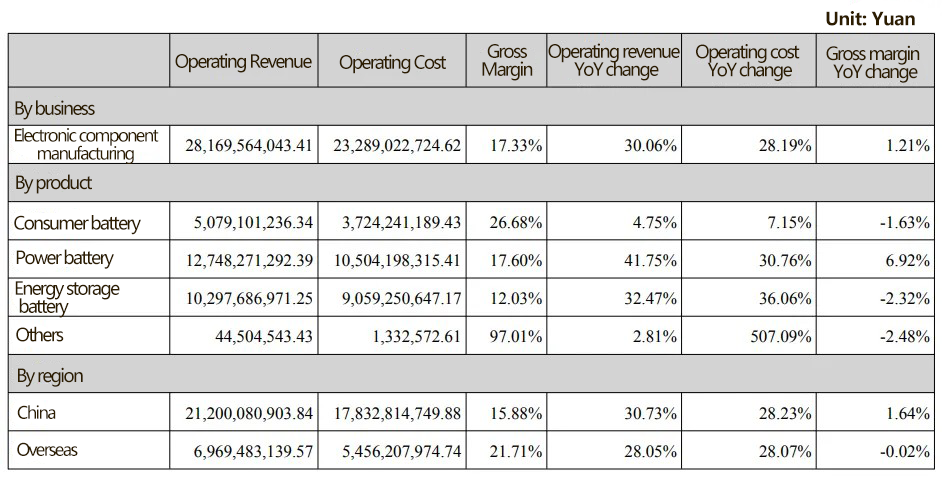
On the evening of August 21, EVE Energy released its 2025 semi-annual report. In the first half of the year, the company achieved operating revenue of approximately 28.2 billion RMB, a year-on-year increase of 30.06%; net profit attributable to shareholders of the listed company was 1.605 billion RMB, a year-on-year decrease of 24.9%; net profit attributable to shareholders of the listed company excluding non-recurring items was 1.157 billion RMB, a year-on-year decrease of 22.82%.

By main business:

l  Power battery revenue was 12.748 billion RMB, a year-on-year increase of 41.75%, with a gross margin of 17.60%, and gross margin increased by 6.92% year-on-year;

l  Energy storage battery revenue was 10.298 billion RMB, a year-on-year increase of 32.47%, with a gross margin of 12.03%, and gross margin decreased by 2.32% year-on-year;

In terms of shipment volume, during the reporting period, power battery shipments reached 21.48GWh, a year-on-year increase of 58.58%; energy storage battery shipments reached 28.71GWh, a year-on-year increase of 37.02%.

By region:

l  Domestic revenue was 21.2 billion RMB, a year-on-year increase of 30.73%, with a gross margin of 15.88%, and gross margin increased by 1.64% year-on-year;

l  Overseas revenue was 6.969 billion RMB, a year-on-year increase of 28.05%, with a gross margin of 21.71%, and gross margin decreased by 0.02% year-on-year;

Strong installation demand both domestically and overseas drove rapid growth in energy storage battery shipments. Against the backdrop of the global transition to a low-carbon economy, policies and incentive measures such as China’s “Dual Carbon” strategy and the EU’s “Green Deal” have promoted the deployment of energy storage systems in multiple fields, expanded the market, and consolidated the dominant position of lithium-ion batteries in the energy storage industry.

In the first half of 2025, global energy storage demand grew rapidly, and the market showed a dual driving pattern of “quality improvement in core markets and volume release in emerging regions.”

In China, according to CNESA data, from January to June, newly installed capacity of new energy storage reached 42.61GWh, a year-on-year increase of 27.5%, mainly driven by the full entry of new energy into the market and the May 31 grid-connection node. As China, the world’s largest energy storage market, enters a new stage of value creation, companies with high-quality production capacity and products will have greater competitiveness and occupy a larger market share.

In addition, overseas market demand remained strong, showing a diversified growth pattern. The U.S. energy storage market demand remained strong, with total installed energy storage capacity for the year expected to reach 49GWh. The European market promoted energy storage development through subsidies, further increasing overall energy storage demand. Large-capacity tender projects in emerging markets such as Asia and the Middle East continued to be launched, driving explosive demand growth in the energy storage industry.

The company adheres to creating benefits and value for customers, reaching strategic cooperation with leading energy enterprises at home and abroad, accelerating the implementation of innovative technologies and global market expansion. Against the background of technological innovation and power market reform, the energy storage industry will shift from “scale expansion” to “value creation.” With the application of 500Ah+ ultra-large cells, the integration level of a new generation of 6MWh+ energy storage systems will be significantly improved. Combined with intelligent power trading decisions, greater economic value will be created for energy storage, and high-quality, safe energy storage products will capture more market share. The company empowers innovation, taking the lead in mass production of 600Ah+ cells, and drives energy storage value enhancement through full-scenario solutions.

Energy Storage Power Station Asset Economics Significantly Improved! HyperStrong Takes the Lead in Deploying “Energy Storage + Finance”

By: HyperStrong

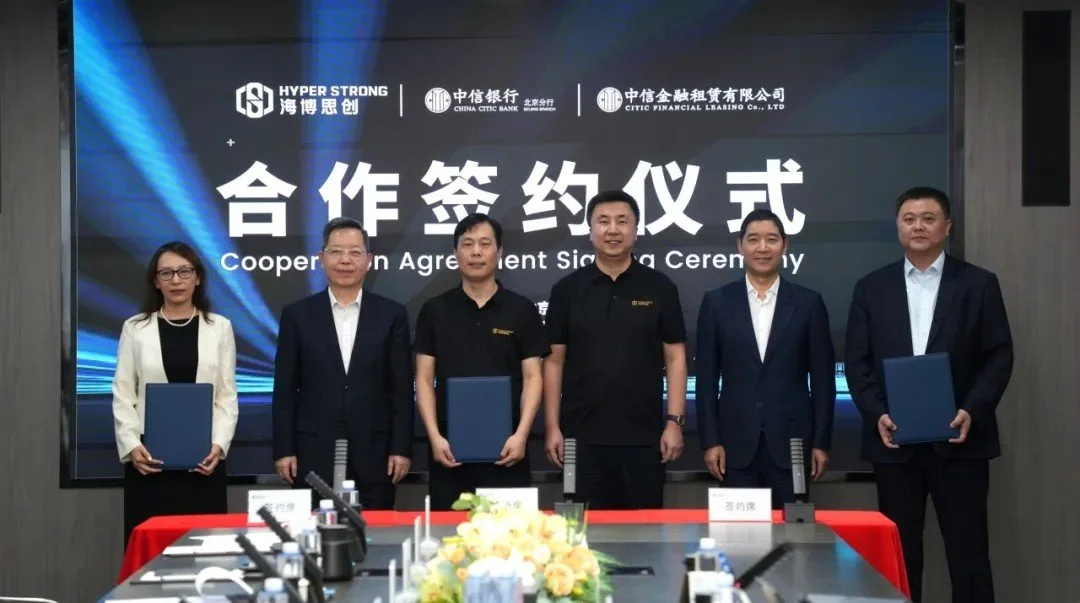
On August 20, Beijing HyperStrong Technology Co., Ltd. (hereinafter referred to as “HyperStrong”) officially signed a cooperation agreement with China CITIC Bank Corporation Limited Beijing Branch (hereinafter referred to as “CITIC Bank”) and CITIC Financial Leasing Co., Ltd. (hereinafter referred to as “CITIC Leasing”). In the future, the three parties will carry out comprehensive cooperation in the field of “Energy Storage + Finance.

Zhang Jianhui, Founder, Chairman, and Chief Executive Officer of HyperStrong, He Jinsong, Member of the Party Committee, Vice President of CITIC Bank and Secretary of the Party Committee and President of Beijing Branch, Li Gang, Secretary of the Party Committee and Chairman of CITIC Leasing, and other leaders jointly attended the signing ceremony and witnessed the launch of this important cooperation. Gao Shuqing, Board Secretary and Chief Financial Officer of HyperStrong, Jing Long, Member of the Party Committee and Vice President of CITIC Bank Beijing Branch, and Li Ying, Vice President and Chief Financial Officer of CITIC Leasing, signed the cooperation agreement on behalf of the three parties.

Against the backdrop of the in-depth advancement of China’s “dual carbon” goals and the implementation of Document No. 136, the energy storage industry is shifting from policy-driven to market-oriented. With the reduction of energy storage power station construction costs, coupled with the opening of the electricity spot market and the improvement of supporting policies, the asset economics of energy storage power stations have been significantly enhanced, creating new opportunities for deep participation of financial capital.

In this cooperation, the three parties will rely on their respective resource endowments to deepen cooperation in areas such as integrated financial services, financial leasing business, operating leasing business, and financing credit. They will explore the value synergy between green finance and the energy storage industry, jointly creating a new benchmark for the integration of industry and finance.

At the signing ceremony, Zhang Jianhui, Founder, Chairman, and Chief Executive Officer of HyperStrong, stated that HyperStrong will join hands with CITIC Bank and CITIC Leasing to leverage their respective advantages in the industrial side, technical side, financial innovation tools, financing leasing, and capital raising, jointly building a financing model of “Energy Storage Assets + Professional Operation + Integrated Financial Solutions,” and exploring new paths for financial innovation in the energy storage industry.

Australia Launches $500 Million Battery Breakthrough Initiative

The programme will remain open until the AU$500 million allocation is fully committed or until the government determines a closure date. Image: ARENA.

Australia has formally launched its AU$500 million Battery Breakthrough Initiative (BBI), a cornerstone policy designed to strengthen the country’s role in the global battery industry. According to the Australian Renewable Energy Agency (ARENA), which is administering the programme alongside the Department of Industry, Science and Resources, the BBI will provide grants and production incentives to domestic businesses to close critical gaps in local manufacturing capacity. First announced in the May 2024 Federal Budget and shaped by industry consultation, the initiative forms part of the Albanese government’s AU$22.7 billion “Future Made in Australia” agenda, which aims to reindustrialise the economy with a focus on clean technologies including batteries, solar PV, hydrogen, and electric vehicles. Federal industry minister Tim Ayers said during the launch that batteries are central to the clean energy transition and that Australia’s combination of raw materials, research expertise, and industrial base positions it to benefit from surging global demand.

The programme targets three priority segments of the battery supply chain: advanced materials processing, battery cell production, and battery pack assembly. For materials, funding will support projects using Australia’s rich reserves of lithium, nickel, cobalt, and graphite. For cell production, the initiative is designed to help transform Australia from a supplier of raw components into a producer of finished cells. Finally, support for pack assembly is expected to serve both domestic storage needs and export markets. ARENA will distribute funds through mechanisms such as capital grants for infrastructure, production incentives for operations, and streamlined approvals for projects seeking AU$50 million or less, enabling faster progress for mid-sized ventures.

To qualify, projects must meet a Technology Readiness Level of six or higher, ensuring only commercially viable technologies are considered. The programme will remain open until all funding is allocated or the government sets a closure date.

Breaking Through into the Post-Mandatory Energy Storage Era! The 10th Western China Energy Storage Forum Successfully Held in Inner Mongolia

After the cancellation of mandatory energy storage requirements under “Document No. 136,” how will new energy and energy storage achieve coordinated development? How will the value of energy storage be reconstructed? At the 10th Western China Energy Storage Forum, over 500 representatives from government, grid companies, research institutes, and industry chain enterprises engaged in in-depth discussions on these questions.

On August 19–20, 2025, the 10th Western China Energy Storage Forum was successfully held in Hohhot, Inner Mongolia. The forum was hosted by the China Energy Research Society, China Energy Storage Alliance (CNESA), New Energy Storage Innovation Consortium of Central SOEs, Inner Mongolia Energy Storage Promotion Association, and Hohhot Industrial Innovation Research Institute, and co-hosted by CRRC Zhuzhou Institute, HyperStrong, and Kehua Digital Energy Tech Co., Ltd. The theme of the forum was “Market-Driven, Ecology-Enabled: Energy Storage Driving the Construction of a Green Energy System in Western China.” The opening ceremony and main forum were chaired by Xia Qing, Deputy Director of the Energy Storage Committee of the China Energy Research Society and Professor at Tsinghua University.

Xia Qing, Deputy Director of the Energy Storage Committee of the China Energy Research Society, Professor at Tsinghua University

Industry Leaders Gathered from Government, Industry, Academia, and Research

Shi Yubo, Chairman of the China Energy Research Society (online); Xu Ziming, Director of the Energy Efficiency and Energy Storage Division, Energy Conservation and Technological

Equipment Department, National Energy Administration; Ouyang Minggao, Academician of the Chinese Academy of Sciences and Professor at Tsinghua University; Haisheng Chen, Director of the Institute of Engineering Thermophysics, Chinese Academy of Sciences, Chairman of the Energy Storage Committee of the China Energy Research Society, and Chairman of the China Energy Storage Alliance; Wang Lixin, Deputy General Manager of Inner Mongolia Electric Power (Group) Co., Ltd.; Liu Guogang, Chairman and Party Secretary of China Southern Power Grid Energy Storage Co., Ltd.; Cai Changqing, Chairman of Inner Mongolia Beichen Think Tank Research Center; Cao Bin, Chairman of Inner Mongolia Daqingshan Laboratory Co., Ltd.; and Zheng Lina, Chairman of the Inner Mongolia Energy Storage Promotion Association.

Also, experts from the Energy Storage Committee of the China Energy Research Society: Zheng Yaodong, Honorary Director of the Major Energy Storage and New Energy Research Team of China Southern Power Grid; Pei Zheyi, Former Deputy Chief Engineer of the State Grid Dispatching and Control Center; Lai Xiaokang, Senior Expert at China Electric Power Research Institute; and Yue Jianhua, Former Deputy Chief Engineer of Inner Mongolia Electric Power (Group) and State Council Special Allowance Expert.

Meanwhile, Alliance Vice Chairmen: Yu Zhenhua, Executive Vice Chairman of China Energy Storage Alliance; Cui Jian, President of Kehua Digital Energy Tech Co., Ltd.; Liu Mingyi, Head of the Energy Storage Division at Huaneng Clean Energy Research Institute; and Wang Xiaoli, General Manager of Rongke Power, were present in support.

Authoritative Voices: Rigid Demand and Policy Directions for New Energy Storage

Shi Yubo, Chairman of the China Energy Research Society

Shi Yubo, Chairman of the China Energy Research Society, pointed out in his speech that the western region is a national energy strategic base. With more than 80% of wind and solar resources and vast land, it provides unique scenarios for the large-scale application of new energy storage. Currently, western energy storage policies are being intensively introduced, but development still faces challenges such as an imperfect power market mechanism, technological bottlenecks, and an underdeveloped standards system. To promote high-quality development, it is necessary to strengthen the dual drive of policy and market, accelerate the construction of spot markets, and expand ancillary service categories; emphasize both technological breakthroughs and scenario innovation, promoting demonstration applications in desert bases and zero-carbon parks; while at the same time building solid safety standards and risk prevention systems, and strengthening the intelligent operation and maintenance capacity of energy storage power stations. Energy storage is a key support for the energy revolution. It is necessary to pool the strength of industry, academia, research, and application, to provide a western model for the new energy system and contribute China’s solution.
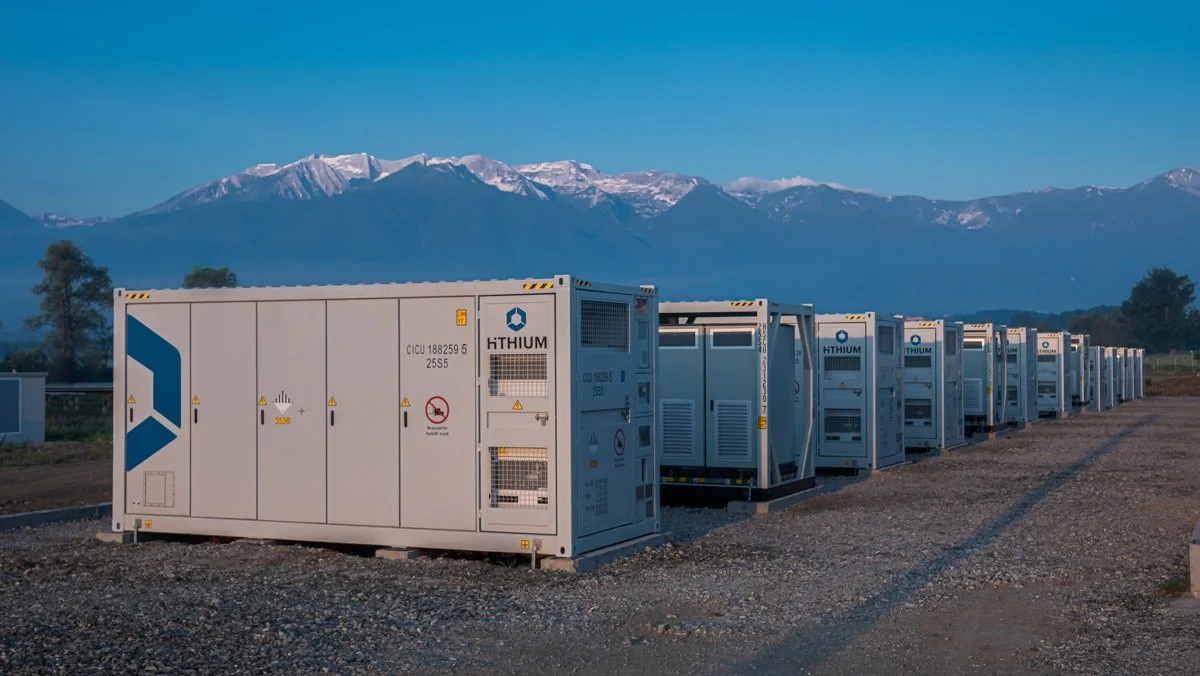
Xu Ziming, Director of the Energy Efficiency and Energy Storage Division, Energy Conservation and Technological Equipment Department, National Energy Administration

Xu Ziming, Director of the Energy Efficiency and Energy Storage Division, Energy Conservation and Technological Equipment Department, National Energy Administration, pointed out in his speech that since the “14th Five-Year Plan,” new energy storage in China has experienced rapid development. Looking toward the “15th Five-Year Plan,” three key tasks will be emphasized: strengthening top-level design, preparing the “15th Five-Year Plan” implementation scheme for new energy storage, and promoting diverse applications in large-scale renewable energy bases, grid-replacement storage, zero-carbon parks, and green power direct connections; improving market mechanisms for new energy storage participation, accelerating comprehensive participation of energy storage in various market transactions, fully leveraging its multiple functions, and raising utilization levels; and promoting high-quality development of new energy storage, shifting from “competing on price” to “competing on value.” The construction of a new-type power system has rigid demand for new energy storage. Industry peers must strengthen confidence in development and strive to achieve the “three orientations.” Facing the frontiers of science and technology, actively carry out technological innovation in new energy storage; facing system requirements, guide industry development based on new-type power system construction needs; facing market mechanisms, proactively adapt to the development of new energy storage in the power market environment.
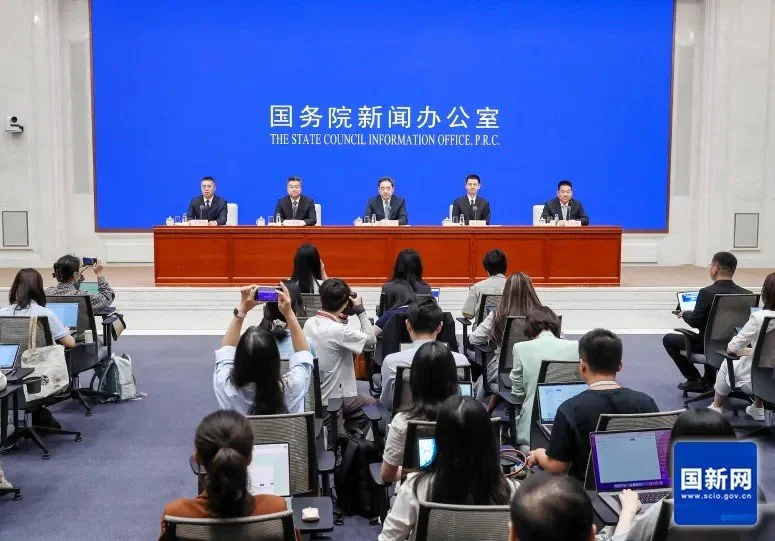
Technical Foresight: Academician Outlines Diversified Energy Storage Technology Roadmap

Ouyang Minggao, Academician of the Chinese Academy of Sciences, Professor at Tsinghua University

Ouyang Minggao, Academician of the Chinese Academy of Sciences and Professor at Tsinghua University, pointed out in his report that with the rapid rise of the share of renewable energy generation, the power system faces severe challenges, urgently requiring energy storage technologies to address the shortage of flexible resources. He proposed three major directions: Battery Energy Storage System (BESS): Lithium-ion batteries remain mainstream, and breakthroughs in safety are needed under the trend of large capacity and long lifespan. Smart batteries (chip + AI monitoring) and solid-state batteries can achieve breakthroughs, with the goal of reducing the cost of stored electricity to 0.1 RMB/Wh; V2G Energy Storage: The rapid growth of electric vehicles will drive the upgrade of charging modes, developing from disorderly charging to vehicle-to-grid interaction. Electric vehicles can participate in grid peak shaving when parked, realizing “valley charging and peak discharging”; Green Hydrogen Energy Storage: Wind and solar-based hydrogen production enables long-duration storage, with integrated heat recovery raising overall energy efficiency to 80%. Academician Ouyang emphasized that energy storage technology requires cross-disciplinary innovation integrating chemical engineering, electrical engineering, and thermal engineering, to promote multi-energy coupling of renewable energy systems and build a zero-carbon energy system ecosystem.

Power Grid Enterprises: From Large-Scale Construction to Efficient Operation

Wang Lixin, Deputy General Manager of Inner Mongolia Electric Power Group

Wang Lixin, Deputy General Manager of Inner Mongolia Electric Power Group, pointed out in his report “Practical Breakthroughs and Future Prospects of Energy Storage Development in Inner Mongolia” that Inner Mongolia was the first in the country to introduce a ten-year long-term compensation mechanism, pioneering independent energy storage capacity compensation, providing an important guarantee for stable project revenue. In 2024, the power group took the lead in launching the construction of 600 MW of new energy storage in the autonomous region. In 2025, the group continues to advance energy storage construction, starting a new batch of projects to enhance system regulation capacity. Looking forward to the “15th Five-Year Plan,” the group will actively participate in diversified energy storage projects, continue to play the role of the Inner Mongolia Power Industry Innovation Alliance, and remain the main force in energy storage construction, fulfilling its political, social, and economic responsibilities as a state-owned enterprise.

Zheng Yaodong, Honorary Director of the Major Energy Storage and Renewable Energy Research Team, China Southern Power Grid

Zheng Yaodong, Honorary Director of the Major Energy Storage and Renewable Energy Research Team of China Southern Power Grid, emphasized in his report “Innovation Practices in New Energy Storage Technology of China Southern Power Grid” that among the seven grid-side energy storage power stations in operation for more than one year, except for the Baoqing Station used for research purposes, the operating levels of other stations were generally leading, with the highest actual annual operating hours exceeding 3,150 hours. Zheng Yaodong pointed out that operating performance directly affects economic benefits. China Southern Power Grid, upholding its responsibility as a central SOE, attaches great importance to plant operation and value mining. He also called on the industry to focus on revitalizing idle or underperforming plants. New energy storage must identify real demand and value positioning through market competition, and only by adhering to direct profitability can it truly achieve sustainable development.

Authoritative Release: Comprehensive Data and Development Trends of the New Energy Storage Industry

Haisheng Chen, Chairman of the China Energy Storage Alliance

Haisheng Chen, Chairman of the China Energy Storage Alliance, delivered the report “Current Status and Trends of New Energy Storage Industry Development and Release of CNESA DataLink H1 2025 Energy Storage Data.” As of the first half of 2025, China’s cumulative installed capacity of new energy storage reached 101.3 GW, surpassing 100 GW for the first time, which is 32 times that of the end of the “13th Five-Year Plan.” In the first half of 2025, newly commissioned new energy storage reached 23.03 GW/56.12 GWh, with both power and energy scales up 68% year-on-year. Looking forward to the “15th Five-Year Plan,” energy storage will participate more deeply in the power market and upgrade to high-quality development. By 2030, cumulative installed capacity is expected to reach 236.1–291.2 GW. (For report details, see: CNESA Major Release on the 10th Western China Energy Storage Forum)

During the 10th Western China Energy Storage Forum, the first domestic monograph in the field of compressed air energy storage technology, Theories and Applications of Compressed Air Energy Storage, was also released. Published by Science Press and funded by the National Science and Technology Publishing Fund, this book embodies the collective wisdom and twenty years of research achievements of the compressed air energy storage team led by Professor Haisheng Chen.

Enterprise Strategy: Leading Companies Insight into Market Opportunities and Transformation Paths

Wen Yuliang, Deputy General Manager and Chief Engineer, Integrated Energy Division, CRRC Zhuzhou Institute

Wen Yuliang, Deputy General Manager and Chief Engineer of the Integrated Energy Division of CRRC Zhuzhou Institute, pointed out in his report “Energy Storage Value Innovation Driving Energy Transition and Sustainable Development” that value innovation in energy storage mainly focuses on deeply exploring application scenarios and breaking through technological pain points. With technological progress, energy storage applications are no longer limited to the power system but are widely integrated into data centers, metallurgy, mining, off-grid hydrogen production, and many other industries, showing a trend of diversified integration. At the technical level, safety remains the fundamental prerequisite for all innovation. On this basis, efforts should focus on enhancing the economy of energy storage by improving system efficiency and extending system life. Meanwhile, grid-forming energy storage, as a frontier direction of technological innovation, is expected to further penetrate the global energy storage market within the next five years. Finally, he emphasized that intelligent operation and maintenance and battery recycling technologies are key to achieving full life-cycle management of energy storage projects and promoting sustainable industry development.

Si Zheng, Vice President of HyperStrong

Si Zheng, Vice President of HyperStrong, pointed out in her report “New Scenarios, New Opportunities: A New Cycle of High-Quality Development for the Energy Storage Industry” that with the cancellation of mandatory energy storage requirements under “Document No. 136,” the energy storage market will embrace two long-term opportunities: first, as new energy fully enters the market, energy storage, as a regulatory resource, can effectively smooth out grid fluctuations, driving a new round of market demand growth; second, with feed-in tariffs becoming market-driven, renewable energy generation companies will focus more on project operation and management. Energy storage, by enhancing the flexibility and stability of the power system, can help renewable energy projects generate greater returns in the power market and increase the certainty of revenues. In response to policy changes, HyperStrong is also undergoing a strategic transformation, shifting from “R&D + manufacturing” to “R&D + manufacturing + services,” opening up the full chain and developing full scenarios, and providing integrated energy services covering investment, development, construction, operation, and maintenance.

Practical Discussions in Sub-Forums: Seeking Realistic Paths for Market Mechanisms and Business Models

While the opening ceremony and main forum set a high-level tone, the concurrent series of sub-forums and closed-door meetings pushed the atmosphere toward more practical and precise exchanges, comprehensively focusing on key issues of industrialization and marketization of energy storage.
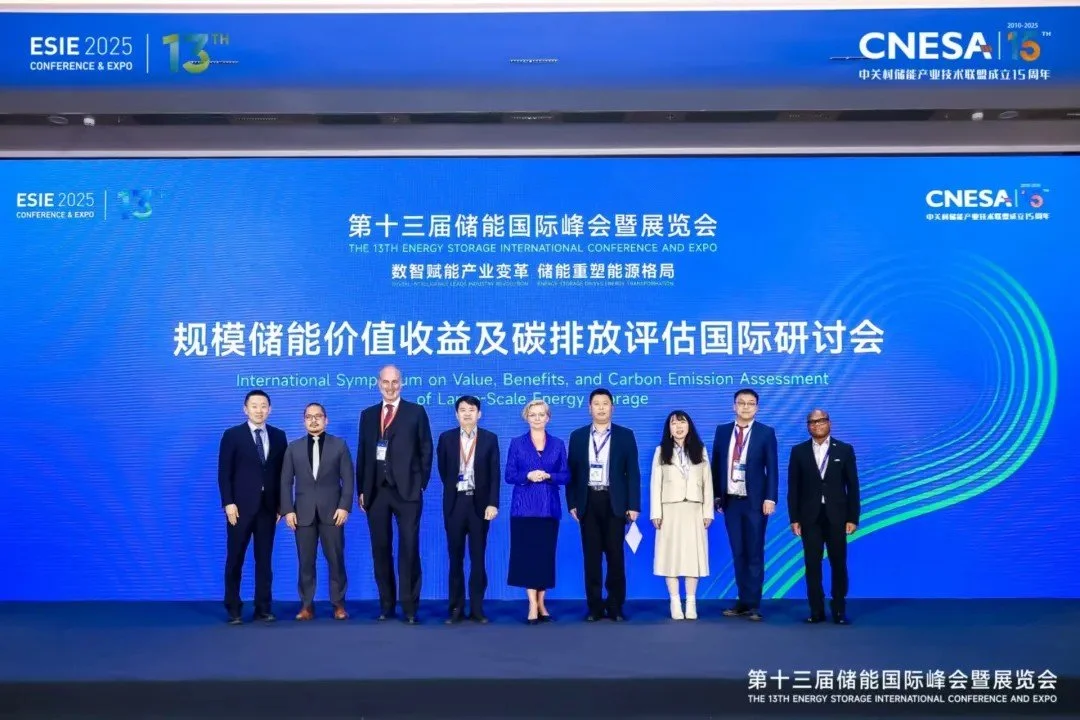
Sub-forums focused on common core topics of the industry: “New Energy Storage and the Power Market” directly addressed difficulties in mechanism building, exploring practices of energy storage market participation and revenue analysis; “Energy Storage Value Innovation and Solutions” focused on advanced energy storage technologies and solutions, exploring value innovation; “Exploration of Western Energy Storage Characteristic Markets” and “Generation-Grid-Load-Storage and Large Desert Base Construction” were closely aligned with western resource endowments, providing solutions for large base project development and intelligent operation.
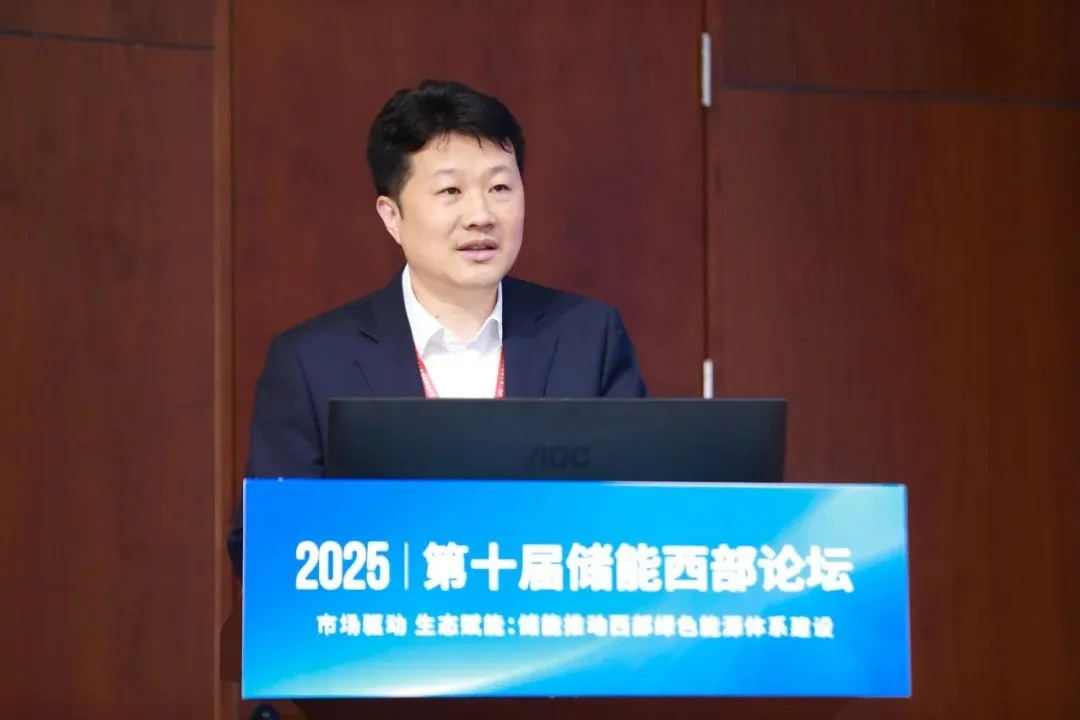
Special seminars precisely targeted frontier application scenarios: “Zero-Carbon Park Development and Practice” explored green power supply, carbon accounting, and park-level storage dispatch models, responding to rigid demands of industrial low-carbon transition; “New Energy Storage Innovative Technologies and Applications” focused on technological iteration and product reliability, promoting joint efforts of industry, academia, and research; “Data Center Development and Practice” addressed the challenge of green energy use in digital infrastructure, exploring integrated design and operation paths of “energy storage + computing power.”

At the same time, a hydrogen energy sub-forum was held, discussing hydrogen energy applications in power, transportation, and industry; while a closed-door seminar on the economic operation of energy storage projects in Inner Mongolia focused on typical scenarios in the region, analyzing economic feasibility and commercialization paths.

After ten years of deep cultivation, the “Western China Energy Storage Forum” has grown into an important platform promoting coordinated development of new energy and energy storage in western China. This forum precisely analyzed the core challenges in market mechanisms, technical safety, and business models, and through in-depth dialogue among government, industry, academia, research, and application, successfully built consensus on development. These outcomes will strongly promote new energy storage to advance from “policy dependence” to a new stage of “value-driven” high-quality development, contributing solid western strength to China’s construction of a new energy system and realization of the “dual carbon” goals.

📝
🛫
👤