

Latest News
The 6th Energy Storage Safety Forum Successfully Held in Hefei
With the diversification of energy storage technologies, application scenarios are rapidly expanding beyond traditional power systems into emerging fields such as industrial manufacturing, data centers, and zero-carbon parks. However, these emerging applications have much lower tolerance for fire risks, presenting unprecedented challenges to the safe development of the energy storage industry. At this critical stage, the 6th Energy Storage Safety Forum, themed “AI Empowering Energy Storage Risk Management and Control, Safety Building a Sustainable Future”, aimed to build industry consensus, address key safety challenges, and promote the stable and sustainable growth of the energy storage sector.
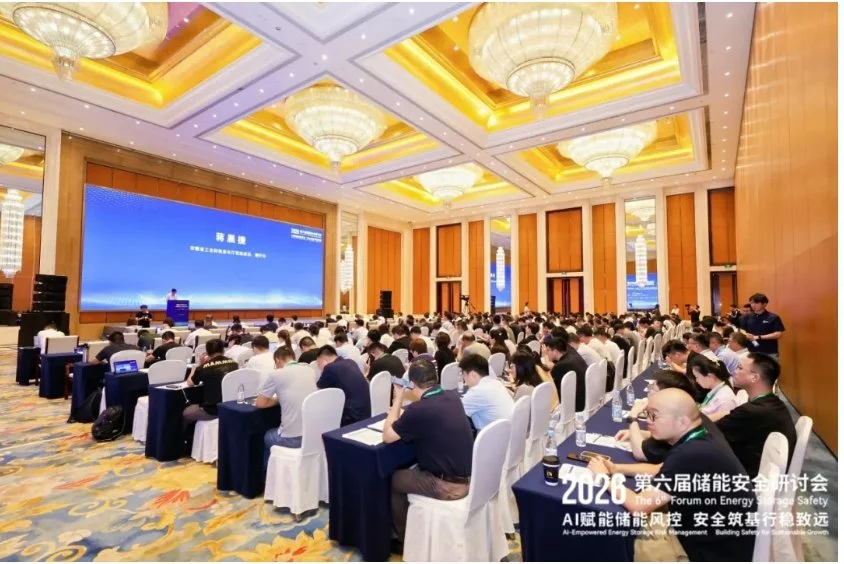
On July 17, 2026, the 6th Energy Storage Safety Forum was successfully held in Hefei, Anhui Province. The event was organized by the China Energy Storage Alliance (CNESA), and co-organized by the National Energy Storage Technology Industry-Education Integration Innovation Platform of Tianjin University, the CNESA Energy Storage Safety Committee, and Gotion High-tech. The forum brought together government officials, industry leaders, academic experts, and research institutions to jointly explore pathways toward safer and more sustainable energy storage development.
The opening ceremony gathered representatives from government authorities, leading research institutions, and enterprises. Attendees included Wang Shijiang, Deputy Director of the Department of Electronic Information of the Ministry of Industry and Information Technology (MIIT); Xu Ziming, Deputy Director of the Electricity Safety Supervision Department of the National Energy Administration (NEA); Jiang Chenyue, Member of the Party Leadership Group and Deputy Director of the Anhui Provincial Department of Industry and Information Technology; Zeng Xiaoming, Member of the Party Leadership Group and Deputy Director of the Anhui Energy Bureau; Sun Jinhua, Academician of the European Academy of Sciences and Professor at the University of Science and Technology of China; Chen Zhongwei, Fellow of the Royal Society of Canada and the Canadian Academy of Engineering; Chen Haisheng, Director of the Institute of Engineering Thermophysics at the Chinese Academy of Sciences; Yang Quanhong, Chair Professor at Tianjin University; Zhuo Ping, Director of the Fourth Research Division of Tianjin Fire Research Institute under the Ministry of Emergency Management; Wang Qisui, Executive President of Gotion High-tech; and Yu Zhenhua, Executive Vice Chairman of CNESA.
The forum also received strong support from organizations and companies including the School of Energy and Power Engineering at Tianjin University, Sungrow, Envision Energy, Honeywell China, Xien Technology, Pengcheng Infinite, Benji Electric, Yangyi Technology, and Huachu Technology. The opening ceremony was hosted by Liu Wei, Secretary General of CNESA.
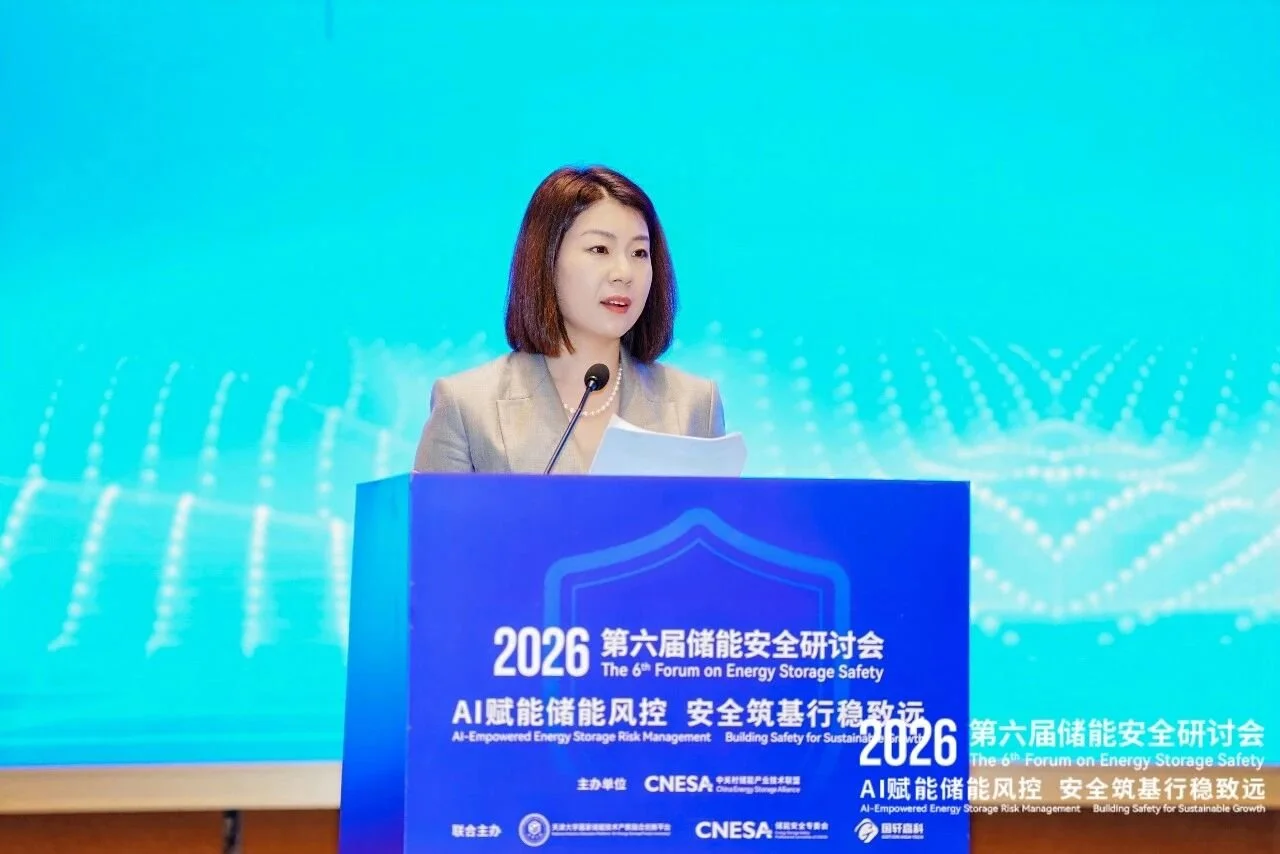
Opening Remarks: Balancing Energy Storage Safety and Development
In his opening speech, Wang Shijiang stated that energy storage is a key driver for achieving China’s dual-carbon goals. The country’s energy storage industry is currently developing rapidly, with strong momentum. In the first quarter of 2026, China’s energy storage lithium battery output reached 185GWh, representing year-on-year growth of more than 100%. Meanwhile, technological innovation continues to accelerate, with applications expanding across power systems, industrial sectors, and zero-carbon parks.
However, safety risks have become a major bottleneck restricting high-quality industry development. Wang emphasized that MIIT’s Department of Electronic Information will coordinate both development and safety, focusing on four key areas:
Strengthening top-level planning and guiding the industry’s transition from scale expansion toward quality improvement and enhanced safety;
Regulating market competition and fostering a healthy industrial ecosystem;
Establishing a strong safety foundation by accelerating the development of national standards, including safety grading evaluation standards for energy storage batteries;
Enhancing technological innovation to prevent and mitigate safety risks at the source.
He called for deeper collaboration across the industry to jointly promote safe, healthy, and sustainable development of energy storage.
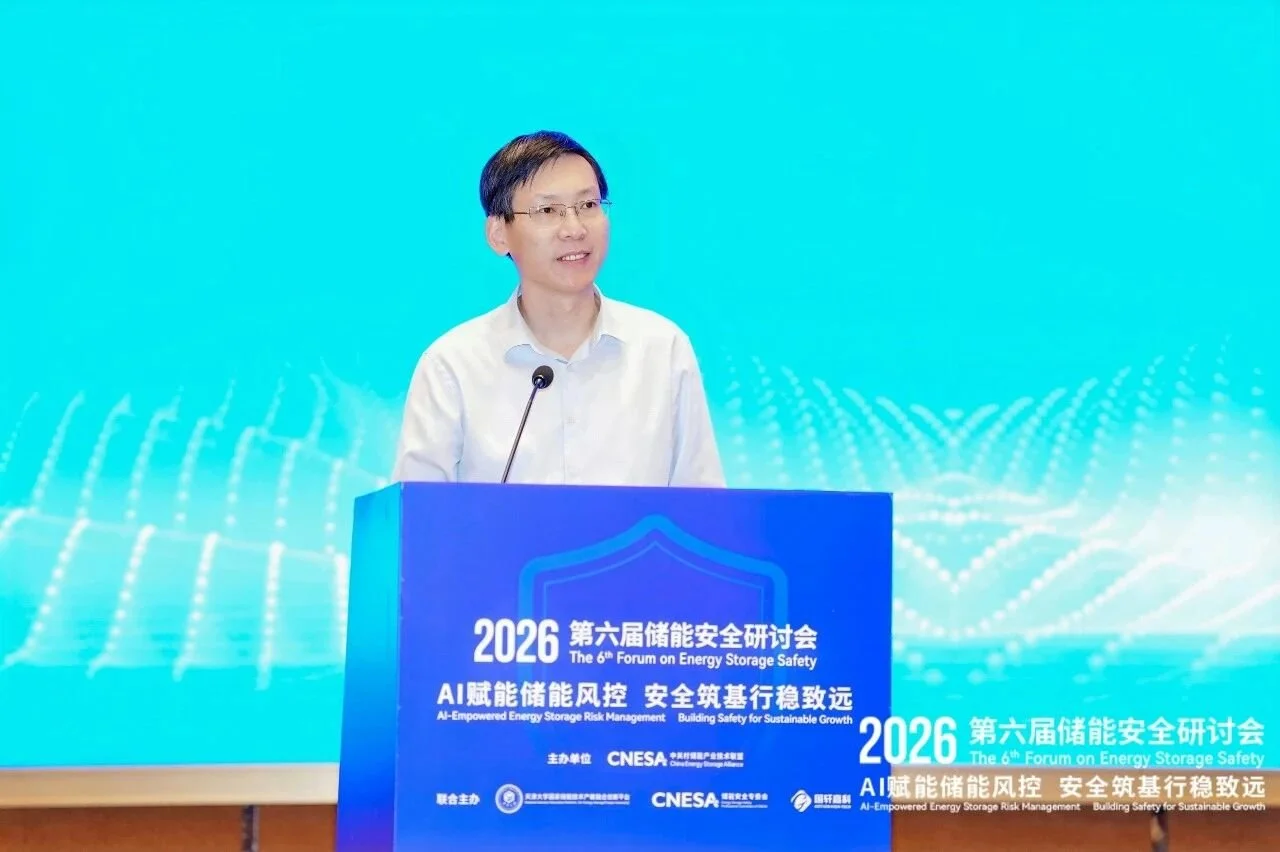
Jiang Chenyue
Deputy Director, Anhui Provincial Department of Industry and Information Technology
Jiang Chenyue highlighted Anhui’s strong industrial growth, noting that the province’s industrial output value has increased from RMB 3.8 trillion at the beginning of the 14th Five-Year Plan period to RMB 5.5 trillion, with its national ranking rising from 12th to 6th place.
In the energy storage sector, Anhui has established a complete industrial chain covering materials, batteries, and systems. Multiple technology routes are developing in parallel, and the industry scale has grown sixfold since the beginning of the 14th Five-Year Plan period, surpassing RMB 1 trillion last year. Leading companies such as Gotion High-tech and Sungrow have emerged as globally competitive enterprises, with energy storage battery cells and system shipments ranking among the world’s leading levels.
Looking ahead to the 15th Five-Year Plan period, Anhui will prioritize new energy storage as a key sector within its “1188” modern industrial system. The province will further integrate industrial development with technological innovation, strengthen market players, accelerate commercialization of new technologies and products, and build an ecosystem integrating government, industry, academia, research, finance, services, and applications.
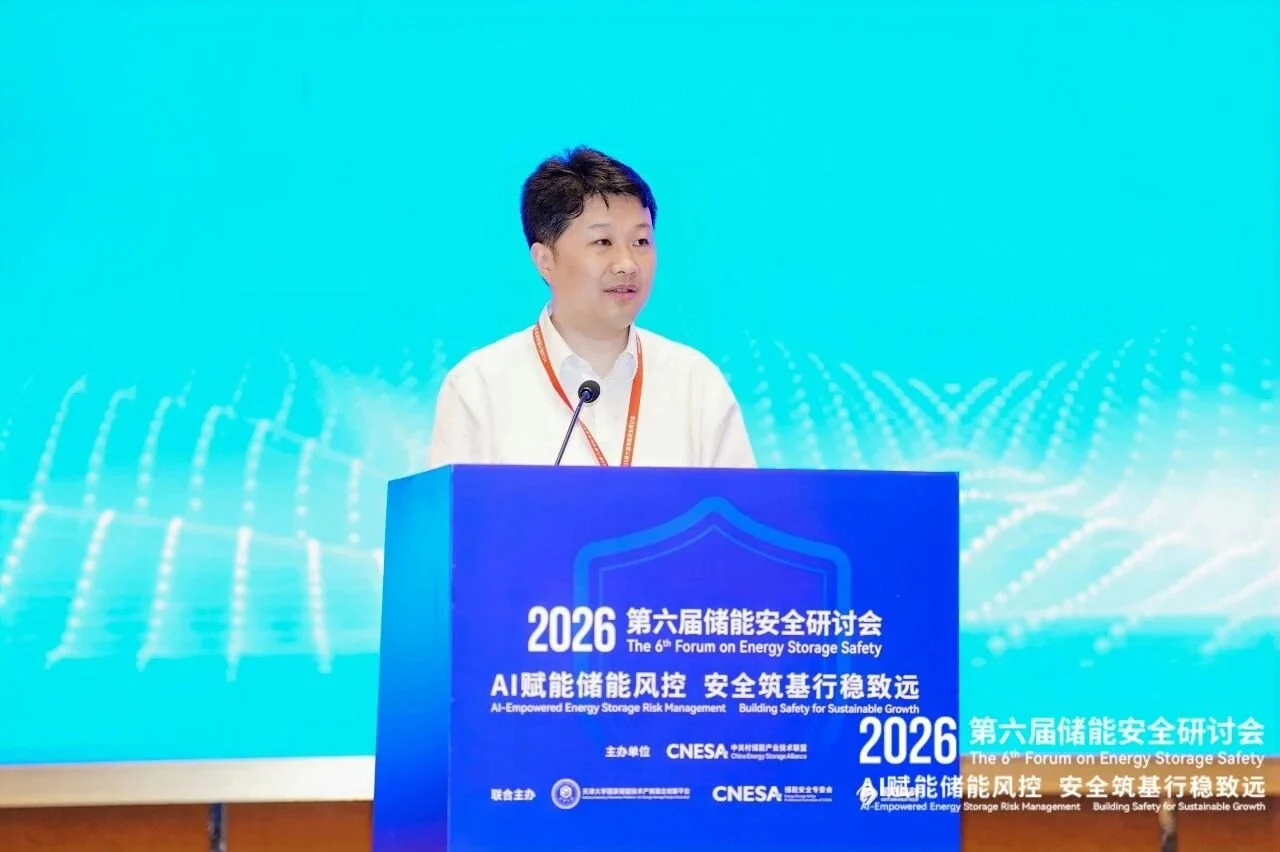
Chen Haisheng
Chairman of CNESA; Director of the Institute of Engineering Thermophysics, Chinese Academy of Sciences
Chen Haisheng stated that 2026 marks a critical year for China’s new energy storage industry as it transitions from large-scale expansion toward high-quality growth.
By the end of June 2026, China’s cumulative installed capacity of energy storage projects reached 237.2GW, representing year-on-year growth of 41.4%. Among this, new energy storage accounted for 168.2GW, exceeding 70% of total capacity. Newly installed capacity reached 21.64GW/58.20GWh, while storage duration continued to increase and technology pathways rapidly evolved.
Despite rapid industry expansion, safety challenges remain the most critical issue facing the sector. Chen emphasized that CNESA will continue strengthening international cooperation, building a global energy storage safety platform, developing comprehensive safety systems, and supporting the global transition toward green and low-carbon energy.
Emerging Insights: Tackling Energy Storage Safety Challenges Across the Entire Value Chain
A clear trend is emerging: energy storage safety innovation is moving beyond battery cell-level protection toward a comprehensive approach integrating battery innovation, system architecture, intelligent operation and maintenance, safety standards, and application scenarios.
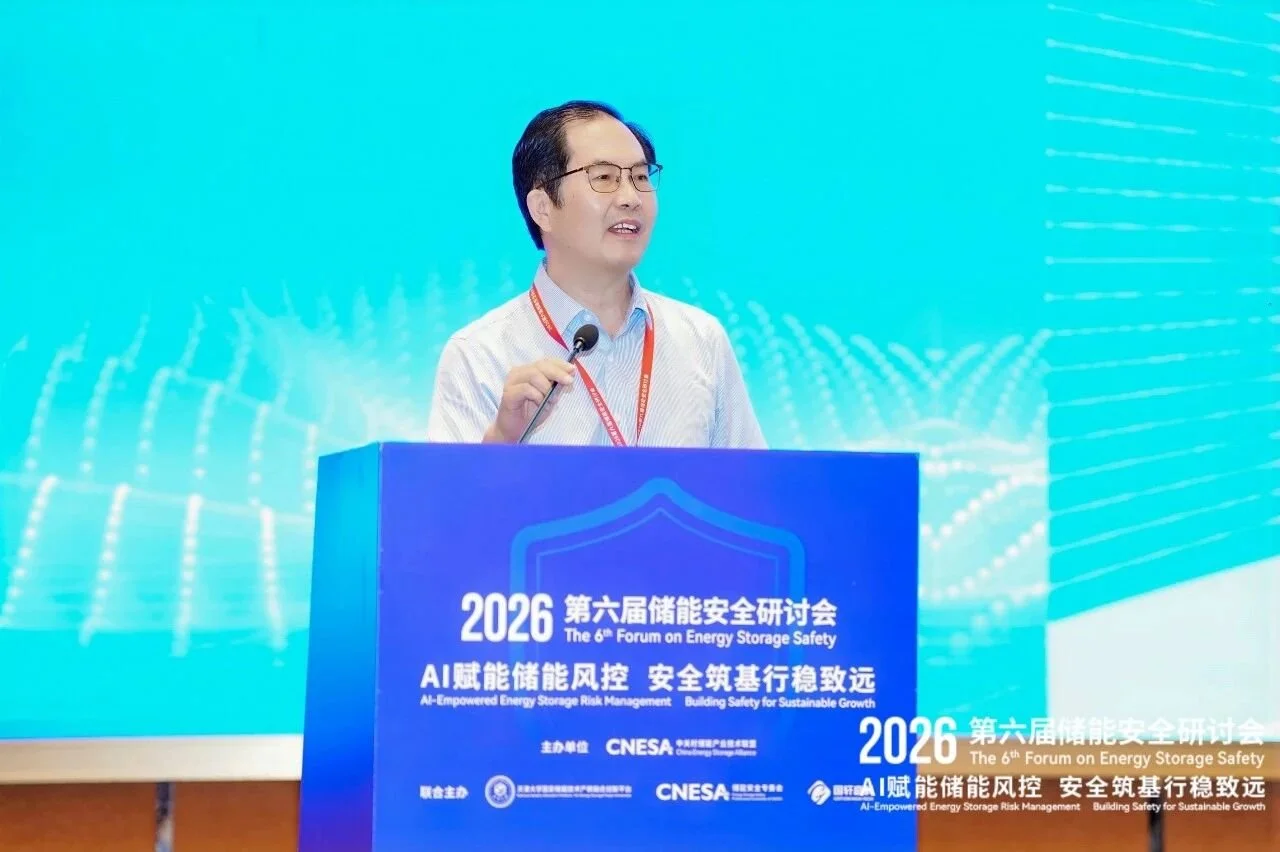
Sun Jinhua
Academician of the European Academy of Sciences; Professor, University of Science and Technology of China
In his presentation titled “Fire Risks and Prevention Strategies for Energy Storage in Computing Power and Data Centers,” Sun Jinhua highlighted the rapid growth of electricity demand from artificial intelligence computing and data centers.
Electricity consumption by computing and data centers approached 200 billion kWh in 2025 and is expected to reach 526–700 billion kWh by 2030. With China requiring newly built data centers in national computing hubs to achieve at least 80% renewable electricity consumption, energy storage will become increasingly essential.
However, fire risks remain a major concern. Global energy storage fire probability is estimated at approximately 0.3%–0.4%, while data centers face higher potential losses due to concentrated assets and personnel, requiring much stricter safety standards.
Sun proposed three layers of safety protection:
Improving intrinsic battery safety through interdisciplinary research and AI technologies to reduce thermal runaway probability below 10⁻⁸;
Enhancing process safety through intelligent thermal management materials, fiber-optic in-situ monitoring, and integrated thermal management and early-warning technologies;
Optimizing firefighting solutions through technologies such as liquid nitrogen extinguishing and multiple-stage suppression.
He emphasized the need to develop intelligent safety management platforms integrating remote monitoring, predictive analysis, multi-level warnings, and dynamic response capabilities.
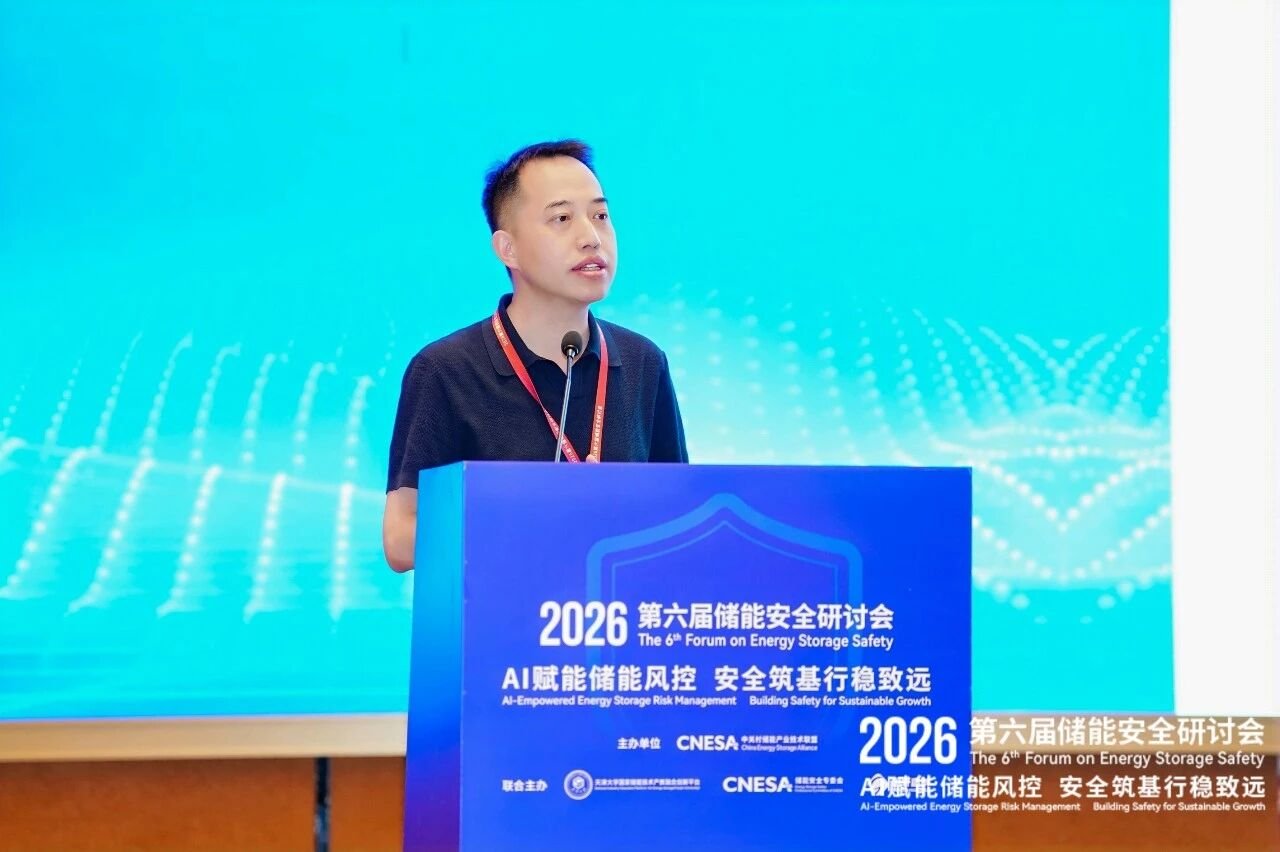
Chen Zhongwei, Fellow of the Royal Society of Canada and the Canadian Academy of Engineering; Researcher and PhD Supervisor at the Dalian Institute of Chemical Physics, Chinese Academy of Sciences.
Chen Zhongwei delivered a keynote speech titled “Building an Intelligent Management System for the Full Life Cycle of Electrochemical Energy Storage.”
He identified five major challenges in the energy storage industry: design, manufacturing, management, operation and maintenance, and electricity market participation. AI-based full life-cycle management provides a key solution.
Since 2015, Chen’s team has focused on integrating electrochemistry and artificial intelligence, achieving breakthroughs in:
Building battery industrial databases covering design, manufacturing, management, and operation;
Developing AI-assisted battery design based on electrochemical simulation;
Creating electrochemistry-AI coupled models for battery health evaluation;
Establishing closed-loop manufacturing optimization through production data and performance feedback;
Applying AI algorithms and robotics for retired battery sorting and second-life utilization;
Developing high-precision algorithms for RUL, SOC, and SOH estimation.
Based on these technologies, the team developed the Energy Storage AI Intelligent Monitoring System, establishing a three-level health diagnosis framework covering cells, battery containers, and entire energy storage stations.
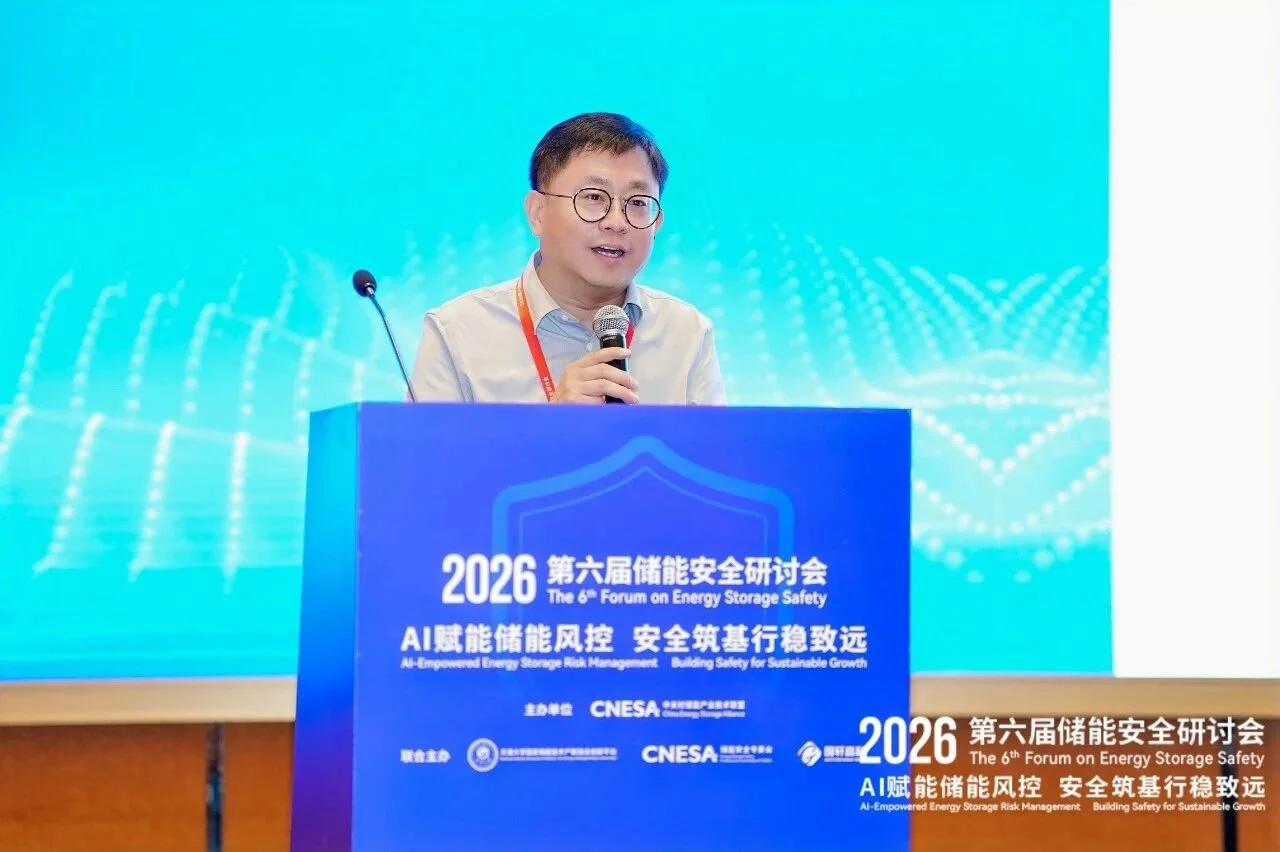
Yang Quanhong
Chair Professor, Tianjin University
Yang Quanhong discussed “Water Management in Intrinsically Safe Aqueous Zinc Batteries: Fundamental Principles and Solutions.”
He emphasized that future energy storage technologies must achieve high safety, low cost, and resource sustainability. Aqueous zinc batteries represent a promising pathway due to their intrinsic safety and resource availability.
However, commercialization faces challenges caused by water-related reactions, including hydrogen evolution, corrosion, dendrite growth, cathode structural degradation, and limited cycle life.
The key solution lies in precise “water management,” including:
Water reaction management;
Water demand management;
Water state management;
Advanced conversion-type cathode technologies.
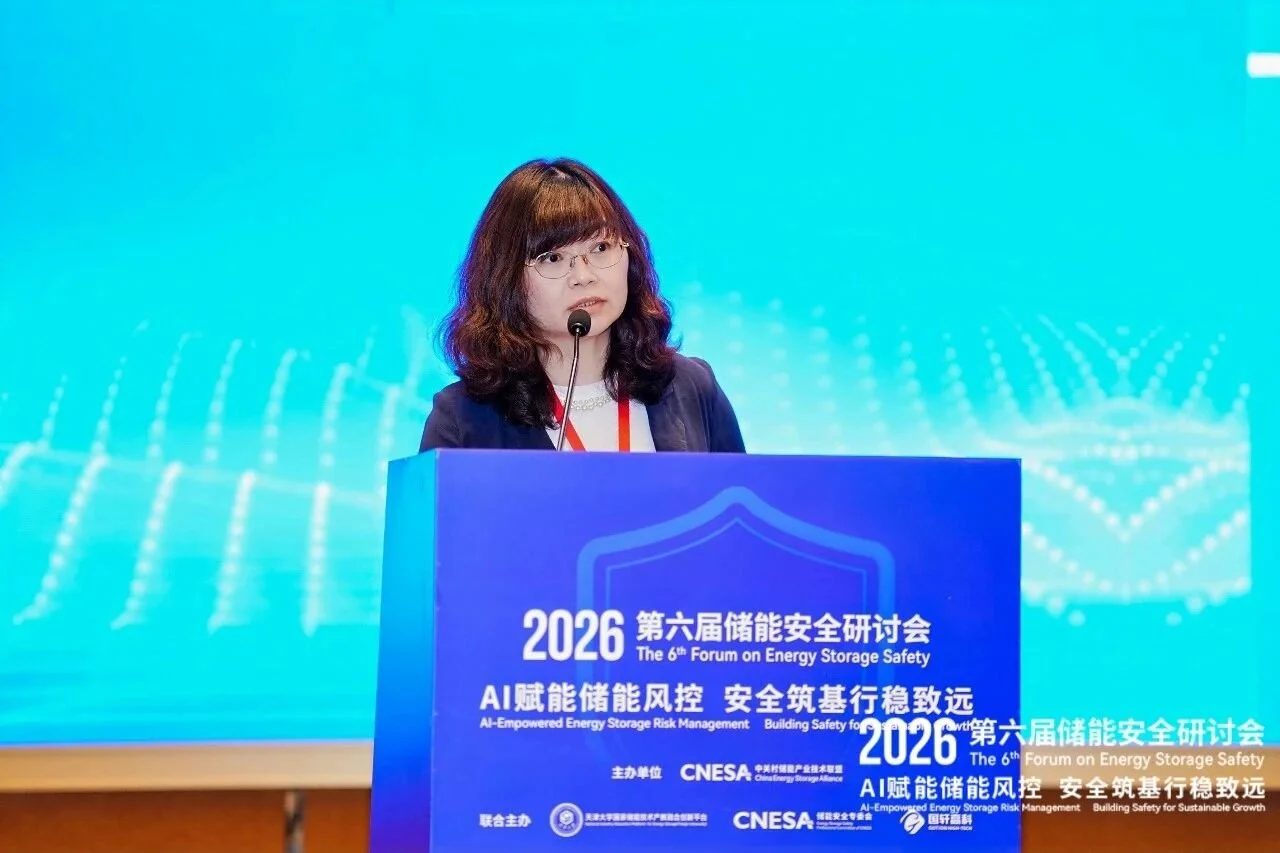
Zhuo Ping
Director, Fourth Research Division, Tianjin Fire Research Institute, Ministry of Emergency Management
Zhuo Ping introduced China-led international standards research on energy storage fire safety.
She explained that energy storage fire scenarios should consider four major safety objectives:
Life safety;
Property protection;
Environmental protection;
Cultural heritage protection.
Fire scenarios should incorporate different application characteristics, ignition sources, fire types, firefighting systems, and human behaviors.
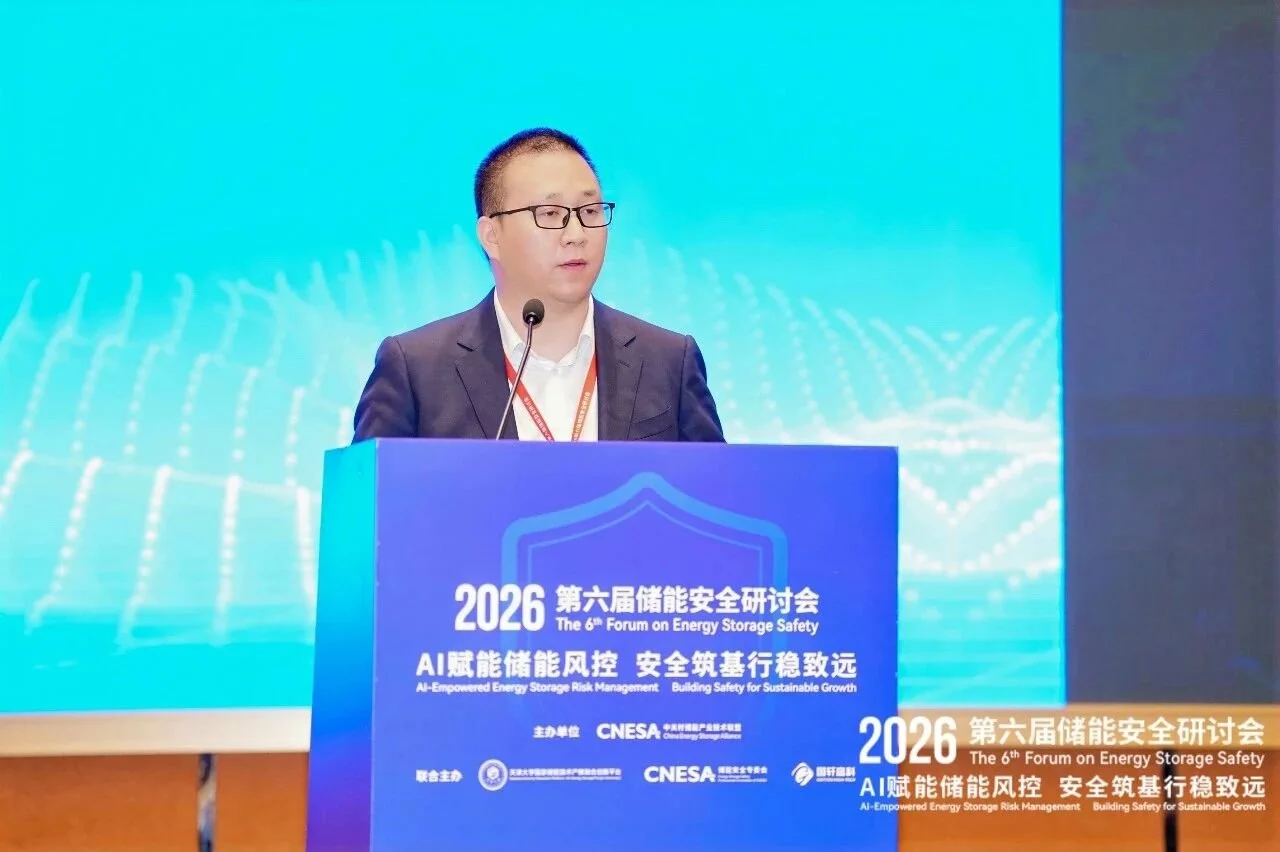
Zhang Peidao
Solution Director, Energy Storage Business Division, Gotion High-tech
Zhang Peidao shared industrial practices under the theme “Architectural Innovation of Energy Storage Systems in New Power Systems.”
He noted that energy storage faces challenges including efficiency improvement, safety risks, high availability requirements, and life-cycle cost optimization.
Gotion High-tech addresses these challenges through architectural innovation:
The Qianyuan Intelligent Energy Storage 2.0 grid-forming high-voltage cascade storage system directly connects to 6–35kV grids without transformers;
System efficiency exceeds 92%;
AI-based predictive maintenance improves operational efficiency by 50%;
Multi-dimensional sensing and fire protection systems create layered safety protection;
Modular design reduces land occupation by 38%.
The solutions have already been applied in projects including user-side storage in Jinzhai and grid-side storage in Lujiang.
Roundtable Discussion: AI Empowering Energy Storage Safety from Passive Protection to Active Intelligence
The roundtable focused on how AI can transform energy storage safety from passive prevention to proactive intelligence.
Hosted by Wang Qingsong, Researcher at the University of Science and Technology of China and Chairman of the CNESA Energy Storage Safety Committee, the discussion gathered experts from grid operators, equipment manufacturers, industrial software providers, sensor companies, and AI technology companies.
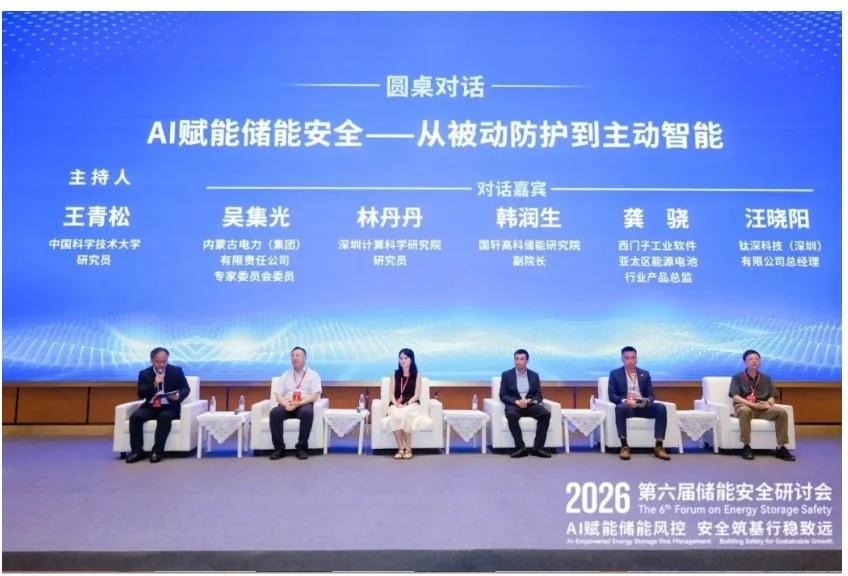
Participants agreed on three major conclusions:
The transition from passive protection to active intelligence is inevitable.
AI will not replace intrinsic battery safety, hardware protection, or human operation, but will serve as an enabling technology connecting sensing, simulation, and decision-making.AI adoption should follow a gradual human-machine collaboration approach.
Challenges remain, including data silos, limited algorithm generalization, incomplete standards, and hardware adaptation issues.Full industrial collaboration is essential.
Energy storage intelligent safety requires cooperation among grid operators, battery manufacturers, research institutions, software companies, and sensor providers.
Launch of the New Intelligent Safety Ecosystem for Energy Storage
During the opening ceremony, Gotion High-tech initiated the establishment of the New Energy Storage Digital Intelligence Safety Ecosystem, bringing together universities, research institutions, and industry leaders.
Representatives from organizations including Beijing University of Science and Technology, University of Science and Technology of China, Hefei University of Technology, Gotion High-tech, Siemens Digital Industries Software, iFlytek, Tishen Technology, Inovance Technology, and CNESA participated in the launch ceremony.
Special Forums: Exploring the Future Path of Energy Storage Safety Technologies
Two parallel forums were held in the afternoon:
“Safety of Energy Storage Power Stations and Commercial & Industrial Storage Systems”
This forum focused on:
Implementation of safety standards;
Fire monitoring and early-warning technologies;
Fire risk assessment of large-scale lithium iron phosphate systems;
Immersion cooling technologies;
Full-chain safety solutions for sodium-ion batteries.
“AI and Energy Storage Safety”
This forum explored:
National-level energy storage operation data platforms;
Intelligent operation and maintenance technologies;
Big data platforms for power generation companies;
AI-driven life-cycle management of large-scale energy storage.
The 6th Energy Storage Safety Forum brought together government authorities, industry players, academic experts, and research institutions to explore the future of energy storage safety.
Participants agreed that safety is the foundation for high-quality energy storage development, and AI-driven technologies are accelerating the transformation from passive protection toward proactive intelligent safety management.
Looking ahead, only through collaboration across the entire value chain and continuous strengthening of safety foundations can the energy storage industry achieve sustainable growth and contribute Chinese solutions to the global green energy transition.
Bookmark This! Six Long-Duration Energy Storage Technology Pathways, Three Revenue Models, and Prospects for Large-Scale Deployment
With multiple supportive policies being introduced, long-duration energy storage (LDES) is entering a period of significant growth opportunities!
Recently, the State Council of China issued the “15th Five-Year Plan Carbon Peak Action Plan”, while the National Energy Administration released the “Energy Sector Energy Conservation and Carbon Reduction Action Plan (2026–2028)”. Both policy documents explicitly emphasized the development of long-duration energy storage, indicating that LDES is gradually becoming an essential component of the new power system.
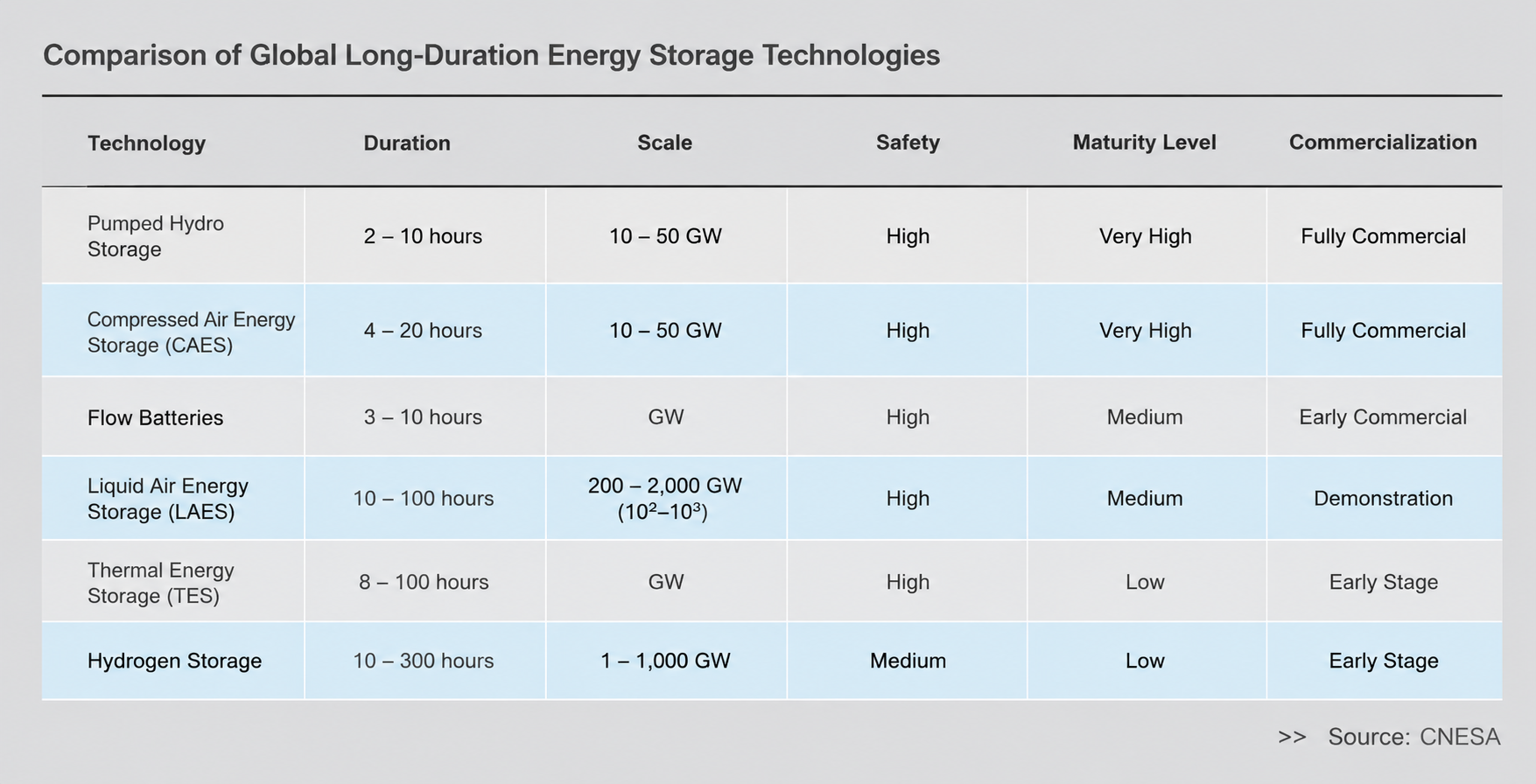
Currently, LDES technologies are developing toward greater diversification. Technologies such as compressed air energy storage (CAES), flow batteries, and hydrogen energy storage each demonstrate different advantages and limitations in terms of technology maturity, application scenarios, and construction costs.
This article provides a systematic analysis of LDES from three perspectives: technology development, revenue structures, and prospects for large-scale deployment, offering industry insights and references.
Six Technology Pathways Leading LDES Development for Diverse Applications
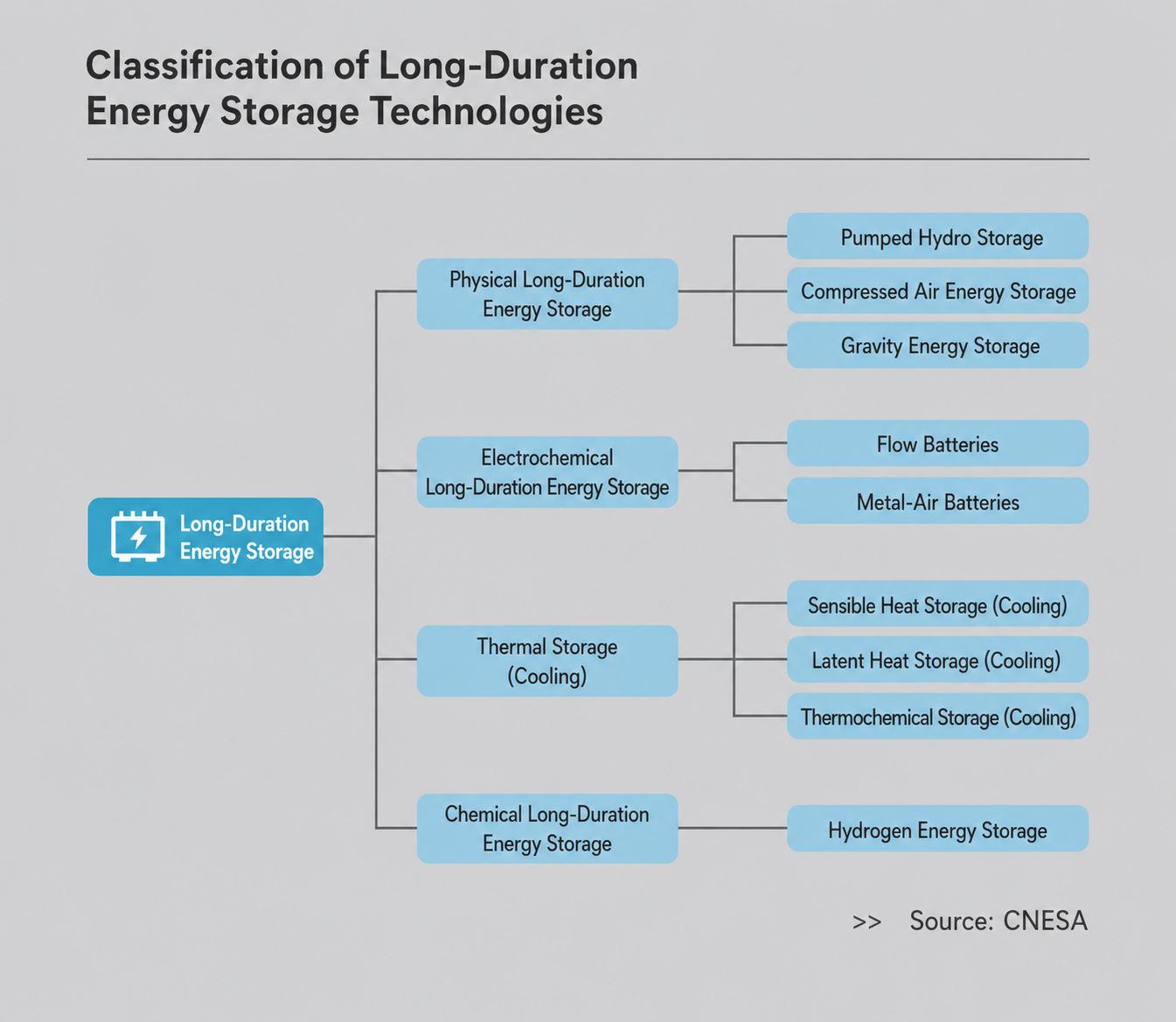
Long-duration energy storage technologies are diverse and mainly include:
Physical energy storage technologies, represented by pumped hydro storage, compressed air energy storage, and gravity energy storage;
Electrochemical energy storage technologies, represented by flow batteries and metal-air batteries;
Thermal energy storage (including cooling storage) and chemical energy storage technologies, represented by hydrogen energy storage.
Among them, pumped hydro storage is currently the most mature and widely deployed long-duration energy storage technology.
As of the first quarter of 2026, China’s operational pumped hydro storage capacity had reached 67.09 GW.
At present, pumped hydro storage is primarily based on large-scale fixed-speed pumped hydro power stations. However, as suitable sites for large-scale pumped hydro projects become increasingly limited, the development of small- and medium-scale pumped hydro storage projects is gradually increasing.
Gravity Energy Storage
The operating principle of gravity energy storage is similar to pumped hydro storage. It mainly uses the physical lifting and lowering of solid masses to drive power generation equipment, thereby achieving energy storage and discharge.
Currently, China’s 100 MWh-scale gravity energy storage tower demonstration project has been completed in Rudong, Jiangsu Province, and has entered the grid connection commissioning stage.
The project, invested and developed by China Tianying, has an energy storage capacity of 100 MWh and a power output of 25–26 MW. It is expected to be connected to the grid and begin operation by the end of 2026.
Compressed Air Energy Storage
Compressed air energy storage is another long-duration energy storage technology with significant potential for large-scale application.
The technology converts electricity from off-peak periods or curtailed renewable energy into compressed air pressure energy and thermal energy, storing them separately in air storage units and thermal storage units.
During periods of high electricity demand, the stored high-pressure air is released and expanded through turbines to generate electricity.
Currently, large-scale engineering applications mainly focus on adiabatic compressed air energy storage systems with thermal storage.
According to statistics from the China Energy Storage Alliance (CNESA), as of the first quarter of 2026, China had 14 operational compressed air energy storage projects connected to the grid, with a cumulative installed capacity exceeding 1.5 GW.
The total installed capacity of projects under construction and in the planning stage has exceeded 54 GW.
Flow Batteries
Flow batteries are electrochemical batteries in which the active materials of both the positive and negative electrodes are liquid.
Depending on the types of active electrode materials, flow batteries can be categorized into:
Vanadium redox flow batteries (VRFBs);
Zinc-bromine flow batteries;
Iron-chromium flow batteries;
and other technology pathways.
Overall, flow batteries offer advantages including:
high safety;
no risk of explosion or fire;
long service life;
deep charge and discharge capability;
and environmental friendliness.
By the end of 2025, China’s 10 kW-scale vanadium redox flow battery demonstration projects had already entered operation.
Thermal Energy Storage
Thermal energy storage refers to storing energy from sources such as:
solar thermal energy;
geothermal energy;
industrial waste heat;
low-grade waste heat;
and releasing it when needed, thereby addressing mismatches between thermal energy supply and demand caused by differences in time, location, or energy intensity.
Based on storage principles, thermal energy storage technologies can be categorized into three types:
sensible heat storage;
latent heat storage;
thermochemical energy storage.
Currently, relatively mature thermal storage materials include:
hot water;
molten salt;
refractory bricks;
and other thermal storage media.
Hydrogen Energy Storage
Hydrogen energy storage is a form of chemical energy storage that enables:
large-scale energy storage;
long-duration storage;
and cross-regional energy storage.
It mainly consists of three key stages:
hydrogen production;
hydrogen storage and transportation;
hydrogen utilization.
Water electrolysis for hydrogen production is expected to become the dominant future technology pathway.
Hydrogen storage and transportation technologies include:
gaseous hydrogen storage;
liquid hydrogen storage;
solid-state hydrogen storage;
ammonia (alcohol)-based hydrogen storage;
underground hydrogen storage;
and other approaches.
In the power sector, hydrogen energy can generate electricity mainly through:
hydrogen gas turbines;
hydrogen internal combustion engines;
hydrogen fuel cells.
Different LDES Technologies Demonstrate Distinct Competitive Advantages
Different long-duration energy storage technology pathways demonstrate diverse technical characteristics and competitive advantages.
In terms of efficiency, pumped hydro storage and gravity energy storage achieve relatively high efficiency, while molten salt thermal storage and hydrogen energy storage have comparatively lower efficiency.
Regarding service life, physical energy storage technologies such as pumped hydro storage, compressed air energy storage, and gravity energy storage generally offer longer lifetimes.
In terms of safety, most LDES technologies demonstrate high safety levels, except hydrogen energy storage, which requires additional safety considerations.
Regarding environmental adaptability, pumped hydro storage and compressed air energy storage have relatively limited adaptability to certain environmental conditions.
In terms of response speed, flow batteries demonstrate significant advantages.
Lifecycle Cost of Energy Storage Determines Economic Competitiveness
The levelized cost of electricity (LCOE) over the full lifecycle is a key indicator for evaluating the economic performance of energy storage technologies.
According to estimates from the China Energy Storage Alliance (CNESA), when the storage duration reaches 8 hours, salt cavern compressed air energy storage and pumped hydro storage currently demonstrate relatively lower lifecycle electricity costs.
With continuous technological advancement and large-scale deployment, the lifecycle costs of emerging long-duration energy storage technologies are expected to continue declining.
According to projections, by 2035, mainstream LDES technologies including:
compressed air energy storage;
pumped hydro storage;
flow batteries;
molten salt thermal storage;
could achieve lifecycle electricity costs of approximately:
RMB 0.3–0.5/kWh
under conditions of 250 annual utilization cycles.
If calculated based on each technology’s inherent lifecycle cycle life, the lifecycle cost of energy storage could decline even further.
Revenue Channels Established, Value of Long-Duration Storage Yet to Be Fully Released
Currently, the development of market mechanisms for long-duration energy storage is accelerating its transition from policy-driven growth toward market-driven development.
The three-part revenue structure of:
“Energy Market + Capacity Market + Ancillary Services Market”
is gradually moving from the stage of framework establishment toward detailed implementation.
Energy Market: The Most Fundamental Revenue Source
The energy market is currently the most fundamental and primary revenue source for long-duration energy storage.
The core business logic is:
“Charge during low-price periods and discharge during high-price periods.”
Compared with 2-hour energy storage systems, the key advantage of LDES lies in its ability to provide:
cross-period energy shifting;
large-scale electricity time-shifting capability;
and flexible short-term operation.
Some technology pathways can also achieve multiple daily cycles, allowing them to capture more price arbitrage opportunities.
In provinces where electricity spot markets are relatively mature, peak-valley price differences have become a major revenue source for energy storage projects.
Taking compressed air energy storage as an example, the first phase of the Jintan Salt Cavern Compressed Air Energy Storage National Demonstration Project in Jiangsu, which began operation in 2024, has an installed capacity of:
60 MW / 300 MWh
The project can achieve:
one charge and two discharge cycles per day;
or multiple charge-discharge operations within a day.
Capacity Market: Providing Long-Term Reliability Value
Unlike the “price arbitrage” mechanism of the energy market, the core logic of the capacity market is the “value of availability” — meaning that energy storage systems commit to remaining available whenever the power grid requires support.
This mechanism is particularly important for long-duration energy storage because:
it requires higher upfront investment costs;
it has a longer payback period;
and it requires stable baseline revenues to improve project bankability.
Currently, the development of capacity markets in China demonstrates a dual-track approach, which is gradually removing market access barriers for long-duration energy storage.
On one hand, the coal-fired power capacity pricing mechanism began nationwide implementation in 2024, providing a stable revenue foundation for the transformation of thermal power generation.
On the other hand, the Notice on Improving the Capacity Electricity Pricing Mechanism for the Generation Side, released in January this year, established for the first time at the national policy level a capacity electricity pricing mechanism for independent new-type energy storage systems on the grid side.
Based on the principle of “equal pay for equal performance,” independent energy storage has officially been incorporated into the generation-side capacity pricing mechanism.
The capacity payment mechanism for independent energy storage has therefore evolved from regional exploration toward a nationwide unified framework.
Ancillary Services Market: Unlocking Additional Value
If the energy market addresses the question of “whether energy storage can generate revenue,” the ancillary services market determines “whether energy storage can generate additional value.”
Currently, power ancillary service markets mainly include three categories:
frequency regulation;
peak shaving;
backup reserve.
In regions where electricity spot markets operate on a regular basis, peak-shaving ancillary services have gradually been replaced by spot energy markets, with their original functions being absorbed by electricity trading mechanisms.
Meanwhile, some provinces have begun pilot programs for new ancillary services, including:ramping support;
inertia support;
and other grid flexibility services.
Long-duration energy storage can provide:long-cycle energy shifting;
backup reserve capability;
and some technology pathways can also provide physical inertia, effectively supporting grid stability requirements.
However, although the three-part revenue structure appears relatively complete, the current market mechanism still mainly focuses on the question of “whether energy storage exists”, without further distinguishing “how long energy storage can provide service.”
The differentiated advantages of LDES — including:cross-time energy shifting;
large capacity;
high reliability;
have not yet been fully translated into market revenues.
This remains the most significant challenge in current market mechanism development and represents a key area requiring further breakthroughs.
Technology and Market Mechanisms Advancing Together to Support Demonstration Deployment
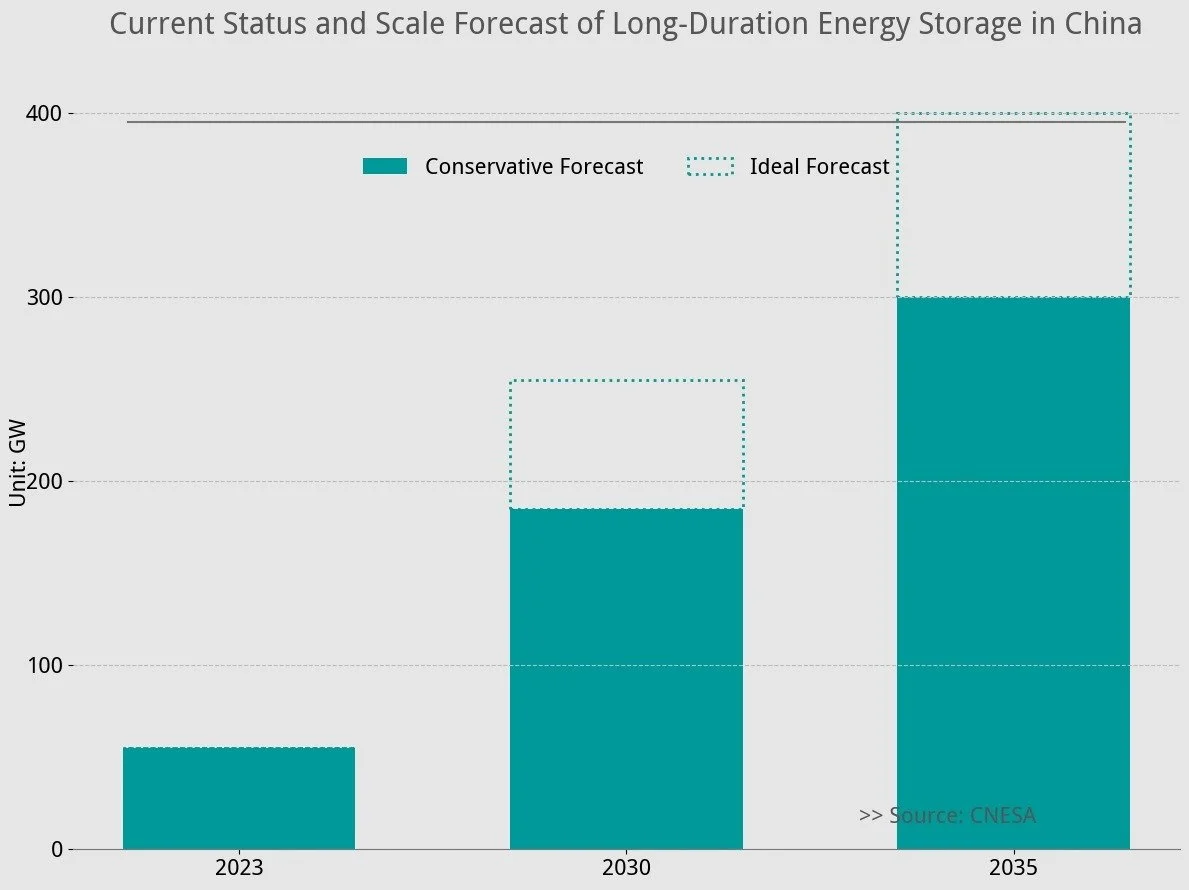
At the recently held Energy Storage International Conference and Expo (ESIE2026), Ma Yuan, Assistant Researcher at the Department of Earth System Science of Tsinghua University, stated that by 2030, energy storage capacity should account for 15%–20% of total renewable energy installed capacity, reaching a key milestone of approximately 400 GW.
Among this capacity, long-duration energy storage with durations exceeding 8 hours should account for at least 20% in order to effectively reduce renewable energy curtailment and ensure power system security.
According to forecasts from the China Energy Storage Alliance (CNESA), during the 15th Five-Year Plan period, demand for long-duration energy storage will gradually become more prominent.
New LDES demand during this period will mainly focus on storage durations of:
4–10 hours
Under a conservative scenario, the market scale is expected to reach:
180 GW
while under an optimistic scenario, it could reach:
250 GW
Pumped hydro storage will remain the dominant technology, complemented by emerging LDES technologies such as:compressed air energy storage;
electrochemical energy storage.
However, this scale still falls short of the requirements of power grid companies.
In some northwestern provinces with high renewable energy penetration, demand for 24-hour-plus long-duration energy storage is expected to emerge first.
By 2035, the scale of long-duration energy storage is expected to reach:300 GW under a conservative scenario;
400 GW under an optimistic scenario.
Storage durations will mainly range from:
4–24 hours
while the deployment scale of emerging LDES technologies will continue to increase.
Accelerating the Transition from Technology Demonstration to Large-Scale Deployment
To continuously promote the transition of long-duration energy storage from technology demonstration to large-scale commercial application, more projects need to be implemented to transform technological maturity into commercial viability.
1. Coordinated Demonstration of Different Technology Pathways
Currently, emerging LDES projects face challenges including:technologies that are not yet fully mature;
incomplete industrial supply chains;
relatively high investment costs.
As a result, commercial applications remain dominated by short-duration lithium-ion battery energy storage.
Going forward, demonstration and deployment of LDES technologies should be promoted in an orderly manner based on different stages of technological development.
This approach will accelerate the implementation of emerging technologies while driving industrial technology upgrades and improving market competitiveness.
2. Promote Scenario-Specific Demonstration Projects Based on Local Conditions
Under the new power system framework, different application scenarios have different requirements for long-duration energy storage.
For example:developed cities in eastern China have relatively higher requirements for energy density;
northwestern “desert, Gobi, and barren land” regions;
eastern coastal areas;
and cold regions in northeastern China;
all have different requirements regarding:operating temperature;
humidity resistance;
sand and dust protection;
and environmental adaptability.
Therefore, demonstration projects should be combined with different application environments to deepen research into key technologies including:energy storage equipment;
system integration;
safety protection;
and operational reliability.
3. Strengthen Long-Term Monitoring and Evaluation of Demonstration Projects
Currently, management and evaluation mechanisms for demonstration projects are not yet sufficiently comprehensive.
In the future, long-term tracking, monitoring, and periodic evaluation should be carried out for demonstration projects.
This will provide scientific data support for:the practical application of new technologies;
new products;
and innovative solutions.
It will also provide evidence-based support for national industrial policies and technical standards.
4. Encourage Demonstration Projects to Explore Innovative Policies and Business Models
While demonstrating LDES technologies, pilot projects should also serve as platforms for exploring innovative commercial models.
At the same time, improving policy mechanisms and market support systems will be a critical foundation for large-scale LDES development.
Establishing Cost Recovery Mechanisms for Long-Duration Energy Storage
Compared with short-duration energy storage, LDES demonstrates greater value through:capacity contribution;
long-term backup capability;
and system reliability support.
Therefore, it is necessary to gradually establish market-based capacity cost recovery mechanisms.
Through market competition and pricing mechanisms, investment entities can be encouraged to make reasonable investments, ensuring long-term adequacy of power system capacity.
Improving Cost Allocation Mechanisms for Long-Duration Energy Storage
Long-duration energy storage can directly or indirectly accelerate the replacement of traditional fossil fuel power generation with renewable energy, significantly reducing overall societal carbon emissions.
In the future, policy and market frameworks for:green electricity;
green electricity certificates;
carbon trading;
should be further developed.
These mechanisms can better reflect the value of LDES in:energy transition;
carbon reduction;
and renewable energy integration.
By expanding revenue sources and improving cost allocation mechanisms, the economic foundation for long-duration energy storage can be further strengthened.
Conclusion
Long-duration energy storage is becoming an increasingly important pillar of future power systems as renewable energy deployment accelerates.
With continuous technological innovation, improved market mechanisms, and increasing project deployment, LDES is expected to move from early-stage demonstration toward large-scale commercialization.
The future development of long-duration energy storage will depend not only on breakthroughs in individual technologies, but also on the coordinated evolution of:technology pathways;
market structures;
business models;
and policy frameworks.
Together, these factors will unlock the full value of LDES in supporting renewable energy integration, enhancing grid flexibility, and enabling the global energy transition.
Top Energy Storage Projects in China in H1 2026
In the first half of 2026, China’s new energy storage sector maintained rapid growth momentum, with multiple breakthroughs achieved in grid-connected projects. Notably, industry development is no longer focused solely on maximizing individual project scale. While lithium iron phosphate (LFP) battery storage remains the dominant technology route, the industry is gradually shifting from simply expanding installed capacity toward improving the overall performance and efficiency of energy storage systems.
Energy storage technologies are becoming increasingly diversified. Beyond lithium-ion batteries, long-duration energy storage technologies such as vanadium redox flow batteries and compressed air energy storage have achieved large-scale grid-connected demonstrations. Emerging technologies, including semi-solid-state batteries, have also entered engineering demonstration stages. Meanwhile, grid-forming energy storage, intelligent string-based storage systems, and cloud-based energy storage solutions are accelerating commercialization and deployment.
Energy storage application scenarios continue to expand, covering a wide range of use cases including generation-side, grid-side, behind-the-meter, and standalone energy storage. Integrated models such as solar-storage, solar-hydrogen-storage, and grassland photovoltaic complementary storage projects are also being implemented.
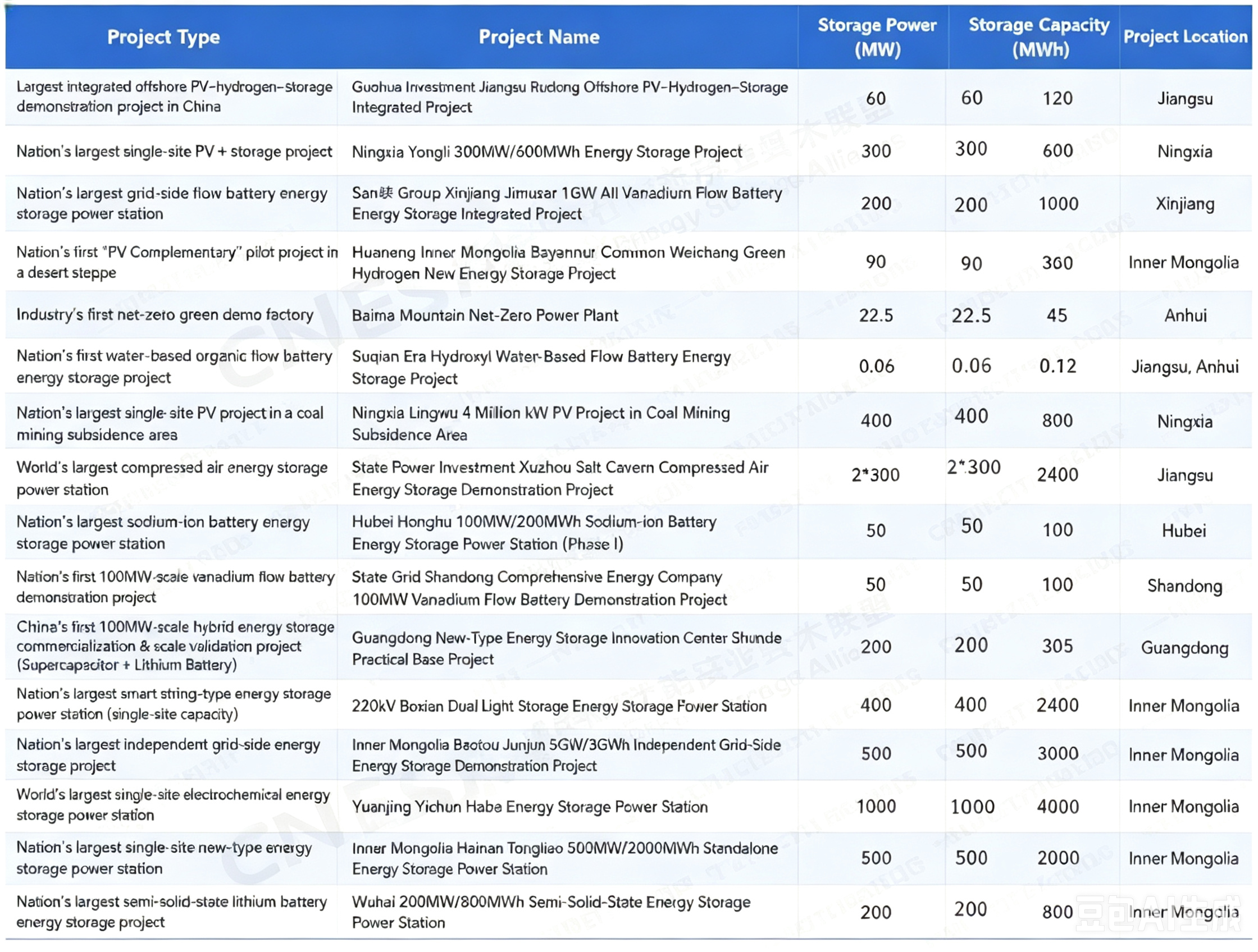
The China Energy Storage Alliance (CNESA) has compiled representative new energy storage projects launched or connected to the grid in the first half of 2026 for industry reference.
01
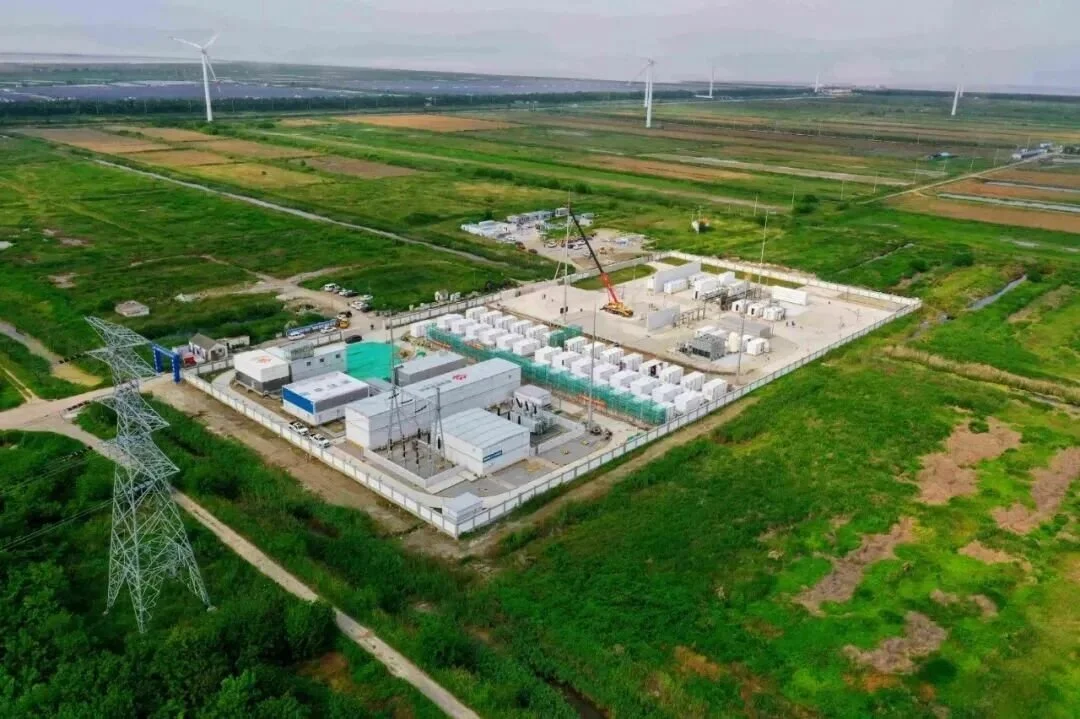
China’s Largest Offshore PV-Hydrogen-Storage Integrated Demonstration Project
Guohua Investment Jiangsu Rudong Offshore PV-Hydrogen-Storage Integrated Project
Grid Connection Date: June 2026
Location: Jiangsu Province
Owner: Guohua (Rudong) New Energy Co., Ltd.
Energy Storage Technology: Lithium Iron Phosphate (LFP) Battery Storage
Storage Scale: 60MW/120MWh
Located at Yangkou Port in Rudong, Jiangsu Province, the project is one of the key projects under China’s third batch of large-scale photovoltaic bases.
The project integrates a 400MW photovoltaic power plant, a 60MW/120MWh energy storage system, and a green hydrogen production facility with a capacity of 1,500 Nm³/h, forming a complete industrial chain covering green electricity generation, storage, and conversion.
02
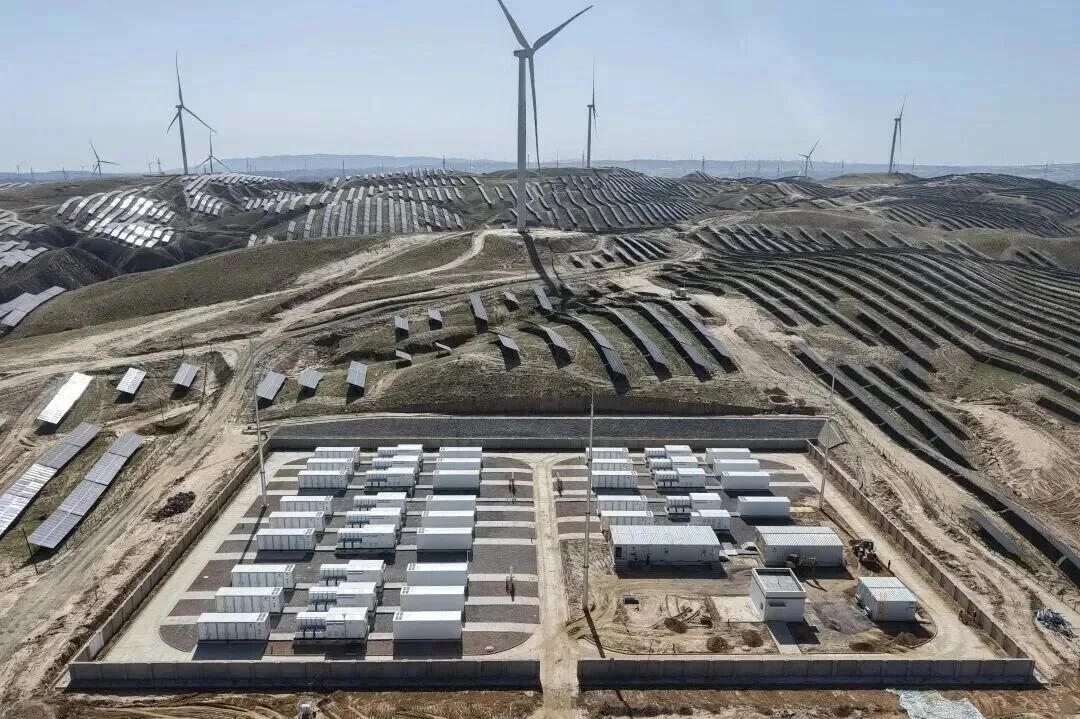
China’s Largest Single-Site PV + Energy Storage Project
Ningxia Yongli 300MW/600MWh Energy Storage Project
Grid Connection Date: June 2026
Location: Ningxia Hui Autonomous Region
Owner: Ningxia Dian Investment Yongli (Zhongwei) New Energy Co., Ltd.
Energy Storage Technology: Lithium Iron Phosphate (LFP) Battery Storage
Storage Scale: 300MW/600MWh
Located in Shapotou District, Zhongwei City, Ningxia, the project was developed specifically to support the 3GW photovoltaic base in Zhongwei.
The project consists of three independent energy storage stations — No.1, No.2, and No.3 — each with a capacity of 100MW/200MWh. The combined installed capacity reaches 300MW/600MWh.
03
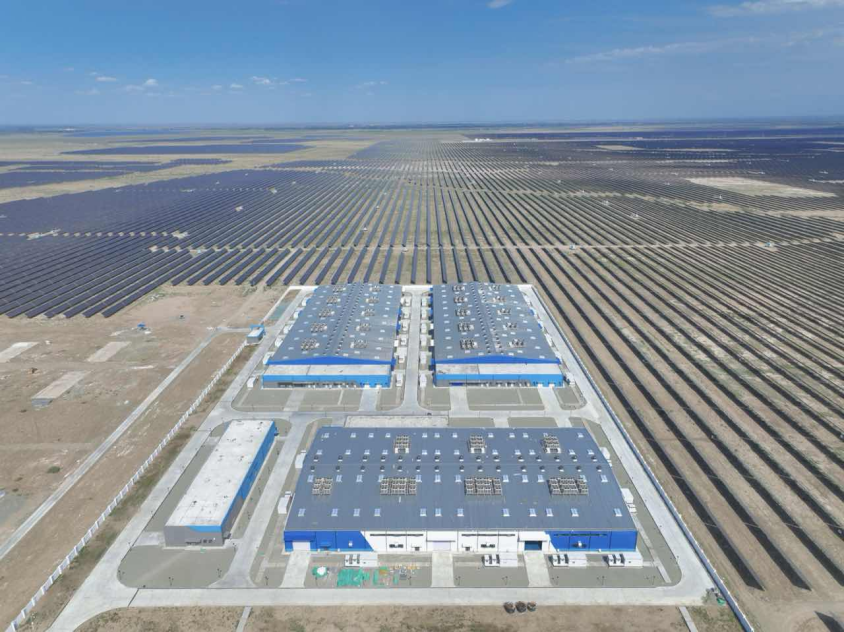
China’s Largest Vanadium Flow Battery Energy Storage Power Station
Three Gorges Group Xinjiang Jimusar 1GW PV + Vanadium Flow Battery Energy Storage Integrated Project
Grid Connection Date: June 2026
Location: Xinjiang
Owner: Three Gorges New Energy Jimusar Power Generation Co., Ltd.
Energy Storage Technology: Vanadium Redox Flow Battery (VRFB)
Storage Scale: 200MW/1000MWh
Located in Jimusar County, Changji Hui Autonomous Prefecture, Xinjiang, the project features a rated power capacity of 200MW and an energy storage capacity of 1,000MWh.
It is currently the largest vanadium flow battery energy storage power station in China, representing a major milestone in the large-scale application of long-duration energy storage technologies.
04
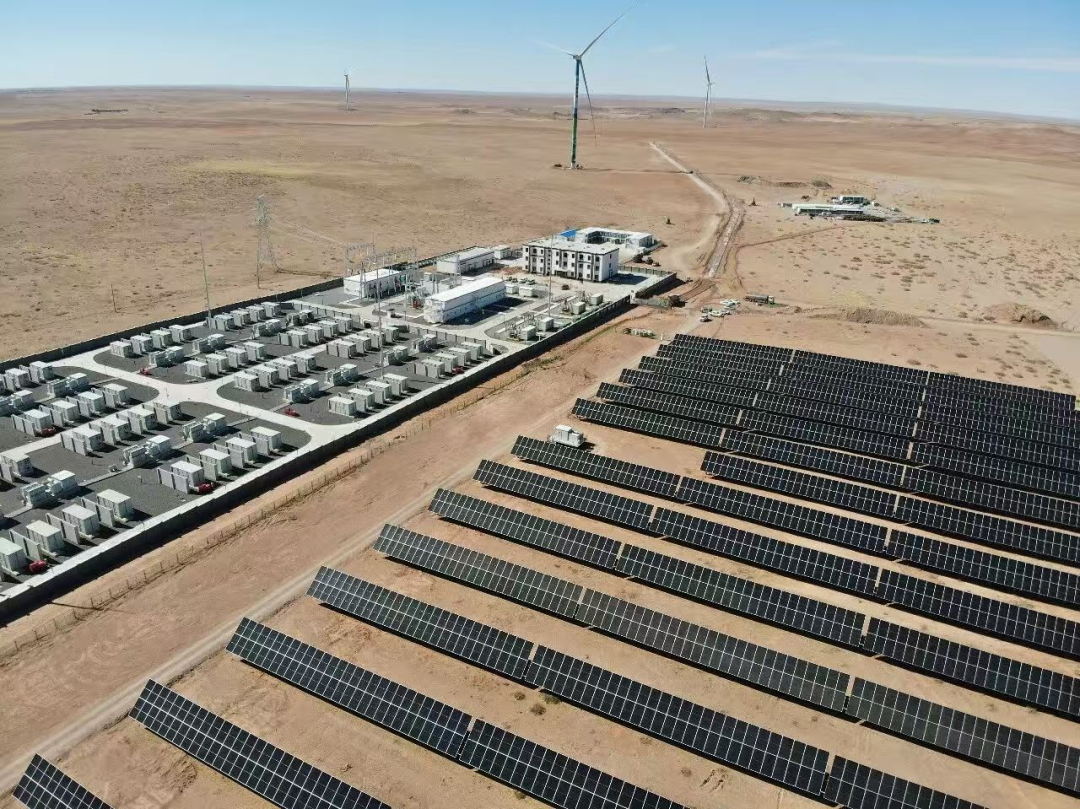
China’s First Desert Grassland “PV + Grassland Complementary” Pilot Project
Huaneng Inner Mongolia Tongwei Green Materials New Energy Storage Project
Grid Connection Date: May 2026
Location: Inner Mongolia Autonomous Region
Owner: Baotou No.1 Thermal Power Plant, North United Power Co., Ltd. (Huaneng North China Company)
Energy Storage Technology: Lithium Iron Phosphate (LFP) Battery Storage
Storage Scale: 90MW/360MWh
Developed by Huaneng North China Company’s Baotou No.1 Thermal Power Plant, the project has a planned renewable energy capacity of 350MW, including:
300MW wind power
50MW photovoltaic power
90MW/360MWh electrochemical energy storage system
The project adopts a “grassland + photovoltaic” complementary model, with renewable electricity accounting for 50.17% of the electricity consumption of the industrial silicon production facility.
05
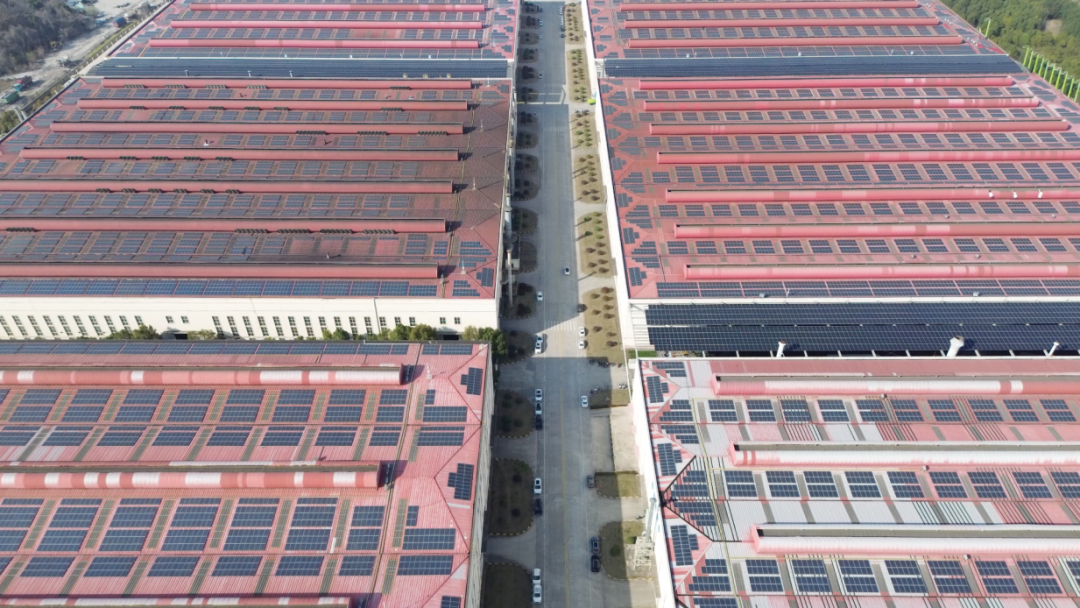
The Industry’s First Fully Green Electricity Demonstration Factory
Baima Mountain Fully Green Electricity Factory
Grid Connection Date: March 2026
Location: Anhui Province
Owner: Anhui Conch Group
Energy Storage Technology: Lithium Iron Phosphate (LFP) Battery Storage
Storage Scale: 22.5MW/45MWh
Located in Wuhu, Anhui Province, the project is the industry’s first fully green electricity demonstration factory integrating:
photovoltaic power generation
electrochemical energy storage
smart microgrid systems
new energy vehicle charging infrastructure
Building on waste heat power generation from cement kilns, the project innovatively expands photovoltaic deployment across multiple scenarios, including:
rooftop and corridor spaces
building facades
floating PV systems on water surfaces
curved roof structures
By utilizing more than 130,000 square meters of available space, the project integrates renewable generation and energy storage systems to establish a multi-energy complementary energy ecosystem.
06
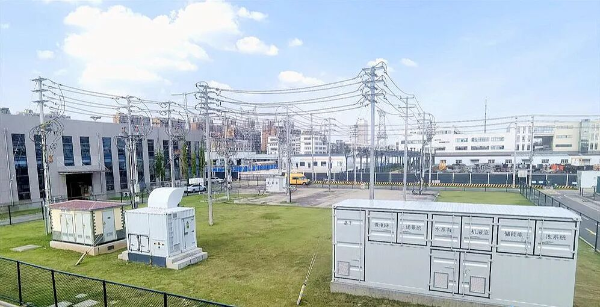
China's First Distribution-Level Aqueous Organic Flow Battery Energy Storage Project
Suqian Era Aqueous Organic Flow Battery Distribution-Level Energy Storage Project
Grid Connection Date: March 2026
Location: Jiangsu Province and Anhui Province
Energy Storage Technology: Aqueous Organic Flow Battery
Storage Capacity: 60kW/120kWh
The project represents China's first deployment of an aqueous organic flow battery energy storage system at the distribution-transformer level.
It achieved several technological breakthroughs, including the development of an organic quaternary ammonium salt-based electrolyte system, a high-ion-conductivity anion exchange membrane, and advanced multi-physics coupled control technology.
Jointly developed by Suqian Era Energy Storage Technology Co., Ltd. and State Grid Electric Power Research Institute, the project was commissioned in Suqian Economic Development Zone, Jiangsu Province, with a parallel deployment in Chuzhou, Anhui Province.
07
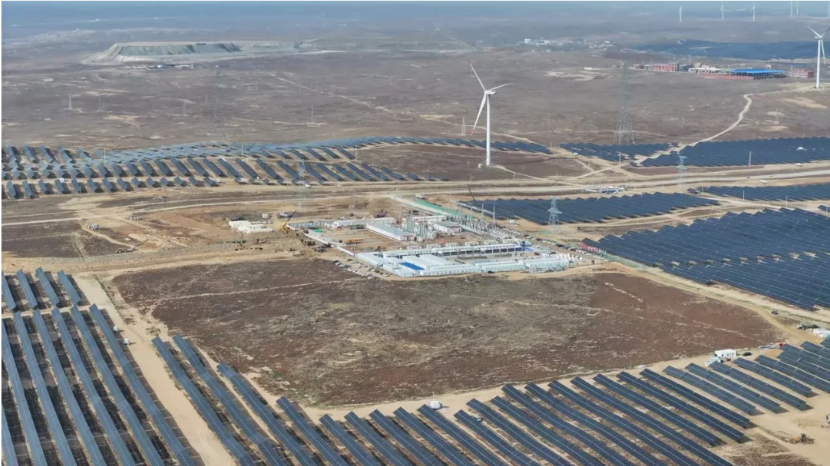
China's Largest Single-Site PV Project in a Coal Mining Subsidence Area
Ningxia Lingwu 4GW PV Project in a Coal Mining Subsidence Area
Grid Connection Date: February 2026
Location: Ningxia Hui Autonomous Region
Owner:CHN Energy
Energy Storage Technology: Lithium Iron Phosphate (LFP)
Storage Capacity: 400MW/800MWh
The project is being developed in two phases with a total installed PV capacity of 4GW, making it China's largest single-site photovoltaic project built on a former coal mining subsidence area.
As one of the key projects under China's second batch of large-scale desert, Gobi, and wasteland renewable energy bases, it also serves as an important green power source for the Ningxia–Zhejiang LingShao UHV DC transmission corridor.
The project is planned to include 600MW/1,200MWh of battery energy storage, of which 400MW/800MWh has already been commissioned.
08
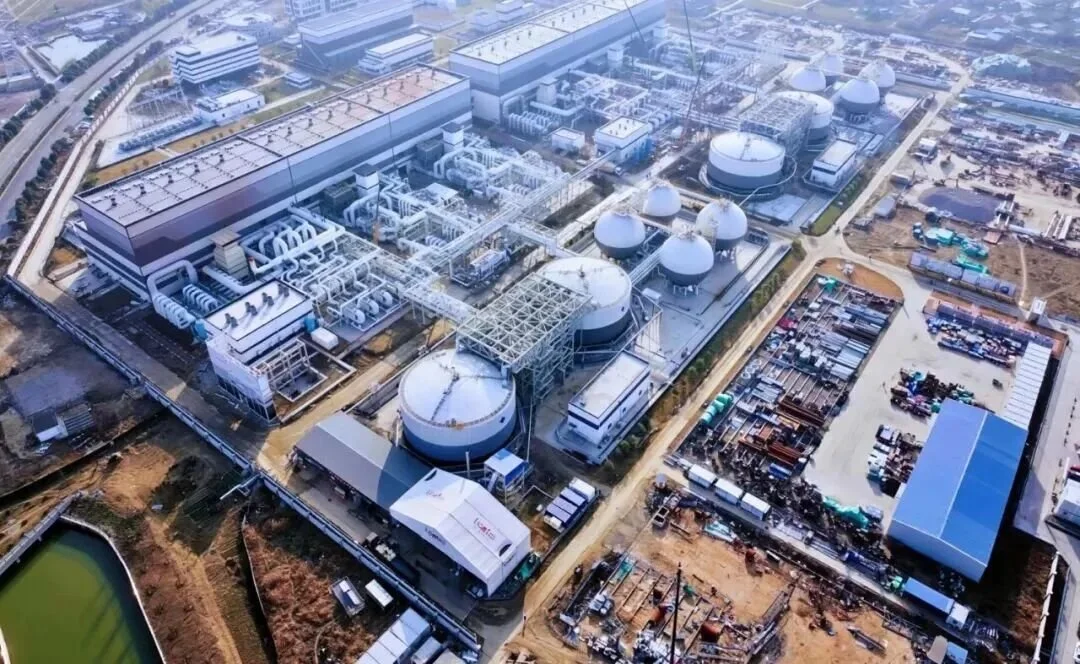
World's Largest Compressed Air Energy Storage Power Station
Jiangsu Guoxin Suyan Huai'an Salt Cavern Compressed Air Energy Storage Demonstration Project
Grid Connection Date: January 2026
Location: Jiangsu Province
Owner: Jiangsu Guoxin Suyan (Huai'an) Energy Storage Power Generation Co., Ltd.
Energy Storage Technology: Compressed Air Energy Storage (CAES)
Storage Capacity: 2 × 300MW / 2,400MWh
The project utilizes underground salt caverns in Huai'an, Jiangsu Province, to construct two 300MW non-fuel supplementary compressed air energy storage units.
It adopts internationally advanced high-temperature adiabatic compressed air energy storage technology, combining molten salt thermal storage with pressurized hot water heat storage.
With a total storage capacity of 2,400MWh and a round-trip efficiency of approximately 71%, it is currently the world's largest compressed air energy storage power station.
09
China's Largest Sodium-Ion Battery Energy Storage Power Station Under Construction
Honghu 100MW/200MWh Sodium-Ion Battery Energy Storage Demonstration Project (Phase I)
Phase I Grid Connection Date: January 2026
Location: Hubei Province
Owner: Honghu Suifa New Energy Co., Ltd. (a wholly owned subsidiary of Guangzhou Development Group)
Energy Storage Technology: Sodium-Ion Battery
Phase I Capacity: 50MW/100MWh
The project is one of Hubei Province's first batch of new energy storage demonstration projects.
Phase I includes a 50MW/100MWh sodium-ion battery energy storage system, a new 110kV booster substation, and a dedicated transmission line connecting to the Maojiang 110kV substation.
Once fully completed, the project is expected to become one of China's largest sodium-ion battery energy storage power stations, demonstrating the commercial potential of sodium-ion technology for grid-scale applications.
10
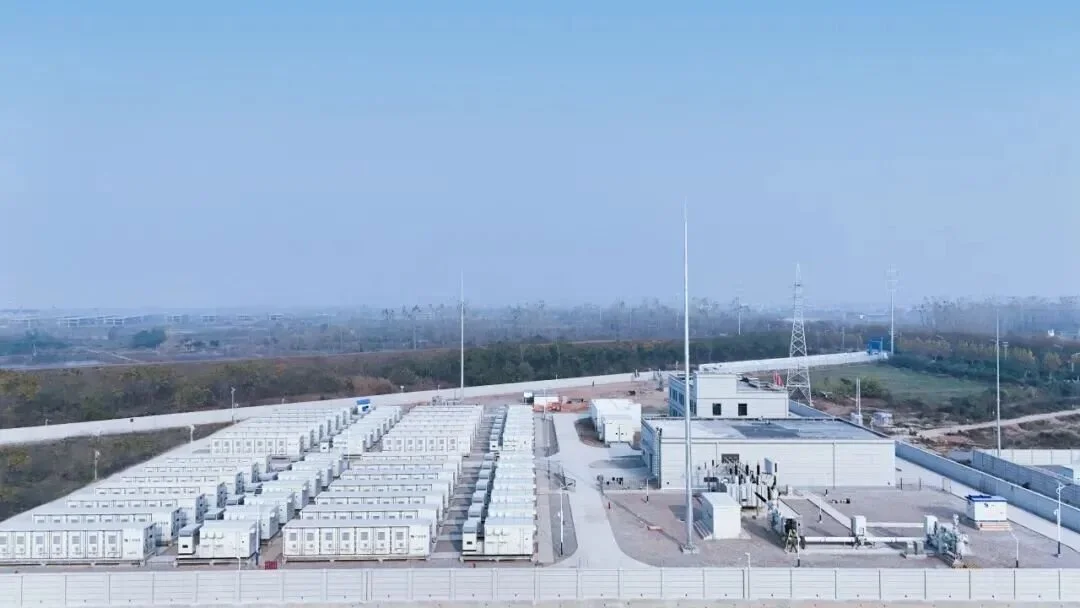
China's First 100MWh Distribution-Level Cloud Energy Storage Demonstration Project
State Grid Shandong Integrated Energy Service Cloud Energy Storage Demonstration Project
Grid Connection Date: January 2026
Location: Shandong Province
Storage Capacity: 50MW/100MWh
As China's first 100MWh cloud energy storage demonstration project, the initiative is built around the concept of distributed aggregation, cloud-based dispatch, and intelligent coordination.
The project enables centralized management and flexible dispatch of a large number of geographically distributed energy storage resources, providing an innovative solution for improving grid flexibility, renewable energy integration, and distributed energy resource management.
Milestone Projects Commissioned at the End of 2025
While a wide range of innovative energy storage projects entered operation during the first half of 2026, several landmark projects commissioned in late 2025 also deserve recognition for their technological significance. These projects span hybrid energy storage, ultra-large-scale lithium battery storage, semi-solid-state battery systems, intelligent string-based energy storage, and other cutting-edge applications, further demonstrating China's accelerating innovation in the energy storage sector.
11
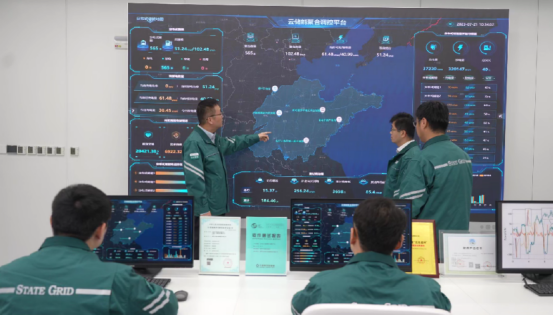
China's First 100MW-Scale Hybrid Energy Storage Demonstration Project Combining Supercapacitors and Lithium Batteries
Shunde Demonstration Base Project of the Guangdong New-type Energy Storage Innovation Center
Grid Connection Date: December 2025
Location: Guangdong Province
Owner: Guangdong New-type Energy Storage National Research Institute Co., Ltd.
Energy Storage Technology: Supercapacitors + Lithium Iron Phosphate (LFP) Batteries
Storage Capacity: 200MW/305MWh
As China's first commercial-scale demonstration project integrating supercapacitors and lithium batteries, the project validates the technical and commercial viability of hybrid energy storage systems at the 100MW scale.
The project utilizes domestically developed high-energy-density, high-power supercapacitors (90Wh/kg with a service life exceeding 100,000 charge-discharge cycles) and adopts a hybrid configuration consisting of 50MW/5MWh of supercapacitors and 150MW/300MWh of LFP battery storage.
By combining the ultra-fast response capability of supercapacitors with the long-duration energy support of lithium batteries, the system provides multiple grid services, including grid-forming support, primary and secondary frequency regulation, and sustained energy balancing, offering a comprehensive solution for next-generation power systems.
12
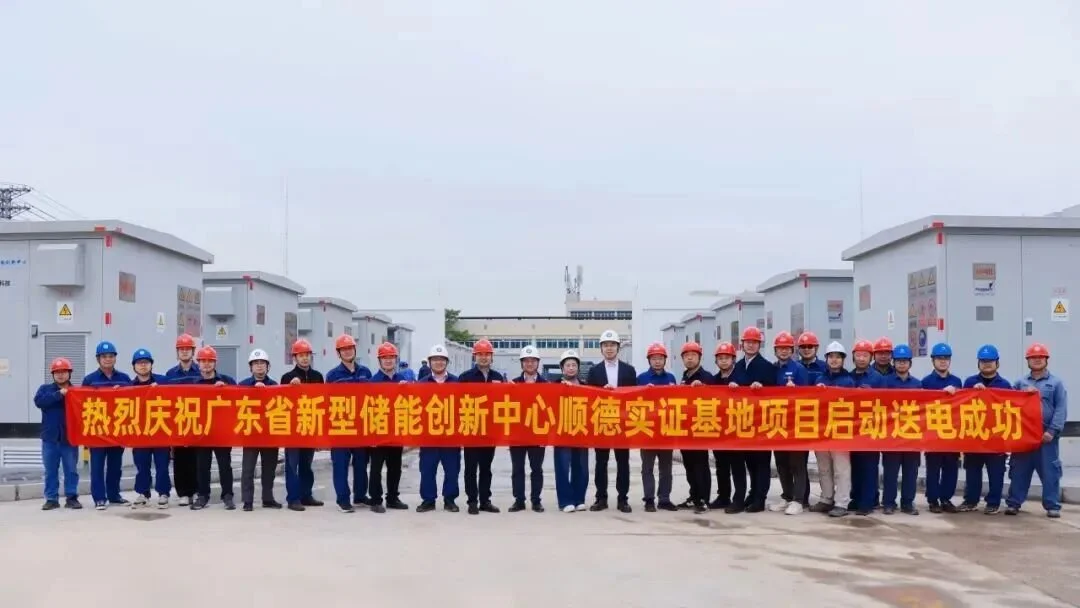
China's Largest Intelligent String Energy Storage Power Station by Single-Site Capacity
220kV Boxian Xingguang Energy Storage Power Station
Grid Connection Date: December 2025
Location: Inner Mongolia Autonomous Region
Owner: Baotou Boxian New Energy Technology Co., Ltd. (a wholly owned subsidiary of HyperStrong)
Energy Storage Technology: Lithium Iron Phosphate (LFP) Batteries
Storage Capacity: 400MW/2,400MWh
With a total capacity of 400MW/2,400MWh, the project is China's largest intelligent string energy storage power station by single-site capacity.
Developed by HyperStrong, the project features Huawei's intelligent string grid-forming PCS alongside HyperStrong's industry-leading 7MWh high-capacity battery energy storage system, enhancing system safety, operational flexibility, and grid support capability.
13
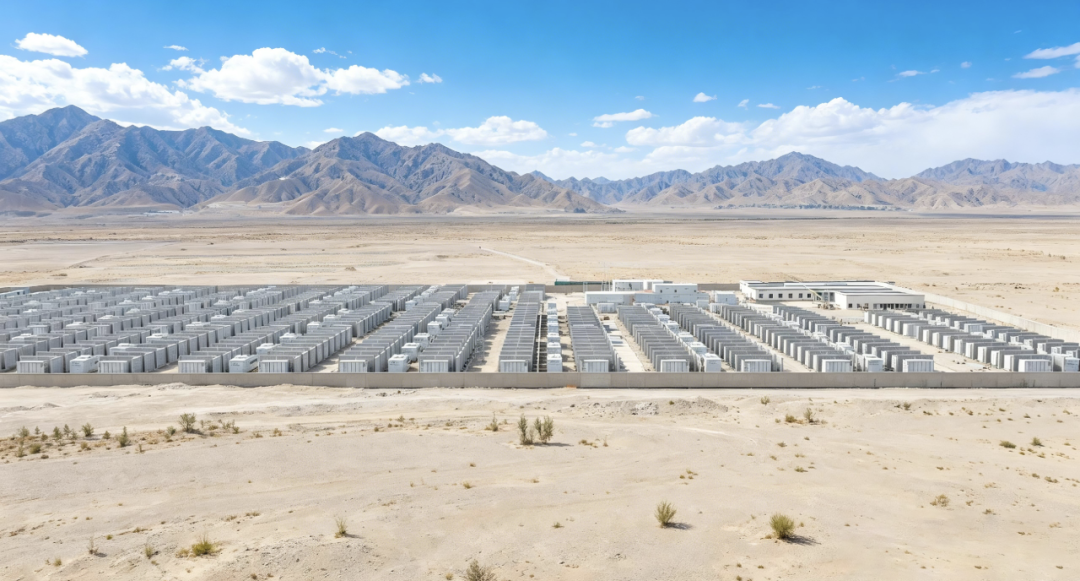
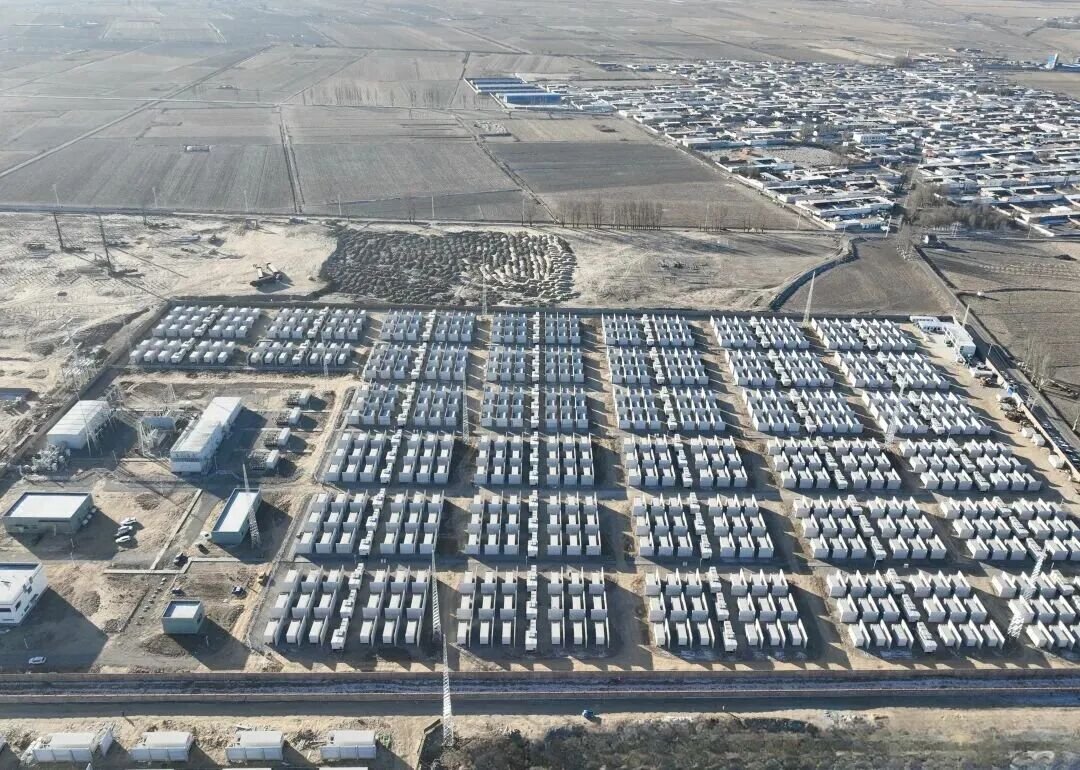
China's Largest Independent Grid-side Energy Storage Demonstration Project
Baotou Weijun 500MW/3,000MWh Independent Grid-side Energy Storage Demonstration Project
Grid Connection Date: December 2025
Location: Inner Mongolia Autonomous Region
Owner: Baotou Tuyou Banner Bosi New Energy Technology Co., Ltd. (a wholly owned subsidiary of HyperStrong)
Energy Storage Technology: Lithium Iron Phosphate (LFP) Batteries
Storage Capacity: 500MW/3,000MWh
Located in Tumed Right Banner, Baotou, Inner Mongolia, the project is currently China's largest independent grid-side energy storage demonstration project.
Serving as a flagship project for China's new power system development, it also plays a vital role in facilitating renewable energy integration across western Inner Mongolia while strengthening regional grid stability and flexibility.
14
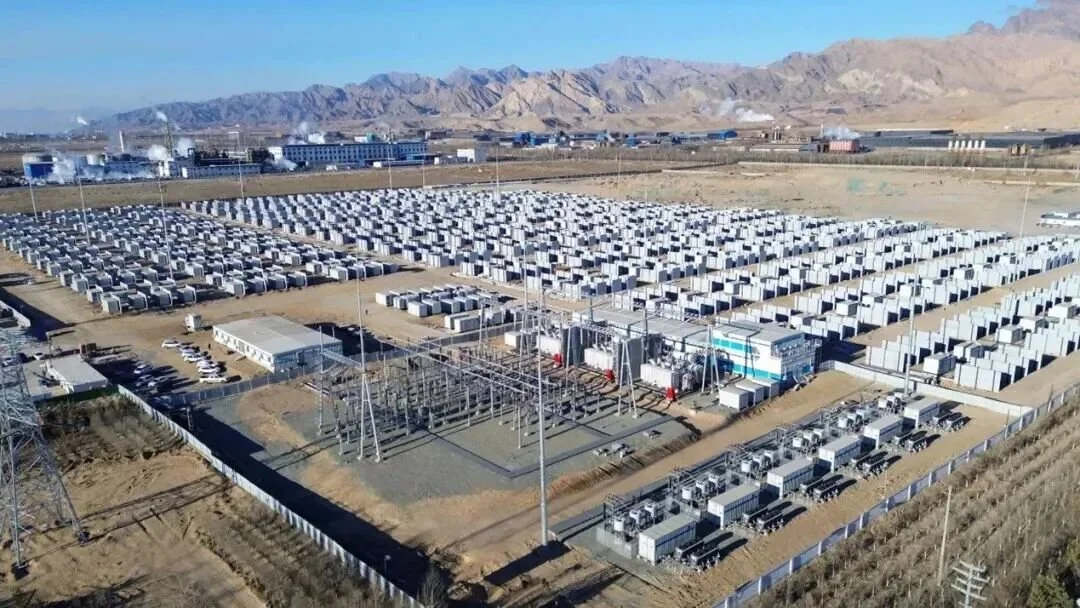
World's Largest Single-Site Electrochemical Energy Storage Power Station
Envision Chaganhada Energy Storage Power Station
Grid Connection Date: December 2025
Location: Inner Mongolia Autonomous Region
Owner: Envision Group
Energy Storage Technology: Lithium Iron Phosphate (LFP) Batteries
Storage Capacity: 1,000MW/4,000MWh
Located in Bayannur, Inner Mongolia, the project has a total storage capacity of 4GWh, making it the world's largest single-site electrochemical energy storage power station.
The facility is fully equipped with Envision's AI-powered energy storage system, enabling intelligent operation and maintenance while successfully passing the grid's stringent "three-charge, three-discharge" commissioning test on its first attempt.
15
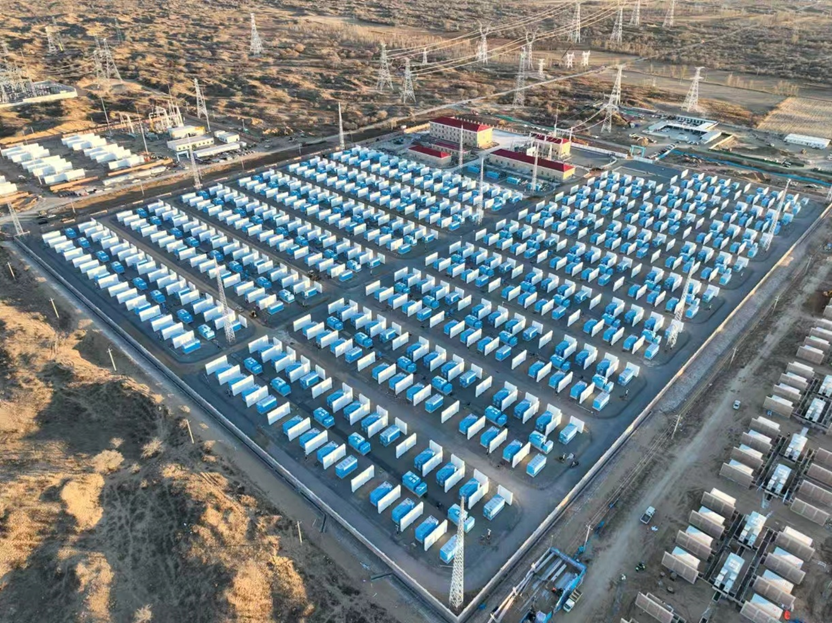
China's Largest Standalone New-type Energy Storage Power Station by Single-Site Capacity
Tongliao Hailuo 500MW/2,000MWh Standalone Energy Storage Power Station
Grid Connection Date: November 2025
Location: Inner Mongolia Autonomous Region
Owner: Tongliao Conch New Energy Co., Ltd. (a wholly owned subsidiary of Anhui Conch Group)
Energy Storage Technology: Lithium Iron Phosphate (LFP) Batteries
Storage Capacity: 500MW/2,000MWh
Located in Naiman Banner, Tongliao, Inner Mongolia, the project was developed by Tongliao Conch New Energy Co., Ltd.
The station adopts CATL's 5MWh battery energy storage system and, at the time of commissioning, became China's largest standalone new-type energy storage power station by single-site capacity.
16
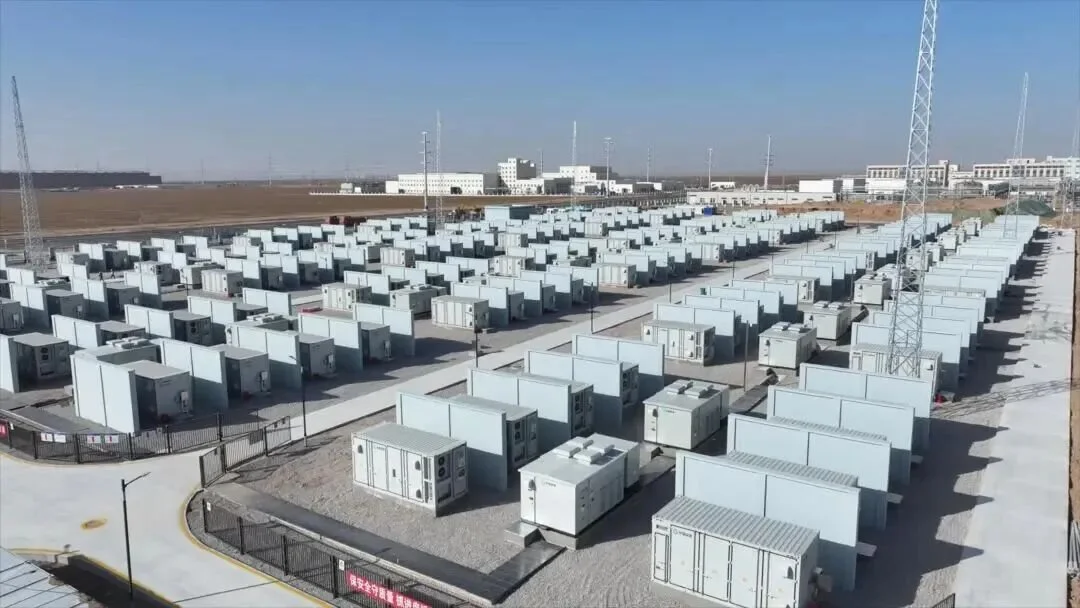
China's Largest Semi-solid-state Lithium Battery Energy Storage Project
Wuhai 200MW/800MWh Semi-solid-state Energy Storage Power Station
Grid Connection Date: November 2025
Location: Inner Mongolia Autonomous Region
Owner: China Green Development Investment Group
Energy Storage Technology: Semi-solid-state Lithium Iron Phosphate Batteries
Storage Capacity: 200MW/800MWh
With a total investment of approximately RMB 600 million, the project is the first utility-scale energy storage project in Inner Mongolia to deploy semi-solid-state LFP battery technology.
Occupying approximately 100 mu (about 6.7 hectares), the facility comprises 160 battery containers and 40 integrated PCS and step-up transformer units, providing valuable engineering validation for the commercialization of next-generation battery technologies.
A review of China's landmark energy storage projects commissioned in recent years clearly demonstrates that the industry has entered a new stage of development. Rather than relying solely on expanding lithium battery deployment, China's energy storage market is rapidly evolving toward technology diversification, complementary short- and long-duration storage solutions, and full-spectrum applications spanning the generation, grid, and demand sides.
Emerging technologies—including long-duration energy storage, solid-state batteries, hybrid energy storage systems, intelligent aggregation, and cloud-based dispatch—are continuously advancing from engineering demonstrations to large-scale commercial deployment. At the same time, integrated energy solutions combining multiple renewable resources and storage technologies are becoming increasingly common across utility-scale, grid-side, and customer-side applications.
Driven by supportive policies, growing market demand, and sustained investment, China's energy storage industry is expected to continue overcoming technological and commercial barriers. The sector is steadily building a multi-level, diversified, and highly efficient energy storage ecosystem, accelerating the industrialization of advanced storage technologies while providing critical support for the country's energy transition and the development of a modern power system.
Dalian Institute of Chemical Physics Wins Second Prize of National Technical Invention Award for Next-Generation Large-Scale All-Vanadium Flow Battery Core Technologies & Applications
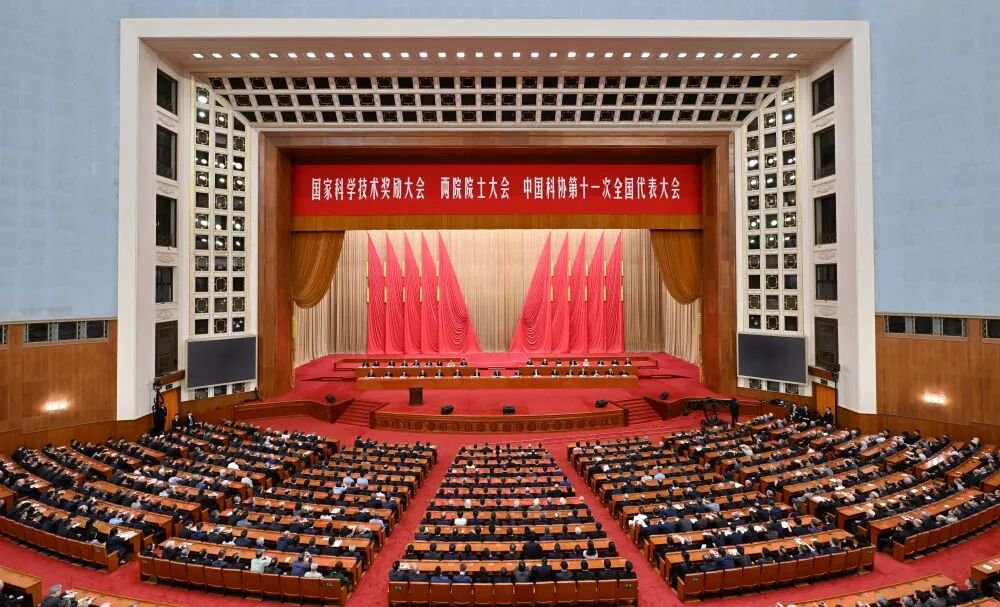
On the morning of July 8, the National Science and Technology Awards Ceremony, the General Assembly of the Chinese Academy of Sciences and the Chinese Academy of Engineering, and the 11th National Congress of the China Association for Science and Technology convened in Beijing.
As China’s highest honor in science and technology, the National Science and Technology Awards cover five categories: the State Preeminent Science and Technology Award, the National Natural Science Award, the National Technical Invention Award, the National Science and Technology Progress Award, and the International Science and Technology Cooperation Award of the People’s Republic of China.
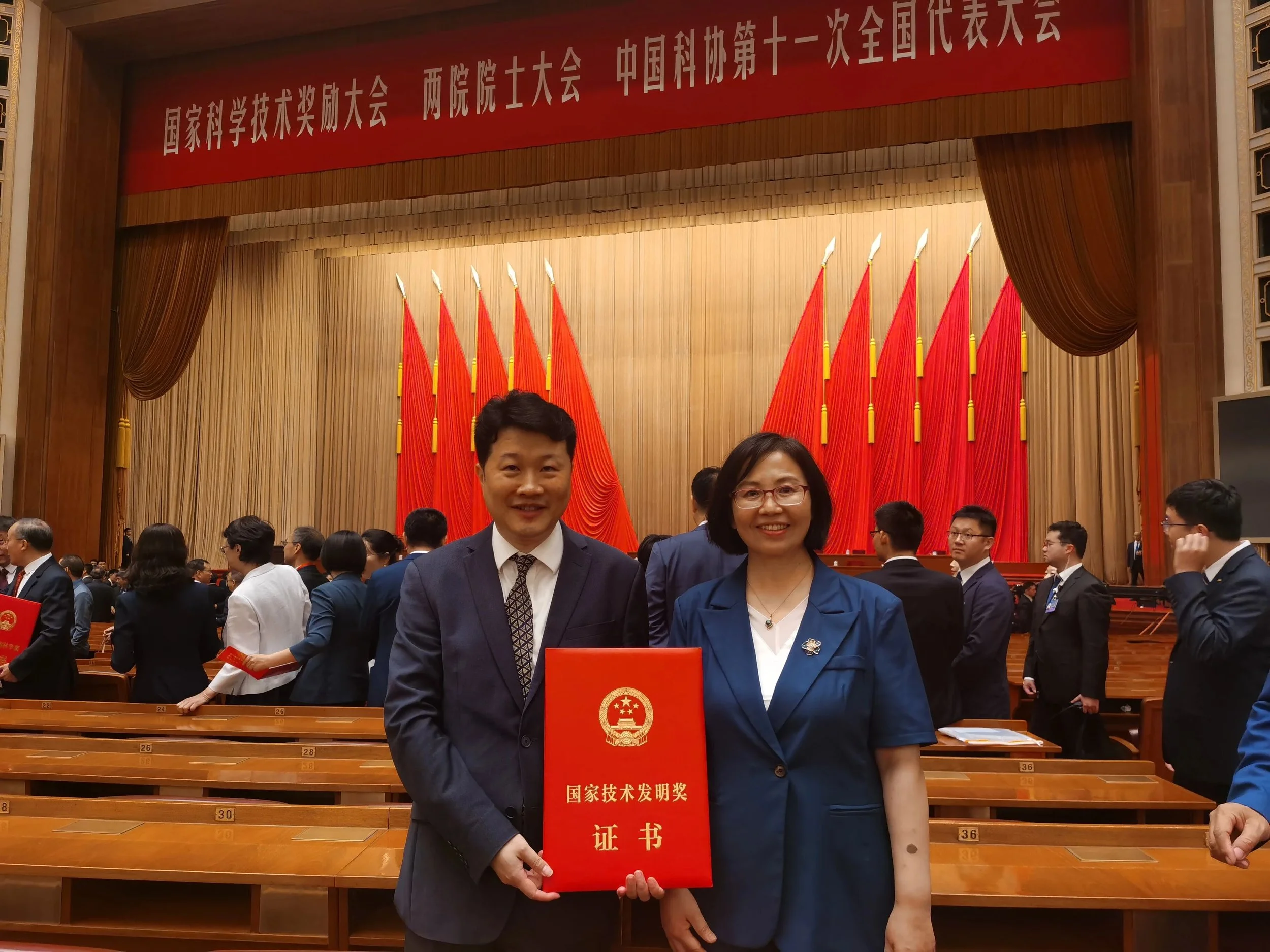
The research achievement titled Key Technologies and Applications of Next-Generation Large-Scale All-Vanadium Flow Batteries developed by the Dalian Institute of Chemical Physics (DICP), Chinese Academy of Sciences, was conferred the Second Prize of the National Technical Invention Award.
DICP is the initiator institution of the Flow Battery Special Committee under the China Energy Storage Alliance (CNESA). Researcher Li Xianfeng, Deputy Director of DICP, serves as the first Chairman of the Special Committee. CNESA hereby extends our sincerest respect and warmest congratulations to Researcher Li Xianfeng and his entire R&D team.
Energy storage acts as an indispensable core technology for building a new power system dominated by renewable energy and delivering China’s Dual Carbon Goals. Featuring ultra-long service life, intrinsic high safety and outstanding energy efficiency, all-vanadium redox flow batteries (VRFBs) have emerged as a high-priority technical pathway for global energy storage and a top choice for large-scale energy storage deployment in China.
Nevertheless, all-vanadium flow battery systems boast sophisticated architectures that integrate multiple interdisciplinary disciplines. Efficient collaborative integration of diverse internal materials and functional components poses substantial challenges to system assembly and engineering implementation.
For more than a decade, the research team led by Researcher Li Xianfeng from DICP has dedicated itself to flow battery innovation. After completing MW-scale system demonstration and validation back in 2012, the team systematically resolved critical industrialization bottlenecks including high manufacturing costs, insufficient operational reliability, and foreign monopolies over core materials. Through sustained original innovation, the team pioneered the complete set of next-generation core technologies for large-scale all-vanadium flow batteries.
The team put forward the original concept of "ion sieving conduction", which underpinned the independent R&D and mass production of proprietary ion exchange membranes. Breakthroughs were also realized in novel electrolyte formulations, high-performance cell stacks and full system integration. Relying on these foundational principal innovations and core technical advances, the team established a fully independent industrialization chain for all-vanadium flow batteries, spanning fundamental research through full-scale commercial engineering.
Over the past five years, the team has deployed more than 30 commercial demonstration projects worldwide based on its proprietary next-generation VRFB technologies. Flagship projects include the world’s first national-grade 100 MW / 400 MWh all-vanadium flow battery peak-shaving power station, and the world’s largest ongoing 200 MW / 1 GWh PV-storage integrated project in Jimsar, Xinjiang. To date, the cumulative installed capacity of the team’s VRFB technologies has exceeded 4 GWh, capturing a dominant share of the global mainstream flow battery market.
The award-winning achievement has built a robust independent intellectual property portfolio, encompassing over 200 authorized invention patents including 12 international patents. A total of 15 patent licensing agreements has been signed with domestic and overseas enterprises, marking successful technology exports to developed European economies.
Furthermore, the team led the formulation and release of the world’s first international standard for flow batteries, alongside more than 20 national and industrial standards, securing China’s rule-setting dominance across the global flow battery sector.
This landmark research outcome was jointly completed by the Dalian Institute of Chemical Physics, Dalian Rongke Power Co., Ltd., and Dalian Rongke Power Group Co., Ltd. The technology has catalyzed a complete upstream and downstream industrial cluster with remarkable agglomeration effects, delivering pivotal support for technological advancement in China’s energy storage sector, the growth of the new energy industry, and the structural transformation of national energy systems.
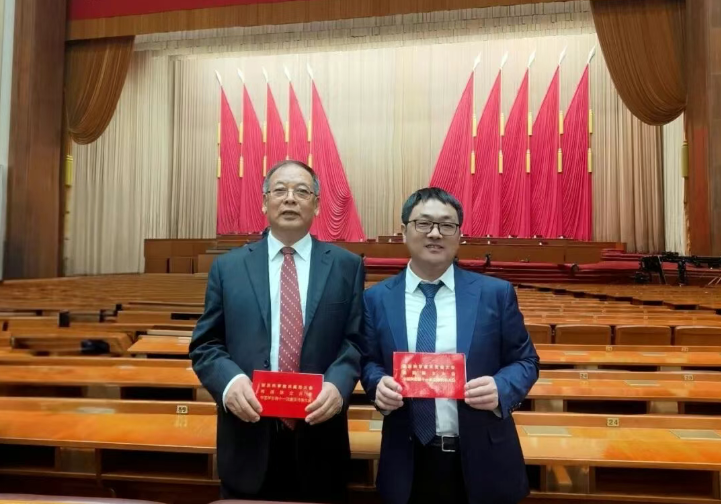
Two Pioneering Figures in China’s Energy Storage Sector Win Top National Science and Technology Honors at the 2025 National Science and Technology Awards
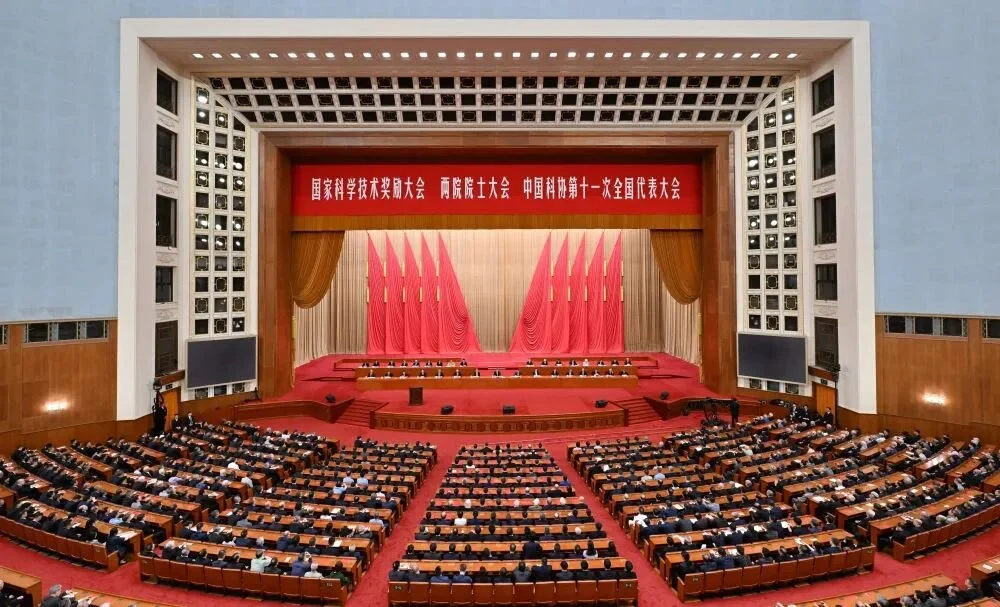
A landmark moment for China’s energy storage industry unfolded at the 2025 China National Science and Technology Awards Ceremony, held in Beijing on July 8, 2026. Two trailblazing scientists who have shaped the trajectory of China’s energy storage technology received the nation’s most prestigious scientific recognitions, marking a historic milestone for domestic long-duration energy storage and lithium-ion battery innovation.
Academician Chen Liquan, a researcher at the Institute of Physics, Chinese Academy of Sciences, and the founding father of China’s lithium battery industry, was honored with the National Highest Science and Technology Award—the country’s supreme honor for scientific and technological contributions. As a pioneer and global leading authority on lithium battery technologies, Academician Chen Liquan laid the foundational framework for China’s lithium-ion battery industrial system, spearheading breakthroughs in basic materials, cell manufacturing and industrialization over decades of research. His lifelong work underpins the rapid growth of China’s electrochemical energy storage, power battery and new energy vehicle sectors, laying irreplaceable technical groundwork for the national dual carbon strategy and energy transition revolution.
Meanwhile, Prof. Chen Haisheng, Chairman of China Energy Storage Alliance (CNESA) and researcher at the Institute of Engineering Thermophysics, Chinese Academy of Sciences, led his research team to claim the Second Prize of the National Technology Invention Award for the landmark achievement Key Technologies for Large-Scale Advanced Compressed Air Energy Storage (CAES) Systems.
Energy storage stands as a core, indispensable supporting technology for China’s dual carbon goals and national energy revolution. Compressed Air Energy Storage (CAES) is widely recognized as one of the most promising long-duration bulk energy storage solutions worldwide, featuring large installation scale, low lifecycle cost, ultra-long service life and outstanding operational safety, and has become a strategically competitive technical field across all major economies. Traditional CAES systems have long been restrained by critical bottlenecks including fossil fuel dependency and low round-trip efficiency, severely limiting large-scale commercial rollout globally.
Supported by successive national key research programs including the National Basic Research Program (973), National High-Tech R&D Program (863) and National Key R&D Program, Prof. Chen Haisheng’s team dedicated 20 consecutive years to targeted research and iterative breakthroughs, delivering a full set of systematic original innovations that resolve historic pain points of conventional CAES technology:
1. Proposed the novel "storage-release correspondence & cycle matching" design theory for energy storage systems, and invented an advanced CAES architecture based on a homologous circulation principle;
2. Overcame the synergistic aerodynamic and structural design challenge for multi-stage compressors and expanders, developing ultra-high pressure ratio-compressors and ultra-high expansion ratio expanders with fully independent intellectual property rights;
3. Cracked core technical barriers for supercritical heat/cold storage heat exchangers, inventing high-efficiency compact heat exchange equipment for CAES systems.
The research team has completed the construction of the world’s first series of advanced CAES demonstration facilities covering 1.5MW, 10MW, 100MW and 300MW capacity levels. The round-trip efficiency of the flagship system exceeds 70%, repeatedly setting new global performance benchmarks and firmly establishing China’s world-leading position in advanced compressed air energy storage technology.
To date, the project has secured 162 authorized invention patents (including 9 international patents), ranking No.1 globally in CAES patent holdings and forming a high-value, tightly integrated patent portfolio. The team has published 267 SCI papers, which have accumulated over 13,700 SCI citations, demonstrating profound academic influence in the global energy storage research community. Industrial transformation of the core technologies has generated direct economic benefits exceeding 7 billion RMB, delivering tangible value for the large-scale commercialization of long-duration energy storage.
The National Science and Technology Awards consist of five major categories: the National Highest Science and Technology Award, National Natural Science Award, National Technology Invention Award, National Science and Technology Progress Award, and China International Science and Technology Cooperation Award, representing the highest official recognition of scientific innovation in China.
CNESA extends sincere congratulations to Academician Chen Liquan and Prof. Chen Haisheng’s research team on their extraordinary accomplishments. These top-tier national honors fully validate the core strategic value of energy storage technologies in advancing global low-carbon energy transition, and highlight the strength of sustained independent innovation among China’s energy storage scientific community. As energy storage evolves into a critical backbone of the global net-zero energy system, CNESA will continue to unite industrial, academic and research stakeholders to accelerate technology iteration, industrial standardization and global cooperation, further boosting the high-quality development of China’s energy storage industry and contributing Chinese solutions to worldwide energy transformation.
China Energy Storage Tenders & Awards H1 2026: System and EPC Prices Rebound Across the Board, with 4-Hour ESS Seeing Stronger Growth than 2-Hour Systems
According to incomplete statistics from the CNESA Datalink Global Energy Storage Database, China's new energy storage tendering and award market maintained strong momentum in the first half (H1) of 2026.
During the period, 1,987 new energy storage tender notices were tracked, up 41.8% year-on-year (YoY), while 1,504 contract awards were recorded, representing a 61.0% YoY increase. The projects covered the entire energy storage value chain, including EPC contracting, energy storage systems (ESS), battery cells, battery packs, PCS, EMS, and BMS.
The ESS tender market showed a clear divergence between power and energy capacity. Tendered power reached 24.5 GW, down 3.4% YoY, while tendered energy capacity surged to 148.1 GWh, an 88.3% YoY increase. The combination of slightly lower power capacity and significantly higher energy capacity indicates the continued market shift toward longer-duration energy storage systems.
Meanwhile, EPC tender and award volumes more than doubled year-on-year, significantly outpacing the growth of standalone ESS equipment procurement. This suggests that the market is increasingly favoring turnkey EPC solutions rather than purchasing storage equipment alone.
On pricing, the average winning bid price for 2-hour ESS increased to RMB 602.1 CNY/kWh, up 8.8% YoY, while the average price for 4-hour ESS reached RMB 541.3 CNY/kWh, representing a 21.1% YoY increase. Despite the stronger price growth, 4-hour systems remained less expensive per kWh than 2-hour systems, highlighting their advantages in economies of scale and lower levelized storage costs.
In terms of procurement models, centralized procurement and framework agreements have become standard industry practice. During H1 2026, centralized/framework procurement accounted for 80.6 GWh of ESS tenders, representing more than half of the total tendered capacity, further concentrating market orders among leading suppliers.
01
Tender Market Overview (H1 2026)
Tender Market Scale Overview (H1 2026)
In June 2026, ESS tenders totaled 6.1 GW / 48.3 GWh, representing a 58.5% decline in power capacity but a 37.4% increase in energy capacity compared with the same period last year. Compared with May, power capacity decreased 12.7%, while energy capacity increased 118.1%.
For the first six months of 2026, cumulative ESS tenders reached 24.5 GW / 148.1 GWh, representing -3.4% YoY in power capacity and +88.3% YoY in energy capacity.
Among these, centralized procurement and framework agreements accounted for 80.6 GWh, up 96% YoY, representing 54.4% of the total tendered ESS energy capacity.
EPC Projects (Including PC)
In June 2026, EPC (including PC) tenders reached 19.3 GW / 56.4 GWh, up 111.7% YoY in power capacity and 154.4% YoY in energy capacity. Month-on-month growth reached 41.8% and 43.2%, respectively.
From January to June 2026, cumulative EPC (including PC) tenders totaled 80.1 GW / 227.9 GWh, representing 98.72% YoY growth in power capacity and 112.21% YoY growth in energy capacity.
Among them, grid-side EPC projects accounted for 200.9 GWh, increasing 145.8% YoY and representing 88.2% of the total EPC tendered energy capacity.
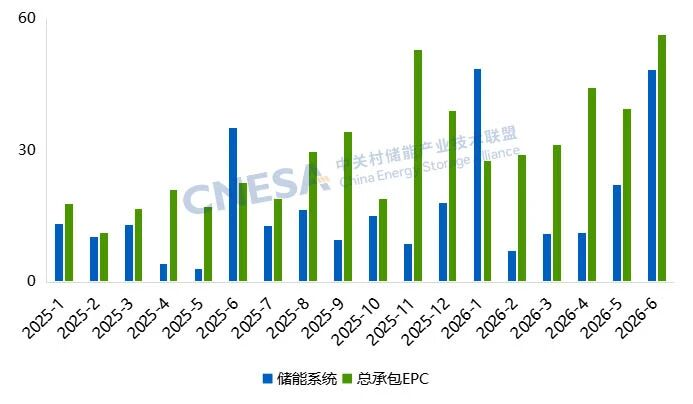
Blue: ESS Green: EPC
Figure 1. ESS and EPC Tender Volumes, January 2025–June 2026 (GWh)
Source: CNESA Datalink Global Energy Storage Database
Distribution of ESS Tender Capacity by Application Scenario (H1 2026):
Based on application scenarios, total ESS tendered energy capacity reached 148.1 GWh during H1 2026.
· Centralized procurement/framework agreements accounted for 80.6 GWh, representing 54.4% of total tendered capacity.
· Grid-side projects totaled 56.4 GWh, of which 99.6% consisted of standalone energy storage projects.
· Power generation-side projects reached 8.1 GWh, with solar-plus-storage and wind-plus-storage accounting for a combined 88.4% of this segment.
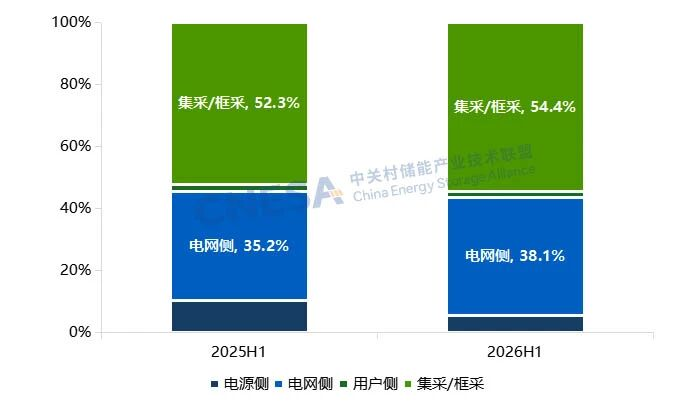
From left to right:Generation-side,Grid-side,Behind-the-Meter (BTM),
Centralized Procurement / Framework Agreements
Figure 2. Distribution of ESS Tender Capacity by Application Scenario, H1 2025 vs. H1 2026 (GWh, %)
Note: Since centralized procurement and framework agreements have not yet identified their final application scenarios, they are categorized separately.
Source: CNESA Datalink Global Energy Storage Database
02
Contract Awards (H1 2026)
Awarded Project Scale Overview (H1 2026)
In June 2026, awarded ESS projects reached 4.7 GW / 13.8 GWh, representing year-on-year growth of 364.9% in power capacity and 341.1% in energy capacity. Compared with May, awarded power capacity increased 53.5%, while energy capacity rose 9.1%.
During H1 2026, cumulative ESS awards totaled 15.0 GW / 96.1 GWh, representing 37.2% YoY growth in power capacity and 12.15% YoY growth in energy capacity.
Centralized procurement and framework agreements accounted for 58.0 GWh, representing 60.1% of total awarded ESS energy capacity, although this figure was 2.13% lower than the same period last year.
EPC Projects (Including PC)
In June 2026, EPC (including PC) awards reached 12.5 GW / 32.3 GWh, increasing 54.3% YoY in power capacity and 87.4% YoY in energy capacity.
Cumulative EPC awards during H1 2026 totaled 56.8 GW / 165.6 GWh, representing 91.87% YoY growth in power capacity and 105.96% YoY growth in energy capacity.
Among these, grid-side projects accounted for 146.5 GWh, up 129.8% YoY, representing 88.5% of the total awarded EPC energy capacity.
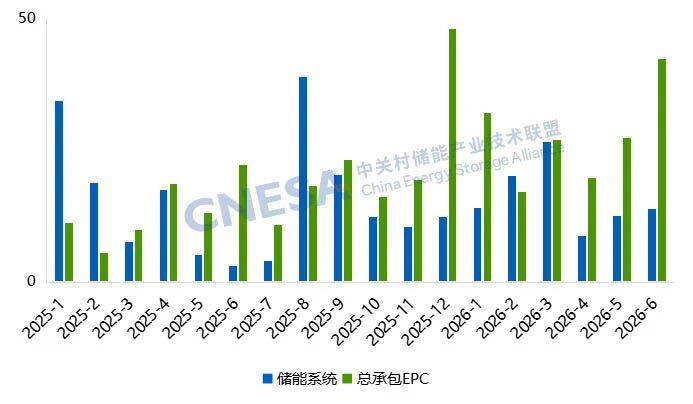
Blue:ESS Green:EPC
Figure 3. ESS and EPC Awarded Capacity, January 2025–June 2026 (GWh)
Source: CNESA Datalink Global Energy Storage Database
ESS Winning Bid Price Analysis (H1 2026):
Overall ESS winning bid prices increased compared with the same period last year, with the overall pricing range shifting upward.
l For 2-hour ESS, the average winning bid price during H1 2026 reached RMB 602.1/kWh, up 8.8% YoY, with prices ranging from RMB 489.0/kWh to RMB 836.0/kWh.
l For 4-hour ESS, the average winning bid price reached RMB 541.3/kWh, representing 21.1% YoY growth, with prices ranging between RMB 420.0/kWh and RMB 781.8/kWh.
Compared with H1 2025, pricing ranges for both 2-hour and 4-hour ESS widened significantly, indicating greater pricing dispersion across projects and increasing differences among market quotations.
Notably, 0.25C ESS experienced the most significant increase in price dispersion, with its pricing range expanding by 108.2% year-on-year.
Although average prices for both 2-hour and 4-hour ESS continued to rise compared with last year, monthly average winning bid prices during H1 2026 indicate that the pace of price increases has gradually stabilized.
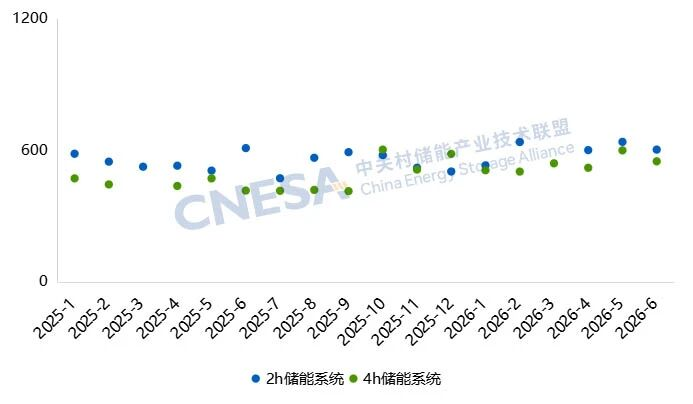
Blue: 2-hour ESS Green: 4-hour ESS
Figure 5. Average Winning Bid Prices for ESS, January 2025–June 2026 (Excluding Centralized Procurement/Framework Agreements and Behind-the-Meter Projects, RMB/kWh)
Source: CNESA Datalink Global Energy Storage Database
EPC Winning Bid Price Analysis (Excluding PC) (H1 2026):
Average EPC winning bid prices (excluding PC) also increased compared with H1 2025.
l For 2-hour EPC projects, the average winning bid price reached RMB 1,040.4/kWh, up 3.2% YoY, with prices ranging from RMB 580.0/kWh to RMB 1,750.1/kWh.
l For 4-hour EPC projects, the average winning bid price reached RMB 958.5/kWh, representing an 8.2% YoY increase, with prices ranging between RMB 645.0/kWh and RMB 1,377.5/kWh.
Regarding price distribution, both the highest and lowest prices for 2-hour EPC projects increased slightly compared with last year.
For 4-hour EPC projects, market quotations became more concentrated. Exceptionally high bids declined, while lower-end prices increased, indicating that pricing is gradually converging toward a more consistent market range and bid pricing has become increasingly standardized.
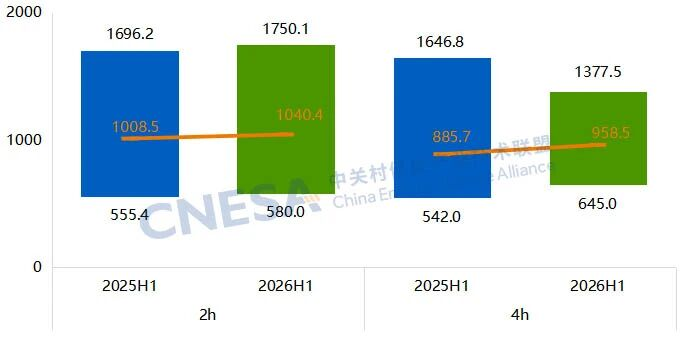
Figure 6. Winning Bid Price Ranges for 2-Hour and 4-Hour EPC Projects (Excluding PC), H1 2025 vs. H1 2026 (Excluding Centralized Procurement/Framework Agreements and Behind-the-Meter Projects, CNY/kWh)
Source: CNESA Datalink Global Energy Storage Database
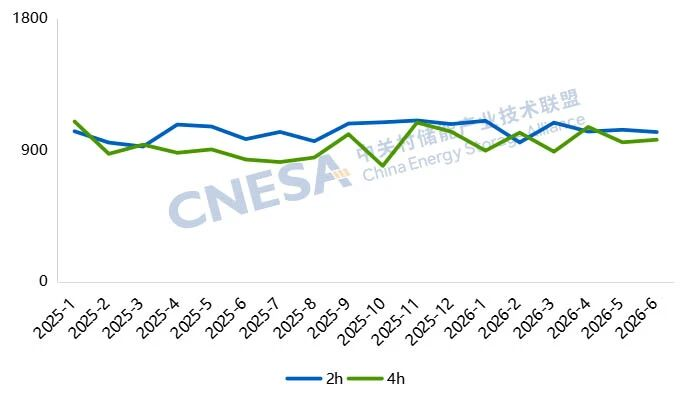
Figure 7. Average Winning Bid Prices for EPC Projects (Excluding PC), January 2025–June 2026 (Excluding Centralized Procurement/Framework Agreements and Behind-the-Meter Projects, CNY//kWh)
Source: CNESA Datalink Global Energy Storage Database
The Fourth China-Europe Energy Technology Innovation Cooperation Forum:Energy Storage Sub-Forum Successfully Held in Chengdu
China's installed capacity of new-type energy storage has reached 157 GW, ranking first globally for four consecutive years. Germany has received grid connection applications exceeding 720 GW for large-scale storage, signaling an explosion in the European energy storage market.
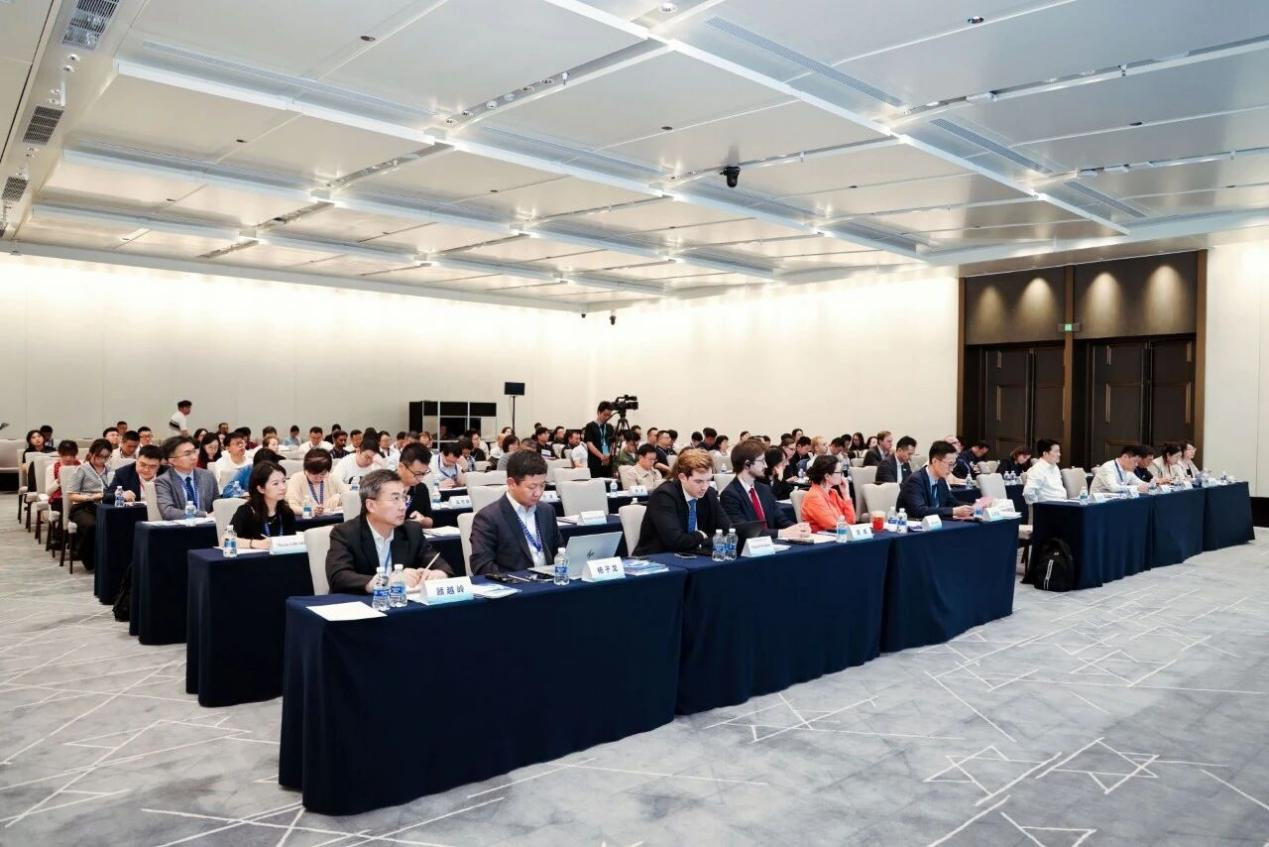
On June 25, the Fourth China-Europe Energy Technology Innovation Cooperation Forum: Energy Storage Sub-forum was held in Chengdu, Sichuan, unfolding a panoramic view of China-Europe energy storage collaborative innovation. The sub-forum was co-hosted by the China-Europe Energy Innovation Cooperation Office and the China Energy Storage Alliance (CNESA).
Representatives from government agencies, industry associations, research institutions, and leading enterprises from China, the UK, France, Germany, Denmark, the Netherlands, Switzerland, and other countries gathered at the event, forming a high-end multi-national lineup spanning government, industry, academia, and research. The session was moderated by Li Zhen, Deputy Secretary-General of CNESA.
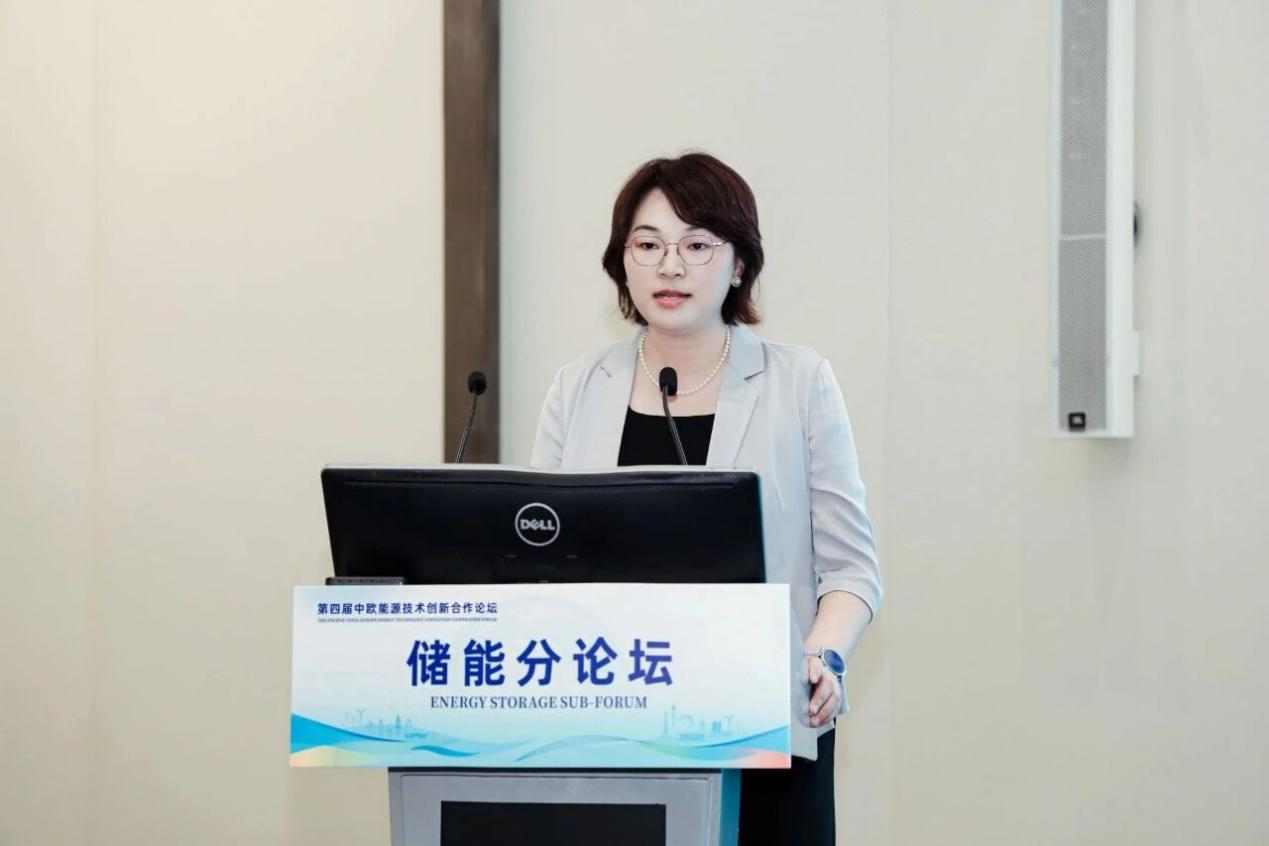
Concurrent events included Country Days for the UK, Iceland, and Finland, as well as thematic sub-forums on hydrogen energy, smart energy, wind power, and biomass energy, establishing a premier China-Europe exchange platform covering diverse new energy sectors.
【Key Highlights】
① China Leads Global Storage: As of May 2026, China's cumulative installed capacity of new-type energy storage reached 157 GW, a surge of over 45 times compared to the end of the 13th Five-Year Plan period, maintaining the global top spot for new additions for four straight years.
② European Large-Scale Storage Poised for Takeoff: Germany has over 720 GW of grid connection applications for large-scale storage, with authorities initially approving 78 GW. The UK plans to deploy no less than 23 GW of grid-scale battery storage and over 4 GW of long-duration storage by 2030.
③ Chinese Enterprises Enter New Phase of Globalization: CALB has broken ground on a 100 GWh industrial base in Portugal, marking a shift from product export to full value-chain localization.
④ New Consensus on China-Europe Cooperation: Lithium-ion batteries and hydrogen energy are complementary; AI is deeply empowering storage; and standards mutual recognition has become an industry imperative—China-Europe cooperation is evolving from "complementary strengths" to "symbiotic prosperity."
Policy Direction:
New-Type Energy Storage: A Critical Pillar of the New Energy System
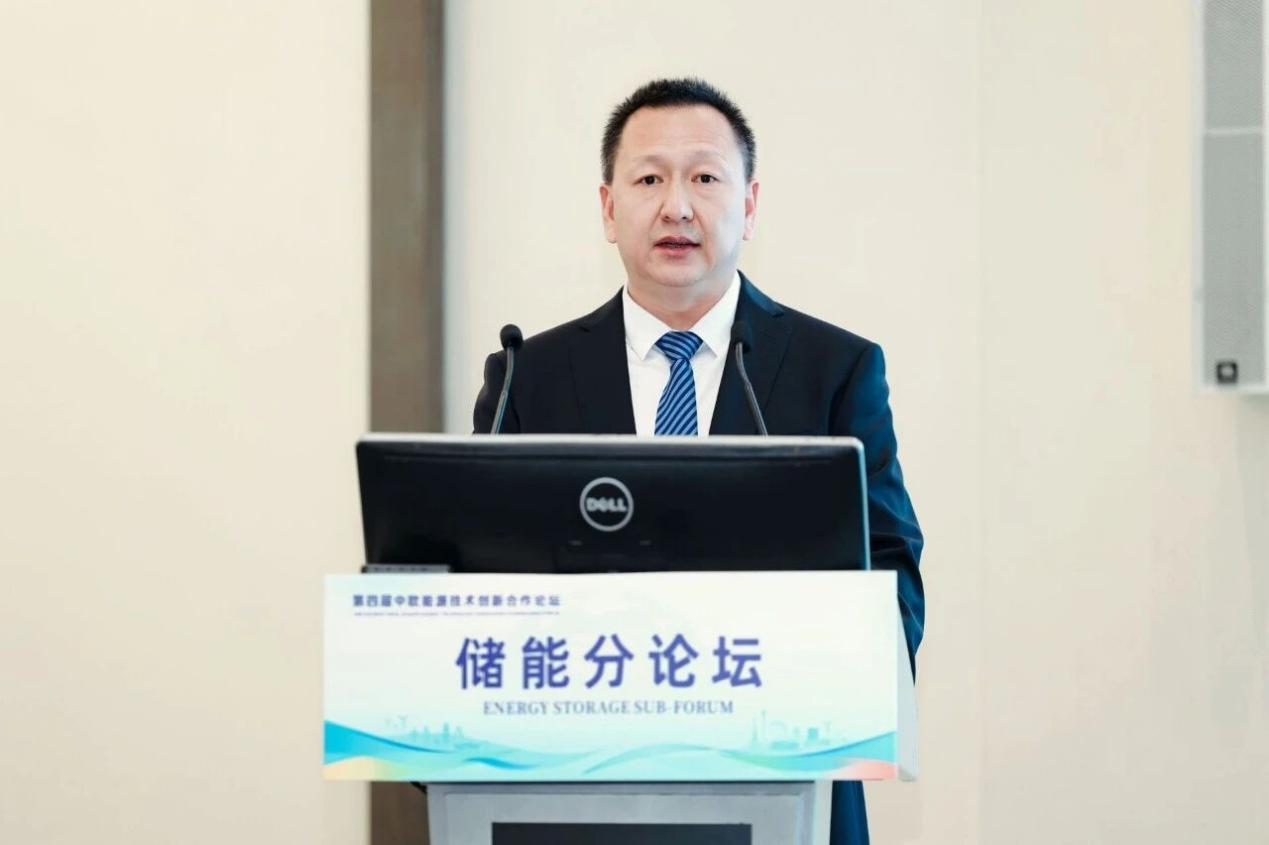
Zhang Jianwei
First-Level Researcher, Department of Science, Technology and Equipment, National Energy Administration (NEA)
Zhang Jianwei, First-Level Researcher, Department of Science, Technology and Equipment, National Energy Administration (NEA), stated in his opening remarks that the Chinese government attaches great importance to energy storage development. The NEA coordinates an "effective market" with a "proactive government," promoting high-quality development in the sector through four key measures:
First, strengthening planning guidance.Jointly issuing multiple supportive policies with relevant departments to clarify development directions and tasks.
Second, persisting in innovation-driven development. Organizing pilot projects to explore over ten technological routes and continuously improving the standards system, having released over 50 national standards.
Third, refining market mechanisms.Clarifying market entity roles, improving pricing mechanisms, electricity spot markets, capacity compensation, and other market-based mechanisms to expand revenue streams.
Fourth, deepening international cooperation.Actively supporting Chinese enterprises going global. He noted that the 15th Five-Year Plan period presents both opportunities and challenges.Considering demands such as renewable energy integration and power system security, as well as the evolving role of coal power, the NEA will continue to target high-quality development to comprehensively support carbon peaking goals and contribute Chinese strength to the global energy transition.
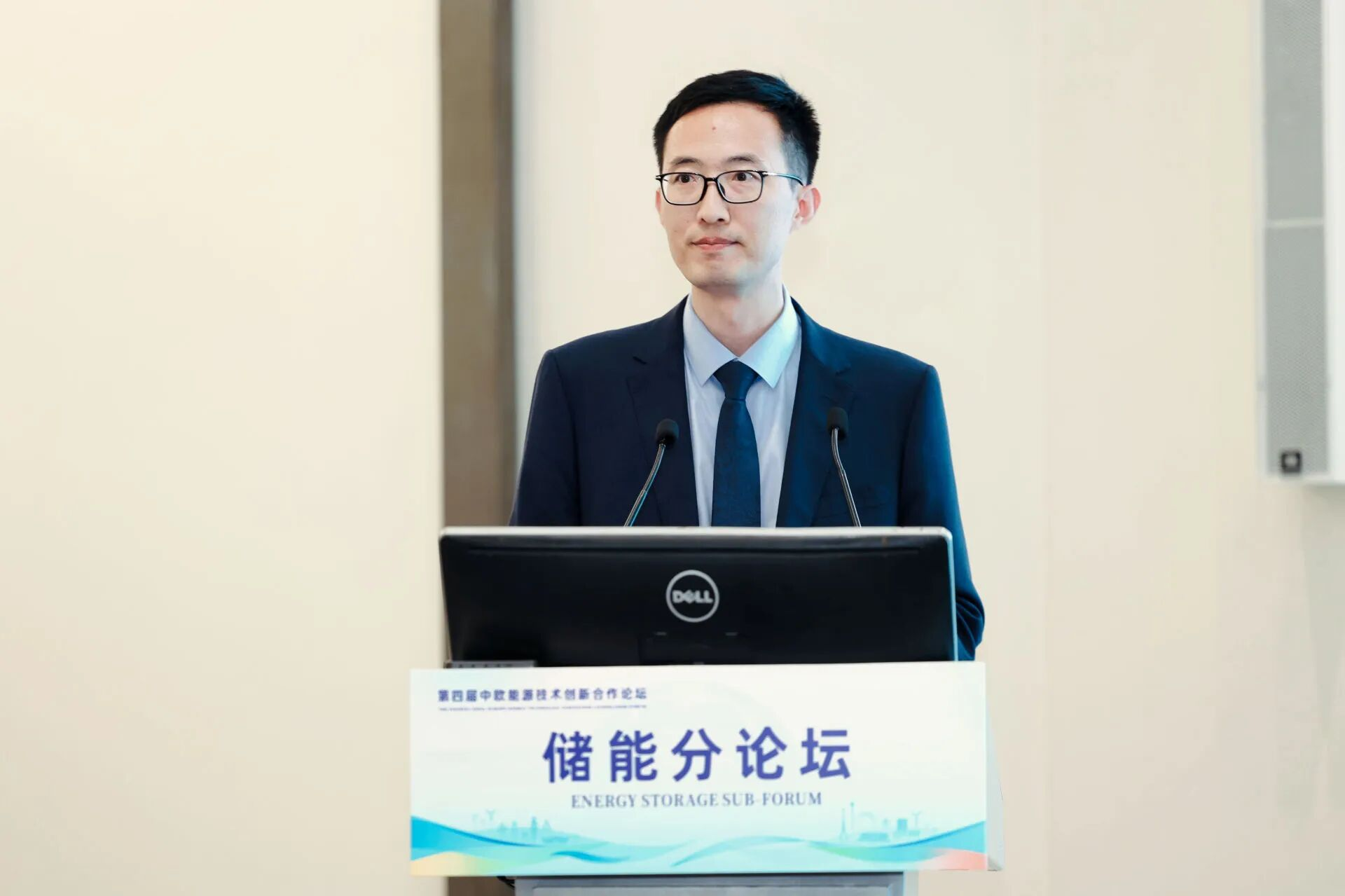
Wang Shunchao
Vice President, International Energy Consulting Department,
China Electric Power Planning & Engineering Institute (EPPEI)
Wang Shunchao, Vice President, International Energy Consulting Department, China Electric Power Planning & Engineering Institute (EPPEI) ,emphasized in his address that energy storage is transforming from a traditional "shifting role" in power regulation to a critical technology for new power systems, undertaking diversified system service functions.
Both China and Europe prioritize energy storage development. China's 15th Five-Year Plan has positioned new-type energy storage as a crucial support for the new energy system. Advanced technologies like grid-forming storage have been validated in diverse domestic scenarios and are gradually entering commercial application. Europe, meanwhile, has accumulated rich experience in market mechanism design and business model innovation while actively promoting cutting-edge R&D. The two sides boast complementary advantages, providing a global (demonstration) for energy transition. Against this backdrop, the sub-forum is timely and will strongly propel deep bilateral cooperation.
The Chinese Market:
157 GW! New-Type Storage Installations Rank First Globally for Four Years
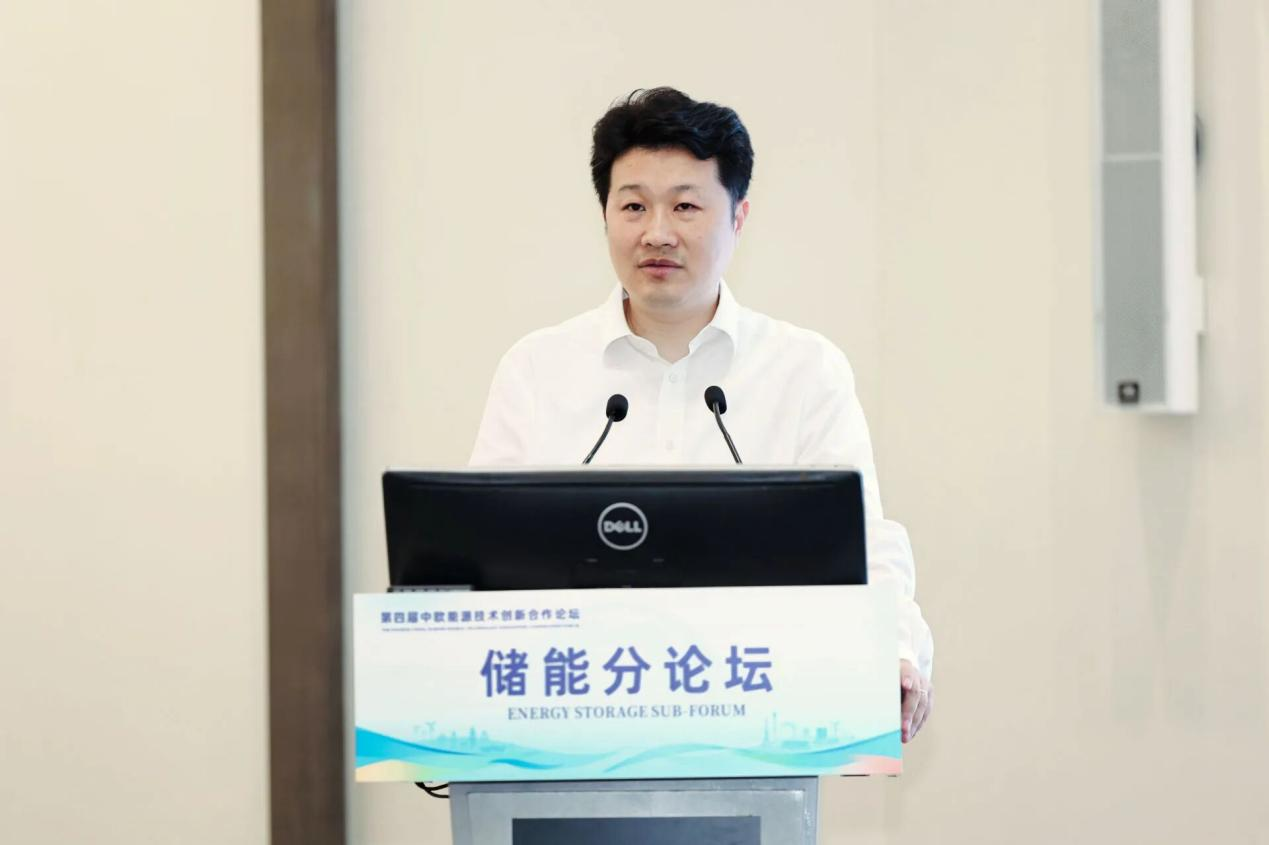
Chen Haisheng
Chairman of CNESA and Director of the Institute of Engineering Thermophysics, Chinese Academy of Sciences (CAS)
Chen Haisheng, Chairman of CNESA and Director of the Institute of Engineering Thermophysics, Chinese Academy of Sciences (CAS),provided a systematic overview of China's latest progress and outlook in energy storage technology and industry. He noted that China's storage sector is on par with international levels, transitioning from policy-driven to market-driven growth, moving from scale expansion to comprehensive commercialization, with storage emerging as a core entity in the new power system. Currently, multiple technology routes are breaking through in parallel, with long-duration storage, grid-forming storage, solid-state batteries, and AI-integrated storage becoming R&D hotspots.China has led the world in new installations for four consecutive years. As of May 2026, cumulative installed capacity of new-type storage reached 157 GW, a surge of over 45 times since the end of the 13th Five-Year Plan. The compound annual growth rate for the next five years is projected at 20.7–25.5%, with total installed capacity expected to reach 371.2–450.7 GW by 2030.
The European Market:
Large-Scale Storage Explosion & Policy Breakthroughs for Long-Duration Storage
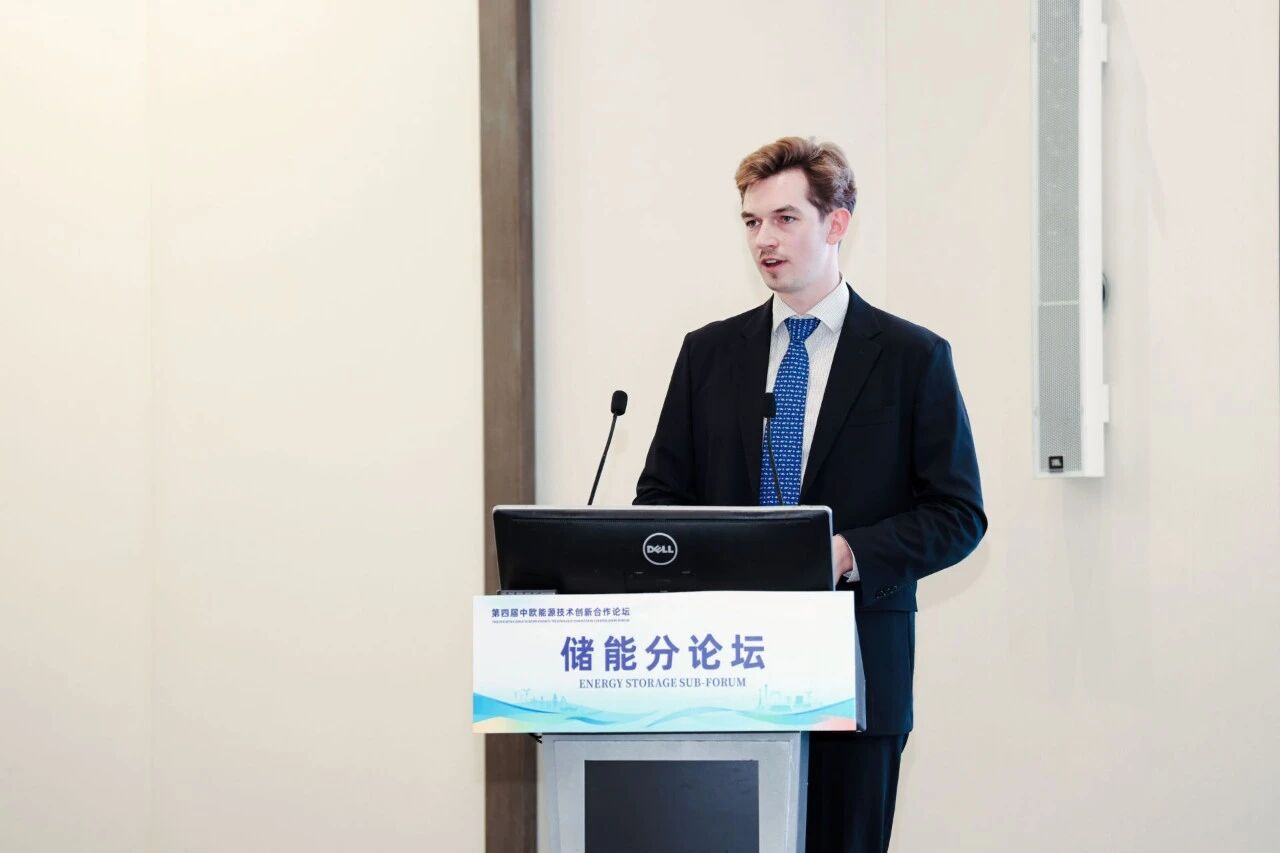
Vincent Fremery
Energy Advisor, Deutsche Gesellschaft für Internationale Zusammenarbeit (GIZ)
Vincent Fremery, Energy Advisor, Deutsche Gesellschaft für Internationale Zusammenarbeit (GIZ),presented a keynote report titled "German Energy Storage Policy and Market." Mr. Fremery highlighted Germany's significant progress in energy transition, with renewables accounting for over 60% of power generation. Germany aims for net-zero by 2045 and 80% renewable share by 2030, planning to phase out coal by 2038. Regarding the storage market, Germany exhibits a pattern of "household storage dominance, steady growth in C&I storage, and accelerated explosion in utility-scale storage": Household storage remains dominant but growth is slowing; the C&I storage market is steadily expanding; large-scale storage (including pumped hydro) is rapidly rising, with market revenues expected to increase 2–3 times between 2025–2026. Notably, grid operators report over 720 GW of grid connection applications for large-scale storage, with 78 GW initially approved by grid companies, indicating vast development space in the next five years.
Vincent specifically mentioned that the entry of Chinese manufacturers has significantly reduced storage costs, facilitating the implementation of large-scale German projects. He noted that the new German government has yet to issue specific storage policies, leaving broad potential for Sino-German cooperation.
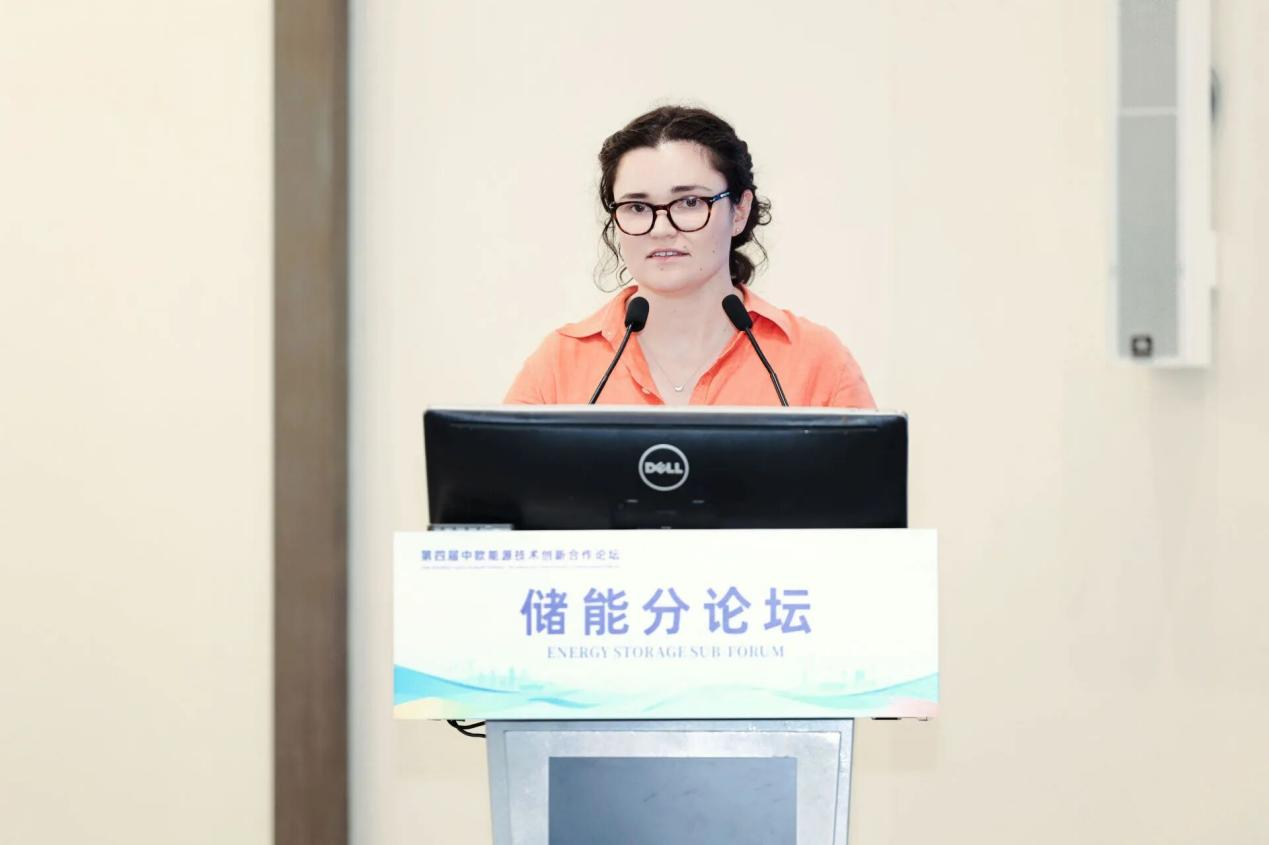
Bea Swords
Senior Policy Advisor, Industrial Policy & Supply Chain Strategy, Clean Energy Investment Directorate, Department for Energy Security and Net Zero (DESNZ), UK
Bea Swords, Senior Policy Advisor, Industrial Policy & Supply Chain Strategy, Clean Energy Investment Directorate, Department for Energy Security and Net Zero (DESNZ), UK,shared insights on UK storage policies, industry status, and medium-to-long-term plans. She stated that the UK targets power sector decarbonization by 2030 and net-zero emissions by 2050, where flexible power systems are key, with storage playing a central supporting role. Currently, the UK operates 7.3 GW of grid-scale battery storage and 2.8 GW of pumped hydro. It plans to deploy no less than 23 GW of grid-scale battery storage and over 4 GW of long-duration storage by 2030.The government is removing barriers through measures like eliminating "double charging" of grid fees, lowering market entry thresholds, and reducing taxes on residential storage. Crucially, it has introduced a revenue floor and cap investment support mechanism for long-duration storage exceeding 8 hours to address high upfront costs and long payback periods.
Corporate Practices:
From Product Export to Full Value-Chain Localization
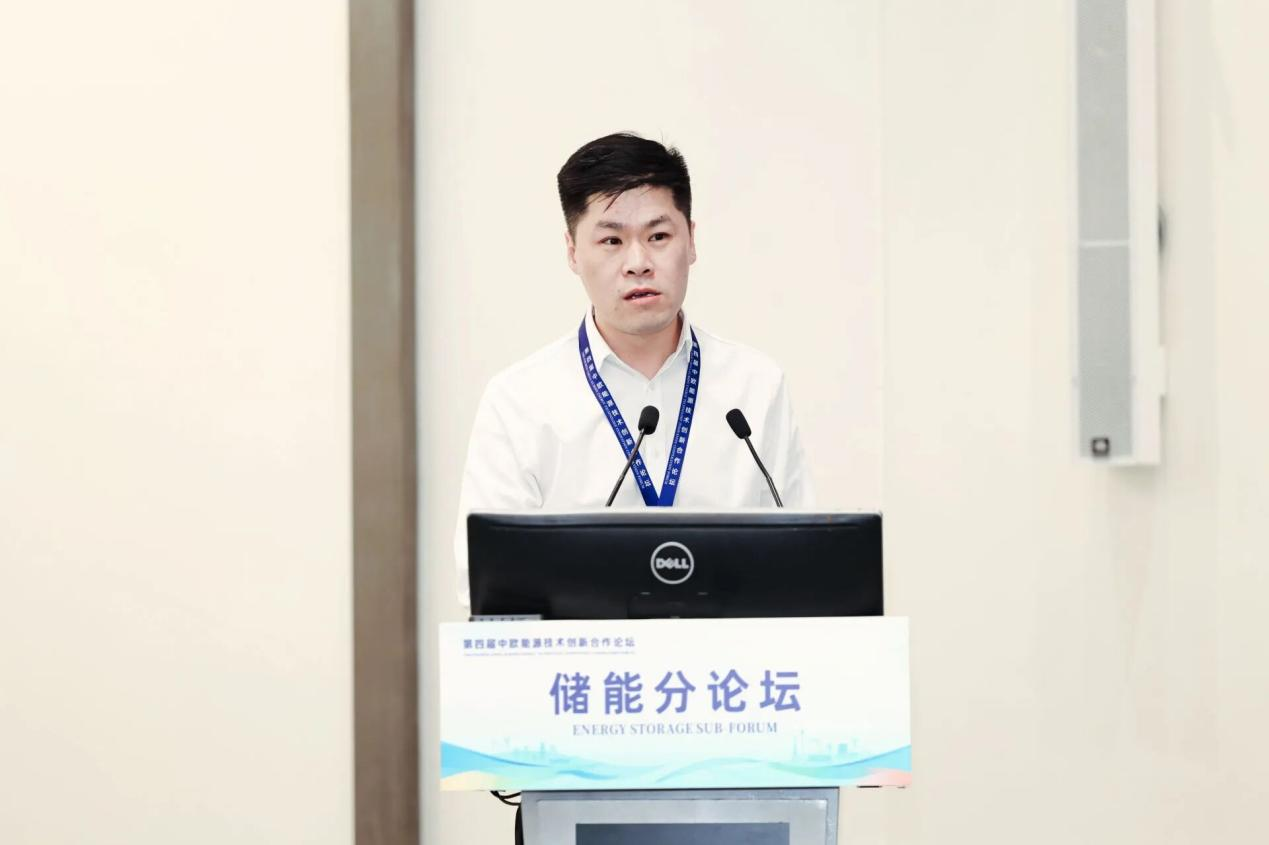
Pei Yang
VP of Sales ESS, CALB Group Co., Ltd.,
Pei Yang , VP of Sales ESS, CALB Group Co., Ltd.,presented a report titled "The Energy Revolution in Zero-Carbon Cities." He emphasized that developing storage is essential for zero-carbon urban transitions in China and Europe, with the industry shifting from scale competition to market deepening and technological empowerment. CALB is undergoing a strategic transformation, upgrading from a single equipment provider to a zero-carbon solution provider, covering three major sectors: storage equipment supply, power station investment & O&M, and zero-carbon business development & operation. Leveraging deep AI-energy integration, the company proposes a "Zero-Carbon Smart City" vision, centered on a zero-carbon platform linking power trading, carbon asset management, and microgrid dispatch, aiming to convert the levelized cost of storage advantage directly into competitive Token pricing for AI data centers. On core products, its long-cycle cells achieve "zero degradation in three years, 15,000+ cycles," and storage system products have been upgraded to 6.9 MWh. Regarding European footprint, the Portugal industrial base involves an investment of approximately €2 billion (~CNY ¥15.2 billion), with Phase I annual capacity reaching 15 GWh. Multiple landmark projects have been deployed in the UK, Hungary, and other markets. Yang Pei expressed CALB's willingness to deepen all-round collaboration with European partners to build an open, win-win China-Europe new energy ecosystem.
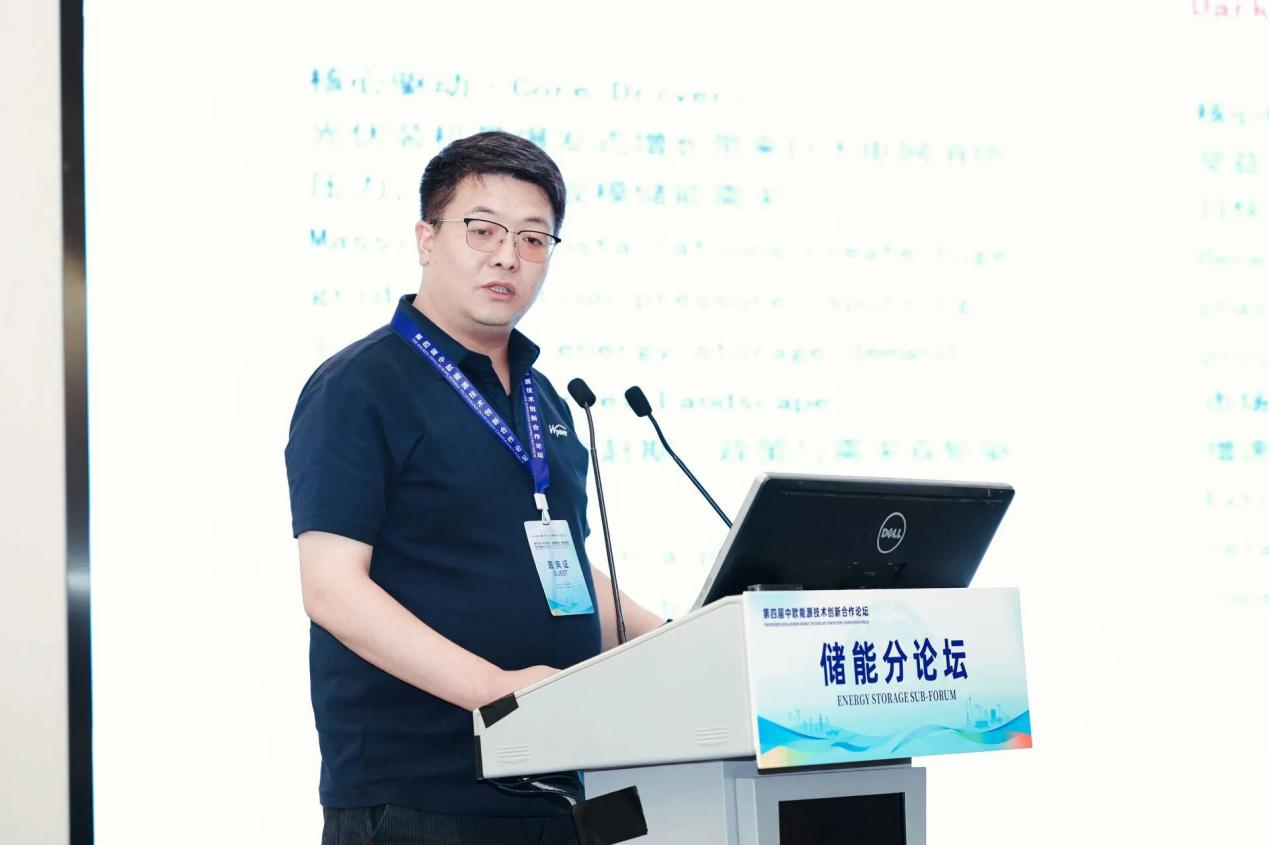
Dongping Li
General Manager, Energy Storage Business Unit, ZHEJIANG INPOWER ENERGY Co., Ltd.
Dongping Li, General Manager, Energy Storage Business Unit, ZHEJIANG INPOWER ENERGY Co., Ltd.,analyzed the current status, regional landscape, and market opportunities in Europe. He pointed out that the European storage market is in a phase of high-speed growth, with a projected CAGR exceeding 25% from 2026 to 2030. In 2025, Europe added 27.1 GWh of new storage capacity, bringing cumulative installations to 77.3 GWh. Notably, utility-scale storage accounted for over 50% of new additions for the first time, marking a dual-driven development pattern of centralized and distributed storage. Regionally, the UK, Germany, and Italy form the first tier: the UK boasts the largest and most mature market (>16 GWh); Germany is Europe's largest household storage market (penetration >86%); Italy sees rapid large-scale storage growth fueled by capacity and frequency regulation market incentives. Meanwhile, emerging regions like Eastern Europe, Spain, and the Netherlands are releasing sustained demand, showing outstanding growth potential. Inpower ESS offers full-power-range PCS products adaptable to diverse overseas scenarios and has successfully deployed multiple projects abroad.
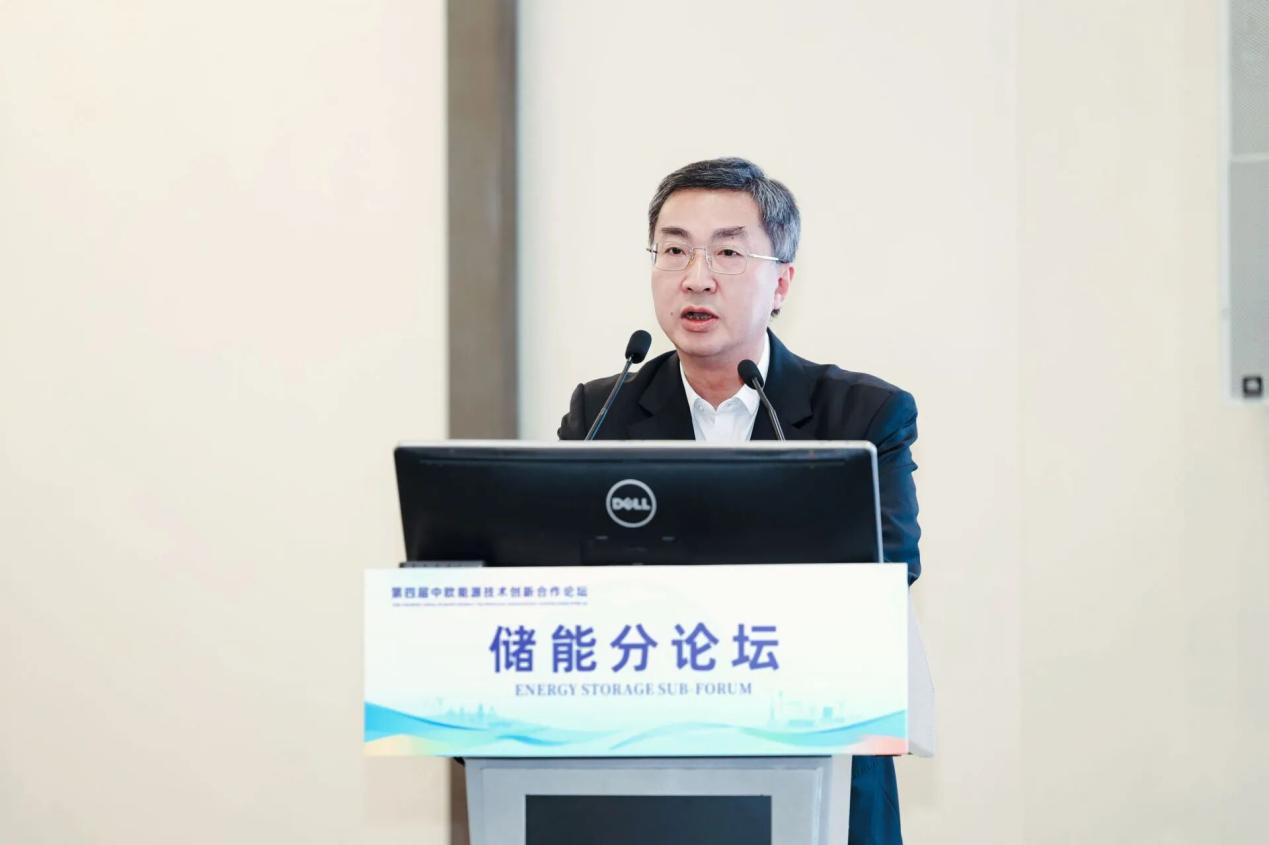
Deputy General Manager, Professorate Senior Engineer, Energy Storage Technology Institute Co., Ltd. (affiliated with CEEC Times)
Yueling Gu, Deputy General Manager, Professorate Senior Engineer, Energy Storage Technology Institute Co., Ltd. (affiliated with CEEC Times), shared insights on the development background, design philosophy, and China-Europe synergy prospects for storage supporting large-scale wind and solar bases. He noted that these bases are cornerstones of national energy security, with new-type storage being indispensable. Given their massive scale and diverse generation types, storage planning must follow an integrated development approach. Calculations indicate that a 10 GW-class base typically requires 1–2 GW of storage with a duration of 2–4 hours to optimize multiple objectives. Currently, lithium-ion batteries dominate base storage, but future diversification will create complementarity. Furthermore, he highlighted immense potential for China-Europe energy transition cooperation, suggesting joint R&D on frontier storage technologies and deeper industrial chain synergy to drive global energy transformation.
Roundtable Dialogue:
Accelerating the Pace of China-Europe Energy Storage Cooperation
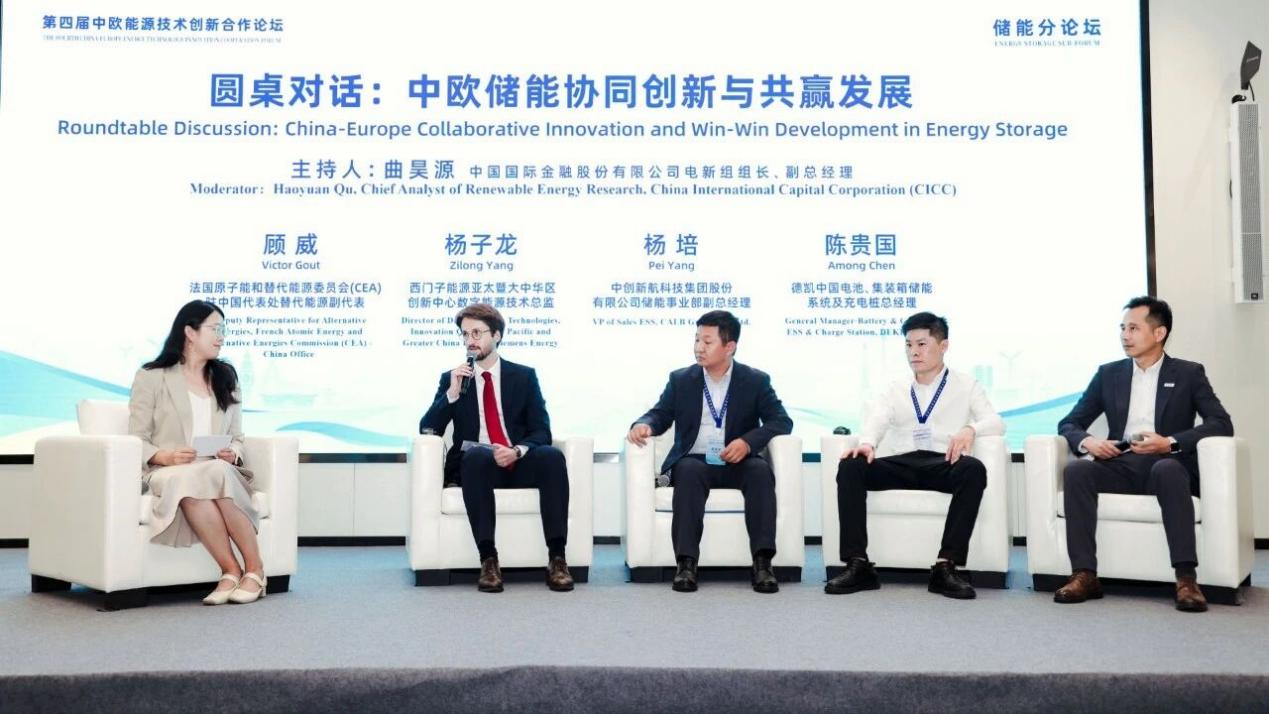
In the roundtable discussion themed "China-Europe Collaborative Innovation and Win-Win Development in Energy Storage," Qu Haoyuan, Chief Analyst of Renewable Energy Research at CICC,engaged in deep dialogue with four experts. The panelists covered Sino-European technological complementarity, computing-power-electricity synergy trends, industrial investment strategies, and standards/certification mutual recognition.
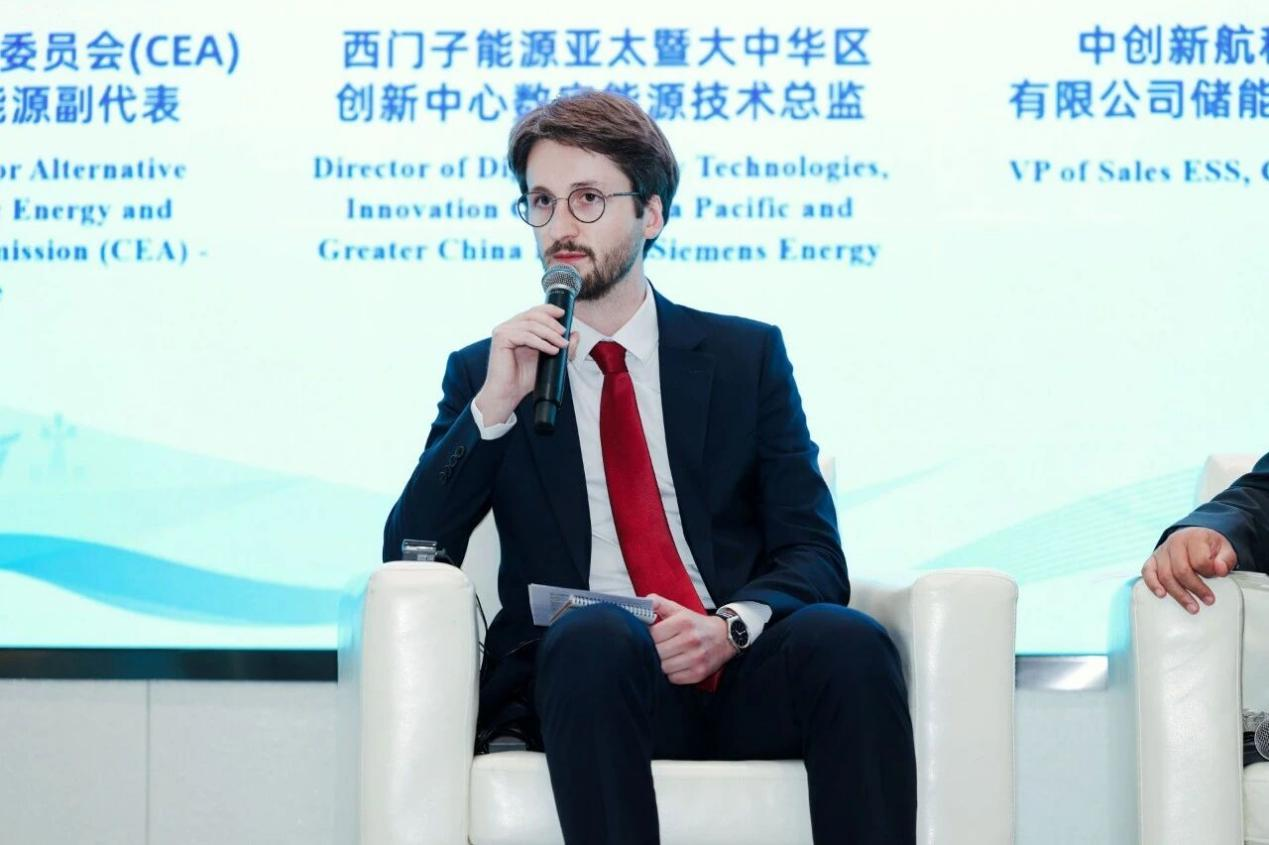
Victor Gout
Deputy Representative for Alternative Energies, French Atomic Energy and Alternative EnergiesCommission (CEA) -China Office
Victor Gout, Deputy Representative for Alternative Energies, French Alternative Energies and Atomic Energy Commission (CEA) -China Office,argued that lithium-ion batteries and hydrogen energy are not adversarial but complementary, each suited to different scenarios and economic models. Li-ion batteries offer fast charging, high efficiency, and millisecond-level response, ideal for short-term frequency regulation and 2–4 hour power shifting. Thanks to China's large-scale industrialization, Li-ion costs have plummeted, with durations potentially extending to 8 hours or more. Hydrogen, conversely, suits regions unsuitable for pumped hydro and long-duration storage scenarios, while also serving hard-to-abate sectors like industrial decarbonization and fuel replacement, though hindered by lower conversion efficiency and insufficient infrastructure. He stressed that basic research is the most suitable entry point for Sino-French collaboration,with vast potential in solid oxide fuel cells, battery chemistry materials, grid modeling/testing, and standards systems. Both technology paths require continuous breakthroughs to support grids with high renewable penetration.
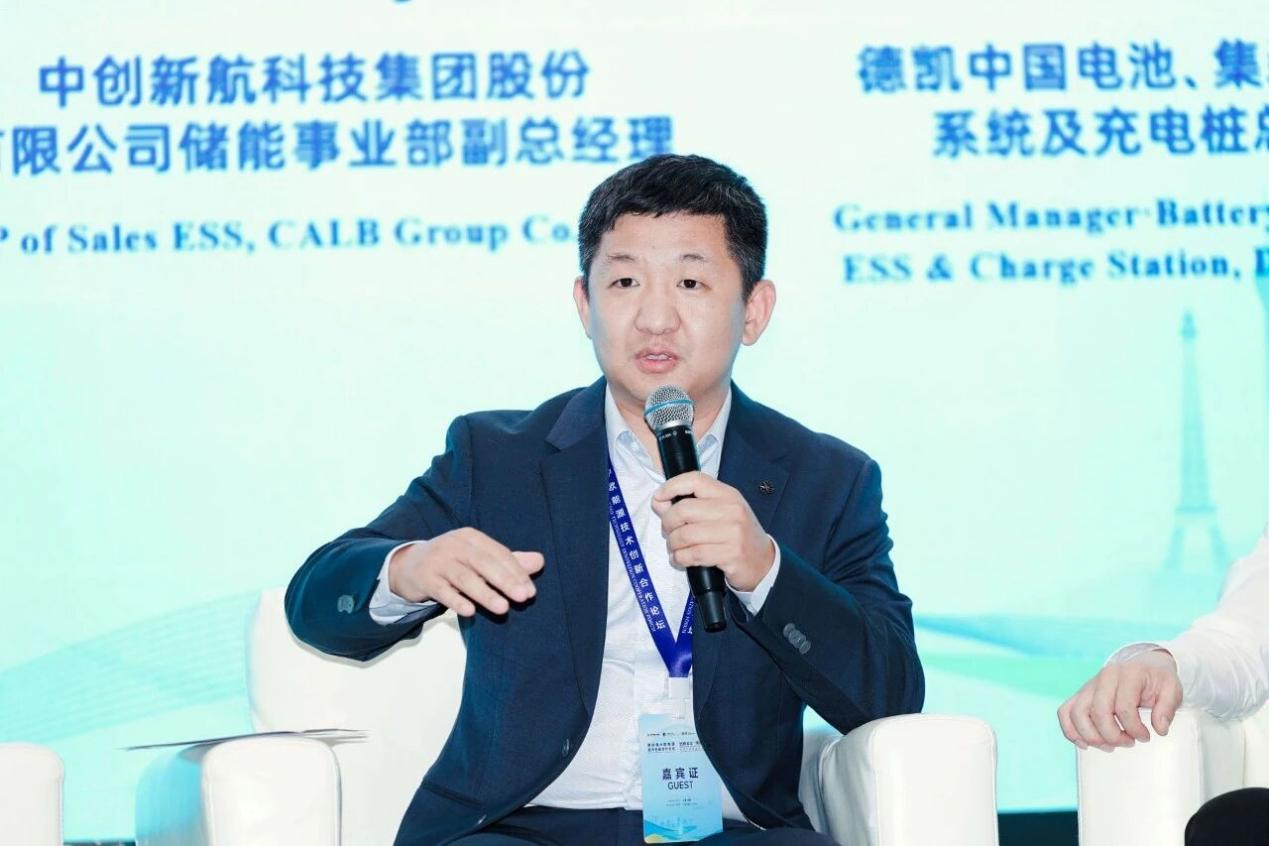
Zilong Yang
Director of Digital Energy Technologies, Innovation Center, Asia Pacific & Greater China Region, Siemens Energy
Zilong Yang , Director of Digital Energy Technologies, Innovation Center, Asia Pacific & Greater China Region, Siemens Energy, focused on computing-power-electricity synergy. He noted that national data center power consumption reached 170 billion kWh in 2025 and is projected to quadruple by 2030, coinciding with soaring renewable capacity. Storage becomes the critical link balancing fluctuations on both sides. Regarding implementation pathways, he outlined three green power consumption models: green power trading, direct green power connections, and green certificate trading. He emphasized that the internal shift in data centers from AC to 800V DC power supply itself creates new demands for storage.On "computing driving electricity," he highlighted how AI can deeply empower storage system planning/simulation, operational dispatch, and power trading decisions, enabling optimal scheduling amid real-time electricity prices and load fluctuations. Consequently, storage becomes a vital pillar for the safe and stable operation of new power systems.
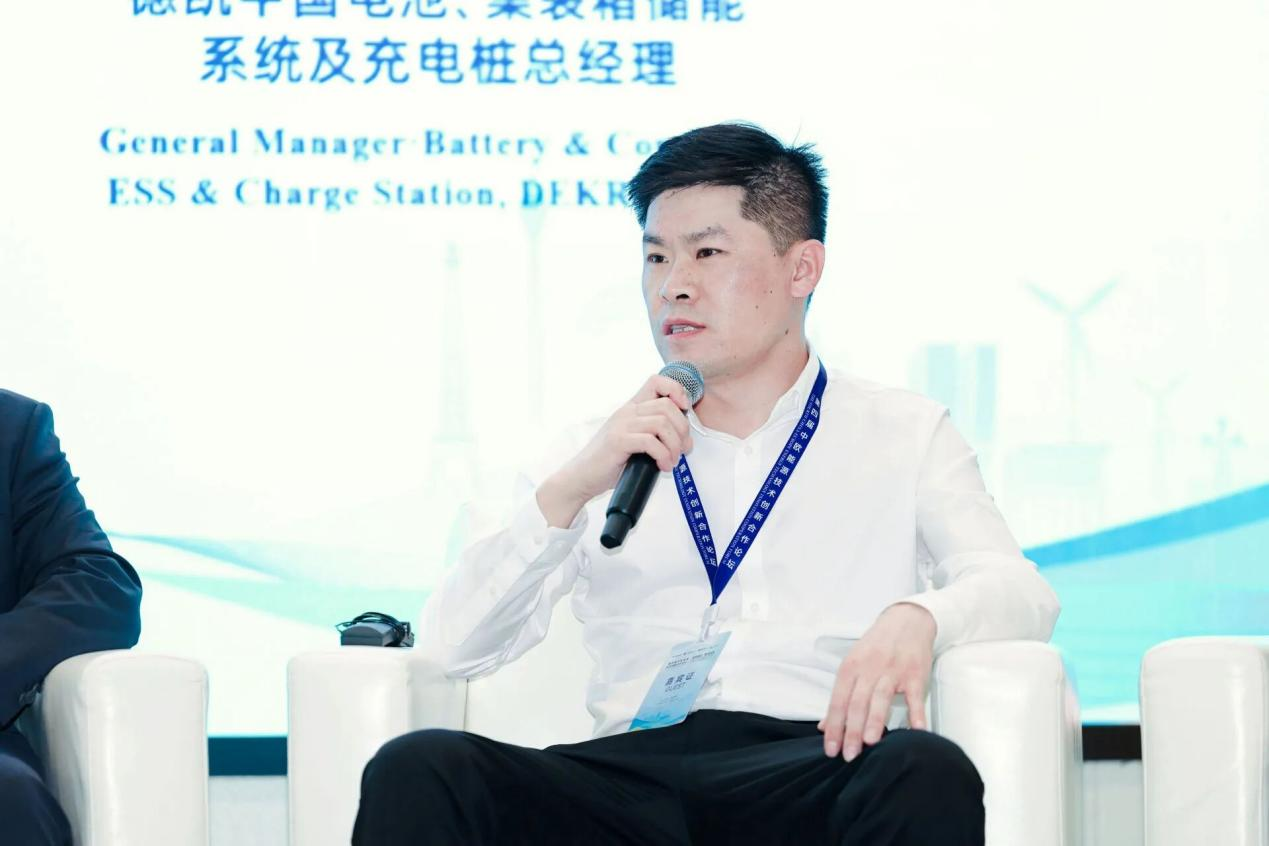
Pei Yang
VP of Sales ESS, CALB Group Co., Ltd.,
Pei Yang , VP of Sales ESS, CALB Group Co., Ltd.,elaborated on practical pathways and win-win scenarios based on CALB's overseas footprint. Currently, the company's 100 GWh industrial base in Portugal is under construction, and its battery pack facility in Thailand is operational.To navigate the EU Carbon Border Adjustment Mechanism (CBAM) and varying national standards, CALB is making synchronized efforts in industry, standards, and technology: On standards, it proactively engages in aligning with European regulations from early project planning stages to meet diverse certification requirements for grid characteristics and functional specifications. On technology, it operates R&D centers in Europe to enhance localized technical synergy. Pei Yang asserted that global deployment is an inevitable trend, and vast cooperation space exists between China and Europe across industrial investment, standards mutual recognition, and joint R&D.Enterprises should proactively integrate into local systems to foster deep industrial chain integration through co-development.
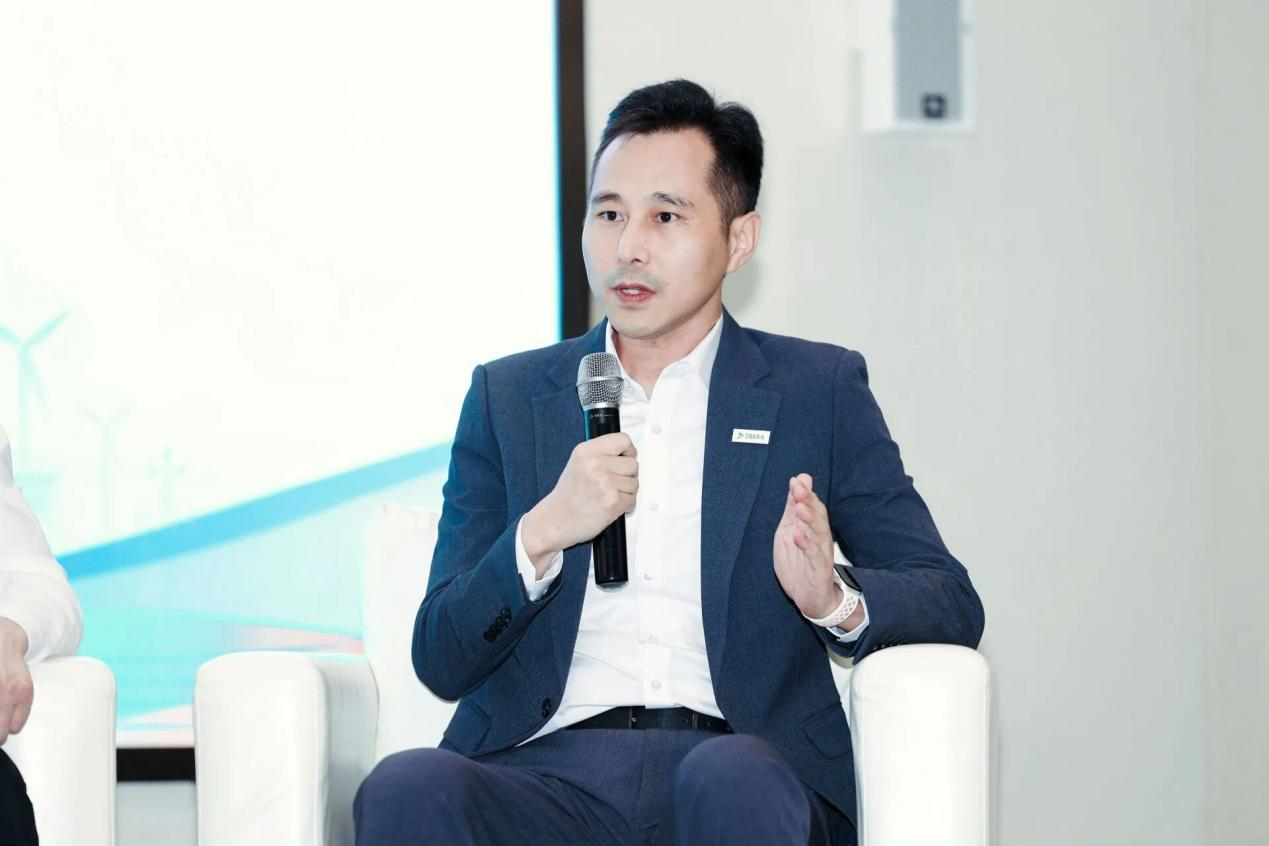
Among Chen
General Manager – Battery & Container ESS & Charge Station, DEKRA China
Among Chen ,General Manager -Battery & Container ESS & Charge Station, DEKRA China, first systematically outlined differences between Chinese and European storage standards/certification systems regarding regulatory frameworks, standard granularity, and management mechanisms.
Addressing Chinese enterprises going global, he proposed four adaptation pathways: Proactively aligning product designs with EU standards during the design phase; engaging qualified testing laboratories for oversight; preparing bilingual technical documentation; and establishing R&D capabilities with China-Europe linkages. Regarding AIDC (AI Data Center) + Storage, Chen noted that the explosive growth of data centers has spawned new integrated storage demands encompassing "backup power + peak shaving + grid-forming capabilities." China holds distinct manufacturing and technological advantages in high-rate LFP batteries, liquid cooling integration, and grid-forming PCS. Europe excels in data center O&M management, energy efficiency optimization, AI-driven peak load forecasting, and grid-side interconnection. The two sides are highly complementary, enabling a commercial model of "Chinese smart-manufactured products + European management/O&M systems."
Energy Storage
The Most Solid "Technological Foundation" for China-Europe Green Cooperation
As pivotal participants and drivers of the global energy transition, China and Europe exhibit strong complementarity and vast cooperation potential in energy storage. Europe has accumulated advanced experience in power market mechanisms, standards systems, and system O&M management. China possesses a complete industrial system, economies of scale in manufacturing, and rich, diverse application scenarios.
Amid accelerating global energy transformation and technological iteration, deepening China-Europe technical exchanges and industrial synergy in energy storage is both an intrinsic need to advance respective energy transitions and a crucial measure to jointly address global energy security challenges and promote sustainable energy development.
Outcomes from this sub-forum demonstrate that dialogue between China and Europe on storage policy, technology, standards, and markets has entered deep waters. The two sides are transitioning from simple trade relations to a new stage of comprehensive cooperation featuring industrial chain synergy, standards system co-construction, and joint basic research.
It is anticipated that this forum serves as a new starting point for China-Europe energy storage collaboration, continuously injecting robust momentum into the global green, low-carbon energy transition.

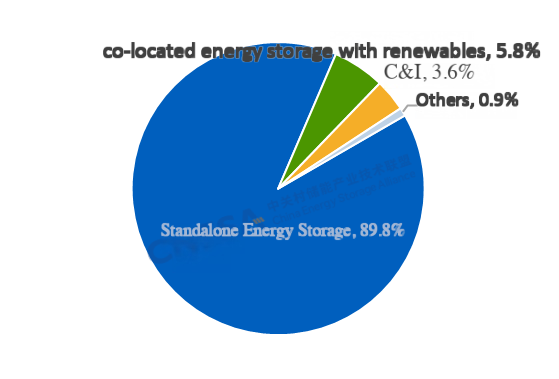
New Installations Surge Over 120% YoY — February Analysis of China’s New Energy Storage Projects
In February 2026, China’s new energy storage market sustained its rapid growth momentum, with newly installed capacity increasing by over 120% year-on-year (YoY). Meanwhile, the application structure of the market has undergone adjustments compared with the same period last year.
In February 2026, China’s new energy storage market sustained its rapid growth momentum, with newly installed capacity increasing by over 120% year-on-year (YoY). Meanwhile, the application structure of the market has undergone adjustments compared with the same period last year.
Short-term fluctuations do not alter long-term growth trend: In February, newly installed capacity reached 3.6 GW, representing a YoY increase of over 120% and a month-on-month (MoM) decline of 31%. Despite the short-term slowdown, the long-term growth trajectory of the energy storage market remains strong.
Front-of-the-meter standalone storage drives growth: Standalone energy storage on the generation and grid side became the primary growth driver. In February, standalone storage accounted for 90% of newly added capacity, up 42 percentage points YoY. Newly installed power and energy capacity of standalone storage increased by more than 310% and 270% YoY, respectively.
Highly concentrated regional deployment: The Northwest region accounted for over 75% of total additions, with Ningxia alone exceeding 2 GW, contributing more than 60% of the national total.
According to incomplete statistics from China Energy Storage Alliance(CNESA), China commissioned 3.56 GW / 8.19 GWh of new energy storage capacity in February 2026, representing YoY increases of +120% / +95% and MoM declines of -31% / -21%.
The MoM decline was mainly due to project construction cycles and the impact of the Spring Festival holiday. However, the YoY growth exceeding 120% indicates a fundamentally positive market outlook. Notably, front-of-the-meter (FTM) installations reached 3.4 GW, up 147% YoY, effectively doubling the total monthly additions.
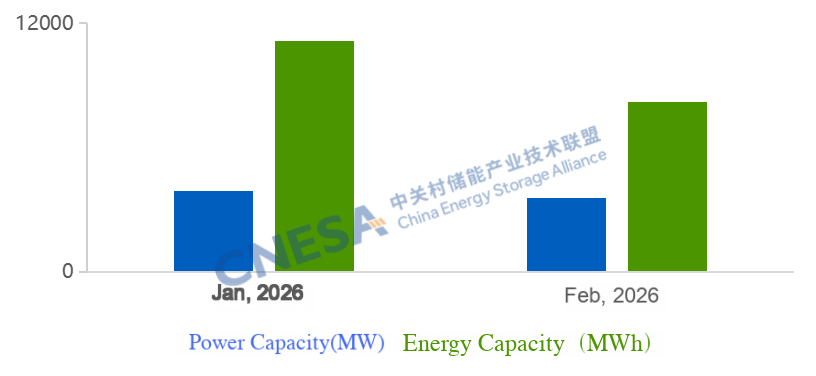
Key Market Characteristics in February
1. Standalone Storage Surges Over 270%, Driving Market Expansion
In terms of application structure, standalone energy storage dominated the market. It accounted for 90% of total newly installed power capacity, up 42 percentage points YoY and 8 percentage points MoM. Newly added capacity reached 3.2 GW / 7.4 GWh, with YoY growth of +313% / +274%, becoming the main driving point of energy storage market. All newly commissioned standalone energy storage projects reached at least the 100 MW level, with the number of such projects rising by 29% year-on-year, alongside the commissioning of two gigawatt-scale projects.
Installations on the generation side and behind-the-meter (BTM) user side experienced a temporary decline. Newly installed capacity on the generation side reached 217.3 MW / 474.3 MWh, down 65% / 72% year-on-year and 41% / 36% month-on-month. Co-located storage with renewable energy remained the dominant model, covering a range of application scenarios such as aquaculture, solar hybrid projects and desertification control initiatives.
New user-side installations totaled 135.2 MW / 292.7 MWh, down 41% / 42% year-on-year and 51% / 58% month-on-month. The market was highly concentrated, with Jiangsu, Guangdong, and Zhejiang accounting for 90% of total user-side energy storage capacity, while Jiangsu ranked first nationwide in both installed capacity and project count.
On the technology front, lithium-ion batteries continued to scale rapidly, supporting the commissioning of gigawatt-level standalone storage plants. Meanwhile, hybrid systems combining lithium-ion and sodium-ion batteries at the 100 MW level were deployed, and aqueous organic flow batteries were implemented on the user side, providing more diversified technological pathways for long-term development.
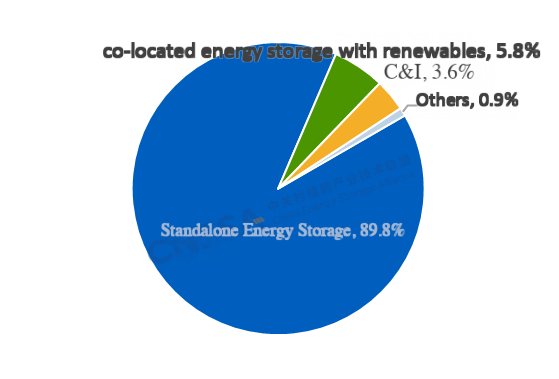
2. Regional Concentration Intensifies, Northwest China Dominates
In February, regional concentration of new installations was pronounced. The Northwest region added 2.7 GW, accounting for 76% of the national total. The combined share of the Northwest and North China regions exceeded 90%. Ningxia added 2.2 GW / 4.4 GWh of new capacity, ranking first nationwide in both power and energy scale and setting a new monthly record for the region. This surge was driven by the grid connection of several gigawatt-scale shared energy storage projects and storage systems paired with large renewable energy bases.
By the end of 2025, Ningxia’s renewable energy capacity reached 57.32 GW, accounting for 65.5% of total grid capacity under centralized dispatch. Solar power has surpassed coal-fired generation to become the largest power source in the region. Due to the intermittency of renewables—characterized by surplus generation during the day and shortages at night—demand for grid services such as peak shaving and frequency regulation has surged. A coordinated development model integrating wind, solar, thermal power, and energy storage is rapidly taking shape. Looking ahead, energy storage is expected to generate revenue through multiple channels, including capacity compensation, spot market trading, frequency regulation services, ramp rate support and so on.
In addition, Ningxia has introduced policies encouraging private capital participation in energy storage investment. In February, a gigawatt-scale storage project developed by Jiayang Energy was commissioned, demonstrating strong investor confidence in the region. At the end of February, the region released its first batch of 2026 private investment promotion projects, including 22 energy storage projects with a total scale of 4.15 GW / 14.4 GWh, providing a solid pipeline for continued market growth.
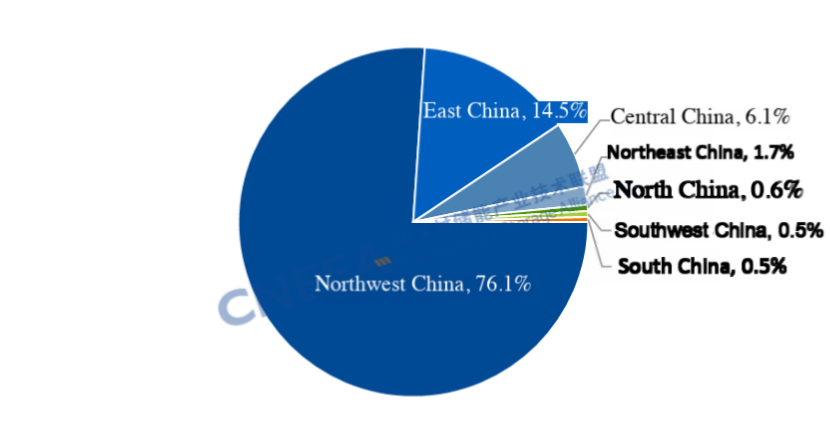
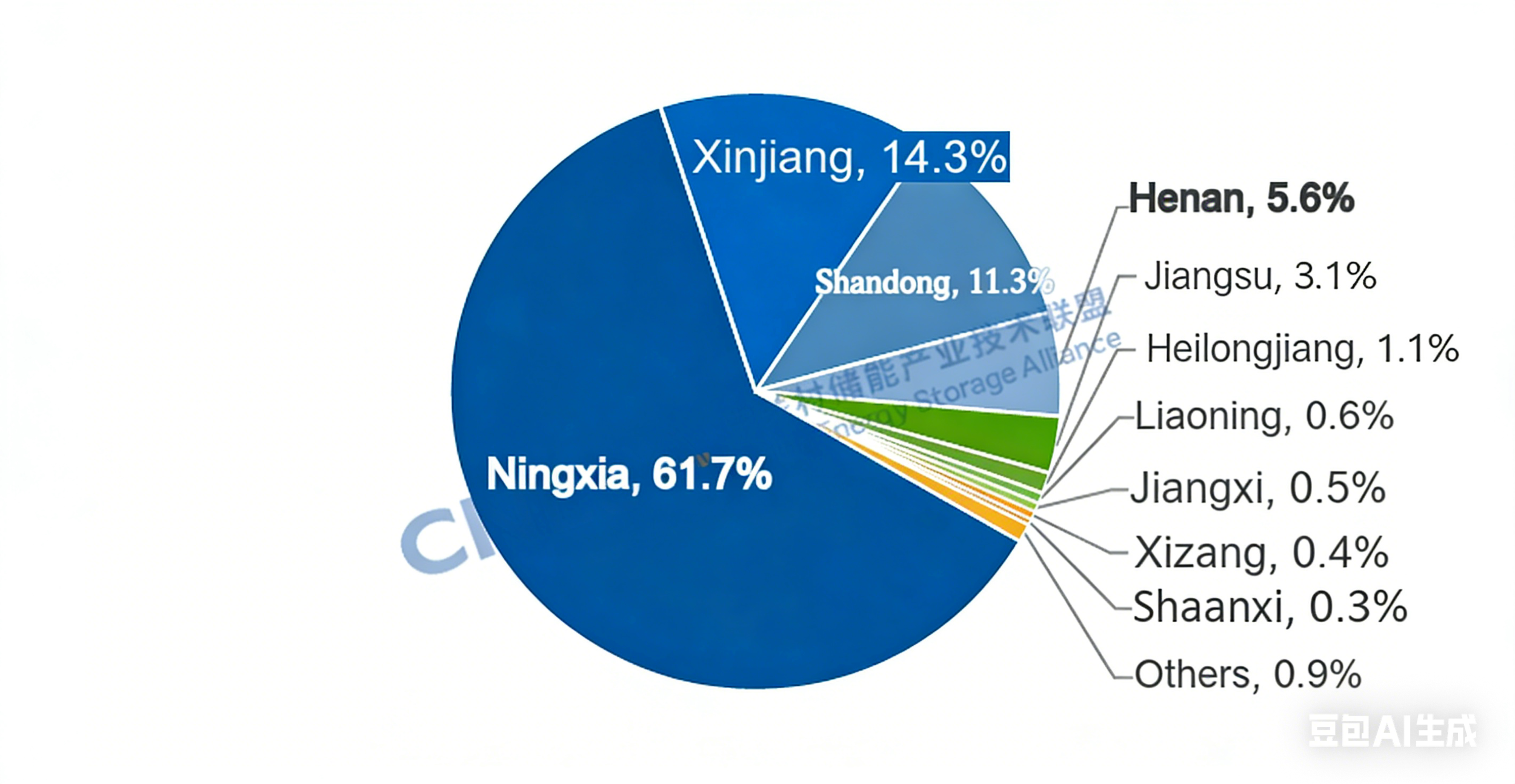
Register now to attend Asia’s Largest Energy Storage Trade Show for free:
What: The 14th Energy Storage International Conference & Expo
When: Conferences: March 31 - April 2, 2026
Exhibitions: April 1-3, 2026
Where: CIECC Beijing, China
Address: No. 55 Yudong road, Shunyi District, Beijing China

2.1GW+7.75GWh! China Power Construction Group Signed One of the Largest Solar-Plus-Storage Projects in the UAE
Recently, China Power Construction Group officially signed the EPC contract for the 2.1GW + 7.75GWh RTC solar-plus-storage project in Abu Dhabi, United Arab Emirates (UAE), with a contract value of approximately RMB 13.962 billion. As one of the largest integrated solar-plus-storage projects in the Middle East and even the world, the signing of the contract marks the project’s transition into the full implementation phase, which is projected to be delivered in 2027.
Recently, China Power Construction Group officially signed the EPC contract for the 2.1GW + 7.75GWh RTC solar-plus-storage project in Abu Dhabi, United Arab Emirates (UAE), with a contract value of approximately RMB 13.962 billion. As one of the largest integrated solar-plus-storage projects in the Middle East and even the world, the signing of the contract marks the project’s transition into the full implementation phase, which is projected to be delivered in 2027.
Amid the accelerating global energy transition and the impact of geopolitical on energy supply, solar-plus-storage systems, as independent and controllable energy solutions, is witnessing an explosive growth in demand. Industry forecasts suggest that large-scale solar-plus-storage projects are being tendered in rapid succession worldwide, with the Middle East emerging as a key engine of market demand, providing significant growth opportunities for the energy storage sector.
Notably, the overseas business of China Power Construction Group has demonstrated strong performance this year. Data indicates a significant increase in the share of overseas operations. According to the company’s operational report of January-February 2026 released on March 12, China Power Construction Group signed RMB 147.893 billion in new contracts during the first two months of the year. Among them, overseas contracts reached RMB 40.888 billion, representing a year-on-year increase of 19.92%. Despite broader market pressures, overseas business continued to expand, with its share of newly signed contracts rising from around 21% in the same period last year to approximately 27%.
Register now to attend Asia’s Largest Energy Storage Trade Show for free:
What: The 14th Energy Storage International Conference & Expo
When: Conferences: March 31 - April 2, 2026
Exhibitions: April 1-3, 2026
Where: CIECC Beijing, China
Address: No. 55 Yudong road, Shunyi District, Beijing China

DOE now requires energy storage for large-scale renewable energy projects
To improve national grid stability, the Department of Energy (DOE) has issued a new directive requiring all large-scale renewable energy projects to integrate energy storage systems (ESS).
To improve national grid stability, the Department of Energy (DOE) has issued a new directive requiring all large-scale renewable energy projects to integrate energy storage systems (ESS).
Under Department Circular No. DC2026-02-0008, issued Thursday, all prospective variable renewable energy (VRE) power plants with a capacity of 10 megawatts (MW) or higher must now include energy storage. The storage component must represent at least 20% of the plant’s total installed capacity.
The policy marks a significant shift in how the Philippines manages the inherent intermittency of solar and wind power. By mandating “batteries” or other storage technologies, the DOE aims to mitigate sudden generation losses and ensure a more dependable electricity supply.
“Energy storage is not only about storing surplus energy, it is about strengthening the grid’s capability to absorb more renewables while maintaining reliability,” said Energy Secretary Sharon S. Garin. “This policy ensures that ESS integration becomes part of system planning and project development, supporting better outcomes for consumers”.
The circular also encourages developers to use advanced technologies, such as grid-forming (GFM) inverters. These tools provide “virtual inertia,” helping to stabilize the grid’s voltage and frequency during fluctuations—functions traditionally provided by fossil fuel-based plants.
Beyond private power plants, the DOE has instructed the Transmission Network Provider (TNP) and distribution utilities to incorporate energy storage into their long-term infrastructure strategies. This includes treating storage as a critical resource for grid reinforcement, frequency control, and as an alternative supply for “islanding” scenarios where areas are temporarily cut off from the main grid.
The government plans to institutionalize these requirements by reflecting them in upcoming updates to the Philippine Energy Plan (PEP) and the Transmission Development Plan (TDP). According to the DOE, the updated framework is intended to create stronger signals for investors while accelerating the country’s clean energy targets. (JLN/PIA-NCR)
Source: Philippine Information Agency
_________________________________________________________________
Register now to attend Asia’s Largest Energy Storage Trade Show for free:
What: The 14th Energy Storage International Conference & Expo
When: Conferences: March 31 - April 2, 2026
Exhibitions: April 1-3, 2026
Where: CIECC Beijing, China
Address: No. 55 Yudong road, Shunyi District, Beijing China

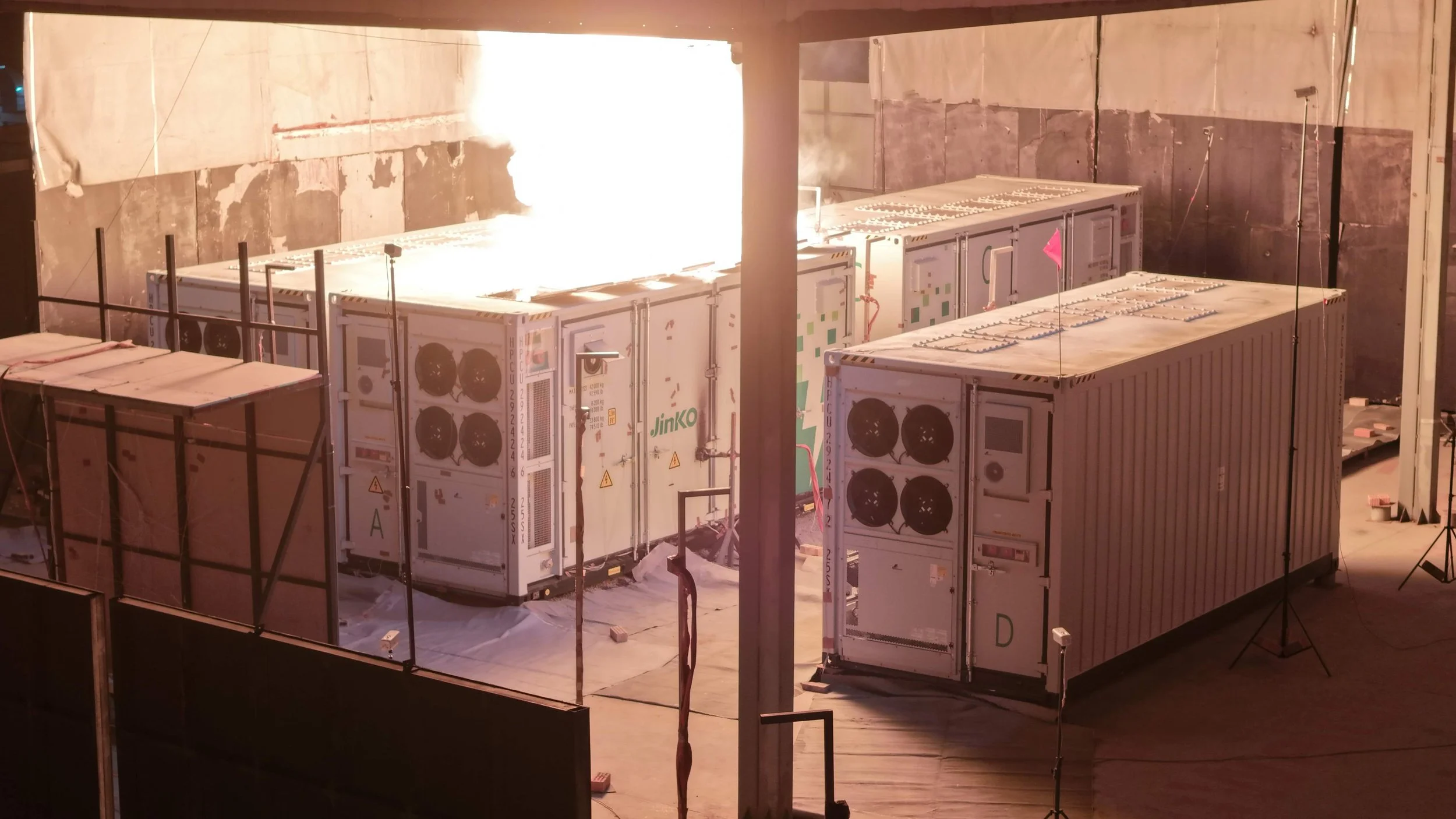
Jinko ESS SunTera 5MWh Passes Stringent Large-Scale Fire Test, Validating Safety Boundaries
Jinko ESS, a global leading energy storage solution provider and a subsidiary of Jinko Solar Co., Ltd., recently announced the successful completion of a large-scale fire test for SunTera 5MWh Liquid-Cooling Energy Storage System. Conducted at a specialized testing facility in Suzhou City, Anhui Province, the test followed the CSA C800 standard and the November 2025 draft of UL 9540A and was witnessed on-site by CSA Group representatives and North American fire protection engineers.
Jinko ESS, a global leading energy storage solution provider and a subsidiary of Jinko Solar Co., Ltd., recently announced the successful completion of a large-scale fire test for SunTera 5MWh Liquid-Cooling Energy Storage System. Conducted at a specialized testing facility in Suzhou City, Anhui Province, the test followed the CSA C800 standard and the November 2025 draft of UL 9540A and was witnessed on-site by CSA Group representatives and North American fire protection engineers.
By simulating fire scenarios under real-world utility-scale deployment conditions, the evaluation assessed fire behavior, thermal runaway propagation potential, enclosure integrity, and the impact on adjacent units. These results provide measured data under the Large-Scale Fire Testing (LSFT) framework referenced in the forthcoming NFPA 855:2026 provisions, supporting the industry’s transition from compliance-driven safety toward performance-validated safety.
Engineering Performance Under Conservative Conditions
The SunTera 5MWh system is Jinko ESS’s flagship product, built on a high-capacity 314Ah cell platform. The system features advanced liquid-cooling thermal management, a nominal energy capacity of 5.015MWh, and supports 0.5P continuous charge and discharge. With an IP55 protection rating and C4/C5 corrosion resistance, it is designed for a 20-year operational life.
For this evaluation, four SunTera containers were deployed in a high-density configuration to replicate practical project spacing:
l Unit A (Initiating Unit): Target unit for forced ignition.
l Unit B: Back-to-back with Unit A at a 15cm spacing.
l Unit C: Side-by-side with Unit A at a 1m spacing.
l Unit D: Face-to-face with Unit A at a 3.5m spacing.
To evaluate passive protection performance under conservative conditions, all units were charged to 100% State of Charge (SOC), active fire suppression systems were disabled, and no manual intervention occurred during the test.
Measured Results: Effective Propagation Containment
On February 10, 2026, forced heating of Unit A commenced at 17:00. At approximately 18:10, cells reached ignition conditions, resulting in sustained combustion. During the event, the internal temperature of Unit A peaked at 1296°C.
Despite the intensity of the initiating fire, adjacent units remained stable. Maximum recorded internal cell temperatures were significantly below thermal runaway thresholds (Unit B: 51.3°C, Unit C: 38.3°C, Unit D: 41.2°C)。
Although external surface temperatures of adjacent enclosures reached elevated levels—up to 404°C on Unit D due to direct flame exposure—internal battery module temperatures remained within safe limits. This demonstrates effective enclosure-level thermal insulation and fire containment performance.
The fire self-extinguished at 07:50 on February 11, with a total combustion duration of approximately 13 hours and 40 minutes. Post-test inspections confirmed:
l Structural Integrity: Unit A maintained its structure with localized surface soot and no enclosure collapse. Units B, C, and D remained structurally intact.
l Functional Continuity: Functional testing verified that adjacent units (B, C, and D) retained full electrical functionality, with no observable impact on charge and discharge performance.
l Environmental Responsibility: The test incorporated controlled flue gas capture and treatment measures to minimize environmental impact.
Leadership Perspectives
“Large-scale fire test allows us to better quantify fire propagation limits,” said Carl Yang, Product General Manager of Jinko ESS. “The SunTera 5MWh system demonstrated thermal runaway containment within a single enclosure under challenging conditions. These data support more precise installation spacing guidance and contribute to reducing multi-unit propagation risk.”
Dora Zhao, Senior Product Management Engineer, said: “SunTera’s safety architecture is built on a three-level design philosophy: cell-level stability, pack-level insulation with engineered pressure relief, and system-level fire barriers. Even when insulation materials in the initiating pack were intentionally modified to accelerate ignition, adjacent packs maintained electrical functionality.”
Patrick Rimel, North America Product Manager, highlighted the market implications: “As regulatory frameworks evolve toward risk quantification, empirical data from LSFT becomes essential. These results provide AHJs, insurers, and project owners with performance-based insights that can inform permitting decisions and risk evaluations, especially in high-density deployments.”
Independent Expert Validation
Todd LaBerge, Fire Protection Engineer from ATAR FIRE, commented: “The test was conducted in accordance with CSA C800 and the latest UL 9540A draft. The system incorporates deflagration protection principles aligned with NFPA 68 and NFPA 69. With enclosure doors closed and venting mechanisms engaged, the initiating fire remained contained within the originating enclosure. The test execution and data integrity meet internationally recognized best-practice standards.”
The Significance Beyond Validation
The impact of large-scale fire testing extends far beyond mere technical validation. It serves as a mirror, reflecting the true safety boundaries of product design, and a yardstick, measuring a company’s fundamental commitment to risk responsibility.
For Jinko ESS, this test marks a new beginning. We remain committed to transforming "extreme conditions" into "standard configurations," working alongside global partners to build a more resilient power system grounded in data-driven trust and safety-first principles.
_________________________________________________________________________________________
Register now to attend Asia’s Largest Energy Storage Trade Show for free:
What: The 14th Energy Storage International Conference & Expo
When: Conferences: March 31 - April 2, 2026
Exhibitions: April 1-3, 2026
Where: CIECC Beijing, China
Address: No. 55 Yudong road, Shunyi District, Beijing China
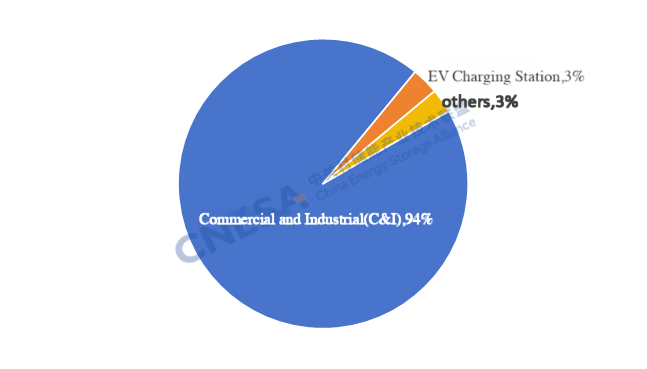
Sharp Pullback! User-Side Energy Storage Additions in January Down 58% Year-on-Year
In January 2026, China’s user-side new energy storage market recorded a year-on-year decline of more than 50% in newly added capacity. The pace of project filings slowed while quality improved, and market deployment shifted toward larger single projects and more capital-intensive investments.
In January 2026, China’s user-side new energy storage market recorded a year-on-year decline of more than 50% in newly added capacity. The pace of project filings slowed while quality improved, and market deployment shifted toward larger single projects and more capital-intensive investments.
The user-side energy storage market experienced a clear correction, with installed capacity down 58% year-on-year. Commercial and industrial (C&I) energy storage accounted for more than 90% of total additions.
The East China region contributed over three-quarters of newly commissioned capacity. Jiangsu led the nation, accounting for 60% of total installed capacity.
Nationwide, the number of newly filed user-side projects fell by 38% year-on-year, while the average size of individual projects increased by 87%. Core markets—Jiangsu, Guangdong, and Zhejiang—continued to lead, as user-side deployment shifted from small, distributed projects toward larger-scale, more centralized investments.
Analysis of User-Side New Energy Storage Projects in January
In January, newly commissioned user-side energy storage capacity totaled 166.2 MW / 456.5 MWh, representing -58% / -39% year-on-year and -81% / -73% month-on-month. The following characteristics were observed.
(1) Installed capacity of user-side energy storage
In January, the market remained dominated by C&I applications, accounting for over 90% of total additions. Newly commissioned C&I projects reached 156.7 MW / 435.4 MWh, down 60% / 41% year-on-year and 82% / 74% month-on-month.
From a technology perspective, all newly commissioned projects adopted electrochemical energy storage. Lithium iron phosphate (LFP) batteries accounted for more than 99% of installed power capacity. In the long-duration energy storage, one 7-hour photovoltaic-plus-storage integrated smart power station project and one 4-hour solid-state lead battery energy storage project were commissioned.
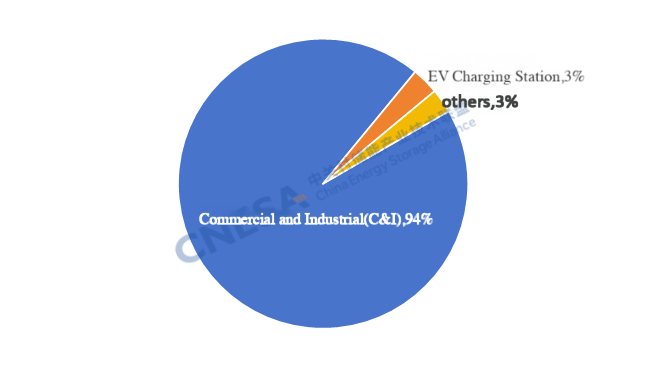
Figure 1. Application distribution of newly commissioned user-side new energy storage projects in January 2026 (MW %)
Source: CNESA DataLink
Note: “C&I” includes industrial facilities, industrial parks, and commercial buildings; “Others” include mining areas, oilfields, rail transit, data centers, etc.
(2) Regional Distribution of User-Side Energy Storage
By region, newly commissioned projects were distributed across 13 provinces, including Jiangsu, Anhui, Shandong, Sichuan, and Guangdong. East China dominated the January market, accounting for 78% of newly added capacity and 44% of total project numbers.
At the provincial level, Jiangsu ranked first nationwide, contributing 60% of total installed power capacity and 16% of newly commissioned projects. Both installed capacity and project count ranked first nationally. This performance was driven by a combination of power market reforms, demand response incentives, strong C&I demand, and the centralized grid connection of large-scale projects.
On the policy front, multiple supportive measures were introduced, accelerating the transition of user-side energy storage business models from “fixed arbitrage” to “volatility-driven optimization.” In January, Jiangsu implemented new power market reforms, with the Jiangsu Energy Regulatory Office releasing the Implementation Rules for the Jiangsu Medium- and Long-Term Power Market (Draft for Comments). These rules marked a shift in C&I electricity pricing from fixed time-of-use tariffs to fully market-based pricing. In the short term, this reduced fixed peak–valley arbitrage margins; however, in the medium to long term, more frequent price fluctuations are expected to create diversified arbitrage opportunities for projects with advanced forecasting and intelligent dispatch capabilities. In addition, as of January 1, 2026, Jiangsu officially implemented full market participation for all renewable electricity, making photovoltaic-plus-storage integration a necessity for smoothing output profiles and enhancing market-based revenues. During the critical winter peak demand period, user-side storage projects could also participate in demand response programs, earning peak-shaving compensation of up to RMB 4.8/kWh, significantly improving short-term revenue certainty and incentivizing projects to connect to the grid within the policy window.
On the demand side, structural factors continued to underpin market growth. January marked the winter peak electricity demand season in Jiangsu. On January 20, the province’s maximum load reached 135 GW, a new winter record and the highest nationwide for six consecutive years. Grid balancing and supply security pressures highlighted the system value of user-side storage. As a major manufacturing province with a high concentration of energy-intensive industries, Jiangsu faces strong demand for peak shaving, valley filling, and demand charge optimization. In January, peak–valley price spreads remained above RMB 0.6/kWh, supporting stable combined returns from energy arbitrage and demand management. Moreover, Jiangsu’s large installed base of distributed photovoltaics further amplified demand for storage, as pairing PV with storage under full market participation policies enables off-peak discharge and enhances project economics.
From a market structure perspective, growth in Jiangsu exhibited clear characteristics of scale and concentration. In January, several large projects—such as the 300 MWh user-side energy storage project of Jiangsu Huiran Industrial Co., Ltd.—along with multiple projects exceeding 5 MW / 40 MWh, were commissioned. Large-capacity projects accounted for the majority of additions, reinforcing Jiangsu’s “fewer projects, higher capacity” market profile. In addition, Jiangsu benefits from a well-developed local energy storage industrial chain. Through full-chain coordination, economies of scale, resource sharing, technology reuse, and business model innovation, system-level costs—including initial investment, operations, and lifecycle costs—can be significantly reduced, providing a strong industrial foundation for continued user-side market growth.
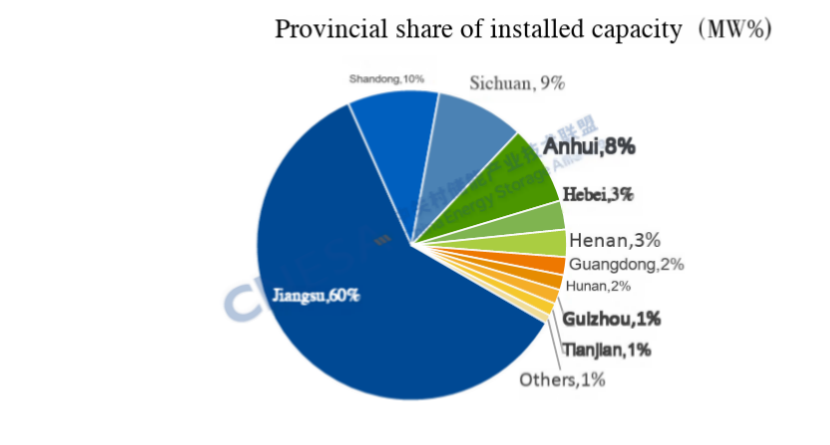
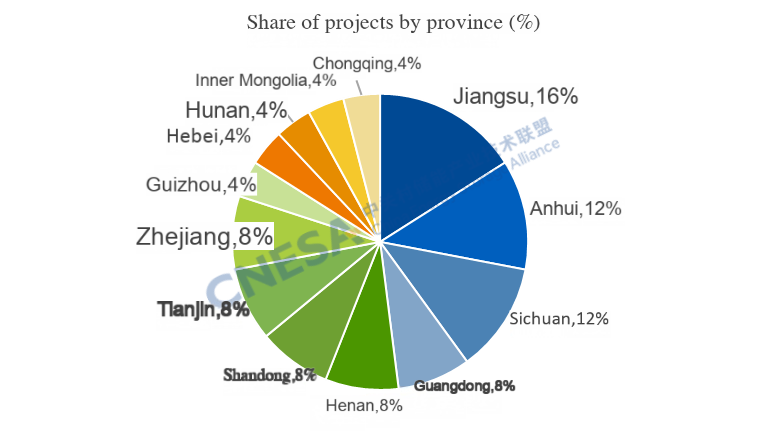
Figure 2. Provincial distribution of newly commissioned user-side new energy storage projects in January 2026
Source: CNESA DataLink
(3) Project Filings
From the perspective of project filings, January saw a “less but better” trend nationwide. The user-side market shifted from distributed expansion to scale and centralized development. The number of newly filed user-side projects fell by 38% year-on-year, while total filed capacity increased by 16%, and the average project size of single projects rose by 87%. In traditional markets, Jiangsu, Guangdong, and Zhejiang together added 321 new projects, down 42% year-on-year, while total energy capacity increased by 28%. Jiangsu recorded the largest total filed capacity, while Guangdong led in the number of newly filed projects. Over the past three years, Jiangsu has consistently seen year-on-year growth in both total filed capacity and average project size in January. This January, Jiangsu’s newly filed capacity rose 81% year-on-year, while project numbers declined 44%, resulting in an average project size roughly three times that of the same period last year—highlighting a clear trend toward larger individual projects. By contrast, Zhejiang continued to see declines in newly filed projects. In January, the number of projects fell 67% year-on-year, and total capacity declined 86%.
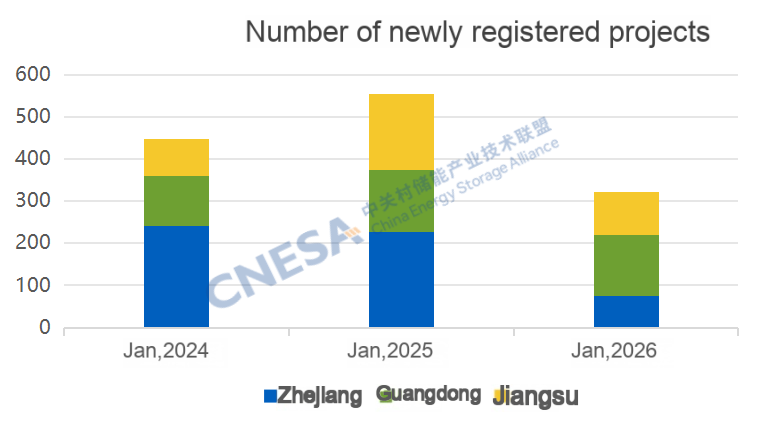
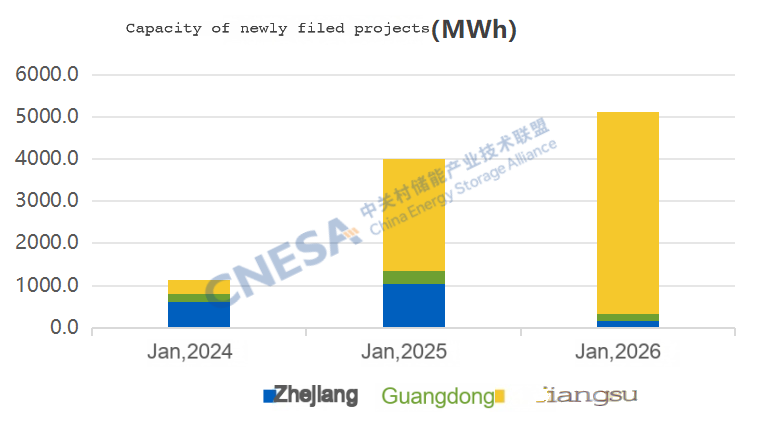
Figure 4. Newly filed energy storage projects in Zhejiang, Guangdong, and Jiangsu in January over the past three years
Source: CNESA DataLink
Overall Analysis of New Energy Storage Projects in January
According to incomplete statistics from China Energy Storage Alliance (CNESA), total newly commissioned new energy storage capacity in China reached 3.78 GW / 10.90 GWh in January 2026, representing +62% / +106% year-on-year, but -84% / -86% month-on-month. Despite the sequential decline, year-on-year growth exceeded 60%, signaling a positive start to the year for the new energy storage market.
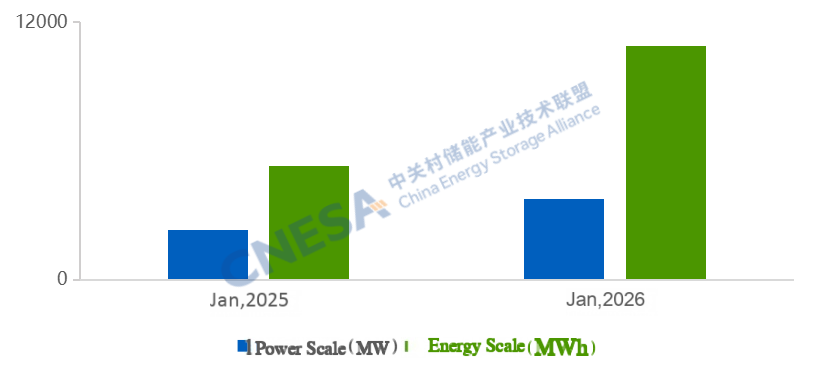
Figure 5. Newly commissioned new energy storage capacity in China in January 2026
Source: CNESA DataLink
Note: Year-on-year comparisons are based on the same period of the previous year; month-on-month comparisons are based on the immediately preceding period.
China Energy Storage Alliance adheres to standardized, timely, and comprehensive data collection methodologies to continuously track energy storage project developments. Leveraging long-term data accumulation and in-depth professional analysis, CNESA regularly publishes objective market analyses to support industry decision-making. Since June 2025, the Alliance’s monthly project analysis has been divided into two dedicated reports—Source-Grid-Side Market and User-Side Market. This issue focuses on the user-side market in January 2026.
For more comprehensive project information, authoritative data, and in-depth market insights, please visit www.esresearch.com.cn or access the CNESA DataLink mini program to explore detailed datasets and research reports. Customized data consulting services are also available through CNESA’s official support channels. CNESA is committed to providing full-cycle, high-quality data services for the industry.

At this critical juncture of diversified business model transformation for user-side energy storage, the ESIE 2026 will bring together leading enterprises from across the industry. The event will feature major launches of new C&I and residential storage products, alongside a series of high-level forums, including:Energy Storage Applications in Zero-Carbon Industrial Parks; Energy Storage + AIDC Collaborative Development;Energy Storage and Emerging Business Models;Distributed PV-plus-Storage;PV–Storage–Charging Integration;Overseas Energy Storage Project Development, Operation, and Practice;The Role and Value of Energy Storage in Virtual Power Plants.These sessions will provide in-depth analysis of market shifts and offer a one-stop platform spanning product showcases, operational best practices, and ecosystem collaboration. We cordially invite you to attend and explore pathways to breakthrough and growth in the evolving user-side energy storage landscape.
Register now to attend Asia’s Largest Energy Storage Trade Show for free:
What: The 14th Energy Storage International Conference & Expo
When: Conferences: March 31 - April 2, 2026
Exhibitions: April 1-3, 2026
Where: CIECC Beijing, China
Address: No. 55 Yudong road, Shunyi District, Beijing China

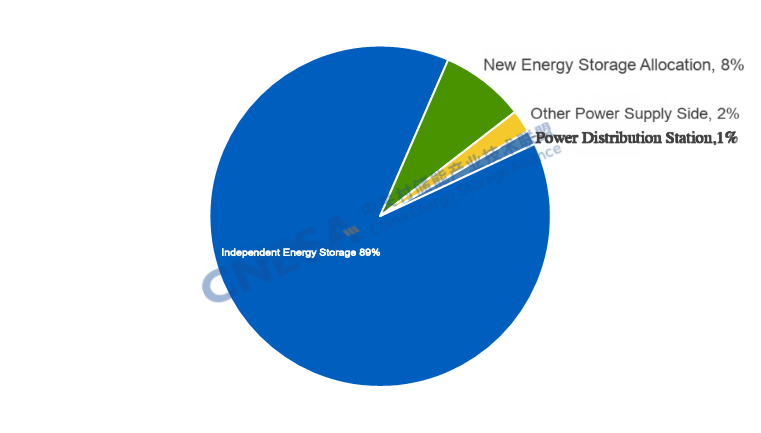
10.9 GWh! Newly Added New-Type Energy Storage Capacity in January Doubled Year-on-Year
China’s new-type energy storage market witnessed a strong start in January 2026. Newly commissioned capacity in January increased by over 60% year-on-year, while the market’s underlying structure showed notable adjustments compared with the same period last year.
China’s new-type energy storage market witnessed a strong start in January 2026. Newly commissioned capacity in January increased by over 60% year-on-year, while the market’s underlying structure showed notable adjustments compared with the same period last year.
A Strong Start to the Year: Newly added capacity: 3.8 GW / 10.9 GWh in January, representing a
year-on-year increase of 62% / 106%, marking a positive opening for the new-type energy storage
market.
Accelerated Deployment of Independent Energy Storage: In January, independent energy
storage accounted for nearly 90% of newly added capacity, up 41 percentage points year-on-
year. Newly added power and energy capacity of independent energy storage grew by over 240% /
290% year-on-year. Xinjiang ranked first nationwide in both power and energy capacity, with 1 GW
of newly commissioned independent energy storage.
Rise of Third-Party Enterprises: Third-party enterprises accounted for 45% of newly added
installed capacity, once again surpassing local energy groups and the “Big Five and Small Six”
state-owned power generation groups. The trend toward a diversified investment landscape has
become increasingly evident.
Accelerated Deployment of Diverse Technologies: Beyond mainstream lithium-ion batteries,
alternative technologies such as compressed air energy storage (CAES), flow batteries, and
flywheels are being deployed at a faster pace, supporting the industry’s long-term development.
Overall Analysis of New-Type Energy Storage Projects in January
According to incomplete statistics from the CNESA DataLink, in January 2026, newly commissioned new-type energy storage projects in China reached a total installed capacity of 3.78 GW / 10.90 GWh, representing year-on-year increases of 62% and 106%, respectively, and month-on-month declines of 84% and 86%. Monthly new added capacity growth exceeded 60% year-on-year, underscoring a positive market outlook at the beginning of the year.
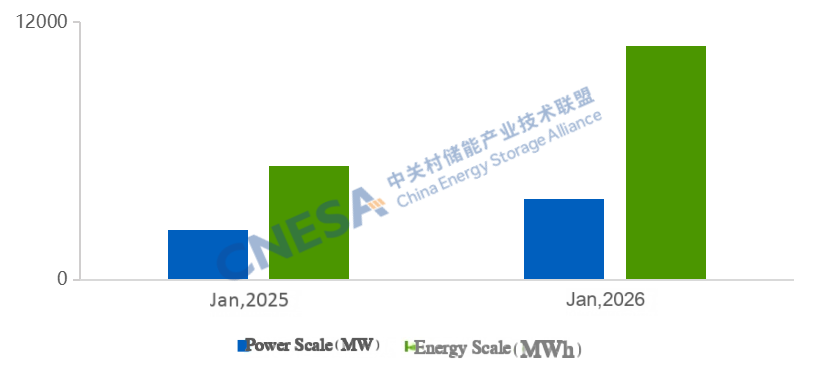
Figure 1: Installed Capacity of Newly Commissioned New-Type Energy Storage Projects in China, January 2026
Source: CNESA DataLink
Note: Year-on-year (YoY) comparisons are based on the same period of the previous year; month-on-month (MoM) comparisons are based on the immediately preceding statistical period.
Analysis of Generation- and Grid-Side New-Type Energy Storage Projects in January
In January, newly added generation- and grid-side new-type energy storage capacity reached 3.62 GW / 10.44 GWh, up 87% / 130% year-on-year, and down 84% / 87% month-on-month. Key characteristics include:
1.Independent energy storage accounted for 89% of new installations, up 41 percentage
points year-on-year and 12 percentage points month-on-month.
Newly added independent energy storage reached 3.2 GW / 9.6 GWh, up 249% / 298% year-on-year, and down 84%/87% month-on-month. The number of projects with capacities of 100 MW and above increased by 122% year-on-year, accounting for 85% of total projects—29 percentage points higher than the same period last year. By contrast, power-generation-side new-type energy storage additions were 366.5 MW / 740.3 MWh, down 64% / 65% year-on-year and 92% / 95% month-on-month. Among these, renewable-plus-storage projects accounted for 79% of power capacity, spanning diversified application scenarios such as desertification control, thermal–renewable–storage multi-energy integration, and hydro–solar–pumped storage integration.
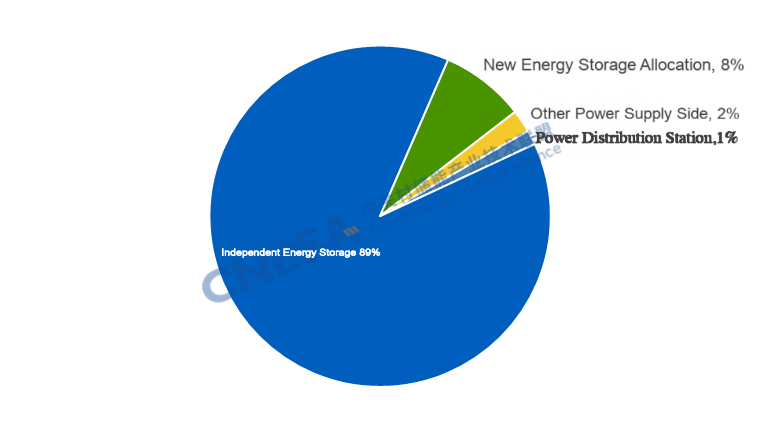
Figure 2: Application Distribution of Newly Commissioned Generation- and Grid-Side New-Type Energy Storage Projects in January 2026 (MW%)
Source: CNESA DataLink
Note: “Others” include substations, emergency power supplies, etc.
2. Northwest China Accounted for Over 35% of New Capacity, with Xinjiang Leading
In January, the Northwest region ranked first nationwide, accounting for 35% of newly added capacity. Combined, the Northwest and North China regions contributed more than half of the national total. By province, Xinjiang recorded newly added capacity of 1.2 GW / 4.3 GWh, ranking first nationwide in both power and energy capacity.
By the end of January, Xinjiang’s installed renewable energy capacity exceeded 160 GW, accounting for 64% of the region’s total power capacity. Due to its distance from eastern and central load centers, Xinjiang has historically faced wind and solar curtailment challenges. In 2025, wind and solar utilization rates in Xinjiang were 91.0% and 86.3%, respectively—both below the national average. Growing pressure for renewable energy consumption and the need to mitigate grid fluctuations have driven large-scale deployment of new-type energy storage in the region. At the start of the year, several major projects were commissioned in quick succession, including the 500 MW / 2,000 MWh Ruoqiang energy storage project by Xinjiang Green Development Power, the 200 MW / 800 MWh grid-forming energy storage project by Huaneng Jingshun, and the 200 MW / 800 MWh energy storage project by LiXin Energy, demonstrating strong pilot and demonstration effects.
In terms of revenue mechanisms, Xinjiang has formed a relatively mature model combining capacity compensation, electricity energy trading, and ancillary services. On May 19, 2023, the Xinjiang Development and Reform Commission issued the Notice on Establishing and Improving Supporting Policies for the Healthy and Orderly Development of New-Type Energy Storage, introducing capacity compensation for grid-connected independent energy storage projectsand specified the implementation standards for 2023, 2024, and 2025, providing predictable early-stage policy support for independent energy storage projects in Xinjiang. . Although the original policy expired at the end of 2025, the clarification at the national level regarding capacity pricing mechanisms for grid-side independent energy storage is expected to lead to new local policies in Xinjiang, further improving long-term revenue certainty. With the rollout of ancillary service market rules in July 2025 and the transition of Xinjiang’s power spot market to continuous settlement trial operation, independent energy storage is expected to increasingly generate revenue through spot market arbitrage.
Moreover, Xinjiang has established a complete energy storage industry chain, covering batteries, PCS, BMS, and system integration. Large-scale manufacturing bases established by leading energy storage companies, together with local supply chains, have significantly reduced logistics and system integration costs, enhancing project economics. As grid upgrades and transmission channel construction progress, energy storage demand in Xinjiang is expected to be further released.
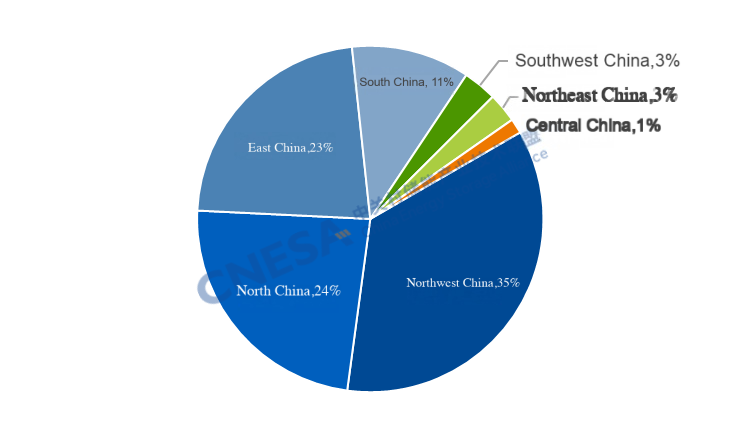
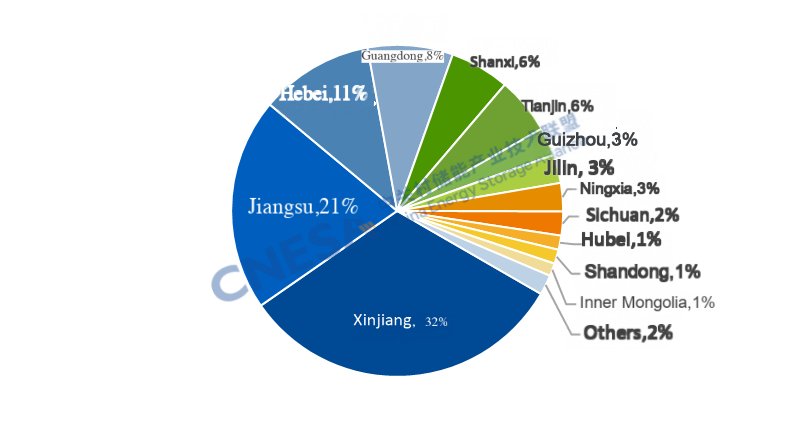
Figure 3: Regional Distribution of Newly Commissioned Generation- and Grid-Side New-Type Energy Storage Projects in January 2026 (MW%)
Figure 4: Provincial Distribution of Newly Commissioned Generation- and Grid-Side New-Type Energy Storage Projects in January 2026 (MW%)
Source: CNESA DataLink
3. Faster Deployment of Projects Invested by Third-Party Enterprises, the trend toward
diversification of energy storage investment entities has become increasingly evident.
In January, projects invested and developed by third-party enterprises—including China Green Development Group, Aerospace Hongji Energy Storage, and Daowei Energy Storage Group—were commissioned one after another. Third-party enterprises accounted for 45% of newly added installed power capacity, ranking first among all investor categories. Driven by rising market demand, supportive national policies, diversified technology pathways, and declining technology costs, the investment entity diversification trend became more pronounced in the first month of 2026.
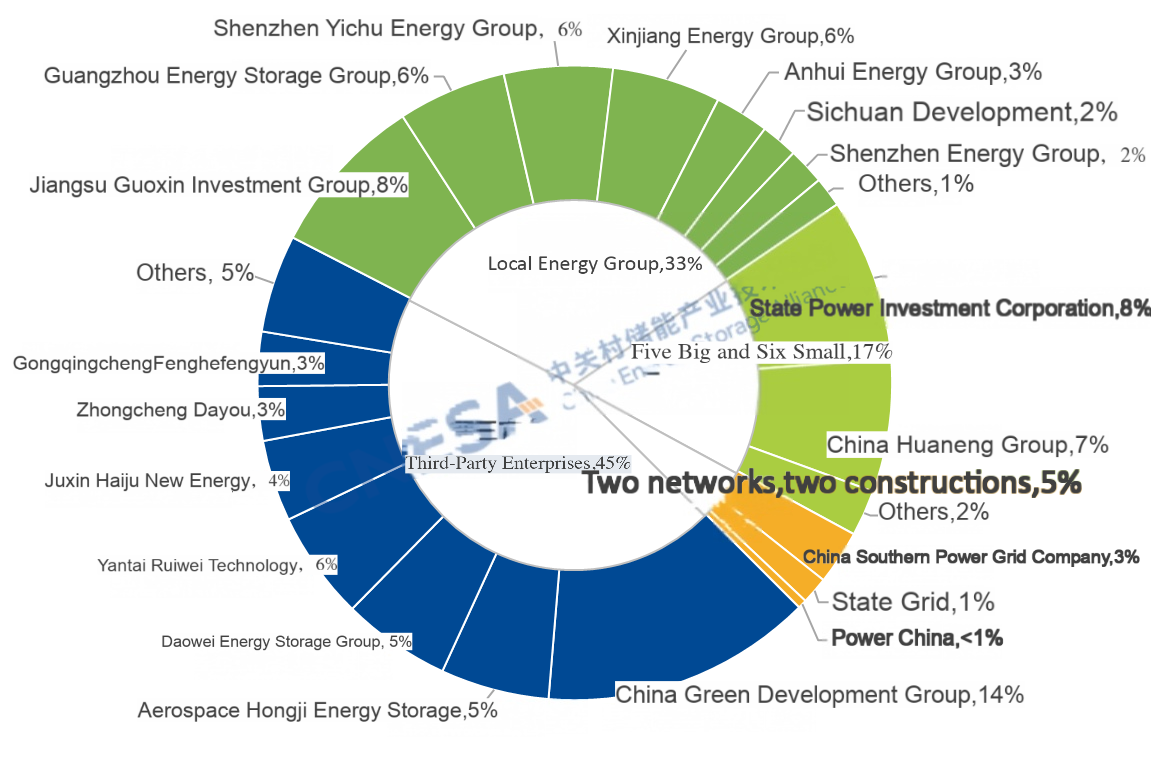
Figure 5: Owner Distribution of Newly Commissioned Generation- and Grid-Side New-Type Energy Storage Projects in January 2026 (MW%)
Source: CNESA DataLink Global Energy Storage Database
Note: Third-party enterprises refer to companies other than large state-owned power generation groups, the two major grid companies, their construction subsidiaries, and local energy groups.
4. Accelerated Deployment of Long-Duration Energy Storage Technologies
From a technology perspective, newly commissioned generation- and grid-side projects were dominated by lithium iron phosphate (LFP) batteries, accounting for 89% of installed power capacity, followed by compressed air energy storage (8%) and flow batteries (3%). Long-duration energy storage technologies—represented by CAES and flow batteries—as well as hybrid frequency regulation systems, are being deployed at an accelerating pace. Notable projects include the 300 MW Jiangsu Huai’an salt cavern CAES demonstration project, the Phase I Baicheng vanadium redox flow battery energy storage power station, and the Changyang Longzhouping vanadium redox flow battery energy storage project. In addition, a lithium battery + flywheel frequency regulation project by Shaanxi Energy was commissioned.
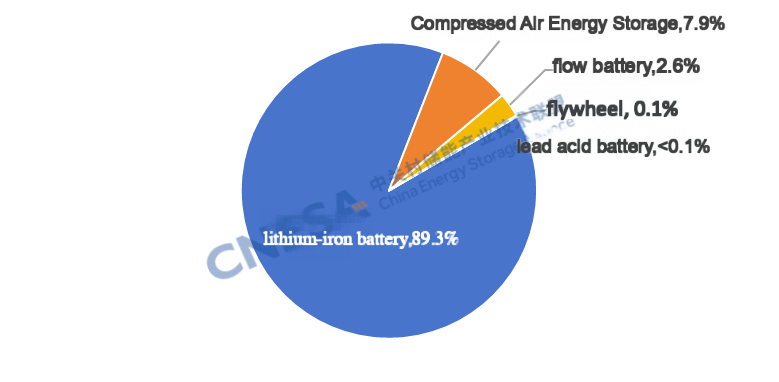
Figure 6: Technology Distribution of Newly Commissioned Generation- and Grid-Side New-Type Energy Storage Projects in January 2026 (MW%)
Source: CNESA DataLink
China Energy Storage Alliance (CNESA) continues to track energy storage project developments based on standardized, timely, and comprehensive data collection criteria. Leveraging long-term data accumulation and in-depth professional analysis, CNESA regularly publishes objective market analyses of energy storage installations, providing valuable references for industry decision-making. Since June 2025, CNESA’s monthly energy storage project analysis has been divided into generation- and grid-side and user-side market reports. This edition focuses on an in-depth interpretation of the generation- and grid-side market in January 2026.
For more comprehensive project information, authoritative data, and in-depth market analysis, please visit www.esresearch.com.cn or access the CNESA DataLink via the mini-program. For customized data consulting services, please contact CNESA through the official QR code. CNESA is committed to providing full-cycle, high-quality energy storage data services to industry stakeholders.

Register now to attend Asia’s Largest Energy Storage Trade Show for free:
What: The 14th Energy Storage International Conference & Expo
When: Conferences: March 31 - April 2, 2026
Exhibitions: April 1-3, 2026
Where: CIECC Beijing, China
Address: No. 55 Yudong road, Shunyi District, Beijing China

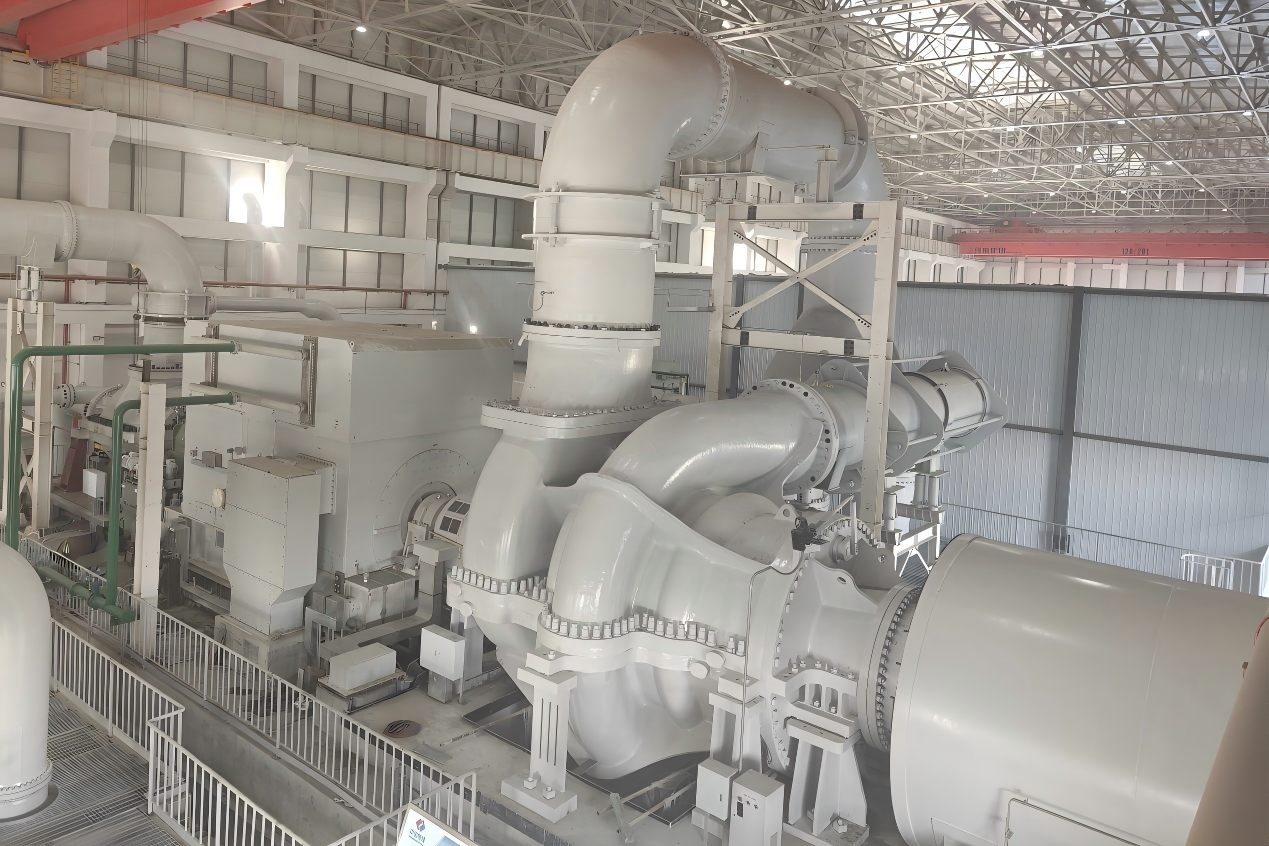
Major Breakthrough Achieved in the R&D of the World’s First and Most Powerful Single-Unit Compressed Air Energy Storage Compressor
Recently, China has achieved a major breakthrough in the research and development of compressed air energy storage(CAES) technology . Developed jointly by the Institute of Engineering Thermophysics, Chinese Academy of Sciences(IET, CAS) and ZHONG-CHU-GUO-NENG(BEIJING)TECHNOLOGY CO.,LTD., the world’s first CAES compressor with the largest single unit power has successfully passed the third-party testing accredited by CNAS. According to the test results, the compressor achieved maximum discharge pressure of 10.1MPa, a maximum power output of 101MW and an operating range of 38.7% to 118.4% under variable conditions and an efficiency of 88.1% at maximum discharge pressure, reaching an internationally leading level.
Recently, China has achieved a major breakthrough in the research and development of compressed air energy storage(CAES) technology . Developed jointly by the Institute of Engineering Thermophysics, Chinese Academy of Sciences(IET, CAS) and ZHONG-CHU-GUO-NENG(BEIJING)TECHNOLOGY CO.,LTD., the world’s first CAES compressor with the largest single unit power has successfully passed the third-party testing accredited by CNAS. According to the test results, the compressor achieved maximum discharge pressure of 10.1MPa, a maximum power output of 101MW and an operating range of 38.7% to 118.4% under variable conditions and an efficiency of 88.1% at maximum discharge pressure, reaching an internationally leading level.
The compressor is one of the most critical core components of a compressed air energy storage system. During the energy storage process, it will compress the atmospheric pressure air to high-pressure state and store it in gasometers, converting electric energy to pressure energy and thermal energy of the air. Through independent innovation, the research team overcame key technical challenges including overall system design and optimization, full 3-Dimensional flow optimization, long rotor complex shafting structure design and high-efficiency variable operating condition control, successfully developing the world’s first CAES compressor with a single unit power exceeding 100MW, featuring fully independent intellectual property rights. Compared with existing CAES compressors, its single-unit power has increased by more than 100%, unit costs have been significantly reduced and it offers advantages including high efficiency, high pressure and a wide operating range.
The Institute of Engineering Thermophysics, Chinese Academy of Sciences has been a pioneer in China’s CAES research since 2005. Through continuous efforts for over 20 years, it originally proposed new principles for advanced compressed air energy storage, developed several critical technologies including system design for full operating conditions system design, wide-load compressors, high-efficiency compact heat exchangers and high-load expanders; It has established a comprehensive R&D and design system covering “system design-key components-integrated control; it has also taken the lead in building national demonstration projects for 1.5MW-10MW-300MW advanced CAES. The successful development of the CAES marks an important milestone of world compressed air energy storage technology, which will drive the technology to a new level.
The above work was supported by projects including Chinese Academy of Sciences Strategic Priority Research Program (Category A), National Key Research and Development Program of China and National Natural Science Foundation of China (NSFC) Young Scientists Fund (Category A), among others .
Looking ahead, ZHONG-CHU-GUO-NENG will actively promote the application of this compressor and continue to enhance its capabilities in technological innovation, manufacturing, and engineering implementation. Through the transformation and wider application of major scientific and technological equipment achievements, the company aims to deliver high-end equipment with higher efficiency, better performance, and lower costs, thereby driving high-quality industrial development and supporting China’s energy transformation and sustainable development of regional economies.
Register now to attend Asia’s Largest Energy Storage Trade Show for free:
What: The 14th Energy Storage International Conference & Expo
When: Conferences: March 31 - April 2, 2026
Exhibitions: April 1-3, 2026
Where: CIECC Beijing, China
Address: No. 55 Yudong road, Shunyi District, Beijing China

Key Energy Storage Standards to Watch in 2026 Highly Recommended for Industry Reference
During the 14th Five-Year Plan period, China’s energy storage technology mix witnessed noticeable changes where pumped hydro storage accounted for less than 40% for the first time while the new-type energy storage represented by lithium batteries saw explosive growth.
During the 14th Five-Year Plan period, China’s energy storage technology mix witnessed noticeable changes where pumped hydro storage accounted for less than 40% for the first time while the new-type energy storage represented by lithium batteries saw explosive growth.
According to incomplete statistic from China Energy Storage Alliance (CNESA), by the end of 2025, China’s cumulative installed capacity of power storage reached 213.3GW among which pumped hydro storage shared 31.3% while the new-type cumulative energy installations represented by lithium battery accounted for over two thirds.
Against the backdrop of robust industry expansion, it is significant to improve energy storage standardization system especially enhancing safety standard.
Through the incomplete statistic, in 2025, China released over 40 national, industry and local standards on energy storage. These standards cover energy storage planning and designing, equipment testing, grid connection and operation, safety management and emergency response, providing important support to guide high-quality industry development, guarantee the safety of energy storage power stations, and promote the energy structure transformation and the green and low-carbon development across industrial value chain.
This article aims to clarify major energy storage standards released in 2025 and their influence. It will also list the key standards that have already come into force or will be implemented in 2026, helping industry stakeholder stay aligned with regulatory developments, mitigate compliance risks, and ensure the safe and efficient advancement of projects.
Strengthening the Energy Storage Safety Standards System From “Recommended” to “Mandatory”
Electrochemical Energy Storage represented by lithium battery has developed in a breakneck speed where installed capacity continued to expand, with safety being a core concern for the industry. In accordance with the incomplete statistic, 2025 alone saw about 30 energy storage safety accidents across the world. Two fires happened consecutively in American Moss Landing energy storage plant with huge loss, drawing widespread attention.
In order to ensure the safe and stable operation of lithium battery energy storage systems, cut down accident incidences and improve emergency response capabilities, the mandatory national standard GB 44240 Secondary lithium cells and batteries used in electrical energy storage systems—Safety requirements officially came into effect on August 1, 2025, which is recognized as the highest-level national standard on energy storage safety to date. It upgrades the safety requirements of energy storage lithium battery from “recommended” to “mandatory” for the first time, covering more than 20 rigorous testings from cell vibration, acceleration shock, shallow puncture, and compulsory discharge. Several leading companies’ battery products like those of CATL have passed third-party testings which is a sign that the standard’s entry into substantive implementation, setting a new benchmark for energy storage industry.
China’s Ministry of Housing and Urban-Rural Development released the revised national standard GB/T 51048- 2025 Design Standard for Electrochemical Energy Storage Power Station. Issued on December 31, 2025 and effective on April 1, 2026, this standard represents the first revision in a decade. Through revision across ten years, it introduces new technology pathways of sodium batteries, hydrogen fuel cells and so on. Based on practical challenges encountered during the application of electrochemical energy storage pathways over the past ten years, it established differentiated design requirements and addressing the potential safety risks serves as a core technical reference for the design of electrochemical energy storage power stations.
Shifting the Focus of Safety Protection from “Post-Incident Response” to “Pre-Incident Prevention”
With the continuous breakthroughs of safety protection technologies, shifting from “post-incident response” to “pre-incidence prevention” gradually become one of the major strategies.
China’s first national electrochemical energy storage fire warning standard GB/T 46261- 2025 General technical requirements for fire monitoring and warning systems for electrochemical energy storage stations was issued on August 29, 2025 and will take effect on September 1, 2026. This standard established a systematic and standardized framework for fire monitoring and early warning systems for the first time, covering several performances and technology requirements like multi-parameter monitoring, coordinated control and environmental adaptability and filling the long-standing gap in standards for early fire monitoring and warning product, which holds important reference for accident monitoring and safety warning system design in energy storage power stations.
CNESA standard Technical Specification for Liquid Nitrogen Fire Extinguishing Systems in Electrochemical Energy Storage Power Stations is currently under public consultation. Developed based on national key R&D program outcomes, the standard consolidates technical achievements in liquid nitrogen fire suppression systems and their application in protecting lithium-ion battery energy storage systems.
Internationally, the 2026 edition of NFPA 855 has also placed pre-incident prevention at the center of safety management. Systematic risk identification and mitigation analysis have been upgraded from conditional to routine requirements. It firstly introduced large-scale fire testings on the assessment of thermal runaway propagation. CSA/ANSI C800-2025 and the fifth edition of UL 9540A came as follows, which update large-scale fire testings requirements and significantly improve the proactive safety protection requirements of energy storage products.
Initial Progress Energy Storage Footprint Accounting Standards Supporting the “Dual Carbon” Goals
As the GB/T 24067- 2024 Greenhouse gases—Quantification methods and requirements for carbon footprint of product—Lithium-ion battery for electrical energy storage systems releases, China has built the foundational framework of carbon footprint accounting. Subsequently, the Ministry of Ecology and Environment together with National Development and Reform Commission and other authorities jointly issued the Guidelines for Developing Product Carbon Footprint Accounting Standards, encouraging broad participation in the design and amendment of product carbon footprint accounting standards. The guidelines target the formulation of 100 product carbon footprint standards by 2027 and 200 by 2030. Building on this framework, sector-specific carbon footprint standards are now gradually being developed.
In 2025, draft standards such as Greenhouse Gases—Product Carbon Footprint Quantification Requirements for Lithium-Ion Batteries Used in Electrical Energy Storage Systems, led by the China Electronics Standardization Institute, and Greenhouse Gases—Product Carbon Footprint Quantification Methods and Requirements for Lithium Battery Energy Storage Systems, jointly led by Shanghai Envision KES Technology Co., Ltd. and CNESA, entered the public consultation phase. Once released, these standards will provide clear and consistent methodologies for carbon footprint accounting for lithium-ion batteries and energy storage systems.
Conclusion
2025 marked an important year in the standardization of China’s energy storage sector with a set of critical safety standards releasing and implementing, providing essential guidance for the safe development of the industry. As energy storage technologies continue to develop and innovate, sustained collaboration among stakeholders and active participation in standardization efforts will remain critical to fostering a healthy energy ecosystem, supporting China;s energy transition, and advancing green and low-carbon development.
Appendix: Key Energy Storage Standards for 2026
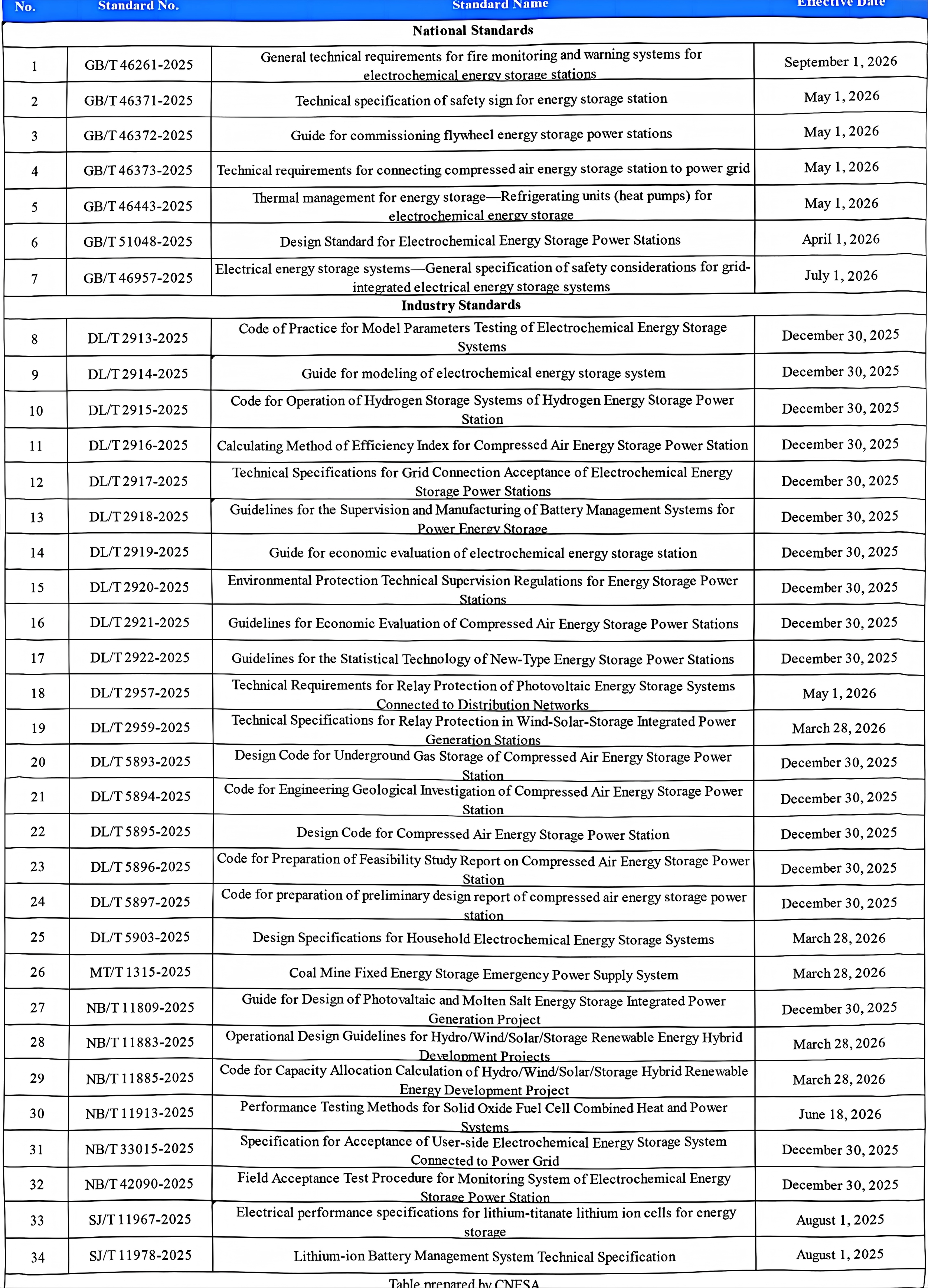
Register now to attend Asia’s Largest Energy Storage Trade Show for free:
What: The 14th Energy Storage International Conference & Expo
When: Conferences: March 31 - April 2, 2026
Exhibitions: April 1-3, 2026
Where: CIECC Beijing, China
Address: No. 55 Yudong road, Shunyi District, Beijing China

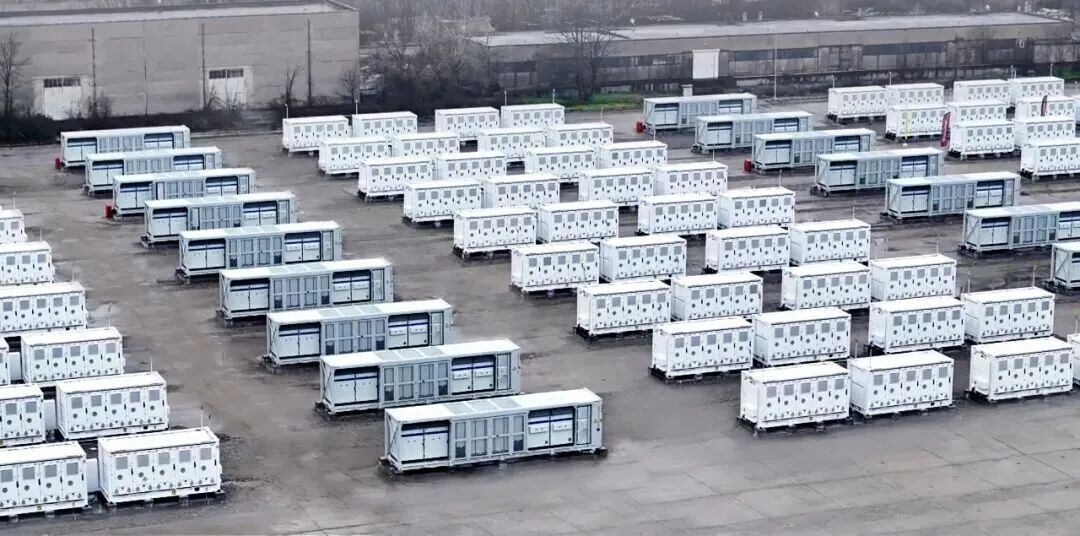
500MWh!BYD Energy Storage Has Commissioned Its Largest Energy Storage Project in East Europe
On January 8, 2026, a 500MWh standalone Battery Energy Storage System(BESS) project located at Maritsa East 3 in Bulgaria was officially commissioned. The project was the jointly developed by BYD Energy Storage and ContourGlobal under their strategic collaboration which is one of the largest standalone energy storage projects in East Europe.
On January 8, 2026, a 500MWh standalone Battery Energy Storage System(BESS) project located at Maritsa East 3 in Bulgaria was officially commissioned.
The project was the jointly developed by BYD Energy Storage and ContourGlobal under their strategic collaboration which is one of the largest standalone energy storage projects in East Europe. It is also BYD Energy Storage’s largest energy storage project in East Europe so far, fully demonstrating its technological capabilities and continued expansion of its global footprint. Since the cooperation agreement was signed in December, 2024, leveraging BYD Energy Storage’s own technological advantage together with CountourGlobal’s strong industry influence, the two parties have worked together to promote project deployment, laying solid foundation for long-term partnership, deeper penetration of the European market and enhanced brand presence in the Eastern European renewable energy sector.
BYD Energy Storage has confirmed its participation in the 14th Energy Storage International Conference and Expo(ESIE 2026), register now to attend Asia’s Largest Energy Storage Trade Show for free:
What: The 14th Energy Storage International Conference & Expo
When: Conferences: March 31 - April 2, 2026
Exhibitions: April 1-3, 2026
Where: CIECC Beijing, China
Address: No. 55 Yudong road, Shunyi District, Beijing China

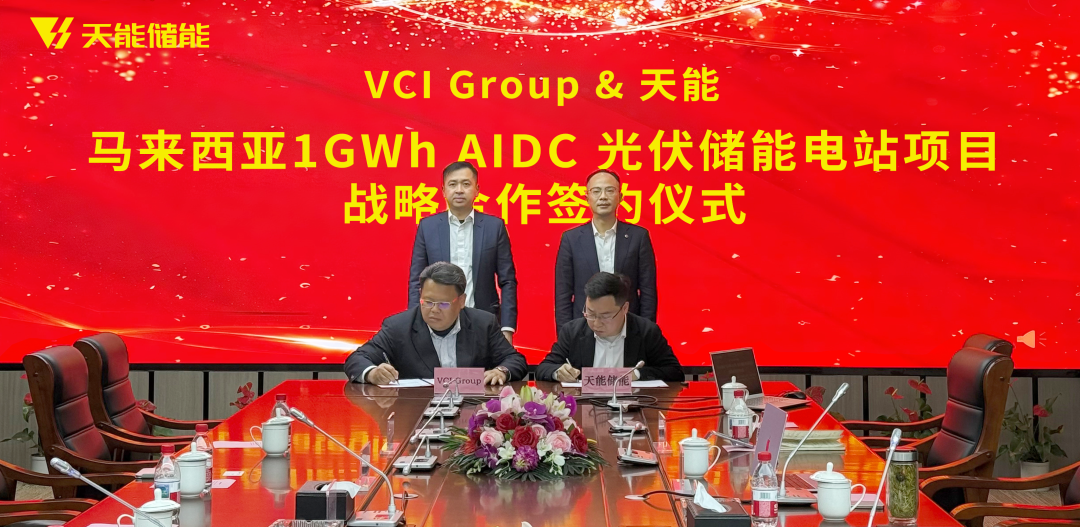
Tianneng Signs a 1GWh Project in Malaysia, Build a benchmark for Integrated “Solar- Storage- Computing”Solutions
Recently, Tianneng Group signed a strategic agreement with NASDAQ-listed company VCIG Group. The two parties will build a 1GWh AIDC solar energy storage power station in Malacca, Malaysia. The project aims to address the high-energy-consumption challenge of AIDC and will be developed under an “EPC+F” model.
Recently, Tianneng Group signed a strategic agreement with NASDAQ-listed company VCIG Group. The two parties will build a 1GWh AIDC solar energy storage power station in Malacca, Malaysia. The project aims to address the high-energy-consumption challenge of AIDC and will be developed under an “EPC+F” model.
It is said that phase I of the project plans to build a 250MW solar infrastructure together with Tianneng’s independently developed liquid cooing energy storage system. Leveraging Malaysia’s “CRESS” programme, the project will provide zero-carbon electricity to local AI computing infrastructure through signing direct power purchase agreement(PPA). The move marks an important breakthrough for Tianneng Group’s energy storage business in large-scale infrastructure development in Southeast Asia.
Register now to attend Asia’s Largest Energy Storage Trade Show for free:
What: The 14th Energy Storage International Conference & Expo
When: Conferences: March 31 - April 2, 2026
Exhibitions: April 1-3, 2026
Where: CIECC Beijing, China
Address: No. 55 Yudong road, Shunyi District, Beijing China

Amazon buys 1.2GW Sunstone solar-plus-storage project from bankrupt Pine Gate
Global tech giant Amazon has been approved as the buyer of the 1.2GW Sunstone solar project in Oregon, one of the largest solar PV projects in the US.
Global tech giant Amazon has been approved as the buyer of the 1.2GW Sunstone solar project in Oregon, one of the largest solar PV projects in the US.
The Sunstone site was developed and previously owned by Pine Gate Renewables, the US independent power producer (IPP), which filed for bankruptcy in November 2025. It includes 1.2GW of solar PV and 1.2GW of battery energy storage system (BESS) capacity, which is ready to build, having received permitting and approvals from the Oregon Energy Facility Siting Council (EFSC).
Amazon’s acquisition was approved by the Bankruptcy Court for the Southern District of Texas, which granted its offer of US$83 million in cash via its specific project subsidiary, Oregon Solar I.
The move follows Amazon’s complaints back in November that an Oregon utility was not supplying sufficient power to its data centre projects in the state, where it has built numerous cloud computing data centres close to the banks of the Columbia River. Once fully operational, the Sunstone solar-plus-storage project will be one of the most significant renewable energy generation projects in the US.
To date, most of Amazon’s energy procurement has been via power purchase agreements (PPAs), and along with fellow Big Tech leviathans Meta and Google, Amazon led US solar power procurement deals in 2024. But the scale of Sunstone, and the fact that it is ready to be built with approvals and permits in place, makes it an attractive proposition for a company whose growing energy demand will be a significant story in the industry over the coming years.
As the power demands of these data centre hyperscalers continue to grow, owning their own power sources might become more common. Last month, Google’s parent company Alphabet announced the acquisition of Intersect Power, an energy project developer, with a view to developing more energy capacity “in lockstep with new data centre load”, Sundar Pichai, CEO of Google and Alphabet, said at the time.
Since declaring bankruptcy, Pine Gate’s roughly 10GW of project assets have been offered to the market, though the company says it has sufficient liquidity to continue operating in the meantime. Earlier this month, Israel-based project developer Nofar Energy bought 1GW worth of Pine Gate’s utility-scale solar assets across the Carolinas, Alabama and Texas for US$285 million.
Source: Energy Storage News
By Will Norman
______________________________________________
Register now to attend Asia’s Largest Energy Storage Trade Show for free:
What: The 14th Energy Storage International Conference & Expo
When: Conferences: March 31 - April 2, 2026
Exhibitions: April 1-3, 2026
Where: CIECC Beijing, China
Address: No. 55 Yudong road, Shunyi District, Beijing China

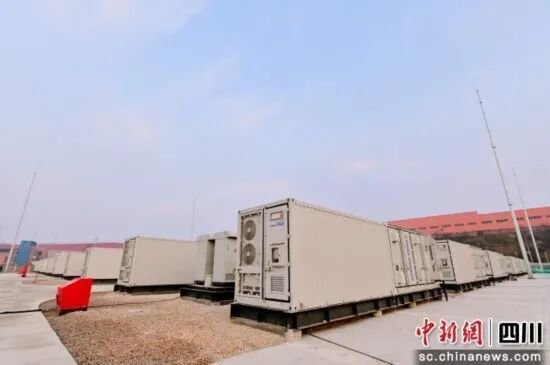
Annual Power Cost Savings Exceed RMB 60 Million ! Great Power’s 107MW/428MWh Hydropower-based Aluminium User-side Energy Storage Project is Commissioned
On January 16th, a 107.12MW/428.48MWh green hydropower-based aluminium user-side energy storage project jointly developed by Great Power and Henan Zhongfu Industry was officially commissioned in Guangyuan, Sichuan Province.
On January 16th, a 107.12MW/428.48MWh green hydropower-based aluminium user-side energy storage project jointly developed by Great Power and Henan Zhongfu Industry was officially commissioned in Guangyuan, Sichuan Province.
Designed and delivered under an EPC contract by Sichuan Zefeng Electric Power Design, the project achieved full-capacity grid connection by the end of 2025 after just five months of construction. It stands as a landmark project for green energy transformation in northern Sichuan and a benchmark case for energy-extensive industry implementing “source-grid-load-storage” integration.
Electricity stored at the facility is directly supplied to the electrolytic aluminium production system, primarily leveraging peak-valley electricity price arbitrage to reduce operating cost. According to estimates, the project is expected to lower electricity costs for electrolytic aluminum by approximately RMB 140 per tonne, delivering annual power cost savings of over RMB 60 million. Meanwhile, it will cut 52,000 tons carbon commission per year, providing a commercially viable solution to address high electricity costs and decarbonization pressures faced by energy-extensive industries.
Building on this project, the two partners will be committed to advance the development of a “zero-carbon aluminum industrial park” in Guangyuan. It plans to introduce advanced intelligent technology to build a virtual power plant (VPP) capable of engaging in power trading and grid dispatch. During the 15th Five-Year Plan period, the project developers will further expand the deployment of solar PV, wind power, green power direct supply and intelligent microgrids, ultimately establishing a safe and controllable regional intelligent micro-grid dominated by new energy, providing a practical model for developing a national new-type power system.
_______________________________________________
The Great Power has confirmed its participation in the 14th Energy Storage International Conference and Expo, register now to attend Asia’s Largest Energy Storage Trade Show for free:
What: The 14th Energy Storage International Conference & Expo
When: Conferences: March 31 - April 2, 2026
Exhibitions: April 1-3, 2026
Where: CIECC Beijing, China
Address: No. 55 Yudong road, Shunyi District, Beijing China

RMB 180 Billion! China Southern Power Grid Hit a New High for Investment in 2026
Expanding effective investment is a key lever for stabilizing growth and improving people’s livelihoods. According to China Southern Power Grid, the company has embarked RMB 180 billion for fixed-asset investment in 2026, marking a record high for fifth consecutive year, with an annual growth rate of 9.5%. Investment will be directed primarily toward the development of a new-type power system, the growth of strategic emerging industries and the enhancement of high-quality power supply services, providing solid support for a strong start to the 15th Five-Year Plan period.
Expanding effective investment is a key lever for stabilizing growth and improving people’s livelihoods. According to China Southern Power Grid, the company has embarked RMB 180 billion for fixed-asset investment in 2026, marking a record high for fifth consecutive year, with an annual growth rate of 9.5%. Investment will be directed primarily toward the development of a new-type power system, the growth of strategic emerging industries and the enhancement of high-quality power supply services, providing solid support for a strong start to the 15th Five-Year Plan period.
A strong start is decisive, and the opening moves sets the pace. China Southern Power Grid stays committed to the decisions and arrangements of the CPC Central Committee and the State Council, fully fulfilling its responsibilities as a centrally administered state-owned enterprise. Leveraging the power grid’s advantages-- large investment scale, long industrial chain, wide coverage, and strong spillover effects-- the company has expanded fixed-asset investment for five consecutive years. By appropriately advancing the deployment of energy and power infrastructure, it aims to better serve high-quality economic and social development.
Proactively serving the broader national agenda and fully advancing the implementation of major national strategies. China Southern Power Grid is actively supporting efforts to boost domestic consumption by using “two major” and “two new” projects to drive effective investment, and by advancing major projects under the “15th Five-Year Plan”. The company will intensify the renewal of grid infrastructure and digital and intelligent transformation with no less than RMB 50.6 billion to be invested in large-scale equipment renewal this year. To promote coordinated urban-rural regional development, the company will fully boost the construction of world-level bay area, advance power infrastructure development in Hainan ahead of demand and address weak links in grid facilities in Yunnan, Guizhou, and Guangxi. In Hainan, major projects including the 500kV offshore wind transmission are set to break ground this year, accelerating energy structure transformation and injecting strong momentum for Hainan Free Trade Port construction. In Guangxi, 220kV Weizhou Island cross-sea interconnection project has completed submarine cable laying and is scheduled to be commissioned in the first quarter of this year. In support of high-quality Belt and Road cooperation, thei China-Laos 500kV interconnection project is expected to be fully commissioned in the first half of the year.
Driving industrial upgrading and building a modern industrial system. China Southern Grid focuses on strengthening modern grid infrastructure, accelerate to built a backbone grid centered on flexible DC interconnections, intensify distribution network upgrades, and promote high-standard digital and intelligent grid planning and development. In Guangdong, the Guangzhou Tianhe Tangxia flexible DC project is scheduled to be commissioned by year-end. Using internationally leading multi-terminal flexible DC power interconnection control technology, the project will provide a new solution for reliable power supply to high-density load centers in mega-city grids. In Yunnan, the second interconnection project for Dulongjiang is planned to start construction in the first quarter, aiming to establish a demonstration zone for digital and intelligent microgrids. To foster and expand strategic emerging industries, China Southern Grid will accelerate the expansion and quality improvement of charging and battery-swapping infrastructure, strengthen the “Dianhong” ecosystem, and proactively deploy new frontiers such as marine energy and embodied intelligence. In Shenzhen, the largest vehicle-to-grid demonstration station in the Guangdong–Hong Kong–Macao Greater Bay Area will be commissioned in the first quarter, further accelerating the development of a “city of ultra-fast charging.” China Southern Grid will also promote high-quality and efficient power supply services by implementing a three-year action plan to improve power quality and launching targeted initiatives to enhance electricity services for people’s livelihoods. In Guizhou, power support projects for 610 clusters of rural wooden-house villages in the Qiandongnan Miao and Dong Autonomous Prefecture are scheduled to be fully completed and commissioned within the year.
Upholding dual-carbon goals and advancing “Two-Type” development. The company is supporting the high-quality development of renewable energy by coordinating large-scale development with high-level grid integration, enhancing the observability, controllability, and dispatchability of renewables, and improving intelligent dispatch and control capabilities. These efforts will support the addition of 40 million kilowatts of new renewable energy capacity this year. In Guangdong, the Yangjiang Sanshan Island offshore wind power flexible DC transmission project is more than halfway complete and is scheduled to be commissioned by year-end, delivering approximately 6 billion kWh of green electricity annually directly to the Guangdong–Hong Kong–Macao Greater Bay Area. To integrate into the national power productivity layout, construction of projects such as the Tibet–Guangdong DC transmission and Hunan–Guizhou flexible power interconnection is accelerating, facilitating the import of clean electricity from outside regions. CSG is also promoting the integrated development of electricity, carbon, and computing power, building new infrastructure that combines “power + computing,” upgrading the integrated operation platform, and advancing the development of a number of zero-carbon industrial parks and factories.
register now to attend Asia’s Largest Energy Storage Trade Show for free:
What: The 14th Energy Storage International Conference & Expo
When: Conferences: March 31 - April 2, 2026
Exhibitions: April 1-3, 2026
Where: CIECC Beijing, China
Adress: No. 55 Yudong road, Shunyi District, Beijing China

Sign up for our free monthly newsletter to stay informed about the Chinese energy storage market.